Symbolist Art
to
86
572
102
157
45
75
Overall Width
to
Overall Height
to
2
109
638
205
27
103
112
91
13
12
24
18
49
15
115,018
65,125
57,708
27,252
14,959
9,452
6,404
5,771
4,193
3,066
2,526
2,348
2,230
652
605
264
65
566
355
234
183
182
109
100
60
49
48
45
38
32
32
26
25
21
20
20
19
258
229
162
158
138
95
43
38
37
34
134
433
550
245
Style: Symbolist
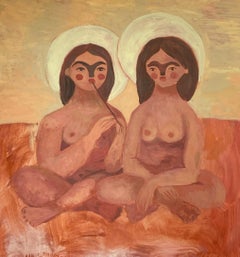
Play for me
Located in Zofingen, AG
This painting will come to you stretched on a wooden stretcher and completely ready to be placed in the interior.
ABOUT THE ARTWORK
"Play for Me," as part of the PERICHORESIS SERIES...
Category
2010s Symbolist Art
Materials
Canvas, Acrylic

$1,252 Sale Price
25% Off
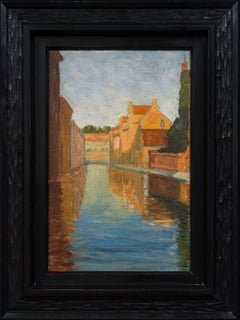
Bruges (Brügge), 1894 by Symbolist Painter Olof Sager-Nelson.
Located in Stockholm, SE
Provenance:
Ina Colliander, relative of the artist;
A private collection, Sweden;
Bukowskis, Stockholm, Important Winter Sale, 2025, lot 711.
Exhibited:
Thielska Gallery, Stockholm,...
Category
1890s Symbolist Art
Materials
Canvas, Oil
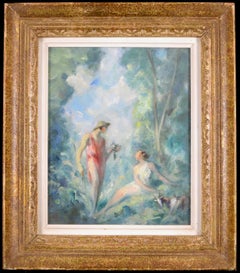
Figures in a Wooded Landscape - Antique French Impressionist Symbolist Painting
Located in Sevenoaks, GB
A beautiful early 1900's French Symbolist oil on board depicting two classical figures and a goat in a wooded landscape.
Striking and excellent quality work by an accomplished artis...
Category
Early 1900s Symbolist Art
Materials
Oil, Board
"Chestnut Tree" Copper Plate Heliogravure
Located in Palm Beach, FL
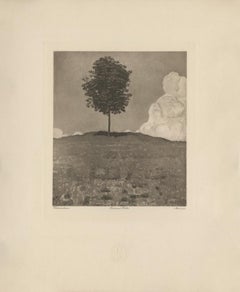
2018 marks the centenary anniversary of Ferdinand Hodler’s death. In that 100 years time, the art world’s esteem of this important artist has proved fickle. It has shifted from extolling his artistic merits during his lifetime to showing something of a feigned disdain- more reflective of the world political order than a true change of heart for Hodler’s work. After years of Hodler being all but a footnote in the annals of art history and generally ignored, finally, the pendulum has righted itself once again. Recent retrospective exhibitions in Europe and the United States have indicated not only a joyful rediscovery of Hodler’s art but a firm conviction that his work and world view hold particular relevance today. DAS WERK FERDINAND HODLERS is not only a collection of printed work reflecting the best of all of his painted work created up to 1914 just before the outbreak of World War I, the portfolio itself is an encapsulation of Hodler’s ethos, Parallelisme.
Hodler developed his philosophy of Parallelisme as a unifying approach to art which strips away detail in search of harmony. By means of abstraction, symmetry and repetition, Hodler sought ways to depict Nature’s essence and her fundamental, universal order. He believed these universal laws governing the natural, observable world extend to the spiritual realm. Symbolist in nature with Romantic undertones, his works are equally portraits of these universal concepts and feelings governing all life as they are a visual portrait in the formal sense. Whether his subject is a solitary tree, a moment in battle, mortal fear, despair, the awe inspired by a vast mountain range, a tender moment or even the collective conviction in a belief, Hodler unveils this guiding principle of Parallelisme.
Several aspects of Hodler’s portfolio reinforce his tenets of Parallelisme. The Table of Contents clearly preferences a harmonious design over detail. The two columns, consisting of twenty lines each, list the images by order of appearance using their German titles. The abbreviated titles are somewhat cryptic in that they obscure the identities of the sitters. Like the image Hodler presents, they are distillations of the sitter without any extraneous details. This shortening was also done in an effort to maintain a harmonious symmetry of the Table of Contents, themselves, and keep titles to a one-line limit. The twenty-fourth title: “Bildnis des Schweizerischen Gesandten C.” was so long, even with abbreviation, that it required two lines; so, for the sake of maintaining symmetry, the fortieth title: “Bauernmadchen” was omitted from the list. This explains why the images are not numbered. Hodler’s reasoning is not purely esoteric. Symmetry and pattern reach beyond mere formal design principles. Finding sameness and imposing it over disorder goes to the root of Hodler’s identity and his art. A Swiss native, Hodler was bi-lingual and spoke German and French. Each printed image, even number forty, have titles in both of Hodler’s languages. Certainly, there was a market for Hodler’s work among francophones and this inclusion may have been a polite gesture to that end; however, this is the only place in the portfolio which includes French. With German titles at the lower left of each image, Hodler’s name at bottom center and corresponding French titles at the lower right of each image, there is a harmony and symmetry woven into all aspects of the portfolio. This holds true for the page design, as it applies to each printed image and as it describes the Swiss artist himself. Seen in this light, Hodler’s portfolio of printed work is the epitome of Hodler’s Parallelisme. DAS WERK FERDINAND HODLERS is also one of the most significant documents to best tell the story of how Hodler, from Switzerland, became caught between political cross-hairs and how the changing tides of nations directly impacted the artist during his lifetime as well as the accessibility of his art for generations to come.
The Munich-based publisher of the portfolio, R. Piper & Co., Verlag, plays a crucial role in this story. Publishing on a wide range of subjects from philosophy and world religion to music, literature and the visual arts; the publisher’s breadth of inquiry within any one genre was equal in scope. Their marketing strategy to publish multiple works on Hodler offers great insight as to what a hot commodity Hodler was at that time. R.Piper & Co.’s Almanach, which they published in 1914 in commemoration of their first ten years in business, clearly illustrates the rapid succession- strategically calculated for achieving the deepest and broadest impact - in which they released three works on Hodler to hit the market by the close of 1914. DAS WERK FERDINAND HODLERS was their premier publication. It preceded C.A. Loosli’s Die Zeichnungen Ferdinand Hodlers, a print portfolio after 50 drawings by Hodler which was released in Autumn of 1914 at the mid-level price-point of 75-150 Marks; and a third less expensive collection of prints after original works by Hodler, which had not been included in either of the first two portfolios, was released at the end of that year entitled Ferdinand Hodler by Dr. Ewald Bender.
The title and timing of DAS WERK FERDINAND HODLERS' debut leaves little doubt as to the connection it has with another avant-garde portfolio of art prints, Das Werk Gustav Klimts, released in 5 installments from 1908 -1914 by Galerie Miethke in Vienna. Hodler, himself, was involved in Klimt’s ground-breaking project. As the owner of Klimt’s 1901 painting, “Judith with the Head of Holifernes” which appears as the ninth collotype print in the second installment of Das Werk Gustav Klimts, Hodler was obliged to grant access of the painting to the art printers in Vienna for them to create the collotype sometime before 1908. Hodler had been previously invited in 1904 to take part in what would be the last exhibition of the Vienna Secession before Klimt and others associated with Galerie Miethke broke away. In an interview that same year, Hodler indicated that he respected and was impressed by Klimt. Hodler’s esteem for Klimt went beyond the art itself; he emulated Klimt’s method aimed at increasing his market reach and appeal to a wider audience by creating a print portfolio of his painted work. By 1914, Hodler and his publisher had the benefit of hindsight to learn from Klimt’s Das Werk publication.
Responding to the sluggish sales of Klimt’s expensive endeavor, Hodler’s publisher devised the same diversified 1-2-3 strategy for selling Hodler’s Das Werk portfolio as they did with regards to all three works on Hodler they published that year. For their premium tier of DAS WERKS FERDINAND HODLERS, R. Piper & Co. issued an exclusive Museum quality edition of 15 examples on which Hodler signed each page. At a cost of 600 Marks, this was generally on par with Klimt’s asking price of 600 Kronen for his Das Werk portfolio. A middle-tiered Preferred edition of 30, costing somewhat less and with Hodler’s signature only on the Title Page, was also available. The General edition, targeting the largest audience with its much more affordable price of 150 Marks, is distinguishable by its smaller size.
Rather than use the subscription format Miethke had chosen for Klimt’s portfolios which proved to have had its challenges, R. Piper & Co. employed a different strategy. In addition to instantly gratifying the buyer with all 40 of the prints comprising DAS WERK FERDINAND HODLERS and the choice among three price points, they advertised in German journals a fourth possibility of ordering single prints from them directly. These printed images are easily discernible from the three complete folio editions. The paper size of the single purchased images is of the larger format like the Museum and Preferred editions, measuring 65 h x 50 w cm; however, the paper itself is the same copper print paper used in the General edition and then mounted on poster board. The publishing house positioned itself to be a direct retailer of Hodler’s art. They astutely recognized the potential for profitability and the importance, therefore, of having proprietary control over his graphic works.
R. Piper & Co. owned the exclusive printing rights to Hodler’s best work found in their three publications dating from 1914. That same year, a competing publication out of Weimar entitled Ferdinand Hodler: Ein Deutungsversuch von Hans...
Category
1910s Symbolist Art
Materials
Paper
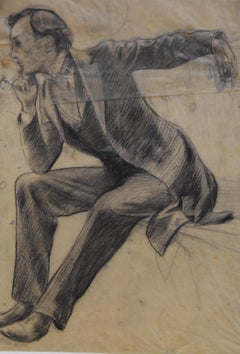
G A Rochegrosse (1859-1938) Study for the Exposition Internationale Paris 1900
Located in Paris, FR
Georges Antoine Rochegrosse (1859-1938)
A man sitted, Study for the decoration of the Salle des fêtes (Ballroom) of the Exposition Internationale, Paris 1900
Pencil and charcoal on thin yellow paper
29.5 x 20 cm
In acceptable condition : Tears and creases as visible on the photographs.
In a modern frame : 46 x 36.5 cm
Annotations on the back of the mount (now under the modern frame) that identifiy this drawing as a preparatory study for the decoration of the Salle des fêtes (Ballroom) of the 1900 Paris Exposition Internationale. It's also indicated that Henri Bataille...
Category
1890s Symbolist Art
Materials
Charcoal, Carbon Pencil
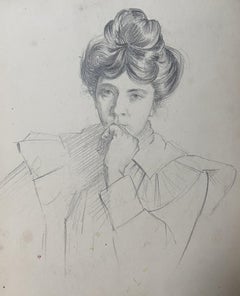
André Eugène Costilhes (1865-1940) A Pensive young woman, portrait drawing
Located in Paris, FR
André Eugène Costilhes (1865-1940)
A Pensive young woman
pencil on paper
29.5 x 22.5 cm (view)
In good condition, except some traces of stains
Framed : 55.5 x 41.5 cm (vintage frame...
Category
1910s Symbolist Art
Materials
Pencil
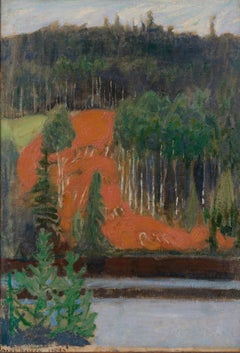
View of a hill slope across a stretch of water; A View from Keitele or Ruovesi
Located in Stockholm, SE
Akseli Gallen-Kallela (Björneborg 1865–1931 Stockholm)
View of a hill slope across a stretch of water; A View from Keitele or Ruovesi
Signed and dated “AXEL GALLEN 1904”
Oil on can...
Category
Early 1900s Symbolist Art
Materials
Canvas, Oil, Board
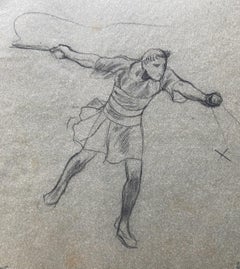
G. A. Rochegrosse (1859-1938) , Study for "Le Cocher" original drawing
Located in Paris, FR
Georges Antoine Rochegrosse (1859-1938)
Study for "Le Cocher"
carbon pencil on thin paper
14.5 x 13 cm
In good condition
Framed : 36.7 x 31 cm
Provenance: Estate of the artist and...
Category
1910s Symbolist Art
Materials
Carbon Pencil
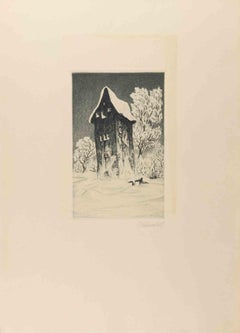
In Schnee - Etching by Fritz Schwimbeck - 1918
Located in Roma, IT
Etching realized by Fritz Schwimbeck in 1918.
Edition of 125 realized in Munich on mulberry paper.
Hand signed in pencil.
Category
1910s Symbolist Art
Materials
Etching
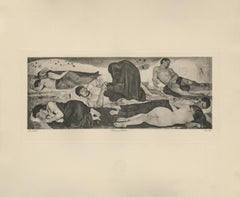
"Night" Copper Plate Heliogravure
Located in Palm Beach, FL
2018 marks the centenary anniversary of Ferdinand Hodler’s death. In that 100 years time, the art world’s esteem of this important artist has proved fickle. It has shifted from extolling his artistic merits during his lifetime to showing something of a feigned disdain- more reflective of the world political order than a true change of heart for Hodler’s work. After years of Hodler being all but a footnote in the annals of art history and generally ignored, finally, the pendulum has righted itself once again. Recent retrospective exhibitions in Europe and the United States have indicated not only a joyful rediscovery of Hodler’s art but a firm conviction that his work and world view hold particular relevance today. DAS WERK FERDINAND HODLERS is not only a collection of printed work reflecting the best of all of his painted work created up to 1914 just before the outbreak of World War I, the portfolio itself is an encapsulation of Hodler’s ethos, Parallelisme.
Hodler developed his philosophy of Parallelisme as a unifying approach to art which strips away detail in search of harmony. By means of abstraction, symmetry and repetition, Hodler sought ways to depict Nature’s essence and her fundamental, universal order. He believed these universal laws governing the natural, observable world extend to the spiritual realm. Symbolist in nature with Romantic undertones, his works are equally portraits of these universal concepts and feelings governing all life as they are a visual portrait in the formal sense. Whether his subject is a solitary tree, a moment in battle, mortal fear, despair, the awe inspired by a vast mountain range, a tender moment or even the collective conviction in a belief, Hodler unveils this guiding principle of Parallelisme.
Several aspects of Hodler’s portfolio reinforce his tenets of Parallelisme. The Table of Contents clearly preferences a harmonious design over detail. The two columns, consisting of twenty lines each, list the images by order of appearance using their German titles. The abbreviated titles are somewhat cryptic in that they obscure the identities of the sitters. Like the image Hodler presents, they are distillations of the sitter without any extraneous details. This shortening was also done in an effort to maintain a harmonious symmetry of the Table of Contents, themselves, and keep titles to a one-line limit. The twenty-fourth title: “Bildnis des Schweizerischen Gesandten C.” was so long, even with abbreviation, that it required two lines; so, for the sake of maintaining symmetry, the fortieth title: “Bauernmadchen” was omitted from the list. This explains why the images are not numbered. Hodler’s reasoning is not purely esoteric. Symmetry and pattern reach beyond mere formal design principles. Finding sameness and imposing it over disorder goes to the root of Hodler’s identity and his art. A Swiss native, Hodler was bi-lingual and spoke German and French. Each printed image, even number forty, have titles in both of Hodler’s languages. Certainly, there was a market for Hodler’s work among francophones and this inclusion may have been a polite gesture to that end; however, this is the only place in the portfolio which includes French. With German titles at the lower left of each image, Hodler’s name at bottom center and corresponding French titles at the lower right of each image, there is a harmony and symmetry woven into all aspects of the portfolio. This holds true for the page design, as it applies to each printed image and as it describes the Swiss artist himself. Seen in this light, Hodler’s portfolio of printed work is the epitome of Hodler’s Parallelisme. DAS WERK FERDINAND HODLERS is also one of the most significant documents to best tell the story of how Hodler, from Switzerland, became caught between political cross-hairs and how the changing tides of nations directly impacted the artist during his lifetime as well as the accessibility of his art for generations to come.
The Munich-based publisher of the portfolio, R. Piper & Co., Verlag, plays a crucial role in this story. Publishing on a wide range of subjects from philosophy and world religion to music, literature and the visual arts; the publisher’s breadth of inquiry within any one genre was equal in scope. Their marketing strategy to publish multiple works on Hodler offers great insight as to what a hot commodity Hodler was at that time. R.Piper & Co.’s Almanach, which they published in 1914 in commemoration of their first ten years in business, clearly illustrates the rapid succession- strategically calculated for achieving the deepest and broadest impact - in which they released three works on Hodler to hit the market by the close of 1914. DAS WERK FERDINAND HODLERS was their premier publication. It preceded C.A. Loosli’s Die Zeichnungen Ferdinand Hodlers, a print portfolio after 50 drawings by Hodler which was released in Autumn of 1914 at the mid-level price-point of 75-150 Marks; and a third less expensive collection of prints after original works by Hodler, which had not been included in either of the first two portfolios, was released at the end of that year entitled Ferdinand Hodler by Dr. Ewald Bender.
The title and timing of DAS WERK FERDINAND HODLERS' debut leaves little doubt as to the connection it has with another avant-garde portfolio of art prints, Das Werk Gustav Klimts, released in 5 installments from 1908 -1914 by Galerie Miethke in Vienna. Hodler, himself, was involved in Klimt’s ground-breaking project. As the owner of Klimt’s 1901 painting, “Judith with the Head of Holifernes” which appears as the ninth collotype print in the second installment of Das Werk Gustav Klimts, Hodler was obliged to grant access of the painting to the art printers in Vienna for them to create the collotype sometime before 1908. Hodler had been previously invited in 1904 to take part in what would be the last exhibition of the Vienna Secession before Klimt and others associated with Galerie Miethke broke away. In an interview that same year, Hodler indicated that he respected and was impressed by Klimt. Hodler’s esteem for Klimt went beyond the art itself; he emulated Klimt’s method aimed at increasing his market reach and appeal to a wider audience by creating a print portfolio of his painted work. By 1914, Hodler and his publisher had the benefit of hindsight to learn from Klimt’s Das Werk publication.
Responding to the sluggish sales of Klimt’s expensive endeavor, Hodler’s publisher devised the same diversified 1-2-3 strategy for selling Hodler’s Das Werk portfolio as they did with regards to all three works on Hodler they published that year. For their premium tier of DAS WERKS FERDINAND HODLERS, R. Piper & Co. issued an exclusive Museum quality edition of 15 examples on which Hodler signed each page. At a cost of 600 Marks, this was generally on par with Klimt’s asking price of 600 Kronen for his Das Werk portfolio. A middle-tiered Preferred edition of 30, costing somewhat less and with Hodler’s signature only on the Title Page, was also available. The General edition, targeting the largest audience with its much more affordable price of 150 Marks, is distinguishable by its smaller size.
Rather than use the subscription format Miethke had chosen for Klimt’s portfolios which proved to have had its challenges, R. Piper & Co. employed a different strategy. In addition to instantly gratifying the buyer with all 40 of the prints comprising DAS WERK FERDINAND HODLERS and the choice among three price points, they advertised in German journals a fourth possibility of ordering single prints from them directly. These printed images are easily discernible from the three complete folio editions. The paper size of the single purchased images is of the larger format like the Museum and Preferred editions, measuring 65 h x 50 w cm; however, the paper itself is the same copper print paper used in the General edition and then mounted on poster board. The publishing house positioned itself to be a direct retailer of Hodler’s art. They astutely recognized the potential for profitability and the importance, therefore, of having proprietary control over his graphic works.
R. Piper & Co. owned the exclusive printing rights to Hodler’s best work found in their three publications dating from 1914. That same year, a competing publication out of Weimar entitled Ferdinand Hodler: Ein Deutungsversuch von Hans Muhlestein appeared. Its author, a young scholar, expressed his frustration with the limited availability of printable work by Hodler. In his Author’s Note on page 19, dated Easter, 1914, Muhlestein confirms that the publisher of Hodler’s three works from that same year owned the exclusive reproductive rights to Hodler’s printed original work. He goes further to explain that even after offering to pay to use certain of those images in his book, the publisher refused. Clearly, a lot of jockeying for position in what was perceived as a hot market was occurring in 1914.
Instead, their timing couldn’t have been more ill-fated, and what began with such high hopes suddenly found a much different market amid a hostile climate. The onset of WWI directly impacted sales. Many, including Ferdinand Hodler, publicly protested the September invasion by Germany of France in which the Reims Cathedral, re-built in the 13th century, was shelled, destroying priceless stained glass and statuary and burning off the iron roof and badly damaging its wooden interior. Thomas Gaehtgens, Director of the Getty Research Institute describes how the bombing of Reims Cathedral triggered blindingly powerful and deeply-felt ultra-nationalistic responses: “The event profoundly shocked French intellectuals, who for the most part had an intense admiration for German literature, music and art. By relying on press accounts and abstracting from the visual propagandistic content, they were unable to interpret the siege of Reims without turning away from German culture in disgust. Similarly, the German intelligentsia and bourgeoisie were also shocked to find themselves described as vandals and barbarians. Ninety-three writers, scientists, university professors, and artists signed a protest, directed against the French insults, that defended the actions of the German army.”
In similar fashion, a flurry of open letters published in German newspapers and journals as well as telegrams and postcards sent directly to Hodler following his outcry in support of Reims reflected the collectively critical reaction to Hodler’s position. Loosli documents that among the list of telegrams Hodler received was one from none other than his publisher in Germany, R.Piper & Co. Allegiances were questioned. The market for Hodler in Germany immediately softened. Matters worsened for the publisher beyond the German backlash to Hodler and his loss of appeal in the home market; with the war in full swing until 1918, there was little chance a German publisher would have much interest coming from outside of Germany and Austria. Following the war and Hodler’s death in 1918, the economy in Germany continued to spiral out and just 5 years later, hyper-inflation had rendered its currency worthless vis-a-vis its value in the pre-war years. Like the economy, Hodler’s reputation was slow to find currency in these difficult times. Even many French art fans had turned sour on Hodler as they considered his long-standing relationship in German and Austrian art circles. Thus, the portfolio’s rarity in Hodler’s lifetime and, consequently, the availability of these printed images from DAS WERK FERDINAND HODLERS since his death has been scarce.
In many ways, Hodler and his portfolios were casualties of war. Thwarted from their intended purpose of reaching a wide audience and show-casing Parallelisme, Hodler’s unique approach to art, this important, undated work has been both elusive and shrouded in mystery. Perhaps DAS WERK FERDINAND HODLERS was left undated as a means of affirming the timelessness of Hodler’s art. Digging back into the past, Hodler’s contemporaries, like R. Piper, C.A. Loosli and Hans Muhlestein, indeed provide the keys to unequivocally clarify what has largely been mired in obscurity. Just after Hodler’s death, the May, 1918 issue of the Burlington Review ran a small column which opined hope for better access to R.Piper & Co.’s DAS WERK FERDINAND HODLERS; 100 years later, it is finally possible. Hodler’s voice rings out through these printed works. Once more, his modern approach to depicting portraits, landscapes and grand scale scenes of Swiss history speak to us of what is universal. Engaging with any one of these images is the chance to connect to Hodler’s vision and his world view- weltanschauung in German, vision du monde in French- however one expresses these concepts through language, its message embedded in his work is the same: “We differ from one another, but we are like each other even more. What unifies us is greater and more powerful than what divides us.” Today, Hodler’s art couldn’t be more timely.
FERDINAND HODLER (SWISS, 1853-1918) explored Parallelisme through figurative poses evocative of music, dance and ritual. His images of sex, night, desertion and death as well as his many landscapes exploring the universal longing for harmony with Nature are unique and important works embodying a Symbolist paradigm. Truly a Modern Master, Hodler’s influence can be felt in the work of Gustav Klimt and Kolomon Moser...
Category
1910s Symbolist Art
Materials
Paper
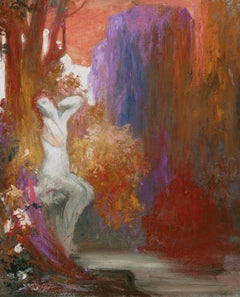
Ondine
By Pierre Marcel-Béronneau
Located in New Orleans, LA
Mystical and mysterious, a mythological Ondine rests beside an ethereal forest pond in this majestic, original oil on canvas by French Symbolist Pierre-Amédée Marcel-Béronneau. A stu...
Category
20th Century Symbolist Art
Materials
Canvas, Oil
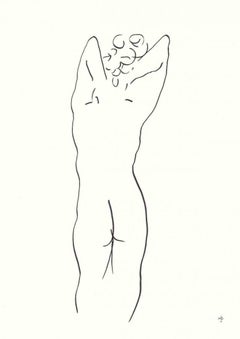
#2209F By David Jones, affordable, ink paper, nude, black and white
Located in Deddington, GB
original
Ink on Paper
Image size: H:41.5 cm x W:29.5 cm
Complete Size of Unframed Work: H:41.5 cm x W:29.5 cm x D:0.1cm
Sold Unframed
Please note that insitu images are purely an indication of how a piece may look
#2209F is an original meditative life drawing by David Jones. A technique the artist has developed to create these beautifully composed and minimal figurative...
Category
2010s Symbolist Art
Materials
Ink
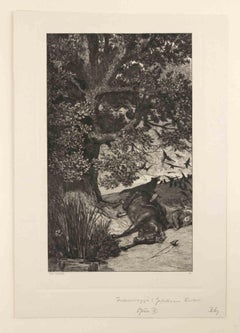
Fallen Rider - Etching by Max Klinger - 1881
By Max Klinger
Located in Roma, IT
Fallen Rider is a modern artwork realized by Max Klinger in 1881.
The artwork belongs to a series of prints called Intermezzi realized by Max Klinger, published by Nurnberg: Stroef...
Category
1880s Symbolist Art
Materials
Etching
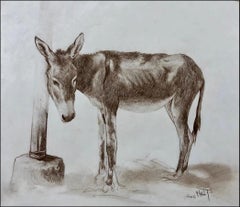
"Mule II" Pencil on Paper Drawing 13" x 15" inch by Ahmed Saber
By Ahmed Saber
Located in Culver City, CA
"Mule II" Pencil on Paper Drawing 13" x 15" inch by Ahmed Saber
AHMED SABER - BIO
Ahmed Saber is an Egyptian artist based in Luxor in Upper Egypt, where he received his BFA with hon...
Category
21st Century and Contemporary Symbolist Art
Materials
Paper, Pencil
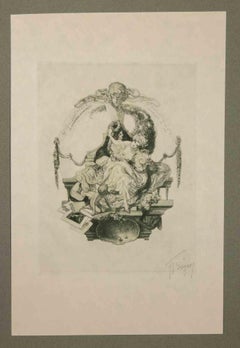
Bayros-Mappe III - Héliogravure by Fraz von Bayros - 1913
Located in Roma, IT
Héliogravure on japanese paper realized by Fraz von Bayros in 1913 for Ex Libris Verlag K. Th. Senger, Munich.
Mounted on passepartout. Edition of 260, hand signed in pencil by the ...
Category
1910s Symbolist Art
Materials
Photogravure
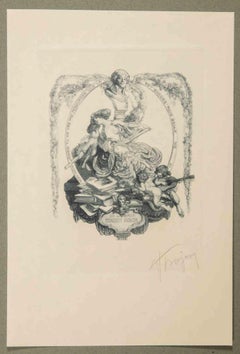
Bayros-Mappe III - Héliogravu by Fraz von Bayros - 1913
Located in Roma, IT
Héliogravure on japanese paper realized by Fraz von Bayros in 1913 for Ex Libris Verlag K. Th. Senger, Munich.
Mounted on passepartout. Edition of 260, hand signed in pencil by the ...
Category
1910s Symbolist Art
Materials
Photogravure
Bayros-Mappe III - Héliogravu by Fraz von Bayros - 1913
Located in Roma, IT
Héliogravure on japanese paper realized by Fraz von Bayros in 1913 for Ex Libris Verlag K. Th. Senger, Munich.
Mounted on passepartout. Edition of 260, hand signed in pencil by the ...
Category
1910s Symbolist Art
Materials
Photogravure
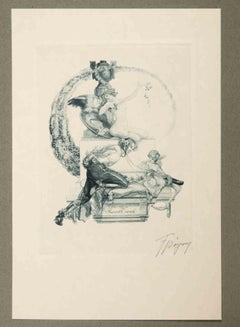
Cross - as the unity of the world. 2009, oil on canvas, 83x67 cm
Located in Riga, LV
Cross - as the unity of the world. 2009, oil on canvas, 83x67 cm
Category
Early 2000s Symbolist Art
Materials
Canvas, Oil

$1,717 Sale Price
20% Off
"No Straight Answers, " Oil on Canvas - Abstract Figurative Painting, Indian Art
Located in Houston, TX
This oil on canvas painting is inspired by the Hindu Goddess Kaamdhenu, the mother of all cows and Bhatt’s recurring symbol of desire. The bovine figure cradles two humanistic figu...
Category
2010s Symbolist Art
Materials
Canvas, Oil
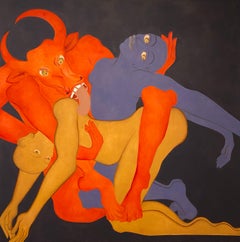
Death of the Gravedigger by Carlos Schwabe, Symbolist lithograph, c. 1900
Located in Chicago, IL
Lithograph of Symbolist painter Carlos Schwabe’s oil painting La mort du fossoyeur (The Death of the Gravedigger), 1895, published c. 1900 in Art et déc...
Category
Early 1900s Symbolist Art
Materials
Paper, Lithograph
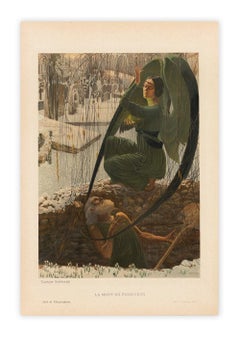
G. A. Rochegrosse (1859-1938) Studies of men, original drawing
Located in Paris, FR
Georges Antoine Rochegrosse (1859-1938)
Studies of men,
Pencil on paper
23 x 41.5 cm
Signed lower right
In good condition
In a modern mount 41 x 52.5 cm
Provenance: Estate of the...
Category
1910s Symbolist Art
Materials
Carbon Pencil
Le Fondeur Paris [Steel Worker]
Located in New York, NY
Carriere, Eugene. Le Fondeur, Paris 1900 [Steel Worker], Color lithograph.
Ref: Das Fruhe Plakat 134. 51 x 34 3/4 inches.
Eugène Anatole Ca...
Category
Early 1900s Symbolist Art
Materials
Lithograph
![Le Fondeur Paris [Steel Worker]](https://a.1stdibscdn.com/eugene-carriere-prints-works-on-paper-le-fondeur-paris-steel-worker-for-sale/a_2922/1610896410669/Carriere_E_master.jpg?width=240 "carriere painter")
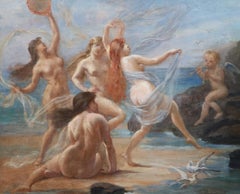
Fine Antique French Oil Painting Sirens and Cupid Dancing along the Seashore
Located in Cirencester, Gloucestershire
Artist/ School: Adolphe Lalyre (French, 1848-1933) signed
Title: Sirens and Cupid dancing along the seashore
Medium: signed oil on canvas, unframed.
canvas: 22.75 x 28 inches
Pr...
Category
19th Century Symbolist Art
Materials
Oil
$24,112 Sale Price
20% Off
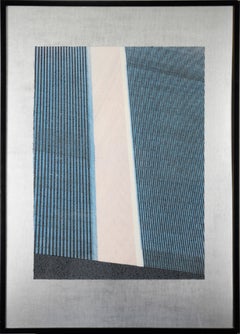
Memorial - Abstract 9/11 Tribute
Located in Soquel, CA
World Trade Center memorial artwork by Marc Foster Grant (American, b. 1947). This piece is composed of multiple layers of quotes relating to the 9/11 attacks on the World Trade Cent...
Category
Early 2000s Symbolist Art
Materials
Acrylic, Handmade Paper
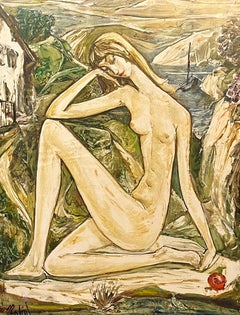
"Eve and the apple" by Vivaldo Martini - Oil on canvas 65x50 cm
Located in Geneva, CH
His first name sounds like a concerto. Vivacious, its name is reminiscent of an aperitif or a cyclist. The addition of the two evokes the Italianate. Indomitable and unavoidable. Mor...
Category
Mid-20th Century Symbolist Art
Materials
Canvas, Oil
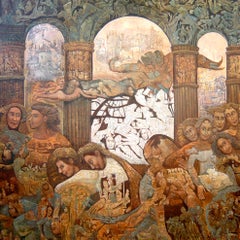
Casiopee - Painting Green Grey Brown Orange Yellow White Black Sand
Located in Sofia, BG
"Casiopee" is a painting by Maestro Edele Bessy - MABILLOT GRANDJEAN GENEVIEVE
The painting is unframed.
Her paintings bring emotion of happiness, love, energy and beauty represented by the vast creative power of her talent.”
Dear art lovers,
if you like the art of maestro Bessy, please click the link to follow this artist and art gallery Snow Pearl to discover all our artists and beautiful artworks.
Thank you so much! we appreciate your interest to our work.
Maestro Edele Bessy was born on August 7, 1946. Self-taught painter since 1982. At first she mainly worked in miniature on ivory, which she then abandoned in favor of oil painting.
New beings appear unconsciously on his canvases taking on the dimension of a wandering crowd, mostly women whose eyes arise and challenge us with ever so much acuity.
Maestro Bessy paints in a very personal, constantly evolving style.
Maestro MABILLOT GRANDJEAN GENEVIEVE - ADELE BESSY
Awards :
Prix de Peinture du Salon de Beauchamp 2023
Médaille du Conseil Départemental de Bourg la Reine 2023
Prix de peinture Salon des Amis des Arts de Chaville 2022
Prix de peinture Salon des beaux-arts de Boulogne-Billancourt 2022
2ème Prix de Peinture Salon de Chablis 2022
Prix de la ville Salon du SPAM Pontoise 2021
Grand Prix de Peinture de SEMEAC 2021
Prix du Jury indépendant Etampes 2021
Prix du conseiller Départemental Salon de Croissy sur seine 2019
Médaille de la ville de St Maurice 2019
Prix du Jury Gagny 2019
1er Prix de peinture Salon des Artistes indépendants Normands 2018
Prix du Jury Salon de Champagne sur Oise 2018
2ème Prix de Peinture Salon de Bois Colombe 2018
Diplôme d'Honneur et Médaille de la ville de Livry-Gargan2017
Prix Univers des Arts Salon de Thionville 2017
Prix de peinture Salon du Plessis Bouchard 2017
Médaille d'Or Salon de Taverny 2017
Prix de Peinture Salon de Sannois 2016
Médaille d’Or Salon de Bondy 2016
Prix de la peinture à l’Huile Ste Maure de Touraine 2016
2ème Prix de Peinture Pont des Arts Vire Normandie 2016
Médaille d’Argent Salon de Cormeilles en Parisis 2016
Prix de Peinture Salon de Guyancourt 2015
Prix du Public Coye la Forêt 2015
Grand Prix du Salon de Roissy en France 2015
L’école de la Loire Prix de Composition Fantastique 2015
L’école de la Loire Grand Prix du Conseil Général 2015
Prix du Public Salon de Plaisir 2014
Prix du Jury Salon de Coye la Forêt 2014
Prix du Bateau Atelier Salon de Bennecourt 2014
Prix du Jury Salon d’Etampes 2014
1er Prix de Peinture de la Municipalité de Taverny 2014
1er Médaille d’Or Salon de Vittel 2014
Prix de la Municipalité de Viarmes 2013
Prix du Public Salon de Gouvieux 2013
Prix de Peinture Salon de Magny en Vexin...
Category
2010s Symbolist Art
Materials
Canvas, Oil
Der Büsser - Original Woodcut by J.J. Weber - 1898
Located in Roma, IT
Image dimensions: 34 x 19 cm.
Der Büsser is an original print, realized in 1898.
Black and white xylograph on applied Japon paper.
Good conditions except for yellowing of paper (especially along the margins), and little stains on lower margin.
The print was realized by Johann Jacob Weber and it's part of the series Meisterwerke der Holzschneidekunst (original title: SECHZEHN HOLZSCHNITTE NACH GEMÄLDEN ARNOLD BÖCKLIN...
Category
1890s Symbolist Art
Materials
Woodcut
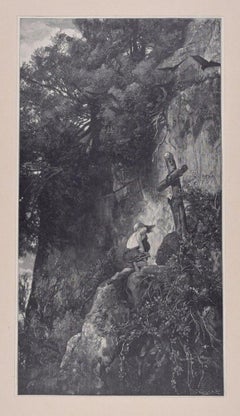
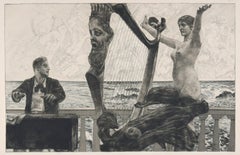
Brahms-Phantasie - Rare Portfolio of 41 Engravings by Max Klinger - 1894
By Max Klinger
Located in Roma, IT
Brahms-Phantasie is a wonderful in-folio volume: the Brahm's Phantasies musical score is incredibly illustrated with 37 numbered plates for a total of 41 original engravings (burin, ...
Category
1890s Symbolist Art
Materials
Paper, Engraving
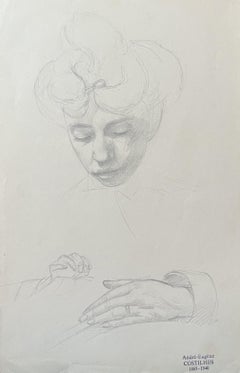
André Eugène Costilhes (1865-1940) A young woman sewing, drawing
Located in Paris, FR
André Eugène Costilhes (1865-1940)
A young woman sewing
bears the stamp of the studio of André Eugène Costilhes in the lower right-hand corner
pencil on paper
30.5 x 20 cm
In quit...
Category
Early 1900s Symbolist Art
Materials
Pencil
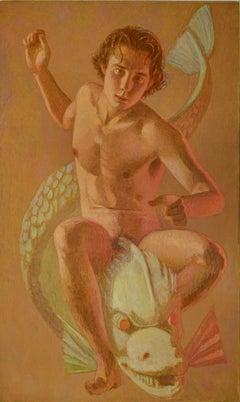
21st century Tuscan figurative painting of mythological theme oil on canvas
Located in Florence, IT
The painting is entitled Arion of Metimna, a poet and cantor of 6th-century B.C. Greece. C., a figure straddling the historical and the mythical. In particular, depicted here is the ...
Category
2010s Symbolist Art
Materials
Canvas, Oil
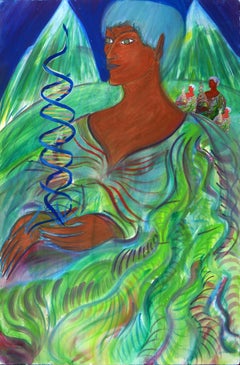
The DNA Goddess
By Janet Morgan
Located in Brooklyn, NY
Watercolor, mixed media, using resists. This is from the God and Goddess Series, Morgan's Supreme Being, nearly 200 deities both new and new takes on tra...
Category
2010s Symbolist Art
Materials
Mixed Media, Watercolor, Archival Paper
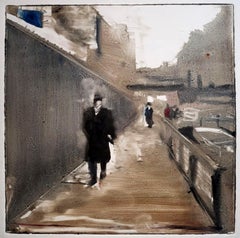
Ghosts of New York 2, monochromatic dramatic city-scape surrealistic undertones
By Tom Bennett
Located in Brooklyn, NY
One of a series of oil-based monotypes on fine printmaking paper. Monochromatic with subtle color. Moody, symbolist/expressionist image reflecting on NY city's ambient current and past.
Category
2010s Symbolist Art
Materials
Monotype, Archival Paper
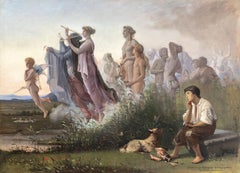
Le rêve brisé
Located in Saint-Ouen-sur-Seine, FR
In this enchanting painting by Adolf Gudfast (Gotthard) Werner, entitled "The Broken Dream", a young shepherd rests melancholically beside his faithful dog, facing a broken vase from...
Category
1870s Symbolist Art
Materials
Oil
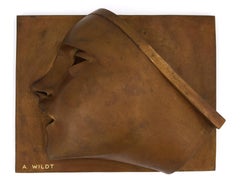
Victory - Bronze Sculpture After A. Wildt - 1990
By Adolfo Wildt
Located in Roma, IT
Second Edition of 6 copies plus 3 Artist’s Proofs, realized in 1990 after the famous homonymous sculpture realized by Wildt in 1918/19. Authorized by Wildt's heirs, from the original...
Category
1990s Symbolist Art
Materials
Bronze
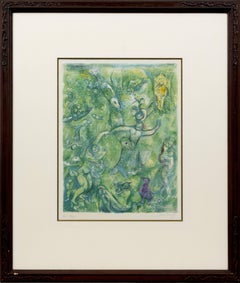
Abdullah Discovered before Him..., from the Arabian Nights
By Marc Chagall
Located in OPOLE, PL
Marc Chagall (1887-1985) - Abdullah Discovered before Him..., from the Arabian Nights
Lithograph from 1948.
Inscribed Pl. 9 and numbered 82/90.
Dimensions of work: 42.5 x 32.5 cm...
Category
1940s Symbolist Art
Materials
Lithograph
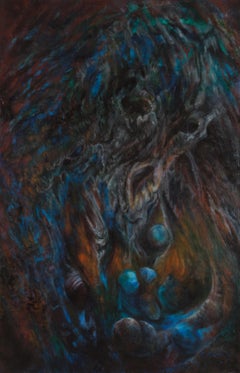
"Chronos" figuratif oil paint on linen panel 100x65cm 2006
Located in Saint Pol de Léon, Bretagne
"Chronos" figuratif oil paint on linen panel 100x65cm 2006
Chronos' metaphor has always impressed Emmanuelle Vroelant with his violence and sends her...
Category
Early 2000s Symbolist Art
Materials
Oil
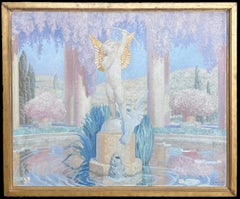
$1,717 Sale Price
40% Off
Huge French 1930
s Signed Oil Classical Roman Fountain Statue Floral Scene 1933
Located in Cirencester, Gloucestershire
The Roman Statue
by Gabriel Jules-Charles Girodon (French, 1884–1941) *see notes below
signed and dated
oil painting on canvas, framed
framed: 38 x 47 inches
canvas: 36 x 44 inches...
Category
Early 20th Century Symbolist Art
Materials
Oil
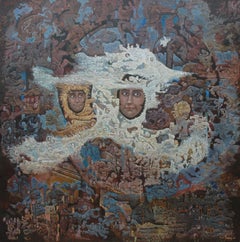
Saturne - Painting Blue Grey Brown Green Orange Yellow White Black Sand
Located in Sofia, BG
Saturne" is a painting by Maestro Edele Bessy - MABILLOT GRANDJEAN GENEVIEVE
The painting is unframed.
Her paintings bring emotion of happiness, love, energy and beauty represented by the vast creative power of her talent.”
Dear art lovers,
if you like the art of maestro Bessy, please click the link to follow this artist and art gallery Snow Pearl to discover all our artists and beautiful artworks.
Thank you so much! we appreciate your interest to our work.
Maestro Edele Bessy was born on August 7, 1946. Self-taught painter since 1982. At first she mainly worked in miniature on ivory, which she then abandoned in favor of oil painting.
New beings appear unconsciously on his canvases taking on the dimension of a wandering crowd, mostly women whose eyes arise and challenge us with ever so much acuity.
Maestro Bessy paints in a very personal, constantly evolving style.
Maestro MABILLOT GRANDJEAN GENEVIEVE - ADELE BESSY
Awards :
Prix de Peinture du Salon de Beauchamp 2023
Médaille du Conseil Départemental de Bourg la Reine 2023
Prix de peinture Salon des Amis des Arts de Chaville 2022
Prix de peinture Salon des beaux-arts de Boulogne-Billancourt 2022
2ème Prix de Peinture Salon de Chablis 2022
Prix de la ville Salon du SPAM Pontoise 2021
Grand Prix de Peinture de SEMEAC 2021
Prix du Jury indépendant Etampes 2021
Prix du conseiller Départemental Salon de Croissy sur seine 2019
Médaille de la ville de St Maurice 2019
Prix du Jury Gagny 2019
1er Prix de peinture Salon des Artistes indépendants Normands 2018
Prix du Jury Salon de Champagne sur Oise 2018
2ème Prix de Peinture Salon de Bois Colombe 2018
Diplôme d'Honneur et Médaille de la ville de Livry-Gargan2017
Prix Univers des Arts Salon de Thionville 2017
Prix de peinture Salon du Plessis Bouchard 2017
Médaille d'Or Salon de Taverny 2017
Prix de Peinture Salon de Sannois 2016
Médaille d’Or Salon de Bondy 2016
Prix de la peinture à l’Huile Ste Maure de Touraine 2016
2ème Prix de Peinture Pont des Arts Vire Normandie 2016
Médaille d’Argent Salon de Cormeilles en Parisis 2016
Prix de Peinture Salon de Guyancourt 2015
Prix du Public Coye la Forêt 2015
Grand Prix du Salon de Roissy en France 2015
L’école de la Loire Prix de Composition Fantastique 2015
L’école de la Loire Grand Prix du Conseil Général 2015
Prix du Public Salon de Plaisir 2014
Prix du Jury Salon de Coye la Forêt 2014
Prix du Bateau Atelier Salon de Bennecourt 2014
Prix du Jury Salon d’Etampes 2014
1er Prix de Peinture de la Municipalité de Taverny 2014
1er Médaille d’Or Salon de Vittel 2014
Prix de la Municipalité de Viarmes 2013
Prix du Public Salon de Gouvieux 2013
Prix de Peinture Salon de Magny en Vexin...
Category
2010s Symbolist Art
Materials
Canvas, Oil
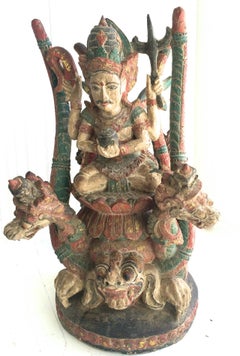
Antique Vishnu Riding Dragon Carved Polychrome Wood
Located in Lake Worth Beach, FL
Antique Balinese Wooden Sculpture Vishnu Riding Dragon Serpents.
Rare late 19th century Balinese Temple sculpture, wood polychrome paint, four detachabl...
Category
19th Century Symbolist Art
Materials
Wood, Paint
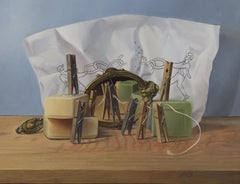
"La Blockchain", Soft Green and Bronze Symbolist Original Oil Painting
By Andrée Bars
Located in Clermont-Ferrand, Auvergne-Rhône-Alpes
"La Blockchain" is a symbolist oil painting on canvas by Andrée Bars.
In this carefully composed still life, the artist translates a contemporary technological concept into a poetic...
Category
2010s Symbolist Art
Materials
Oil
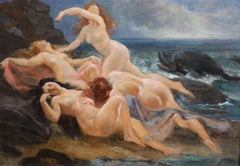
Antique French Symbolist Oil Painting Sirens and Dolphin beside Rocks Coastal
Located in Cirencester, Gloucestershire
Artist/ School: Adolphe Lalyre (French, 1848-1933)
Title: Sirens and dolphin beside rocks
Medium: signed oil on canvas, framed.
canvas size: 21.5 x 31 inches plus the frame
Co...
Category
19th Century Symbolist Art
Materials
Oil
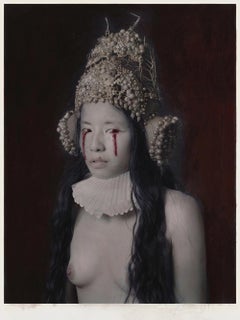
$24,660 Sale Price
20% Off
Empress nude portrait - Limited Edition Print of the Hand Colour Photograph
Located in London, GB
© Katie Eleanor, IV., Eye Infection As A Result Of Ingesting Poison
Series: Saint Wanderer's Hospital, 2015
Archival Pigment Print of the hand Coloured Photograph on cotton fine art paper, custom frame
7 1/2 × 5 7/10 in
19 × 14.5 cm (unframed print)
35 x 30.5 cm (Framed : Museum mount-board, antireflective art glass in hardwood custom frame)
Edition of 15
Framed or Unframed option available
Saint Wanderer’s Hospital depicts a fictional tale birthed from the artist’s inherent need to find splendour in the idea of sickness.
Rooted first from her own words, Katie used the idea of illustrating as a form of personal art therapy by immersing herself in the realm of the otherworldly characters. Every aspect of each scene was created by Katie alone, from building and designing the sets to printing and hand-colouring the final images. In this act, over the year long course of the projects creation, the artist managed to make certain turmoil in her personal life bearable.
In the world of the hospital, the artist adapts the role of medical photographer – creating accurate portraits of each character’s condition as a record for the hospitals future use.
The final series comprises of 8 ‘specimen cased...
Category
2010s Symbolist Art
Materials
Cotton, Watercolor, Archival Pigment, Photographic Paper, Color
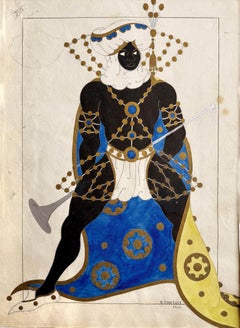
Fool
s Paradise Movie Costume Sketch Cecil B. DeMille - Classic Hollywood
Located in Miami, FL
Natacha Rambova imaginatively conceives and sketches a costume for Cecil B. DeMille's 1921 movie Fool's Paradise: Paramount. Rendered in Gouache, watercolor, pencil, and metallic s...
Category
1920s Symbolist Art
Materials
Silver, Bronze
"Hymn of Osiris II" (FRAMED) Painting on Papyrus 22"" x 16" inch by Ahmed Saber
By Ahmed Saber
Located in Culver City, CA
"Hymn of Osiris II" (FRAMED) Painting on Papyrus 22"" x 16" inch by Ahmed Saber
ink on papyrus
AHMED SABER - BIO
Ahmed Saber is an Egyptian artist base...
Category
21st Century and Contemporary Symbolist Art
Materials
Ink, Bamboo Paper
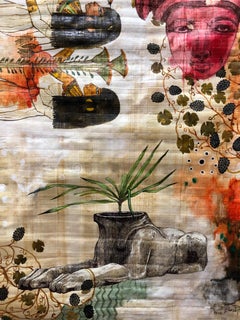
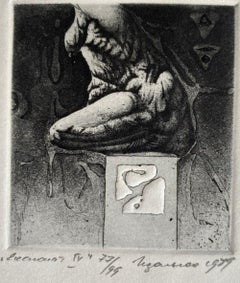
Exhibit IV, paper/etching, 77/99, 5.5x5 cm, 1989
Located in Riga, LV
Exhibit IV, paper/etching, 77/99, 5.5x5 cm, 1989
Category
1980s Symbolist Art
Materials
Paper, Etching
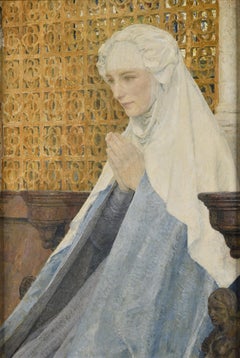
Jeune femme en prière
Located in PARIS, FR
Tempera, oil and gold highlights on hardboard
Signed lower left
Category
20th Century Symbolist Art
Materials
Gold
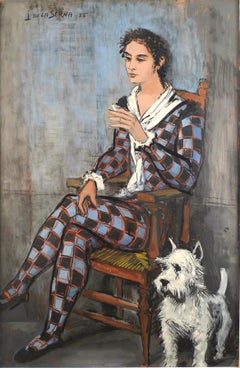
"Harlequin and his dog", 20th Century oil on cardbard by Ismael de la Serna
Located in Madrid, ES
ISMAEL DE LA SERNA
Spanish, 1898 - 1968
HARLEQUIN AND HIS DOG
signed and dated "I DE LA SERNA 55" (upper left)
oil on cardboard
42 x 27-1/2 inches (107 x 70 cm.)
framed: 49-1/4 x 35 ...
Category
1950s Symbolist Art
Materials
Oil, Cardboard
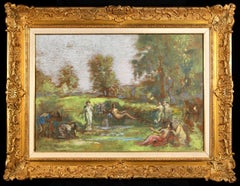
Fete Champetre - Symbolist Figurative Oil Painting by Ker Xavier Roussel
Located in Marlow, Buckinghamshire
Signed symbolist oil on panel circa 1910 by French Les Nabis painter Ker-Xavier Roussel. This beautiful painting depicts nudes and figures dressed in robes in a wooded landscape.
Signature:
Signed lower left
Dimensions:
Framed: 31"x40"
Unframed: 23"x32"
Provenance:
JPL Fine Arts - London c. 1985
Ker-Xavier Roussel met Édouard Vuillard at the Lycée Condorcet, which they both attended. Together they visited Eugène Ulysse Napoléon Maillard's studio, where Roussel became acquainted with Charles Cottet, going on to study at the Académie Julian under Bouguereau and Jules Lefebvre. There, he became interested in the Synthetism promoted by Sérusier, following Sérusier's heeding of the line Gauguin had adopted in Pont-Aven. He joined the Nabis group. He and his friends form a link between the Impressionists - he knew Cézanne, Degas, Renoir and Monet - and the Fauves and Cubists.
In his earliest paintings, Roussel adopted a dark palette for Realist still-lifes. Later, his work bore the influence of Gauguin, Sérusier, the Nabis and Cézanne, in Intimist scenes painted in flat tints not yet clearly delineated. Their dull, saturated tones are reminiscent of Cézanne. In about 1900 he started painting mythological scenes full of nymphs and fauns and set in his home region of Île-de-France. After a bicycle trip in Provence with Maurice Denis, during which he met Cézanne, he lightened his palette, much taken by the cloudless skies below which he would now set the mythological and idyllic compositions which link him to Poussin and Corot. This wondrous, unreal world found its way into large-scale works, including the stage curtain of the Champs-Élysées theatre in 1913, a large Pax Nutrix for the Palais des Nations in Geneva and Dance for the Palais de Chaillot in 1937. He is best remembered for: Silenius' Triumph, Polyphemus, Diana, The Abduction of the Daughters of Leucippus. The nymphs and fauns of a mythology quite his own appear in clearings and woods from the outskirts of Paris, but the sun they rejoice in is Mediterranean. To capture the vibration of bright colours under a permanent sun, he later turned to pastels. He was more a Symbolist than a Nabi and signed himself K.-X. Roussel. He also produced lithographs.
He took part in exhibitions from 1891 with the Groupe des Vingt at le Barc de Bouteville's gallery in Brussels. Then he exhibited in Revue Blanche Painters ( Les Peintres de la revue blanche) in Paris; with the Nabis at Café Volponi in Paris; before World War I with Free Aesthetics in Brussels; from 1901 at the Salon des Indépendants and the Salon d'Automne; in the 1930s in Revue Blanche Painters ( Les Peintres de la Revue blanche) hosted in Paris by designer Bolette Natanson, the daughter of the Revue Blanche's owner. He took part in The Masters of Contemporary Art ( Les Maîtres de l'art contemporain) at the Musée du Petit Palais in Paris, and at the 1938 Venice Biennale and 1939 New York World Fair. He featured posthumously in Toulouse-Lautrec and the Nabis ( Toulouse-Lautrec et les Nabis) at Bern Kunsthalle; From the Revue Blanche ( Autour de la revue blanche) in the Galerie Maeght, Paris, and in Tokyo and Brussels. He had one-man shows in Paris before his death in 1944. Retrospectives were mounted in the 1960s in London and Bremen.
Museum and Gallery Holdings:
Geneva (Petit Palais): Haystacks on the Seaside
Paris (BNF): Training the Dog; Landscapes (engraving); Nymph and Faun (c. 1895, etching)
Paris (Louvre): Poject for a Screen (drawing)
Paris (MNAM-CCI): The Road (c. 1905); The Cyclops (1908); Venus and Cupid on the Seafront (1908); The Abduction of Leucippus' Daughters (1911); Pastorale (1920); Diana at Rest (1923); Portrait of Vuillard (1934)
Paris (Mus. d'Orsay): The Gate (pastel); Woman in Profile with Green Hat; In Bed; Félix Valloton...
Category
Early 20th Century Symbolist Art
Materials
Oil, Panel
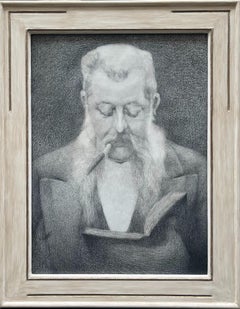
Man with a Cigar
Located in London, GB
Symbolist School
Man Smoking a Cigar
Pencil on paper
Image Size: 23 1/2 x 17 1/2 inches (59.8 x 44.4 cm)
Contemporary-style hand carved frame
This drawing depicts an older man lost ...
Category
Late 19th Century Symbolist Art
Materials
Paper, Pencil
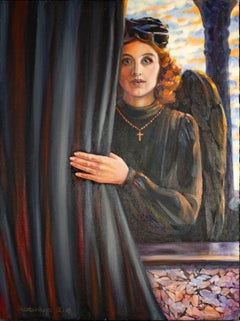
$6,850
Dreams. Young Angel
Located in Oslo, NO
Symbolism, angel, paradise, black, vertical
The painting "Young Angel" is a deeply symbolic work, a revelation that came to the artist in a dream. It is a mystical scene on the bord...
Category
2010s Symbolist Art
Materials
Canvas, Acrylic
Moonlit Night from Intermezzi - Etching by Max Klinger - 1881
By Max Klinger
Located in Roma, IT
Moonlit Night from Intermezzi belongs to a series of prints called Intermezzi realized by Max Klinger, published by Nurnberg: Stroefer, 1881.
Etching on paper.
Signed on the plate
...
Category
1880s Symbolist Art
Materials
Etching
$834 Sale Price
30% Off
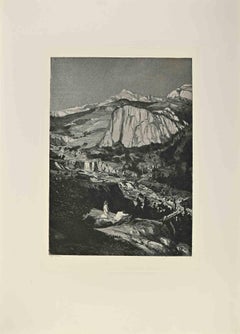
"Jungle Law" Black and White Lithograph by Orovida Camille Pissarro 14/45
Located in Pasadena, CA
This black-and-white lithograph, numbered 14/45, is the work of Orovida, whose real name is Camille Orovida Pissarro. The rectangular framing tightens the composition around three fi...
Category
Mid-20th Century Symbolist Art
Materials
Lithograph
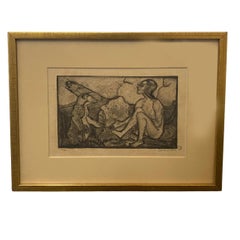
Then the Angel of the Lorde appeared unto him in a flame of fire... - The Exodus
By Marc Chagall
Located in OPOLE, PL
Marc Chagall (1887-1985) - Then the Angel of the Lorde appeared unto him in a flame of fire, out of the middes of a bush; and he looked, and beholde, the bush was not consumed
Litho...
Category
1960s Symbolist Art
Materials
Lithograph
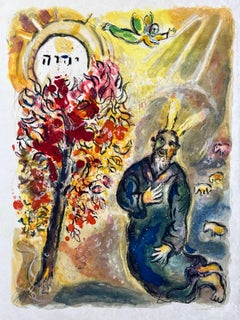
Die Nixen (Mermaids), nudes, German antique engraving
By Virgilio Tojetti
Located in Melbourne, Victoria
'Die Nixen'
(Mermaids)
German wood-engraving, 1903.
230mm by 320mm (image)
280mm by 410mm (sheet)
Category
Early 20th Century Symbolist Art
Materials
Engraving
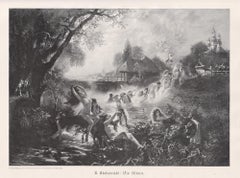
"Desire, Motives, Assassins, " Oil on Canvas - Abstract Figurative Painting
Located in Houston, TX
This oil on canvas painting captures a playful approach to serious concerns. Viewing life as a circus act, Bhatt arranges figures that evoke emotions such as fear, aggression, and ...
Category
2010s Symbolist Art
Materials
Canvas, Oil
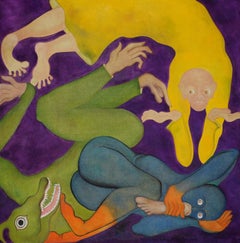
Serenity. 1992., paper, lithograph, 65x50, 3 cm
Located in Riga, LV
Serenity. 1992., paper, lithograph, 65x50,3 cm
Category
1990s Symbolist Art
Materials
Paper, Lithograph
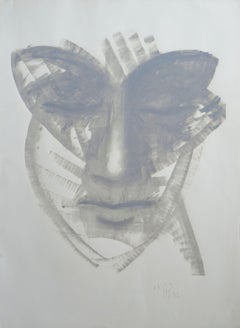
$763 Sale Price
20% Off
La Tentation de St. Antoine - Edition Signed by Odilon Redon - 1896
By Odilon Redon
Located in Roma, IT
La Tentation de St. Antoine is an original modern rare book illustrated by Odilon Redon (Bordeaux, 1840 - Paris, France) and written by various authors...
Category
1890s Symbolist Art
Materials
Lithograph
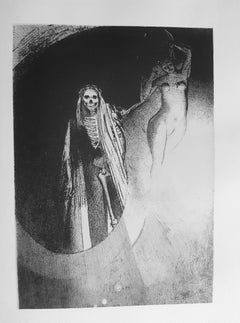
Printemps
By Marc Chagall
Located in OPOLE, PL
This work will be exhibited at Art on Paper NYC, September 4–7, 2025.
–
Marc Chagall (1887-1985) - Printemps
Lithograph from 1938.
Dimensions of work: 35 x 26 cm
Publisher: Téri...
Category
1930s Symbolist Art
Materials
Lithograph
Seal
s - Paper
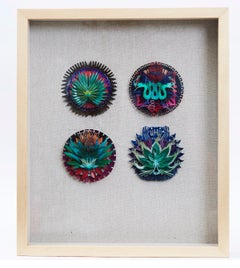
Cartoon - Mexican Folk Art - Cactus Fine Art
Located in Jesus del Monte, MX
MASTERPIECE
Finely cut and assembled cotton paper.
Handpainted
LISTING
===================================
1 Handcrafted paper artwork
===================================
DIMENSIONS
===================================
24" x 24" x2 " in or 60 x 60 x 5 cm
===================================
DETAILS
===================================
Time of Preparation: 2 months
Made: Guadalajara, Jalisco - México
Artisan: Manuel de la Peña...
Category
2010s Symbolist Art
Materials
Cotton, Paper
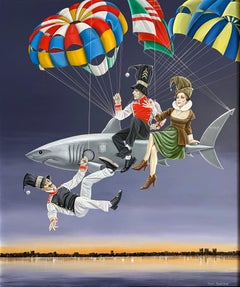
Contemporary oil painting, Sky Travelers.
Located in La Canada Flintridge, CA
Sky Travelers is an original acrylic on canvas painting by David Davtian, blending imagination, symbolism, and refined technical skill.
The composition depicts an unexpected and sur...
Category
2010s Symbolist Art
Materials
Acrylic
Symbolist art for sale on 1stDibs.
Find a wide variety of authentic Symbolist art available for sale on 1stDibs. Works in this style were very popular during the 21st Century and Contemporary, but contemporary artists have continued to produce works inspired by this movement. If you’re looking to add art created in this style to introduce contrast in an otherwise neutral space in your home, the works available on 1stDibs include elements of orange, blue, green, red and other colors. Many Pop art paintings were created by popular artists on 1stDibs, including Michel Fingesten, Abel Pann, Franz von Bayros (Choisi Le Conin), and Ferdinand Hodler
R. Piper
Co.. Frequently made by artists working with Paint, and Oil Paint and other materials, all of these pieces for sale are unique and have attracted attention over the years. Not every interior allows for large Symbolist art, so small editions measuring 1.58 inches across are also available. Prices for art made by famous or emerging artists can differ depending on medium, time period and other attributes. On 1stDibs, the price for these items starts at $55 and tops out at $378,675, while the average work sells for $863.
More Ways To Browse
Mauritz Lindstrom
Maximillien Luce
Michael Budden Central Park
Midcentury Matador Paintings
Mike Wright
Miracle On Ice
Mississippi River Painting
Monarch Of The Glen Painting
Moroccan Paintings Essaouira
Morpho Butterfly Art
Mount Tamalpais
Murray Dessner
Native American Oklahoma
New England Barn
New Orleans Jazz Poster
Niagara Falls Oil
Oil Painting By Alice
Oil Painting Willow Tree