Symbolist Art
to
86
572
102
157
45
75
Overall Width
to
Overall Height
to
2
109
638
205
27
103
112
91
13
12
24
18
49
15
115,018
65,125
57,708
27,252
14,959
9,452
6,404
5,771
4,193
3,066
2,526
2,348
2,230
652
605
264
65
566
355
234
183
182
109
100
60
49
48
45
38
32
32
26
25
21
20
20
19
258
229
162
158
138
95
43
38
37
34
134
433
550
245
Style: Symbolist
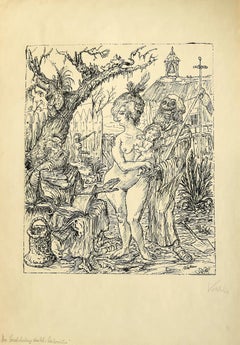
Die Versuchung des Heiligen Antonius - Original Lithograph by A. Kubin - 1922
By Alfred Kubin
Located in Roma, IT
Die Versuchung des Heiligen Antonius is an original lithograph on simili japanese paper, realized by Alfred Kubin in 1922, Hand-signed, edition of 100 copies.
Ref.: Arnason & Wheel...
Category
1920s Symbolist Art
Materials
Lithograph
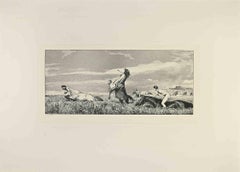
Pursued Centaur (Verfolgter Centaur) - Etching by Max Klinger - 1881
By Max Klinger
Located in Roma, IT
Pursued Centaur (Verfolgter Centaur) belongs to a series of prints called Intermezzi realized by Max Klinger, published by Nurnberg: Stroefer, 1881.
Etching on paper.
Signed on the...
Category
1880s Symbolist Art
Materials
Etching
$1,001 Sale Price
30% Off
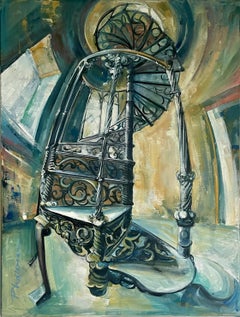
THE STAIR in the TOWER - original large oil painting Paula Craioveanu 55x40in
Located in Forest Hills, NY
"The Stair in the Tower" - original large art by Paula Craioveanu
Original, large, unique painting, oil on canvas, 31.5x23.6in / 80x60cm. Shipped rolled in a tube.
Check 1stDibs code FREESHIP
This painting, a study of an elaborate spiral staircase, demonstrates the artist’s skill in merging architectural elegance with a dynamic sense of movement and mystery. The subject itself—a wrought iron spiral staircase—becomes more than a functional object; it transforms into a metaphor for transcendence, curiosity, and the infinite.
The staircase is richly ornate, with swirling ironwork patterns and intricate details that capture the eye. The artist emphasizes the craftsmanship, elevating the staircase into a work of art itself. The ornamental designs echo Baroque or Rococo influences, known for their flamboyance and decorative excess. The spiral is inherently dynamic, drawing the viewer’s gaze upward in a continuous loop. This quality imbues the staircase with motion and energy, almost as if it is alive, spiraling into another dimension.
The artist employs a dramatic perspective, positioning the viewer at the base of the staircase, looking upward. This composition evokes a sense of aspiration or awe, as if the staircase ascends to an unknown destination. The light filtering through the structure accentuates the curvature and creates a contrast between the solid metal of the staircase and the soft, ephemeral glow of the environment. This interplay of light and shadow enhances the mood, making the staircase seem both tangible and ethereal.
The cool metallic grays and silvers of the staircase reflect its materiality, suggesting durability and permanence. At the same time, the reflective surfaces give it a shimmering, almost celestial quality. The background is suffused with warm, earthy tones—yellows, browns, and muted greens—that contrast with the cold metal of the staircase. This contrast creates a sense of tension between the man-made structure and the organic or natural environment surrounding it.
Symbolism. Spiral staircases are often symbolic of a journey, both physical and spiritual. They represent the process of ascent, growth, and transformation. This staircase seems to lead into a vortex of light, suggesting a path to enlightenment or transcendence. The spiral is a recurring motif in art and nature, often representing infinity, cycles, and continuity. The staircase's design hints at a journey without end, encouraging reflection on the passage of time and the eternal nature of life. The destination of the staircase is deliberately obscured, leaving the viewer to wonder where it leads. This creates a sense of mystery, drawing the viewer into an imaginative exploration of the unknown.
The swirling patterns in the ironwork mirror the overall spiral shape of the staircase, creating a sense of harmony and cohesion. These designs also add a decorative richness to the piece, tying it to the tradition of Romanticism or Gothic Revival, where even utilitarian objects were imbued with beauty and meaning.
The background is loosely rendered, with soft, swirling brushstrokes that echo the spiral of the staircase. This abstraction contrasts with the detailed depiction of the staircase, making the environment feel less defined and more dreamlike. The staircase appears to float in a liminal space, further emphasizing its symbolic and otherworldly qualities.
The viewer’s vantage point and the sheer scale of the staircase evoke a feeling of awe. It could symbolize humanity’s ambitions to reach higher realms—intellectually, spiritually, or artistically. The absence of people in the painting draws attention to the object itself, suggesting introspection or solitude. The staircase might represent a solitary journey, one that each individual must take alone. The intricate design and upward motion of the staircase, combined with the lack of a specific time or place, imbue the piece with a sense of timelessness. It could exist in any era, representing universal human themes.
In comparison to the artist’s other works, this painting shifts focus from mythological and figurative themes to an architectural subject. Yet, it retains the artist’s characteristic use of ornamentation, bold perspectives, and symbolic depth. Like the Minotaur or Zeus paintings...
Category
2010s Symbolist Art
Materials
Canvas, Oil
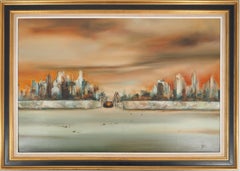
Fantasy : Spider on the City - Original Oil on Canvas, Handsigned
Located in Paris, IDF
Bernard LOUEDIN
Fantasy : Spider on the City, 1970
Original Oil on Canvas
Handsigned and dated in the lower right corner
On canvas 54 x 81 cm (c 22 x ...
Category
Late 20th Century Symbolist Art
Materials
Canvas, Oil
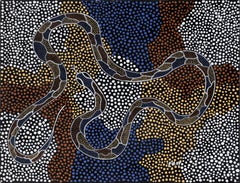
The Creator Serpent - Aboriginal Dot Painting in Acrylic on Canvas
Located in Soquel, CA
The Serpent - Aboriginal Dot Painting in Acrylic on Canvas
Bold dot painting with a snake by Aboriginal Australian artist Geoffrey "Pirup" Woods (Abor...
Category
Late 20th Century Symbolist Art
Materials
Canvas, Acrylic, Stretcher Bars
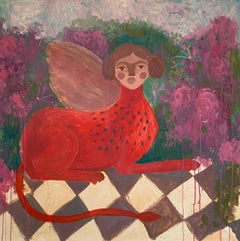
Garden guardian
Located in Zofingen, AG
This painting will come to you stretched on a wooden stretcher and completely ready to be placed in the interior.
ABOUT THE ARTWORK
"The 'Garden Guardian' serves as the keeper of our...
Category
2010s Symbolist Art
Materials
Canvas, Acrylic

$1,240 Sale Price
20% Off
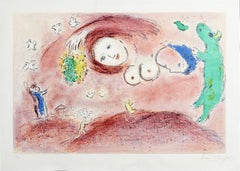
Springtime in the Meadow, from Daphnis and Chloe
By Marc Chagall
Located in OPOLE, PL
This work will be exhibited at Art on Paper NYC, September 4–7, 2025.
–-
Marc Chagall (1887–1985, France)
Springtime in the Meadow, from Daphnis and Chloe, 1961
Marc Chagall’s Sp...
Category
1960s Symbolist Art
Materials
Lithograph
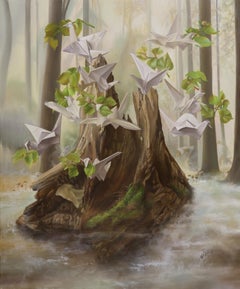
"The Call of Spring", Symboliste New Life Old Roots Clear Original Oil Painting
By Andrée Bars
Located in Clermont-Ferrand, Auvergne-Rhône-Alpes
“The Call of Spring”, is an original oil painting on linen by Andrée Bars.
Set in a soft forest bathed in golden ochre, misty beige, and earthy browns, this dreamlike composition c...
Category
2010s Symbolist Art
Materials
Oil
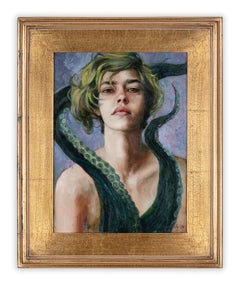
Seven Deadly Sins: Study for Lust by Gail Potocki, Framed oil painting on linen
By Gail Potocki
Located in Chicago, IL
A striking image from Gail Potocki's Seven Deadly Sins series, Lust is personified through a figure encircled by caressing tentacles Inspired by Hokusai's 1814 woodblock "The Dream o...
Category
2010s Symbolist Art
Materials
Oil
Buste de jeune femme avec un chat - Symbolist Portrait Oil by Guirand de Scevola
Located in Marlow, Buckinghamshire
Signed and dated oil on canvas portrait by French symbolist painter Lucien Victor Guirand De Scevola. The work depicts a brunette woman in an embellished off the shoulder white dress...
Category
Early 1900s Symbolist Art
Materials
Canvas, Oil

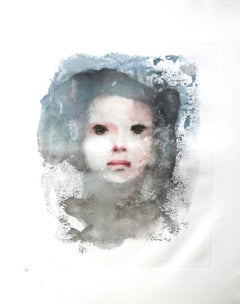
Portrait de Jeune Fille Portrait of a Girl 1970 original aquatint Leonor Fini
By Leonor Fini
Located in Paonia, CO
Portrait de Jeune Fille is a haunting portrait of a young girl also known as .. Justine… she could be either fading into the distance or just materializing out of a dream state. Her hair and the air around her is in shades of pale blue and the background is the white of the paper. This is a limited edition ( 170/300) aquatint , signed in the plate. In good condition with a 1" repaired tear midway on the right border which will not show when framed.
Argentinian-born artist Leonor Fini (1907-1996) is considered one of the great female artists of the twentieth century. She moved to Paris in the early 1930’s where she spent most of her life and almost immediately formed friendships with Salvador Dali, Cartier- Bresson, Max Ernst and other intellectuals of the time. At twenty five she had her first one person show in Paris and was included in the 1936 pivotal exhibition at MOMA…Fantastic Art, Dada and Surrealism…..and that same year had an exhibition at a famous avant garde gallery in New York. Although Fini never considered herself a Surrealist she maintained close personal relationships with several members of the group. One can see how their ideology influenced her work but she remained firmly rooted in the tradition of Symbolism, Metaphysics and Italian and German Romanticism Her works can be found in most important collections of modern art around the world.
Fini was renowned as a portraitist and as a painter of erotic sexual tensions with a mysterious atmosphere. She was adamant about being independent and not belonging to any one group. She lived life on her own terms and is sometimes referred to as …..the female Dali. She was also involved with designing for fashion and creating elaborate sets for opera and theatre. As a feminist she was definitely ahead of the times. She produced the first erotic male nude...
Category
20th Century Symbolist Art
Materials
Aquatint
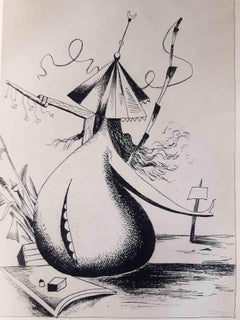
Métiers des Hommes - Rare Book Illustrated by Kurt Seligmann - 1936
Located in Roma, IT
Métiers des Hommes is an Original Rare book written by Pierre Courthion (1902-1988) and illustrated by Kurt Seligmann (Basel, 1900 - Middletown, 1961) in 1936.
Original Edition.
Pu...
Category
1920s Symbolist Art
Materials
Paper, Photogravure
$620 Sale Price
20% Off
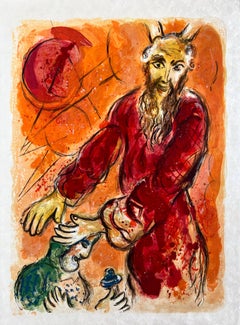
Then came Amalek and fought with Israel in Rephidim - The Exodus
By Marc Chagall
Located in OPOLE, PL
This work will be exhibited at Art on Paper NYC, September 4–7, 2025.
–
Marc Chagall (1887-1985) - Then came Amalek and fought with Israel in Rephidim. And Moses sayde to Ioshua, '...
Category
1960s Symbolist Art
Materials
Lithograph
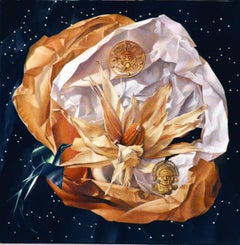
"La Pacha Mama", Ochre Golden Yellow Beige Symboliste Original Oil Painting
By Andrée Bars
Located in Clermont-Ferrand, Auvergne-Rhône-Alpes
“La Pacha Mama” is an original oil painting on linen by Andrée Bars.
Bathed in warm ochre, golden yellow, and soft beige tones, set against a starless blue background, this intimate...
Category
2010s Symbolist Art
Materials
Oil
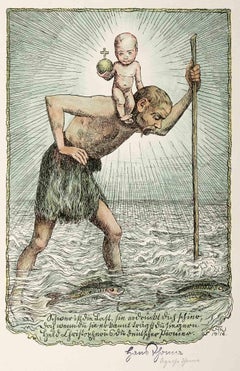
Christophorus II - Lithograph by Hans Thoma - 1916
By Hans Thoma 1
Located in Roma, IT
Lithograph realized by Hans Thoma in 1916 on light yellow paper.
Date and monogrammed in the plate.
Hand signed lower right.
Very good condition.
Category
1910s Symbolist Art
Materials
Lithograph
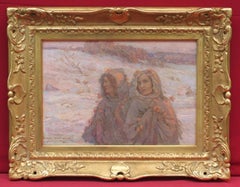
Painting 20th Century Symbolism Esotericism
By Numa François Gillet
Located in Saint-Ouen, FR
GILLET Numa François (1868- 1940)
Oil on wood panel signed low left
Dedicated and dated 1933
Old Antique frame gilded with gold leaves
Dim panel : 37 X 55 cm
Dim frame : 61 X 78 cm
GILLET Numa François (1868- 1940)
French 19th-20th century
Painter, ceramist, architect designer
Symbolist movement
Numa François Gillet...
Category
Early 20th Century Symbolist Art
Materials
Oil
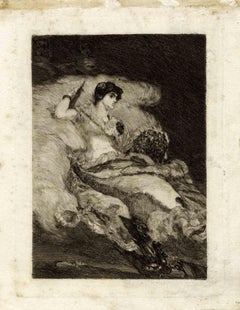
Die Balldame - Etching by Max Klinger - 1884
By Max Klinger
Located in Roma, IT
Rare etching realized by Max Klinger in 1884.
II state on 2.
Image dimensions: 13.9x19 cm.
Very good condition except for some diffused foxing in the margins.
Ref. Singer, 284.
Category
1880s Symbolist Art
Materials
Etching
Apocalypse de Saint Jean - Lithographs on Chine collé by Odilon Redon - 1899
By Odilon Redon
Located in Roma, IT
Apocalypse de Saint Jean is a complete suite of 13 b/w lithographs (cover + 12 lithographs) on Chine collé , realized by Odilon Redon. All the lithographs are unsigned, as issued.
P...
Category
1890s Symbolist Art
Materials
Lithograph
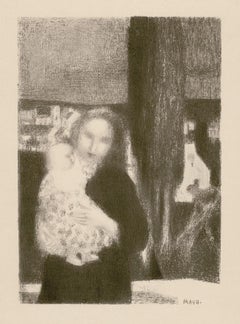
Untitled (Mother and Child)
Located in Myrtle Beach, SC
Maurice Denis, Untitled (Mother and Child), lithograph, 1897, edition not stated. Signed in the stone, lower right. Annotated in linotype 'MAURICE DENIS, ORIGINAL LITHOGRAPHIE PAN III' in the lower left sheet corner. A fine, atmospheric impression, in warm, dark gray ink, on buff wove paper, with full margins (2 1/2 to 1 3/4 inches); a small discoloration in the bottom left sheet corner, otherwise in good condition. Image size 8 5/8 x 6 7/8 inches; sheet size 13 7/8 x 10 5/8 inches. As published in 'Pan', the leading German magazine of the period devoted to art and literature. Matted to museum standards, unframed.
Collection: Los Angeles County Museum of Art.
Reproduced: German Expressionist Prints...
Category
1890s Symbolist Art
Materials
Lithograph
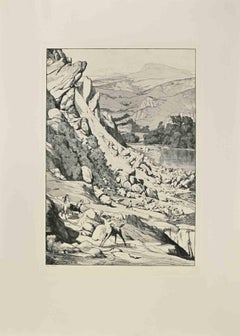
Landslide from Intermezzi - Etching by Max Klinger - 1881
By Max Klinger
Located in Roma, IT
Landslide from Intermezzi belongs to a series of prints called Intermezzi realized by Max Klinger, published by Nurnberg: Stroefer, 1881.
Etching on paper.
Signed on the plate
Goo...
Category
1880s Symbolist Art
Materials
Etching
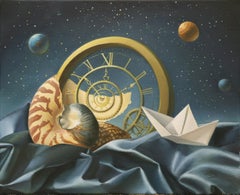
$834 Sale Price
30% Off
"The Tides", Blue and Gold Symbolist Original Oil Painting
By Andrée Bars
Located in Clermont-Ferrand, Auvergne-Rhône-Alpes
"The Tides", is a symbolist oil painting on canvas by Andrée Bars.
In this composition at once cosmic and contemplative, the artist explores the invisible motion that connects time...
Category
2010s Symbolist Art
Materials
Oil
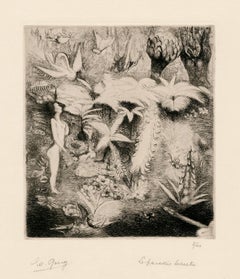
Le Paradis Terrestre
(Paradise on Earth) — French Symbolism
Located in Myrtle Beach, SC
Edouard Goerg, 'Le Paradis Terrestre' (Paradise on Earth), etching, 1931, edition 40. Signed, titled, and numbered '3/40' in pencil. A fine richly-inked impression, on heavy, cream w...
Category
1930s Symbolist Art
Materials
Etching
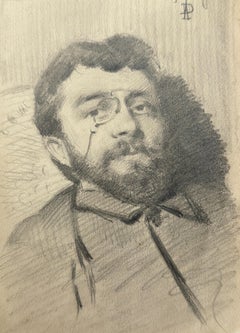
Portrait of a Man
By Armand Point
Located in Paris, Île-de-France
Attributed to Armand Point (1860–1932)
Portrait of a Man
Pencil on paper, 15.3 x 11 cm
Monogram upper right: interlaced "AP"
Provenance:
Private collection
This expressive portra...
Category
1920s Symbolist Art
Materials
Laid Paper, Pencil
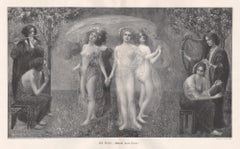
Musik und Danz (Music and Dance), after Eduard Veith, German antique engraving
By Eduard Veith
Located in Melbourne, Victoria
'Musik und Danz'
(Music and Dance)
German wood-engraving, circa 1895.
Central vertical fold as issued.
Eduard Veith was an Austrian portrait painter and stage designer. Many o...
Category
1890s Symbolist Art
Materials
Engraving
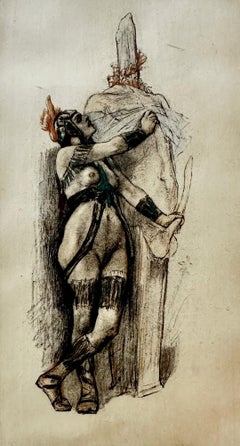
Prêtresse antique (Ancient Priestess)
Located in Middletown, NY
Heliogravure by Félicien Rops (1833 – 1898), a Belgian artist, known primarily as a printmaker in etching and aquatint. He is noted for his drawings depicting erotic and Satanic them...
Category
Late 19th Century Symbolist Art
Materials
Handmade Paper, Photogravure, Stencil
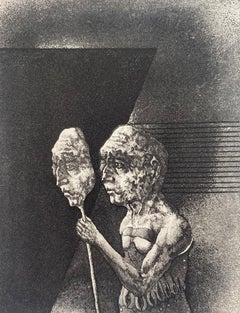
Portrait V paper/etching, 9.8x7.2 cm, 1986
Located in Riga, LV
Portrait V
paper/etching, 9.8x7.2 cm, 1986
Category
1980s Symbolist Art
Materials
Paper, Etching
$381 Sale Price
20% Off
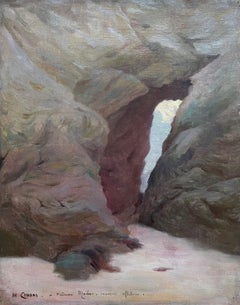
Cave in Brittany, study for the painting The Virgins of the cliffs
Located in PARIS, FR
Maurice CHABAS
Nantes 1862 - Versailles 1947
Cave in Brittany, study or reworking for the painting “Les Vierges des Falaises” (The Virgins of the Cliffs)
Circa 1895
Oil on canva...
Category
1890s Symbolist Art
Materials
Oil
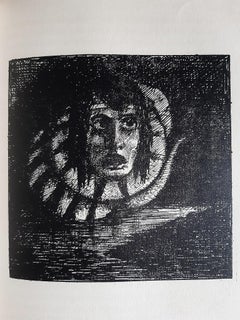
Aurelia - Rare Book Illustrated by Alfred Leopold Isidor Kubin - 1910
Located in Roma, IT
Aurelia is an original modern rare book written written by Gérard Labrunie (Paris, 1808 – Paris, 1855) and illustrated by Alfred Leopold Isidor Kubin (Leitmeritz, 1877 – Zwickledt, 1959) in 1910.
Original First Edition.
Published by Georg Muller, München/Leipzig.
Format: Large 8°.
The book includes 146 pages with 57 drawings (several are full page drawings).
Binding by Paul Renner
Mint conditions.
Alfred Leopold Isidor Kubin (Leitmeritz, 1877 – Zwickledt, 1959) in 1910. He was an Austrian printmaker, illustrator, and occasional writer. Kubin is considered an important representative of Symbolism and Expressionism. Kubin is considered an important representative of Symbolism and Expressionism and is noted for dark, spectral, symbolic fantasies, often assembled into thematic series of drawings. Like Oskar Kokoschka and Albert Paris Gütersloh, Kubin had both artistic and literary talent. He illustrated the works of Edgar Allan Poe, E. T. A. Hoffmann, and Fyodor Dostoevsky...
Category
1910s Symbolist Art
Materials
Paper, Photogravure
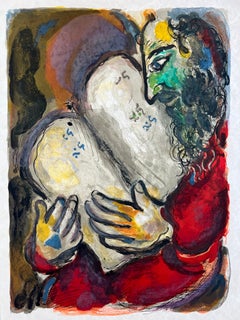
He wrote in the Tables the wordes of the covenant, even the Ten Commandments
By Marc Chagall
Located in OPOLE, PL
This work will be exhibited at Art on Paper NYC, September 4–7, 2025.
–
Marc Chagall (1887-1985) - He wrote in the Tables the wordes of the covenant, even the Ten Commandments
Li...
Category
1960s Symbolist Art
Materials
Lithograph
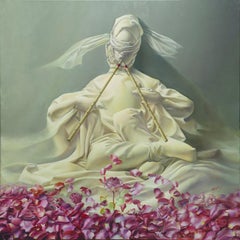
"The Flower Enchantress", Symbolist Reverie Dancing Petals Original OIl Painting
By Andrée Bars
Located in Clermont-Ferrand, Auvergne-Rhône-Alpes
"The Flower Enchantress", is an original oil painting on linen canvas by Andrée Bars.
In this mysterious and elegant painting, artist Andrée Bars pays a sensitive and personal tribu...
Category
2010s Symbolist Art
Materials
Oil
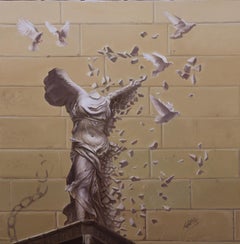
"War and Peace", Silent Requiem Broken Stone and Doves Original Oil Painting
By Andrée Bars
Located in Clermont-Ferrand, Auvergne-Rhône-Alpes
“War and Peace” is an original oil painting on linen by Andrée Bars.
In warm sandstone tones, ranging from ochre beige to dusty brown, this powerful composition stages a moment of t...
Category
2010s Symbolist Art
Materials
Oil
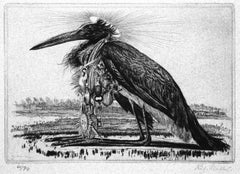
Das Grosse Tier II - Etching by Richard Muller - 1919
Located in Roma, IT
Das Grosse Tier II is an original etching and drypoint, realized by Richard Müller in 1919, signed on the plate, numbered 60/74 and signed in pencil l...
Category
1910s Symbolist Art
Materials
Etching
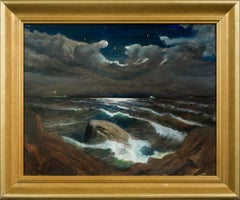
Dramatic Storm over Sandhamn, Sweden, 1943
Located in Stockholm, SE
This striking seascape, painted in 1943 by Jacob Löfgren, most likely depicts a view from Sandhamn, a location he frequently captured in his works. Four years earlier, he created ano...
Category
1940s Symbolist Art
Materials
Oil, Board
$4,197 Sale Price
20% Off
Seascape : As Light as a Feather - Original Oil on Canvas, Handsigned
Located in Paris, IDF
Bernard LOUEDIN
Seascape : As Light as a Feather, 1978
Original Oil on Canvas
Handsigned and dated in the lower left corner
On canvas 46 x 61 cm (c. 1...
Category
Late 20th Century Symbolist Art
Materials
Canvas, Oil
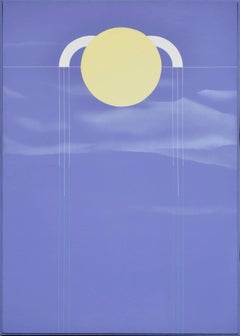
Zuni Moon - 1970
s Minimalist Geometric Abstract
Located in Soquel, CA
Minimalist geometric abstract by Santa Cruz, California artist Arn Ghigliazza (American, b.1937), 1971. Presented in a painted slat-wood frame. Titled "Zuni Moon", signed and dated 1...
Category
1970s Symbolist Art
Materials
Canvas, Acrylic
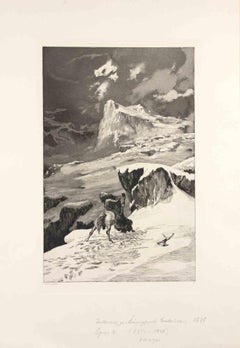
Kämpfende Kentauren - Etching by Max Klinger - 1881
By Max Klinger
Located in Roma, IT
Kämpfende Kentauren (Fighting Centaurs), is an etching and aquatint realized by Max Klinger in 1881. Plate V from “Intermezzi” Opus IV, 2nd state on 2, first edition.
Here the art...
Category
1880s Symbolist Art
Materials
Etching
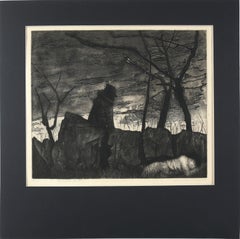
"The Graces Lie Shy" Intaglio Etching
Located in Soquel, CA
"The Graces Lie Shy" intaglio etching by Chaim Koppelman (American b.1920 d.2009).
Moody etching by prominent American printmaker and educator Chaim Koppelman. In this piece a nude...
Category
1950s Symbolist Art
Materials
Paper, Etching, Intaglio
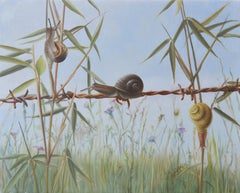
"Each Has Its Destiny", Snails in Nature Symboliste Oil Painting
By Andrée Bars
Located in Clermont-Ferrand, Auvergne-Rhône-Alpes
Titled "Each Has Its Destiny," this charming symbolist oil painting on canvas by Andrée Bars offers a serene and contemplative view of nature's delicate balance. The composition features three snails navigating their way across a barbed wire fence, set against a backdrop of a lush meadow under a clear blue sky.
The snails, each with distinctively colored shells – one brown, one dark, and one golden – symbolize individuality and the unique paths each creature takes in life. The barbed wire, often associated with barriers and challenges, contrasts with the gentle and slow movement of the snails, suggesting a journey filled with obstacles yet approached with patience and determination.
The bamboo stalks and various wildflowers in the background add a touch of whimsy and natural beauty, emphasizing the coexistence of fragility and resilience in the natural world. The delicate rendering of the leaves and flowers, along with the meticulous depiction of the snails, showcases the artist's attention to detail and mastery of texture.
The painting's soft lighting and subtle color palette evoke a sense of calm and introspection, inviting the viewer to reflect on the theme of destiny and the slow but steady progress each individual makes despite life's challenges. "Each Has Its Destiny" is a poignant reminder of perseverance and the unique journey every being undertakes, rendered with elegance and sensitivity.
Andrée Bars is a French painter. Having been strictly trained for 4 years by the American hyper-realist painter Mr. Ted Seth Jacobs, who himself inherited 19th century masters’ skills from his own professor, Andrée Bars learned the profession of painting in its purest tradition. She still applies these ancient masters...
Category
2010s Symbolist Art
Materials
Oil
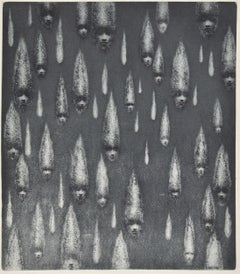
Change. Paper, etching, 39.5x59 cm
Located in Riga, LV
Nele Zirnite (1959)
2003 Associate Professor, Art Department, the Latvian Christian Academy
2000 M.F.A., the Latvian Art Academy
1995 – 2003 Lecturer, Graphic Arts Department...
Category
Early 2000s Symbolist Art
Materials
Paper, Etching

Nostalgia. 1995. Paper, etching, 41x36 cm
Located in Riga, LV
Nele Zirnite (1959)
2003 Associate Professor, Art Department, the Latvian Christian Academy
2000 M.F.A., the Latvian Art Academy
1995 – 2003 Lecturer, Graphic Arts Department...
Category
1990s Symbolist Art
Materials
Paper, Etching
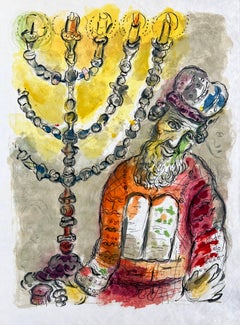
Thou shalt also anoint Aaron and his sonnes, and shalt... - The Exodus
By Marc Chagall
Located in OPOLE, PL
This work will be exhibited at Art on Paper NYC, September 4–7, 2025.
–
Marc Chagall (1887-1985) - Thou shalt also anoint Aaron and his sonnes, and shalt consecrate them, that they...
Category
1960s Symbolist Art
Materials
Lithograph
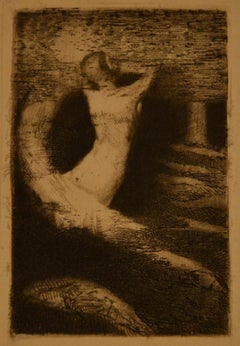
Passage d
une Ame
By Odilon Redon
Located in Roma, IT
Passage d'une Ame is an original artwork realized by Odilon Redon realized in 1891.
Original Etching on paper.
Proof on vélin, belonging to a separate edition, with Full margins.
Goo...
Category
1890s Symbolist Art
Materials
Etching
Mother and Child Before Notre-Dame
By Marc Chagall
Located in OPOLE, PL
Marc Chagall (1887-1985) - Mother and Child Before Notre-Dame
Lithograph from 1952.
Dimensions of work: 35 x 26 cm
Publisher: Tériade, Paris.
On the verso another Lithograph in b...
Category
1950s Symbolist Art
Materials
Lithograph
$858 Sale Price
20% Off
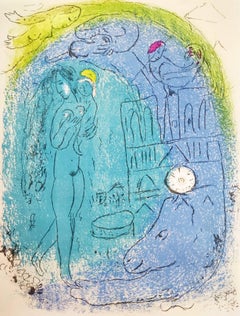
Night Dream : the Swanns - Original Lithograph, 1898
Located in Paris, IDF
Francis JOURDAIN
Night Dream : the Swanns, 1898
Original lithograph (Champenois workshop)
Printed signature in the plate
On vellum, 40 x 31 cm (c. 16 x 12 in)
INFORMATION: Lithogra...
Category
1890s Symbolist Art
Materials
Lithograph
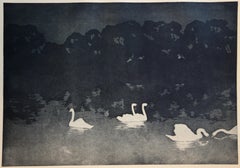
Le Sire De Lumey
Located in Middletown, NY
Brussels: J. Bouwens, 1867. Etching with aquatint and engraving on laid Japan paper, 9 3/4 x 6 1/2 inches (247 x 163 mm), full margins. Fifth state (of 5). Scattered moderate foxing....
Category
Late 19th Century Symbolist Art
Materials
Laid Paper, Engraving, Etching, Aquatint
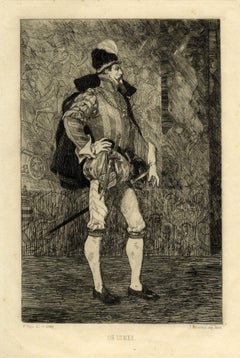
Ex Libris Joaquin Alvarez Calvo - Woodcut Print - Mid-20th Century
Located in Roma, IT
Ex Libris Joaquin Alvarez Calvo is a woodcut print on ivory-colored paper. The work is glued on cardboard.
Total dimensions: 21 x 15.5 cm.
The artwork represents a figure who holds...
Category
Mid-20th Century Symbolist Art
Materials
Woodcut
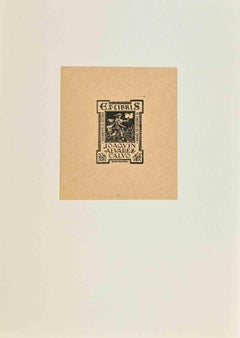
Sire Halewyn - Original Etching, Drypoint and Color Pencil by F. Khnopff - 1893
Located in Roma, IT
Sire Halewyn is an original drypoint and color pencil on Japanese paper, realized by Fernand Khnopff in 1893, hand-signed and titled.
In very good conditions.
Fernand Khnopff's ...
Category
1890s Symbolist Art
Materials
Drypoint, Etching

Menashe Kadishman, Sheep head 31, Acrylic on canvas
Located in Tel Aviv, IL
Menashe Kadishman, Sheep head, Symbolist painting, colored painting, Israeli art, Israeli art
Category
1980s Symbolist Art
Materials
Acrylic
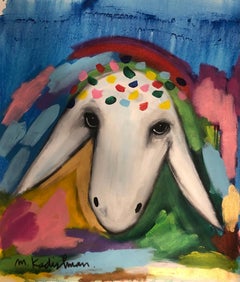
Abel Pann Israeli Bezalel School Lithograph Judaica Biblical Print Jewish Art
By Abel Pann
Located in Surfside, FL
Abel Pann (1883–1963) was a European Jewish painter who settled in the Talpiot neighborhood of Jerusalem in the early twentieth century and taught at the Bezalel Academy of Art under...
Category
Mid-20th Century Symbolist Art
Materials
Lithograph
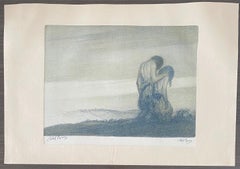
Sogno di Oro (Golden Dream) - Symbolist Figurative Painting in Blue and Gold
Located in New York, NY
Gregory Kitterle's Sogno di Oro (Golden Dream) is a 39 x 50 inch horizontal figurative symbolist painting on canvas. This work brings the viewer in a magical setting of lapis lazuli ...
Category
2010s Symbolist Art
Materials
Oil, Canvas
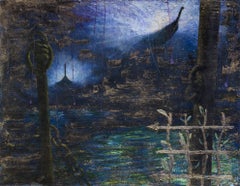
Moonlit Night from Intermezzi - Etching by Max Klinger - 1881
By Max Klinger
Located in Roma, IT
Moonlit Night from Intermezzi belongs to a series of prints called Intermezzi realized by Max Klinger, published by Nurnberg: Stroefer, 1881.
Etching on paper.
Signed in the plate
...
Category
1880s Symbolist Art
Materials
Etching
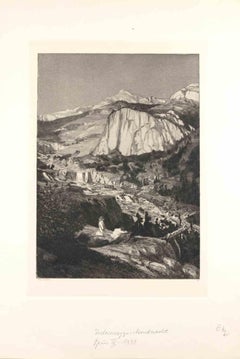
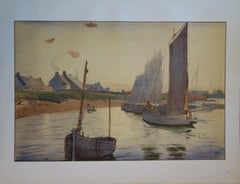
Melancolic Seascape with Sailboats - Original Lithograph, 1898
Located in Paris, IDF
Francis JOURDAIN
Melancolic Seascape with Sailboats, 1898
Original lithograph (Champenois workshop)
Printed signature in the plate
On vellum, 40 x 31 cm (c. 16 x 12 in)
INFORMATION...
Category
1890s Symbolist Art
Materials
Lithograph
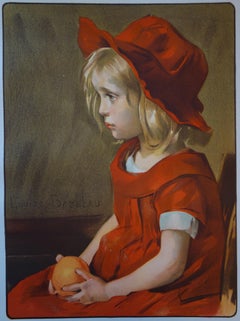
Young Girl with an Orange - Original lithograph, 1898
Located in Paris, IDF
Louise BRESLAU
Young Girl with an Orange, 1898
Original lithograph (Champenois workshop)
Printed signature in the plate
On vellum, 40 x 31 cm (c. 16 x 12 in)
INFORMATION: Lithograp...
Category
1890s Symbolist Art
Materials
Lithograph
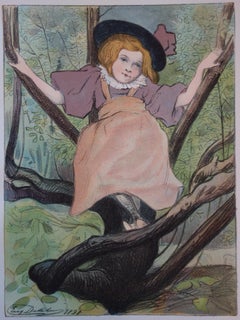
Young Girl Playing in the Woods - Original lithograph, 1898
Located in Paris, IDF
Eugene DELATRE
Young Girl Playing in the Woods, 1898
Original lithograph (Champenois workshop)
Printed signature in the plate
On vellum, 40 x 31 cm (c. 16 x 12 in)
INFORMATION: Lit...
Category
1890s Symbolist Art
Materials
Lithograph
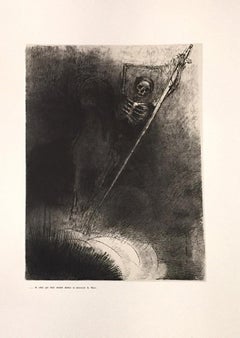
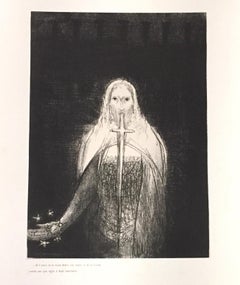
Et is avait en sa main droite sept étoiles - Litho by O. Redon - 1899
By Odilon Redon
Located in Roma, IT
"Et is avait en sa main droite sept étoiles" is an original black and white lithograph realized by Odilon Redon in 1899.
The artwork is the no.1 Illustration of the “Apocalypse de S...
Category
1890s Symbolist Art
Materials
Lithograph
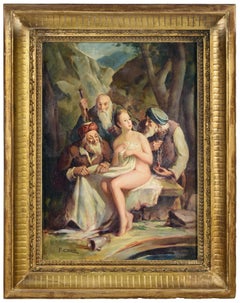
Susanna and the elders by Symbolist Felice Carena
Located in New York, NY
Oil on panel painting by Felice Carena depicting Susanna and the elders.
Signed low left "F. Carena"
Category
Early 20th Century Symbolist Art
Materials
Oil, Wood Panel
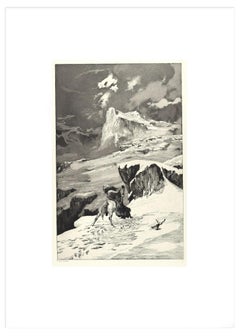
Fight Between Centaurs - Etching and Aquatint by Max Klinger - 1881
By Max Klinger
Located in Roma, IT
Fight Between Centaurs from "Intermezzi" is an original print realized by Max Klinger in 1881.
Signature and number of the print on plate.
Black and white etching and aquatint. Ori...
Category
1880s Symbolist Art
Materials
Etching, Aquatint
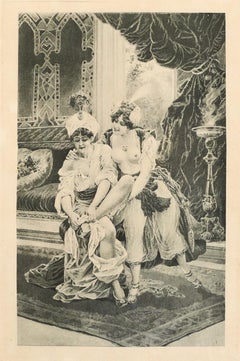
The Harem - Heliogravure - 1906
Located in Roma, IT
Image dimensions: 17.7 x 13.5 cm.
The Harem is a black and white héliogravure on paper, realized in 1906 by an anonymous Austrian artist.
An original illu...
Category
Early 1900s Symbolist Art
Materials
Engraving
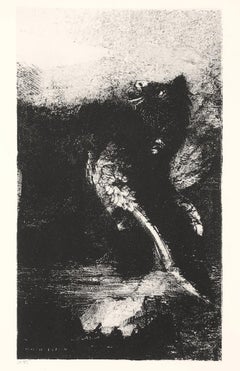
La Chimère aux Yeux Verts - Lithograph by O. Redon - 1888
By Odilon Redon
Located in Roma, IT
Chimera with Green Eyes is an original lithograph on Chine collé, realized by Odilon Redon in 1888, plate 7 from “Les tentations de St.Antoine” (1ère série), unique state, first e...
Category
1880s Symbolist Art
Materials
Etching
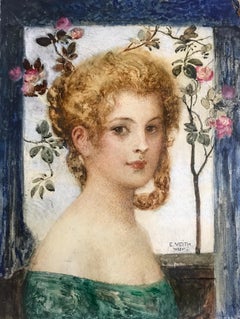
VEITH E. Young girl with rose tree. Oil on cardboard. Signed and situated
Wien
By Eduard Veith
Located in Paris, FR
Young girl with rose tree. Oil on cardboard. Signed and situated 'Wien'
Eduard Veith, son of the room painter Julius Veith (1820-1887) and his w...
Category
Early 20th Century Symbolist Art
Materials
Oil
Symbolist art for sale on 1stDibs.
Find a wide variety of authentic Symbolist art available for sale on 1stDibs. Works in this style were very popular during the 21st Century and Contemporary, but contemporary artists have continued to produce works inspired by this movement. If you’re looking to add art created in this style to introduce contrast in an otherwise neutral space in your home, the works available on 1stDibs include elements of orange, blue, green, red and other colors. Many Pop art paintings were created by popular artists on 1stDibs, including Michel Fingesten, Abel Pann, Franz von Bayros (Choisi Le Conin), and Ferdinand Hodler
R. Piper
Co.. Frequently made by artists working with Paint, and Oil Paint and other materials, all of these pieces for sale are unique and have attracted attention over the years. Not every interior allows for large Symbolist art, so small editions measuring 1.58 inches across are also available. Prices for art made by famous or emerging artists can differ depending on medium, time period and other attributes. On 1stDibs, the price for these items starts at $55 and tops out at $378,675, while the average work sells for $863.
More Ways To Browse
Mauritz Lindstrom
Maximillien Luce
Michael Budden Central Park
Midcentury Matador Paintings
Mike Wright
Miracle On Ice
Mississippi River Painting
Monarch Of The Glen Painting
Moroccan Paintings Essaouira
Morpho Butterfly Art
Mount Tamalpais
Murray Dessner
Native American Oklahoma
New England Barn
New Orleans Jazz Poster
Niagara Falls Oil
Oil Painting By Alice
Oil Painting Willow Tree