Ararat Rugs Rugs and Carpets

to
54
Width
to
Length
to
303
1
303
303
303
303
303
303
303
303
303
303
303
295
301
12,330
3,860
1,448
1,172
Creator: Ararat Rugs
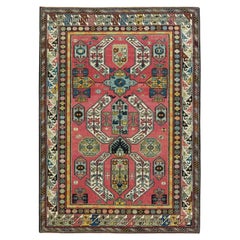
Ararat Rugs Kazak Rug with Hooked Medallions, Caucasian Carpet, Natural Dyed
By Ararat Rugs
Located in Tokyo, JP
Kazak Rug with Hooked Medallions This is a complete hooked field with double medallions rug from the late 19th century, Kazak region, Caucasus area. A striking field design features ...
Category

21st Century and Contemporary Turkish Revival Ararat Rugs Rugs and Carpets

Materials

Wool, Natural Fiber, Organic Material
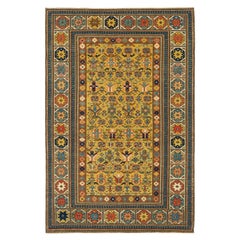
Ararat Rugs Lenkoran Rug Caucasian Revival 19 Century Carpet, Natural Dyed
By Ararat Rugs
Located in Tokyo, JP
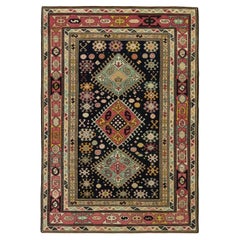
The source of the rug comes from the book Tapis du Caucase - Rugs of the Caucasus, Ian Bennett & Aziz Bassoul, The Nicholas Sursock Museum, Beirut, Lebanon 2003, nr.52. This is a uni...
Category

21st Century and Contemporary Turkish Revival Ararat Rugs Rugs and Carpets

Materials

Wool, Natural Fiber, Organic Material
Ararat Rugs Chichi Kuba Rug Antique Caucasus Revival Oriental Carpet Natural Dye
By Ararat Rugs
Located in Tokyo, JP
The design source of the rug comes from the book Oriental Rugs Volume 1 Caucasian, Ian Bennett, Oriental Textile Press, Aberdeen 1993, nr.360. The alternating row of octagons and spi...
Category

21st Century and Contemporary Turkish Revival Ararat Rugs Rugs and Carpets

Materials

Wool, Natural Fiber, Organic Material
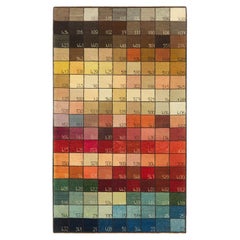
Ararat Rugs The Original Color Chart Rug, Turkish Carpet, Natural Dyed Cartela
By Ararat Rugs
Located in Tokyo, JP
Introducing the Color Chart Rug from Ararat Rugs, a masterpiece that exemplifies the rich tradition of natural dyeing and expert craftsmanship. This rug is meticulously handwoven wit...
Category

21st Century and Contemporary Turkish Oushak Ararat Rugs Rugs and Carpets

Materials

Wool, Natural Fiber, Organic Material
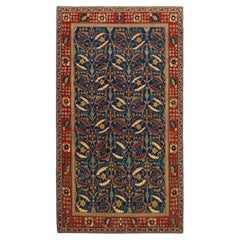
Ararat Rugs Kerman Vase Carpet from Alice de Rothschild Collection Natural Dyed
By Ararat Rugs
Located in Tokyo, JP
The Kerman Vase-Technique Carpet by Ararat Rugs is a distinguished creation inspired by the renowned 17th-century Kerman "Vase" carpets of southeastern Persia. This piece embodies the elegance and sophistication characteristic of Persian court art from that era. A poetic reinterpretation of the famed Rothschild vase...
Category

21st Century and Contemporary Turkish Revival Ararat Rugs Rugs and Carpets

Materials

Wool, Natural Fiber, Organic Material
Ararat Rugs Modern Design Gabbeh Rug, Persian Mid-Century Design Natural Dyed
By Ararat Rugs
Located in Tokyo, JP
This Gabbeh rug, designed in the 1930s, is a type of handwoven rug that originated from Iran, specifically from the southwestern region known as Fars. The word "Gabbeh" itself means ...
Category

21st Century and Contemporary Turkish Oushak Ararat Rugs Rugs and Carpets

Materials

Wool, Natural Fiber, Organic Material
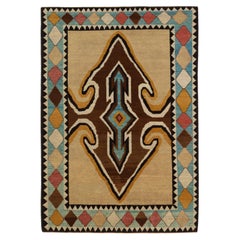
Ararat Rugs Shirvan Rug with Kufic Border - Antique Caucasian Revival Carpet
By Ararat Rugs
Located in Tokyo, JP
Introducing the exquisite Shirvan Rug from Ararat Rugs—a true testament to the rich tapestry of Caucasian artistry. Handcrafted with precision in Diyarbakir, Turkey, this rug encapsu...
Category

21st Century and Contemporary Turkish Revival Ararat Rugs Rugs and Carpets

Materials

Wool, Natural Fiber, Organic Material
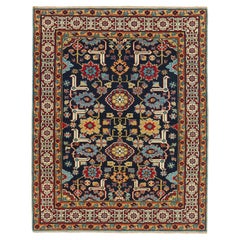
Ararat Rugs Mina Khani Rug, 19th Century Persian Revival Carpet, Natural Dyed
By Ararat Rugs
Located in Tokyo, JP
The source of the rug comes from the book Antique Rugs of Kurdistan A Historical Legacy of Woven Art, James D. Burns, 2002 nr.2. This was an exclusive example of a Mina Khani lattice...
Category

21st Century and Contemporary Turkish Revival Ararat Rugs Rugs and Carpets

Materials

Wool, Natural Fiber, Organic Material
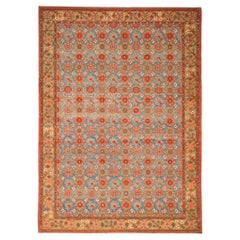
Ararat Rugs Mamluk Wagireh Rug with Lattice Pattern Design Egypt Revival Carpet
By Ararat Rugs
Located in Tokyo, JP
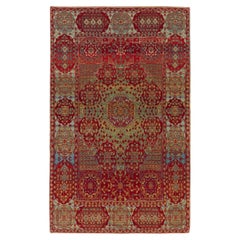
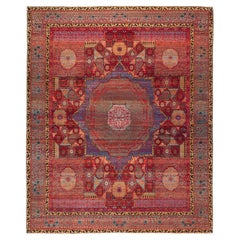
This lattice pattern is composed of palmettes and leaves filling the various compartments against the imposing ground. One has the impression that it is only part of a larger scheme designed 15th-century rug from the Mamluk era, Cairo region, Eygpt. These designs have often been described as wagirehs or samplers and were said to have been used as weaver`s aids, or for demonstration purposes, made as a template or pattern for the carpet design and production of larger rugs, they are generally small pieces of the size of a scatter rug or mat. Mamluk carpets originated in a physical environment that lacked the combination of abundant marginal grazing land and a temperate climate with cool winters that were common to most carpet-weaving areas in the Islamic world. While related to a broader tradition of Turkish weaving centered in Anatolia, far to the north, the designs of these carpets include atypical elements, such as stylized papyrus plants, that are deeply rooted in Egyptian tradition. Their unusual composition and layout probably represent an attempt to develop a distinctive product that could in effect establish a “Mamluk brand” in the lucrative European export market. The uncharacteristic color scheme—devoid of the undyed white pile and employing a limited range of three or five hues in much the same value—also suggests a conscious attempt to create a particular stylistic identity. Also virtually unique in the world of Islamic carpets is the S-spun wool. It has been argued that the tradition of clockwise wool spinning originated in Egypt because of the earlier Egyptian tradition of spinning flax into linen thread. Details of the plant’s botanical structure make it impossible to spin flax fiber in the more common counterclockwise direction utilized throughout the Middle East for wool and cotton. Mamluk carpets with the color combinations seen in the Simonetti are now generally accepted as part of an earlier tradition that has many links to the weaving of Anatolia, Iran, and Syria. The “three-color” Mamluk carpets, well represented in the Metropolitan’s collection, represent a later development that continued well after the Ottoman conquest of Egypt in 1517. Many such carpets may have been produced well into the seventeenth century, and possibly even later. (Walter B. Denny in [Ekhtiar, Soucek, Canby, and Haidar 2011]). The design of the rug is interpreted by our designers from our Mamlouk-type rugs collection and soft colors are used for this rug. Color summary: 3 colors in total; Moss Green 27 (Spurge – Indigo) Mount Olive...
Category

21st Century and Contemporary Turkish Revival Ararat Rugs Rugs and Carpets

Materials

Wool, Natural Fiber, Organic Material
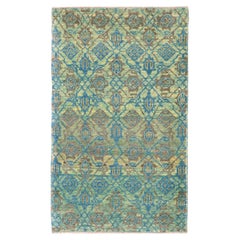
Ararat Rugs Mina Khani Rug, 19th Century Kurdish Revival Carpet, Natural Dyed
By Ararat Rugs
Located in Tokyo, JP
Introducing the exquisite Kurdish Bidjar Mina Khani Rug from Ararat Rugs, a masterpiece that exemplifies the rich weaving traditions of the Bidjar regio...
Category

21st Century and Contemporary Turkish Oushak Ararat Rugs Rugs and Carpets

Materials

Wool, Natural Fiber, Organic Material
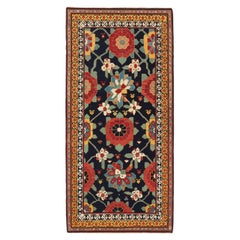
Ararat Rugs Oushak Palmette Lattice Rug Ushak Turkish Revival Carpet Natural Dye
By Ararat Rugs
Located in Tokyo, JP
The town of Ushak, north of Denizli, is probably one of the most important and renowned carpet centers. Carpets have survived since the 16th century and can be seen in several museums. In the 17th century great quantities of Ushak carpets were made for the royal houses of Europe, often incorporating crests; many Christian churches, not only in Transylvania, were often decorated with very large pieces. According to their structure and patterning, there are several types of Ushak carpets: the star Ushak, the medallion Ushak, the ‘bird’ carpet (with a white background, the name relates to the shapes of the field motifs), and ‘Chintamani’ carpets (often with a white background and three-ball pattern, mostly in connection with cloud bands). Many great painters have ensured the survival of Ushak carpet designs by including them in their works. Two representatives of the Ushak group take their name from such renowned artists: pieces with plaited band medallions in several variations are named ‘Holbein’ carpets after Hans Holbein, the younger; ‘Lotto’ carpets refer to the painter Lorenzo Lotto...
Category

21st Century and Contemporary Turkish Oushak Ararat Rugs Rugs and Carpets

Materials

Wool, Natural Fiber, Organic Material
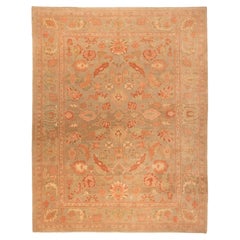
Ararat Rugs Palmettes and Flowers Lattice Rug, Revival Carpet, Natural Dyed
By Ararat Rugs
Located in Tokyo, JP
This offset pattern is composed of palmettes and flowers, one has the impression that it is only part of a larger scheme design 19th century rug from the Bidjar region, Eastern Kurdi...
Category

21st Century and Contemporary Turkish Revival Ararat Rugs Rugs and Carpets

Materials

Wool, Natural Fiber, Organic Material
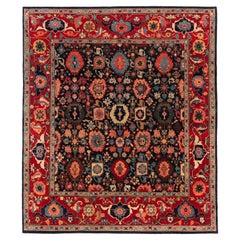
Ararat Rugs Gerous Bidjar Wagireh Pendant Rug Oriental Antique Revival Carpet
By Ararat Rugs
Located in Tokyo, JP
The most dramatic of the Gerous ( Garrus, Gerus, Garus ) carpets are those with an "asymmetric" design. Only a section of the original is shown, in the same way, many Lotto carpets w...
Category

21st Century and Contemporary Turkish Revival Ararat Rugs Rugs and Carpets

Materials

Wool, Natural Fiber, Organic Material
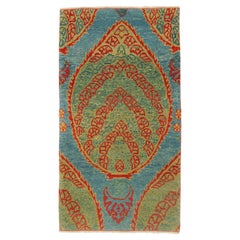
Ararat Rugs Mamluk Rug with Central Star 16th Cent. Revival Carpet Natural Dyed
By Ararat Rugs
Located in Tokyo, JP
Introducing the exquisite Mamluk Rug with Central Star from Ararat Rugs, a masterpiece that embodies the rich heritage of Mamlouk artistry. Handcrafted with meticulous attention to d...
Category

21st Century and Contemporary Turkish Revival Ararat Rugs Rugs and Carpets

Materials

Wool, Natural Fiber, Organic Material

Ararat Rugs Star and Octagon Medallion Carpet Anatolian Revival Rug Natural Dyed
By Ararat Rugs
Located in Tokyo, JP
The source of carpet comes from the book Orient Star – A Carpet Collection, E. Heinrich Kirchheim, Hali Publications Ltd, 1993 nr.161. This exceptionally elegant and unusual central ...
Category

21st Century and Contemporary Turkish Oushak Ararat Rugs Rugs and Carpets

Materials

Wool, Natural Fiber, Organic Material
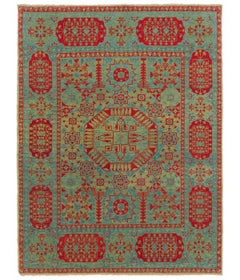
Ararat Rugs Gerous Bidjar Wagireh Rug Revival Carpet Natural Dyed Yastik Size
By Ararat Rugs
Located in Tokyo, JP
The most dramatic of the Gerous ( Garrus, Gerus, Garus ) carpets are those with an "asymmetric" design. Only a section of the original is shown, in the same way, many Lotto carpets w...
Category

21st Century and Contemporary Turkish Revival Ararat Rugs Rugs and Carpets

Materials

Wool, Natural Fiber, Organic Material

Ararat Rugs Mina Khani Karabagh Rug, Caucasus Revival Carpet, Natural Dyed
By Ararat Rugs
Located in Tokyo, JP
The source of the rug comes from the book Oriental Rugs Volume 1 Caucasian, Ian Bennett, Oriental Textile Press, Aberdeen 1993, nr.250-251. This is a...
Category

21st Century and Contemporary Turkish Revival Ararat Rugs Rugs and Carpets

Materials

Wool, Natural Fiber, Organic Material
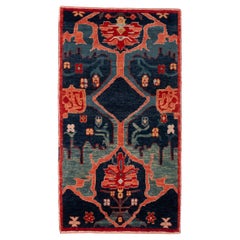
Ararat Rugs Modern Rug with Mamluk Jerrehian Border Design, Natural Dyed Carpet
By Ararat Rugs
Located in Tokyo, JP
The source of the rug comes from the possession of Endre Unger, which was sold at Sotheby’s in 1992. That rug with the central star was designed in the early 16th-century rug by Maml...
Category

21st Century and Contemporary Turkish Revival Ararat Rugs Rugs and Carpets

Materials

Organic Material, Natural Fiber, Wool

Ararat Rugs Kuba Rug with Octagons Caucasian 19th C. Revival Rug, Natural Dyed
By Ararat Rugs
Located in Tokyo, JP
The source of rug comes from the book Tapis du Caucase – Rugs of the Caucasus, Ian Bennett & Aziz Bassoul, The Nicholas Sursock Museum, Beirut, Lebanon 2003, nr.79. This is a very colorful, dramatic, and unusual design rug from the late 19th century, Kuba region, Caucasus area. The series of octagons arranged in horizontal rows, each with a delicately drawn quatrefoil center, is reminiscent of a group of octagon rugs...
Category

21st Century and Contemporary Turkish Revival Ararat Rugs Rugs and Carpets

Materials

Wool, Natural Fiber, Organic Material
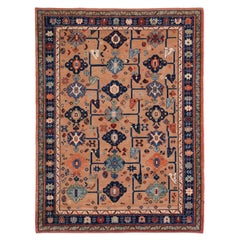
Ararat Rugs Village Rug with Medallion, Anatolian Revival Carpet Natural Dyed
By Ararat Rugs
Located in Tokyo, JP
The source of the rug comes from the book Orient Star – A Carpet Collection, E. Heinrich Kirchheim, Hali Publications Ltd, 1993 nr.160. This unusual shape of a central octagon and cross-shaped hooks in the diamond design 17th-century rug from the Central Anatolia area, Turkey. This rug’s design is contrary and unusual because it is made by the village weaver who had never learned the theoretical structure of the classical 2-1-2 composition design. Among specialists, Anatolian carpets and kilims are believed to record symbols of ancient values and ideas. This tradition dates back several millennia and was only displaced during the industrial age. The Anatolian kilim design tradition probably owes its lucky survival to the fact that pile-woven carpets look more precious and would already have had a higher prestige value several millennia ago. Kilim weaving was, therefore, able to survive undisturbed within an intact cultural context for a long period of time. Our designers interpret the design of this rug and vivid colors are chosen for this rug. Color summary: 9 colors in total, most used 4 colors are; Burlywood 135 (Spurge – Madder Root) Natural Wool Color 320 (Specially Washed) Black Chocolate 434 (Pomegranate – Spurge – Madder Root) Charleston Green...
Category

21st Century and Contemporary Turkish Revival Ararat Rugs Rugs and Carpets

Materials

Wool, Natural Fiber, Organic Material

Ararat Rugs Mamluk Wagireh Rug with Leaf Lattice Design Door Mat Entrance Carpet
By Ararat Rugs
Located in Tokyo, JP
The design source of the carpet comes from the book Völker, Angela, Die orientalischen Knüpfteppiche das MAK, Vienna: Böhlau, 2001: 42–5. That rug with the central star was designed ...
Category

21st Century and Contemporary Turkish Revival Ararat Rugs Rugs and Carpets

Materials

Wool, Natural Fiber, Organic Material

Ararat Rugs Holland Park William Morris Carpet, Arts and Crafts, Natural Dyed
By Ararat Rugs
Located in Tokyo, JP
The source of carpet comes from the book Arts & Crafts Carpets, by Malcolm Haslam, and David Black, 1991, fig.49. This Hammersmith carpet was designed by William Morris in 1882, in the United Kingdom. In 1887 English artist and bookbinder T.J. Cobden Sanderson, suggested that a new group be named the “Arts and Crafts Exhibition Society” As a result, he was the first to use the term “Art and Crafts” and also is credited with naming this new emerging movement. The Arts & Crafts movement was inspired by the degradation of product standards that resulted from the factory production age. The rise of machinery in manufacturing caused a noticeable decline in uniqueness and crafts. These anti-Industrial reformers promoted economic advancement and social change. They wanted to eliminate poor quality and “artificial” items from 19th century British society. They saw a plethora of uninteresting items on display at the Great Exhibition of 1851 and became inspired to launch a Campaign for originality and uniqueness. William Morris was an English designer, as well as an uplifting social activist and writer. Morris is credited with sparking the rebirth of textile arts and traditional means of production. In 1861, Morris and a small group of designers opened an incredibly fashionable design company that grew to be largely successful. Morris left behind works in many different mediums such as textiles, books, furniture, stained glass, and area rugs. But in the end, he is most remembered for the magnificent wallpapers that he designed. He got much of his inspiration from the natural world. Through his interior decor pieces, Morris set out to convert rooms or spaces into meadows with beautiful trees meandering, vines, and plants. This concept of taking something Industrial and man-made, and converting it into something natural is what William Morris meant when he once said: “-any decoration is futile… when it does not remind you of something beyond itself.” Morris was a huge commercial success and his works are some of the most sought-after pieces in the world of design and decor. He is also credited with almost single-handedly reviving the British textile arts as well as their methods of production. Morris was also severely critical of machine-made goods, exclaiming, “Today almost all wares that are made by civilized man are shabbily and pretentiously ugly.” Houses were filled “with tons and tons of unutterable rubbish,” which, he suggested, should be heaped onto a gigantic bonfire! “As a condition of life, production by machinery is altogether evil.” He masterminded one of the most well-known styles of Arts & Crafts, recognizable by its twisting and arching patterns and simple, elegant floral design prints. Although Morris believed that Persian carpets were the greatest ever made, he adopted the coarser Turkish (Ghiordes) knot for his hand knotted carpet manufacture. They were woven at a thickness of 25 knots to the square inch at that time. Morris & Co.’s rugs are reminiscent of Persian garden design carpets in that they are smartly styled depictions of English gardens. Donegal also started producing highly desirable Irish rugs in the late 19th century. The Donegal rugs were predominantly created by English architects C.F.A. Voysey and Gavin Morton. The handcrafted Voysey rugs are typically woven in England, Scotland, and Ireland. Voysey had a knack for using contrasting shapes to decorate flat monochromatic spaces. Dark outlines added a flair of drama to his signature pattern and Celtic rug...
Category

21st Century and Contemporary Turkish Arts and Crafts Ararat Rugs Rugs and Carpets

Materials

Wool, Natural Fiber, Organic Material

Ararat Rugs Mina Khani Karabagh Rug, Caucasus Revival Carpet, Natural Dyed
By Ararat Rugs
Located in Tokyo, JP
The source of the rug comes from the book oriental rugs volume 1 Caucasian, Ian Bennett, Oriental Textile Press, Aberdeen 1993, nr.250-251. This is a...
Category

21st Century and Contemporary Turkish Revival Ararat Rugs Rugs and Carpets

Materials

Wool, Natural Fiber, Organic Material

Ararat Rugs Swastika Design Rug, Antique Caucasus Revival Carpet, Natural Dyed
By Ararat Rugs
Located in Tokyo, JP
The source of rug comes from the book Orient Star – A Carpet Collection, E. Heinrich Kirchheim, Hali Publications Ltd, 1993 nr.17. This is a remarkable and...
Category

21st Century and Contemporary Turkish Revival Ararat Rugs Rugs and Carpets

Materials

Organic Material, Natural Fiber, Wool
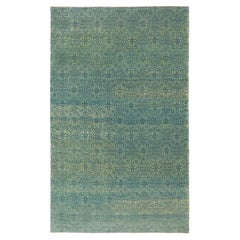
Ararat Rugs Kuba Rug with Palmettes Caucasian 19th C. Revival Rug, Natural Dyed
By Ararat Rugs
Located in Tokyo, JP
This is an ascending palmette and flower design Shirvan rug from the 19th century, Kuba region, Eastern Caucasus area. Kuba rugs of this predominantly yellow-ground group are well-kn...
Category

21st Century and Contemporary Turkish Revival Ararat Rugs Rugs and Carpets

Materials

Wool, Natural Fiber, Organic Material
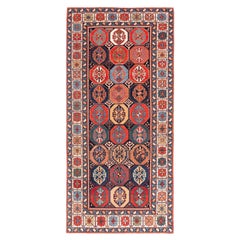
Ararat Rugs Seichur Kuba Rug Caucasian Antique Kazak Revival Carpet Natural Dyed
By Ararat Rugs
Located in Tokyo, JP
The source of the rug comes from the book Tapis du Caucase - Rugs of the Caucasus, Ian Bennett & Aziz Bassoul, The Nicholas Sursock Museum, Beirut, Lebanon 2003, nr.90 and Oriental R...
Category

21st Century and Contemporary Turkish Revival Ararat Rugs Rugs and Carpets

Materials

Wool, Natural Fiber, Organic Material
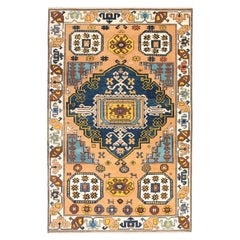
Ararat Rugs Star Medallion Shirvan Rug Caucasian Revival Carpet, Natural Dyed
By Ararat Rugs
Located in Tokyo, JP
This is a large stellar medallion with stripes in a cruciform border design rug from the 19th century, Shirvan region, Caucasus area. In the field, two large star medallions are cove...
Category

21st Century and Contemporary Turkish Revival Ararat Rugs Rugs and Carpets

Materials

Wool, Natural Fiber, Organic Material
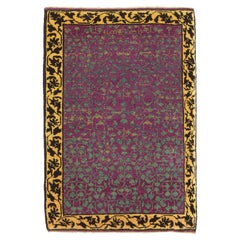
Ararat Rugs Gerous Arabesque Rug, Antique Persian Revival Carpet, Natural Dyed
By Ararat Rugs
Located in Tokyo, JP
The source of the rug comes from the book Islamic Carpets, Joseph V. McMullan, Near Eastern Art Research Center Inc., New York 1965 nr.22. This is a system of arabesque-designed 19th...
Category

21st Century and Contemporary Turkish Revival Ararat Rugs Rugs and Carpets

Materials

Wool, Natural Fiber, Organic Material
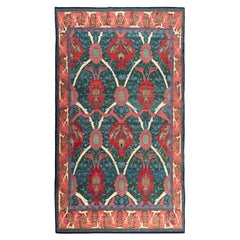
Ararat Rugs Akstafa Kazak Rug, 19th C. Caucasian Revival Carpet Natural Dyed
By Ararat Rugs
Located in Tokyo, JP
The design source of the rug comes from a private collection sold at a European auction. This rug is from the late 19th century, Kazak region, Caucasus area. The Akstafa design remin...
Category

21st Century and Contemporary Caucasian Revival Ararat Rugs Rugs and Carpets

Materials

Wool, Organic Material, Natural Fiber

Ararat Rugs Cairene Ottoman Carpet 16th Century Antique Revival Rug Natural Dyed
By Ararat Rugs
Located in Tokyo, JP
Turkish Court Manufactury Rugs were woven in the Egyptian workshops founded by Ottoman Empire in the 16th century. Those carpets were woven in Egypt, following the paper cartoons pro...
Category

21st Century and Contemporary Turkish Revival Ararat Rugs Rugs and Carpets

Materials

Wool, Natural Fiber, Organic Material
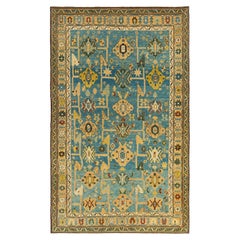
Ararat Rugs Chichi Kuba Rug with Kufic Border Caucasian Carpet Natural Dye
By Ararat Rugs
Located in Tokyo, JP
The design source of the rug comes from the book Oriental Rugs Volume 1 Caucasian, Ian Bennett, Oriental Textile Press, Aberdeen 1993, nr.360. The alternating row of octagons and spi...
Category

21st Century and Contemporary Turkish Revival Ararat Rugs Rugs and Carpets

Materials

Wool, Natural Fiber, Organic Material

Ararat Rugs Palmettes and Flowers Lattice Rug Bidjar Revival Carpet Natural Dyed
By Ararat Rugs
Located in Tokyo, JP
This offset pattern is composed of palmettes and flowers, one has the impression that it is only part of a larger scheme designed for 19th-century rugs from the Bidjar region, Easter...
Category

21st Century and Contemporary Turkish Revival Ararat Rugs Rugs and Carpets

Materials

Wool, Natural Fiber, Organic Material

Ararat Rugs Harshang Design with Kufic Border Rug Revival Carpet, Natural Dyed
By Ararat Rugs
Located in Tokyo, JP
The source of the rug comes from the book Orient Star – A Carpet Collection, E. Heinrich Kirchheim, Hali Publications Ltd, 1993 nr.79. This is an unusual design of 18th or 19th-centu...
Category

21st Century and Contemporary Turkish Revival Ararat Rugs Rugs and Carpets

Materials

Wool, Natural Fiber, Organic Material

Ararat Rugs Memling Gul Kazak Rug, 19th C. Caucasian Revival Carpet Natural Dyed
By Ararat Rugs
Located in Tokyo, JP
The source of the rug comes from the book Oriental Rugs Volume 1 Caucasian, Ian Bennett, Oriental Textile Press, Aberdeen 1993, nr.158 and Caucasian Carpets, E. Gans-Reudin, Thames a...
Category

21st Century and Contemporary Caucasian Revival Ararat Rugs Rugs and Carpets

Materials

Wool, Natural Fiber, Organic Material

Ararat Rugs Arabesque Rug 19th Century Style Persian Kurdish Revival Carpet
By Ararat Rugs
Located in Tokyo, JP
The source of the rug comes from the book Antique Rugs of Kurdistan A Historical Legacy of Woven Art, James D. Burns, 2002 nr.33. This is a fine Kurdish workshop rug with split-palme...
Category

21st Century and Contemporary Turkish Oushak Ararat Rugs Rugs and Carpets

Materials

Wool, Natural Fiber, Organic Material

Ararat Rugs Mamluk Wagireh Rug Yastik Size Doormat Entrance Mat Carpet Natural
By Ararat Rugs
Located in Tokyo, JP
This lattice pattern is composed of palmettes and leaves filling the various compartments against the imposing ground. One has the impression that it is only part of a larger scheme ...
Category

21st Century and Contemporary Turkish Revival Ararat Rugs Rugs and Carpets

Materials

Wool, Natural Fiber, Organic Material

Ararat Rugs the Simonetti Mamluk Carpet 16th Century Revival Rug, Natural Dyed
By Ararat Rugs
Located in Tokyo, JP
The source of carpet comes from the book How to Read – Islamic Carpets, Walter B. Denny, The Metropolitan Museum of Art, New York 2014 fig.61,62. The five-star-medallion carpet was d...
Category

21st Century and Contemporary Turkish Revival Ararat Rugs Rugs and Carpets

Materials

Wool, Natural Fiber, Organic Material

Ararat Rugs Modern Rug with Mamluk Geometric Design, Natural Dyed Carpet
By Ararat Rugs
Located in Tokyo, JP
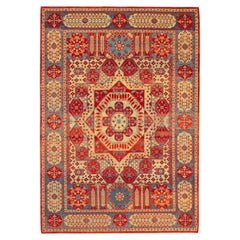
This rug has an interpreted design composed of a geometric lattice pattern taken from a part of the Mamluk rug, filling the field elegantly, has the impression that it is only part o...
Category

21st Century and Contemporary Turkish Revival Ararat Rugs Rugs and Carpets

Materials

Wool, Natural Fiber, Organic Material

Ararat Rugs Rows of Flower Rug Garrus Joshagan Revival Carpet Natural Dyed
By Ararat Rugs
Located in Tokyo, JP
The source of the rug comes from the book Antique Rugs of Kurdistan A Historical Legacy of Woven Art, James D. Burns, 2002 nr.36 This was an exclusive example of offset rows of ascen...
Category

21st Century and Contemporary Turkish Revival Ararat Rugs Rugs and Carpets

Materials

Wool, Natural Fiber, Organic Material

Ararat Rugs Mamluk Carpet with Cup Motif, Antique Revival Rug, Natural Dyed
By Ararat Rugs
Located in Tokyo, JP
The source of the rug comes from the book Renaissance of Islam, Art of the Mamluks, Esin Atil, Smithsonian Institution Press, Washington D.C., 1981 nr.125. This a rug with a cup moti...
Category

21st Century and Contemporary Turkish Revival Ararat Rugs Rugs and Carpets

Materials

Organic Material, Natural Fiber, Wool
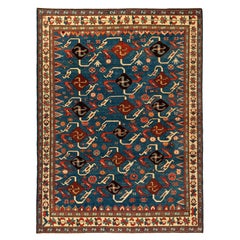
Ararat Rugs Carpet with Two Medallions Anatolian Revival Rug Natural Dyed
By Ararat Rugs
Located in Tokyo, JP
This is a dual medallion as the main element of the design of 18th-century carpet from the Konya region, Central Anatolia area of Turkey. Rugs of this type, using two medallions, appear frequently in 15th-century paintings of both the Venetian and the Flemish schools. This pattern tradition survived into the 18th and even into the 19th century in Anatolian village rugs of which this is an exceptionally powerful example. The two octagons that fill almost all of the field enclose a small octagon in the center from which radiate rectangular panels in a star-like fashion, filled with “latch-hook” patterns. Typical two medallions central octagon carpets...
Category

21st Century and Contemporary Turkish Oushak Ararat Rugs Rugs and Carpets

Materials

Wool, Natural Fiber, Organic Material
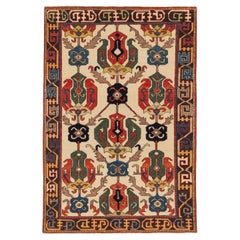
Ararat Rugs Kuba Rug with Octagonal Medallions Caucasian Carpet Natural Dye
By Ararat Rugs
Located in Tokyo, JP
The design source of the rug comes from the book Oriental Rugs Volume 1 Caucasian, Ian Bennett, Oriental Textile Press, Aberdeen 1993, nr.306. This is an unusually hooked octagonal medallion-designed rug from the 19th century, in the Kuba region and Caucasus area. The series of octagon medallions arranged in horizontal rows, each with a delicately drawn star-motif center, is reminiscent of a group of octagon rugs...
Category

21st Century and Contemporary Turkish Revival Ararat Rugs Rugs and Carpets

Materials

Wool, Natural Fiber, Organic Material
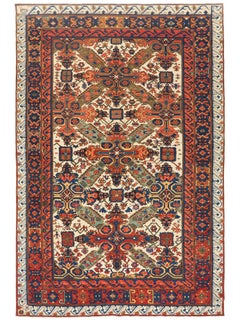
Ararat Rugs Flower and Leaf Lattice Rug Bidjar Revival Carpet Natural Dyed
By Ararat Rugs
Located in Tokyo, JP
The source of the rug comes from the book Antique Rugs of Kurdistan A Historical Legacy of Woven Art, James D. Burns, 2002 nr.40. This offset pattern is composed of palmettes and ste...
Category

21st Century and Contemporary Turkish Revival Ararat Rugs Rugs and Carpets

Materials

Wool, Natural Fiber, Organic Material
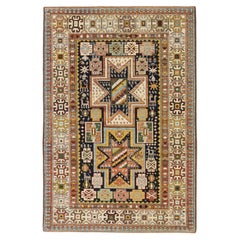
Ararat Rugs the Alaeddin Mosque Clouds Carpet Seljuk Wagireh Rug Natural Dyed
By Ararat Rugs
Located in Tokyo, JP
The source of the carpet comes from the book Orient Stars Collection, Anatolian Tribal Rugs 1050-1750, Michael Franses, Hali Publications Ltd, 2021 fig.27. This 13th century carpet i...
Category

21st Century and Contemporary Turkish Revival Ararat Rugs Rugs and Carpets

Materials

Wool, Natural Fiber, Organic Material
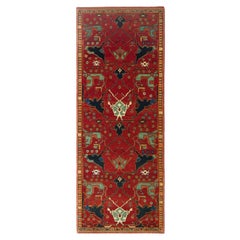
Ararat Rugs Mamluk Carpet with Cup Motif, Antique Revival Rug, Natural Dyed
By Ararat Rugs
Located in Tokyo, JP
The source of the rug comes from the book Renaissance of Islam, Art of the Mamluks, Esin Atil, Smithsonian Institution Press, Washington D.C., 1981 nr.125. This is a rug with a cup motif design late 15th-century rug from the Mamluk Sultanate of Cairo, Egypt. It is exhibited at the Washington, D.C. The Textile Museum, R.16.1.2 . The layout of this rug is characteristic of the smaller, almost square Mamluk carpet. A wide border encloses the field, divided into horizontal units consisting of a central square flanked above and below by rectangular panels. The height of the rectangular panels is approximately one-third that of the square and is equal to the width of the border. The corners of the central square are cut into triangles, creating an octagon with green ground. The octagon contains a blue polylobed medallion, which encloses an eight-pointed star with a multipetaled rosette in the core. The area between the star and the lobed medallion has floral motifs springing outward from the arms of the star. The angles of the octagon bear eight isolated and irregular polygons with a red ground; each of these units is adorned with a multipetaled rosette enclosed by a square with papyrus motifs springing from its sides and corners. The field of the octagon is filled with similar papyrus sprays, some of which appear to grow from the eight-stemmed cups placed between the polygons. The triangles in the corners bear a checkerboard pattern with a stylized lotus blossom (or fleur-de-lis) in each segment. The compositional layout of the rug is reminiscent of the illuminated frontispieces, which reveal similar proportions and internal divisions. Radiating designs of geometric components filled with floral motifs are a characteristic feature of Mamluk art...
Category

21st Century and Contemporary Turkish Revival Ararat Rugs Rugs and Carpets

Materials

Wool, Natural Fiber, Organic Material

Ararat Rugs Garden Rug, 18th Century Persian Revival Carpet, Natural Dyed
By Ararat Rugs
Located in Tokyo, JP
The source of the rug comes from the book Islamic Carpets, Joseph V. McMullan, Near Eastern Art Research Center Inc., New York 1965 nr.28. This Persian Garden design rug belongs to t...
Category

21st Century and Contemporary Turkish Revival Ararat Rugs Rugs and Carpets

Materials

Wool, Natural Fiber, Organic Material

Ararat Rugs Medallion Rug 18th C Anatolian Turkish Revival Carpet Natural Dyed
By Ararat Rugs
Located in Tokyo, JP
The source of the rug comes from the book Orient Star – A Carpet Collection, E. Heinrich Kirchheim, Hali Publications Ltd, 1993, nr.166. This is similar to...
Category

21st Century and Contemporary Turkish Oushak Ararat Rugs Rugs and Carpets

Materials

Wool, Natural Fiber, Organic Material

Ararat Rugs Heriz White Ground Rug - 19th C. Persian Revival Carpet Natural Dyed
By Ararat Rugs
Located in Tokyo, JP
This is a white ground rug designed in the 19th century, from the Heriz region, Northwest Persia area. Heriz ( Heris ) is a special Turkish knot weaving area of Persia, including man...
Category

21st Century and Contemporary Turkish Revival Ararat Rugs Rugs and Carpets

Materials

Wool, Organic Material, Natural Fiber
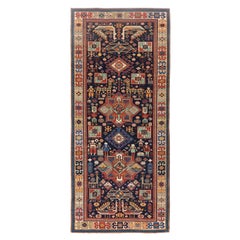
Ararat Rugs Harshang Design with Kufic Border Rug Revival Carpet, Natural Dyed
By Ararat Rugs
Located in Tokyo, JP
The source of the rug comes from the book Orient Star - A Carpet Collection, E. Heinrich Kirchheim, Hali Publications Ltd, 1993 nr.79. This is an unusual design of 18th or 19th-centu...
Category

21st Century and Contemporary Turkish Oushak Ararat Rugs Rugs and Carpets

Materials

Wool, Natural Fiber, Organic Material
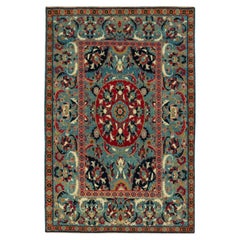
Ararat Rugs Mamluk Modern Rug with Leaf Lattice Design, Revival Rug Natural Dyed
By Ararat Rugs
Located in Tokyo, JP
The source of the rug comes from the book Völker, Angela, Die orientalischen Knüpfteppiche das MAK, Vienna: Böhlau, 2001: 42–5. This rug with the central star was designed in the ear...
Category

21st Century and Contemporary Turkish Revival Ararat Rugs Rugs and Carpets

Materials

Wool, Natural Fiber, Organic Material
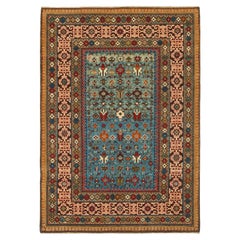
Ararat Rugs Bidjov Kazak Rug Caucasian Antique Revival Carpet Natural Dye
By Ararat Rugs
Located in Tokyo, JP
This is a Bidjov Kazak rug, designed late 19th century, is a type of handwoven rug that originated from the Caucasus region, specifically from the town of Bidjov, a few miles north o...
Category

21st Century and Contemporary Turkish Revival Ararat Rugs Rugs and Carpets

Materials

Wool, Natural Fiber, Organic Material
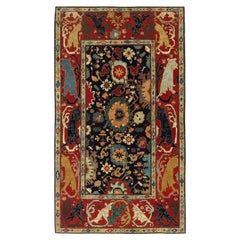
Ararat Rugs Palmettes and Flowers Lattice Rug Bidjar Revival Carpet Natural Dyed
By Ararat Rugs
Located in Tokyo, JP
This offset pattern is composed of palmettes and flowers, one has the impression that it is only part of a larger scheme designed for 19th-century rugs from the Bidjar region, Easter...
Category

21st Century and Contemporary Turkish Revival Ararat Rugs Rugs and Carpets

Materials

Wool, Natural Fiber, Organic Material
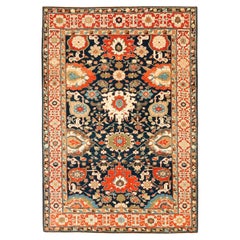
Ararat Rugs Cairene Ottoman Carpet, Turkish Court Manufactury Rug, Natural Dyed
By Ararat Rugs
Located in Tokyo, JP
Turkish Court Manufactury Rugs were woven in the Egyptian workshops founded by the Ottoman Empire in the 16th century. Those carpets were woven in Egypt, following the paper cartoons...
Category

21st Century and Contemporary Turkish Revival Ararat Rugs Rugs and Carpets

Materials

Wool, Natural Fiber, Organic Material
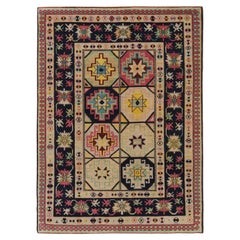
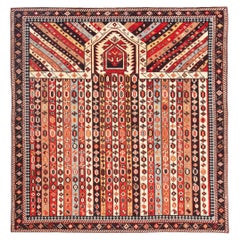
Ararat Rugs Karabagh Prayer Rug with Vertical Stripes Revival Carpet Natural Dye
By Ararat Rugs
Located in Tokyo, JP
The source of the rug comes from the book Oriental Rugs Volume 1 Caucasian, Ian Bennett, Oriental Textile Press, Aberdeen 1993, nr.110. A related exa...
Category

21st Century and Contemporary Turkish Revival Ararat Rugs Rugs and Carpets

Materials

Wool, Natural Fiber, Organic Material
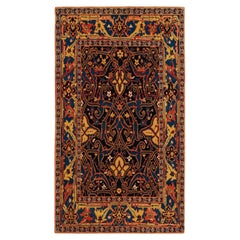
Ararat Rugs Mamluk Carpet with Central Star 16th Century Revival, Natural Dyed
By Ararat Rugs
Located in Tokyo, JP
The source of the rug comes from the book Völker, Angela, Die orientalischen Knüpfteppiche das MAK, Vienna: Böhlau, 2001: 42–5. This rug with the central star was designed in the early 16th-century rug by Mamluk Sultane of Cairo, Egypt. It is exhibited at MAK – Museum of Applied Arts, Vienna Austria. As its impressive size, materials, and design quality suggest, the carpet is a product of an accomplished court workshop and likely dates from the late period of the last Mamluk dynasty. The quantity of the colors used speaks for an earlier date around 1500; the delicate vegetal border with leaf tendrils and the characteristic umbrella leaves...
Category

21st Century and Contemporary Turkish Revival Ararat Rugs Rugs and Carpets

Materials

Wool, Natural Fiber, Organic Material
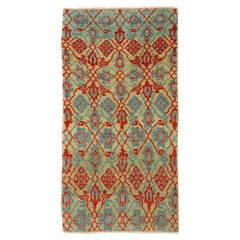
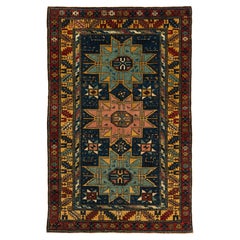
Ararat Rugs Lesghi Star Shirvan Rug Caucasian Revival Carpet, Natural Dyed
By Ararat Rugs
Located in Tokyo, JP
The source of the rug comes from the book Orient Star – A Carpet Collection, E. Heinrich Kirchheim, Hali Publications Ltd, 1993 nr.30 and Oriental Rugs Volume 1 Caucasian, Ian Bennet...
Category

21st Century and Contemporary Turkish Revival Ararat Rugs Rugs and Carpets

Materials

Wool, Natural Fiber, Organic Material
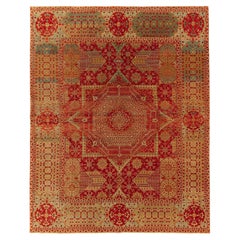
Ararat Rugs Mamluk Rug with Palm Trees and Cypresses Revival Carpet Natural Dyed
By Ararat Rugs
Located in Tokyo, JP
The source of the rug comes from the book Renaissance of Islam, Art of the Mamluks, Esin Atil, Smithsonian Institution Press, Washington D.C., 1981 nr.126. This rug with palm trees and cypresses was designed in the late 15th-century rug by Mamluk Sultane of Cairo, Egypt. It is exhibited at the Washington D.C. The Textile Museum, R.16.1.3. The central square displays the ultimate expression of a geometric pattern based on multiples of eight. It contains a central octagon filled with red lancet leaves on the ground. In the core is a multipetaled blossom enclosed by a medallion surrounded by an eight-pointed star. Triangles placed around the octagon transform it into an eight-pointed star enclosed by a frame with papyrus sprays on the ground. Encircling this zone is a series of polygons with rosettes, which form an immense sixteen-pointed star. The corners of the central square have quatrefoils on the ground. The transverse bands above and below the central square have the ground with palm trees alternating with cypresses flanked by papyrus sprays, all of which are oriented toward the center. The border is densely packed with alternating oval cartouches and eight-lobed medallions. These units are filled with papyrus motifs, which evolve from lozenges in the middle of the ovals; they also radiate from squares in the medallions filled with multipetaled blossoms. The ovals in the center of the long sides are contracted and contain only lozenges. Double guard borders, decorated with leaf scrolls, repeat the color scheme. This rug contains several decorative elements employed in other contemporary arts. The naturalistic cypresses growing on the transverse bands are similar to those on metal objects and tiles and to those in the stained-glass windows in the mausoleum of Sultan Qaitbay, completed in 1472-74. The design of the rug is interpreted by our designers and soft colors are chosen for this rug. Color summary: 3 colors in total; Imperial red 415 (Madder Root) Pale green 439 (Chamomile – Indigo) Cadet blue 26 (Spurge – Indigo) Group: Islamic Rugs...
Category

21st Century and Contemporary Turkish Revival Ararat Rugs Rugs and Carpets

Materials

Wool, Natural Fiber, Organic Material
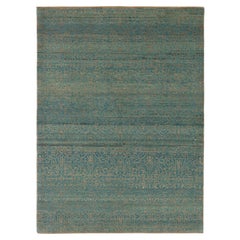
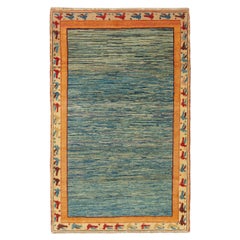
Ararat Rugs The Blue Color Rug, Modern Impressionist River Carpet Natural Dyed
By Ararat Rugs
Located in Tokyo, JP
This unique design rug is interpreted by our designers with a mixture of Ararat Rugs’ soft blue tone natural dyed hand-spun yarns. This modern rug is reminiscent of a scene in impres...
Category

21st Century and Contemporary Turkish Revival Ararat Rugs Rugs and Carpets

Materials

Wool, Natural Fiber, Organic Material
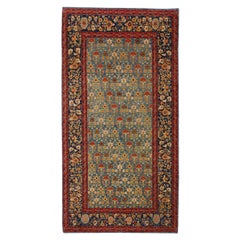
Ararat Rugs Mamluk Wagireh Rug with Flower Lattice Design DoorMat Entrance Mat
By Ararat Rugs
Located in Tokyo, JP
The design source of carpet comes from the book Völker, Angela, Die orientalischen Knüpfteppiche das MAK, Vienna: Böhlau, 2001: 42–5. This rug with the central star was designed in the early 16th-century rug by Mamluk Sultane of Cairo, Egypt. It is exhibited at MAK – Museum of Applied Arts, Vienna Austria. The interpreted design is composed of a flower lattice pattern taken from a part of the MAK Museum’s rug...
Category

21st Century and Contemporary Turkish Revival Ararat Rugs Rugs and Carpets

Materials

Wool, Natural Fiber, Organic Material
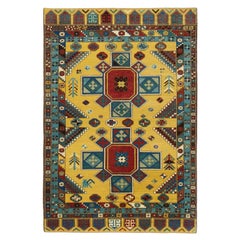
Ararat Rugs Chelaberd Karabakh Rug Antique Caucasian Revival Carpet Natural Dyed
By Ararat Rugs
Located in Tokyo, JP
The source of the rug comes from the book oriental rugs volume 1 Caucasian, Ian Bennett, Oriental Textile Press, Aberdeen 1993, nr.87-88-90. This is a large medallion rug...
Category

21st Century and Contemporary Turkish Revival Ararat Rugs Rugs and Carpets

Materials

Wool, Natural Fiber, Organic Material

Ararat Rugs rugs and carpets for sale on 1stDibs.

Ararat Rugs rugs and carpets are available for sale on 1stDibs. These distinctive items are frequently made of organic material and are designed with extraordinary care. Many of the original rugs and carpets by Ararat Rugs were created in the Arts and Crafts style in west asia during the 21st century and contemporary. Prices for Ararat Rugs rugs and carpets can differ depending upon size, time period and other attributes — on 1stDibs, these items begin at $120 and can go as high as $33,000, while a piece like these, on average, fetch $2,800.

Still Thinking About These?

All Recently Viewed