Meissen Porcelain Serveware, Ceramics, Silver and Glass

German

Meissen Porcelain (Staatliche Porzellan-Manufaktur Meissen) is one of the preeminent porcelain factories in Europe and was the first to produce true porcelain outside of Asia. It was established in 1710 under the auspices of King Augustus II “the Strong” of Saxony-Poland (1670–1733), a keen collector of Asian ceramics, particularly Ming porcelain.

In pursuing his passion, which he termed his “maladie de porcelaine,” Augustus spent vast sums, amassing some 20,000 pieces of Japanese and Chinese ceramics. These, along with examples of early Meissen, comprise the Porzellansammlung, or porcelain collection, of the Zwinger Palace, in Dresden.

The king was determined, however, to free the European market from its dependence on Asian imports and to give European artisans the freedom to create their own porcelain designs. To this end, he charged the scientist Ehrenfried Walther von Tschirnhaus and aspiring alchemist Johann Friedrich Böttger with the task of using local materials to produce true, hard-paste porcelain (as opposed to the soft-paste variety European ceramists in the Netherlands, Germany, France, Italy and Spain had been producing since the late Renaissance). In 1709, the pair succeeded in doing just that, employing kaolin, or “china clay.” A year later, the Meissen factory was born.

In its first decades, Meissen mostly looked to Asian models, producing wares based on Japanese Kakiemon ceramics and pieces with Chinese-inflected decorations called chinoiserie. During the 1720s its painters drew inspiration from the works of Watteau, and the scenes of courtly life, fruits and flowers that adorned fashionable textiles and wallpaper. It was in this period that Meissen introduced its famous cobalt-blue crossed swords logo — derived from the arms of the Elector of Saxony as Arch-Marshal of the Holy Roman Empire — to distinguish its products from those of competing factories that were beginning to spring up around Europe.

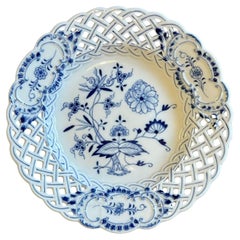
By the 1730s, Meissen’s modelers and decorators had mastered the style of Asian ceramics, and Augustus encouraged them to develop a new, original aesthetic. The factory’s director, Count Heinrich von Brühl, used Johann Wilhelm Weinmann’s botanical drawings as the basis for a new line of wares with European-style surface decoration. The Blue Onion pattern (Zwiebelmuster), first produced in 1739, melded Asian and European influences, closely following patterns used in Chinese underglaze-blue porcelain, but replacing exotic flora and fruits with Western varieties (likely peaches and pomegranates, not onions) along with peonies and asters.

During the same period, head modeler Joachim Kändler (1706–75) began crafting delicate porcelain figures derived from the Italian commedia dell’arte. Often used as centerpieces on banquet tables and decorated to reflect the latest fashions in courtly dress for men and women, these figurines were popular in their day, and are still considered among Meissen’s most iconic creations. Kändler also created the Swan Service, which, with its complex low-relief surface design and minimal decoration is considered a masterpiece of Baroque ceramics.

The rise of Neoclassicism in the latter half of the 18th century forced Meissen to change artistic direction and begin producing monumental vases, clocks, chandeliers and candelabra. In the 20th century, Meissen added to its 18th-century repertoire decidedly modern designs, including ones in the Art Nouveau style. The 1920s saw the introduction of numerous animal figures, such as the popular sea otter (Fischotter), which graced an East German postage stamp in the 1960s. Starting in 1933, artistic freedom was limited at the factory under the Nazi regime, and after World War II, when the region became part of East Germany, it struggled to reconcile its elite past with the values of the Communist government. In 1969, however, new artistic director Karl Petermann reintroduced the early designs and fostered a new degree of artistic license. Meissen became one of the few companies to prosper in East Germany.

Owned by the State of Saxony since reunification, in 1990, Meissen continues to produce its classic designs together with new ones developed collaboratively with artists from all over the world. In addition, through its artCAMPUS program, the factory has invited distinguished ceramic artists, such as Chris Antemann and Arlene Shechet, to work in its studios in collaboration with its skilled modelers and painters. The resulting works of contemporary sculpture are inspired by Meissen’s rich and complex legacy.

Find a collection of authentic Meissen Porcelain on 1stDibs.

to
48
380
3
60
197
123
3
58
25
12
17
12
3
4
2
1
3
1
1
114
38
35
17
12
7
5
5
5
3
3
2
2
1
383
378
19
6
5
199
172
371
358
3
3
1
383
383
383
566
436
426
360
Creator: Meissen Porcelain
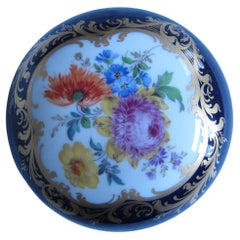
20th Century Meissen Porcelain Box
By Meissen Porcelain
Located in Vienna, AT
Beautiful Meissen porcelain box.
Category

20th Century European Meissen Porcelain Serveware, Ceramics, Silver and Glass

Materials

Porcelain

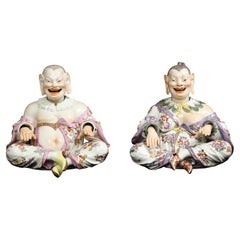
Pair 19th Century Meissen Porcelain Chinoiserie Style of Nodding Pagoda Figures
By Meissen Porcelain
Located in New York, NY
A large rare pair of 19th century Meissen Chinoiserie style Nodding Pagoda Figures with Movable Head, Hand and Tongue, known as a "Nodder'. This Unusual...
Category

1850s German Rococo Antique Meissen Porcelain Serveware, Ceramics, Silver and Glass

Materials

Porcelain

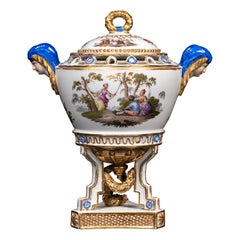
A Rare 18th Century Meissen Porcelain Marcolini Period Watteau Covered Potpourri
By Meissen Porcelain
Located in New York, NY
A Rare 18th Century Meissen Porcelain Marcolini Period Watteau Covered Potpourri. This rare Meissen porcelain potpourri vase, dating ...
Category

1770s German Neoclassical Antique Meissen Porcelain Serveware, Ceramics, Silver and Glass

Materials

Porcelain

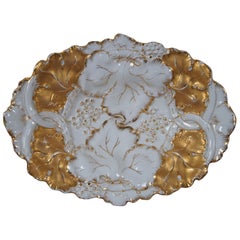
Antique German Dresden Meissen Gilded Grape Leaves Centerpiece Compote 14"
By Meissen Porcelain
Located in Dayton, OH
Antique Meissen porcelain footed cabinet plate / centerpiece bowl / serving platter / compote featuring scalloped oval form with low relief grapevines, gr...
Category

Early 19th Century Antique Meissen Porcelain Serveware, Ceramics, Silver and Glass

Materials

Porcelain

Antique Meissen Neu Brandenstein Gravy or Sauce Boat
By Meissen Porcelain
Located in Philadelphia, PA
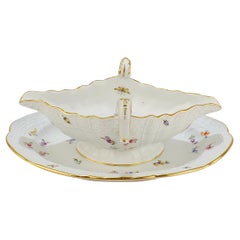
A fine Meissen gravy or sauce boat. By the Meissen Porcelain Manufactory. Having tin handles, two spouts, and an integral undertray. In the Neu Brandenstein...
Category

Early 20th Century German Rococo Meissen Porcelain Serveware, Ceramics, Silver and Glass

Materials

Porcelain

A Monumental Meissen Porcelain Figural Group of Mount Parnassus
By Meissen Porcelain
Located in Brighton, West Sussex
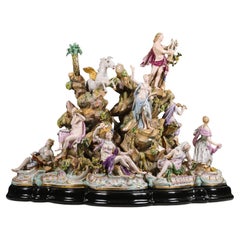
A Monumental Meissen Porcelain Figural Group of Apollo and the Nine Muses on Mount Parnassus. Comprised of sixteen interlocking parts. Apollo standing holding a lyre and with Pegasus besides a tree, atop a rocky outcrop detailed with foliage and waterfalls above nine goddesses: Calliope, seated and shown writing, representing eloquence and epic poetry. Clio, seated with an open book and blowing a trumpet, representing history. Erato, seated and holding a kithara, representing science and the arts Euterpe, seated and holding a flute, representing music. Melpomene, seated holding a knife and with one hand to her head, representing tragedy. Thalia, seated and holding aloft mask, representing comedy and idyllic poetry. Urania, seated with telescope and globe, representing astronomy and astrology, Polyhymnia, standing with one hand raised and holding a book, representing sacred poetry. Terpsichore, standing, representing dance. Each piece exceptionally finely detailed and painted. The base portions with rocaille edges. On a later black polished wooden base. Multiple blue crossed swords marks. Each piece titled to underside. German, Circa 1880. Mount Parnassus, is a spur of the Pindus Mountains in central Greece and was sacred to the ancient Greeks and in mythology to Apollo, the god of music and poetry and of the Sun and light. Mount Parnassus the mythical centre of poetry, music, and learning in ancient Greece was a popular theme in Barqoue and Rococo art, often substitutable with Athena’s arrival at Mount Helicon from the fifth book of Ovid’s “Metamorphoses”, where she asks the Muses to show her the new spring which gushed forth from the spot where Pegasus “with his hoof of horn opened the earth” (V, 250-260). Here, the mountain, formed from rugged rock cliffs, culminates in a plateau on which the youthful Apollo stands and plays the lyre. The Castalian spring flows from beneath Pegasus’ hoof, representing the source of inspiration and attracting the nine muses, who embody the arts and inspire creation through song, music, and dance. Mount Parnassus was created at the Meissen porcelain manufactory as a table centrepiece and an earlier version, apparently with only five muses, is listed in the inventory of the pastry shop of the Meissen manufactory manager and cabinet minister Heinrich Graf Brühl in 1753. The storage in the pastry shop of approximately 3,000 objects and dishes, including many individual parts for centrepieces, is related to their function as table decorations, replacing decorations previously made by the confectioner from perishable materials such as sugar or wax. The purpose of this table decoration was as a feast for the eyes to accompany the feast of the banquet. The sculptural figurines often depicted a particular theme, with characters drawn from theatre and opera, from classical mythology or pastoral idylls. Allegories and mythological themes, such as the glorification of fine arts, were also popular. Stylistically, Mount Parnassus fits Kändler’s style of the 1740s, and was sold by Brühl in 1762 to Frederick the Great of Prussia who used mythology as a means of self-expression and had already ordered individual figures of Apollo and the Muses as table decorations in 1744. Today it is in the Museum of Applied Arts, Frankfurt (inv. no. M.L. 41). There is another version of Mount Parnassus, from the collection of Prince Alexander Dolgorukoff, in the Hermitage in Saint Petersburg. The present version dates to the second half of the nineteenth century when there was a great revival of Kändler rococo figurines which were reissued and a “Second Rococo”. Another nineteenth century example is in the collection of the Museo Francesco Borgogna, Italy (inv. 1906, XIII, 19-20). These nineteenth century versions were made by the Meissen factory using Kändler's period models. It is recorded that a new version of Mount Parnassus, dating to the 1880s, was part of the Royal Porcelain collection in Dresden: 'In the porcelain collection there is a new version from the 1880s based on the old models, the largest group of this genre, the Parnassus, which shows the named muses all around on the lower part of the rock, each practising their own art, while on the top there is Apollo with the lyre and next to it the Castalian spring rises from the hoofbeat of Pegasus. Each figure is executed individually with its rocky background, and all the pieces are then fitted together, as we have already seen in his earlier, larger compositions. The rock pieces are finished off like a pedestal at the bottom with Rococo ornaments.' (Jean Louis Sponsel, Kabinettstücke der Meissner Porzellan-manufaktur von Johann Joachim Kändler, Leipzig, 1900, pp. 203-204). Kunst und kunsthandwerk; monatsschrift herausgegeben vom Österreichischen museum fuer kunst und industrie, Vienna, 1894, v.7 pt.1, p.133. Kari Berling, Das Meißner Porzellan und seine Geschichte. Leipzig 1900, S. 99, 187-200. Helmuth Gröger, Johann Joachim Kaendler. Dresden, 1956. Peter W Meister, Franz Adrian Dreier, Figürliche Keramik aus zwei Jahrtausenden. Kat Museum für Kunsthandwerk, Frankfurt. Frankfurt 1964, Nr. 90. Rainer Rückert, Meißener Porzellan, 1710-1810. Kat. Ausst. Bayerisches Nationalmuseum München. München 1966. Stefan Bursche, Tafelzier des Barock. München 1974, Abb. 300. "Tafelaufsatz, Der Parnass", Auswahlkatalog, Museum für Kunsthandwerk (Frankfurt am Main, Germany), 1987, pp. 86-87. Alfred Ziffer, ‘Meissener Porzellanplastik für fürstliches Interieur und Zeremoniell’, Keramos, Issue 241/242, pp. 29–52. MEISSEN The production of Meissen porcelain began in 1710 at the manufactory at Meissen...
Category

19th Century German Rococo Antique Meissen Porcelain Serveware, Ceramics, Silver and Glass

Materials

Porcelain

19th Century Meissen Porcelain Elements Ewer Emblematic of Water
By Meissen Porcelain
Located in New York, NY
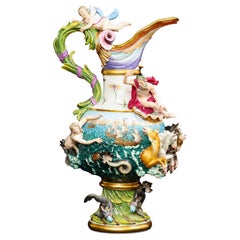
A 19th century Meissen porcelain 'Elements' ewer emblematic of water. Blue crossed swords mark. The present ewer, representing water,...
Category

1870s German Rococo Antique Meissen Porcelain Serveware, Ceramics, Silver and Glass

Materials

Porcelain

Meissen German Weiss Porcelain Garden Bird Figure
By Meissen Porcelain
Located in Bishop s Stortford, Hertfordshire
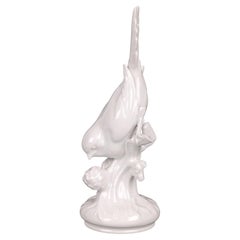
From a collection of white and blanc de chine figures we are pleased to offer this fine German porcelain figure of a garden bird by renowned maker Meissen ...
Category

20th Century German Mid-Century Modern Meissen Porcelain Serveware, Ceramics, Silver and Glass

Materials

Porcelain

Complete Set of Four Meissen Elements Ewers
By Meissen Porcelain
Located in Tarzana, CA
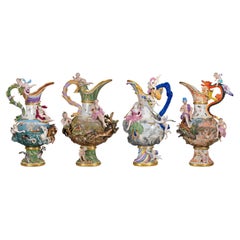
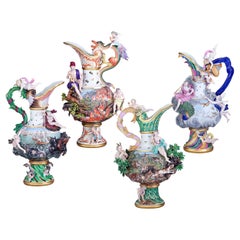
This extremely important set of Meissen ewers represents the Four Elements: Earth, Air, Water and Fire. Impressive in both size and artistry, they are among the most famous and spectacular examples of Meissen porcelain ever made. Each vase is an incredible piece of artwork, interpreting one of the four elements into a stunning vase form of unsurpassed quality and execution. First introduced by Meissen artist Johann Joachim Kändler around 1735 the Four Elements represent that height of his achievements with fine porcelain creations. Water with a relief naval scene flanked by the figures of a galloping horses, mermaid and the god Neptune. The circular flaring base has decorations of spouting dolphins among bulrushes. Air is portrayed with flying birds and billowing clouds, all under the reign of Juno, the goddess who personifies air, and her peacock. Earth is represented by a detailed hunt scene and presided over by Pan, the Greek god of woods and fields. Fire is represented by a dragon-shaped handle, animals fleeing the burning forest and Vulcan, the god of fire. Each ewer is marked to the underside with Meissen blue crossed swords. They are first quality with no cancelation marks. Johann Joachim Kändler was a German sculptor who became the most important modeller of the Meissen porcelain manufactory, and arguably of all European porcelain. He worked at Meissen...
Category

19th Century German Antique Meissen Porcelain Serveware, Ceramics, Silver and Glass

Materials

Porcelain

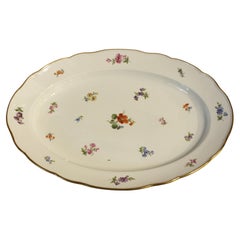
Late 19th Century Floral Meissen Oval Platter
By Meissen Porcelain
Located in Chapel Hill, NC
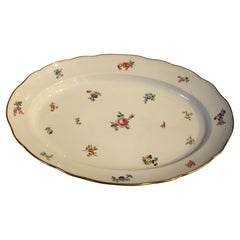
Large oval platter with gilt scalloped edge (minor wear) by Meissen in the scattered flowers or stueblumen pattern. Crossed swords mark. c.1860-90. 18 1/8" x 13 1/8". Whitehall Anti...
Category

Late 19th Century German Antique Meissen Porcelain Serveware, Ceramics, Silver and Glass

Materials

Ceramic

Important Pair of Meissen Porcelain Filigree Vases with Raised Flowers
By Meissen Porcelain
Located in New York, NY
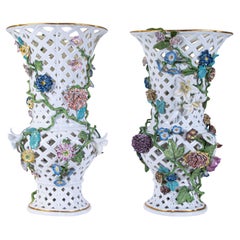
A Highly Important pair of Museum Quality Louis XV Period 18th century Meissen Porcelain filigree openwork vases with a medially of flowers and vined leaves. This is truly an excepti...
Category

1750s German Louis XV Antique Meissen Porcelain Serveware, Ceramics, Silver and Glass

Materials

Porcelain

Fine Large Late 18th - Early 19th Century Meissen Porcelain Model of a Swan
By Meissen Porcelain
Located in New York, NY
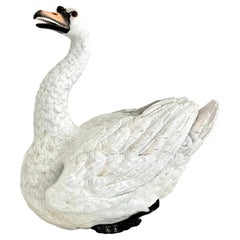
A fine, exceptionally detailed large Meissen model of a swan, modelled by J. J. Kändler, with incised plumage, the feathers of the wings picked out in soft grey and beige, with russe...
Category

Late 18th Century German Neoclassical Antique Meissen Porcelain Serveware, Ceramics, Silver and Glass

Materials

Porcelain

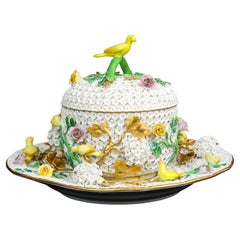
Rare 19th C. Meissen ‘Schneeballen’ Snowball Covered Bowl Plate W/ Birds
By Meissen Porcelain
Located in New York, NY
A Rare 19th Century Meissen Porcelain ‘Schneeballen’ (Snowball) Covered Bowl and Underplate with Encrusted Flowers, Vines, Leaves, and Birds. This piece is very rare and extremely hi...
Category

1850s German Rococo Antique Meissen Porcelain Serveware, Ceramics, Silver and Glass

Materials

Porcelain

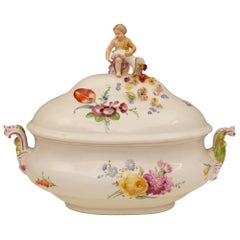
German 19th Century Meissen Porcelain Lidded Tureen
By Meissen Porcelain
Located in West Palm Beach, FL
A charming German 19th century Meissen Porcelain lidded tureen. The oblong shaped tureen displays beautiful finely detailed hand painted blooming flower...
Category

19th Century German Antique Meissen Porcelain Serveware, Ceramics, Silver and Glass

Materials

Porcelain

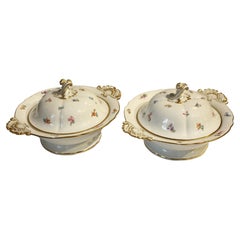
Pair of Late 19th Century Meissen Vegetable Tureens
By Meissen Porcelain
Located in Chapel Hill, NC
Pair of covered vegetable tureens with gilt scalloped edges (minor wear) by Meissen in the scattered flowers or streublumen pattern. Acanthus gilt handles and twist tops. Crossed swo...
Category

Late 19th Century German Antique Meissen Porcelain Serveware, Ceramics, Silver and Glass

Materials

Ceramic

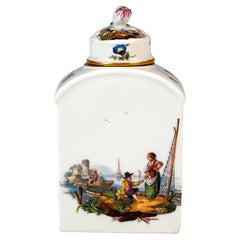
Very Early Meissen Tea Caddy With Merchant Ship Scenes And Bud Knob, 1763-1774
By Meissen Porcelain
Located in Vienna, AT
Rectangular porcelain box with rounded shoulders, small round, slightly domed lid with bud handle, colourful painted merchant scenes on the four sides and on the top of the lid, gold...
Category

Late 18th Century German Rococo Antique Meissen Porcelain Serveware, Ceramics, Silver and Glass

Materials

Porcelain

Very Large Pair of 19th Century Meissen Day and Night Figures
By Meissen Porcelain
Located in Tarzana, CA
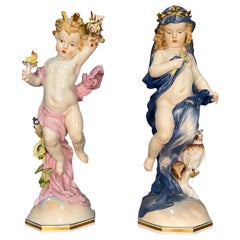
A magnificent pair of very large Meissen putti representing Day & Night by Heinrich Schwabe. Each figure wrapped in a cloth, float above the earth's atmo...
Category

1870s German Antique Meissen Porcelain Serveware, Ceramics, Silver and Glass

Materials

Porcelain

Antique Genuine Meissen Reticulated Porcelain Cattle Plate
By Meissen Porcelain
Located in Newark, England
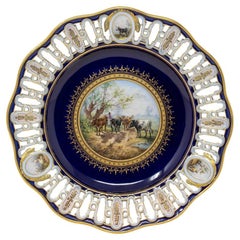
With Finely Painted Cattle Scenes From our Ceramics collection, we are delighted to offer this very unusual Meissen Reticulated Porcelain Plate. The Meissen Plate is beautifully po...
Category

Mid-19th Century German High Victorian Antique Meissen Porcelain Serveware, Ceramics, Silver and Glass

Materials

Porcelain

Unique and Monumental Late 19th Century German Meissen Porcelain Mirror
By Meissen Porcelain
Located in Long Island City, NY
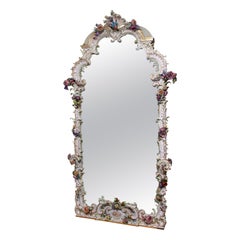
A Unique and Monumental Late 19th Century German Meissen Porcelain Mirror This palatial mirror is made up of around 12 wonderful individually hand c...
Category

Late 19th Century German Belle Époque Antique Meissen Porcelain Serveware, Ceramics, Silver and Glass

Materials

Glass, Porcelain

Meissen Four Elements Porcelain Ewers
By Meissen Porcelain
Located in New Orleans, LA
This extremely rare and important set of four Meissen ewers represents the Four Elements: Earth, Air, Water and Fire. Impressive in both size and artistry, they are among the most fa...
Category

19th Century German Other Antique Meissen Porcelain Serveware, Ceramics, Silver and Glass

Materials

Porcelain

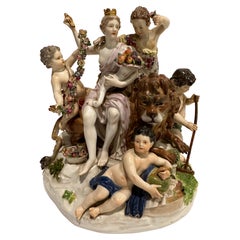
Meissen Group Six Figurines Allegory of Earth
By Meissen Porcelain
Located in Norwood, NJ
Large Meissen group of figurines which are Allegory of Earth assembled around a Lion's Figurine. Manufactory: Meissen Hallmarked: Blue Meissen Sword M...
Category

Late 19th Century German Rococo Antique Meissen Porcelain Serveware, Ceramics, Silver and Glass

Materials

Porcelain

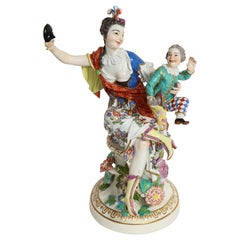
Rare 18th Century Meissen Porcelain Group of a Thalia with a Harlequin Child
By J.J. Kändler, Meissen Porcelain
Located in New York, NY
An important, extremely rare, and rather large 18th century Meissen Porcelain Group of a Thalia with a Harlequin Child, By Johann Joachim (J.J.) Kändler, Circa: 1744. This is an incredible and extremely rare 18th century Meissen Porcelain piece modeled by the greatest Meissen modeler ever in the Company, Johann Joachim (J.J.) Kändler. Thalia can be seen seated on a gorgeous hand-carved and hand-painted flowered and vined porcelain pedestal. Her right arm is raised holding a Phantom of the Opera Black and White Mask, while in her other arm is a young Harlequin dancing and singing holding a hat. Thalia is wearing a gilt-edged dark blue bodice with white floral decorations over a black corset draped in a red-over-yellow robe...
Category

18th Century German Rococo Antique Meissen Porcelain Serveware, Ceramics, Silver and Glass

Materials

Porcelain

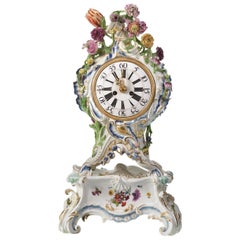
Mantel Clock Meissen Hard, Paste Porcelain, 1745-1755
By Meissen Porcelain
Located in Lantau, HK
The clock was modeled by Johann-Joachim Kaendler, the Meissen Manufacturer’s most important modeler and designer. Its rocaille style demonstrates the influence of the Rococo trend p...
Category

18th Century French Rococo Antique Meissen Porcelain Serveware, Ceramics, Silver and Glass

Materials

Porcelain

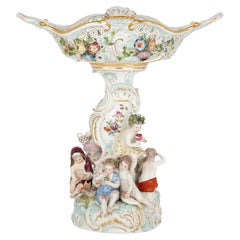
Large Meissen porcelain Rococo style centrepiece
By Meissen Porcelain
Located in London, GB
Large Meissen porcelain Rococo style centrepiece German, Late 19th Century Height 42cm, width 40cm, depth 25cm According to a design by E. A. Leuteritz,...
Category

Late 19th Century German Rococo Antique Meissen Porcelain Serveware, Ceramics, Silver and Glass

Materials

Porcelain

19th Century Meissen Group of Calvary General Mikhail Kutuzov with Aide de Camp
By Meissen Porcelain
Located in New York, NY
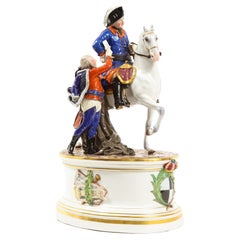
A Very Large 19th century Meissen porcelain Group of Russian Calvary General, believed to be Mikhail Kutuzov, the hero of Borodino, with aide de camp, marked with the Meissen underglaze blue crossed swords, and incised and impressed with numbers. While Russia endured great hardships during Napoleon's invasion, it was the skill of her general's and a terrible Russian winter...
Category

1880s German Empire Antique Meissen Porcelain Serveware, Ceramics, Silver and Glass

Materials

Porcelain

Serving Oval Dish With Golden Border Gilding from Meissen
By Meissen Porcelain
Located in Bastogne, BE
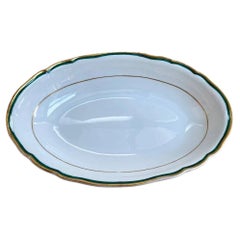
Antique Oval Deep Dish from Meissen Meissen creates simple but impeccably elegant collections that fit perfectly into absolutely any interior, whether it is a strict classic or eleg...
Category

1980s German Mid-Century Modern Vintage Meissen Porcelain Serveware, Ceramics, Silver and Glass

Materials

Porcelain

49-Piece Meissen Porcelain Dinner Service in Rare Puce/Purple Color
By Meissen Porcelain
Located in Milford, NH
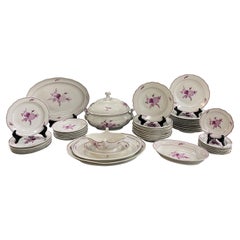
A fine 49-piece Meissen porcelain dinner service in a rare purple/puce color, including 10 10-inch dinner plates, 12 9-inch luncheon p...
Category

Late 19th Century German Antique Meissen Porcelain Serveware, Ceramics, Silver and Glass

Materials

Porcelain

A Large Meissen Porcelain Mythological Figure Centerpiece, *Neptune and Thetis*
By Meissen Porcelain
Located in New York, NY
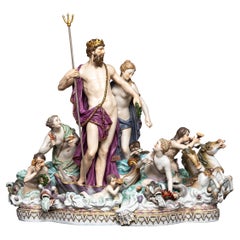
An exceptionally rare and large Meissen porcelain mythological figure centerpiece titled *Neptune and Thetis*, produced in the late 19th century by the renowned Meissen porcelain man...
Category

1880s German Rococo Antique Meissen Porcelain Serveware, Ceramics, Silver and Glass

Materials

Porcelain

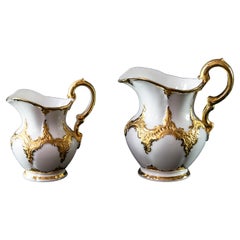
Set of 2 pcs. German Meissen Porcelain Cream and Milk Pitchers / Jugs
By Meissen Porcelain
Located in Vilnius, LT
Set of 2 pcs. of German Meissen porcelain cream and milk pitchers / jugs. Porcelain is white, glazes and hand painted with rich gold decor. The logo marked on the bottoms. Dimensions...
Category

Mid-20th Century German Meissen Porcelain Serveware, Ceramics, Silver and Glass

Materials

Gold

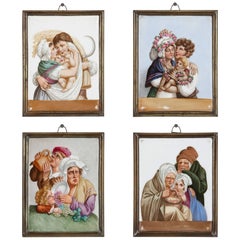
Four Meissen Porcelain Plaques Depicting the Four Seasons
By Meissen Porcelain
Located in London, GB
This delicately detailed set of four allegorical porcelain plaques portrays family scenes within the theme of the four seasons: Spring, Summer, Autumn and Winter. Spring can be ide...
Category

Early 19th Century German Folk Art Antique Meissen Porcelain Serveware, Ceramics, Silver and Glass

Materials

Metal

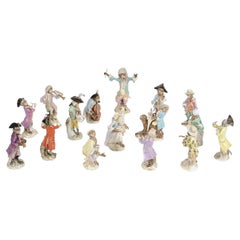
16 Piece Meissen Monkey Band, circa 1890
By Meissen Porcelain
Located in Brighton, Sussex
A rare matched set of 16 late 19th Century Meissen porcelain Monkey band, with the conductor on a pedestal and various band players. Circa 1890....
Category

Late 19th Century English Antique Meissen Porcelain Serveware, Ceramics, Silver and Glass

Materials

Porcelain

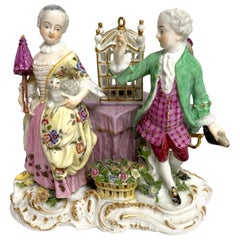
19th Century Meissen Birdcage Grouping
By Meissen Porcelain
Located in West Palm Beach, FL
19th Century Meissen Birdcage Grouping Germany Circa 1880 This enchanting 19th-century Meissen birdcage grouping, made in Germany circa 1880, is a re...
Category

Late 19th Century German Antique Meissen Porcelain Serveware, Ceramics, Silver and Glass

Materials

Porcelain

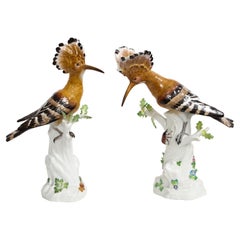
Fine Pair Meissen Porcelain Figures of Hoopoe Birds Perched on White Branches
By Meissen Porcelain
Located in New York, NY
A Beautiful Pair of very Meissen Porcelain Figures of Hoopoe Birds Perched on White Tree Branches, with Insects and Flowers. This finely detailed naturalistic pair of exotic Hoopoe...
Category

Early 1900s German Rococo Antique Meissen Porcelain Serveware, Ceramics, Silver and Glass

Materials

Porcelain

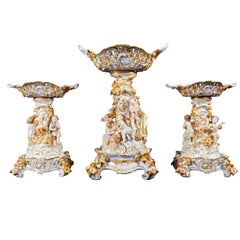
Meissen Porcelain Chinoiserie "Gold Dragon" Flower-Encrusted Garniture
By Meissen Porcelain
Located in New York, NY
A Meissen porcelain ‘Gold Dragon’ pattern three-piece garniture. A Meissen porcelain reticulated three-piece basket Garniture and stands. ...
Category

Late 19th Century German Rococo Antique Meissen Porcelain Serveware, Ceramics, Silver and Glass

Materials

Porcelain

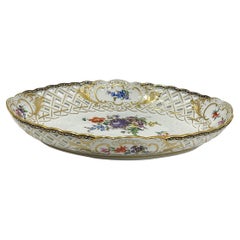
Small oval Meissen porcelain openwork dish, 1920s
By Meissen Porcelain
Located in Delft, NL
Small oval Meissen porcelain openwork dish, 1920s An oval small dish by Meissen. An openwork porcelain dish with floral pattern. The rim is openwork porcelain and has 4 in cartouche...
Category

Early 20th Century German Meissen Porcelain Serveware, Ceramics, Silver and Glass

Materials

Porcelain

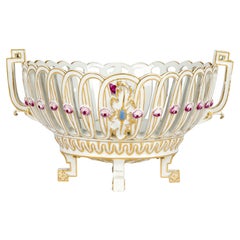
Meissen Marcolini Period Porcelain Twin Handled Painted Fruit Basket
By Meissen Porcelain
Located in Bishop s Stortford, Hertfordshire
A fine antique German porcelain twin handled fruit basket by prolific makers Meissen and dating from the Marcolini period 1774 to 1814. The fruit basket stands raised on four Greek k...
Category

Late 18th Century European Neoclassical Antique Meissen Porcelain Serveware, Ceramics, Silver and Glass

Materials

Porcelain

Antique Pair Large German Meissen Porcelain Figural Centerpieces
By Meissen Porcelain
Located in Tarry Town, NY
This exquisite pair of very large German porcelain figural centerpieces exemplifies the refined artistry and craftsmanship associated wit...
Category

19th Century German Rococo Antique Meissen Porcelain Serveware, Ceramics, Silver and Glass

Materials

Porcelain

19th Century Meissen Tureen
By Meissen Porcelain
Located in Brighton, Sussex
A fine quality 19th century Meissen Porcelain lidded tureen, having wonderful bold coloured raised floral decoration, berries and insects. Underg...
Category

Late 19th Century German Antique Meissen Porcelain Serveware, Ceramics, Silver and Glass

Materials

Porcelain

Pair 19th Century Meissen Figural Porcelain Centerpiece Baskets
By Meissen Porcelain
Located in New York, NY
Pair of antique (late 19th century) reticulated porcelain baskets supported by putti around a tree stump, and encrusted with raised flowers. Each 16 inches tall. Each with the Meiss...
Category

Late 19th Century German Antique Meissen Porcelain Serveware, Ceramics, Silver and Glass

Materials

Porcelain

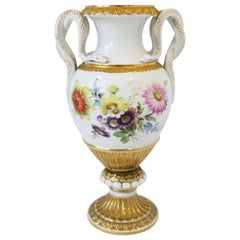
Meissen Snake Handle Vase With Flower Painting And Gilding, by Leuteritz, 20th
By Meissen Porcelain, Ernst August Leuteritz
Located in Vienna, AT
Very large double snake handle vase in baluster form on a mounted funnel-shaped stand, handles in the form of coiled snake pairs raised on the side, white and cobalt blue base, fine ...
Category

1940s German Baroque Vintage Meissen Porcelain Serveware, Ceramics, Silver and Glass

Materials

Porcelain

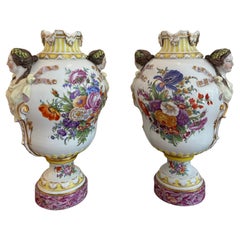
Pair of Important Porcelain Vases with Female Heads by Augustus Rex for Meissen
By Meissen Porcelain
Located in Marcq-en-Barœul, Hauts-de-France
This pair of important and very beautiful vases is made of ceramic with 2 female faces and beautiful and fine decors. These vases were made by Meissen manufacture after the model by ...
Category

1850s German Romantic Antique Meissen Porcelain Serveware, Ceramics, Silver and Glass

Materials

Porcelain

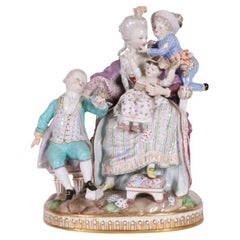
Rare Antique Meissen Figural Group - "The Good Mother" - For Restoration
By Meissen Porcelain
Located in Bridgeport, CT
The mother seated in a fauteuil with a boy scrambling over her shoulder, a baby on her lap, an older boy sitting on a stool playing with a pack of cards which has fallen from the bab...
Category

19th Century German Regency Antique Meissen Porcelain Serveware, Ceramics, Silver and Glass

Materials

Porcelain

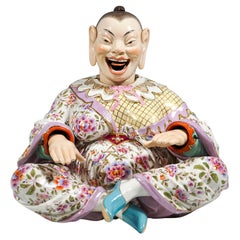
Large Seated Meissen Porcelain Wiggling Pagoda, By J.J. Kaendler, Circa 1860
By Johann Joachim Kaendler, Meissen Porcelain
Located in Vienna, AT
Depiction of a seated, laughing female Buddha figure from a series of folk types. Full-figured body with the hair tied back tightly and the robe tightly fitting the body with wide sl...
Category

1860s German Other Antique Meissen Porcelain Serveware, Ceramics, Silver and Glass

Materials

Porcelain

19th Century Meissen Porcelain Plate, Reticulated Blue Onion, Germany
By Meissen Porcelain
Located in Andernach, DE
The outstanding historical antique Meissen's Blue Onion pattern decoration was originally created around 1730, inspired by East Asian models from the Ming dynasty. This very dinner...
Category

Late 19th Century German Baroque Antique Meissen Porcelain Serveware, Ceramics, Silver and Glass

Materials

Porcelain

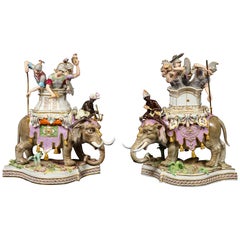
Important Meissen Porcelain Groups of Caparisoned Elephants and Soldiers
By Meissen Porcelain
Located in New York, NY
An important pair of Meissen Porcelain Groups depicting "Alexander The Great Concurring India". Modeled with Alexander the great's three warriors/soldiers riding on caparisoned eleph...
Category

1880s German Rococo Antique Meissen Porcelain Serveware, Ceramics, Silver and Glass

Materials

Porcelain

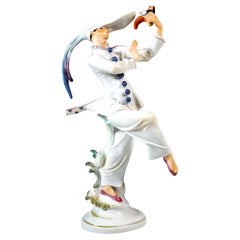
Meissen Figurine Mask Dancer From Hoffmann s Tales, by Paul Scheurich, 20th
By Meissen Porcelain
Located in Vienna, AT
Finest Meissen Porcelain Figurine: Dancer standing on one leg in a white Bajazzo suit with blue tassels, wearing the characteristic cap with an extra-long visor and cock feathers sti...
Category

Late 20th Century German Art Deco Meissen Porcelain Serveware, Ceramics, Silver and Glass

Materials

Porcelain

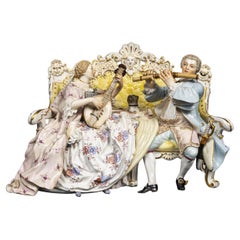
Meissen Porcelain Figural Group of Musician Lovers on Sofa, After J.J. Kandler
By Meissen Porcelain
Located in New York, NY
A 19th C. Meissen Porcelain Figural Group of Musician Lovers seated on a Sofa with a Pug Dog, After J.J. Kandler. The piece depicts a man and a woman seated on an ornate sofa, each engaged in a musical performance. The woman is elegantly attired in a gown adorned with delicate floral motifs, playing a lute, while the man is dressed in fine blue and gold attire, playing a flute. Their facial expressions reflect concentration and grace as they engage in a shared musical moment. The intricate detailing in their clothing, including the delicate folds of the fabric and the fine detailing of the lace and ribbons, the 24k Gold...
Category

1860s German Rococo Antique Meissen Porcelain Serveware, Ceramics, Silver and Glass

Materials

Porcelain

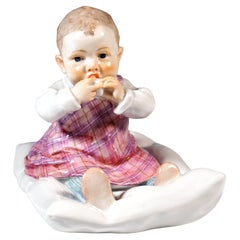
Meissen Art Nouveau Figure, Hentschelkind, Child Sitting On Cushion, 1905
By Julius Konrad Hentschel, Meissen Porcelain
Located in Vienna, AT
Art Nouveau Meissen porcelain figure from the time the model was created: Child with brunette hair, dressed in typical children's clothing from around 1900 - apron and long-sleeved s...
Category

Early 1900s German Art Nouveau Antique Meissen Porcelain Serveware, Ceramics, Silver and Glass

Materials

Porcelain

Late 19th Century Floral Meissen Oval Platter
By Meissen Porcelain
Located in Chapel Hill, NC
Large oval platter with gilt scalloped edge (minor wear) by Meissen in the scattered flowers or streublumen pattern. Crossed swords mark. c.1860-90. 18 3/8" x 13 3/8". Whitehall Ant...
Category

Late 19th Century German Antique Meissen Porcelain Serveware, Ceramics, Silver and Glass

Materials

Ceramic

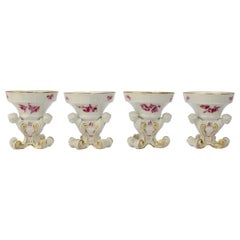
4 Antique Meissen Porcelain Footed Frauenkopf Salt Cellars with Puce Flowers
By Meissen Porcelain
Located in Philadelphia, PA
A very fine set of 4 antique Meissen porcelain salt cellars. Modelled after salts originally designed for the Sulkowski service by Johann Frie...
Category

Late 19th Century German Rococo Antique Meissen Porcelain Serveware, Ceramics, Silver and Glass

Materials

Porcelain

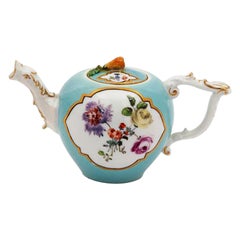
18th-century Meissen Miniature Turquoise-Ground Botanical Teapot and Cover
By Meissen Porcelain
Located in Downingtown, PA
Meissen miniature Turquoise-ground teapot and cover, 1735-40 The Meissen porcelain miniature teapot has a turquoise ground with a shaped cartouche ...
Category

1730s German Georgian Antique Meissen Porcelain Serveware, Ceramics, Silver and Glass

Materials

Porcelain

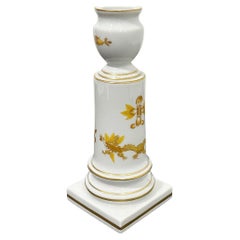
Meissen Porcelain Candlestick Holder Ornate Yellow Dragon
By Meissen Porcelain
Located in Delft, NL
Meissen Porcelain candlestick holder ornate yellow Dragon Meissen Porcelain ornate yellow Dragon candlestick holder. The rims and pattern...
Category

Late 20th Century German Meissen Porcelain Serveware, Ceramics, Silver and Glass

Materials

Porcelain

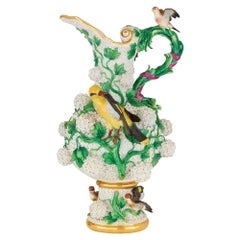
Large Antique Porcelain Schneeballen Ewer by Meissen
By Meissen Porcelain
Located in London, GB
Large antique porcelain Schneeballen ewer by Meissen German, Late 19th Century Height 62cm, width 37cm, depth 33cm Expertly fashioned by the esteemed Meissen porcelain manufactory, ...
Category

Late 19th Century German Rococo Antique Meissen Porcelain Serveware, Ceramics, Silver and Glass

Materials

Porcelain

Meissen Porcelain Urn Snake Handles Amphora, Germany
By Meissen Porcelain
Located in New York, NY
An antique Meissen porcelain urn with snake handles amphora, circa early-20th century, Germany. This Meissen urn is hard-paste porcelain, hand painted, fea...
Category

Early 20th Century German Meissen Porcelain Serveware, Ceramics, Silver and Glass

Materials

Porcelain

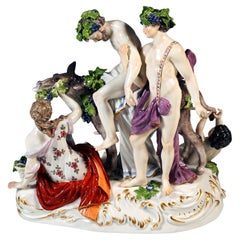
Meissen Bacchant Group Drunken Silenus On Donkey , by F.E. Meyer, Circa 1860
By Meissen Porcelain
Located in Vienna, AT
Excellent Meisse porcelain group of the 19th century: Visibly drunk Silenus, crowned with a wreath of vines, sitting on a donkey and supported by a young Bacchante walking beside him...
Category

1860s German Rococo Antique Meissen Porcelain Serveware, Ceramics, Silver and Glass

Materials

Porcelain

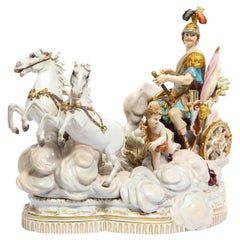
Meissen Grouping of Mars s War Chariot with War Putti for Catherine the Great
By Meissen Porcelain
Located in New York, NY
A magnificent and quite large, Baroque style, Museum Quality, Antique Meissen Porcelain Grouping of Mars, the God of War, Chariot with his Putti Servant, originally designed by Johann Joachim Kändler in 1772-1773 for Czarina Katharina, better known as Catherine the Great. Mars, the Roman God of war, is seen wearing a Roman war attire on his white double horse-drawn chariot. While seated, Mars is seen holding the handle of his sword. On his head is a beautiful silver helmet...
Category

19th Century German Baroque Antique Meissen Porcelain Serveware, Ceramics, Silver and Glass

Materials

Porcelain

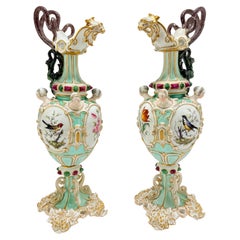
Pr. Finely Executed Ornithological Neoclassical Decorated Meissen Ewers 19th C
By Meissen Porcelain
Located in Atlanta, GA
A rare and exceptionally elaborate pair of Meissen porcelain ewers, dating to the mid-19th century, executed in a richly sculptural Rococo Revival idiom, each marked beneath with the...
Category

Mid-19th Century German Neoclassical Antique Meissen Porcelain Serveware, Ceramics, Silver and Glass

Materials

Enamel

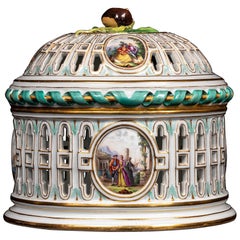
19th C Meissen Porcelain Covered Openwork Filigree Centerpiece w/ Watteau Scenes
By Meissen Porcelain
Located in New York, NY
A 19th Century Meissen Porcelain Covered Openwork Filigree Centerpiece with Watteau Cartouches and Village Scene Cartouches. This 19th-century Meissen porcelain covered centerpiece ...
Category

1870s German Rococo Antique Meissen Porcelain Serveware, Ceramics, Silver and Glass

Materials

Porcelain

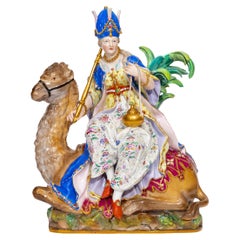
A Large 19th C. Meissen Porcelain Model of the Continent of Asia, Lady on Camel
By Meissen Porcelain
Located in New York, NY
A Magnificent and Large 19th Century Meissen Porcelain Model of the Continent of Asia. The figure wears an elaborate headdress with a blue and white mitre-like structure adorned with...
Category

1860s German Other Antique Meissen Porcelain Serveware, Ceramics, Silver and Glass

Materials

Porcelain

Incredible 19th Century Meissen Porcelain Covered Urn Emblematic of Autumn
By Meissen Porcelain
Located in New York, NY
An incredible and truly monumental 19th century Meissen Porcelain Covered urn emblematic of autumn. This is one of the most incredible and sp...
Category

1880s German Rococo Antique Meissen Porcelain Serveware, Ceramics, Silver and Glass

Materials

Porcelain

Meissen Porcelain serveware, ceramics, silver and glass for sale on 1stDibs.

Meissen Porcelain serveware, ceramics, silver and glass are available for sale on 1stDibs. These distinctive items are frequently made of ceramic and are designed with extraordinary care. There are many options to choose from in our collection of Meissen Porcelain serveware, ceramics, silver and glass, although beige editions of this piece are particularly popular. We have 414 vintage editions of these items in-stock, while there is 3 modern edition to choose from as well. Many of the original serveware, ceramics, silver and glass by Meissen Porcelain were created in the Rococo style in europe during the 19th century. If you’re looking for additional options, many customers also consider serveware, ceramics, silver and glass by Johann Joachim Kändler, KPM Porcelain, and Ernst August Leuteritz. Prices for Meissen Porcelain serveware, ceramics, silver and glass can differ depending upon size, time period and other attributes — on 1stDibs, these items begin at $69 and can go as high as $257,500, while a piece like these, on average, fetch $3,732.
Questions About Meissen Porcelain Serveware, Ceramics, Silver and Glass
  • 1stDibs ExpertApril 5, 2022
    To spot a fake Meissen, first, check the maker’s mark, generally found on the bottom of the porcelain. Meissen used a simple mark, so if you spot one that appears too embellished, it may be a fake. Shop a collection of properly vetted Meissen porcelain from some of the world’s top dealers on 1stDibs.