Meissen Porcelain Serveware, Ceramics, Silver and Glass

German

Meissen Porcelain (Staatliche Porzellan-Manufaktur Meissen) is one of the preeminent porcelain factories in Europe and was the first to produce true porcelain outside of Asia. It was established in 1710 under the auspices of King Augustus II “the Strong” of Saxony-Poland (1670–1733), a keen collector of Asian ceramics, particularly Ming porcelain.

In pursuing his passion, which he termed his “maladie de porcelaine,” Augustus spent vast sums, amassing some 20,000 pieces of Japanese and Chinese ceramics. These, along with examples of early Meissen, comprise the Porzellansammlung, or porcelain collection, of the Zwinger Palace, in Dresden.

The king was determined, however, to free the European market from its dependence on Asian imports and to give European artisans the freedom to create their own porcelain designs. To this end, he charged the scientist Ehrenfried Walther von Tschirnhaus and aspiring alchemist Johann Friedrich Böttger with the task of using local materials to produce true, hard-paste porcelain (as opposed to the soft-paste variety European ceramists in the Netherlands, Germany, France, Italy and Spain had been producing since the late Renaissance). In 1709, the pair succeeded in doing just that, employing kaolin, or “china clay.” A year later, the Meissen factory was born.

In its first decades, Meissen mostly looked to Asian models, producing wares based on Japanese Kakiemon ceramics and pieces with Chinese-inflected decorations called chinoiserie. During the 1720s its painters drew inspiration from the works of Watteau, and the scenes of courtly life, fruits and flowers that adorned fashionable textiles and wallpaper. It was in this period that Meissen introduced its famous cobalt-blue crossed swords logo — derived from the arms of the Elector of Saxony as Arch-Marshal of the Holy Roman Empire — to distinguish its products from those of competing factories that were beginning to spring up around Europe.

By the 1730s, Meissen’s modelers and decorators had mastered the style of Asian ceramics, and Augustus encouraged them to develop a new, original aesthetic. The factory’s director, Count Heinrich von Brühl, used Johann Wilhelm Weinmann’s botanical drawings as the basis for a new line of wares with European-style surface decoration. The Blue Onion pattern (Zwiebelmuster), first produced in 1739, melded Asian and European influences, closely following patterns used in Chinese underglaze-blue porcelain, but replacing exotic flora and fruits with Western varieties (likely peaches and pomegranates, not onions) along with peonies and asters.

During the same period, head modeler Joachim Kändler (1706–75) began crafting delicate porcelain figures derived from the Italian commedia dell’arte. Often used as centerpieces on banquet tables and decorated to reflect the latest fashions in courtly dress for men and women, these figurines were popular in their day, and are still considered among Meissen’s most iconic creations. Kändler also created the Swan Service, which, with its complex low-relief surface design and minimal decoration is considered a masterpiece of Baroque ceramics.

The rise of Neoclassicism in the latter half of the 18th century forced Meissen to change artistic direction and begin producing monumental vases, clocks, chandeliers and candelabra. In the 20th century, Meissen added to its 18th-century repertoire decidedly modern designs, including ones in the Art Nouveau style. The 1920s saw the introduction of numerous animal figures, such as the popular sea otter (Fischotter), which graced an East German postage stamp in the 1960s. Starting in 1933, artistic freedom was limited at the factory under the Nazi regime, and after World War II, when the region became part of East Germany, it struggled to reconcile its elite past with the values of the Communist government. In 1969, however, new artistic director Karl Petermann reintroduced the early designs and fostered a new degree of artistic license. Meissen became one of the few companies to prosper in East Germany.

Owned by the State of Saxony since reunification, in 1990, Meissen continues to produce its classic designs together with new ones developed collaboratively with artists from all over the world. In addition, through its artCAMPUS program, the factory has invited distinguished ceramic artists, such as Chris Antemann and Arlene Shechet, to work in its studios in collaboration with its skilled modelers and painters. The resulting works of contemporary sculpture are inspired by Meissen’s rich and complex legacy.

Find a collection of authentic Meissen Porcelain on 1stDibs.

to
48
380
3
60
197
123
3
58
25
12
17
12
3
4
2
1
3
1
1
114
38
35
17
12
7
5
5
5
3
3
2
2
1
383
378
19
6
5
199
172
371
358
3
3
1
383
383
383
566
436
426
360
Creator: Meissen Porcelain
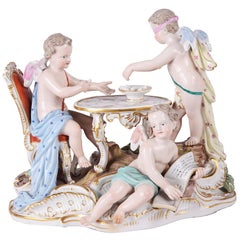
19th Century Meissen Porcelain Group of Blind Man s Buff
By Meissen Porcelain
Located in Brighton, Sussex
A good quality 19th century Meissen Porcelain group of three cherubs playing blind man’s buff. One blind folded, one seated on a chair the other reading on ...
Category

Late 19th Century German Antique Meissen Porcelain Serveware, Ceramics, Silver and Glass

Materials

Porcelain

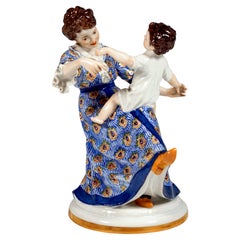
Art Nouveau Group Mother With Child , by Paul Helmig, Meissen Germany, ca 1912
By Meissen Porcelain, Paul Helmig
Located in Vienna, AT
Very rare Meissen Art Nouveau porcelain group: Mother in a dress decorated with elaborate Art Nouveau decor sitting on a fabric-covered stool and playing with her son, who is wearin...
Category

1910s German Art Nouveau Vintage Meissen Porcelain Serveware, Ceramics, Silver and Glass

Materials

Porcelain

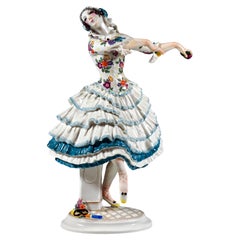
Meissen Figurine Chiarina , Russian Ballet Carnival , by Paul Scheurich, 20th
By Meissen Porcelain
Located in Vienna, AT
Finest Meissen Porcelain Figurine: Dancer balancing on the ball of her left foot, lifting her right leg slightly forward with her foot extended downward, leaning her head to the righ...
Category

Mid-20th Century German Biedermeier Meissen Porcelain Serveware, Ceramics, Silver and Glass

Materials

Porcelain

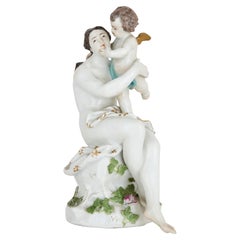
Antique German porcelain group of Venus with Cupid by Meissen
By Meissen Porcelain
Located in London, GB
Antique German porcelain group of Venus with Cupid by Meissen German, c. 1750 Height 20.5cm, width 11cm, depth 12cm This charming Meissen porce...
Category

Mid-18th Century German Rococo Antique Meissen Porcelain Serveware, Ceramics, Silver and Glass

Materials

Porcelain

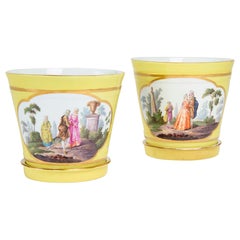
Pair of Antique German Painted Porcelain Cachepots by Meissen
By Meissen Porcelain
Located in London, GB
Pair of antique German painted porcelain cachepots by Meissen German, Early 20th Century Height 16cm, diameter 17cm A striking pair of early 20th century porcelain cachepots by Me...
Category

Early 20th Century German Rococo Meissen Porcelain Serveware, Ceramics, Silver and Glass

Materials

Porcelain

Baroque Meissen Porcelain Group Four Children Playing Music, J.J. Kaendler, 1770
By Johann Joachim Kaendler, Meissen Porcelain
Located in Vienna, AT
Excellent Meissen piece from the time the model was created: Four children in festive rural rococo clothing on a high, tiered round base, decorated with a leaf wreath and ribbon fest...
Category

Late 18th Century German Rococo Antique Meissen Porcelain Serveware, Ceramics, Silver and Glass

Materials

Porcelain

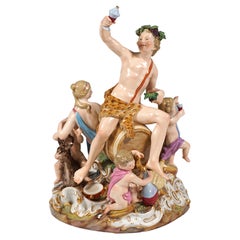
Meissen Group Bacchanal With Wine Barrel, by Kaendler Meyer, Germany Ca 1870
By Johann Joachim Kaendler, Meissen Porcelain
Located in Vienna, AT
Rare, excellent porcelain group of the 19th century: Youthful Bacchus with nymph and putti grouped around a large wine cask: The Bacchant, covered with a leopard skin, sitting sideways on the barrel, holding up grapes in his left hand and a wine glass with lid...
Category

1870s German Rococo Antique Meissen Porcelain Serveware, Ceramics, Silver and Glass

Materials

Porcelain

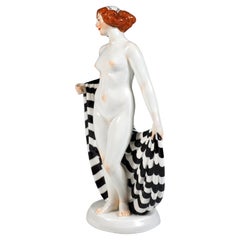
Meissen Germany Art Nouveau Figurine Girl With Shawl, by Theodor Eichler, c 1913
By Theodor Eichler, Meissen Porcelain
Located in Vienna, AT
Depiction of a young unclothed Art Nouveau girl with artfully pinned up hair with incorporated hood, a large striped cloth wrapped around her right fo...
Category

1910s German Art Nouveau Vintage Meissen Porcelain Serveware, Ceramics, Silver and Glass

Materials

Porcelain

Meissen Porcelain Bird Model
By Meissen Porcelain
Located in London, GB
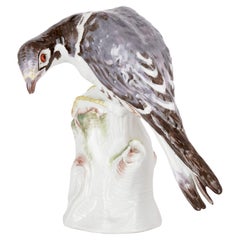
A Meissen porcelain bird model German, late 19th century Measures: height 15cm, width 15cm, depth 9cm This elegant miniature, of a ptarmigan or sim...
Category

Late 19th Century German Belle Époque Antique Meissen Porcelain Serveware, Ceramics, Silver and Glass

Materials

Porcelain

Meissen Porcelain Figural Group with a Musician Playing the Drums
By Meissen Porcelain
Located in Tarzana, CA
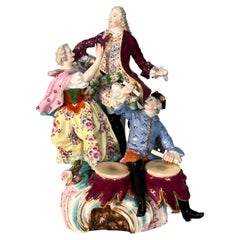
A lovely 19th century German Meissen porcelain figural group of a standing lady appealing to a standing gentleman and a musician sitting by their feet playing the drums. Late 19th century. Blue Meissen crossed sword...
Category

Late 19th Century German Antique Meissen Porcelain Serveware, Ceramics, Silver and Glass

Materials

Porcelain

Meissen Lovely Dog Figurine Terrier by Paul Walther made c. 1935
By Meissen Porcelain
Located in Vienna, AT
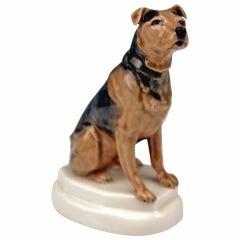
Meissen Lovely Figurine Of Dog: It Is A Type Of British Smooth Fox Terrier Sitting On White Oval Base / The Dog's Body Is Brownish Coloured, Wit...
Category

1930s German Art Nouveau Vintage Meissen Porcelain Serveware, Ceramics, Silver and Glass

Materials

Porcelain

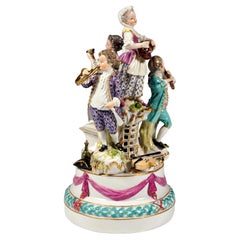
Meissen Porcelain Revelry Groups
By Meissen Porcelain
Located in New Orleans, LA
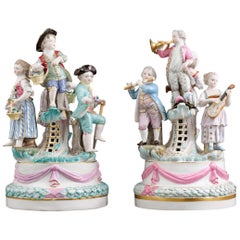
This charming pair of Meissen porcelain figures celebrates the essence of Revelry. First modeled by the renowned Johann Joachim Kändler on bases by Peter Reinicke, circa 1767, these joyous groups depict musicians making merry by playing the French horn, flute, guitar and hurdy-gurdy, and gardeners carrying flowers in baskets and aprons. Two almost identical groups are featured in Meissen: Collector’s Catalogue by Laurence Mitchell. Figures by Kändler were especially popular and served as table decorations at courtly banquets. He took the reigns of the Meissen factory in 1733 and over the following 40 years created more than 900 models, many of which were considered the most important and beautiful ever produced. Many of his designs were so timeless and classic that they continued to be used well into the 19th century. Kändler was highly regarded especially for his allegorical representations and he was certainly at his best when designing the Four Continents...
Category

Late 19th Century French Rococo Antique Meissen Porcelain Serveware, Ceramics, Silver and Glass

Materials

Porcelain

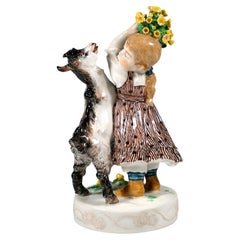
Art Nouveau Group Girl With Goat , by Erich Hoesel, Meissen Germany, ca 1905
By Meissen Porcelain
Located in Vienna, AT
Very rare Meissen Art Nouveau porcelain group: Girl in a striped dress with polka dots and a white blouse holding a bouquet of flowers in both hands above her head and fending off a ...
Category

Early 1900s German Art Nouveau Antique Meissen Porcelain Serveware, Ceramics, Silver and Glass

Materials

Porcelain

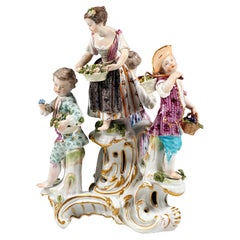
Early Meissen Round Group of Gardener Children, by J.J. Kaendler, 1763-1774
By Meissen Porcelain, Johann Joachim Kaendler
Located in Vienna, AT
Meissen porcelain group from the time of origin: Four children in festive, rural rococo clothing on a three-part rocaille base: on the central raised pedestal a girl with a basket o...
Category

1760s German Rococo Antique Meissen Porcelain Serveware, Ceramics, Silver and Glass

Materials

Porcelain

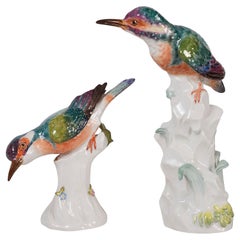
Pair of Meissen Kingfishers
By Meissen Porcelain
Located in Brighton, Sussex
An enchanting pair of naturalistically modelled Meissen kingfishers perched on tree stumps, each with wonderful colour and signed to the bases with the blue crossed sword of the Meis...
Category

Early 20th Century German Meissen Porcelain Serveware, Ceramics, Silver and Glass

Materials

Porcelain

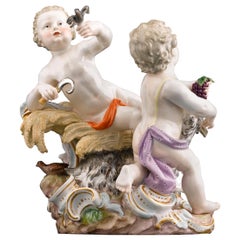
Meissen Porcelain Summer and Fall Figural Group
By Meissen Porcelain
Located in New Orleans, LA
This beautiful Meissen Porcelain figure entitled Summer and Fall is part of the company's beloved Seasons series. The putti rest upon a rocaille-formed base holding representations o...
Category

Late 19th Century German Other Antique Meissen Porcelain Serveware, Ceramics, Silver and Glass

Materials

Porcelain

Meissen Genre Love Group With Drum Beater, by F.E. Meyer, Germany Circa 1850
By Meissen Porcelain
Located in Vienna, AT
Exceptional Meissen porcelain group: On rock pedestal fixed with large rocailles in the foreground sitting musician with tricorn, frock coat over wide sh...
Category

Mid-19th Century German Rococo Antique Meissen Porcelain Serveware, Ceramics, Silver and Glass

Materials

Porcelain

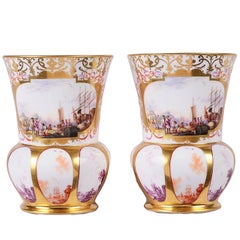
Pair of 19th Century Meissen Vases
By Meissen Porcelain
Located in Brighton, Sussex
A good quality pair of 19th century Meissen porcelain vases. Each having gilded scrolling decoration with inset painted panels depicting harbour scenes. Blue crossed swords to base.
Category

19th Century German Antique Meissen Porcelain Serveware, Ceramics, Silver and Glass

Materials

Porcelain

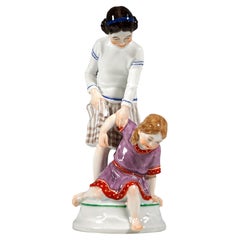
Art Nouveau Children Group Two Girls , by A. Koenig, Meissen Germany, ca 1912
By Meissen Porcelain
Located in Vienna, AT
Extremely rare Meissen Art Nouveau porcelain group: Two barefoot girls in summer clothes, the older one in a striped skirt and white and blue long-slee...
Category

1910s German Art Nouveau Vintage Meissen Porcelain Serveware, Ceramics, Silver and Glass

Materials

Porcelain

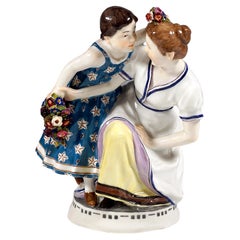
Art Nouveau Children Group Girl With Child , T. Eichler, Meissen Germany, 1905
By Theodor Eichler, Meissen Porcelain
Located in Vienna, AT
Extremely rare Meissen Art Nouveau porcelain group: Two girls in clothing of circa 1900, the elder with hair pinned up in a bun in a blue fringed white dress with a yellow petticoat...
Category

Early 1900s German Art Nouveau Antique Meissen Porcelain Serveware, Ceramics, Silver and Glass

Materials

Porcelain

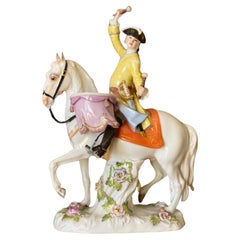
Meissen, Drum Rider Porcelain Subject, 20th Century
By Meissen Porcelain
Located in Beaune, FR
Polychrome porcelain subject depicting a horseman on the drum in perfect condition. Features the Meissen mark underneath and it is also dated 1963.
Category

20th Century French Meissen Porcelain Serveware, Ceramics, Silver and Glass

Materials

Porcelain

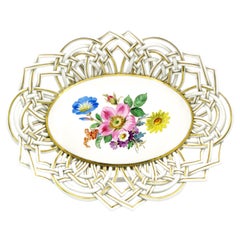
1930s Meissner Oval Flower Basket with Hand-Modeled Braided Ornament
By Meissen Porcelain
Located in Remshalden-Grunbach, DE
1930s Meissner oval flower basket with hand-modeled braided ornament Colorful flowers are depicted on the plate. Oval shape with unusual, hand-modeled braided ornament, partly gold...
Category

1930s German Vintage Meissen Porcelain Serveware, Ceramics, Silver and Glass

Materials

Porcelain

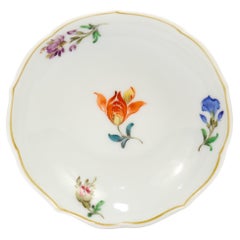
Vintage Meissen Porcelain Butter Pat with Deutsche Blumen and Gilt Accents
By Meissen Porcelain
Located in Philadelphia, PA
A fine signed vintage German porcelain butter pat or small dish. By Meissen. With painted Deutsche blumen to the center and a gilt scalloped rim. Marked to the base. Perfect for ...
Category

20th Century German Meissen Porcelain Serveware, Ceramics, Silver and Glass

Materials

Porcelain

Meissen Porcelain serveware, ceramics, silver and glass for sale on 1stDibs.

Meissen Porcelain serveware, ceramics, silver and glass are available for sale on 1stDibs. These distinctive items are frequently made of ceramic and are designed with extraordinary care. There are many options to choose from in our collection of Meissen Porcelain serveware, ceramics, silver and glass, although beige editions of this piece are particularly popular. We have 414 vintage editions of these items in-stock, while there is 3 modern edition to choose from as well. Many of the original serveware, ceramics, silver and glass by Meissen Porcelain were created in the Rococo style in europe during the 19th century. If you’re looking for additional options, many customers also consider serveware, ceramics, silver and glass by Johann Joachim Kändler, KPM Porcelain, and Ernst August Leuteritz. Prices for Meissen Porcelain serveware, ceramics, silver and glass can differ depending upon size, time period and other attributes — on 1stDibs, these items begin at $69 and can go as high as $257,500, while a piece like these, on average, fetch $3,732.
Questions About Meissen Porcelain Serveware, Ceramics, Silver and Glass
  • 1stDibs ExpertApril 5, 2022
    To spot a fake Meissen, first, check the maker’s mark, generally found on the bottom of the porcelain. Meissen used a simple mark, so if you spot one that appears too embellished, it may be a fake. Shop a collection of properly vetted Meissen porcelain from some of the world’s top dealers on 1stDibs.