ARARAT RUGS

to
426
517
220
201
83
78
59
21
18
7
2
1
304
Vintage Turkish Western Anatolian Tulu Carpet, Shaggy Kilim Wool Long Hair Rug
Located in Tokyo, JP
This is a Vintage Tulu Carpet from Central Anatolia, the Konya region with shaggy wool long hair, good condition, and beautiful color composition. Central Anatolian Tulu rugs, als...
Category

Mid-20th Century Turkish Kilim Turkish Rugs

Materials

Wool, Natural Fiber, Organic Material
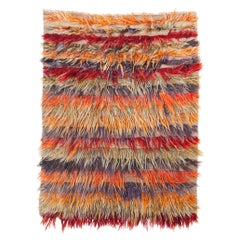
Antique Antalya Dosemealti Rug Southern Anatolia Doseme Alti Turkish Carpet
Located in Tokyo, JP
This is an antique Dosemealti Rug from Southern Anatolia, the Antalya region with a large border, geometric floral pattern ground, good condition, and b...
Category

Early 20th Century Turkish Oushak Turkish Rugs

Materials

Wool, Organic Material, Natural Fiber

Hereke Wool Cotton Carpet, Turkish Anatolian Rug, Beige Khaki Green Colors
Located in Tokyo, JP
This unique Wool Hereke Carpet is among the highest-quality carpets in the Hereke workshop. There is a flower lattice on a white background with the fineness of the weave, the use of...
Category

21st Century and Contemporary Turkish Oushak Turkish Rugs

Materials

Wool, Natural Fiber, Organic Material

Hereke Wool Cotton Carpet - Turkish Anatolian Rug - Beige Khaki Green Colors
Located in Tokyo, JP
This unique Wool Hereke Carpet is among the highest-quality carpets in the Hereke workshop. There is a flower lattice on a beige background and light khaki green with the fineness of...
Category

21st Century and Contemporary Turkish Oushak Turkish Rugs

Materials

Organic Material, Natural Fiber, Wool

New Hereke Wool Cotton Carpet - Turkish Anatolian Red Ground Traditional Rug
Located in Tokyo, JP
This unique Wool Hereke Carpet is among the highest-quality carpets in the Hereke workshop. There is a flower lattice on a deep red background with the fineness of the weave, the use...
Category

21st Century and Contemporary Turkish Oushak Turkish Rugs

Materials

Wool, Natural Fiber, Organic Material

Hereke Wool Cotton Carpet - Turkish Anatolian Rug - Ottoman Carnations Tulip
Located in Tokyo, JP
This unique Wool Hereke Carpet is among the highest-quality carpets in the Hereke workshop. There are traditional Ottoman Empire carnations and tulip design rows on a white backgroun...
Category

21st Century and Contemporary Turkish Oushak Turkish Rugs

Materials

Wool, Natural Fiber, Organic Material

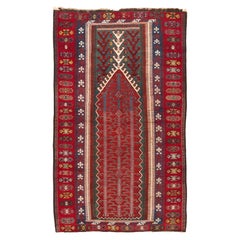
Antique Konya Obruk Kilim Central Anatolian Rug Turkish Carpet Metallic Threads
Located in Tokyo, JP
This is Central Anatolian antique Kilim from the Konya - Obruk region with a rare and beautiful color composition. This highly collectible antique kilim has a wonderful special c...
Category

Early 20th Century Turkish Kilim Turkish Rugs

Materials

Wool, Natural Fiber

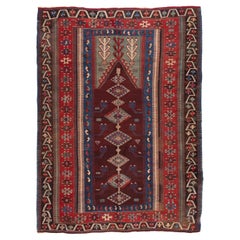
Antique Konya Obruk Kilim Central Anatolian Rug Turkish Carpet Rare Purple Color
Located in Tokyo, JP
This is a Central Anatolian High-grade Antique Kilim from the Konya - Obruk region with a rare and beautiful color composition. This highly collectible antique kilim has a wonderfu...
Category

Early 20th Century Turkish Kilim Turkish Rugs

Materials

Wool, Natural Fiber

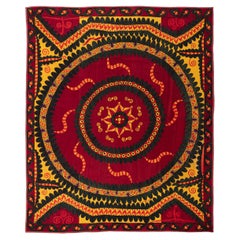
Antique Uzbekistan Tashkent All Over Silk Suzani Embroidered Rare Wall Hanging
Located in Tokyo, JP
This wall hanging is all over hand-embroidered Suzani design, silk cotton ground and the embroidery thread is 100% silk. Suzani, which means "embroidery" in Uzbek, began aro...
Category

Early 20th Century Uzbek Kilim Tapestries

Materials

Silk, Natural Fiber, Organic Material

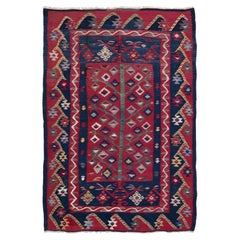
Antique Sarkoy Kilim Rug, Western Anatolian Turkish Carpet, Balkan Style Unique
Located in Tokyo, JP
This is an antique Unique Sarkoy (Sharkoy or Sarköy) Kilim rug from Western Turkey with a rare and beautiful color composition. Sarkoy kilims are very finely woven in slitweave in...
Category

Early 20th Century Turkish Kilim Rugs

Materials

Natural Fiber, Organic Material, Wool

Antique Sarkoy Kilim Rug, Western Anatolian Turkish Carpet, Balkan Style Unique
Located in Tokyo, JP
This is an antique Unique Sarkoy (Sharkoy or Şarköy) Kilim rug from Western Turkey with a rare and beautiful color composition. Sarkoy kilims are very finely woven in slitweave in a...
Category

Early 20th Century Turkish Kilim Rugs

Materials

Natural Fiber, Organic Material, Wool

Antique Early 20th Century Caucasian Kilim Woven Cradle Part, Natural Dyed
Located in Tokyo, JP
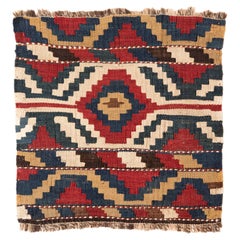
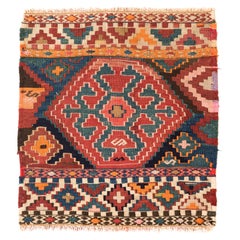
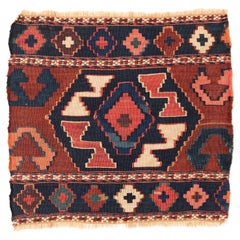
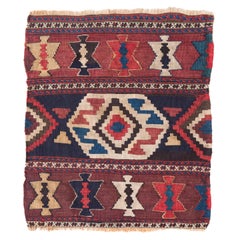
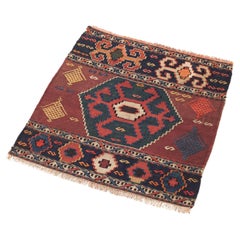
This is an antique collectible square early 20th century Kilim Woven Cradle Part from the Caucasus region with a rare and beautiful color composition. Of the four countries that m...
Category

Early 20th Century Caucasian Kilim Caucasian Rugs

Materials

Wool, Natural Fiber, Organic Material

Antique Early 20th Century Caucasian Kilim Woven Cradle Part, Natural Dyed
Located in Tokyo, JP
This is an antique collectible Early 20th century Kilim Woven Cradle Part from the Caucasus region with a rare and beautiful color composition. Of the four countries that make up ...
Category

Early 20th Century Caucasian Kilim Caucasian Rugs

Materials

Wool, Natural Fiber, Organic Material

Antique Early 20th Century Caucasian Kilim Woven Cradle Part, Natural Dyed
Located in Tokyo, JP
This is an antique collectible square early 20th century Kilim Woven Cradle Part from the Caucasus region with a rare and beautiful color composition. Of the four countries that m...
Category

Early 20th Century Caucasian Kilim Caucasian Rugs

Materials

Wool, Natural Fiber, Organic Material

Antique Early 20th Century Caucasian Kilim Woven Cradle Part, Natural Dyed
Located in Tokyo, JP
This is an antique collectible square early 20th century Kilim Woven Cradle Part from the Caucasus region with a rare and beautiful color composition. Of the four countries that m...
Category

Early 20th Century Caucasian Kilim Caucasian Rugs

Materials

Wool, Natural Fiber, Organic Material

Antique Early 20th Century Caucasian Kilim Woven Cradle Part, Natural Dyed
Located in Tokyo, JP
This is an antique collectible square early 20th century Kilim Woven Cradle Part from the Caucasus region with a rare and beautiful color composition. Of the four countries that m...
Category

Early 20th Century Caucasian Kilim Caucasian Rugs

Materials

Wool, Natural Fiber, Organic Material

Antique Early 20th Century Caucasian Kilim Woven Cradle Part, Natural Dyed
Located in Tokyo, JP
This is an antique collectible square Early 20th Century Kilim Woven Cradle Part from the Caucasus region with a rare and beautiful color composition. Of the four countries that m...
Category

Early 20th Century Caucasian Kilim Caucasian Rugs

Materials

Wool, Natural Fiber, Organic Material

Antique Early 20th Century Caucasian Kilim Woven Cradle Part, Natural Dyed
Located in Tokyo, JP
This is an antique collectible Early 20th century Kilim Woven Cradle Part from the Caucasus region with a rare and beautiful color composition. Of the four countries that make up ...
Category

Early 20th Century Caucasian Kilim Caucasian Rugs

Materials

Wool, Natural Fiber, Organic Material

Antique Caucasian Kilim Handwoven Cradle Part, Early 20th Century Natural Dyed
Located in Tokyo, JP
This is an antique collectible Early 20th century Kilim Woven Cradle Part from the Caucasus region with a rare and beautiful color composition. Of the four countries that make up ...
Category

Early 20th Century Caucasian Kilim Caucasian Rugs

Materials

Wool, Organic Material, Natural Fiber
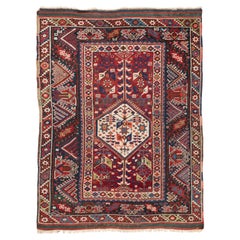
Antique Early 20th Century Caucasian Kilim Woven Cradle Part - Natural Dyed
Located in Tokyo, JP
This is an antique collectible square Early 20th Century Kilim Woven Cradle Part from the Caucasus region with a rare and beautiful color composition. Of the four countries that mak...
Category

Early 20th Century Caucasian Kilim Caucasian Rugs

Materials

Wool, Natural Fiber, Organic Material
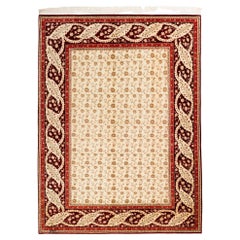
%100 Silk Natural Dye, Ikat Cushion Cover, Uzbekistan Modern Pillow
Located in Tokyo, JP
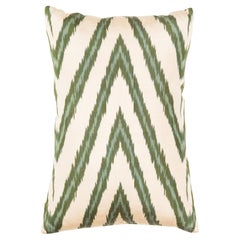
Silk Ikat cushions with rich design and high quality, carefully made one by one in Uzbekistan in Central Asia. Both the front and back sides are hand-woven silk cloth (ikat). All ...
Category

2010s Uzbek Kilim Pillows and Throws

Materials

Silk, Natural Fiber, Organic Material

%100 Silk Natural Dye, Ikat Cushion Cover - Uzbekistan Modern Pillow
Located in Tokyo, JP
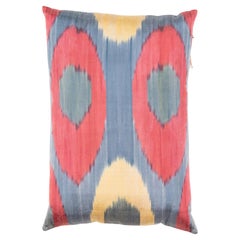
Silk Ikat cushions with rich design and high quality, carefully made one by one in Uzbekistan in Central Asia. Both the front and back sides are hand-woven silk cloth (ikat). All ...
Category

2010s Uzbek Kilim Pillows and Throws

Materials

Silk, Natural Fiber, Organic Material

%100 Silk Natural Dye, Ikat Cushion Cover, Uzbekistan Modern Pillow
Located in Tokyo, JP
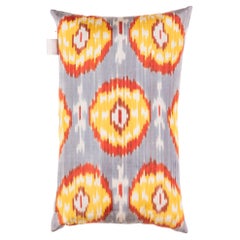
Silk Ikat cushions with rich design and high quality, carefully made one by one in Uzbekistan in Central Asia. Both the front and back sides are hand-woven silk cloth...
Category

2010s Uzbek Kilim Pillows and Throws

Materials

Silk, Natural Fiber, Organic Material

Ararat Rugs the Soft Pink Color Rug Modern Sand Desert Carpet Natural Dyed
By Ararat Rugs
Located in Tokyo, JP
This unique design rug is interpreted by our designers with a mixture of Ararat Rugs’ soft tone natural dyed hand-spun yarns. This modern carpet is looking like the sand in the desert. Color summary: 10 colors in total, most used 4 colors are; The mix of Pink Yarns; Dusty Turquoise 340 (Spurge – Madder Root – Indigo – Walnut Husk) Russian Green 418 (Henna – Indigo) Imperial Red 415 (Madder Root) Group: Let Colors Talk Area: East Turkey Material of Pile: Natural Dyed Hand-spun Wool Material Warp...
Category

21st Century and Contemporary Turkish Revival Turkish Rugs

Materials

Wool, Natural Fiber, Organic Material

Ararat Rugs Mamluk Wagireh Rug with Palmette Lattice Revival Carpet Natural Dyed
By Ararat Rugs
Located in Tokyo, JP
This rug has an interpreted design composed of a palmette lattice pattern taken from a part of the Mamluk rug, filling the field elegantly. These kinds of rugs have often been descri...
Category

2010s Turkish Revival Turkish Rugs

Materials

Wool, Natural Fiber, Organic Material

Ararat Rugs Diamond and Flowers Lattice Wagireh Rug Modern Turkish Carpet
By Ararat Rugs
Located in Tokyo, JP
This rug’s design is composed of diamond and flower rows pattern, filling the field elegantly. These kinds of rugs have often been described as wagirehs or samplers and were said to ...
Category

21st Century and Contemporary Turkish Oushak Turkish Rugs

Materials

Wool, Natural Fiber, Organic Material

Ararat Rugs Bidjar Rug with Lion Design Persian Wagireh Carpet Natural Dyed
By Ararat Rugs
Located in Tokyo, JP
This offset pattern is composed of leaves and lotus palmettes filling the various compartments against the imposing ground, while heraldic lions rear across the strapwork borders. On...
Category

21st Century and Contemporary Turkish Revival Persian Rugs

Materials

Wool, Natural Fiber, Organic Material

Ararat Rugs Mamluk Wagireh Rug Lattice Pattern Revival Carpet Natural Dyed
By Ararat Rugs
Located in Tokyo, JP
This lattice pattern is composed of palmettes and leaves filling the various compartments against the imposing ground. One has the impression that it is only part of a larger scheme ...
Category

21st Century and Contemporary Turkish Revival Turkish Rugs

Materials

Wool, Natural Fiber, Organic Material

Ararat Rugs Mamluk Wagireh Rug with Geometric Design Doormat Size Revival Carpet
By Ararat Rugs
Located in Tokyo, JP
This geometric lattice pattern rug has the impression that it is only part of a larger scheme-designed 15th-century rug from the Mamluk era, Cairo region, Eygpt. These designs have o...
Category

21st Century and Contemporary Turkish Revival Turkish Rugs

Materials

Wool, Natural Fiber, Organic Material

Ararat Rugs Divrigi Ulu Mosque Wagireh Carpet Seljuk Rug Entrance Mat Doormat
By Ararat Rugs
Located in Tokyo, JP
The source of carpet comes from the book Turkish Carpets from the 13th – 18th centuries, Ahmet Ertug, 1996 pl.16. This 15th-century carpet is from Ulu Mosque, Divrigi Sivas region, c...
Category

2010s Turkish Revival Turkish Rugs

Materials

Wool, Organic Material, Natural Fiber

Ararat Rugs Mamluk Wagireh Rug Lattice Pattern Revival Carpet Natural Dyed
By Ararat Rugs
Located in Tokyo, JP
This lattice pattern is composed of palmettes and leaves filling the various compartments against the imposing ground. One has the impression that it is only part of a larger scheme designed 15th-century rug from the Mamluk era, Cairo region, Eygpt. These designs have often been described as wagirehs or samplers and were said to have been used as weaver`s aids, or for demonstration purposes, made as a template or pattern for the carpet design and production of larger rugs, they are generally small pieces of the size of a scatter rug or mat. Mamluk carpets originated in a physical environment that lacked the combination of abundant marginal grazing land and a temperate climate with cool winters that were common to most carpet-weaving areas in the Islamic world. While related to a broader tradition of Turkish weaving centered in Anatolia, far to the north, the designs of these carpets include atypical elements, such as stylized papyrus plants, that are deeply rooted in Egyptian tradition. Their unusual composition and layout probably represent an attempt to develop a distinctive product that could in effect establish a “Mamluk brand” in the lucrative European export market. The uncharacteristic color scheme—devoid of the undyed white pile and employing a limited range of three or five hues in much the same value—also suggests a conscious attempt to create a particular stylistic identity. Also virtually unique in the world of Islamic carpets is the S-spun wool. It has been argued that the tradition of clockwise wool spinning originated in Egypt because of the earlier Egyptian tradition of spinning flax into linen thread. Details of the plant’s botanical structure make it impossible to spin flax fiber in the more common counterclockwise direction utilized throughout the Middle East for wool and cotton. Mamluk carpets with the color combinations seen in the Simonetti are now generally accepted as part of an earlier tradition that has many links to the weaving of Anatolia, Iran, and Syria. The “three-color” Mamluk carpets, well represented in the Metropolitan’s collection, represent a later development that continued well after the Ottoman conquest of Egypt in 1517. Many such carpets may have been produced well into the seventeenth century, and possibly even later. (Walter B. Denny in [Ekhtiar, Soucek, Canby, and Haidar 2011]). The design of the rug is interpreted by our designers from our Mamlouk-type rugs collection and soft colors are used for this rug. Color summary: 3 colors in total; Moss Green 27 (Spurge – Indigo) Mount Olive...
Category

21st Century and Contemporary Turkish Revival Turkish Rugs

Materials

Wool, Natural Fiber, Organic Material

Ararat Rugs Mamluk Wagireh Rug with Flower Lattice Design Natural Dyed Carpet
By Ararat Rugs
Located in Tokyo, JP
The source of carpet comes from the book Völker, Angela, Die orientalischen Knüpfteppiche das MAK, Vienna: Böhlau, 2001: 42–5. This rug with the central star was designed in the early 16th-century rug by Mamluk Sultane of Cairo, Egypt. It is exhibited at MAK – Museum of Applied Arts, Vienna Austria. The interpreted design is composed of a flower lattice pattern taken from a part of the MAK Museum’s rug...
Category

21st Century and Contemporary Turkish Revival Turkish Rugs

Materials

Wool, Natural Fiber, Organic Material

Ararat Collection, Mamluk Wagireh Rug with Flower Lattice Natural Dye Mat Carpet
By Ararat Rugs
Located in Tokyo, JP
The source of carpet comes from the book Völker, Angela, Die orientalischen Knüpfteppiche das MAK, Vienna: Böhlau, 2001: 42–5. This rug with the central star was designed in the early 16th-century rug by Mamluk Sultane of Cairo, Egypt. It is exhibited at MAK – Museum of Applied Arts, Vienna Austria. The interpreted design is composed of a flower lattice pattern taken from a part of the MAK Museum’s rug...
Category

21st Century and Contemporary Turkish Revival Turkish Rugs

Materials

Wool, Natural Fiber, Organic Material

Ararat Rugs Gerous Bidjar Wagireh Pendant Rug Revival Doormat Carpet Natural Dye
By Ararat Rugs
Located in Tokyo, JP
The most dramatic of the Gerous ( Garrus, Gerus, Garus ) carpets are those with an “asymmetric” design. Only a section of the original is shown, in the same way, many Lotto carpets w...
Category

21st Century and Contemporary Turkish Revival Persian Rugs

Materials

Wool, Natural Fiber, Organic Material

Ararat Rugs Diamond and Flowers Lattice Wagireh Rug Modern Turkish Carpet
By Ararat Rugs
Located in Tokyo, JP
This rug’s design is composed of diamond and flower rows pattern, filling the field elegantly. These kinds of rugs have often been described as wagirehs or samplers and were said to ...
Category

21st Century and Contemporary Turkish Oushak Turkish Rugs

Materials

Wool, Natural Fiber, Organic Material

Ararat Rugs Mamluk Wagireh Rug Lattice Pattern Revival Carpet Natural Dyed
By Ararat Rugs
Located in Tokyo, JP
This lattice pattern is composed of palmettes and leaves filling the various compartments against the imposing ground. One has the impression that it is only part of a larger scheme ...
Category

21st Century and Contemporary Turkish Revival Turkish Rugs

Materials

Wool, Natural Fiber, Organic Material

Ararat Rugs Shrubs in Lattice Rug Kurdish Wagireh Doormat Carpet Natural Dye
By Ararat Rugs
Located in Tokyo, JP
The source of rug comes from the book Antique Rugs of Kurdistan A Historical Legacy of Woven Art, James D. Burns, 2002 nr.6. This is one of the most popular and ubiquitous lattice designs of 18th century rugs...
Category

21st Century and Contemporary Turkish Revival Persian Rugs

Materials

Wool, Natural Fiber, Organic Material

Ararat Rugs Gerous Bidjar Wagireh Pendant Rug Revival Carpet Natural Dyed
By Ararat Rugs
Located in Tokyo, JP
The most dramatic of the Gerous ( Garrus, Gerus, Garus ) carpets are those with an “asymmetric” design. Only a section of the original is shown, in the same way, many Lotto carpets w...
Category

21st Century and Contemporary Turkish Revival Persian Rugs

Materials

Wool, Organic Material, Natural Fiber

Ararat Rugs Gerous Bidjar Wagireh Pendant Rug Revival Carpet Natural Dyed
By Ararat Rugs
Located in Tokyo, JP
The most dramatic of the Gerous ( Garrus, Gerus, Garus ) carpets are those with an “asymmetric” design. Only a section of the original is shown, in the same way, many Lotto carpets w...
Category

21st Century and Contemporary Turkish Revival Persian Rugs

Materials

Wool, Natural Fiber, Organic Material

Ararat Rugs Mamluk Wagireh Rug with Geometric Design Revival Carpet Natural Dyed
By Ararat Rugs
Located in Tokyo, JP
This geometric lattice pattern rug has the impression that it is only part of a larger scheme designed 15th-century rug from the Mamluk era, Cairo region, Eygpt. These designs have o...
Category

21st Century and Contemporary Turkish Revival Turkish Rugs

Materials

Wool, Natural Fiber, Organic Material

Ararat Rugs Senna Rows of Flowers Rug Gerous Persian Wagireh Carpet Natural Dyed
By Ararat Rugs
Located in Tokyo, JP
The source of the rug comes from the book Antique Rugs of Kurdistan A Historical Legacy of Woven Art, James D. Burns, 2002 nr.28. This was an exclusive example of offset rows of flowers designed 18th-century rug...
Category

21st Century and Contemporary Turkish Revival Persian Rugs

Materials

Wool, Natural Fiber, Organic Material

Ararat Rugs Mamluk Wagireh Rug with Lattice Pattern Design Egypt Revival Carpet
By Ararat Rugs
Located in Tokyo, JP
This lattice pattern is composed of palmettes and leaves filling the various compartments against the imposing ground. One has the impression that it is only part of a larger scheme designed 15th-century rug from the Mamluk era, Cairo region, Eygpt. These designs have often been described as wagirehs or samplers and were said to have been used as weaver`s aids, or for demonstration purposes, made as a template or pattern for the carpet design and production of larger rugs, they are generally small pieces of the size of a scatter rug or mat. Mamluk carpets originated in a physical environment that lacked the combination of abundant marginal grazing land and a temperate climate with cool winters that were common to most carpet-weaving areas in the Islamic world. While related to a broader tradition of Turkish weaving centered in Anatolia, far to the north, the designs of these carpets include atypical elements, such as stylized papyrus plants, that are deeply rooted in Egyptian tradition. Their unusual composition and layout probably represent an attempt to develop a distinctive product that could in effect establish a “Mamluk brand” in the lucrative European export market. The uncharacteristic color scheme—devoid of the undyed white pile and employing a limited range of three or five hues in much the same value—also suggests a conscious attempt to create a particular stylistic identity. Also virtually unique in the world of Islamic carpets is the S-spun wool. It has been argued that the tradition of clockwise wool spinning originated in Egypt because of the earlier Egyptian tradition of spinning flax into linen thread. Details of the plant’s botanical structure make it impossible to spin flax fiber in the more common counterclockwise direction utilized throughout the Middle East for wool and cotton. Mamluk carpets with the color combinations seen in the Simonetti are now generally accepted as part of an earlier tradition that has many links to the weaving of Anatolia, Iran, and Syria. The “three-color” Mamluk carpets, well represented in the Metropolitan’s collection, represent a later development that continued well after the Ottoman conquest of Egypt in 1517. Many such carpets may have been produced well into the seventeenth century, and possibly even later. (Walter B. Denny in [Ekhtiar, Soucek, Canby, and Haidar 2011]). The design of the rug is interpreted by our designers from our Mamlouk-type rugs collection and soft colors are used for this rug. Color summary: 3 colors in total; Moss Green 27 (Spurge – Indigo) Mount Olive...
Category

21st Century and Contemporary Turkish Revival Turkish Rugs

Materials

Wool, Natural Fiber, Organic Material

Ararat Rugs Mamluk Wagireh Rug with Leaf Lattice Design, Egypt Revival Carpet
By Ararat Rugs
Located in Tokyo, JP
The source of carpet comes from the book Völker, Angela, Die orientalischen Knüpfteppiche das MAK, Vienna: Böhlau, 2001: 42–5. That rug with the central star was designed in the earl...
Category

21st Century and Contemporary Turkish Revival Turkish Rugs

Materials

Wool, Natural Fiber, Organic Material

Ararat Rugs Mamluk Wagireh Rug with Leaf Lattice Design, Egypt Revival Carpet
By Ararat Rugs
Located in Tokyo, JP
The source of carpet comes from the book Völker, Angela, Die orientalischen Knüpfteppiche das MAK, Vienna: Böhlau, 2001: 42–5. That rug with the central star was designed in the early 16th-century rug by Mamluk Sultane of Cairo, Egypt. It is exhibited at MAK – Museum of Applied Arts, Vienna Austria. The interpreted design is composed of a leaf lattice pattern taken from the border of the MAK Museum’s rug...
Category

21st Century and Contemporary Turkish Revival Turkish Rugs

Materials

Wool, Natural Fiber, Organic Material

Ararat Rugs the Alaeddin Mosque Clouds Carpet Seljuk Wagireh Rug Natural Dyed
By Ararat Rugs
Located in Tokyo, JP
The source of carpet comes from the book Orient Stars Collection, Anatolian Tribal Rugs 1050-1750, Michael Franses, Hali Publications Ltd, 2021 fig.27. This 13th-century carpet is fr...
Category

21st Century and Contemporary Turkish Revival Turkish Rugs

Materials

Wool, Natural Fiber, Organic Material

Ararat Rugs the Alaeddin Mosque Clouds Carpet Seljuk Wagireh Rug Natural Dyed
By Ararat Rugs
Located in Tokyo, JP
The source of the carpet comes from the book Orient Stars Collection, Anatolian Tribal Rugs 1050-1750, Michael Franses, Hali Publications Ltd, 2021 fig.27. This 13th century carpet i...
Category

21st Century and Contemporary Turkish Revival Turkish Rugs

Materials

Wool, Natural Fiber, Organic Material

Ararat Rugs Gerous Bidjar Wagireh Pendant Rug Revival Carpet Natural Dyed
By Ararat Rugs
Located in Tokyo, JP
The most dramatic of the Gerous ( Garrus, Gerus, Garus ) carpets are those with an “asymmetric” design. Only a section of the original is shown, in the same way, many Lotto carpets w...
Category

21st Century and Contemporary Turkish Revival Persian Rugs

Materials

Wool, Natural Fiber, Organic Material

Ararat Rugs Senna Rows of Flowers Rug Wagireh Revival Carpet Natural Dye Doormat
By Ararat Rugs
Located in Tokyo, JP
The source of the rug comes from the book Antique Rugs of Kurdistan A Historical Legacy of Woven Art, James D. Burns, 2002 nr.28. This was an exclusive example of offset rows of flow...
Category

21st Century and Contemporary Turkish Revival Persian Rugs

Materials

Wool, Natural Fiber, Organic Material

Ararat Rugs Mamluk Wagireh Rug with Palmette Lattice Revival Carpet Natural Dyed
By Ararat Rugs
Located in Tokyo, JP
This rug has an interpreted design composed of a palmette lattice pattern taken from a part of the Mamluk rug, filling the field elegantly. These kinds of rugs have often been descri...
Category

21st Century and Contemporary Turkish Revival Turkish Rugs

Materials

Wool, Natural Fiber, Organic Material

Ararat Rugs Holland Park William Morris Carpet, Arts and Crafts, Natural Dyed
By Ararat Rugs
Located in Tokyo, JP
The source of carpet comes from the book Arts & Crafts Carpets, by Malcolm Haslam, and David Black, 1991, fig.49. This Hammersmith carpet was designed by William Morris in 1882, in the United Kingdom. In 1887 English artist and bookbinder T.J. Cobden Sanderson, suggested that a new group be named the “Arts and Crafts Exhibition Society” As a result, he was the first to use the term “Art and Crafts” and also is credited with naming this new emerging movement. The Arts & Crafts movement was inspired by the degradation of product standards that resulted from the factory production age. The rise of machinery in manufacturing caused a noticeable decline in uniqueness and crafts. These anti-Industrial reformers promoted economic advancement and social change. They wanted to eliminate poor quality and “artificial” items from 19th century British society. They saw a plethora of uninteresting items on display at the Great Exhibition of 1851 and became inspired to launch a Campaign for originality and uniqueness. William Morris was an English designer, as well as an uplifting social activist and writer. Morris is credited with sparking the rebirth of textile arts and traditional means of production. In 1861, Morris and a small group of designers opened an incredibly fashionable design company that grew to be largely successful. Morris left behind works in many different mediums such as textiles, books, furniture, stained glass, and area rugs. But in the end, he is most remembered for the magnificent wallpapers that he designed. He got much of his inspiration from the natural world. Through his interior decor pieces, Morris set out to convert rooms or spaces into meadows with beautiful trees meandering, vines, and plants. This concept of taking something Industrial and man-made, and converting it into something natural is what William Morris meant when he once said: “-any decoration is futile… when it does not remind you of something beyond itself.” Morris was a huge commercial success and his works are some of the most sought-after pieces in the world of design and decor. He is also credited with almost single-handedly reviving the British textile arts as well as their methods of production. Morris was also severely critical of machine-made goods, exclaiming, “Today almost all wares that are made by civilized man are shabbily and pretentiously ugly.” Houses were filled “with tons and tons of unutterable rubbish,” which, he suggested, should be heaped onto a gigantic bonfire! “As a condition of life, production by machinery is altogether evil.” He masterminded one of the most well-known styles of Arts & Crafts, recognizable by its twisting and arching patterns and simple, elegant floral design prints. Although Morris believed that Persian carpets were the greatest ever made, he adopted the coarser Turkish (Ghiordes) knot for his hand knotted carpet manufacture. They were woven at a thickness of 25 knots to the square inch at that time. Morris & Co.’s rugs are reminiscent of Persian garden design carpets in that they are smartly styled depictions of English gardens. Donegal also started producing highly desirable Irish rugs in the late 19th century. The Donegal rugs were predominantly created by English architects C.F.A. Voysey and Gavin Morton. The handcrafted Voysey rugs are typically woven in England, Scotland, and Ireland. Voysey had a knack for using contrasting shapes to decorate flat monochromatic spaces. Dark outlines added a flair of drama to his signature pattern and Celtic rug...
Category

21st Century and Contemporary Turkish Arts and Crafts Western European Rugs

Materials

Wool, Natural Fiber, Organic Material

Ararat Rugs Animal Carpet in a Safavid Design Rug Persian Revival, Natural Dyed
By Ararat Rugs
Located in Tokyo, JP
The source of the carpet comes from the book Orient Star – a carpet collection, E. Heinrich Kirchheim, Hali Publications Ltd, 1993 nr.81. This is an exampl...
Category

21st Century and Contemporary Turkish Revival Persian Rugs

Materials

Wool, Natural Fiber, Organic Material

Ararat Rugs Dragon Rug, Antique Caucasus Museum Revival Carpet, Natural Dyed
By Ararat Rugs
Located in Tokyo, JP
There has long been a fascination with the symbolism of the dragon and its depiction in carpet weavings. The design of ‘Dragon’ carpets consists of a field pattern composed of different colored overlaid lattices formed of pointed, serrated leaves creating intersecting lozenges, which alternately contain palmettes and are flanked by confronting stylized dragons, birds, or animal figures. The most archaic of the ‘Dragon’ carpets include dragon motifs with birds and running animals relatively naturalistically drawn, which stand either alone or in confronting pairs facing a tree. The Graf carpet, originally found in a Damascene mosque, now in the Islamiches Museum, Berlin, is considered to be the oldest example of this type, see Serare Yetkin, Early Caucasian Carpets in Turkey, Vol. II, London, 1978, p.8, fig.118. Yetkin defines four types of ‘Dragon’ carpet: ‘Archaic’, ‘Four-Dragon’, ‘Dragon-and-Phoenix’ and as a further combined development of the latter, the ‘Two-Dragon’ style, of which the present carpet falls into the ‘Dragon-and-Phoenix group along with other examples, some of which include two fragments, one in the Museum fur Kunst und Gerwerbe, Hamburg; another in the Christian Museum, Esztergom, Hungary, a complete carpet in the Kier collection; an incomplete example in the Textile Museum, Washington, D.C; the ‘Cassirer’ Dragon carpet in the Thyssen-Bornemisza collection, Lugano; the Ali Pasa Mosque carpet in Tokat, and a further example in the Vakiflar Hali Museum, Istanbul (S. Yetkin, op. cit. pp.16-20). It has been suggested that the earliest examples of the Caucasian ‘Dragon’ carpets...
Category

21st Century and Contemporary Caucasian Revival Caucasian Rugs

Materials

Organic Material, Natural Fiber, Wool
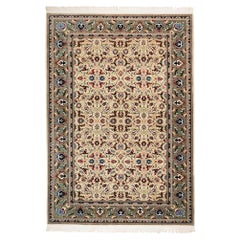
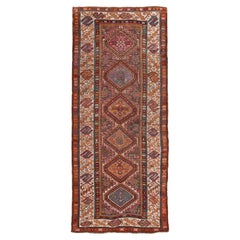
Antique Kurdish Herki Rug Eastern Turkish Anatolian Carpet Handwoven Natural Dye
Located in Tokyo, JP
This is an antique Kurdish Herki runner rug from the Eastern Anatolia and Northern Iraqi region with a rare and beautiful color composition. Iraqi Kurds ...
Category

Early 20th Century Turkish Oushak Turkish Rugs

Materials

Wool, Natural Fiber

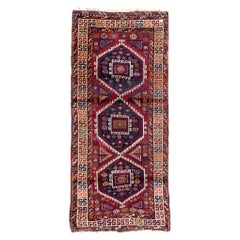
Antique Kurdish Herki Rug - Eastern Anatolian Rug
Located in Tokyo, JP
This is an Antique Kurdish Herki Rug from the Eastern Anatolia and Northern Iraqi region with a rare and beautiful color composition. Iraqi Kurds are main...
Category

Early 20th Century Turkish Oushak Turkish Rugs

Materials

Wool, Natural Fiber

Antique Caucasian Runner Rug Caucasus Natural Wool Geometric Medallion Carpet
Located in Tokyo, JP
This is an antique runner rug from the Caucasus region with a rare and beautiful color composition. Of all the rugs of the oriental world, it is the work of the Caucasian weavers ...
Category

Early 20th Century Caucasian Oushak Caucasian Rugs

Materials

Wool, Natural Fiber

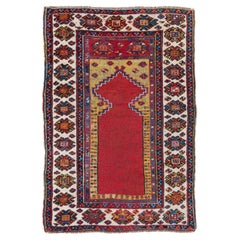
Antique Antep Mighrab Prayer Rug South Eastern Anatolian Turkish Mihrab Carpet
Located in Tokyo, JP
This is an antique prayer ( mighrab ) rug from the South East Anatolia, Antep region with a rare and beautiful color composition. This town lies in south-eastern Turkey, close to th...
Category

Early 20th Century Turkish Oushak Turkish Rugs

Materials

Wool, Natural Fiber, Organic Material
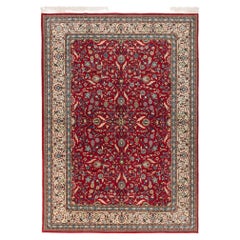
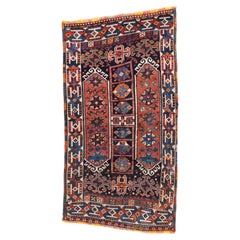
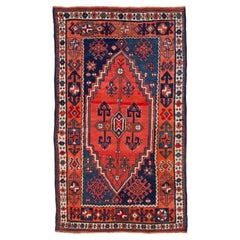
Antique Kurdish Rug Eastern Anatolian Turkish Carpet Handwoven Natural Dye
Located in Tokyo, JP
This is an Antique Kurdish Rug from the Eastern Anatolia region with a rare and beautiful color composition. Anatolian Kurdish rugs are handwoven rugs that originate from the Anatol...
Category

Early 20th Century Turkish Oushak Turkish Rugs

Materials

Wool, Natural Fiber

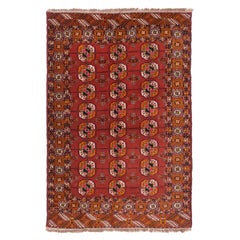
Old Vintage Tekke Bukhara Turkmen Carpet, Bokhara Buhara Turkoman Rug
Located in Tokyo, JP
This is a Central Asian Old Tekke Bukhara Turkmen Carpet from the Turkmenistan Bukhara region with a rare and beautiful color composition. Bukhara carpet (Turkmen Rug, Bokhara, Bu...
Category

Mid-20th Century Uzbek Oushak Central Asian Rugs

Materials

Wool, Natural Fiber

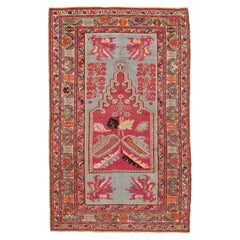
Antique Mucur Mujur Prayer Rug Mudjar Mighrab Turkish Central Anatolian Carpet
Located in Tokyo, JP
This is an antique Mucur Mihrab Prayer Rug from Central Anatolia, the Kirsehir region, with a floral pattern, good condition, and beautiful color composition. The town of Mudjar (o...
Category

Early 20th Century Turkish Oushak Turkish Rugs

Materials

Wool, Natural Fiber, Organic Material
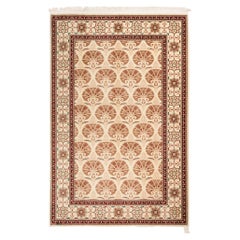
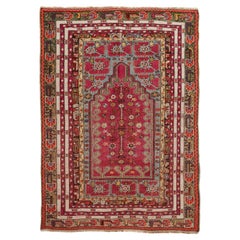
Antique Mucur Mujur Prayer Rug Mudjar Mighrab Turkish Central Anatolian Carpet
Located in Tokyo, JP
This is an antique Mucur mighrab prayer rug from Central Anatolia, the Kirsehir region, with a floral red background, good condition, and beautiful color composition. The town of M...
Category

Early 20th Century Turkish Oushak Turkish Rugs

Materials

Wool, Natural Fiber, Organic Material
Still Thinking About These?

All Recently Viewed