David Barnett Gallery Prints and Multiples
to
8
170
236
117
132
78
Overall Width
to
Overall Height
to
96
68
53
47
46
30
21
19
7
5
3
2
1
37
30
28
23
20
53
136
492
52
17
11
24
45
27
24
72
134
75
36
15
409
305
19
377
218
118
110
95
75
66
60
55
54
48
40
36
32
32
29
28
24
24
23
405
129
53
43
43
277
196
733
Lithographie Originale V from Miro Lithographs IV, Maeght Publisher by Joan Miró
By Joan Miró
Located in Milwaukee, WI
"Lithographie Originale V" is an original color lithograph by Joan Miro, published in "Miro Lithographs IV, Maeght Publisher" in 1981. It depicts Miro's signature biomorphic abstract...
Category
1980s Abstract Abstract Prints
Materials
Lithograph

Original Lithograph X, from Miro Lithographs II, Maeght Publisher by Joan Miró
By Joan Miró
Located in Milwaukee, WI
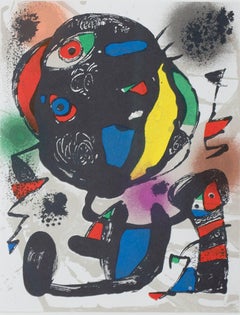
"Original Lithograph X" is an original color lithograph by Joan Miro, published in "Miro Lithographs II, Maeght Publisher" in 1975. It depicts Miro's signature biomorphic abstract st...
Category
1970s Abstract Abstract Prints
Materials
Lithograph
Lithographie Originale I, from Miro Lithographs IV, Maeght Publisher, Joan Miró
By Joan Miró
Located in Milwaukee, WI
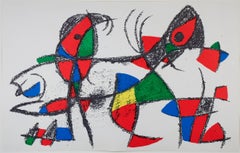
"Lithographie Originale I" is an original color lithograph by Joan Miro, published in "Miro Lithographs IV, Maeght Publisher" in 1981. It depicts Miro's signature biomorphic abstract...
Category
1980s Abstract Abstract Prints
Materials
Lithograph
Original Lithograph V, from Miro Lithographs III, Maeght Publisher by Joan Miró
By Joan Miró
Located in Milwaukee, WI
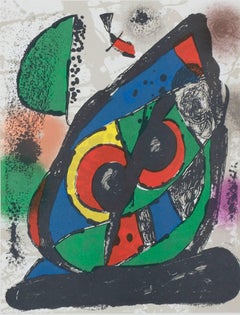
"Original Lithograph V" is an original color lithograph by Joan Miro, published in "Miro Lithographs III, Maeght Publisher" in 1977. It depicts Mir...
Category
1970s Abstract Abstract Prints
Materials
Lithograph
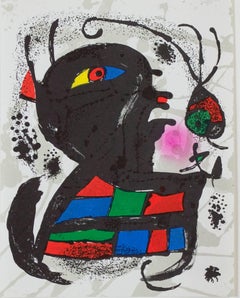
Original Lithograph VI, from Miro Lithographs II, Maeght Publisher by Joan Miró
By Joan Miró
Located in Milwaukee, WI
"Original Lithograph VI" is an original color lithograph by Joan Miro, published in "Miro Lithographs II, Maeght Publisher" in 1975. It depicts Miro's signature biomorphic abstract s...
Category
1970s Abstract Abstract Prints
Materials
Lithograph
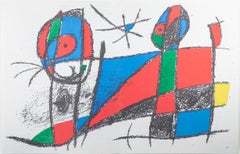
Original Lithograph VIII, from Miro Lithographs II, Maeght Publisher, Joan Miró
By Joan Miró
Located in Milwaukee, WI
"Original Lithograph VIII" is an original color lithograph by Joan Miro, published in "Miro Lithographs II, Maeght Publisher" in 1975. It depicts M...
Category
1970s Abstract Abstract Prints
Materials
Lithograph
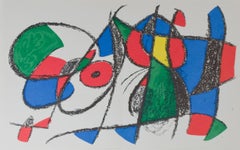
"Original Lithograph XI" from Miro Lithographs II, Maeght Publisher by Joan Miró
By Joan Miró
Located in Milwaukee, WI
"Original Lithograph XI" is an original color lithograph by Joan Miro, published in "Miro Lithographs II, Maeght Publisher" in 1975. It depicts Miro's signature biomorphic abstract s...
Category
1970s Abstract Abstract Prints
Materials
Lithograph
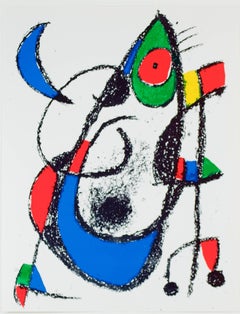
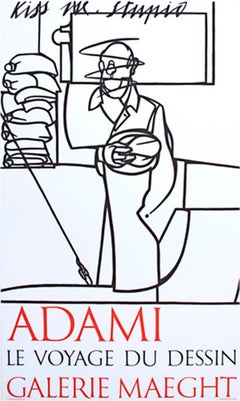
"Kiss Me Stupid Exhibition Poster, " Poster by Valerio Adami
By Valerio Adami
Located in Milwaukee, WI
"Kiss Me Stupid Exhibition Poster" is a poster by Valerio Adami. The poster was created for the Kiss Me Stupid show at the Galerie Maeght. This graphic black and white composition sh...
Category
1970s Surrealist Figurative Prints
Materials
Other Medium
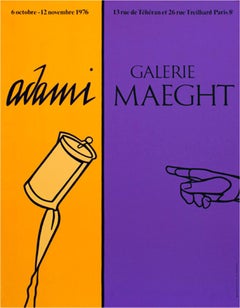
"Galerie Maeght, " an Original Color Lithograph Poster by Valerio Adami
By Valerio Adami
Located in Milwaukee, WI
"Galerie Maeght" is an Original Lithograph Poster bu Valerio Adami. This poster was created to advertise Adami's show at the Galerie Maeght in 1976. The print is orange on the left s...
Category
1970s Expressionist More Prints
Materials
Lithograph
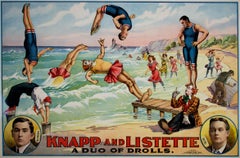
"Knapp and Listette: A Duo of Drolls, " Original Color Lithograph Beach View
Located in Milwaukee, WI
"Knapp & Listette: A Duo of Drolls" is an original color lithograph by an unknown artist. It features a number of clowns and gymnasts diving into the waves. Multiple women approach f...
Category
Early 20th Century Other Art Style Figurative Prints
Materials
Lithograph
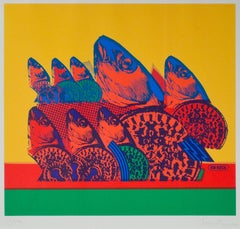
"Procession (Fish), " Original Colorful Serigraph print fish design unique
By Ronald Osiecki
Located in Milwaukee, WI
"Procession (Fish)" is an original serigraph print by Ronald Osiecki. It is signed and part of a limited edition. This print depicts fish hea...
Category
1990s Surrealist Animal Prints
Materials
Screen
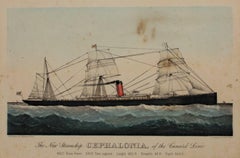
19th century color lithograph seascape boat ship waves maritime landscape
By Currier
Ives
Located in Milwaukee, WI
"The New Steamship Cephalonia, of the Cunard Line" is an original hand-colored lithograph by Currier & Ives. It depicts a large sailing steamship. There is a significant stain in the artwork in the upper center.
12" x 16 3/4" art
21" x 26" frame
Nathaniel Currier was a tall introspective man with a melancholy nature. He could captivate people with his piercing stare or charm them with his sparkling blue eyes. Nathaniel was born in Roxbury, Massachusetts on March 27th, 1813, the second of four children. His parents, Nathaniel and Hannah Currier, were distant cousins who lived a humble yet spartan life. When Nathaniel was eight years old, tragedy struck. Nathaniel’s father unexpectedly passed away leaving Nathaniel and his eleven-year-old brother Lorenzo to provide for the family. In addition to their mother, Nathaniel and Lorenzo had to care for six-year-old sister Elizabeth and two-year-old brother Charles. Nathaniel worked a series of odd jobs to support the family, and at fifteen, he started what would become a life-long career when he apprenticed in the Boston lithography shop of William and John Pendleton.
A Bavarian gentleman named Alois Senefelder invented lithography just 30 years prior to young Nat Currier’s apprenticeship. While under the employ of the brothers Pendleton, Nat was taught the art of lithography by the firm’s chief printer, a French national named Dubois, who brought the lithography trade to America.
Lithography involves grinding a piece of limestone flat and smooth then drawing in mirror image on the stone with a special grease pencil. After the image is completed, the stone is etched with a solution of aqua fortis leaving the greased areas in slight relief. Water is then used to wet the stone and greased-ink is rolled onto the raised areas. Since grease and water do not mix, the greased-ink is repelled by the moisture on the stone and clings to the original grease pencil lines. The stone is then placed in a press and used as a printing block to impart black on white images to paper.
In 1833, now twenty-years old and an accomplished lithographer, Nat Currier left Boston and moved to Philadelphia to do contract work for M.E.D. Brown, a noted engraver and printer. With the promise of good money, Currier hired on to help Brown prepare lithographic stones of scientific images for the American Journal of Sciences and Arts. When Nat completed the contract work in 1834, he traveled to New York City to work once again for his mentor John Pendleton, who was now operating his own shop located at 137 Broadway. Soon after the reunion, Pendleton expressed an interest in returning to Boston and offered to sell his print shop to Currier. Young Nat did not have the financial resources to buy the shop, but being the resourceful type he found another local printer by the name of Stodart. Together they bought Pendleton’s business.
The firm ‘Currier & Stodart’ specialized in "job" printing. They produced many different types of printed items, most notably music manuscripts for local publishers. By 1835, Stodart was frustrated that the business was not making enough money and he ended the partnership, taking his investment with him. With little more than some lithographic stones, and a talent for his trade, twenty-two year old Nat Currier set up shop in a temporary office at 1 Wall Street in New York City. He named his new enterprise ‘N. Currier, Lithographer’
Nathaniel continued as a job printer and duplicated everything from music sheets to architectural plans. He experimented with portraits, disaster scenes and memorial prints, and any thing that he could sell to the public from tables in front of his shop. During 1835 he produced a disaster print Ruins of the Planter's Hotel, New Orleans, which fell at two O’clock on the Morning of the 15th of May 1835, burying 50 persons, 40 of whom Escaped with their Lives. The public had a thirst for newsworthy events, and newspapers of the day did not include pictures. By producing this print, Nat gave the public a new way to “see” the news. The print sold reasonably well, an important fact that was not lost on Currier.
Nat met and married Eliza Farnsworth in 1840. He also produced a print that same year titled Awful Conflagration of the Steamboat Lexington in Long Island Sound on Monday Evening, January 18, 1840, by which melancholy occurrence over One Hundred Persons Perished. This print sold out very quickly, and Currier was approached by an enterprising publication who contracted him to print a single sheet addition of their paper, the New York Sun. This single page paper is presumed to be the first illustrated newspaper ever published.
The success of the Lexington print launched his career nationally and put him in a position to finally lift his family up. In 1841, Nat and Eliza had their first child, a son they named Edward West Currier. That same year Nat hired his twenty-one year old brother Charles and taught him the lithography trade, he also hired his artistically inclined brother Lorenzo to travel out west and make sketches of the new frontier as material for future prints. Charles worked for the firm on and off over the years, and invented a new type of lithographic crayon which he patented and named the Crayola. Lorenzo continued selling sketches to Nat for the next few years.
In 1843, Nat and Eliza had a daughter, Eliza West Currier, but tragedy struck in early 1847 when their young daughter died from a prolonged illness. Nat and Eliza were grief stricken, and Eliza, driven by despair, gave up on life and passed away just four months after her daughter’s death.
The subject of Nat Currier’s artwork changed following the death of his wife and daughter, and he produced many memorial prints and sentimental prints during the late 1840s. The memorial prints generally depicted grief stricken families posed by gravestones (the stones were left blank so the purchasers could fill in the names of the dearly departed). The sentimental prints usually depicted idealized portraits of women and children, titled with popular Christian names of the day.
Late in 1847, Nat Currier married Lura Ormsbee, a friend of the family. Lura was a self-sufficient woman, and she immediately set out to help Nat raise six-year-old Edward and get their house in order. In 1849, Lura delivered a son, Walter Black Currier, but fate dealt them a blow when young Walter died one year later. While Nat and Lura were grieving the loss of their new son, word came from San Francisco that Nat’s brother Lorenzo had also passed away from a brief illness. Nat sank deeper into his natural quiet melancholy. Friends stopped by to console the couple, and Lura began to set an extra place at their table for these unexpected guests. She continued this tradition throughout their lives.
In 1852, Charles introduced a friend, James Merritt Ives, to Nat and suggested he hire him as a bookkeeper. Jim Ives was a native New Yorker born in 1824 and raised on the grounds of Bellevue Hospital where his father was employed as superintendent. Jim was a self-trained artist and professional bookkeeper. He was also a plump and jovial man, presenting the exact opposite image of his new boss.
Jim Ives met Charles Currier through Caroline Clark, the object of Jim’s affection. Caroline’s sister Elizabeth was married to Charles, and Caroline was a close friend of the Currier family. Jim eventually proposed marriage to Caroline and solicited an introduction to Nat Currier, through Charles, in hopes of securing a more stable income to support his future wife.
Ives quickly set out to improve and modernize his new employer’s bookkeeping methods. He reorganized the firm’s sizable inventory, and used his artistic skills to streamline the firm’s production methods. By 1857, Nathaniel had become so dependent on Jims’ skills and initiative that he offered him a full partnership in the firm and appointed him general manager. The two men chose the name ‘Currier & Ives’ for the new partnership, and became close friends.
Currier & Ives produced their prints in a building at 33 Spruce Street where they occupied the third, fourth and fifth floors. The third floor was devoted to the hand operated printing presses that were built by Nat's cousin, Cyrus Currier, at his shop Cyrus Currier & Sons in Newark, NJ. The fourth floor found the artists, lithographers and the stone grinders at work. The fifth floor housed the coloring department, and was one of the earliest production lines in the country. The colorists were generally immigrant girls, mostly German, who came to America with some formal artistic training. Each colorist was responsible for adding a single color to a print. As a colorist finished applying their color, the print was passed down the line to the next colorist to add their color. The colorists worked from a master print displayed above their table, which showed where the proper colors were to be placed. At the end of the table was a touch up artist who checked the prints for quality, touching-in areas that may have been missed as it passed down the line. During the Civil War, demand for prints became so great that coloring stencils were developed to speed up production.
Although most Currier & Ives prints were colored in house, some were sent out to contract artists. The rate Currier & Ives paid these artists for coloring work was one dollar per one hundred small folios (a penny a print) and one dollar per one dozen large folios. Currier & Ives also offered uncolored prints to dealers, with instructions (included on the price list) on how to 'prepare the prints for coloring.' In addition, schools could order uncolored prints from the firm’s catalogue to use in their painting classes.
Nathaniel Currier and James Merritt Ives attracted a wide circle of friends during their years in business. Some of their more famous acquaintances included Horace Greeley, Phineas T. Barnum, and the outspoken abolitionists Rev. Henry Ward, and John Greenleaf Whittier (the latter being a cousin of Mr. Currier).
Nat Currier and Jim Ives described their business as "Publishers of Cheap and Popular Pictures" and produced many categories of prints. These included Disaster Scenes, Sentimental Images, Sports, Humor, Hunting Scenes, Politics, Religion, City and Rural Scenes, Trains, Ships, Fire Fighters, Famous Race Horses, Historical Portraits, and just about any other topic that satisfied the general public's taste. In all, the firm produced in excess of 7500 different titles, totaling over one million prints produced from 1835 to 1907.
Nat Currier retired in 1880, and signed over his share of the firm to his son Edward. Nat died eight years later at his summer home 'Lion’s Gate' in Amesbury, Massachusetts. Jim Ives remained active in the firm until his death in 1895, when his share of the firm passed to his eldest son, Chauncey.
In 1902, faced will failing health from the ravages of Tuberculosis, Edward Currier sold his share of the firm to Chauncey Ives...
Category
1870s Other Art Style Prints and Multiples
Materials
Lithograph
"Solidarity, " Etching of an Surrealist Landscape signed by Yves Tanguy
By Yves Tanguy
Located in Milwaukee, WI
"Solidarity" is an original etching by surrealist artist Yves Tanguy. The artist signed the piece in pencil in the lower right and wrote the edition number, 109/150, in the lower lef...
Category
1940s Surrealist Figurative Prints
Materials
Etching

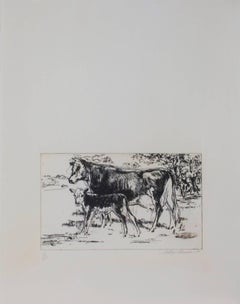
20th century etching animal print black and white cows farm scene sketch signed
By LeRoy Neiman
Located in Milwaukee, WI
"Bovine Family" is an original etching by Leroy Neiman. The artist signed the piece lower left. It is edition 182/250 and dated 1980. It depicts a cow an...
Category
1980s Modern Animal Prints
Materials
Etching
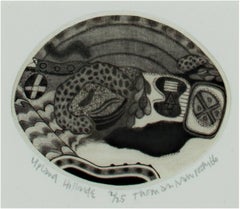
"Upland Hillside, " Original Mezzotint signed by Thomas Nawrocki
By Thomas Nawrocki
Located in Milwaukee, WI
"Upland HIllside" is an original mezzotint by Thomas Nawrocki. It depicts an abstracted landscape with many different patterns in black and white.
3 1/2" x 3 3/4" art
8 3/4" x 9 1/...
Category
1960s Abstract Expressionist Prints and Multiples
Materials
Mezzotint
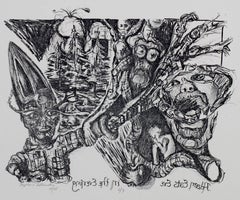
20th century lithograph expressionist figurative surrealist trees faces signed
By Stephanie Astrinsky
Located in Milwaukee, WI
"Adam Eats Eve in the Evening" is an original black and white lithograph by Stephane Astrinsky. This surreal lithograph evokes a biblical story as well as elements of horror.
9 1/4...
Category
1980s Neo-Expressionist Figurative Prints
Materials
Lithograph
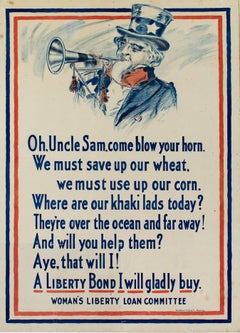
"World War I Poster - Uncle Sam, " Lithograph printed by Meisenheimer Milwaukee
Located in Milwaukee, WI
This World War I poster, featuring Uncle Sam, was printed by Meisenheimer-Milwaukee and was sponsored by the Woman's Liberty Loan Committee. The ar...
Category
1910s Other Art Style Figurative Prints
Materials
Lithograph
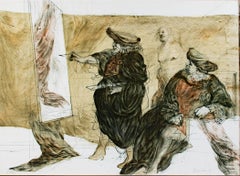
20th century color lithograph figurative print male subjects sketch scene signed
By Claude Weisbuch
Located in Milwaukee, WI
"Geste et Peinture" is an original color lithograph by Claude Weisbuch. The artist signed the piece in the lower right and wrote the edition number (16/160) in the lower left. This p...
Category
1970s Modern Figurative Prints
Materials
Lithograph
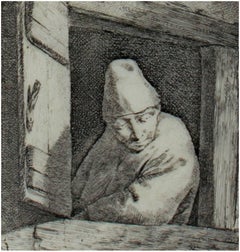
17th century etching black and white dramatic window figure scene
By Cornelis Bega
Located in Milwaukee, WI
"Man Looking Through a Window" is an original etching by Cornelis-Pietersz Bega. It depicts a figure leaning through a window. Publisher: Pearce #37.
3 1/8" x 3" art
14 3/4" x 13 1/...
Category
Mid-17th Century Old Masters Figurative Prints
Materials
Etching
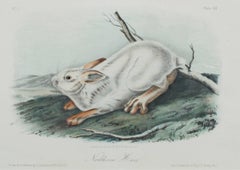
19th century color lithograph hare animal print wildlife
By John James Audubon
Located in Milwaukee, WI
"Northern Hare" is an original color lithograph by John James Audubon. This piece depicts a white rabbit in a cool green landscape.
5 3/4" x 7 3/4" art...
Category
1840s Other Art Style Animal Prints
Materials
Lithograph
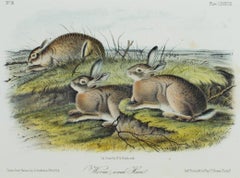
19th century color lithograph hare landscape grass animal print wildlife
By John James Audubon
Located in Milwaukee, WI
"Worm-Wood Hare" is an original color lithograph by John James Audubon. It depicts three brown rabbits in a landscape. No. 18, Plate LXXXVIII, On Stone by W.E. Hitchcock.
6" x 8" ar...
Category
1840s Other Art Style Animal Prints
Materials
Lithograph
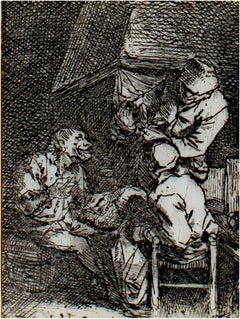
17th century etching black and white indoors table figures scene
By Cornelis Bega
Located in Milwaukee, WI
"The Conversation" is an original etching by Cornelis-Pietersz Bega. It depicts three men conversing in a dark interior. Publisher: Pearce #43.
3" x 2 1/4" art
12 3/4" x 11 5/8" fra...
Category
Mid-17th Century Old Masters Figurative Prints
Materials
Etching
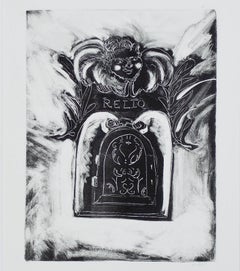
"Reliq, " Original Black and White Monotype signed by Beckett R. Berning
By Beckett Berning
Located in Milwaukee, WI
"Reliq" is an original black and white monotype by Beckett Berning. The artist signed the piece. It depicts a face above a gravestone.
9 1/4" x 6 3/4" art
18" x 15 3/4" frame
Beck...
Category
1990s Surrealist More Prints
Materials
Monotype
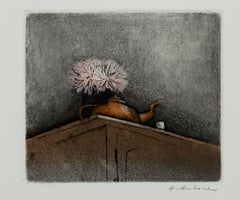
"Still Life with Teapot, New Year
s Edition, " Original Aquatint by A. Antonni
Located in Milwaukee, WI
"Still Life with Teapot, New Year's Edition" is an original aquatint by A. Antonni. This piece depicts a still life in gray. Antonni creates original aquatint prints, sometimes of a ...
Category
1980s Other Art Style Still-life Prints
Materials
Aquatint
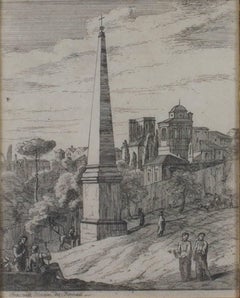
17th century etching black and white figurative landscape obelisk buildings
By Jan Frans van Bloemen (Orizzonte)
Located in Milwaukee, WI
"Figures at the Obelisk" is an original etching by Jan Frans van Bloemen. It depicts two people conversing in front of a monument. Behind them, an expansive landscape sprawls.
9 1/4" x 6 3/4" art
21 3/4" x 19 3/8" frame
Jan Frans van Bloemen (baptized 12 May 1662 - buried 13 June 1749) was a Flemish landscape painter mainly active in Rome. Here he was able to establish himself as the leading painter of views (vedute) of the Roman countryside depicted in the aesthetic of the classical landscape tradition.
Van Bloemen predominantly painted classical landscapes, taking his inspiration from the Roman Campagna. His landscapes, with their recession through a series of planes, soft, warm lightning and classical and religious subject matter, drew on the examples of artists such as Claude Lorrain and Gaspard Dughet. His paintings are exquisitely imbued with that "difficult-to-define pastoral ambience" which helped to make him such a great painter in the eyes of his contemporaries. The technique and subjects of the work of Jan Frans van Bloemen are also related to painters such as Jan Asselijn, Thomas Wyck...
Category
18th Century Old Masters Landscape Prints
Materials
Etching
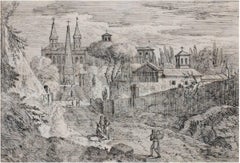
17th century etching black and white figurative landscape cityscape buildings
By Jan Frans van Bloemen (Orizzonte)
Located in Milwaukee, WI
"Figures Outside the Monastery" is an original etching by Jan Frans van Bloemen. It depicts people on the path to a church.
7" x 10 1/4" art
19 1/4" x 22 5/8" frame
Jan Frans van Bloemen (baptized 12 May 1662 - buried 13 June 1749) was a Flemish landscape painter mainly active in Rome. Here he was able to establish himself as the leading painter of views (vedute) of the Roman countryside depicted in the aesthetic of the classical landscape tradition.
Van Bloemen predominantly painted classical landscapes, taking his inspiration from the Roman Campagna. His landscapes, with their recession through a series of planes, soft, warm lightning and classical and religious subject matter, drew on the examples of artists such as Claude Lorrain and Gaspard Dughet. His paintings are exquisitely imbued with that "difficult-to-define pastoral ambience" which helped to make him such a great painter in the eyes of his contemporaries. The technique and subjects of the work of Jan Frans van Bloemen are also related to painters such as Jan Asselijn, Thomas Wyck...
Category
18th Century Old Masters Landscape Prints
Materials
Etching
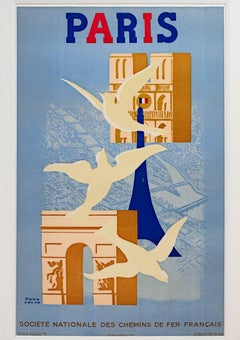
"Paris, " Original Lithograph Poster with Paris Landmarks signed by Paul Colin
By Paul Colin
Located in Milwaukee, WI
"Paris" is an original lithograph poster by Paul Colin. This was the first official poster from Paris after World War II and depicts three doves flying above the Arc de Triomphe, Not...
Category
1940s Post-War More Prints
Materials
Lithograph
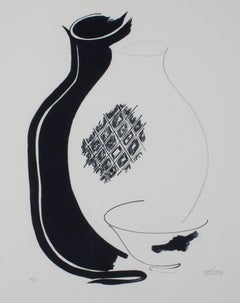
"Two Bottles
Bowl, " Original Black
White Litho. signed by Joan Gardy Artigas
By Joan Gardy Artigas
Located in Milwaukee, WI
"Two Bottles & Bowl" is an original lithograph by Joan Gardy Artigas. It depicts a still life in black and white. The artist signed the piece lower right and wrote the edition number...
Category
Mid-20th Century Abstract Expressionist Still-life Prints
Materials
Lithograph
17th century etching black and white indoor dramatic figures scene
By Cornelis Bega
Located in Milwaukee, WI
"The Meeting" is an original etching by Cornelis-Pietersz Bega. It depicts a confrontation between two groups of figures. Publisher: Pearce #48.
2 3/4" x 2 3/4" art
10 1/4" x 10 3/8...
Category
Mid-17th Century Old Masters Figurative Prints
Materials
Etching
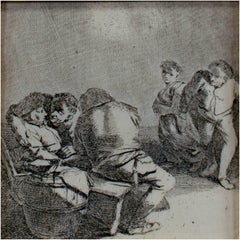
17th century etching black and white figure table tobacco pipe scene
By Cornelis Bega
Located in Milwaukee, WI
"The Pipe Smoker" is an original etching by Cornelis-Pietersz Bega. It depicts a man sitting at a table with his pipe. Publisher: Pearce #38.
3 1/2" x 3 1/4" art
13 5/8" x 11 3/4" f...
Category
Mid-17th Century Old Masters Figurative Prints
Materials
Etching
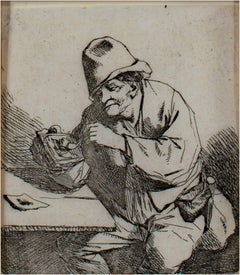
20th century engraving figurative print interior dramatic black and white signed
By Auguste Brouet
Located in Milwaukee, WI
"Les Emigrants" is an original roller engraving by Auguste Brouet. The artist signed the piece lower right and wrote the edition number (30/50) lower left. This engraving depicts a f...
Category
Early 1900s Modern Figurative Prints
Materials
Engraving
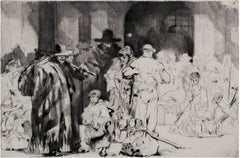
17th century etching black and white mother and child figures scene
By Cornelis Bega
Located in Milwaukee, WI
"Mother & Child" is an original etching by Cornelis-Pietersz Bega. It depicts a mother and her child. Publisher: Pearce #51.
3" x 3" art
13 3/4" x 11 3/4" frame
Cornelis Pietersz B...
Category
Mid-17th Century Old Masters Figurative Prints
Materials
Etching
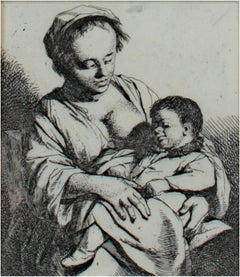
20th century etching figurative urban scene sketch black and white signed
By Auguste Brouet
Located in Milwaukee, WI
"Les Matelassiers (The Mattress Makers)" is an original etching by Auguste Brouet. It depicts people creating a mattress outside. The artist signed the...
Category
1910s Modern Figurative Prints
Materials
Etching
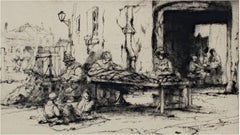
17th century etching black and white figures scene
By Cornelis Bega
Located in Milwaukee, WI
"The Singer" is an original etching by Cornelis-Pietersz Bega. It depicts a performer and onlookers. Publisher: Pearce #50.
4" x 3" art
16 1/2" x 13 1/2" frame
Cornelis Pietersz Be...
Category
Mid-17th Century Old Masters Figurative Prints
Materials
Etching
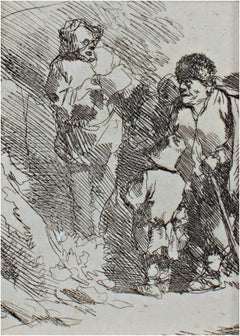
19th century lithograph landscape battle scene military figurative print
By Kurz and Allison
Located in Milwaukee, WI
"Battle of Monmouth June 28, 1778" is an original lithograph by Kurz & Allison. It depicts a battle in the American Revolutionary War.
12 1/4" x 18" art
21 1/4" x 27" frame
Kurz &...
Category
1890s Other Art Style Figurative Prints
Materials
Lithograph
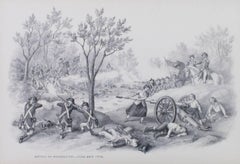
"Trompe L
Oeil, " Original Color Lithograph Abstract signed by Saul Steinberg
By Saul Steinberg
Located in Milwaukee, WI
"Trompe L'Oeil is an original color lithograph by Saul Steinberg. The artist signed the piece in the lower right and wrote the edition number (6/50) in the lower left. This piece sho...
Category
1970s Abstract Expressionist Abstract Prints
Materials
Lithograph
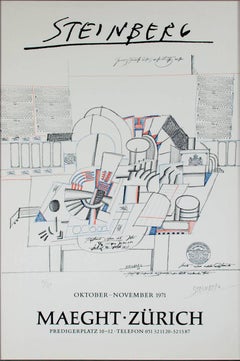
20th century color lithograph figurative print male subjects sketch scene signed
By Claude Weisbuch
Located in Milwaukee, WI
"Le Portrait Equestre" is an original color lithograph by Claude Weisbuch. This piece depicts a number of figures in black robes looking at horses. The a...
Category
1970s Modern Figurative Prints
Materials
Lithograph
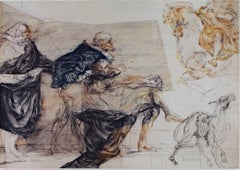
"Calligraphie Heroique, " Original Color Lithograph signed by Claude Weisbuch
By Claude Weisbuch
Located in Milwaukee, WI
"Calligraphie Heroique" is an original color lithograph by Claude Weisbuch. The artist signed the piece in the lower right and wrote the edition number (116/275) in the lower left. T...
Category
1970s Modern Figurative Prints
Materials
Lithograph
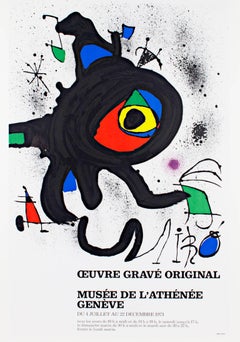
"Musee De L
Athenee Ed. of 1000, " Original Color Lithograph Poster by Joan Miro
By Joan Miró
Located in Milwaukee, WI
"Musee de L'Athenee" is an original color lithograph poster by Joan Miro. It is from an edition of 1000. It showcases Miro's surreal biomorphic marks and is an advertising poster for...
Category
1960s Surrealist Abstract Prints
Materials
Lithograph
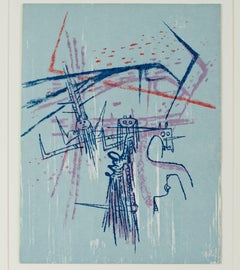
"Untitled, for "XXe Siècle (20th C.)" Magazine #21 Original Color Lithograph
By Wifredo Lam
Located in Milwaukee, WI
Untitled, for "XXe Siècle (20th C.)" magazine is an original color lithograph by Latin American artist Wifredo Lam. It depicts a variety of surreal and abstract lines and figures in ...
Category
1950s Surrealist Abstract Prints
Materials
Lithograph
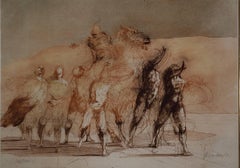
20th century color lithograph figurative print male subject dark scene signed
By Claude Weisbuch
Located in Milwaukee, WI
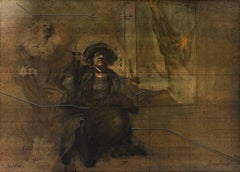
"Seul Dans l'Atelier" is an original lithograph by Claude Weisbuch. The artist signed the piece lower right and wrote the edition number (108/160) in the lower left. This piece depic...
Category
1970s Modern Figurative Prints
Materials
Lithograph
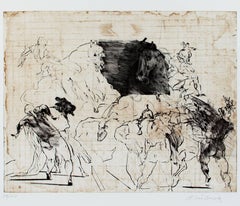
20th century drypoint etching figurative animal print horses sketch signed
By Claude Weisbuch
Located in Milwaukee, WI
"Combat Equestre" is an original lithograph by Claude Weisbuch. The artist signed the piece lower right and wrote the edition number (24/100) in the lower left. This piece depicts mu...
Category
1970s Modern Figurative Prints
Materials
Drypoint, Etching
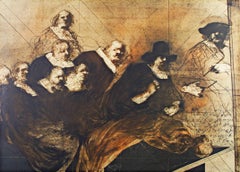
"La Lecon du Professor Tulp, " Original Lithograph signed by Claude Weisbuch
By Claude Weisbuch
Located in Milwaukee, WI
"La Lecon Du Professor Tulp" is an original lithograph by Claude Weisbuch. The artist signed the piece lower right and wrote the edition number (126/320) in the lower left. This piec...
Category
1970s Modern Figurative Prints
Materials
Lithograph
"Le Portrait Termine, " Original Drypoint signed by Claude Weisbuch
By Claude Weisbuch
Located in Milwaukee, WI
"Le Portrait Termine" is an original drypoint etching by Claude Weisbuch. The artist signed the piece lower right and wrote the edition number (21/50) in...
Category
1970s Modern Figurative Prints
Materials
Drypoint, Etching
20th century color lithograph figurative surrealist print sepia sketch signed
By Claude Weisbuch
Located in Milwaukee, WI
"Le Trait de la Figure" is an original lithograph by Claude Weisbuch. The artist signed the piece lower right and wrote the edition number (III/CXX) in the lower left. This piece dep...
Category
1970s Modern Figurative Prints
Materials
Lithograph
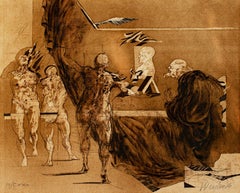
"Le Clown, Artist
s Proof, " Original Color Lithograph signed by Claude Weisbuch
By Claude Weisbuch
Located in Milwaukee, WI
"Le Clown" is an original lithograph by Claude Weisbuch. The artist signed the piece lower right and wrote the edition number (E.A.) in the lower left. This piece is a portrait of a ...
Category
1960s Modern Figurative Prints
Materials
Lithograph
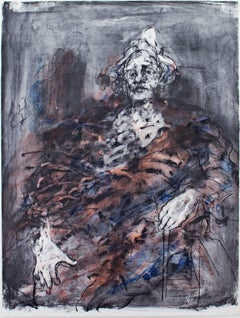
20th century color lithograph figurative print artist easel canvas scene signed
By Claude Weisbuch
Located in Milwaukee, WI
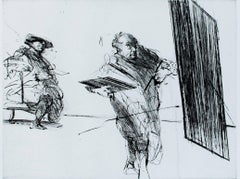
"Artiste Dans l'Atelier" is an original lithograph by Claude Weisbuch. The artist signed the piece lower right and wrote the edition number (126/320) in the lower left. This piece de...
Category
1970s Modern Figurative Prints
Materials
Lithograph
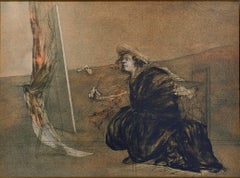
"Le Bouclier, " Original Drypoint Etching signed by Claude Weisbuch
By Claude Weisbuch
Located in Milwaukee, WI
"Le Bouclier" is an original drypoint etching by Claude Weisbuch. The artist signed the piece lower right and wrote the edition number (25/100) in the lower left. This piece depicts ...
Category
1970s Modern Figurative Prints
Materials
Drypoint, Etching
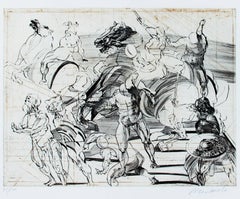
20th century color lithograph figurative print male subjects sketch scene signed
By Claude Weisbuch
Located in Milwaukee, WI
"La Lecon Du Professor Tulp" is an original lithograph by Claude Weisbuch. The artist signed the piece lower right and wrote the edition (ETAT) in the lower left. This piece depicts ...
Category
1970s Modern Figurative Prints
Materials
Lithograph, Paper
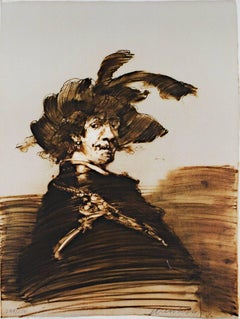
19th century color lithograph portrait Rembrandt expressive sepia contrast
By Claude Weisbuch
Located in Milwaukee, WI
"Rembrandt en Habit de Capitaine" is an original lithograph by Claude Weisbuch. The artist signed the piece lower right and wrote the edition number (249/250) in the lower left. This...
Category
1980s Modern Portrait Prints
Materials
Lithograph
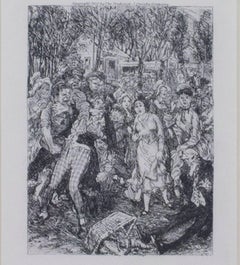
"The Row at the Picnic, " Original Black and White Etching by John Sloan
By John Sloan
Located in Milwaukee, WI
"The Row at the Picnic" is an original etching by John Sloan. This piece depicts a fight that broke out in a park. There is a mass of people huddled together.
4 7/8" x 3 1/2" art
17...
Category
Early 1900s Ashcan School Figurative Prints
Materials
Etching
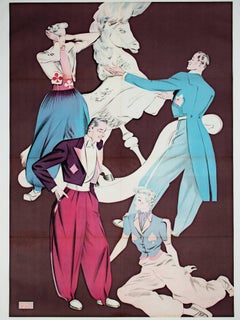
"Fashionable Boulevard Montmartre, " Original Lithograph Poster by Pierre Brenot
By Pierre Laurent Brenot
Located in Milwaukee, WI
"Fashionable Boulevard Montmartre" is an original lithograph poster by Pierre Laurent Brenot. This piece depicts four figures in fashionable costumes in a variety of dynamic poses. T...
Category
1940s Art Nouveau Figurative Prints
Materials
Lithograph
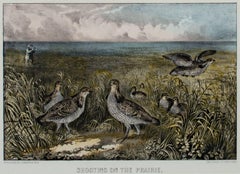
19th century color lithograph birds landscape nature grass sky water figure
By Currier
Ives
Located in Milwaukee, WI
"Shooting on the Prairie" is an original hand-colored lithograph by Currier & Ives. It depicts a hunter shooting at fowl in an open field.
8 1/2" x 12 1/2" art
20 1/4" x 23 3/4" frame
Nathaniel Currier was a tall introspective man with a melancholy nature. He could captivate people with his piercing stare or charm them with his sparkling blue eyes. Nathaniel was born in Roxbury, Massachusetts on March 27th, 1813, the second of four children. His parents, Nathaniel and Hannah Currier, were distant cousins who lived a humble yet spartan life. When Nathaniel was eight years old, tragedy struck. Nathaniel’s father unexpectedly passed away leaving Nathaniel and his eleven-year-old brother Lorenzo to provide for the family. In addition to their mother, Nathaniel and Lorenzo had to care for six-year-old sister Elizabeth and two-year-old brother Charles. Nathaniel worked a series of odd jobs to support the family, and at fifteen, he started what would become a life-long career when he apprenticed in the Boston lithography shop of William and John Pendleton.
A Bavarian gentleman named Alois Senefelder invented lithography just 30 years prior to young Nat Currier’s apprenticeship. While under the employ of the brothers Pendleton, Nat was taught the art of lithography by the firm’s chief printer, a French national named Dubois, who brought the lithography trade to America.
Lithography involves grinding a piece of limestone flat and smooth then drawing in mirror image on the stone with a special grease pencil. After the image is completed, the stone is etched with a solution of aqua fortis leaving the greased areas in slight relief. Water is then used to wet the stone and greased-ink is rolled onto the raised areas. Since grease and water do not mix, the greased-ink is repelled by the moisture on the stone and clings to the original grease pencil lines. The stone is then placed in a press and used as a printing block to impart black on white images to paper.
In 1833, now twenty-years old and an accomplished lithographer, Nat Currier left Boston and moved to Philadelphia to do contract work for M.E.D. Brown, a noted engraver and printer. With the promise of good money, Currier hired on to help Brown prepare lithographic stones of scientific images for the American Journal of Sciences and Arts. When Nat completed the contract work in 1834, he traveled to New York City to work once again for his mentor John Pendleton, who was now operating his own shop located at 137 Broadway. Soon after the reunion, Pendleton expressed an interest in returning to Boston and offered to sell his print shop to Currier. Young Nat did not have the financial resources to buy the shop, but being the resourceful type he found another local printer by the name of Stodart. Together they bought Pendleton’s business.
The firm ‘Currier & Stodart’ specialized in "job" printing. They produced many different types of printed items, most notably music manuscripts for local publishers. By 1835, Stodart was frustrated that the business was not making enough money and he ended the partnership, taking his investment with him. With little more than some lithographic stones, and a talent for his trade, twenty-two year old Nat Currier set up shop in a temporary office at 1 Wall Street in New York City. He named his new enterprise ‘N. Currier, Lithographer’
Nathaniel continued as a job printer and duplicated everything from music sheets to architectural plans. He experimented with portraits, disaster scenes and memorial prints, and any thing that he could sell to the public from tables in front of his shop. During 1835 he produced a disaster print Ruins of the Planter's Hotel, New Orleans, which fell at two O’clock on the Morning of the 15th of May 1835, burying 50 persons, 40 of whom Escaped with their Lives. The public had a thirst for newsworthy events, and newspapers of the day did not include pictures. By producing this print, Nat gave the public a new way to “see” the news. The print sold reasonably well, an important fact that was not lost on Currier.
Nat met and married Eliza Farnsworth in 1840. He also produced a print that same year titled Awful Conflagration of the Steamboat Lexington in Long Island Sound on Monday Evening, January 18, 1840, by which melancholy occurrence over One Hundred Persons Perished. This print sold out very quickly, and Currier was approached by an enterprising publication who contracted him to print a single sheet addition of their paper, the New York Sun. This single page paper is presumed to be the first illustrated newspaper ever published.
The success of the Lexington print launched his career nationally and put him in a position to finally lift his family up. In 1841, Nat and Eliza had their first child, a son they named Edward West Currier. That same year Nat hired his twenty-one year old brother Charles and taught him the lithography trade, he also hired his artistically inclined brother Lorenzo to travel out west and make sketches of the new frontier as material for future prints. Charles worked for the firm on and off over the years, and invented a new type of lithographic crayon which he patented and named the Crayola. Lorenzo continued selling sketches to Nat for the next few years.
In 1843, Nat and Eliza had a daughter, Eliza West Currier, but tragedy struck in early 1847 when their young daughter died from a prolonged illness. Nat and Eliza were grief stricken, and Eliza, driven by despair, gave up on life and passed away just four months after her daughter’s death.
The subject of Nat Currier’s artwork changed following the death of his wife and daughter, and he produced many memorial prints and sentimental prints during the late 1840s. The memorial prints generally depicted grief stricken families posed by gravestones (the stones were left blank so the purchasers could fill in the names of the dearly departed). The sentimental prints usually depicted idealized portraits of women and children, titled with popular Christian names of the day.
Late in 1847, Nat Currier married Lura Ormsbee, a friend of the family. Lura was a self-sufficient woman, and she immediately set out to help Nat raise six-year-old Edward and get their house in order. In 1849, Lura delivered a son, Walter Black Currier, but fate dealt them a blow when young Walter died one year later. While Nat and Lura were grieving the loss of their new son, word came from San Francisco that Nat’s brother Lorenzo had also passed away from a brief illness. Nat sank deeper into his natural quiet melancholy. Friends stopped by to console the couple, and Lura began to set an extra place at their table for these unexpected guests. She continued this tradition throughout their lives.
In 1852, Charles introduced a friend, James Merritt Ives, to Nat and suggested he hire him as a bookkeeper. Jim Ives was a native New Yorker born in 1824 and raised on the grounds of Bellevue Hospital where his father was employed as superintendent. Jim was a self-trained artist and professional bookkeeper. He was also a plump and jovial man, presenting the exact opposite image of his new boss.
Jim Ives met Charles Currier through Caroline Clark, the object of Jim’s affection. Caroline’s sister Elizabeth was married to Charles, and Caroline was a close friend of the Currier family. Jim eventually proposed marriage to Caroline and solicited an introduction to Nat Currier, through Charles, in hopes of securing a more stable income to support his future wife.
Ives quickly set out to improve and modernize his new employer’s bookkeeping methods. He reorganized the firm’s sizable inventory, and used his artistic skills to streamline the firm’s production methods. By 1857, Nathaniel had become so dependent on Jims’ skills and initiative that he offered him a full partnership in the firm and appointed him general manager. The two men chose the name ‘Currier & Ives’ for the new partnership, and became close friends.
Currier & Ives produced their prints in a building at 33 Spruce Street where they occupied the third, fourth and fifth floors. The third floor was devoted to the hand operated printing presses that were built by Nat's cousin, Cyrus Currier, at his shop Cyrus Currier & Sons in Newark, NJ. The fourth floor found the artists, lithographers and the stone grinders at work. The fifth floor housed the coloring department, and was one of the earliest production lines in the country. The colorists were generally immigrant girls, mostly German, who came to America with some formal artistic training. Each colorist was responsible for adding a single color to a print. As a colorist finished applying their color, the print was passed down the line to the next colorist to add their color. The colorists worked from a master print displayed above their table, which showed where the proper colors were to be placed. At the end of the table was a touch up artist who checked the prints for quality, touching-in areas that may have been missed as it passed down the line. During the Civil War, demand for prints became so great that coloring stencils were developed to speed up production.
Although most Currier & Ives prints were colored in house, some were sent out to contract artists. The rate Currier & Ives paid these artists for coloring work was one dollar per one hundred small folios (a penny a print) and one dollar per one dozen large folios. Currier & Ives also offered uncolored prints to dealers, with instructions (included on the price list) on how to 'prepare the prints for coloring.' In addition, schools could order uncolored prints from the firm’s catalogue to use in their painting classes.
Nathaniel Currier and James Merritt Ives attracted a wide circle of friends during their years in business. Some of their more famous acquaintances included Horace Greeley, Phineas T. Barnum, and the outspoken abolitionists Rev. Henry Ward, and John Greenleaf Whittier (the latter being a cousin of Mr. Currier).
Nat Currier and Jim Ives described their business as "Publishers of Cheap and Popular Pictures" and produced many categories of prints. These included Disaster Scenes, Sentimental Images, Sports, Humor, Hunting Scenes, Politics, Religion, City and Rural Scenes, Trains, Ships, Fire Fighters, Famous Race Horses, Historical Portraits, and just about any other topic that satisfied the general public's taste. In all, the firm produced in excess of 7500 different titles, totaling over one million prints produced from 1835 to 1907.
Nat Currier retired in 1880, and signed over his share of the firm to his son Edward. Nat died eight years later at his summer home 'Lion’s Gate' in Amesbury, Massachusetts. Jim Ives remained active in the firm until his death in 1895, when his share of the firm passed to his eldest son, Chauncey.
In 1902, faced will failing health from the ravages of Tuberculosis, Edward Currier sold his share of the firm to Chauncey Ives...
Category
1870s Other Art Style Animal Prints
Materials
Lithograph
"Hunting, " Original Etching and Aquatint signed by Molly McKee
By Molly McKee
Located in Milwaukee, WI
"Hunting" is an original etching and aquatint by Molly McKee. The artist signed the piece in the lower right, titled it lower center, and wrote the edition number (2/10) in the lower left. It depicts a few abstracted human figures in McKee's surreal and horror-inspired style.
11 3/4" x 9" art
24 7/8" x 17 1/2" frame
This surreal etching...
Category
1990s Surrealist Figurative Prints
Materials
Etching, Aquatint

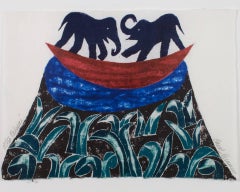
"Palepai, " Original Woodcut Abstract Landscape Elephants signed by Carol Summers
By Carol Summers
Located in Milwaukee, WI
"Palepai" is an original color woodcut by Carol Summers. The artist signed the piece in the lower right and wrote the title and the edition number lower left. Palepai are weavings fr...
Category
Early 2000s Abstract Expressionist Animal Prints
Materials
Woodcut
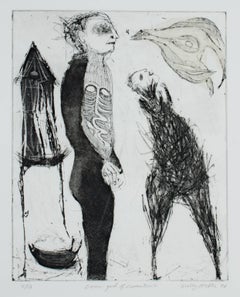
"Demi-God of Discontent, " Original Etching and Aquatint signed by Molly McKee
By Molly McKee
Located in Milwaukee, WI
"Demi-God of Discontent" is an original etching and aquatint made with Chine Colle by Molly McKee. The artist signed the piece in the lower right, titled it lower center, and wrote the edition number (2/10) in the lower left. It depicts a few abstracted human figures in McKee's surreal and horror-inspired style.
11 3/4" x 9" art
24 7/8" x 17 1/2" frame
This surreal etching...
Category
1990s Surrealist Figurative Prints
Materials
Etching, Aquatint
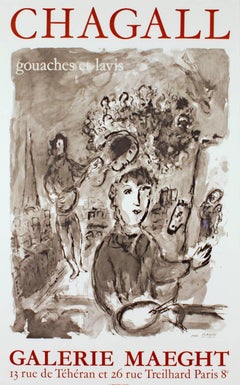
"Chagall Gouaches et Lavis, " Offset Poster After Marc Chagall, Galerie Maeght
By Marc Chagall
Located in Milwaukee, WI
"Chagall Gouaches et Lavis" is an offset poster after a painting by Marc Chagall printed by Galerie Maeght. It depicts one of Chagall's self-portraits ...
Category
1970s Modern Figurative Prints
Materials
Lithograph
"Man Monkey, " Original Etching Genre Scene signed by John Sloan
By John Sloan
Located in Milwaukee, WI
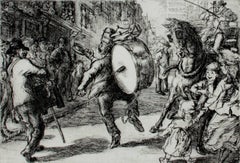
"Man Monkey" is an original etching by John Sloan. The artist signed the piece in the lower right. This is from an edition of 100. It depicts a man banging a drum in the middle of a ...
Category
Early 1900s Ashcan School Figurative Prints
Materials
Etching
"Pajaro (Parrot), " Black and White Lithograph signed by Arthur Secunda
By Arthur Secunda
Located in Milwaukee, WI
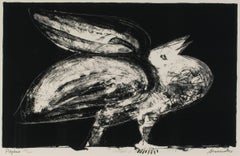
"Pajaro" is an original black and white lithograph by Arturo A. Secunda. It depicts a parrot. The artist signed the piece in the lower right and wrote the title and the edition number (27/100) in the lower left.
11 1/2" x 17 1/2" art
22 3/4" x 28 1/2" frame
Arthur Secunda is an internationally renowned artist whose career has spanned five decades. His one man shows have been seen worldwide in numerous galleries and museums in France, Sweden, Belgium, Holland, Spain, Israel, and Japan. In the United States, he is represented in most major museums of the country, including the National Gallery of Art and the Smithsonian Museum in Washington D.C., the Museum of Modern Art in New York, the UCLA Museum, the Detroit Art Institute, and the Phoenix Museum. Known for his brilliant collages and striking graphics, Secunda has mastered all types of printmaking, even making his own paper in France and Japan. His impressive body of work includes painting, mixed media, polyester assemblage, ceramics and welded sculpture. His studies began at the Detroit Art Institute as a teenager, and continued in New York at the Art Students League and New York University. After a stint in the Air Force as an artist, he then studied, thanks to the GI bill, in Mexico, Paris and Italy, with many great artists and teachers, beginning a lifelong propensity for travel-- living and working in other countries. For decades, he maintained studios in Paris and LA.
He considers himself a landscape artist, and has developed his own iconography in representing nature, the land and its forms, as well as corresponding inner landscapes. He is known for a specific kind of color gradation and blending of forms in many media. His work tends to oscillate between the serene--striated colors in landscapes--to the expressive, as in many of his oil paintings.
After years in Paris, Secunda has maintained a studio in Scottsdale for the last decade--doing what he has done in all of the other places he has liv ed and worked in the last 50 years--creating imagery.
He has worked as a jazz musician--in Paris in the early days to support himself, and as a milkman; as an art critic, lecturer, curator, writer and publisher. Periodically, he consults at NASA where he is an image visualizer, helping translate scientific data into visual images. Highly respected as a teacher, he will spend August in Lacoste, France teaching a master class in collage and the creation of handmade artists books. (Secunda has an international following of people who subscribe and collect his dada art "books".)
Next year, he will have a one man exhibition at the University of Judaism in Los Angeles, presenting a never before seen series of expressive portrait monotypes of noted art personalities, after which he will exhibit early Mexican woodcuts...
Category
1950s Animal Prints
Materials
Lithograph
"Anthunium, " Original Color Serigraph Colorful Still Life signed by Hunt Slonem
By Hunt Slonem
Located in Milwaukee, WI
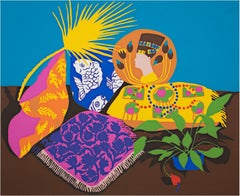
"Anthunium" is an original color serigraph by Hunt Slonem. The artist signed and dated the piece in the lower right and wrote the edition number, AP 3/30, in the lower left. This piece depicts a still life with patterned pillows and plants.
19 3/4"x 24 1/8"image
22"x 30"paper
29 1/8" x 33 1/2" frame
Hunt Slonem (born Hunt Slonim, July 18, 1951) is an American painter, sculptor, and printmaker. He is best known for his Neo-Expressionist paintings of tropical birds, often based on a personal aviary in which he has been keeping from 30 to over 100 live birds of various species. Slonem's works are included in many important museum collections all over the world; he is exhibiting regularly at both public and private venues, and he has received numerous honors and awards.
Hunt Slonem’s oil paintings...
Category
1980s Still-life Prints
Materials
Screen