La Galerie d Art Moderne à Southampton
to
4,468
4,441
3,118
1,262
1,144
936
554
475
387
385
305
237
77
52
32
20
2
1
1
1
184
179
169
102
59
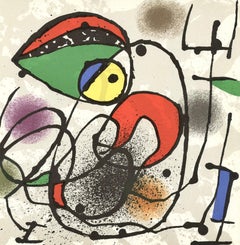
Joan Miro, Untitled, from Sculptures of Miro, 1973
By Joan Miró
Located in Southampton, NY
This exquisite lithograph by Joan Miro (1893–1983), titled Sans titre (Untitled), originates from the 1973 album Sculptures de Miro, Ceramiques de Miro, et Llorens Artigas (Sculpture...
Category
1970s Surrealist Abstract Prints
Materials
Lithograph

$716 Sale Price
20% Off
Joan Miro, Untitled, from Sculptures of Miro, 1973
By Joan Miró
Located in Southampton, NY
This exquisite lithograph by Joan Miro (1893–1983), titled Sans titre (Untitled), originates from the 1973 album Sculptures de Miro, Ceramiques de Miro, et Llorens Artigas (Sculpture...
Category
1970s Surrealist Abstract Prints
Materials
Lithograph

$716 Sale Price
20% Off
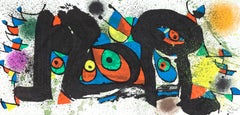
Joan Miro, Untitled, from Miro Sculpture, 1974
By Joan Miró
Located in Southampton, NY
This exquisite lithograph by Joan Miro (1893–1983), titled Sans titre (Untitled), originates from the 1974 album miro sculpture (Miro Sculpture). Publi...
Category
1970s Surrealist Abstract Prints
Materials
Lithograph
$716 Sale Price
20% Off
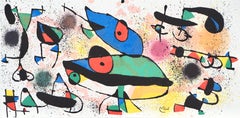
Joan Miro, Untitled, from Miro Sculpture, 1974
By Joan Miró
Located in Southampton, NY
This exquisite lithograph by Joan Miro (1893–1983), titled Sans titre (Untitled), originates from the 1974 album miro sculpture (Miro Sculpture). Publi...
Category
1970s Surrealist Abstract Prints
Materials
Lithograph
$716 Sale Price
20% Off
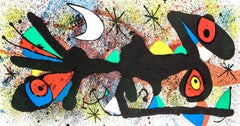
Joan Miro, Untitled, from Miro and Artigas Ceramics, 1974
By Joan Miró
Located in Southampton, NY
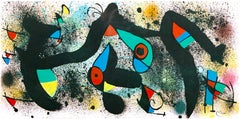
This exquisite lithograph by Joan Miro (1893–1983), titled Sans Titre (Untitled), originates from the 1974 album ceramiques de miro et artigas (Miro and Artigas Ceramics). Published by Maeght Editeur, Paris, and printed by Arte, Adrien Maeght, Paris, this work reflects Miros lyrical fusion of abstraction, gesture, and ceramic-inspired form. In Sans Titre (Untitled), Miro channels the vivid spontaneity and symbolic richness that define his mature graphic language.
Executed as a lithograph on velin paper, this work measures 11.024 x 22.28 inches, with stitch perforations and centerfold as issued. Signed in the plate and unnumbered as issued. Printed by Arte, Adrien Maeght, Paris, one of the foremost ateliers of the 20th century.
Artwork Details:
Artist: Joan Miro (1893–1983)
Title: Sans Titre (Untitled), from the album ceramiques de miro et artigas (Miro and Artigas Ceramics), 1974
Medium: Lithograph on velin paper
Dimensions: 11.024 x 22.28 inches (28 x 56.57 cm), with stitch perforations and centerfold as issued
Inscription: Signed in the plate and unnumbered as issued
Date: 1974
Publisher: Maeght Editeur, Paris
Printer: Arte, Adrien Maeght, Paris
Catalogue raisonne reference: Mourlot, Fernand, and Joan Miro. Catalogue des Lithographies de Miro. Vol. V. Andre Sauret, 1984, illustrations 926–927. Cramer, Patrick. Joan Miro: The Illustrated Books: Catalogue Raisonne. Patrick Cramer, 1989, illustration 183.
Condition: Well preserved, consistent with age and medium
Provenance: From the 1974 album ceramiques de miro et artigas (Miro and Artigas Ceramics), published by Maeght Editeur, Paris; printed by Arte, Adrien Maeght, Paris
Notes:
Excerpted from the album (translated from French), The original lithographs were drawn in the ateliers Arte, Adrien Maeght, Paris. Completed printing on April 30, 1974.
About the Publication:
Ceramiques de miro et artigas (Miro and Artigas Ceramics) is a landmark 1974 album published by Maeght Editeur that documents and celebrates the long, fertile collaboration between Joan Miro and the master ceramicist Josep Llorens Artigas. The album serves as both an artistic tribute and an archival record of their shared exploration into the expressive possibilities of fire, clay, pigment, and surface. Maeght Editeur—renowned for its exceptional production standards and its close relationships with leading modern artists—commissioned original lithographs specifically for the album, each reflecting the tactile, gestural, and symbolic vocabulary that Miro developed through decades of experimentation in ceramics. Printed by Arte, Adrien Maeght in Paris, the production exemplifies the publisher’s commitment to uniting fine art printing with rigorous documentation. The album honors one of the most important artist–artisan partnerships of the 20th century, capturing the profound synergy between Miro’s visionary abstraction and Artigas’s mastery of traditional and experimental ceramic processes. As with all major Maeght publications, the album was conceived not merely as a catalogue but as a complete work of art, synthesizing text, image, and craftsmanship into an enduring contribution to the history of modernist printmaking and book arts.
About the Artist:
Joan Miro (1893–1983) was a Catalan painter, sculptor, printmaker, and ceramicist whose visionary imagination and lyrical abstraction made him one of the most influential and beloved artists of the 20th century. Born in Barcelona, Miro drew inspiration from Catalan folk art, Romanesque frescoes, and the luminous landscapes of Mont-roig del Camp, developing a deep connection to nature that infused his work with vitality and symbolism. After formal training at the Escola dArt in Barcelona, he absorbed the lessons of Post-Impressionism and Cubism before moving to Paris in the early 1920s, where he became a leading figure in the Surrealist movement. There, Miro forged a personal visual language of biomorphic shapes, floating symbols, and radiant color harmonies that reflected both spontaneity and spiritual depth. In creative dialogue with peers such as Alexander Calder, Alberto Giacometti, Salvador Dali, Wassily Kandinsky, Marcel Duchamp, and Man Ray, he helped revolutionize modern art by dissolving the boundaries between abstraction and dream imagery. Miros inventive approach extended far beyond painting, embracing sculpture, ceramics, and monumental public commissions that redefined how art could interact with space and emotion. His expressive freedom and gestural abstraction profoundly influenced later artists including Jackson Pollock, Mark Rothko, Alexander Calder, Jean Dubuffet, Antoni Tapies, and Joan Mitchell, inspiring generations who sought to merge instinct, color, and imagination. Today, Miros work remains a cornerstone of modernism, prized by collectors and celebrated in major museums worldwide. His highest auction record was achieved by Peinture (Etoile Bleue) (1927), which sold for 23561250 GBP (approximately 37 million USD) at Sothebys, London, on June 19, 2012.
Joan Miro Sans Titre 1974, Miro ceramiques...
Category
1970s Surrealist Abstract Prints
Materials
Lithograph
$716 Sale Price
20% Off
Joan Miro, Untitled, from Miro and Artigas Ceramics, 1974
By Joan Miró
Located in Southampton, NY
This exquisite lithograph by Joan Miro (1893–1983), titled Sans Titre (Untitled), originates from the 1974 album ceramiques de miro et artigas (Miro and Artigas Ceramics). Published by Maeght Editeur, Paris, and printed by Arte, Adrien Maeght, Paris, this work reflects Miros lyrical fusion of abstraction, gesture, and ceramic-inspired form. In Sans Titre (Untitled), Miro channels the vivid spontaneity and symbolic richness that define his mature graphic language.
Executed as a lithograph on velin paper, this work measures 11.024 x 22.28 inches, with stitch perforations and centerfold as issued. Signed in the plate and unnumbered as issued. Printed by Arte, Adrien Maeght, Paris, one of the foremost ateliers of the 20th century.
Artwork Details:
Artist: Joan Miro (1893–1983)
Title: Sans Titre (Untitled), from the album ceramiques de miro et artigas (Miro and Artigas Ceramics), 1974
Medium: Lithograph on velin paper
Dimensions: 11.024 x 22.28 inches (28 x 56.57 cm), with stitch perforations and centerfold as issued
Inscription: Signed in the plate and unnumbered as issued
Date: 1974
Publisher: Maeght Editeur, Paris
Printer: Arte, Adrien Maeght, Paris
Catalogue raisonne reference: Mourlot, Fernand, and Joan Miro. Catalogue des Lithographies de Miro. Vol. V. Andre Sauret, 1984, illustrations 926–927. Cramer, Patrick. Joan Miro: The Illustrated Books: Catalogue Raisonne. Patrick Cramer, 1989, illustration 183.
Condition: Well preserved, consistent with age and medium
Provenance: From the 1974 album ceramiques de miro et artigas (Miro and Artigas Ceramics), published by Maeght Editeur, Paris; printed by Arte, Adrien Maeght, Paris
Notes:
Excerpted from the album (translated from French), The original lithographs were drawn in the ateliers Arte, Adrien Maeght, Paris. Completed printing on April 30, 1974.
About the Publication:
Ceramiques de miro et artigas (Miro and Artigas Ceramics) is a landmark 1974 album published by Maeght Editeur that documents and celebrates the long, fertile collaboration between Joan Miro and the master ceramicist Josep Llorens Artigas. The album serves as both an artistic tribute and an archival record of their shared exploration into the expressive possibilities of fire, clay, pigment, and surface. Maeght Editeur—renowned for its exceptional production standards and its close relationships with leading modern artists—commissioned original lithographs specifically for the album, each reflecting the tactile, gestural, and symbolic vocabulary that Miro developed through decades of experimentation in ceramics. Printed by Arte, Adrien Maeght in Paris, the production exemplifies the publisher’s commitment to uniting fine art printing with rigorous documentation. The album honors one of the most important artist–artisan partnerships of the 20th century, capturing the profound synergy between Miro’s visionary abstraction and Artigas’s mastery of traditional and experimental ceramic processes. As with all major Maeght publications, the album was conceived not merely as a catalogue but as a complete work of art, synthesizing text, image, and craftsmanship into an enduring contribution to the history of modernist printmaking and book arts.
About the Artist:
Joan Miro (1893–1983) was a Catalan painter, sculptor, printmaker, and ceramicist whose visionary imagination and lyrical abstraction made him one of the most influential and beloved artists of the 20th century. Born in Barcelona, Miro drew inspiration from Catalan folk art, Romanesque frescoes, and the luminous landscapes of Mont-roig del Camp, developing a deep connection to nature that infused his work with vitality and symbolism. After formal training at the Escola dArt in Barcelona, he absorbed the lessons of Post-Impressionism and Cubism before moving to Paris in the early 1920s, where he became a leading figure in the Surrealist movement. There, Miro forged a personal visual language of biomorphic shapes, floating symbols, and radiant color harmonies that reflected both spontaneity and spiritual depth. In creative dialogue with peers such as Alexander Calder, Alberto Giacometti, Salvador Dali, Wassily Kandinsky, Marcel Duchamp, and Man Ray, he helped revolutionize modern art by dissolving the boundaries between abstraction and dream imagery. Miros inventive approach extended far beyond painting, embracing sculpture, ceramics, and monumental public commissions that redefined how art could interact with space and emotion. His expressive freedom and gestural abstraction profoundly influenced later artists including Jackson Pollock, Mark Rothko, Alexander Calder, Jean Dubuffet, Antoni Tapies, and Joan Mitchell, inspiring generations who sought to merge instinct, color, and imagination. Today, Miros work remains a cornerstone of modernism, prized by collectors and celebrated in major museums worldwide. His highest auction record was achieved by Peinture (Etoile Bleue) (1927), which sold for 23561250 GBP (approximately 37 million USD) at Sothebys, London, on June 19, 2012.
Joan Miro Sans Titre 1974, Miro ceramiques...
Category
1970s Surrealist Abstract Prints
Materials
Lithograph
$716 Sale Price
20% Off
Alfred Stieglitz, Equivalent 27C, 1947 (after)
By Alfred Stieglitz
Located in Southampton, NY
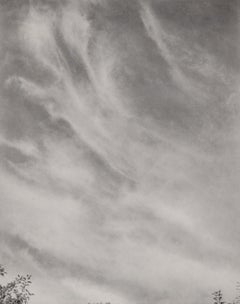
This exquisite halftone print after Alfred Stieglitz (1864–1946), titled Equivalent 27C, originates from the 1947 folio Stieglitz Memorial Portfolio, 1864–1946. Published by Twice a ...
Category
1940s American Modern Landscape Photography
Materials
Offset
$716 Sale Price
20% Off
Alfred Stieglitz, Poplars, Lake George, 1947 (after)
By Alfred Stieglitz
Located in Southampton, NY
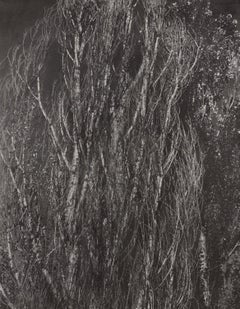
This exquisite halftone print after Alfred Stieglitz (1864–1946), titled Poplars, Lake George, originates from the 1947 folio Stieglitz Memorial Portfolio, 1864–1946. Published by Tw...
Category
1940s American Modern Landscape Photography
Materials
Offset
$716 Sale Price
20% Off
Alfred Stieglitz, Sky, 1947 (after)
By Alfred Stieglitz
Located in Southampton, NY
This exquisite halftone print after Alfred Stieglitz (1864–1946), titled Sky, originates from the 1947 folio Stieglitz Memorial Portfolio, 1864–1946. Published by Twice a Year Press,...
Category
1940s American Modern Landscape Photography
Materials
Offset
$716 Sale Price
20% Off
Alfred Stieglitz, Hands, Dorothy Norman, 1947 (after)
By Alfred Stieglitz
Located in Southampton, NY
This exquisite halftone print after Alfred Stieglitz (1864–1946), titled Hands, Dorothy Norman, originates from the 1947 folio Stieglitz Memorial Portfolio, 1864–1946. Published by T...
Category
1940s American Modern Figurative Prints
Materials
Offset
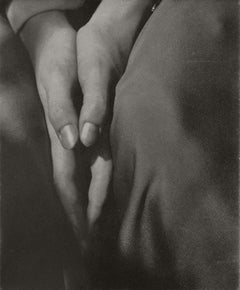
$716 Sale Price
20% Off
Alfred Stieglitz, Equivalent, Series 107, 1947 (after)
By Alfred Stieglitz
Located in Southampton, NY
This exquisite halftone print after Alfred Stieglitz (1864–1946), titled Equivalent, Series 107, originates from the 1947 folio Stieglitz Memorial Portfolio, 1864–1946. Published by ...
Category
1940s American Modern Landscape Photography
Materials
Offset
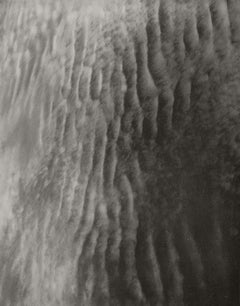
$716 Sale Price
20% Off
Alfred Stieglitz, New York Series, Spring, 1947 (after)
By Alfred Stieglitz
Located in Southampton, NY
This exquisite halftone print after Alfred Stieglitz (1864–1946), titled New York Series, Spring, originates from the 1947 folio Stieglitz Memorial Portfolio, 1864–1946. Published by...
Category
1940s American Modern Landscape Photography
Materials
Offset
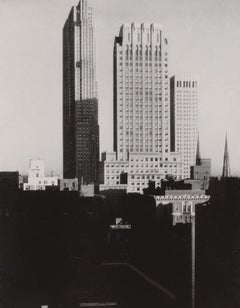
$716 Sale Price
20% Off
Alfred Stieglitz, Evening from the Shelton, 1947 (after)
By Alfred Stieglitz
Located in Southampton, NY
This exquisite halftone print after Alfred Stieglitz (1864–1946), titled Evening from the Shelton, originates from the 1947 folio Stieglitz Memorial Portfolio, 1864–1946. Published b...
Category
1940s American Modern Landscape Photography
Materials
Offset
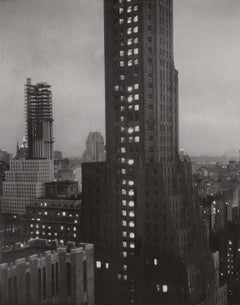
$716 Sale Price
20% Off
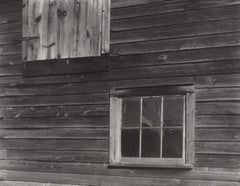
Alfred Stieglitz, Barn, Lake George, 1947 (after)
By Alfred Stieglitz
Located in Southampton, NY
This exquisite halftone print after Alfred Stieglitz (1864–1946), titled Barn, Lake George, originates from the 1947 folio Stieglitz Memorial Portfolio, 1864–1946. Published by Twice...
Category
1940s American Modern Landscape Photography
Materials
Offset
$716 Sale Price
20% Off
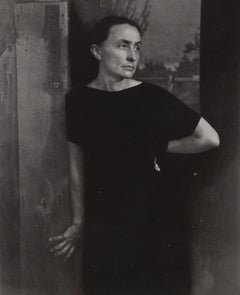
Alfred Stieglitz, Portrait, Georgia O
Keeffe, 1947 (after)
By Alfred Stieglitz
Located in Southampton, NY
This exquisite halftone print after Alfred Stieglitz (1864–1946), titled Portrait, Georgia O'Keeffe, originates from the 1947 folio Stieglitz Memorial Portfolio, 1864–1946. Published...
Category
1940s American Modern Figurative Prints
Materials
Offset
$716 Sale Price
20% Off
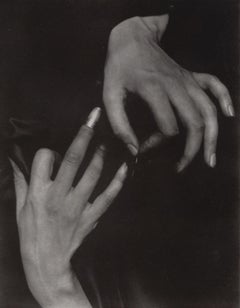
Alfred Stieglitz, Georgia O
Keeffe Hands with Thimble, 1947 (after)
By Alfred Stieglitz
Located in Southampton, NY
This exquisite halftone print after Alfred Stieglitz (1864–1946), titled Georgia O'Keeffe Hands with Thimble, originates from the 1947 folio Stieglitz Memorial Portfolio, 1864–1946. ...
Category
1940s American Modern Figurative Prints
Materials
Offset
$716 Sale Price
20% Off
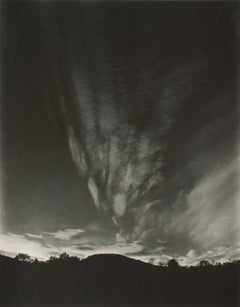
Alfred Stieglitz, Mountains and Sky, Lake George, 1947 (after)
By Alfred Stieglitz
Located in Southampton, NY
This exquisite halftone print after Alfred Stieglitz (1864–1946), titled Mountains and Sky, Lake George, originates from the 1947 folio Stieglitz Memorial Portfolio, 1864–1946. Publi...
Category
1940s American Modern Landscape Photography
Materials
Offset
$716 Sale Price
20% Off
Alfred Stieglitz, Portrait, John Marin, 1947 (after)
By Alfred Stieglitz
Located in Southampton, NY
This exquisite halftone print after Alfred Stieglitz (1864–1946), titled Portrait, John Marin, originates from the 1947 folio Stieglitz Memorial Portfolio, 1864–1946. Published by Tw...
Category
1940s American Modern Figurative Photography
Materials
Offset
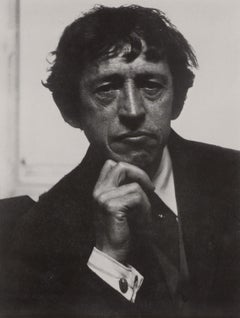
$716 Sale Price
20% Off
Alfred Stieglitz, The Steerage, 1947 (after)
By Alfred Stieglitz
Located in Southampton, NY
This exquisite halftone print after Alfred Stieglitz (1864–1946), titled The Steerage, originates from the 1947 folio Stieglitz Memorial Portfolio, 1864–1946. Published by Twice a Ye...
Category
1940s American Modern Figurative Photography
Materials
Offset
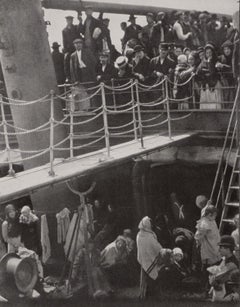
$716 Sale Price
20% Off
Alfred Stieglitz, Night, New York, 1947 (after)
By Alfred Stieglitz
Located in Southampton, NY
This exquisite halftone print after Alfred Stieglitz (1864–1946), titled Night, New York, originates from the 1947 folio Stieglitz Memorial Portfolio, 1864–1946. Published by Twice a...
Category
1940s American Modern Landscape Photography
Materials
Offset
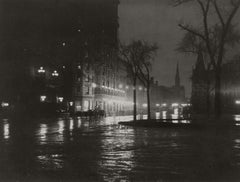
$716 Sale Price
20% Off
Alfred Stieglitz, Spring Showers, New York, 1947 (after)
By Alfred Stieglitz
Located in Southampton, NY
This exquisite halftone print after Alfred Stieglitz (1864–1946), titled Spring Showers, New York, originates from the 1947 folio Stieglitz Memorial Portfolio, 1864–1946. Published b...
Category
1940s American Modern Landscape Photography
Materials
Offset
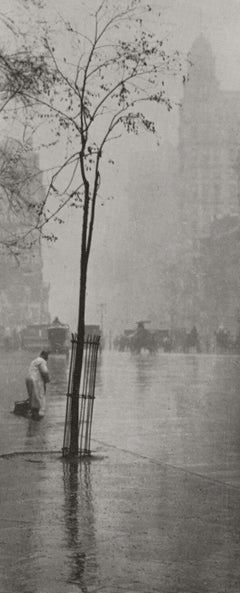
$716 Sale Price
20% Off
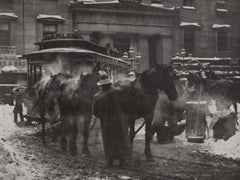
Alfred Stieglitz, The Terminal, 1947 (after)
By Alfred Stieglitz
Located in Southampton, NY
This exquisite halftone print after Alfred Stieglitz (1864–1946), titled The Terminal, originates from the 1947 folio Stieglitz Memorial Portfolio, 1864–1946. Published by Twice a Ye...
Category
1940s American Modern Figurative Photography
Materials
Offset
$716 Sale Price
20% Off
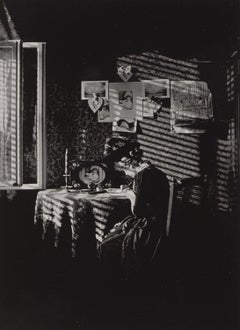
Alfred Stieglitz, Sunlight and Shadows, Paula, 1947 (after)
By Alfred Stieglitz
Located in Southampton, NY
This exquisite halftone print after Alfred Stieglitz (1864–1946), titled Sunlight and Shadows, Paula, originates from the 1947 folio Stieglitz Memorial Portfolio, 1864–1946. Publishe...
Category
1940s American Modern Figurative Photography
Materials
Offset
$716 Sale Price
20% Off
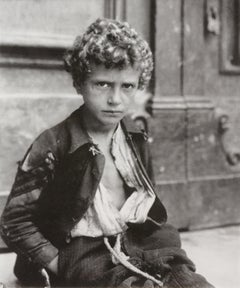
Alfred Stieglitz, Venetian Boy, 1947 (after)
By Alfred Stieglitz
Located in Southampton, NY
This exquisite halftone print after Alfred Stieglitz (1864–1946), titled Venetian Boy, originates from the 1947 folio Stieglitz Memorial Portfolio, 1864–1946. Published by Twice a Ye...
Category
1940s American Modern Figurative Photography
Materials
Offset
$716 Sale Price
20% Off
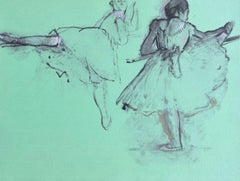
Edgar Degas, Dancer at the Barre, 1945 (after)
By Edgar Degas
Located in Southampton, NY
This exquisite lithograph after Edgar Degas (1834–1917), titled Danseur au bar (Dancer at the Barre), originates from the 1945 folio Degas, Ten Ballet Sketches. Published by The Studio Publications, Inc., New York, rendered and printed by Albert Carman, City Island, 1945, this work reflects Degas’s sensitive mastery of line, movement, and the intimate psychological nuances of the ballet studio.
Executed as a lithograph and pochoir on velin paper, this work measures 13 x 17 inches (33.02 x 43.18 cm). Signed in the plate and unnumbered as issued. Rendered and printed by Albert Carman, City Island.
Artwork Details:
Artist: After Edgar Degas (1834–1917)
Title: Danseur au bar (Dancer at the Barre), from Degas, Ten Ballet Sketches, 1945
Medium: Lithograph and pochoir on velin paper
Dimensions: 13 x 17 inches (33.02 x 43.18 cm)
Inscription: Signed in the plate and unnumbered as issued
Date: 1945
Publisher: The Studio Publications, Inc., New York
Printer: Albert Carman, City Island
Condition: Well preserved, consistent with age and medium
Provenance: From the 1945 folio Degas, Ten Ballet Sketches, published by The Studio Publications, Inc., New York
Notes:
Excerpted from the album, Born in Paris in 1834, Edgar Degas lived, and surely loved the life of that city during most of his years. These continued somewhat sadly beyond those of most of his friends— into the debacle of the first World War, during which he died in 1917. Judging by the frequency with which he used them as models, he must have had an especial admiration for the ballet girls who followed a profession that at the time brought none of the glory and prosperity which attend it today. New aspects of the human body, revealed in movement, fascinated him. But his occupation with the simply anatomical side of his subjects never resulted in a cold interpretation. On the contrary there is a warmth and sympathy that pervades all of his work. The drawings here represent the painter in one important phase of his multi-sensitive view of life; and permit an insight which a more ambitious work might not do-into the operation of the creative process, the artist's transformation of reality as it passes through the mesh of his sensibilities. The Edition of this Portfolio is limited to MMMD examples. Rendered by Albert Carman.
About the Publication:
Degas, Ten Ballet Sketches (1945) is one of the earliest and most significant American postwar fine art portfolios devoted to Edgar Degas’s intimate works on paper. Published by The Studio Publications, Inc., New York, and rendered and printed by Albert Carman at City Island, the album sought to faithfully reproduce a group of Degas’s ballet-related drawings through a combination of lithography and hand-applied pochoir coloring. This hybrid technique allowed the edition to preserve the immediacy, tonal subtlety, and gestural delicacy central to Degas’s draftsmanship. Conceived as a fine art publication rather than a commercial book, the portfolio provided American audiences unprecedented access to Degas’s private, spontaneous studies—images that reveal the artist’s fascination with movement, anatomy, and the psychological atmosphere of the rehearsal studio. The album exemplifies the mid-20th-century revival of pochoir as a means of recreating the texture and coloristic nuance of original works on paper, and it remains an important document of how Degas’s legacy was translated into high-quality printed form for collectors, museums, and connoisseurs.
About the Artist:
Edgar Degas (1834–1917) was a French painter, draughtsman, printmaker, and sculptor whose groundbreaking fusion of classical draftsmanship, modern experimentation, and psychological depth helped define the trajectory of Western art, positioning him as one of the most influential figures of the nineteenth and early twentieth centuries; renowned for his depictions of ballet dancers, racehorses, theater scenes, cafe life, domestic interiors, milliners, laundresses, and women at their toilette, Degas reimagined observational realism through radical compositional innovation—employing extreme cropping, asymmetrical framing, oblique viewpoints, and dramatic lighting that anticipated photographic and cinematic language long before these technologies shaped visual culture, and although associated with Impressionism, he rejected plein-air spontaneity in favor of studio-based discipline rooted in the linear precision of Jean-Auguste-Dominique Ingres, the expressive chromaticism of Eugene Delacroix, and the modernity of Edouard Manet while also drawing inspiration from Japanese ukiyo-e prints, classical sculpture, and early photography; his independent artistic philosophy resonated with and helped shape the innovations of Pablo Picasso, Alexander Calder, Alberto Giacometti, Salvador Dali, Joan Miro, Wassily Kandinsky, Marcel Duchamp, and Man Ray, whose explorations of movement, form, dream logic, abstraction, and conceptualism all find antecedents in Degas’s investigations into seriality, temporality, and the fragmented figure, and his pioneering use of pastel, monotype, and wax sculpture fundamentally transformed each medium, influencing artists from Henri Matisse, Francis Bacon, Lucian Freud, and Giacomo Manzu to Paula Rego, contemporary realists, experimental photographers, and choreographers; his works are held in nearly every major museum collection worldwide—including the Musee dOrsay, the Louvre, the Metropolitan Museum of Art, the National Gallery of Art, the Art Institute of Chicago, the Courtauld Institute, and the National Gallery, London—affirming his central place in the history of art, and the highest auction record for Degas was achieved at Sothebys London on February 3, 2015, when Danseuses en Bleu sold for 37,033,000 GBP, cementing his status as one of the most sought-after and enduringly significant artists of the Western canon.
Degas pochoir, Degas lithograph...
Category
1940s Impressionist Figurative Prints
Materials
Lithograph
$796 Sale Price
20% Off
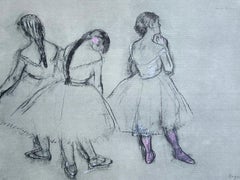
Edgar Degas, Three Dancers, 1945 (after)
By Edgar Degas
Located in Southampton, NY
This exquisite lithograph after Edgar Degas (1834–1917), titled Trois danseurs (Three Dancers), originates from the 1945 folio Degas, Ten Ballet Sketches. Published by The Studio Publications, Inc., New York, rendered and printed by Albert Carman, City Island, 1945, this work reflects Degas’s sensitive mastery of line, movement, and the intimate psychological nuances of the ballet studio.
Executed as a lithograph and pochoir on velin paper, this work measures 13 x 17 inches (33.02 x 43.18 cm). Signed in the plate and unnumbered as issued. Rendered and printed by Albert Carman, City Island.
Artwork Details:
Artist: After Edgar Degas (1834–1917)
Title: Trois danseurs (Three Dancers), from Degas, Ten Ballet Sketches, 1945
Medium: Lithograph and pochoir on velin paper
Dimensions: 13 x 17 inches (33.02 x 43.18 cm)
Inscription: Signed in the plate and unnumbered as issued
Date: 1945
Publisher: The Studio Publications, Inc., New York
Printer: Albert Carman, City Island
Condition: Well preserved, consistent with age and medium
Provenance: From the 1945 folio Degas, Ten Ballet Sketches, published by The Studio Publications, Inc., New York
Notes:
Excerpted from the album, Born in Paris in 1834, Edgar Degas lived, and surely loved the life of that city during most of his years. These continued somewhat sadly beyond those of most of his friends— into the debacle of the first World War, during which he died in 1917. Judging by the frequency with which he used them as models, he must have had an especial admiration for the ballet girls who followed a profession that at the time brought none of the glory and prosperity which attend it today. New aspects of the human body, revealed in movement, fascinated him. But his occupation with the simply anatomical side of his subjects never resulted in a cold interpretation. On the contrary there is a warmth and sympathy that pervades all of his work. The drawings here represent the painter in one important phase of his multi-sensitive view of life; and permit an insight which a more ambitious work might not do-into the operation of the creative process, the artist's transformation of reality as it passes through the mesh of his sensibilities. The Edition of this Portfolio is limited to MMMD examples. Rendered by Albert Carman.
About the Publication:
Degas, Ten Ballet Sketches (1945) is one of the earliest and most significant American postwar fine art portfolios devoted to Edgar Degas’s intimate works on paper. Published by The Studio Publications, Inc., New York, and rendered and printed by Albert Carman at City Island, the album sought to faithfully reproduce a group of Degas’s ballet-related drawings through a combination of lithography and hand-applied pochoir coloring. This hybrid technique allowed the edition to preserve the immediacy, tonal subtlety, and gestural delicacy central to Degas’s draftsmanship. Conceived as a fine art publication rather than a commercial book, the portfolio provided American audiences unprecedented access to Degas’s private, spontaneous studies—images that reveal the artist’s fascination with movement, anatomy, and the psychological atmosphere of the rehearsal studio. The album exemplifies the mid-20th-century revival of pochoir as a means of recreating the texture and coloristic nuance of original works on paper, and it remains an important document of how Degas’s legacy was translated into high-quality printed form for collectors, museums, and connoisseurs.
About the Artist:
Edgar Degas (1834–1917) was a French painter, draughtsman, printmaker, and sculptor whose groundbreaking fusion of classical draftsmanship, modern experimentation, and psychological depth helped define the trajectory of Western art, positioning him as one of the most influential figures of the nineteenth and early twentieth centuries; renowned for his depictions of ballet dancers, racehorses, theater scenes, cafe life, domestic interiors, milliners, laundresses, and women at their toilette, Degas reimagined observational realism through radical compositional innovation—employing extreme cropping, asymmetrical framing, oblique viewpoints, and dramatic lighting that anticipated photographic and cinematic language long before these technologies shaped visual culture, and although associated with Impressionism, he rejected plein-air spontaneity in favor of studio-based discipline rooted in the linear precision of Jean-Auguste-Dominique Ingres, the expressive chromaticism of Eugene Delacroix, and the modernity of Edouard Manet while also drawing inspiration from Japanese ukiyo-e prints, classical sculpture, and early photography; his independent artistic philosophy resonated with and helped shape the innovations of Pablo Picasso, Alexander Calder, Alberto Giacometti, Salvador Dali, Joan Miro, Wassily Kandinsky, Marcel Duchamp, and Man Ray, whose explorations of movement, form, dream logic, abstraction, and conceptualism all find antecedents in Degas’s investigations into seriality, temporality, and the fragmented figure, and his pioneering use of pastel, monotype, and wax sculpture fundamentally transformed each medium, influencing artists from Henri Matisse, Francis Bacon, Lucian Freud, and Giacomo Manzu to Paula Rego, contemporary realists, experimental photographers, and choreographers; his works are held in nearly every major museum collection worldwide—including the Musee dOrsay, the Louvre, the Metropolitan Museum of Art, the National Gallery of Art, the Art Institute of Chicago, the Courtauld Institute, and the National Gallery, London—affirming his central place in the history of art, and the highest auction record for Degas was achieved at Sothebys London on February 3, 2015, when Danseuses en Bleu sold for 37,033,000 GBP, cementing his status as one of the most sought-after and enduringly significant artists of the Western canon.
Degas pochoir, Degas lithograph...
Category
1940s Impressionist Figurative Prints
Materials
Lithograph
$796 Sale Price
20% Off
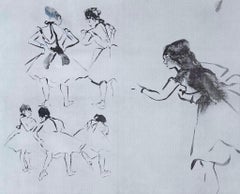
Edgar Degas, Sketch of Dancers, 1945 (after)
By Edgar Degas
Located in Southampton, NY
This exquisite lithograph after Edgar Degas (1834–1917), titled Croquis de danseurs (Sketch of Dancers), originates from the 1945 folio Degas, Ten Ballet Sketches. Published by The Studio Publications, Inc., New York, rendered and printed by Albert Carman, City Island, 1945, this work reflects Degas’s sensitive mastery of line, movement, and the intimate psychological nuances of the ballet studio.
Executed as a lithograph and pochoir on velin paper, this work measures 13 x 17 inches (33.02 x 43.18 cm). Signed in the plate and unnumbered as issued. Rendered and printed by Albert Carman, City Island.
Artwork Details:
Artist: After Edgar Degas (1834–1917)
Title: Croquis de danseurs (Sketch of Dancers), from Degas, Ten Ballet Sketches, 1945
Medium: Lithograph and pochoir on velin paper
Dimensions: 13 x 17 inches (33.02 x 43.18 cm)
Inscription: Signed in the plate and unnumbered as issued
Date: 1945
Publisher: The Studio Publications, Inc., New York
Printer: Albert Carman, City Island
Condition: Well preserved, consistent with age and medium
Provenance: From the 1945 folio Degas, Ten Ballet Sketches, published by The Studio Publications, Inc., New York
Notes:
Excerpted from the album, Born in Paris in 1834, Edgar Degas lived, and surely loved the life of that city during most of his years. These continued somewhat sadly beyond those of most of his friends— into the debacle of the first World War, during which he died in 1917. Judging by the frequency with which he used them as models, he must have had an especial admiration for the ballet girls who followed a profession that at the time brought none of the glory and prosperity which attend it today. New aspects of the human body, revealed in movement, fascinated him. But his occupation with the simply anatomical side of his subjects never resulted in a cold interpretation. On the contrary there is a warmth and sympathy that pervades all of his work. The drawings here represent the painter in one important phase of his multi-sensitive view of life; and permit an insight which a more ambitious work might not do-into the operation of the creative process, the artist's transformation of reality as it passes through the mesh of his sensibilities. The Edition of this Portfolio is limited to MMMD examples. Rendered by Albert Carman.
About the Publication:
Degas, Ten Ballet Sketches (1945) is one of the earliest and most significant American postwar fine art portfolios devoted to Edgar Degas’s intimate works on paper. Published by The Studio Publications, Inc., New York, and rendered and printed by Albert Carman at City Island, the album sought to faithfully reproduce a group of Degas’s ballet-related drawings through a combination of lithography and hand-applied pochoir coloring. This hybrid technique allowed the edition to preserve the immediacy, tonal subtlety, and gestural delicacy central to Degas’s draftsmanship. Conceived as a fine art publication rather than a commercial book, the portfolio provided American audiences unprecedented access to Degas’s private, spontaneous studies—images that reveal the artist’s fascination with movement, anatomy, and the psychological atmosphere of the rehearsal studio. The album exemplifies the mid-20th-century revival of pochoir as a means of recreating the texture and coloristic nuance of original works on paper, and it remains an important document of how Degas’s legacy was translated into high-quality printed form for collectors, museums, and connoisseurs.
About the Artist:
Edgar Degas (1834–1917) was a French painter, draughtsman, printmaker, and sculptor whose groundbreaking fusion of classical draftsmanship, modern experimentation, and psychological depth helped define the trajectory of Western art, positioning him as one of the most influential figures of the nineteenth and early twentieth centuries; renowned for his depictions of ballet dancers, racehorses, theater scenes, cafe life, domestic interiors, milliners, laundresses, and women at their toilette, Degas reimagined observational realism through radical compositional innovation—employing extreme cropping, asymmetrical framing, oblique viewpoints, and dramatic lighting that anticipated photographic and cinematic language long before these technologies shaped visual culture, and although associated with Impressionism, he rejected plein-air spontaneity in favor of studio-based discipline rooted in the linear precision of Jean-Auguste-Dominique Ingres, the expressive chromaticism of Eugene Delacroix, and the modernity of Edouard Manet while also drawing inspiration from Japanese ukiyo-e prints, classical sculpture, and early photography; his independent artistic philosophy resonated with and helped shape the innovations of Pablo Picasso, Alexander Calder, Alberto Giacometti, Salvador Dali, Joan Miro, Wassily Kandinsky, Marcel Duchamp, and Man Ray, whose explorations of movement, form, dream logic, abstraction, and conceptualism all find antecedents in Degas’s investigations into seriality, temporality, and the fragmented figure, and his pioneering use of pastel, monotype, and wax sculpture fundamentally transformed each medium, influencing artists from Henri Matisse, Francis Bacon, Lucian Freud, and Giacomo Manzu to Paula Rego, contemporary realists, experimental photographers, and choreographers; his works are held in nearly every major museum collection worldwide—including the Musee dOrsay, the Louvre, the Metropolitan Museum of Art, the National Gallery of Art, the Art Institute of Chicago, the Courtauld Institute, and the National Gallery, London—affirming his central place in the history of art, and the highest auction record for Degas was achieved at Sothebys London on February 3, 2015, when Danseuses en Bleu sold for 37,033,000 GBP, cementing his status as one of the most sought-after and enduringly significant artists of the Western canon.
Degas pochoir, Degas lithograph...
Category
1940s Impressionist Figurative Prints
Materials
Lithograph
$796 Sale Price
20% Off
Edgar Degas, Melina Darde, 1945 (after)
By Edgar Degas
Located in Southampton, NY
This exquisite lithograph after Edgar Degas (1834–1917), titled Melina Darde, originates from the 1945 folio Degas, Ten Ballet Sketches. Published by The Studio Publications, Inc., New York, rendered and printed by Albert Carman, City Island, 1945, this work reflects Degas’s sensitive mastery of line, movement, and the intimate psychological nuances of the ballet studio.
Executed as a lithograph and pochoir on velin paper, this work measures 17 x 13 inches (43.18 x 33.02 cm). Signed in the plate and unnumbered as issued. Rendered and printed by Albert Carman, City Island.
Artwork Details:
Artist: Edgar Degas (1834–1917)
Title: Melina Darde, from Degas, Ten Ballet Sketches, 1945
Medium: Lithograph and pochoir on velin paper
Dimensions: 17 x 13 inches (43.18 x 33.02 cm)
Inscription: Signed in the plate and unnumbered as issued
Date: 1945
Publisher: The Studio Publications, Inc., New York
Printer: Albert Carman, City Island
Condition: Well preserved, consistent with age and medium
Provenance: From the 1945 folio Degas, Ten Ballet Sketches, published by The Studio Publications, Inc., New York
Notes:
Excerpted from the album, Born in Paris in 1834, Edgar Degas lived, and surely loved the life of that city during most of his years. These continued somewhat sadly beyond those of most of his friends— into the debacle of the first World War, during which he died in 1917. Judging by the frequency with which he used them as models, he must have had an especial admiration for the ballet girls who followed a profession that at the time brought none of the glory and prosperity which attend it today. New aspects of the human body, revealed in movement, fascinated him. But his occupation with the simply anatomical side of his subjects never resulted in a cold interpretation. On the contrary there is a warmth and sympathy that pervades all of his work. The drawings here represent the painter in one important phase of his multi-sensitive view of life; and permit an insight which a more ambitious work might not do-into the operation of the creative process, the artist's transformation of reality as it passes through the mesh of his sensibilities. The Edition of this Portfolio is limited to MMMD examples. Rendered by Albert Carman.
About the Publication:
Degas, Ten Ballet Sketches (1945) is one of the earliest and most significant American postwar fine art portfolios devoted to Edgar Degas’s intimate works on paper. Published by The Studio Publications, Inc., New York, and rendered and printed by Albert Carman at City Island, the album sought to faithfully reproduce a group of Degas’s ballet-related drawings through a combination of lithography and hand-applied pochoir coloring. This hybrid technique allowed the edition to preserve the immediacy, tonal subtlety, and gestural delicacy central to Degas’s draftsmanship. Conceived as a fine art publication rather than a commercial book, the portfolio provided American audiences unprecedented access to Degas’s private, spontaneous studies—images that reveal the artist’s fascination with movement, anatomy, and the psychological atmosphere of the rehearsal studio. The album exemplifies the mid-20th-century revival of pochoir as a means of recreating the texture and coloristic nuance of original works on paper, and it remains an important document of how Degas’s legacy was translated into high-quality printed form for collectors, museums, and connoisseurs.
About the Artist:
Edgar Degas (1834–1917) was a French painter, draughtsman, printmaker, and sculptor whose groundbreaking fusion of classical draftsmanship, modern experimentation, and psychological depth helped define the trajectory of Western art, positioning him as one of the most influential figures of the nineteenth and early twentieth centuries; renowned for his depictions of ballet dancers, racehorses, theater scenes, cafe life, domestic interiors, milliners, laundresses, and women at their toilette, Degas reimagined observational realism through radical compositional innovation—employing extreme cropping, asymmetrical framing, oblique viewpoints, and dramatic lighting that anticipated photographic and cinematic language long before these technologies shaped visual culture, and although associated with Impressionism, he rejected plein-air spontaneity in favor of studio-based discipline rooted in the linear precision of Jean-Auguste-Dominique Ingres, the expressive chromaticism of Eugene Delacroix, and the modernity of Edouard Manet while also drawing inspiration from Japanese ukiyo-e prints, classical sculpture, and early photography; his independent artistic philosophy resonated with and helped shape the innovations of Pablo Picasso, Alexander Calder, Alberto Giacometti, Salvador Dali, Joan Miro, Wassily Kandinsky, Marcel Duchamp, and Man Ray, whose explorations of movement, form, dream logic, abstraction, and conceptualism all find antecedents in Degas’s investigations into seriality, temporality, and the fragmented figure, and his pioneering use of pastel, monotype, and wax sculpture fundamentally transformed each medium, influencing artists from Henri Matisse, Francis Bacon, Lucian Freud, and Giacomo Manzu to Paula Rego, contemporary realists, experimental photographers, and choreographers; his works are held in nearly every major museum collection worldwide—including the Musee dOrsay, the Louvre, the Metropolitan Museum of Art, the National Gallery of Art, the Art Institute of Chicago, the Courtauld Institute, and the National Gallery, London—affirming his central place in the history of art, and the highest auction record for Degas was achieved at Sothebys London on February 3, 2015, when Danseuses en Bleu sold for 37,033,000 GBP, cementing his status as one of the most sought-after and enduringly significant artists of the Western canon.
Degas pochoir, Degas lithograph...
Category
1940s Impressionist Figurative Prints
Materials
Lithograph

$796 Sale Price
20% Off
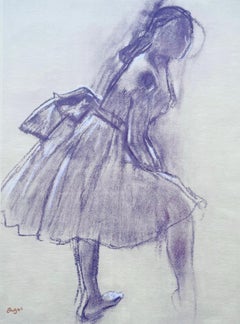
Edgar Degas, Dancer Standing in Profile, 1945 (after)
By Edgar Degas
Located in Southampton, NY
This exquisite lithograph after Edgar Degas (1834–1917), titled Danseur debout de profil (Dancer Standing in Profile), originates from the 1945 folio Degas, Ten Ballet Sketches. Published by The Studio Publications, Inc., New York, rendered and printed by Albert Carman, City Island, 1945, this work reflects Degas’s sensitive mastery of line, movement, and intimate observation, capturing the grace, poise, and psychological immediacy that define his iconic ballet imagery. In Danseur debout de profil (Dancer Standing in Profile), Degas reveals gesture and inner emotion through economical contour and lyrical nuance.
Executed as a lithograph and pochoir on velin paper, this work measures 17 x 13 inches (43.18 x 33.02 cm). Signed in the plate and unnumbered as issued. Rendered and printed by Albert Carman, City Island, one of the notable American ateliers specializing in fine art lithography during the mid-20th century.
Artwork Details:
Artist: After Edgar Degas (1834–1917)
Title: Danseur debout de profil (Dancer Standing in Profile), from Degas, Ten Ballet Sketches, 1945
Medium: Lithograph and pochoir on velin paper
Dimensions: 17 x 13 inches (43.18 x 33.02 cm)
Inscription: Signed in the plate and unnumbered as issued
Date: 1945
Publisher: The Studio Publications, Inc., New York
Printer: Albert Carman, City Island, 1945
Condition: Well preserved, consistent with age and medium
Provenance: From the 1945 folio Degas, Ten Ballet Sketches, published by The Studio Publications, Inc., New York
Notes:
Excerpted from the album, Born in Paris in 1834, Edgar Degas lived, and surely loved the life of that city during most of his years. These continued somewhat sadly beyond those of most of his friends— into the debacle of the first World War, during which he died in 1917. Judging by the frequency with which he used them as models, he must have had an especial admiration for the ballet girls who followed a profession that at the time brought none of the glory and prosperity which attend it today. New aspects of the human body, revealed in movement, fascinated him. But his occupation with the simply anatomical side of his subjects never resulted in a cold interpretation. On the contrary there is a warmth and sympathy that pervades all of his work. The drawings here represent the painter in one important phase of his multi-sensitive view of life; and permit an insight which a more ambitious work might not do-into the operation of the creative process, the artist's transformation of reality as it passes through the mesh of his sensibilities. The Edition of this Portfolio is limited to MMMD examples. Rendered by Albert Carman.
About the Publication:
Degas, Ten Ballet Sketches, published in 1945 by The Studio Publications, Inc., New York, stands as one of the most elegant and scholarly mid-century American fine art folios devoted to the ballet imagery of Edgar Degas. Conceived as a high-quality interpretive portfolio, the album presents a series of lithograph-and-pochoir renderings based on Degas’s original drawings, executed with exceptional attention to tonal subtlety, contour fidelity, and the emotional interiority that defines the artist’s draftsmanship. Rendered and printed by Albert Carman on City Island, the publication embodies an American postwar effort to restore and celebrate European masterworks through meticulous handcraft and artisanal color application, honoring Degas’s distinctive line and the atmospheric delicacy of his studio-based studies. Produced in a substantial edition of MMMD examples, the portfolio offered audiences rare access to Degas’s private working drawings—images rarely seen outside institutional collections—while exemplifying the technical refinement and interpretive care characteristic of Carman’s workshop. Today, Degas, Ten Ballet Sketches remains a sought-after historical publication, valued for its craft, fidelity to Degas’s aesthetic, and its role in preserving and disseminating the artist’s intimate ballet imagery in a beautifully executed mid-century fine art format.
About the Artist:
Edgar Degas (1834–1917) was a French painter, draughtsman, printmaker, and sculptor whose groundbreaking fusion of classical draftsmanship, modern experimentation, and psychological depth helped define the trajectory of Western art, positioning him as one of the most influential figures of the nineteenth and early twentieth centuries; renowned for his depictions of ballet dancers, racehorses, theater scenes, cafe life, domestic interiors, milliners, laundresses, and women at their toilette, Degas reimagined observational realism through radical compositional innovation—employing extreme cropping, asymmetrical framing, oblique viewpoints, and dramatic lighting that anticipated photographic and cinematic language long before these technologies shaped visual culture, and although associated with Impressionism, he rejected plein-air spontaneity in favor of studio-based discipline rooted in the linear precision of Jean-Auguste-Dominique Ingres, the expressive chromaticism of Eugene Delacroix, and the modernity of Edouard Manet while also drawing inspiration from Japanese ukiyo-e prints, classical sculpture, and early photography; his independent artistic philosophy resonated with and helped shape the innovations of Pablo Picasso, Alexander Calder, Alberto Giacometti, Salvador Dali, Joan Miro, Wassily Kandinsky, Marcel Duchamp, and Man Ray, whose explorations of movement, form, dream logic, abstraction, and conceptualism all find antecedents in Degas’s investigations into seriality, temporality, and the fragmented figure, and his pioneering use of pastel, monotype, and wax sculpture fundamentally transformed each medium, influencing artists from Henri Matisse, Francis Bacon, Lucian Freud, and Giacomo Manzu to Paula Rego, contemporary realists, experimental photographers, and choreographers; his works are held in nearly every major museum collection worldwide—including the Musee dOrsay, the Louvre, the Metropolitan Museum of Art, the National Gallery of Art, the Art Institute of Chicago, the Courtauld Institute, and the National Gallery, London—affirming his central place in the history of art, and the highest auction record for Degas was achieved at Sothebys London on February 3, 2015, when Danseuses en Bleu sold for 37,033,000 GBP, cementing his status as one of the most sought-after and enduringly significant artists of the Western canon.
Edgar Degas lithograph...
Category
1940s Impressionist Figurative Prints
Materials
Lithograph
$796 Sale Price
20% Off
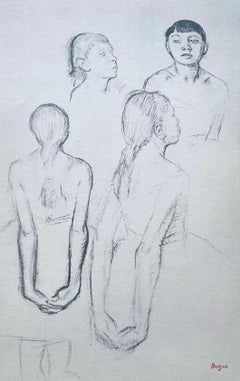
Edgar Degas, Four Sketches of a Little Dancer, 1945 (after)
By Edgar Degas
Located in Southampton, NY
This exquisite lithograph after Edgar Degas (1834–1917), titled Quatre croquis d’un petit danseur (Four Sketches of a Little Dancer), originates from the 1945 folio Degas, Ten Ballet Sketches. Published by The Studio Publications, Inc., New York, rendered and printed by Albert Carman, City Island, 1945, this work reflects Degas’s sensitive mastery of line, movement, and intimate observation, capturing the grace, poise, and psychological immediacy that define his iconic ballet imagery. In Quatre croquis d’un petit danseur (Four Sketches of a Little Dancer), Degas reveals gesture and inner emotion through economical contour and lyrical nuance.
Executed as a lithograph and pochoir on velin paper, this work measures 17 x 13 inches (43.18 x 33.02 cm). Signed in the plate and unnumbered as issued. Rendered and printed by Albert Carman, City Island, one of the notable American ateliers specializing in fine art lithography during the mid-20th century.
Artwork Details:
Artist: After Edgar Degas (1834–1917)
Title: Quatre croquis d’un petit danseur (Four Sketches of a Little Dancer), from Degas, Ten Ballet Sketches, 1945
Medium: Lithograph and pochoir on velin paper
Dimensions: 17 x 13 inches (43.18 x 33.02 cm)
Inscription: Signed in the plate and unnumbered as issued
Date: 1945
Publisher: The Studio Publications, Inc., New York
Printer: Albert Carman, City Island, 1945
Condition: Well preserved, consistent with age and medium
Provenance: From the 1945 folio Degas, Ten Ballet Sketches, published by The Studio Publications, Inc., New York
Notes:
Excerpted from the album, Born in Paris in 1834, Edgar Degas lived, and surely loved the life of that city during most of his years. These continued somewhat sadly beyond those of most of his friends— into the debacle of the first World War, during which he died in 1917. Judging by the frequency with which he used them as models, he must have had an especial admiration for the ballet girls who followed a profession that at the time brought none of the glory and prosperity which attend it today. New aspects of the human body, revealed in movement, fascinated him. But his occupation with the simply anatomical side of his subjects never resulted in a cold interpretation. On the contrary there is a warmth and sympathy that pervades all of his work. The drawings here represent the painter in one important phase of his multi-sensitive view of life; and permit an insight which a more ambitious work might not do-into the operation of the creative process, the artist's transformation of reality as it passes through the mesh of his sensibilities. The Edition of this Portfolio is limited to MMMD examples. Rendered by Albert Carman.
About the Publication:
Degas, Ten Ballet Sketches, published in 1945 by The Studio Publications, Inc., New York, stands as one of the most elegant and scholarly mid-century American fine art folios devoted to the ballet imagery of Edgar Degas. Conceived as a high-quality interpretive portfolio, the album presents a series of lithograph-and-pochoir renderings based on Degas’s original drawings, executed with exceptional attention to tonal subtlety, contour fidelity, and the emotional interiority that defines the artist’s draftsmanship. Rendered and printed by Albert Carman on City Island, the publication embodies an American postwar effort to restore and celebrate European masterworks through meticulous handcraft and artisanal color application, honoring Degas’s distinctive line and the atmospheric delicacy of his studio-based studies. Produced in a substantial edition of MMMD examples, the portfolio offered audiences rare access to Degas’s private working drawings—images rarely seen outside institutional collections—while exemplifying the technical refinement and interpretive care characteristic of Carman’s workshop. Today, Degas, Ten Ballet Sketches remains a sought-after historical publication, valued for its craft, fidelity to Degas’s aesthetic, and its role in preserving and disseminating the artist’s intimate ballet imagery in a beautifully executed mid-century fine art format.
About the Artist:
Edgar Degas (1834–1917) was a French painter, draughtsman, printmaker, and sculptor whose groundbreaking fusion of classical draftsmanship, modern experimentation, and psychological depth helped define the trajectory of Western art, positioning him as one of the most influential figures of the nineteenth and early twentieth centuries; renowned for his depictions of ballet dancers, racehorses, theater scenes, cafe life, domestic interiors, milliners, laundresses, and women at their toilette, Degas reimagined observational realism through radical compositional innovation—employing extreme cropping, asymmetrical framing, oblique viewpoints, and dramatic lighting that anticipated photographic and cinematic language long before these technologies shaped visual culture, and although associated with Impressionism, he rejected plein-air spontaneity in favor of studio-based discipline rooted in the linear precision of Jean-Auguste-Dominique Ingres, the expressive chromaticism of Eugene Delacroix, and the modernity of Edouard Manet while also drawing inspiration from Japanese ukiyo-e prints, classical sculpture, and early photography; his independent artistic philosophy resonated with and helped shape the innovations of Pablo Picasso, Alexander Calder, Alberto Giacometti, Salvador Dali, Joan Miro, Wassily Kandinsky, Marcel Duchamp, and Man Ray, whose explorations of movement, form, dream logic, abstraction, and conceptualism all find antecedents in Degas’s investigations into seriality, temporality, and the fragmented figure, and his pioneering use of pastel, monotype, and wax sculpture fundamentally transformed each medium, influencing artists from Henri Matisse, Francis Bacon, Lucian Freud, and Giacomo Manzu to Paula Rego, contemporary realists, experimental photographers, and choreographers; his works are held in nearly every major museum collection worldwide—including the Musee dOrsay, the Louvre, the Metropolitan Museum of Art, the National Gallery of Art, the Art Institute of Chicago, the Courtauld Institute, and the National Gallery, London—affirming his central place in the history of art, and the highest auction record for Degas was achieved at Sothebys London on February 3, 2015, when Danseuses en Bleu sold for 37,033,000 GBP, cementing his status as one of the most sought-after and enduringly significant artists of the Western canon.
Edgar Degas lithograph...
Category
1940s Impressionist Figurative Prints
Materials
Lithograph
$796 Sale Price
20% Off
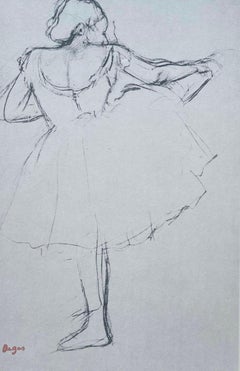
Edgar Degas, Dancer at the Barre, 1945 (after)
By Edgar Degas
Located in Southampton, NY
This exquisite lithograph after Edgar Degas (1834–1917), titled Danseur au bar (Dancer at the Barre), originates from the 1945 folio Degas, Ten Ballet Sketches. Published by The Studio Publications, Inc., New York, rendered and printed by Albert Carman, City Island, 1945, this work reflects Degas’s sensitive mastery of line, movement, and intimate observation, capturing the grace, poise, and psychological immediacy that define his iconic ballet imagery. In Danseur au bar (Dancer at the Barre), Degas reveals gesture and inner emotion through economical contour and lyrical nuance.
Executed as a lithograph and pochoir on velin paper, this work measures 17 x 13 inches (43.18 x 33.02 cm). Signed in the plate and unnumbered as issued. Rendered and printed by Albert Carman, City Island, one of the notable American ateliers specializing in fine art lithography during the mid-20th century.
Artwork Details:
Artist: After Edgar Degas (1834–1917)
Title: Danseur au bar (Dancer at the Barre), from Degas, Ten Ballet Sketches, 1945
Medium: Lithograph and pochoir on velin paper
Dimensions: 17 x 13 inches (43.18 x 33.02 cm)
Inscription: Signed in the plate and unnumbered as issued
Date: 1945
Publisher: The Studio Publications, Inc., New York
Printer: Albert Carman, City Island, 1945
Condition: Well preserved, consistent with age and medium
Provenance: From the 1945 folio Degas, Ten Ballet Sketches, published by The Studio Publications, Inc., New York
Notes:
Excerpted from the album, Born in Paris in 1834, Edgar Degas lived, and surely loved the life of that city during most of his years. These continued somewhat sadly beyond those of most of his friends— into the debacle of the first World War, during which he died in 1917. Judging by the frequency with which he used them as models, he must have had an especial admiration for the ballet girls who followed a profession that at the time brought none of the glory and prosperity which attend it today. New aspects of the human body, revealed in movement, fascinated him. But his occupation with the simply anatomical side of his subjects never resulted in a cold interpretation. On the contrary there is a warmth and sympathy that pervades all of his work. The drawings here represent the painter in one important phase of his multi-sensitive view of life; and permit an insight which a more ambitious work might not do-into the operation of the creative process, the artist's transformation of reality as it passes through the mesh of his sensibilities. The Edition of this Portfolio is limited to MMMD examples. Rendered by Albert Carman.
About the Publication:
Degas, Ten Ballet Sketches, published in 1945 by The Studio Publications, Inc., New York, stands as one of the most elegant and scholarly mid-century American fine art folios devoted to the ballet imagery of Edgar Degas. Conceived as a high-quality interpretive portfolio, the album presents a series of lithograph-and-pochoir renderings based on Degas’s original drawings, executed with exceptional attention to tonal subtlety, contour fidelity, and the emotional interiority that defines the artist’s draftsmanship. Rendered and printed by Albert Carman on City Island, the publication embodies an American postwar effort to restore and celebrate European masterworks through meticulous handcraft and artisanal color application, honoring Degas’s distinctive line and the atmospheric delicacy of his studio-based studies. Produced in a substantial edition of MMMD examples, the portfolio offered audiences rare access to Degas’s private working drawings—images rarely seen outside institutional collections—while exemplifying the technical refinement and interpretive care characteristic of Carman’s workshop. Today, Degas, Ten Ballet Sketches remains a sought-after historical publication, valued for its craft, fidelity to Degas’s aesthetic, and its role in preserving and disseminating the artist’s intimate ballet imagery in a beautifully executed mid-century fine art format.
About the Artist:
Edgar Degas (1834–1917) was a French painter, draughtsman, printmaker, and sculptor whose groundbreaking fusion of classical draftsmanship, modern experimentation, and psychological depth helped define the trajectory of Western art, positioning him as one of the most influential figures of the nineteenth and early twentieth centuries; renowned for his depictions of ballet dancers, racehorses, theater scenes, cafe life, domestic interiors, milliners, laundresses, and women at their toilette, Degas reimagined observational realism through radical compositional innovation—employing extreme cropping, asymmetrical framing, oblique viewpoints, and dramatic lighting that anticipated photographic and cinematic language long before these technologies shaped visual culture, and although associated with Impressionism, he rejected plein-air spontaneity in favor of studio-based discipline rooted in the linear precision of Jean-Auguste-Dominique Ingres, the expressive chromaticism of Eugene Delacroix, and the modernity of Edouard Manet while also drawing inspiration from Japanese ukiyo-e prints, classical sculpture, and early photography; his independent artistic philosophy resonated with and helped shape the innovations of Pablo Picasso, Alexander Calder, Alberto Giacometti, Salvador Dali, Joan Miro, Wassily Kandinsky, Marcel Duchamp, and Man Ray, whose explorations of movement, form, dream logic, abstraction, and conceptualism all find antecedents in Degas’s investigations into seriality, temporality, and the fragmented figure, and his pioneering use of pastel, monotype, and wax sculpture fundamentally transformed each medium, influencing artists from Henri Matisse, Francis Bacon, Lucian Freud, and Giacomo Manzu to Paula Rego, contemporary realists, experimental photographers, and choreographers; his works are held in nearly every major museum collection worldwide—including the Musee dOrsay, the Louvre, the Metropolitan Museum of Art, the National Gallery of Art, the Art Institute of Chicago, the Courtauld Institute, and the National Gallery, London—affirming his central place in the history of art, and the highest auction record for Degas was achieved at Sothebys London on February 3, 2015, when Danseuses en Bleu sold for 37,033,000 GBP, cementing his status as one of the most sought-after and enduringly significant artists of the Western canon.
Edgar Degas lithograph...
Category
1940s Impressionist Figurative Prints
Materials
Lithograph
$796 Sale Price
20% Off
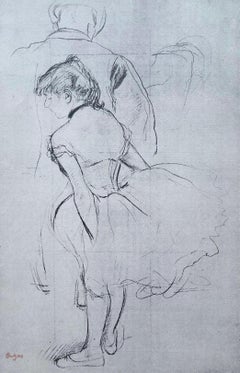
Edgar Degas, Dancer Arranging Her Dress, 1945 (after)
By Edgar Degas
Located in Southampton, NY
This exquisite lithograph after Edgar Degas (1834–1917), titled Danseuse arrangeant sa robe (Dancer Arranging Her Dress), originates from the 1945 folio Degas, Ten Ballet Sketches. Published by The Studio Publications, Inc., New York, rendered and printed by Albert Carman, City Island, 1945, this work reflects Degas’s sensitive mastery of line, movement, and intimate observation, capturing the grace, poise, and psychological immediacy that define his iconic ballet imagery. In Danseuse arrangeant sa robe (Dancer Arranging Her Dress), Degas reveals gesture and inner emotion through economical contour and lyrical nuance.
Executed as a lithograph and pochoir on velin paper, this work measures 17 x 13 inches (43.18 x 33.02 cm). Signed in the plate and unnumbered as issued. Rendered and printed by Albert Carman, City Island, one of the notable American ateliers specializing in fine art lithography during the mid-20th century.
Artwork Details:
Artist: After Edgar Degas (1834–1917)
Title: Danseuse arrangeant sa robe (Dancer Arranging Her Dress), from Degas, Ten Ballet Sketches, 1945
Medium: Lithograph and pochoir on velin paper
Dimensions: 17 x 13 inches (43.18 x 33.02 cm)
Inscription: Signed in the plate and unnumbered as issued
Date: 1945
Publisher: The Studio Publications, Inc., New York
Printer: Albert Carman, City Island, 1945
Condition: Well preserved, consistent with age and medium
Provenance: From the 1945 folio Degas, Ten Ballet Sketches, published by The Studio Publications, Inc., New York
Notes:
Excerpted from the album, Born in Paris in 1834, Edgar Degas lived, and surely loved the life of that city during most of his years. These continued somewhat sadly beyond those of most of his friends— into the debacle of the first World War, during which he died in 1917. Judging by the frequency with which he used them as models, he must have had an especial admiration for the ballet girls who followed a profession that at the time brought none of the glory and prosperity which attend it today. New aspects of the human body, revealed in movement, fascinated him. But his occupation with the simply anatomical side of his subjects never resulted in a cold interpretation. On the contrary there is a warmth and sympathy that pervades all of his work. The drawings here represent the painter in one important phase of his multi-sensitive view of life; and permit an insight which a more ambitious work might not do-into the operation of the creative process, the artist's transformation of reality as it passes through the mesh of his sensibilities. The Edition of this Portfolio is limited to MMMD examples. Rendered by Albert Carman.
About the Publication:
Degas, Ten Ballet Sketches, published in 1945 by The Studio Publications, Inc., New York, stands as one of the most elegant and scholarly mid-century American fine art folios devoted to the ballet imagery of Edgar Degas. Conceived as a high-quality interpretive portfolio, the album presents a series of lithograph-and-pochoir renderings based on Degas’s original drawings, executed with exceptional attention to tonal subtlety, contour fidelity, and the emotional interiority that defines the artist’s draftsmanship. Rendered and printed by Albert Carman on City Island, the publication embodies an American postwar effort to restore and celebrate European masterworks through meticulous handcraft and artisanal color application, honoring Degas’s distinctive line and the atmospheric delicacy of his studio-based studies. Produced in a substantial edition of MMMD examples, the portfolio offered audiences rare access to Degas’s private working drawings—images rarely seen outside institutional collections—while exemplifying the technical refinement and interpretive care characteristic of Carman’s workshop. Today, Degas, Ten Ballet Sketches remains a sought-after historical publication, valued for its craft, fidelity to Degas’s aesthetic, and its role in preserving and disseminating the artist’s intimate ballet imagery in a beautifully executed mid-century fine art format.
About the Artist:
Edgar Degas (1834–1917) was a French painter, draughtsman, printmaker, and sculptor whose groundbreaking fusion of classical draftsmanship, modern experimentation, and psychological depth helped define the trajectory of Western art, positioning him as one of the most influential figures of the nineteenth and early twentieth centuries; renowned for his depictions of ballet dancers, racehorses, theater scenes, cafe life, domestic interiors, milliners, laundresses, and women at their toilette, Degas reimagined observational realism through radical compositional innovation—employing extreme cropping, asymmetrical framing, oblique viewpoints, and dramatic lighting that anticipated photographic and cinematic language long before these technologies shaped visual culture, and although associated with Impressionism, he rejected plein-air spontaneity in favor of studio-based discipline rooted in the linear precision of Jean-Auguste-Dominique Ingres, the expressive chromaticism of Eugene Delacroix, and the modernity of Edouard Manet while also drawing inspiration from Japanese ukiyo-e prints, classical sculpture, and early photography; his independent artistic philosophy resonated with and helped shape the innovations of Pablo Picasso, Alexander Calder, Alberto Giacometti, Salvador Dali, Joan Miro, Wassily Kandinsky, Marcel Duchamp, and Man Ray, whose explorations of movement, form, dream logic, abstraction, and conceptualism all find antecedents in Degas’s investigations into seriality, temporality, and the fragmented figure, and his pioneering use of pastel, monotype, and wax sculpture fundamentally transformed each medium, influencing artists from Henri Matisse, Francis Bacon, Lucian Freud, and Giacomo Manzu to Paula Rego, contemporary realists, experimental photographers, and choreographers; his works are held in nearly every major museum collection worldwide—including the Musee dOrsay, the Louvre, the Metropolitan Museum of Art, the National Gallery of Art, the Art Institute of Chicago, the Courtauld Institute, and the National Gallery, London—affirming his central place in the history of art, and the highest auction record for Degas was achieved at Sothebys London on February 3, 2015, when Danseuses en Bleu sold for 37,033,000 GBP, cementing his status as one of the most sought-after and enduringly significant artists of the Western canon.
Edgar Degas lithograph...
Category
1940s Impressionist Figurative Prints
Materials
Lithograph
$796 Sale Price
20% Off
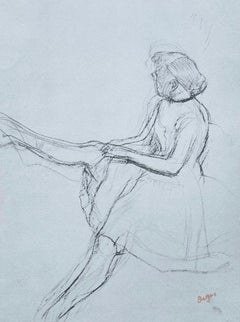
Edgar Degas, Seated Dancer, Removing Her Slipper, 1945 (after)
By Edgar Degas
Located in Southampton, NY
This exquisite lithograph after Edgar Degas (1834–1917), titled Seated dancer, removing her slipper, originates from the 1945 folio Degas, Ten Ballet Sketches. Published by The Studio Publications, Inc., New York, rendered and printed by Albert Carman, City Island, 1945, this work reflects Degas’s sensitive mastery of line, movement, and intimate observation, capturing the grace, poise, and psychological immediacy that define his iconic ballet imagery. In Seated dancer, removing her slipper, Degas reveals gesture and inner emotion through economical contour and lyrical nuance.
Executed as a lithograph and pochoir on velin paper, this work measures 17 x 13 inches (43.18 x 33.02 cm). Signed in the plate and unnumbered as issued. Rendered and printed by Albert Carman, City Island, one of the notable American ateliers specializing in fine art lithography during the mid-20th century.
Artwork Details:
Artist: After Edgar Degas (1834–1917)
Title: Seated dancer, removing her slipper, from Degas, Ten Ballet Sketches, 1945
Medium: Lithograph and pochoir on velin paper
Dimensions: 17 x 13 inches (43.18 x 33.02 cm)
Inscription: Signed in the plate and unnumbered as issued
Date: 1945
Publisher: The Studio Publications, Inc., New York
Printer: Albert Carman, City Island, 1945
Condition: Well preserved, consistent with age and medium
Provenance: From the 1945 folio Degas, Ten Ballet Sketches, published by The Studio Publications, Inc., New York
Notes:
Excerpted from the album, Born in Paris in 1834, Edgar Degas lived, and surely loved the life of that city during most of his years. These continued somewhat sadly beyond those of most of his friends— into the debacle of the first World War, during which he died in 1917. Judging by the frequency with which he used them as models, he must have had an especial admiration for the ballet girls who followed a profession that at the time brought none of the glory and prosperity which attend it today. New aspects of the human body, revealed in movement, fascinated him. But his occupation with the simply anatomical side of his subjects never resulted in a cold interpretation. On the contrary there is a warmth and sympathy that pervades all of his work. The drawings here represent the painter in one important phase of his multi-sensitive view of life; and permit an insight which a more ambitious work might not do-into the operation of the creative process, the artist's transformation of reality as it passes through the mesh of his sensibilities. The Edition of this Portfolio is limited to MMMD examples. Rendered by Albert Carman.
About the Publication:
Degas, Ten Ballet Sketches, published in 1945 by The Studio Publications, Inc., New York, stands as one of the most elegant and scholarly mid-century American fine art folios devoted to the ballet imagery of Edgar Degas. Conceived as a high-quality interpretive portfolio, the album presents a series of lithograph-and-pochoir renderings based on Degas’s original drawings, executed with exceptional attention to tonal subtlety, contour fidelity, and the emotional interiority that defines the artist’s draftsmanship. Rendered and printed by Albert Carman on City Island, the publication embodies an American postwar effort to restore and celebrate European masterworks through meticulous handcraft and artisanal color application, honoring Degas’s distinctive line and the atmospheric delicacy of his studio-based studies. Produced in a substantial edition of MMMD examples, the portfolio offered audiences rare access to Degas’s private working drawings—images rarely seen outside institutional collections—while exemplifying the technical refinement and interpretive care characteristic of Carman’s workshop. Today, Degas, Ten Ballet Sketches remains a sought-after historical publication, valued for its craft, fidelity to Degas’s aesthetic, and its role in preserving and disseminating the artist’s intimate ballet imagery in a beautifully executed mid-century fine art format.
About the Artist:
Edgar Degas (1834–1917) was a French painter, draughtsman, printmaker, and sculptor whose groundbreaking fusion of classical draftsmanship, modern experimentation, and psychological depth helped define the trajectory of Western art, positioning him as one of the most influential figures of the nineteenth and early twentieth centuries; renowned for his depictions of ballet dancers, racehorses, theater scenes, cafe life, domestic interiors, milliners, laundresses, and women at their toilette, Degas reimagined observational realism through radical compositional innovation—employing extreme cropping, asymmetrical framing, oblique viewpoints, and dramatic lighting that anticipated photographic and cinematic language long before these technologies shaped visual culture, and although associated with Impressionism, he rejected plein-air spontaneity in favor of studio-based discipline rooted in the linear precision of Jean-Auguste-Dominique Ingres, the expressive chromaticism of Eugene Delacroix, and the modernity of Edouard Manet while also drawing inspiration from Japanese ukiyo-e prints, classical sculpture, and early photography; his independent artistic philosophy resonated with and helped shape the innovations of Pablo Picasso, Alexander Calder, Alberto Giacometti, Salvador Dali, Joan Miro, Wassily Kandinsky, Marcel Duchamp, and Man Ray, whose explorations of movement, form, dream logic, abstraction, and conceptualism all find antecedents in Degas’s investigations into seriality, temporality, and the fragmented figure, and his pioneering use of pastel, monotype, and wax sculpture fundamentally transformed each medium, influencing artists from Henri Matisse, Francis Bacon, Lucian Freud, and Giacomo Manzu to Paula Rego, contemporary realists, experimental photographers, and choreographers; his works are held in nearly every major museum collection worldwide—including the Musee dOrsay, the Louvre, the Metropolitan Museum of Art, the National Gallery of Art, the Art Institute of Chicago, the Courtauld Institute, and the National Gallery, London—affirming his central place in the history of art, and the highest auction record for Degas was achieved at Sothebys London on February 3, 2015, when Danseuses en Bleu sold for 37,033,000 GBP, cementing his status as one of the most sought-after and enduringly significant artists of the Western canon.
Edgar Degas lithograph...
Category
1940s Impressionist Figurative Prints
Materials
Lithograph
$796 Sale Price
20% Off
Edgar Degas, Dancer Touching Her Earring, 1945 (after)
By Edgar Degas
Located in Southampton, NY
This exquisite lithograph after Edgar Degas (1834–1917), titled Danseuse touchant sa boucle d’oreille (Dancer Touching Her Earring), originates from the 1945 folio Degas, Ten Ballet Sketches. Published by The Studio Publications, Inc., New York, rendered and printed by Albert Carman, City Island, 1945, this work reflects Degas’s sensitive mastery of line, movement, and intimate observation, capturing the grace, poise, and psychological immediacy that define his iconic ballet imagery. In Danseuse touchant sa boucle d’oreille (Dancer Touching Her Earring), Degas reveals gesture and inner emotion through economical contour and lyrical nuance.
Executed as a lithograph and pochoir on velin paper, this work measures 17 x 13 inches (43.18 x 33.02 cm). Signed in the plate and unnumbered as issued. Rendered and printed by Albert Carman, City Island, one of the notable American ateliers specializing in fine art lithography during the mid-20th century.
Artwork Details:
Artist: After Edgar Degas (1834–1917)
Title: Danseuse touchant sa boucle d’oreille (Dancer Touching Her Earring), from Degas, Ten Ballet Sketches, 1945
Medium: Lithograph and pochoir on velin paper
Dimensions: 17 x 13 inches (43.18 x 33.02 cm)
Inscription: Signed in the plate and unnumbered as issued
Date: 1945
Publisher: The Studio Publications, Inc., New York
Printer: Albert Carman, City Island, 1945
Condition: Well preserved, consistent with age and medium
Provenance: From the 1945 folio Degas, Ten Ballet Sketches, published by The Studio Publications, Inc., New York
Notes:
Excerpted from the album, Born in Paris in 1834, Edgar Degas lived, and surely loved the life of that city during most of his years. These continued somewhat sadly beyond those of most of his friends— into the debacle of the first World War, during which he died in 1917. Judging by the frequency with which he used them as models, he must have had an especial admiration for the ballet girls who followed a profession that at the time brought none of the glory and prosperity which attend it today. New aspects of the human body, revealed in movement, fascinated him. But his occupation with the simply anatomical side of his subjects never resulted in a cold interpretation. On the contrary there is a warmth and sympathy that pervades all of his work. The drawings here represent the painter in one important phase of his multi-sensitive view of life; and permit an insight which a more ambitious work might not do-into the operation of the creative process, the artist's transformation of reality as it passes through the mesh of his sensibilities. The Edition of this Portfolio is limited to MMMD examples. Rendered by Albert Carman.
About the Publication:
Degas, Ten Ballet Sketches, published in 1945 by The Studio Publications, Inc., New York, stands as one of the most elegant and scholarly mid-century American fine art folios devoted to the ballet imagery of Edgar Degas. Conceived as a high-quality interpretive portfolio, the album presents a series of lithograph-and-pochoir renderings based on Degas’s original drawings, executed with exceptional attention to tonal subtlety, contour fidelity, and the emotional interiority that defines the artist’s draftsmanship. Rendered and printed by Albert Carman on City Island, the publication embodies an American postwar effort to restore and celebrate European masterworks through meticulous handcraft and artisanal color application, honoring Degas’s distinctive line and the atmospheric delicacy of his studio-based studies. Produced in a substantial edition of MMMD examples, the portfolio offered audiences rare access to Degas’s private working drawings—images rarely seen outside institutional collections—while exemplifying the technical refinement and interpretive care characteristic of Carman’s workshop. Today, Degas, Ten Ballet Sketches remains a sought-after historical publication, valued for its craft, fidelity to Degas’s aesthetic, and its role in preserving and disseminating the artist’s intimate ballet imagery in a beautifully executed mid-century fine art format.
About the Artist:
Edgar Degas (1834–1917) was a French painter, draughtsman, printmaker, and sculptor whose groundbreaking fusion of classical draftsmanship, modern experimentation, and psychological depth helped define the trajectory of Western art, positioning him as one of the most influential figures of the nineteenth and early twentieth centuries; renowned for his depictions of ballet dancers, racehorses, theater scenes, cafe life, domestic interiors, milliners, laundresses, and women at their toilette, Degas reimagined observational realism through radical compositional innovation—employing extreme cropping, asymmetrical framing, oblique viewpoints, and dramatic lighting that anticipated photographic and cinematic language long before these technologies shaped visual culture, and although associated with Impressionism, he rejected plein-air spontaneity in favor of studio-based discipline rooted in the linear precision of Jean-Auguste-Dominique Ingres, the expressive chromaticism of Eugene Delacroix, and the modernity of Edouard Manet while also drawing inspiration from Japanese ukiyo-e prints, classical sculpture, and early photography; his independent artistic philosophy resonated with and helped shape the innovations of Pablo Picasso, Alexander Calder, Alberto Giacometti, Salvador Dali, Joan Miro, Wassily Kandinsky, Marcel Duchamp, and Man Ray, whose explorations of movement, form, dream logic, abstraction, and conceptualism all find antecedents in Degas’s investigations into seriality, temporality, and the fragmented figure, and his pioneering use of pastel, monotype, and wax sculpture fundamentally transformed each medium, influencing artists from Henri Matisse, Francis Bacon, Lucian Freud, and Giacomo Manzu to Paula Rego, contemporary realists, experimental photographers, and choreographers; his works are held in nearly every major museum collection worldwide—including the Musee dOrsay, the Louvre, the Metropolitan Museum of Art, the National Gallery of Art, the Art Institute of Chicago, the Courtauld Institute, and the National Gallery, London—affirming his central place in the history of art, and the highest auction record for Degas was achieved at Sothebys London on February 3, 2015, when Danseuses en Bleu sold for 37,033,000 GBP, cementing his status as one of the most sought-after and enduringly significant artists of the Western canon.
Edgar Degas lithograph...
Category
1940s Impressionist Figurative Prints
Materials
Lithograph
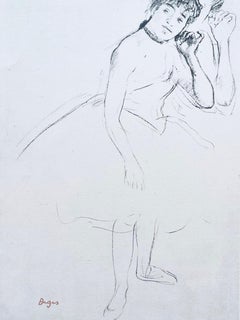
$796 Sale Price
20% Off
Henri de Toulouse-Lautrec, High School Rider, from The Circus, 1952 (after)
By Henri de Toulouse-Lautrec
Located in Southampton, NY
This exquisite lithograph after Henri de Toulouse-Lautrec (1864–1901), titled Ecuyere de haute ecole (High School Rider), originates from the 1952 album The Circus of Toulouse-Lautre...
Category
1950s Post-Impressionist Figurative Prints
Materials
Lithograph
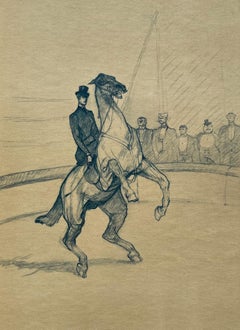
$716 Sale Price
20% Off
Henri de Toulouse-Lautrec, Chocolate, scene, from The Circus, 1952 (after)
By Henri de Toulouse-Lautrec
Located in Southampton, NY
This exquisite lithograph after Henri de Toulouse-Lautrec (1864–1901), titled Chocolat, scene (Chocolate, scene), originates from the 1952 album The Circus of Toulouse-Lautrec. Publi...
Category
1950s Post-Impressionist Figurative Prints
Materials
Lithograph
$716 Sale Price
20% Off
Henri de Toulouse-Lautrec, Clowness and Horse, from The Circus, 1952 (after)
By Henri de Toulouse-Lautrec
Located in Southampton, NY
This exquisite lithograph after Henri de Toulouse-Lautrec (1864–1901), titled Clownesse et cheval (Clowness and Horse), originates from the 1952 album The Circus of Toulouse-Lautrec. Published by Paris Book Center, Inc., New York, under the direction and supervision of Andre Sauret, and printed by Mourlot Freres, Paris, this work reflects Toulouse-Lautrec’s incisive observational skill, capturing the theatricality, elegance, and rhythmic grace associated with the spectacle of the circus ballet. In Clownesse et cheval (Clowness and Horse), Lautrec conveys poise and expressive movement through his signature economy of line, expressive contour, and psychological nuance.
Executed as a lithograph on velin paper, this work measures 9.25 x 12.125 inches (23.49 x 30.8 cm). Signed in the plate and unnumbered as issued. Printed by Mourlot Freres, Paris, one of the foremost ateliers of the 20th century.
Artwork Details:
Artist: After Henri de Toulouse-Lautrec (1864–1901)
Title: Clownesse et cheval (Clowness and Horse), from The Circus of Toulouse-Lautrec, 1952
Medium: Lithograph on velin paper
Dimensions: 9.25 x 12.125 inches (23.49 x 30.8 cm)
Inscription: Signed in the plate and unnumbered as issued
Date: 1952
Publisher: Paris Book Center, Inc., New York; under the direction and supervision of Andre Sauret
Printer: Mourlot Freres, Paris
Condition: Well preserved, consistent with age and medium
Provenance: From the 1952 album The Circus of Toulouse-Lautrec, published by Paris Book Center, Inc., New York
Notes:
Excerpted from the album, This edition of The Circus of Toulouse-Lautrec has been realized and published for Paris Book Center Inc. of New York, under the direction and supervision of Andre Sauretat the presses of Fernand Mourlot in Paris. There has been published of this english edition of The Circus
of Toulouse-Lautrec, MD examples, numbered from I to MD. In addition there has been printed, XX examples on Imperial Japon Paper numbered from I to XX, L examples on Special Velin numbered XXI to LXX.
About the Publication:
The Circus of Toulouse-Lautrec, published in 1952 by Paris Book Center, Inc., under the direction and supervision of Andre Sauret and printed by Mourlot Freres, is one of the most historically significant postwar fine art albums devoted to the artist’s graphic work. The album presents lithographic renderings based on Lautrec’s original drawings and studies, executed with exceptional fidelity to the artist’s gestural clarity, compositional dynamism, and psychological insight. Conceived as a deluxe fine art album, the edition brought together Lautrec’s dynamic portrayals of acrobats, riders, clowns, animal trainers, dancers, and circus performers, offering a vivid window into the spectacle, discipline, and theatricality of the late nineteenth-century circus tradition. Printed at the prestigious atelier Mourlot—renowned for its collaborations with leading modernists—the album reflects a postwar commitment to reviving and preserving the lithographic legacy of master artists. Today, The Circus of Toulouse-Lautrec stands as a landmark in fine art publishing, prized by collectors for its craftsmanship, historical importance, and the rare opportunity it offers to experience Lautrec’s circus imagery in an elegant, carefully supervised edition.
About the Artist:
Henri de Toulouse-Lautrec (1864–1901) was a French painter, printmaker, draughtsman, and illustrator celebrated for his vivid and empathetic depictions of Parisian nightlife during the Belle Epoque. A master observer of character and movement, Toulouse-Lautrec chronicled the bohemian world of Montmartre—its cabarets, performers, dancers, and cafes—with a revolutionary use of color, composition, and line that redefined both fine art and commercial design. His iconic posters for the Moulin Rouge and other venues not only captured the exuberant energy of modern urban life but also elevated lithography to the level of high art. Despite his physical frailty due to a congenital condition, his creative output was prolific and profoundly influential, shaping the evolution of modern visual culture. Inspired by the expressive realism of Honore Daumier, Edgar Degas, and Edouard Manet, as well as the vivid color and composition of Japanese ukiyo-e woodblock prints, Toulouse-Lautrec absorbed and transformed these influences into a bold, modern visual language uniquely his own. He worked and exhibited among many of the most important artists of his time, including Vincent van Gogh, Edgar Degas, Paul Gauguin, Pierre Bonnard, Edouard Vuillard, and Paul Signac, and his work stands in lasting dialogue with the great modern masters who followed—Pablo Picasso, Henri Matisse, Alexander Calder, Georges Braque, Marc Chagall, Alberto Giacometti, Salvador Dali, Joan Miro, Wassily Kantinsky, Marcel Duchamp, and Man Ray—each of whom shared his drive to reinvent art for the modern age. His paintings, drawings, and lithographs are represented in major museums worldwide, including the Musee dOrsay, the National Gallery, the Tate, and MoMA, where they continue to captivate audiences for their psychological depth and timeless vitality. The highest price ever paid for a Henri de Toulouse-Lautrec artwork is approximately 22.4 million USD, achieved in 2005 at Christies London for La Blanchisseuse (1886–87).
Henri de Toulouse-Lautrec lithograph, Lautrec Clownesse et cheval, Toulouse-Lautrec The Circus, Lautrec Sauret edition, Lautrec Mourlot Freres, 1952 Circus album, Lautrec clown lithograph...
Category
1950s Post-Impressionist Figurative Prints
Materials
Lithograph
$716 Sale Price
20% Off
Henri de Toulouse-Lautrec, Ballets, Fantasy, from The Circus, 1952 (after)
By Henri de Toulouse-Lautrec
Located in Southampton, NY
This exquisite lithograph after Henri de Toulouse-Lautrec (1864–1901), titled Ballets, fantaisie (Ballets, Fantasy), originates from the 1952 album The Circus of Toulouse-Lautrec. Pu...
Category
1950s Post-Impressionist Figurative Prints
Materials
Lithograph
$716 Sale Price
20% Off
Henri de Toulouse-Lautrec, High School Rider, from The Circus, 1952 (after)
By Henri de Toulouse-Lautrec
Located in Southampton, NY
This exquisite lithograph after Henri de Toulouse-Lautrec (1864–1901), titled Ecuyere de haute ecole (High School Rider), originates from the 1952 album The Circus of Toulouse-Lautre...
Category
1950s Post-Impressionist Figurative Prints
Materials
Lithograph
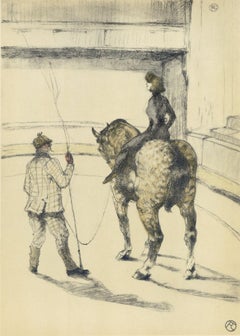
$716 Sale Price
20% Off
Henri de Toulouse-Lautrec, Work on the Panel, from The Circus, 1952 (after)
By Henri de Toulouse-Lautrec
Located in Southampton, NY
This exquisite lithograph after Henri de Toulouse-Lautrec (1864–1901), titled Travail sur le panneau (Work on the Panel), originates from the 1952 album The Circus of Toulouse-Lautre...
Category
1950s Post-Impressionist Figurative Prints
Materials
Lithograph
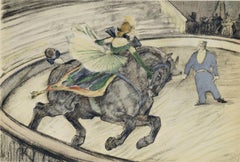
$716 Sale Price
20% Off
Henri de Toulouse-Lautrec, Dog Trainer, from The Circus, 1952 (after)
By Henri de Toulouse-Lautrec
Located in Southampton, NY
This exquisite lithograph after Henri de Toulouse-Lautrec (1864–1901), titled Dresseur de chiens (Dog Trainer), originates from the 1952 album The Circus of Toulouse-Lautrec. Publish...
Category
1950s Post-Impressionist Figurative Prints
Materials
Lithograph
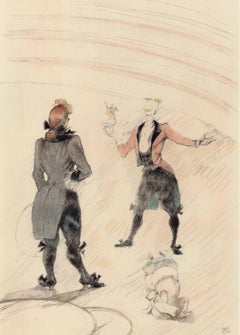
$716 Sale Price
20% Off
Henri de Toulouse-Lautrec, Backstage, from The Circus, 1952 (after)
By Henri de Toulouse-Lautrec
Located in Southampton, NY
This exquisite lithograph after Henri de Toulouse-Lautrec (1864–1901), titled Dans les coulisses (Backstage), originates from the 1952 album The Circus of Toulouse-Lautrec. Published...
Category
1950s Post-Impressionist Figurative Prints
Materials
Lithograph
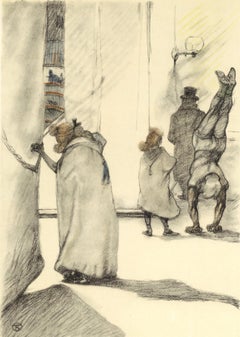
$716 Sale Price
20% Off
Henri de Toulouse-Lautrec, Panel Work, from The Circus, 1952 (after)
By Henri de Toulouse-Lautrec
Located in Southampton, NY
This exquisite lithograph after Henri de Toulouse-Lautrec (1864–1901), titled Travail de panneau (Panel Work), originates from the 1952 album The Circus of Toulouse-Lautrec. Publishe...
Category
1950s Post-Impressionist Figurative Prints
Materials
Lithograph
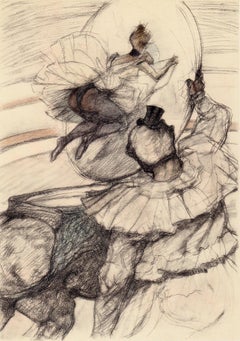
$716 Sale Price
20% Off
Henri de Toulouse-Lautrec, Rehearsal Work, from The Circus, 1952 (after)
By Henri de Toulouse-Lautrec
Located in Southampton, NY
This exquisite lithograph after Henri de Toulouse-Lautrec (1864–1901), titled Travail de repetition (Rehearsal Work), originates from the 1952 album The Circus of Toulouse-Lautrec. P...
Category
1950s Post-Impressionist Figurative Prints
Materials
Lithograph
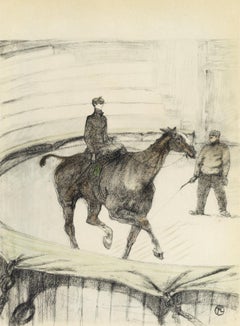
$716 Sale Price
20% Off
Henri de Toulouse-Lautrec, Backstage, from The Circus, 1952 (after)
By Henri de Toulouse-Lautrec
Located in Southampton, NY
This exquisite lithograph after Henri de Toulouse-Lautrec (1864–1901), titled Dans les coulisses (Backstage), originates from the 1952 album The Circus of Toulouse-Lautrec. Published...
Category
1950s Post-Impressionist Figurative Prints
Materials
Lithograph
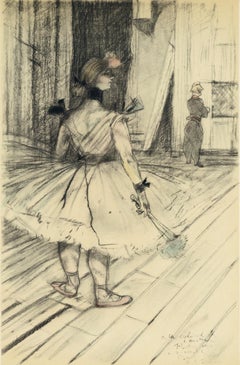
$716 Sale Price
20% Off
Henri de Toulouse-Lautrec, Weight Training, from The Circus, 1952 (after)
By Henri de Toulouse-Lautrec
Located in Southampton, NY
This exquisite lithograph after Henri de Toulouse-Lautrec (1864–1901), titled Travail des poids (Weight Training), originates from the 1952 album The Circus of Toulouse-Lautrec. Publ...
Category
1950s Post-Impressionist Figurative Prints
Materials
Lithograph
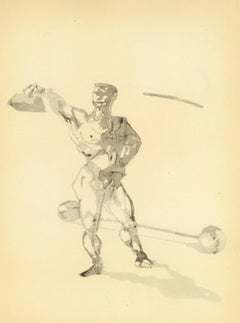
$716 Sale Price
20% Off
Henri de Toulouse-Lautrec, High School Rider, from The Circus, 1952 (after)
By Henri de Toulouse-Lautrec
Located in Southampton, NY
This exquisite lithograph after Henri de Toulouse-Lautrec (1864–1901), titled Ecuyere de haute ecole (High School Rider), originates from the 1952 album The Circus of Toulouse-Lautre...
Category
1950s Post-Impressionist Figurative Prints
Materials
Lithograph
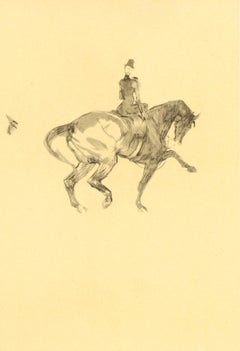
$716 Sale Price
20% Off
Henri de Toulouse-Lautrec, Black Man Playing Banjo, The Circus, 1952 (after)
By Henri de Toulouse-Lautrec
Located in Southampton, NY
This exquisite lithograph after Henri de Toulouse-Lautrec (1864–1901), titled Nègre jouant du banjo (Black Man Playing Banjo), originates from the 1952 album The Circus of Toulouse-L...
Category
1950s Post-Impressionist Figurative Prints
Materials
Lithograph
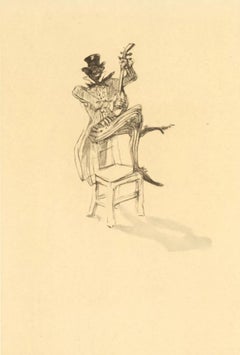
$716 Sale Price
20% Off
Henri de Toulouse-Lautrec, A Small Cob, from The Circus, 1952 (after)
By Henri de Toulouse-Lautrec
Located in Southampton, NY
This exquisite lithograph after Henri de Toulouse-Lautrec (1864–1901), titled Un Petit Cob (A Small Cob), originates from the 1952 album The Circus of Toulouse-Lautrec. Published by ...
Category
1950s Post-Impressionist Figurative Prints
Materials
Lithograph
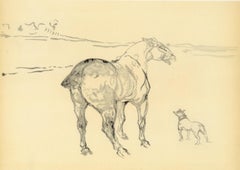
$716 Sale Price
20% Off
Henri de Toulouse-Lautrec, Amazon, from The Circus, 1952 (after)
By Henri de Toulouse-Lautrec
Located in Southampton, NY
This exquisite lithograph after Henri de Toulouse-Lautrec (1864–1901), titled Amazone (Amazon), originates from the 1952 album The Circus of Toulouse-Lautrec. Published by Paris Book...
Category
1950s Post-Impressionist Figurative Prints
Materials
Lithograph
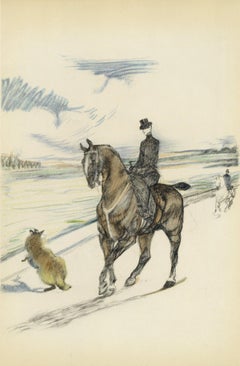
$716 Sale Price
20% Off
Henri de Toulouse-Lautrec, The Recall, from The Circus, 1952 (after)
By Henri de Toulouse-Lautrec
Located in Southampton, NY
This exquisite lithograph after Henri de Toulouse-Lautrec (1864–1901), titled Le Rappel (The Recall), originates from the 1952 album The Circus of Toulouse-Lautrec. Published by Pari...
Category
1950s Post-Impressionist Figurative Prints
Materials
Lithograph
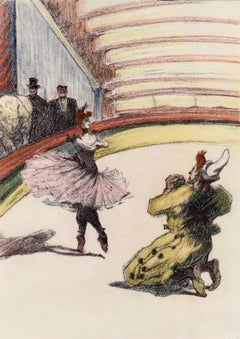
$716 Sale Price
20% Off
Henri de Toulouse-Lautrec, Equestrienne of the Panel, The Circus, 1952 (after)
By Henri de Toulouse-Lautrec
Located in Southampton, NY
This exquisite lithograph after Henri de Toulouse-Lautrec (1864–1901), titled Ecuyere de panneau (Equestrienne of the Panel), originates from the 1952 album The Circus of Toulouse-La...
Category
1950s Post-Impressionist Figurative Prints
Materials
Lithograph
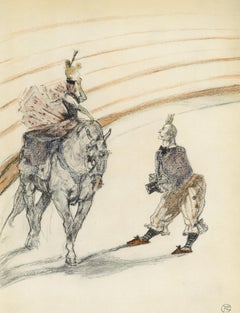
$716 Sale Price
20% Off
Henri de Toulouse-Lautrec, Work Without a Saddle, from The Circus, 1952 (after)
By Henri de Toulouse-Lautrec
Located in Southampton, NY
This exquisite lithograph after Henri de Toulouse-Lautrec (1864–1901), titled Travail sans selle (Work Without a Saddle), originates from the 1952 album The Circus of Toulouse-Lautre...
Category
1950s Post-Impressionist Figurative Prints
Materials
Lithograph
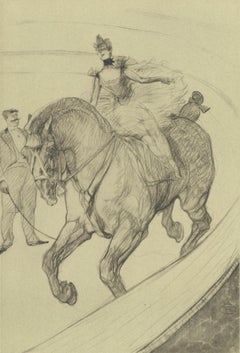
$716 Sale Price
20% Off
Henri de Toulouse-Lautrec, Trick Riding, from The Circus, 1952 (after)
By Henri de Toulouse-Lautrec
Located in Southampton, NY
This exquisite lithograph after Henri de Toulouse-Lautrec (1864–1901), titled Voltige (Trick Riding), originates from the 1952 album The Circus of Toulouse-Lautrec. Published by Pari...
Category
1950s Post-Impressionist Figurative Prints
Materials
Lithograph
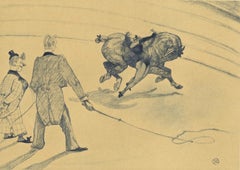
$716 Sale Price
20% Off
Henri de Toulouse-Lautrec, High School Rider, from The Circus, 1952 (after)
By Henri de Toulouse-Lautrec
Located in Southampton, NY
This exquisite lithograph after Henri de Toulouse-Lautrec (1864–1901), titled Écuyère de haute école (High School Rider), originates from the 1952 album The Circus of Toulouse-Lautre...
Category
1950s Post-Impressionist Figurative Prints
Materials
Lithograph
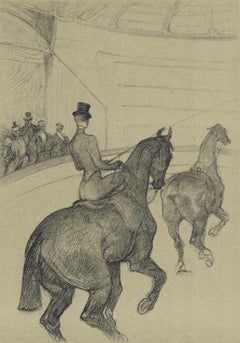
$716 Sale Price
20% Off
Henri de Toulouse-Lautrec, High School Rider, from The Circus, 1952 (after)
By Henri de Toulouse-Lautrec
Located in Southampton, NY
This exquisite lithograph after Henri de Toulouse-Lautrec (1864–1901), titled Écuyère de haute école (High School Rider), originates from the 1952 album The Circus of Toulouse-Lautre...
Category
1950s Post-Impressionist Figurative Prints
Materials
Lithograph
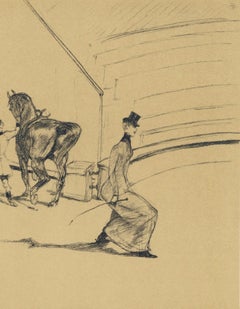
$716 Sale Price
20% Off
Henri de Toulouse-Lautrec, High School Riding, from The Circus, 1952 (after)
By Henri de Toulouse-Lautrec
Located in Southampton, NY
This exquisite lithograph after Henri de Toulouse-Lautrec (1864–1901), titled Haute Ecole (High School Riding), originates from the 1952 album The Circus of Toulouse-Lautrec. Publish...
Category
1950s Post-Impressionist Figurative Prints
Materials
Lithograph
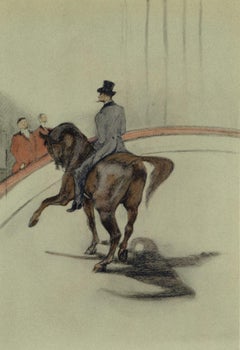
$716 Sale Price
20% Off
Henri de Toulouse-Lautrec, The step of two, from The Circus, 1952 (after)
By Henri de Toulouse-Lautrec
Located in Southampton, NY
This exquisite lithograph after Henri de Toulouse-Lautrec (1864–1901), titled Le pas de deux (The step of two), originates from the 1952 album The Circus of Toulouse-Lautrec. Publish...
Category
1950s Post-Impressionist Figurative Prints
Materials
Lithograph
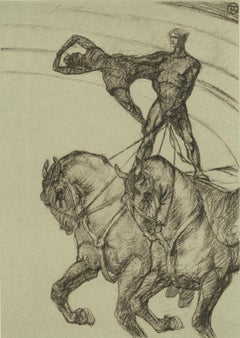
$716 Sale Price
20% Off
Henri de Toulouse-Lautrec, The Flying Trapeze, from The Circus, 1952 (after)
By Henri de Toulouse-Lautrec
Located in Southampton, NY
This exquisite lithograph after Henri de Toulouse-Lautrec (1864–1901), titled Le trapeze volant (The Flying Trapeze), originates from the 1952 album The Circus of Toulouse-Lautrec. P...
Category
1950s Post-Impressionist Figurative Prints
Materials
Lithograph
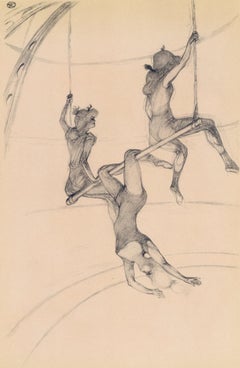
$716 Sale Price
20% Off
Henri de Toulouse-Lautrec, Pointing Horse, from The Circus, 1952 (after)
By Henri de Toulouse-Lautrec
Located in Southampton, NY
This exquisite lithograph after Henri de Toulouse-Lautrec (1864–1901), titled Cheval pointant (Pointing Horse), originates from the 1952 album The Circus of Toulouse-Lautrec. Publish...
Category
1950s Post-Impressionist Figurative Prints
Materials
Lithograph
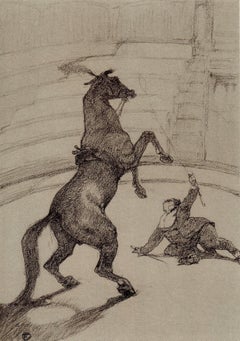
$716 Sale Price
20% Off