La Galerie d Art Moderne à Southampton
to
4,468
4,441
3,118
1,262
1,144
936
554
475
387
385
305
237
77
52
32
20
2
1
1
1
184
179
169
102
59
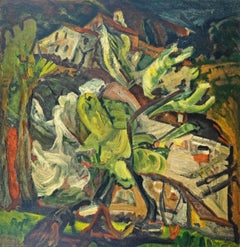
Chaim Soutine, Landscape at Cagnes, from Soutine, I, 1966 (after)
Located in Southampton, NY
This exquisite lithograph after Chaim Soutine (1893–1943), titled Paysage a Cagnes (Landscape at Cagnes), from the folio Soutine, I, Collection Pierre Levy, 1966, originates from the edition published by Fernand Mourlot, Paris, and printed by Mourlot Freres, Paris, on October 20, 1966. The work conveys the sweeping emotional vigor and expressive distortions that define Soutines landscape vision, capturing in lithographic form the turbulent rhythm, chromatic intensity, and psychological tension characteristic of his mature periods in Cagnes.
Executed as a lithograph on velin d'Arches paper, this work measures 26 x 20 inches. Signed in the plate and unnumbered as issued. The edition exemplifies the technical mastery of the Mourlot atelier.
Artwork Details:
Artist: After Chaim Soutine (1893–1943)
Title: Paysage a Cagnes (Landscape at Cagnes), from the folio Soutine, I, Collection Pierre Levy
Medium: Lithograph on velin d'Arches paper
Dimensions: 26 x 20 inches
Inscription: Signed in the plate and unnumbered as issued
Date: 1966
Publisher: Fernand Mourlot, Paris
Printer: Mourlot Freres, Paris
Condition: Well preserved, consistent with age and medium
Provenance: From the folio Soutine, I, Collection Pierre Levy, 1966
Notes:
Excerpted from the folio (translated from French), This album, the first of a series dedicated to Mr. Pierre Levys collection, was printed in DL examples on Arches velin. Printing was finished on October 20, 1966 by Mourlot for lithographs of the canvases of Soutine, and by Fequet and Baudier for Waldemar Georges unpublished text. Fernand Mourlot, Paris 1966.
About the Publication:
Soutine, I, Collection Pierre Levy, published in 1966 by Fernand Mourlot, Paris, is the first album in the important series devoted to the Pierre Levy collection, one of the most significant private collections of twentieth century French painting. Conceived as a scholarly and visual record, the album was designed to present key works by Chaim Soutine in lithographic form at a moment of renewed international interest in his oeuvre. Created in collaboration with Mourlot Freres, the foremost lithographic atelier in France, the publication reflects the printers commitment to translating Soutines canvases into richly tonal lithographs that preserve the emotional intensity and structural dynamism of the originals. Issued in a single edition on Arches velin, the album stands as an essential document of postwar art publishing, illuminating the historical partnership between artist, collector, and master printer, and contributing to the larger historiography of modern French Expressionism and museum quality print albums of the mid twentieth century.
About the Artist:
Chaim Soutine (1893–1943) was a Belarus born French Expressionist painter whose explosive brushwork, emotionally charged distortions, and uncompromising commitment to depicting the psychological intensity of human experience have secured his place as one of the most vital and transformative figures in twentieth century art, creating his legacy within the same revolutionary modernist environment defined by Pablo Picasso, Alexander Calder, Alberto Giacometti, Salvador Dali, Joan Miro, Wassily Kandinsky, Marcel Duchamp, and Man Ray; after leaving his impoverished childhood in Smilavichy and arriving in Paris in 1913, Soutine immersed himself in the School of Paris circle at La Ruche—an incubator of international avant garde talent—where he developed formative friendships with Amedeo Modigliani, Marc Chagall, Jules Pascin, and other pioneering artists whose daring approaches inspired him to push color, gesture, and form into new emotional territories. His portraits of cooks, choirboys, servants, and village residents; his tempestuous landscapes of Cagnes, Chartres, and Ceret; and his deeply visceral still lifes—most famously his monumental depictions of slaughtered carcasses—reveal a singular ability to transform ordinary subjects into raw, pulsing, almost metaphysical dramas, building on the influence of Rembrandt, Goya, Velazquez, and El Greco while departing radically from academic restraint. His paintings vibrate with psychological tension, their twisted perspectives, molten colors, and trembling outlines capturing an inner world marked by anxiety, longing, resilience, and profound empathy. Soutines originality profoundly shaped the evolution of modern painting: Francis Bacon cited him as one of his greatest influences, Willem de Kooning and the Abstract Expressionists admired his gestural ferocity, and later artists—including Frank Auerbach, Leon Kossoff, Lucian Freud, Jenny Saville, and Adrian Ghenie...
Category
1960s Modern Landscape Prints
Materials
Lithograph

$716 Sale Price
20% Off
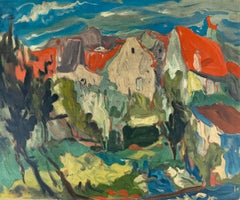
Chaim Soutine, Landscape at Cagnes, from Soutine, I, 1966 (after)
Located in Southampton, NY
This exquisite lithograph after Chaim Soutine (1893–1943), titled Paysage a Cagnes (Landscape at Cagnes), from the folio Soutine, I, Collection Pierre Levy, 1966, originates from the edition published by Fernand Mourlot, Paris, and printed by Mourlot Freres, Paris, on October 20, 1966. The work conveys the sweeping emotional vigor and expressive distortions that define Soutines landscape vision, capturing in lithographic form the turbulent rhythm, chromatic intensity, and psychological tension characteristic of his mature periods in Cagnes.
Executed as a lithograph on velin d'Arches paper, this work measures 26 x 20 inches. Unsigned and unnumbered as issued. The edition exemplifies the technical mastery of the Mourlot atelier.
Artwork Details:
Artist: After Chaim Soutine (1893–1943)
Title: Paysage a Cagnes (Landscape at Cagnes), from the folio Soutine, I, Collection Pierre Levy
Medium: Lithograph on velin d'Arches paper
Dimensions: 26 x 20 inches
Inscription: Unsigned and unnumbered as issued
Date: 1966
Publisher: Fernand Mourlot, Paris
Printer: Mourlot Freres, Paris
Condition: Well preserved, consistent with age and medium
Provenance: From the folio Soutine, I, Collection Pierre Levy, 1966
Notes:
Excerpted from the folio (translated from French), This album, the first of a series dedicated to Mr. Pierre Levys collection, was printed in DL examples on Arches velin. Printing was finished on October 20, 1966 by Mourlot for lithographs of the canvases of Soutine, and by Fequet and Baudier for Waldemar Georges unpublished text. Fernand Mourlot, Paris 1966.
About the Publication:
Soutine, I, Collection Pierre Levy, published in 1966 by Fernand Mourlot, Paris, is the first album in the important series devoted to the Pierre Levy collection, one of the most significant private collections of twentieth century French painting. Conceived as a scholarly and visual record, the album was designed to present key works by Chaim Soutine in lithographic form at a moment of renewed international interest in his oeuvre. Created in collaboration with Mourlot Freres, the foremost lithographic atelier in France, the publication reflects the printers commitment to translating Soutines canvases into richly tonal lithographs that preserve the emotional intensity and structural dynamism of the originals. Issued in a single edition on Arches velin, the album stands as an essential document of postwar art publishing, illuminating the historical partnership between artist, collector, and master printer, and contributing to the larger historiography of modern French Expressionism and museum quality print albums of the mid twentieth century.
About the Artist:
Chaim Soutine (1893–1943) was a Belarus born French Expressionist painter whose explosive brushwork, emotionally charged distortions, and uncompromising commitment to depicting the psychological intensity of human experience have secured his place as one of the most vital and transformative figures in twentieth century art, creating his legacy within the same revolutionary modernist environment defined by Pablo Picasso, Alexander Calder, Alberto Giacometti, Salvador Dali, Joan Miro, Wassily Kandinsky, Marcel Duchamp, and Man Ray; after leaving his impoverished childhood in Smilavichy and arriving in Paris in 1913, Soutine immersed himself in the School of Paris circle at La Ruche—an incubator of international avant garde talent—where he developed formative friendships with Amedeo Modigliani, Marc Chagall, Jules Pascin, and other pioneering artists whose daring approaches inspired him to push color, gesture, and form into new emotional territories. His portraits of cooks, choirboys, servants, and village residents; his tempestuous landscapes of Cagnes, Chartres, and Ceret; and his deeply visceral still lifes—most famously his monumental depictions of slaughtered carcasses—reveal a singular ability to transform ordinary subjects into raw, pulsing, almost metaphysical dramas, building on the influence of Rembrandt, Goya, Velazquez, and El Greco while departing radically from academic restraint. His paintings vibrate with psychological tension, their twisted perspectives, molten colors, and trembling outlines capturing an inner world marked by anxiety, longing, resilience, and profound empathy. Soutines originality profoundly shaped the evolution of modern painting: Francis Bacon cited him as one of his greatest influences, Willem de Kooning and the Abstract Expressionists admired his gestural ferocity, and later artists—including Frank Auerbach, Leon Kossoff, Lucian Freud, Jenny Saville, and Adrian Ghenie...
Category
1960s Modern Landscape Prints
Materials
Lithograph
$716 Sale Price
20% Off
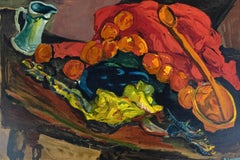
Chaim Soutine, Still Life with Turkey, from Soutine, I, 1966 (after)
Located in Southampton, NY
This exquisite lithograph after Chaim Soutine (1893–1943), titled Nature morte a la dinde (Still Life with Turkey), from the folio Soutine, I, Collection Pierre Levy, 1966, originates from the edition published by Fernand Mourlot, Paris, and printed by Mourlot Freres, Paris, on October 20, 1966. The work conveys the heightened emotional tension and expressive force characteristic of Soutines painterly vision, capturing in lithographic form the dynamic structure and psychological intensity that define his mature still lifes.
Executed as a lithograph on velin d'Arches paper, this work measures 20 x 26 inches. Signed in the plate and unnumbered as issued. The edition exemplifies the technical mastery of the Mourlot atelier.
Artwork Details:
Artist: After Chaim Soutine (1899–1943)
Title: Nature morte a la dinde (Still Life with Turkey), from the folio Soutine, I, Collection Pierre Levy
Medium: Lithograph on velin d'Arches paper
Dimensions: 20 x 26 inches
Inscription: Signed in the plate and unnumbered as issued
Date: 1966
Publisher: Fernand Mourlot, Paris
Printer: Mourlot Freres, Paris
Condition: Well preserved, consistent with age and medium
Provenance: From the folio Soutine, I, Collection Pierre Levy, 1966
Notes:
Excerpted from the folio (translated from French), This album, the first of a series dedicated to Mr. Pierre Levys collection, was printed in DL examples on Arches velin. Printing was finished on October 20, 1966 by Mourlot for lithographs of the canvases of Soutine, and by Fequet and Baudier for Waldemar Georges unpublished text. Fernand Mourlot, Paris 1966.
About the Publication:
Soutine, I, Collection Pierre Levy, published in 1966 by Fernand Mourlot, Paris, is the first album in the important series devoted to the Pierre Levy collection, one of the most significant private collections of twentieth century French painting. Conceived as a scholarly and visual record, the album was designed to present key works by Chaim Soutine in lithographic form at a time when renewed international interest in the artist was expanding. Created in collaboration with Mourlot Freres, the foremost lithographic atelier in France, the publication reflects the printers commitment to translating Soutines canvases into richly tonal lithographs that preserve the emotional intensity and structural drama of the originals. Issued in a single edition on Arches velin, the album stands as an essential document of postwar art publishing, illuminating the historical partnership between artist, collector, and master printer, and contributing to the larger historiography of modern French Expressionism and museum quality print albums of the mid twentieth century.
About the Artist:
Chaim Soutine (1893–1943) was a Belarus born French Expressionist painter whose explosive brushwork, emotionally charged distortions, and uncompromising commitment to depicting the psychological intensity of human experience have secured his place as one of the most vital and transformative figures in twentieth century art, creating his legacy within the same revolutionary modernist environment defined by Pablo Picasso, Alexander Calder, Alberto Giacometti, Salvador Dali, Joan Miro, Wassily Kandinsky, Marcel Duchamp, and Man Ray; after leaving his impoverished childhood in Smilavichy and arriving in Paris in 1913, Soutine immersed himself in the School of Paris circle at La Ruche—an incubator of international avant garde talent—where he developed formative friendships with Amedeo Modigliani, Marc Chagall, Jules Pascin, and other pioneering artists whose daring approaches inspired him to push color, gesture, and form into new emotional territories. His portraits of cooks, choirboys, servants, and village residents; his tempestuous landscapes of Cagnes, Chartres, and Ceret; and his deeply visceral still lifes—most famously his monumental depictions of slaughtered carcasses—reveal a singular ability to transform ordinary subjects into raw, pulsing, almost metaphysical dramas, building on the influence of Rembrandt, Goya, Velazquez, and El Greco while departing radically from academic restraint. His paintings vibrate with psychological tension, their twisted perspectives, molten colors, and trembling outlines capturing an inner world marked by anxiety, longing, resilience, and profound empathy. Soutines originality profoundly shaped the evolution of modern painting: Francis Bacon cited him as one of his greatest influences, Willem de Kooning and the Abstract Expressionists admired his gestural ferocity, and later artists—including Frank Auerbach, Leon Kossoff, Lucian Freud, Jenny Saville, and Adrian Ghenie...
Category
1960s Modern Still-life Prints
Materials
Lithograph
$716 Sale Price
20% Off
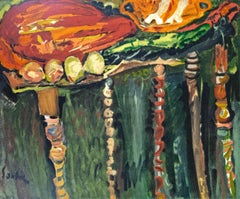
Chaim Soutine, Death in Pieces, from Soutine, I, 1966 (after)
Located in Southampton, NY
This exquisite lithograph after Chaim Soutine (1893–1943), titled Morte Au Morceau (Death in Pieces), from the folio Soutine, I, Collection Pierre Levy, 1966, originates from the edition published by Fernand Mourlot, Paris, and printed by Mourlot Freres, Paris, on October 20, 1966. The work conveys the heightened emotional tension and expressive force characteristic of Soutines painterly vision, capturing in lithographic form the dynamic structure and psychological intensity that define his mature still lifes.
Executed as a lithograph on velin d'Arches paper, this work measures 20 x 26 inches. Signed in the plate and unnumbered as issued. The edition exemplifies the technical mastery of the Mourlot atelier.
Artwork Details:
Artist: After Chaim Soutine (1899–1943)
Title: Morte Au Morceau (Death in Pieces), from the folio Soutine, I, Collection Pierre Levy
Medium: Lithograph on velin d'Arches paper
Dimensions: 20 x 26 inches
Inscription: Signed in the plate and unnumbered as issued
Date: 1966
Publisher: Fernand Mourlot, Paris
Printer: Mourlot Freres, Paris
Condition: Well preserved, consistent with age and medium
Provenance: From the folio Soutine, I, Collection Pierre Levy, 1966
Notes:
Excerpted from the folio (translated from French), This album, the first of a series dedicated to Mr. Pierre Levys collection, was printed in DL examples on Arches velin. Printing was finished on October 20, 1966 by Mourlot for lithographs of the canvases of Soutine, and by Fequet and Baudier for Waldemar Georges unpublished text. Fernand Mourlot, Paris 1966.
About the Publication:
Soutine, I, Collection Pierre Levy, published in 1966 by Fernand Mourlot, Paris, is the first album in the important series devoted to the Pierre Levy collection, one of the most significant private collections of twentieth century French painting. Conceived as a scholarly and visual record, the album was designed to present key works by Chaim Soutine in lithographic form at a time when renewed international interest in the artist was expanding. Created in collaboration with Mourlot Freres, the foremost lithographic atelier in France, the publication reflects the printers commitment to translating Soutines canvases into richly tonal lithographs that preserve the emotional intensity and structural drama of the originals. Issued in a single edition on Arches velin, the album stands as an essential document of postwar art publishing, illuminating the historical partnership between artist, collector, and master printer, and contributing to the larger historiography of modern French Expressionism and museum quality print albums of the mid twentieth century.
About the Artist:
Chaim Soutine (1893–1943) was a Belarus born French Expressionist painter whose explosive brushwork, emotionally charged distortions, and uncompromising commitment to depicting the psychological intensity of human experience have secured his place as one of the most vital and transformative figures in twentieth century art, creating his legacy within the same revolutionary modernist environment defined by Pablo Picasso, Alexander Calder, Alberto Giacometti, Salvador Dali, Joan Miro, Wassily Kandinsky, Marcel Duchamp, and Man Ray; after leaving his impoverished childhood in Smilavichy and arriving in Paris in 1913, Soutine immersed himself in the School of Paris circle at La Ruche—an incubator of international avant garde talent—where he developed formative friendships with Amedeo Modigliani, Marc Chagall, Jules Pascin, and other pioneering artists whose daring approaches inspired him to push color, gesture, and form into new emotional territories. His portraits of cooks, choirboys, servants, and village residents; his tempestuous landscapes of Cagnes, Chartres, and Ceret; and his deeply visceral still lifes—most famously his monumental depictions of slaughtered carcasses—reveal a singular ability to transform ordinary subjects into raw, pulsing, almost metaphysical dramas, building on the influence of Rembrandt, Goya, Velazquez, and El Greco while departing radically from academic restraint. His paintings vibrate with psychological tension, their twisted perspectives, molten colors, and trembling outlines capturing an inner world marked by anxiety, longing, resilience, and profound empathy. Soutines originality profoundly shaped the evolution of modern painting: Francis Bacon cited him as one of his greatest influences, Willem de Kooning and the Abstract Expressionists admired his gestural ferocity, and later artists—including Frank Auerbach, Leon Kossoff, Lucian Freud, Jenny Saville, and Adrian Ghenie...
Category
1960s Modern Still-life Prints
Materials
Lithograph
$716 Sale Price
20% Off
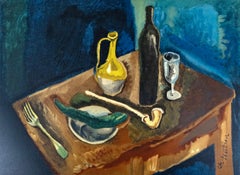
Chaim Soutine, Still Life with Pipe, from Soutine, I, 1966 (after)
Located in Southampton, NY
This exquisite lithograph after Chaim Soutine (1893–1943), titled Nature morte a la pipe (Still Life with Pipe), from the folio Soutine, I, Collection Pierre Levy, 1966, originates from the edition published by Fernand Mourlot, Paris, and printed by Mourlot Freres, Paris, on October 20, 1966. The work conveys the heightened emotional tension and expressive force characteristic of Soutines painterly vision, capturing in lithographic form the dynamic structure and psychological immediacy that define his mature still lifes.
Executed as a lithograph on velin d'Arches paper, this work measures 20 x 26 inches. Signed in the plate and unnumbered as issued. The edition exemplifies the technical mastery of the Mourlot atelier.
Artwork Details:
Artist: After Chaim Soutine (1893–1943)
Title: Nature morte a la pipe (Still Life with Pipe), from the folio Soutine, I, Collection Pierre Levy
Medium: Lithograph on velin d'Arches paper
Dimensions: 20 x 26 inches
Inscription: Signed in the plate and unnumbered as issued
Date: 1966
Publisher: Fernand Mourlot, Paris
Printer: Mourlot Freres, Paris
Condition: Well preserved, consistent with age and medium
Provenance: From the folio Soutine, I, Collection Pierre Levy, 1966
Notes:
Excerpted from the folio (translated from French), This album, the first of a series dedicated to Mr. Pierre Levys collection, was printed in DL examples on Arches velin. Printing was finished on October 20, 1966 by Mourlot for lithographs of the canvases of Soutine, and by Fequet and Baudier for Waldemar Georges unpublished text. Fernand Mourlot, Paris 1966.
About the Publication:
Soutine, I, Collection Pierre Levy, published in 1966 by Fernand Mourlot, Paris, is the first album in the important series devoted to the Pierre Levy collection, one of the most significant private collections of twentieth century French painting. Conceived as a scholarly and visual record, the album was designed to present key works by Chaim Soutine in lithographic form at a time when renewed international interest in the artist was expanding. Created in collaboration with Mourlot Freres, the foremost lithographic atelier in France, the publication reflects the printers commitment to translating Soutines canvases into richly tonal lithographs that preserve the emotional intensity and structural drama of the originals. Issued in a single edition on Arches velin, the album stands as an essential document of postwar art publishing, illuminating the historical partnership between artist, collector, and master printer, and contributing to the larger historiography of modern French Expressionism and museum quality print albums of the mid twentieth century.
About the Artist:
Chaim Soutine (1893–1943) was a Belarus-born French Expressionist painter whose explosive brushwork, emotionally charged distortions, and uncompromising commitment to depicting the psychological intensity of human experience have secured his place as one of the most vital and transformative figures in twentieth century art, creating his legacy within the same revolutionary modernist environment defined by Pablo Picasso, Alexander Calder, Alberto Giacometti, Salvador Dali, Joan Miro, Wassily Kandinsky, Marcel Duchamp, and Man Ray; after leaving his impoverished childhood in Smilavichy and arriving in Paris in 1913, Soutine immersed himself in the School of Paris circle at La Ruche—an incubator of international avant garde talent—where he developed formative friendships with Amedeo Modigliani, Marc Chagall, Jules Pascin, and other pioneering artists whose daring approaches inspired him to push color, gesture, and form into new emotional territories. His portraits of cooks, choirboys, servants, and village residents; his tempestuous landscapes of Cagnes, Chartres, and Ceret; and his deeply visceral still lifes—most famously his monumental depictions of slaughtered carcasses—reveal a singular ability to transform ordinary subjects into raw, pulsing, almost metaphysical dramas, building on the influence of Rembrandt, Goya, Velazquez, and El Greco while departing radically from academic restraint. His paintings vibrate with psychological tension, their twisted perspectives, molten colors, and trembling outlines capturing an inner world marked by anxiety, longing, resilience, and profound empathy. Soutines originality profoundly shaped the evolution of modern painting: Francis Bacon cited him as one of his greatest influences, Willem de Kooning and the Abstract Expressionists admired his gestural ferocity, and later artists—including Frank Auerbach, Leon Kossoff, Lucian Freud, Jenny Saville, and Adrian Ghenie...
Category
1960s Modern Still-life Prints
Materials
Lithograph
$716 Sale Price
20% Off
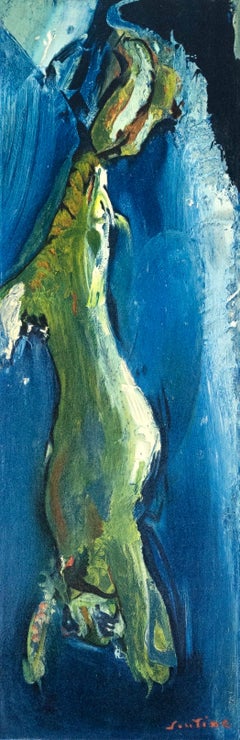
Chaim Soutine, Hanging Hare, from Soutine, I, 1966 (after)
Located in Southampton, NY
This exquisite lithograph after Chaim Soutine (1893–1943), titled Lievre pendu (Hanging Hare), from the folio Soutine, I, Collection Pierre Levy, 1966, originates from the edition published by Fernand Mourlot, Paris, and printed by Mourlot Freres, Paris, on October 20, 1966. The work conveys the heightened emotional tension and expressive force characteristic of Soutines painterly vision, capturing in lithographic form the dynamic structure and psychological immediacy that define his mature still lifes.
Executed as a lithograph on velin d'Arches paper, this work measures 26 x 20 inches. Signed in the plate and unnumbered as issued The edition exemplifies the technical mastery of the Mourlot atelier.
Artwork Details:
Artist: After Chaim Soutine (1893–1943)
Title: Lievre pendu (Hanging Hare), from the folio Soutine, I, Collection Pierre Levy
Medium: Lithograph on velin d'Arches paper
Dimensions: 26 x 20 inches
Inscription: Signed in the plate and unnumbered as issued
Date: 1966
Publisher: Fernand Mourlot, Paris
Printer: Mourlot Freres, Paris
Condition: Well preserved, consistent with age and medium
Provenance: From the folio Soutine, I, Collection Pierre Levy, 1966
Notes:
Excerpted from the folio (translated from French), This album, the first of a series dedicated to Mr. Pierre Levys collection, was printed in DL examples on Arches velin. Printing was finished on October 20, 1966 by Mourlot for lithographs of the canvases of Soutine, and by Fequet and Baudier for Waldemar Georges unpublished text. Fernand Mourlot, Paris 1966.
About the Publication:
Soutine, I, Collection Pierre Levy, published in 1966 by Fernand Mourlot, Paris, is the first album in the important series devoted to the Pierre Levy collection, one of the most significant private collections of twentieth century French painting. Conceived as a scholarly and visual record, the album was designed to present key works by Chaim Soutine in lithographic form at a time when renewed international interest in the artist was expanding. Created in collaboration with Mourlot Freres, the foremost lithographic atelier in France, the publication reflects the printers commitment to translating Soutines canvases into richly tonal lithographs that preserve the emotional intensity and structural drama of the originals. Issued in a single edition on Arches velin, the album stands as an essential document of postwar art publishing, illuminating the historical partnership between artist, collector, and master printer, and contributing to the larger historiography of modern French Expressionism and museum quality print albums of the mid twentieth century.
About the Artist:
Chaim Soutine (1893–1943) was a Belarus-born French Expressionist painter whose explosive brushwork, emotionally charged distortions, and uncompromising commitment to depicting the psychological intensity of human experience have secured his place as one of the most vital and transformative figures in twentieth century art, creating his legacy within the same revolutionary modernist environment defined by Pablo Picasso, Alexander Calder, Alberto Giacometti, Salvador Dali, Joan Miro, Wassily Kandinsky, Marcel Duchamp, and Man Ray; after leaving his impoverished childhood in Smilavichy and arriving in Paris in 1913, Soutine immersed himself in the School of Paris circle at La Ruche—an incubator of international avant garde talent—where he developed formative friendships with Amedeo Modigliani, Marc Chagall, Jules Pascin, and other pioneering artists whose daring approaches inspired him to push color, gesture, and form into new emotional territories. His portraits of cooks, choirboys, servants, and village residents; his tempestuous landscapes of Cagnes, Chartres, and Ceret; and his deeply visceral still lifes—most famously his monumental depictions of slaughtered carcasses—reveal a singular ability to transform ordinary subjects into raw, pulsing, almost metaphysical dramas, building on the influence of Rembrandt, Goya, Velazquez, and El Greco while departing radically from academic restraint. His paintings vibrate with psychological tension, their twisted perspectives, molten colors, and trembling outlines capturing an inner world marked by anxiety, longing, resilience, and profound empathy. Soutines originality profoundly shaped the evolution of modern painting: Francis Bacon cited him as one of his greatest influences, Willem de Kooning and the Abstract Expressionists admired his gestural ferocity, and later artists—including Frank Auerbach, Leon Kossoff, Lucian Freud, Jenny Saville, and Adrian Ghenie...
Category
1960s Modern Landscape Prints
Materials
Lithograph
$716 Sale Price
20% Off
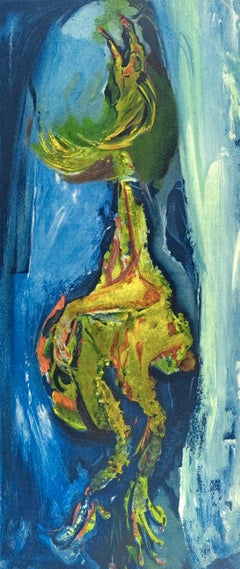
Chaim Soutine, The Rooster, from Soutine, I, 1966 (after)
Located in Southampton, NY
This exquisite lithograph after Chaim Soutine (1893–1943), titled Le Coq (The Rooster), from the folio Soutine, I, Collection Pierre Levy, 1966, originates from the edition published by Fernand Mourlot, Paris, and printed by Mourlot Freres, Paris, on October 20, 1966. The work conveys the heightened emotional tension and expressive force characteristic of Soutines painterly vision, capturing in lithographic form the dynamic structure and psychological immediacy that define his mature still lifes.
Executed as a lithograph on velin d'Arches paper, this work measures 26 x 20 inches. Unsigned and unnumbered as issued. The edition exemplifies the technical mastery of the Mourlot atelier.
Artwork Details:
Artist: After Chaim Soutine (1893–1943)
Title: Le Coq (The Rooster), from the folio Soutine, I, Collection Pierre Levy
Medium: Lithograph on velin d'Arches paper
Dimensions: 26 x 20 inches
Inscription: Unsigned and unnumbered as issued
Date: 1966
Publisher: Fernand Mourlot, Paris
Printer: Mourlot Freres, Paris
Condition: Well preserved, consistent with age and medium
Provenance: From the folio Soutine, I, Collection Pierre Levy, 1966
Notes:
Excerpted from the folio (translated from French), This album, the first of a series dedicated to Mr. Pierre Levys collection, was printed in DL examples on Arches velin. Printing was finished on October 20, 1966 by Mourlot for lithographs of the canvases of Soutine, and by Fequet and Baudier for Waldemar Georges unpublished text. Fernand Mourlot, Paris 1966.
About the Publication:
Soutine, I, Collection Pierre Levy, published in 1966 by Fernand Mourlot, Paris, is the first album in the important series devoted to the Pierre Levy collection, one of the most significant private collections of twentieth century French painting. Conceived as a scholarly and visual record, the album was designed to present key works by Chaim Soutine in lithographic form at a time when renewed international interest in the artist was expanding. Created in collaboration with Mourlot Freres, the foremost lithographic atelier in France, the publication reflects the printers commitment to translating Soutines canvases into richly tonal lithographs that preserve the emotional intensity and structural drama of the originals. Issued in a single edition on Arches velin, the album stands as an essential document of postwar art publishing, illuminating the historical partnership between artist, collector, and master printer, and contributing to the larger historiography of modern French Expressionism and museum quality print albums of the mid twentieth century.
About the Artist:
Chaim Soutine (1893–1943) was a Belarus-born French Expressionist painter whose explosive brushwork, emotionally charged distortions, and uncompromising commitment to depicting the psychological intensity of human experience have secured his place as one of the most vital and transformative figures in twentieth century art, creating his legacy within the same revolutionary modernist environment defined by Pablo Picasso, Alexander Calder, Alberto Giacometti, Salvador Dali, Joan Miro, Wassily Kandinsky, Marcel Duchamp, and Man Ray; after leaving his impoverished childhood in Smilavichy and arriving in Paris in 1913, Soutine immersed himself in the School of Paris circle at La Ruche—an incubator of international avant garde talent—where he developed formative friendships with Amedeo Modigliani, Marc Chagall, Jules Pascin, and other pioneering artists whose daring approaches inspired him to push color, gesture, and form into new emotional territories. His portraits of cooks, choirboys, servants, and village residents; his tempestuous landscapes of Cagnes, Chartres, and Ceret; and his deeply visceral still lifes—most famously his monumental depictions of slaughtered carcasses—reveal a singular ability to transform ordinary subjects into raw, pulsing, almost metaphysical dramas, building on the influence of Rembrandt, Goya, Velazquez, and El Greco while departing radically from academic restraint. His paintings vibrate with psychological tension, their twisted perspectives, molten colors, and trembling outlines capturing an inner world marked by anxiety, longing, resilience, and profound empathy. Soutines originality profoundly shaped the evolution of modern painting: Francis Bacon cited him as one of his greatest influences, Willem de Kooning and the Abstract Expressionists admired his gestural ferocity, and later artists—including Frank Auerbach, Leon Kossoff, Lucian Freud, Jenny Saville, and Adrian Ghenie...
Category
1960s Modern Landscape Prints
Materials
Lithograph
$716 Sale Price
20% Off
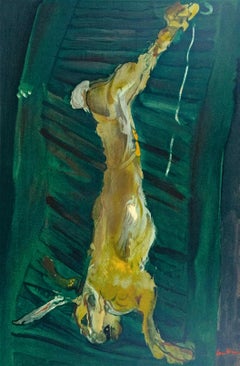
Chaim Soutine, The Hare at the Green Shutter, from Soutine, I, 1966 (after)
Located in Southampton, NY
This exquisite lithograph after Chaim Soutine (1893–1943), titled Le Lievre au volet vert (The Hare at the Green Shutter), from the folio Soutine, I, Collection Pierre Levy, 1966, originates from the edition published by Fernand Mourlot, Paris, and printed by Mourlot Freres, Paris, on October 20, 1966. The work conveys the heightened emotional tension and expressive force characteristic of Soutines painterly vision, capturing in lithographic form the dynamic structure and psychological immediacy that define his mature still lifes.
Executed as a lithograph on velin d'Arches paper, this work measures 26 x 20 inches. Signed in the plate and unnumbered as issued. The edition exemplifies the technical mastery of the Mourlot atelier.
Artwork Details:
Artist: After Chaim Soutine (1893–1943)
Title: Le Lievre au volet vert (The Hare at the Green Shutter), from the folio Soutine, I, Collection Pierre Levy
Medium: Lithograph on velin d'Arches paper
Dimensions: 26 x 20 inches
Inscription: Signed in the plate and unnumbered as issued
Date: 1966
Publisher: Fernand Mourlot, Paris
Printer: Mourlot Freres, Paris
Condition: Well preserved, consistent with age and medium
Provenance: From the folio Soutine, I, Collection Pierre Levy, 1966
Notes:
Excerpted from the folio (translated from French), This album, the first of a series dedicated to Mr. Pierre Levys collection, was printed in DL examples on Arches velin. Printing was finished on October 20, 1966 by Mourlot for lithographs of the canvases of Soutine, and by Fequet and Baudier for Waldemar Georges unpublished text. Fernand Mourlot, Paris 1966.
About the Publication:
Soutine, I, Collection Pierre Levy, published in 1966 by Fernand Mourlot, Paris, is the first album in the important series devoted to the Pierre Levy collection, one of the most significant private collections of twentieth century French painting. Conceived as a scholarly and visual record, the album was designed to present key works by Chaim Soutine in lithographic form at a time when renewed international interest in the artist was expanding. Created in collaboration with Mourlot Freres, the foremost lithographic atelier in France, the publication reflects the printers commitment to translating Soutines canvases into richly tonal lithographs that preserve the emotional intensity and structural drama of the originals. Issued in a single edition on Arches velin, the album stands as an essential document of postwar art publishing, illuminating the historical partnership between artist, collector, and master printer, and contributing to the larger historiography of modern French Expressionism and museum quality print albums of the mid twentieth century.
About the Artist:
Chaim Soutine (1893–1943) was a Belarus-born French Expressionist painter whose explosive brushwork, emotionally charged distortions, and uncompromising commitment to depicting the psychological intensity of human experience have secured his place as one of the most vital and transformative figures in twentieth century art, creating his legacy within the same revolutionary modernist environment defined by Pablo Picasso, Alexander Calder, Alberto Giacometti, Salvador Dali, Joan Miro, Wassily Kandinsky, Marcel Duchamp, and Man Ray; after leaving his impoverished childhood in Smilavichy and arriving in Paris in 1913, Soutine immersed himself in the School of Paris circle at La Ruche—an incubator of international avant garde talent—where he developed formative friendships with Amedeo Modigliani, Marc Chagall, Jules Pascin, and other pioneering artists whose daring approaches inspired him to push color, gesture, and form into new emotional territories. His portraits of cooks, choirboys, servants, and village residents; his tempestuous landscapes of Cagnes, Chartres, and Ceret; and his deeply visceral still lifes—most famously his monumental depictions of slaughtered carcasses—reveal a singular ability to transform ordinary subjects into raw, pulsing, almost metaphysical dramas, building on the influence of Rembrandt, Goya, Velazquez, and El Greco while departing radically from academic restraint. His paintings vibrate with psychological tension, their twisted perspectives, molten colors, and trembling outlines capturing an inner world marked by anxiety, longing, resilience, and profound empathy. Soutines originality profoundly shaped the evolution of modern painting: Francis Bacon cited him as one of his greatest influences, Willem de Kooning and the Abstract Expressionists admired his gestural ferocity, and later artists—including Frank Auerbach, Leon Kossoff, Lucian Freud, Jenny Saville, and Adrian Ghenie...
Category
1960s Modern Landscape Prints
Materials
Lithograph
$716 Sale Price
20% Off
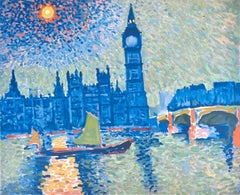
Andre Derain, London, The Thames and Big Ben, from Fauves, VII, 1972 (after)
By André Derain
Located in Southampton, NY
This exquisite lithograph after Andre Derain (1880–1954), titled Londres, La Tamise et Big Ben (London, The Thames and Big Ben), from the folio Fauves, VII, Collection Pierre Levy, 1...
Category
1970s Fauvist Landscape Prints
Materials
Lithograph
$1,116 Sale Price
20% Off
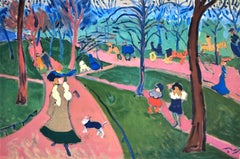
Andre Derain, Hyde Park, from Fauves, VII, 1972 (after)
By André Derain
Located in Southampton, NY
This exquisite lithograph after Andre Derain (1880–1954), titled Hyde Park (Hyde Park), from the folio Fauves, VII, Collection Pierre Levy, 1972, originates from the edition publishe...
Category
1970s Fauvist Landscape Prints
Materials
Lithograph
$1,116 Sale Price
20% Off
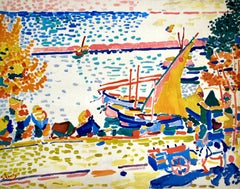
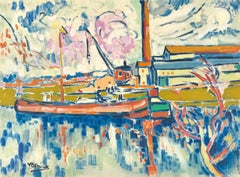
Andre Derain, Port of Collioure, from Fauves, VII, 1972 (after)
By André Derain
Located in Southampton, NY
This exquisite lithograph after Andre Derain (1880–1954), titled Port de Collioure (Port of Collioure), from the folio Fauves, VII, Collection Pierre Levy, 1972, originates from the ...
Category
1970s Fauvist Landscape Prints
Materials
Lithograph
$956 Sale Price
20% Off
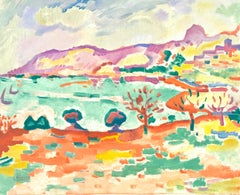
Georges Braque, Landscape at L
Estaque, from Fauves, VII, 1972 (after)
By Georges Braque
Located in Southampton, NY
This exquisite lithograph after Georges Braque (1882–1963), titled Paysage a L'estaque (Landscape at L'Estaque), from the folio Fauves, VII, Collection Pierre Levy, 1972, originates ...
Category
1970s Fauvist Landscape Prints
Materials
Lithograph
$956 Sale Price
20% Off
Maurice de Vlaminck, Landscape at Chatou, from Fauves, VII, 1972 (after)
By Maurice de Vlaminck
Located in Southampton, NY
This exquisite lithograph after Maurice de Vlaminck (1876–1958), titled Paysage a Chatou (Landscape at Chatou), from the folio Fauves, VII (Fauves, VII), Collection Pierre Levy, 1972...
Category
1970s Fauvist Landscape Prints
Materials
Lithograph
$956 Sale Price
20% Off
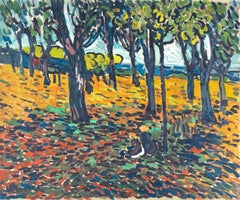
Maurice de Vlaminck, Chestnut Grove at Chatou, from Fauves, VII, 1972 (after)
By Maurice de Vlaminck
Located in Southampton, NY
This exquisite lithograph after Maurice de Vlaminck (1876–1958), titled Chataigneraie a Chatou, Avec Personnages (Chestnut Grove at Chatou, With Figures), from the folio Fauves, VII ...
Category
1970s Fauvist Landscape Prints
Materials
Lithograph
$956 Sale Price
20% Off
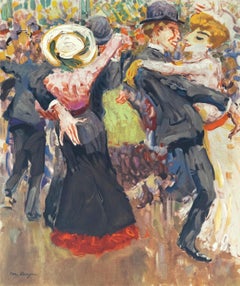
Kees van Dongen, The Matchiche, from Fauves, VII, 1972 (after)
By Kees van Dongen
Located in Southampton, NY
This exquisite lithograph after Kees van Dongen (1877–1968), titled La Matchiche (La Matchiche), from the folio Fauves, VII (Fauves, VII), Collection Pierre Levy, 1972, originates fr...
Category
1970s Fauvist Landscape Prints
Materials
Lithograph
$956 Sale Price
20% Off
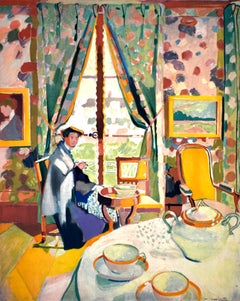
Maurice Marinot, Interior, from Fauves, VII, 1972 (after)
Located in Southampton, NY
This exquisite lithograph after Maurice Marinot (1882–1960), titled Interieur (Interior), from the folio Fauves, VII (Fauves, VII), Collection Pierre Levy, 1972, originates from the ...
Category
1970s Fauvist Landscape Prints
Materials
Lithograph
$956 Sale Price
20% Off
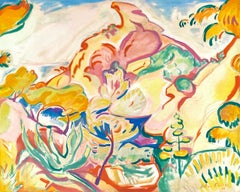
Achille-Emile Othon Friesz, Landscape at La Ciotat, Fauves, VII, 1972 (after)
Located in Southampton, NY
This exquisite lithograph after Achille-Emile Othon Friesz (1879–1949), titled Paysage a La Ciotat (Landscape at La Ciotat), from the folio Fauves, VII (Fauves, VII), Collection Pier...
Category
1970s Fauvist Landscape Prints
Materials
Lithograph
$956 Sale Price
20% Off
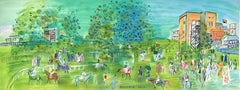
Raoul Dufy, Ascot, from Raoul Dufy, IV, 1969 (after)
By Raoul Dufy
Located in Southampton, NY
This exquisite lithograph after Raoul Dufy (1877–1953), titled Ascot, from the folio Raoul Dufy, IV (Raoul Dufy, IV), Collection Pierre Levy, 1969, originates from the edition publis...
Category
1960s Modern Landscape Prints
Materials
Lithograph
$1,436 Sale Price
20% Off
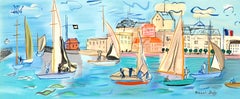
Raoul Dufy, The Regattas, from Raoul Dufy, IV, 1969 (after)
By Raoul Dufy
Located in Southampton, NY
This exquisite lithograph after Raoul Dufy (1877–1953), titled Les Regates (The Regattas), from the folio Raoul Dufy, IV (Raoul Dufy, IV), Collection Pierre Levy, 1969, originates fr...
Category
1960s Modern Landscape Prints
Materials
Lithograph
$1,196 Sale Price
20% Off
Raoul Dufy, The Studio on Impasse Guelma, from Raoul Dufy, IV, 1969 (after)
By Raoul Dufy
Located in Southampton, NY
This exquisite lithograph after Raoul Dufy (1877–1953), titled L’atelier de Impasse Guelma (The Studio on Impasse Guelma), from the folio Raoul Dufy, IV (Raoul Dufy, IV), Collection ...
Category
1960s Modern Landscape Prints
Materials
Lithograph

$956 Sale Price
20% Off
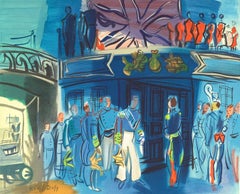
Raoul Dufy, Reception of an English Admiral on a French Ship, 1969 (after)
By Raoul Dufy
Located in Southampton, NY
This exquisite lithograph after Raoul Dufy (1877–1953), titled Reception d'un amiral anglais sur un bateau francais (Reception of an English Admiral on a French Ship), from the folio...
Category
1960s Modern Landscape Prints
Materials
Lithograph
$956 Sale Price
20% Off
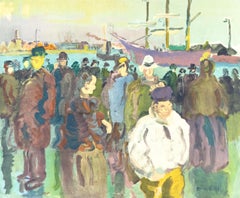
Raoul Dufy, Quay in Rouen, from Raoul Dufy, IV, 1969 (after)
By Raoul Dufy
Located in Southampton, NY
This exquisite lithograph after Raoul Dufy (1877–1953), titled Quai a Rouen (Quay in Rouen), from the folio Raoul Dufy, IV (Raoul Dufy, IV), Collection Pierre Levy, 1969, originates ...
Category
1960s Modern Landscape Prints
Materials
Lithograph
$956 Sale Price
20% Off
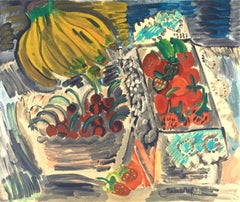
Raoul Dufy, Still Life with Fruits, from Raoul Dufy, IV, 1969 (after)
By Raoul Dufy
Located in Southampton, NY
This exquisite lithograph after Raoul Dufy (1877–1953), titled Nature Morte Aux Fruits (Still Life with Fruits), from the folio Raoul Dufy, IV (Raoul Dufy, IV), Collection Pierre Lev...
Category
1960s Modern Still-life Prints
Materials
Lithograph
$956 Sale Price
20% Off
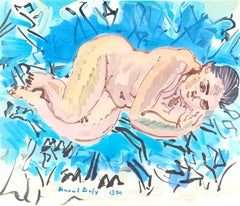
Raoul Dufy, Reclining Nude, from Raoul Dufy, IV, 1969 (after)
By Raoul Dufy
Located in Southampton, NY
This exquisite lithograph after Raoul Dufy (1877–1953), titled Nu couche (Reclining Nude), from the folio Raoul Dufy, IV (Raoul Dufy, IV), Collection Pierre Levy, 1969, originates fr...
Category
1960s Modern Figurative Prints
Materials
Lithograph
$956 Sale Price
20% Off
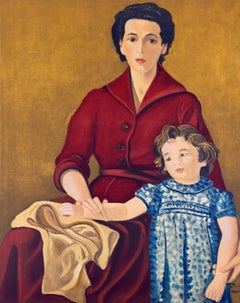
Andre Derain, Denise and Claire Levy, 1970 (after)
By André Derain
Located in Southampton, NY
This exquisite lithograph after Andre Derain (1880–1954), titled Denise et Claire Levy (Denise and Claire Levy), from the folio Andre Derain entre 1935 et 1949, V (Andre Derain betwe...
Category
1970s Fauvist Figurative Prints
Materials
Lithograph
$716 Sale Price
20% Off
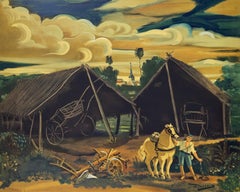
Andre Derain, The Two Hangars, 1970 (after)
By André Derain
Located in Southampton, NY
This exquisite lithograph after Andre Derain (1880–1954), titled Les deux hangars (The Two Hangars), from the folio Andre Derain entre 1935 et 1949, V (Andre Derain between 1935 and ...
Category
1970s Fauvist Landscape Prints
Materials
Lithograph
$716 Sale Price
20% Off
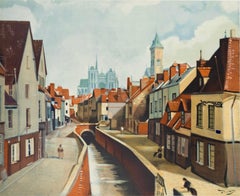
Andre Derain, Amiens, 1970 (after)
By André Derain
Located in Southampton, NY
This exquisite lithograph after Andre Derain (1880–1954), titled Amiens (Amiens), from the folio Andre Derain entre 1935 et 1949, V (Andre Derain between 1935 and 1949, V), 1970, ori...
Category
1970s Fauvist Landscape Prints
Materials
Lithograph
$716 Sale Price
20% Off
Andre Derain, Still Life with Fish and the Pan, 1970 (after)
By André Derain
Located in Southampton, NY
This exquisite lithograph after Andre Derain (1880–1954), titled Nature morte aux Poissons (Still Life with Fish), from the folio Andre Derain entre 1935 et 1949, V (Andre Derain bet...
Category
1970s Fauvist Still-life Prints
Materials
Lithograph

$716 Sale Price
20% Off
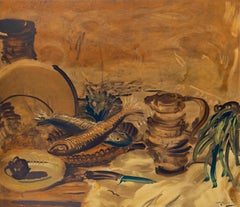
Andre Derain, Still Life with Fish, 1970 (after)
By André Derain
Located in Southampton, NY
This exquisite lithograph after Andre Derain (1880–1954), titled Nature morte aux Poissons (Still Life with Fish), from the folio Andre Derain entre 1935 et 1949, V (Andre Derain bet...
Category
1970s Fauvist Still-life Prints
Materials
Lithograph
$716 Sale Price
20% Off
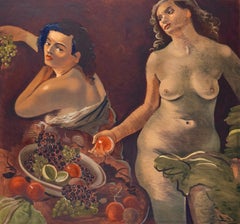
Andre Derain, Two Nude Women and Still Life, 1970 (after)
By André Derain
Located in Southampton, NY
This exquisite lithograph after Andre Derain (1880–1954), titled Deux femmes nues et nature morte (Two Nude Women and Still Life), from the folio Andre Derain entre 1935 et 1949, V (...
Category
1970s Fauvist Still-life Prints
Materials
Lithograph
$716 Sale Price
20% Off
Andre Derain, Still Life, 1970 (after)
By André Derain
Located in Southampton, NY
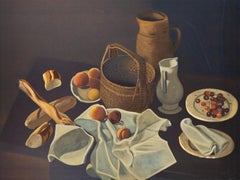
This exquisite lithograph after Andre Derain (1880–1954), titled Nature Morte (Still Life), from the folio Andre Derain entre 1935 et 1949, V (Andre Derain between 1935 and 1949, V),...
Category
1970s Fauvist Still-life Prints
Materials
Lithograph
$716 Sale Price
20% Off
Rene Magritte, My Mother Goose, 1968 (after)
By René Magritte
Located in Southampton, NY
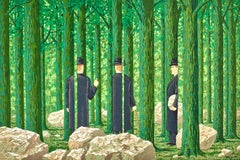
This exquisite lithograph after Rene Magritte (1898–1967), titled Ma Mere lOye (My Mother Goose), from the folio Les Enfants Trouves de Magritte (The Found Children of Magritte), 1968, originates from the edition published by A.C. Mazo et Cie, Paris, and printed by Mourlot Freres, Paris, on November 20, 1968. The work embodies Magrittes sustained inquiry into semiotics and visual epistemology, translating his characteristic strategies of displacement, symbolic inversion, and conceptual ambiguity into an image that operates as both a poetic metaphor and a philosophical proposition concerning the instability of meaning.
Executed as a lithograph on grand velin dArches paper, this work measures 17.5 x 23.5 inches (44.5 x 59.7 cm). Signed in the plate by the artist; hand signed by Fernand Mourlot, Editeur. The edition exemplifies the technical mastery of the Mourlot atelier.
Artwork Details:
Artist: After Rene Magritte (1898–1967)
Title: Ma Mere lOye (My Mother Goose), from the folio Les Enfants Trouves de Magritte (The Found Children of Magritte)
Medium: Lithograph on grand velin dArches paper
Dimensions: 17.5 x 23.5 inches (44.5 x 59.7 cm)
Inscription: Signed in the plate by the artist; hand signed by Fernand Mourlot, Editeur
Date: 1968
Publisher: A.C. Mazo et Cie, Paris
Printer: Mourlot Freres, Paris
Catalogue Raisonne: Magritte, Rene, et al. Rene Magritte: Catalogue Raisonne, Vol. 3. Menil Foundation; Philip Wilson Publishers; Distributed in the USA and Canada by Rizzoli International, 1992, nos. 791–792 and 1056; vol. 5, p. 218, Bibliography entry 68.28.
Condition: Well preserved, consistent with age and medium
Provenance: From the folio Les Enfants Trouves de Magritte, 1968
Notes:
Excerpted from the folio (translated from French), Finished printing in Paris on November 20, 1968, on the presses of Mourlot, for the lithographs. The unpublished text by Louis Scutenaire was composed in Elzevir Casion corps 28 and printed by Fequet et Baudier, typographers. The unpublished compositions numbered from I to IV were specially made by Rene Magritte for this album. The compositions of the Enchanted Domain, are the renderings of the eight paintings of the mural of the Casino de Knokke. They were printed with the benevolent authorization of Mr. Gustave J. Nellens. Justification of the draw, this album was taken from CCCL examples on grand velin dArches numbered from I to CCCL, plus a few examples for collaborators and assistants.
About the Publication:
Les Enfants Trouves de Magritte (The Found Children of Magritte), published in 1968 by A.C. Mazo et Cie, Paris, represents one of the most significant late life print projects devoted to Rene Magrittes work. Conceived as both a literary and visual tribute, the folio pairs texts by the Belgian writer Louis Scutenaire, Magrittes close friend and fellow Surrealist, with lithographic interpretations produced at the Mourlot atelier, the premier lithographic workshop of twentieth century France. The album includes compositions by Magritte alongside lithographic renderings of the celebrated Enchanted Domain mural from the Casino de Knokke, printed with the authorization of Gustave J. Nellens, who commissioned the original mural. Issued in a single edition of CCCL examples on grand velin dArches, the folio stands as a testament to the collaboration between artist, writer, publisher, and master printer, and remains one of the most culturally important Surrealist print albums of the post war era.
About the Artist:
Rene Magritte (1898–1967) was a Belgian Surrealist painter whose visionary, intellectual, and poetic imagery redefined twentieth century art and forever changed how the world perceives reality and illusion. Celebrated for his calm precision and thought provoking juxtapositions of ordinary objects in extraordinary contexts, Magritte used painting as a philosophical tool, transforming the everyday into visual paradoxes that challenged the boundaries between what is seen and what is known. Born in Lessines, Belgium, and trained at the Academie Royale des Beaux Arts in Brussels, he absorbed early influences from Cubism, Futurism, and Symbolism before embracing Surrealism, where he found his true voice. In Paris, he became part of the avant garde circle that included Pablo Picasso, Alexander Calder, Alberto Giacometti, Salvador Dali, Joan Miro, Wassily Kandinsky, Marcel Duchamp, and Man Ray—all artists whose radical ideas helped him forge his distinctive synthesis of logic and mystery. Unlike Dalis dream...
Category
1960s Surrealist Figurative Prints
Materials
Lithograph
$23,996 Sale Price
20% Off
Rene Magritte, The Beautiful Captive, 1968 (after)
By René Magritte
Located in Southampton, NY
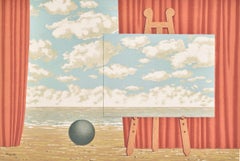
This exquisite lithograph after Rene Magritte (1898–1967), titled La Belle Captive (The Beautiful Captive), from the folio Les Enfants Trouves de Magritte (The Found Children of Magritte), 1968, originates from the edition published by A.C. Mazo et Cie, Paris, and printed by Mourlot Freres, Paris, on November 20, 1968. The work embodies Magrittes sustained inquiry into semiotics and visual epistemology, translating his characteristic strategies of displacement, symbolic inversion, and conceptual ambiguity into an image that operates as both a poetic metaphor and a philosophical proposition concerning the instability of meaning.
Executed as a lithograph on grand velin dArches paper, this work measures 17.5 x 23.5 inches (44.5 x 59.7 cm). Signed in the plate by the artist; hand signed by Fernand Mourlot, Editeur. The edition exemplifies the technical mastery of the Mourlot atelier.
Artwork Details:
Artist: After Rene Magritte (1898–1967)
Title: La Belle Captive (The Beautiful Captive), from the folio Les Enfants Trouves de Magritte (The Found Children of Magritte)
Medium: Lithograph on grand velin dArches paper
Dimensions: 17.5 x 23.5 inches (44.5 x 59.7 cm)
Inscription: Signed in the plate by the artist; hand signed by Fernand Mourlot, Editeur
Date: 1968
Publisher: A.C. Mazo et Cie, Paris
Printer: Mourlot Freres, Paris
Catalogue Raisonne: Magritte, Rene, et al. Rene Magritte: Catalogue Raisonne, Vol. 3. Menil Foundation; Philip Wilson Publishers; Distributed in the USA and Canada by Rizzoli International, 1992, nos. 791–792 and 1056; vol. 5, p. 218, Bibliography entry 68.28.
Condition: Well preserved, consistent with age and medium
Provenance: From the folio Les Enfants Trouves de Magritte, 1968
Notes:
Excerpted from the folio (translated from French), Finished printing in Paris on November 20, 1968, on the presses of Mourlot, for the lithographs. The unpublished text by Louis Scutenaire was composed in Elzevir Casion corps 28 and printed by Fequet et Baudier, typographers. The unpublished compositions numbered from I to IV were specially made by Rene Magritte for this album. The compositions of the Enchanted Domain, are the renderings of the eight paintings of the mural of the Casino de Knokke. They were printed with the benevolent authorization of Mr. Gustave J. Nellens. Justification of the draw, this album was taken from CCCL examples on grand velin dArches numbered from I to CCCL, plus a few examples for collaborators and assistants.
About the Publication:
Les Enfants Trouves de Magritte (The Found Children of Magritte), published in 1968 by A.C. Mazo et Cie, Paris, represents one of the most significant late life print projects devoted to Rene Magrittes work. Conceived as both a literary and visual tribute, the folio pairs texts by the Belgian writer Louis Scutenaire, Magrittes close friend and fellow Surrealist, with lithographic interpretations produced at the Mourlot atelier, the premier lithographic workshop of twentieth century France. The album includes compositions by Magritte alongside lithographic renderings of the celebrated Enchanted Domain mural from the Casino de Knokke, printed with the authorization of Gustave J. Nellens, who commissioned the original mural. Issued in a single edition of CCCL examples on grand velin dArches, the folio stands as a testament to the collaboration between artist, writer, publisher, and master printer, and remains one of the most culturally important Surrealist print albums of the post war era.
About the Artist:
Rene Magritte (1898–1967) was a Belgian Surrealist painter whose visionary, intellectual, and poetic imagery redefined twentieth century art and forever changed how the world perceives reality and illusion. Celebrated for his calm precision and thought provoking juxtapositions of ordinary objects in extraordinary contexts, Magritte used painting as a philosophical tool, transforming the everyday into visual paradoxes that challenged the boundaries between what is seen and what is known. Born in Lessines, Belgium, and trained at the Academie Royale des Beaux Arts in Brussels, he absorbed early influences from Cubism, Futurism, and Symbolism before embracing Surrealism, where he found his true voice. In Paris, he became part of the avant garde circle that included Pablo Picasso, Alexander Calder, Alberto Giacometti, Salvador Dali, Joan Miro, Wassily Kandinsky, Marcel Duchamp, and Man Ray—all artists whose radical ideas helped him forge his distinctive synthesis of logic and mystery. Unlike Dalis dream...
Category
1960s Surrealist Figurative Prints
Materials
Lithograph
$3,996 Sale Price
20% Off
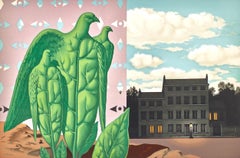
Rene Magritte, The Difficult Crossing, 1968 (after)
By René Magritte
Located in Southampton, NY
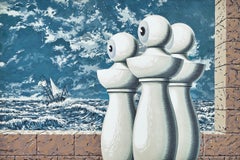
This exquisite lithograph after Rene Magritte (1898–1967), titled La Traversee Difficile (The Difficult Crossing), from the folio Les Enfants Trouves de Magritte (The Found Children ...
Category
1960s Surrealist Figurative Prints
Materials
Lithograph
$3,996 Sale Price
20% Off
Rene Magritte, The Great Birds are Those of Treasure Island, 1968 (after)
By René Magritte
Located in Southampton, NY
This exquisite lithograph after Rene Magritte (1898–1967), titled Les Grands Oiseaux sont Ceux de LIle au Tresor (The Great Birds are Those of Treasure Island), from the folio Les Enfants Trouves de Magritte (The Found Children of Magritte), 1968, originates from the edition published by A.C. Mazo et Cie, Paris, and printed by Mourlot Freres, Paris, on November 20, 1968. The work embodies Magrittes sustained inquiry into semiotics and visual epistemology, translating his characteristic strategies of displacement, symbolic inversion, and conceptual ambiguity into an image that operates as both a poetic metaphor and a philosophical proposition concerning the instability of meaning.
Executed as a lithograph on grand velin dArches paper, this work measures 17.5 x 23.5 inches (44.5 x 59.7 cm). Signed in the plate by the artist; hand signed by Fernand Mourlot, Editeur. The edition exemplifies the technical mastery of the Mourlot atelier.
Artwork Details:
Artist: After Rene Magritte (1898–1967)
Title: Les Grands Oiseaux sont Ceux de LIle au Tresor (The Great Birds are Those of Treasure Island), from the folio Les Enfants Trouves de Magritte (The Found Children of Magritte)
Medium: Lithograph on grand velin dArches paper
Dimensions: 17.5 x 23.5 inches (44.5 x 59.7 cm)
Inscription: Signed in the plate by the artist; hand signed by Fernand Mourlot, Editeur
Date: 1968
Publisher: A.C. Mazo et Cie, Paris
Printer: Mourlot Freres, Paris
Catalogue Raisonne: Magritte, Rene, et al. Rene Magritte: Catalogue Raisonne, Vol. 3. Menil Foundation; Philip Wilson Publishers; Distributed in the USA and Canada by Rizzoli International, 1992, nos. 791–792 and 1056; vol. 5, p. 218, Bibliography entry 68.28.
Condition: Well preserved, consistent with age and medium
Provenance: From the folio Les Enfants Trouves de Magritte, 1968
Notes:
Excerpted from the folio (translated from French), Finished printing in Paris on November 20, 1968, on the presses of Mourlot, for the lithographs. The unpublished text by Louis Scutenaire was composed in Elzevir Casion corps 28 and printed by Fequet et Baudier, typographers. The unpublished compositions numbered from I to IV were specially made by Rene Magritte for this album. The compositions of the Enchanted Domain, are the renderings of the eight paintings of the mural of the Casino de Knokke. They were printed with the benevolent authorization of Mr. Gustave J. Nellens. Justification of the draw, this album was taken from CCCL examples on grand velin dArches numbered from I to CCCL, plus a few examples for collaborators and assistants.
About the Publication:
Les Enfants Trouves de Magritte (The Found Children of Magritte), published in 1968 by A.C. Mazo et Cie, Paris, represents one of the most significant late life print projects devoted to Rene Magrittes work. Conceived as both a literary and visual tribute, the folio pairs texts by the Belgian writer Louis Scutenaire, Magrittes close friend and fellow Surrealist, with lithographic interpretations produced at the Mourlot atelier, the premier lithographic workshop of twentieth century France. The album includes compositions by Magritte alongside lithographic renderings of the celebrated Enchanted Domain mural from the Casino de Knokke, printed with the authorization of Gustave J. Nellens, who commissioned the original mural. Issued in a single edition of CCCL examples on grand velin dArches, the folio stands as a testament to the collaboration between artist, writer, publisher, and master printer, and remains one of the most culturally important Surrealist print albums of the post war era.
About the Artist:
Rene Magritte (1898–1967) was a Belgian Surrealist painter whose visionary, intellectual, and poetic imagery redefined twentieth century art and forever changed how the world perceives reality and illusion. Celebrated for his calm precision and thought provoking juxtapositions of ordinary objects in extraordinary contexts, Magritte used painting as a philosophical tool, transforming the everyday into visual paradoxes that challenged the boundaries between what is seen and what is known. Born in Lessines, Belgium, and trained at the Academie Royale des Beaux Arts in Brussels, he absorbed early influences from Cubism, Futurism, and Symbolism before embracing Surrealism, where he found his true voice. In Paris, he became part of the avant garde circle that included Pablo Picasso, Alexander Calder, Alberto Giacometti, Salvador Dali, Joan Miro, Wassily Kandinsky, Marcel Duchamp, and Man Ray—all artists whose radical ideas helped him forge his distinctive synthesis of logic and mystery. Unlike Dalis dream...
Category
1960s Surrealist Figurative Prints
Materials
Lithograph
$3,996 Sale Price
20% Off
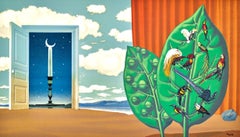
Rene Magritte, A Door Opens onto the Velvety Night, 1968 (after)
By René Magritte
Located in Southampton, NY
This exquisite lithograph after Rene Magritte (1898–1967), titled Une Porte souvre sur la Nuit Veloutee (A Door Opens onto the Velvety Night), from the folio Les Enfants Trouves de M...
Category
1960s Surrealist Figurative Prints
Materials
Lithograph
$3,996 Sale Price
20% Off
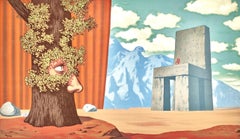
Rene Magritte, The Clearings of a Young Gaze…, 1968 (after)
By René Magritte
Located in Southampton, NY
This exquisite lithograph after Rene Magritte (1898–1967), titled Les Claires-Voies dun Jeune Regard Embaument la Fete dun Vie (The Clearings of a Young Gaze Perfume the Celebration ...
Category
1960s Surrealist Figurative Prints
Materials
Lithograph
$3,996 Sale Price
20% Off
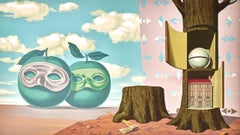
Rene Magritte, On the Shore of the Sea…, 1968 (after)
By René Magritte
Located in Southampton, NY
This exquisite lithograph after Rene Magritte (1898–1967), titled Il y a sur le Rivage de la Mer Deux Pommes Visiteuses (On the Shore of the Sea There Are Two Visiting Apples), from ...
Category
1960s Surrealist Figurative Prints
Materials
Lithograph
$3,996 Sale Price
20% Off
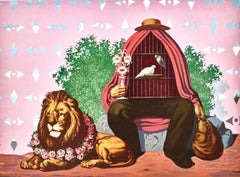
Rene Magritte, Two Turtledoves, in the Warm Penumbra of Their Home, 1968 (after)
By René Magritte
Located in Southampton, NY
This exquisite lithograph after Rene Magritte (1898–1967), titled Deux Tourterelles, dans la Chaude Penombre de Leur Maison (Two Turtledoves, in the Warm Penumbra of Their Home), fro...
Category
1960s Surrealist Animal Prints
Materials
Lithograph
$3,996 Sale Price
20% Off
Rene Magritte, Gemstones, 1968 (after)
By René Magritte
Located in Southampton, NY
This exquisite lithograph after Rene Magritte (1898–1967), titled Pierreries (Gemstones), from the folio Les Enfants Trouves de Magritte (The Found Children of Magritte), 1968, origi...
Category
1960s Surrealist Animal Prints
Materials
Lithograph

$3,996 Sale Price
20% Off
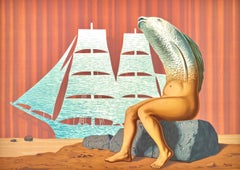
Rene Magritte, A Seductive Sea Water Ship, 1968 (after)
By René Magritte
Located in Southampton, NY
This exquisite lithograph after Rene Magritte (1898–1967), titled Un Seduisant Navire deau de Mer (A Seductive Sea Water Ship), from the folio Les Enfants Trouves de Magritte (The Found Children of Magritte), 1968, originates from the edition published by A.C. Mazo et Cie, Paris, and printed by Mourlot Freres, Paris, on November 20, 1968. The work embodies Magrittes sustained inquiry into semiotics and visual epistemology, translating his characteristic strategies of displacement, symbolic inversion, and conceptual ambiguity into an image that operates as both a poetic metaphor and a philosophical proposition concerning the instability of meaning.
Executed as a lithograph on grand velin dArches paper, this work measures 17.5 x 23.5 inches (44.5 x 59.7 cm). Signed in the plate by the artist; hand signed by Fernand Mourlot, Editeur. The edition exemplifies the technical mastery of the Mourlot atelier.
Artwork Details:
Artist: After Rene Magritte (1898–1967)
Title: Un Seduisant Navire deau de Mer (A Seductive Sea Water Ship), from the folio Les Enfants Trouves de Magritte (The Found Children of Magritte)
Medium: Lithograph on grand velin dArches paper
Dimensions: 17.5 x 23.5 inches (44.5 x 59.7 cm)
Inscription: Signed in the plate by the artist; hand signed by Fernand Mourlot, Editeur
Date: 1968
Publisher: A.C. Mazo et Cie, Paris
Printer: Mourlot Freres, Paris
Catalogue Raisonne: Magritte, Rene, et al. Rene Magritte: Catalogue Raisonne, Vol. 3. Menil Foundation; Philip Wilson Publishers; Distributed in the USA and Canada by Rizzoli International, 1992, nos. 791–792 and 1056; vol. 5, p. 218, Bibliography entry 68.28.
Condition: Well preserved, consistent with age and medium
Provenance: From the folio Les Enfants Trouves de Magritte, 1968
Notes:
Excerpted from the folio (translated from French), Finished printing in Paris on November 20, 1968, on the presses of Mourlot, for the lithographs. The unpublished text by Louis Scutenaire was composed in Elzevir Casion corps 28 and printed by Fequet et Baudier, typographers. The unpublished compositions numbered from I to IV were specially made by Rene Magritte for this album. The compositions of the Enchanted Domain, are the renderings of the eight paintings of the mural of the Casino de Knokke. They were printed with the benevolent authorization of Mr. Gustave J. Nellens. Justification of the draw, this album was taken from CCCL examples on grand velin dArches numbered from I to CCCL, plus a few examples for collaborators and assistants.
About the Publication:
Les Enfants Trouves de Magritte (The Found Children of Magritte), published in 1968 by A.C. Mazo et Cie, Paris, represents one of the most significant late life print projects devoted to Rene Magrittes work. Conceived as both a literary and visual tribute, the folio pairs texts by the Belgian writer Louis Scutenaire, Magrittes close friend and fellow Surrealist, with lithographic interpretations produced at the Mourlot atelier, the premier lithographic workshop of twentieth century France. The album includes compositions by Magritte alongside lithographic renderings of the celebrated Enchanted Domain mural from the Casino de Knokke, printed with the authorization of Gustave J. Nellens, who commissioned the original mural. Issued in a single edition of CCCL examples on grand velin dArches, the folio stands as a testament to the collaboration between artist, writer, publisher, and master printer, and remains one of the most culturally important Surrealist print albums of the post war era.
About the Artist:
Rene Magritte (1898–1967) was a Belgian Surrealist painter whose visionary, intellectual, and poetic imagery redefined twentieth century art and forever changed how the world perceives reality and illusion. Celebrated for his calm precision and thought provoking juxtapositions of ordinary objects in extraordinary contexts, Magritte used painting as a philosophical tool, transforming the everyday into visual paradoxes that challenged the boundaries between what is seen and what is known. Born in Lessines, Belgium, and trained at the Academie Royale des Beaux Arts in Brussels, he absorbed early influences from Cubism, Futurism, and Symbolism before embracing Surrealism, where he found his true voice. In Paris, he became part of the avant garde circle that included Pablo Picasso, Alexander Calder, Alberto Giacometti, Salvador Dali, Joan Miro, Wassily Kandinsky, Marcel Duchamp, and Man Ray—all artists whose radical ideas helped him forge his distinctive synthesis of logic and mystery. Unlike Dalis dream...
Category
1960s Surrealist Landscape Prints
Materials
Lithograph
$3,996 Sale Price
20% Off
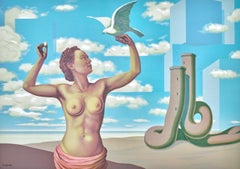
Rene Magritte, A Young Woman Presents with Grace, 1968 (after)
By René Magritte
Located in Southampton, NY
This exquisite lithograph after Rene Magritte (1898–1967), titled Une Jeune Femme Presente avec Grace (A Young Woman Presents with Grace), from the folio Les Enfants Trouves de Magritte (The Found Children of Magritte), 1968, originates from the edition published by A.C. Mazo et Cie, Paris, and printed by Mourlot Freres, Paris, on November 20, 1968. The work embodies Magrittes sustained inquiry into semiotics and visual epistemology, translating his characteristic strategies of displacement, symbolic inversion, and conceptual ambiguity into an image that operates as both a poetic metaphor and a philosophical proposition concerning the instability of meaning.
Executed as a lithograph on grand velin dArches paper, this work measures 17.5 x 23.5 inches (44.5 x 59.7 cm). Signed in the plate by the artist; hand signed by Fernand Mourlot, Editeur. The edition exemplifies the technical mastery of the Mourlot atelier.
Artwork Details:
Artist: After Rene Magritte (1898–1967)
Title: Une Jeune Femme Presente avec Grace (A Young Woman Presents with Grace), from the folio Les Enfants Trouves de Magritte (The Found Children of Magritte)
Medium: Lithograph on grand velin dArches paper
Dimensions: 17.5 x 23.5 inches (44.5 x 59.7 cm)
Inscription: Signed in the plate by the artist; hand signed by Fernand Mourlot, Editeur
Date: 1968
Publisher: A.C. Mazo et Cie, Paris
Printer: Mourlot Freres, Paris
Catalogue Raisonne: Magritte, Rene, et al. Rene Magritte: Catalogue Raisonne, Vol. 3. Menil Foundation; Philip Wilson Publishers; Distributed in the USA and Canada by Rizzoli International, 1992, nos. 791–792 and 1056; vol. 5, p. 218, Bibliography entry 68.28.
Condition: Well preserved, consistent with age and medium
Provenance: From the folio Les Enfants Trouves de Magritte, 1968
Notes:
Excerpted from the folio (translated from French), Finished printing in Paris on November 20, 1968, on the presses of Mourlot, for the lithographs. The unpublished text by Louis Scutenaire was composed in Elzevir Casion corps 28 and printed by Fequet et Baudier, typographers. The unpublished compositions numbered from I to IV were specially made by Rene Magritte for this album. The compositions of the Enchanted Domain, are the renderings of the eight paintings of the mural of the Casino de Knokke. They were printed with the benevolent authorization of Mr. Gustave J. Nellens. Justification of the draw, this album was taken from CCCL examples on grand velin dArches numbered from I to CCCL, plus a few examples for collaborators and assistants.
About the Publication:
Les Enfants Trouves de Magritte (The Found Children of Magritte), published in 1968 by A.C. Mazo et Cie, Paris, represents one of the most significant late life print projects devoted to Rene Magrittes work. Conceived as both a literary and visual tribute, the folio pairs texts by the Belgian writer Louis Scutenaire, Magrittes close friend and fellow Surrealist, with lithographic interpretations produced at the Mourlot atelier, the premier lithographic workshop of twentieth century France. The album includes compositions by Magritte alongside lithographic renderings of the celebrated Enchanted Domain mural from the Casino de Knokke, printed with the authorization of Gustave J. Nellens, who commissioned the original mural. Issued in a single edition of CCCL examples on grand velin dArches, the folio stands as a testament to the collaboration between artist, writer, publisher, and master printer, and remains one of the most culturally important Surrealist print albums of the post war era.
About the Artist:
Rene Magritte (1898–1967) was a Belgian Surrealist painter whose visionary, intellectual, and poetic imagery redefined twentieth century art and forever changed how the world perceives reality and illusion. Celebrated for his calm precision and thought provoking juxtapositions of ordinary objects in extraordinary contexts, Magritte used painting as a philosophical tool, transforming the everyday into visual paradoxes that challenged the boundaries between what is seen and what is known. Born in Lessines, Belgium, and trained at the Academie Royale des Beaux Arts in Brussels, he absorbed early influences from Cubism, Futurism, and Symbolism before embracing Surrealism, where he found his true voice. In Paris, he became part of the avant garde circle that included Pablo Picasso, Alexander Calder, Alberto Giacometti, Salvador Dali, Joan Miro, Wassily Kandinsky, Marcel Duchamp, and Man Ray—all artists whose radical ideas helped him forge his distinctive synthesis of logic and mystery. Unlike Dalis dream...
Category
1960s Surrealist Landscape Prints
Materials
Lithograph
$3,996 Sale Price
20% Off
Rene Magritte, A Bombardon Releases its Bouquet of Flames, 1968 (after)
By René Magritte
Located in Southampton, NY
This exquisite lithograph after Rene Magritte (1898–1967), titled Un Bombardon Libere son Bouquet de Flammes (A Bombardon Releases its Bouquet of Flames), from the folio Les Enfants Trouves de Magritte (The Found Children of Magritte), 1968, originates from the edition published by A.C. Mazo et Cie, Paris, and printed by Mourlot Freres, Paris, on November 20, 1968. The work embodies Magrittes sustained inquiry into semiotics and visual epistemology, translating his characteristic strategies of displacement, symbolic inversion, and conceptual ambiguity into an image that operates as both a poetic metaphor and a philosophical proposition concerning the instability of meaning.
Executed as a lithograph on grand velin dArches paper, this work measures 17.5 x 23.5 inches (44.5 x 59.7 cm). Signed in the plate by the artist; hand signed by Fernand Mourlot, Editeur. The edition exemplifies the technical mastery of the Mourlot atelier.
Artwork Details:
Artist: After Rene Magritte (1898–1967)
Title: Un Bombardon Libere son Bouquet de Flammes (A Bombardon Releases its Bouquet of Flames), from the folio Les Enfants Trouves de Magritte (The Found Children of Magritte)
Medium: Lithograph on grand velin dArches paper
Dimensions: 17.5 x 23.5 inches (44.5 x 59.7 cm)
Inscription: Signed in the plate by the artist; hand signed by Fernand Mourlot, Editeur
Date: 1968
Publisher: A.C. Mazo et Cie, Paris
Printer: Mourlot Freres, Paris
Catalogue Raisonne: Magritte, Rene, et al. Rene Magritte: Catalogue Raisonne, Vol. 3. Menil Foundation; Philip Wilson Publishers; Distributed in the USA and Canada by Rizzoli International, 1992, nos. 791–792 and 1056; vol. 5, p. 218, Bibliography entry 68.28.
Condition: Well preserved, consistent with age and medium
Provenance: From the folio Les Enfants Trouves de Magritte, 1968
Notes:
Excerpted from the folio (translated from French), Finished printing in Paris on November 20, 1968, on the presses of Mourlot, for the lithographs. The unpublished text by Louis Scutenaire was composed in Elzevir Casion corps 28 and printed by Fequet et Baudier, typographers. The unpublished compositions numbered from I to IV were specially made by Rene Magritte for this album. The compositions of the Enchanted Domain, are the renderings of the eight paintings of the mural of the Casino de Knokke. They were printed with the benevolent authorization of Mr. Gustave J. Nellens. Justification of the draw, this album was taken from CCCL examples on grand velin dArches numbered from I to CCCL, plus a few examples for collaborators and assistants.
About the Publication:
Les Enfants Trouves de Magritte (The Found Children of Magritte), published in 1968 by A.C. Mazo et Cie, Paris, represents one of the most significant late life print projects devoted to Rene Magrittes work. Conceived as both a literary and visual tribute, the folio pairs texts by the Belgian writer Louis Scutenaire, Magrittes close friend and fellow Surrealist, with lithographic interpretations produced at the Mourlot atelier, the premier lithographic workshop of twentieth century France. The album includes compositions by Magritte alongside lithographic renderings of the celebrated Enchanted Domain mural from the Casino de Knokke, printed with the authorization of Gustave J. Nellens, who commissioned the original mural. Issued in a single edition of CCCL examples on grand velin dArches, the folio stands as a testament to the collaboration between artist, writer, publisher, and master printer, and remains one of the most culturally important Surrealist print albums of the post war era.
About the Artist:
Rene Magritte (1898–1967) was a Belgian Surrealist painter whose visionary, intellectual, and poetic imagery redefined twentieth century art and forever changed how the world perceives reality and illusion. Celebrated for his calm precision and thought provoking juxtapositions of ordinary objects in extraordinary contexts, Magritte used painting as a philosophical tool, transforming the everyday into visual paradoxes that challenged the boundaries between what is seen and what is known. Born in Lessines, Belgium, and trained at the Academie Royale des Beaux Arts in Brussels, he absorbed early influences from Cubism, Futurism, and Symbolism before embracing Surrealism, where he found his true voice. In Paris, he became part of the avant garde circle that included Pablo Picasso, Alexander Calder, Alberto Giacometti, Salvador Dali, Joan Miro, Wassily Kandinsky, Marcel Duchamp, and Man Ray—all artists whose radical ideas helped him forge his distinctive synthesis of logic and mystery. Unlike Dalis dream...
Category
1960s Surrealist Landscape Prints
Materials
Lithograph
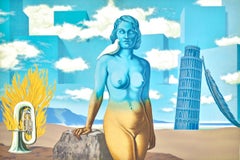
$3,996 Sale Price
20% Off
Marc Chagall, The Peace Restored, from Homer, The Odyssey, 1989 (after)
By Marc Chagall
Located in Southampton, NY
This exquisite lithograph after Marc Chagall (1887–1985), titled Der wiedergefundene Frieden (The Peace Restored), from Homer, Die Odyssee (The Odyssey), originates from the 1989 Ger...
Category
1980s Expressionist Figurative Prints
Materials
Lithograph
$796 Sale Price
20% Off
Marc Chagall, The Bed of Odysseus, from Homer, The Odyssey, 1989 (after)
By Marc Chagall
Located in Southampton, NY
This exquisite lithograph after Marc Chagall (1887–1985), titled Das Bett des Odysseus (The Bed of Odysseus), from Homer, Die Odyssee (The Odyssey), originates from the 1989 German-l...
Category
1980s Expressionist Figurative Prints
Materials
Lithograph
$716 Sale Price
20% Off
Marc Chagall, In the Underworld, from Homer, The Odyssey, 1989 (after)
By Marc Chagall
Located in Southampton, NY
This exquisite lithograph after Marc Chagall (1887–1985), titled In der Holle (In the Underworld), from Homer, Die Odyssee (The Odyssey), originates from the 1989 German-language fol...
Category
1980s Expressionist Figurative Prints
Materials
Lithograph
$716 Sale Price
20% Off
Marc Chagall, The Bed of Odysseus, from Homer, The Odyssey, 1989 (after)
By Marc Chagall
Located in Southampton, NY
This exquisite lithograph after Marc Chagall (1887–1985), titled Das Bett des Odysseus (The Bed of Odysseus), from Homer, Die Odyssee (The Odyssey), originates from the 1989 German-language folio published by Daco-Verlag Gunter Blase, Stuttgart, and printed by Lichtdruck AG, Zurich, Dielsdorf, September 1989. This authorized edition, issued under the direction of Vava Chagall, presents one of Chagall’s most lyrical and expressive interpretations of Homer’s epic. In Das Bett des Odysseus, Chagall transforms the mythic return of Odysseus into a vision of reunion and devotion, rendered with the artist’s hallmark blend of tenderness, color harmony, and poetic symbolism.
Executed on 250 g/m² Butten Papierwerke Miliani AG, Fabriano paper, this lithograph measures 14.88 x 11.69 inches. Unsigned and unnumbered, as issued. The edition exemplifies the exceptional quality and precision of Lichtdruck AG’s craftsmanship, reproducing the depth and richness of Chagall’s original lithographs with remarkable fidelity.
Artwork Details:
Artist: After Marc Chagall (1887–1985)
Title: Das Bett des Odysseus (The Bed of Odysseus), from Homer, Die Odyssee (The Odyssey), 1989
Medium: Lithograph on 250 g/m² Butten Papierwerke Miliani AG, Fabriano paper
Dimensions: 14.88 x 11.69 inches
Inscription: Unsigned and unnumbered, as issued
Date: 1989
Publisher: Daco-Verlag Gunter Blase, Stuttgart
Printer: Lichtdruck AG, Zurich, Dielsdorf
Condition: Well preserved, consistent with age and medium
Provenance: From the folio Homer, Die Odyssee (The Odyssey), Daco-Verlag Gunter Blase, Stuttgart, 1989
Notes:
Excerpted from the folio (translated from German), Imprint—The French edition, L'Odyssée, with the original lithographs by Marc Chagall was published in 1974/75 in a CCL-example edition by Fernand Mourlot, Paris. In 1989, with the authorization of Mrs. Vava Chagall, the German-language edition of the Odyssey in two volumes was published by Daco-Verlag Gunter Blase, Stuttgart. Volume I contains the songs I - XII with XX color plates, including IV on double pages and XIX gray printed reproductions in the text. Volume II contains the songs XIII - XXIV with XXIII color plates, including II on double pages and XX gray printed reproductions in the text. For the German text, the prose translation by Wolfgang Schadewaldt was chosen with the permission of Rowohlt Taschenbuch Verlag, Reinbek near Hamburg. Set design in the Berthold Garamond Antiqua by F+M Bauer...
Category
1980s Expressionist Figurative Prints
Materials
Lithograph

$716 Sale Price
20% Off
Marc Chagall, The Celebration, from Homer, The Odyssey, 1989 (after)
By Marc Chagall
Located in Southampton, NY
This exquisite lithograph after Marc Chagall (1887–1985), titled Das Fest (The Celebration), from Homer, Die Odyssee (The Odyssey), originates from the 1989 German-language folio published by Daco-Verlag Gunter Blase, Stuttgart, and printed by Lichtdruck AG, Zurich, Dielsdorf, September 1989. This authorized edition, issued under the direction of Vava Chagall, presents one of Chagall’s most joyful and expressive interpretations of Homer’s epic. In Das Fest, Chagall transforms the revelry of ancient feasts into a luminous vision of human connection, music, and harmony, rendered with his signature lyricism and dreamlike color palette.
Executed on 250 g/m² Butten Papierwerke Miliani AG, Fabriano paper, this lithograph measures 14.88 x 11.69 inches. Unsigned and unnumbered, as issued. The edition exemplifies the exceptional quality and precision of Lichtdruck AG’s craftsmanship, reproducing the depth and richness of Chagall’s original lithographs with remarkable fidelity.
Artwork Details:
Artist: After Marc Chagall (1887–1985)
Title: Das Fest (The Celebration), from Homer, Die Odyssee (The Odyssey), 1989
Medium: Lithograph on 250 g/m² Butten Papierwerke Miliani AG, Fabriano paper
Dimensions: 14.88 x 11.69 inches
Inscription: Unsigned and unnumbered, as issued
Date: 1989
Publisher: Daco-Verlag Gunter Blase, Stuttgart
Printer: Lichtdruck AG, Zurich, Dielsdorf
Condition: Well preserved, consistent with age and medium
Provenance: From the folio Homer, Die Odyssee (The Odyssey), Daco-Verlag Gunter Blase, Stuttgart, 1989
Notes:
Excerpted from the folio (translated from German), Imprint—The French edition, L'Odyssée, with the original lithographs by Marc Chagall was published in 1974/75 in a CCL-example edition by Fernand Mourlot, Paris. In 1989, with the authorization of Mrs. Vava Chagall, the German-language edition of the Odyssey in two volumes was published by Daco-Verlag Gunter Blase, Stuttgart. Volume I contains the songs I - XII with XX color plates, including IV on double pages and XIX gray printed reproductions in the text. Volume II contains the songs XIII - XXIV with XXIII color plates, including II on double pages and XX gray printed reproductions in the text. For the German text, the prose translation by Wolfgang Schadewaldt was chosen with the permission of Rowohlt Taschenbuch Verlag, Reinbek near Hamburg. Set design in the Berthold Garamond Antiqua by F+M Bauer...
Category
1980s Expressionist Figurative Prints
Materials
Lithograph
$716 Sale Price
20% Off
Marc Chagall, Odysseus and Penelope, from Homer, The Odyssey, 1989 (after)
By Marc Chagall
Located in Southampton, NY
This exquisite lithograph after Marc Chagall (1887–1985), titled Odysseus und Penelope (Odysseus and Penelope), from Homer, Die Odyssee (The Odyssey), originates from the 1989 German...
Category
1980s Expressionist Figurative Prints
Materials
Lithograph

$716 Sale Price
20% Off
Marc Chagall, The Slaughter of the Suitors, Homer, The Odyssey, 1989 (after)
By Marc Chagall
Located in Southampton, NY
This exquisite lithograph after Marc Chagall (1887–1985), titled Das Blutbad der Freier (The Slaughter of the Suitors), from Homer, Die Odyssee (The Odyssey), originates from the 198...
Category
1980s Expressionist Figurative Prints
Materials
Lithograph
$716 Sale Price
20% Off
Marc Chagall, The Bow of Odysseus, from Homer, The Odyssey, 1989 (after)
By Marc Chagall
Located in Southampton, NY
This exquisite lithograph after Marc Chagall (1887–1985), titled Der Bogen des Odysseus (The Bow of Odysseus), from Homer, Die Odyssee (The Odyssey), originates from the 1989 German-...
Category
1980s Expressionist Figurative Prints
Materials
Lithograph
$716 Sale Price
20% Off
Marc Chagall, Penelope and the Bow of Odysseus, Homer, The Odyssey, 1989 (after)
By Marc Chagall
Located in Southampton, NY
This exquisite lithograph after Marc Chagall (1887–1985), titled Penelope und der Bogen des Odysseus (Penelope and the Bow of Odysseus), from Homer, Die Odyssee (The Odyssey), origin...
Category
1980s Expressionist Figurative Prints
Materials
Lithograph
$716 Sale Price
20% Off
Marc Chagall, Theoclymenus, from Homer, The Odyssey, 1989 (after)
By Marc Chagall
Located in Southampton, NY
This exquisite lithograph after Marc Chagall (1887–1985), titled Theoclymenus, from Homer, Die Odyssee (The Odyssey), originates from the 1989 German-language folio published by Daco...
Category
1980s Expressionist Figurative Prints
Materials
Lithograph

$716 Sale Price
20% Off
Marc Chagall, Athena Lulls Odysseus to Sleep, Homer, The Odyssey, 1989 (after)
By Marc Chagall
Located in Southampton, NY
This exquisite lithograph after Marc Chagall (1887–1985), titled Athene senkt Odysseus in den Schlaf (Athena Lulls Odysseus to Sleep), from Homer, Die Odyssee (The Odyssey), originat...
Category
1980s Expressionist Figurative Prints
Materials
Lithograph

$716 Sale Price
20% Off
Marc Chagall, Odysseus and Eurycleia, from Homer, The Odyssey, 1989 (after)
By Marc Chagall
Located in Southampton, NY
This exquisite lithograph after Marc Chagall (1887–1985), titled Odysseus und Eurycleia (Odysseus and Eurycleia), from Homer, Die Odyssee (The Odyssey), originates from the 1989 Germ...
Category
1980s Expressionist Figurative Prints
Materials
Lithograph
$716 Sale Price
20% Off
Marc Chagall, The Battle of Odysseus and Iros, Homer, The Odyssey, 1989 (after)
By Marc Chagall
Located in Southampton, NY
This exquisite lithograph after Marc Chagall (1887–1985), titled Der Kampf des Odysseus und des Iros (The Battle of Odysseus and Iros), from Homer, Die Odyssee (The Odyssey), origina...
Category
1980s Expressionist Figurative Prints
Materials
Lithograph
$716 Sale Price
20% Off
Marc Chagall, The Preparation of the Feast, Homer, The Odyssey, 1989 (after)
By Marc Chagall
Located in Southampton, NY
This exquisite lithograph after Marc Chagall (1887–1985), titled Die Zubereitung des Festmahls (The Preparation of the Feast), from Homer, Die Odyssee (The Odyssey), originates from ...
Category
1980s Expressionist Figurative Prints
Materials
Lithograph
$716 Sale Price
20% Off
Marc Chagall, Poseidon, from Homer, The Odyssey, 1989 (after)
By Marc Chagall
Located in Southampton, NY
This exquisite lithograph after Marc Chagall (1887–1985), titled Poseidon, from Homer, Die Odyssee (The Odyssey), originates from the 1989 German-language folio published by Daco-Verlag Gunter Blase, Stuttgart, and printed by Lichtdruck AG, Zurich, Dielsdorf, September 1989. This authorized edition, issued under the direction of Vava Chagall, presents one of Chagall’s most powerful and elemental interpretations of Homer’s epic. In Poseidon, Chagall evokes the god of the sea with majestic energy and symbolic grandeur, capturing the divine turbulence and cosmic motion of the ocean through bold color and sweeping composition that reflect his mastery of myth and emotion.
Executed on 250 g/m² Butten Papierwerke Miliani AG, Fabriano paper, this lithograph measures 14.88 x 11.69 inches. Unsigned and unnumbered, as issued. The edition exemplifies the exceptional quality and precision of Lichtdruck AG’s craftsmanship, reproducing the depth and richness of Chagall’s original lithographs with remarkable fidelity.
Artwork Details:
Artist: After Marc Chagall (1887–1985)
Title: Poseidon, from Homer, Die Odyssee (The Odyssey), 1989
Medium: Lithograph on 250 g/m² Butten Papierwerke Miliani AG, Fabriano paper
Dimensions: 14.88 x 11.69 inches
Inscription: Unsigned and unnumbered, as issued
Date: 1989
Publisher: Daco-Verlag Gunter Blase, Stuttgart
Printer: Lichtdruck AG, Zurich, Dielsdorf
Condition: Well preserved, consistent with age and medium
Provenance: From the folio Homer, Die Odyssee (The Odyssey), Daco-Verlag Gunter Blase, Stuttgart, 1989
Notes:
Excerpted from the folio (translated from German), Imprint—The French edition, L'Odyssée, with the original lithographs by Marc Chagall was published in 1974/75 in a CCL-example edition by Fernand Mourlot, Paris. In 1989, with the authorization of Mrs. Vava Chagall, the German-language edition of the Odyssey in two volumes was published by Daco-Verlag Gunter Blase, Stuttgart. Volume I contains the songs I - XII with XX color plates, including IV on double pages and XIX gray printed reproductions in the text. Volume II contains the songs XIII - XXIV with XXIII color plates, including II on double pages and XX gray printed reproductions in the text. For the German text, the prose translation by Wolfgang Schadewaldt was chosen with the permission of Rowohlt Taschenbuch Verlag, Reinbek near Hamburg. Set design in the Berthold Garamond Antiqua by F+M Bauer...
Category
1980s Expressionist Figurative Prints
Materials
Lithograph
$716 Sale Price
20% Off
Marc Chagall, Odysseus Reveals Himself, The Odyssey, 1989 (after)
By Marc Chagall
Located in Southampton, NY
This exquisite lithograph after Marc Chagall (1887–1985), titled Odysseus macht sich bekannt (Odysseus Reveals Himself), from Homer, Die Odyssee (The Odyssey), originates from the 19...
Category
1980s Expressionist Figurative Prints
Materials
Lithograph
$716 Sale Price
20% Off
Marc Chagall, The Omen, The Hawk and the Dove, Homer, The Odyssey, 1989 (after)
By Marc Chagall
Located in Southampton, NY
This exquisite lithograph after Marc Chagall (1887–1985), titled Das Vorzeichen, Der Habicht und Taube (The Omen, The Hawk and the Dove), from Homer, Die Odyssee (The Odyssey), origi...
Category
1980s Expressionist Figurative Prints
Materials
Lithograph
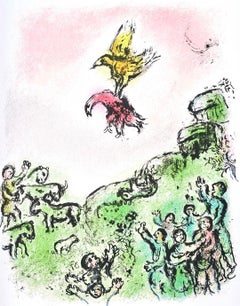
$716 Sale Price
20% Off