Lions Gallery More Art
to
60
15
17
16
24
Overall Width
to
Overall Height
to
8
111
13
1
1
11
15
7
16
10
35
18
14
5
3
1
44
30
12
38
35
26
20
15
6
5
4
4
3
132
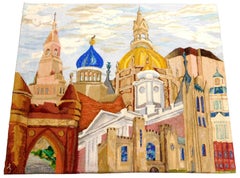
Large Americana Folk Art Pictorial Hooked Rug Wool Wall Hanging Tapestry
By Trudi Shippenberg
Located in Surfside, FL
"Downtown Hartford"
Hooked rug tapestry, various landmark buildings in Hartford, Connecticut, congregate within composition, including capital building, Colt building, Wadsworth Mus...
Category
20th Century Folk Art Mixed Media
Materials
Fabric, Wool

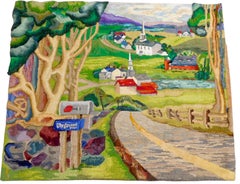
Large Americana Folk Art Pictorial Hooked Rug Wool Wall Hanging Tapestry
By Trudi Shippenberg
Located in Surfside, FL
"RFD Courant",
hooked rug tapestry, rural community with country homes and buildings throughout rolling hills, lush green trees with three-dimensional leaves frame the scene, in the...
Category
20th Century Folk Art Mixed Media
Materials
Fabric, Wool
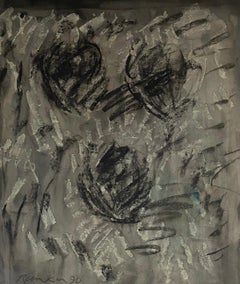
Australian Abstract Expressionist Gouache Painting Charcoal on Shaped Paper
By David Rankin
Located in Surfside, FL
David Rankin
American (b. 1946)
Untitled (Black on gray) (1990)
Gouache and charcoal on paper
signed lower left
19 x 15 inches
Rankin is a New York-based, British-born Australian p...
Category
1990s Abstract Expressionist Abstract Paintings
Materials
Canvas, Oil
Chine Colle Photo Collage Assemblage Art Jockey, President Clinton Invitation
By Ivan Chermayeff
Located in Surfside, FL
Ivan Chermayeff born London, United Kingdom, 1932
Chermayeff was one of the greatest American graphic designers, the son of the Russian born, British architect Serge Chermayeff. Ivan...
Category
1960s Pop Art Mixed Media
Materials
Paper
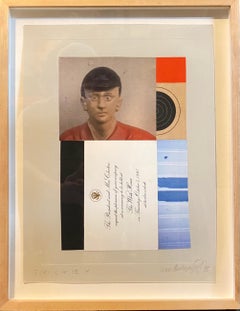
Italian Wool Felt Handmade Futurist Fortunato Depero Art Tapestry Wall Hanging
By Ivana Gaifas
Located in Surfside, FL
It is signed in a stitch Omaggio a Depero, Ivana, 2000
Fortunato Depero (1892 – 1960) was an Italian futurist artist and painter, writer, sculptor and graphic designer who worked in...
Category
20th Century Futurist More Art
Materials
Wool, Felt, Thread
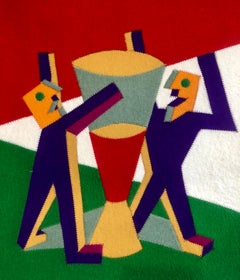
Italian Wool Felt Handmade Futurist Fortunato Depero Art Tapestry Wall Hanging
By Ivana Gaifas
Located in Surfside, FL
It is signed in a stitch Omaggio a Depero, Ivana, 2000
Fortunato Depero (1892 – 1960) was an Italian futurist artist and painter, writer, sculptor and graphic designer who worked in...
Category
20th Century Futurist More Art
Materials
Wool, Felt, Thread
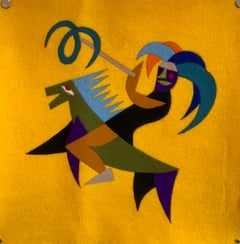
Joan Kahn Rome Vibrant Bold Color Abstract Expressionist Modernist Oil Painting
Located in Surfside, FL
Oil paint on heavy tar paper.
Hand signed and dated verso.
Joan Kahn (USA 1953-) grew up in New York City; Princeton, New Jersey; and Vermont; in an environment that patronized the arts. At home her father, a professor, and mother, a state economist and homemaker, collected nineteenth and twentieth century drawings and prints, Middle eastern rugs, and ceramics, pewter, and old tools. Her grandfather, Max Westfield, was an academically trained portrait painter and her great uncle was a well-known gallery owner and art dealer in pre-World War II Germany. One of the influential experiences of Joan’s youth was visiting her grandfather in his studio in Tennessee where the family had first immigrated.
Growing up near New York, and spending a year in Paris during high school, provided formative visits to museums and galleries. Joan was academically talented in grade and high school, but after her father’s death during her first years at university she found herself concentrating on studio and history of art. It was a subject above others absorbed and concentrated her focus.
Influential in Joan’s development and later work are the historic movements of the Bauhaus and Modernist design and architecture, geometric art and design of diverse cultures, Color Field Painting. Many artists have had a impact on her work, such as Paul Klee, Piet Mondrian, Sonia Delaunay, Mark Rothko, Ad Reinhardt, Antoni Tapies, David Smith, John McLaughlin, Tony Smith, Louise Nevelson, Robert Mangold, Ellsworth Kelly, Agnes Martin, Valerie Jaudon, Jasper Johns, James Turrell, Robert Irwin, Vija Celmins, Caio Fonseca, Peter Halley, Ed Moses, Juan Usle, and Nancy Haynes...
Category
1980s Abstract Expressionist Abstract Paintings
Materials
Oil
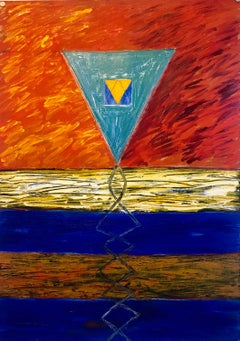
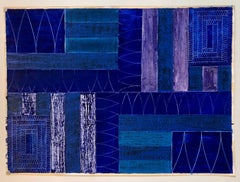
Joan Kahn Indigo Denim Blue Color Abstract Expressionist Modernist Oil Painting
Located in Surfside, FL
Oil paint on heavy paper. (this might possibly be acrylic paint)
This does not appear to be signed.
Joan Kahn (USA 1953-) grew up in New York City; Princeton, New Jersey; and Vermont; in an environment that patronized the arts. At home her father, a professor, and mother, a state economist and homemaker, collected nineteenth and twentieth century drawings and prints, Middle eastern rugs, and ceramics, pewter, and old tools. Her grandfather, Max Westfield, was an academically trained portrait painter and her great uncle was a well-known gallery owner and art dealer in pre-World War II Germany. One of the influential experiences of Joan’s youth was visiting her grandfather in his studio in Tennessee where the family had first immigrated.
Growing up near New York, and spending a year in Paris during high school, provided formative visits to museums and galleries. Joan was academically talented in grade and high school, but after her father’s death during her first years at university she found herself concentrating on studio and history of art. It was a subject above others absorbed and concentrated her focus.
Influential in Joan’s development and later work are the historic movements of the Bauhaus and Modernist design and architecture, geometric art and design of diverse cultures, Color Field Painting. Many artists have had a impact on her work, such as Paul Klee, Piet Mondrian, Sonia Delaunay, Mark Rothko, Ad Reinhardt, Antoni Tapies, David Smith, John McLaughlin, Tony Smith, Louise Nevelson, Robert Mangold, Ellsworth Kelly, Agnes Martin, Valerie Jaudon, Jasper Johns, James Turrell, Robert Irwin, Vija Celmins, Caio Fonseca, Peter Halley, Ed Moses, Juan Usle, and Nancy Haynes...
Category
1980s Abstract Expressionist Abstract Paintings
Materials
Oil
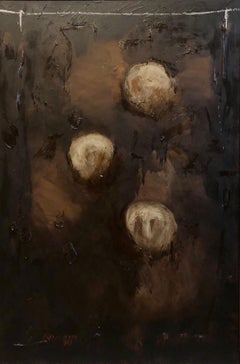
Australian Abstract Expressionist Oil Painting
By David Rankin
Located in Surfside, FL
David Rankin is a New York-based, British-born Australian post-war and contemporary artist known for his expressionistic abstract paintings. His work can be categorized by his use of...
Category
1990s Abstract Expressionist Abstract Paintings
Materials
Canvas, Oil
Joan Kahn Rome Vibrant Bold Color Abstract Expressionist Modernist Oil Painting
Located in Surfside, FL
Oil paint on heavy tar paper.
Hand signed and dated verso.
Joan Kahn (USA 1953-) grew up in New York City; Princeton, New Jersey; and Vermont; in an environment that patronized the arts. At home her father, a professor, and mother, a state economist and homemaker, collected nineteenth and twentieth century drawings and prints, Middle eastern rugs, and ceramics, pewter, and old tools. Her grandfather, Max Westfield, was an academically trained portrait painter and her great uncle was a well-known gallery owner and art dealer in pre-World War II Germany. One of the influential experiences of Joan’s youth was visiting her grandfather in his studio in Tennessee where the family had first immigrated.
Growing up near New York, and spending a year in Paris during high school, provided formative visits to museums and galleries. Joan was academically talented in grade and high school, but after her father’s death during her first years at university she found herself concentrating on studio and history of art. It was a subject above others absorbed and concentrated her focus.
Influential in Joan’s development and later work are the historic movements of the Bauhaus and Modernist design and architecture, geometric art and design of diverse cultures, Color Field Painting. Many artists have had a impact on her work, such as Paul Klee, Piet Mondrian, Sonia Delaunay, Mark Rothko, Ad Reinhardt, Antoni Tapies, David Smith, John McLaughlin, Tony Smith, Louise Nevelson, Robert Mangold, Ellsworth Kelly, Agnes Martin, Valerie Jaudon, Jasper Johns, James Turrell, Robert Irwin, Vija Celmins, Caio Fonseca, Peter Halley, Ed Moses, Juan Usle, and Nancy Haynes...
Category
1980s Abstract Expressionist Abstract Paintings
Materials
Oil

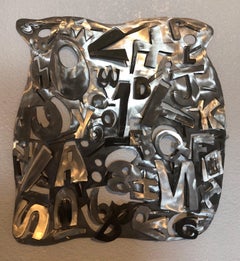
Abstract 3D Wall Hanging Sculpture Brad Howe LA Artist Laser Cut Steel Pop Art
By Brad Howe
Located in Surfside, FL
Letters and numbers cut from a sheet of brushed steel. Hand signed and dated
Brad Howe (born 1959) is an American sculptor from California. His work has been exhibited domestically and internationally. This is done in a bold and colorful Pop Art style reminiscent of the work of the Memphis Milano Group.
Brad Howe was born in 1959 in Riverside, California. As a student of International Relations at Stanford University, Howe attended the University of São Paulo to specialize in Literature and Economic History. It was there that he discovered his passion for art and architecture that would eventually lead to his first exhibitions.
He started his career as a sculptor in Brazil, using stainless steel, aluminum and polyurethane. He credits sculptor Alexander Calder as an early influence in his work.
Since then, he has exhibited in over eighteen countries worldwide and his works have been placed in collections in more than 32 countries, including Brazil, Mexico, France, Germany, South Korea and United States.
His work can also be found at various universities including Massachusetts Institute of Technology (MIT) in Boston, Temple University in Philadelphia, and UCLA.
Monumental and Public Art have become a major focus of his career. Over the past ten years, he has completed over 30 public projects in 7 different countries. One of his sculptures can be seen in the city of Palo Alto, California. Moreover, as part of the Beverly Hills Centennial Arts of Palm Installation, he designed four sculptures outside the Beverly Hills City Hall, on North Santa Monica Boulevard in Beverly Hills, California. The Crocker Art Museum (Sacramento, California), the Honolulu Museum of Art, the Lancaster Museum of Art and History (Lancaster, California), and the Pasadena Museum of California Art (Pasadena, California) are among the museums holding work by Brad Howe. His work was included in the Arts of Palm exhibition in Beverly Hills, palm trees by prominent artists including Brad Howe, Michael McMillen, Mike Stilkey, Peter Shire, Peter Alexander and Ryan Schmidt.
His studio is actively completing site-specific commissions and installations for cities, universities, museums, and private corporations. Brad Howe also actively participates in group gallery shows with smaller works that serve as models, or maquettes, for his large-scale pieces.
SELECT GROUP EXHIBITS:
On The Road: American Abstraction, David Klein Gallery, Detroit, Michigan
Properties of Light, George Billis Gallery, Los Angeles, California
Blur the Lines, Brad Howe and Takashi Murakami, Asian Art Works, Busan, Korea
Brad Howe, Zachary Thornton, Lopez-Herrera, Thomas Punzmann Fine Arts, Frankfurt, Germany
Gary Komarin and Brad Howe, Galerie Proarta, Zurich, Switzerland
Color Balance, Marco Casentini and Brad Howe, Melissa Morgan Fine Art...
Category
1990s Pop Art Abstract Sculptures
Materials
Metal
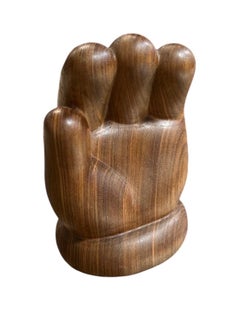
Rare Carved Wood Kaws Hand Sculpture More Gallery Switzerland Wooden Toy Art
By KAWS
Located in Surfside, FL
Wood hand
2016
walnut
7 h × 4¼ w × 4 d in (18 × 11 × 10 cm)
Engraved signature and inscription to underside
Kaws: Giswil
12 June-26 August
More Gallery
This work is from an edition...
Category
2010s Street Art More Art
Materials
Wood
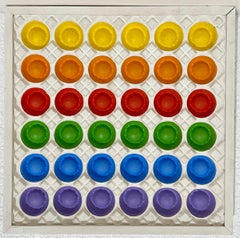
1970
s Watercolor Painting Op Art Minimalist Color Theory Sibyl Edwards, Texas
Located in Surfside, FL
SIBYL EDWARDS (Canadian b. 1944)
"Rainbow Egg Tray"
1973
Watercolor on Pressed Pulp Cardboard Egg Tray Filler
Hand signed and dated verso in ink, "Sibyl Edwards, 1973."
Dimensions: 12" x 12"
Provenance: Collection of Roy H. Van Horn, Houston, Texas
Sibyl Edwards was born in Canada, she was a Texas artist who taught at the Dallas museum of Art in the 1940's along with well-known Dallas artists including Octavio Medellin, Otis Dozier, Merritt Mauzey, and Roger Winter. She was also a avid collector. Her collection included works by Max Bill, Herbert Distel, Hansjorg Glattfelder, the Belgian sculptor Paul Van Hoeydonck...
Category
1970s Abstract Abstract Paintings
Materials
Watercolor, Cardboard
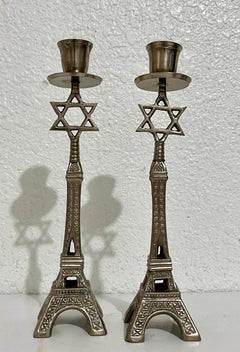
Mid Century Mod Judaica Chrome Eiffel Tower Star of David Candle Holders France
Located in Surfside, FL
20th Century Charming Metal Eiffel Tower Star of David Judaica Candle Holders
9.5" X 2.5" X 2.5"
These are unmarked. Not sure of the country of origin. ...
Category
20th Century Contemporary More Art
Materials
Metal
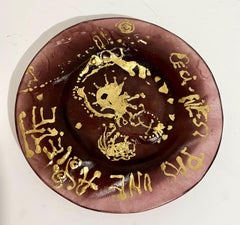
Salvador Dali Daum Pate de Verre with Gold, Glass Plate Sculpture Crystal Art
By (after) Salvador Dali
Located in Surfside, FL
Salvador Dali for Daum (French, Nancy, founded 1878),
"Ceci n'est pas une assiette" or “This is not a plate” plate in dusky rose pink glass pate de verre with gold lettering and des...
Category
1970s Pop Art Abstract Sculptures
Materials
Glass
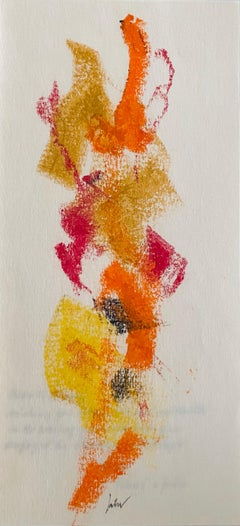
Abstract Pastel Crayon Drawing Color Abstract, Seasonal Letter John Von Wicht
Located in Surfside, FL
Provenance: Virginia Field, arts administrator; New York, N.Y. Assistant director for Asia House gallery. (she was friends with John von Wicht, Bernard Childs, John Ford and Andy War...
Category
Mid-20th Century Abstract Abstract Drawings and Watercolors
Materials
Crayon, Oil Pastel
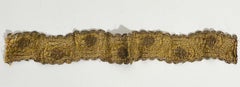
Rare Jewish Pre War Woven Gold Textile Embroidered Antique Judaica Tallit Atara
Located in Surfside, FL
Shpanyer Arbeit, Jewish textile ritual judaic Folk Art
Estimated to the 19th century or early 20th century. there are no markings. It is a hand weaving ...
Category
19th Century Folk Art More Art
Materials
Metal
Rare 1950s Original Syndicated Ink Drawing Cartoon Strip Susie Q Smith Comic Art
Located in Surfside, FL
SUSIE Q. SMITH
Medium: Newspaper comics
Distributed by: King Features Syndicate
First Appeared: 1945
Creators: Linda and Jerry Walter
5.75 X 19.5
Dated August 5, 1954 in top right corner.
Like her contemporaries, Aggie Mack, Candy and Patsy Walker (before her conversion to a superhero), Susie Q. Smith was a female Archie-type — not exactly an imitator, because Archie, who had started only four years earlier, hadn't yet become popular enough to spawn imitators, but part of his genre. She attended high school, where her teachers often seemed unreasonable to her, interacted with the opposite gender in a typically adolescent way, and her parents didn't completely understand her. And she was cute and perky as only a teenage girl can be.
Susie was the star of a comic strip distributed by King Features, the biggest of the comic strip syndicates, whose other offerings have ranged from Jackys Diary to Prince Valiant. King launched the strip in both daily and Sunday form in 1945. Daily, she was only in a panel at first, but it expanded into a full, multi-panel strip on February 7, 1953. In a very odd turn of events, in 1953 the Walters chose to leave King Features behind and hitch their wagon at the McNaught Syndicate. The creators were Harold "Jerry" Walter and his wife, Linda. Jerry was also responsible for Jellybean Jones, who has nothing to do with Jughead Jones's young sister, a modern-day addition to the Archie cast of characters. Together, they did The Lively Ones during the 1960s. Though each was capable of doing both major jobs in comic strip production, their usual working method was for Jerry to dream up the ideas and write the dialog, while Linda did the artwork.
The Walters also collaborated on a series of Susie Q. Smith comic books for Dell Comics. Instead of reprinting newspaper strips, these ran new stories by the Walters. Between 1951 and '54, four issues were published as part of the Four Color Comics series, where many minor comic strips, including Dotty Dripple, Timmy and Rusty Riley had found a home. It had no other media spin-offs.
Susie Q. Smith had a respectable run in the newspapers, but it ended in 1959.
Jerry Walter (1915 - 2007) was an abstract expressionist artist whose output of energetic and colorful paintings were the products of the rich artistic milieu of post-war New York City. He was born Harold Frank Walter in Mount Pleasant, Iowa on November 25, 1915. After graduating from Colgate University in 1937, Walter moved to New York City, where he studied drawing and painting at the New School and the Art Students’ League. Before concentrating seriously on his art, he spent several years as a successful copywriter and idea man for the advertising agencies of J. Walter Thompson, McCann Ericson, and BBDO. During this time, he also worked as a syndicated cartoonist. Collaborating with his wife, Linda, his best-known series was Susie Q. Smith, which first appeared in 1945 and described as a “female Archie type.” Very popular, the cartoon was later the subject of a series of comic books published from 1951 to 1954. After serving in the United States Army for three years during World War II, Walter began to paint seriously. He ascribed his earliest artistic influence to Joan Miró, whose Dog Barking at the Moon (1926) he viewed when he was twelve, the year he published his first cartoon. Walter later wrote that jazz, “the first native expression of so-called modernism” was a strong influence on his work.
During the later 1940s, Walters spent time at the Research Studio in Maitland, Florida. Founded in 1937 by artist and architect J. André Smith and supported by the philanthropist Mary Curtis Bok, the Research Studio was a lively colony that hosted prominent artists, including Milton Avery, Ralston Crawford, and Doris Lee. While at the Studio, Walter’s work was purchased by Frank Crowninshield. A founding trustee of the Museum of Modern Art and editor of Vanity Fair, Crowinshield was a noted collector; his collection included important works by Pablo Picasso, Marc Chagall, Henri Matisse, Edgar Degas, George Bellows, and Pierre Bonnard. Returning to New York after his time at the Studio, Walter became an active member of the New York school of the abstract expressionist movement, and in the summer of 1956, Walter exhibited 13 paintings and a selection of drawings at New York’s Chase Gallery. The adroit manipulation of both color and composition evident in his work shows the influence of Abstract Expressionism, particularly Willem de Kooning, Arshile Gorky, and Hans Hofmann.
illustrator and female cartoonist Linda Walter was the talented female mind behind the beloved "Susie Q. Smith" comic strip. She played an instrumental role in shaping the cultural landscape through her vibrant illustrations. Known for the timeless charm of the "Susie Q. Smith" comic strip, Linda's artistry brought joy and laughter to countless readers during the 1950s and continues to resonate with fans across generations. She was part of the Woodstock artists community. from Women in Comics: Linda Walter was the artist of newspaper strip Susie Q. Smith, which was written by her husband, Jerry. It was syndicated by King Features Syndicate and ran from 1945 to 1959. The Walters also contributed original Susie Q. Smith stories to Dell's Four Color comic books from 1951 to 1954. From 1964-1965, they created a singled panel comic called The Lively Ones.
Vintage Golden Age of Comics era.
The Golden Age of Comic Books describes an era in the history of American comic books from 1938 to 1956. During this time, modern comic books were first published and rapidly increased in popularity. The superhero archetype was created. Between 1939 and 1941 Detective Comics (DC) and its sister company, All-American Publications, introduced popular superheroes such as Batman and Robin, Wonder Woman, the Flash, Green Lantern, Doctor Fate, the Atom, Hawkman, Green Arrow and Aquaman. Timely Comics, the 1940s predecessor of Marvel Comics, had million-selling titles featuring the Human Torch, the Sub-Mariner, and Captain America. Another notable series was The Spirit by Will Eisner.
Dell Comics' non-superhero characters (particularly the licensed Walt Disney animated-character comics) outsold the superhero comics of the day. The publisher featured licensed movie and literary characters such as Mickey Mouse, Donald Duck, Roy Rogers and Tarzan. Additionally, MLJ's introduction of Archie Andrews in Pep Comics #22 (December 1941) gave rise to teen humor comics, with the Archie Comics...
Category
1950s More Art
Materials
Paper, Ink
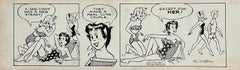
Rare 1950s Vintage Syndicated Ink Drawing Cartoon Strip Susie Q Smith Comic Art
Located in Surfside, FL
SUSIE Q. SMITH
Medium: Newspaper comics
Distributed by: King Features Syndicate
First Appeared: 1945
Creators: Linda and Jerry Walter
5.5 X 19.5
Dated August 13, 1954 in top right corner.
Like her contemporaries, Aggie Mack, Candy and Patsy Walker (before her conversion to a superhero), Susie Q. Smith was a female Archie-type — not exactly an imitator, because Archie, who had started only four years earlier, hadn't yet become popular enough to spawn imitators, but part of his genre. She attended high school, where her teachers often seemed unreasonable to her, interacted with the opposite gender in a typically adolescent way, and her parents didn't completely understand her. And she was cute and perky as only a teenage girl can be.
Susie was the star of a comic strip distributed by King Features, the biggest of the comic strip syndicates, whose other offerings have ranged from Jackys Diary to Prince Valiant. King launched the strip in both daily and Sunday form in 1945. Daily, she was only in a panel at first, but it expanded into a full, multi-panel strip on February 7, 1953. In a very odd turn of events, in 1953 the Walters chose to leave King Features behind and hitch their wagon at the McNaught Syndicate. The creators were Harold "Jerry" Walter and his wife, Linda. Jerry was also responsible for Jellybean Jones, who has nothing to do with Jughead Jones's young sister, a modern-day addition to the Archie cast of characters. Together, they did The Lively Ones during the 1960s. Though each was capable of doing both major jobs in comic strip production, their usual working method was for Jerry to dream up the ideas and write the dialog, while Linda did the artwork.
The Walters also collaborated on a series of Susie Q. Smith comic books for Dell Comics. Instead of reprinting newspaper strips, these ran new stories by the Walters. Between 1951 and '54, four issues were published as part of the Four Color Comics series, where many minor comic strips, including Dotty Dripple, Timmy and Rusty Riley had found a home. It had no other media spin-offs.
Susie Q. Smith had a respectable run in the newspapers, but it ended in 1959.
Jerry Walter (1915 - 2007) was an abstract expressionist artist whose output of energetic and colorful paintings were the products of the rich artistic milieu of post-war New York City. He was born Harold Frank Walter in Mount Pleasant, Iowa on November 25, 1915. After graduating from Colgate University in 1937, Walter moved to New York City, where he studied drawing and painting at the New School and the Art Students’ League. Before concentrating seriously on his art, he spent several years as a successful copywriter and idea man for the advertising agencies of J. Walter Thompson, McCann Ericson, and BBDO. During this time, he also worked as a syndicated cartoonist. Collaborating with his wife, Linda, his best-known series was Susie Q. Smith, which first appeared in 1945 and described as a “female Archie type.” Very popular, the cartoon was later the subject of a series of comic books published from 1951 to 1954. After serving in the United States Army for three years during World War II, Walter began to paint seriously. He ascribed his earliest artistic influence to Joan Miró, whose Dog Barking at the Moon (1926) he viewed when he was twelve, the year he published his first cartoon. Walter later wrote that jazz, “the first native expression of so-called modernism” was a strong influence on his work.
During the later 1940s, Walters spent time at the Research Studio in Maitland, Florida. Founded in 1937 by artist and architect J. André Smith and supported by the philanthropist Mary Curtis Bok, the Research Studio was a lively colony that hosted prominent artists, including Milton Avery, Ralston Crawford, and Doris Lee. While at the Studio, Walter’s work was purchased by Frank Crowninshield. A founding trustee of the Museum of Modern Art and editor of Vanity Fair, Crowinshield was a noted collector; his collection included important works by Pablo Picasso, Marc Chagall, Henri Matisse, Edgar Degas, George Bellows, and Pierre Bonnard. Returning to New York after his time at the Studio, Walter became an active member of the New York school of the abstract expressionist movement, and in the summer of 1956, Walter exhibited 13 paintings and a selection of drawings at New York’s Chase Gallery. The adroit manipulation of both color and composition evident in his work shows the influence of Abstract Expressionism, particularly Willem de Kooning, Arshile Gorky, and Hans Hofmann.
illustrator and female cartoonist Linda Walter was the talented female mind behind the beloved "Susie Q. Smith" comic strip. She played an instrumental role in shaping the cultural landscape through her vibrant illustrations. Known for the timeless charm of the "Susie Q. Smith" comic strip, Linda's artistry brought joy and laughter to countless readers during the 1950s and continues to resonate with fans across generations. She was part of the Woodstock artists community. from Women in Comics: Linda Walter was the artist of newspaper strip Susie Q. Smith, which was written by her husband, Jerry. It was syndicated by King Features Syndicate and ran from 1945 to 1959. The Walters also contributed original Susie Q. Smith stories to Dell's Four Color comic books from 1951 to 1954. From 1964-1965, they created a singled panel comic called The Lively Ones.
Vintage Golden Age of Comics era.
The Golden Age of Comic Books describes an era in the history of American comic books from 1938 to 1956. During this time, modern comic books were first published and rapidly increased in popularity. The superhero archetype was created. Between 1939 and 1941 Detective Comics (DC) and its sister company, All-American Publications, introduced popular superheroes such as Batman and Robin, Wonder Woman, the Flash, Green Lantern, Doctor Fate, the Atom, Hawkman, Green Arrow and Aquaman. Timely Comics, the 1940s predecessor of Marvel Comics, had million-selling titles featuring the Human Torch, the Sub-Mariner, and Captain America. Another notable series was The Spirit by Will Eisner.
Dell Comics' non-superhero characters (particularly the licensed Walt Disney animated-character comics) outsold the superhero comics of the day. The publisher featured licensed movie and literary characters such as Mickey Mouse, Donald Duck, Roy Rogers and Tarzan. Additionally, MLJ's introduction of Archie Andrews in Pep Comics #22 (December 1941) gave rise to teen humor comics, with the Archie Comics...
Category
1950s American Modern More Art
Materials
Paper, Ink
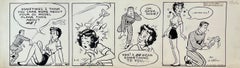
Rare 1950s Original Syndicated Ink Drawing Cartoon Strip Susie Q Smith Comic Art
Located in Surfside, FL
SUSIE Q. SMITH
Medium: Newspaper comics
Distributed by: King Features Syndicate
First Appeared: 1945
Creators: Linda and Jerry Walter
5.75 X 19.75
Dated August 3, 1954 in top right corner.
Like her contemporaries, Aggie Mack, Candy and Patsy Walker (before her conversion to a superhero), Susie Q. Smith was a female Archie-type — not exactly an imitator, because Archie, who had started only four years earlier, hadn't yet become popular enough to spawn imitators, but part of his genre. She attended high school, where her teachers often seemed unreasonable to her, interacted with the opposite gender in a typically adolescent way, and her parents didn't completely understand her. And she was cute and perky as only a teenage girl can be.
Susie was the star of a comic strip distributed by King Features, the biggest of the comic strip syndicates, whose other offerings have ranged from Jackys Diary to Prince Valiant...
Category
1950s American Realist More Art
Materials
Paper, Ink
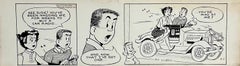
Rare 1950s Original Syndicated Ink Drawing Cartoon Strip Susie Q Smith Comic Art
Located in Surfside, FL
SUSIE Q. SMITH
Medium: Newspaper comics
Distributed by: King Features Syndicate
First Appeared: 1945
Creators: Linda and Jerry Walter
6.25 X 18.25
Like her contemporaries, Aggie Ma...
Category
1950s American Modern More Art
Materials
Paper, Ink
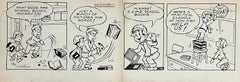
Original Vintage Syndicated Ink Drawing Cartoon Strip Susie Q Smith Comic Art
Located in Surfside, FL
SUSIE Q. SMITH
Medium: Newspaper comics
Distributed by: King Features Syndicate
First Appeared: 1945
Creators: Linda and Jerry Walter
6.5 X 18
Like her contemporaries, Aggie Mack, Candy and Patsy Walker (before her conversion to a superhero), Susie Q. Smith was a female Archie-type — not exactly an imitator, because Archie, who had started only four years earlier, hadn't yet become popular enough to spawn imitators, but part of his genre. She attended high school, where her teachers often seemed unreasonable to her, interacted with the opposite gender in a typically adolescent way, and her parents didn't completely understand her. And she was cute and perky as only a teenage girl can be.
Susie was the star of a comic strip distributed by King Features, the biggest of the comic strip syndicates, whose other offerings have ranged from Jackys Diary to Prince Valiant...
Category
1950s American Modern More Art
Materials
Paper, Ink
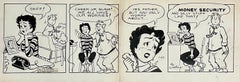
Vintage Golden Age Syndicated Ink Drawing Cartoon Strip Susie Q Smith Comic Art
Located in Surfside, FL
SUSIE Q. SMITH
Medium: Newspaper comics
Distributed by: King Features Syndicate
First Appeared: 1945
Creators: Linda and Jerry Walter
6.5 X 19.5
Like her contemporaries, Aggie Mack, Candy and Patsy Walker (before her conversion to a superhero), Susie Q. Smith was a female Archie-type — not exactly an imitator, because Archie, who had started only four years earlier, hadn't yet become popular enough to spawn imitators, but part of his genre. She attended high school, where her teachers often seemed unreasonable to her, interacted with the opposite gender in a typically adolescent way, and her parents didn't completely understand her. And she was cute and perky as only a teenage girl can be.
Susie was the star of a comic strip distributed by King Features, the biggest of the comic strip syndicates, whose other offerings have ranged from Jackys Diary to Prince Valiant. King launched the strip in both daily and Sunday form in 1945. Daily, she was only in a panel at first, but it expanded into a full, multi-panel strip on February 7, 1953. In a very odd turn of events, in 1953 the Walters chose to leave King Features behind and hitch their wagon at the McNaught Syndicate. The creators were Harold "Jerry" Walter and his wife, Linda. Jerry was also responsible for Jellybean Jones, who has nothing to do with Jughead Jones's young sister, a modern-day addition to the Archie cast of characters. Together, they did The Lively Ones during the 1960s. Though each was capable of doing both major jobs in comic strip production, their usual working method was for Jerry to dream up the ideas and write the dialog, while Linda did the artwork.
The Walters also collaborated on a series of Susie Q. Smith comic books for Dell Comics. Instead of reprinting newspaper strips, these ran new stories by the Walters. Between 1951 and '54, four issues were published as part of the Four Color Comics series, where many minor comic strips, including Dotty Dripple, Timmy and Rusty Riley had found a home. It had no other media spin-offs.
Susie Q. Smith had a respectable run in the newspapers, but it ended in 1959.
Jerry Walter (1915 - 2007) was an abstract expressionist artist whose output of energetic and colorful paintings were the products of the rich artistic milieu of post-war New York City. He was born Harold Frank Walter in Mount Pleasant, Iowa on November 25, 1915. After graduating from Colgate University in 1937, Walter moved to New York City, where he studied drawing and painting at the New School and the Art Students’ League. Before concentrating seriously on his art, he spent several years as a successful copywriter and idea man for the advertising agencies of J. Walter Thompson, McCann Ericson, and BBDO. During this time, he also worked as a syndicated cartoonist. Collaborating with his wife, Linda, his best-known series was Susie Q. Smith, which first appeared in 1945 and described as a “female Archie type.” Very popular, the cartoon was later the subject of a series of comic books published from 1951 to 1954. After serving in the United States Army for three years during World War II, Walter began to paint seriously. He ascribed his earliest artistic influence to Joan Miró, whose Dog Barking at the Moon (1926) he viewed when he was twelve, the year he published his first cartoon. Walter later wrote that jazz, “the first native expression of so-called modernism” was a strong influence on his work.
During the later 1940s, Walters spent time at the Research Studio in Maitland, Florida. Founded in 1937 by artist and architect J. André Smith and supported by the philanthropist Mary Curtis Bok, the Research Studio was a lively colony that hosted prominent artists, including Milton Avery, Ralston Crawford, and Doris Lee. While at the Studio, Walter’s work was purchased by Frank Crowninshield. A founding trustee of the Museum of Modern Art and editor of Vanity Fair, Crowinshield was a noted collector; his collection included important works by Pablo Picasso, Marc Chagall, Henri Matisse, Edgar Degas, George Bellows, and Pierre Bonnard. Returning to New York after his time at the Studio, Walter became an active member of the New York school of the abstract expressionist movement, and in the summer of 1956, Walter exhibited 13 paintings and a selection of drawings at New York’s Chase Gallery. The adroit manipulation of both color and composition evident in his work shows the influence of Abstract Expressionism, particularly Willem de Kooning, Arshile Gorky, and Hans Hofmann.
illustrator and female cartoonist Linda Walter was the talented female mind behind the beloved "Susie Q. Smith" comic strip. She played an instrumental role in shaping the cultural landscape through her vibrant illustrations. Known for the timeless charm of the "Susie Q. Smith" comic strip, Linda's artistry brought joy and laughter to countless readers during the 1950s and continues to resonate with fans across generations. She was part of the Woodstock artists community. from Women in Comics: Linda Walter was the artist of newspaper strip Susie Q. Smith, which was written by her husband, Jerry. It was syndicated by King Features Syndicate and ran from 1945 to 1959. The Walters also contributed original Susie Q. Smith stories to Dell's Four Color comic books from 1951 to 1954. From 1964-1965, they created a singled panel comic called The Lively Ones.
Vintage Golden Age of Comics era.
The Golden Age of Comic Books describes an era in the history of American comic books from 1938 to 1956. During this time, modern comic books were first published and rapidly increased in popularity. The superhero archetype was created. Between 1939 and 1941 Detective Comics (DC) and its sister company, All-American Publications, introduced popular superheroes such as Batman and Robin, Wonder Woman, the Flash, Green Lantern, Doctor Fate, the Atom, Hawkman, Green Arrow and Aquaman. Timely Comics, the 1940s predecessor of Marvel Comics, had million-selling titles featuring the Human Torch, the Sub-Mariner, and Captain America. Another notable series was The Spirit by Will Eisner.
Dell Comics' non-superhero characters (particularly the licensed Walt Disney animated-character comics) outsold the superhero comics of the day. The publisher featured licensed movie and literary characters such as Mickey Mouse, Donald Duck, Roy Rogers and Tarzan. Additionally, MLJ's introduction of Archie Andrews in Pep Comics #22 (December 1941) gave rise to teen humor comics, with the Archie Comics...
Category
1950s American Modern More Art
Materials
Paper, Ink
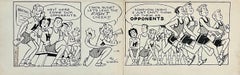
Rare 1950s Original Syndicated Ink Drawing Cartoon Strip Susie Q Smith Comic Art
Located in Surfside, FL
SUSIE Q. SMITH
Medium: Newspaper comics
Distributed by: King Features Syndicate
First Appeared: 1945
Creators: Linda and Jerry Walter
6 X 18.25
Like her contemporaries, Aggie Mack,...
Category
1950s American Modern More Art
Materials
Paper, Ink
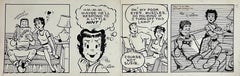
Rare 1950s Original Syndicated Ink Drawing Cartoon Strip Susie Q Smith Comic Art
Located in Surfside, FL
SUSIE Q. SMITH
Medium: Newspaper comics
Distributed by: King Features Syndicate
First Appeared: 1945
Creators: Linda and Jerry Walter
5.5 X 17.75
Like her contemporaries, Aggie Mac...
Category
1950s American Modern More Art
Materials
Paper, Ink
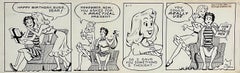
Rare 1950s Original Syndicated Ink Drawing Cartoon Strip Susie Q Smith Comic Art
Located in Surfside, FL
SUSIE Q. SMITH
Medium: Newspaper comics
Distributed by: King Features Syndicate
First Appeared: 1945
Creators: Linda and Jerry Walter
6.5 X 18
Like her contemporaries, Aggie Mack, Candy and Patsy Walker (before her conversion to a superhero), Susie Q. Smith was a female Archie-type — not exactly an imitator, because Archie, who had started only four years earlier, hadn't yet become popular enough to spawn imitators, but part of his genre. She attended high school, where her teachers often seemed unreasonable to her, interacted with the opposite gender in a typically adolescent way, and her parents didn't completely understand her. And she was cute and perky as only a teenage girl can be.
Susie was the star of a comic strip distributed by King Features, the biggest of the comic strip syndicates, whose other offerings have ranged from Jackys Diary to Prince Valiant...
Category
1950s American Modern More Art
Materials
Paper, Ink
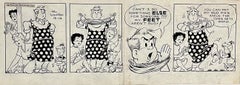
Architect Olabuenaga Vintage Cloisonne Enamel Art Necklace Acme studios Necktie
Located in Surfside, FL
Worn like a bolo tie around the neck.
This is new old stock vintage Jewelry from the legendary Acme Studio collection, which created many revolutionary jewelry items. It was handmade in the 1980s using the intricate cloisonné process, an ancient technique for decorating metal; hence any imperfections within the colors are to be expected and inherent which makes it unique and one-of-a-kind.
The Memphis...
Category
20th Century Pop Art More Art
Materials
Metal, Enamel
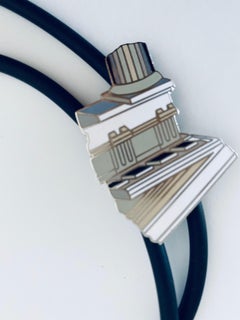
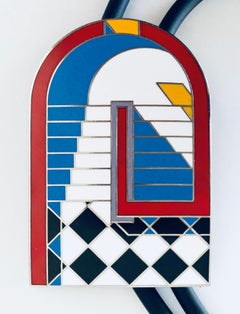
Vintage Chicago Architect Stanley Tigerman Cloisonne Enamel Art Necklace Acme
Located in Surfside, FL
This is new old stock vintage Jewelry from the legendary Acme Studio collection, which created many revolutionary jewelry items. It was handmade in the 1980s using the intricate cloisonné process, an ancient technique for decorating metal; hence any imperfections within the colors are to be expected and inherent which makes it unique and one-of-a-kind.
This piece is worn around the neck, like a bolo tie.
The Memphis Designers...
Category
1980s Pop Art More Art
Materials
Metal, Enamel
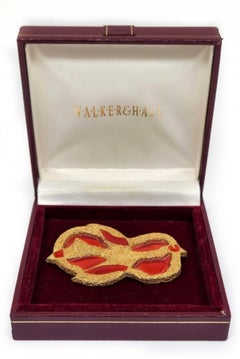
Rare 18 Karat Gold Enamel Georges Braque Sculpture Brooch
By Georges Braque
Located in Surfside, FL
Georges Braque (French, 1882-1963)
Antiboree
Gold and Enamel Brooch, 1963
18k gold textured brooch designed by Georges Braque, a rare 18ct gold textured brooch from 1963, a bird flyi...
Category
1960s Modern Abstract Sculptures
Materials
Gold, Enamel
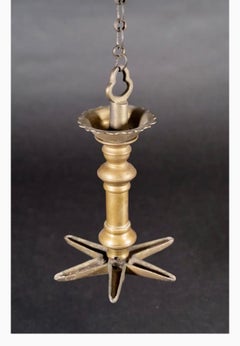
Rare Antique Judaica Hanging Bronze Jewish Synagogue or Temple Oil Lamp w Chain
Located in Surfside, FL
Judaica Shabbat Continental Hanging Solid Brass Oil Lamp with Central Six Pointed Jewish Star Shaped Body Dimensions Approx: with Chain 23"H x 8
11 x 8 x 8 chain is 22" long
Antique...
Category
19th Century Other Art Style More Art
Materials
Brass, Bronze
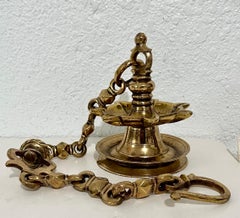
Rare Antique Judaica Hanging Bronze Jewish Synagogue or Temple Oil Lamp w Chain
Located in Surfside, FL
6.5 X 4.5 X 4.5 18" chain
Antique Judaica brass hanging Sabbath or Synagogue Oil Lamp with seven wick oil reservoir. Heavy brass or bronze chain and hook for hanging. Estimated to the 19th century or earlier. there are no markings but similar pieces have been in the Bezalel Museum collection and the Israel Museum collection and the Jewish Museum collection in New York city.. Judaic Shabbat...
Category
19th Century Other Art Style More Art
Materials
Brass, Bronze
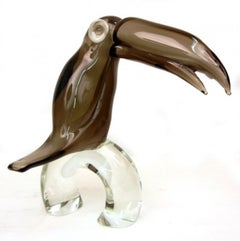
Exquisite Signed Murano Handblown Glass Toucan Sculpture
By Licio Zanetti
Located in Surfside, FL
A mid Century Modern Italian Toucan bird on a branch by a contemporary master. smoked and clear hand blown Murano glass. The base is Hand signed with the signature "L Zanetti".
Licio...
Category
20th Century Modern Figurative Sculptures
Materials
Blown Glass
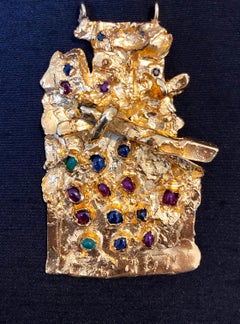
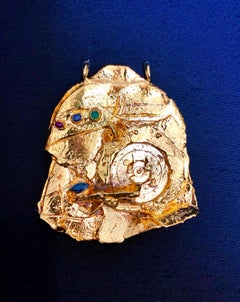
Gold Gilt Bronze Sculpture Pendant Israeli Tumarkin Abstract Modernist Jewelry
Located in Surfside, FL
Measures about 4.25 X 2.25 inches. Box frame is 17 X 13 inches. Signed by artist verso. From the literature that I have seen I believe the edition size was limited to 10, I do not kn...
Category
1960s Modern Abstract Sculptures
Materials
Gold, Bronze
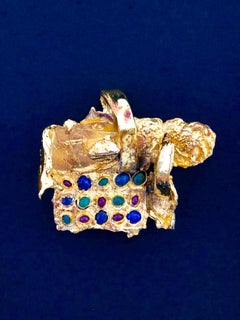
Gold Gilt Bronze Sculpture Brooch Art Israeli Tumarkin Abstract Surrealist
Located in Surfside, FL
Measures about 4 X 3.75 inches. Box frame is 17 X 13 inches. Signed by artist verso. From the literature that I have seen I believe the edition size was limited to 10, I do not know ...
Category
1960s Modern Abstract Sculptures
Materials
Gold, Bronze
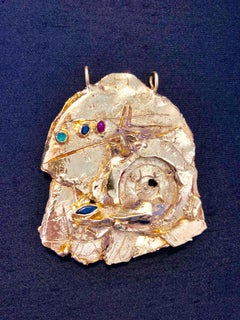
Gold Gilt Bronze Sculpture Necklace Art Israeli Tumarkin Abstract Surrealist
Located in Surfside, FL
Measures about 4 X 3.75 inches. Box frame is 17 X 13 inches. Signed by artist verso. From the literature that I have seen I believe the edition size was limited to 10, I do not know ...
Category
1960s Modern Abstract Sculptures
Materials
Gold, Bronze
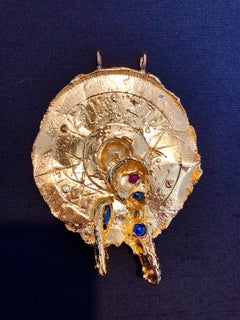
Gold Gilt Bronze Sculpture Pendant Art Israeli Tumarkin Abstract Surrealist
Located in Surfside, FL
Measures about 5.25 X 3.75 inches. Box is 17 X 13 inches. Signed by artist verso. From the literature that I have seen I believe the edition size was limited to 10, I do not know if ...
Category
1960s Surrealist Abstract Sculptures
Materials
Gold, Bronze
Gilt Bronze Sculpture Brooch Wearable Art Israeli Tumarkin Abstract Surrealist
Located in Surfside, FL
Measures about 3.75 X 3.5 inches. Box is 11 X 11 inches. (Piece is in excellent condition. box frame has some minor wear and piece might need to be remounted, it has been removed and...
Category
1960s Surrealist Abstract Sculptures
Materials
Gold, Bronze
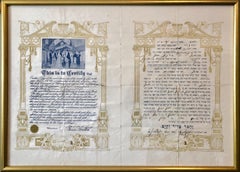
Rare 1915 Early 20c Century Ketubah Hand Written Text NYC Hebrew Publishing co.
Located in Surfside, FL
Vintage Jewish marriage contract, Most likely printed in the USA or Germany. Used in Pittsburgh, Pennsylvania, hand dated 1921. A rare early American judaic piece. Printed in gold an...
Category
Early 20th Century Gothic More Art
Materials
Paper, Ink
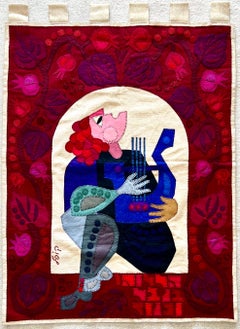
Wool Felt Applique Israeli Folk Art Signed Tapestry Kopel Gurwin Bezalel School
By Kopel Gurwin
Located in Surfside, FL
This depicts KIng David reciting Psalms, Hallelujah in Hebrew
Kopel Gurwin (Hebrew: קופל גורבין) (1923–1990) was an Israeli tapestry wall hanging, painter and graphic artist.
Kopel (Kopke') Gurwin (Gurwitz) was born and raised in Vilna, the capital of Lithuania. He spoke Yiddish at home, but simultaneously studied Hebrew at their school which was part of the Tarbut educational network. Kopel was active in the Hashomer Hatzair youth movement. In the 1930s, as a teenager, Kopel helped his parents with the home finances by working in a suit workshop, there he first encountered the art of sewing.
With the outbreak of the Second World War and the German invasion of Vilna, the Jews were imprisoned in camps and ghettos. Kopel and his brother Moshe were separated from their parents and were put to work in coal mines and peat. Kopel's parents were taken to the Stutthof Nazi concentration camp where they died of typhus within a month of each other. Kopel's 12-year-old sister Chava was turned over to the Germans by a Polish family and murdered.
The brothers were arrested by the Germans, but were saved thanks to the connections of Nina Gerstein, Kopel's drama teacher. They hid in an attic until they were discovered, fled and moved to Riga, where they were caught and sent to the Stutthof concentration camp where they were imprisoned until the end of the war. They were put to work maintaining and cleaning trains and took part in one of the death marches. In July 1946, Kopel and Moshe sailed to Helsingborg, Sweden, as part of operation "Folke Bernadotte", in which Sweden took in ill survivors for rehabilitation. Once he recovered, Kopel worked in a publishing house and later was appointed director of the local branch of the Halutz movement.
In 1950 Kopel and Moshe made aliyah to Israel. Kopel worked as a survey for the Survey of Israel Company. In 1951, he enlisted to the Communication Corps and served as a military draftsman. There he won first prize for the design of the front cover of the Communication Corps bulletin.
With his discharge from the army at 29 he started studying drawing and graphics at the Bezalel Academy of Arts and Design in Jerusalem. Among his teachers were Isidor Ascheim, Shlomo Vitkin, Yossi Stern and Jacob Steinhardt. At the end of his first year of study, Kopel won the Reuben and Sarah Lif Excellence Award in written studies. During his studies he also won additional prizes: In 1956 he won first prize from the Lethem Foundation in California for poster design. Later the same year, Kopel won the Hermann Struck prize for his drawing on the theme of Jerusalem.
In 1957 he won an additional first prize from the Lethem Foundation and second place from the printing company Ortzel for a drawing for a Jewish New Year greeting card. In 1958 he won first prize in a competition to design a poster for Tel Aviv's jubilee.
Two years later he won three other awards: First and third prize for designing a poster for Israel Independence Day, celebrating 12 years of the State of Israel.
Also that year Kopel won first prize for a poster to mark the 25th Zionist Congress.
In 1964 he entered the Independence Day poster competition on the theme of aliyah and won first and second prize. Four years later he again entered the competition on the theme of 20 years of Israel's independence and won first prize. The poster was styled like a Holy Ark curtain with two lions and a menorah at its centre. This poster appeared on the cover of the famous book Jewish Art and Civilization, edited by Geoffrey Wigoder as well as the record Voices of 20 Years, 1948-1968, edited by Yossi Godard. In April 1971 he won first prize in the Independence Day poster competition for the fourth time.
Kopel's Folk Art tapestry won the Israeli Independence Day Poster Contest in 1968
With the completion of his studies at Bezalel Kopel moved to Tel Aviv and was hired by Shmuel Grundman's graphics and design studio. Grundman took him to Europe with him to design and supervise the construction of Israeli exhibition pavilions. During his time at Grundman's he discovered the fibrous felt from which he produced most of his wall hangings. At the 1964 Levant Fair exhibition he used felt stuck onto wooden panels for the first time.
The first felt wall hanging that Kopel produced was intended for the American Cultural Centre in Jerusalem and its theme was the United States Declaration of Independence. The wall hanging, which measured 2.85 X 1.85 meters, was stuck on a wooden panel. Kopel ordered rolls of felt from France and began work on wall hangings based on bible stories. He used a needle, hand sewing small even stitches with black embroidery thread which framed and highlighted every detail in the work, as well as using appliqué. The interior designer, Alufa Koljer-Elem, introduced him to Ruth Dayan who managed the shop Maskit in September 1967 he opened his first solo exhibition at the Maskit 6 gallery, in which 12 wall hangings were displayed.
In light of the exhibition at Maskit 6, Meira Gera, the director of artistic activity at the America-Israel Cultural Foundation, organized an additional exhibition of his works at the foundation's exhibition hall in New York City. The exhibition sparked immense press interest, and was also displayed for a few months at the New York Jewish Museum, from where it travelled throughout the United States.
Followed by the exhibition at the Delson-Richter gallery in Old Jaffa, which was later also exhibited at the Jerusalem Theatre.
Kopel's tapestry "The Time for Singing has Arrived" was printed on a UNICEF greeting card in 1978 and again in 1981.
The Israeli Philatelic Service issued three stamps based on three of Kopel's holy ark curtains and one stamp based on an Independence Day poster he designed.
Kopel's creations decorate a large number of synagogues, public buildings, hotels and private collections which were purchased in Israel and around the world. They have decorated, among others, the walls of the King David Hotel in Jerusalem, the VIP room at Ben Gurion Airport, the Kfar Saba theatre and the Plaza Hotel in Tel Aviv.
Israel has had a Vibrant Folk Art, Naive art scene for a long time now artists like Israel Paldi, Nahum Guttman, Reuven Rubin had naive periods. The most well know of the strict naive artists are Shalom of Safed, David Sharir, Irene Awret, Gabriel Cohen, Natan Heber, Michael Falk and Kopel Gurwin.
Exhibitions:
1995 The Knesset Jerusalem
1988 Temple Beth Shalom Miami, Florida
1988 University of Jewish Studies Los Angeles
1987 Israel Congregation on the Northern Coast Chicago
1985 Jerusalem Theatre Jerusalem
1984 Tenafly New Jersey
1983 Horace Richter Gallery Old Jaffa
1974 Jerusalem Theatre Jerusalem
1974 Delson Richter Gallery Old Jaffa
1972 University of Jewish Studies Miami, Florida
1971 Jewish Museum New York
1970 Norman Gallery Canada
1970 Sharei Tzedek Congregation Winnipeg, Canada
1970 Gallery of the Year Los Angeles
1970 Gallery of the Year Scottsdale
1969 Gleeman Gallery Chicago
1969 Israel Congregation of the Northern Coast Chicago
1967 Maskit 6 Tel Aviv
Prizes:
1971 First Independence Day poster 1971, 23 yeaes of the State of Israel
1969 Second International Tel Aviv poster...
Category
20th Century Folk Art Mixed Media
Materials
Wool, Felt
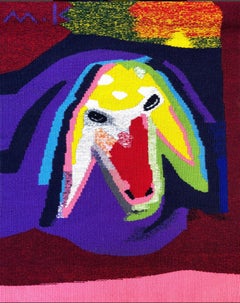
Israeli Hand Woven Colorful Wool Tapestry Weaving Menashe Kadishman Sheep Head
By Menashe Kadishman
Located in Surfside, FL
Beautiful hand woven tapestry by renowned Israeli sculptor Menashe Kadishman. Super quality, and visually stunning.
It measures about 32.5 X 27.5 inches
It is signed with initials.
This is similar to an Aubusson style flat weave hand woven wool tapestry. This is most probably from the George Goldstein Atelier in Jerusalem. (Originally known as Nazareth Tapestries) They produced genuine handmade Gobelin tapestries in Israel). This does not bear a label. In 1964 the first French style weaving studio was inaugurated in Israel, in the new city of Nazareth Ilit. With the encouragement of master Jean Lurcat, woven upon several contemporary masters’ original sketches, such as Jean Lurcat, Hans Hartung, Adolph Gottlieb, Karel Appel, Yaacov Agam, Mordecai Ardon, Reuven Rubin, Danny Caravan, and more. Some of these tapestries encountered their moments of glory during the international exhibitions, such as in the Museum of Modern Art (NY), “Expo Montreal” (Canada), Biennale of Lausanne (Switzerland), and others. In 1967, after the Six-Day War, Nazareth’s workshop closed its doors and returned to Jerusalem where he opened a new studio with a young team made up of eighteen artisans, dedicating their work more specifically towards Israeli artists. The tapestries are woven upon the original sketches of Yohanan Simon, Naftali Bezem. They can be seen hanging on the wall of the Israeli President’s residence, the Yeshiva University of New York, the University of Haifa, New York Bank Discount, as 60-square meter tapestries for the Shaare Zedek Medical Center, Jerusalem, and in ceremonial art. Tapestries for Parochet and Torah mantles are seen in Washington, Bet-El Springfield, Babson College, Boston, Bet-El Univ. Andover, Bet-El Highland Park and the Strasbourg Great Synagogue in France. Along with Itche Mambush in EIn Hod these were the fine, Gobelin style modern art tapestry...
Category
20th Century Modern Mixed Media
Materials
Wool
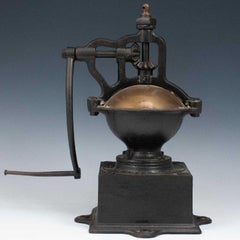
Antique, 19th C. Peugeot Frères Brevetés French Coffee Grinder Table Sculpture
Located in Surfside, FL
This is being sold as a piece of (functional?) decorator table sculpture for a kitchen or restaurant. I do not know if or how it works. the wheel and gears turn. It might be missing a cover on the handle. It is a lovely antique piece. Made in France.
A halfcentury before they produced their first car, the Peugeot brothers were making coffee grinders, continuing to do so for over 100years. In 1840 the Peugeots produced their first moulin a
cafe out of a combination of metal and wood. The beans were inserted into the metal
hopper up top; metal gears were turned by a woodenknob-capped metal...
Category
Late 19th Century Modern Still-life Sculptures
Materials
Metal, Brass
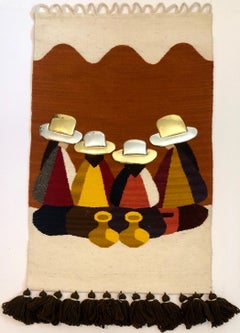
Vintage Handwoven Tapestry Wool, Metal Folk Art Rug Weaving Wall Hanging
By Olga Fisch
Located in Surfside, FL
Olga Fisch was born in Hungary, studied in Germany and lived in Morocco and Ethiopia before receiving asylum as a Jewish refugee in Ecuador in 1939. For her Indian-inspired designs, Mrs. Fisch uses natural black and white sheep...
Category
1950s Folk Art More Art
Materials
Wool
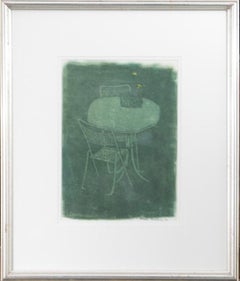
Monotype Print Painting Garden Scene Table Chair Joseph Solman American Art WPA
By Joseph Solman
Located in Surfside, FL
Monotype Painting Title: Table and Chairs, 1980
Medium: monotype or monoprint painting
Size: image 13 x 9.5,overall with frame 23 x 20
Hand signed and dated lower right
Provenance...
Category
20th Century Modern More Art
Materials
Monotype
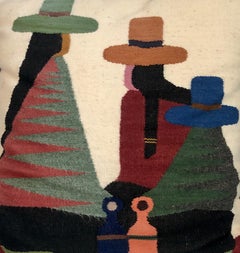
Vintage Handwoven Tapestry Wool Folk Art Rug Weaving Pillow or Wall Hanging
By Olga Fisch
Located in Surfside, FL
Olga Fisch was born in Hungary, studied in Germany and lived in Morocco and Ethiopia before receiving asylum as a Jewish refugee in Ecuador in 1939. For her Indian-inspired designs, Mrs. Fisch uses natural black and white sheep...
Category
1950s Folk Art More Art
Materials
Wool
Fiber Art Collage Israeli Modernist Vibrant Colorful Tapestry Wall Hanging Rug
By Smadar Livne
Located in Surfside, FL
Smadar Livne, an Israeli born artist, is currently living and creating in Owings Mills, Maryland. An award winning artist, she is recognized as one of today’s leading Judaica artists. Educated at Haifa University, Livne has degrees in art, literature, and architecture. She has continued her education of philosophy through Baltimore Hebrew University. Portraying scenes from her life and learning is what gives her work an edge. Livne’s works are vibrant and exciting, and express the joy that Livne sees in life. Not only are the works beautiful, but subtle messages are also painted into each piece, and require time for observation and reflection. Technique sets Livne apart from the rest. Using bold, bright colors and wide strokes, she adds other items in a layering technique. The eye catching result contains layers of paint, fabric, wool and other materials objects, and meaning. Following in the manner of Calman Shemi and before him Kopel Gurwin, Itche Mambush and Georges Goldstein...
Category
20th Century Abstract More Art
Materials
Textile
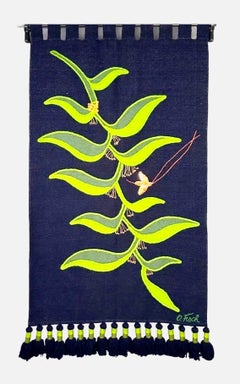
Vintage Handwoven Tapestry Wool Folk Art Rug Weaving Wall Hanging Olga Fisch
By Olga Fisch
Located in Surfside, FL
Olga Fisch ( American 1901-1990)
Hummingbird and Pendant Flower, hand woven and stitched wool and sequins, signed lower right.
Dimensions: 58 x 32 in.
Olga Fisch was born in Hungary, studied in Germany and lived in Morocco and Ethiopia before receiving asylum as a Jewish refugee in Ecuador in 1939. For her Indian-inspired designs, Mrs. Fisch uses natural black and white sheep...
Category
20th Century Folk Art More Art
Materials
Wool
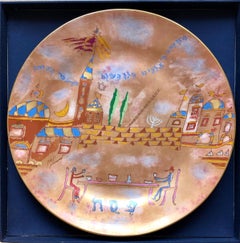
Post Modern Italian Passover Seder Plate Richard Ginori Art Porcelain Judaica
Located in Surfside, FL
Johanan Vitta, painter, born 1941, Jerusalem. Lives in Italy.
Education Firenze, Florence, Italy
He designed the famous La Sinagoga di Firenze poster. The poster features a painterly synagogue it was done for the “Comunita Israelitica"
He has also designed Judaic ritual objects including a menorah that is in a famous museum collection. Arman, Elio Carmi, Eugenio Carmi, Lucio Del Pezzo, Guy De Rougemont, Maurizio Galimberti, David Gerstein, Claude Lalanne, Marino Marinelli, Mimmo Paladino, Arnaldo Pomodoro, Tobia Rava...
Category
1980s Post-Modern Abstract Sculptures
Materials
Porcelain
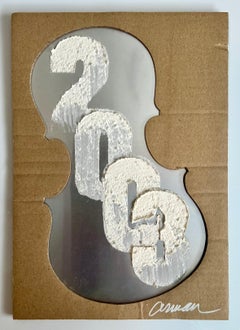
Violin Concerto Hand Signed Mixed media Arman Assemblage Collage New Years Card
By Arman
Located in Surfside, FL
Arman, French/American (1928-2005)
2003
mixed media paint on found metal in a cardboard cut out of a violin
inscribed to interior
signed lower right and signed to the interior 'Arman...
Category
Early 2000s Abstract Mixed Media
Materials
Metal
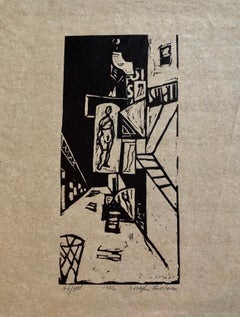
1936 Woodblock Print Venus of 23rd St. Skid Row Woodcut NYC Great Depression WPA
By Joseph Solman
Located in Surfside, FL
A great New york City street scene in a modernist realist style. done in the the great depression period.
Mat is 17.5x14, sheet measures 13x10 image is 10x4.75
Joseph Solman (Janua...
Category
20th Century Modern More Art
Materials
Woodcut
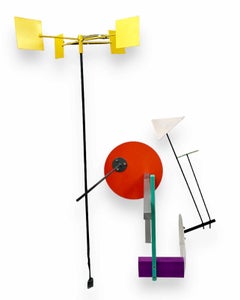
Post Modernist Color Pop Art Sculpture Memphis Milano Peter Shire LA Metal Art
By Peter Shire
Located in Surfside, FL
Peter Shire
Night Studio, 1989
Welded steel and aluminum metal sculpture with anodizing and two-part polyester painting,
Movable kinetic Elements: yellow vane
27 1/4" tall, 18" wide, and 15" deep.
Edition of 24 (not sure if they were all produced, this is not numbered)
This piece is unsigned.
There is some Paint Loss present, and some small Scratches. Overall, the piece looks to be in Nice shape.
Additionally, the yellow squares can turn when they are pushed, or if they are in the presence of a strong gust of air.
Peter Shire (born 1947) is a Los Angeles, California artist. Shire was born in the Echo Park district of Los Angeles, where he currently lives and works. His sculpture, furniture and ceramics have been exhibited in the United States, Italy, France, Japan and Poland; Shire has been associated with the Memphis Group of designers, has worked on the Design Team for the XXIII Olympiad with the American Institute of Architects, and has designed public sculptures in Los Angeles and other California cities. Shire has been honored by awards for his contribution to the cultural life of the City of Los Angeles. He is an influential LA ceramicist along with and influenced by Ken Price and ceramic master Peter Voulkos. Of a similar mod vibe to Charlie Hewitt and Brad Howe. The Memphis Milano Group was an Italian design and architecture group founded in Milan by Ettore Sottsass in 1982 that designed Post modern furniture, fabrics, ceramics, glass, and welded, painted, metal objects from 1981 to 1988. The Memphis group's work often incorporated plastic laminate and was characterized by ephemeral design featuring colorful and abstract decoration as well as asymmetrical shapes, sometimes arbitrarily alluding to exotic or earlier styles. They drew inspiration from such movements as Art Deco and Pop Art, including styles such as the 1950s Kitsch and futuristic themes. Other members included Martine Bedin Michael Graves, Javier Mariscal, Nathalie du Pasquier, Matteo Thun and Marco Zanuso.
Further reading
A Neglected History: 20th Century American Craft. New York, New York: American Craft Museum, 1990.
Clark, Garth. American Ceramics 1907–Present. New York, New York: Abbeville Press, 1987.
Domergue, Denise. Artists Design Furniture. New York, New York: Harry N. Abrams, 1984.
Fiell, Charlotte and Peter. 1000 Chairs. Italy: Taschen, 2000.
Herman, Lloyd E. Art that Works. Seattle, Washington: University of Washington Press, 1990.
Horn, Richard. Memphis: Objects, Furniture, and Patterns. Philadelphia, Pennsylvania: Running Press, 1983.
Radice, Barbara. Memphis. New York, New York: Rizzoli International Publications, 1984.
Taragin, Davara S. Contemporary Crafts and Saxe Collection, The Toledo Museum of Art. New York, New York: Hudson Hills Press, 1993.
Tempest in a Teapot: The Ceramic Art of Peter Shire. New York, New York: Rizzoli International Publications, 1991.
Select Museum Collections:
Art Institute of Chicago, Illinois
Brooklyn Museum of Art, Brooklyn, New York
Berkeley Museum, Berkeley, California
Fresno Museum of Art, Fresno, California
The Israel Museum, Jerusalem, Israel
The Jewish Museum, New york city
Judisches Museum, Frankfurt, Germany
Laguna Art Museum, Laguna Beach, California
Long Beach Museum of Art, Long Beach, California
Los Angeles County Museum of Art, Los Angeles, California
Metropolitan Museum of Art, New York
Mint Museum of Craft and Design, Charlotte, North Carolina
Museum of Arts and Design, New York
Museum of Fine Arts, Houston, Texas
Museum of Modern Art, Lodz, Poland
Newport Art Museum, Newport Beach, California
Oakland Museum of Art, Oakland, California
Österreichisches Museum für Angewandte Kunst, Vienna, Austria
Portland Art Museum, Portland, Oregon
Sak’s Fifth Avenue, New York
San Francisco Museum of Modern Art, San Francisco, California
San Jose Museum of Art, San Jose, California
Seattle Museum of Art, Seattle, Washington
Skirball Museum, Los Angeles, California
Stedelijk Museum, Amsterdam, The Netherlands
Total Contemporary Art Museum, Seoul, Korea
Victoria and Albert Museum, London, United Kingdom
Selected Solo Exhibition venues
Los Angeles County Museum of Art, Los Angeles, California
Chouinard Gallery, South Pasadena, California
Antonia Jannone Gallery, Milan, Italy
Teapots and Drawings, Tobey C. Moss Gallery, Los Angeles, California
LA Artcore Center, Los Angeles, California
S.K. Josefsberg Gallery, Portland, Oregon
20th Century Collage, Dallas, Texas
Toomy-Turrel Gallery, San Francisco, California
Frank Lloyd Gallery, Santa Monica, California
Bobbie Greenfield Gallery, Santa Monica, California
Diane Nelson Fine Art, Laguna Beach, California
Loyola University, New Orleans, Louisiana
S.K. Josefsberg Gallery, Portland, Oregon
University of Judaism, Platt Gallery, Los Angeles, California
El Centro del Pueblo, Los Angeles, California
Gallery Saito, Sapporo Hokkaido, Japan
Morgan Gallery, Kansas City, Missouri
Riva Yares Gallery, Scottsdale, Arizona
Daniel Saxon Gallery, Los Angeles, California
David Lawrence Editions, Beverly Hills, California
Art et Industrie, New York
Clara Scremini Gallery, Paris, France
Design Gallery Milano, Milan, Italy
Lucy Berman Gallery, Palo Alto, California
Parallel Gallery, Del Mar, California
Davis-McClain Gallery, Houston, Texas
Saxon-Lee Gallery, Los Angeles, California
Traver-Sutton Gallery, Seattle, Washington
Onyx Gallery, Los Angeles, California
Skirball Museum, in cooperation with Saxon-Lee Gallery, Los Angeles, California
Installation of the Olympic Village Entertainment Center, California State
Polytechnic University in conjunction with the School of Architecture
Museum of Contemporary Art, Temporary Contemporary, Los Angeles, California
Hokin-Kaufman Gallery, Chicago, Illinois
Hand and the Spirit Gallery, Scottsdale, Arizona
B.Z. Wagman Gallery, St. Louis, Miss
Traver Sutton Gallery, Seattle, Washington
The Morgan Gallery, Shawnee Mission, Kansas, Missouri
The Art Store, Los Angeles, California
American Hand Gallery, Washington, D.C
Modernism, San Francisco, California
Studio Alchymia, Florence, Italy
Janus Gallery...
Category
1980s Post-Modern Sculptures
Materials
Metal
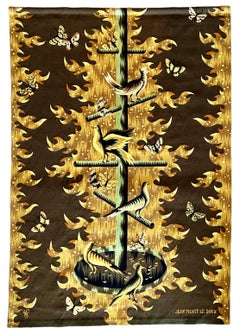
Art Deco French Modernist Handmade Aubusson Gobelin Tapestry Jean Picart Le Doux
By Jean Picart Le Doux
Located in Surfside, FL
Jean Picart Le Doux, French (1902 - 1982)
"Au Rendez Vous Des Oiseaux"
Larger handmade wool Aubusson tapisserie
Produced by Maison M. Berthaut Aubusson Atelier, France. Signed Lower left corner woven with firm's monogram and lower right with artists full name.
Bears stitched label attached en verso.
Original documents included with the lot.
Measures 71-1/2" x 50".
Jean Picart Le Doux, born in Paris in 1902 and died in 1982, was a French painter and painter-cartonnier the revival of contemporary flat weave tapestry. He is the son of the painter Charles Picart Le Doux (1881-1959). His first tapestry dating from 1943 after winning the Grand Prix of the theater poster exhibition in the imaging. He met Jean Lurcat and, and Marc Saint-Saëns,and together they founded the Association of painters cardboard tapestry in 1947. In 1950, he comes up with the idea for the Alliance Graphique Internationale, during the meeting with exhibitors of an exhibition of their work in Basel, Switzerland along with two other French designers Jean Jacques Colin and Nathan, and two Swiss graphic designers, Fritz Buhler and Donald Brown. AGI is officially founded November 22, 1952 and Picart Le Doux will be its first president.
Picart Le Doux was a French artist noted for his role in the revival of contemporary hand woven Aubusson tapestry. Picart Le Doux's first tapestry cartoon was a diptych entitled The Four Seasons. Made in 1943...
Category
Mid-20th Century Modern More Art
Materials
Wool
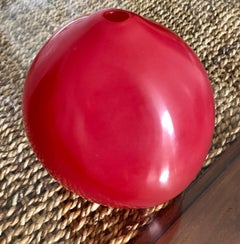
Masterpiece Swiss Contemporary Blown Matte Glass Sculpture Vase
By Thomas Blank
Located in Surfside, FL
Thomas Blank was born in Berne, Switzerland, in 1973. He is a master of transformation, who has been investigating the nature of glass for 20 years now, without losing his fascinatio...
Category
21st Century and Contemporary Post-Modern Abstract Sculptures
Materials
Blown Glass
Rare Milk Glass Carved Sculpture Panel Cowboy Indian WPA Artist Americana
By Abraham Harriton
Located in Surfside, FL
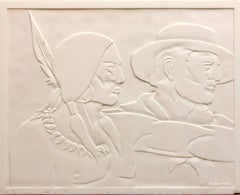
This is a carved glass panel. I belive this is milk glass. it is a classic Americana scene of a cowboy or frontier trapper and an Indian or Native American with a feathered headdress...
Category
Mid-20th Century Realist Figurative Sculptures
Materials
Glass
Three Girls Bronze Relief Sculpture Plaque Chaim Gross Modernist WPA Era Artist
By Chaim Gross
Located in Surfside, FL
Chaim Gross
Three little girls, three Graces. 1981.
Bronze sculptural relief plaque mounted to verdigris marble.
signed and dated on marble
Marble approx 7.5" x 7" x 1.5". Bronze: 5.25" x 4" x 1"
Chaim Gross, born in Wolowa, Austria in 1904, was educated at the Beaux Arts Institute of Design and at the Art Student's League in New York. Chaim Gross's work was greatly influenced by his experiences during a period of international conflict, World War II. He had moved to Kolomyia from Wolowa to get a better education, but the Germans came to occupy, killing, raping, and looting. Gross and his family were chased from one village to
the next. He wrote, "We were sleeping on roofs and in the fields, with the sound of cannon fire always in the distance,". Eventually, he ended up in Budapest with his two brothers, where Anti Semitism was not as severe, and that is where he began to sculpt and draw. He even had a few odd jobs there as a gold and silversmith. When he was seventeen, Gross immigrated to America where his older brother was. There he was a student and then a teacher at the Educational Alliance on the Lower East Side. Teaching became a big part of his philosophy, as he believed that an artist must pass on the knowledge which he had received from others in his artwork.
He was part of an artist emigre community which included Raphael Soyer, Moses Soyer, Arnold Newman, Max Weber and David Burliuk. His daughter is the artist Mimi Grooms and his son in law was Red Grooms.
Chaim Gross works reflect his Jewish and Austrian roots and his Hasidic Jewish upbringing. The figures in his art reflect the Hasidic spirit of being happy and making other people happy. This opiece has children playing and is perfect for a kids room. In his pieces, Jews sing and dance in celebration of the Jewish Sabbath and festivals. They are shown rejoicing in the great gifts of love and life. Chaim Gross was honored with a number of prestigious awards including: the Award of Merit Medal from the National Institute of Arts and Letters in 1963, and the Gold Medal award from the National Academy of Design in 1985. He often used his creative abilities to explore and experiment with media. In his artwork he retains an optimistic philosophy, even when facing somber issues such as war, depression, and the Holocaust.
Gross was born to a Jewish family in Austrian Galicia, in the village of Wolowa (now known as Mezhgorye, Ukraine), in the Carpathian Mountains. In 1911, his family moved to Kolomyia (which was annexed into the Ukrainian USSR in 1939 and became part of newly independent Ukraine in 1991). When World War I ended, Gross and brother Avrom-Leib went to Budapest to join their older siblings Sarah and Pinkas. Gross applied to and was accepted by the art academy in Budapest and studied under the painter Béla Uitz, though within a year a new regime under Miklos Horthy took over and attempted to expel all Jews and foreigners from the country. After being deported from Hungary, Gross began art studies at the Kunstgewerbeschule in Vienna, Austria shortly before immigrating to the United States in 1921. Gross's studies continued in the United States at the Beaux-Arts Institute of Design, where he studied with Elie Nadelman and others, and at the Art Students League of New York, with Robert Laurent. He also attended the Educational Alliance Art School, studying under Abbo Ostrowsky, at the same time as Moses Soyer and Peter Blume.
In 1926 Gross began teaching at The Educational Alliance, and continued teaching there for the next 50 years. Louise Nevelson was among his students at the Alliance (in 1934), during the time she was transitioning from painting to sculpture. In the late 1920s and early 1930s he exhibited at the Salons of America exhibitions at the Anderson Galleries and, beginning in 1928, at the Whitney Studio Club. In 1929, Gross experimented with printmaking, and created an important group of 15 linocuts and lithographs of landscapes, New York City streets and parks, women in interiors, the circus, and vaudeville. The entire suite is now in the collection of the Philadelphia Museum of Art. Gross returned to the medium of printmaking in the 1960s, and produced approximately 200 works in the medium over the next two decades.
In March 1932 Gross had his first solo exhibition at Gallery 144 in New York City. For a short time they represented Gross, as well as his friends Milton Avery, Moses Soyer, Ahron Ben-Shmuel and others.
Gross was primarily a practitioner of the direct carving method, with the majority of his work being carved from wood. Other direct carvers in early 20th-century American art include William Zorach, Jose de Creeft, and Robert Laurent. Works by Chaim Gross can be found in major museums and private collections throughout the United States, with substantial holdings (27 sculptures) at the Hirshhorn Museum and Sculpture Garden. A key work from this era, now at the Smithsonian American Art Museum, is the 1932 birds-eye maple Acrobatic Performers, which is also only one and one quarter inch thick.
In 1933 Gross joined the government's PWAP (Public Works of Art Project), which transitioned into the WPA (Works Progress Administration), which Gross worked for later in the 1930s. Under these programs Gross taught and demonstrated art, made sculptures that were placed in schools and public colleges, made work for Federal buildings including the Federal Trade Commission Building, and for the France Overseas and Finnish Buildings at the 1939 New York World's Fair. Gross was also recognized during these years with a silver medal at the Exposition universelle de 1937 in Paris, and in 1942, with a purchase prize at the Metropolitan Museum of Art's "Artists for Victory" exhibition for his wood sculpture of famed circus performer Lillian Leitzel.
In 1949 Gross sketched Chaim Weizmann, President of Israel, at several functions in New York City where Weizmann was speaking, Gross completed the bust in bronze later that year. Gross returned to Israel for three months in 1951 (the second of many trips there in the postwar years) to paint a series of 40 watercolors of life in various cities. This series was exhibited at the Jewish Museum (Manhattan) in 1953.
In the 1950s Gross began to make more bronze sculptures alongside his wood and stone pieces, and in 1957 and 1959 he traveled to Rome to work with famed bronze foundries including the Nicci foundry. At the end of the decade Gross was working primarily in bronze which allowed him to create open forms, large-scale works and of course, multiple casts. Gross's large-scale bronze The Family, donated to New York City in 1991 in honor of Mayor Ed Koch, and installed at the Bleecker Street Park at 11th street, is now a fixture of Greenwich Village. In 1959, a survey of Gross's sculpture in wood, stone, and bronze was featured in the exhibit Four American Expressionists curated by Lloyd Goodrich at the Whitney Museum of American Art, with work by Abraham Rattner, Doris Caesar, and Karl Knaths. In 1976, a selection from Gross's important collection of historic African sculpture, formed since the late 1930s, was exhibited at the Worcester Art Museum in the show The Sculptor's Eye: The African Art Collection of Mr. and Mrs. Chaim Gross. Gross was elected into the National Academy of Design as an Associate member, and became a full Academician in 1981. In 1984, he was inducted into the American Academy of Arts and Letters, with Jacob Lawrence and Lukas Foss. In the fall of 1991, Allen Ginsberg gave an important tribute to Gross at the American Academy of Arts and Letters, which is published in their Proceedings. In 1994, Forum Gallery, which now represents the Chaim Gross estate, held a memorial exhibition featuring a sixty-year survey of Gross's work.
Gross was a professor of printmaking and sculpture at both the Educational Alliance and the New School for Social Research in New York City, as well as at the Brooklyn Museum Art School, the MoMA art school, the Art Student's League and the New Art School (which Gross ran briefly with Alexander Dobkin, Raphael Soyer and Moses Soyer). Gross was a member of the New York Artists Equity Association and the Federation of Modern Painters and Sculptors. He was a founder and served as the first president of the Sculptors Guild.
He is in the collections of the Museum of Modern Art; the Metropolitan Museum of Art; the Whitney Museum of American Art; the Philadelphia Museum of Art; the Art Institute of Chicago; the Tel Aviv Museum of Art, Israel.He is in the collections of the Museum of Modern Art; the Metropolitan Museum of Art; the Whitney Museum of American Art; the Philadelphia Museum of Art; the Art Institute of Chicago; the Tel Aviv Museum of Art, Israel. And the EIN HAROD Museum's Holdings: Israeli art is represented by the works of Reuven Rubin, Zaritzky, Nahum Gutman, Mordechai Ardon, Aharon Kahana, Arie Lubin, Yehiel Shemi, Yosl Bergner and others.
The graphic arts collection contains drawings and graphic works by Pissaro, Amedeo Modigliani, Jules Pascin, Marc Chagall (almost all of his graphic work), and numerous other artists. The sculpture collection includes works by Jewish sculptors from all over the world including leading Israeli sculptors; Ben Zvi, Lishansky, David Palombo, Yehiel Shemi, Aharon Bezalel and Igael Tumarkin. Many Jewish sculptors from all parts of the world, beginning with Mark Antokolsky, are represented in the collection. In the sculpture courtyard there are works by Chana Orloff, Jacob Epstein (the works he bequeathed to the Museum), Enrico Glicenstein, Loutchansky, Joseph Constant and Leon Indenbaum from Western Europe; Glid from Yugoslavia; William Zorach, Chaim Gross and Minna Harkavy from the United States; and most of the outstanding sculptors of Israel : Zeev Ben-Zvi, Lishansky, Ziffer, Rudi Lehmann, Dov Feigin, Sternschuss, David Palombo ( who executed the iron...
Category
Mid-20th Century Modern More Art
Materials
Marble, Bronze
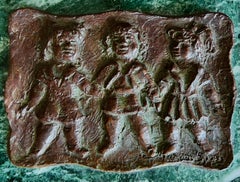
Mixed Media Outsider Visionary Art Newspaper Photo Collage 2 Sided Laminated
By Tom Carapic
Located in Surfside, FL
This one is laminated in plastic.
Tom Carapic (born 1939), full name Tomislav Sava Čarapić, is an artist who specialises in found object artwork. He also does street art. A prominent Outsider Artist he was a featured artist in the American Visionary Art Museum's End is Near Exhibit. His work was also featured in the exhibition catalog. His work has been sold at Slotin Folk Art.
Carapic was born in Velisevac, Serbia (then Kingdom of Yugoslavia). He was educated at a military school in Herzegovina in the 1950s, and served as a sergeant in the Yugoslav People's Army. Afterwards he was denied a college education, possibly because he was not a member of the Communist Party, illegally crossed into Italy in 1961, and, from there, emigrated to the United States.
In 1965, he began attending classes at the New York Art Students League, but dropped out soon afterwards, eventually attending the Wilfred Academy of Beauty Culture. He was unable, however, to find steady beauty parlor employment, and worked in menial labor while attending classes in Spanish Education at Manhattan Community College. Due to a problem with accreditation, he was forced to switch to classes in the field of studio art. There he experienced hallucinatory visions that explained his repeated failures to obtain a degree.
In the late 1970s, Carapic began experiencing more hallucinatory visions; claiming that his degree problems were caused when "the evil marriage bureau massed the troops" against his college and proceeded with "an Air force bombardment" of the school. After receiving other visitations, he began making and showing his art.
Most of his art is centered on found objects, most famously computer keyboards, especially those by IBM. Most of his art consists of these objects, marked with black Sharpie markers, and with green thumbprints and handprints along the objects. His most famous exhibit in New York City is "Big Bang Theory," a doomsday warnings painted on computer keyboards and shoes and construction debris. Bears similarity to the Art Brut movement made famous by Jean Dubuffet.
He was inluded in The End is Near! an exhibit which included an unprecedented group of noted thinkers, from His Holiness the Dalai Lama and Stephen Jay Gould to Reverend Howard Finster and Apocalypse culture expert ,Adam Parfrey, visionary artists brought together by curator, Roger Manley, for an amazing exhibition at the American Visionary Art Museum, the world’s largest ever mounted on the subjects of Apocalypse, Millennium, and Utopia.
The End is Near! featuredwork from the following visionary artists amongst others:
William Adkins Z.B. Armstrong Bill Bruley Frank Bruno Harry Leroy Brunson Tom Carapic Pierre Carbonel Howard Finster Tim Fowler Mary Mac Franklin Victor Joseph Gatto Robert Gie Patrick Gimel Hugo Hempel Oskar Herzberg Vojislav Jakic Norbert Kox Charles Keeling Lassiter...
Category
20th Century Outsider Art Mixed Media
Materials
Mixed Media
Mixed Media Outsider Art Original Photo Collage Painting in Plastic Bag 2 Sided
By Tom Carapic
Located in Surfside, FL
I think this one is the Chinese Premier on one side and fingerprints on the outside of the other side. wrapped in plastic.
Tom Carapic (born 1939), full name Tomislav Sava Čarapić, is an artist who specialises in found object artwork. He also does street art. A prominent Outsider Artist he was a featured artist in the American Visionary Art Museum's End is Near Exhibit. His work was also featured in the exhibition catalog. His work has been sold at Slotin Folk Art.
Carapic was born in Velisevac, Serbia (then Kingdom of Yugoslavia). He was educated at a military school in Herzegovina in the 1950s, and served as a sergeant in the Yugoslav People's Army. Afterwards he was denied a college education, possibly because he was not a member of the Communist Party, illegally crossed into Italy in 1961, and, from there, emigrated to the United States.
In 1965, he began attending classes at the New York Art Students League, but dropped out soon afterwards, eventually attending the Wilfred Academy of Beauty Culture. He was unable, however, to find steady beauty parlor employment, and worked in menial labor while attending classes in Spanish Education at Manhattan Community College. Due to a problem with accreditation, he was forced to switch to classes in the field of studio art. There he experienced hallucinatory visions that explained his repeated failures to obtain a degree.
In the late 1970s, Carapic began experiencing more hallucinatory visions; claiming that his degree problems were caused when "the evil marriage bureau massed the troops" against his college and proceeded with "an Air force bombardment" of the school. After receiving other visitations, he began making and showing his art.
Most of his art is centered on found objects, most famously computer keyboards, especially those by IBM. Most of his art consists of these objects, marked with black Sharpie markers, and with green thumbprints and handprints along the objects. His most famous exhibit in New York City is "Big Bang Theory," a doomsday warnings painted on computer keyboards and shoes and construction debris. Bears similarity to the Art Brut movement made famous by Jean Dubuffet.
He was inluded in The End is Near! an exhibit which included an unprecedented group of noted thinkers, from His Holiness the Dalai Lama and Stephen Jay Gould to Reverend Howard Finster and Apocalypse culture expert ,Adam Parfrey, visionary artists brought together by curator, Roger Manley, for an amazing exhibition at the American Visionary Art Museum, the world’s largest ever mounted on the subjects of Apocalypse, Millennium, and Utopia.
The End is Near! featuredwork from the following visionary artists amongst others:
William Adkins Z.B. Armstrong Bill Bruley Frank Bruno Harry Leroy Brunson Tom Carapic Pierre Carbonel Howard Finster Tim Fowler Mary Mac Franklin Victor Joseph Gatto Robert Gie Patrick Gimel Hugo Hempel Oskar Herzberg Vojislav Jakic Norbert Kox Charles Keeling Lassiter...
Category
20th Century Outsider Art Mixed Media
Materials
Mixed Media
Mixed Media Outsider Art Original Photo Collage Painting Brooklyn Bridge 2 Sided
By Tom Carapic
Located in Surfside, FL
This one is 2 sided with the Brooklyn Bridge on one side and Angkor Wat on the other side. (Angkor is one of the most important archaeological sites in South-East Asia. Stretching over some 400 km2, including forested area, Angkor Archaeological Park contains the magnificent remains of the different capitals of the Khmer Empire, from the 9th to the 15th century. They include the famous Temple of Angkor Wat and, at Angkor Thom, the Bayon Temple with its countless sculptural decorations.)
Tom Carapic (born 1939), full name Tomislav Sava Čarapić, is an artist who specialises in found object artwork. He also does street art. A prominent Outsider Artist he was a featured artist in the American Visionary Art Museum's End is Near Exhibit. His work was also featured in the exhibition catalog. His work has been sold at Slotin Folk Art.
Carapic was born in Velisevac, Serbia (then Kingdom of Yugoslavia). He was educated at a military school in Herzegovina in the 1950s, and served as a sergeant in the Yugoslav People's Army. Afterwards he was denied a college education, possibly because he was not a member of the Communist Party, illegally crossed into Italy in 1961, and, from there, emigrated to the United States.
In 1965, he began attending classes at the New York Art Students League, but dropped out soon afterwards, eventually attending the Wilfred Academy of Beauty Culture. He was unable, however, to find steady beauty parlor employment, and worked in menial labor while attending classes in Spanish Education at Manhattan Community College. Due to a problem with accreditation, he was forced to switch to classes in the field of studio art. There he experienced hallucinatory visions that explained his repeated failures to obtain a degree.
In the late 1970s, Carapic began experiencing more hallucinatory visions; claiming that his degree problems were caused when "the evil marriage bureau massed the troops" against his college and proceeded with "an Air force bombardment" of the school. After receiving other visitations, he began making and showing his art.
Most of his art is centered on found objects, most famously computer keyboards, especially those by IBM. Most of his art consists of these objects, marked with black Sharpie markers, and with green thumbprints and handprints along the objects. His most famous exhibit in New York City is "Big Bang Theory," a doomsday warnings painted on computer keyboards and shoes and construction debris. Bears similarity to the Art Brut movement made famous by Jean Dubuffet.
He was inluded in The End is Near! an exhibit which included an unprecedented group of noted thinkers, from His Holiness the Dalai Lama and Stephen Jay Gould to Reverend Howard Finster and Apocalypse culture expert ,Adam Parfrey, visionary artists brought together by curator, Roger Manley, for an amazing exhibition at the American Visionary Art Museum, the world’s largest ever mounted on the subjects of Apocalypse, Millennium, and Utopia.
The End is Near! featuredwork from the following visionary artists amongst others:
William Adkins Z.B. Armstrong Bill Bruley Frank Bruno Harry Leroy Brunson Tom Carapic Pierre Carbonel Howard Finster Tim Fowler Mary Mac Franklin Victor Joseph Gatto Robert Gie Patrick Gimel Hugo Hempel Oskar Herzberg Vojislav Jakic Norbert Kox Charles Keeling Lassiter...
Category
20th Century Outsider Art Mixed Media
Materials
Paint, Mixed Media, Photographic Paper
Mixed Media Outsider Visionary Art Newspaper Collage Bill Gates Laminated 2 side
By Tom Carapic
Located in Surfside, FL
This one is laminated in plastic.
Tom Carapic (born 1939), full name Tomislav Sava Čarapić, is an artist who specialises in found object artwork. He also does street art. A prominent Outsider Artist he was a featured artist in the American Visionary Art Museum's End is Near Exhibit. His work was also featured in the exhibition catalog. His work has been sold at Slotin Folk Art.
Carapic was born in Velisevac, Serbia (then Kingdom of Yugoslavia). He was educated at a military school in Herzegovina in the 1950s, and served as a sergeant in the Yugoslav People's Army. Afterwards he was denied a college education, possibly because he was not a member of the Communist Party, illegally crossed into Italy in 1961, and, from there, emigrated to the United States.
In 1965, he began attending classes at the New York Art Students League, but dropped out soon afterwards, eventually attending the Wilfred Academy of Beauty Culture. He was unable, however, to find steady beauty parlor employment, and worked in menial labor while attending classes in Spanish Education at Manhattan Community College. Due to a problem with accreditation, he was forced to switch to classes in the field of studio art. There he experienced hallucinatory visions that explained his repeated failures to obtain a degree.
In the late 1970s, Carapic began experiencing more hallucinatory visions; claiming that his degree problems were caused when "the evil marriage bureau massed the troops" against his college and proceeded with "an Air force bombardment" of the school. After receiving other visitations, he began making and showing his art.
Most of his art is centered on found objects, most famously computer keyboards, especially those by IBM. Most of his art consists of these objects, marked with black Sharpie markers, and with green thumbprints and handprints along the objects. His most famous exhibit in New York City is "Big Bang Theory," a doomsday warnings painted on computer keyboards and shoes and construction debris. Bears similarity to the Art Brut movement made famous by Jean Dubuffet.
He was inluded in The End is Near! an exhibit which included an unprecedented group of noted thinkers, from His Holiness the Dalai Lama and Stephen Jay Gould to Reverend Howard Finster and Apocalypse culture expert ,Adam Parfrey, visionary artists brought together by curator, Roger Manley, for an amazing exhibition at the American Visionary Art Museum, the world’s largest ever mounted on the subjects of Apocalypse, Millennium, and Utopia.
The End is Near! featuredwork from the following visionary artists amongst others:
William Adkins Z.B. Armstrong Bill Bruley Frank Bruno Harry Leroy Brunson Tom Carapic Pierre Carbonel Howard Finster Tim Fowler Mary Mac Franklin Victor Joseph Gatto Robert Gie Patrick Gimel Hugo Hempel Oskar Herzberg Vojislav Jakic Norbert Kox Charles Keeling Lassiter...
Category
20th Century Outsider Art Mixed Media
Materials
Mixed Media

Mixed Media Outsider Visionary Art Polaroid Photo Collage Painting 2 sided
By Tom Carapic
Located in Surfside, FL
This one includes Albert Einstein amongst other drawing.
Tom Carapic (born 1939), full name Tomislav Sava Čarapić, is an artist who specialises in found object artwork. He also does street art. A prominent Outsider Artist he was a featured artist in the American Visionary Art Museum's End is Near Exhibit. His work was also featured in the exhibition catalog. His work has been sold at Slotin Folk Art.
Carapic was born in Velisevac, Serbia (then Kingdom of Yugoslavia). He was educated at a military school in Herzegovina in the 1950s, and served as a sergeant in the Yugoslav People's Army. Afterwards he was denied a college education, possibly because he was not a member of the Communist Party, illegally crossed into Italy in 1961, and, from there, emigrated to the United States.
In 1965, he began attending classes at the New York Art Students League, but dropped out soon afterwards, eventually attending the Wilfred Academy of Beauty Culture. He was unable, however, to find steady beauty parlor employment, and worked in menial labor while attending classes in Spanish Education at Manhattan Community College. Due to a problem with accreditation, he was forced to switch to classes in the field of studio art. There he experienced hallucinatory visions that explained his repeated failures to obtain a degree.
In the late 1970s, Carapic began experiencing more hallucinatory visions; claiming that his degree problems were caused when "the evil marriage bureau massed the troops" against his college and proceeded with "an Air force bombardment" of the school. After receiving other visitations, he began making and showing his art.
Most of his art is centered on found objects, most famously computer keyboards, especially those by IBM. Most of his art consists of these objects, marked with black Sharpie markers, and with green thumbprints and handprints along the objects. His most famous exhibit in New York City is "Big Bang Theory," a doomsday warnings painted on computer keyboards and shoes and construction debris. Bears similarity to the Art Brut movement made famous by Jean Dubuffet.
He was inluded in The End is Near! an exhibit which included an unprecedented group of noted thinkers, from His Holiness the Dalai Lama and Stephen Jay Gould to Reverend Howard Finster and Apocalypse culture expert ,Adam Parfrey, visionary artists brought together by curator, Roger Manley, for an amazing exhibition at the American Visionary Art Museum, the world’s largest ever mounted on the subjects of Apocalypse, Millennium, and Utopia.
The End is Near! featuredwork from the following visionary artists amongst others:
William Adkins Z.B. Armstrong Bill Bruley Frank Bruno Harry Leroy Brunson Tom Carapic Pierre Carbonel Howard Finster Tim Fowler Mary Mac Franklin Victor Joseph Gatto Robert Gie Patrick Gimel Hugo Hempel Oskar Herzberg Vojislav Jakic Norbert Kox Charles Keeling Lassiter...
Category
20th Century Outsider Art Mixed Media
Materials
Mixed Media, Polaroid
Mixed Media Outsider Art Original Photo Collage Drawing 2 Sided
By Tom Carapic
Located in Surfside, FL
Tom Carapic (born 1939), full name Tomislav Sava Čarapić, is an artist who specialises in found object artwork. He also does street art. A prominent Outsider Artist he was a featured artist in the American Visionary Art Museum's End is Near Exhibit. His work was also featured in the exhibition catalog. His work has been sold at Slotin Folk Art.
Carapic was born in Velisevac, Serbia (then Kingdom of Yugoslavia). He was educated at a military school in Herzegovina in the 1950s, and served as a sergeant in the Yugoslav People's Army. Afterwards he was denied a college education, possibly because he was not a member of the Communist Party, illegally crossed into Italy in 1961, and, from there, emigrated to the United States.
In 1965, he began attending classes at the New York Art Students League, but dropped out soon afterwards, eventually attending the Wilfred Academy of Beauty Culture. He was unable, however, to find steady beauty parlor employment, and worked in menial labor while attending classes in Spanish Education at Manhattan Community College. Due to a problem with accreditation, he was forced to switch to classes in the field of studio art. There he experienced hallucinatory visions that explained his repeated failures to obtain a degree.
In the late 1970s, Carapic began experiencing more hallucinatory visions; claiming that his degree problems were caused when "the evil marriage bureau massed the troops" against his college and proceeded with "an Air force bombardment" of the school. After receiving other visitations, he began making and showing his art.
Most of his art is centered on found objects, most famously computer keyboards, especially those by IBM. Most of his art consists of these objects, marked with black Sharpie markers, and with green thumbprints and handprints along the objects. His most famous exhibit in New York City is "Big Bang Theory," a doomsday warnings painted on computer keyboards and shoes and construction debris. Bears similarity to the Art Brut movement made famous by Jean Dubuffet.
He was inluded in The End is Near! an exhibit which included an unprecedented group of noted thinkers, from His Holiness the Dalai Lama and Stephen Jay Gould to Reverend Howard Finster and Apocalypse culture expert ,Adam Parfrey, visionary artists brought together by curator, Roger Manley, for an amazing exhibition at the American Visionary Art Museum, the world’s largest ever mounted on the subjects of Apocalypse, Millennium, and Utopia.
The End is Near! featuredwork from the following visionary artists amongst others:
William Adkins Z.B. Armstrong Bill Bruley Frank Bruno Harry Leroy Brunson Tom Carapic Pierre Carbonel Howard Finster Tim Fowler Mary Mac Franklin Victor Joseph Gatto Robert Gie Patrick Gimel Hugo Hempel Oskar Herzberg Vojislav Jakic Norbert Kox Charles Keeling Lassiter...
Category
20th Century Outsider Art Mixed Media
Materials
Mixed Media