Solomon Treasure

to
53
146
84
16
13
13
13
7
6
3
3
2
2
1
1
1
1
11
11
9
5
4
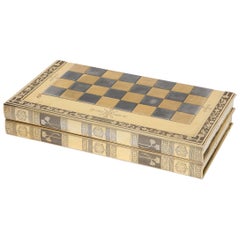
Rare English Silver-Gilt Book-Form Chess and Backgammon Game Board, circa 1976
By Asprey Garrard Limited
Located in Queens, NY
Rare English silver-gilt book-form chess and backgammon game board, circa 1976. This exceptional and rare solid silver chess board converts into a backgammon board and can also be placed in a bookshelf to add more opulence. (3 in 1). This was most definitely a private commissioned piece by the House of Garrard...
Category

20th Century British Games

Materials

Silver

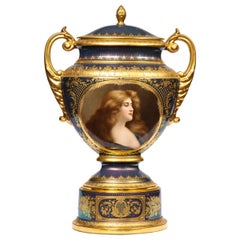
Monumental Royal Vienna Iridescent Porcelain Portrait Vase and Cover, Wagner
By Royal Vienna Porcelain
Located in Queens, NY
A monumental Royal Vienna Iridescent porcelain portrait vase and cover, Wagner, circa 1880. This Royal Vienna Urn features an exceptional iridescent ...
Category

Antique 19th Century Austrian Napoleon III Vases

Materials

Porcelain

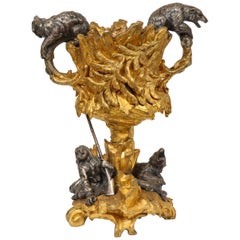
Important Ormolu and Silvered Bronze Figural Wine Cooler, Possibly Russian, 1860
By Pavel Sazikov
Located in Queens, NY
Important ormolu and silvered bronze figural wine cooler, possibly Russian, 1860 Gilt and silvered bronze wine cooler. Modeled with two Russian polar bears at the handles and with a young gunmen holding a rifle seated with a sea otter...
Category

Antique 19th Century Russian Wine Coolers

Materials

Bronze

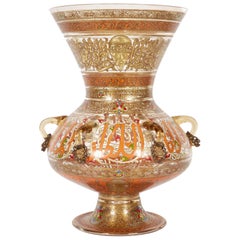
Rare French Enameled Mamluk Revival Glass Mosque Lamp by Philippe Joseph Brocard
By Philippe-Joseph Brocard
Located in Queens, NY
A rare French enameled Mamluk Revival (Islamic) glass mosque lamp / lantern by Philippe-Joseph Brocard, late 19th century. Measures: 14" high x 11" wide Signed Brocard Paris. ...
Category

Antique Late 19th Century French Islamic Lanterns

Materials

Enamel

Extremely Rare Pair of Ferdinand Barbedienne Ormolu and Champlevé Enamel Vases
By Louis-Constant Sevin, Ferdinand Barbedienne
Located in Queens, NY
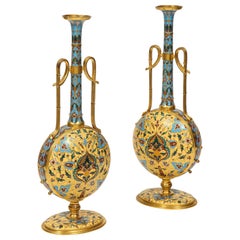
An extremely rare, museum quality pair of Ferdinand Barbedienne ormolu and champlevé enamel vases, circa 1870, certainly designed by Louis Constant Sevin...
Category

Antique 19th Century French Napoleon III Vases

Materials

Enamel, Ormolu

Mellerio Paris, a Silver, Gold, Lapis Lazuli, Coral, and Hardstone Picture Frame
By Mellerio
Located in Queens, NY
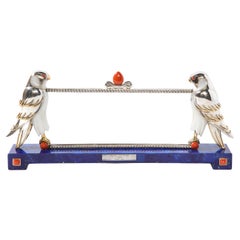
Mellerio Paris, a large silver, gold, lapis lazuli, coral, and hardstone picture photo frame with two falcons. France, circa 2000 The frame resting on a lapis lazuli base with squa...
Category

21st Century and Contemporary French Picture Frames

Materials

Coral, Lapis Lazuli, Silver

Monumental Louis XIV Style Gilt-Bronze Mounted Boulle Marquetry Casket Box
By André-Charles Boulle
Located in Queens, NY
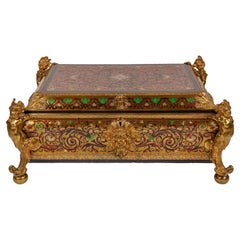
A Monumental Louis XIV style French gilt-bronze mounted wood boulle marquetry casket box, circa 1895 Known in French as a carré de toilette, this casket has canted corners with lavi...
Category

Antique Late 19th Century French Louis XIV Jewelry Boxes

Materials

Brass, Bronze

Ferdinand Barbedienne, A French Ormolu and Champleve Enamel Jardiniere, C. 1870
By Ferdinand Barbedienne, Louis-Constant Sevin
Located in Queens, NY
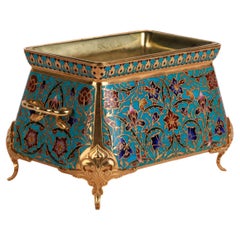
Ferdinand Barbedienne, A French Ormolu and Champleve Enamel Jardiniere, C. 1870, The Design Attributed to Louis Constant Sevin. An exceptional qualit...
Category

Antique 19th Century French Napoleon III Planters, Cachepots and Jardini...

Materials

Bronze, Enamel, Ormolu

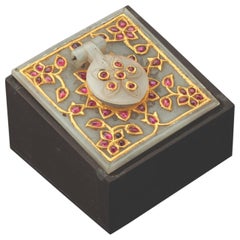
Al Thani Collection, a Mughal Indian Square White Jade Inkwell Cover, circa 1800
Located in Queens, NY
Al Thani collection, a Mughal Indian square white jade inkwell cover, circa 1800 Purchased from the Al Thani collection, Christies New York, Sal...
Category

Antique Late 18th Century Indian Islamic Inkwells

Materials

Jade

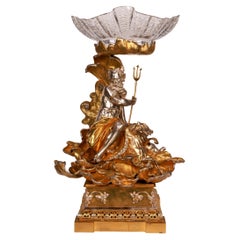
Monumental Silvered and Gilt-Bronze Glass Centerpiece of "Poseidon"
Located in Queens, NY
A Monumental French Silvered and Gilt-Bronze and Glass Centerpiece of "Poseidon", Paris, circa 1895. A very good quality centerpiece depicting "Poseidon and his seahorses", of mon...
Category

Early 20th Century French Classical Greek Centerpieces

Materials

Bronze

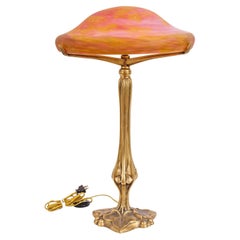
A Louis Majorelle and Daum Nancy Gilt Bronze and Pink Glass Table Lamp
By Daum, Louis Majorelle
Located in Queens, NY
A Louis Majorelle and Daum Nancy Gilt Bronze and Pink Glass Table Lamp, Circa 1900 Introducing an exquisite piece of Art Nouveau mastery – the Louis Majorelle and Daum Nancy Gilt Br...
Category

20th Century Art Nouveau Table Lamps

Materials

Bronze

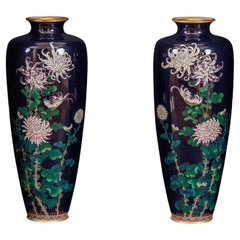
An Exquisite Pair Of Japanese Cloisonné Enamel Vases with Chrysanthemum Blossoms
Located in Queens, NY
An Exquisite Pair Of Japanese Cloisonné Enamel Vases with Chrysanthemum Blossoms, Attributed to Hayashi, Meiji Period. Experience the exquisite craftsmanship of the Meiji period wit...
Category

Antique 19th Century Japanese Meiji Metalwork

Materials

Enamel

An Important Italian Kingwood and Patinated Bronze Figural Table, Circa 1870
Located in Queens, NY
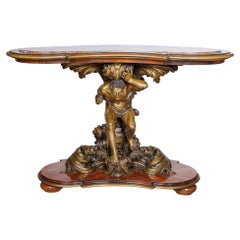
An Important Italian Kingwood and Patinated Bronze Figural Console Table. Indulge in the pinnacle of Italian craftsmanship with this extraordinary Italian Kingwood, Marble, and Patinated-Bronze Figural Console Table—an exquisite masterpiece resonating with the opulence of the late 19th century. The serpentine Breccia di Sciro marble top, cradled within an intricate ormolu and kingwood frame, serves as the crowning glory, setting the stage for an extraordinary display of artistry. The base, a testament to the visionary Ludovico Pogliaghi of Milan, elevates this console table to the realm of sculptural poetry. Departing from convention, a young triton assumes a dynamic pose, ready to gracefully spring forward, replacing the traditional supporting figures found in 17th-century Venetian serving tables. This reinterpretation not only defies expectations but introduces a kinetic elegance, with the triton standing proudly on a scrolling foliate base that seamlessly transitions into a shaped foot supported by dignified bun feet. This console table is a harmonious blend of historical homage and contemporary sophistication. In its design, one can discern echoes of Pogliaghi's prior work, such as a comparable table sold Christies London, 19 March 2009, lot 83 (GBP 205,250) featuring a kneeling river God supporting a silver tray—an exquisite piece of Milanese heritage. Beyond its aesthetic allure, this table encapsulates the essence of grandeur that once graced the noble households of Milan. 31" high x 47" wide x 25" in. deep Provenance: Private American Collection Solomon Treasure...
Category

Antique 19th Century Italian Napoleon III Console Tables

Materials

Marble, Bronze

A Large and Exceptional Pair of French Rock Crystal and Glass Chandeliers
By Maison Baguès
Located in Queens, NY
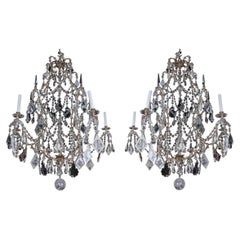
Elevate your space to unparalleled heights of sophistication with this Large and Exceptional Pair of French Rock Crystal, Glass, and Wrought Iron Five-Light Chandeliers. Meticulously...
Category

20th Century French Art Deco Chandeliers and Pendants

Materials

Rock Crystal, Iron

A Monumental Pair Of Baccarat Opaline Glass Bronze Mounted Vases
By Cristalleries De Baccarat
Located in Queens, NY
An Important and Monumental Pair Of French Baccarat Opaline Opaque Glass Bronze Mounted Vases and Covers. In the annals of artistry, certain creations stand as epitomes of beauty, t...
Category

Antique 19th Century French Napoleon III Vases

Materials

Bronze

The Duke and Duchess of Windsor: An Exquisite Ormolu and Églomisé Bureau Plat
By Maison Jansen
Located in Queens, NY
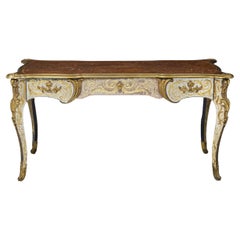
A Timeless Masterpiece: The Exquisite Bureau Plat of The Duke and Duchess of Windsor In the world of fine art and antiques, certain pieces transcend time, becoming symbols of opul...
Category

Early 20th Century French Louis XV Desks and Writing Tables

Materials

Bronze, Ormolu

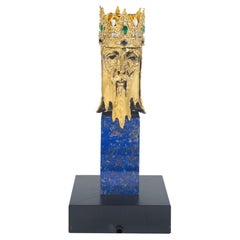
An 18K Gold and Gem Set Bust of a King, by George Weil London
Located in Queens, NY
An 18K Gold and Gem Set Bust of a King, by George Weil London, circa 1970 This magnificent 18K gold and gem-set bust of a king, crafted by George Weil in London, stands as an embodi...
Category

20th Century British Collectible Jewelry

Materials

Lapis Lazuli, Gold

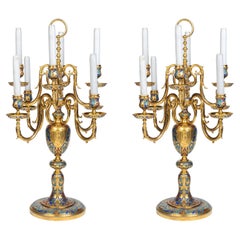
An Exceptional Pair of Champleve Enamel Ormolu Candelabra by Sevin Barbedienne
By Ferdinand Barbedienne, Louis-Constant Sevin
Located in Queens, NY
Illuminating Heritage: An Important "Exhibition" Pair of Ferdinand Barbedienne and Louis Constant Sevin Champleve Enamel and Ormolu Eight-Light Candelabra / Lamps In the realm of de...
Category

Antique 19th Century French Napoleon III Candelabras

Materials

Bronze, Enamel, Ormolu

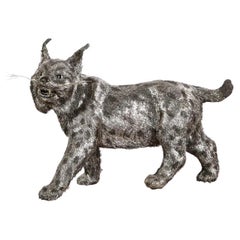
Gianmaria Buccellati, a Rare and Exceptional Italian Silver Bobcat
By Gianmaria Buccellati
Located in Queens, NY
Gianmaria Buccellati, a rare and exceptional Italian silver bobcat, circa 1990s. Made in Milan, Italy. Retail price in the Buccellati Boutique was $72,000 USD + Tax. Very fine qua...
Category

20th Century Italian Sterling Silver

Materials

Silver

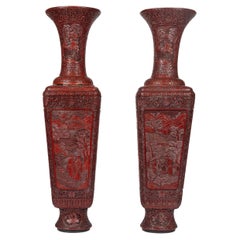
A Monumental and Rare Pair of Chinese Cinnabar Carved Lacquer Vases, Qianlong
Located in Queens, NY
Introducing an extraordinary and exceptionally rare pair of Chinese Cinnabar Carved Lacquer Vases from the Qianlong period. These monumental vases stand as magnificent examples of Ch...
Category

Antique 19th Century Chinese Lacquer

Materials

Lacquer

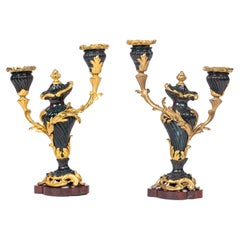
A Rare and Exquisite Pair of Ormolu-Mounted Bloodstone Two-Light Candlesticks
Located in Queens, NY
A Rare Pair of Ormolu-Mounted Bloodstone Two-Light Candlesticks, Resting on Jasper Bases, Circa 1790 Transport yourself to the pinnacle of historical elegance with this extraordinar...
Category

Antique 18th Century French Louis XVI Candlesticks

Materials

Ormolu

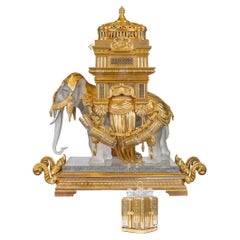
Exquisite Baccarat "Elephant" Cave A Liquor - Exposition Universelle 1878
By Cristalleries De Baccarat
Located in Queens, NY
The Magnificent Baccarat Elephant Cave A Liquor: A Majestic Exploration of a Timeless Masterpiece from the Exposition Universelle of 1878. The Bacca...
Category

Antique 19th Century French Napoleon III Barware

Materials

Crystal, Bronze, Ormolu

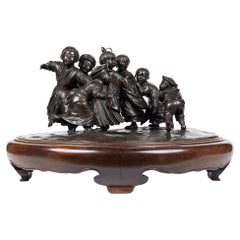
A Large and Exceptional Japanese Meiji Period Tokyo School Bronze Sculpture
Located in Queens, NY
Presenting an extraordinary Large and Exceptional Japanese Meiji Period Tokyo School Bronze Sculpture depicting a delightful ensemble of six energe...
Category

Antique 19th Century Japanese Meiji Sculptures and Carvings

Materials

Bronze

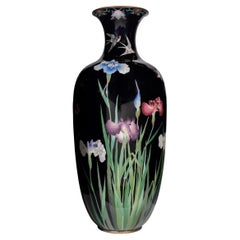
Palace-Sized Japanese Cloisonne Enamel Vase Adorned with Irises and Sparrows
Located in Queens, NY
Introducing a truly magnificent Palace-Sized Japanese Cloisonné Enamel Vase adorned with exquisite irises and graceful sparrows. This extraordinary vase showcases the epitome of Japa...
Category

Antique 19th Century Japanese Meiji Vases

Materials

Enamel

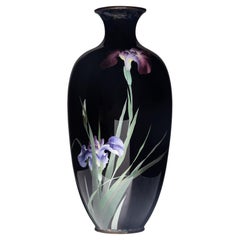
Large Meiji Period Japanese Cloisonne Enamel Vase Adorned with Iris Blossoms
Located in Queens, NY
Introducing a magnificent Large Meiji Period Japanese Cloisonné Enamel Vase adorned with enchanting iris blossoms. This extraordinary vase encapsulates the essence of Japanese artist...
Category

Antique 19th Century Japanese Meiji Vases

Materials

Enamel

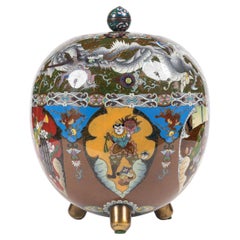
Majestic Japanese Cloisonne Enamel Covered Jar with Dragons, Theater Characters
Located in Queens, NY
A Majestic and Large Japanese Meiji Cloisonné Enamel Covered Jar with Dragons, Mythological Creatures, and Theater Characters. Presentin...
Category

Antique 19th Century Japanese Meiji Vases

Materials

Enamel

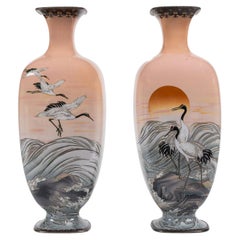
A Large Pair of Japanese Cloisonne Pink-Ground Vases Featuring Sunset and Cranes
Located in Queens, NY
Presenting a truly captivating and highly collectible pair of Meiji Period Japanese Cloisonné Enamel Pink-Ground Vases, attributed to the renowned artist Hayashi Kodenji. These excep...
Category

Antique 19th Century Japanese Meiji Vases

Materials

Enamel

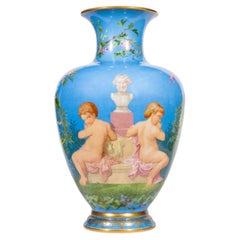
A Large French Baccarat Opaline Glass Hand-Painted "Bacchanale" Vase, by Roussel
By Cristalleries De Baccarat
Located in Queens, NY
A Large French Baccarat Opaline Glass Hand-Painted "Bacchanale" Vase, by Roussel, circa 1885. Presenting an exquisite and highly coveted piece of artistry, behold the large French O...
Category

Antique 19th Century French Napoleon III Vases

Materials

Glass

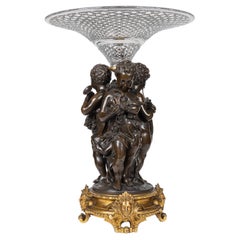
Mathurin Moreau, A Monumental French Bronze and Crystal Figural Centerpiece
By Mathurin Moreau
Located in Queens, NY
Mathurin Moreau (French, 1822-1912) A Monumental French Bronze and Crystal Figural Centerpiece Introducing an extraordinary and monumental Fre...
Category

Antique 19th Century French Napoleon III Centerpieces

Materials

Crystal, Bronze

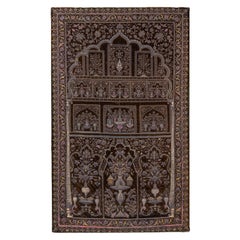
A Rare 18th Century Middle Eastern Silk and Silver Thread Green Velvet Tapestry
Located in Queens, NY
A Rare 18th Century Middle Eastern Silk and Silver Thread Green Velvet Tapestry. Presenting a rare and exceptional find, this 18th-century Middle Eastern silk and silver thread gree...
Category

Antique 18th Century Asian Islamic Tapestries

Materials

Silk, Velvet

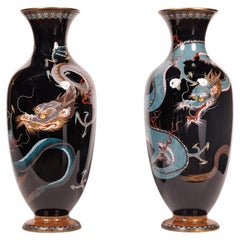
Large Pair of Meiji Period Japanese Cloisonne Enamel Double Dragon Vases
Located in Queens, NY
A large pair of Meiji Period Japanese Cloisonne Enamel Double Dragon Vases, 19th century. Japanese cloisonne enamel dragon vases are highly ...
Category

Antique 19th Century Japanese Meiji Metalwork

Materials

Copper, Enamel

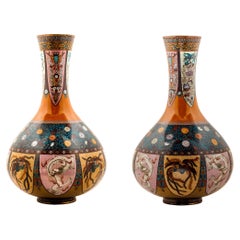
Large Pair of Japanese Cloisonne Enamel Vases Attributed to Honda Yasaburo
Located in Queens, NY
A large pair of Japanese Cloisonne Enamel vases attributed to Honda Yasaburo, 19th century. Finley decorated with the rich enamel colors of orange and green, these vases are desig...
Category

Antique 19th Century Japanese Meiji Metalwork

Materials

Copper, Enamel

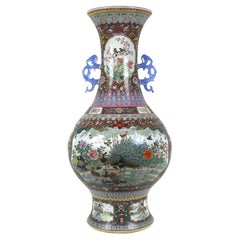
Monumental Chinese Famille Rose Porcelain "Peacock" Palace Vase
Located in Queens, NY
A monumental Chinese famille rose porcelain "Peacock" palace vase, Republic period. Magnificent quality and palace sized Chinese hu-form vase with side h...
Category

Late 20th Century Chinese Qing Ceramics

Materials

Porcelain

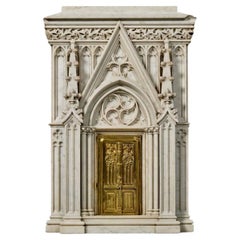
Rare Monumental Italian Carved Carrara Marble Model of a Cathedral
Located in Queens, NY
A Rare and Monumental Italian Carved Carrara Marble Model of a Cathedral, Rome, 19th century, circa 1840. Possibly a representation of Cathedral of Santa Maria del Fiore in Florence Italy. The Italian Renaissance is renowned for its magnificent works of art and architecture, which are admired to this day for their grandeur and intricate details. Among the most impressive examples of this era are the rare and monumental carved Carrara marble models of cathedrals...
Category

Antique 19th Century Italian Gothic Architectural Elements

Materials

Carrara Marble

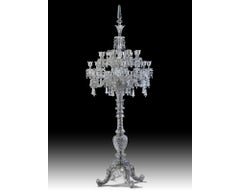
Cristalleries De Baccarat, a Large French Cut-Crystal Tsarine Torchere
By Cristalleries De Baccarat
Located in Queens, NY
Cristalleries De Baccarat, A Large French Cut-Crystal Twenty-Four Light Tsarine Torcheres, Standing Floor Chandelier. "A Magnificent Chandelier" Each central stem issuing twenty-four out-scrolled candle branches suspending prisms and bell-flowers, on four splayed supports, in the Indian Maharaja style, stamped BACCARAT throughout. 86" high x 33" wide Wired for electricity. In overall excellent condition. The torchère is fully complete and there are no damages associated.Ready to place. Comparative Literature: Lerch, Moscou, Splendeurs des Romanov, Exhibition catalogue, 11 July – 13 September 2009, Monaco, pp. 214-217. M. Lerch, Baccarat: la légende du cristal, Exhibition catalogue, 15 October 2014 – 4 January 2015, Paris, pp.68-69. D. Sautot, The Story of Baccarat, Paris, 1993. Cristalleries de Baccarat: The origins of the manufacture, also known as the Compagnie des Cristalleries de Baccarat, can be traced to 1764. On this year, King Louis XV accorded to the Bishop of Metz permission to establish a glass factory on his land, in the small village of Baccarat in Lorraine, in order to compete with the celebrated Bohemian production. Lorraine is traditionally a glass-making region, due to the abundance of silica in the soil and due to its large forests, which supplied the wood to fuel the ovens. Francois-Eugène de Fontenay, who joined the company in 1841, discovered that the addition of nickel oxide in the manufacturing process resulted in a perfectly clear product, 'crystal glass', that was free of discoloration and that imitated precious rock crystal. For this discovery, the Baccarat company was awarded a gold medal at the French Expositions des Produits de l'Industrie in 1844. Continually experimenting with their manufacturing process, the quality of Baccarat's 'crystal glass' improved, reaching the highest level by the end of the century. The Baccarat manufacture rapidly became a leading producer with highly skilled maître-verriers. In 1823, Baccarat participated for the first time at the National Exhibition. Louis XVIII was seduced by the quality of the pieces presented, which received the praise of the jury and the first gold medal. As a result of their success and innovations, the manufacture gradually consolidated its reputation, which allowed it to dominate the French market. The Russian fascination for Baccarat: In 1867, Tsar Alexander II visited the Exposition Universelle in Paris and fell in awe in the sight of Baccarat’s stand...
Category

20th Century French Floor Lamps

Materials

Crystal

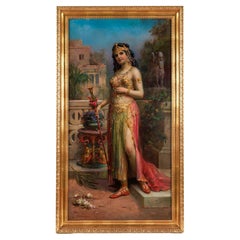
Emanuel Oberhauser, Full Length Portrait of an "Orientalist Queen" Oil on Canvas
Located in Queens, NY
Emanuel Oberhauser (Austrian, 1854-1919) an exceptional quality full length oil on canvas painting of a Young Orientalist Queen or Odalisque, 19th c...
Category

Antique 19th Century Austrian Paintings

Materials

Paint

Large Pair of Japanese Cloisonne Enamel Lanterns Attributed to Hayashi Kodenji
Located in Queens, NY
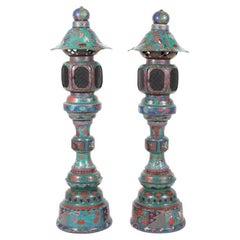
A Large Pair of Japanese Cloisonne Enamel Lanterns Attributed to Hayashi Kodenji, Edo Period, 19th century Japanese cloisonne lanterns were made during the Meiji period, from the la...
Category

Antique 19th Century Japanese Edo Metalwork

Materials

Copper, Enamel

Monumental Meiji Period Japanese Cloisonne Enamel Jardiniere
Located in Queens, NY
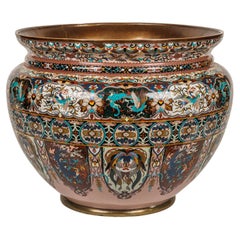
A Monumental Meiji Period Japanese Cloisonne Enamel Jardiniere. This monumental Meiji Period Japanese cloisonne enamel jardiniere is...
Category

Antique 19th Century Japanese Meiji Planters, Cachepots and Jardinières

Materials

Enamel, Copper

Placido Zuloaga, an Extremely Rare Spanish Gold and Silver Damascened Frame
By Plácido Zuloaga 1
Located in Queens, NY
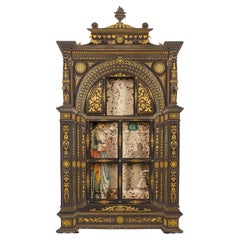
Placido Zuloaga, An extremely rare Spanish gold and silver damascened window frame, in the Alhambra / Islamic taste, circa 1880. The interior is lined and fitted with an orientalist artwork throughout. Signed PZ on the reverse. Placido Zuloaga was a renowned Spanish metalworker and damascene artist known for his exceptional skills in working with gold and silver and for creating intricate and ornate designs on metal surfaces using a technique called damascening. One of Zuloaga's works is this rare gold and silver damascened frame that he created in the late 19th century. The frame is decorated with intricate designs in silver and gold, creating a stunning contrast that is characteristic of Zuloaga's work. The frame is a remarkable example of Zuloaga's artistry and skill, as well as his mastery of the damascening technique. The technique involves inlaying silver or gold wire into the surface of the metal, creating intricate and detailed designs that are both beautiful and durable. Zuloaga's work was highly sought after during his lifetime and is still highly valued today. His pieces are considered to be some of the finest examples of damascene artistry in the world, and his legacy continues to inspire and influence metalworkers and artists today. His works are in private collections and in museums worldwide. Comparative Literature: James D. Lavin, The Art and Tradition of the Zuloagas, Spanish Damascene...
Category

Antique 19th Century Spanish Islamic Picture Frames

Materials

Steel, Iron

Alexandre Chevrie, Museum French Ormolu Mounted Mahogany Royal Executive Desk
By Alexandre Chevrié, Paris 1
Located in Queens, NY
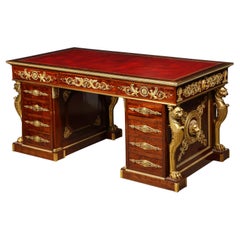
Alexandre Chevrie, a museum quality French ormolu mounted mahogany Royal Executive "Empire" Desk, circa 1875. Double sided desk with six solid bronze lions paw feet, framed ormolu lions on both sized, jewel quality ormolu medusa heads concealing the drawer locks, and exquisite ormolu frieze designs throughout. With original red leather top. Truly the best quality desk with the most sophisticated design for this Napoleon III period. There was a similar bedroom set in this style that was made for King...
Category

Antique 19th Century French Napoleon III Desks and Writing Tables

Materials

Ormolu

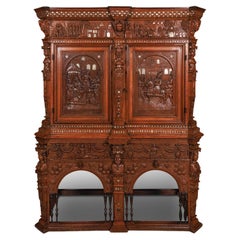
Rare and Important Renaissance "Judaica" Carved Oak Wood Cabinet
Located in Queens, NY
A Rare and Important Renaissance "Judaica" Carved Oak Wood Cabinet, circa 1680 We are pleased to present a rare and important Renaissance Judaica c...
Category

Antique 17th Century German Renaissance Cabinets

Materials

Mother-of-Pearl, Oak

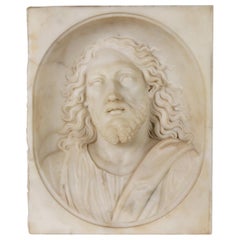
Rare and Important Italian White Marble Bust Sculpture of Jesus Christ, C. 1850
Located in Queens, NY
Rare and important Italian white marble bust sculpture of Jesus Christ, C. 1850. A truly exceptionally carved marble relief of Holy Jesus Christ. ...
Category

Antique 19th Century Italian Renaissance Busts

Materials

Marble

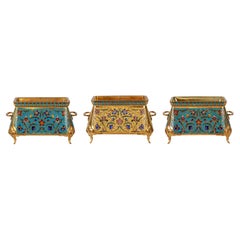
F. Barbedienne, A Suite of Three French Ormolu and Champleve Enamel Jardinieres
By Ferdinand Barbedienne
Located in Queens, NY
Ferdinand Barbedienne, An Exquisite Suite of Three French Ormolu and Champleve Enamel Jardinieres / Garniture C. 1870, The Design Attributed to Louis Constant Sevin. Comprising of t...
Category

Antique 19th Century French Napoleon III Planters, Cachepots and Jardini...

Materials

Bronze, Enamel, Ormolu

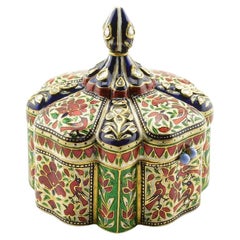
Exquisite and Large Indian 22k Gold, Enamel, and Diamond Snuff Box, Jaipur
Located in Queens, NY
An Exquisite and Large Indian 22K Gold, Enamel, and Diamond Snuff Box, Jaipur A very fine quality 22k gold box set with 40 diamonds, painted with the fi...
Category

20th Century Indian Anglo-Indian Snuff Boxes and Tobacco Boxes

Materials

Gold, Enamel

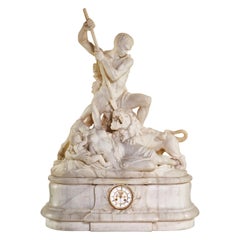
Exceptional White Marble Figural Sculpture Clock, "Nubian Slaying the Lion"
Located in Queens, NY
An exceptional and monumental white marble figural sculpture clock, "A Nubian Slaying The Lion" by Jean-Joseph Jacquet (Belgian, 1822–1898), c...
Category

Antique 19th Century Belgian Figurative Sculptures

Materials

Marble

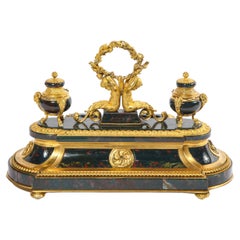
An Exquisite and Rare French Louis XVI Style Ormolu-Mounted Bloodstone Inkwell
Located in Queens, NY
An Exquisite and Rare French Louis XVI Style Ormolu-Mounted Bloodstone Inkwell, circa 1875. A truly exceptional and jewel like quality inkwell encrier, made with the finest ormolu, mounted on bloodstone. A true collectors and one of a kind piece. Revival of the ancient régime in the late 19th century was paramount to the French furniture and bronze casting firms of the Belle Epoque. Imitation in the highest regard and replication of those tastes and styles was prevalent throughout the Paris Faubourg, where the most talented bronziers and ébénistes established their workshops. The present inkwell encrier recalls the late 18th century's obsession with hardstones - a taste expounded above all by the duc d'Aumont and, subsequently Marie-Antoinette. Such hardstone-mounted pieces, reminiscent of Renaissance schatzkammer objects, enjoyed a revived popularity at the end of the 18th century through the impetus of both the marchands-mercier and, more importantly, the hôtel des Menus-Plaisirs, where the duc d'Aumont himself established a workshop in 1770 specializing in the cutting and polishing of precious hardstones. This exceptional inkwell encrier, sumptuously-mounted with finely chased gilt-bronzes, incorporates a highly-prized material such as bloodstone. Sometimes called the Sunstone, the meaning of Bloodstone comes entangled in fascinating history. The Ancient Greeks held the Bloodstone as a gem with glorious powers. They referred to it as Heliotrope, which directly translates to Sunstone. It was believed to have heavenly healing powers gifted by the gods and most certainly when it came to healing all things related to the blood. Even as we move forward into the Middle Ages, the Bloodstone takes another mystical story under its wing. It was believed to be formed from Christ's blood. It was said that during the Crucifixion, a few red spots of his blood dripped...
Category

Antique 19th Century French Napoleon III Inkwells

Materials

Bronze, Ormolu

Mellerio Paris, A French Gold, Diamonds, Silver, and Smoky Quartz Carved Horse
By Mellerio
Located in Queens, NY
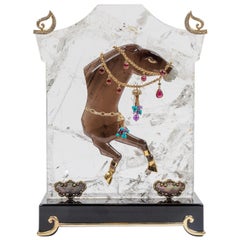
Mellerio Paris, A French Gold, Diamonds, Silver-Gilt, Rock-Crystal, Jade, Mother-Of-Pearl and Smoky Quartz, Carved Horse Sculpture, Jeweled Mounted Object. An extremely rare and unique, one of a kind French gold, diamonds, Silver-gilt, rock-crystal, jade, obsidian, mother-of-pearl, and smoky quartz carved jeweled sculpture "CHEVAUX DE LEGENDE", "A Legendary Horse" by Mellerio, Paris, circa 1991. Sitting on black obsidian base, the solid rock-crystal slab is finely applied with a carved smoky -quartz and jade horse with a harness mounted in 18k gold, brilliant -cut diamonds, rubies, turquoise, and amethyst chains and pendants. The top columns adorned with 18k gold and brilliant cut diamond pendants, the bottom with gold and mother of pearl plaques. The obsidian base with a plaque engraved: CHEVAUX DE LEGENDE" / N° 05 / MELLERIO DITS MELLER / PARIS / 5003 D The piece is in excellent condition and comes with a custom made wood case made for transport. It's very elegant and has French hallmarks throughout. A truly magnificent piece. Measures 10.5" high x 8.5" wide x 4" deep Founded in France in 1613 by the descendants of Italian immigrants from the Vigezzo Valley in the north of Italy, Mellerio is one of the oldest jewellery houses in Europe. The family business soon attracted the attention of the Royal Court and Marie Antoinette herself reportedly purchased a precious bracelet featuring 7 cameos surrounded by rubies in 1780. Later on, in the 19th century, Mellerio became the official supplier of the French Royal family and the Court of Netherland. Mellerio creates many jewellery items, all set with rare gems such as peridots, amethysts, aquamarines, citrines and topaz, applying for a patent, the flexible stem, a very supple and light jewellery mechanism. Mellerio remains also well known for their spectacular series of Art Nouveau jewels, created at the beginning of the 20th century, as well as for the creation of trophies rewarding some of the greatest footfall and tennis players of history. In 1993, the jewellery house launched their first watch collection. Today, Mellerio has stores in Paris, Japan and Hong Kong. July 14, 1789: this date is known throughout the world as the beginning of the French Revolution. According to a ledger belonging to House of Mellerio, this was also the day that the jeweler sold a golden key to the Comte de Coutance for 10 livres. This ledger, as well as inventories dating as far back as 1768, are the jeweler’s oldest archives. These archives have continued to grow over the years, as the House, established on rue de la Paix in Paris, still lives on today, still in the hands of the same family from Craveggia, in the North of Italy. The tumultuous history of the Mellerio family in France probably goes as far back as the Italian wars of the Renaissance, but the first official document proving their commercial activity in Paris dates back to 1613. This document is the famous royal warrant awarded by Marie de Medici to a number of Italian families established along the rue des Lombards, including the Mellerios, allowing them to sell “small jewelery items”, therefore granting them a small exception to the traditional monopoly enjoyed by Parisian jewelers. At that time, powerful corporations regulated the operations and customs of Parisian business, but thanks to this exceptional warrant, the Mellerios managed to escape the confines of this framework. Today, this wax-sealed document is kept at the city hall of Craveggia. From 1613 to the Revolution, the Mellerios lived between France and Italy. The corporations tried many times to put an end to their trade privileges, but all in vain, as a dynasty of sovereigns renewed the warrant. Always marrying and often retiring in Craveggia, the Mellerios continued to maintain their jewelry business in Paris. At first, they did this without a shop. Wearing backpacks (wooden boxes divided into small compartments where jewels were kept), they would tour town fairs around Paris and royal castles. This is how Jean-Baptiste Mellerio (1765-1850) is said to have sold a bracelet set with rubies and Antique cameos to Marie-Antoinette, which still exists today. Many elements seem to prove the veracity of this anecdote. The queen was particularly fond of cameos, which cover the entire background of her famous jewelry cabinet, and ruby was her favorite stone after diamond. The famous bracelet, reacquired a few years ago by the House of Mellerio, is indeed an 18th century jewel, set with antique cameos representing the profiles of Roman emperors. Two branches of the family were operating in Paris during this time, under the reign of Louis XVI: that of Jean-François (1746-1828), the paternal ancestor of the current Mellerios, and that of Jean-Baptiste (1765-1850). The French Revolution forced them to return to Italy. However, both Jean-Baptiste and François Mellerio (1772-1843), who was the son of Jean-François, were eventually able to return to Paris after the founding of the Consulate. Jean-Baptiste opened a shop at the Iron Crown of rue Vivienne, and François opened his at the Palais des Tuileries, rue du Coq Saint-Honoré. His well-organized order books give an idea of his high-ranking clientele during the “Old Regime”, among which were the Comte and Comtesse Octave de Segur, the Marquise (later Duchess) de Tourzel, former governess of the royal children, and her daughter, the Comtesse de Bearn, the Craufurds -who organized the flight to Varennes, the Duc and Duchess de Gramont, the Comtesse de Boigne, and Madame de Souza, Talleyrand’s mistress. We also see the names of the imperial family: Empress Josephine, the Queen of Holland, Princess Elisa, Caroline and Pauline. At that time, the House of Mellerio specialized, among other things, in the trade of antique cameos, a newly fashionable genre of jewel that captured the imagination of all the princesses and noble women of the time. The years of the Restauration and July Monarchy were among the most glorious. The Bourbons were back on the throne, and the clientele of the House of Mellerio had regained its former wealth. Mellerio supplied Louis-Philippe, Duke of Orléans, as well as his mother, wife and sister, with sumptuous jewels, including a set of emeralds made piece by piece, while the Duke of Bourbon, last prince of the House of Condé, offered diamonds to his mistress, the scheming Baronne de Feucheres, and Monsieur de LaFayette also bought cameos for one of his granddaughters. For the first time, Mellerio ventured into the world of arts in 1815, when Carlotta Grisi, a famous dancer who created Giselle, as well as an actress named Rachel, bought jewels at the Mellerio store on rue de la Paix. 1848 marked a new turning point. France once again became a Republic. François Mellerio handed the company over to his son, Jean, and the latter decided to travel to Spain to build a new clientele. He later became one of the jewelers of the royal family, and met Eugénie de Montijo, who remained a faithful client when she became empress of the French people. The Imperial years were lavish. During the Second Empire, Paris was a pageant of crinoline dresses designed by Worth, while jewels by Mellerio, Worth’s neighbour on the rue de la Paix, adorned the noble women of the Tuileries court. The Empress bought pearls. Mathilde Bonaparte...
Category

20th Century French Mounted Objects

Materials

Rock Crystal, Jade, Quartz, Gold, Silver
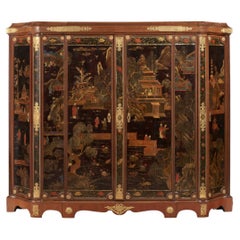
Rare Louis XV Ormolu-Mounted Tulipwood and Chinese Lacquer Cabinet
Located in Queens, NY
A Rare Louis XV Ormolu-Mounted Tulipwood and Chinese Lacquer cabinet, c. 1750 (Regence Period) A truly magnificent, monumental, and one of a kind cabinet, painted throughout with gi...
Category

Antique 18th Century French Louis XV Cabinets

Materials

Ormolu

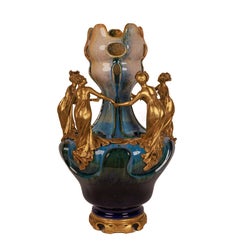
Important Monumental Art Nouveau Ormolu-Mounted Ceramic "Exhibition" Vase
By Louis Chalon, Charles Pillivuyt Cie, Paul Louchet
Located in Queens, NY
An Important and Monumental Art Nouveau Ormolu-Mounted Ceramic "Exhibition" Vase, C. 1895 Spectacularly mounted naturalist vase; the base dressed and balustered, the neck finished in double openwork bulb, the surface describing sinuous reliefs. Polychrome glazed ceramic in Beige, blue, and green. The shoulder is decorated with a gilded bronze roundel with five ormolu bronze female...
Category

Antique Late 19th Century French Art Nouveau Vases

Materials

Bronze, Ormolu

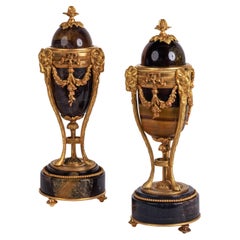
A Rare Pair of French Ormolu-Mounted Blue John Vases Candlesticks, C. 1870
By Matthew Boulton
Located in Queens, NY
A Rare Pair of French Ormolu-Mounted Blue John Vases / Candlesticks, C. 1870, In the stye of Matthew Boulton. These rare and extremely elegant garnitu...
Category

Antique 19th Century French Napoleon III Vases

Materials

Ormolu

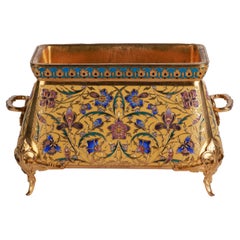
Ferdinand Barbedienne, a French Ormolu and Champleve Enamel Jardiniere, C. 1870
By Ferdinand Barbedienne, Louis-Constant Sevin
Located in Queens, NY
Ferdinand Barbedienne, A French Ormolu and Champleve Enamel Jardiniere, C. 1870, The Design Attributed to Louis Constant Sevin. An exceptional qualit...
Category

Antique 19th Century French Napoleon III Decorative Bowls

Materials

Bronze, Enamel, Ormolu

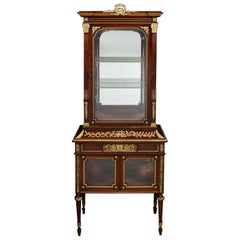
Exquisite French Ormolu-Mounted Mahogany and Glass Vitrine Cabinet
By François Linke
Located in Queens, NY
An exquisite French Ormolu-mounted mahogany and glass vitrine cabinet, attributed to Francois Linke, circa 1880. Although unsigned, the jewel-like quality ormolu bronze mounts throughout, especially the corinthian columns, and the best mahogany and craftsmanship of the period, confirms our attribution to Francois Linke, who was almost certainly one of best furniture makers of the Belle Epoque period alongside Paul Sormani, Henry Dasson, Alexandre Chevrie...
Category

Antique 19th Century French Napoleon III Vitrines

Materials

Bronze, Ormolu

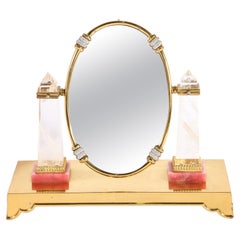
Exquisite Italian Silver-Gilt, Diamond, Rock Crystal, Rhodochrosite Mirror
Located in Queens, NY
An Exquisite Italian Silver-Gilt, Diamond, Rock Crystal, and Rhodochrosite Vanity Mirror, by Moba Italy. Circa 1950 Very fine and impressive vanity mirror made in solid sterling gi...
Category

20th Century Italian Table Mirrors

Materials

Rock Crystal, Silver

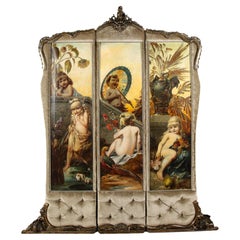
Palatial and Opulent Belle Epoque Giltwood Oil on Canvas Three-Panel Screen
By Ferdinand Wagner II 1
Located in Queens, NY
A Palatial and Opulent Belle epoque giltwood oil on canvas three-panel screen, circa 1890. "Allegory of Youth" Comprising of three exquisite hand-painted triptych oil on canvas panels of cherubs and putti amongst a peacock, all by Ferdinand Wagner II (German, 1847-1927). Each panel depicting different playful and joyous scenes of putti and cherubs. All three-in-one panels within individually carved giltwood and upholstered frames. One panel signed at the lower left: Ferd.Wagner. A truly magnificent and one of a kind piece, perfect for any room in the home. Overall: 101" high 85" wide x 5" deep Very good condition. Ready to place. Ferdinand Wagner II (German, 1847-1927) was the son of Passau Ferdinand Wagner Senior, a teacher at a vocational art school who began training him professionally at a young age. After traveling to Italy in 1867-1868, he continued with his art studies at The Munich Academy of Arts led by Peter Von Cornelius and Julius Schnorr Von Carolsfeld. Wagner II was influenced by the Munich School of master painters and by his art teacher, Karl von Piloty, who had been teaching at the Munich Art Academy since 1856. Piloty’s approach to historical paintings was influenced by the French art academic Paul Delaroche and by the fine artworks by Rubens and the Venetians. After his return to Germany he was commissioned to decorate the former the Tenormayer Wine Tavern in Munich, subsequently he received numerous other commissions as a decorator. Ferdinand Wagner II wall paintings and ceiling frescos...
Category

Antique 19th Century German Belle Époque Screens and Room Dividers

Materials

Canvas, Upholstery, Giltwood, Paint

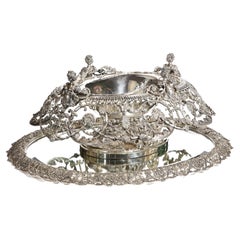
Tiffany Company, George Paulding Farnham, A Rare, Lavish Silver Centerpiece
By Paulding Farnham., Tiffany Co.
Located in Queens, NY
Tiffany Company and George Paulding Farnham, A rare, lavish and monumental sterling silver centerpiece with original mirrored-glass sterling silver plateau, circa 1900. Museum quality. In the George III style, designed by Paulding Farnham for Tiffany and Co, New York. Of palatial and monumental size. Centerpiece: 15" high x 30" wide x 27" deep Plateau: 3" high x 39" wide x 34" deep In excellent condition, ready to place. Of oval form, the everted rims formed of openwork scrolling classical foliage and bellflower swags, the tops applied with standing scrolling foliage with four silver caryatid female figures, the bases overlaid with acanthus and palmettes. The original, silver mirrored plateau...
Category

Early 20th Century American American Classical Sterling Silver

Materials

Sterling Silver

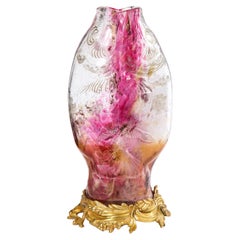
Emile Galle, A Rare Important Ormolu-Mounted Double Carp Fish Pink-Glass Vase
By Émile Gallé
Located in Queens, NY
A rare and important French "Japonsime" Emile Galle Ormolu-Mounted Double Carp Fish Pink-Glass vase, circa 1879, retailed by L'Escalier De Cristal, Paris ...
Category

Antique 19th Century French Japonisme Vases

Materials

Enamel, Ormolu

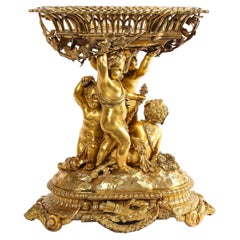
Exquisite Napoleon III French Ormolu Figural Basket Centerpiece, Circa 1880
By Alfred Emmanuel Louis Beurdeley
Located in Queens, NY
An exquisite Napoleon III French ormolu figural basket centerpiece, Circa 1880, Attributed to Alfred Emmanuel Louis Beurdeley. Depicting four mercury-gilded bronze ormolu cherubs holding a basket, the base with trophies and scrolling. This monumental centerpiece...
Category

Antique 19th Century French Napoleon III Centerpieces

Materials

Ormolu

Rare Patinated Bronze Sculpture of Benjamin Franklin, by A. Carrier-Belleuse
By Albert-Ernest Carrier-Belleuse
Located in Queens, NY
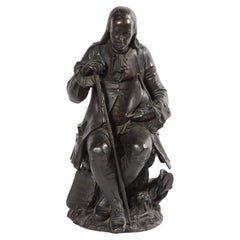
Albert-Ernest Carrier-Belleuse (France, 1824-1887) A rare seated bronze statue of Benjamin Franklin holding his walking stick and hat, with a book in his ri...
Category

Antique 19th Century French American Classical Figurative Sculptures

Materials

Bronze

Rare 18K Gold, Enamel and Diamond Mounted Carved Labradorite Turkey Bird
By Manfred Wild
Located in Queens, NY
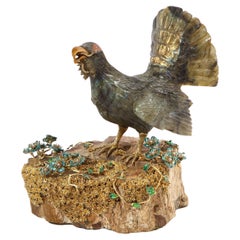
A rare 18K gold, enamel and diamond mounted carved labradorite turkey / Capercaillie bird sculpture on a petrified wood base, attributed to Manfred Wild, Idar-Oberstein, Germany. Very finely crafted of the highest quality and best color Madagascar labradorite with excellent labradorescence. The entire hand carved turkey displays and excellent shimmer effect known as labradorescence. Madagascar labradorite, rich in the phenomenal characteristics of this remarkable gemstone which displays an ever-changing sheen, that is extremely suitable for the rendering of this turkey bird...
Category

20th Century German Mounted Objects

Materials

Gold, Enamel

Mellerio Paris, A French Gold, Diamond, Silver-Gilt, Rock-Crystal, Lapis Horse
By Mellerio
Located in Queens, NY
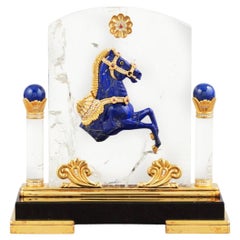
Mellerio Paris, A French Gold, Diamond, Silver-Gilt, Rock-Crystal, Obsidian Lapis Horse An extremely rare and unique, one of a kind French gold, diamonds, Silver-gilt rock-crystal, obsidian and lapis lazuli jeweled sculpture "Bucéphale, Chevaux de légende", "Bucephalus, A Legendary Horse" by Mellerio, Paris, circa 1998. Sitting on black obsidian base, the solid rock crystal slab is finely applied with a lapis lazuli half-horse with harness mounted in 18k gold and brilliant cut diamonds, between two crystal and lapis lazuli columns adorned with gold and diamonds, insert with 7 ruby cabochons and 1 emerald cabochon, the obsidian base with a plaque engraved: CHEVAUX DE LEGENDE / MELLERIO DITS MELLER / PARIS / 5029 DIV Bucephalus (c355-326 BC) is among the most famous horses in history, and it was said that this he could not be tamed. The young Alexander the Great, of course, tamed him – and went on to ride his beloved equine companion for many years and into many battles. The piece is in excellent condition and comes with a custom made wood case made for transport. It's very elegant and has French hallmarks throughout. A truly magnificent piece. Measures 10" high x 9" wide x 4" deep Founded in France in 1613 by the descendants of Italian immigrants from the Vigezzo Valley in the north of Italy, Mellerio is one of the oldest jewellery houses in Europe. The family business soon attracted the attention of the Royal Court and Marie Antoinette herself reportedly purchased a precious bracelet featuring 7 cameos surrounded by rubies in 1780. Later on, in the 19th century, Mellerio became the official supplier of the French Royal family and the Court of Netherland. Mellerio creates many jewellery items, all set with rare gems such as peridots, amethysts, aquamarines, citrines and topaz, applying for a patent, the flexible stem, a very supple and light jewellery mechanism. Mellerio remains also well known for their spectacular series of Art Nouveau jewels, created at the beginning of the 20th century, as well as for the creation of trophies rewarding some of the greatest footfall and tennis players of history. In 1993, the jewellery house launched their first watch collection. Today, Mellerio has stores in Paris, Japan and Hong Kong. July 14, 1789: this date is known throughout the world as the beginning of the French Revolution. According to a ledger belonging to House of Mellerio, this was also the day that the jeweler sold a golden key to the Comte de Coutance for 10 livres. This ledger, as well as inventories dating as far back as 1768, are the jeweler’s oldest archives. These archives have continued to grow over the years, as the House, established on rue de la Paix in Paris, still lives on today, still in the hands of the same family from Craveggia, in the North of Italy. The tumultuous history of the Mellerio family in France probably goes as far back as the Italian wars of the Renaissance, but the first official document proving their commercial activity in Paris dates back to 1613. This document is the famous royal warrant awarded by Marie de Medici to a number of Italian families established along the rue des Lombards, including the Mellerios, allowing them to sell “small jewelery items”, therefore granting them a small exception to the traditional monopoly enjoyed by Parisian jewelers. At that time, powerful corporations regulated the operations and customs of Parisian business, but thanks to this exceptional warrant, the Mellerios managed to escape the confines of this framework. Today, this wax-sealed document is kept at the city hall of Craveggia. From 1613 to the Revolution, the Mellerios lived between France and Italy. The corporations tried many times to put an end to their trade privileges, but all in vain, as a dynasty of sovereigns renewed the warrant. Always marrying and often retiring in Craveggia, the Mellerios continued to maintain their jewelry business in Paris. At first, they did this without a shop. Wearing backpacks (wooden boxes divided into small compartments where jewels were kept), they would tour town fairs around Paris and royal castles. This is how Jean-Baptiste Mellerio (1765-1850) is said to have sold a bracelet set with rubies and Antique cameos to Marie-Antoinette, which still exists today. Many elements seem to prove the veracity of this anecdote. The queen was particularly fond of cameos, which cover the entire background of her famous jewelry cabinet, and ruby was her favorite stone after diamond. The famous bracelet, reacquired a few years ago by the House of Mellerio, is indeed an 18th century jewel, set with antique cameos representing the profiles of Roman emperors. Two branches of the family were operating in Paris during this time, under the reign of Louis XVI: that of Jean-François (1746-1828), the paternal ancestor of the current Mellerios, and that of Jean-Baptiste (1765-1850). The French Revolution forced them to return to Italy. However, both Jean-Baptiste and François Mellerio (1772-1843), who was the son of Jean-François, were eventually able to return to Paris after the founding of the Consulate. Jean-Baptiste opened a shop at the Iron Crown of rue Vivienne, and François opened his at the Palais des Tuileries, rue du Coq Saint-Honoré. His well-organized order books give an idea of his high-ranking clientele during the “Old Regime”, among which were the Comte and Comtesse Octave de Segur, the Marquise (later Duchess) de Tourzel, former governess of the royal children, and her daughter, the Comtesse de Bearn, the Craufurds -who organized the flight to Varennes, the Duc and Duchess de Gramont, the Comtesse de Boigne, and Madame de Souza, Talleyrand’s mistress. We also see the names of the imperial family: Empress Josephine, the Queen of Holland, Princess Elisa, Caroline and Pauline. At that time, the House of Mellerio specialized, among other things, in the trade of antique cameos, a newly fashionable genre of jewel that captured the imagination of all the princesses and noble women of the time. The years of the Restauration and July Monarchy were among the most glorious. The Bourbons were back on the throne, and the clientele of the House of Mellerio had regained its former wealth. Mellerio supplied Louis-Philippe, Duke of Orléans, as well as his mother, wife and sister, with sumptuous jewels, including a set of emeralds made piece by piece, while the Duke of Bourbon, last prince of the House of Condé, offered diamonds to his mistress, the scheming Baronne de Feucheres, and Monsieur de LaFayette also bought cameos for one of his granddaughters. For the first time, Mellerio ventured into the world of arts in 1815, when Carlotta Grisi, a famous dancer who created Giselle, as well as an actress named Rachel, bought jewels at the Mellerio store on rue de la Paix. 1848 marked a new turning point. France once again became a Republic. François Mellerio handed the company over to his son, Jean, and the latter decided to travel to Spain to build a new clientele. He later became one of the jewelers of the royal family, and met Eugénie de Montijo, who remained a faithful client when she became empress of the French people. The Imperial years were lavish. During the Second Empire, Paris was a pageant of crinoline dresses designed by Worth, while jewels by Mellerio, Worth’s neighbour on the rue de la Paix, adorned the noble women of the Tuileries court. The Empress bought pearls. Mathilde Bonaparte...
Category

20th Century French Mounted Objects

Materials

Lapis Lazuli, Rock Crystal, Gold, Silver
Still Thinking About These?

All Recently Viewed