TISHU Ceramics
to
1
236
214
22
40
1
85
62
67
22
36
7
15
14
2
2
1
2
3
235
16
11
3
1
217
211
117
77
17
236
236
236
29
12
8
5
3
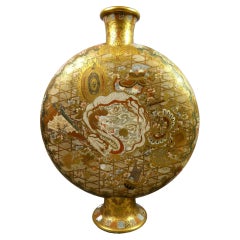
Large Exceptional Japanese Ceramic Moriage Moon Flask Vase Meiji Kinkozan
By Kinkozan
Located in Atlanta, GA
A large and rare Japanese ceramic vase of exceptional quality from late Meiji period circa 1900-10s by Kinkozan (1645-1927). One of the largest studio manufacturers of the export cer...
Category
Antique Late 19th Century Japanese Meiji Ceramics
Materials
Ceramic

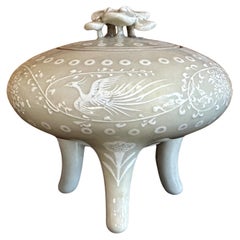
Rare Japanese Porcelain Incense Burner with Inlays Makuzu Kozan
By Makuzu Kozan
Located in Atlanta, GA
A porcelain incense burner (koro) made by Japanese potter Makuzu Kozan (also known as Miyagawa Kozan, 1842-1916) circa 1890s-1900s (end of Meiji Period). The koro features an elegant...
Category
Antique Late 19th Century Japanese Meiji Ceramics
Materials
Ceramic
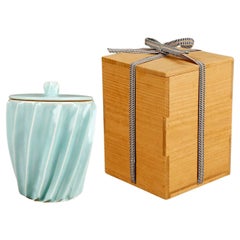
Japanese Celadon Lidded Vessel Mizusashi by Uichi Shimizu
Located in Atlanta, GA
A ceramic lidded celadon vessel made by Japanese potter Uichi Shimizu (1926-2004) circa post 1980s. The vessel was known as Mizusashi in Japanese and used as a freshwater container t...
Category
Late 20th Century Japanese Modern Ceramics
Materials
Ceramic
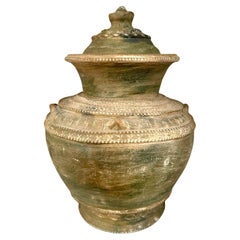
Korean Pottery Funerary Urn Unified Silla
Located in Atlanta, GA
A terracotta pottery funerary urn with lid from Korea Unified Silla Period, circa 9th century. The jar was in a classic globular form with raised shoulder. Although the surface was u...
Category
Antique 15th Century and Earlier Korean Other Ceramics
Materials
Ceramic
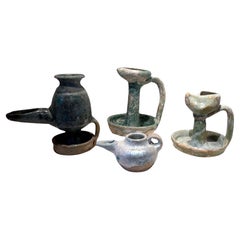
Collection of Four Persian Glazed Ceramic Oil Lamps
Located in Atlanta, GA
A collection of four Early Persian Glazed Pottery Oil Lamps from an American collection. It consists of three oil lamps with iridescent glaze purportedly from Rhages area, Persia, ci...
Category
Antique 15th Century and Earlier Persian Islamic Ceramics
Materials
Ceramic
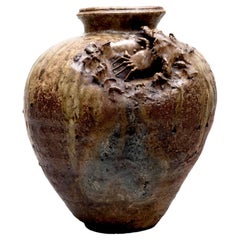
Antique Japanese Tsubo Jar with High Relief Crab Design
Located in Atlanta, GA
A Japanese stoneware tsubo (storage jar) circa 19th century (Meiji period), likely made in one of the Shigaraki or Echizen kilns. The jar has a thick robust body, and a short-neck ri...
Category
Antique 19th Century Japanese Meiji Ceramics
Materials
Ceramic
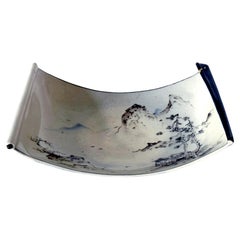
Rare Japanese Porcelain Painted Footed Dish Makuzu Kozan
By Makuzu Kozan
Located in Atlanta, GA
A rare footed dish in the form of an open scroll painting with literati landscape from the studio of Japanese Potter Makuzu Kozan. Also known as Miyagawa Kozan (1842–1916), Makuzu wa...
Category
Antique Early 1900s Japanese Meiji Ceramics
Materials
Porcelain
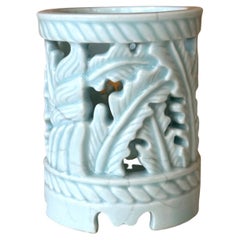
Rare Korean Ceramic Brush Holder Joseon Dynasty
Located in Atlanta, GA
A rare Korean porcelain brush holder in Banana Leaves pattern from late Joseon dynasty circa 19th century. Cherished by the scholars, this brush...
Category
Antique 19th Century Korean Other Ceramics
Materials
Ceramic
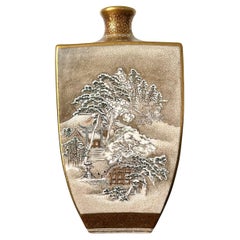
Fine Japanese Satsuma Vase with Superb Decoration by Seikozan
Located in Atlanta, GA
A ceramic vase in tapered square form made by Japanese studio Seikozan circa 1890-1910s (late Meiji Period). One of the many artist studios that specialized in satsuma ware, Seikozan...
Category
Antique 1880s Japanese Meiji Ceramics
Materials
Ceramic
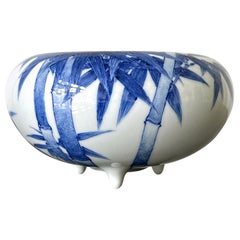
Japanese Glazed Ceramic Bowl by Makuzu Kozan
By Makuzu Kozan
Located in Atlanta, GA
Tri-pod ceramic bowl likely used as an incense burner (koro) by Japanese Imperial potter Makuzu Kozan (1842-1916) circa late Meiji period. The signature indicates that it was produce...
Category
Antique 1880s Japanese Meiji Ceramics
Materials
Ceramic
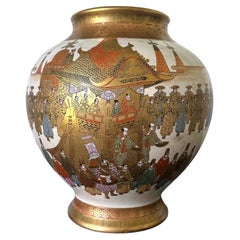
Fine Japanese Satsuma Ceramic Jar with Gilt Decoration by Kinkozan
By Kinkozan
Located in Atlanta, GA
A large Japanese ceramic vase from end of Meiji period circa 1880s- 1910s by Kinkozan (1645-1927). One of the largest studio manufacturers of the export ceramics at the time based in Kyoto. In the typical style of satsuma made at the turn of 20th century, the vase is of a moon jar shape and finely decorated with kinran-de (gold paint) on a cream white background with even fine crackles. What sets this particular vase apart from many lower quality and mass-produced pieces is the meticulously renditioned surface decoration. Lavishly gilded with a continuous design, the carefully composed imagery depicts an elaborately decorated float cart in a festival parade. A group of people are seated within the float with a woman and a child standing in the front. Surrounding the float are streams of marchers dressed...
Category
Early 20th Century Japanese Meiji Ceramics
Materials
Ceramic
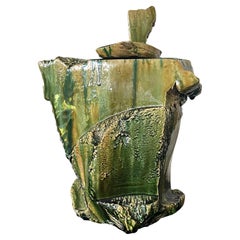
Large Japanese Ceramic Oribe Sculptural Vessel by Shigemasa Higashida
Located in Atlanta, GA
A large ceramic lidded vessel with striking sculptural form by contemporary Japanese potter Shigemasa Higashida (1955-). Hand-built and with drasti...
Category
Early 2000s Japanese Modern Ceramics
Materials
Ceramic
Rare Large Japanese Porcelain Presentation Plate Makuzu Kozan
By Makuzu Kozan
Located in Atlanta, GA
A large presentation plate with striking pictorial design from the studio of Japanese Potter Makuzu Kozan. Also known as Miyagawa Kozan (1842–1916),...
Category
Early 20th Century Japanese Meiji Ceramics
Materials
Porcelain
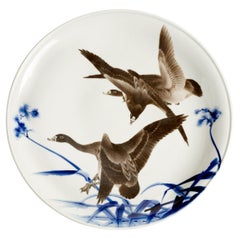
Large Japanese Ceramic Vase by Makuzu Kozan Meiji Period
By Makuzu Kozan
Located in Atlanta, GA
A large Japanese ceramic vase by the celebrated Meiji imperial potter Makuzu Kozan (1842-1916) circa 1880-1890s. Dated to his underglaze phase post 1887 after he successfully mastered the new colors available from the west and used them to the best advantage in his work deeply rooted in Japanese aesthetics. The vase has an impressive size and was potted in the classic baluster form with an elegant proportion. The surface is decorated using a combination of techniques of low relief sculpturing...
Category
Antique Late 19th Century Japanese Meiji Ceramics
Materials
Ceramic
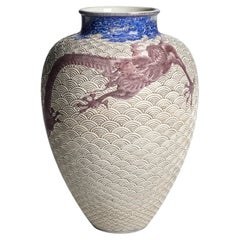
Japanese Satsuma Ceramic Dish with Fine Decoration by Kinkozan
By Kinkozan
Located in Atlanta, GA
A satsuma ceramic dish made by Kinkozan studio circa 1980-1900s in the late Meiji Period. The dish with a thick robust wall is supported by a large ring base and features finely deta...
Category
Antique Late 19th Century Japanese Meiji Ceramics
Materials
Ceramic
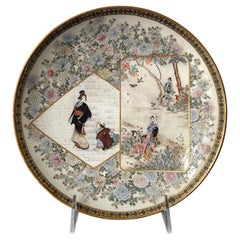
Early Large Ceramic Vase with Sang-de-boeuf Glaze by Brother Thomas Bezanson
By Brother Thomas Bezanson
Located in Atlanta, GA
An early ceramic long-neck vase with a brilliant copper red glaze by Benedictine monk potter Brother Thomas Bezanson (1929-2007). The minimalistic an...
Category
Vintage 1960s American Modern Vases
Materials
Ceramic
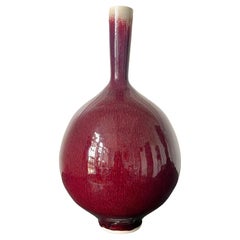
Large Ceramic Center Bowl Toshiko Takaezu
By Toshiko Takaezu
Located in Atlanta, GA
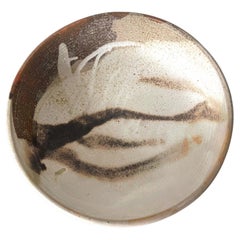
A large ceramic center bowl by Japanese American artist Toshiko Takaezu (American, 1922 - 2011). Meant to be a bespoken center piece., the deep form bowl features a robust body of thick wall, supported by a short round foot ring. The surface showcases an expressive glaze pattern that is the signature style to the artist's work. Free-flowing abstract strokes...
Category
Late 20th Century American Modern Decorative Bowls
Materials
Ceramic
Korean Celadon Ceramic Long Neck Bottle Vase with Slip Inlay Goryeo Dynasty
Located in Atlanta, GA
A Korean ceramic celadon bottle vase with inlay design from Goryeo Dynasty (918 to 1392AD) circa 12th century. With an elongated neck that continues dow...
Category
Antique 15th Century and Earlier Korean Archaistic Ceramics
Materials
Ceramic

Korean Ceramic Buncheong Ware Tea Bowl Early Joseon Dynasty
Located in Atlanta, GA
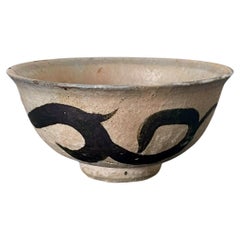
An antique Korean Buncheong stoneware tea bowl (chawan) from early Joseon Dynasty circa late 15th to early 16th century. The bowl with a short ring base is nearly entirely covered in a white slip except the base (known as sougusuri in Japanese, total glaze). Iron-colored scrolling vines were painted on with quick and deft brush strokes, rendering the bowl a vital and spontaneous appeal. It appears that the bowl was dipped in the white slip instead of being brushed on, observing from the slip pattern left on the rim of the bowl. The bowl shows significant age and evident of use for tea drinking. There are losses of glaze flakes throughout, along the rim and inside the bowl. The flake off the glaze left a dark spot on the rim, exposing the deep colored clay underneath. Inside the bowl, many of the glaze flakes appear more superficial and retains a yellowing color from the tea stains (known as amamori, rain leak). There is a historical crack line on the exterior (surface only) that result in associated small losses of glaze. It appears that the crack line was the result from the kiln firing and gradually the glaze around it started to reduce. The bowl comes with a later wrapping cloth and a wood tomobako box, but they are not original to the piece.
This particular type of Buncheong ware was associated with the Hakbong-ri kilns in the sacred Mount Gyeryong Mountains, west of Daejeon city in the Chungcheong province. During early Joseon Dynasty, the emperor decided to reject Buddhism to embrace the Confucianism. As a result, many monks were forced to abandon their religious life and returned to the secular society. The monks in Gyeryong mountains set up the kilns and started to produce this so called "Hakbong-ri" type of Buncheong ware. The production was shorted-lived for only a few decades from late 15th to early 16th century before it turned to porcelain, but the ware made during that period was noted for their fresh and enigmatic appeal with deft iron-paint decoration. Collectors cherish these rare pieces for their vitality and spontaneity often used them on important occasions of chado in Japan and passed down to generation.
For a similar bowl, see Catalog 52 illustrated on page 87 of the book "Korean Buncheong Ceramics...
Category
Antique 15th Century and Earlier Korean Archaistic Ceramics
Materials
Ceramic
Korean Glazed Ceramic Vase Buncheong Ware Early Joseon Dynasty
Located in Atlanta, GA
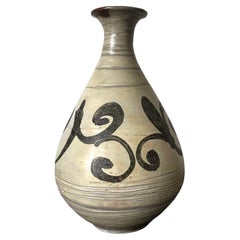
An antique Korean Buncheong stoneware vase from early Joseon Dynasty circa late 15th to early 16th century. The vase is of a classic pear form with a ...
Category
Antique 15th Century and Earlier Korean Archaistic Ceramics
Materials
Ceramic
Japanese Ko-Seto Stoneware Ewer with Carved Design
Located in Atlanta, GA
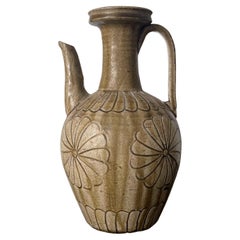
On offer is a rare Ko-seto (old seto) stoneware ewer from Kamakura period (12-14th century) Japan. The exceptionally heavily potted ewer is made of stoneware. The main body was likely hand-coiled with individually built handle, sprout and wheel-made neck and mouth assembled. It takes the basic form from the contemporary Chinese ewer...
Category
Antique 15th Century and Earlier Japanese Archaistic Ceramics
Materials
Stoneware
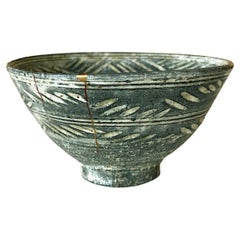
Antique Korean Mishma Tea Bowl Chawan Joseon Dynasty
Located in Atlanta, GA
A Korean Hori-Mishima Chawan (tea bowl) circa 16th-17th century (Joseon Dynasty). The tea bowl is of an upright conical form supported by a high foot ring. It was decorated with incised brushwood fence patterns filled with white slip on both the interior and exterior surface. These dominant motifs were spaced by three encircling double lines. Seven chrysanthemum flowers (inka) were stamped on the lower interior surrounding a swirling tea well on the bottom. There are six spur marks known as Meato in Japanese on the interior bottom and a pointy spot in the center of the foot ring known as Tokin. Two crack lines were historically repaired by superb Kintsugi, adding a mysterious wabi-sabi appeal to the piece.
The Hori-Mishima bowl was also known as Gohon Mishima. It was made in Bushan Kilns of the Southern Gyeongsang Province specifically for the Japanese market in the 16th-17th century, when the tea ceremonies in Japan demanded such ware. The bowl comes with a purple fabric pouch...
Category
Antique 17th Century Korean Other Ceramics
Materials
Ceramic
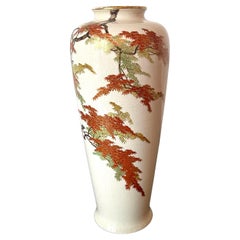
Japanese Satsuma Vase Yabu Meizan Meiji
By Yabu Meizan
Located in Atlanta, GA
A Satsuma baluster form vase from the studio of Yabu Meizan (birth name Yabu Masashichi; 1853-1934), who is one of the most celebrated and collectible Satsuma artists from Meiji Peri...
Category
Early 20th Century Japanese Meiji Ceramics
Materials
Ceramic
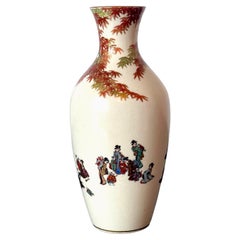
Japanese Miniature Satsuma Vase Yabu Meizan Meiji
By Yabu Meizan
Located in Atlanta, GA
A small Satsuma vase from the studio of Yabu Meizan (birth name Yabu Masashichi; 1853-1934), who is one of the most celebrated and collectible Satsu...
Category
Antique Early 1900s Japanese Meiji Ceramics
Materials
Ceramic
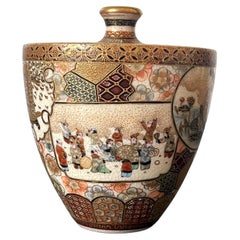
Fine and Rare Miniature Satsuma Vase by Taizan Yohei
Located in Atlanta, GA
A very fine miniature ceramic vase in satsuma ware by Taizan Yohei IX (1864-1922) circa 1880-1890s of late Meiji period. The vase with a broad flat should...
Category
Antique 1880s Japanese Japonisme Ceramics
Materials
Ceramic
Japanese Ceramic Vase with Delicate Carvings by Makuzu Kozan Meiji Period
By Makuzu Kozan
Located in Atlanta, GA
A delicate and rare Japanese ceramic vase by the important Meiji imperial potter Makuzu Kozan (1842-1916) circa 1887-1910. Dated to his underglaze phase post 1887 after he successful...
Category
Antique 1890s Japanese Japonisme Ceramics
Materials
Ceramic
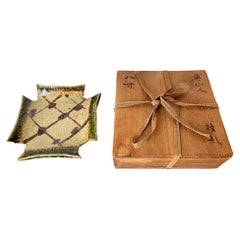
Japanese Oribe Glazed Stoneware Dish by Kitaoji Rosanjin
By Rosanjin Kitaoji
Located in Atlanta, GA
An oribe stoneware square dish with four notched corners and up-turned edges made by Kitaoji Rosanjin (1883-1959) circa 1950s. The Mingei style dish h...
Category
20th Century Japanese Modern Ceramics
Materials
Ceramic
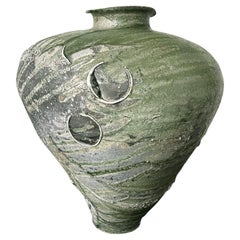
Massive Ceramic Jar Tsubo by Japanese Potter Tsujimura Yui
By Tsujimura Yui
Located in Atlanta, GA
A massive and magnificent ceramic Tsubo jar by Japanese potter Tsujimura Yui (1975-). Inspired by the techniques and aesthetics of the early medieval Sue ware, the artist hand builds an impressive voluminous oviform, irregular by intention, from a combination clay from both Shigaraki and Iga, coarse by nature and rich in feldspar. Fired on their sides horizontally, the surface of the thick wall tsubo is covered with streaks and drips of natural ash glazes in shades of green and blue, forming an abstract and mesmerizing pattern that resembles geothermal earth activity. Additional ashes are blown during the firing to accentuate the textures. Most recognizably, there are many circular marks scattered on the surface of his archaic looking vessels. That is resulted from using stacked tea bowls to prevent the conjoining of the vessels. After the firing, the stacked vessels are chipped away, leaving behind those circular impression, as well as deep pools of glaze which gather where they were placed.
Born in 1975, Tsujimura Yui is the first son of the contemporary ceramic artist Tsujimura Shiro...
Category
Early 2000s Japanese Modern Ceramics
Materials
Ceramic
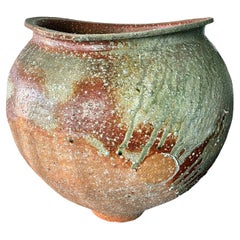
Large Contemporary Ceramic Tsubo Jar by Kai Tsujimura
Located in Atlanta, GA
A massive stoneware tsubo floor jar created by Japanese contemporary ceramic artist Kai Tsujimura (1976-). The heavy jar with its impressive volume was made in the tradition of Iga ware with local coarse sandy clay that turned reddish after the firing. It took its shape from heavy medieval storage jars with a wide-open mouth. For a nearly identical form, see an Echizen jar from Heian period (794–1185) in the collection of MET (Accession Number: 1977.261). The surface showcases scattered white crystalized feldspars and a green vitrified ash glaze cascade down the body (known as biidoro in Japanese - after the Portuguese word for glass vidoro). These is a globular shape impressed on the jar. It is a signature practice of the Tsujimura potter family by stacking bowls between the pieces in the kiln during the firing, resulting in an accidental but iconic aethetic (Kai and Yui Tsujimura...
Category
2010s Japanese Organic Modern Ceramics
Materials
Stoneware
Japanese Ceramic Centerpiece Bowl Makuzu Kozan Meiji Period
By Makuzu Kozan
Located in Atlanta, GA
A beautiful ceramic vessel in the form of Bo, the so-called monk's alms bowl from the studio of Japanese Potter Makuzu Kozan, also known as Miyagawa Kozan (1842–1916), one of the most established and collected ceramist from Meiji Period. Born as Miyagawa Toranosuke, Kozan established his pottery studio in Yokohama circa 1870s and later became one of the appointed artists to the Japanese Imperial household. His work was exhibited in many international fairs that the Meiji government participated at the turn of the century and won many grand prizes.
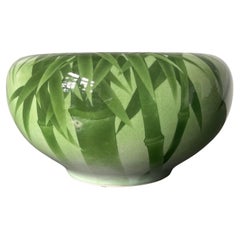
Of a relatively large size, this piece was made as a decorative center piece for display. It was brilliantly decorated with underglaze paint of a green-on-green bamboo motif, using the novel technique developed by Kozan called Fuki-e (the blow painting). As a result, the bamboos appear took on a three-dimensional quality as if appearing in a mist. Known as one of the most creative ceramists, circa 1887, Kozan started experimenting with new chemical colors from the West in the format of his porcelain glaze. New colors allowed him to create underglaze design that appeared bright, smooth and glossy. To create design that is realistic and dimensional, more common in the western paintings, he was inspired by the native Japanese ink painting technique developed around 1900 by Yokoyama Taikan...
Category
Antique Early 1900s Japanese Japonisme Ceramics
Materials
Ceramic
Rare Pair of Early Period Makuzu Kozan Takauki High-Relief Vases
By Makuzu Kozan
Located in Atlanta, GA
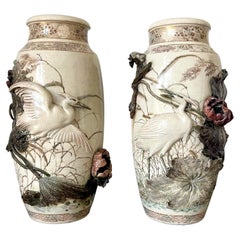
A stunning pair of ceramic vases with gilt, paint and high-relief decoration by imperial artist Makuzu Kozan (1842-1916, also known as Miyagawa Kozan) circa 1876-81 (late Meiji period). These vases belong to early period (1876-1881) of Kozan's repertoire, during which time the high relief sculpturing (known as Takauki ware) was used as a distinguished technique on top of the traditional gilt and paint ornaments of satsuma ware. Due to the relatively limited production and the fragile nature of these wares, not a large quantity of the examples remained in the first place, not mentioning a fine matching signed pair in such impressive sizes.
Not only a rarity, this pair of vases is also superb in workmanship, thus the fine example of the work from that short and unique period of the artist's career before he switched to the underglaze period. In a conceptually mirrored fashion, the surface is richly decorated with flying cranes among large lotus leaves and flower, like an idyllic aqua scenery of pure poetry on a circular scroll. The high-relief appliques were rendered and composed in realistic fashion but with a dramatic touch. They are literally about to break the surface free, alive and in motion. The dark colors of the glaze were used to set a moody tone. The approach to create this type of ornamentations is more akin to sculpturing an ink painting in three-dimension than ceramic making. It is not hard to imagine the demand of both the artistry and the technique.
Both vases were signed as "Makuzu Kozan Kiln" and each further with another name and seal, which are most likely the individual artist involved in the making process. Similar signatures can be seen in the reference book below.
For similarly Takauki vases, see Miyagawa Kozan Makuzu...
Category
Antique 1870s Japanese Japonisme Ceramics
Materials
Ceramic
Japanese Studio Ceramic Vase by Ken Matsuzaki with Original Tomobako
By Ken Matsuzaki
Located in Atlanta, GA
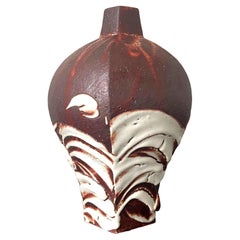
An impressive stoneware bottle form vase by contemporary Japanese studio potter Ken Matsuzaki (1950-) circa 2010s. The solid form takes its cue from Chinese traditional plum vase (Meiping) with raised and swelled shoulder and a small opening, yet it rises from a non-conventional pentagonal faceted base. The extraordinary surface was covered with Yohen Shino glaze in a deep iron hue. Thick white slips were applied in bold strokes to the lower portion of the vase. The abstract pattern calls to mind of the imagery of the iconic ocean waves found in traditional Japanese art. The presence of the vase is strong and none-compromising, reaching back to the past yet appearing utterly modern. It is marked by the artist underneath and comes with the original tomobako with title and author inscriptions and a wrapping cloth with the artist's seal.
"Ken Matsuzaki’s haptic ceramics bring a contemporary approach to traditional Japanese ceramicware, most notably 16th-century Oribe pottery...
Category
21st Century and Contemporary Japanese Modern Ceramics
Materials
Ceramic
Korean Ceramic Moon Jar with Dragon Joseon Dynasty
Located in Atlanta, GA
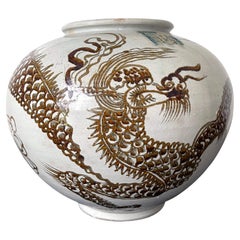
On offer is a large Korean ceramic storage jar (hangari) with white glaze and iron red underglaze dragon design. The globular shaped jar derived its form from the Moon Jar of the ear...
Category
Antique 18th Century Korean Archaistic Ceramics
Materials
Ceramic
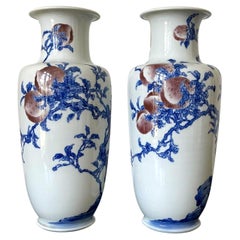
Pair of Rare Porcelain Commemorative Vases by Makuzu Kozan Meiji Period
By Makuzu Kozan
Located in Atlanta, GA
A pair of porcelain vases in classic form, decorated with underglaze blue and copper red painting by Imperial potter Makuzu Kozan. Also known as Miyagawa Kozan (1842–1916), Makuzu was one of the most established and collected ceramist known to the west from Meiji Period.
The vases are in a classic Chinese form called "Bang Chu Ping" (grain-mallet vase...
Category
Vintage 1910s Japanese Japonisme Ceramics
Materials
Ceramic
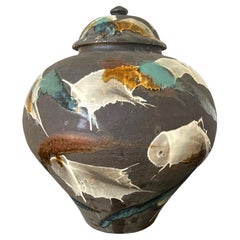
Large Japanese Contemporary Ceramic Jar from Onda Yaki Kiln
By Onda Yaki
Located in Atlanta, GA
A large Japanese lidded ceramic jar from the kiln of Onda Yaki, circa 2010. The stoneware jar impresses the viewer with a robust bulbous form. Its black body is nearly unglazed but exuberantly splashed with strokes of slip glazes of white, yellow and blue. The visual effect is wonderful that it appears traditional and contemporary at the same time. The tri-color glaze calls to mind the San-Cai from Chinese Tang dynasty, yet the application is akin to abstract painting on canvas.
Onda Yaki also spelled as Onta Yaki also spelled Onta, is a type of Japanese pottery produced in and around the village of Onta in Oita Prefecture in Kyushu Island. It was founded in 1705. Closely associated with Mingei folk art, Onda ware was inscribed by the national government in 1995 as an Intangible Cultural Property
Background from Pucker Gallery where the jar was exibited and purchased.
"In his search for true folk pottery, the Japanese philosopher Soetsu Yanagi...
Category
2010s Japanese Organic Modern Ceramics
Materials
Ceramic
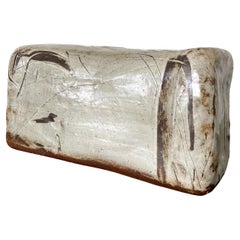
Korean Contemporary Buncheong Ceramic Sculpture by Sung Jae Choi
By Sung Jae Choi
Located in Atlanta, GA
A ceramic sculpture piece created in the tradition of Buncheong ware by contemporary Korean ceramicist Sung Jae Choi (South Korean, b. 1962). In a hollow rectangular with slight irregularity of being hand-made, the piece evokes the distant memory of the stoneware pillow...
Category
Early 2000s Korean Modern Ceramics
Materials
Ceramic
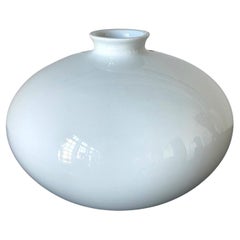
Contemporary Japanese White Glaze Ceramic Vase by Manji Inoue
By Inoue Manji
Located in Atlanta, GA
A large glazed white porcelain vase in the jar-form by Japanese ceramic artist Inoue Manji (Japanese, b. 1929). Minimalistic in form, the vase is pure white with a very subtle blue h...
Category
Late 20th Century Japanese Modern Ceramics
Materials
Ceramic
Antique Korean Ceramic Buncheong Bowl Joseon Dynasty
Located in Atlanta, GA
A Korean ceramic shallow bowl on ring foot in the classic Buncheong (or Punch'ong) style from early Joseon Dynasty circa 15th century. The bowl features...
Category
Antique 15th Century and Earlier Korean Archaistic Ceramics
Materials
Ceramic
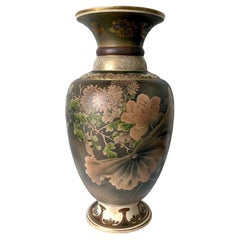
Large Japanese Satsuma Ceramic Vase Kinkozan
By Kinkozan
Located in Atlanta, GA
A large Japanese ceramic vase from the end of Meiji period circa 1890-1910s by Kinkozan (1645-1927). One of the largest studio manufacturers of the export ceramics at the time based in Kyoto. In the typical style of satsuma made at the turn of 20th century, the vase is elaborately decorated with a rather unusual kinran-de (gold paint) and green enamel highlight on a mottled brown background. The painterly decoration depicts a large seasonal floral arrangement in a circular fashion. Besides the obviously superb craftsmanship, what sets this particular vase apart from many lower quality and mass-produced pieces is its tone-on-tone color pallet that is visually somber and the small and sensitive details that heralds the change of the seasons. When the viewer goes beyond the first casual glimpse of the blossom and foliage, one would notice that on the edges of certain leaves as well as along the stalks, there accumulates a very thin layer of the white dust that represents the frost. The flower in bloom are chrysanthemums. Despite of being splendid, they are the messengers of the autumn. The large lotus leaf was subtly rendered in a bended and slightly withered manner, just past its prime. Although the lotus is still in bloom, the prominent seed pod indicates it may be the last for the season. The sentimental capture of the change of the seasons is not unusual in Japanese art. This vase poetically represents such a subtle transition from summer to fall, perhaps depicting the very first frost.
The neck of the vase is also slightly unusual with two rolled rings...
Category
Early 20th Century Japanese Meiji Ceramics
Materials
Ceramic
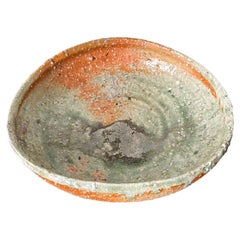
Japanese Contemporary Iga Stoneware Bowl by Shiro Tsujimura
By Shiro Tsujimura
Located in Atlanta, GA
A contemporary Stoneware Bowl made in the tradition of Iga ware by Japanese ceramic artist Shiro Tsujimura (1947-). In a slightly irregular round form, the de...
Category
Early 2000s Japanese Organic Modern Ceramics
Materials
Stoneware
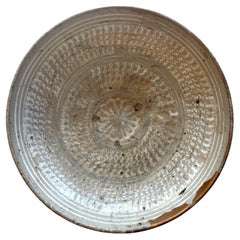
Antique Korean Ceramic Buncheong Bowl Joseon Dynasty
Located in Atlanta, GA
A Korean ceramic bowl supported on a short ring foot in the classic Buncheong (or Punch'ong) style from early Joseon Dynasty circa 15th century. The bow...
Category
Antique 15th Century and Earlier Korean Archaistic Ceramics
Materials
Ceramic
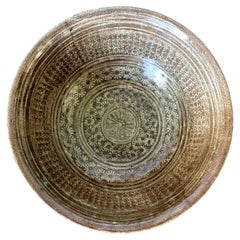
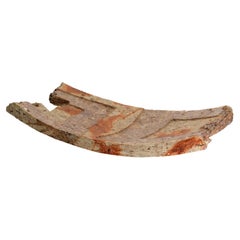
Ceramic Sculptural Centerpiece by Ryuichi Kakurezaki
By Kakurezaki Ryuichi
Located in Atlanta, GA
A large and bespoken stoneware centerpiece platter in sculptural form by Japanese ceramic artist Ryuichi Kakurezaki (1950-) circa 2000s. Made in Bizen ware tradition in a thick slab ...
Category
Early 2000s Japanese Modern Ceramics
Materials
Ceramic
Large Sculptural Ceramic Vessel by Mihara Ken
Located in Atlanta, GA
A large ceramic vessel in an impressive geometrical form by Japanese potter Mihara Ken (1958-) made in 2007. This multi-fired stoneware in shape of a mounta...
Category
Early 2000s Japanese Modern Ceramics
Materials
Ceramic
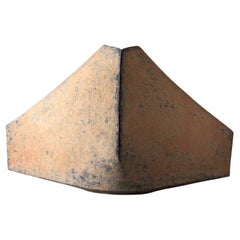
Japanese Oribe Square Dish by Kitaoji Rosanjin
By Rosanjin Kitaoji
Located in Atlanta, GA
An Oribe-Style rectangular dish with a slightly concaved slab body and up-turned irregular edges, made by Kitaoji Rosanjin (1883-1959) circa 1930-50s....
Category
20th Century Japanese Modern Ceramics
Materials
Ceramic
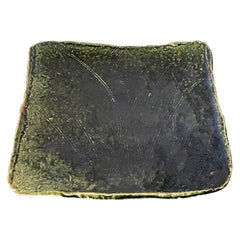
Modern Japanese Ceramic Shigaraki Ikebana Vase Takahashi Shunsai
Located in Atlanta, GA
A tall ceramic vase made in the tradition of Shigaraki ware by Japanese potter Takahashi Shunsai (1927-2011), the fourth heir of the famed Rakusai lineage of potters. The vase is heavily potted in the reddish sandy Shigaraki clay. It has a Classic vase form made for Ikebana display. The surface is thickly draped with natural ash glaze that deposited onto the body during the firing process in the kiln. It also features decoration of carved lines. Nuggets of feldspar were incorporated in the clay and exposed onto the surface as crystal like jewels. Substantial and archaic looking, the vase also has a strong modern appeal due to its Mingei styling. It was signed on the base with a pressed seal Shunsai as shown. The vase comes with its original wood storage box (tomobako) with bears the title and signature in Kanji and a seal. It also retains a paperwork noting the artist's biography and practice philosophy in Japanese.
Born in Shigaraki, Shunsai was the second son of renowned potter Takahashi Rakusai...
Category
1990s Japanese Modern Ceramics
Materials
Ceramic
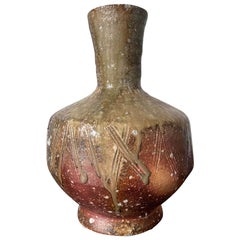
Modern Japanese Studio Pottery Oribe Moon Flask Vase by Ken Matsuzaki
By Ken Matsuzaki
Located in Atlanta, GA
A contemporary studio ceramic vase made by Japanese potter Ken Matsuzaki (1950-). The vase showcases distinguished "moon flask" form with shoulder loops. The moon flask form was widely recorded first in Tang Dynasty China, most likely arrived from the Mideast countries via the silk road. It was originally used as drink vessel for the nomads and the loops were used to tie it to the horse-centered owner. The exotic form persisted in Chinese ceramic production through Ming to Qing dynasty. The form is unusual in Ken Matsuzaki's work. The artist covered the vase with a thick dripping Oribe green glaze partially revealing the unglazed part of the body, which is decorated with scrolling pattern in left by ash glaze. The work is rooted in both Yohen Shino glaze technique and Oribe tradition, but interestingly it also paid homage to Sancai pottery in Tang Dynasty when green glaze was prominently used to drip and splash onto the pottery. Viewing the vase, one can see in this harmonious piece, the innovative reinterpretation of ancient aesthetics that cross the cultures, geology and time. The base is marked with the artist's signature. The vase comes with an inscribed tomobako storage box with the artist's bio and wrapping cloth with seal. The vase measures 8.6"h x 7"w x 2"d.
Ken Matsuzaki’s haptic ceramics bring a contemporary approach to traditional Japanese ceramicware, most notably 16th-century Oribe pottery...
Category
Early 2000s Japanese Modern Ceramics
Materials
Ceramic
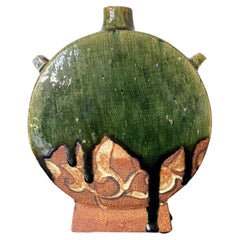
Large Ceremic Shigaraki Tsubo by Nagaoka Masami
Located in Atlanta, GA
An impressive Shigaraki Tsubo (jar normally for storage) in an archaic form with a bulbous and robust body that opens with a small lipped mouth. Heavil...
Category
21st Century and Contemporary Japanese Modern Ceramics
Materials
Ceramic
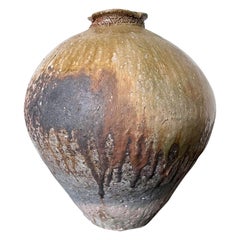
Japanese Modern Studio Ceramic Oribe Jar by Ryoji Koie
By Ryoji Koie
Located in Atlanta, GA
A glazed ceramic vessel by Japanese potter Ryoji Koie (1938-2020). Hand-built with intention to be seen as such, the tsubo has a primordial irregular form with a small opening and a swelled body resembling a beehive. The upper body was covered in a glassy green oribe glaze with fine crackles, highlighted with three incised geometrical symbols. The lower body is unglazed and exposed the white clay with marks of the hand-making pinches and kneading along the base. The base also shows highly irregular surface due to the seashell spur marks and clay pitting in the kiln during the firing process. All these occurrences honestly preserved and presented as part of the character of this wonderful modern piece. The jar comes with a plain wooden tomobako box.
"One of Japan’s most versatile and forward-thinking contemporary artists, KOIE RYOJI...
Category
21st Century and Contemporary Japanese Modern Ceramics
Materials
Ceramic
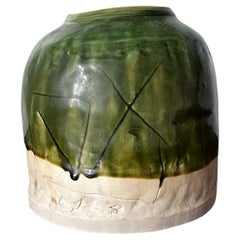
Japanese Mingei Glazed Tea Pot with Kintsugi by Shoji Hamada
By Shoji Hamada
Located in Atlanta, GA
A Japanese stoneware tea pot by Hamada Shoji (Japanese 1894-1978) circa 1960-80s. The teapot is of the classic form and of a strong style of Mingei (folk ...
Category
20th Century Japanese Modern Ceramics
Materials
Ceramic

Porcelain Celadon Vase with Copper Glaze by Brother Thomas Bezanson
By Brother Thomas Bezanson
Located in Atlanta, GA
A spindle form porcelain vase by Brother Thomas Bezanson (1929-2007). As a modern interpretation of "Mei-Ping", a classic form of Chinese vase,...
Category
Vintage 1980s American Modern Vases
Materials
Ceramic
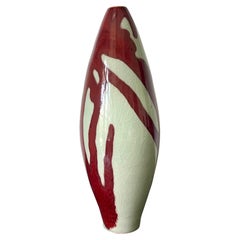
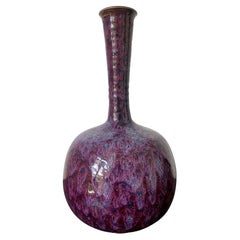
Large Ceramic Vase by Brother Thomas Bezanson
By Brother Thomas Bezanson
Located in Atlanta, GA
An impressively large ceramic vase with a bulbous body and a long coiled neck by potter Brother Thomas Bezanson (1929-2007). The minimalist modern form might be distilled from the classic Chinese garlic bottle. The high glossy surface displays a splendid shades of dark purple, copper red, auberge and blue, in a copper flambé pattern called "peacock" glaze that was clearly inspired by ancient Jun Kiln...
Category
Late 20th Century American Modern Vases
Materials
Ceramic
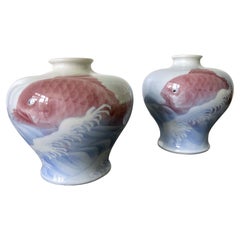
One of The Two Japanese Ceramic Vases Makuzu Kozan Meiji Period
By Makuzu Kozan
Located in Atlanta, GA
Two small nearly identical ceramic vases by Japanese Meiji imperial potter Makuzu Kozan (1842-1916), circa 1890-1900s. The vases were made in the form of jarlet with swelled shoulder...
Category
Antique Late 19th Century Japanese Japonisme Ceramics
Materials
Ceramic
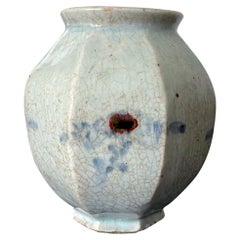
Faceted Korean Ceramic Celadon Jar Joseon Dynasty
Located in Atlanta, GA
A small ceramic celadon storage jar circa 18th century of Korean Joseon Dynasty. The melon shape jar with a mouth and base of the same size display a beautiful harmony in its form. T...
Category
Antique 18th Century Korean Other Ceramics
Materials
Ceramic
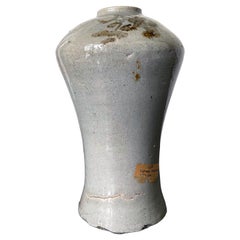
Tall Korean Ceramic Storage Jar Joseon Dynasty
Located in Atlanta, GA
A Korean ceramic storage jar circa 18th century of Joseon Dynasty. The jar is of a classic Maebyong form (known in Chinese as Plum Vase or Meiping...
Category
Antique 18th Century Korean Other Ceramics
Materials
Ceramic
Korean Ceramic Storage Jar Joseon Dynasty
Located in Atlanta, GA
A Korean ceramic storage jar circa 18th century of Joseon Dynasty. The jar is of a characteristic form with a bulbous upper body that tappers with a gra...
Category
Antique 18th Century Korean Other Ceramics
Materials
Ceramic
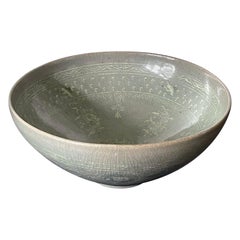
Korean Ceramic Celadon Bowl with Slip Inlay Goryeo Dynasty
Located in Atlanta, GA
A superb Korean celadon bowl with elaborate slip inlays circa 12th century from the Goryeo Dynasties (918 to 1392AD). Despite inspired originally b...
Category
Antique 15th Century and Earlier Korean Archaistic Ceramics
Materials
Ceramic
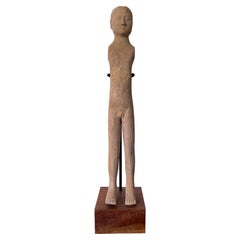
Chinese Stoneware Tomb Figure Han Dynasty
Located in Atlanta, GA
A Chinese molded stoneware figure on a custom display stand likely from Han Dynasty (202BC-220AD). These pottery figures were used as part of tomb accouterment for the burial practic...
Category
Antique 15th Century and Earlier Chinese Archaistic Ceramics
Materials
Stoneware
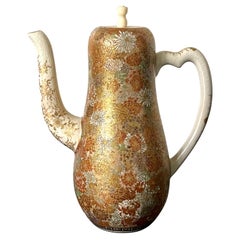
Japanese Satsuma Ceramic Ewer Yabu Meizan
By Yabu Meizan
Located in Atlanta, GA
A Satsuma ware miniature ewer from the studio of Yabu Meizan (birth name Yabu Masashichi; 1853-1934), who was one of the most celebrated and collectible Satsuma artists from the Meij...
Category
Early 20th Century Japanese Japonisme Ceramics
Materials
Ceramic
Korean Ceramic Celadon Bowl with Slip Inlay Goryeo Dynasty
Located in Atlanta, GA
On offer is a Korean celadon bowl with elaborate slip inlays circa 13-14th century from the late Goryeo Dynasties (918 to 1392AD). Despite inspired...
Category
Antique 15th Century and Earlier Korean Archaistic Ceramics
Materials
Ceramic
Rare Japanese Ceramic Glazed Bowl Makuzu Kozan Meiji Period
By Makuzu Kozan
Located in Atlanta, GA
On offer is a rare ceramic bowl with overglazed design by the famed Japanese ceramic artist Makuzu Kozan (1842-1916), circa 1906-1916. The bowl is rather unusual from the potter's repertoire with its unique glaze colors and decoration, and it likely belonged to a small series that Kozan made in and after 1906. A bowl of similar glaze and nearly identical dragon motif was recorded as a diplomatic present to the British royalty Arthur Connaught (1883-1932) when he represented King Gorge V in Japan in 1906. Other pieces, such as this bowl, were likely made with similar materials and designs afterwards.
Essentially round in form, the bowl has a generous volume with six harmonious lobes. The bottom of the interior showcases a coiled dragon in red, green and gold slithering on a cobalt blue background. The roundel shares an echoing lobed perimeter, which is further outlined by red and turquois bands and rising sun design. The exterior of the bowl features six stylized Japanese camellias...
Category
Antique Early 1900s Japanese Japonisme Ceramics
Materials
Ceramic
