TISHU Ceramics
to
1
236
214
22
40
1
85
62
67
22
36
7
15
14
2
2
1
2
3
235
16
11
3
1
217
211
117
77
17
236
236
236
29
12
8
5
3
Japanese Porcelain Glazed Vase with Dragon Design Mazuku Kozan
By Makuzu Kozan
Located in Atlanta, GA
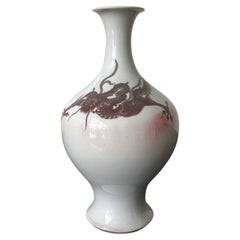
A porcelain vase with dragon design by Japanese imperial potter Makuzu Kozan (1842-1916), circa 1900s. The vase is made in what is considered early phase of his underglaze period during late Meiji era. In a classic baluster form, the surface of the vase was decorated with a slithering dragon in underglaze iron red circulating the exterior among pink clouds. The animated rendering of the dragon is fine and detailed, with five claws, scales, long tails and highlighted eyes. The pink cloud is misty and called Morotai or the hazy style, created with a unique technique developed in Kozan's studio called fuki-e by blowing the pigment powders onto the surface. Kozan Studio experimented with newly available colors from the west starting in the 1880s, which resulted in the expansion of the palette and style that bridged the east and west aesthetic tradition. Marked in underglaze blue on the base.
Known also as Miyagawa Kozan...
Category
Antique Early 1900s Japanese Japonisme Ceramics
Materials
Porcelain
Japanese Glazed Ceramic and Silver Koro Incense Burner Makuzu Kozan
By Makuzu Kozan
Located in Atlanta, GA
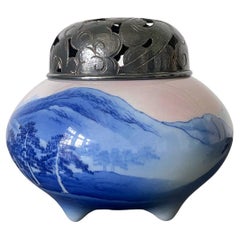
A tri-pod ceramic incense burner (koro) by Japanese Imperial potter Makuzu Kozan (1842-1916) circa late Meiji to the start of Taisho period (1890-1910s). A fine example of the artist's work belonging to the late part of his underglaze paint phase (started around 1887 until his death), the surface of the koro was painted in beautiful shades of blue to depict a continuous landscape not unlike a traditional ink and watercolor hand scroll. The rise and fall mountains recede and fade into the horizon and are dotted with groves of pines. The sky is painted with a beautiful subtle shade of pink, suggesting a time of sunrise or sunset. The koro is fitted with an ensuite reticulated sterling silver hoya (incense cover), pierced with swirling cloud and marked with "pure silver' in Kanji. The base is signed in underglaze blue "Makuzu Kozan Sei" within a double ring. The piece is beautifully potted in form and the decoration was done with expertise using the novel technique developed by Kozan called Fuki-e (the blow painting), in order to achieve the striking landscape known as "Mountain and Water" with sense of dimensions and gradient, the poetic effects normally conveyed only by sumi ink staining on paper. The piece comes with an unsigned tomobako (wood storage box) of a recent age.
Also known as Miyagawa Kozan (1842–1916), Makuzu Kozan was one of the most established and collected ceramist from Meiji Period. Born as Miyagawa Toranosuke, Kozan established his pottery studio in Yokohama around 1870s and later became one of the appointed artists to the Japanese Imperial household. His work was exhibited in many international fairs that the Meiji government participated at the turn of the century and won many grand prizes. Being one of the most creative ceramists, Kozan started experimenting with new chemical colors from the West in the format of his porcelain glaze around 1880s. New colors allowed him to create underglaze designs that appeared bright, smooth and glossy. He even invented his own receipt of cobalt blue to achieve a much brighter yet softer shade, as evident on this vase. To create landscape that is realistic and dimensional, more common in the western paintings, he was inspired by the native Japanese ink painting technique developed around 1900 by Yokoyama...
Category
Antique Early 1900s Japanese Japonisme Ceramics
Materials
Silver
Korean Ceramic Faceted Wine Bottle Vase Joseon Dynasty
Located in Atlanta, GA
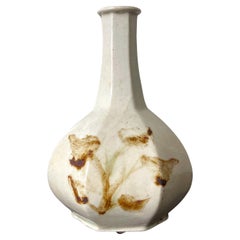
A Korean ceramic bottle with octagonal faceted form with underglaze copper red decoration. The robust bottle with the long neck and a relatively thick built was used to hold liquor such as wine and it was from Joseon dynasty, likely late period (circa mid-late 19th century). The bottle was covered in a milky white glaze with a pleasant warm yellow tint. It has an underglaze iron red paint of branches of gingko leaves on the front and the back side. The color was oxidated into an ochre brown hue instead of iron red. The octagonal form extends nicely from the opening to the base, continuing through the body and makes this bottle geometrically interesting. The rustic paint of the gingko leaves also render the piece a folky modern appeal.
For three faceted wine bottles from different period of Joseon Dynasty, see illustration 2, 71 and 73 of "Five Centuries of Korean Ceramics Pottery and Porcelains of the Yi Dynasty...
Category
Antique 19th Century Korean Archaistic Ceramics
Materials
Ceramic
Fine Japanese Ceramic Vase Makuzu Kozan Meiji Period
By Makuzu Kozan
Located in Atlanta, GA
A Japanese long neck porcelain vase circa 1900-1910s by the studio of Miyagawa Kozan (1842–1916), one of the most established and collected Japanese ceramist from the end of Meiji Period. Commonly known as Makuzu Kozan, which also appears as the signature on his work, his originally birth name was Miyagawa Toranosuke. He was the appointed artist to the Japanese Imperial household and his work was exhibited in many international fairs that the Meiji government participated at the turn of the century.
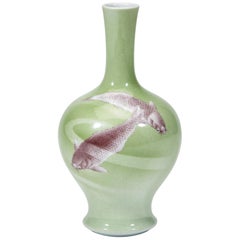
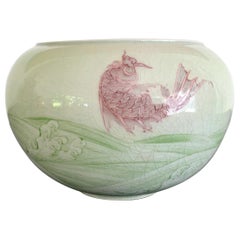
This vase features an elegant Classic form with a slender neck and slightly flared mouth above a baluster body. It was finely painted with two swimming carps in a copper red underglaze among green ribbons like waves. The background display a brilliant verdant green overall, Around the fish a poetic hazy effect was emphasized for a visual complexity by Fuki-e (the blow painting), an invention in Kozan's studio. The new technical development of chemical colors from the west was embraced circa 1900s in Kozan studio. This empowered the more creative experiments with not only colors, but also concept of dimension, which led Makuzu Kozan's work to become a bridge between East and West aesthetics. This is particularly evident in this vase with the Masterly details of the brush strokes, the expertly employment of gradient of color, and a very realistic and detailed rendering of the fish and their vivid motions.
For two similar examples of Kozan's work with similar carps decoration, see Page 148-149 of the book: Sekai ni Aisa Reta ya Kimono Miyagawa Kozan Makuzu...
Category
Early 20th Century Japanese Meiji Ceramics
Materials
Ceramic
Japanese Contemporary Ceramic Sculpture Kiyoharu Ichino
By Kiyoharu Ichino
Located in Atlanta, GA
"Purple Dawn", a ceramic sculpture piece by Japanese potter Kiyoharu Ichino (1957-). Purchased from Touching Stone, Santa Fe, New Mexico in 2003. Tradition meets renovation, this sculptural piece with its slab like minimal shape draws the viewer into its mysterious shape that is reminiscent of a monument. Its surface, with the typical Tanba clay fired at very high temperature and completely free of glaze, radiates a subtle metallic sheen that is nearly in a shade of purple. This piece was purchased from Touching Stone, Santa Fe, New Mexico in 2003.
Artist's bio from the gallery and the exhibition:
"Kiyoharu Ichino was born in 1957 in Tachikui into an extended family steeped in pottery-making tradition. He learned all aspects of Tanba pottery since childhood. When he was twenty, he moved to Seto to study pottery under a master of Akatsu-yaki. Upon returning to Tachikui, he launched his career with the Tanba Group Kiln. In 1983, he established his own kiln and began showing in galleries all over Japan. His works have been selected repeatedly for the prestigious juried Japan Traditional Crafts Exhibition sponsored by the Japan Crafts Association. In 1995, he was nominated to be a permanent member of The Japan Crafts Association, an honor bestowed to the most experienced and talented artists.
Traditional Tanba pottery is fired unglazed at very high temperature in large wood-fueled kilns. Ichino uses both an anagama (hole kiln) and a noborigama (climbing kiln), burning almost a thousand bundles of wood over several days to bring out the unique personalities of Tanba clay, which is renowned for its rich texture and deep purplish brown colors. Many of his pieces show silvery fire-marks like swirling mists left by the wood fire. His pieces appear to be integral parts of the clay rather than separate objects made from it. To show the unique clay texture, he often includes seemingly unfinished edges in his designs, exposing the rough clay body. Despite the high level of sophistication and innovation, Ichino's works maintain a strong connection with the ancient Tanba pottery tradition. Ichino should be no stranger to many Santa Fe residents. His work has been exhibited both in Touching Stone Gallery and as part of a major exhibition in the New Mexico Museum of International Folk Art in 2006.
About Tanba ware...
Category
Early 2000s Japanese Modern Ceramics
Materials
Ceramic
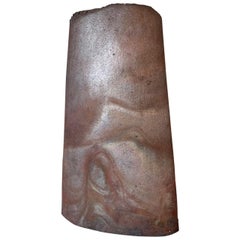
Large Japanese Antique Shigaraki Tsubo Jar
Located in Atlanta, GA
An antique Japanese stoneware storage jar, known as tsubo from Shigaraki kiln, circa 17th-18th century (early Edo possibly Momoyama period)....
Category
Antique 17th Century Japanese Japonisme Ceramics
Materials
Ceramic
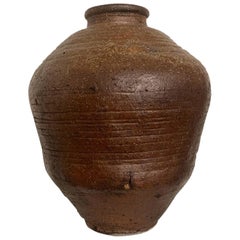
Japanese Ceramic Bowl Makuzu Kozan Utusushi Kenzan
By Makuzu Kozan
Located in Atlanta, GA
A rare ceramic bowl with overglaze paint decoration by Japanese imperial potter Makuzu Kozan ((1842–1916). Unlike the better-known works Kozan made for the expositions in the west and export to the foreign market, this piece exemplifies his work for the domestic market and the tea ceremony. The bowl was made in the so called "Utusushi" Ogata Kenzan (1663-1743), a celebrated Edo painter and ceramicist. Utusushi is loosely translated as "in the spirit of". It is not at all a simple imitation of a master, but a Japanese concept of embracing the spiritual essence of a master while the creator is free to mix in his or her own unique artistic interpretation and flavor.
The bowl was made to hold fruits during the tea ceremony. It has a very distinguished form with a circular lower body morphing into a square upper portion that further opening with flared rim. The surface has a grey glaze onto which Asagao flowers (Japanese morning glory) on the vines were painted in a free and poetic style. White was used for the petals, green for the leaves with touches of gold highlight. Asagao, the symbol of the summer was rendered in the spirit of Ogata Kenzan, and interestingly the shape of the blossom echoes the unique form the bowl. It was likely reserved for the tea ceremony during the summer months.
Under the base, Kozan was signed in black on a white porcelain plaque inlay.
For two similar examples of Kozan's work Utusushi Kenzan, see Page 168-169 of the book: Sekai ni Aisa Reta ya Kimono Miyagawa Kozan Makuzu...
Category
Antique Early 1900s Japanese Japonisme Ceramics
Materials
Ceramic
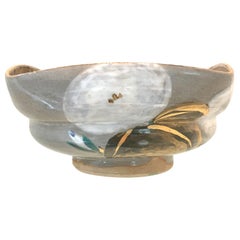
Japanese Porcelain Vase Meiji Period Makuzu Kozan
By Makuzu Kozan
Located in Atlanta, GA
A finely decorated and glazed Japanese porcelain vase by Makuzu Kozan (1842-1916) circa 1900s Meiji Period. The vase is of a classic bottle form with baluster body and short neck. It was decorated with underglaze white magnolia blossom on a pleasant celadon background. The stamens of the flower were artistically rendered in a low relief, giving the design a realistic appeal with the dimension.
Miyagawa Kozan...
Category
Early 20th Century Japanese Meiji Ceramics
Materials
Porcelain
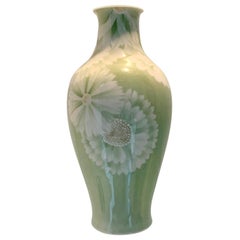
Rare and Large Japanese Porcelain Vase Makuzu Kozan
By Makuzu Kozan
Located in Atlanta, GA
A striking blue and white vase from the studio of Japanese Potter Makuzu Kozan, also known as Miyagawa Kozan (1842–1916), one of the most established and collected ceramist from Meiji Period. Born as Miyagawa Toranosuke, Kozan established his pottery studio in Yokohama around 1870s and later became one of the appointed artist to the Japanese Imperial household. His work was exhibited in many international fairs that the Meiji government participated at the turn of the century and won many grand prizes.
With an impressively large size, this vase was likely made and reserved as a presentation piece for one of the many expositions the studio participated in the early 20th century. It was decorated with underglaze cobalt blue using the novel technique developed by Kozan called Fuki-e (the blow painting), in order to achieve the striking dimensional literary landscape known as "Mountain and Water". Being one of the most creative ceramists, Kozan started experimenting with new chemical colors from the West in the format of his porcelain glaze around 1880s. New colors allowed him to create underglaze designs that appeared bright, smooth and glossy. He even invented his own receipt of cobalt blue to achieve a much brighter yet softer shade, as evident on this vase. To create landscape that is realistic and dimensional, more common in the western paintings, he was inspired by the native Japanese ink painting technique developed around 1900 by Yokoyama Taikan...
Category
Early 20th Century Japanese Japonisme Ceramics
Materials
Porcelain
Massive Japanese Arita Presentation Porcelain Plate Meiji Period
Located in Atlanta, GA
This massive Japanese Arita plate was made in Hizen, circa 1890-1910s, at the end of Meiji period by a potter named Takeshige Yoshisuke who was active in A...
Category
Antique Late 19th Century Japanese Japonisme Ceramics
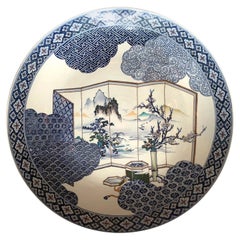
Japanese Antique Kakiemon Plate from Arita
Located in Atlanta, GA
A milky white dish with slight scalloped rim and decorated with cobalt blue iron red and green enamel over glaze, this delicate piece in Kakiemon Style was dated at least to the earl...
Category
Antique Early 18th Century Japanese Japonisme Ceramics
Materials
Porcelain
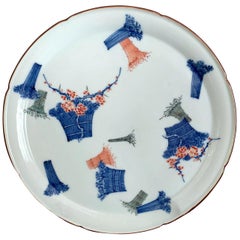
A Massive Antique Japanese Arita Porcelain Plate by Kajiwara Kiln
Located in Atlanta, GA
On offer is a truly impressive blue and white porcelain plate of Hizen ware, from Arita in Japan, circa mid to late-19th century. The plate was made by Kajiwara Kikujiro (菊次郎, the second Kiku son) and/or Kajiwara Kikusaburo (菊三郎, the third Kiku son who died in 1883) of the Kajiware Family Kiln of in Arita. It was decorated in a superb design with blue under-glaze, clearly out of a hand of a master. In a Classic Japanese composition that was popular in the Meiji Period, the plate displays a riot of auspicious elements, arranged still in a surprisingly harmonious manner. Anchoring the center of the design is an eagle perched on the branch of a blooming cherry tree, its talons clenching the bark and its wings about to open. The motion of the its immediate taking off is palpable. The trunk and the branches of the old cherry tree provide a spacial frame for the arrangement of large peonies with foliage, bundles of chrysanthemums, Chinese bell...
Category
Antique 19th Century Japanese Japonisme Ceramics
Materials
Ceramic
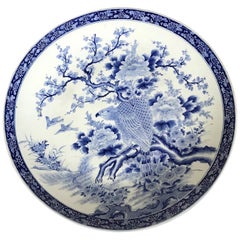
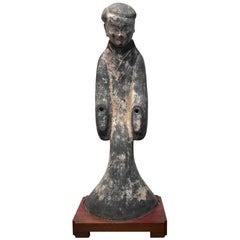
Tomb Lady in Waiting Figurine Han Dynasty
Located in Atlanta, GA
On offer is a pottery figurine of lady in waiting, found in the tombs as funeral objects in Han dynasty of China. Generally known as Han tomb ladies, t...
Category
Antique 15th Century and Earlier Chinese Han Ceramics
Materials
Pottery
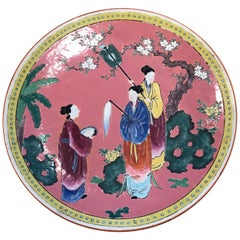
Large Japanese Meiji Imari Porcelain Plate with Enamel Decoration
Located in Atlanta, GA
A large Japanese porcelain platter decorated with over glaze enamels featuring three ladies in the garden among the rock grottoes, a cherry tree in blossom, a half-hidden banana tree and peonies. The ladies were pictured as holding various item, a fly...
Category
Antique Late 19th Century Japanese Meiji Ceramics
Materials
Ceramic
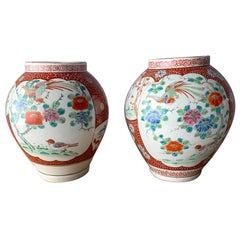
Near Pair of Antique Japanese Arita Export Ceramic Jars
Located in Atlanta, GA
A near pair Hizen pottery jars from Artia Japan, circa mid-19th century of the Meiji Era. Heavy stoneware construction with overglaze enamels that was inspired by Chinese WuCai from ...
Category
Antique Mid-19th Century Japanese Japonisme Ceramics
Materials
Ceramic
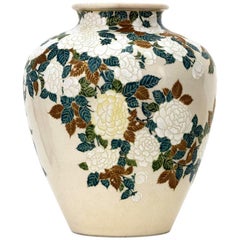
Japanese Ceramic Vase by Ito Tozan I Meiji Period
By Ito Tozan I
Located in Atlanta, GA
This stoneware vase of a jar form was finely decorated with low relief carving and delicate colored glazes depicting bundles of peony flowers. It was made by Ito Tozan I (1846-1920) circa 1890-1900s in the late Meiji Period. The color pallet was both bold and subtle, with dark green and rusty leaves with golden outlines and white and light yellow peony petals covering much of the surface. Impressed with potter's mark on the base.
Examples of two pieces by Ito Tozan I were in the collection of MNAAG (Guimet) Paris. Inventory no. MG 13790 an 13792.
A vase with similar shape and decoration techniques is featured as Lot 1340 Fine Japanese Art, 13 Sep 2017 Bonhams New York
Tozan Ito I established his ceramic business in Kyoto 1867. His studio made both porcelain and stoneware in a style some considered Satsuma while they retained a sophistication of Kyoto ware...
Category
Antique 1890s Japanese Japonisme Ceramics
Materials
Ceramic
Pair of Framed Famille Jaune Porcelain Plaque Qing Dynasty
Located in Atlanta, GA
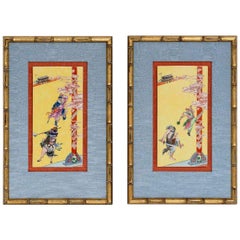
A matching pair of porcelain plaque from late Qing dynasty nicely framed in giltwood carved as bamboo. The Famille Jaune plaques were likely ...
Category
Antique Late 19th Century Chinese Qing Ceramics
Materials
Porcelain, Wood
Asian Flambe Studio Pottery Vase
By Kyoto Pottery
Located in Atlanta, GA
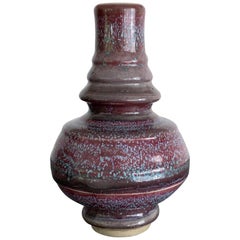
A garlic bottle vase in an archaic Chinese form, but likely Japanese in origin. Several circumventing grooves however, suggest a more modern age. It was done in a brilliant purple glaze over a robin egg blue background glaze. The bubbling and bursting effects during the firing renders the surface an artistic spotting effect. The color pallet recalls the Classic Jun Yao...
Category
Antique Late 19th Century Japanese Japonisme Ceramics
Materials
Ceramic
Antique Chinese Ceramic Tea Leaf Storage Jar Song-Yuan Dynasty
Located in Atlanta, GA
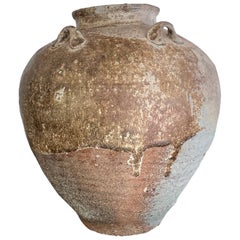
A stoneware pottery jar used for storage, made in southern China Fujian or Guangdong province since Song Dynasty for domestic use as well as export. They were widely exported to Japa...
Category
Antique 15th Century and Earlier Chinese Archaistic Ceramics
Materials
Ceramic
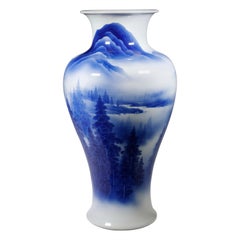
Large Japanese Blue and White Vase by Mazuku Kozan Meiji Period
By Makuzu Kozan
Located in Atlanta, GA
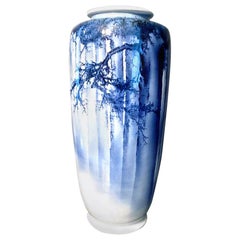
A striking blue and white vase from the studio of Japanese Potter Makuzu Kozan, also known as Miyagawa Kozan (1842–1916), one of the most established and collected ceramist from Meiji Period. Born as Miyagawa Toranosuke, Kozan established his pottery studio in Yokohama around 1870s and later became one of the appointed artist to the Japanese Imperial household. His work was exhibited in many international fairs that the Meiji government participated at the turn of the century and won many grand prizes.
With a relative large size, this vase is decorated with underglaze cobalt blue using the novel technique developed by Kozan called Fuki-e (the blow painting), in order to achieve the striking dimensional misty winter landscape. The pine trees with upright trunks and down-sweeping branches appear receding into the depth of the mist, forming an visually unending forest. Known as one of the most creative ceramists, around 1880s, Kozan started experimenting with new chemical colors from the West in the format of his porcelain glaze. New colors allowed him to create underglaze design that appeared bright, smooth and glossy. He even invented his own receipt of cobalt blue to achieve a much brighter yet softer shade, as evident on this vase. To create landscape that is realistic and dimensional, more common in the western paintings, he was inspired by the native Japanese ink painting technique developed around 1900 by Yokoyama...
Category
Early 20th Century Japanese Japonisme Ceramics
Materials
Porcelain
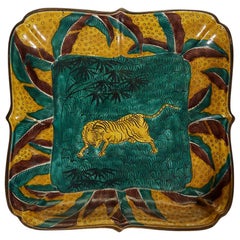
Japanese Yoshidaya Saiko Kutani Ceramic Dish
By Yoshidaya
Located in Atlanta, GA
A Japanese Ao-Kutani stoneware dish with overglaze decoration in the shape of barbed quatrefoil shape from late Edo period, circa early mid-19th century. Around 1804, 100 years after Ko-Kutani (old-Kutani) ware disappeared abruptly after thriving from 1655-early 1700s, saiko-kutani (revived-kutani) was attempted by many kilns and several distinguished styles developed. Among them, Yoshidaya kiln attempted to revive the original style of Ko-Kutani known as Aote, which employed four dark colors: green, yellow, dark blue/black and aubergine to create bold and striking design. The Yoshidaya production was short-lived and lasted roughly from 1823-1831. This dish is likely dated from this period or shortly after. The overglaze design centered around a crouching tiger under a black bamboo grove in a deep green background, surrounded by luxuriant banana leaves in green and aubergine with black outlines. The base of a similar concentric barbed quatrefoil design is further decorated with black foliage outlines and marked with a square Fuku mark.
For a Yoshidaya dish with identical shape but different landscape decoration, see lot 79 of sale 6547 Christie's London. Important Japanese and Chinese Art...
Category
Antique 19th Century Japanese Japonisme Ceramics
Materials
Ceramic
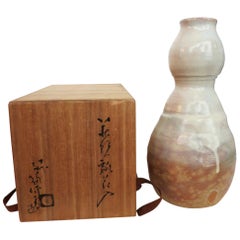
Hagi Ikebana Vase by Kyusetsu Miwa X Japanese Studio Pottery
By Kyusetsu Miwa X
Located in Atlanta, GA
A stoneware vase with white dripping glaze from Hagi by Kyusetsu Miwa X (1895-1981), Showa Period. The vase is in the shape of "Double Gourd" with a bulbous ...
Category
20th Century Japanese Japonisme Ceramics
Materials
Ceramic
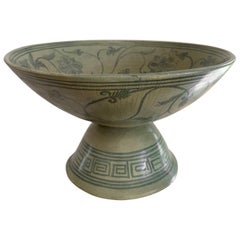
Antique Thai Celadon Stemmed Dish Sukhothai Sawankhalok
Located in Atlanta, GA
A celadon stemmed dish with underglaze deep blue decoration from Sukhothai (a former Kingdom in nowadays central Thailand) circa 14th-16th century. The pedestal dish was a typical ceramic output from Sawankhalok region, likely one of the kilns in Sri Sachanalai that thrived during 14th-15th century. Sukhothai ceramics made a large portion of export from Asia during that period due to the political policy in Ming Dynasty that banned the ocean faring (the so called Ming Gap). This stemmed dish, likely an export item, was modeled in a Classic Chinese form. The under-glaze deep blue decorations depicting the scrolling vines and flowers, as well as the archaic band around the base, are also reminiscent to the designs found in blue and white porcelain in Ming dynasty. The piece shows a fine crackles and age wear on the dish surface, an indication of appropriate patina. Under the reddish slip paint of the base, the gray paste can be discerned in small area, which is also a characteristic of the Thai celadon...
Category
Antique 15th Century and Earlier Thai Archaistic Ceramics
Materials
Ceramic
Japanese Studio Ceramic Centerpiece Okumura Shozan Meiji Period
Located in Atlanta, GA
A beautifully crafted large ceramic bowl as a centerpiece by Okumura Shozan (1842-1905) in the Kyo-yaki (kyoto ware) style. A Classic ovoid form with flatly...
Category
Antique Late 19th Century Japanese Japonisme Ceramics
Materials
Ceramic
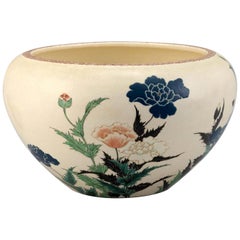
Rare Porcelain Bowl with Plique-a-Jour Design by Makuzu Kozan
By Makuzu Kozan
Located in Atlanta, GA
An extremely fine and delicate porcelain bowl from the studio of Japanese Potter Makuzu Kozan, also known as Miyagawa Kozan (1842–1916), one of the most established and collected cer...
Category
Antique Early 1900s Japanese Japonisme Ceramics
Materials
Porcelain
Japanese Ceramic Sake Bottle Chosen Karatsu Ware
Located in Atlanta, GA
The long neck bottle of classic form was heavily potted with coarse clay with high iron content. The flask, circa 18th century Edo period, was purposed for sake storage but also substituted as a flower vase during tea ceremony. The surface is covered in glossy black glaze and contrasts strikingly with white ash glaze around the shoulder. The white, fired with straw, displays a splashing feather effect and fine crackles, blending in with the black artistically. This type of Karatsu ware...
Category
Antique 18th Century Japanese Japonisme Ceramics
Materials
Ceramic

Rare Large Vase with White Slip Inlay Makuzu Kozan Meiji Period
By Makuzu Kozan
Located in Atlanta, GA
A impressively large and unusual stoneware vase in an urn shape from the studio of Japanese Potter Makuzu Kozan, also known as Miyagawa Kozan (1842–1916), one of the most established and collected ceramist from Meiji Period. Born as Miyagawa Toranosuke, Kozan established his pottery studio in Yokohama circa 1870s and later became one of the appointed artist to the Japanese Imperial household. His work was exhibited in many international fairs that the Meiji government participated at the turn of the century and won many grand prizes.
This vase is dated to the end of Makuzu's life circa 1910-1916 based on similar work created around that time. After achieving domestic and international fame, Makuzu retired and handed the business to his son Hanzan in 1912. He dedicated his time to other selected projects that were more in tune with Japanese sensibility than export aesthetic. He made a group of stoneware pottery pieces inspired by Edo master like Ninsei and Kenzan as well as his own poetic creation. This piece is attributed to that period.
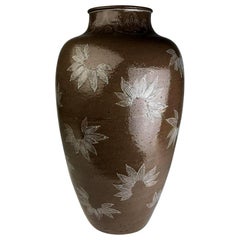
Standing of an impressive size, this vase is more like an urn, made with stoneware instead of porcelain. It was coated with a brown iron glaze with a slight translucent quality. Underglaze whit slips were used to draw low relief decoration of bamboo leaves that sparsely scatter on the surface. Slightly more elaborate scrolling vines and autumn flowers circles under the mouth rim. Same white slip inlay was used to sign the vase under the base. The whole effect of the piece is unusual. With its dark glaze in contrast with the sparse white decoration that is more abstract and geometric than realistic, it appears almost modern with an Art Deco flavor.
For stoneware urn and vase in the similar genre by Makuzu Kozan: see figure 113 on page 182 of "Sekai ni Aisa Reta ya Kimono" MIYAGAWA KOZAN MAKUZU...
Category
Vintage 1910s Japanese Japonisme Ceramics
Materials
Ceramic
Japanese Porcelain Dragon Glazed Vase Mazuku Kozan
By Makuzu Kozan
Located in Atlanta, GA
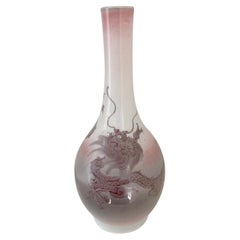
A porcelain vase with dragon motif by Japanese imperial potter Makuzu Kozan (1842-1916), circa 1900s. The vase is made in what is considered early phase of his underglaze period during late Meiji era. In a classic elongated baluster form, the surface of the vase was decorated in an unusual pink mist on a white and aubergine background (called Morotai, the Hazy style), on which a flying dragon is showcased on the center. The dragon was outlined in iron red and filled with the aubergine color and was artistically emphasized on its bulging eyes, claws, scales and a long tail. It was the sole focus of the design circumventing the entire body of the vase. The imagery calls in mind the dragon decoration found in Korean...
Category
Antique Early 1900s Japanese Japonisme Ceramics
Materials
Porcelain
Large Korean Blue and White Vase with Phoenix Design
Located in Atlanta, GA
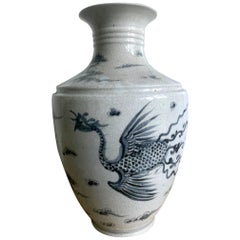
A large and heavy Korean ceramic vase in a Classic Chinese form with open mouth with a wide flared rim, a neck with three concentric grooves and a sloped broad shoulder. The blue and white design features two underglazed phoenix...
Category
Early 20th Century Korean Archaistic Ceramics
Materials
Ceramic
Chinese Ceramic Glazed Guardian Ming Dynasty
Located in Atlanta, GA
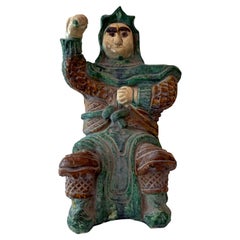
A stoneware figure depicting a seated armored warrior with a striking pose circa 15th-17th century. He is likely one of the four heavenly kings, th...
Category
Antique 16th Century Chinese Ming Ceramics
Materials
Stoneware
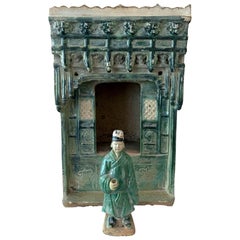
Chinese Stoneware Funeral Shrine Model and Figure Ming Dynasty
Located in Atlanta, GA
A stoneware shrine model with a figurine made in Ming dynasty (15th-17th century) in China and used as funeral burial objects. It is not known whether the two objects were originally associated, but they display similar glaze and oxidation and were in the same collection. The stoneware building is an architectural rendering of a typical ancestor shrine used at the time. It features a single room behind an elaborate front with double doors, under a multiple layered eaves. There are great architectural and decorative details throughout. The green glaze shows a wonderful silvery oxidation, an indication that the piece was buried in the ground. The side appears to be glazed lightly originally and some scrape marks and oxidized glaze residues remains. The back is unglazed. The figure is a typical tomb figurine...
Category
Antique 16th Century Chinese Ming Ceramics
Materials
Stoneware
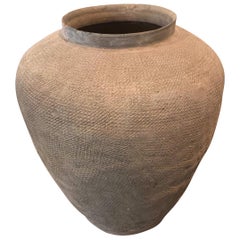
Stoneware Storage Jar China East Zhou Dynasty
Located in Atlanta, GA
A pinkish stoneware jar with broad shoulder and slightly tapered body from Chinese East Zhou Dynasty (771-256BC). The surface of the jar was nearly thorou...
Category
Antique 15th Century and Earlier Chinese Archaistic Ceramics
Materials
Stoneware
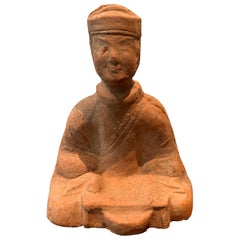
Chinese Terracotta Tomb Figure East Han Dynasty
Located in Atlanta, GA
A small Chinese terracotta tomb figure (Ni Yong) from East Han dynasty (25-220 AD), likely from the area of nowadays Sichuan. It depicts a sitting male wit...
Category
Antique 15th Century and Earlier Chinese Han Ceramics
Materials
Terracotta
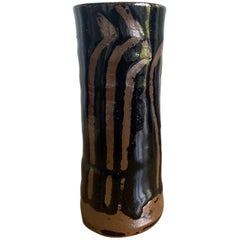
Japanese Ceramic Vase Mingei Style Hamada Shoji
By Hamada Shoji
Located in Atlanta, GA
A heavily potted stoneware vase in cylindrical form, decorated with abstract strokes in iron rust glaze (known as Persimmon Glaze in Japanese) on a black glazed background. The pattern suggests autumn grasses, and it was applied with free hands. The vase is attributed to Japanese potter Hamada Shoji...
Category
Late 20th Century Japanese Arts and Crafts Ceramics
Materials
Ceramic
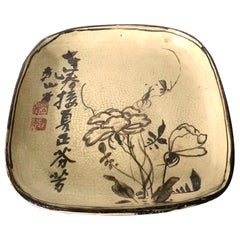
Japanese Ceramic Dish Meiji Ogata Kenzan
Located in Atlanta, GA
A Japanese ceramic shallow dish in square form with rounded corners from Meiji period in the style of Ogata Kenzan. The dish features a cream color crackl...
Category
Antique 19th Century Japanese Meiji Ceramics
Materials
Ceramic
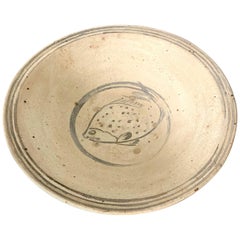
Antique Southeast Asian Ceramic Fish Bowl Thailand Sukhothai Period
Located in Atlanta, GA
A shallow ceramic bowl from Sukhothai period of Thailand circa 14th-15th century. The dish was hand molded with a coarse pinkish clay and it has a...
Category
Antique 15th Century and Earlier Thai Archaistic Ceramics
Materials
Ceramic
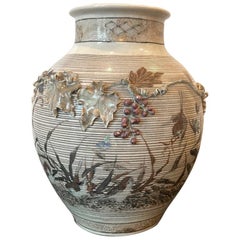
Japanese Porcelain Vase with Relief Surface Makuzu Kozan
By Makuzu Kozan
Located in Atlanta, GA
A rare porcelain vase by Makuzu Kozan (1842-1916) circa 1870-81 (late Meiji period). The vase is dated to the earlier work from Kozan's studio during his early period (Takauki-ware p...
Category
Antique Late 19th Century Japanese Japonisme Ceramics
Materials
Ceramic
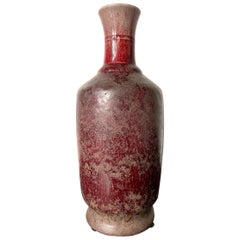
Large Antique Chinese Sang-de-Boeuf LangYao Red Vase
Located in Atlanta, GA
A large Chinese vase with Sang-de-Boeuf (oxblood) glaze in a classic baluster form with a tall narrow neck and horizontal bands around the shoulder. The oxblood glaze is known as Lan...
Category
Antique Late 19th Century Chinese Chinese Export Ceramics
Materials
Ceramic
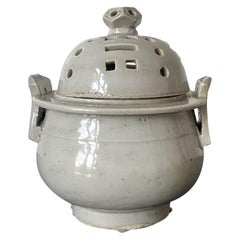
Korean white Porcelain Ritual Incense Burner with Bagua Pattern Joseon Dynasty
Located in Atlanta, GA
An antique Korean ritual incense burner circa 19th century, late Joseon dynasty. It was made in Bunwon Kiln in Gwangju, Gyeonggi Do, near Seoul. The ceramic container has a thickly b...
Category
Antique 19th Century Korean Archaistic Ceramics
Materials
Ceramic
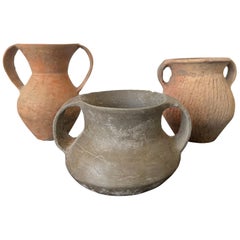
Collection of Three Chinese Neolithic Pottery
Located in Atlanta, GA
A collection of three small Chinese Neolithic pottery jars consisting a red slender jar with large double ears, a grey and wide short jar wit...
Category
Antique 15th Century and Earlier Chinese Archaistic Ceramics
Materials
Ceramic
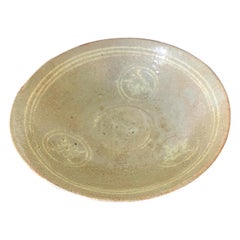
Korean Ceramic Celadon Bowl with Slip Inlay Goryeo Dynasty
Located in Atlanta, GA
Despite inspired originally by the celadons from Song Dynasty in China, the development of celadon in Korean peninsula took its own course and reached the Zenith in the 11-12th century during Goryeo dynasty...
Category
Antique 15th Century and Earlier Korean Archaistic Ceramics
Materials
Ceramic
Korean Ceramic Celadon Bowl with Slip Inlay Goryeo Dynasty
Located in Atlanta, GA
Despite inspired originally by the celadons from Song dynasty in China, the development of celadon in Korean peninsula took its own course and reached the zenith in the 11-12th century during Goryeo dynasty...
Category
Antique 15th Century and Earlier Ceramics
Materials
Ceramic
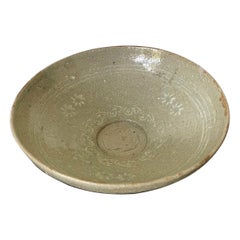
Celadon Ceramic Tea Bowl Korean Goryeo Dynasty
Located in Atlanta, GA
An antique Korean ceramic tea bowl with celadon glaze from Goryeo dynasty, circa 12th century. The thin-walled stoneware bowl was potted delicately with...
Category
Antique 15th Century and Earlier Korean Archaistic Ceramics
Materials
Ceramic
Korean Celadon Inlay Vase Goryeo Dynasty
Located in Atlanta, GA
On offer is an antique Korean ceramic vase from the end of Goryeo to the beginning of Joseon period (circa 14-15th). The vase features celadon crackled glaze with underglaze inlay design in black and white. The vase was a transitional piece made toward the end of Goryeo to the beginning of Joseon Yi dynasty...
Category
Antique 15th Century and Earlier Korean Archaistic Ceramics
Materials
Ceramic
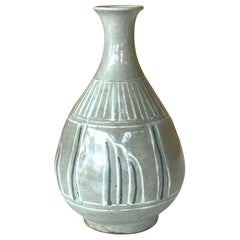
Korean Celadon Inlay Plate Goryeo Period
Located in Atlanta, GA
The round ceramic plate with a slightly raised foot ring is dated from late Korean Goryeo Kingdom (918 to 1392 AD) likely toward the end of the 14th century. The plate features a celadon glaze and underglaze slip inlays in black and white. The inlays showcases a pair of bird (appears to be cranes) in the center of a radiating double walled ring...
Category
Antique 15th Century and Earlier Korean Archaistic Ceramics
Materials
Ceramic
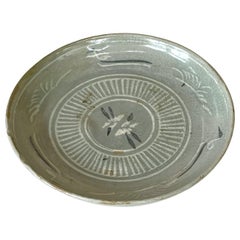
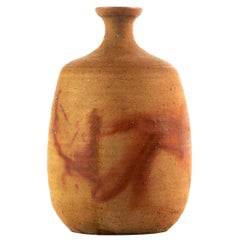
Modern Studio Vase Bizen Ware by Jun Isezaki
Located in Atlanta, GA
A bottle form vase by Japanese studio ceramic artist Jun Isezaki (Born in 1936). A modern Bizen yaki stoneware piece that is strongly rooted in history and ...
Category
20th Century Japanese Organic Modern Ceramics
Materials
Ceramic, Wood
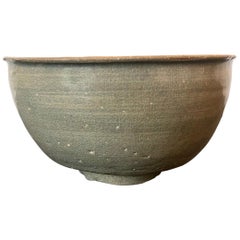
Korean Ceramic Celadon Deep Bowl Goryeo Dynasty
Located in Atlanta, GA
A ceramic bowl with celadon glaze from Korea, circa 14th century (late Goryeo Dynasty). The particular shape of the bowl suggests that it is likely a "Bo" (Chinese) or "Hattara" (Japanese "Oryoki"). This is a Buddhism term derived from Sanskrit word "patra", which means "vessel that contains just enough". The container was used traditionally by Buddhist monks to ask for alms (donated foods by laymen). The deep volume and the wide opening are conducive to its utility function. The bowl is covered in a jade-color celadon which has very fine and uniform crackles throughout. Upon close inspection of the exterior wall, one can detect a very light brush of white slip circumventing the body. The white slip brushing technique only became popular from 15th century on as a landmark of the Buncheong ceramics...
Category
Antique 15th Century and Earlier Korean Archaistic Ceramics
Materials
Ceramic
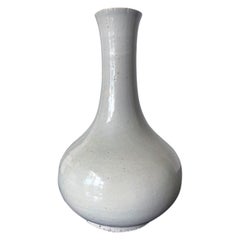
Large Antique White Glazed Bottle Vase Korean Ceramic Joseon Dynasty
Located in Atlanta, GA
On offer is a Korean ceramic bottle vase circa 19th century made in the late Joseon dynasty (1392-1910). The vase is of a classic bottle form with a bulbous body and a long neck with...
Category
Antique 19th Century Korean Other Ceramics
Materials
Ceramic
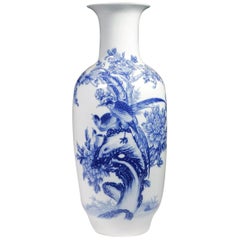
Chinese Blue and White Porcelain Vase from Modern Official Kiln
Located in Atlanta, GA
Dubbed as production of the "Chinese Modern Official Kiln", a small group of porcelains of the highest standard were produced in Jingdezhen from 1962-1967, The production was aimed as a revival of the Chinese porcelain after the foundation of the Republic in 1949 in order to serve the purpose of decorating the meeting halls for the newly renewed diplomatic relations around the globe. The best available materials and artists, including the painters and potters, were employed to achieve a high quality that rivaled the pieces produced during the pinnacle years in the porcelain production in the previous Qing dynasty. Due to the breakout of the Cultural Revolution, most of the pieces failed to be used as intended. Most if not all signatures, such as found on this vase, were added later as a hallmark to distinguish them. "Zhong Nai Hai Huai Ren Tang Treasures Porcelain Research Bureau year of 1962". Zhong Nai Hai is the residential and working compound for Chinese political elites in Beijing and Huai Ren Hall being an important meeting hall.
The pieces from "Modern Official Kiln" ubiquitously showcase perfectly balanced forms with precision in symmetry. The use of very high quality Gaolin clay resulted in a semi translucent body, often quite thinly potted. The superbly underglaze paint were sandwiched between a pre-applied glaze and then an overglaze, and the elaborate designs were drawn by master painters. Often, there is a hidden red Chinese National Emblem on the interior wall. These features were all well reflected in this piece. The decoration of the blue paint on the vase is of a classic regal composition and the cobalt blue is of a vivid radiating color. Blooming peonies, an old laurel tree with blossom and scholar rocks provide the background and anchor for a pair of pheasants. One raises its head to crow while the other one looks down. These motifs are commonly found in classic Chinese scroll paintings, a genre called "Flower and Bird Painting". On the back of the vase, there are Chairman Mao's head portrait watermarked in the glaze as well as a cursive poem with a collection number as shown.
For a pair of blue and white vase of the same production, see sale by Singapore International Auction PTE ltd on July 21st, 2019 lot 2014.
For a pair of blue and white urns...
Category
Vintage 1960s Chinese Modern Ceramics
Materials
Porcelain
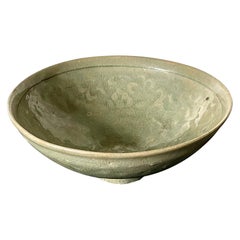
Antique Korean Ceramic Bowl with Incised Design
Located in Atlanta, GA
A Korean stoneware bowl from Goryeo dynasty circa 12th century. The conical form bowl with a small raised foot rim is covered in a celadon green glaze...
Category
Antique 15th Century and Earlier Korean Archaistic Ceramics
Materials
Ceramic
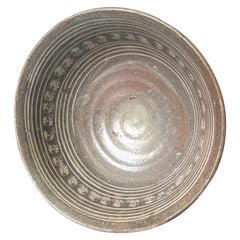
Ceramic Bowl Buncheong Ware Joseon Dynasty
Located in Atlanta, GA
A Buncheong (also spelled as Punch'ong) stoneware tea bowl from Korea Joseon Dynasty circa 15-16th century. The conical shape bowl in the classical styl...
Category
Antique 16th Century Korean Archaistic Ceramics
Materials
Ceramic
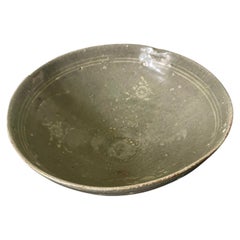
Korean Ceramic Celadon Bowl with Slip Inlay Goryeo Dynasty
Located in Atlanta, GA
The celadon bowl on offer here was likely dated to the 14th century toward the end of Goryeo Dynasty, after the production quality reached its zenith during 11-12th century. The bowl...
Category
Antique 15th Century and Earlier Korean Archaistic Ceramics
Materials
Ceramic
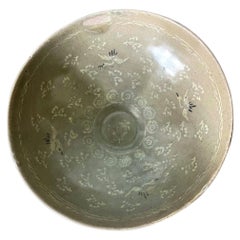
Korean Ceramic Celadon Bowl with Slip Inlay Goryeo Dynasty
Located in Atlanta, GA
A good Korean celadon bowl with elaborate slip inlays circa 12-13th century from the Goryeo Dynasties (918 to 1392AD). Despite inspired originally ...
Category
Antique 15th Century and Earlier Korean Archaistic Ceramics
Materials
Ceramic
Japanese Shigaraki Jar for Ikebana by Shiho Kanzaki
By Shiho Kanzaki
Located in Atlanta, GA
A Shigaraki stoneware jar by Japanese potter Shino Kanzaki (1942-2018). Kanzaki is a world renowned potter in Shigaraki who based his modern work on the ancient tradition of Shigaraki and Iga ware...
Category
20th Century Japanese Modern Ceramics
Materials
Ceramic
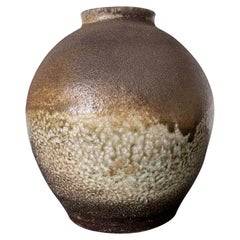
Japanese Ceramic Ikebana Vase Bizen Ware Nanba Koyo
Located in Atlanta, GA
A tall vintage ceramic vase with handle from Japan (20th century) by Nanba Koyo. Made in the tradition of Bizen ware, the vase has a modern aesthetic with a...
Category
20th Century Japanese Japonisme Ceramics
Materials
Ceramic


$1,500 / item
Japanese Echizen Ceramic Tsubo Fujita Jurouemon VIII
Located in Atlanta, GA
A Japanese storage jar (tsubo) made in the ancient Echizen ware tradition by Fujita Jurouemon VIII. Echizen is one of the six ancient kilns in Japan, directly influenced by the Sue ware...
Category
20th Century Japanese Modern Ceramics
Materials
Ceramic
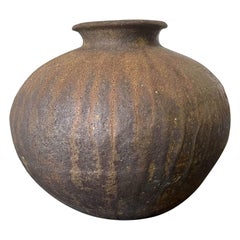
Korean Ceramic Tea Bowl with Slip Inlays Goryeo Dynasty
Located in Atlanta, GA
A small ceramic conical form tea bowl from Korean Goryeo Dynasty circa 14th century. The bowl is of a slightly irregular shape and covered in a grayish overglaze. The inlaid slip dec...
Category
Antique 15th Century and Earlier Korean Archaistic Ceramics
Materials
Ceramic
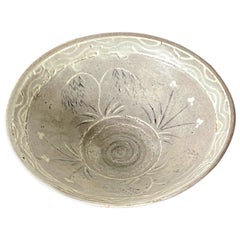
Antique Korean Ceramic Bowl with Carved Design Goryeo Dynasty
Located in Atlanta, GA
A Korean stoneware bowl from Goryeo dynasty circa 12th century. The conical form bowl with a small raised foot rim is covered in a celadon green glaze. ...
Category
Antique 15th Century and Earlier Korean Archaistic Ceramics
Materials
Ceramic
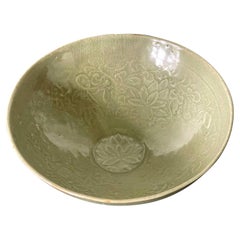
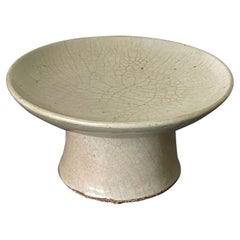
Korean White Ceramic Stem Dish Joseon Dynasty
Located in Atlanta, GA
A ceramic dish with high cylindrical foot in white glaze from Korea, circa 19th century Joseon Dynasty. By shape, this piece is most likely a ceremonial vessel that was used to make offerings on the altar. Although without inscription, we can't rule out that it could be a household item for occasions that were less formal. Such as a private shrine in the household. During Joseon dynasty, the social morals were largely centered on the principles of Confucianism that originated from China. Many ritual ceramic wares were produced for rituals and worships on all level of the society. The ware were often modeled after the archaic bronze ware that elevated them from the aesthetic of daily use pieces. High foot dish like this were made in both round and square shape to suite different use but they were all distinguished with the inscription for their exclusive ceremonial purpose.
Of elegant form and harmonious proportion, this stem dish...
Category
Antique 19th Century Korean Archaistic Ceramics
Materials
Ceramic
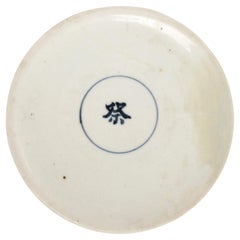
Korean Ceramic Ritual Offering Vessel with Inscription Joseon Dynasty
Located in Atlanta, GA
A ceramic dish with high cylindrical foot in white glaze with a cobalt blue underglaze inscription from Korea, circa 18-19th century Joseon Dynasty. This is a classic ceremonial vess...
Category
Antique Late 18th Century Korean Archaistic Ceramics
Materials
Ceramic
$3,200 Sale Price
46% Off