TISHU Decorative Objects
to
5
370
48
77
67
226
48
61
59
68
11
2
8
4
15
8
9
15
11
13
102
33
6
3
2
2
1
1
208
85
85
38
34
415
3
241
227
159
85
77
Height
to
Width
to
418
418
418
28
21
12
10
9
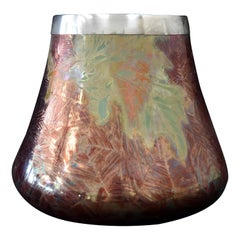
Fine and Rare Miniature Satsuma Vase by Taizan Yohei
Located in Atlanta, GA
A very fine miniature ceramic vase in satsuma ware by Taizan Yohei IX (1864-1922) circa 1880-1890s of late Meiji period. The vase with a broad flat should...
Category
Antique 1880s Japanese Japonisme Ceramics
Materials
Ceramic
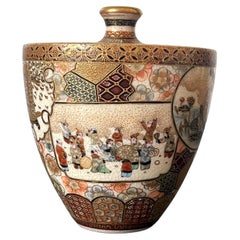

Japanese Ceramic Vase with Delicate Carvings by Makuzu Kozan Meiji Period
By Makuzu Kozan
Located in Atlanta, GA
A delicate and rare Japanese ceramic vase by the important Meiji imperial potter Makuzu Kozan (1842-1916) circa 1887-1910. Dated to his underglaze phase post 1887 after he successful...
Category
Antique 1890s Japanese Japonisme Ceramics
Materials
Ceramic
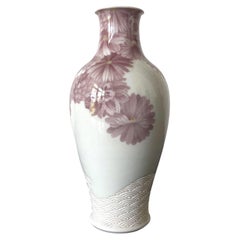
Large Antique Americana Carved Elm Burl Bowl with Handles
Located in Atlanta, GA
A massive Americana bowl hand-carved from Elm wood (with some possible burl pattern in the wood) circa 18th century. The bowl was from Northeastern part or Eastern Woodlands of the U...
Category
Antique 18th Century American American Colonial Decorative Bowls
Materials
Wood
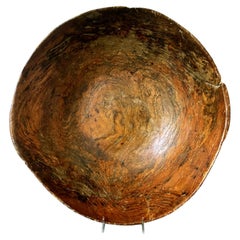
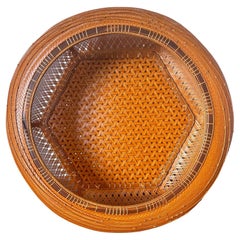
Contemporary Japanese Bamboo Sculptural Ikebana Kawano Shoko
By Kawano Shoko
Located in Atlanta, GA
A large woven bamboo basket form ikebana called "Richness" beautiful bamboo by contemporary Japanese bamboo artist Kawano Shoko (born 1957-) circa 2002 and purchased from Tai Modern...
Category
Early 2000s Japanese Organic Modern Sculptures and Carvings
Materials
Bamboo, Rattan
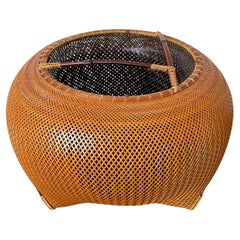
Contemporary Japanese Bamboo Sculpture Kawano Shoko
By Kawano Shoko
Located in Atlanta, GA
A beautiful bamboo sculpture in a double-walled basket form by contemporary Japanese bamboo artist Kawano Shoko (born 1957-). The piece entitled "Birth" was made in 2002 and purchased from Tai Modern...
Category
Early 2000s Japanese Organic Modern Sculptures and Carvings
Materials
Bamboo, Rattan
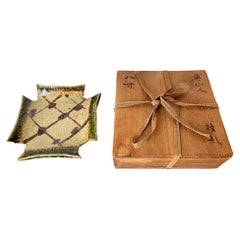
Japanese Oribe Glazed Stoneware Dish by Kitaoji Rosanjin
By Rosanjin Kitaoji
Located in Atlanta, GA
An oribe stoneware square dish with four notched corners and up-turned edges made by Kitaoji Rosanjin (1883-1959) circa 1950s. The Mingei style dish h...
Category
20th Century Japanese Modern Ceramics
Materials
Ceramic
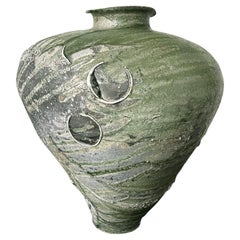
Massive Ceramic Jar Tsubo by Japanese Potter Tsujimura Yui
By Tsujimura Yui
Located in Atlanta, GA
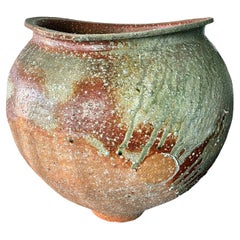
A massive and magnificent ceramic Tsubo jar by Japanese potter Tsujimura Yui (1975-). Inspired by the techniques and aesthetics of the early medieval Sue ware, the artist hand builds an impressive voluminous oviform, irregular by intention, from a combination clay from both Shigaraki and Iga, coarse by nature and rich in feldspar. Fired on their sides horizontally, the surface of the thick wall tsubo is covered with streaks and drips of natural ash glazes in shades of green and blue, forming an abstract and mesmerizing pattern that resembles geothermal earth activity. Additional ashes are blown during the firing to accentuate the textures. Most recognizably, there are many circular marks scattered on the surface of his archaic looking vessels. That is resulted from using stacked tea bowls to prevent the conjoining of the vessels. After the firing, the stacked vessels are chipped away, leaving behind those circular impression, as well as deep pools of glaze which gather where they were placed.
Born in 1975, Tsujimura Yui is the first son of the contemporary ceramic artist Tsujimura Shiro...
Category
Early 2000s Japanese Modern Ceramics
Materials
Ceramic
Large Contemporary Ceramic Tsubo Jar by Kai Tsujimura
Located in Atlanta, GA
A massive stoneware tsubo floor jar created by Japanese contemporary ceramic artist Kai Tsujimura (1976-). The heavy jar with its impressive volume was made in the tradition of Iga ware with local coarse sandy clay that turned reddish after the firing. It took its shape from heavy medieval storage jars with a wide-open mouth. For a nearly identical form, see an Echizen jar from Heian period (794–1185) in the collection of MET (Accession Number: 1977.261). The surface showcases scattered white crystalized feldspars and a green vitrified ash glaze cascade down the body (known as biidoro in Japanese - after the Portuguese word for glass vidoro). These is a globular shape impressed on the jar. It is a signature practice of the Tsujimura potter family by stacking bowls between the pieces in the kiln during the firing, resulting in an accidental but iconic aethetic (Kai and Yui Tsujimura...
Category
2010s Japanese Organic Modern Ceramics
Materials
Stoneware
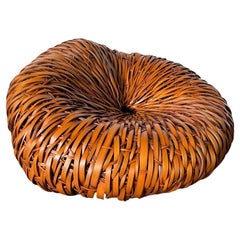
Large Contemporary Japanese Woven Bamboo Sculpture Mimura Chikuho
By Mimura Chikuho
Located in Atlanta, GA
A contemporary hand-woven bamboo sculpture in an organic form by Japanese bamboo artist Mimura Chikuho (1973-). Named "Cloud on the Peak", the piece was made as one of his series in 2004. Entirely hand-woven in irregular plaiting, the artist challenged the traditional bamboo basket making and elevated it into modern abstract sculpture. The minimalist donut form resembles the hat-shaped cloud formed around the peak of the mountain (often seen on Fujisan in Japanese art). It displays a wonderful subtle undulation and irregularity in its organic shape, achieved by a mastery of the traditional technique. The irregular plaiting appears chaotic in its busy crossing patterns yet as a whole, the piece strangely quiet and introverted, demanding contemplation from the viewer. Signed "Chikuho" underneath in Kanji. The piece comes with its original storage paper box and a silk bag.
Provenance: Purchased from Tai Gallery/Textile Arts now (Tai Modern) in Santa Fe.
Mimura Chikuho was born in 1973 in Tokyo. He studied under Yufu Shohaku...
Category
Early 2000s Japanese Organic Modern Sculptures and Carvings
Materials
Bamboo
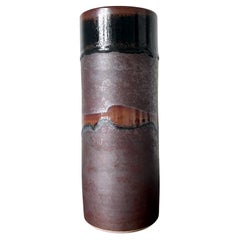
Early Ceramic Vase with Unique Glaze by Brother Thomas Bezanson
By Brother Thomas Bezanson
Located in Atlanta, GA
An early ceramic vase in a slightly tapered cylinder form by potter Brother Thomas Bezanson (1929-2007). The minimalistic silouette is striking...
Category
Mid-20th Century American Modern Vases
Materials
Ceramic
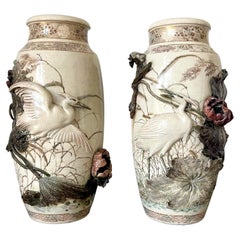
Rare Pair of Early Period Makuzu Kozan Takauki High-Relief Vases
By Makuzu Kozan
Located in Atlanta, GA
A stunning pair of ceramic vases with gilt, paint and high-relief decoration by imperial artist Makuzu Kozan (1842-1916, also known as Miyagawa Kozan) circa 1876-81 (late Meiji period). These vases belong to early period (1876-1881) of Kozan's repertoire, during which time the high relief sculpturing (known as Takauki ware) was used as a distinguished technique on top of the traditional gilt and paint ornaments of satsuma ware. Due to the relatively limited production and the fragile nature of these wares, not a large quantity of the examples remained in the first place, not mentioning a fine matching signed pair in such impressive sizes.
Not only a rarity, this pair of vases is also superb in workmanship, thus the fine example of the work from that short and unique period of the artist's career before he switched to the underglaze period. In a conceptually mirrored fashion, the surface is richly decorated with flying cranes among large lotus leaves and flower, like an idyllic aqua scenery of pure poetry on a circular scroll. The high-relief appliques were rendered and composed in realistic fashion but with a dramatic touch. They are literally about to break the surface free, alive and in motion. The dark colors of the glaze were used to set a moody tone. The approach to create this type of ornamentations is more akin to sculpturing an ink painting in three-dimension than ceramic making. It is not hard to imagine the demand of both the artistry and the technique.
Both vases were signed as "Makuzu Kozan Kiln" and each further with another name and seal, which are most likely the individual artist involved in the making process. Similar signatures can be seen in the reference book below.
For similarly Takauki vases, see Miyagawa Kozan Makuzu...
Category
Antique 1870s Japanese Japonisme Ceramics
Materials
Ceramic
Japanese Maki-e Lacquer Portable Sagejubako Theme of Three Winter Friends
Located in Atlanta, GA
Sagejubako is a portable lunch or picnic set that became popular in the early Edo period when an additional meal was added between breakfast and dinner. It normally consists of a han...
Category
Antique 19th Century Japanese Japonisme Lacquer
Materials
Lacquer
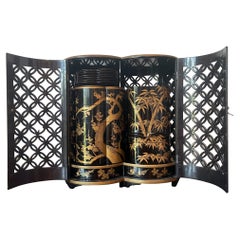
Ceramic Vase Vessel by British Studio Potter John Ward
By John Ward
Located in Atlanta, GA
A stoneware vessel with glazed and banded stripes design by British studio ceramist John Ward (1938-2023) circa 1980s. The vessel takes its simple but d...
Category
Late 20th Century English Organic Modern Vases
Materials
Ceramic
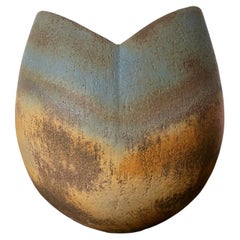
Ceramic Vessel Vase by British Studio Potter John Ward
By John Ward
Located in Atlanta, GA
A stoneware vessel with glazed and banded stripes design by British studio ceramist John Ward (1938-2023) circa 1980s. The vessel takes its simple but d...
Category
Late 20th Century English Modern Vases
Materials
Ceramic
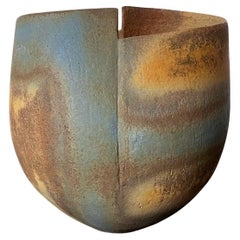
Japanese Studio Ceramic Vase by Ken Matsuzaki with Original Tomobako
By Ken Matsuzaki
Located in Atlanta, GA
An impressive stoneware bottle form vase by contemporary Japanese studio potter Ken Matsuzaki (1950-) circa 2010s. The solid form takes its cue from Chinese traditional plum vase (Meiping) with raised and swelled shoulder and a small opening, yet it rises from a non-conventional pentagonal faceted base. The extraordinary surface was covered with Yohen Shino glaze in a deep iron hue. Thick white slips were applied in bold strokes to the lower portion of the vase. The abstract pattern calls to mind of the imagery of the iconic ocean waves found in traditional Japanese art. The presence of the vase is strong and none-compromising, reaching back to the past yet appearing utterly modern. It is marked by the artist underneath and comes with the original tomobako with title and author inscriptions and a wrapping cloth with the artist's seal.
"Ken Matsuzaki’s haptic ceramics bring a contemporary approach to traditional Japanese ceramicware, most notably 16th-century Oribe pottery...
Category
21st Century and Contemporary Japanese Modern Ceramics
Materials
Ceramic
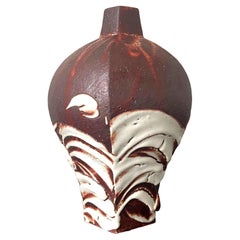
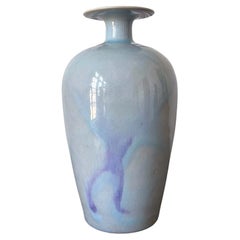
Studio Ceramic Vase Brother Thomas Bezanson
By Brother Thomas Bezanson
Located in Atlanta, GA
A ceramic vase crafted by Brother Thomas Bezanson (1929-2007) circa 1970s. The vase takes a classic Chinese "Mei Ping" form but with a modern s...
Category
Late 20th Century American American Craftsman Vases
Materials
Ceramic
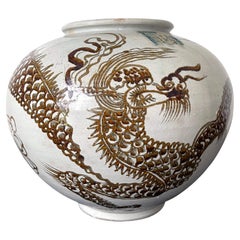
Korean Ceramic Moon Jar with Dragon Joseon Dynasty
Located in Atlanta, GA
On offer is a large Korean ceramic storage jar (hangari) with white glaze and iron red underglaze dragon design. The globular shaped jar derived its form from the Moon Jar of the ear...
Category
Antique 18th Century Korean Archaistic Ceramics
Materials
Ceramic
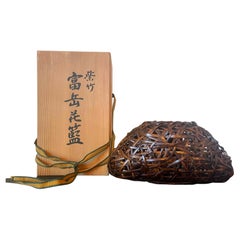
Japanese Woven Ikebana Hanging Basket by Suemura Shobun
By Suemura Shobun
Located in Atlanta, GA
A Japanese woken bamboo Hanakago, a wall hanging Ikebana basket by Suemura Shobun (1917-2000). The basket is entitled Purple Bamboo Mt. Fuji and was woven with Susudake (smoked bamboo) using irregular plaiting technique to achieve a voluminous form that resembles the iconic Mount Fuji and with the textural appearance of a bird's nest. The base was detailed with mushi-maki knotting and the mouth rim is equipped with a small loop for hanging. The surface has a lustrous lacquer coating that shows off the natural pattern of the bamboo marking. It houses a removable lacquered container made from bamboo culm. The piece is not singed, but it comes with an original fabric stroage pouch, and an original storage box (Tomobako), which is signed with the title on the esterior Mt. Fuji Purple Bamboo” and signed Suemura Shobun on the inside with two red seals.
Suemura Shobun was from Kansai region and active in Osaka. He studies under Yamamoto Chikuryosai I. Shobun is known for making unconventional baskets that are modern and sculptural.
For reference, see page 94 Master of Bamboo" Rinne.
For a recently sold basket...
Category
20th Century Japanese Modern Sculptures and Carvings
Materials
Bamboo
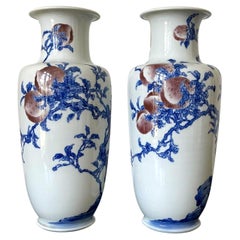
Pair of Rare Porcelain Commemorative Vases by Makuzu Kozan Meiji Period
By Makuzu Kozan
Located in Atlanta, GA
A pair of porcelain vases in classic form, decorated with underglaze blue and copper red painting by Imperial potter Makuzu Kozan. Also known as Miyagawa Kozan (1842–1916), Makuzu was one of the most established and collected ceramist known to the west from Meiji Period.
The vases are in a classic Chinese form called "Bang Chu Ping" (grain-mallet vase...
Category
Vintage 1910s Japanese Japonisme Ceramics
Materials
Ceramic
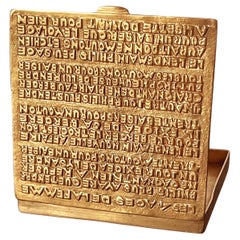
Gilded Bronze Box with Poem by French Art Jeweler Line Vautrin
By Line Vautrin
Located in Atlanta, GA
A gilt bronze poudrier box with cast poem on surface by Parisian art jeweler Line Vautrin (1913-1997) circa 1940s. The poem "Les 4 ages de la Femme" was an old French lyrical poem th...
Category
Vintage 1940s French Mid-Century Modern Decorative Boxes
Materials
Bronze
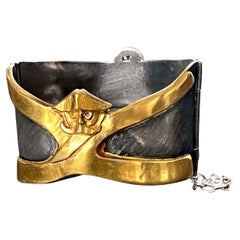
French Art Bronze Bracelet by Line Vautrin
By Line Vautrin
Located in Atlanta, GA
A rare cuff bracelet in gilded and silvered bronze by Parisian art jewller Line Vautrin (1913-1997). The playful piece is called "Le gendarme et le voleur"...
Category
Vintage 1940s French Mid-Century Modern Collectible Jewelry
Materials
Bronze
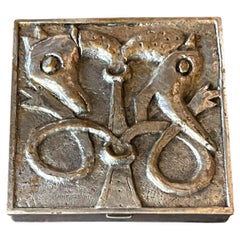
French Silvered Bronze Box Line Vautrin
By Line Vautrin
Located in Atlanta, GA
A silvered bronze Poudrier "Le loup et le renard" (The wolf and the fox). by Parisian art jeweler Line Vautrin (1913-1997) circa 1940s. The square box features a relief cast of two s...
Category
Vintage 1940s French Mid-Century Modern Decorative Boxes
Materials
Bronze
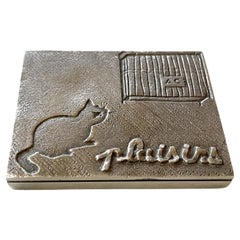
French Silvered Bronze Paperweight Line Vautrin
By Line Vautrin
Located in Atlanta, GA
A silvered cast bronze rectangular paperweight by Parisian art jeweler Line Vautrin (1913-1997) circa 1940s. A lovely piece of desktop object d'art in a relatively uncommon form and ...
Category
Vintage 1940s French Mid-Century Modern Paperweights
Materials
Bronze
Large Japanese Contemporary Ceramic Jar from Onda Yaki Kiln
By Onda Yaki
Located in Atlanta, GA
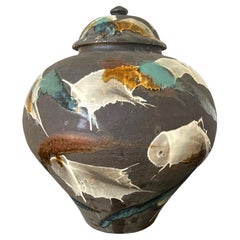
A large Japanese lidded ceramic jar from the kiln of Onda Yaki, circa 2010. The stoneware jar impresses the viewer with a robust bulbous form. Its black body is nearly unglazed but exuberantly splashed with strokes of slip glazes of white, yellow and blue. The visual effect is wonderful that it appears traditional and contemporary at the same time. The tri-color glaze calls to mind the San-Cai from Chinese Tang dynasty, yet the application is akin to abstract painting on canvas.
Onda Yaki also spelled as Onta Yaki also spelled Onta, is a type of Japanese pottery produced in and around the village of Onta in Oita Prefecture in Kyushu Island. It was founded in 1705. Closely associated with Mingei folk art, Onda ware was inscribed by the national government in 1995 as an Intangible Cultural Property
Background from Pucker Gallery where the jar was exibited and purchased.
"In his search for true folk pottery, the Japanese philosopher Soetsu Yanagi...
Category
2010s Japanese Organic Modern Ceramics
Materials
Ceramic
Contemporary Japanese Bamboo Sculpture by Kawano Shoko
By Kawano Shoko
Located in Atlanta, GA
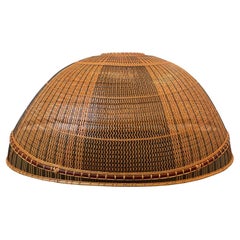
A contemporary Japanese bamboo sculpture entitled Light at Dawn (Gyoko) made in 2004 by Kawano Shoko (B. 1957). This airy piece is unconventi...
Category
Early 2000s Japanese Modern Sculptures and Carvings
Materials
Bamboo, Rattan
Contemporary Japanese White Glaze Ceramic Vase by Manji Inoue
By Inoue Manji
Located in Atlanta, GA
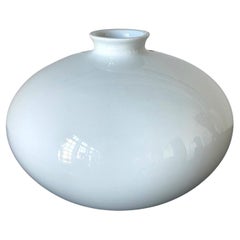
A large glazed white porcelain vase in the jar-form by Japanese ceramic artist Inoue Manji (Japanese, b. 1929). Minimalistic in form, the vase is pure white with a very subtle blue h...
Category
Late 20th Century Japanese Modern Ceramics
Materials
Ceramic
Collection of Three Indian Sandstone Carved Heads of Deities
Located in Atlanta, GA
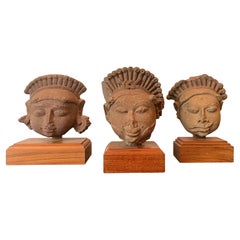
A collection of three carved sandstone heads on wood display stands from Northern India Rajasthan or
Madhya Pradesh, circa 11-12th century. Fragmented from large whole-body statue, these red sandstone heads exhibit very fine carving, typical of Northern Indian Art during the medieval time. Two males and one female, they represent heavenly deities Yakshas and Yakshini. Their facial features were detailed with large almond-shape eyes under thin arched eyebrows. The males have characteristic facial hairs including curvy moustaches and tightly combed beard, both finely carved, and the female wears large spoke loop earrings. They all don fantastical hairstyles with serpent-like spiral locks and some with elaborate knots on top and above the sideburns.
These deities are likely celestial musicians. A pair of full-body statues (lot 70) were offered for sale in Christie's Indian and Southeast Asian Art...
Category
Antique 15th Century and Earlier Indian Archaistic Sculptures and Carvings
Materials
Sandstone
Antique Korean Ceramic Buncheong Bowl Joseon Dynasty
Located in Atlanta, GA
A Korean ceramic shallow bowl on ring foot in the classic Buncheong (or Punch'ong) style from early Joseon Dynasty circa 15th century. The bowl features...
Category
Antique 15th Century and Earlier Korean Archaistic Ceramics
Materials
Ceramic
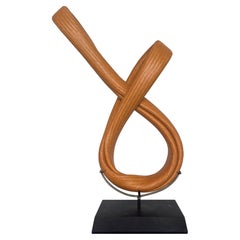
Japanese Woven Bamboo Sculpture by Honda Syoryu
By Honda Shoryu
Located in Atlanta, GA
Entitled "Rhythm", this abstract sculpture was made by Japanese bamboo artist Honda Syoryu (Japanese, born 1951) in 2005. The free vertical form defies the limit of the traditional material bamboo as a rigid medium, and instead displays a nearly impossibly fluidity. Rooted in ages of tradition of Japanese basket weaving, the artist managed to break that ikebana tradition using bending and twisting techniques to create a pure sculptural work.
The work is a testament of how traditional craft can be reinvented into modern art form. Signed with carved signature "Syoryu" underneath.
The sculpture is displayed on a custom-made stand and can be appreciated from all angles. It comes with its original box and cloth, with label and Japanese inscription as shown.
Provenance: Purchased in 2005 from Tai Modern...
Category
Early 2000s Japanese Organic Modern Sculptures and Carvings
Materials
Bamboo
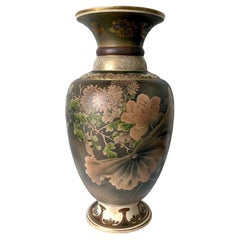
Large Japanese Satsuma Ceramic Vase Kinkozan
By Kinkozan
Located in Atlanta, GA
A large Japanese ceramic vase from the end of Meiji period circa 1890-1910s by Kinkozan (1645-1927). One of the largest studio manufacturers of the export ceramics at the time based in Kyoto. In the typical style of satsuma made at the turn of 20th century, the vase is elaborately decorated with a rather unusual kinran-de (gold paint) and green enamel highlight on a mottled brown background. The painterly decoration depicts a large seasonal floral arrangement in a circular fashion. Besides the obviously superb craftsmanship, what sets this particular vase apart from many lower quality and mass-produced pieces is its tone-on-tone color pallet that is visually somber and the small and sensitive details that heralds the change of the seasons. When the viewer goes beyond the first casual glimpse of the blossom and foliage, one would notice that on the edges of certain leaves as well as along the stalks, there accumulates a very thin layer of the white dust that represents the frost. The flower in bloom are chrysanthemums. Despite of being splendid, they are the messengers of the autumn. The large lotus leaf was subtly rendered in a bended and slightly withered manner, just past its prime. Although the lotus is still in bloom, the prominent seed pod indicates it may be the last for the season. The sentimental capture of the change of the seasons is not unusual in Japanese art. This vase poetically represents such a subtle transition from summer to fall, perhaps depicting the very first frost.
The neck of the vase is also slightly unusual with two rolled rings...
Category
Early 20th Century Japanese Meiji Ceramics
Materials
Ceramic
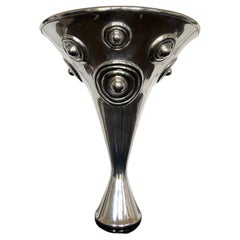
Large and Stunning Sculptural Silver Vessel Graziella Laffi
By Graziella Laffi
Located in Atlanta, GA
A large sterling silver vessel in an asymmetrical hour-glass vase form with a larger upper conical body balanced on a much smaller base. Crafted by Graziella Laffi (1923-2009), Lima, Peru, Circa 1965. Marked on the rim: G. Laffi, PERU. The vessel was designed as a modern rendition of ancient pre-Columbina drinking vessel used in ceremony. The piece projects a regal and substantial aura due to its thick double wall construction with seamless craftmanship. The exterior surface was decorated with high relief roundels with concentric rings, arranged in geometrical pattern in two difference sizes. It is an impressive presence with its unique form and ornamentation that is modern and ancient at the same time.
The vessel weights about 2012 grams.
Graziella Laffi was born in 1923 in Florence, Italy to Gino Laffi, a silversmith and artist. Following her family tradition, Graziella enrolled in master classes after elementary school, focusing on design and painting. She next attended Escuela de Bellas Artes de Puerta Romana for three years, where Gino taught, and then to the Accademia di Belle Arti di Firenze, where she concentrated in architecture until the start of World War II. In 1947, Graziella, then twenty-four, immigrated with her parents to Peru. Gino later created a silversmith studio and showroom called Fabrica Laffi on Avenue Mexico, where Graziella initially learned her Craft. The Pre-Columbian culture in her adopted country inspired Graziella to travel and collect, which ultimately influence her design in the silver pieces. Graziella learned the metalworking techniques of the ancient Peruvian civilizations and rejected the current technology. She mostly used hammering, rolling and creating joints as the ancients do. As an ambassador of Peruvian culture, her work promoted the indigenous Peruvian art and rekindled the interest in its ancient heritage throughout South America, the United States and Europe. She exhibited her growing collection of Peruvian artifacts...
Category
Vintage 1960s Peruvian Modern Sterling Silver
Materials
Sterling Silver
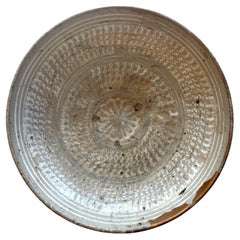
Japanese Contemporary Iga Stoneware Bowl by Shiro Tsujimura
By Shiro Tsujimura
Located in Atlanta, GA
A contemporary Stoneware Bowl made in the tradition of Iga ware by Japanese ceramic artist Shiro Tsujimura (1947-). In a slightly irregular round form, the de...
Category
Early 2000s Japanese Organic Modern Ceramics
Materials
Stoneware
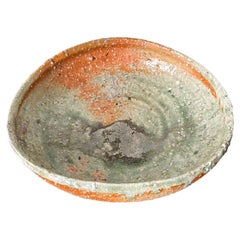
Antique Korean Ceramic Buncheong Bowl Joseon Dynasty
Located in Atlanta, GA
A Korean ceramic bowl supported on a short ring foot in the classic Buncheong (or Punch'ong) style from early Joseon Dynasty circa 15th century. The bow...
Category
Antique 15th Century and Earlier Korean Archaistic Ceramics
Materials
Ceramic
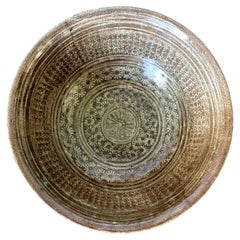
Large Gilt Bronze Feuille Box by Line Vautrin
By Line Vautrin
Located in Atlanta, GA
A large cast bronze powder box (poudrier) by French Parisian art jeweler Line Vautrin (1913-1997) circa 1945-1950. The box called "Feuille" (Leaf) features an irregular leaf form wit...
Category
Vintage 1940s French Mid-Century Modern Collectible Jewelry
Materials
Bronze
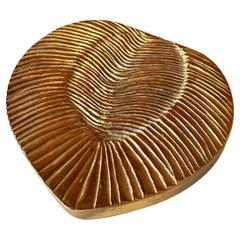
Silvered Bronze Box with Relief Cast Poem by Line Vautrin
By Line Vautrin
Located in Atlanta, GA
A wonderful jewelry box in silvered cast bronze by Parisian art jeweler Line Vautrin (1913-1997). From a small special series, the designer created circa 1945-55. on which poems were cast in relief on the cover. Most existing examples features poems that are well-known. This poem, however, was not identified by us, and possibly is a creation of the artist herself. It is a very soulful prose (see the full poem in French below). Signed on the base as shown.
We have a gilt bronze box with the same relief cast poem that comes with a three-page Certification in French by Comite Line Vautrin, shown in some photos as well.
Reference: For other boxes with poems see "Line Vautrin Sculptor, Jeweller, Magician by Line Vautrin and Patrick Mauries, page 42.
"Les glaciers vagabonds qui ébranlent les murs
et les anges frileux qui cherchent un asile quand la nuit de décembre
anesthésie la ville t’effraient plus que les morts tutélaires et durs
Ils désertent pour toi...
Category
Mid-20th Century French Mid-Century Modern Decorative Boxes
Materials
Bronze
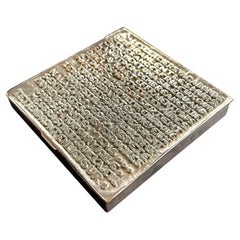
Antique Japanese Lacquer and Inlay Box from Ryukyu Island
Located in Atlanta, GA
A lacquer presentation box with mother-of-pearl inlays from Japanese Ryukyu Islands circa 17-18th century. The lidded box in rectangular form with rounded corner is a classic example...
Category
Antique 18th Century Japanese Japonisme Lacquer
Materials
Mother-of-Pearl, Lacquer

Japanese Bamboo Basket Ikebana by Tanabe Chikuunsai II
By Tanabe Chikuunsai II 1
Located in Atlanta, GA
A woven bamboo flower Ikebana basket by Tanabe Chikuunsai II (1921-2000) from Showa era (1926-1989), circa 1950-1960s. The ikebana basket takes a vertical square form, the body was e...
Category
20th Century Japanese Japonisme Scholar s Objects
Materials
Bamboo, Wood
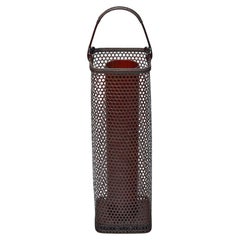
Large Sculptural Ceramic Vessel by Mihara Ken
Located in Atlanta, GA
A large ceramic vessel in an impressive geometrical form by Japanese potter Mihara Ken (1958-) made in 2007. This multi-fired stoneware in shape of a mounta...
Category
Early 2000s Japanese Modern Ceramics
Materials
Ceramic
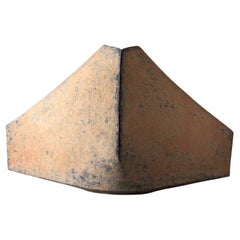
Ceramic Pre-Columbian Colima Hunchback Figure Vessel
Located in Atlanta, GA
A pre-Columbian figural vessel from West Mexico Colima culture (circa 300BC-400AD). Made of molded clay, the stoneware vessel depicts a seated hunchback...
Category
Antique 15th Century and Earlier Mexican Pre-Columbian Figurative Sculpt...
Materials
Ceramic
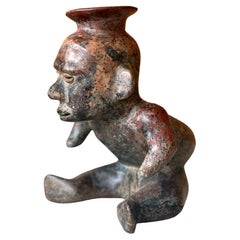
Japanese Oribe Square Dish by Kitaoji Rosanjin
By Rosanjin Kitaoji
Located in Atlanta, GA
An Oribe-Style rectangular dish with a slightly concaved slab body and up-turned irregular edges, made by Kitaoji Rosanjin (1883-1959) circa 1930-50s....
Category
20th Century Japanese Modern Ceramics
Materials
Ceramic
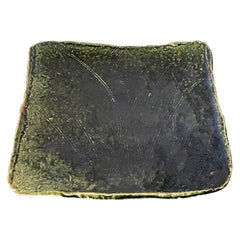
Japanese Rinpa Style Lacquer Ink Stone Box Suzuribako
Located in Atlanta, GA
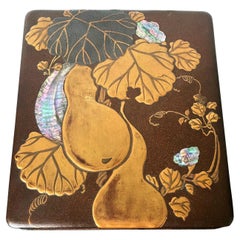
A Japanese writing box with ink stone (known as Suzuribako) with exquisite maki-e decoration circa late Meiji to early Taisho period (1890s-1930s)...
Category
Early 20th Century Japanese Japonisme Lacquer
Materials
Wood, Lacquer
Japanese Maki-e Lacquerware Portable Picnic Set Sagejubako
Located in Atlanta, GA
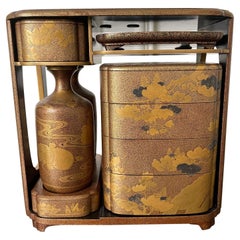
Sagejubako is a portable picnic set that became popular in the early Edo period when an additional meal was added between breakfast and dinner. It normally consists of a carry case w...
Category
Antique 19th Century Japanese Japonisme Lacquer
Materials
Lacquer
Rare Japanese Lacquer Writing Box Suzuribako Meiji Period
Located in Atlanta, GA
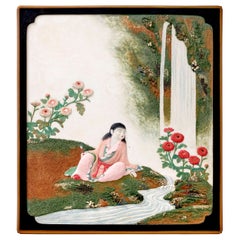
A Japanese Lacquer writing box Suzuribako Meiji Period (1868-1912), likely circa late 19th century. This suzuribako is one of the most unusual boxe...
Category
Antique 19th Century Japanese Japonisme Lacquer
Materials
Lacquer
Modern Japanese Ceramic Shigaraki Ikebana Vase Takahashi Shunsai
Located in Atlanta, GA
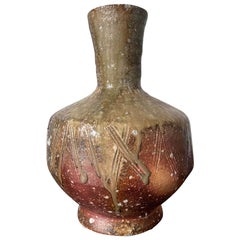
A tall ceramic vase made in the tradition of Shigaraki ware by Japanese potter Takahashi Shunsai (1927-2011), the fourth heir of the famed Rakusai lineage of potters. The vase is heavily potted in the reddish sandy Shigaraki clay. It has a Classic vase form made for Ikebana display. The surface is thickly draped with natural ash glaze that deposited onto the body during the firing process in the kiln. It also features decoration of carved lines. Nuggets of feldspar were incorporated in the clay and exposed onto the surface as crystal like jewels. Substantial and archaic looking, the vase also has a strong modern appeal due to its Mingei styling. It was signed on the base with a pressed seal Shunsai as shown. The vase comes with its original wood storage box (tomobako) with bears the title and signature in Kanji and a seal. It also retains a paperwork noting the artist's biography and practice philosophy in Japanese.
Born in Shigaraki, Shunsai was the second son of renowned potter Takahashi Rakusai...
Category
1990s Japanese Modern Ceramics
Materials
Ceramic
Modern Japanese Studio Pottery Oribe Moon Flask Vase by Ken Matsuzaki
By Ken Matsuzaki
Located in Atlanta, GA
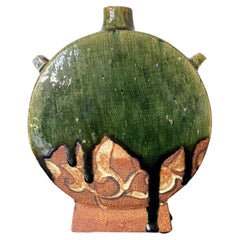
A contemporary studio ceramic vase made by Japanese potter Ken Matsuzaki (1950-). The vase showcases distinguished "moon flask" form with shoulder loops. The moon flask form was widely recorded first in Tang Dynasty China, most likely arrived from the Mideast countries via the silk road. It was originally used as drink vessel for the nomads and the loops were used to tie it to the horse-centered owner. The exotic form persisted in Chinese ceramic production through Ming to Qing dynasty. The form is unusual in Ken Matsuzaki's work. The artist covered the vase with a thick dripping Oribe green glaze partially revealing the unglazed part of the body, which is decorated with scrolling pattern in left by ash glaze. The work is rooted in both Yohen Shino glaze technique and Oribe tradition, but interestingly it also paid homage to Sancai pottery in Tang Dynasty when green glaze was prominently used to drip and splash onto the pottery. Viewing the vase, one can see in this harmonious piece, the innovative reinterpretation of ancient aesthetics that cross the cultures, geology and time. The base is marked with the artist's signature. The vase comes with an inscribed tomobako storage box with the artist's bio and wrapping cloth with seal. The vase measures 8.6"h x 7"w x 2"d.
Ken Matsuzaki’s haptic ceramics bring a contemporary approach to traditional Japanese ceramicware, most notably 16th-century Oribe pottery...
Category
Early 2000s Japanese Modern Ceramics
Materials
Ceramic
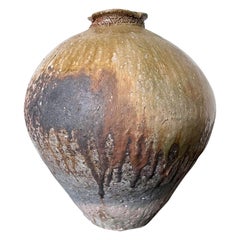
Large Ceremic Shigaraki Tsubo by Nagaoka Masami
Located in Atlanta, GA
An impressive Shigaraki Tsubo (jar normally for storage) in an archaic form with a bulbous and robust body that opens with a small lipped mouth. Heavil...
Category
21st Century and Contemporary Japanese Modern Ceramics
Materials
Ceramic
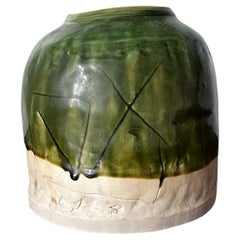
Japanese Modern Studio Ceramic Oribe Jar by Ryoji Koie
By Ryoji Koie
Located in Atlanta, GA
A glazed ceramic vessel by Japanese potter Ryoji Koie (1938-2020). Hand-built with intention to be seen as such, the tsubo has a primordial irregular form with a small opening and a swelled body resembling a beehive. The upper body was covered in a glassy green oribe glaze with fine crackles, highlighted with three incised geometrical symbols. The lower body is unglazed and exposed the white clay with marks of the hand-making pinches and kneading along the base. The base also shows highly irregular surface due to the seashell spur marks and clay pitting in the kiln during the firing process. All these occurrences honestly preserved and presented as part of the character of this wonderful modern piece. The jar comes with a plain wooden tomobako box.
"One of Japan’s most versatile and forward-thinking contemporary artists, KOIE RYOJI...
Category
21st Century and Contemporary Japanese Modern Ceramics
Materials
Ceramic
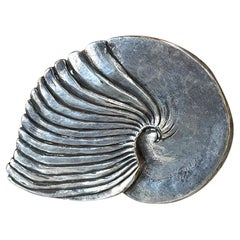
Large French Silvered Bronze Box Line Vautrin
By Line Vautrin
Located in Atlanta, GA
A silvered bronze poudrier box "Ammonite" by French Parisian art jeweler Line Vautrin (1913-1997).
In the 1940s, Line Vautrin designed a series that was inspired by the shape of na...
Category
Mid-20th Century French Mid-Century Modern Decorative Boxes
Materials
Bronze
Porcelain Celadon Vase with Copper Glaze by Brother Thomas Bezanson
By Brother Thomas Bezanson
Located in Atlanta, GA
A spindle form porcelain vase by Brother Thomas Bezanson (1929-2007). As a modern interpretation of "Mei-Ping", a classic form of Chinese vase,...
Category
Vintage 1980s American Modern Vases
Materials
Ceramic
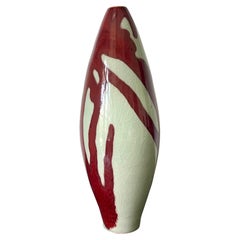
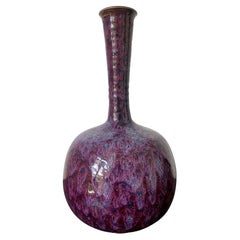
Large Ceramic Vase by Brother Thomas Bezanson
By Brother Thomas Bezanson
Located in Atlanta, GA
An impressively large ceramic vase with a bulbous body and a long coiled neck by potter Brother Thomas Bezanson (1929-2007). The minimalist modern form might be distilled from the classic Chinese garlic bottle. The high glossy surface displays a splendid shades of dark purple, copper red, auberge and blue, in a copper flambé pattern called "peacock" glaze that was clearly inspired by ancient Jun Kiln...
Category
Late 20th Century American Modern Vases
Materials
Ceramic
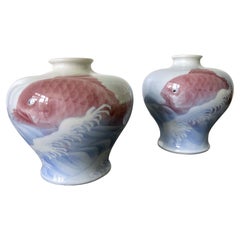
One of The Two Japanese Ceramic Vases Makuzu Kozan Meiji Period
By Makuzu Kozan
Located in Atlanta, GA
Two small nearly identical ceramic vases by Japanese Meiji imperial potter Makuzu Kozan (1842-1916), circa 1890-1900s. The vases were made in the form of jarlet with swelled shoulder...
Category
Antique Late 19th Century Japanese Japonisme Ceramics
Materials
Ceramic
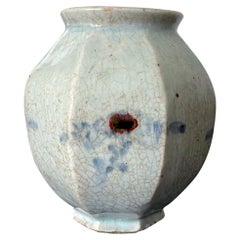
Faceted Korean Ceramic Celadon Jar Joseon Dynasty
Located in Atlanta, GA
A small ceramic celadon storage jar circa 18th century of Korean Joseon Dynasty. The melon shape jar with a mouth and base of the same size display a beautiful harmony in its form. T...
Category
Antique 18th Century Korean Other Ceramics
Materials
Ceramic
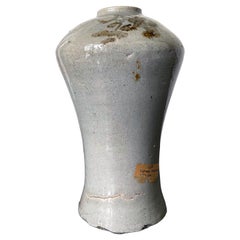
Tall Korean Ceramic Storage Jar Joseon Dynasty
Located in Atlanta, GA
A Korean ceramic storage jar circa 18th century of Joseon Dynasty. The jar is of a classic Maebyong form (known in Chinese as Plum Vase or Meiping...
Category
Antique 18th Century Korean Other Ceramics
Materials
Ceramic
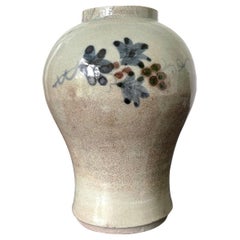
Korean Ceramic Storage Jar Joseon Dynasty
Located in Atlanta, GA
A Korean ceramic storage jar circa 18th century of Joseon Dynasty. The jar is of a characteristic form with a bulbous upper body that tappers with a gra...
Category
Antique 18th Century Korean Other Ceramics
Materials
Ceramic
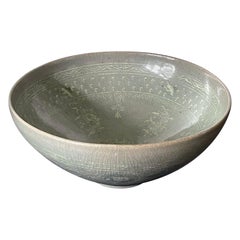
Korean Ceramic Celadon Bowl with Slip Inlay Goryeo Dynasty
Located in Atlanta, GA
A superb Korean celadon bowl with elaborate slip inlays circa 12th century from the Goryeo Dynasties (918 to 1392AD). Despite inspired originally b...
Category
Antique 15th Century and Earlier Korean Archaistic Ceramics
Materials
Ceramic
Early Japanese Hand Basket with Brocade Interior by Suzuki Gengensai
By Suzuki Gengensai
Located in Atlanta, GA
This small elegant woven bamboo basket was meant to be a hand-hold bag with its brocade interior (which appears original). It was made by Suzuki Gengensai (1891-1950) circa 1910-20s. Suzuki Gengensai was from Kansai region and active in Osaka. He studied bamboo art under Yamashita Kochikusai (1876-1947) and became an independent artist in 1913. He received his artist name Gengensai in 1914 and in 1923 he changed the characters to Gen, a slight written variation of the character. This basket was signed in the former way, which helps to date the piece to the early part of the artist's career circa 1914-1923.
The basket is tightly woven in variation of twill plating that creates contrasting bands on the surface. The base was constructed with short bamboo stripes on the corners and side with ornamental knots.
A closely related piece (Object Number: 2006.3.651) with slight different surface twill patterns is in the collection of Asian Art Museum San Francisco. Comparing the two, they show almost identical form as well as the base construction. Both also have brocade interior and most likely were woven during the same period.
Another documented example can be found on page 180 in "Baskets Masterpieces of Japanese Bamboo Art...
Category
Early 20th Century Japanese Japonisme Decorative Baskets
Materials
Brocade, Bamboo
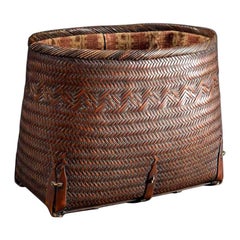
Large Japanese Woven Bamboo Morikago Basket by Maeda Chikubosai I
By Maeda Chikubosai
Located in Atlanta, GA
A large and impressive Japanese basket in the form of a morikago by Maeda Chikubosai I (1872-1950) circa first half of the 20th century. Chikubosai I was from the Kansai Region and active in Sakai, Osaka prefecture. He was instructed by Wada Waichisai I, (1851-1901).
Morikago is a shallow open basket with handle. It was traditionally used to display fruits, sometimes flowers, during Sencha tea ceremony. In contrast to Chanoyu, Sencha ceremony uses loose green tea leaves instead of tea powder. The placement of loose fruits in the basket meant that the pattern of the bottom, which is often elaborate, was meant to be visible.
This morikago was beautifully constructed with bent bamboo frame and twill plaits for the body. The bottom of the basket features a double diamond pattern achieved with a variation of plover plait. The bifurcated handles was bundle-plated with a rather free spirit approach. They show a poetic suggestion of movement, as if the bamboos were still swaying in the wind. The basket has a copper insert that fits perfectly and it is quite possibly the original. The basket is signed on the base "Chikubosai". The style of the signature shows that it was made by Maeda Chikubosai I.
For another Morikago basket by Maeda Chikubosai I, see page 79 of "Masters of Bamboo" by Rinne.
For the study of the signature of Chikubosai I "Baskets Master Pieces of Japanese Bamboo Art...
Category
Early 20th Century Japanese Japonisme Decorative Baskets
Materials
Copper

Sculptural Ceramic Ashanti Jar Robert Turner Published
By Robert Turner
Located in Atlanta, GA
A glazed stoneware jar with lid by American Ceramist Robert Chapman Turner (1913-2005) entitled "Ashanti". The vessel was made in 1974, purchased in 1978 and held in the same collection since. It was published in the artist's monograph as shown below. One of the classic forms with variations in Turner's repertoire since 1970s, the jar feature a slightly irregular form with numerous surface patching and markings under an overall black glaze with blue tint. The dome-shape lid has a cross-shaped handle with small markings. The form was inspired by Ashanti culture he observed during his trips to Africa. Incised signature "Turner" on the base.
"In 1971–72, drawn by the power of African sculpture, and wishing to imbue his work with a greater sense of universality, Robert Turner traveled to Nigeria and Ghana. The trip proved transformational. In West Africa he was deeply moved by the way in which art was ingrained in daily experience, and by the beauty of traditional forms of architecture, pottery, ceremonial objects, and decoration. After his return, Turner began to produce series of distinctive vessel types named after African kingdoms and peoples—Ashanti, Ife, Oshogbo, Akan. The first is a squat, lidded pot; the others are cone and cylinder shapes." Smithsonian American Art Museum
Robert Turner's work is in numerous museum collections including the Smithsonian Museum of American Art, Los Angeles County Museum of Art and the Nelson-Atkins Museum of Art, Kansas City.
For this piece, see page 33 in "Robert Turner Shaping Silence A Life in Clay" by Marsha Miro and Tony Hepburn.
Category
Vintage 1970s American Modern Jars
Materials
Ceramic
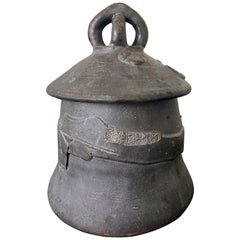
Sculptural Ceramic Handled Vase by Robert Turner
By Robert Turner
Located in Atlanta, GA
A glazed stoneware free form vase by American Ceramist Robert Chapman Turner (1913 - 2005) titled "Oshogbo Form III" circa 1970s. The piece was purchased in 1981 and held in the same collection since. The vessel is one of the classic forms with variations in Turner's repertoire since 1970s when he started to make non-functional abstract sculptural pieces. The vessel features an irregular hand-built form with surface markings and overall red glaze, inspired by his trips to Africa. Incised signature "Turner" on the base.
"In 1971–72, drawn by the power of African sculpture, and wishing to imbue his work with a greater sense of universality, Robert Turner traveled to Nigeria and Ghana. The trip proved transformational. In West Africa he was deeply moved by the way in which art was ingrained in daily experience, and by the beauty of traditional forms of architecture, pottery, ceremonial objects, and decoration. After his return, Turner began to produce series of distinctive vessel types named after African kingdoms and peoples—Ashanti, Ife, Oshogbo, Akan. The first is a squat, lidded pot; the others are cone and cylinder shapes." Smithsonian American Art Museum
Robert Turner's work is in numerous museum collections including the Smithsonian Museum of American Art, Los Angeles County Museum of Art and the Nelson-Atkins Museum of Art, Kansas City.
For another example of the form similar to this piece, see page 40 in "Robert Turner Shaping Silence A Life in Clay" by Marsha Miro and Tony Hepburn.
Category
Vintage 1970s American Modern Vases
Materials
Ceramic
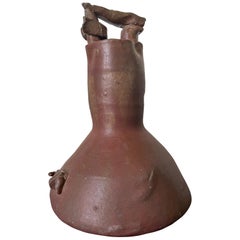
French Japonesque Art Nouveau Lusterware Vase Clement Massier
By Clement Massier
Located in Atlanta, GA
A ceramic vase with iridescent glaze in the shape of an elephant foot cache pot by the legendary French ceramist Pierre Clement Massier (1845-1917). Massier is widely considered as t...
Category
Antique Early 1900s French Japonisme Vases
Materials
Silver