TISHU Decorative Objects
to
5
370
48
77
67
226
48
61
59
68
11
2
8
4
15
8
9
15
11
13
102
33
6
3
2
2
1
1
208
85
85
38
34
415
3
241
227
159
85
77
Height
to
Width
to
418
418
418
28
21
12
10
9
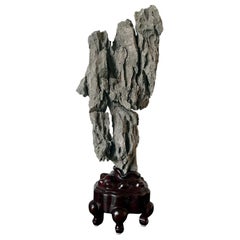
Extraordinary Chinese Scholar Rock Ying Stone on Stand
Located in Atlanta, GA
The Chinese scholar rock on offer here is a wonderful example of Ying (also known as Yingde stone), a less common type than Lingbi or Taihu. Gray in color, it has an extraordinary up...
Category
Antique 19th Century Chinese Qing Scholar s Objects
Materials
Stone
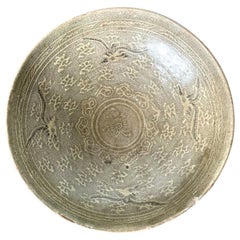
Korean Ceramic Celadon Bowl with Slip Inlay Goryeo Dynasty
Located in Atlanta, GA
On offer is a Korean celadon bowl with elaborate slip inlays circa 13-14th century from the late Goryeo Dynasties (918 to 1392AD). Despite inspired...
Category
Antique 15th Century and Earlier Korean Archaistic Ceramics
Materials
Ceramic
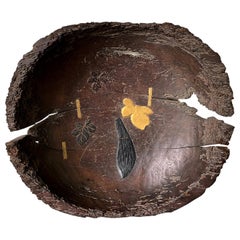
Antique Japanese Lacquered Wood Wabi-Sabi Bowl
Located in Atlanta, GA
What can we say about this bowl? Perhaps we can start by describing the unique Japanese aesthetic concept of "Wabi-Sabi". In contrast to the western concept of beauty that is centere...
Category
Antique 19th Century Japanese Japonisme Lacquer
Materials
Wood
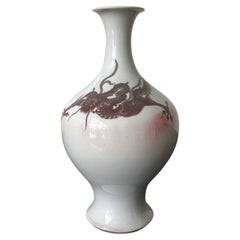
Japanese Porcelain Glazed Vase with Dragon Design Mazuku Kozan
By Makuzu Kozan
Located in Atlanta, GA
A porcelain vase with dragon design by Japanese imperial potter Makuzu Kozan (1842-1916), circa 1900s. The vase is made in what is considered early phase of his underglaze period during late Meiji era. In a classic baluster form, the surface of the vase was decorated with a slithering dragon in underglaze iron red circulating the exterior among pink clouds. The animated rendering of the dragon is fine and detailed, with five claws, scales, long tails and highlighted eyes. The pink cloud is misty and called Morotai or the hazy style, created with a unique technique developed in Kozan's studio called fuki-e by blowing the pigment powders onto the surface. Kozan Studio experimented with newly available colors from the west starting in the 1880s, which resulted in the expansion of the palette and style that bridged the east and west aesthetic tradition. Marked in underglaze blue on the base.
Known also as Miyagawa Kozan...
Category
Antique Early 1900s Japanese Japonisme Ceramics
Materials
Porcelain
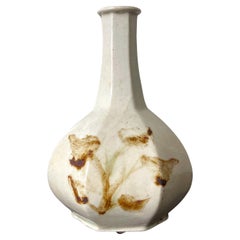
Korean Ceramic Faceted Wine Bottle Vase Joseon Dynasty
Located in Atlanta, GA
A Korean ceramic bottle with octagonal faceted form with underglaze copper red decoration. The robust bottle with the long neck and a relatively thick built was used to hold liquor such as wine and it was from Joseon dynasty, likely late period (circa mid-late 19th century). The bottle was covered in a milky white glaze with a pleasant warm yellow tint. It has an underglaze iron red paint of branches of gingko leaves on the front and the back side. The color was oxidated into an ochre brown hue instead of iron red. The octagonal form extends nicely from the opening to the base, continuing through the body and makes this bottle geometrically interesting. The rustic paint of the gingko leaves also render the piece a folky modern appeal.
For three faceted wine bottles from different period of Joseon Dynasty, see illustration 2, 71 and 73 of "Five Centuries of Korean Ceramics Pottery and Porcelains of the Yi Dynasty...
Category
Antique 19th Century Korean Archaistic Ceramics
Materials
Ceramic
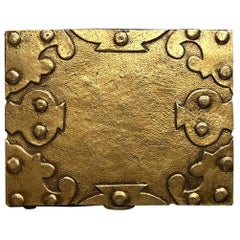
Large French Sculpted Bronze Box by Line Vautrin
By Line Vautrin
Located in Atlanta, GA
A large bonze box (based on the size, it is likely a card case) by French Parisian art jewelry designer Line Vautrin (1913-1997) circa 1950s. The box features an interesting design i...
Category
Mid-20th Century French Mid-Century Modern Decorative Boxes
Materials
Bronze
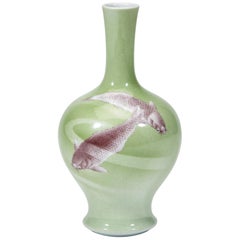
Fine Japanese Ceramic Vase Makuzu Kozan Meiji Period
By Makuzu Kozan
Located in Atlanta, GA
A Japanese long neck porcelain vase circa 1900-1910s by the studio of Miyagawa Kozan (1842–1916), one of the most established and collected Japanese ceramist from the end of Meiji Period. Commonly known as Makuzu Kozan, which also appears as the signature on his work, his originally birth name was Miyagawa Toranosuke. He was the appointed artist to the Japanese Imperial household and his work was exhibited in many international fairs that the Meiji government participated at the turn of the century.
This vase features an elegant Classic form with a slender neck and slightly flared mouth above a baluster body. It was finely painted with two swimming carps in a copper red underglaze among green ribbons like waves. The background display a brilliant verdant green overall, Around the fish a poetic hazy effect was emphasized for a visual complexity by Fuki-e (the blow painting), an invention in Kozan's studio. The new technical development of chemical colors from the west was embraced circa 1900s in Kozan studio. This empowered the more creative experiments with not only colors, but also concept of dimension, which led Makuzu Kozan's work to become a bridge between East and West aesthetics. This is particularly evident in this vase with the Masterly details of the brush strokes, the expertly employment of gradient of color, and a very realistic and detailed rendering of the fish and their vivid motions.
For two similar examples of Kozan's work with similar carps decoration, see Page 148-149 of the book: Sekai ni Aisa Reta ya Kimono Miyagawa Kozan Makuzu...
Category
Early 20th Century Japanese Meiji Ceramics
Materials
Ceramic
Japanese Art Glass Sculptural Vessel by Kyohei Fujita
By Kyohei Fujita
Located in Atlanta, GA
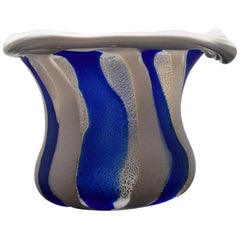
A free standing glass sculpture in an open vessel form by Kyohei Fujita (1921-2004). The striking piece features an organic body with alternative strips of blue, white and transparent strips with gold sparkle inlays. The rim takes a free biomorphic form that resembles bone structure. It is etch signed underneath.
The vessel was made in the earlier period of the artist's career before he dedicated most of his work to the "magical box...
Category
Late 20th Century Japanese Mid-Century Modern Vases
Materials
Art Glass
Japanese Contemporary Ceramic Sculpture Kiyoharu Ichino
By Kiyoharu Ichino
Located in Atlanta, GA
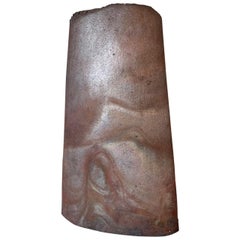
"Purple Dawn", a ceramic sculpture piece by Japanese potter Kiyoharu Ichino (1957-). Purchased from Touching Stone, Santa Fe, New Mexico in 2003. Tradition meets renovation, this sculptural piece with its slab like minimal shape draws the viewer into its mysterious shape that is reminiscent of a monument. Its surface, with the typical Tanba clay fired at very high temperature and completely free of glaze, radiates a subtle metallic sheen that is nearly in a shade of purple. This piece was purchased from Touching Stone, Santa Fe, New Mexico in 2003.
Artist's bio from the gallery and the exhibition:
"Kiyoharu Ichino was born in 1957 in Tachikui into an extended family steeped in pottery-making tradition. He learned all aspects of Tanba pottery since childhood. When he was twenty, he moved to Seto to study pottery under a master of Akatsu-yaki. Upon returning to Tachikui, he launched his career with the Tanba Group Kiln. In 1983, he established his own kiln and began showing in galleries all over Japan. His works have been selected repeatedly for the prestigious juried Japan Traditional Crafts Exhibition sponsored by the Japan Crafts Association. In 1995, he was nominated to be a permanent member of The Japan Crafts Association, an honor bestowed to the most experienced and talented artists.
Traditional Tanba pottery is fired unglazed at very high temperature in large wood-fueled kilns. Ichino uses both an anagama (hole kiln) and a noborigama (climbing kiln), burning almost a thousand bundles of wood over several days to bring out the unique personalities of Tanba clay, which is renowned for its rich texture and deep purplish brown colors. Many of his pieces show silvery fire-marks like swirling mists left by the wood fire. His pieces appear to be integral parts of the clay rather than separate objects made from it. To show the unique clay texture, he often includes seemingly unfinished edges in his designs, exposing the rough clay body. Despite the high level of sophistication and innovation, Ichino's works maintain a strong connection with the ancient Tanba pottery tradition. Ichino should be no stranger to many Santa Fe residents. His work has been exhibited both in Touching Stone Gallery and as part of a major exhibition in the New Mexico Museum of International Folk Art in 2006.
About Tanba ware...
Category
Early 2000s Japanese Modern Ceramics
Materials
Ceramic
Large Japanese Antique Shigaraki Tsubo Jar
Located in Atlanta, GA
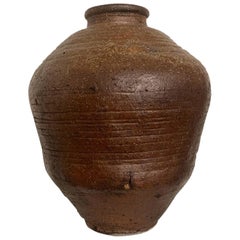
An antique Japanese stoneware storage jar, known as tsubo from Shigaraki kiln, circa 17th-18th century (early Edo possibly Momoyama period)....
Category
Antique 17th Century Japanese Japonisme Ceramics
Materials
Ceramic
Japanese Ceramic Bowl Makuzu Kozan Utusushi Kenzan
By Makuzu Kozan
Located in Atlanta, GA
A rare ceramic bowl with overglaze paint decoration by Japanese imperial potter Makuzu Kozan ((1842–1916). Unlike the better-known works Kozan made for the expositions in the west and export to the foreign market, this piece exemplifies his work for the domestic market and the tea ceremony. The bowl was made in the so called "Utusushi" Ogata Kenzan (1663-1743), a celebrated Edo painter and ceramicist. Utusushi is loosely translated as "in the spirit of". It is not at all a simple imitation of a master, but a Japanese concept of embracing the spiritual essence of a master while the creator is free to mix in his or her own unique artistic interpretation and flavor.
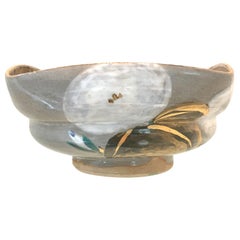
The bowl was made to hold fruits during the tea ceremony. It has a very distinguished form with a circular lower body morphing into a square upper portion that further opening with flared rim. The surface has a grey glaze onto which Asagao flowers (Japanese morning glory) on the vines were painted in a free and poetic style. White was used for the petals, green for the leaves with touches of gold highlight. Asagao, the symbol of the summer was rendered in the spirit of Ogata Kenzan, and interestingly the shape of the blossom echoes the unique form the bowl. It was likely reserved for the tea ceremony during the summer months.
Under the base, Kozan was signed in black on a white porcelain plaque inlay.
For two similar examples of Kozan's work Utusushi Kenzan, see Page 168-169 of the book: Sekai ni Aisa Reta ya Kimono Miyagawa Kozan Makuzu...
Category
Antique Early 1900s Japanese Japonisme Ceramics
Materials
Ceramic
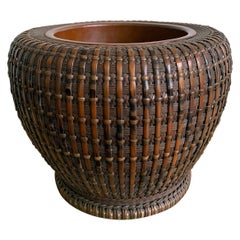
Japanese Woven Bamboo Brazier by Maeda Chikubosai I
By Maeda Chikubosai
Located in Atlanta, GA
An important piece of bamboo basketry art by Maeda Chikubosai I (1872-1950), circa 1920s-1930s. The body of the bamboo brazier was made with smoked bamboo (susudake) and rattan and with a built-in copper liner brazier. Mat plaiting, diagonal plaiting and twining were used to construct the robust body while hexagonal plaiting was used for the base. It is signed on the base Chikubosai Kore o tsukuru (Chikubosai made this). The copper brazier...
Category
Vintage 1920s Japanese Japonisme Decorative Baskets
Materials
Copper
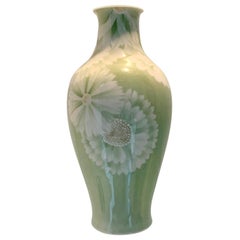
Japanese Porcelain Vase Meiji Period Makuzu Kozan
By Makuzu Kozan
Located in Atlanta, GA
A finely decorated and glazed Japanese porcelain vase by Makuzu Kozan (1842-1916) circa 1900s Meiji Period. The vase is of a classic bottle form with baluster body and short neck. It was decorated with underglaze white magnolia blossom on a pleasant celadon background. The stamens of the flower were artistically rendered in a low relief, giving the design a realistic appeal with the dimension.
Miyagawa Kozan...
Category
Early 20th Century Japanese Meiji Ceramics
Materials
Porcelain
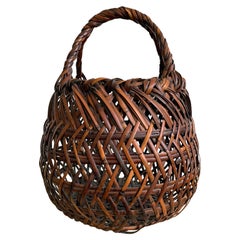
Japanese Bamboo Ikebana Basket by Yamamoto Chikuryosai I Shoen
Located in Atlanta, GA
An important Japanese bamboo Ikebana basket by Yamamoto Chikuryosai I (also known as Chikuryusai I, Shoen after 1929) (1868-1945). Active in Osaka, Kansai region, he was advised by Wada Waichisai I. After 1929, he signed his work as Shoen (Shoen made this), such as this one.
This basket was made using "sooted" bamboo (susutake in Japanese). This bamboo materials was collected from traditional thatched-roof houses that had been exposed to decades of smoke from a hearth or cooking fire, therefore the basket displays a deep rich patina that is hard to attain by color-lacquering. The basket featured a large rounded barrel form with handle. The body was constructed with a twill plaiting variation of a more relaxed and loose weave. It allows the light coming through to render the piece a lighter sense. Parallel plaiting was used to reinforce the body with stripes of bamboo, while adding more visual constrict to a free spirited background. Twisted bamboo strips form rope-like handle and the top rim. It is signed "Shoen Made This" on the base. Two-piece water container made from bamboo trunk is retained with the piece as shown.
For the artists other and similar work, see baskets masterpieces of Japanese Bamboo Art...
Category
Vintage 1930s Japanese Japonisme Decorative Baskets
Materials
Bamboo
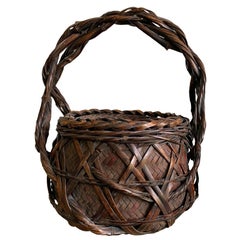
Japanese Wagumi Handled Bamboo Basket Ikebana
Located in Atlanta, GA
Bold, rustic and with an earthy free spirit, this wagumi style flower basket with twisted handle (ikebana) was designed and woven to evoke a sense of serenity and humbleness during t...
Category
Vintage 1920s Japanese Japonisme Sculptures and Carvings
Materials
Bamboo
Rare and Large Japanese Porcelain Vase Makuzu Kozan
By Makuzu Kozan
Located in Atlanta, GA
A striking blue and white vase from the studio of Japanese Potter Makuzu Kozan, also known as Miyagawa Kozan (1842–1916), one of the most established and collected ceramist from Meiji Period. Born as Miyagawa Toranosuke, Kozan established his pottery studio in Yokohama around 1870s and later became one of the appointed artist to the Japanese Imperial household. His work was exhibited in many international fairs that the Meiji government participated at the turn of the century and won many grand prizes.
With an impressively large size, this vase was likely made and reserved as a presentation piece for one of the many expositions the studio participated in the early 20th century. It was decorated with underglaze cobalt blue using the novel technique developed by Kozan called Fuki-e (the blow painting), in order to achieve the striking dimensional literary landscape known as "Mountain and Water". Being one of the most creative ceramists, Kozan started experimenting with new chemical colors from the West in the format of his porcelain glaze around 1880s. New colors allowed him to create underglaze designs that appeared bright, smooth and glossy. He even invented his own receipt of cobalt blue to achieve a much brighter yet softer shade, as evident on this vase. To create landscape that is realistic and dimensional, more common in the western paintings, he was inspired by the native Japanese ink painting technique developed around 1900 by Yokoyama Taikan...
Category
Early 20th Century Japanese Japonisme Ceramics
Materials
Porcelain
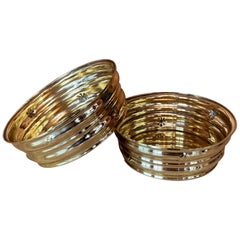
Pair of Wiener Werkstatte Brass Bowls by Dagobert Peche
By Wiener Werkstätte, Dagobert Peche
Located in Atlanta, GA
A pair of brass bowl in stepped concentric form designed by Dagobert Peche (Austrian, 1887-1923) and for Wiener Werkstatte circa 1910s-1920s. In the iconic style of Vienna Secession,...
Category
Early 20th Century Austrian Vienna Secession Decorative Bowls
Materials
Brass
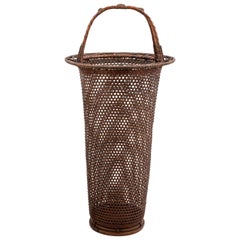
Japanese Bamboo Basket Ikebana by Yamashita Kochikusai
By Yamashita Kochikusai
Located in Atlanta, GA
Yamashita Kochikusai (1876-1947) was a Japanese bamboo artist from Osaka, Kansai region. He apprenticed under Wada Waichisai I (1851-1901), becoming independent in 1901. His students include Ezono Chikubisai, Suzuki Gengensai and Inose Kohosai. He won prizes for his work at numbers of exhibitions and was patronized by the Imperial Household.
The basket on offer has a simple but elegant elongated shape and it was finely woven with smoked bamboo likely circa 1910s-1920s, late Meiji to early Taisho period. The body was constructed with Hexagonal Plaiting for the main body, reinforced with twining in the upper and lower portions. The special design was reserved for an mouth ring...
Category
Early 20th Century Japanese Japonisme Decorative Baskets
Materials
Bamboo
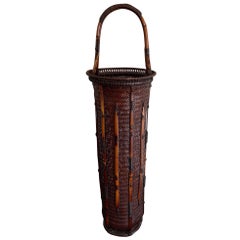
Large Japanese Bamboo Ikebana Basket Maeda Chikubosai I
By Maeda Chikubosai
Located in Atlanta, GA
An important woven bamboo ikebana basket circa first half of the 20th century (Taisho or Showa era) by Japanese bamboo master Maeda Chikubosai I (1872-1950). Chikubosai I was from th...
Category
Early 20th Century Japanese Japonisme Vases
Materials
Bamboo
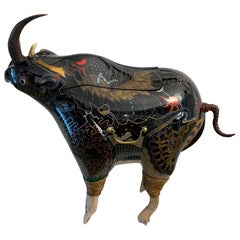
Rhino Contemporary Japanese Lacquer Art by Someya Satoshi
Located in Atlanta, GA
Japanese Lacquer Rhino Sculpture by Someya Satoshi (1983-). A hand-molded lacquer sculpture that depicts a fantasy beast "Rhino". The artist uses century-old traditional techniques and symbols but with an innovative contemporary energy that borders mysticism, shamanism and surrealism. Found objects were equally treated as part of the meticulous designs as the elaborate Maki-e and shell inlays.
According to the press of Honolulu Museum of Art: "Someya Satoshi has been described as “one of the most significant contemporary lacquer artists working in Japan today.” (Japan Times, 12 Dec. 2013) His work combines objects of daily use, such as bathing buckets, serving trays, and soup bowls, with a wide array of natural materials, including animal bones, horns and antlers, sand, stones, leaves and branches. In the process, he implements a range of traditional lacquer methods passed down from pre-modern eras, such as the kanshitsu or “dry lacquer” technique, the origins of which date to Japan’s Nara period (710–784). After creating his forms, he embellishes them with designs inspired by calligraphy, traditional Japanese textile patterns, and even contemporary manga or comic books. His work defies ordinary definitions of lacquer art and successfully challenges the perceived limits of this extremely difficult and, in some ways, most conservative of traditional Japanese art forms".
His work was exhibited in US such as Honolulu Museum of Art, Minneapolis Institute of Art, Morikami Museum etc. For a complete resume of the artist, see the artist's page in Imura Art Gallery.
Reference: For a very similar Bull Sculpture see Hard Bodies Contemporary Japanese Lacquer...
Category
Early 2000s Japanese Japonisme Lacquer
Materials
Rope, Wood, Lacquer
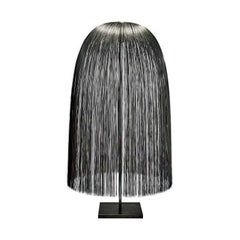
Large Willow Sculpture by Harry Bertoia
By Harry Bertoia
Located in Atlanta, GA
Stunning wire sculpture by Harry Bertoia (American, 1915-1978).
Made of stainless steel in free standing form.
Provenance:
Purchased directly from the artist by the current owner in ...
Category
Vintage 1970s American Abstract Sculptures
Materials
Stainless Steel
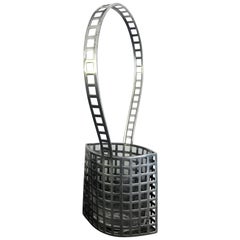
Rare Silver Vase with Glass Insert by Josef Hoffmann for Wiener Werkstätte
By Josef Hoffmann, Wiener Werkstätte
Located in Atlanta, GA
A Wiener Werkstatte silver reticulated flower basket with original glass insert in a very rare model made with silver. Designed by Josef Hoffmann (Austrian, 1870-1956), Vienna, circa...
Category
Early 20th Century Austrian Vienna Secession Sterling Silver
Materials
Silver
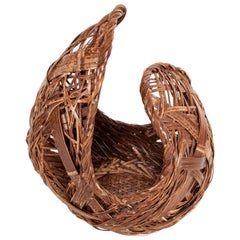
Contemporary Japanese Bamboo Art Sculpture Yamaguchi Ryuun
By Ryuun Yamaguchi
Located in Atlanta, GA
A large and impressive woven bamboo sculpture by Japanese bamboo artist Yamaguchi Ryuun (born 1940-) entitled "Black Wave". The piece was made in 2000 and originally purchased from Tai Modern...
Category
Early 2000s Japanese Organic Modern Sculptures and Carvings
Materials
Bamboo
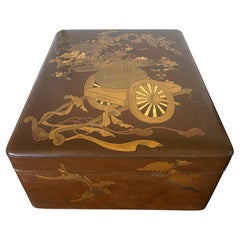
Japanese Lacquer Ryoshibako Document Box Meiji Period
Located in Atlanta, GA
A large Japanese lacquer box with elaborate Maki-e design from Meiji period, (mid-late 19th century). The generous size of the box was reser...
Category
Antique 19th Century Japanese Japonisme Lacquer
Materials
Wood, Lacquer
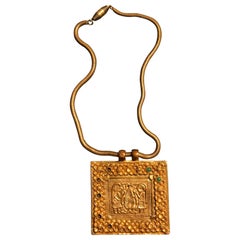
Early Gilt Bronze Necklace by Line Vautrin
By Line Vautrin
Located in Atlanta, GA
A gilt bronze necklace with chain and a square plaque on the subject of "Adam and Eve in the Garden of Eden" with apple tree in the center, designed and made by Line Vautrin in her e...
Category
Vintage 1930s French Mid-Century Modern Collectible Jewelry
Materials
Bronze
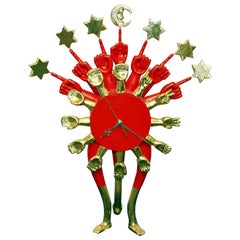
Surrealistic Sculptural Clock by Pedro Friedeberg
By Pedro Friedeberg
Located in Atlanta, GA
An iconic carved sculptural clock by the famed Mexican surrealistic artist and designer Pedro Friedeberg (Mexican, b. 1937) circa 1960s. The whimsical...
Category
Vintage 1960s Mexican Modern Abstract Sculptures
Materials
Wood
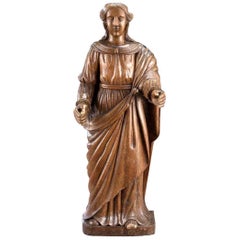
Impressive Antique Carved Santo
Located in Atlanta, GA
Lividly carved in solid oak, this continental religious figure depicts a saint or santo with his hands extending out. The carving is of very high quality and extremely detailed in th...
Category
Antique 18th Century French Renaissance Revival Figurative Sculptures
Materials
Oak

$7,000 Sale Price
20% Off
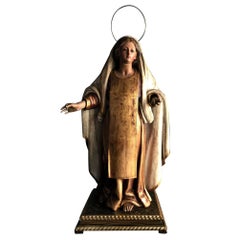
Antique Spanish Colonial Statue Santo Madonna
Located in Atlanta, GA
A most spectacular antique Spanish Colonial figure of Madonna, Mexico circa 19th century possibly earlier. Constructed in plaster with carved and gilt wood accent. Realistic in style...
Category
Antique 19th Century Mexican Spanish Colonial Figurative Sculptures
Materials
Metal
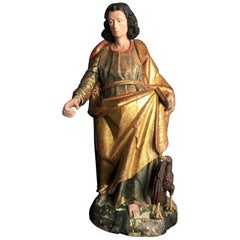
Spanish Colonial Antique Santo Figure
Located in Atlanta, GA
A stunning antique parcel-giltwood statue of St. John, 19th century, possibly earlier, from Mexico, Spanish Colonial with polychrome paint decoration. St John was depicted as a regal...
Category
Antique 19th Century Mexican Spanish Colonial Figurative Sculptures
Materials
Gold Leaf
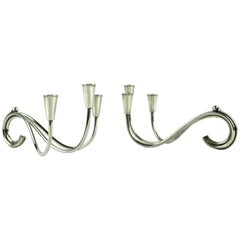
Pair of Candleholders by Carl F. Christiansen
By Carl Frederik Christiansen
Located in Atlanta, GA
An exceedingly rare pair of silver plated three-arm candleholders by Carl F. Christiansen, master of Goldsmith between 1943-1963.
-Good vintage condition
-1960s
-Midcentury, Sca...
Category
Mid-20th Century Danish Scandinavian Modern Candlesticks
Materials
Silver
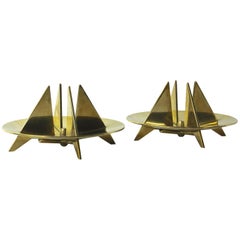
Pair of Candle Holders by Pierre Forsell for Skultana
By Pierre Forsell
Located in Atlanta, GA
A pair of brass candle holders designed by Pierre Forsell, produced by Skultana, Sweden. Stamped with maker's mark.
Category
Mid-20th Century Swedish Scandinavian Modern Candlesticks
Materials
Brass
Gilt Bronze Reliquary Pendant by Line Vautrin
By Line Vautrin
Located in Atlanta, GA
A piece of wonderful jewelry by Line Vautrin designed in 1941 on the subject of St Foi, a child martyr on the early fourth century and the patron saint of prinsoers, in a rare form of a reliquary...
Category
Vintage 1940s French Mid-Century Modern Collectible Jewelry
Materials
Bronze
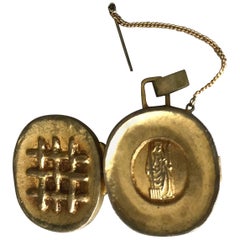
Important Miniature Japanese Bamboo Basket by Hayakawa Shokosai I
Located in Atlanta, GA
A miniature bamboo basket woven by Hayakawa Shokosai I (1815-1897) circa 1885, an important example of the work by the artist who is considered as the founding father of Japanese modern bamboo art and the first ever signed his own work thus elevating bamboo weaving from a craft into an art form. The miniature basket was traditionally used during Sencha tea ceremony. It was woven from bamboo (madake) and rattan using...
Category
Antique 1880s Japanese Japonisme Decorative Baskets
Materials
Bamboo, Rattan
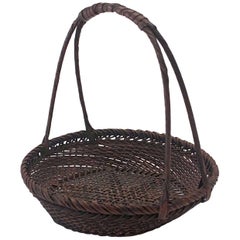
Articulate Bronze Brooch "Pergatoire" by Line Vautrin
By Line Vautrin
Located in Atlanta, GA
A hanging articulate three-piece gilt bronze brooch "Purgatoire" also known as "Le Ciel, la Terre, et l'Enfer." by Line Vautrin. Each element with figure symbolizes Heaven, Earth and...
Category
Vintage 1950s French Mid-Century Modern Collectible Jewelry
Materials
Bronze
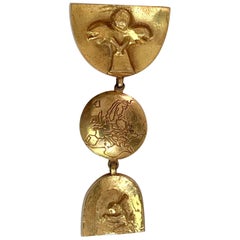
"Owl on Branch, " Early sculpture by Curtis Jere
By Curtis Jeré
Located in Atlanta, GA
A small but sweet table top sculpture by C. Jere circa 1967. Made of brass with enamel eyes and installed on a natural onyx rock. table top sculpture. Signed and dated 67.
Category
Vintage 1960s American Mid-Century Modern Sculptures
Materials
Onyx, Brass, Enamel
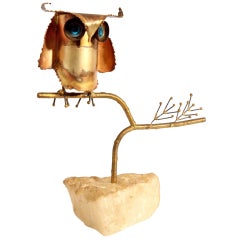
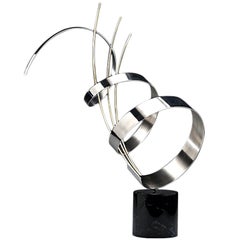
Abstract Chrome Sculpture on Marble base C. Jere signed
By Curtis Jeré
Located in Atlanta, GA
A vintage table top sculpture of an abstract form on a marble pedestal. Crafted by C.Jere and dated to 1978. Very nice form. The marble base is solid and quite heavy.
Category
Vintage 1970s American Mid-Century Modern Sculptures
Materials
Marble, Stainless Steel, Chrome
$1,400 Sale Price
24% Off
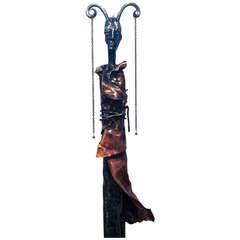
Steel and copper sculpture by Marie-Josée Roy
Located in Atlanta, GA
A sculpture "La Rein: The Queen" by Quebecois artist Marie-Josée Roy. It was made by forging stainless steel and folded copper in her studio.
Marie-Josée Roy
Born and working in Troi...
Category
21st Century and Contemporary Canadian Sculptures
Materials
Copper
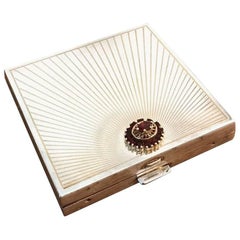
Cartier Art Deco Sterling Silver Compact Case by
By Cartier
Located in Atlanta, GA
A fine Cartier compact case in Art Deco style, circa 1930s. Sterling silver with gold gilt interior. The exterior features engraved line pattern that r...
Category
Vintage 1930s French Art Deco Decorative Boxes
Materials
Silver
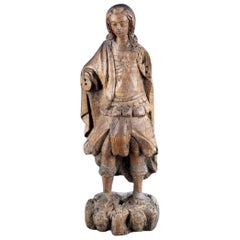
Antique Spanish-Colonial Santo
Located in Atlanta, GA
An very well weathered Spanish-colonial Santo, likely depicting St Michael or St Miguel. Carved from the wood, the statue displays historical loss on both limbs and also the wings on...
Category
Antique Late 18th Century Mexican Spanish Colonial Figurative Sculptures
Materials
Wood
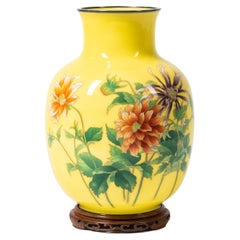
Japanese Cloisonné Vase Ando Jubei with Storage Box
By Ando Jubei
Located in Atlanta, GA
A beautifully decorated cloisonné vase with silver rims by Ando Jubei (1876-1956), the celebrated Japanese Shippo studio. The piece is dated to late Meiji to early Showa period circa...
Category
Early 20th Century Japanese Japonisme Metalwork
Materials
Metal, Silver, Enamel
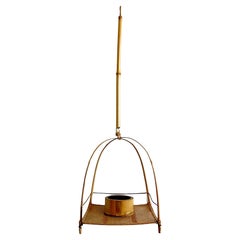
Unique Japanese Woven Bamboo Hanging Ikebana Basket Suzuki Gengensai
By Suzuki Gengensai
Located in Atlanta, GA
A rare hanging ikebana basket by Japanese bamboo artist Suzuki Gengensai (1891-1950) circa 1923-50. This elegant hanakago was made entirly from white bamboo. It consists of a square footed platform with bent bamboo rods on four corners converging onto the top into an open birdcage-like form, which is to be hung from a hooked bamboo rod. The platform features a square plating base and finely woven edges and feet and a single strand of rope fence. A separate ikebana container...
Category
Mid-20th Century Japanese Modern Scholar s Objects
Materials
Bamboo, Rattan
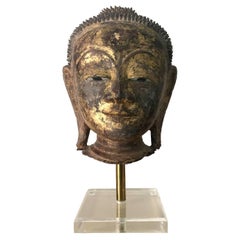
An Exquisite Antique Buddha Head Statue Southeast Asian
Located in Atlanta, GA
An gilt and lacquered wood Buddha head with displayed on a metal and Lucite stand. stunning presence with its refined features and amazing details. The carving is of exquisite qualit...
Category
Antique 18th Century Laotian Archaistic Busts
Materials
Gold Leaf
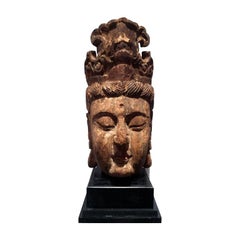
Large Wood Sculpture of Boddhisatva Head Ming Dynasty
Located in Atlanta, GA
Large antique Chinese carved wood sculpture of a Boddhisattva head circa 16-17th century from Ming Dynasty. Likely part of a full body life-size statue, the head was finely carved, p...
Category
Antique 17th Century Chinese Ming Sculptures
Materials
Wood
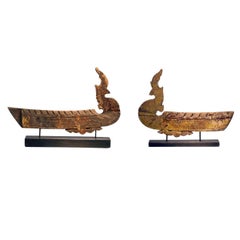
Two Antique Hong Bird Roof Carvings from Thailand
Located in Atlanta, GA
This near pair of wood carving presented on stand was collected from Northern Thailand, late 19th or early 20th century. Such ornaments were used originally to decorate the roof of the transitional buildings in Southeast Asia. They were carved in the lovely Silhouette of Hong bird...
Category
Early 20th Century Thai Other Sculptures
Materials
Metal
$1,200 Sale Price / set
25% Off
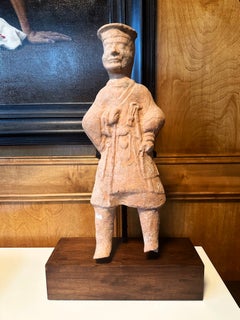
Large Chinese Terracotta Tomb Figure East Han Dynasty
Located in Atlanta, GA
A Chinese terracotta tomb figure (Ni Yong) from East Han Dynasty (25-220 AD), likely from the area of nowadays Sichuan. It appears to depict a groom figure with attires and harness i...
Category
Antique 15th Century and Earlier Chinese Han Sculptures
Materials
Terracotta
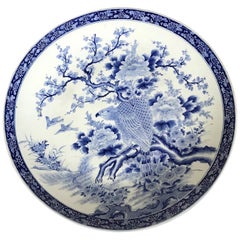
A Massive Antique Japanese Arita Porcelain Plate by Kajiwara Kiln
Located in Atlanta, GA
On offer is a truly impressive blue and white porcelain plate of Hizen ware, from Arita in Japan, circa mid to late-19th century. The plate was made by Kajiwara Kikujiro (菊次郎, the second Kiku son) and/or Kajiwara Kikusaburo (菊三郎, the third Kiku son who died in 1883) of the Kajiware Family Kiln of in Arita. It was decorated in a superb design with blue under-glaze, clearly out of a hand of a master. In a Classic Japanese composition that was popular in the Meiji Period, the plate displays a riot of auspicious elements, arranged still in a surprisingly harmonious manner. Anchoring the center of the design is an eagle perched on the branch of a blooming cherry tree, its talons clenching the bark and its wings about to open. The motion of the its immediate taking off is palpable. The trunk and the branches of the old cherry tree provide a spacial frame for the arrangement of large peonies with foliage, bundles of chrysanthemums, Chinese bell...
Category
Antique 19th Century Japanese Japonisme Ceramics
Materials
Ceramic
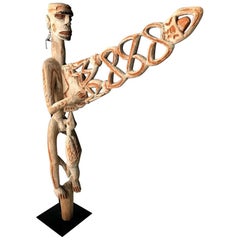
Bis Pole Sculpture by Asmat People
Located in Atlanta, GA
A ritual artifact from the tribe of the Asmat poeple, an ethnic group of New Guinea living in the Papua province of Indonesia and South-western regions of Papua New Guinea, bis or bisj pole is carved out of a wild Mangrove tree and can reach a stunning height Their carvings depict stacked human and animal figures standing and on top always phallic symbols, in the shape of a canoe prow. Bis poles...
Category
20th Century Papua New Guinean Tribal Tribal Art
Materials
Wood
Japanese Cloisonné Covered Jar by Ando Jubei
By Ando Jubei
Located in Atlanta, GA
Japanese cloisonné enamels are known as shippo-yaki and the mid-19th century saw the production of very high quality wares in the early centers Nagoya. One of the most renowned works...
Category
Early 20th Century Japanese Japonisme Metalwork
Materials
Metal, Sterling Silver, Enamel
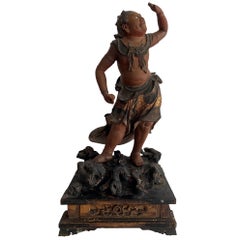
Japanese Lacquered and Gilt Wood Buddhism Statue from Edo Period
Located in Atlanta, GA
An exceptional and wood statue of Buddhism Guardian Seitaka Doji from Japan circa Edo period (1603-1868), likely the earlier part of 17th century. One of two chief attendants of Fudou Myouou (the other being Kongara Doji), the name of Seitaka Doji is a transliteration of Sanskrit "Cetaka", meaning servant, slave, and he is said to personify expedient action. He is most commonly found on the right side of Fudou, together with Kongara Doji on the left, forming the Immovable triad, Fudou Sanzon, the terror of evil doers. Seitaka largely adheres to the iconography of a wrathful youth with fleshy body and face, skin in the color of a red lotus, has his hair tied in five knots, and holds a vajra in his left hand and a vajra-club in his right hand, but the actual artistic representations of him in Japan do...
Category
Antique 17th Century Japanese Japonisme Sculptures and Carvings
Materials
Metal
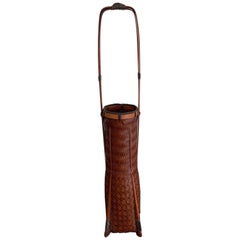
Elegant Japanese Lacquered Ikebana Bamboo Basket
Located in Atlanta, GA
A vintage Japanese ikebana made from lacquered bamboo basketry circa first half of the 20th century. This piece of bamboo art displays an very light and delicate classic tapered squa...
Category
Early 20th Century Japanese Japonisme Scholar s Objects
Materials
Bamboo, Rattan
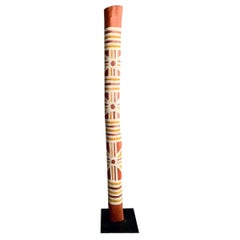
$1,600 Sale Price
20% Off
Australian Aboriginal Painted Totem Pole from Elcho Island
Located in Atlanta, GA
A hollow log painted with Ocher with a clan-based design.
Title: Djirrididi Log
Artist: James Patrick Lamuta
DOB: 01/04/1984
Medium: Ocher pigment on wood
Provenance: COA from Elcho Island Art...
Category
Early 2000s Australian Folk Art Abstract Sculptures
Materials
Wood
Japanese Ceramic Vase by Ito Tozan I Meiji Period
By Ito Tozan I
Located in Atlanta, GA
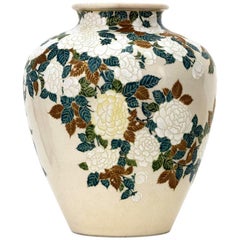
This stoneware vase of a jar form was finely decorated with low relief carving and delicate colored glazes depicting bundles of peony flowers. It was made by Ito Tozan I (1846-1920) circa 1890-1900s in the late Meiji Period. The color pallet was both bold and subtle, with dark green and rusty leaves with golden outlines and white and light yellow peony petals covering much of the surface. Impressed with potter's mark on the base.
Examples of two pieces by Ito Tozan I were in the collection of MNAAG (Guimet) Paris. Inventory no. MG 13790 an 13792.
A vase with similar shape and decoration techniques is featured as Lot 1340 Fine Japanese Art, 13 Sep 2017 Bonhams New York
Tozan Ito I established his ceramic business in Kyoto 1867. His studio made both porcelain and stoneware in a style some considered Satsuma while they retained a sophistication of Kyoto ware...
Category
Antique 1890s Japanese Japonisme Ceramics
Materials
Ceramic
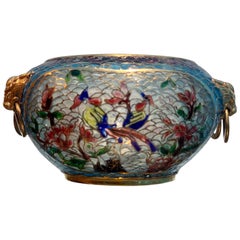
Chinese Plique-a-jour Archaic Style Bowl
Located in Atlanta, GA
A small Chinese cloisonné enamel bowl made with the technique of Plique-a-jour (means "letting in daylight" in French), a challenging method similar to small scale stained windows or...
Category
20th Century Chinese Chinese Export Metalwork
Materials
Copper, Enamel
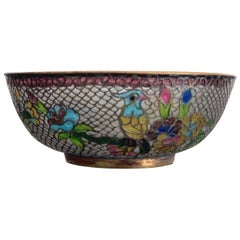
Chinese Plique-a-Jour Bowl
Located in Atlanta, GA
A small Chinese cloisonne enamel bowl made with the technique of Plique-a-jour (means "letting in daylight" in French), a challenging method similar to small scale stained windows...
Category
20th Century Chinese Chinese Export Metalwork
Materials
Copper, Enamel
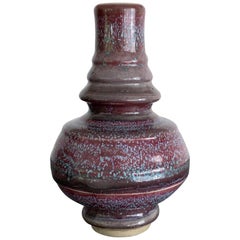
Asian Flambe Studio Pottery Vase
By Kyoto Pottery
Located in Atlanta, GA
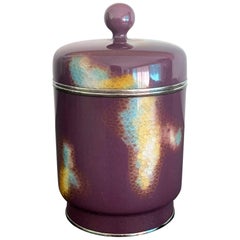
A garlic bottle vase in an archaic Chinese form, but likely Japanese in origin. Several circumventing grooves however, suggest a more modern age. It was done in a brilliant purple glaze over a robin egg blue background glaze. The bubbling and bursting effects during the firing renders the surface an artistic spotting effect. The color pallet recalls the Classic Jun Yao...
Category
Antique Late 19th Century Japanese Japonisme Ceramics
Materials
Ceramic
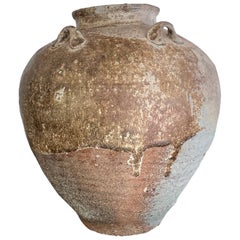
Antique Chinese Ceramic Tea Leaf Storage Jar Song-Yuan Dynasty
Located in Atlanta, GA
A stoneware pottery jar used for storage, made in southern China Fujian or Guangdong province since Song Dynasty for domestic use as well as export. They were widely exported to Japa...
Category
Antique 15th Century and Earlier Chinese Archaistic Ceramics
Materials
Ceramic
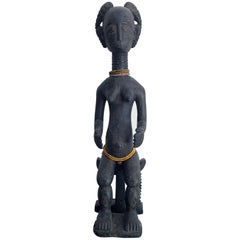
Ashanti Maternal Fertility Figure
Located in Atlanta, GA
On offer is an Ashanti female fertility figure from Ghana, West Africa, circa Mid-20th century. Carved from a single block of wood, the statue depicts a female with typical coiffure ...
Category
Mid-20th Century Ghanaian Tribal Figurative Sculptures
Materials
Glass, Wood
$2,000 Sale Price
33% Off
French Sculptured Gilt Bronze Box by Line Vautrin
By Line Vautrin
Located in Atlanta, GA
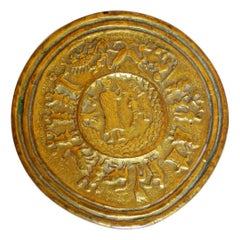
A gilt bronze box or podier by French Jeweler Line Vautrin, in the pattern of "Moise ou la traversee du desert" coric 1940s-1950s.
A rare mode in the box, the top surface of the cover illustrates the biblical story of Moses crossing the desert out of Egypt...
Category
Mid-20th Century French Modern Decorative Boxes
Materials
Bronze
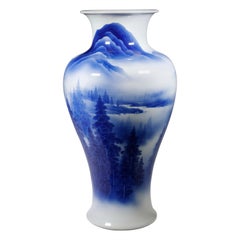
Large Japanese Blue and White Vase by Mazuku Kozan Meiji Period
By Makuzu Kozan
Located in Atlanta, GA
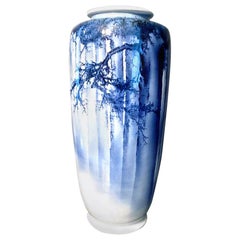
A striking blue and white vase from the studio of Japanese Potter Makuzu Kozan, also known as Miyagawa Kozan (1842–1916), one of the most established and collected ceramist from Meiji Period. Born as Miyagawa Toranosuke, Kozan established his pottery studio in Yokohama around 1870s and later became one of the appointed artist to the Japanese Imperial household. His work was exhibited in many international fairs that the Meiji government participated at the turn of the century and won many grand prizes.
With a relative large size, this vase is decorated with underglaze cobalt blue using the novel technique developed by Kozan called Fuki-e (the blow painting), in order to achieve the striking dimensional misty winter landscape. The pine trees with upright trunks and down-sweeping branches appear receding into the depth of the mist, forming an visually unending forest. Known as one of the most creative ceramists, around 1880s, Kozan started experimenting with new chemical colors from the West in the format of his porcelain glaze. New colors allowed him to create underglaze design that appeared bright, smooth and glossy. He even invented his own receipt of cobalt blue to achieve a much brighter yet softer shade, as evident on this vase. To create landscape that is realistic and dimensional, more common in the western paintings, he was inspired by the native Japanese ink painting technique developed around 1900 by Yokoyama...
Category
Early 20th Century Japanese Japonisme Ceramics
Materials
Porcelain
Wood-Fired Ceramic Jar Paul Chaleff
By Paul Chaleff
Located in Atlanta, GA
A large stoneware jar by Paul Chaleff (1947-) made in 1987 and was purchased directly from the artist's studio in New York. Wood fired ceramic vessel with h...
Category
Vintage 1980s American Modern Jars
Materials
Ceramic