Japonisme Asian Art and Furniture

JAPONISME STYLE

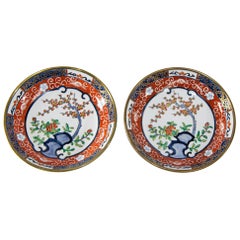
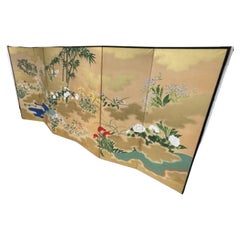
In the late 19th and early 20th century, France developed an enduring passion for Japanese aesthetics and craftsmanship. Not only did this interpretation of Japanese culture — which became known as Japonisme — infuse fresh energy into French art and design, but it also radically transformed how Europeans, and subsequently the world, would come to understand visual culture. 

Until 1853, Japan had been closely guarded against foreign visitors for over two centuries. However, American Commodore Matthew C. Perry sailed into Japan that year and initiated the first of its treaties with the United States and Europe, thereby opening its borders and giving the West its first-ever look at Japanese design. 

For the next few decades, taken with Japonisme, sophisticated collectors in Paris, New York and elsewhere gorged themselves on lacquered screens, celadon ceramics and netsuke ornaments, along with artworks depicting various aspects of Japanese life. The East Asian country’s influence on Europe, particularly France, contributed to one of the most creatively prosperous periods in history, leaving an imprint on the Impressionist, Art Nouveau and Art Deco movements, and inspiring artists like Edgar Degas, Mary Cassatt, Vincent van Gogh as well as luxury houses such as Louis Vuitton and Hermès. Japonisme emerged at the time when the ornate Renaissance Revival style was the most prominent mode of decorating in Europe, and Japanese aesthetics seemed strikingly modern and elegant in comparison. 

In addition to everyday practical objects from Japan, such as vases, tableware and decorative boxes, Japanese art, especially Japanese woodblock prints by masters of the ukiyo-e school, caught the eye of many artists — particularly those in the Art Nouveau poster community in 1880s Paris. The luscious organic colors associated with traditional Japanese design, motifs like cherry blossoms and carp and the vivid patterns found in woodblock prints, silks and more were adopted and appropriated by painters as well as ceramicists and those working in other fields of the decorative arts. Today, demand for Japanese lacquerware — furniture, trays, writing boxes, screens, incense burners — from the Edo period (1615–1868) and the late 19th century continues to be very strong among collectors.

Find a collection of antique Japonisme furniture and decorative objects on 1stDibs.

to
34
239
118
382
43
7
439
391
234
186
155
74
55
46
42
33
25
20
15
14
13
13
12
4
25
148
209
50
92
65
23
20
3
15
5
11
11
14
8
4
2
136
122
108
95
73
381
379
377
39
31
432
400
430
30
26
16
14
7
Style: Japonisme
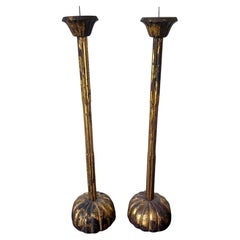
Pair of Large Japanese Carved Wood Temple Candleholders Edo Period
Located in Atlanta, GA
A tall pair of Japanese carved wood candle holders circa early 19th century (late Edo Period). The pair is carved in the typical form with a block base in the shape of stylized chrysanthemums and long fluted stem with changes in diameter that supports a grooved holder fitted with metal pricket. These types of oversized candle holders were traditionally used in Buddhist temples or Samurai's resident where they were placed on the altar table for worshiping. What is extraordinary of these candle stickers is that they feature a wonderfully conserved surface with lacquered gold leaf. The sparkling gold on the well weathered surface is visually striking. The professional conservation was performed in 2007 and as a result, the pieces display a wonderful aged Wabi-Sabi patina. The piece retains an original invoice from Far Eastern Antiques...
Category

Early 19th Century Japanese Antique Japonisme Asian Art and Furniture

Materials

Gold Leaf

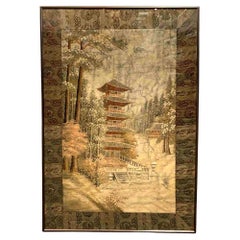
Framed Japanese Embroidery Textile Panel Pagoda Scenery
Located in Atlanta, GA
A Japanese silk embroidery landscape scenery panel depicting a Buddhist pagoda and a temple compound set in a forest with towering pines and...
Category

Early 20th Century Japanese Japonisme Asian Art and Furniture

Materials

Metal

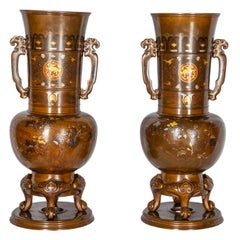
Pair of Japanese Meiji Period Bronze and Gilt Vases
By Zo Miyao 1
Located in Brighton, Sussex
Pair of fine quality Japanese Meiji period (1868-1912) patinated bronze Miyao style gold and silver overlay two handled vases, each with twin handles, classical motif decoration with...
Category

Late 19th Century Japanese Antique Japonisme Asian Art and Furniture

Materials

Bronze

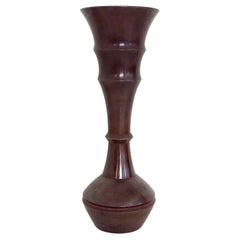
Yasumi Nakajima II Ikebana Bronze Vase, circa 1960, Japan.
Located in Brussels, BE
Yasumi Nakajima II (1906-1988) Ikebana vase, circa 1960, Japan. Trumpet form, Tomoe model, with nice patinated brown-red (seido) bronze. Signed underneath. Dimensions: 26 cm H, 9 ...
Category

1960s Japanese Vintage Japonisme Asian Art and Furniture

Materials

Bronze

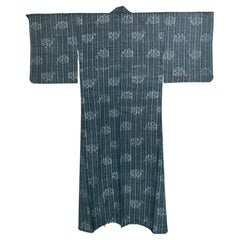
Japanese Woven Linen Kimono with Katazome Stencil Dyes
Located in Atlanta, GA
On offer is a Japanese summer kimono woven from indigo blue linen with ivory color fine stripes patterns with apparently darker weft additions. The elega...
Category

Early 20th Century Japanese Japonisme Asian Art and Furniture

Materials

Linen

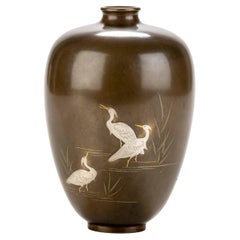
A Japanese bronze vase with three egrets
Located in Milano, IT
Bulbous vase in bronze with a shiny patina and three elegant white egrets in inlaid silver with golden beaks and feet. Period: Meiji, late 19th century. Dimensions: 11 x 8.5 cm. Con...
Category

Late 19th Century Japanese Antique Japonisme Asian Art and Furniture

Materials

Bronze

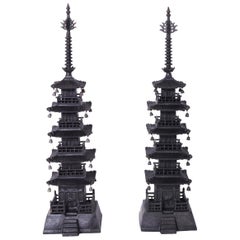
Pair of Antique Japanese Iron Pagodas
Located in Palm Beach, FL
Enchanting pair of Japanese pagodas crafted in iron with classic finials or sorin at the tops on five floors with hanging bells and an entrance at the bottom.
Category

Mid-20th Century Japanese Japonisme Asian Art and Furniture

Materials

Iron

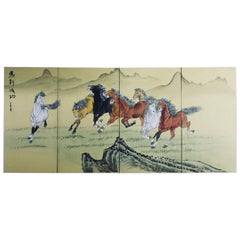
Japanese Taisho/Showa Period Six - Panel Screen with Galloping Horses, Ca. 1920
Located in New York, NY
Japanese Taisho/Showa Period Six - Panel Screen with Galloping Horses, Ca. 1920 ABOUT Taisho/Showa Period (1912 – 1926) DIMENSIONS Width: 70 inches Height: 35 inches
Category

1920s Japanese Vintage Japonisme Asian Art and Furniture

Materials

Wood

Antique Japanese Ceramic Ko-Kutani Revival Footed Dish
Located in Atlanta, GA
A Japanese glazed ceramic footed dish made in the Ko-Kutani type of Edo period but likely during Kutani revival in the 19th century Meiji Period. The dish with delicate foliaged rim ...
Category

19th Century Japanese Antique Japonisme Asian Art and Furniture

Materials

Ceramic

Japanese Rinpa Style Lacquer Box Meiji Period
Located in Atlanta, GA
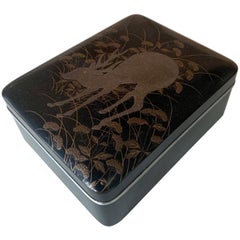
A black lacquer tebako (hand box) with maki-e decoration and silver trim, circa late 19th century, Meiji period. The surface of the lid features a Rinpa style maki-e paint depicting ...
Category

1890s Japanese Antique Japonisme Asian Art and Furniture

Materials

Wood, Lacquer

Japanese Meiji Period 6-Panel Screen w/ Blue Lacquered Flowers, Ca. 1900
Located in New York, NY
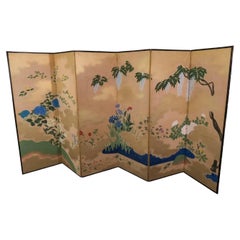
Japanese Meiji Period 6-Panel Screen w/ Blue Lacquered Flowers, Ca. 1900 Meiji Period (1868-1912) DIMENSIONS 145” long x 69.5” high
Category

Early 1900s Japanese Antique Japonisme Asian Art and Furniture

Materials

Wood

STUNNING SiGNED ANTIQUE CIRCA 1870 JAPANESE VASE DEPICTING A BIRD ON A BRANCH
Located in West Sussex, Pulborough
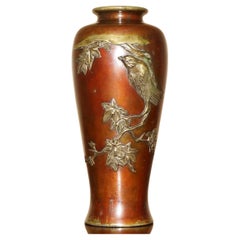
Royal House Antiques Royal House Antiques is delighted to offer for sale this absolutely stunning circa 1870 signed to the base solid bronze Japanese bronze vase depicting a large b...
Category

1870s Japanese Antique Japonisme Asian Art and Furniture

Materials

Bronze

Japanese Porcelain Vase Makuzu Kozan Meiji Period
Located in Atlanta, GA
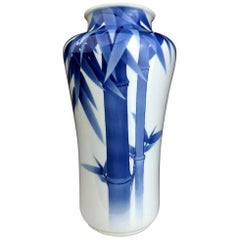
A striking blue and white vase from the studio of Japanese Potter Makuzu Kozan, also known as Miyagawa Kozan (1842–1916), one of the most established and collected ceramist from Meiji Period. Born as Miyagawa Toranosuke, Kozan established his pottery studio in Yokohama circa 1870s and later became one of the appointed artists to the Japanese Imperial household. His work was exhibited in many international fairs that the Meiji government participated at the turn of the century and won many grand prizes. Of a relatively large size, this vase is decorated with underglaze cobalt blue using the novel technique developed by Kozan called Fuki-e (the blow painting). As a result, the bamboos appear took on a three-dimensional quality as if appearing in a mist. Known as one of the most creative ceramists, circa 1887, Kozan started experimenting with new chemical colors from the West in the format of his porcelain glaze. New colors allowed him to create underglaze design that appeared bright, smooth and glossy. He even invented his own receipt of cobalt blue to achieve a much brighter yet softer shade, as evident on this vase. To create landscape that is realistic and dimensional, more common in the western paintings, he was inspired by the native Japanese ink painting technique developed around 1900 by Yokoyama Taikan...
Category

Early 1900s Japanese Antique Japonisme Asian Art and Furniture

Materials

Ceramic

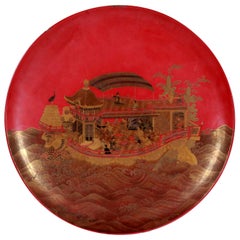
Large Japanese Lacquer Plate with Elaborate Maki-e Design by Kajikawa
Located in Atlanta, GA
A large circular plate with a short stem base in Vermillion lacquer color. The surface was decorated with a stunning maki-e picture that depicts a...
Category

19th Century Japanese Antique Japonisme Asian Art and Furniture

Materials

Lacquer

Antique Japanese Lacquered Wood Wabi-Sabi Bowl
Located in Atlanta, GA
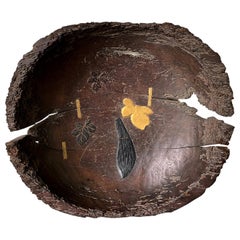
What can we say about this bowl? Perhaps we can start by describing the unique Japanese aesthetic concept of "Wabi-Sabi". In contrast to the western concept of beauty that is centere...
Category

19th Century Japanese Antique Japonisme Asian Art and Furniture

Materials

Wood

Antique Japanese Hanging Scroll Attributed to Iwasa Matabei
Located in Atlanta, GA
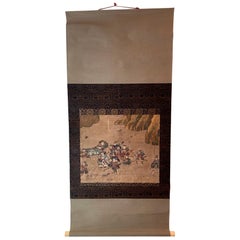
An antique ink and color on paper hanging scroll (kakejiku) with brocade border. It appears to be a fragment of a larger hand scroll depicting a procession of a lord with his entoura...
Category

Early 17th Century Japanese Antique Japonisme Asian Art and Furniture

Materials

Silk, Paper

Throw Aodake 160
Located in Cadorago, CO
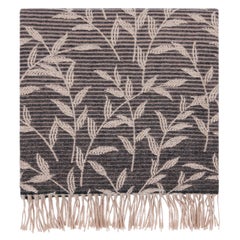
This is a jacquard throw in lush grey and green tones decorated with a pattern of leaves and finished with fringes. The foliage is reminiscent of the jungle and the natural elements ...
Category

21st Century and Contemporary Italian Japonisme Asian Art and Furniture

Materials

Fabric

Throw Aodake 160
Throw Aodake 160
$773 / item
Japanese Ceramic Sake Bottle Chosen Karatsu Ware
Located in Atlanta, GA
The long neck bottle of classic form was heavily potted with coarse clay with high iron content. The flask, circa 18th century Edo period, was purposed for sake storage but also substituted as a flower vase during tea ceremony. The surface is covered in glossy black glaze and contrasts strikingly with white ash glaze around the shoulder. The white, fired with straw, displays a splashing feather effect and fine crackles, blending in with the black artistically. This type of Karatsu ware...
Category

18th Century Japanese Antique Japonisme Asian Art and Furniture

Materials

Ceramic

Vintage Japanese Imari Porcelain Bowl Hand-Painted for Geary s Beverly Hill
Located in Moreno Valley, CA
Vintage Japanese Imari Porcelain 7.5" Bowl - Hand Decorated for Geary's Beverly Hills. Set of two Japanese Imari porcelain Bowls from the prestigious brand GEARYS BEVERLY HILLS, Vintage collectible large blue and white porcelain bowl. These beautiful Japanese bowls are hand painted. Perfect for display or using as catchall or vide poche. Vintage Japanese Porcelain...
Category

20th Century Hong Kong Japonisme Asian Art and Furniture

Materials

Ceramic, Porcelain

Japanese Lacquer Box with Fine Maki-e Decoration Meiji Period
Located in Atlanta, GA
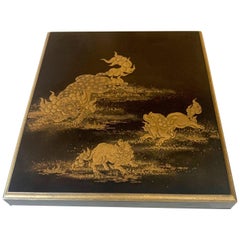
A lacquered wood box with lid from Japan circa 19th century Meiji Period. The finely decorated box was used to store paper slips and small documents on the desk. It is overall finished with black lacquer (kuro) with sparse Mura-Nashiji effect outside and on the top surface of the lid, there are three Komainu, (sometimes known as Shishi or Japanese lions) frolicking and forming a circle in lively motion. Komainu are auspicious animals in Japanese cultures in both Shinto and Buddhism tradition. Originally from China, these animals symbolizes guardians to ward off evil spirits. Hiramaki-e was used in combination with carving and combing to render the lions with various surface textures. A gilt border with an slight angle was given to the lid and even the thin band is decorated with miniature floral scrolls. The interior of the box was finished in a dense nashiji. Underneath the lid, a cluster of peonies open lavishly by two gentle mounts. Takamaki-e (high relief) in both gold and silver were...
Category

Late 19th Century Japanese Antique Japonisme Asian Art and Furniture

Materials

Wood, Lacquer

Pair of Rare Antique Japanese Folding Screens with Provenance
Located in Atlanta, GA
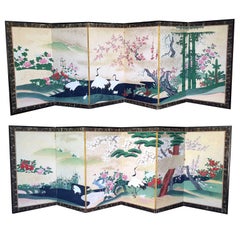
An amazing pair of matching antique Japanese folding screen predating 1812-1813, most likely from Kano School. Six panels each depict C...
Category

1810s Japanese Antique Japonisme Asian Art and Furniture

Materials

Brass

Hagi Ikebana Vase by Kyusetsu Miwa X Japanese Studio Pottery
By Kyusetsu Miwa X
Located in Atlanta, GA
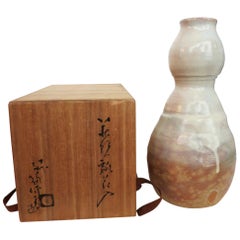
A stoneware vase with white dripping glaze from Hagi by Kyusetsu Miwa X (1895-1981), Showa Period. The vase is in the shape of "Double Gourd" with a bulbous ...
Category

20th Century Japanese Japonisme Asian Art and Furniture

Materials

Ceramic

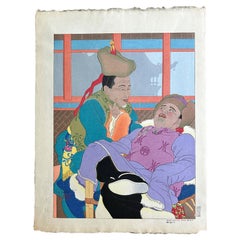
Japanese Woodblock Print Une Histoire Tres Drole by Paul Jacoulet
Located in Atlanta, GA
A Japanese Woodblock print by Paul Jacoulet (French, 1896-1960) entitled Une Histoire Tres Drole, Mongols (A Very Funny Story, Mongols). Created in 1949, based on an earlier painting...
Category

1940s Japanese Vintage Japonisme Asian Art and Furniture

Materials

Paper

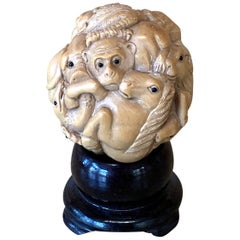
Finely Carved Japanese Okimono on Stand
Located in Atlanta, GA
An antique Okimono (Japanese means artsy display ornament object) displayed on a small custom wood stand from Meiji Period circa early 2oth century. T...
Category

Early 20th Century Japanese Japonisme Asian Art and Furniture

Materials

Wood

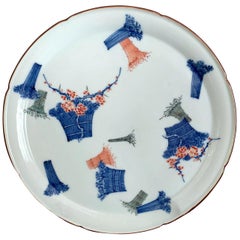
Japanese Antique Kakiemon Plate from Arita
Located in Atlanta, GA
A milky white dish with slight scalloped rim and decorated with cobalt blue iron red and green enamel over glaze, this delicate piece in Kakiemon Style was dated at least to the earl...
Category

Early 18th Century Japanese Antique Japonisme Asian Art and Furniture

Materials

Porcelain

Vintage kimono textile art " Sunset Timelapse ~ Ephemerality ~" ikasu Red Japan
Located in Setagaya City, JP
< The art piece uses two sides - front and reverse - of the same kimono, to show beautiful sea surrounding Japan, in hues and in late sunset, as a timelapse. The frame for this work is made of paulownia wood taken from antique Kiritansu - chest-of-drawers for kimono. I use antique kiritansu that can’t be used as furniture anymore to create basis and frames for my works. It adds them even more authentic atmosphere of traditional wabisabi spirit. Can you feel it? << Period / Story The kimono used in this piece was originally crafted during Showa period (around 1960ies). << Explanation and meaning of pattern and colors Sea waves, depicted in two color variations here, are a symbol of transience and Impermanence in Japanese culture. The ebb and flow of the tides, the ever-changing currents, and the relentless motion of the waves serve as reminders of the fleeting nature of life. This artwork featuring the sea convey themes of impermanence, reminding viewers to cherish the present moment and appreciate the beauty of life's fleeting moments. The theme of impermanence is strengthen by two colors of the sea - the lighter in early hues and the darker when the sun is just about to set in the sea. << About the frame This artwork frame is crafted from paulownia wood, a uniquely Japanese material closely tied to the world of kimonos, and it serves to convey the refined beauty of Japanese nature. Paulownia wood is known as the lightest wood in Japan, prased for its natural luster, resistance to moisture, and resilience against cracking. Since ancient times, it has been used in crafting furniture, chests, and musical instruments. Paulownia wood is closely linked to kimono culture. During the Edo period (17th cent.~), it became customary to store cherished kimonos in paulownia chests...
Category

1960s Japanese Vintage Japonisme Asian Art and Furniture

Materials

Silk, Wood

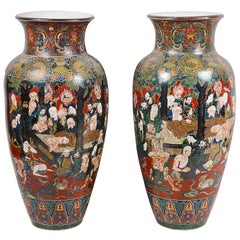
Large Pair of Japanese Kutani Porcelain Vases, C19th
Located in Brighton, Sussex
A magnificent pair of Japanese Meiji period (1868-1912) Kutani porcelain vases. Having wonderful hand painted images of attendants gathering in morning, having classical motif decora...
Category

Late 19th Century Japanese Antique Japonisme Asian Art and Furniture

Materials

Porcelain

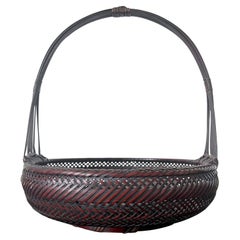
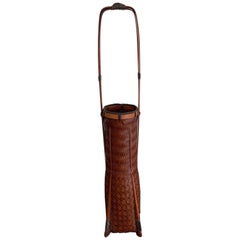
Japanese Woven Bamboo Ikebana Basket
Located in Atlanta, GA
A Japanese woven bamboo basket with handle from early 20th century, circa end of Meiji to Taisho period. The basket was constructed in the form o...
Category

Early 20th Century Japanese Japonisme Asian Art and Furniture

Materials

Bamboo

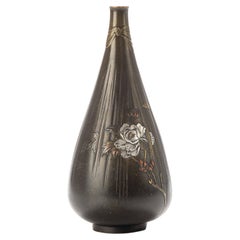
A Japanese drop-shaped bronze vase with peonies
Located in Milano, IT
Drop-shaped bronze vase, with peonies in relief, decorated to simulate a delicate and light fabric that ends with a bow near the top of the neck. Using mixed metals to create visual...
Category

Late 19th Century Japanese Antique Japonisme Asian Art and Furniture

Materials

Bronze

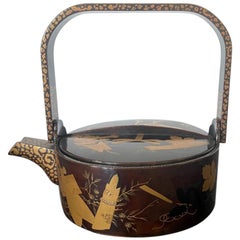
Japanese Lacquer Maki-e Sake Ewer Meiji Period
Located in Atlanta, GA
A Japanese lacquered wood sake ewer with maki-e design, circa late 19th century, Meiji period. The nicely decorated lacquerware is of a Classic sake ewer for...
Category

1890s Japanese Antique Japonisme Asian Art and Furniture

Materials

Lacquer

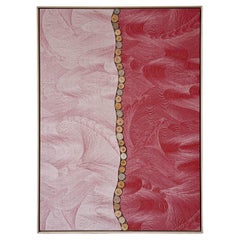
Vintage kimono textile art " Marble Story ~ Healing ~" by ikasu Grey Japan
Located in Setagaya City, JP
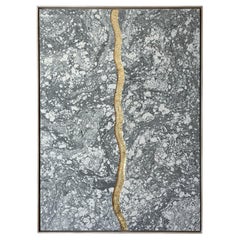
< This work uses a vintage kimono fabric with marble pattern, that makes it look like a real piece of marble. The line in the middle symbolizes “kintsugi” - concept of wabi-sabi, which values imperfection, impermanence, and the beauty of aging. It is elegantly framed with paulownia wood originally used for kimono chest-of-drawers, and is filled with storytelling and sense of luxury. I used pieces of kimono that could no longer be used as clothing and kiritansu chest-of-drawers that would normally be discarded to create the ultimate upcycled piece. << Explanation and meaning of pattern and colors Kintsugi (金継ぎ), which translates to "golden joinery" or "golden repair," is a traditional Japanese art form of repairing broken pottery with lacquer mixed with powdered gold, silver, or platinum. I used this tecnique here to "repair" antique kimono by transforming it into art work. Beyond its literal meaning of mending broken ceramics, kintsugi carries profound philosophical and cultural significance in Japanese tradition: ・Embracing Imperfection: Kintsugi celebrates imperfection and impermanence. Rather than disguising or concealing flaws, it highlights them, treating the breakage as part of the object's history. This philosophy encourages acceptance of imperfection as an essential aspect of life, beauty, and human experience. ・Wabi-Sabi Aesthetic: Kintsugi embodies the principles of wabi-sabi, an aesthetic worldview centered on the acceptance of transience and imperfection. Wabi-sabi values simplicity, authenticity, and the beauty of things that are imperfect, impermanent, and incomplete. Kintsugi exemplifies these principles by turning what might be considered flaws into features that enhance the object's beauty and character. ・Resilience and Transformation: The act of repairing broken things with precious metals symbolizes resilience and transformation. Instead of discarding or replacing the broken object, kintsugi honors its history and transforms it into something new and valuable. This reflects broader philosophical themes of overcoming adversity, finding beauty in imperfection, and embracing change. ・Honoring the Past: Kintsugi preserves and honors the history of the object. Rather than erasing or ignoring its past, it acknowledges and celebrates it. This aspect of kintsugi can be seen as a metaphor for honoring our own personal histories, including the challenges and setbacks we have faced, and recognizing how they have shaped us into who we are today. ・Spiritual and Philosophical Symbolism: Kintsugi has spiritual and philosophical implications, reflecting concepts such as the interconnectedness of all things, the cycle of life and death, and the pursuit of harmony and balance. The process of repairing broken objects with precious metals is seen as a metaphor for spiritual growth, enlightenment, and the journey towards wholeness. Overall, kintsugi represents not only a practical technique for repairing ceramics but also a profound philosophical and cultural perspective on life, beauty, and the human experience. It embodies values such as resilience, acceptance, and the transformative power of embracing imperfection. << Characteristics of the fabric This vintage textile is hand-painted with a traditional painting technique where the colors are added on wet surface, which creates an effect of marble. << About the frame Kiritansu - chest-of-drawers for kimono, is traditionally made from paulownia wood, a uniquely Japanese material closely tied to the world of kimonos. Paulownia wood is known as the lightest wood in Japan, prased for its natural luster, resistance to moisture, and resilience against cracking. Since ancient times, it has been used in crafting furniture, chests, and musical instruments. During the Edo period, it became customary to store cherished kimonos in paulownia chests...
Category

1960s Japanese Vintage Japonisme Asian Art and Furniture

Materials

Gold Leaf

Japanese Woodblock Print Les Jades Chinoise by Paul Jacoulet
Located in Atlanta, GA
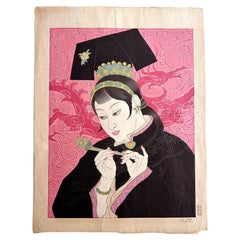
A Japanese Woodblock print by Paul Jacoulet (French, 1896-1960) entitled Les Jades Chinoise (Jade Lady Chinese). Created in 1940, this is the most popular and recognizable print by t...
Category

1940s Japanese Vintage Japonisme Asian Art and Furniture

Materials

Paper

Unusual Japanese Lacquer Inkstone Box with MOP Inlays
Located in Atlanta, GA
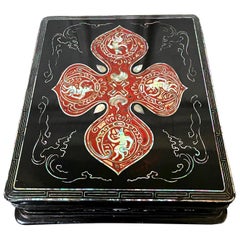
A Japanese black lacquer box with mother of pearl inlays circa early 20th century, end of Meiji period. It was likely to be used to store inkstone or other scholarly items. The piece displays several interesting characteristics that appear puzzling initially. First, the form is not typical Japanese, but more Chinese and Korean, with its scalloped base. Second, the decoration of MOP inlays also suggests a Korean and Chinese affiliation, especially with the linear borders and the scrolling cloud patters on the sides of the box. These two observations suggest that the box may be from Ryukyu Island instead of Japanese mainland. Third, strikingly in the center of the cover, a bold quarterly floral pattern outlined with MOP was filled with a striking mottled red lacquer using tsugaru nuri...
Category

Early 20th Century Japanese Japonisme Asian Art and Furniture

Materials

Wood, Lacquer

Framed Woodblock Print La Lettre du Fils Coree Early Version by Paul Jacoulet
Located in Atlanta, GA
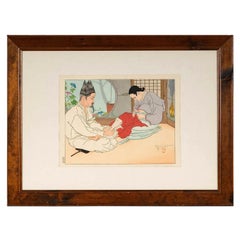
A Japanese Woodblock print by Paul Jacoulet (French, 1896-1960) entitled La Lettre Du Fils, Seoul, Coree (The Son's Letter). Created in 1938, this print was carved by Maeda and print...
Category

1930s Japanese Vintage Japonisme Asian Art and Furniture

Materials

Wood, Paper

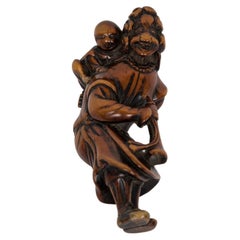
Boxwood netsuke representing a ducthman with child and a trumpet
Located in PARIS, FR
Wooden netsuke of a standing Dutchman figure with his mouth open, leaning forward. He is wearing a long curly wig, a ruff and a long coat tied at the waist. In his right hand, the ma...
Category

Late 18th Century Japanese Antique Japonisme Asian Art and Furniture

Materials

Boxwood

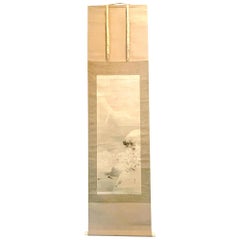
Japanese Ink and Wash Scroll Painting by Watanabe Seitei
Located in Atlanta, GA
Watanabe Seitei, also known as Watanabe Shotei (1851–1918), was born in late Edo period. He was one of the earliest Japanese artists who visited and be...
Category

Early 1900s Japanese Antique Japonisme Asian Art and Furniture

Materials

Brocade, Silk, Paper

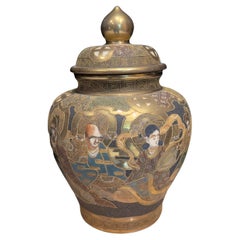
Japanese Satsuma Lidded Vase, Earthenware, Meiji to Taishō, 39cm
Located in Chonburi, TH
This impressive Japanese Satsuma lidded vase is a fine example of the richly decorated earthenware admired during the late Meiji to Taishō period, celebrated for its exquisite crafts...
Category

Late 19th Century Japanese Antique Japonisme Asian Art and Furniture

Materials

Ceramic

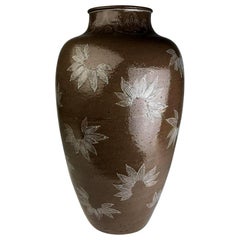
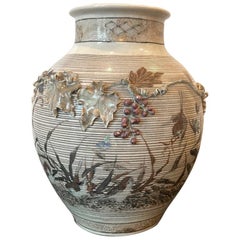
Rare Large Vase with White Slip Inlay Makuzu Kozan Meiji Period
Located in Atlanta, GA
A impressively large and unusual stoneware vase in an urn shape from the studio of Japanese Potter Makuzu Kozan, also known as Miyagawa Kozan (1842–1916), one of the most established and collected ceramist from Meiji Period. Born as Miyagawa Toranosuke, Kozan established his pottery studio in Yokohama circa 1870s and later became one of the appointed artist to the Japanese Imperial household. His work was exhibited in many international fairs that the Meiji government participated at the turn of the century and won many grand prizes. This vase is dated to the end of Makuzu's life circa 1910-1916 based on similar work created around that time. After achieving domestic and international fame, Makuzu retired and handed the business to his son Hanzan in 1912. He dedicated his time to other selected projects that were more in tune with Japanese sensibility than export aesthetic. He made a group of stoneware pottery pieces inspired by Edo master like Ninsei and Kenzan as well as his own poetic creation. This piece is attributed to that period. Standing of an impressive size, this vase is more like an urn, made with stoneware instead of porcelain. It was coated with a brown iron glaze with a slight translucent quality. Underglaze whit slips were used to draw low relief decoration of bamboo leaves that sparsely scatter on the surface. Slightly more elaborate scrolling vines and autumn flowers circles under the mouth rim. Same white slip inlay was used to sign the vase under the base. The whole effect of the piece is unusual. With its dark glaze in contrast with the sparse white decoration that is more abstract and geometric than realistic, it appears almost modern with an Art Deco flavor. For stoneware urn and vase in the similar genre by Makuzu Kozan: see figure 113 on page 182 of "Sekai ni Aisa Reta ya Kimono" MIYAGAWA KOZAN MAKUZU...
Category

1910s Japanese Vintage Japonisme Asian Art and Furniture

Materials

Ceramic

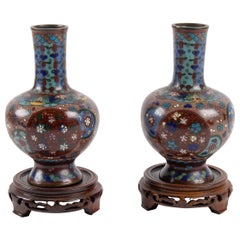
Pair of Cloisonné Bronze Vases, Japan, Circa 1900
Located in Saint-Ouen, FR
Pair of cloisonné bronze vases, Japan, circa 1900, accident on one, slight depression Measures: H 19cm, D 10cm.
Category

20th Century Japanese Japonisme Asian Art and Furniture

Materials

Bronze

Elegant Japanese Lacquered Ikebana Bamboo Basket
Located in Atlanta, GA
A vintage Japanese ikebana made from lacquered bamboo basketry circa first half of the 20th century. This piece of bamboo art displays an very light and delicate classic tapered squa...
Category

Early 20th Century Japanese Japonisme Asian Art and Furniture

Materials

Bamboo, Rattan

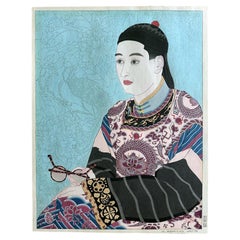
Japanese Woodblock Print Le Mandarin Aux Lunettes by Paul Jacoulet
Located in Atlanta, GA
A Japanese Woodblock print by Paul Jacoulet (French, 1896-1960) entitled Le Mandarin Aux Lunettes. Mandchoukuo (The Mandarin with Glasses, Manchuria). Created in 1950, part of Dedica...
Category

1950s Japanese Vintage Japonisme Asian Art and Furniture

Materials

Paper

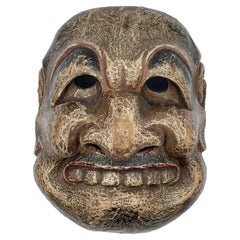
Japanese Edo Period Kyogen Mask o a Guardian, ca. 1750
Located in New York, NY
Japanese Edo Period Kyogen Mask o a Guardian, ca. 1750 DIMENSIONS: Height: 8.5 inches Width: 7 inches Depth: 4.5 inches ABOUT A powerful and extremely rare Japanese Edo Period (1603-1868) Kyogen mask of a Nio Guardian...
Category

1750s Japanese Antique Japonisme Asian Art and Furniture

Materials

Wood

Japanese Meiji Period Six-Panel Screen with Blue Lake and Flowers, Ca. 1900
Located in New York, NY
Japanese Meiji Period Six-Panel Screen with Blue Lake and Flowers, Ca. 1900 Meiji Period (1868-1912) DIMENSIONS Length: 145 inches Height: 69.5 inches
Category

Early 1900s Japanese Antique Japonisme Asian Art and Furniture

Materials

Wood

Mid 20th Century obi textile art " Moon phase II " by ikasu Silver Black Japan
Located in Setagaya City, JP
<< About this artwork This artwork has been upcycled from a stunning obi, which is adorned with calligraphy weaving saying "moon" and "moonlight". << Period /...
Category

1970s Japanese Vintage Japonisme Asian Art and Furniture

Materials

Silver Leaf

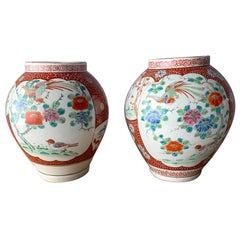
Near Pair of Antique Japanese Arita Export Ceramic Jars
Located in Atlanta, GA
A near pair Hizen pottery jars from Artia Japan, circa mid-19th century of the Meiji Era. Heavy stoneware construction with overglaze enamels that was inspired by Chinese WuCai from ...
Category

Mid-19th Century Japanese Antique Japonisme Asian Art and Furniture

Materials

Ceramic

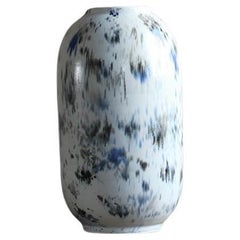
Small White Vase with abstract painting by Scarlet Pottery
Located in Sammu-shi, Chiba
This is a vase made by the Japanese ceramic artist unit "Scarlet Pottery." It is a piece of pottery made using Amakusa pottery stone. Amakusa pottery stone is famous as the raw mater...
Category

2010s Japanese Japonisme Asian Art and Furniture

Materials

Porcelain

Japanese Porcelain Vase with Relief Surface Makuzu Kozan
Located in Atlanta, GA
A rare porcelain vase by Makuzu Kozan (1842-1916) circa 1870-81 (late Meiji period). The vase is dated to the earlier work from Kozan's studio during his early period (Takauki-ware p...
Category

Late 19th Century Japanese Antique Japonisme Asian Art and Furniture

Materials

Ceramic

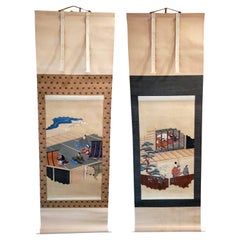
Two Antique Japanese Hanging Scroll Paintings
Located in Atlanta, GA
Two Japanese scroll painting depicts scenes from the Tale of Genji (Genji-E), from Edo period. These painting were purchased from Odewara Shoten in the...
Category

Early 19th Century Japanese Antique Japonisme Asian Art and Furniture

Materials

Brocade, Paper

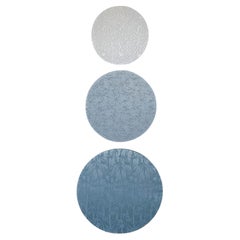
Vintage kimono textile art " Turquoise Forest ~ Strength ~ " by ikasu Blue Japan
Located in Setagaya City, JP
Fabrics featuring iconic Japanese plants like chrysanthemum, maple, and bamboo were gathered from various long underwear and kimono pieces to create a set of canvases (diameter 30, 25 and 20cm) showcasing exquisite gradations. The top canvas, in pristine white, originates from long under-kimono, while the middle and bottom canvases are skillfully upcycled from kimono fabrics. << Period / Story The long under-kimono and kimono fabrics used in these canvases were originally crafted and worn during the late Showa period (1960-80ies). << Explanation and meaning of pattern and colors The pattern on the top canvas features a chrysanthemum, an auspicious emblem symbolizing longevity. It is affectionately referred to as the "raccoon dog chrysanthemum" due to the large, overlapping petals resembling the fur of a muzina, a creature similar to a raccoon dog or badger. This motif is highly popular in various plant-inspired designs and frequently seen in Edo komon, katazome, and jimon textiles. The top canvas naga-juban under-kimono, being entirely white and devoid of any additional dyes, suggests its use as formal wear. Its pristine white hue accentuates the silk's luster when exposed to light and highlights the beauty of the woven patterns. The fabric used here is rinzu, a type of fabric thinner than crepe de chine, characterized by its soft, smooth texture and subtle sheen. This particular lintel distinguishes itself with the way its ground pattern emerges and also incorporates a woven chrysanthemum pattern. The central canvas showcases a maple tree, symbolizing longevity, which changes its colors with the seasons, bringing joy and happiness to people's lives. The bamboo featured on the lower canvas has been regarded as a symbol of good fortune since ancient times, given its straight and vigorous growth, along with the Chinese legend that a phoenix consumes its fruit. It embodies concepts such as "immortality," "longevity," and "strength" because it remains green even in winter. The hollow stem also signifies "innocence," suggesting that there are no hidden agendas. All three canvases are adorned with ground patterns that, when viewed from a distance, appear as modern works of art, yet upon closer inspection, they reveal a distinct Japanese ambiance. << Characteristics of the fabric All three canvases are made of fabrics with jimon. The unique and high level of Japanese weaving...
Category

1970s Japanese Vintage Japonisme Asian Art and Furniture

Materials

Canvas, Silk

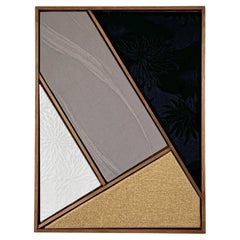
Vintage kimono textile art " Monochrome Geometry " by ikasu Gold Grey Japan
Located in Setagaya City, JP
This work is inspired by traditional Japanese nature colors symbolism, and is framed in paulownia wood originally used for a kimono chest-of-drawers. It is filled with storytelling ...
Category

1960s Japanese Vintage Japonisme Asian Art and Furniture

Materials

Silk, Wood

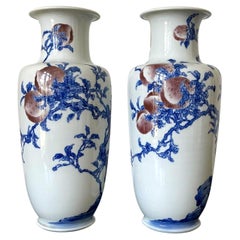
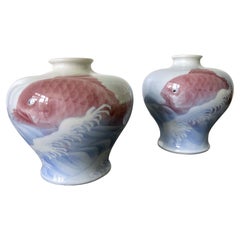
Pair of Rare Porcelain Commemorative Vases by Makuzu Kozan Meiji Period
Located in Atlanta, GA
A pair of porcelain vases in classic form, decorated with underglaze blue and copper red painting by Imperial potter Makuzu Kozan. Also known as Miyagawa Kozan (1842–1916), Makuzu was one of the most established and collected ceramist known to the west from Meiji Period. The vases are in a classic Chinese form called "Bang Chu Ping" (grain-mallet vase...
Category

1910s Japanese Vintage Japonisme Asian Art and Furniture

Materials

Ceramic

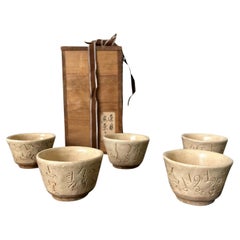
Set of Five Ceramic Tea Cups by Otagaki Rengetsu
Located in Atlanta, GA
A set of five stoneware sencha tea cups by Otagaki Rengetsu (1791-1875). These miniature cups were simply molded in the classic form, glazed in off white and incised with cursive waka poems, a signature decorative style by the artist. Accompanies the cups is a wood storage box and paper slip label inscribed "Rengetsu sencha, tea cups" Purportedly purchased from Tessai-do Co. Ltd., Japan in 1991. Otagaki Rengetsu was a famous Buddhist nun in Edo period who is widely regarded to have been one of the greatest Japanese poets...
Category

Late 19th Century Japanese Antique Japonisme Asian Art and Furniture

Materials

Ceramic, Wood

One of The Two Japanese Ceramic Vases Makuzu Kozan Meiji Period
Located in Atlanta, GA
Two small nearly identical ceramic vases by Japanese Meiji imperial potter Makuzu Kozan (1842-1916), circa 1890-1900s. The vases were made in the form of jarlet with swelled shoulder...
Category

Late 19th Century Japanese Antique Japonisme Asian Art and Furniture

Materials

Ceramic

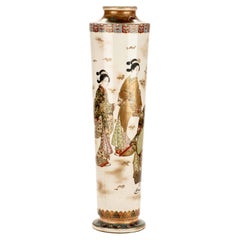
A Large Satsuma Vase Depicting A Scene Of Daily Life
Located in Milano, IT
Large cylindrical Satsuma vase, decorated with polychrome enamels and pure gold, depicting a scene of daily life with three geishas and a samurai on a festive day. Signed ‘Seizan zō...
Category

Late 19th Century Japanese Antique Japonisme Asian Art and Furniture

Materials

Ceramic

Rare Japanese Lacquer Writing Box Suzuribako Meiji Period
Located in Atlanta, GA
A Japanese Lacquer writing box Suzuribako Meiji Period (1868-1912), likely circa late 19th century. This suzuribako is one of the most unusual boxe...
Category

19th Century Japanese Antique Japonisme Asian Art and Furniture

Materials

Lacquer

Japanese Cloisonné Covered Jar by Ando Jubei
Located in Atlanta, GA
Japanese cloisonné enamels are known as shippo-yaki and the mid-19th century saw the production of very high quality wares in the early centers Nagoya. One of the most renowned works...
Category

Early 20th Century Japanese Japonisme Asian Art and Furniture

Materials

Metal, Sterling Silver, Enamel

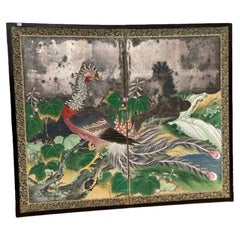
Japanese Two-Panel Phoenix Screen, Edo Period, Ca. 1850
Located in New York, NY
Japanese Two-Panel Phoenix Screen, Edo Period, Ca. 1850 Japanese Edo Period (1603-1868) DIMENSIONS Height: 24 inches Width: 28 inches
Category

1850s Japanese Antique Japonisme Asian Art and Furniture

Materials

Wood

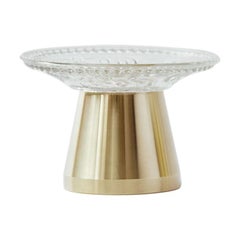
Candleholder 2 Ryosuke Harashima Contemporary Zen Japanese craft Mingei
Located in Shibuya-ku, Tokyo
Candleholder designed by Ryosuke Harashima. This work is made of Japanese antique glass plate and brass. Artist create new style candleholder by ...
Category

2010s Japanese Japonisme Asian Art and Furniture

Materials

Brass

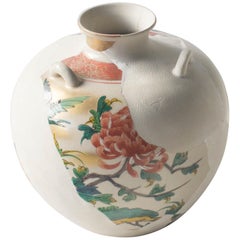
Reconstructed Ceramics #3 Contemporary Zen Japonism Style
Located in Shibuya-ku, Tokyo
This series of ceramics are unique work by Norihiko Terayama. He broke ceramic at first, and make it into a lot of fragment. He rasp some of fragmen...
Category

2010s Japanese Japonisme Asian Art and Furniture

Materials

Ceramic

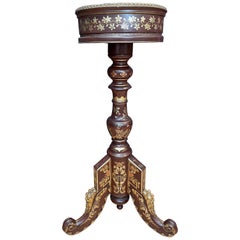
Red Painted and Gilt Japonisme Plant Stand
Located in Norwood, NJ
Japanese style French 19th century carved and red painted wood pedestal with gilt and silver gilt embellishments. Deep red-brown lacquer finish. Gilt dragons and floral decorations. ...
Category

Late 19th Century French Antique Japonisme Asian Art and Furniture

Materials

Paint, Giltwood, Wood

Japonisme asian art and furniture for sale on 1stDibs.

Find a broad range of unique Japonisme asian art and furniture for sale on 1stDibs. Many of these items were first offered in the 21st Century and Contemporary, but contemporary artisans have continued to produce works inspired by this style. If you’re looking to add vintage asian art and furniture created in this style to your space, the works available on 1stDibs include asian art and furniture, decorative objects, wall decorations and other home furnishings, frequently crafted with wood, ceramic and other materials. If you’re shopping for used Japonisme asian art and furniture made in a specific country, there are Asia, East Asia, and Japan pieces for sale on 1stDibs. While there are many designers and brands associated with original asian art and furniture, popular names associated with this style include Makuzu Kozan, Ando Jubei, Cordélia Faure, and Dorian Étienne. It’s true that these talented designers have at times inspired knockoffs, but our experienced specialists have partnered with only top vetted sellers to offer authentic pieces that come with a buyer protection guarantee. Prices for asian art and furniture differ depending upon multiple factors, including designer, materials, construction methods, condition and provenance. On 1stDibs, the price for these items starts at $95 and tops out at $54,000 while the average work can sell for $3,271.