18th Century and Earlier Figurative Sculptures
to
164
1,154
1,154
3,777
9,357
2,632
2,269
3,262
2,143
306
163
560
571
259
538
553
702
401
279
252
111
32
12
12
10
6
2
1
646
264
236
213
91
631
489
839
405
172
146
99
Height
to
Width
to
1,154
1,154
1,154
72
19
9
8
5
Period: 18th Century and Earlier
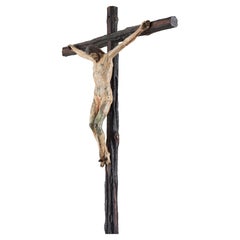
Rare and important painted bronze Crucifix after a model by Michelangelo
By Michelangelo Buonarroti
Located in Leesburg, VA
A rare and very fine bronze corpus of Christ after a model by Michelangelo, cast ca. 1597-1600 by Juan Bautista Franconio and painted in 1600 by Francisco Pacheco in Seville, Spain.
The present corpus reproduces a model attributed to Michelangelo. The best known example, lesser in quality, is one on display at the Metropolitan Museum of Art (MET).
The association of this corpus with Michelangelo was first brought to light by Manuel Gomez-Moreno (1930-33) who studied the wider circulated casts identified throughout Spain. The attribution to Michelangelo was subsequently followed by John Goldsmith-Phillips (1937) of the MET and again by Michelangelo expert, Charles de Tolnay (1960).
While Michelangelo is best known for his monumental works, there are four documented crucifixes he made. The best known example is the large-scale wooden crucifix for the Church of Santa Maria del Santo Spirito in Florence, made in 1492 as a gift for the Prior, Giovanni di Lap Bicchiellini, for allowing him to study the anatomy of corpses at the hospital there. In 1562, Michelangelo wrote two letters to his nephew, Lionardo, indicating his intention to carve a wooden crucifix for him. In 1563 a letter between Lionardo and the Italian sculptor Tiberio Calcagni, mentions this same crucifix (a sketch of a corpus on the verso of a sheet depicting Michelangelo’s designs for St. Peter’s Basillica [Palais des Beaux-Arts in Lille] may reproduce this). That Michelangelo was working on small corpora in the last years of his life is further evidenced by the small (26.5 cm) unfinished wooden crucifix located at the Casa Buonarroti, considered his last known sculptural undertaking. Michelangelo’s contemporary biographer, Giorgio Vasari additionally cites that Michelangelo, in his later years, made a small crucifix for his friend, Menighella, as a gift.
Surviving sketches also indicate Michelangelo’s study of this subject throughout his career, most notably during the end of his life but also during the 1530s-40s as he deepened his spiritual roots. The occasional cameo of crucified Christ’s throughout his sketched oeuvre have made it challenging for scholars to link such sketches to any documented commissions of importance. All the while, in consideration that such objects were made as gifts, it is unlikely they should be linked with commissions.
Nonetheless, a number of theories concerning Michelangelo’s sketches of Christ crucified have been proposed and some may regard the origin of the present sculpture. It has been suggested that the corpus could have its impetus with Michelangelo’s work on the Medici Chapel, whose exclusive design was given to the master. It is sensible smaller details, like an altar cross, could have fallen under his responsibility (see for example British Museum, Inv. 1859,0625.552). Others have noted the possibility of an unrealized large marble Crucifixion group which never came to fruition but whose marble blocks had been measured according to a sheet at the Casa Buonarroti.
A unique suggestion is that Michelangelo could have made the crucifix for Vittoria Colonna, of whom he was exceedingly fond and with whom he exchanged gifts along with mutual spiritual proclivities. In particular, Vittoria had an interest in the life of St. Bridget, whose vision of Christ closely resembles our sculpture, most notably with Christ’s proper-left leg and foot crossed over his right, an iconography that is incredibly scarce for crucifixes. The suggestion could add sense to Benedetto Varchi’s comment that Michelangelo made a sculpted “nude Christ…he gave to the most divine Marchesa of Pescara (Vittoria Colonna).”
Of that same period, two sketches can be visually linked to our sculpture. Tolnay relates it to a sketch of a Crucified Christ at the Teylers Museum (Inv. A034) of which Paul Joannides comments on its quality as suggestive of preparations for a sculptural work. Joannides also calls attention to a related drawing attributed to Raffaello da Montelupo copying what is believed to be a lost sketch by Michelangelo. Its relationship with our sculpture is apparent. Montelupo, a pupil of Michelangelo’s, returned to Rome to serve him in 1541, assisting with the continued work on the tomb of Pope Julius II, suggesting again an origin for the corpus ca. 1540.
The earliest firm date that can be given to the present corpus is 1574 where it appears as a rather crudely conceived Crucifixion panel, flanked by two mourners in low-relief and integrally cast for use as the bronze tabernacle door to a ciborium now located at the Church of San Lorenzo in Padula. Etched in wax residue on the back of the door is the date, 27 January 1574, indicating the corpus would have at least been available as a model by late 1573.
The Padula tabernacle was completed by Michelangelo’s assistant, Jacopo del Duca and likely has its origins with Michelangelo’s uncompleted tabernacle for the Basilica of St. Mary of the Angels in Rome.
The impetus for the Padula tabernacle’s Crucifixion panel begins with a series of late Crucifixion sketches by Michelangelo, depicting a scene of Christ crucified and flanked by two mourners (see British Museum Inv. 1895.0915.510; Ashmolean Museum Inv. 1846.89, KP II 343 recto; Windsor Castle RCIN 912761 recto; and Louvre Inv. 700). A faintly traced block possibly intended for sculpting the sketch of the crucified Christ on its recto was discovered by Tolnay on a version of the composition at Windsor Castle. The Windsor sketch and those related to it appear to have served as preparatory designs for what was probably intended to become the Basilica of St. Mary’s tabernacle door. Vasari documents that the project was to be designed by Michelangelo and cast by his assistant, Jacopo del Duca. Michelangelo died before the commission was complete, though on 15 March 1565, Jacopo writes to Michelangelo’s nephew stating, “I have started making the bronze tabernacle, depending on the model of his that was in Rome, already almost half complete.” Various circumstances interrupted the completion of the tabernacle, though its concept is later revitalized by Jacopo during preparations to sell a tabernacle, after Michelangelo’s designs, to Spain for Madrid’s El Escorial almost a decade later. The El Escorial tabernacle likewise encountered problems and was aborted but Jacopo successfully sold it shortly thereafter to the Carthusians of Padula.
An etched date, 30 May 1572, along the base of the Padula tabernacle indicates its framework was already cast by then. A 1573 summary of the tabernacle also describes the original format for the door and relief panels, intended to be square in dimension. However, a last minute decision to heighten them was abruptly made during Jacopo’s negotiations to sell the tabernacle to King Phillip II of Spain. Shortly thereafter the commission was aborted. Philippe Malgouyres notes that the Padula tabernacle’s final state is a mixed product of the original design intended for Spain’s El Escorial, recycling various parts that had already been cast and adding new quickly finished elements for its sale to Padula, explaining its unusually discordant quality, particularly as concerns the crudeness of the door and relief panels which were clearly made later (by January 1574).
Apart from his own admission in letters to Spain, it is apparent, however, that Jacopo relied upon his deceased master’s designs while hastily realizing the Padula panels. If Michelangelo had already earlier conceived a crucifix model, and Jacopo had access to that model, its logical he could have hastily employed it for incorporation on the door panel to the tabernacle. It is worth noting some modifications he made to the model, extending Christ’s arms further up in order to fit them into the scale of the panel and further lowering his chin to his chest in order to instill physiognomic congruence. A crude panel of the Deposition also follows after Michelangelo’s late sketches and is likewise known by examples thought to be modifications by Jacopo based upon Michelangelo’s initial sculptural conception (see Malgouyres: La Deposition du Christ de Jacopo del Duca, chef-d’oeuvre posthume de Michel-Ange).
Jacopo’s appropriation of an original model by Michelangelo for more than one relief on the Padula tabernacle adds further indication that the crucifix was not an object unique to Jacopo’s hand, as few scholars have posited, but rather belongs to Michelangelo’s original...
Category
Renaissance Antique 18th Century and Earlier Figurative Sculptures
Materials
Bronze
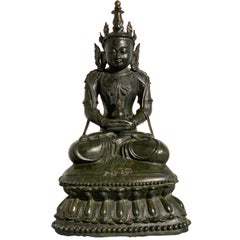
Burmese Arakan Bronze Crowned Buddha, 17th Century
Located in Austin, TX
A gorgeous and refined Burmese crowned and adorned seated bronze Buddha, Kingdom of Arakan, Mrauk-U period, 17th century.
The Buddha is portrayed seated in vajrasana upon a high double lotus pedestal, hands in dhyana mudra, a ritual vessel resting in his upturned palms. He is festooned with jewelry – armlets, bracelets, anklets, a double necklace, a jeweled belt, and large earrings. His hair done up in a high chignon, covering the ushnisha, and topped by a stupa shaped finial.
The Buddha wears a large five pointed crown tied with ribbons that flare dramatically behind either ear, and a thin scarf...
Category
Burmese Antique 18th Century and Earlier Figurative Sculptures
Materials
Bronze
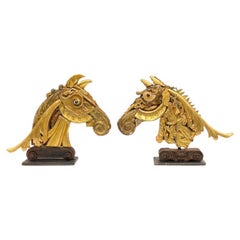
Pair of 18th Century Italian Gilt Fragment Horse Head Sculptures
By Interi
Located in Dublin, Dalkey
Pair of 18th century Italian gold-leaf fragment horse head sculptures.
The pair is made of 18th century Italian water-gilt fragments mounted on scroll wood bases. The fragments come...
Category
Italian Rococo Antique 18th Century and Earlier Figurative Sculptures
Materials
Gold Leaf
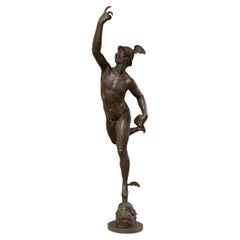
French Artist, Life-Size Statue of Hermes, Bronze, France, 18th Century
By Giambologna
Located in Manhasset, NY
Life-sized Bronze Statue of Hermes, 18th Century, French, After Giambologna
Direct, as seen photographed, from a Greenwich CT mansion comes t...
Category
Antique 18th Century and Earlier Figurative Sculptures
Materials
Bronze
16th Century Mary Magdalene in Polychromed Carved Walnut
Located in Meer, VAN
Mary Magdalene in Polychromed Carved Walnut 16th Century
Devotional figure in carved wood, depicting Mary Magdalene. Walnut, most probably Flemish and from the 16th century.
It de...
Category
European Medieval Antique 18th Century and Earlier Figurative Sculptures
Materials
Walnut
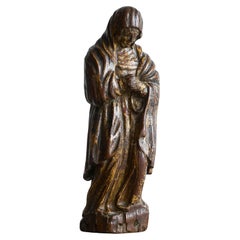
Gupta Empire Torso of Vishnu
Located in Chicago, IL
A mesmerizing Gupta Empire (mid-3rd century BCE - 543 AD) mounted terracotta torso of a standing Vishnu. Vishnu is the preserver god, which means he p...
Category
Bangladeshi Hellenistic Antique 18th Century and Earlier Figurative Sculptures
Materials
Terracotta

$18,500
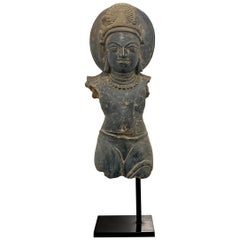
French Louis XV Gilt Carved Wall Plaque
Located in Queens, NY
French Louis XV style (18/19th Century) large gilt wall plaque with cupid heads and sunburst center.
Category
French Louis XV Antique 18th Century and Earlier Figurative Sculptures
Materials
Giltwood
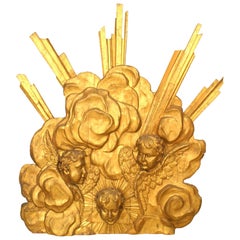
Ancient Roman Bronze Herm on Stand, 1st-4th Century AD
Located in Bradenton, FL
Ancient Roman Bronze Herm Statue dating from the 1st to 4th Century A.D. A herm was a statue consisting of a a head atop a square pillar, originally an artifact to honor the god Herm...
Category
Italian Classical Roman Antique 18th Century and Earlier Figurative Sculptures
Materials
Bronze
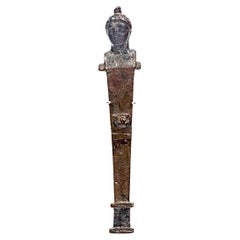
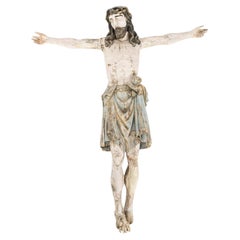
Italian 18th Century Hand-carved Corpus Christi in Original Paint
Located in Houston, TX
Italian 18th century hand-carved Corpus Christi, in original paint, or in some small areas early paint.
Note: Original/early finish on antique a...
Category
Italian Baroque Antique 18th Century and Earlier Figurative Sculptures
Materials
Gesso, Wood, Paint
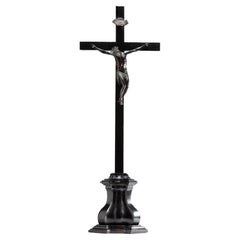
Crucifix, Bronze, iron, and wood, Lombardy, mid-17th century
Located in Milano, IT
Crucifix
Lombardy, mid-17th century
Bronze, iron, and wood
Sculpture: 33 cm height x 35 cm width x 10 cm depth at the knees;
Cross: 42.12 in height x 19.68 in width (107 cm x 50);
Ba...
Category
Italian Baroque Antique 18th Century and Earlier Figurative Sculptures
Materials
Bronze, Iron
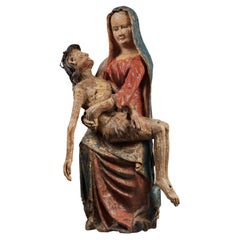
Important German Pietà from the, 14th Century
Located in Saint-Ouen, FR
IMPORTANT GERMAN PIETÀ FROM THE 14th CENTURY
ORIGIN: GERMANY, REGION DE COLOGNE
PERIOD: BEGINNING IF THE 14th CENTURY, ca. 1330
Height: 98 cm
Length: 45 cm
Depth: 33 cm
Polychromed linden wood
Good condition of conservation
Provenance : particular Alsatian collection
The theme of the Pietà or Vesperbild appears in Germany at the end of the 13th century, reflecting the mysticism of the late Middle Ages. Although the theme does not exist in the Gospels, it was often mentioned in contemporary devotional literature. Indeed, during the first half of the 14th century, mystical thought and devotional practices changed under the impulse of a number of religious, among them Heinrich Suso and St Bridget. In his writings, Suso placed important emphasis on contemplation and meditation in the footsteps of Christ's martyrdom.
This will have great impact in the field of art, especially in Germany and later in France. The emphasis will from now on be on grief, death is shown in a straightforward way. The wounds of Christ are gaping and bloody. The suffering of Christ and the seven sorrows of the Virgin Mary are meditated upon.
This piece demonstrates the interest of the faithful in these representations where pathos reigns.
The virgin is represented seated in a frontal position. The bust is very elongated. She is wearing a red dress with a simple neckline and a blue mantel...
Category
Antique 18th Century and Earlier Figurative Sculptures
Materials
Wood
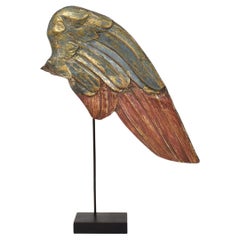
Large 18th Century, Italian Carved Wooden Wing of a Baroque Angel
Located in Buisson, FR
Beautiful large Baroque angel-wing with its original color and gilding. Extremely rare to find in this size.
Very decorative item placed on a wooden base.
Italy, circa 1750. Weathere...
Category
Italian Baroque Antique 18th Century and Earlier Figurative Sculptures
Materials
Wood
$685 Sale Price
50% Off
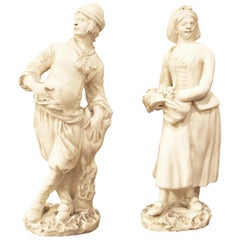
18th Century Capodimonte White Glaze Porcelain Statue Male and Female Figurines
Located in Firenze, IT
A pair of late 18th century Naples, real Fabbrica Ferdinandea, white porcelain figures of a lady and a man are hand modeled in the round. This lovely couple of statuettes in the white feature a fruit vendor and a peasant. The man, modelled in a theatrical pose against a tree stump, wears a hat and a scarf. His right hand in his breeches pocket, he is leaning on the tree with his left hand.
The woman wears a skirt and a low necked jacket and holds a basket of fruit in her arms, the hair gathered with a bow on her head.
This two little statues...
Category
Italian Rococo Antique 18th Century and Earlier Figurative Sculptures
Materials
Porcelain
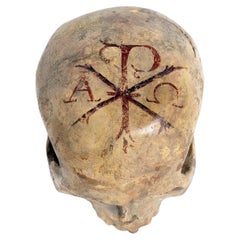
A Memento Mori in wood with Chrismon, monogram of Christ, Italy circa 1600.
Located in Milan, IT
A Memento Mori in wood with Chrismon, monogram of Christ. Valuable sculpture in fruit wood in almost true-to-life measurements, sculpted with art and finished with a wealth of detail...
Category
Italian Antique 18th Century and Earlier Figurative Sculptures
Materials
Wood
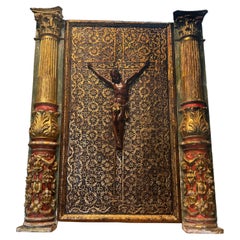
Grand Baroque Composition Made in Naples in the Mid-17th Century
Located in Budapest, HU
Grand Baroque composition made in Naples in the mid-17th century intended for the private chapel of a noble Neapolitan family. In the early nineteenth century on the finely executed ...
Category
Italian Baroque Antique 18th Century and Earlier Figurative Sculptures
Materials
Wood
$19,065 Sale Price
42% Off
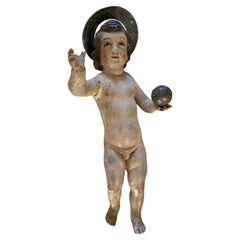
18th Century Italian Carved Wood and Polychromed Figure of Baby Jesus
Located in Ballard, CA
18th century exceptional Italian carved wood and polychromed figure depicting baby Jesus holding the world in his hand, he has halo made from sterling silver and the globe is also sterling silver.This piece would have originally been dressed in an elaborate gown and would have been changed into different attire depending on the holy season. Extremely detailed and the carving is exceptional. this piece came from a very reputable merchant in Verona, I did inherit it from my mother in Law...
Category
Italian Baroque Antique 18th Century and Earlier Figurative Sculptures
Materials
Silver
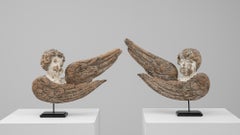
Pair of 18th Century French Wood Patinated Angels on Metal Stand
Located in High Point, NC
This pair of 18th Century French carved wooden angels embodies the charm and poetry of ecclesiastical art from the period. Each figure is depicted as a winged seraph, with expressive...
Category
French Antique 18th Century and Earlier Figurative Sculptures
Materials
Metal
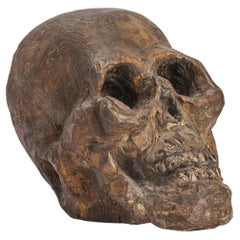
Memento mori sculpture depicting a skull, Italy 1700.
Located in Milan, IT
Wunderkammer Memento Mori sculpture. depicting a skull, carved from a single piece of fruitwood, this sculpture depicts a skull with deliberately exaggerated and distorted proportion...
Category
Italian Antique 18th Century and Earlier Figurative Sculptures
Materials
Wood
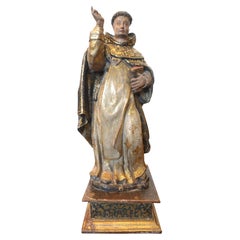
Exquisite Polychrome Spanish santo wood sculpture of St. Dominic
Located in Leesburg, VA
Exquisite Polychrome Spanish santo wood sculpture of St. Dominic
Anonymous
ca. 1700; Spain or the Spanish Americas
Polychrome wood
Approximate ...
Category
Spanish Baroque Antique 18th Century and Earlier Figurative Sculptures
Materials
Wood, Paint
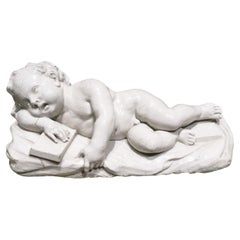
Italy Mid-18th Century Doccia Factory White Porcelain Sleeping Child Sculpture
Located in Brescia, IT
This refined and precious white porcelain sculpture is depicting the sleeping Infant Christ that became a very popular subject in Baroque art sice the 17th Century.
The delicate and ...
Category
Italian Baroque Antique 18th Century and Earlier Figurative Sculptures
Materials
Porcelain
Memento Mori Late 17th Century Faux White Marble Child Skull Figure Sculpture
Located in Brescia, IT
This engaging sculpture of Memento Mori dated Late 17th Century, is part of a production of small terracotta figures for private use, which Giuseppe Maria Mazza, created throughout h...
Category
Italian Baroque Antique 18th Century and Earlier Figurative Sculptures
Materials
Terracotta, Giltwood
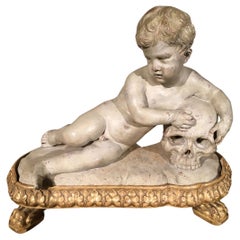
Rare Antique Gothic Corpus Christi 1480 -1530
Located in Doha, QA
An extraordinary and museum-worthy 15th century Gothic Corpus Christi, masterfully hand-carved in wood with exceptional anatomical detail and partially polychromed in white and royal...
Category
German Gothic Antique 18th Century and Earlier Figurative Sculptures
Materials
Wood
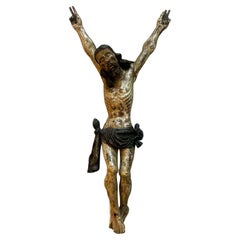
Large Han Dynasty Terra-cotta Court Lady Figure TL Tested
Located in Dallas, TX
Huge Han Dynasty Terracotta figure Of A Court Lady. TL Test conducted by Ralf Kotalla Laboratory in Germany. Report included.
Height: 29...
Category
Chinese Han Antique 18th Century and Earlier Figurative Sculptures
Materials
Terracotta
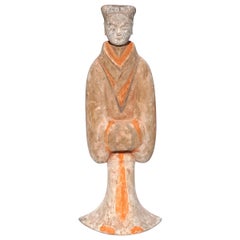
Amazing "Our Lady of Sorrows" attributed to Salzillo 18th-century
By Francisco Salzillo
Located in Madrid, ES
Our Lady of Sorrows, attributed to Salzillo, polychrome wood with 18th-century silver crown and display case
An extraordinary sculpture of Our Lady of Sorrows, attributed to Francis...
Category
Spanish Baroque Antique 18th Century and Earlier Figurative Sculptures
Materials
Silver
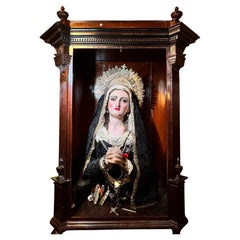
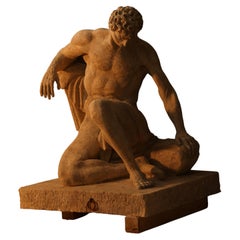
Statue sculpture life size antique old Roman Greek stone reclaimed carving decor
Located in Costa Mesa, CA
Antique statue life sized Roman Greek natural stone old sculpture.
The antique statue displayed in this Ad is one of 12 reclaimed life sized limestone s...
Category
French Rustic Antique 18th Century and Earlier Figurative Sculptures
Materials
Limestone
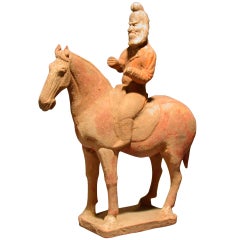
Unusual Tang Dynasty Persian Horse Rider Statue, Silk Road Trader, TL Tested
Located in Greenwich, CT
A fine and unusual statue of standing horse with a Persian rider. Tang Dynasty (618-907 AD) Silk Road trader from Persia, comes with Oxford authenticati...
Category
Chinese Tang Antique 18th Century and Earlier Figurative Sculptures
Materials
Terracotta
$6,200 Sale Price
20% Off
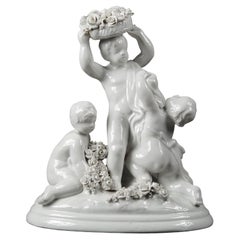
Capodimonte, Enamelled Porcelain Group, Putti with Flowers After Badessi
By Capodimonte
Located in BARSAC, FR
Capodimonte factory in Italy near Naples.
Enamelled porcelain group presenting three putti playing with sheaves of rosebuds, one of them carrying a basket on his head.
Signed L...
Category
French Louis XVI Antique 18th Century and Earlier Figurative Sculptures
Materials
Porcelain
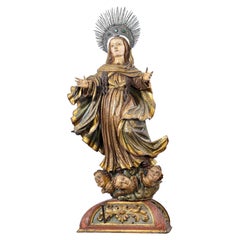
Immaculate Conception Religious Sculpture, Baroque, 18th Century
Located in Lisbon, PT
An exceptional 18th-century Spanish Baroque sculpture of the Immaculate Conception, carved in chestnut wood and richly polychromed and crowned.
The sculpture retains its vibrant pi...
Category
Spanish Baroque Antique 18th Century and Earlier Figurative Sculptures
Materials
Brass, Gold Leaf
$33,513 Sale Price
36% Off
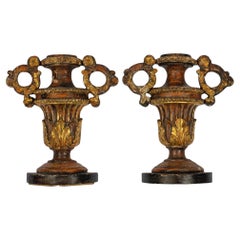
Pair 18th Century Italian Urn Appliques
Located in Houston, TX
Pair of 18th-Century Italian urn appliques featuring a flute body, and intricately carved acanthus leaves, bead trim, and ribbon adorned handles.
Category
Italian Baroque Antique 18th Century and Earlier Figurative Sculptures
Materials
Giltwood
$3,850 / set
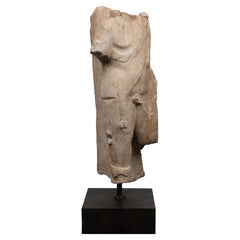
A Roman Marble Sculpture of Hercules, Circa 1st / 2nd Century AD Ex Sotheby
s
Located in ARMADALE, VIC
A Roman Marble Sculpture of Hercules, Circa 1st / 2nd Century AD
The sculpture is nude except for the draped Nemean lion skin.
Provenance: Sotheby's London, December 14, 1981, lot ...
Category
Italian Classical Roman Antique 18th Century and Earlier Figurative Sculptures
Materials
Marble
$46,750 Sale Price
44% Off
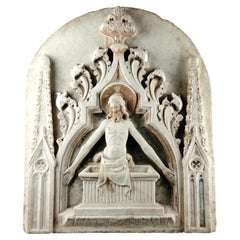
A Very Rare and Important Marble Relief of the ‘Resurrection of Christ’
Located in London, GB
A Very Rare and Important Marble Relief of the ‘Resurrection of Christ’
Attributed to the Master of the Mascoli Altar
Marble
Venice, Italy
Second half of the 15th Century
SIZE: ...
Category
Italian Renaissance Antique 18th Century and Earlier Figurative Sculptures
Materials
Marble
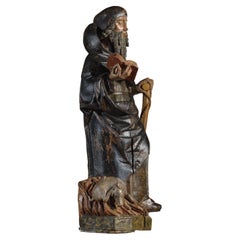
Sculpture in Polychrome Wood Representing Saint Anthony Hermit
Located in Saint-Ouen, FR
Sculpture In Polychrome Wood Representing Saint Anthony Hermit
Origin : East of France
Period : End of the 15th century
Measures: Height : 97 cm
Width : 32 cm
Depth : 26 cm
Polychrome wood
The saint is represented by an old, bearded man, dressed in a hooded monk’s habit over the tunic of his religious order. He is stood upright, holding an open book, La Règle des Antonnites, in his right hand. In the other hand, he is holding a staff in the form of the Greek letter tau with a rosary hanging down over it. At his feet lies a pig wearing a small bell around its neck.
He rests on his right leg, whilst the left advances forward as if he were about to start walking. His belted tunic, forming several rectilinear pleats, is covered by a habit which is open only at the waist, therefore revealing these pleats. He is also wearing a hooded scapular over his shoulders.
His thick hair escapes from under a distinctive hat, forming a collection of finely sculpted ringlets. This fine detail is also applied to the four long ringlets of his superb beard, which sit just below the shorter ones of his moustache.
His face is a picture of harmony, with lowered eyes and his small mouth lost amongst the abundance of hair.
At his feet on a pedestal of flames, hinting to the fire of Saint Anthony no doubt, a pig trying to scratch its ear.
Born in 251 in Upper Egypt, he withdrew into solitude at a very young age. He would have been plagued in the desert with extremely diabolical temptations.
He payed a visit to Saint Paul the hermit towards the end of his life. He was the dean of the Thébaïde anchorites, who was miraculously fed by a crow. On the day that Saint Anthony visited, the crow brought two portions of bread in its beak instead of one.
Some time after, having learnt of the death of his venerable brother, Saint Anthony went to bury him with the help of two lions.
The King of Catalonia pleaded to come and exorcise his posessed wife and children. He left Thébaïde for Barcelona. He appeared at the house of the provost André, bringing him a sow in his mouth, a monstrous piglet born without eyes. André wanted to kill it but Anthony stopped him, telling him that the poor beast wanted to ask for healing, as the King had done for his offspring.
He made a sign of the cross on the piglet and it suddenly acquired its sight and the members which it did not have at birth. After which, André, guided by Saint Anthony, exorcised the Queen of Catalonia in the same way whilst she knelt at his feet.
Théophile discovered the body of Saint Anthony wrapped in a palm fibre tunic which he had been given by Saint Paul the Hermit.
In the Red Sea Desert there are two Coptic, IV century, monasteries which stand next to each other, one dedicated to Saint Anthony, the other to Saint Paul the Hermit. They are the oldest monasteries in the Christian world.
The body of the famous hermit was transported to Constantinople and would have been transferred into the abbaye, Saint Antoine-en-Viennois, Dauphine.
The Antonnite Order was a charitable order which specialised in treating contagious diseases. The fire of Saint Anthony, was identified by doctors as a grangrenous ergotism, caused by a diet of rye bread contaminated with the parasite ergot. The effect of this is the drying out of hands and feet which then need amputation, the plague and then later syphilis. All the skin diseases came from Saint Anthony.
Saint Anthony’s pilgrimage to Dauphine rivaled that of Saint Jacques to Compostela. Thanks to the various commanderies created by the mother house, Saint Anthony’s cult spread throughout Christianity.
In order to maintain commanderies and their hospitals, the Antonnites resorted to pig farming. They enjoyed having the benefit of letting their pigs roam freely through the streets of the villages, with little bells round their necks that had a recognisable chime so that they were able to find them. This privilege was very envied by other monastic Orders.
Saint Anthony was the patron saint of several crafts such as basket makers and gravediggers.
However it is to the pig that he owes the majority of his patronages; pigkeepers, pig sellers, butchers, porc butchers, brush makers who use pig bristle and bell-ringers because of the pig bells...
Category
Antique 18th Century and Earlier Figurative Sculptures
Materials
Wood
17th Century Virgin and Child in the Dress and Peruvian Lead Figure
Located in Madrid, ES
17th-century Virgin and Child in the Dress and Peruvian Lead Figure
This important collection of Hispanic sacred imagery consists of a monumental Virgin and Child in the Dress, Span...
Category
Spanish Spanish Colonial Antique 18th Century and Earlier Figurative Sculptures
Materials
Wood
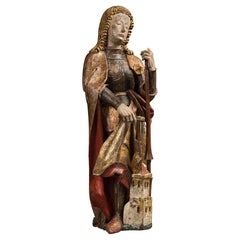
Carved Polychrome Wood Depicting Saint Florian
Located in Saint-Ouen, FR
CARVED POLYCHROME WOOD DEPICTING SAINT FLORIAN
ORIGIN : SWABIA, SOUTHERN GERMANY
PERIOD : LATE 15th CENTURY
Height : 98 cm
Length : 29 cm
Depth : 24 cm
Polychrome limewood
Very fine condition
Provenance
- Swiss collection STAEHELIN-PARAVICINI - March 1939
- Auction Jacob Hecht -18 April 1929, Berlin
- Sammlung Prof Q.A. LEIMHAAS Munich, Helbing - 26 May 1908
(Research by Thierry Fraslin)
During the Middle-Age Saint Florian was particularly popular, subject to worship in Austria -Tyrol- Bavaria and Bohemia. Embodying courage and commitment Saint Florian was invoked to protect the soul of the living against sins and to keep the soul of the deads from the purgatory.
From the mid-15th century he safeguards from water and fire. The legend has it that when he was young the saint had contained the fire of a burning...
Category
Antique 18th Century and Earlier Figurative Sculptures
Materials
Wood
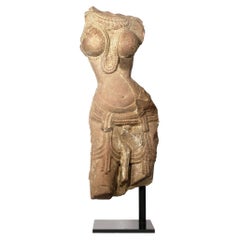
An Indian Red Sandstone Torso of a Devata – 10th/11th Century
Located in London, GB
An Indian Red Sandstone Torso of a Devata, Probably Rajasthan, the female deity depicted in tribhanga, her voluptuous body adorned with elaborate jewellery, wearing a sheer dhoti sec...
Category
Indian Antique 18th Century and Earlier Figurative Sculptures
Materials
Sandstone
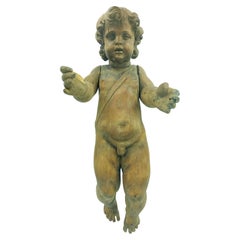
Angelo Statue in Wood Baroque Style, 18th Century
Located in Beuzevillette, FR
Beautiful wooden statue of an 18th century baroque style Angelo.
It is finely carved. Some old restorations are to be noted on the feet, and the left hand. The back wings are missing.
Category
Baroque Antique 18th Century and Earlier Figurative Sculptures
Materials
Wood
$629 Sale Price
20% Off
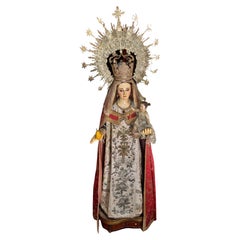
Baroque Polychrome Wooden Virgin with Period Silver Crown, 18th Century
Located in Madrid, ES
Baroque Polychrome Wooden Virgin with Period Silver Crown, 18th Century
This Spanish Virgin, dating from the late 18th or early 19th century, is carved in polychrome wood (face and...
Category
Spanish Baroque Antique 18th Century and Earlier Figurative Sculptures
Materials
Silver
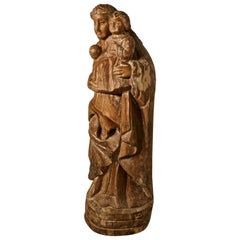
18th Century French Carved Statue of Madonna and Child
Located in Godshill, Isle of Wight
18th century French carved statue of Madonna and Child.
This charming piece has been rescued from a ecclesiastic clear out in the southern part of France
The statue is carved fro...
Category
Mission Antique 18th Century and Earlier Figurative Sculptures
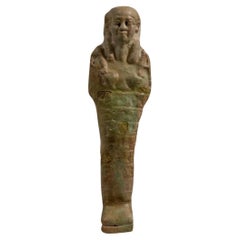
Ancient Egyptian Faience Ushabti Figure, c. 700-30 B.C.
Located in Los Angeles, CA
An impressive Ancient Egyptian Faience Ushabti figure, belonging to the c. 700-30 B.C. It consists of a molded pottery having a green glazed surface. The figure is wearing a royal wi...
Category
Egyptian Antique 18th Century and Earlier Figurative Sculptures
Materials
Pottery
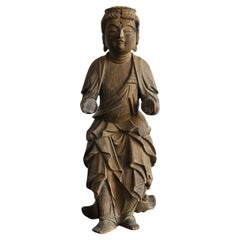
Small wooden Buddha statue from the Edo period in Japan/17th to 19th century
Located in Sammu-shi, Chiba
We are pleased to present a small wood carving of a flanking Bodhisattva made around the Edo period.
This work is thought to be one of the Kannon ...
Category
Japanese Edo Antique 18th Century and Earlier Figurative Sculptures
Materials
Cypress
Pair of Chinese Ming Sancai Dragon Roof Tiles, c. 1650
Located in Chicago, IL
This incredible pair of sancai-glazed Chinese roof tiles were once installed as part of the elaborate roof of a Ming-dynasty temple or grand courtyard home. Dated to the 17th century...
Category
Chinese Ming Antique 18th Century and Earlier Figurative Sculptures
Materials
Earthenware

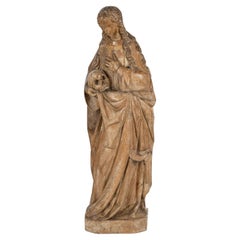
Carved Wooden Sculpture of Mary Magdalene, Circa 1500.
Located in Saint-Ouen, FR
Carved wooden sculpture of Mary Magdalene, circa 1500.
Large limewood sculpture with traces of polychromy representing Mary Magdalene, German work, circa 1500.
H: 80cm. W: 35cm, D: ...
Category
German Antique 18th Century and Earlier Figurative Sculptures
Materials
Wood
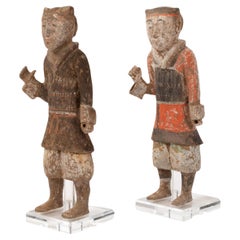
Pair of Terracotta Han Guards in Polychrome Paint China Han-Dynastie, TL Tested
Located in Salzburg, AT
Pair of terracotta Han guardsmen in polychrome paint China TL tested
Pair of rare standing male terracotta sculptures/warriors of the Chinese Han dynasty from the 2nd century BC.
W...
Category
Chinese Han Antique 18th Century and Earlier Figurative Sculptures
Materials
Terracotta, Acrylic
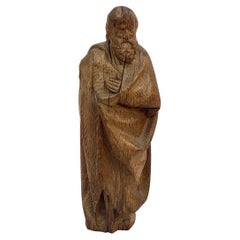
17th Century German Carved Oak Religious Sculpture
Located in Bradenton, FL
17th Century German hand-carved oak religious sculpture. Possibly a saint or a bishop. The bearded man is cloaked in draped fabric with only left ...
Category
German Gothic Antique 18th Century and Earlier Figurative Sculptures
Materials
Oak
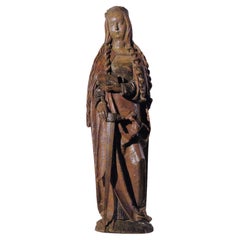
Saint Catherine of Alexandria
Located in Saint-Ouen, FR
SAINT CATHERINE OF ALEXANDRIA
ORIGIN : SWABIA, ULM REGION
PERIOD : ca. 1510-1520
Height : 118 cm
Length : 39 cm
Depth : 17 cm
Limewood...
Category
Antique 18th Century and Earlier Figurative Sculptures
Materials
Wood
Carved Santos, 18th Century
Located in Savannah, GA
A carved and polychromed tonsured saint figure, 18th century.
Glass eyes and formerly with articulating arms.
10 ¼ inches wide by 6 ½ inches deep by 16 ½ inches tall
Category
Unknown Antique 18th Century and Earlier Figurative Sculptures
Materials
Wood
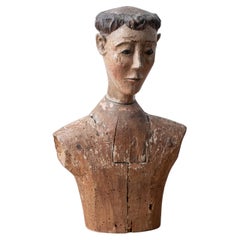
Statue sculpture life size antique old Roman Greek stone reclaimed carving decor
Located in Costa Mesa, CA
Antique statue life sized Roman Greek natural stone old sculpture.
The antique life sized statue displayed in this Ad is one of 12 reclaimed life sized ...
Category
French Rustic Antique 18th Century and Earlier Figurative Sculptures
Materials
Limestone
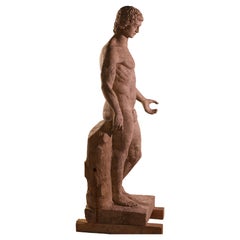
Bacchus - Southern Italy, late 17th century
Located in Bruxelles, BE
Bacchus
Southern Italy, late 17th century
Alabaster Sculpture
H: 20 cm
A finely carved 17th-century alabaster sculpture of a naked Bacchus. This Italian alabaster figure depicts ...
Category
Italian Baroque Antique 18th Century and Earlier Figurative Sculptures
Materials
Alabaster
$2,013 Sale Price
35% Off
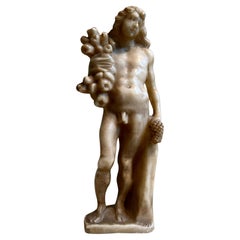
Wooden Madonna with Child Baroque Art Italy 17th Century with Export Certificate
Located in Madrid, ES
A Wooden Madonna with child Baroque art, Southern Italy, 17th century.
Measure: H: 71cm
Good condition for the time.
With Export Certificate to USA.
Category
Italian Baroque Antique 18th Century and Earlier Figurative Sculptures
Materials
Wood
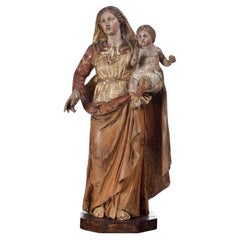
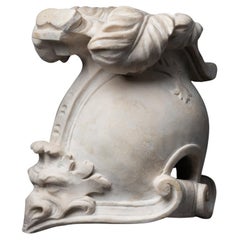
Marble Helmet - France, 17th century
Located in Bruxelles, BE
Marble Helmet
France, 17th century
Marble
25 × 27 × 18 cm
This finely carved marble helmet, adorned with a grotesque mask, exemplifies the 17th-century fascination with antique-i...
Category
French Renaissance Antique 18th Century and Earlier Figurative Sculptures
Materials
Marble
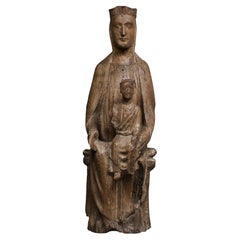
Important Sedes Sapientiae Virgin and Child also called "Throne of Wisdom"
Located in Saint-Ouen, FR
IMPORTANT SEDES SAPIENTIAE VIRGIN AND CHILD
ALSO CALLED « THRONE OF WISDOM »
ORIGIN: FRANCE, BURGUNDY
PERIOD: EARLY 13th CENTURY
Height : 75 cm
Len...
Category
Antique 18th Century and Earlier Figurative Sculptures
Materials
Oak
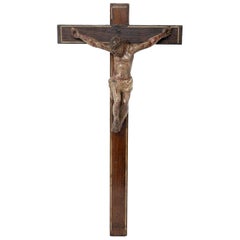
17th Century Spanish Wooden Crucifix Figure Sculpture
Located in Marbella, ES
17th century Spanish wooden crucifix figure sculpture.
Category
Spanish Antique 18th Century and Earlier Figurative Sculptures
Materials
Wood
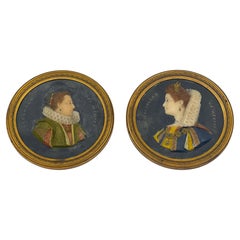
Pair 18th Century Eleanora
M. Magdalena Medici Wax Portraits On Slate
Located in West Palm Beach, FL
Eleanora
M. Magdalena Dei Medici Wax Portraits on Slate
Measures: 4.5" DA
18th Century or Earlier Wax Portraits of Eleonora de' Medici and Maria Magdalena de' Medici in Ormo...
Category
Italian Baroque Antique 18th Century and Earlier Figurative Sculptures
Materials
Slate, Bronze
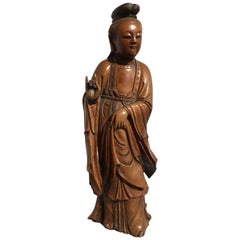
Chinese Carved Boxwood Figure of Guanyin, Mid-Qing Dynasty
Located in Austin, TX
A sublime Chinese carved boxwood figure of the Bodhisattva of Compassion, Avalokiteshvara, called Guanyin in Chinese, mid-Qing dynasty.
The an...
Category
Chinese Qing Antique 18th Century and Earlier Figurative Sculptures
Materials
Boxwood
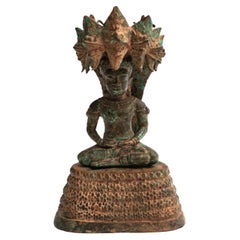
18-19th Century Bronze Naga Meditating Bronze Buddha Statue
Located in Kastrup, DK
Bronze Buddha depicted in meditation pose sheltered by a Naga (a seven-headed snake). I two parts.
Naga's body coiled up to serve as a cushion for the Buddha with 7 pronged head prov...
Category
Burmese Other Antique 18th Century and Earlier Figurative Sculptures
Materials
Bronze
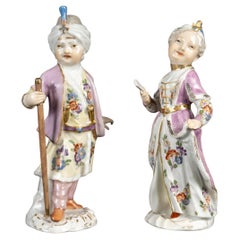
Pair of 18th Century Meissen Porcelain Subjects.
Located in Saint-Ouen, FR
Pair of 18th century Meissen porcelain subjects.
A pair of 18th century Meissen porcelain sculpture subjects, circa 1760, depicting a Turkish couple.
H: 13cm, D: 5cm
Category
German Louis XVI Antique 18th Century and Earlier Figurative Sculptures
Materials
Porcelain
$5,957 / set
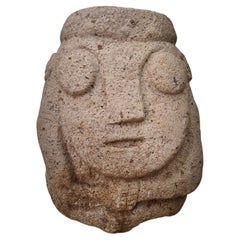
Stone Carved Anthropomorphic Sculpture From The Recuay Culture Peru 400bc-400ac
Located in Madrid, ES
ANTHROPOMORPHIC SCULPTURE CARVED IN STONE OF THE RECUAY CULTURE PERU 400BC-400AC
Recuay is an archaeological culture of Ancient Peru that developed in the Sierra of the current Peruvian department of Áncash between 200 AD. C. until 600 d. C. It corresponds to the stage called Regional Developments, it has also been called the Huaylas or Santa culture.
Like the other Early Intermediate cultures, little is known about this culture. The most accepted position is that it was an extension of the Chavin culture, after the influence of the "White on Red" style in the region. Regarding the political aspect of the recuay, there is a hypothesis that questions their autonomy and maintains that Recuay would be part of one of the many political units that made up the Moche state.
The recuay style, characterized by its ceramics and stone sculpture, was initially described by Eduard Seler in 1893, based on ceramic specimens brought to the Ethnographic Museum in Berlin by Mariano M. Macedo. Seler named this style of pottery Recuay, based on the report that these pieces had been found in the town of Recuay. Later studies showed that this characteristic pottery was not originally from Recuay but from Copa, near Carhuaz, for which reason the name change to that of this town was proposed. Eventually the name of Huaylas was used for this culture. In 1919 Julio C. Tello explored the area and recovered lithic sculptures and Recuay-type ceramics. In the 1960s Rafael Larco Hoyle proposed changing the names of Recuay and Copa to Santa, arguing that the Recuay style had originated in the coastal regions of the Santa Valley. However, the name Recuay has persisted.
Its chronology is also highly debatable. The time of its origin between 0 and 200 AD is discussed. C. and its end or collapse is commonly set to 600 d. C. probably caused by the invasion of the Huari conquerors.
It encompassed almost the entire Callejón de Huaylas, a narrow valley fed by the Santa River and enclosed between two mountain ranges, the Cordillera Blanca to the west and the Cordillera Negra to the east. Its influence extended to the east to the Marañón river basin and to the west to the upper parts of the Santa, Casma and Huarmey valleys. To the north it reached the town of Pashash, in the province of Pallasca.
The Copa area, Marca district, Recuay province, Ancash department seems to have been the center or main nucleus of cohesion of this culture. The name of the culture would then be justified, derived from the province of the same name. Other important settlements were those of Huilcahuaín (near the current city of Ancash), Cátac, Araucay, Tambo, Jancu, Upayacu and Pashash (near the current city of Cabana).
Its main form of expression of art was through stone work (carving and masonry), inherited from its predecessor, the Chavín culture. In addition, they made sculptures in lumps that represent warriors with shields or trophy heads, with which they decorated their complex architectural constructions. They also made white clay pottery...
Category
Antique 18th Century and Earlier Figurative Sculptures
Materials
Stone
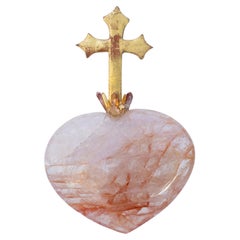
18th Century Italian Cross on a Pink Hematoid Quartz Heart with Aurora Crystals
By Interi
Located in Dublin, Dalkey
18th century Italian cross mounted on a polished pink hematite quartz heart and adorned with aurora (sunset) quartz and a natural-forming cross shaped baroque pearl.
The 18th centu...
Category
Italian Rococo Antique 18th Century and Earlier Figurative Sculptures
Materials
Quartz, Rock Crystal, Gold Leaf
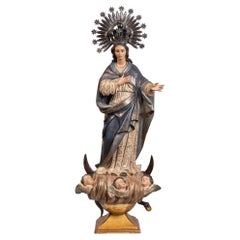
18th Century Spanish Virgin Mary of Immaculate Conception, Handcrafted Sculpture
Located in Madrid, ES
Completely hand-crafted in 18th century Spain, this sculpture of the Virgin stands 1.5 meters / 5 feet tall and was most certainly created for devotional purposes, to be displayed in a church or chapel.
Besides its impressive size this sculpture is an excellent, museum-quality example of the Spanish “Estofado” polychrome technique, developed during the Gothic period to imitate rich brocade fabrics. The finely carved “fabric” areas of the sculpture would be first covered in gesso, and then a layer of gold leaf would be applied. The gold leaf would then be painted over with various colors of tempera paints. Once dry, the painted surface would be incised or scratched away in patterns, revealing the gold beneath.
The sculpture was professionally restored in 2022 by a firm that is often hired by the Spanish government to work on historic building interiors and museum pieces. The virgin was carefully cleaned, repaired and its condition stabilized. A complete and fully-illustrated restoration report will be included with purchase.
Often confused with the virgin birth of Jesus, the belief that the Blessed Virgin Mary herself was conceived “immaculately” without original sin has been variously defended and debated within the Catholic Church since the pre-Middle Ages. For centuries, artists struggled to create an acceptable visual representation of this highly abstract concept, in part taking inspiration from the Book of Revelation and other scriptural sources.
We see the Virgin standing on a half moon (biblically inspired, though also an ancient symbol of chastity) with her long natural hair loose down her back, another indication of purity. Both her white tunic and flowing blue mantle...
Category
Spanish Baroque Antique 18th Century and Earlier Figurative Sculptures
Materials
Silver, Gold Leaf
$30,622 Sale Price
20% Off
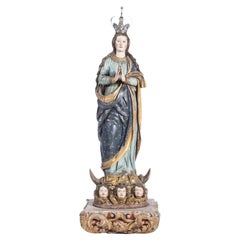
Indo-Portuguese sculpture "Lady Conception" 17th century, H 147cm
Located in Madrid, ES
Indo-Portuguese sculpture "Lady Conception" 17th century, H 147cm.
Our Lady Conception Indo-Portuguese teak wood carving from the 17th century.
Upholstered and polychrome . T
he ...
Category
Portuguese Renaissance Antique 18th Century and Earlier Figurative Sculptures
Materials
Wood
Still Thinking About These?
All Recently ViewedMore Ways To Browse
Thai Musician
The Dying Gaul
Torso Brass
Vintage Pin Holder
War Statue
Water Maiden
Winged Cherubs Sculpture
Winged Mercury
Woman Ceramic Figurine
15th Century Angel
1880s Bronze Sculptures
1960s Mannequin
African Bronze Figure
Alabaster Head Sculpture
Alabaster Plinth
Alexandra Feodorovna
Andrea Del Verrocchio
Antique German Gnomes