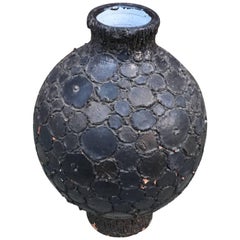
Japonisme Decorative Objects

JAPONISME STYLE

In the late 19th and early 20th century, France developed an enduring passion for Japanese aesthetics and craftsmanship. Not only did this interpretation of Japanese culture — which became known as Japonisme — infuse fresh energy into French art and design, but it also radically transformed how Europeans, and subsequently the world, would come to understand visual culture. 

Until 1853, Japan had been closely guarded against foreign visitors for over two centuries. However, American Commodore Matthew C. Perry sailed into Japan that year and initiated the first of its treaties with the United States and Europe, thereby opening its borders and giving the West its first-ever look at Japanese design. 

For the next few decades, taken with Japonisme, sophisticated collectors in Paris, New York and elsewhere gorged themselves on lacquered screens, celadon ceramics and netsuke ornaments, along with artworks depicting various aspects of Japanese life. The East Asian country’s influence on Europe, particularly France, contributed to one of the most creatively prosperous periods in history, leaving an imprint on the Impressionist, Art Nouveau and Art Deco movements, and inspiring artists like Edgar Degas, Mary Cassatt, Vincent van Gogh as well as luxury houses such as Louis Vuitton and Hermès. Japonisme emerged at the time when the ornate Renaissance Revival style was the most prominent mode of decorating in Europe, and Japanese aesthetics seemed strikingly modern and elegant in comparison. 

In addition to everyday practical objects from Japan, such as vases, tableware and decorative boxes, Japanese art, especially Japanese woodblock prints by masters of the ukiyo-e school, caught the eye of many artists — particularly those in the Art Nouveau poster community in 1880s Paris. The luscious organic colors associated with traditional Japanese design, motifs like cherry blossoms and carp and the vivid patterns found in woodblock prints, silks and more were adopted and appropriated by painters as well as ceramicists and those working in other fields of the decorative arts. Today, demand for Japanese lacquerware — furniture, trays, writing boxes, screens, incense burners — from the Edo period (1615–1868) and the late 19th century continues to be very strong among collectors.

Find a collection of antique Japonisme furniture and decorative objects on 1stDibs.

to
45
350
15
8
15
172
163
23
83
34
17
15
5
10
3
1
5
3
2
5
1
26,276
14,189
9,280
5,442
3,964
3,081
2,289
1,735
1,414
1,337
1,156
1,150
1,022
937
888
674
656
593
167
146
83
75
58
244
96
242
238
232
105
78
Height
to
Width
to
373
370
370
13
8
6
5
4
Style: Japonisme
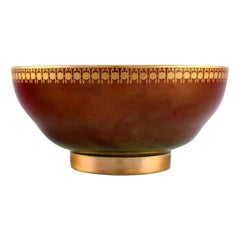
Carlton Ware, England, Bowl in Hand-Painted Porcelain with Trees, 1940s/50s
Located in København, Copenhagen
Carlton Ware, England. Bowl in hand-painted porcelain with trees and gold decoration, Japanism, 1940s / 50s. Measures: 20.5 x 10 cm. In excellent condition. Stamped.
Category

1940s English Vintage Japonisme Decorative Objects

Materials

Porcelain

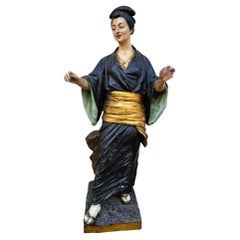
Att à Goldscheider, Japanese, Painted Terracotta Sculpture, 19th Century
Located in MARSEILLE, FR
Beautiful painted terracotta sculpture of a Japanese woman in traditional dress: she wears a kimono decorated with red and yellow flowers on a black background, a large golden obi an...
Category

19th Century European Antique Japonisme Decorative Objects

Materials

Terracotta

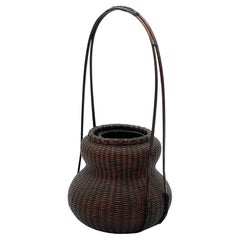
Japanese Late Meiji Period Woven Bamboo Tea Ceremony Basket, Early 20th Century
Located in New York, NY
Japanese Late Meiji Period Woven Bamboo Tea Ceremony Basket, Early 20th Century PERIOD Meiji Period (1868-1912) DIMENSIONS Height: 11.5 INCHES Diameter: 5 inches ABOU...
Category

Early 20th Century Japanese Japonisme Decorative Objects

Materials

Bamboo

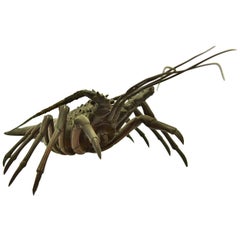
19th Century the Lobster Japanese Bronze Lobster Meiji Period
Located in Marseille, FR
19th century the Lobster Japanese bronze Lobster Meiji Period.
Category

19th Century Japanese Antique Japonisme Decorative Objects

Materials

Bronze

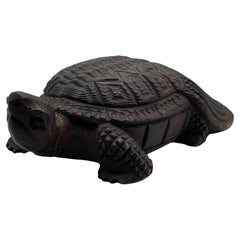
Japanese Large Hand-Carved Boxwood Okimono – “Mino-Kame” Turtle, Ca. 1900
Located in New York, NY
Japanese Large Hand-Carved Boxwood Okimono – “Mino-Kame” Turtle, Ca. 1900 DIMENSIONS: Height: 4 inches Length: 19 inches Wide : 5 inches ABOUT An exceptional example of Meiji-era c...
Category

Early 1900s Japanese Antique Japonisme Decorative Objects

Materials

Wood

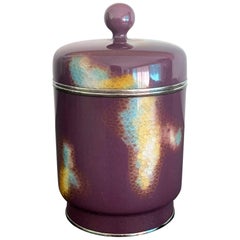
Japanese Cloisonné Covered Jar by Ando Jubei
Located in Atlanta, GA
Japanese cloisonné enamels are known as shippo-yaki and the mid-19th century saw the production of very high quality wares in the early centers Nagoya. One of the most renowned works...
Category

Early 20th Century Japanese Japonisme Decorative Objects

Materials

Metal, Sterling Silver, Enamel

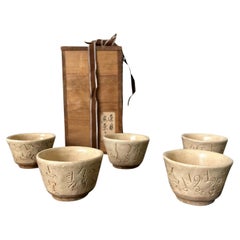
Set of Five Ceramic Tea Cups by Otagaki Rengetsu
Located in Atlanta, GA
A set of five stoneware sencha tea cups by Otagaki Rengetsu (1791-1875). These miniature cups were simply molded in the classic form, glazed in off white and incised with cursive waka poems, a signature decorative style by the artist. Accompanies the cups is a wood storage box and paper slip label inscribed "Rengetsu sencha, tea cups" Purportedly purchased from Tessai-do Co. Ltd., Japan in 1991. Otagaki Rengetsu was a famous Buddhist nun in Edo period who is widely regarded to have been one of the greatest Japanese poets...
Category

Late 19th Century Japanese Antique Japonisme Decorative Objects

Materials

Ceramic, Wood

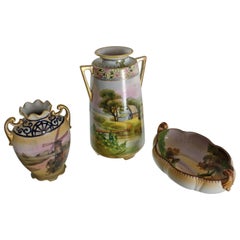
Nippon Hand-Painted Porcelain Vases and Bowl Three Pieces Porcelain Group
Located in Rockaway, NJ
Set of three Nippon porcelain pieces. Hand-painted in Japan.
Category

20th Century Japanese Japonisme Decorative Objects

Materials

Porcelain

Japanese Ceramic Sake Bottle Chosen Karatsu Ware
Located in Atlanta, GA
The long neck bottle of classic form was heavily potted with coarse clay with high iron content. The flask, circa 18th century Edo period, was purposed for sake storage but also substituted as a flower vase during tea ceremony. The surface is covered in glossy black glaze and contrasts strikingly with white ash glaze around the shoulder. The white, fired with straw, displays a splashing feather effect and fine crackles, blending in with the black artistically. This type of Karatsu ware...
Category

18th Century Japanese Antique Japonisme Decorative Objects

Materials

Ceramic

Large Japanese Bamboo Ikebana Basket Maeda Chikubosai I
Located in Atlanta, GA
An important woven bamboo ikebana basket circa first half of the 20th century (Taisho or Showa era) by Japanese bamboo master Maeda Chikubosai I (1872-1950). Chikubosai I was from th...
Category

Early 20th Century Japanese Japonisme Decorative Objects

Materials

Bamboo

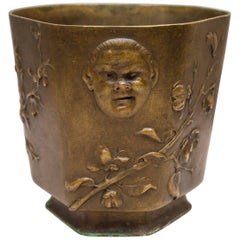
Japonesque Bronze Cache Pot by Berndorf, Austria, (marked) circa 1890
Located in San Francisco, CA
Japonesque bronze cache pot by Berndorf, Austria, circa 1890. Nouveau with a Japanese decorative motif. Stamped Bergdorf over an E Decorated with thr...
Category

1980s Austrian Vintage Japonisme Decorative Objects

Materials

Bronze

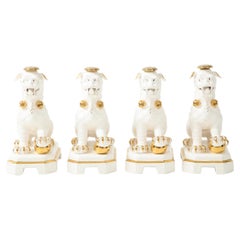
Set of Four Porcelain White Gold Foo Dogs
Located in South Salem, NY
A set of four white and gold ceramic Foo Dog table bases. Made in Spain by Bondia in the Hollywood Regency style. Ornate ceramic sculptures with detailed faces, mouths, bodies, and p...
Category

Mid-20th Century Spanish Japonisme Decorative Objects

Materials

Ceramic

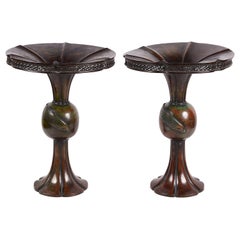
Pair of 19th Century Japanese Meiji Period Bronze Carp Vases
Located in Brighton, Sussex
A fine quality pair of Japanese Meiji period (1868-1912) green and red patinated bronze vases, each having pierced decoration, having wonderful raised carp swimming around the center...
Category

Late 19th Century Japanese Antique Japonisme Decorative Objects

Materials

Bronze

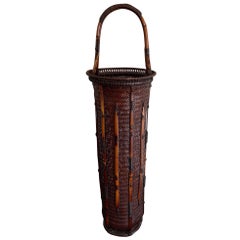
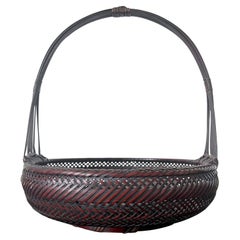
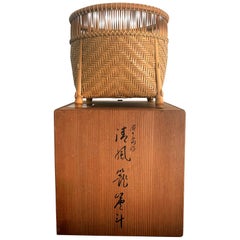
Japanese Woven Bamboo Ikebana Basket
Located in Atlanta, GA
A Japanese woven bamboo basket with handle from early 20th century, circa end of Meiji to Taisho period. The basket was constructed in the form o...
Category

Early 20th Century Japanese Japonisme Decorative Objects

Materials

Bamboo

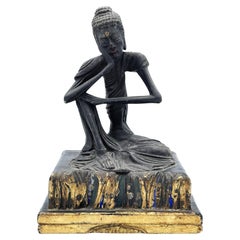
Japanese Edo Period Carved Seated Fasting Buddha, 18th C./Early 19th C.
Located in New York, NY
Japanese Edo Period Carved Seated Fasting Buddha, 18th C./Early 19th C. DIMENSIONS Height: 9.5 inches (24 cm) Width: 7 inches (18 cm) Depth: 5 inches (12.8 cm) ABOUT This early Edo...
Category

Late 18th Century Japanese Antique Japonisme Decorative Objects

Materials

Wood

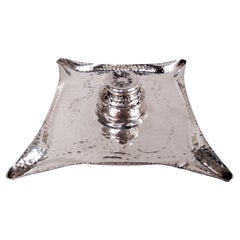
Tiffany Japonesque Hand Hammered Inkstand with Applied Bugs Leaves
Located in New York, NY
Japonesque sterling silver ink stand. Made by Tiffany & Co. in New York, ca 1881. Square with concave sides and fluted corners on cast scroll and bead supports. Centrally mounted bal...
Category

Late 19th Century American Antique Japonisme Decorative Objects

Materials

Sterling Silver

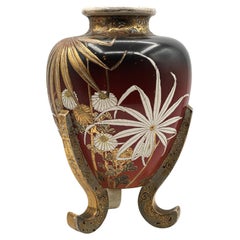
Japanese Late Meiji Period Satsuma Three-Footed Vase, Ca. 1900
Located in New York, NY
Japanese Late Meiji Period Satsuma Three-Footed Vase, Ca. 1900 Late Meiji Period (1868-1912) DIMENSIONS: Height: 10.25 inches Di...
Category

Early 1900s Japanese Antique Japonisme Decorative Objects

Materials

Porcelain

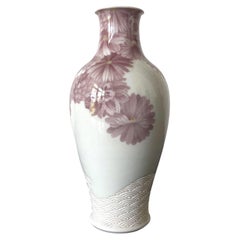
Japanese Ceramic Vase with Delicate Carvings by Makuzu Kozan Meiji Period
Located in Atlanta, GA
A delicate and rare Japanese ceramic vase by the important Meiji imperial potter Makuzu Kozan (1842-1916) circa 1887-1910. Dated to his underglaze phase post 1887 after he successful...
Category

1890s Japanese Antique Japonisme Decorative Objects

Materials

Ceramic

Large Oblong Porcelain Vase, Royal Berlin Manufacture, 1900s
Located in PARIS, FR
Large Oblong White Porcelain Vase, by the Royal Berlin Manufacture, 1900s. In a 'Japonisme' style. Marked in blue underglaze with the Berlin scepter. Origin : Germany. Very good cond...
Category

Early 20th Century Japonisme Decorative Objects

Materials

Porcelain

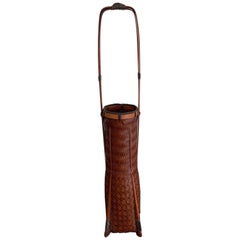
Elegant Japanese Lacquered Ikebana Bamboo Basket
Located in Atlanta, GA
A vintage Japanese ikebana made from lacquered bamboo basketry circa first half of the 20th century. This piece of bamboo art displays an very light and delicate classic tapered squa...
Category

Early 20th Century Japanese Japonisme Decorative Objects

Materials

Bamboo, Rattan

Japanese Emperor Shōwa Period Kiyomizu-Ware Vase, 18th Century
Located in New York, NY
Japanese Emperor Shōwa Period Kiyomizu-Ware Vase, 18th Century Emperor Shōwa Period - from 1926 to 1989/1990 DIMENSIONS Height: 9 inches diame...
Category

1770s Japanese Antique Japonisme Decorative Objects

Materials

Ceramic

Japanese Emperor Shōwa Period Tamba-Ware Textured Glazed Vase, Ca. 1970
Located in New York, NY
Japanese Emperor Shōwa Period Tamba-Ware Textured Glazed Vase, Ca. 1970 Emperor Shōwa Period - from 1926 to 1989/1990 Signed. DIMENSIONS Width: 8 inches Height: 5.5 inches ABOUT ...
Category

1970s Japanese Vintage Japonisme Decorative Objects

Materials

Ceramic

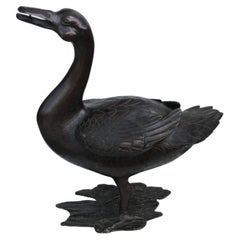
19th Century Japanese Bronze Duck 14.5"
Located in Pasadena, TX
Japanese Bronze standing duck. Standing neck raised and mouth open with detailed feathers. 14.5 high.
Category

Late 18th Century Japanese Antique Japonisme Decorative Objects

Materials

Bronze

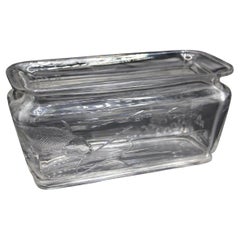
Baccarat fish-shaped planter from the Universal Exhibition, Paris, 1878
Located in Charmes, FR
Planter presented at the Universal Exhibition, Paris, 1878, along with several other works on this theme, an extremely rare piece. An identical model is held in the Baccarat Museum's...
Category

Late 19th Century French Antique Japonisme Decorative Objects

Materials

Crystal

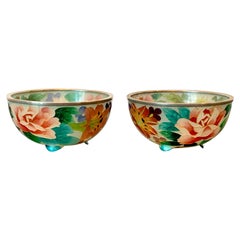
Pair of Early Japanese Plique-a-Jour Bowls from Nagoya
Located in Atlanta, GA
A pair of small but exquisite Plique-a-jour cloisonné bowls with nearly identical design from Nagoya area in Japan circa 1900-20s. Maker's unknown but possibly by Ando company. The t...
Category

Early 20th Century Japanese Japonisme Decorative Objects

Materials

Metal, Enamel

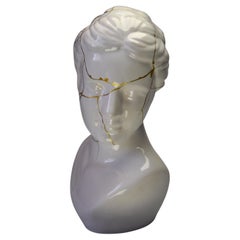
Porcelain woman Bust with kintsugi
Located in MEAUX, FR
This female bust, sculpted in a brilliant white porcelain, evokes the grace and nobility of antique statues. Coiffed with an elegant high chignon, this 38 cm tall figure captivates w...
Category

2010s French Japonisme Decorative Objects

Materials

Porcelain

Japanese Modernist Beige Studio Ceramic Flower Vase, Circa 1950s
Located in New York, NY
Japanese Modernist Beige Studio Ceramic Flower Vase, Circa 1950s DIMENSIONS: Height: 11 inches Diameter: 4 inches ABOUT JAPANESE MODERNIST BEIGE STUDIO CERAMICS Japanese Modernist...
Category

1950s Japanese Vintage Japonisme Decorative Objects

Materials

Ceramic

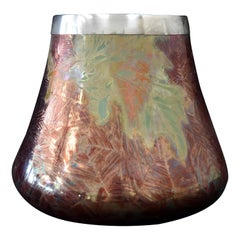
French Japonesque Art Nouveau Lusterware Vase Clement Massier
Located in Atlanta, GA
A ceramic vase with iridescent glaze in the shape of an elephant foot cache pot by the legendary French ceramist Pierre Clement Massier (1845-1917). Massier is widely considered as t...
Category

Early 1900s French Antique Japonisme Decorative Objects

Materials

Silver

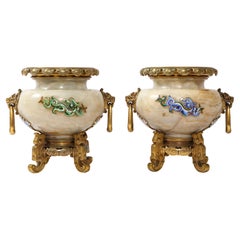
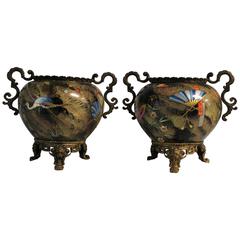
Eugène Cornu, Pair of French Japonisme/Chinoiserie Ormolu Mtd Enameled Onyx Urns
Located in New York, NY
A Rare and Quite Unusual Pair of Signed 19th Century French Japonisme/Chinoiserie/Orientalist Ormolu Mounted Champleve Enameled Onyx Urns by Eugène Cornu. Each is made from champlev...
Category

1880s French Antique Japonisme Decorative Objects

Materials

Onyx, Bronze

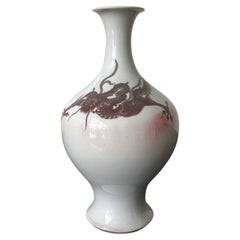
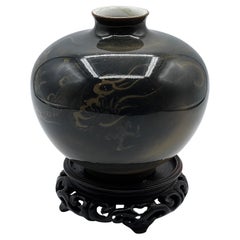
Japanese Porcelain Glazed Vase with Dragon Design Mazuku Kozan
Located in Atlanta, GA
A porcelain vase with dragon design by Japanese imperial potter Makuzu Kozan (1842-1916), circa 1900s. The vase is made in what is considered early phase of his underglaze period during late Meiji era. In a classic baluster form, the surface of the vase was decorated with a slithering dragon in underglaze iron red circulating the exterior among pink clouds. The animated rendering of the dragon is fine and detailed, with five claws, scales, long tails and highlighted eyes. The pink cloud is misty and called Morotai or the hazy style, created with a unique technique developed in Kozan's studio called fuki-e by blowing the pigment powders onto the surface. Kozan Studio experimented with newly available colors from the west starting in the 1880s, which resulted in the expansion of the palette and style that bridged the east and west aesthetic tradition. Marked in underglaze blue on the base. Known also as Miyagawa Kozan...
Category

Early 1900s Japanese Antique Japonisme Decorative Objects

Materials

Porcelain

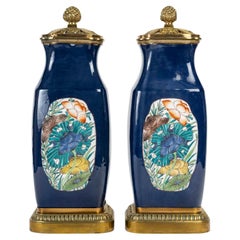
Pair of Samson Porcelain Vases, Gilt Bronze Mounting, Early 20th Century.
Located in Saint-Ouen, FR
Pair of Samson porcelain vases, gilt bronze mounting, early 20th century. A pair of 1920's Samson porcelain vases with gilt bronze mounts, floral decoration in the Asian Arts style....
Category

Early 20th Century European Japonisme Decorative Objects

Materials

Bronze

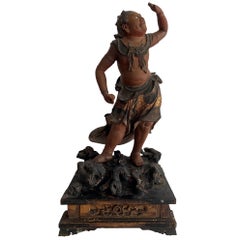
Japanese Lacquered and Gilt Wood Buddhism Statue from Edo Period
Located in Atlanta, GA
An exceptional and wood statue of Buddhism Guardian Seitaka Doji from Japan circa Edo period (1603-1868), likely the earlier part of 17th century. One of two chief attendants of Fudou Myouou (the other being Kongara Doji), the name of Seitaka Doji is a transliteration of Sanskrit "Cetaka", meaning servant, slave, and he is said to personify expedient action. He is most commonly found on the right side of Fudou, together with Kongara Doji on the left, forming the Immovable triad, Fudou Sanzon, the terror of evil doers. Seitaka largely adheres to the iconography of a wrathful youth with fleshy body and face, skin in the color of a red lotus, has his hair tied in five knots, and holds a vajra in his left hand and a vajra-club in his right hand, but the actual artistic representations of him in Japan do...
Category

17th Century Japanese Antique Japonisme Decorative Objects

Materials

Metal

Pair of Japonisme Porcelain and Ormolu Mounted Aesthethic Movement Vase s
Located in Hamilton, Ontario
Pair of Japonism porcelain and ormolu-mounted Aesthethic Movement vase's.
Category

19th Century English Antique Japonisme Decorative Objects

Materials

Brass, Ormolu

Japanese Meiji Period Koransha Olive Green Gold Glaze Porcelain Vase, Ca. 1880
Located in New York, NY
Japanese Meiji Period Koransha Olive Green & Gold Glaze Porcelain Vase, Ca. 1880 DIMENSIONS Height: 4.5 inches Diameter: 5 inches ABOUT Meiji Period (1868–1912) Koransha Porcelain ...
Category

Early 1800s Japanese Antique Japonisme Decorative Objects

Materials

Porcelain

Important Miniature Japanese Bamboo Basket by Hayakawa Shokosai I
Located in Atlanta, GA
A miniature bamboo basket woven by Hayakawa Shokosai I (1815-1897) circa 1885, an important example of the work by the artist who is considered as the founding father of Japanese modern bamboo art and the first ever signed his own work thus elevating bamboo weaving from a craft into an art form. The miniature basket was traditionally used during Sencha tea ceremony. It was woven from bamboo (madake) and rattan using...
Category

1880s Japanese Antique Japonisme Decorative Objects

Materials

Bamboo, Rattan

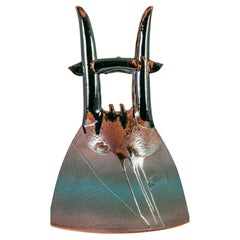
Japanese Contemporary Grand Pottery Sculpture, Ca. 1980
Located in New York, NY
Japanese Contemporary Grand Pottery Sculpture, Ca. 1980 ABOUT This absolutely unique late 20th Century pottery sculpture with bamboo-styled formed handles features a wonderful artis...
Category

1980s Japanese Vintage Japonisme Decorative Objects

Materials

Pottery

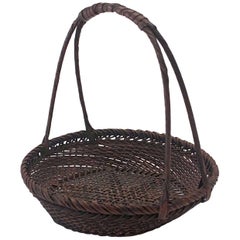
Large Japanese Woven Bamboo Morikago Basket by Maeda Chikubosai I
Located in Atlanta, GA
A large and impressive Japanese basket in the form of a morikago by Maeda Chikubosai I (1872-1950) circa first half of the 20th century. Chikubosai I was from the Kansai Region and active in Sakai, Osaka prefecture. He was instructed by Wada Waichisai I, (1851-1901). Morikago is a shallow open basket with handle. It was traditionally used to display fruits, sometimes flowers, during Sencha tea ceremony. In contrast to Chanoyu, Sencha ceremony uses loose green tea leaves instead of tea powder. The placement of loose fruits in the basket meant that the pattern of the bottom, which is often elaborate, was meant to be visible. This morikago was beautifully constructed with bent bamboo frame and twill plaits for the body. The bottom of the basket features a double diamond pattern achieved with a variation of plover plait. The bifurcated handles was bundle-plated with a rather free spirit approach. They show a poetic suggestion of movement, as if the bamboos were still swaying in the wind. The basket has a copper insert that fits perfectly and it is quite possibly the original. The basket is signed on the base "Chikubosai". The style of the signature shows that it was made by Maeda Chikubosai I. For another Morikago basket by Maeda Chikubosai I, see page 79 of "Masters of Bamboo" by Rinne. For the study of the signature of Chikubosai I "Baskets Master Pieces of Japanese Bamboo Art...
Category

Early 20th Century Japanese Japonisme Decorative Objects

Materials

Copper

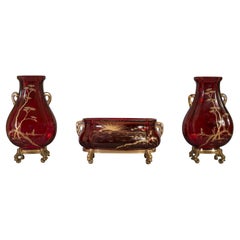
BACCARAT, Garniture with Japanese landscape, circa 1880
Located in SAINT-OUEN-SUR-SEINE, FR
This decoration with a Japanese landscape was made by the Baccarat crystal factory around 1880. Founded under Louis XV, the French crystal factory Baccarat demonstrated its excelle...
Category

Late 19th Century French Antique Japonisme Decorative Objects

Materials

Crystal, Enamel

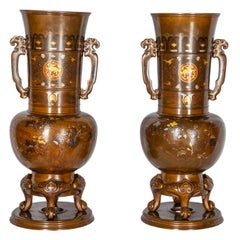
Pair of Japanese Meiji Period Bronze and Gilt Vases
By Zo Miyao 1
Located in Brighton, Sussex
Pair of fine quality Japanese Meiji period (1868-1912) patinated bronze Miyao style gold and silver overlay two handled vases, each with twin handles, classical motif decoration with...
Category

Late 19th Century Japanese Antique Japonisme Decorative Objects

Materials

Bronze

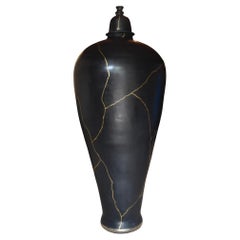
Floor vase kintsugi “Resilio”
Located in MEAUX, FR
This elegant earthenware jar, an impressive 148 cm high, is based on one of the most famous vase shapes in Chinese art: the Meiping. This simple yet voluptuous silhouette dates back ...
Category

2010s French Japonisme Decorative Objects

Materials

Gold

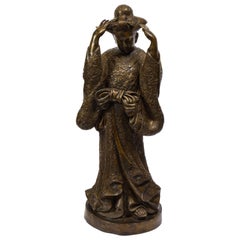
French Patinated Bronze Figure of a Standing Japanese Geisha with Kimono Obi
Located in New York, NY
A beautiful French patinated bronze figure of a standing Japanese geisha in a traditional kimono with an obi. This geisha is exceptionally cast with immense detail. Starting from the...
Category

Early 20th Century French Japonisme Decorative Objects

Materials

Bronze

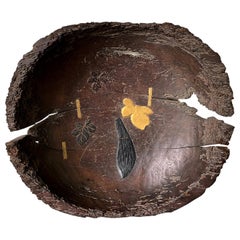
Antique Japanese Lacquered Wood Wabi-Sabi Bowl
Located in Atlanta, GA
What can we say about this bowl? Perhaps we can start by describing the unique Japanese aesthetic concept of "Wabi-Sabi". In contrast to the western concept of beauty that is centere...
Category

19th Century Japanese Antique Japonisme Decorative Objects

Materials

Wood

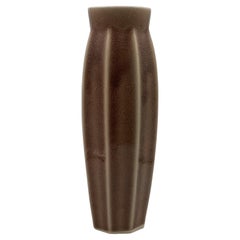
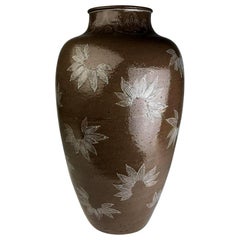
Rare Large Vase with White Slip Inlay Makuzu Kozan Meiji Period
Located in Atlanta, GA
A impressively large and unusual stoneware vase in an urn shape from the studio of Japanese Potter Makuzu Kozan, also known as Miyagawa Kozan (1842–1916), one of the most established and collected ceramist from Meiji Period. Born as Miyagawa Toranosuke, Kozan established his pottery studio in Yokohama circa 1870s and later became one of the appointed artist to the Japanese Imperial household. His work was exhibited in many international fairs that the Meiji government participated at the turn of the century and won many grand prizes. This vase is dated to the end of Makuzu's life circa 1910-1916 based on similar work created around that time. After achieving domestic and international fame, Makuzu retired and handed the business to his son Hanzan in 1912. He dedicated his time to other selected projects that were more in tune with Japanese sensibility than export aesthetic. He made a group of stoneware pottery pieces inspired by Edo master like Ninsei and Kenzan as well as his own poetic creation. This piece is attributed to that period. Standing of an impressive size, this vase is more like an urn, made with stoneware instead of porcelain. It was coated with a brown iron glaze with a slight translucent quality. Underglaze whit slips were used to draw low relief decoration of bamboo leaves that sparsely scatter on the surface. Slightly more elaborate scrolling vines and autumn flowers circles under the mouth rim. Same white slip inlay was used to sign the vase under the base. The whole effect of the piece is unusual. With its dark glaze in contrast with the sparse white decoration that is more abstract and geometric than realistic, it appears almost modern with an Art Deco flavor. For stoneware urn and vase in the similar genre by Makuzu Kozan: see figure 113 on page 182 of "Sekai ni Aisa Reta ya Kimono" MIYAGAWA KOZAN MAKUZU...
Category

1910s Japanese Vintage Japonisme Decorative Objects

Materials

Ceramic

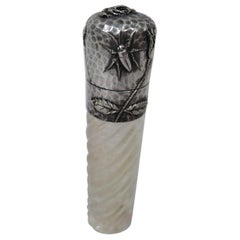
American Japonesque Applied Hand Hammered Sterling Silver Perfume
Located in New York, NY
American applied sterling silver perfume vial, ca 1880. Clear glass cylinder with twisted fluting. Sterling silver collar and hinged cover with tendril, f...
Category

Late 19th Century North American Antique Japonisme Decorative Objects

Materials

Sterling Silver

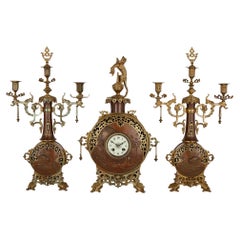
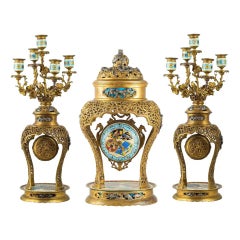
A Japonisme Gilt-Bronze and Brass Three-Piece Clock Set
Located in London, GB
A Japonisme gilt-bronze and brass three-piece clock set French, Late 19th Century Clock: height 52cm, width 31cm, depth 12cm Candelabra: height 55cm, width 32cm, depth 9cm Made in F...
Category

Late 19th Century French Antique Japonisme Decorative Objects

Materials

Brass, Ormolu

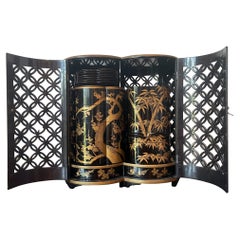
Japanese Maki-e Lacquer Portable Sagejubako Theme of Three Winter Friends
Located in Atlanta, GA
Sagejubako is a portable lunch or picnic set that became popular in the early Edo period when an additional meal was added between breakfast and dinner. It normally consists of a han...
Category

19th Century Japanese Antique Japonisme Decorative Objects

Materials

Lacquer

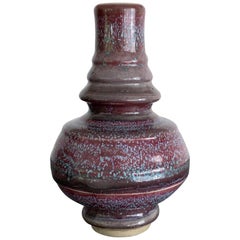
Asian Flambe Studio Pottery Vase
By Kyoto Pottery
Located in Atlanta, GA
A garlic bottle vase in an archaic Chinese form, but likely Japanese in origin. Several circumventing grooves however, suggest a more modern age. It was done in a brilliant purple glaze over a robin egg blue background glaze. The bubbling and bursting effects during the firing renders the surface an artistic spotting effect. The color pallet recalls the Classic Jun Yao...
Category

Late 19th Century Japanese Antique Japonisme Decorative Objects

Materials

Ceramic

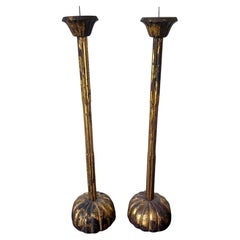
Pair of Large Japanese Carved Wood Temple Candleholders Edo Period
Located in Atlanta, GA
A tall pair of Japanese carved wood candle holders circa early 19th century (late Edo Period). The pair is carved in the typical form with a block base in the shape of stylized chrysanthemums and long fluted stem with changes in diameter that supports a grooved holder fitted with metal pricket. These types of oversized candle holders were traditionally used in Buddhist temples or Samurai's resident where they were placed on the altar table for worshiping. What is extraordinary of these candle stickers is that they feature a wonderfully conserved surface with lacquered gold leaf. The sparkling gold on the well weathered surface is visually striking. The professional conservation was performed in 2007 and as a result, the pieces display a wonderful aged Wabi-Sabi patina. The piece retains an original invoice from Far Eastern Antiques...
Category

Early 19th Century Japanese Antique Japonisme Decorative Objects

Materials

Gold Leaf

Japanese Bamboo Basket by Higashi Takesonosai
Located in Atlanta, GA
A handwoven bamboo basket by Japanese bamboo artist Higashi Takesonosai (1915-2003), in the form of a traditional rice container. It was woven with...
Category

20th Century Japanese Japonisme Decorative Objects

Materials

Bamboo, Wood

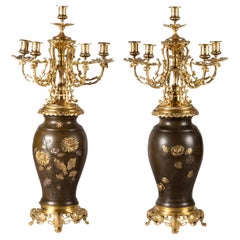
Pair Of Aesthetic/Japonism Style Candelabras - Meiji with Shakudo Decoration
Located in MOUGINS, FR
A beautiful and very large pair of Meiji period Japanese bronze vases with brown patina and caved design with applied gilt and silver bronze inserts representing birds and insects fl...
Category

Late 19th Century French Antique Japonisme Decorative Objects

Materials

Bronze

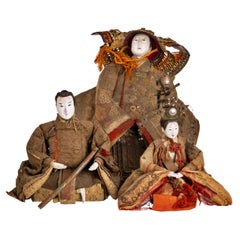
THREE FIGURES HINA MATSURI Japanese, Meiji period (1868-1912)
Located in Madrid, ES
THREE FIGURES HINA MATSURI Japanese, Meiji period (1868-1912) in painted plaster, eggshell, silk and other materials. Height: (largest) 50 cm good condit...
Category

19th Century Japanese Antique Japonisme Decorative Objects

Materials

Silk, Plaster

Hagi Ikebana Vase by Kyusetsu Miwa X Japanese Studio Pottery
By Kyusetsu Miwa X
Located in Atlanta, GA
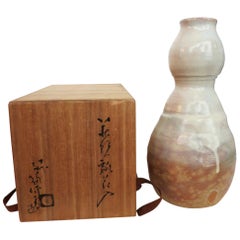
A stoneware vase with white dripping glaze from Hagi by Kyusetsu Miwa X (1895-1981), Showa Period. The vase is in the shape of "Double Gourd" with a bulbous ...
Category

20th Century Japanese Japonisme Decorative Objects

Materials

Ceramic

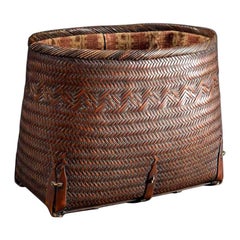
Early Japanese Hand Basket with Brocade Interior by Suzuki Gengensai
Located in Atlanta, GA
This small elegant woven bamboo basket was meant to be a hand-hold bag with its brocade interior (which appears original). It was made by Suzuki Gengensai (1891-1950) circa 1910-20s. Suzuki Gengensai was from Kansai region and active in Osaka. He studied bamboo art under Yamashita Kochikusai (1876-1947) and became an independent artist in 1913. He received his artist name Gengensai in 1914 and in 1923 he changed the characters to Gen, a slight written variation of the character. This basket was signed in the former way, which helps to date the piece to the early part of the artist's career circa 1914-1923. The basket is tightly woven in variation of twill plating that creates contrasting bands on the surface. The base was constructed with short bamboo stripes on the corners and side with ornamental knots. A closely related piece (Object Number: 2006.3.651) with slight different surface twill patterns is in the collection of Asian Art Museum San Francisco. Comparing the two, they show almost identical form as well as the base construction. Both also have brocade interior and most likely were woven during the same period. Another documented example can be found on page 180 in "Baskets Masterpieces of Japanese Bamboo Art...
Category

Early 20th Century Japanese Japonisme Decorative Objects

Materials

Brocade, Bamboo

Atique Japanese Rootwood Bamboo Ikebana Vase, XIX Century
Located in New York, NY
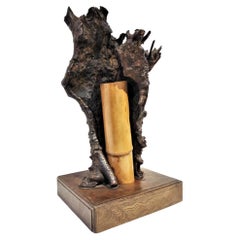
Atique Rootwood & Bamboo Ikebana Vase Japan, XIX Century DIMENSIONS Height: 19.25vinches Width: 10.13 inches Depth: 9.5 inches ABOUT This absolutely unique ikebana vase consists of...
Category

Late 19th Century Japanese Antique Japonisme Decorative Objects

Materials

Bamboo, Wood

Unusual Japanese Lacquer Inkstone Box with MOP Inlays
Located in Atlanta, GA
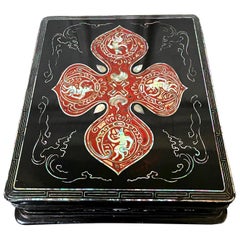
A Japanese black lacquer box with mother of pearl inlays circa early 20th century, end of Meiji period. It was likely to be used to store inkstone or other scholarly items. The piece displays several interesting characteristics that appear puzzling initially. First, the form is not typical Japanese, but more Chinese and Korean, with its scalloped base. Second, the decoration of MOP inlays also suggests a Korean and Chinese affiliation, especially with the linear borders and the scrolling cloud patters on the sides of the box. These two observations suggest that the box may be from Ryukyu Island instead of Japanese mainland. Third, strikingly in the center of the cover, a bold quarterly floral pattern outlined with MOP was filled with a striking mottled red lacquer using tsugaru nuri...
Category

Early 20th Century Japanese Japonisme Decorative Objects

Materials

Wood, Lacquer

French Japonisme Mantel Clock and Candelabra Attributed to Edouard Lievre
Located in New York, US
Our mantel clock and candelabra with silvered, gilt and cloisonne enamel surfaces in the French Japonisme style dates from the 1870s and is in good condition. Attributed to the influ...
Category

Late 19th Century French Antique Japonisme Decorative Objects

Materials

Bronze, Enamel

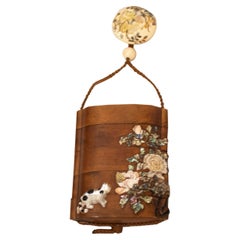
Meji s Period Inro Box. Japan, 19th Century.
Located in Madrid, ES
Inro is an ancient traditional Japanese box used to carry and store small items such as tobacco, money, paintbrushes, and other objects. The...
Category

19th Century Japanese Antique Japonisme Decorative Objects

Materials

Wood, Lacquer

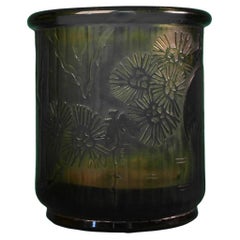
Émile GALLÉ for L ESCALIER DE CRISTAL, Small Japanese-Style Vase in Amber Glass
Located in SAINT-OUEN-SUR-SEINE, FR
This vase was created by Émile Gallé for the Escalier de Cristal at the end of the 19th century. A pioneering figure of Art Nouveau, Émile Gallé was particularly influenced by Far E...
Category

Late 19th Century French Antique Japonisme Decorative Objects

Materials

Glass, Art Glass

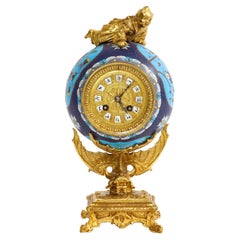
French Japanism Champleve Enamel Ormolu Mounted Clock, Christofle Cie, 1800s
Located in New York, NY
French Japanism Champlevé Enamel Ormolu Mounted Clock, Christofle & Cie. The clock consists of a spherical champlevé enamel body mounted in an ormolu structure. The enamel surface i...
Category

19th Century French Antique Japonisme Decorative Objects

Materials

Ormolu, Enamel

Perignem , Japanese-inspired ceramic vase, not signed, circa 1950
Located in Saint-Ouen, FR
Perignem, Japanese-inspired ceramic vase, not signed, circa 1950
Category

1950s Belgian Vintage Japonisme Decorative Objects

Materials

Ceramic

Japonisme decorative objects for sale on 1stDibs.

Find a broad range of unique Japonisme decorative objects for sale on 1stDibs. Many of these items were first offered in the 21st Century and Contemporary, but contemporary artisans have continued to produce works inspired by this style. If you’re looking to add vintage decorative objects created in this style to your space, the works available on 1stDibs include decorative objects, asian art and furniture, serveware, ceramics, silver and glass and other home furnishings, frequently crafted with ceramic, metal and other materials. If you’re shopping for used Japonisme decorative objects made in a specific country, there are Asia, East Asia, and Japan pieces for sale on 1stDibs. While there are many designers and brands associated with original decorative objects, popular names associated with this style include Makuzu Kozan, Norihiko Terayama, Tiffany Co., and Royal Crown Derby Porcelain. It’s true that these talented designers have at times inspired knockoffs, but our experienced specialists have partnered with only top vetted sellers to offer authentic pieces that come with a buyer protection guarantee. Prices for decorative objects differ depending upon multiple factors, including designer, materials, construction methods, condition and provenance. On 1stDibs, the price for these items starts at $29 and tops out at $185,360 while the average work can sell for $3,500.

Still Thinking About These?

All Recently Viewed