Renaissance Decorative Objects

RENAISSANCE STYLE

Spanning an era of cultural rebirth in Europe that harkened back to antiquity, the Renaissance was a time of change in design. From the late 1400s to the early 1600s, Rome, Venice and Florence emerged as artistic centers through the expansion of global trade and a humanist belief in the arts being central to society. Antique Renaissance furniture was ornately carved from sturdy woods like walnut, its details standing out against the tapestries and stained glass adorning the walls.

Renaissance chests, which were frequently commissioned for marriages, were often decorated with gilding or painted elements. Those that were known as cassoni were crafted in shapes based on classical sarcophagi. As opposed to the medieval era, when furniture was pared down to the necessities, a wide range of Renaissance chairs, tables and cabinets were created for the home, and the designs regularly referenced ancient Rome.

Large torchères of the Renaissance era that were used as floor lamps were inspired by classical candelabras, while marble surfaces evoked frescoes. The inlaid boxes being imported from the Middle East informed the intarsia technique, which involved varying hues of wood in mosaic-like patterns, such as those by architect Giuliano da Maiano in the Florence Cathedral.

Tapestry-woven cushion covers accented the variety of Renaissance seating — from conversation to study chairs — while bookcases for secular use reflected the migration of culture and knowledge from the church into the home. The aesthetics of the Italian Renaissance later spread to France through the publishing of work by renowned designers, including Hugues Sambin and Jacques Androuet du Cerceau. Centuries later, the 19th-century Renaissance Revival would see a return to this influential style.

Find a collection of antique Renaissance case pieces, decorative objects and other furniture on 1stDibs.

to
70
433
34
2
168
162
103
36
38
15
24
6
3
3
3
3
6
5
5
26,254
14,182
9,262
5,447
3,963
3,079
2,289
1,734
1,413
1,339
1,156
1,150
1,024
935
889
674
656
593
237
136
129
129
74
236
219
395
184
112
20
19
Height
to
Width
to
469
468
469
6
5
4
4
3
Style: Renaissance
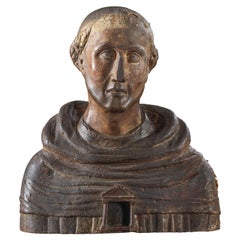
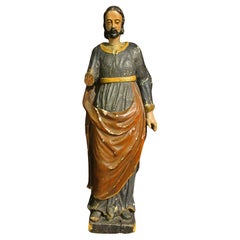
16th Century Polychrome Reliquary of a Monk
Located in Saint-Ouen, FR
The monk is depicted with an oval face, marked with high and strong cheekbones, sunken cheeks, strong jawbones and a cleft chin. His almond shaped eyes are opened under very strong a...
Category

16th Century Italian Antique Renaissance Decorative Objects

Materials

Wood

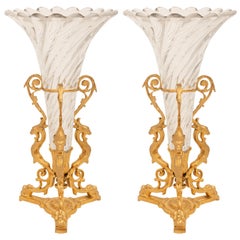
Pair Of French 19th Century Renaissance St. Ormolu And Crystal Vases
Located in West Palm Beach, FL
A stunning pair of French 19th century Renaissance st. Ormolu and Crystal vases. The pair of vases are raised on triangular Ormolu bases with central rosettes. The base above is deco...
Category

19th Century French Antique Renaissance Decorative Objects

Materials

Crystal, Ormolu

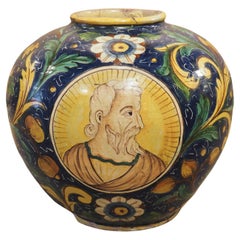
Antique 19th Century Italian Maiolica Pot of the Renaissance Style
Located in Dallas, TX
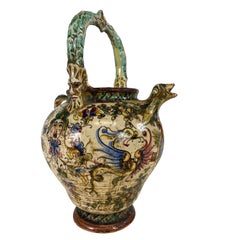
Vivid colors, hand-painted in the Renaissance style, enhance this large maiolica pot from the 1800’s. Maiolica is tin-glazed pottery from Italy that has been decorated over a white background. This pot is considered an istoriato, which is to say that the pot has been decorated with figures, rather than strictly geometric patterns or floral designs. The maiolica does incorporate floral and foliate motifs, with white flowers that have yellow centers surrounded by blue rings. There are also yellow flowers that are depicted in various stages of nyctinasty (the closing of flowers during the night). The flora is all connected by a series of green and yellow curled leaves. Behind the vegetation is a dark blue background. There are two portraits inside large yellow cartouches that are painted in the middle of the pot. The first is a bearded man, dressed in a light brown tunic...
Category

19th Century Italian Antique Renaissance Decorative Objects

Materials

Maiolica

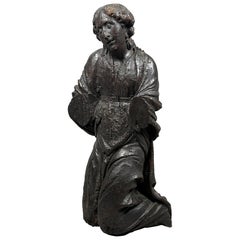
A large 16th century wood carving of an Angel
Located in Sleepy Hollow, NY
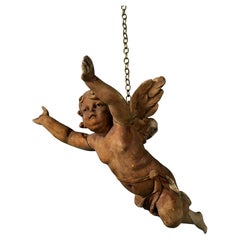
A large 16th-century hand-carved wooden fragment depicting a kneeling angel in adoration, arms extended and wearing a gentle, serene expression. Likely of Northern European origin, t...
Category

16th Century European Antique Renaissance Decorative Objects

Materials

Fruitwood

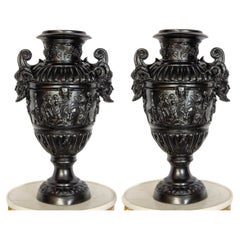
Pair of Renaissance Revival Bronze Black Painted Vases
Located in Rome, IT
Impressive pair of black patinated bronze vases in the style of Renaissance. Finely decorated handles with a satyr figure, over with a and body surrounded by bacchanal scenes. Exquis...
Category

1930s Italian Vintage Renaissance Decorative Objects

Materials

Bronze

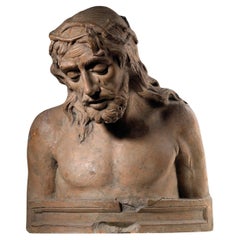
Ecce Homo - Florence, 15th century
Located in Bruxelles, BE
A terracotta bust "Ecce Homo" Florence, 15th century 53 x 44 x 31 cm
Category

15th Century and Earlier Italian Antique Renaissance Decorative Objects

Materials

Terracotta

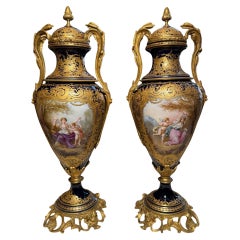
Sevres Style Pair Of Gilt Cobalt Blue Urns
Located in Guaynabo, PR
This is a Pair of Gilt Cobalt Blue Urns. Both Urns depict a cobalt blue background that is decorated in the center with a hand painted country side landscape ...
Category

18th Century Unknown Antique Renaissance Decorative Objects

Materials

Porcelain

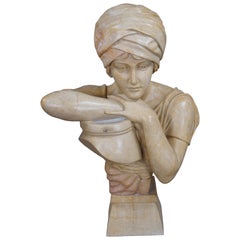
Rebecca at the Well Marble Bust Sculpture Statue After Antonio Piazza 27"
Located in Dayton, OH
An impressive marble bust of "Rebecca at the Well" after Antonio Piazza (Italian 1875-1925). The sculpture is executed in a beautiful beige marble showcasing Rebekah with her arms ...
Category

Late 20th Century Renaissance Decorative Objects

Materials

Marble

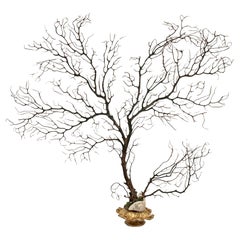
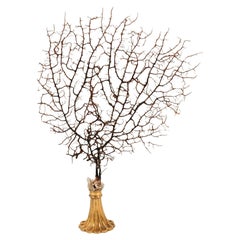
Black Coral Sea Fan Sculpture
Located in Houston, TX
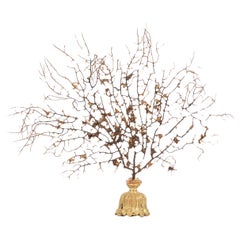
Black coral sea fan embellished with tourmaline and a showy quartz druzy shell specimen mounted on a 19th-Century French bronze doré fragment. This is a lovely objet d'art to add to ...
Category

21st Century and Contemporary Renaissance Decorative Objects

Materials

Coral, Quartz, Bronze

Grand Tour Bronze of the Equestrian Statue of Colleoni After Verrocchio
By Andrea del Verrocchio
Located in Vancouver, British Columbia
A very finely cast late 19 century Grand Tour bronze replica of the renowned statue of Bartolomeo Colleoni on horseback set on a verde antico marble base after the life sized bronze statue by the Renaissance sculptor Andrea Del Verrocchio...
Category

Late 19th Century Italian Antique Renaissance Decorative Objects

Materials

Bronze

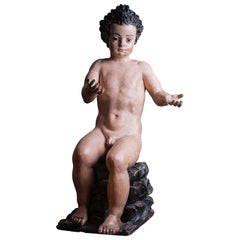
Cercle of Juan Martinez Montañés 1568-1649 , Infant St John the Baptist
Located in Bruxelles, BE
Cercle of Juan Martinez Montañés (1568-1649) Infant St John the Baptist Spanish, 17th century H 74 cm Saint John the Baptist is here represented naked, sitting on a rock, with...
Category

17th Century Spanish Antique Renaissance Decorative Objects

Materials

Wood

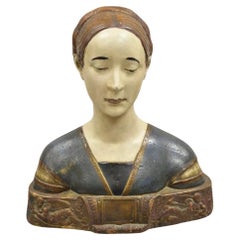
Vintage Polychrome Plaster Bust Ippolita Maria Sforza Statue Renaissance Style
Located in Philadelphia, PA
Vintage Polychrome Plaster Bust of Ippolita Maria Sforza in the Renaissance Style After Francesco Laurana. Circa Early 20th Century. Measurements: 19" H x 19" W x 9" D.
Category

Early 20th Century Unknown Renaissance Decorative Objects

Materials

Plaster

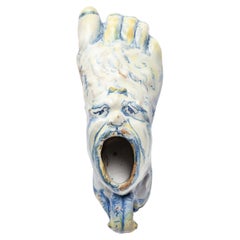
Renaissance Inkwell Calamelli workshop, Italy, Faenza, second half of the 16th
By Virgiliotto Calamelli
Located in Milano, IT
Inkwell Calamelli workshop (attr.). Faenza, second half of the 16th century Height 4.33 in; length 8.07 in; depth 2.95 in (11 cm; 20.5 cm; 7.5 cm) Weight: 0.800 lb (363 g) State of conservation: some chipping to the top of the mask around the mouth. Handle glued, without any restorations; minor chips in some raised areas. This object has the shape of a foot wearing Greek-style footwear, as can be seen in some raised areas. The foot is anatomically modeled with bare toes, while the ankle is partially covered by the footwear. On the heel, there is a small circular handle to support the object. The mouth of the container is shaped like a mask. The interior, completely enameled, suggests that the piece was intended to be used as an inkwell or to contain some other liquid. The base, however, is not enamelled. The painted decoration, scant and brief, consists of rapid cobalt blue shading between the toes of the foot, with more precise emphasis on the nails. It is accompanied by yellow citrine accents to enhance the forms. The mask is painted with the tip of the brush, to accentuate the tense nature of the eyes and to accentuate their outline. Thin strokes of yellow-orange line the interior of the mouth. Since the Renaissance, this decoration has been referred to as "compendiaria" and it characterizes the period of production extending from the mid-16th century to approximately the middle of the following century. It significantly influenced tastes at the time. It evolved from the polychrome style "istoriato" and transformed into a new style that "summarized" (compendia), or condensed, the ornamentation of the works into a few colors, placing greater prominence on the shapes. It was often inspired by metal specimens. Since the Renaissance, this decoration has been referred to as "compendiaria" and it characterizes the period of production extending from the mid-16th century to approximately the middle of the following century. It significantly influenced tastes at the time. It evolved from the polychrome style "istoriato" and transformed into a new style that "summarized" (compendia), or condensed, the ornamentation of the works into a few colors, placing greater prominence on the shapes. It was often inspired by metal specimens. This artwork finds parallels in similar objects all characterized by this refined style and produced in the city of Faenza and other Italian centers starting from the mid-16th century. The closest comparable example in majolica is a foot acquired by the British Museum in 2011 (inv. 2011, 8008.1). This was previously published by Carmen Ravanelli Guidotti in 1996 and later by Dora Thornton in 2016 during the conference on Renaissance ceramics...
Category

16th Century Italian Antique Renaissance Decorative Objects

Materials

Maiolica

German White Porcelain Male Nude Putti Sculptures, Set of 6
Located in New York, NY
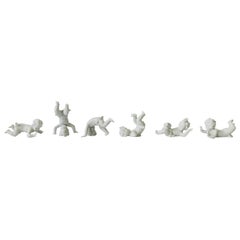
A set of six (6) German white porcelain male nude putti sculptures in the Renaissance or Neoclassical styles, circa 20th century, Germany. A fun set of six male nude tumbling putti s...
Category

Mid-20th Century German Renaissance Decorative Objects

Materials

Porcelain

19th Century Italian Frame in Renaissance Style Wood Marquetry.
Located in Saint-Ouen, FR
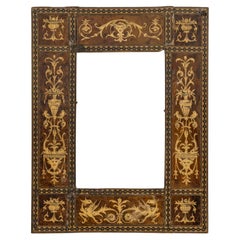
19th century Italian frame in Renaissance style wood marquetry. 19th century Italian Renaissance style wood marquetry frame. Frame: H: 25.5cm, W: 20cm, D: 1cm Interior view: H: 14,8...
Category

19th Century Italian Antique Renaissance Decorative Objects

Materials

Wood

Pair of Green Patinated Bronze Horses
By Ludovico De Luigi
Located in Queens, NY
Pair of Italian Renaissance style green patinated bronze figure of horse walking (from a series of 1,000 titled: "Cavalli di San Marco II", signed by L...
Category

20th Century Italian Renaissance Decorative Objects

Materials

Bronze

Pair of Italian Renaissance Altar Candlesticks
Located in Queens, NY
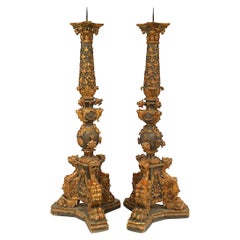
PAIR of Italian Renaissance-style (17th Century) dark green painted large floor standing altar style candlesticks with gilt carved floral and vine trim supported on base with 3 griff...
Category

17th Century Antique Renaissance Decorative Objects

Materials

Wood

Black Coral Sea Fan and Citrine Sculpture~ Napoleon III Bronze Doré Fragment
Located in Houston, TX
A lacey black coral sea fan embellished with natural citrine mounted on a 19th-Century French bronze doré fragment. This is a lovely objet d'art to add to your collection or cabinet....
Category

21st Century and Contemporary Renaissance Decorative Objects

Materials

Coral, Bronze

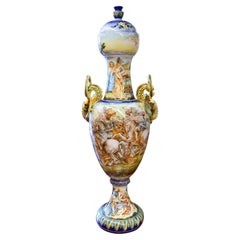
Majestic Amphora Vase Majolica Painted Subject Inspired by Leonardo Da Vinci
Located in Recanati, IT
Majestic majolica Amphora vase, with a height of 200 cm (78,7 in) and a diameter of 70 cm (27,5 in): a unique piece, entirely handmade and hand-painted in Gubbio, Central Italy, in 1...
Category

1990s Italian Renaissance Decorative Objects

Materials

Ceramic, Majolica

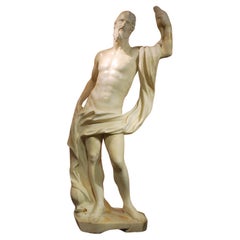
A 16th century carved marble sculpture of poseidon
Located in London, GB
This fine and imposing sculpture is an excellent example of 16th century Italian craftsmanship. The figure is stood on a raised, shaped rectangular base with a carved "dolphin" at th...
Category

16th Century Italian Antique Renaissance Decorative Objects

Materials

Marble

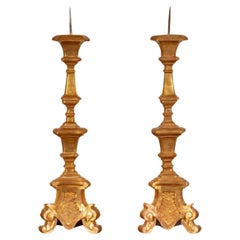
Pair of 18th C Style Italian Giltwood Picket Candlesticks
Located in LOS ANGELES, CA
Pair of 18th C Style Italian Giltwood Picket Candlesticks
Category

1990s American Renaissance Decorative Objects

Materials

Giltwood

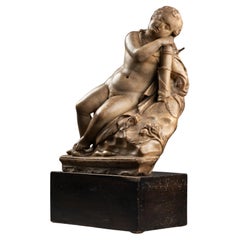
Sleeping Eros - Rome, 16th century
Located in Bruxelles, BE
Sleeping Eros Rome, 16th century
 Carrara marble, on a wooden base
 of an ancient collection 31 × 44 x 17 cm Carved from a fine block of Carrara marble, this sculpture depicts Eros ...
Category

16th Century Italian Antique Renaissance Decorative Objects

Materials

Carrara Marble

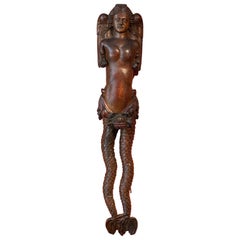
16th Century Southern Germany Carved Wood Bracket Depicting a Mermaid
Located in Saint-Ouen, FR
In Medieval Europe and even more during the early 16th century fantastic beasts could be found in Bestiaries, a literary genre close to poetry. A bestiary used the characteristics of...
Category

16th Century German Antique Renaissance Decorative Objects

Materials

Wood

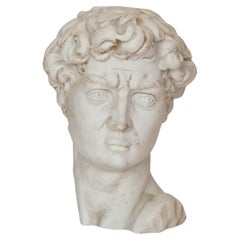
David s head, by Michelangelo, a decorative 20th Century copy, Italy no 1169.
Located in Stockholm, SE
A decorative sculpture / bust of David's head by Michelangelo, a mid-20th Century copy, made in Italy. Marked no 1169 with an italian eagle crest. A beautiful decor for the bookshe...
Category

Mid-20th Century Italian Renaissance Decorative Objects

Materials

Stone

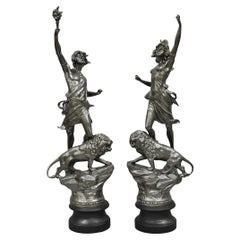
Antique French Renaissance "Le Force Le Pouvoir" Spelter Metal Sculpture Pair
Located in Philadelphia, PA
Antique French Renaissance "Le Force & Le Pouvoir" Spelter Metal Sculptures Raised on Wooden Bases - a Pair. Circa Early 20th Century. Measurements: 27" H x 9" W x 5.25" D.
Category

Early 20th Century Unknown Renaissance Decorative Objects

Materials

Metal

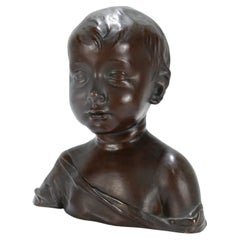
Renaissance Style Cast Bronze Bust of a Child after Desiderio
By Desiderio da Settignano
Located in Philadelphia, PA
A very fine copy of the Renaissance sculpture entitled 'A Little Boy'. After Italian Renaissance sculptor Desiderio da Settignano, or Desiderio de Bartolomeo di Francesco detto Ferro. In cast bronze. Simply a wonderful bust! Date: 20th Century Overall Condition: It is in overall good, as-pictured, used estate condition. Condition Details: There is rubbing to the patina on the crown of the head...
Category

20th Century Italian Renaissance Decorative Objects

Materials

Bronze

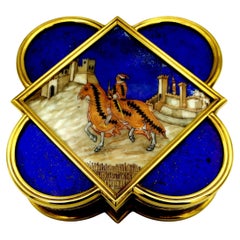
Table Box shaped tiles of the Baptistery of Florence Salimbeni
Located in Firenze, FI
Shaped box in 925/1000 sterling silver gold plated with painted fire enamels like lapis lazuli stone and beautiful miniature hand painted by the painter Beatrice Mellana reproducing ...
Category

1970s Italian Vintage Renaissance Decorative Objects

Materials

Gold, Gold Plate, Sterling Silver, Enamel
15th Century Italian Renaissance Bronze Medallion
Located in Fort Lauderdale, FL
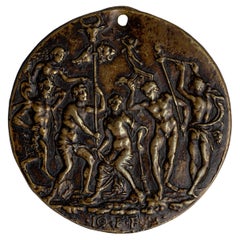
Renaissance bronze medallion made by Master IOFF in the mid 15th century, showing the mythological scene of Ariadne on Naxos. Made in the mid-15th ...
Category

15th Century and Earlier Italian Antique Renaissance Decorative Objects

Materials

Bronze

Pair of fruitwood gothic revival carved cherubs
Located in Debenham, Suffolk
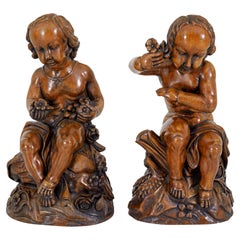
Pair of gothic revival carved cherubs circa 1970. Good quality pair of hardwood cherubs which are coloured to match walnut. Each figure seated on a plinth base of carved rock, tree...
Category

Late 20th Century English Renaissance Decorative Objects

Materials

Fruitwood

Hand Painted Blue Majolica Handles Bowl Centerpiece Ornament Renaissance Deruta
Located in Recanati, IT
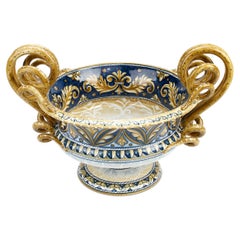
This fine majolica centerpiece is made and hand-painted in Deruta, Italy. The Bowl recalls the ancient structure of the Greek cups that were used to mix wate...
Category

21st Century and Contemporary Italian Renaissance Decorative Objects

Materials

Ceramic, Majolica

Pill box big size Florentine Renaissance Sterling Silver Salimbeni
Located in Firenze, FI
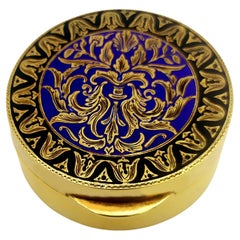
Large round pillbox in 925/1000 sterling silver gold plated with fine fire-enamelled engraving in two colours, in Florentine Renaissance style. Diameter cm. 5 cm high. 2. Weight gr. ...
Category

1980s Italian Vintage Renaissance Decorative Objects

Materials

Gold Plate, Sterling Silver, Enamel

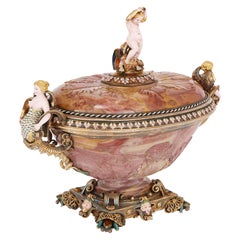
Agate Cup with Jewelled and Enamelled Gold and Silver-Gilt Mounts by Morel
By Jean-Valentin Morel
Located in London, GB
This exquisite work of art was created circa 1836-1840 in France by the acclaimed French gold and silversmith, Jean-Valentin Morel. Using only the finest of materials and with exceptional attention to detail, this magnificent piece is without doubt one of the finest creations within the field of decorative arts in the 19th century. The body of the cup has been crafted from the pinky-red and orange gemstone, agate, and fitted with gold and silver-gilt mounts, which have, in some places, been jewelled and enamelled. Morel specialized in high quality hard stone cups...
Category

Early 19th Century French Antique Renaissance Decorative Objects

Materials

Agate, Silver, Gold, Enamel

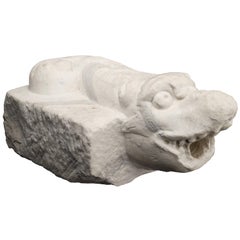
Italian Ancient Marble Sculpture Fountain, Late 16th Century
Located in Milano, IT
Sea monster Carrara marble mouth fountain Italy, late 16th century It measures 13.8 x 31.5 x 18.9 in (35 x 80 x 48 cm) State of conservation: some small evident gaps and widespread signs of wear due to outdoor exposure. The gray marks crossing it do not come from restoration, but are rather the natural veins of the marble. This work has some morphological characteristics typically associated with the iconography of the sea monster: an elongated muzzle, sharp teeth, protruding eyes, elongated ears, and a coiled serpent's tail. An in-depth series of studies on artistic depictions of the sea monster attempted to verify how this symbol evolved in antiquity in the European and Mediterranean contexts and how it gradually changed its image and function over time. The iconography itself is mutable and imaginative and its history is rich with cultural and artistic exchange, as well as the overlapping of ideas. This occurred so much that it is difficult to accurately pinpoint the "types" that satisfactorily represent its various developments. However, we can try to summarize the main figures, starting from the biblical Leviathan and the marine creature that swallowed Jonah (in the Christian version, this figure was to become a whale or a "big fish", the “ketos mega”, translation of the Hebrew “dag gadol”). Other specimens ranged from the dragons mentioned in the Iliad (which were winged and had legs) to "ketos” (also from Greek mythology), the terrifying being from whose Latinized name (“cetus”) derives the word "cetacean". See J. Boardman, “Very Like a Whale” - Classical Sea Monsters, in Monsters and Demons in the Ancient and Medieval Worlds, in Papers presented in Honor of Edith Porada, Mainz am Rhein 1987, pp. 73-84). In Italy the monster underwent yet further variations: it can be found in Etruscan art on the front of some sarcophagi representing the companion of souls, while among the Romans we find the “Pistrice” (cited by Plinio in Naturalis Historia PLIN., Nat., II 9, 8 and by Virgilio in Eneide: VERG., Aen., III, 427), which appeared in the shape of a stylized hippocampus or a very large monstrous cetacean and evolved into a hideous being with a dragon's head and long webbed fins. During the Middle Ages, the sea monster was the object of new transformations: at this time, it is often winged, the head is stretched like a crocodile, the front legs are often very sharp fins - sometimes real paws - until the image merges with dragons, the typical figures of medieval visionary spirituality widely found throughout Europe (on this topic and much more, see: Baltrušaitis, J., Il Medioevo fantastico. Antichità ed esotismi nell’arte gotica, Gli Adelphi 1997). In Italy during the 15th and 16th centuries, the revival of classicism - representative of the humanistic and Renaissance periods - led to a different reading of these "creatures". Indeed, the sea monster was also to find widespread use as an isolated decorative motif, especially in numerous fountains and sculptures where dolphins or sea monsters were used as a characterizing element linked to water (on this theme see: Chet Van Duzer, Sea Monsters on Medieval and Renaissance Maps, London, The British library, 2013). From the morphological point of view, the "sea monsters" of this period are mostly depicted as hybrid figures, in which the body of a mythological or real being (a hippocampus, a sea snake, a dolphin), is joined to a head with a rather indistinct appearance. It was usually characterized by large upright ears, an elongated snout, sharp teeth and globular, protruding eyes; a complex and indefinite figure, both from the symbolic point of view and from that of its genesis. The work we are examining is placed as a cross between the medieval sea serpent and the Renaissance dolphin, with stylistic features which recall the snake as often used in heraldry (such as the "snake" depicted in the coat of arms of the Visconti - the lords and then dukes of Milan between 1277 and 1447 - and which, for some, may be derived from the representations of the “Pistrice” that swallowed Jonah). In the search for sources, Renaissance cartography and in particular woodcuts should not be neglected. See for example the monsters of Olaus Magnus, from the editions of the “Historia de gentibus septentrionalibus” (“History of the peoples of the north”) and the natural histories of Conrad Gesner, Ulisse...
Category

16th Century Italian Antique Renaissance Decorative Objects

Materials

Carrara Marble

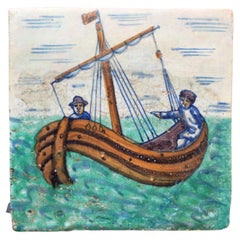
Extremely Rare Rotterdammer Tile with Two Men in a Boat, Early 17th Century
Located in AMSTERDAM, NH
An extremely rare, so-called, Rotterdammer tile, with the decoration of a sailboat. Country: The Netherlands Place: Rotterdam Date: circa 1615 - 1620 Workshop: Claes Wijtmans This tile comes from one of the most rare and sought after tile series...
Category

Early 17th Century Dutch Antique Renaissance Decorative Objects

Materials

Ceramic, Majolica

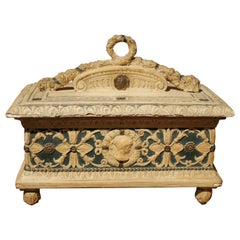
Italian 19th Century Renaissance Style Wood Lacquer and Painted Gesso Lidded Box
Located in Firenze, IT
This beautiful 19th century Florentine rectangular lidded box is entirely decorated in the round with all typical Renaissance Italian patterns. The whi...
Category

19th Century Italian Antique Renaissance Decorative Objects

Materials

Gesso, Plaster, Wood

18th Century Wood Sculpture of a Saint
Located in Chapel Hill, NC
An 18th Century carved polychromed Saint, various old repairs losses, but truly great original surface! 42 1/2"h. We are a family business that has been a major source f...
Category

18th Century Italian Antique Renaissance Decorative Objects

Materials

Wood

Embriachi workshop marquetry casket - Northern Italy, 15th century
Located in Bruxelles, BE
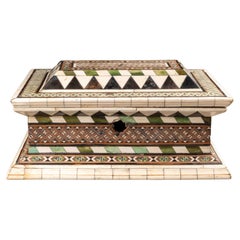
Embriachi workshop marquetry casket Northern Italy, 15th century Alla certosina inlays (bone, stained bone, pewter and wood) H 28.2 x W 18 x D 14 cm This beautiful casket of rectangular form is richly decorated with the characteristic geometric patterns of the Embriachi style. The intricate geometric patterns are fashioned by juxtaposing lighter and darker pieces of wood, (colored) bone, horn and pewter. The lid and base are framed by a broad band of horn. When ivory became scarce in Europe due to disrupted trade routes, bone was substituted. The attention to Symmetry and balance created an harmonious visual effect Enhancing the overall aesthetic appeal of the casket. The application of geometrical motifs is in Italy known as marquetry ‘alla Certosina’, named after the Certosina Church in Pavia with its famous altarpiece decorated in this way. This is ‘intarsia technique’, a term derived from the Arabic 'tarsi', which means ‘incrustation' recalling ancient mosaics made from various materials. These geometric elements not only enhance the aesthetic appeal of the caskets but also demonstrate the versatility and skill of the artisans in creating multifaceted works of art. ‘Alla Certosina’ became famous through the Northern Italian Embriachi family who achieved a particularly high standard in working in this technique. Venice in particular was known for the production of these luxurious boxes. The caskets, hexagonal or rectangular, surmounted by a lid decorated in several registers constitute the secular, albeit equally renowned component of the workshop’s production, in addition to mirror frames and various everyday objects. The method of fabrication of those objects was based on two concepts that underlay pre-industrial production: standardization and modularity, thanks to a distribution of skills according to the different phases of fabrication. even the realization of the marquetry motifs (in the form of ingots from which portions of the desired size were cut) were therefore entrusted to various specialized craftsmen, as were the assembly phase. Today better known thanks to the extensive research work recently carried out by Michele Tomasi, this workshop owes its name to its founder and owner, the Florentine Baldassare Ubriachi (or degli Embriachi), a merchant and banker established in the Tuscan capital before he settled in Venice in 1395. Together with sculptor Giovanni di Jacopo, who directed the workshop, from the last years of the fourteenth century, Baldassare oversaw a production that was truly original, and still easily recognizable today, comprising monumental altarpieces and various objects, primarily triptychs and caskets. The precise location of the workshop is unknown, except that it originated in Florence and in ca. 1431 there was apparently a workshop in Venice, in the area of S Luca. They employed local workers specializing in 'certosina' (inlay of stained woods, bone and horn), and the workshop produced items carved in bone (usually horse or ox) with wood and bone marquetry. The geometric decoration of Embriachi caskets reflects the artistic complexity and attention to detail that characterized their work. this inlaid casket is a testament to the skill and artistry of the Embriachi family and serves as a stunning example of the decorative arts of the late Middle Ages. Related Literature : E. Berger, Prunk-Kassetten: Europäischen Meisterwerke aus acht Jahrhunderten / Ornamental Caskets...
Category

15th Century and Earlier Italian Antique Renaissance Decorative Objects

Materials

Pewter

Antique 17th Century Carved Boxwood Cherub Wall Hanging
Located in Wormelow, Herefordshire
An antique carved boxwood cherub decorative wall hanging dating to circa 1650. Crafted in boxwood, this renaissance style sculpture depicts a detailed handcarved cherub or putti bea...
Category

Mid-17th Century English Antique Renaissance Decorative Objects

Materials

Wood, Boxwood

Italian Corpus Christi
Located in S-HERTOGENBOSCH, NL
Hand-carved Italian Corpus Christi with traces of polychromy. This sculpture reflects the transition from Gothic to Renaissance style.
Category

16th Century Italian Antique Renaissance Decorative Objects

Materials

Wood

Antique Italian Renaissance Revival Elaborately Decorated Terracotta Pitcher
Located in Allentown, PA
This is an Italian renaissance revival ornately decorated terra-cotta pitcher. This vessel features extraordinary hand-painted figures and flora around the entire surface of this pie...
Category

1920s Italian Vintage Renaissance Decorative Objects

Materials

Terracotta

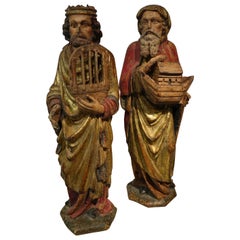
Pair of rare statues , Noah and King David, Flanders, early 16th century
Located in PARIS, FR
Noah and King David, Flanders, early 16th century Rare wood carvings in the round of Noah holding the Ark and King David holding his lyre. Noah, a biblical figure, is the tenth and l...
Category

16th Century Belgian Antique Renaissance Decorative Objects

Materials

Wood

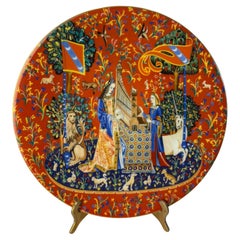
Haviland Limoges France Decorative Plate La Chasse a La Licorne 1979 Limited Ed.
Located in Moreno Valley, CA
Robert Haviland & C. Parlon Limoges France Decorative Plate 1979 Limited Ed # 3. Limited Edition collectible plate "The Lady and the Unicorn" by Robert Haviland & Co and Limoges France. Haviland Limoges France Limited Edition Porcelain Collector Plate "La Dame a La Licorne". La Chasse a La Licorne Limoges Haviland C. Parlon Collectible Plate. 1970s French Limoges limited edition and 22-karat gold collectors plate by Haviland & Parlon. This coveted and rare collector plate display a scene from the famous late fifteenth century Renaissance Paris tapestries of unicorn hunting scene ," La Chasse A La Licorne". The plate is hand painted with an incredible amount of detail, bright and bold colors with a 22-karat gold rim. Made of porcelain with a glossy finish, this round plate features a stunning multicolor fairy tale design with a unicorn theme. The plate is handmade and painted, and is part of the Limoge product line. This vintage Haviland Limoges La Chasse a la Licorne Unicorn Plate...
Category

20th Century French Renaissance Decorative Objects

Materials

Porcelain

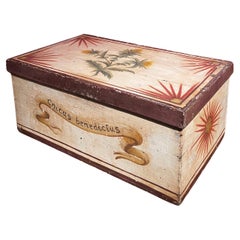
Antique Renaissance Style Italian Wood Lacquered Apothecary Box
Located in Firenze, IT
This lovely antique lacquered apothecary box was crafted in Italy in late 19th century in the style of medicinal herbs casket in use in pharmacies during the Middle Age and Renaissan...
Category

19th Century Italian Antique Renaissance Decorative Objects

Materials

Wood

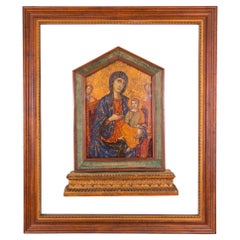
Madonna Enthroned with the Child Christ, 17th Century, Gold Gilded on Wood Panel
Located in North Miami, FL
17th Century Italian polychromed and gold gilded on wood panel Sienese style painting of the Madonna Enthroned with the child and two adoring angels behind them. The halos are beautifully adorned with punch work. She is framed by a hand-carved gold gilded and velvet lined frame and sitting on a hand-carved matching base. The piece is mounted on a Lucite panel and framed with a contemporary hand-finished wood molding.
Category

Early 17th Century Italian Antique Renaissance Decorative Objects

Materials

Gold Leaf

Black Coral Sea Fan Sculpture
Located in Houston, TX
Black coral sea fan embellished with natural quartz mounted on a 19th-Century French Napoleon III bronze doré fragment. This is a lovely objet d'art to add to your collection or cabi...
Category

21st Century and Contemporary Renaissance Decorative Objects

Materials

Coral, Quartz, Bronze

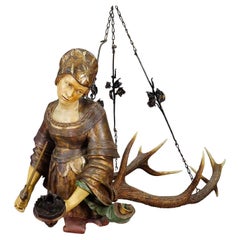
Antique Lusterweibchen Depicting Lucretia, Germany 1900
Located in Berghuelen, DE
Antique Lusterweibchen Depicting Lucretia, Germany 1900 An impressive antique chandelier depicting Saint Lucretia, the Roman heroine who turns the dagger against herself and commits...
Category

Early 1900s German Antique Renaissance Decorative Objects

Materials

Iron

Small shaped Picture Frame tiles of the Baptistery of Florence Salimbeni
Located in Firenze, FI
Frame in 925/1000 sterling silver gold plated with translucent fired enamels on guillochè. Shaping taken from the tiles of the North Door of the Baptistery of the Florence Cathedral ...
Category

1970s Italian Vintage Renaissance Decorative Objects

Materials

Sterling Silver, Enamel, Gold Plate

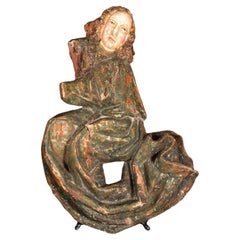
Angel, Carved and Polychrome Wood, 16th Century
Located in Madrid, ES
Angel. Carved and polychrome wood. Century XVI. Polychrome wood carving showing an angel, with the face facing the viewer and the body in pr...
Category

16th Century Spanish Antique Renaissance Decorative Objects

Materials

Wood

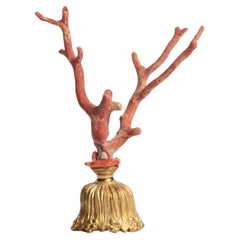
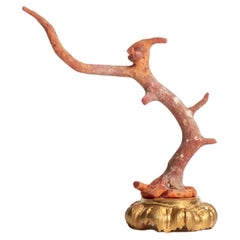
Red Coral Sculpture~ Napoleon III Bronze Doré Fragment
Located in Houston, TX
Red coral branch mounted on a 19th-Century French bronze doré fragment. This is a lovely objet d'art to add to your collection or cabinet. During the Renaissance, Cabinets of Art an...
Category

21st Century and Contemporary Renaissance Decorative Objects

Materials

Coral, Bronze

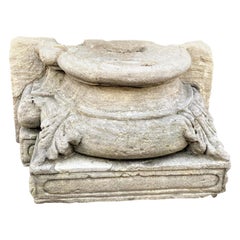
Hand Carved Stone Column Base Pedestal Sculpture Doorstop Decorative Element LA
Located in West Hollywood, CA
Hand Carved Stone Column Base pedestal Sculpture Doorstop Decorative Element LA . Nicely hand carved 17th century Renaissance stone column base appli...
Category

17th Century French Antique Renaissance Decorative Objects

Materials

Stone

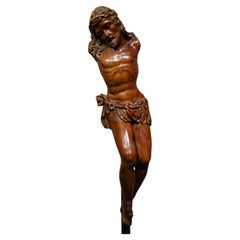
Christ in Boxwood, France, late 16th-early 17th century".
Located in PARIS, FR
Christ in Boxwood, France, late 16th-early 17th century Beautiful corpse of Christ with missing arms. He must have been on the Cross, arms in a horiz...
Category

Early 17th Century French Antique Renaissance Decorative Objects

Materials

Boxwood

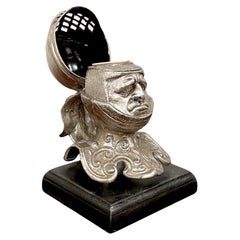
19th Century English Silvered Metal Worried Knight Inkwell
Located in West Palm Beach, FL
19th Century English Silvered Metal 'Worried Knight' Inkwell Add a touch of classical whimsy to your home or office with our tole figural knight inkwell. Made in later 19th century ...
Category

Late 19th Century English Antique Renaissance Decorative Objects

Materials

Metal

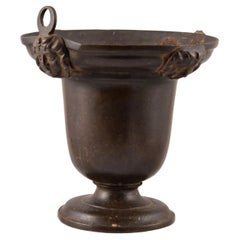
Bronze Situla, 16th Century
Located in Madrid, ES
Acetre. Bronze. Century XVI. Bronze piece that has a circular foot, and a circular body, with an outwardly hollowed mouth at the top, and a decoration in relief in this last area o...
Category

16th Century European Antique Renaissance Decorative Objects

Materials

Bronze

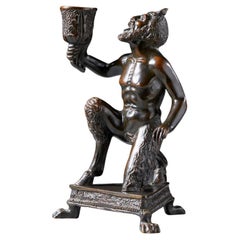
Calzetta Da Ravenna Severo Candlestick Depicting a Kneeling Satyr
By Severo Calzetta da Ravenna
Located in Milano, IT
Calzetta Da Ravenna (Attivo Tra IL 1496 E IL 1543 circa) Severo. Circle of. Candlestick depicting a kneeling satyr. The model of the present bronze is the ""kneeling satyr"" attributed to Severo Calzetta da Ravenna, one of the main Paduan bronze sculptors of the first half of the 16th century, whose figure was rediscovered by Planiscig in 1935 (L. Planiscig, ""Severo da Ravenna...
Category

16th Century Italian Antique Renaissance Decorative Objects

Materials

Bronze

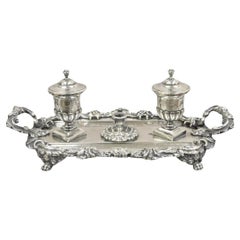
Vintage French Renaissance Silver Plated Figural Italian Inkstand Desk Inkwell
Located in Philadelphia, PA
Vintage French Renaissance Silver Plated Figural Italian Inkstand Desk Double Inkwell. Item features double inkwell with inserts, central can...
Category

Early 20th Century Unknown Renaissance Decorative Objects

Materials

Silver Plate

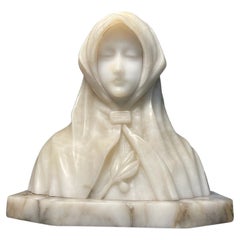
Alabaster and Marble Bust of Saint Clare of Assisi
Located in Guaynabo, PR
This is an alabaster and marble bust of Saint Clare of Assisi. It depicts a young lady head/face covered with a cloak. She is looking down, very peacefully...
Category

Early 20th Century Unknown Renaissance Decorative Objects

Materials

Alabaster, Marble

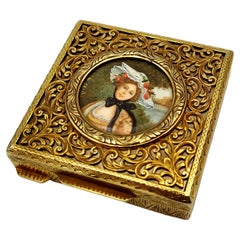
Snuff Box Perforated Lid, Embossed and Engraved Miniature Salimbeni
Located in Firenze, FI
Square snuff box in 925/1000 sterling silver gold plated with perforated lid, embossed and engraved by hand, with fine round miniature diameter cm. 3.8 hand painted in tempera on veg...
Category

1970s Italian Vintage Renaissance Decorative Objects

Materials

Sterling Silver, Enamel

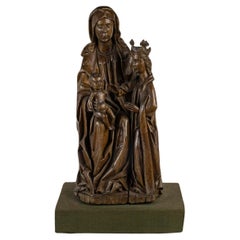
Oak Sculpture of Saint Anne, 16th Century.
Located in Saint-Ouen, FR
Oak sculpture of Saint Anne, 16th century. Large oak sculpture of Saint Anne. Work from the Upper Rhine, Basel region. First third of the 16th century. An arm is missing from the i...
Category

16th Century French Antique Renaissance Decorative Objects

Materials

Oak

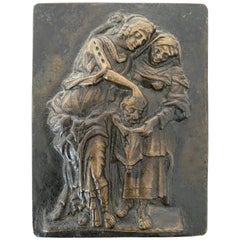
Judith with the Head of Holofernes, Plaquette After Riccio, Italian 17th Century
By Andrea Briosco (Riccio)
Located in Miami Beach, FL
Judith with the head of Holofernes, unsigned rectangular cast bronze plaquette, by Andrea Briosco, called Riccio (1470-1532), Judith...
Category

17th Century Italian Antique Renaissance Decorative Objects

Materials

Bronze

Red Coral Sculpture~ Napoleon III Bronze Doré Fragment
Located in Houston, TX
Red coral branch mounted on a 19th-Century French bronze doré fragment. This is a lovely objet d'art to add to your collection or cabinet. During the Renaissance, Cabinets of Art an...
Category

21st Century and Contemporary Renaissance Decorative Objects

Materials

Coral, Bronze

Renaissance decorative objects for sale on 1stDibs.

Find a broad range of unique Renaissance decorative objects for sale on 1stDibs. Many of these items were first offered in the 21st Century and Contemporary, but contemporary artisans have continued to produce works inspired by this style. If you’re looking to add vintage decorative objects created in this style to your space, the works available on 1stDibs include decorative objects, more furniture and collectibles, serveware, ceramics, silver and glass and other home furnishings, frequently crafted with metal, wood and other materials. If you’re shopping for used Renaissance decorative objects made in a specific country, there are Europe, Italy, and France pieces for sale on 1stDibs. While there are many designers and brands associated with original decorative objects, popular names associated with this style include Europa Antiques, Ferdinand Barbedienne, deBlona, and Andrea Salvatori. It’s true that these talented designers have at times inspired knockoffs, but our experienced specialists have partnered with only top vetted sellers to offer authentic pieces that come with a buyer protection guarantee. Prices for decorative objects differ depending upon multiple factors, including designer, materials, construction methods, condition and provenance. On 1stDibs, the price for these items starts at $100 and tops out at $348,500 while the average work can sell for $4,296.

Still Thinking About These?

All Recently Viewed