Renaissance Decorative Objects

RENAISSANCE STYLE

Spanning an era of cultural rebirth in Europe that harkened back to antiquity, the Renaissance was a time of change in design. From the late 1400s to the early 1600s, Rome, Venice and Florence emerged as artistic centers through the expansion of global trade and a humanist belief in the arts being central to society. Antique Renaissance furniture was ornately carved from sturdy woods like walnut, its details standing out against the tapestries and stained glass adorning the walls.

Renaissance chests, which were frequently commissioned for marriages, were often decorated with gilding or painted elements. Those that were known as cassoni were crafted in shapes based on classical sarcophagi. As opposed to the medieval era, when furniture was pared down to the necessities, a wide range of Renaissance chairs, tables and cabinets were created for the home, and the designs regularly referenced ancient Rome.

Large torchères of the Renaissance era that were used as floor lamps were inspired by classical candelabras, while marble surfaces evoked frescoes. The inlaid boxes being imported from the Middle East informed the intarsia technique, which involved varying hues of wood in mosaic-like patterns, such as those by architect Giuliano da Maiano in the Florence Cathedral.

Tapestry-woven cushion covers accented the variety of Renaissance seating — from conversation to study chairs — while bookcases for secular use reflected the migration of culture and knowledge from the church into the home. The aesthetics of the Italian Renaissance later spread to France through the publishing of work by renowned designers, including Hugues Sambin and Jacques Androuet du Cerceau. Centuries later, the 19th-century Renaissance Revival would see a return to this influential style.

Find a collection of antique Renaissance case pieces, decorative objects and other furniture on 1stDibs.

to
70
432
34
2
168
162
102
36
38
14
24
6
3
3
3
3
6
5
5
26,273
14,188
9,256
5,449
3,962
3,079
2,288
1,734
1,415
1,339
1,156
1,150
1,023
934
890
674
655
593
237
136
129
129
74
235
219
394
183
112
20
19
Height
to
Width
to
468
467
468
6
5
4
4
3
Style: Renaissance
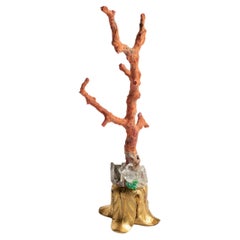
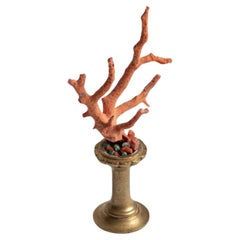
Jeweled Red Coral Sculpture~ Napoleon III Bronze Doré Fragment
Located in Houston, TX
Red coral branch embellished with natural emeralds and quartz mounted on a 19th-Century French bronze doré fragment. This is a lovely objet d'art to add to your collection or cabinet...
Category

21st Century and Contemporary Renaissance Decorative Objects

Materials

Coral, Quartz, Bronze

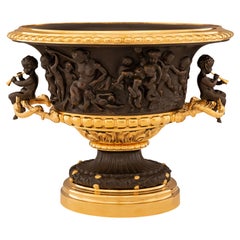
French 19th century Renaissance st. patinated Bronze and Ormolu centerpiece/urn
Located in West Palm Beach, FL
An elegant and high quality French 19th century Renaissance st. patinated Bronze and Ormolu centerpiece/urn. This beautifully detailed urn is raised by a circular mottled and stepped...
Category

19th Century French Antique Renaissance Decorative Objects

Materials

Bronze, Ormolu

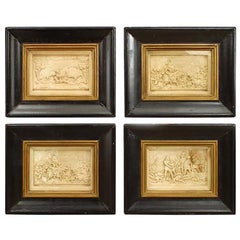
Italian Renaissance Style Soapstone Carvings
Located in Queens, NY
4 Italian Renaissance style (19th Century) carved soapstone wall plaques of Medieval scenes under glass in black frames.
Category

19th Century Antique Renaissance Decorative Objects

Materials

Soapstone

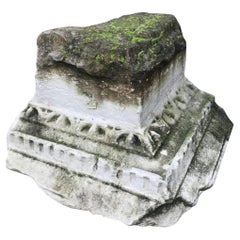
16th C. Hand Carved Capital Stone Base Architectural Element Sculpture Pedestal
Located in West Hollywood, CA
16th C. Hand Carved Capital Stone Base Architectural Element Sculpture Pedestal. Very rare 16th Century Renaissance corner Capital . Hand carved limestone Chapiteau Capital from a Cloister in France . From an ornamental point of view , it is the coronation , the upper part of a post or a column or pilaster pillar . A beautiful Architectural element garden ornament . It can used as a Base for a coffee glass table , or as a side table for drinks or to mount books. A stunning Fragments to be used as stand for a sculpture . Use it as a pedestal or as a mounted decorative object. In an entryway a bathroom a living room , in an office , it will create an incredible focal point . It can make a beautiful base for a floor lamp by a leather reading chair...
Category

16th Century French Antique Renaissance Decorative Objects

Materials

Stone, Limestone

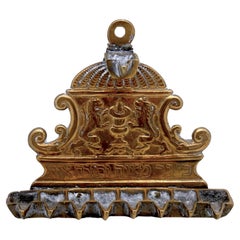
An Italian Brass Hanukkah Lamp, 18th Century
Located in New York, NY
An Italian Brass cast bench Hanukkah lamp made in the Renaissance era of the 18th century. A pair of rampant lions leaning on a goblet-shaped burning incense alter is reminiscent of...
Category

18th Century Italian Antique Renaissance Decorative Objects

Materials

Brass

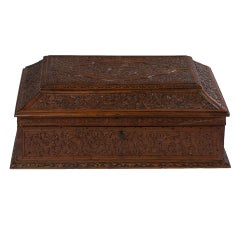
Louis XIV Fruitwood Casket, Attributed to César Bagard
By Cesar Bagard
Located in Kittery Point, ME
Carved overall with arabesques and scrolls, the lid centering a crowned armorial. César Bagard was born in Nancy in 1620. Most of the work known to have been carved by him was comp...
Category

18th Century and Earlier French Antique Renaissance Decorative Objects

Materials

Metal

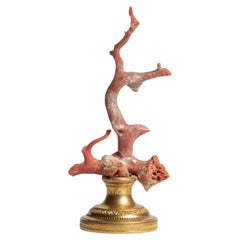
Red Coral Sculpture~ Napoleon III Bronze Doré Fragment
Located in Houston, TX
Red coral mounted on a 19th-Century French bronze doré fragment. This is a lovely objet d'art to add to your collection or cabinet. During the Renaissance, Cabinets of Art and Curio...
Category

21st Century and Contemporary Renaissance Decorative Objects

Materials

Coral, Bronze

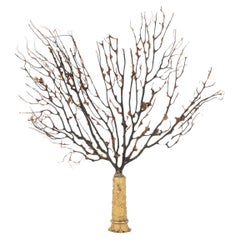
Black Coral Sea Fan Sculpture~ Napoleon III Bronze Doré Fragment
Located in Houston, TX
A lacey black coral sea fan embellished mounted on a 19th-Century French Napoleon III bronze doré fragment. This is a lovely objet d'art to add to your collection or cabinet. Duri...
Category

21st Century and Contemporary Renaissance Decorative Objects

Materials

Coral, Bronze

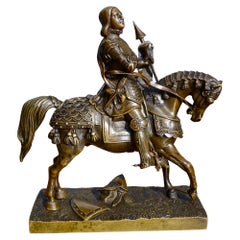
A 19 Century Bronze Statue of St Joan of Arc in full body armour on horseback
Located in Vancouver, British Columbia
An small but exquisitely cast and highly detailed bronze statue of St Joan of Arc in full body battle armour including the horse with one hand holding ...
Category

Mid-18th Century French Antique Renaissance Decorative Objects

Materials

Bronze

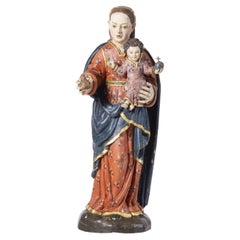
Our Lady with Child Jesus Savior of the World 17th Century
Located in Madrid, ES
Our lady with child Jesus savior of the world 17th century Portuguese sculpture in polychrome and gilded wood. Repaints. Height: 71 cm very g...
Category

Early 17th Century Portuguese Antique Renaissance Decorative Objects

Materials

Wood

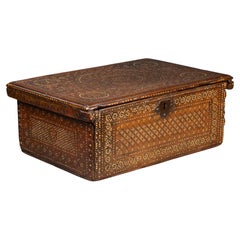
Hispano-Moresque Mudéjar Bone-Inlaid Walnut Chest
 - Spain, 16th century
Located in Bruxelles, BE
Hispano-Moresque Mudéjar Bone-Inlaid Walnut Chest
 Spain, 16th–17th century 
Walnut, bone inlay, iron fittings
 44.5 × 30.5 × 18 cm This rectangular walnut chest, richly ornamented ...
Category

16th Century Spanish Antique Renaissance Decorative Objects

Materials

Bone, Walnut

Sculpture of John The Baptist, 16th Century
Located in North Miami, FL
Early 16th Century Spanish gold gilded and polychromed carved wood sculpture of John The Baptist.
Category

16th Century Spanish Antique Renaissance Decorative Objects

Materials

Gold Leaf

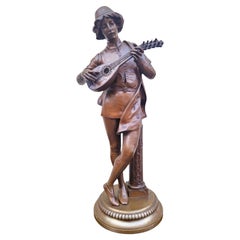
Paul Dubois, The Florentine Singer Of The 15th Century, Signed Bronze, 19th Cent
Located in MARSEILLE, FR
Large double patina bronze representing the Florentine Singer of the 15th century, signed P Dubois Fr The young and elegant boy, standing, plays and sings, leaning against a column:...
Category

19th Century French Antique Renaissance Decorative Objects

Materials

Bronze

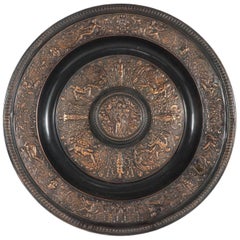
Cast Bronze Copper Flashed Patinated Renaissance Style Charger
Located in Hudson, NY
This charger made as an intentional remake of a famous object is fully embossed on the back as such and contains the maker's name. The charger contains many different scenes from ant...
Category

Early 20th Century European Renaissance Decorative Objects

Materials

Bronze, Copper

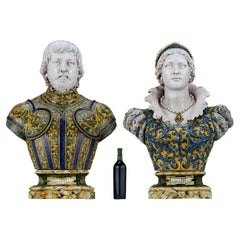
Isabella d Este and Francesco II Gonzaga Majolica Busts by Angelo
By Angelo Minghetti
Located in New Orleans, LA
These two busts, monumental in both their size and artistry, come from the renowned Italian majolica workshop of the famed Angelo Minghetti. Depicted are the Renaissance political an...
Category

19th Century Italian Antique Renaissance Decorative Objects

Materials

Enamel

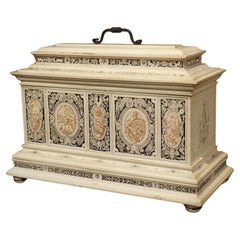
Antique Painted Table Coffer, Dated 1915
Located in Dallas, TX
A rather unique painted chest from Europe, this table coffer was commissioned in 1915. The right side (when viewing from the front) is dated, with the numbers flanking a springing ra...
Category

Early 20th Century European Renaissance Decorative Objects

Materials

Wood, Paint

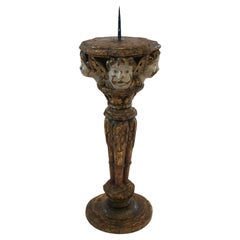
Renaissance Painted Giltwood Pricket with Cherubs - France - Circa 1580
Located in Chatham, ON
Renaissance period painted and giltwood candle holder or pricket - featuring four elaborately hand carved winged cherubs beneath an octogonal platform with the original hand forged i...
Category

16th Century French Antique Renaissance Decorative Objects

Materials

Gesso, Wood, Paint

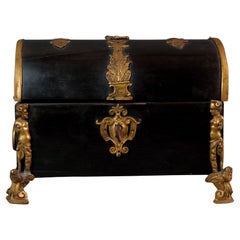
Early 17th Italian Renaissance Box Set Ebony, Gilded Bronze and Gemstones
Located in Pistoia, IT
Rare and valuable ebony-plated domed case with rich gilt bronze decoration and central jasper medallion. Italian Renaissance manufacture from the early 17th century. The production...
Category

Early 17th Century Italian Antique Renaissance Decorative Objects

Materials

Bronze

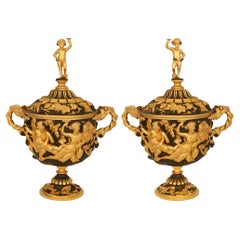
pair of French 19th century Renaissance st. patinated Bronze and Ormolu urns
Located in West Palm Beach, FL
A handsome and high quality pair of French 19th century Renaissance st. patinated Bronze and Ormolu urns. This wonderful pair of lidded urns are raised on circular bases with an Ormo...
Category

19th Century French Antique Renaissance Decorative Objects

Materials

Bronze, Ormolu

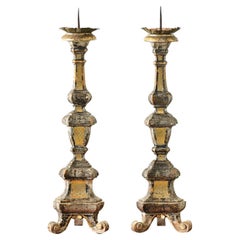
Pair of 16th Century Italian Gilt Candlesticks
Located in Baton Rouge, LA
A glorious pair of Italian giltwood altar candlesticks from the 1500’s; equally impressive is that this hand-carved pair have stayed together for over 400 years. Gold and silver gilt...
Category

16th Century Italian Antique Renaissance Decorative Objects

Materials

Giltwood

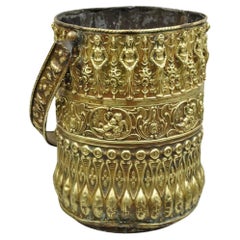
Antique French Renaissance Figural Brass Repousse Fireplace Coal Scuttle Bucket
Located in Philadelphia, PA
Antique French Renaissance Figural Brass Repousse Fireplace Coal Scuttle Bucket. Circa Early 19th Century. Measurements: 13.5" H x 12" W x 10" D.
Category

Early 19th Century Unknown Antique Renaissance Decorative Objects

Materials

Brass

Italian 19th Century Renaissance White Glazed Porcelain Figural Group Sculpture
By Carlo Ginori, Capodimonte, Giambologna
Located in Firenze, IT
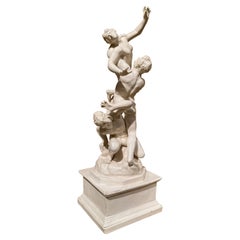
This compelling Italian 19th century white glazed porcelain sculpture depicts ‘The Rape of the Sabines’, after a monumental work by the Renaissance artist, Giambologna (1529-1608) th...
Category

19th Century Italian Antique Renaissance Decorative Objects

Materials

Porcelain

Italian 18th C. Majolica Wet Drug or Syrup Jar
Located in Bradenton, FL
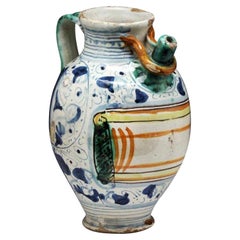
A beautifully decorated 18th century Italian Majolica faience ‘wet’ or syrup albarello/drug jar. Blue and white having a front reserve, blue and white scrolls to body. Beautifully de...
Category

18th Century Italian Antique Renaissance Decorative Objects

Materials

Pottery

Large Virgin and Child, Tyrol, 16th century
Located in PARIS, FR
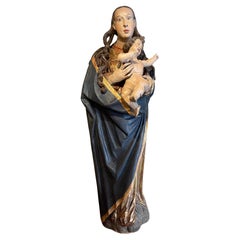
Large wooden Madonna and Child, painted and carved in hollow at the back. The theme of the Virgin and Child is the most represented in all Christian art, whereas the infancy of Jesus...
Category

16th Century German Antique Renaissance Decorative Objects

Materials

Wood, Pine

Set of 3 Italian Renaissance Musical Figures
Located in Queens, NY
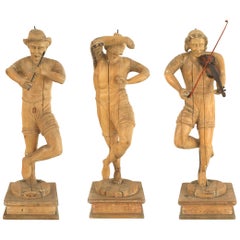
Set of 3 Italian Renaissance style (19th Cent) stripped large figures/statues playing musical instruments
Category

19th Century Antique Renaissance Decorative Objects

Materials

Wood

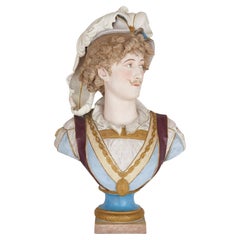
French Bisque Porcelain Portrait Bust in the Renaissance Manner
Located in London, GB
French bisque porcelain portrait bust in the Renaissance manner. French, 19th Century Measures: height 65 cm, width 40 cm, depth 22 cm. Th...
Category

19th Century French Antique Renaissance Decorative Objects

Materials

Porcelain

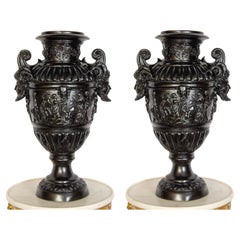
Pair of Renaissance Revival Bronze Black Painted Vases
Located in Rome, IT
Impressive pair of black patinated bronze vases in the style of Renaissance. Finely decorated handles with a satyr figure, over with a and body surrounded by bacchanal scenes. Exquis...
Category

1930s Italian Vintage Renaissance Decorative Objects

Materials

Bronze

Chest. Carved wood, metal. Spanish school, 16th century.
Located in Madrid, ES
Chest. Carved wood, metal. Spanish school, 16th century. Rectangular casket with a flat lid decorated on the outside with a series of figurative reliefs in a symmetrical arrangemen...
Category

16th Century Spanish Antique Renaissance Decorative Objects

Materials

Metal, Other

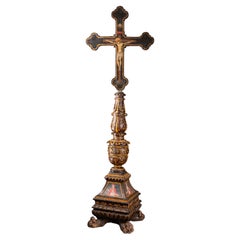
renaissance wooden candelabrum and painted cross - Umbria, 16th century
Located in Bruxelles, BE
Base of a carved wooden candelabrum, polychrome and gilded; cross painted on both sides. Umbria or Tuscany, 16th century 136 x 43,5 x 30 cm (The cross and the base of the candelabrum were later assembled) The base of the candelabrum is intricately carved and adorned with polychrome and gilded finishes. The shafts take on the shape of balusters reminiscent of ancient columns, feature ornate foliage decorations, garlands and winged cherub faces. The feet are crafted in the likeness of lion paws. The base is further embellished with depictions of four saint martyrs, among them Saint Barbara and Saint Catherine of Alexandria. The plasticity of the figures, outlined with strong contour lines, the clear and vibrant colors, are stylistic elements linked to the Umbrian tradition of the sixteenth century.The precisely defined and elegant drawing, along with the clear color palette applied with refined chiaroscuro modulations, became the signature of a style that would leave a lasting mark on the era to come. This is exemplified by a preference for vibrant, multicolored images, accentuated in this case by the use of red and pink in the saint's attire. A notable addition, introduced later, is a polylobed cross painted on both sides. On one side, the Crucifixion is vividly portrayed:The treatment of the corpus itself is in line with High Medieval practice, emphasizing pathos by showing Jesus dead, his arms sagging from the weight of the body. The upper section displaying a pelican pecks at her breast to feed her young with her own blood; a symbol of the sacrifice of Christ on the cross whose body and blood similarly nourishes the celebrant during Mass. The lower part depicts Golgotha. On the reverse side, the Resurrection is artistically presented in a Renaissance iconography, reminiscent of the renowned composition painted by Piero della Francesca, now housed in the Civic Museum of Sansepolcro. In terms of composition, with the frontal depiction of Christ holding the banner, this motif became particularly widespread in central Italy, spanning from Tuscany to Umbria throughout the 16th century.. The double-sided construction suggests that it may also have been carried in liturgical processions. In Umbria from the 14th century, the use of portable crosses painted on both sides had become a widespread practice, aimed at satisfying the monastic clientele that had significantly increased following the establishment of new religious communities. The earliest surviving Tuscan painted crucifix represent Christ as Christus Triumphans, or the “Triumphant Christ” with his head up and eyes open. This form was supplanted in the 13th century with the Christus Patiens, or “Suffering Christ” type who is shown often with his head fallen on his shoulder and his eyes closed, as In our cross. The iconography of the suffering Christ appears to have developed out of a new interest in Christ’s human nature, the development of the feast of Corpus Christi and with increased importance given to the Eucharist. The process of humanizing the figure of Christ reaches its peak with the abandonment of all the previous expressive conventions in favor of more realistic details we can observe in this Crucifix, such as the swollen belly, the arms stretched to the limit of muscle tearing, the body falling heavily forward, the abundant blood on the wounds, and the cross firmly embedded in the rock of Calvary. It's worth noting that Renaissance candelabra...
Category

16th Century Italian Antique Renaissance Decorative Objects

Materials

Wood, Giltwood

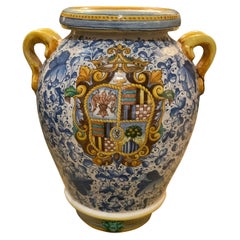
Large Faience Vase, Renaissance Style, 19th C
Located in Houston, TX
Beautifully colored in brilliant blue and yellow that depict a crest.
Category

Late 19th Century French Antique Renaissance Decorative Objects

Materials

Ironstone

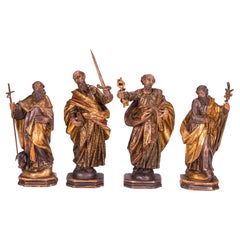
15th Cen Four Pillars of the Christian Faith Saint Peter, Saint Paul, Saint Luke
Located in North Miami, FL
15th century Italian carved wood, polychromed and gold gilded sculptures of four Pillars of the Christian Faith (Saint Peter, Saint Paul, Saint Luke, Saint Matthew).
Category

15th Century and Earlier Italian Antique Renaissance Decorative Objects

Materials

Gold Leaf

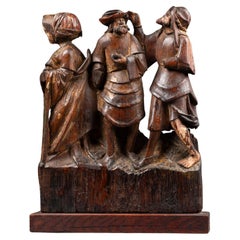
Group of Altarpiece - Antwerpen, 16th century
Located in Bruxelles, BE
Group of altarpiece representing the life of a Saint, Saint Renualde? Engraved by the sign of Antwerp hand on the hat of the central character Carved oak, traces of polychromy Fir...
Category

16th Century Belgian Antique Renaissance Decorative Objects

Materials

Oak

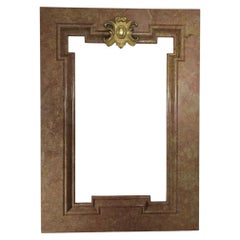
Renaissance period marble frame – 16th Century
Located in Madrid, ES
Magnificent marble frame dating from the 16th century, from an ancient European church. This type of frame was used for the interior decoration of religious buildings during the Ren...
Category

16th Century European Antique Renaissance Decorative Objects

Materials

Marble, Bronze

Pair Of Late 17th Century Italian Bronze Candlesticks
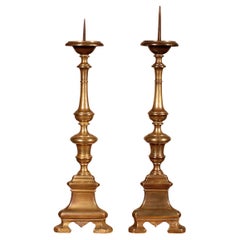
Located in Brussels, Brussels
Elegant pair of bronze candle sticks from the end of the 17th century from Italy Beautiful appearance and good quality with small traces of wear which make their charm Very beautif...
Category

17th Century Italian Antique Renaissance Decorative Objects

Materials

Bronze

Renaissance Harpy - Italy, 16th century
Located in Bruxelles, BE
Renaissance Harpy bronze Italy, 16th century 15 x 12 x 5,5 cm This expressive bronze figure represents a harpy, a mythological creature with the body of a bird and the head and tor...
Category

16th Century Italian Antique Renaissance Decorative Objects

Materials

Bronze

19th Century Pair of Italian Renaissance Revival Oak Angel Statues
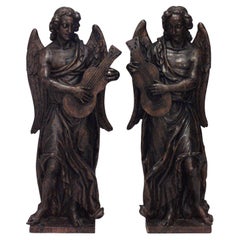
Located in Queens, NY
Pair of Italian Renaissance style (19th Century) carved oak large angels with guitars.  
Category

19th Century Antique Renaissance Decorative Objects

Materials

Wood, Oak, Walnut

Crystal Ball on a 19th Century French Bronze Cherub Stand
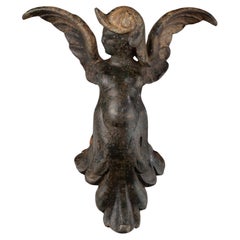
Located in San Francisco, CA
An exceptional Renaissance style patinated and gilt bronze cherub base made in the early to mid 19th century. The figure holding a 10 inch diameter solid crystal ball. Beautiful qu...
Category

Mid-19th Century European Antique Renaissance Decorative Objects

Materials

Bronze

Cercle of Jacopo della Pila - Marble relief depicting a winged Cherub
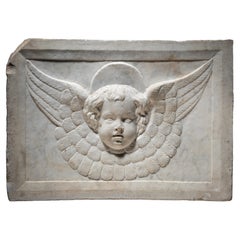
Located in Bruxelles, BE
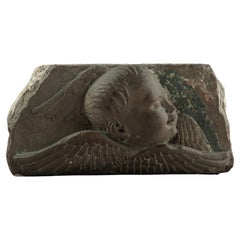
Cercle of Jacopo della Pila (Lombard, in Naples 1471-1502) Marble relief depicting a winged Cherub Naples, second half of15th century 40 x 57 x 12 cm Exquisitely carved, this relief portrays a winged cherub with cascading hair and delicate features. The cherub's plump, smooth countenance, rounded cheeks, outlined lips, and finely drawn nose emanate a sense of tenderness. The quadrangular module, is adorned with a carved frame. The relief ascends gradually, transitioning from the low relief of the wings to the high relief of the head. The rectangular frame and the subtly curved form of the artwork suggest that the relief likely adorned the upper part of an arch or a vaulted chapel. The type is that of the perspective room with a coffered ceiling decorated with figures of winged cherubs, which is found in various Neapolitan chapels of the 15th century. Coffered ceilings attest to the recovery of antiquity and the search for luxury in Renaissance architecture, first in Florence, then in Rome and Naples. The majority of the numerous family chapels and tombs built during the late fifteenth century in south of Italy employ the new formal vocabulary of the Florentine Renaissance in a self-confident manner that permitted a broad spectrum of variations. The escalating admiration for the classical world, coupled with the development of perspective, significantly contributed to the Renaissance endorsement of coffered ceilings. This artistic and constructive device drew inspiration from the intricate marble patterns observed in historical landmarks such as the Arch of Titus, the Temple of Vesta in Tivoli, the Pantheon, and the Basilica of Maxentius. A distilled product of both mathematical and artistic cultures, deeply scrutinizing the ancient world, the coffered ceiling plays a vital role in the perspective construction of space with its regular and directional geometry. The motif of the coffered ceiling decorated with cherubs in relief was introduced in Naples by Francesco Laurana in the plastic decoration of the Arch of Castelnuovo. Laurana's impact on the art scene in the south of Italy was profound. The introduction of the winged cherub into the region's artistic vocabulary bridged the gap between the classical and the contemporary, creating a synthesis that resonated with both aesthetic and spiritual sensibilities. His influence extended beyond the immediate visual appeal, shaping the cultural identity of the Renaissance in southern Italy. Although the plastic decoration of the Arch of Castelnuovo cannot certainly be ascribed to a mature Renaissance style, it was precisely on this occasion that the sculptors who worked there could get to know and export throughout the Italian peninsula that type of "Florentine classicism" which, even in the 15th century Naples, was conditioned by the Burgundian culture imported into the Kingdom by Alfonso of Aragon himself, with artists called from Spain and Northern Europe. The coffered ceiling, with its geometric patterns and Laurana's winged cherubs nestled within, became a symbol of refinement and cultural sophistication. The relief sculptures, carefully integrated into the overall design, transformed the ceiling into a celestial realm, inviting viewers to contemplate the divine while immersed in the grandeur of the Renaissance space. Similar winged cherubs appears also in the Naples cathedral. Within the renowned Succorpo Chapel, a mesmerizing marble coffered ceiling adorned with cherubs epitomizes the splendor of the Neapolitan Renaissance. The interplay of light and shadow on the textured surface of the marble coffered ceiling introduces an ethereal dimension, providing an immersive visual experience for observers. The geometric precision and the repeated patterns, reminiscent of classical motifs, establish a sense of harmony and balance that has become the hallmark of the Neapolitan interpretation of Florentine Renaissance aesthetics. Although probably intended to be admired from a distance, this cherub is intricately detailed and exquisitely rendered: the face and hair are elegantly outlined and the feathers are textured through juxtaposed lines. The marble, both figurative and decorative, adheres to the principles of balance and restrained ornamentation typical of the « Florentine Classicism ». Harmonious shapes and gracefully orchestrated curves , rooted in the classical repertoire, converge to evoke a sense of ethereal beauty. The surface displays the masterful use of a chisel to intricately carve the feathers and facial features, creating an almost abstract quality. This work is a testament to a sculptor of great skill and rich figurative knowledge, seamlessly blending classical firmness in contours with a refined treatment of the marble's surface. The combination of tradition and innovation point to a stylistic idiom from Lombardy, in particular we can find some comparaisons with the works of Jacopo della Pila, sculptor of Lombard origin working in Naples in the second half of the 15th century. He is documented there between 1471 and 1502, and is a protagonist of the Aragon Renaissance in the second half of the Quattrocento, together with the other great Northern sculptor active in the kingdom, Domenico Gagini. the first commission he received dates back to August 9, 1471, when Jacopo publicly committed to sculpting the funerary monument of Archbishop Nicola Piscicelli to be placed in the Cathedral of Salerno. The last known work is an altar ordered on July 29, 1502, by the noble Jacopo Rocco for the church of San Lorenzo Maggiore in Naples. Between these two chronological extremes (1471-1502), we must place the fervent activity of the artist, who had trained in Rome, perhaps under the guidance of Paolo Romano but also engaged in dialogue with other major artists of the city, especially Isaia da Pisa. He enriched his experience in Naples, initially drawing inspiration from the works of Domenico Gagini and later from the Tuscan masterpieces of Antonio Rossellino and Benedetto da Maiano destined for the church of Santa Maria di Monteoliveto. Jacopo della Pila's artistic personality is thus based on a complex interplay of influences, contributing to the definition of a highly personal style. Close comparaison can be made between our cherub and the winged angels reliefs...
Category

15th Century and Earlier Italian Antique Renaissance Decorative Objects

Materials

Marble

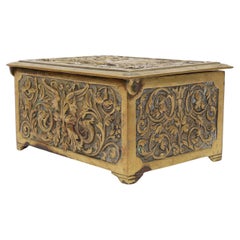
Highly Decorated Renaissance Style Solid Brass Jewelry Trinket Box
Located in Montreal, QC
Highly decorated Renaissance style Belgium solid brass jewelry trinket box.
Category

Early 1900s Belgian Antique Renaissance Decorative Objects

Materials

Brass

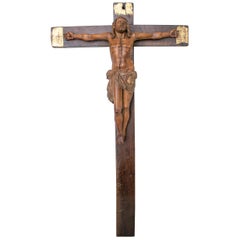
17th Century Spanish Boxwood Christ on the Cross
Located in Marbella, ES
17th century Spanish boxwood Christ on the cross.
Category

17th Century Spanish Antique Renaissance Decorative Objects

Materials

Boxwood

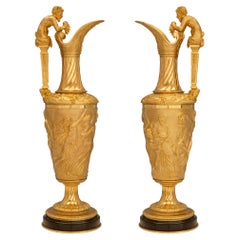
Pair of 19th Century Renaissance Style Ormolu and Black Belgian Marble Ewers
Located in West Palm Beach, FL
A very handsome pair of French 19th century Renaissance st. ormolu and black Belgian marble ewers, attributed to Barbedienne. Each ewer is raised by a fine...
Category

19th Century French Antique Renaissance Decorative Objects

Materials

Belgian Black Marble, Ormolu

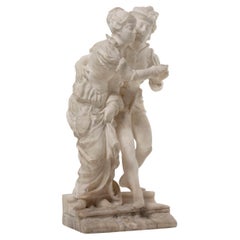
Figurative sculptures renaissances couple in alabaster
Located in Los Angeles, CA
Magnificent figurative sculpture in alabaster depicting a renaissance couple in the process of dancing
Category

Early 1900s French Antique Renaissance Decorative Objects

Materials

Alabaster

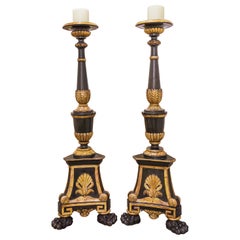
A fine pair of 19th century Italian painted black and gilt carved torchieres
Located in Dallas, TX
A large and fine pair of Italian Renaissance carved and black painted torchieres with parcel gilt.
Category

Late 19th Century Italian Antique Renaissance Decorative Objects

Materials

Ebony

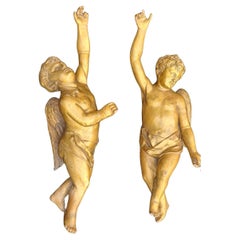
Pair of gilded wooden angels, northern Italy (probably Veneto area), f
Located in Vicenza, IT
Evocative pair of wooden sculptures depicting angels in flight, carved in the round and covered in fine gold leaf gilding. The figures, with strong expressiveness and movement, are d...
Category

17th Century European Antique Renaissance Decorative Objects

Materials

Gold Leaf

Early 19th Venetian Rectangular Carved and Gild Mirror
Located in IT
This beautiful rectangular mercury mirror in carved and gilded wood frame was made in the early 19th century in Venetian area of Italy. The richly carved frame is characterized by a ...
Category

Early 19th Century Italian Antique Renaissance Decorative Objects

Materials

Giltwood

Red Coral Sculpture~ 19th Century Bronze Fragment
Located in Houston, TX
Red coral branch and natural emeralds are mounted on a 19th-Century French bronze doré fragment. This is a lovely objet d'art to add to your collection or cabinet. During the Renais...
Category

21st Century and Contemporary Renaissance Decorative Objects

Materials

Coral, Bronze

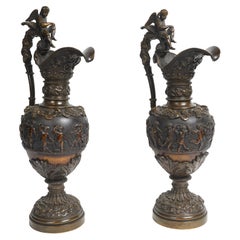
Pair of Bronze Patinated French Renaissance Style Ewers
Located in Montreal, QC
Pair of bronze patinated French Renaissance style Ewers decorated with putti and grapes wines.
Category

1860s French Antique Renaissance Decorative Objects

Materials

Bronze

Renaissance Winged Cherub Relief
- Florence, 15th century
Located in Bruxelles, BE
Renaissance Winged Cherub Relief
Florence, Second Half of the 15th Century
Stone with traces of polychromy Provenance: Important private collection, Northern Italy This exceptional...
Category

15th Century and Earlier Italian Antique Renaissance Decorative Objects

Materials

Stone

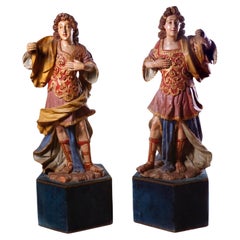
Impressive Pair of Portuguese Seraphim late 17th Century
Located in Madrid, ES
Impressive Pair of Portuguese Seraphim end 17th began1 8th Century Sculptures in molded, polychrome and gilded clay. The figures are represented standing. Set on bases. Normal d...
Category

Late 17th Century Portuguese Antique Renaissance Decorative Objects

Materials

Wood

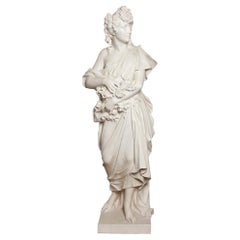
Life-Size Marble Sculpture of Spring by Antonio Frilli
Located in London, GB
Life-size marble sculpture of Spring by Antonio Frilli Italian, late 19th century Height 159cm, width 47cm, depth 40cm This superb sculpture is the work of Antonio Frilli, a renowned Italian artist active in the late 19th century, who founded the Frilli gallery...
Category

Late 19th Century Italian Antique Renaissance Decorative Objects

Materials

Marble

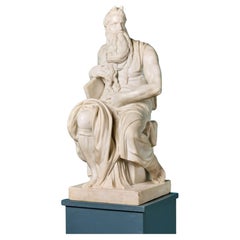
After Michelangelo White Statuary Marble Sculpture of Moses
Located in Wormelow, Herefordshire
A scale white statuary marble sculpture of Moses after Michelangelo circa 1875. After the larger than life-size Carrara marble original from the tomb of Pope Julius II in St. Peter’s Basilica, Rome completed around 1515. This scale sculpture is exceptionally carved, capturing the quality and detail of Michelangelo’s Moses...
Category

Mid-19th Century Italian Antique Renaissance Decorative Objects

Materials

Marble, Statuary Marble

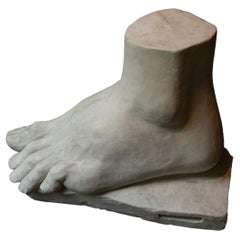
Colossal 19th-Century Classical Plaster Foot Sculpture 28"
Located in New York, NY
This 19th-century plaster foot sculpture is an imposing and impressive work of art. With dimensions of 28 inches in width, 15 inches in depth, and 22 inches in height, its colossal s...
Category

19th Century French Antique Renaissance Decorative Objects

Materials

Plaster

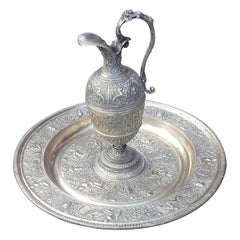
"Temperance" Ewer and Its Basin in Silver Bronze, After François Briot, Xixth Ce
Located in MARSEILLE, FR
ewer and its basin called "Temperance", in silver-plated bronze, in the style of the Renaissance, after the model of François Briot, preserved in the Louvre Museum. The egg-shaped...
Category

19th Century French Antique Renaissance Decorative Objects

Materials

Bronze

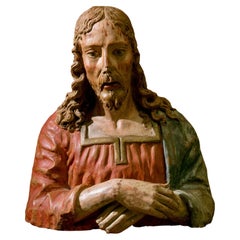
Terracotta Bust of Christ as the Redeemer, 15th Century
Located in Bruxelles, BE
A terracotta bust of Christ as The Redeemer Tuscany or Emilia Romagna, late 15th century Measures: 46 x 43 x 21 cm This powerful, moving bust of...
Category

15th Century and Earlier Italian Antique Renaissance Decorative Objects

Materials

Terracotta

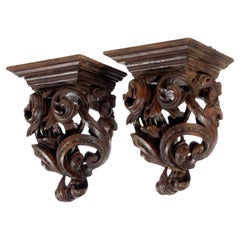
AMAZING PAIR OF PORTUGUESE CORBELS 19th century
Located in Madrid, ES
PAIR OF CORBELS 19th century Portuguese brown wood Profuse decoration with plant motifs. Dim.: 38 x 31 cm good state
Category

19th Century Portuguese Antique Renaissance Decorative Objects

Materials

Wood

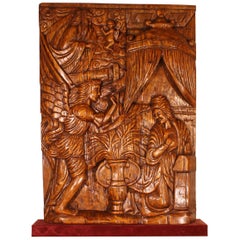
Altarpiece Representing The Annunciation, North of Portugal, circa 1600
Located in Brussels, Brussels
Exceptional altarpiece representing the annunciation circa 1600, fruitwood rare altarpiece from the North of Portugal, unique due to its large size representing the scene of the annunciation, where the Archangel Gabriel (represented on the bottom left), sent by god (represented on the top left) announces to Marie (bottom right) that she will give birth to Jesus. Very good state of conservation, carved on three panels Dimension: Height 1m51 Width 1m03 Very nice colour and exceptional dimensions Restorations of use We placed the altarpiece on a red velvet base and a Spanish occasional...
Category

17th Century Portuguese Antique Renaissance Decorative Objects

Materials

Fruitwood

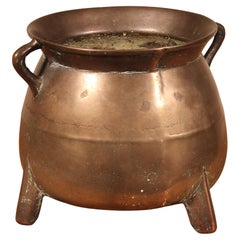
Bronze Pot, 16th Century
Located in Brussels, Brussels
Superb Flemish Renaissance bronze pot from the 16th century. Superb patina and in very good condition.
Category

16th Century Belgian Antique Renaissance Decorative Objects

Materials

Bronze

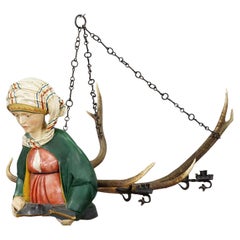
Antique Lusterweibchen of a Patrician Lady, Germany 1900
Located in Berghuelen, DE
Antique Lusterweibchen of a Patrician Lady, Germany 1900 A finely hand-carved and polychrome painted wooden Lüsterweibchen depicting a seated patrician lady. She wears a green long-...
Category

Early 1900s German Antique Renaissance Decorative Objects

Materials

Iron

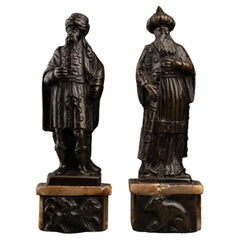
Two rare Figures in Turkish Attire - Venice, early 17th century
Located in Bruxelles, BE
Rare Bronzes Depicting two Figures in Turkish Attire Possibly Suleiman the Magnificent at two different ages bronzes, alabaster bases Venice, early 17th century 19,5 x 6 x 5 cm These two rare bronze statuettes represent two figures dressed in elaborate "Turkish" attire. They are mounted on alabaster bases with bronze reliefs—one featuring the winged lion of Venice, and the other possibly symbolizing Turkey with a wolf depiction. One figure wears a grand külah, a spherical turban with a cone top, signifying royal authority, while the other has a wrapped turban, denoting rank and religious identity. Their garments are richly detailed with intricate engravings, suggesting luxurious fabrics of the Ottoman court. The statuettes may represent Suleiman the Magnificent at two different stages of life, as both young and old. The sultan depicted alongside the winged lion corresponds to a description from a Venetian delegate in 1534, when Suleiman was 43. At that time, he had conquered Iraq from the Safavids and achieved a decisive victory over the Papal fleet at the Battle of Preveza. He was described as having large eyes, an aquiline nose, and long red mustaches—traits visible in Cristofano dell'Altissimo’s portrait of Suleiman in the Uffizi Gallery in Florence. Unlike Mehmed II, who commissioned portraits by European artists for diplomatic purposes, Suleiman did not directly order such representations. Instead, his likeness spread through works by artists like Albrecht Dürer, based on sketches made by diplomats. Following his capture of Belgrade in 1521, his victory over Hungary in 1526, and his siege of Vienna...
Category

17th Century Italian Antique Renaissance Decorative Objects

Materials

Alabaster, Bronze

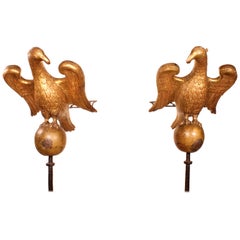
Pair of Eagles 16th Century from North Italy Church Lectern
Located in Brussels, Brussels
Exceptional pair of aigles of the 16th century of Italy Superbe pair of wooden sculpted aigles from the Italian Renaissance. Very Fine and delicate sculpture The pair of eagles se...
Category

16th Century Italian Antique Renaissance Decorative Objects

Materials

Giltwood

Renaissance decorative objects for sale on 1stDibs.

Find a broad range of unique Renaissance decorative objects for sale on 1stDibs. Many of these items were first offered in the 21st Century and Contemporary, but contemporary artisans have continued to produce works inspired by this style. If you’re looking to add vintage decorative objects created in this style to your space, the works available on 1stDibs include decorative objects, more furniture and collectibles, serveware, ceramics, silver and glass and other home furnishings, frequently crafted with metal, wood and other materials. If you’re shopping for used Renaissance decorative objects made in a specific country, there are Europe, Italy, and France pieces for sale on 1stDibs. While there are many designers and brands associated with original decorative objects, popular names associated with this style include Europa Antiques, Ferdinand Barbedienne, deBlona, and Andrea Salvatori. It’s true that these talented designers have at times inspired knockoffs, but our experienced specialists have partnered with only top vetted sellers to offer authentic pieces that come with a buyer protection guarantee. Prices for decorative objects differ depending upon multiple factors, including designer, materials, construction methods, condition and provenance. On 1stDibs, the price for these items starts at $100 and tops out at $348,500 while the average work can sell for $4,296.

Still Thinking About These?

All Recently Viewed