16th Century Furniture
to
211
753
429
1,226
41
28
19
7
3
3
1
1
1
1
40,757
136,949
543,033
288,256
86,211
260,263
125,173
12,673
5,492
18,667
23,044
19,357
54,305
71,746
61,032
21,684
9,533
428
259
234
169
147
745
286
212
163
125
1,226
1,226
1,226
22
6
3
2
2
Period: 16th Century
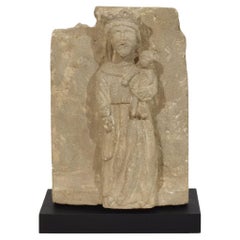
French Medieval Carved Stone Panel Depicting A Madonna With Child
Located in Buisson, FR
Beautiful primitive medieval stone panel, depicting a Madonna with child
France before 1600
Weathered and small losses
Category
French Medieval Antique 16th Century Furniture
Materials
Stone

$1,991 Sale Price
39% Off
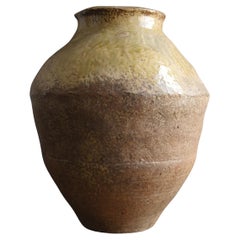
Antique Japanese pottery, Echizen ware vase / 1450-1600 / Natural glaze
Located in Sammu-shi, Chiba
This medium-sized Echizen ware jar, a representative example of ancient Japanese pottery, is believed to have been produced during the late Muromachi period to the Azuchi-Momoyama pe...
Category
Japanese Other Antique 16th Century Furniture
Materials
Pottery
Japanese antique stone tower / [Gorinto] / 15th-17th century
Located in Sammu-shi, Chiba
This is an ancient stupa believed to have been made in Japan between the Muromachi and Momoyama periods, or perhaps the early Edo period. It appears to have been made from granite, w...
Category
Japanese Edo Antique 16th Century Furniture
Materials
Stone
![Japanese antique stone tower / [Gorinto] / 15th-17th century](https://a.1stdibscdn.com/japanese-antique-stone-tower-gorinto-15th-17th-century-for-sale/f_54872/f_479482121765439835967/f_47948212_1765439836754_bg_processed.jpg?width=240 "Japanese antique stone tower / [Gorinto] / 15th-17th century")
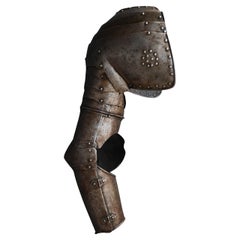
Arm And Shoulder Armor, Northern Italy (milan Or Brescia), Mid-16th Century
Located in Bilzen, BE
Arm and shoulder defence, Northern Italy (Milan or Brescia), mid-16th century (circa 1550–1580)
A substantial steel armour element comprising a pauldron, upper arm (rerebrace), arti...
Category
Italian Renaissance Antique 16th Century Furniture
Materials
Iron
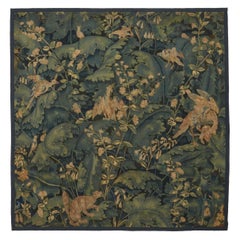
Antique 16th Century Flemish Verdure Feuilles de Choux Tapestry
Located in New York, NY
A rare 16th Century Flemish Verdure Feuilles de Choux Tapestry Panel (Oudenaarde or Enghien)
Feuilles de Choux (cabbage leaves in French) t...
Category
Belgian Renaissance Antique 16th Century Furniture
Materials
Tapestry, Wool, Silk
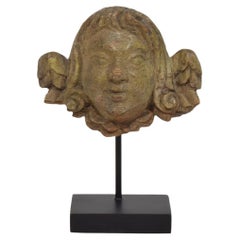
French 16th/ 17th Century Weathered Oak Renaissance Angel Fragment
Located in Buisson, FR
Beautiful weathered oak winged angel head Renaissance ornament.
France, 16/ 17th century. Weathered
Measurements include the wooden pedestal.
Category
French Renaissance Antique 16th Century Furniture
Materials
Oak
$267 Sale Price
47% Off
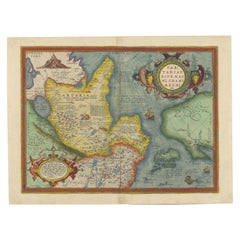
1573 Ortelius Map: First to Name California, Spanning Tartary to North America
Located in Langweer, NL
"1573 Abraham Ortelius Map of Tartary, Japan, and Western North America"
Description of the Map:
This is an outstanding example of Abraham Ortelius' map titled "Tartariae Sive Magn...
Category
Antique 16th Century Furniture
Materials
Paper
$2,282 Sale Price
20% Off
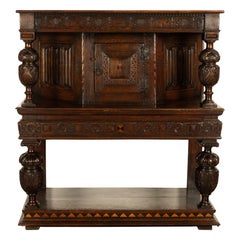
Antique 16th C Elizabethan Tudor Inlaid Oak Carved Court Cupboard Cabinet 1580
Located in Portland, OR
A remarkable survivor from the late 16th century antique carved & inlaid oak Elizabethan Court cupboard from the Tudor period, circa 1580.
T...
Category
English Elizabethan Antique 16th Century Furniture
Materials
Oak, Ebony, Fruitwood
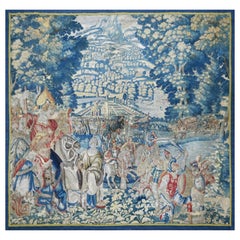
Circa 1590 Flemish Brussels Tapestry Castle King Holy war Hours sword wool silk
By Flemish
Located in Paris, FR
Dans le respect des traditions, cette magnifique tapisserie a été soumise à un nettoyage en profondeur, à la pose d'une doublure en lin cousue à la main, et à une vérification minuti...
Category
French Aubusson Antique 16th Century Furniture
Materials
Wool, Silk
Japanese antique Bizen ware vase / 15th-16th century / Wabi-sabi vase/Tsubo
Located in Sammu-shi, Chiba
This Bizen ware jar was fired in the Bizen region of Okayama Prefecture. Bizen ware is one of Japan's Six Ancient Kilns and is known as one of the oldest pottery styles in Japan. Its...
Category
Japanese Other Antique 16th Century Furniture
Materials
Pottery
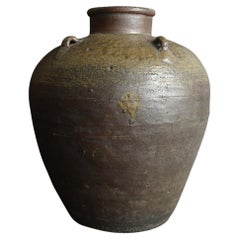
French 16th Century Antique Aubusson Tapestry
Located in Baton Rouge, LA
A 16th Century, or earlier, Aubusson tapestry is vibrant and in wonderful antique condition. Its original border is completely intact and designed with florals, foliage, and birds. T...
Category
French Other Antique 16th Century Furniture
Materials
Tapestry
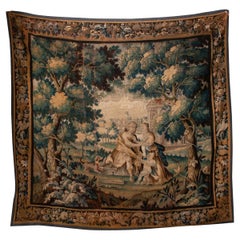
Japanese antique pottery with very beautiful colors/ [shigaraki] Jar/1500-1600
Located in Sammu-shi, Chiba
It is "Shigaraki ware".
Shigaraki is a historical kiln located in Shiga Prefecture, Japan. (Shigaraki Kiln is marked with a red circle on the map.)
It is said to have originated in t...
Category
Japanese Other Antique 16th Century Furniture
Materials
Pottery
![Japanese antique pottery with very beautiful colors/ [shigaraki] Jar/1500-1600](https://a.1stdibscdn.com/japanese-antique-pottery-with-very-beautiful-colors-shigaraki-jar-1500-1600-for-sale/f_54872/f_462136521754890051935/f_46213652_1754890052115_bg_processed.jpg?width=240 "Japanese antique pottery with very beautiful colors/ [shigaraki] Jar/1500-1600")
Biblia Cum Concordantijs Veteris
Novi Testamenti
Sacrorum Canonum, 1519
Located in Delft, NL
Biblia cum concordantijs veteris & novi testamenti & sacrorum canonum, 1519
A Bible by auteur Alberto da Castello, printed by Luca-Antonio Giunta, Latin Anno 1519, Venice
27-532-55 pages
First alphabetical list- Tabula Tertia, after that comes the 1st full page woodblock plate.
This title page in red and black with a surrounded frame in woodcut. Above the page “San Jerome” illustrated and below the page the printers mark “ Giunti’s Mark” from the family of printers in Florentine. The initials L A of Luca-Antonio Giunta.
After this page starts a full-page woodcut illustration after that are 3 pages not numbered and then starts numbered page 2 – 532
On page 401 is also a full-page woodcut plate
There are ca 345 small woodcuts...
Category
Italian Antique 16th Century Furniture
Materials
Paper
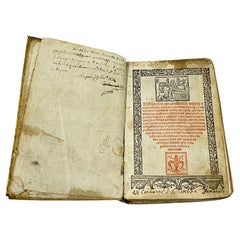
Rare large early 19th century hand carved Neo-Gothic cupboard in oak
Located in Meulebeke, BE
Belgium / 19th Century / cupboard / oak / Neo-gothic / Antique
Flamboyant gothic style cupboard with 4 doors, handcrafted in Belgium. We found this exceptional piece in the Belgian...
Category
Belgian Gothic Revival Antique 16th Century Furniture
Materials
Oak
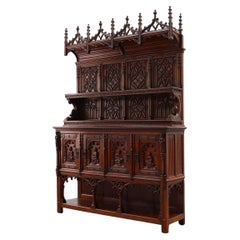
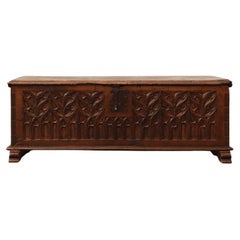
Rare Large Gothic 16th century carved solid oak chest, France
Located in Meulebeke, BE
France / 16th century / bridal or blanket chest / oak / Gothic
This impressive chest was hand-carved in solid oak in the 16th century in France. The construction is typical of very...
Category
French Gothic Antique 16th Century Furniture
Materials
Oak
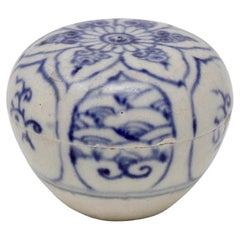
Annamese Blue and White Ceramic Small Box, Chu Dau kiln, Vietnam, circa 1500
Located in Point Richmond, CA
Annamese Blue and White Ceramic Small Box, Chu Dau kiln, Vietnam, circa 1500. A globular form with a narrow slightly countersunk base. The cover crisply decorated in a line drawing of cobalt depicting a central floral medallion from which radiate six foliate petals, the sides with six peaked cartouche containing alternating patterns of waves and leafy tendrils. The design perfectly aligning over the well fitting lid to the body.
Condition: One tiny popped blister on the lid, minor rim frits, otherwise excellent condition.
Measuring: 1.375 in. high x 1.9375 in. in diameter. (35 x 50 mm)
Weight: 2 oz. (58g.)
15th/16th century.
Provenance:
Vietnam art...
Category
Vietnamese Other Antique 16th Century Furniture
Materials
Ceramic
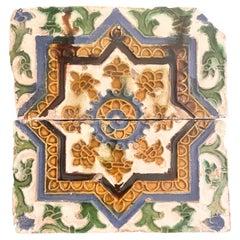
Spanish Azulejo Tiles
Dos por Tabla
- Arista y Cuenca - Toledo 16th century
Located in DELFT, NL
Set of Spanish tiles of the 'dos por tabla/ type in the Arista y cuenca tile made in Toledo. This particular type was to adorn ceilings.
Tile decorated in renaissance with stylized ...
Category
Spanish Renaissance Antique 16th Century Furniture
Materials
Earthenware
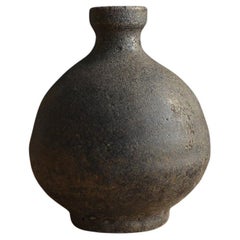
Korean antique black glaze pottery/Joseon period/15th-16th century/small vase
Located in Sammu-shi, Chiba
This is a small black-glazed jar made in Korea between the 15th and 16th centuries.
White porcelain is famous in Korea, but this was a type of porcelain that was only allowed to be u...
Category
South Korean Other Antique 16th Century Furniture
Materials
Pottery
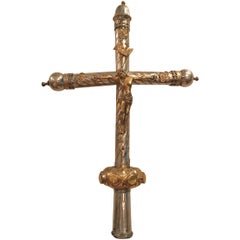
Period Renaissance Early 16th Century Processional Cross, France
Located in Vero Beach, FL
Exceptional Period Renaissance processional cross early 16th century, France
Extremely rare and beautiful processional cross from the early period of the French Renaissance. This ...
Category
French Renaissance Antique 16th Century Furniture
Materials
Bronze
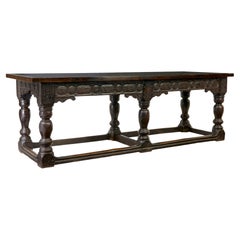
16th century and later Elizabethan solid oak refectory table
Located in Debenham, Suffolk
16th century and later Elizabethan solid oak refectory table circa 1590.
We are pleased to offer this beautiful table, with Elizabethan period bas...
Category
English Elizabethan Antique 16th Century Furniture
Materials
Oak
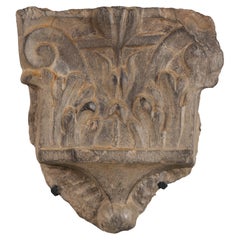
16th Century Ligurian Stone Half-Capital
Located in London, GB
A rare 16th Century Italian stone Corinthian half-capital, carved in Ligurian slate, mounted on a simple wrought iron bracket for wall hanging.
Category
Italian Renaissance Antique 16th Century Furniture
Materials
Slate, Iron
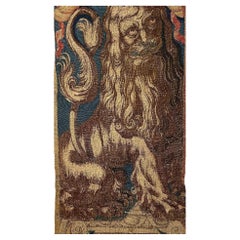
16th Century Brussels Tapestry 5980y
Located in Los Angeles, US
16th Century Brussels Tapestry
great condition
beautiful color and design
Category
Belgian Antique 16th Century Furniture
Materials
Wool
$1,440 Sale Price
20% Off
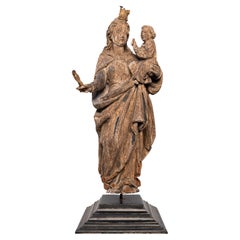
European 16th Century Hand Carved Wooden Virgin Mary Polychrome Statue
Located in Oostende, BE
This 16th century hand-carved wooden Virgin Mary polychrome statue comes from a church in Sint-Niklaas, Belgium (Europe), and was bought directly fr...
Category
Belgian Gothic Antique 16th Century Furniture
Materials
Walnut
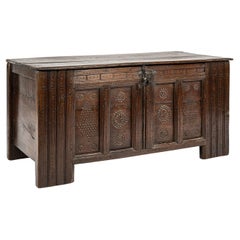
Antique 16th Century German Dark Brown oak carved Stollentruhe Trunk or Chest
Located in Casteren, NL
This impressive large Stollentruhe, also known as a Stollentroewe, is a large German storage chest crafted around 1580. Its distinctive construction, with massive upright corner post...
Category
German Medieval Antique 16th Century Furniture
Materials
Steel
$10,936 Sale Price
20% Off
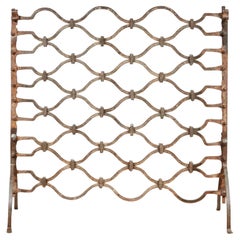
Heavy Wrought Iron Medieval Fireplace Guard
Located in Greenwich, CT
A striking and substantial wrought iron fire guard showcasing exceptional hand‑forged workmanship and a dramatic presence. Constructed from thick, weighty iron, the guard features a...
Category
Spanish Medieval Antique 16th Century Furniture
Materials
Wrought Iron
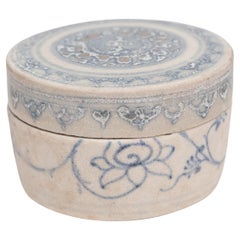
Petite Ming Shipwreck Box, c. 1500
Located in Chicago, IL
The soft, matte texture and eroded wear of this petite porcelain box suggest it spent many years submerged in saltwater, likely excavated from a sunken trade ship carrying ceramic ex...
Category
Chinese Ming Antique 16th Century Furniture
Materials
Porcelain
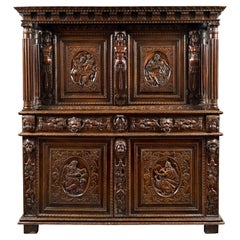
Burgundian Renaissance Cabinet Depicting the Four Evangelists
Located in Saint-Ouen, FR
The cabinet’s upper body, slightly recessed is topped by an overlapping entablature and cornice supported both in the front and the rear by four fluted columns.
The lower body stands on four squared feet and a moulded base. Each door-leaf’s panel is centred by a low-relief carving presenting one of the four evangelists...
Category
French Renaissance Antique 16th Century Furniture
Materials
Walnut
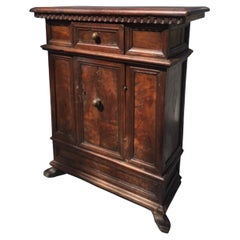
16th Century Period Renaissance Tuscan Walnut Credenzino
Located in Vero Beach, FL
16th Century Period Renaissance Tuscan Walnut Credenzino
Italian 16th/17th century Renaissance walnut small Credenza with a rectangular top above a single drawer centered over a s...
Category
Italian Renaissance Antique 16th Century Furniture
Materials
Walnut
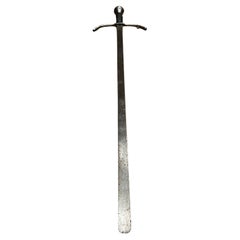
Antique Extremely Rare 16th Century German Executioner’s Sword- “Richtschwert”
Located in Doha, QA
A rare and evocative 16th-century German Executioner’s Sword (Richtschwert), forged in Passau, one of the preeminent centers of Renaissance blade craftsmanship. Passau was renowned f...
Category
German Renaissance Antique 16th Century Furniture
Materials
Iron
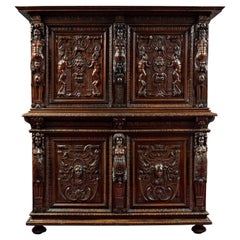
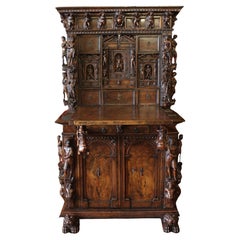
Renaissance Cabinet from Burgundy or Lyon Region
Located in Saint-Ouen, FR
Renaissance cabinet from Burgundy Or Lyon Region
Origin : Burgundy Or Lyon, France
Period : Second Half 16th Century, C. 1580
Height : 209cm
Length : 184cm
Depth : 71cm
Good condition
Walnut wood, original keys and keyholes
Around the middle of the 16th century the conception and ornamentation of French furniture evolves. The start of major building projects, such as the castle of Fontainebleau, gives artists a new impulse. Inventive and rich formulas are developed there, before spreading to all of Europe thanks to engravings and printed leaflets. Furthermore, Italian artists working on such construction sites bring French artists and patrons a renewed taste for the Antique.
Regarding the art of furnitures, the most complex scenes and figures are drawn from illustrated books, ornament and emblem compendiums and engraving compilations. Rather than copying those images the artisans feed their inspiration and decline the motifs in numerous variations.
The ornamental grammar marks a return to the Antique : palm leaf, acanthus, egg-and-dart, greek, scroll, fluted pilaster… It is in Primaticcio’s and Il Rosso’s stuccos made around 1540-1550 that we have to look for the origin of leather cut-outs, masks, chimaeras, harpies, sheathed figures, fruit and flower garlands that soon enrich every pieces of French furniture.
The structure of the pieces of furniture also evolve thanks to the re discovery of Antique architectures, rigorously used as a model.
This cabinet presents an imposing structure and a rich and original decor exemplifying the production of the late 16th century, infused with Italian, Antique and Fontainebleau influences.
It stands on a moulded base ornate with palm leaves. It opens with four door-leaves and two drawers in the belt. Six whimsical terms divide the facade.
The lower body is horizontally divided by three sheathed female terms. The two standing on the lateral posts are topped with fruits while the body is covered by acanthus leaves carved with precision, belted at the waist. The term standing on the central door-jamb is crowned with laurel leaves and is draped in the Antique fashion. A wincing mask hides the key hole.
The two door-leaves are centred by a beautiful mask carved in a strong relief. They wear stylised feathered headdress and are set on draperies. Straps, leather scrolls, acanthus leaves and a shell are spread around the masks. The recessed panels are secured in frames ornate with acanthus leaves.
The belt is flanked by two large mouldings enriched with variations of acanthus leaves. The drawers are carved with choux bourguignons and palm leaf motifs minutely executed. The consoles between each drawer bear tormented wincing masks, showing horns as if they were fauns or imps.
The upper body is framed by two male terms characterised by a strong and nervous musculature, their manhood hidden by drapes secured thanks to a winged lion head. The term on the left appears to be younger and is wincing while the one on the right has a beard. The central female term brings contrast with her youth and sensuality. As it is the case on the lower body, the key hole is hidden behind the mouth of a faun’s mask placed on the drapes barely covering the intimacy of the caryatid.
The panels of the upper body present an idealised architecture comprising pilasters and sinuous broken pediments. The pilasters are flanked by two satyrs with goat legs. In the centre appears an important lion mask.
The terms of the upper body support the cornice. The entablature carries palm leaves and roses alternating as well as an egg-and-dart frieze. The cornice is adorned with acanthus motifs.
On the sides, the carving is executed flat. A central rose is surrounded by scrolls, flowers and choux bourguignons.
We can admire the variety of the elements employed. The artist vary with great genius many different ornamental motifs : palm leaf, egg-and-dart, laurel leaf, roses, scrolls … But the artist went even further as each profile and each face is individualised and presents different features. You can take a look at the faces of the satyrs flanking the upper body’s panels. The talent of the artist is undeniable.
It makes no doubt the patron who commissioned this cabinet was an aesthete looking for the greatest quality.
The artist who authored this cabinet had a great mastery of composition both in the general design and in the individual panels. They probably drew inspiration from engravings and drawings made especially for the making of this piece of furniture or not. They seem to be familiar with the style of Jacques Androuet du Cerceau. Indeed, we can find in Du Cerceau’s engravings the same juxtapositions of leather cut-outs, masks and fruits. The terms and caryatids used on the facade could very well be inspired by his work as well. The cabinet-maker was also undoubtedly observant of Hugues Sambin, the most famous cabinet-maker and sculptor in the Burgundy of the time. Like Du Cerceau, Sambin left an important ensemble of models particularly useful for the design of cabinets. His publication De l’Oeuvre de la diversité des termes dont on use en architecture (1572) was an essential book for every artisan.
All the motifs testify of the artisan’s high knowledge of forms as well as the precision of their tools : super imposition of ornamental elements, foliages, architectural cut-outs, flat and high reliefs alternating, palm leaves inscribed in circular spaces, wincing faces. It is also a testimony of the artisan’s familiarity with Italian and Fontainebleau productions.
Because of the proficiency of the cabinet-maker in so many different models, this cabinet truly is a master-piece authored by the hand of an authentic master.
The generous carvings executed with great rigour and virtuosity evoke an origin close to Burgundy and Lyon workshops. This cabinet was made by a master of the region during the Second French Renaissance.
Literature
BOCCADOR Jacqueline, Le mobilier français du Moyen-Âge à la Renaissance, Édition d’art Morelle Mayot, 1996
BOS Agnès (dir.), Mobilier du Moyen âge et de la Renaissance, La collection du musée du Louvre, Louvre éditions...
Category
Renaissance Antique 16th Century Furniture
Materials
Walnut
Chinese Porcelain Ming Provincial Jar or Vase Blue
White, Jiajing 16th Century
Located in Lincoln, Lincolnshire
This is a Chinese handcrafted porcelain provincial jar or vase, all hand painted in cobalt blue and dating to the Ming period of the early 16th century or possibly earlier.
The jar ...
Category
Chinese Ming Antique 16th Century Furniture
Materials
Ceramic, Porcelain
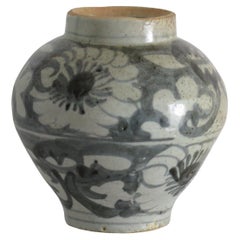
Chinese Ming Cobalt Brushed Jar, c. 1600
Located in Chicago, IL
This Ming-dynasty (1368-1644) storage jar is attributed to the kilns of Yunnan province, loosely decorated with cobalt underglaze in a manner typical of the region. Dated to the 15th...
Category
Chinese Ming Antique 16th Century Furniture
Materials
Earthenware
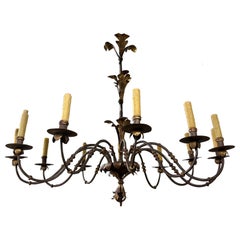
16th Century Italian Wrought Iron Chandelier
Located in Houston, TX
16th Century Italian Wrought Iron Chandelier.
Offered is a handsome large scale 16th Century Italian Baroque iron 12 light chandelier that has been wired for the U.S. market.
We have...
Category
Italian Baroque Antique 16th Century Furniture
Materials
Iron, Wrought Iron
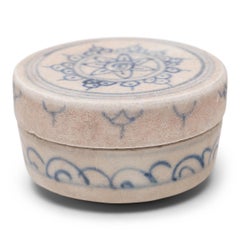
Petite Ming Shipwreck Box, c. 1500
Located in Chicago, IL
The soft, matte texture and eroded wear of this petite porcelain box suggest it spent many years submerged in saltwater, likely excavated from a sunken trade ship carrying ceramic ex...
Category
Chinese Ming Antique 16th Century Furniture
Materials
Porcelain
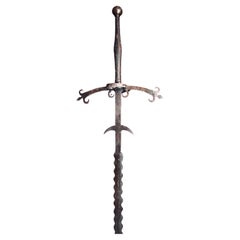
Antique Rare Gothic 16th Century Two-Hand Sword Germany
Located in Doha, QA
This magnificent 16th-century German two-hand sword is a rare and historically important ceremonial weapon, hand crafted by renowned blade-smith Christoph Stantler (active circa 155...
Category
German Gothic Antique 16th Century Furniture
Materials
Iron
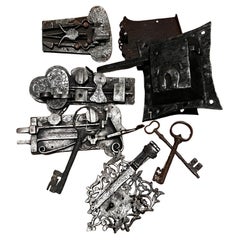
Antique 6 Rare 16th–17th Century Renaissance and Baroque Wrought Iron Door Locks
Located in Doha, QA
A remarkable ensemble of six antique wrought iron door locks dating from the late Renaissance through the Baroque period (16th/ 17th century). These large and highly decorative locks...
Category
Austrian Renaissance Antique 16th Century Furniture
Materials
Wrought Iron
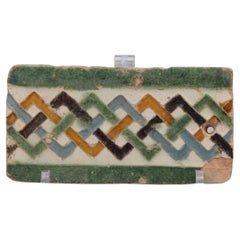
Spanish Moorish Mudejar Tile, Arista y Cuenca - Sevilla 16th century
Located in DELFT, NL
Rare late 15th or early 16th century Mudejar tile of the so-called ‘Arista’ technique with intricate geometric decoration.
Good condition; some chipping to the edges, some wear to ...
Category
Spanish Renaissance Antique 16th Century Furniture
Materials
Earthenware, Clay, Maiolica
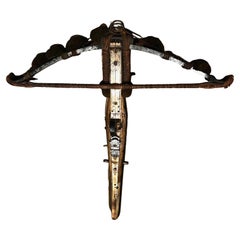
Antique Very Rare German Gothic Crossbow 1470-1563
Located in Doha, QA
A rare and beautifully preserved 15th-century German crossbow, created as a true weapon of war or defense,.This piece is a remarkable survival from the Gothic period, with all of its...
Category
German Gothic Antique 16th Century Furniture
Materials
Iron
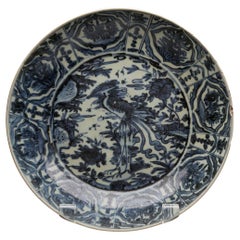
Antique Chinese Ming Zhangzhou Phoenix Bird Dish 16th Century
Located in Bishop
s Stortford, Hertfordshire
A stunning large antique Chinese Zhangzhou (Swatow) blue and white shallow porcelain dish of rounded form decorated centrally with a standing phoenix bird set amidst flowering blooms...
Category
Chinese Antique 16th Century Furniture
Materials
Porcelain
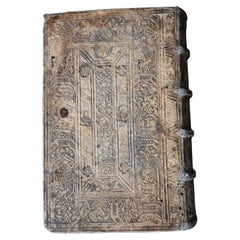
D. Ioannis Chrysostomi Archiepiscopi Constantinopolitani 1556
Located in Bilzen, BE
D. Ioannis Chrysostomi archiepiscopi Constantinopolitani Enarrationes in divi Pauli epistolas, ad Timotheum II., Titum, Philemonem, & HebræosD.IOANNIS CHRYSOSTOMI ARCHEPISCOPI CONSTA...
Category
Belgian Renaissance Antique 16th Century Furniture
Materials
Paper
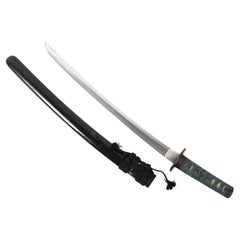
Antique Japanese Koto Wakizashi Sword
Located in Dallas, TX
Japanese Koto Wakizashi Sword
Japan
Ca. 1400-1600s
Length: 24.25” Blade
Total Length: 27.25
Nagasa: 18.5”
Koto wakizashi, with wild midare (Soshu?) hamon, including wild boshi. Hada indeterminate, with Shakudo & gold dragon menuki, beehive design fuchi kashira...
Category
Japanese Japonisme Antique 16th Century Furniture
Materials
Steel
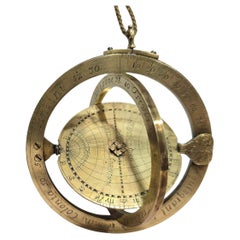
Planispheric Astrolabe – Equinoctial Dial, late 16th–early 17th century
Located in Madrid, ES
Origin: Probably Southern Germany (Nuremberg or Augsburg) or the Flemish region (Louvain or Antwerp).
Date: circa 1580–1620
Material: finely engraved brass
Diameter: 9 cm
A beautifu...
Category
Antique 16th Century Furniture
Materials
Brass
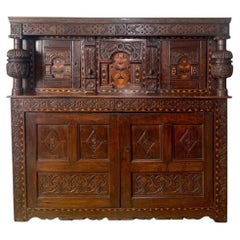
Late Elizabethan Oak Court Cupboard Circa 1600
Located in Hoddesdon, GB
Elizabethan , Joined Oak , Court Cupboard Circa 1600 . Elizabethan carved cup and cover columns , original candle shelf , two upper doors and central panel beautifully inlaid with ho...
Category
British Elizabethan Antique 16th Century Furniture
Materials
Oak
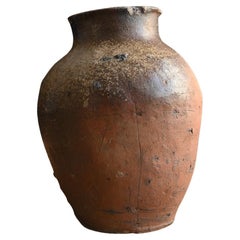
Japanese Antique Pottery Jar 15th-16th Century/ Wabi-Sabi Jar/Tokoname Vase
Located in Sammu-shi, Chiba
It is a very old jar in Japan.
This is a pottery called Tokoname ware.
Tokoname is a kiln located in Aichi prefecture, Japan.
It is said to have originated around the 12th century.
A...
Category
Japanese Other Antique 16th Century Furniture
Materials
Pottery
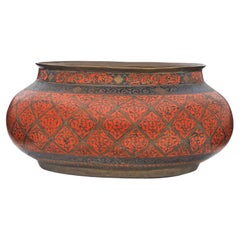
A Rare Safavid Enamelled Brass Bowl, 16TH - 17TH Century
Located in London, GB
of compressed globular form on a tapering foot with waisted flaring rim, profusely engraved with a lattice containing vegetal interlace, above and below bands of tendrils and interla...
Category
Antique 16th Century Furniture
Materials
Brass
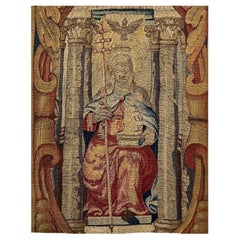
16th Century Brussels Tapestry 5981y
Located in Los Angeles, US
16th Century Brussels Tapestry
Great condition
beautiful color and design
Category
Belgian Antique 16th Century Furniture
Materials
Wool
$1,440 Sale Price
20% Off
Genoese Cabinet Called Stipo From The Renaissance Period In Walnut - 16th Centur
Located in Brussels, Brussels
Exceptional Genoese cabinet called stipo "a bambocci" from the Italian Renaissance in walnut from the end of the 16th century with its original base
Museum quality piece
Provenance:...
Category
Italian Renaissance Antique 16th Century Furniture
Materials
Walnut
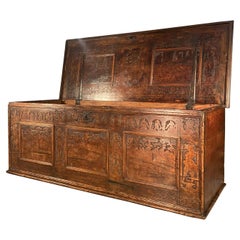
Late 16th Century Venetian Cedar Wood Cassone Nuptial Chest Garden of Eden Theme
Located in Encinitas, CA
Late 16th century Venetian cedar wood cassone wedding chest featuring finely detailed carving in the champleve decorative style on both the front...
Category
Italian Baroque Antique 16th Century Furniture
Materials
Iron
$9,000 Sale Price
68% Off
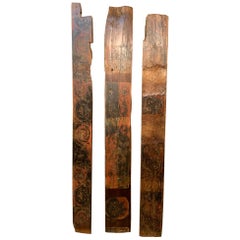
Outstanding Set of 3 16th Century Spanish Ceiling Panels, Beams
Located in Round Top, TX
An outstanding and exceptional set of 3 16th century ceiling panels - beams from Barcelona. Hand hewn solid wood panels beautifully painted. Fabulous architectural elements to incorp...
Category
Spanish Antique 16th Century Furniture
Materials
Wood
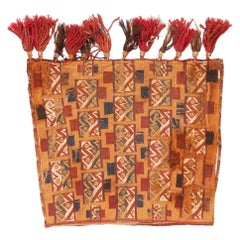
Amazing Early 16th Century Peruvian Textile 1
2" x 1
4"
Located in New York, NY
Amazing Early 16th Century Peruvian Textile, Circa date: Late 16th Century
Category
Peruvian Other Antique 16th Century Furniture
Materials
Wool
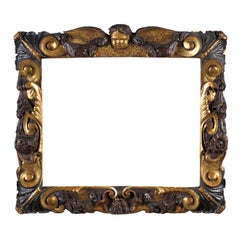
16th Century Partly Gilt Carved Wood Frame
Located in Saint-Ouen, FR
This rare Venetian frame entirely carved in high-relief shows a rich decor of scrolls, garlands, daisy flowers and thistles. At the four corners of the frame are depicted large acant...
Category
Italian Renaissance Antique 16th Century Furniture
Materials
Wood
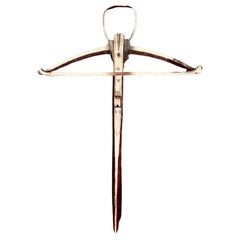
Rare Antique German Gothic Crossbow, circa 1540, All Original
Located in Doha, QA
An exceptional early German crossbow dating to around 1540, crafted from antler, wood, and iron. This finely made piece exemplifies the late Gothic to early Renaissance period of Ger...
Category
German Gothic Antique 16th Century Furniture
Materials
Iron
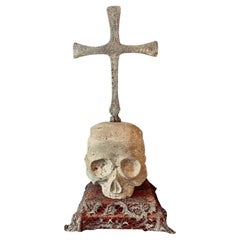
Antique 16th Century Austrian Gothic Marble Memento Mori Skull with Iron Cross
Located in Doha, QA
An exceptional and rare Gothic-Renaissance memento mori, sculpted in marble and surmounted by an original iron cross, originating from Austria, 16th century.
Carved from solid marble...
Category
Austrian Gothic Antique 16th Century Furniture
Materials
Marble
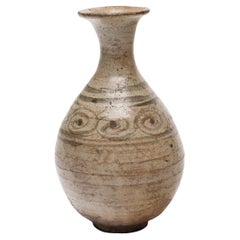
Chinese Ming Cobalt Brushed Wine Vessel, c. 1550
Located in Chicago, IL
This delicate ceramic bottle is a Ming-dynasty (1368-1644) vessel originally used for serving rice wine or spirits. The gracefully curved form is known as a yuhuchunping, or pear-sha...
Category
Chinese Ming Antique 16th Century Furniture
Materials
Earthenware
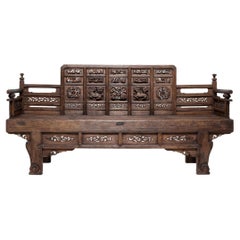
Ornately Carved Chinese Luohan Bed, circa 1550
Located in Chicago, IL
This gorgeous luohan daybed anchors its surroundings with its monumental scale and incredible carved decoration. Known as a luohan chuang, or couch bed, this form of low-backed daybe...
Category
Chinese Ming Antique 16th Century Furniture
Materials
Elm
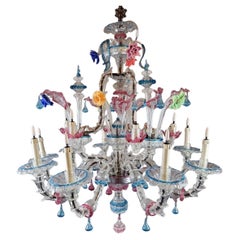
15-light Multicolor Murano chandelier, Italy, 1950s
Located in Brussels, BE
15-light Multicolor Murano chandelier, Italy, 1950s
Category
Italian Antique 16th Century Furniture
Materials
Glass
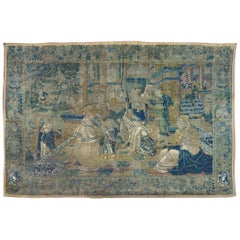
Antique 16th Century Navy Blue and Gold Flemish Renaissance Biblical Tapestry
Located in New York, NY
A Flemish Renaissance Biblical Tapestry
16th century
In an open architectural setting, the central crowned and enthroned female figure flanked by three handmaidens, a fourth to the left urging a boy towards a kneeling woman on the right with an apple in her right hand, on the left a wooded landscape with a man walking in the distance, a man striking another over the head in the mid-ground, and a man, a woman, and a handmaiden approaching the scene in the foreground, on the right a man gesturing while others flee up a staircase and out of the scene, within a flower and fruit cluster surround punctuated along the top and bottom edges by balustrades and sphinxes, and along the sides by a figure, a mask, and a beaded and crowned man...
Category
Belgian Renaissance Antique 16th Century Furniture
Materials
Tapestry, Silk, Wool
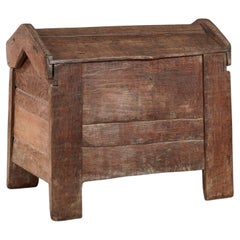
Medieval Oak Chest
Located in Greenwich, CT
A very early oak chest with lovely silvery patina of heavy plank construction raised off the floor with integral legs extending the depth of the edges, and a hinged ridged top with t...
Category
English Medieval Antique 16th Century Furniture
Materials
Oak
$6,500
Spanish Azulejo Tile Arista y Cuenca - Sevilla 16th century
Located in DELFT, NL
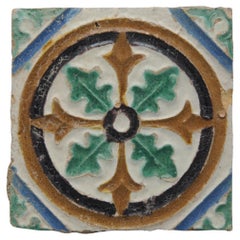
Early Arista y Cuenca tile, most likely made in Sevilla. Azulejo tile decorated with a gemetric pattern with 4 central leafs within a cirlce.
Mid 16th century
In very good conditi...
Category
Spanish Renaissance Antique 16th Century Furniture
Materials
Earthenware, Maiolica
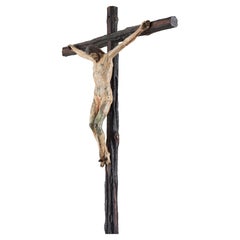
Rare and important painted bronze Crucifix after a model by Michelangelo
By Michelangelo Buonarroti
Located in Leesburg, VA
A rare and very fine bronze corpus of Christ after a model by Michelangelo, cast ca. 1597-1600 by Juan Bautista Franconio and painted in 1600 by Francisco Pacheco in Seville, Spain.
The present corpus reproduces a model attributed to Michelangelo. The best known example, lesser in quality, is one on display at the Metropolitan Museum of Art (MET).
The association of this corpus with Michelangelo was first brought to light by Manuel Gomez-Moreno (1930-33) who studied the wider circulated casts identified throughout Spain. The attribution to Michelangelo was subsequently followed by John Goldsmith-Phillips (1937) of the MET and again by Michelangelo expert, Charles de Tolnay (1960).
While Michelangelo is best known for his monumental works, there are four documented crucifixes he made. The best known example is the large-scale wooden crucifix for the Church of Santa Maria del Santo Spirito in Florence, made in 1492 as a gift for the Prior, Giovanni di Lap Bicchiellini, for allowing him to study the anatomy of corpses at the hospital there. In 1562, Michelangelo wrote two letters to his nephew, Lionardo, indicating his intention to carve a wooden crucifix for him. In 1563 a letter between Lionardo and the Italian sculptor Tiberio Calcagni, mentions this same crucifix (a sketch of a corpus on the verso of a sheet depicting Michelangelo’s designs for St. Peter’s Basillica [Palais des Beaux-Arts in Lille] may reproduce this). That Michelangelo was working on small corpora in the last years of his life is further evidenced by the small (26.5 cm) unfinished wooden crucifix located at the Casa Buonarroti, considered his last known sculptural undertaking. Michelangelo’s contemporary biographer, Giorgio Vasari additionally cites that Michelangelo, in his later years, made a small crucifix for his friend, Menighella, as a gift.
Surviving sketches also indicate Michelangelo’s study of this subject throughout his career, most notably during the end of his life but also during the 1530s-40s as he deepened his spiritual roots. The occasional cameo of crucified Christ’s throughout his sketched oeuvre have made it challenging for scholars to link such sketches to any documented commissions of importance. All the while, in consideration that such objects were made as gifts, it is unlikely they should be linked with commissions.
Nonetheless, a number of theories concerning Michelangelo’s sketches of Christ crucified have been proposed and some may regard the origin of the present sculpture. It has been suggested that the corpus could have its impetus with Michelangelo’s work on the Medici Chapel, whose exclusive design was given to the master. It is sensible smaller details, like an altar cross, could have fallen under his responsibility (see for example British Museum, Inv. 1859,0625.552). Others have noted the possibility of an unrealized large marble Crucifixion group which never came to fruition but whose marble blocks had been measured according to a sheet at the Casa Buonarroti.
A unique suggestion is that Michelangelo could have made the crucifix for Vittoria Colonna, of whom he was exceedingly fond and with whom he exchanged gifts along with mutual spiritual proclivities. In particular, Vittoria had an interest in the life of St. Bridget, whose vision of Christ closely resembles our sculpture, most notably with Christ’s proper-left leg and foot crossed over his right, an iconography that is incredibly scarce for crucifixes. The suggestion could add sense to Benedetto Varchi’s comment that Michelangelo made a sculpted “nude Christ…he gave to the most divine Marchesa of Pescara (Vittoria Colonna).”
Of that same period, two sketches can be visually linked to our sculpture. Tolnay relates it to a sketch of a Crucified Christ at the Teylers Museum (Inv. A034) of which Paul Joannides comments on its quality as suggestive of preparations for a sculptural work. Joannides also calls attention to a related drawing attributed to Raffaello da Montelupo copying what is believed to be a lost sketch by Michelangelo. Its relationship with our sculpture is apparent. Montelupo, a pupil of Michelangelo’s, returned to Rome to serve him in 1541, assisting with the continued work on the tomb of Pope Julius II, suggesting again an origin for the corpus ca. 1540.
The earliest firm date that can be given to the present corpus is 1574 where it appears as a rather crudely conceived Crucifixion panel, flanked by two mourners in low-relief and integrally cast for use as the bronze tabernacle door to a ciborium now located at the Church of San Lorenzo in Padula. Etched in wax residue on the back of the door is the date, 27 January 1574, indicating the corpus would have at least been available as a model by late 1573.
The Padula tabernacle was completed by Michelangelo’s assistant, Jacopo del Duca and likely has its origins with Michelangelo’s uncompleted tabernacle for the Basilica of St. Mary of the Angels in Rome.
The impetus for the Padula tabernacle’s Crucifixion panel begins with a series of late Crucifixion sketches by Michelangelo, depicting a scene of Christ crucified and flanked by two mourners (see British Museum Inv. 1895.0915.510; Ashmolean Museum Inv. 1846.89, KP II 343 recto; Windsor Castle RCIN 912761 recto; and Louvre Inv. 700). A faintly traced block possibly intended for sculpting the sketch of the crucified Christ on its recto was discovered by Tolnay on a version of the composition at Windsor Castle. The Windsor sketch and those related to it appear to have served as preparatory designs for what was probably intended to become the Basilica of St. Mary’s tabernacle door. Vasari documents that the project was to be designed by Michelangelo and cast by his assistant, Jacopo del Duca. Michelangelo died before the commission was complete, though on 15 March 1565, Jacopo writes to Michelangelo’s nephew stating, “I have started making the bronze tabernacle, depending on the model of his that was in Rome, already almost half complete.” Various circumstances interrupted the completion of the tabernacle, though its concept is later revitalized by Jacopo during preparations to sell a tabernacle, after Michelangelo’s designs, to Spain for Madrid’s El Escorial almost a decade later. The El Escorial tabernacle likewise encountered problems and was aborted but Jacopo successfully sold it shortly thereafter to the Carthusians of Padula.
An etched date, 30 May 1572, along the base of the Padula tabernacle indicates its framework was already cast by then. A 1573 summary of the tabernacle also describes the original format for the door and relief panels, intended to be square in dimension. However, a last minute decision to heighten them was abruptly made during Jacopo’s negotiations to sell the tabernacle to King Phillip II of Spain. Shortly thereafter the commission was aborted. Philippe Malgouyres notes that the Padula tabernacle’s final state is a mixed product of the original design intended for Spain’s El Escorial, recycling various parts that had already been cast and adding new quickly finished elements for its sale to Padula, explaining its unusually discordant quality, particularly as concerns the crudeness of the door and relief panels which were clearly made later (by January 1574).
Apart from his own admission in letters to Spain, it is apparent, however, that Jacopo relied upon his deceased master’s designs while hastily realizing the Padula panels. If Michelangelo had already earlier conceived a crucifix model, and Jacopo had access to that model, its logical he could have hastily employed it for incorporation on the door panel to the tabernacle. It is worth noting some modifications he made to the model, extending Christ’s arms further up in order to fit them into the scale of the panel and further lowering his chin to his chest in order to instill physiognomic congruence. A crude panel of the Deposition also follows after Michelangelo’s late sketches and is likewise known by examples thought to be modifications by Jacopo based upon Michelangelo’s initial sculptural conception (see Malgouyres: La Deposition du Christ de Jacopo del Duca, chef-d’oeuvre posthume de Michel-Ange).
Jacopo’s appropriation of an original model by Michelangelo for more than one relief on the Padula tabernacle adds further indication that the crucifix was not an object unique to Jacopo’s hand, as few scholars have posited, but rather belongs to Michelangelo’s original...
Category
Renaissance Antique 16th Century Furniture
Materials
Bronze
Still Thinking About These?
All Recently ViewedMore Ways To Browse
Blue And White Lidded Temple Jars
Blue Uranium Glass
Blue White Clock
Blue Yellow Pottery
Boffi Kitchen
Bombay Chest Italy
Book Table Stand
Boudoir Set
Brands Of Vintage Glass
Brass Heron Sculpture
Bread Cabinet
Bronze Lalanne
Bronze Spoons
Burl Bedside Chests
Burled Walnut Desk
Burnished Bamboo
Butter Table
Cabinet Dowel