16th Century Furniture
to
210
756
427
1,226
42
28
19
6
3
3
1
1
1
40,761
136,926
543,018
287,889
86,224
260,227
125,210
12,659
5,507
18,640
23,036
19,329
54,326
71,667
60,988
21,698
9,544
426
260
235
170
147
745
285
210
161
125
1,226
1,226
1,226
22
5
3
2
2
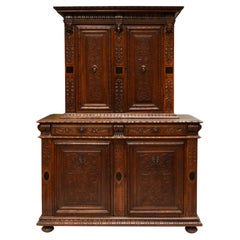
Period: 16th Century
Renaissance Cabinet form Lyon
France
Located in Saint-Ouen, FR
Condition : Partly dating from the Renaissance. The backs and the drawer’s insides have been re-done.
Historical background
The 16th century is a prosperous period for Lyon...
Category
French Renaissance Antique 16th Century Furniture
Materials
Walnut
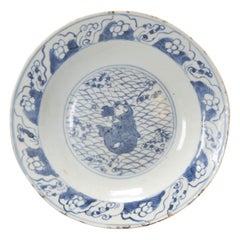
Liu Hai Kosometsuke Antique Chinese Ming Dynasty Plate Porcelain, 16/17th C
Located in Amsterdam, Noord Holland
Beautiful dish in blue and white. This is a Jingdezhen made dish made for the Japanese market. Kosometsuke. Central scene of Liu Hai and the toad.
No mark
Ad...
Category
Chinese Ming Antique 16th Century Furniture
Materials
Porcelain

$2,403 Sale Price
48% Off
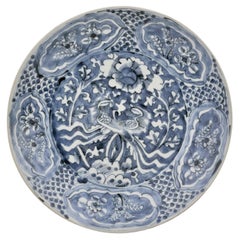
Chinese Swatow Blue and White Ceramic Dish, Late Ming Dynasty
Located in seoul, KR
Famous late ming dynasty chinese blue and white porcelain plate, double phoenix, from the shipwrecked binh thuan
Period: Ming Dyn...
Category
Vietnamese Ming Antique 16th Century Furniture
Materials
Ceramic
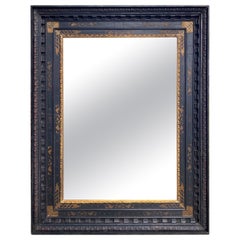
Large French 16th Century Renaissance Painted Framed Mirror
Located in Hopewell, NJ
Large super early French Renaissance painted and gilt carved framed mirror. Very large architecturally framed painted and carved wall mirror with stylized gilt carved and black paint...
Category
Dutch Renaissance Antique 16th Century Furniture
Materials
Mirror, Wood
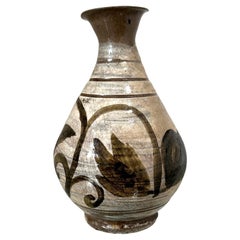
Korean Glazed Ceramic Vase Buncheong Ware Joseon Dynasty
Located in Atlanta, GA
A small antique Korean Buncheong stoneware vase from early Joseon Dynasty circa 16th century. The vase is of a classic pear form with a waisted neck, a flared mouth and a ringed base...
Category
Korean Other Antique 16th Century Furniture
Materials
Ceramic
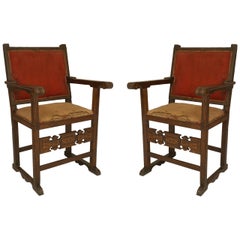
Pair of Spanish Colonial Walnut Armchairs
Located in Queens, NY
Pair of Spanish Colonial (South American possibly 17th Cent) walnut Armchairs with a square back and from stretcher with a geometric inlaid design.
Wear on seats reflective of age.
Category
South American Spanish Colonial Antique 16th Century Furniture
Materials
Walnut
$15,500 / set
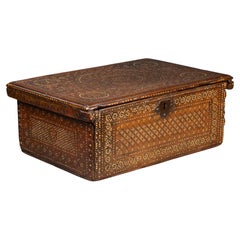
Hispano-Moresque Mudéjar Bone-Inlaid Walnut Chest
- Spain, 16th century
Located in Bruxelles, BE
Hispano-Moresque Mudéjar Bone-Inlaid Walnut Chest
Spain, 16th–17th century
Walnut, bone inlay, iron fittings
44.5 × 30.5 × 18 cm
This rectangular walnut chest, richly ornamented ...
Category
Spanish Renaissance Antique 16th Century Furniture
Materials
Bone, Walnut
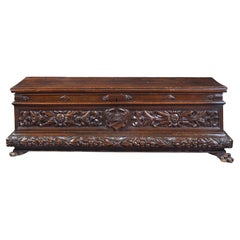
Italian Renaissance Cassone with the Coat of Arms of the Bonfanti Family
Located in Saint-Ouen, FR
This Italian walnut chest called « cassone » is shaped as an antic sarcophagus. The beautiful patina and the plain lid bring to the fore the facade richly ornated with vegetal motifs...
Category
Italian Renaissance Antique 16th Century Furniture
Materials
Walnut
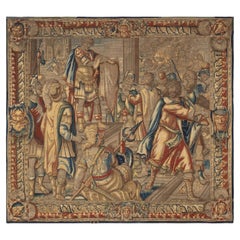
16th Century English Tapestry
Located in Los Angeles, CA
This is a fine example of a 16th century English tapestry in great condition.
Category
English Antique 16th Century Furniture
Materials
Wood
$349,999
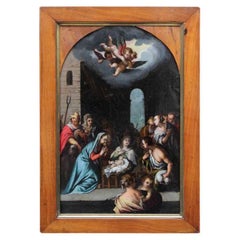
16th Century Adoration of the Shepherds Painting Oil on Copper by Carnevale
Located in Milan, IT
Domenico Carnevale (Sassuolo, 1524 - Modena, 1579) Adoration of the Shepherds
Oil on copper, 42 x 28 cm
Frame 54 x 36 cm
Expert opinion of Prof. Emilio Negro
The painting represents the Adoration of the Shepherds, the Child in the center, next to the Madonna kneeling in prayer and an angel behind her; towards him in the foreground a woman with a child in her arms, a shepherd with a sheep on the right, a bagpiper on the left and various other male and female characters turn to him. The architectures of the background, between which a glimpse of the landscape can be glimpsed, are hidden in the upper part by the clouds, where a "celestial glory" encamps with three flying angels.
The painting shows mannerist characters that can be traced back to the second half of the sixteenth century, and can be traced back to an author from the Modena area, with stylistic references to the Bolognese Samacchini (1532 - 1577) and Passerotti (1529 - 1592). More precisely, it can be attributed to Domenico Carnevale (1524-1579), one of the most important masters of the sixteenth century active in the local area. The Carnival was formed in Emilia, his homeland, where he worked for many years. However, his works also show a clear Roman influence, dictated by a long experience in the city, during which he also dedicated himself to the restoration of the Sistine Chapel. Trained in the late-mannerist environment of Modena, he is also linked to the Parmesan Corrorese and Ferrarese Dossesque tradition; Carnival also always maintains a slight archaic sentiment in his work,
The main stylistic reference must be identified in a work similar in subject and iconographic setting, coming from the church of the Pio Istituto Orfanelle di San Geminiano di Modena, currently part of the Art Collection of the Province, attributed to the same influence as the Carnival. Another interesting comparison should be identified with A Presentation of Jesus in the Temple...
Category
Italian Antique 16th Century Furniture
Materials
Copper
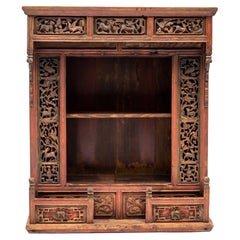
Antique Buddhist Alter Shrine 17-16
th Century
Located in Kastrup, DK
Rare Buddhist alter shrine, made in pine wood.
Rich on carved figural sceneries.
Original polychrome lacquer, beautiful and untouched condition.
From Shanxi Province in China.
Category
Chinese Ming Antique 16th Century Furniture
Materials
Pine
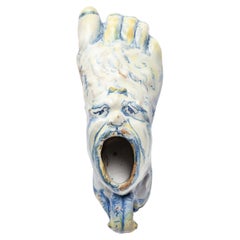
Renaissance Inkwell Calamelli workshop, Italy, Faenza, second half of the 16th
By Virgiliotto Calamelli
Located in Milano, IT
Inkwell
Calamelli workshop (attr.).
Faenza, second half of the 16th century
Height 4.33 in; length 8.07 in; depth 2.95 in (11 cm; 20.5 cm; 7.5 cm)
Weight: 0.800 lb (363 g)
State of conservation: some chipping to the top of the mask around the mouth. Handle glued, without any restorations; minor chips in some raised areas.
This object has the shape of a foot wearing Greek-style footwear, as can be seen in some raised areas. The foot is anatomically modeled with bare toes, while the ankle is partially covered by the footwear. On the heel, there is a small circular handle to support the object. The mouth of the container is shaped like a mask. The interior, completely enameled, suggests that the piece was intended to be used as an inkwell or to contain some other liquid. The base, however, is not enamelled.
The painted decoration, scant and brief, consists of rapid cobalt blue shading between the toes of the foot, with more precise emphasis on the nails. It is accompanied by yellow citrine accents to enhance the forms. The mask is painted with the tip of the brush, to accentuate the tense nature of the eyes and to accentuate their outline. Thin strokes of yellow-orange line the interior of the mouth.
Since the Renaissance, this decoration has been referred to as "compendiaria" and it characterizes the period of production extending from the mid-16th century to approximately the middle of the following century. It significantly influenced tastes at the time. It evolved from the polychrome style "istoriato" and transformed into a new style that "summarized" (compendia), or condensed, the ornamentation of the works into a few colors, placing greater prominence on the shapes. It was often inspired by metal specimens. Since the Renaissance, this decoration has been referred to as "compendiaria" and it characterizes the period of production extending from the mid-16th century to approximately the middle of the following century. It significantly influenced tastes at the time. It evolved from the polychrome style "istoriato" and transformed into a new style that "summarized" (compendia), or condensed, the ornamentation of the works into a few colors, placing greater prominence on the shapes. It was often inspired by metal specimens.
This artwork finds parallels in similar objects all characterized by this refined style and produced in the city of Faenza and other Italian centers starting from the mid-16th century.
The closest comparable example in majolica is a foot acquired by the British Museum in 2011 (inv. 2011, 8008.1). This was previously published by Carmen Ravanelli Guidotti in 1996 and later by Dora Thornton in 2016 during the conference on Renaissance ceramics...
Category
Italian Renaissance Antique 16th Century Furniture
Materials
Maiolica
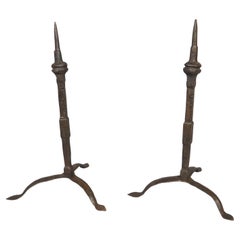
Pair of 16th or 17th Century Italian Forged Iron Tripod Pricket Candlesticks
Located in Dallas, TX
More information coming soon…
Forged in Italy during the late 1500s or early 1600s, this pair of tripod prickets once served as candlesticks. Most modern collectors will utilize th...
Category
Italian Medieval Antique 16th Century Furniture
Materials
Metal, Iron
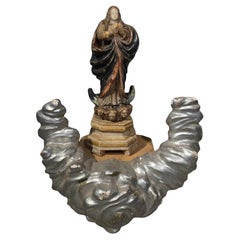
Rare 16th-Century Spanish Polychrome Alabaster Sculpture of the Virgin Mary
Located in Madrid, ES
Rare 16th-Century Spanish Polychrome Alabaster Sculpture of the Virgin Mary
Description:
This exquisite and rare 16th-century Spanish sculpture of the Virgin Mary is a masterful example of Renaissance religious art. Finely carved in alabaster, the figure retains traces of its original polychrome finish, reflecting the craftsmanship and devotional spirit of the era.
The Virgin Mary is depicted with grace and serenity, her delicate features and flowing robes showcasing the artistry of the period. The sculpture’s natural patina and signs of age enhance its authenticity, making it a significant piece for collectors of sacred or historical art.
Dimensions:
Height: 44 cm
Width: 17 cm
Depth: 15 cm
Key Features:
16th-Century Craftsmanship: A finely detailed alabaster carving with remnants of polychrome, representing the Virgin Mary.
Spanish Renaissance Origin: A testament to the religious and artistic traditions of 16th-century Spain.
Authentic Patina: Centuries of natural wear add historical depth and character to the piece.
Devotional and Artistic Appeal: Perfect for private collections, sacred spaces, or as a centerpiece in any setting.
Good Condition: Well-preserved for its age, maintaining its structural integrity and artistic impact.
This rare alabaster sculpture offers a glimpse into the religious devotion and artistic achievements of the Spanish Renaissance. Its historical significance and timeless beauty make it an exceptional addition to any collection.
Why Choose This Sculpture?
A genuine 16th-century artifact of exceptional craftsmanship.
A piece that embodies the spiritual and artistic legacy of Renaissance Spain.
Adds profound historical and devotional value to any collection or space.
Bring home this extraordinary polychrome alabaster Virgin Mary...
Category
Antique 16th Century Furniture
Materials
Alabaster
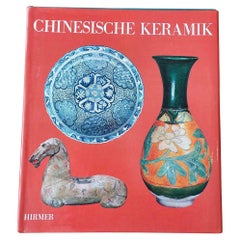
Reference Book Chinese Porcelain: Beurdeley - Chinesische Keramik Ein Handbuch
Located in Amsterdam, Noord Holland
Beurdeley, Cecile and Michel
320 pages with 111 pasted-on colour images, more than 300 drawings and black and white images, 12 chronological plates and 7 maps.
The aim of this book ...
Category
Antique 16th Century Furniture
Materials
Paper
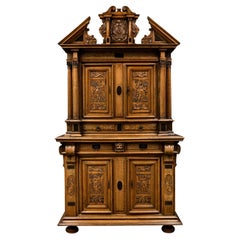
Fontainbleau Renaissance Cabinet Bearing the Dodieu’s Family Coat-of-arms
Located in Saint-Ouen, FR
Fontainebleau renaissance cabinet bearing the Dodieu’s family coat-of-arms
Origin : ILe De France, School of Fontainebleau
Period : Second ...
Category
Renaissance Antique 16th Century Furniture
Materials
Walnut, Ebony
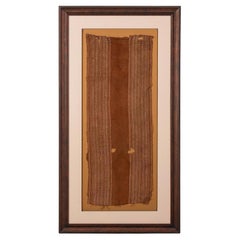
Large Framed Pre-Columbian Woven Textile Panel Inca Culture Peru
Located in Atlanta, GA
A large pre-Columbian textile fragment from Inca period in nowadays Peru, circa 15-16th century. The piece consists of three narrower panels woven from fine camelid yarns and were se...
Category
Peruvian Pre-Columbian Antique 16th Century Furniture
Materials
Textile, Wood
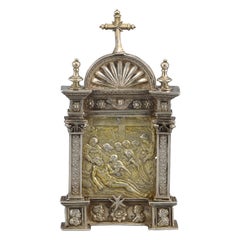
Silver Pax O Portapaz, Spain, 16th Century
Located in Madrid, ES
Portapaz. Silver in its color and gilded. Century XVI.
Portapaz made of silver that has a handle (decorated with delicate plant motifs similar to those of the pilasters) and a female and a male bust at the bottom, as well as other architectural elements on the back, and, on the front, an architectural composition classicist basement (with busts flanking a flower and a cross), two pilasters (vegetal decoration and capital recalling the composite order) with entablature (flowers flanking an angel's head; moldings), and a semicircular arch finish with elements veined in relief under cross and flanked by two architectural motifs in the upper part. This composition frames and enhances a gilt silver relief where you can see the Lament or Cry over the Body of Christ, with the Virgin holding the head of Jesus, Saint John at her side, the Magdalene and other characters, a cross following the group and a landscape background with houses and plant elements. This architectural structure mentioned is similar to the one present in other 16th century portapaces, such as that of the Magdalena de Dos Hermanas parish (Hernando de Ballesteros el Mozo, around 1575); or that of the Galaroza parish (same author and date); or that of the portapaz of San Miguel de Jerez de los Caballeros (in some details); etc. As for the relief, it is possible to clearly see a strong Italian influence, and the similarity between it and important pieces such as the Portapaz known as “de Cisneros by Juan de Burgos (1493-1497; MuseoCatedralicio de Alcalá de Henares), as well as in paintings and reliefs. Also noteworthy are both the male and female busts in the lower area and the Maltese cross (or Saint John's) that appears in this area. This symbol was used since the 12th century as an insignia by the Knights Hospitallers of the Order of Saint John of Jerusalem, also known as the Order of Malta...
Category
Spanish Renaissance Antique 16th Century Furniture
Materials
Silver
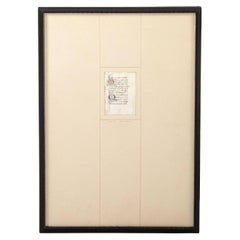
Framed Late 15th Century Illuminated Book of Hours Manuscript
Located in Houston, TX
Framed late 15th century illuminated Book of Hours manuscript circa 1500, France. Gouache, ink gold wash and gold burnishing on vellum. Framed within large decorative matt. In very g...
Category
French Medieval Antique 16th Century Furniture
Materials
Gold Leaf
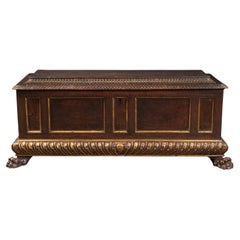
Large 16th Century Tuscan Wedding Chest Called "Cassone"
Located in Saint-Ouen, FR
Large wedding chest in tinted and gilded walnut, the lid animated with a frieze of pearls, the sides with compartments, the belt decorated with gadroons. It rests on four claw feets.
Category
Italian Renaissance Antique 16th Century Furniture
Materials
Walnut
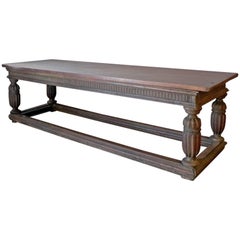
16th Century Elizabethan Oak Center or Dining Table
Located in Troy, NY
Late Elizabethan 16th Century Oak dining, center, or library-table of stately elegance and superb proportions and design. The four-board top with narr...
Category
English Elizabethan Antique 16th Century Furniture
Materials
Oak
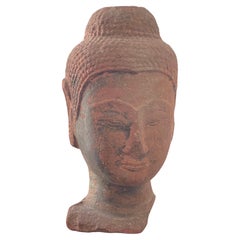
Stone Head of Buddha, 16th Century
Located in Schellebelle, BE
Antique Thai Sandstone carving of the head of a Buddha, 16 th Century,
Ayuthaya period,
fine hand carved sculpting of the face,
traces left of the Polychrome Coverings,
nice and weat...
Category
Southeast Asian Antique 16th Century Furniture
Materials
Stone
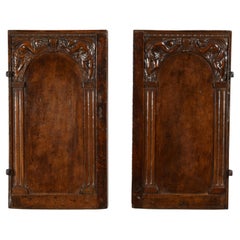
16th Century, Pair of Italian Small Carved Walnut Doors
Located in IT
Pair of small carved walnut doors, 16th century, central Italy
This pair of small doors was made in the sixteenth century, in central Italy, in carved walnut. The decoration provides...
Category
Italian Renaissance Antique 16th Century Furniture
Materials
Walnut
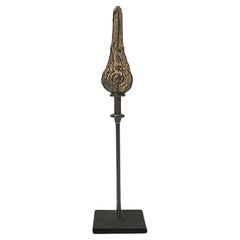
Bronze Buddha Flame, 15 - 16th Century
Located in New York, NY
A bronze Buddha Flame or "Ushnisha", recovered from the ancient city of Sukhotai, Thailand. Circa 15-16th Century.
The Ushnisha is the three-dimensional...
Category
Thai Other Antique 16th Century Furniture
Materials
Bronze
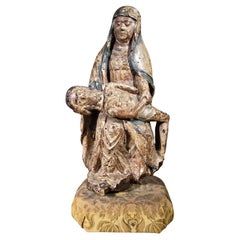
Rare 16th-Century French Polychrome Wooden Pietà Sculpture
Located in Madrid, ES
This rare and extraordinary 16th-century French sculpture depicts the iconic Pietà, showcasing exceptional craftsmanship and emotional depth. Finely carved from wood and adorned with...
Category
Antique 16th Century Furniture
Materials
Fruitwood
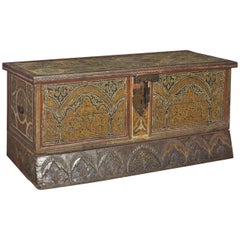
Rare Hispano-Moresque / Mudejar Painted Coffer
Located in Troy, NY
A very rare late 16th century "Mudejar" coffer, the front, both sides and top intricately painted with Hispano-Moresque designs. The painted reverse side of the lift top
opens to r...
Category
Spanish Islamic Antique 16th Century Furniture
Materials
Wrought Iron
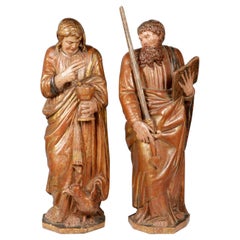
Saints Apostles John and Paul, Wood, Castillian School, 16th Century
Located in Madrid, ES
Pair of polychrome wood sculptures. "San Juan and San Pablo". Castilian school, 16th century.
Both male figures have been represented standing, with their main iconographic attrib...
Category
Spanish Renaissance Antique 16th Century Furniture
Materials
Other
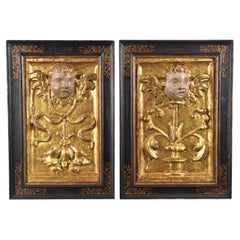
Pair of Reliefs, Grotesque or Candelieri, Wood, 16th Century
Located in Madrid, ES
Pair of reliefs; grutescos or candelieri. Carved, polychrome and golden wood. 16th century, and later
Pair of reliefs made of hand carved wood, gilded ...
Category
European Renaissance Antique 16th Century Furniture
Materials
Wool
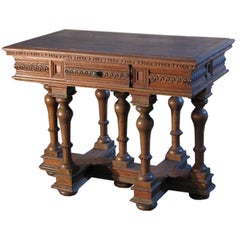
French `19th Century Renaissance Style Cross Lorraine small Walnut center Table
Located in Troy, NY
Small size cross Lorraine table with a strong sculptural presence, the carved frieze containing one-drawer, the seven turned legs are connected by a Cross-Lorraine shaped base, beaut...
Category
French Renaissance Antique 16th Century Furniture
Materials
Walnut
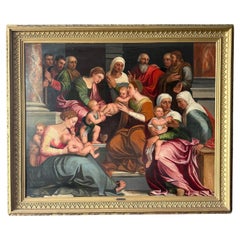
The Holy Kinship of Mary Oil on slatted panel Possibly Willem Key (16th Century)
Located in Chonburi, TH
This impressive 16th-century oil painting on a slatted wooden panel depicts *The Holy Kinship of Mary*, a revered religious subject in Northern Renaissance art. The composition bring...
Category
Belgian Renaissance Antique 16th Century Furniture
Materials
Wood, Paint
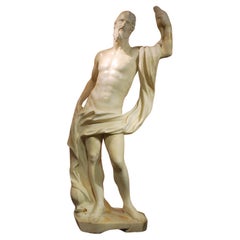
A 16th century carved marble sculpture of poseidon
Located in London, GB
This fine and imposing sculpture is an excellent example of 16th century Italian craftsmanship. The figure is stood on a raised, shaped rectangular base with a carved "dolphin" at th...
Category
Italian Renaissance Antique 16th Century Furniture
Materials
Marble
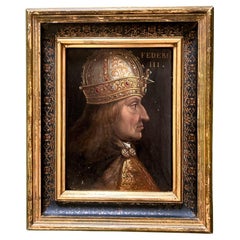
16th Century Oil Painting of Emperor Frederic III by School of Hans Burgkmair
Located in London, GB
16th Century Oil Painting of Holy Roman Emperor Frederic III, Antique Religious Oil Painting, Antique Royal King Oil Painting, Hans Burgkmair the older.
16th Century Oil Painting on board of the Holy Roman Emperor Frederic III by circle or school of Hans Burgkmair the older (1473 - 1531).
Portrait of the Holy Roman Emperor Frederic III. (1415 – 1493).
Oil on wooden panel. Described top right.
In later attractive European gilt frame with black & gilt inner decoration, circa 18th Century.
Hans Burgkmair was a German woodcut...
Category
German Renaissance Antique 16th Century Furniture
Materials
Wood, Paint
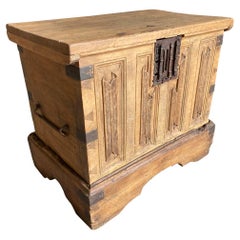
French 16th Century Coffre, Trunk
Located in Round Top, TX
A stunning early 16th century Coffre - Trunk from the Bourgogne region of France. Beautifully constructed from very handsome walnut with lovely linen fold detailing, a beautiful lock...
Category
French Antique 16th Century Furniture
Materials
Walnut
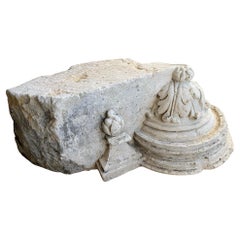
Hand Carved Stone Capital Base Side Coffee Table Garden Pedestal Antique element
Located in West Hollywood, CA
Hand Carved Stone Capital Base Side Coffee Table Garden Pedestal Antique element . LARGE and Very rare Renaissance hand carved capital of the 16th century corner carved limestone Cha...
Category
French Renaissance Antique 16th Century Furniture
Materials
Stone, Limestone
$12,800 Sale Price
20% Off
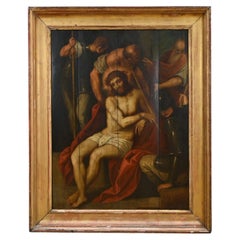
Italian Panel, Circle of Jacopo Palma the Younger, late 16th–early 17th century
Located in Madrid, ES
Italian Panel, Circle of Jacopo Palma the Younger, late 16th–early 17th century
" Ecce Homo"
(91 x 120 x 0 cm)
Good condition
The image is an artistic representation of the biblical ...
Category
Italian Baroque Antique 16th Century Furniture
Materials
Paint
Rare Renaissance Cabinet with Feather quill and Fenestration Decoration
Located in Saint-Ouen, FR
RARE RENAISSANCE CABINET WITH FEATHER QUILL AND FENESTRATION DECORATION
ORIGIN: FRANCE
PERIOD: EARLY 16th CENTURY
DIMENSIONS :
Height : 178 cm
Length : 145 cm
Depth : 58 cm
Walnu...
Category
Antique 16th Century Furniture
Materials
Walnut
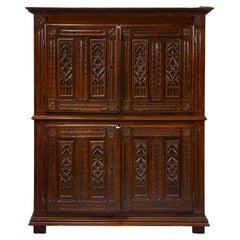
French 16th and 19th Century Gothic Freestanding Oak Cabinet
Located in Troy, NY
French 16th and 19th Century Gothic Freestanding Oak Cabinet. Unique and rare cabinet with an open base, finished all around, so it could be freestanding in the room, the front panel...
Category
French Gothic Antique 16th Century Furniture
Materials
Wrought Iron

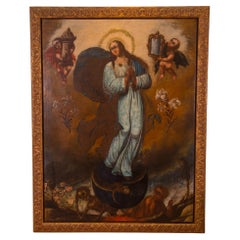
Virgin of the Immaculate Conception, 16th Century, Oil on Canvas
Located in North Miami, FL
16th Century Spanish Colonial Oil on canvas painting of the Virgin of the Immaculate Conception. In this representation of the Virgin Mary being f...
Category
Spanish Spanish Colonial Antique 16th Century Furniture
Materials
Canvas, Wood, Paint
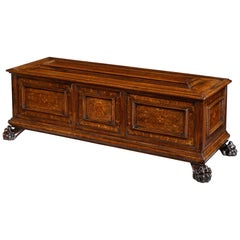
Cassone Marriage Chest Italian Marquetry Coat of Arms Gilded Renaissance L73.5"
Located in BUNGAY, SUFFOLK
A late-16th Century, Museum Quality, Italian Walnut & Fruitwood Marquetry Marriage Chest with a Coat of Arms & Retaining Traces of the Original Gilded Decoration
- Exceptionally rar...
Category
Italian Renaissance Antique 16th Century Furniture
Materials
Fruitwood, Walnut
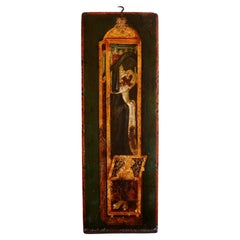
Bolognese School of the 16th Century - Mummy of Saint Catherine of Bologna
Located in Bruxelles, BE
Bolognese School of the 16th Century
Mummy of Saint Catherine of Bologna
Oil on Panel
20,5 x 7 x 0,8 cm
This rare painting depicts Saint Catherine of Bologna as a mummy, housed in a ...
Category
Italian Renaissance Antique 16th Century Furniture
Materials
Wood, Giltwood
$3,325 Sale Price
20% Off
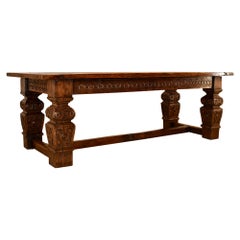
16th Century Period Elizabethan Carved Table of Substantial Size
Located in High Point, NC
Rare and impressive PERIOD Elizabethan dining table of substantial size. The top is made from four planks, and is banded at the ends to prevent shrinkage. The apron is hand carved ...
Category
English Elizabethan Antique 16th Century Furniture
Materials
Oak
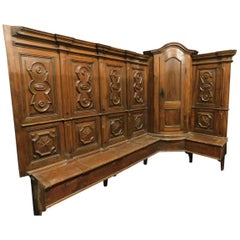
Antique walnut Sacristy choir, seats
corner cupboards, opening seats,
500 Italy
Located in Cuneo, Italy (CN)
Ancient sacristy choir, with many benches, seats with corner cupboards and opening seats, n. 2 L-shaped bodies, hand-carved with ancient tile, in preciou...
Category
Italian Antique 16th Century Furniture
Materials
Walnut
$18,604 Sale Price / set
53% Off
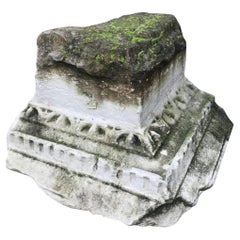
16th C. Hand Carved Capital Stone Base Architectural Element Sculpture Pedestal
Located in West Hollywood, CA
16th C. Hand Carved Capital Stone Base Architectural Element Sculpture Pedestal. Very rare 16th Century Renaissance corner Capital . Hand carved limestone Chapiteau Capital from a Cloister in France . From an ornamental point of view , it is the coronation , the upper part of a post or a column or pilaster pillar . A beautiful Architectural element garden ornament .
It can used as a Base for a coffee glass table , or as a side table for drinks or to mount books. A stunning Fragments to be used as stand for a sculpture . Use it as a pedestal or as a mounted decorative object. In an entryway a bathroom a living room , in an office , it will create an incredible focal point . It can make a beautiful base for a floor lamp by a leather reading chair...
Category
French Renaissance Antique 16th Century Furniture
Materials
Stone, Limestone
$7,840 Sale Price
20% Off
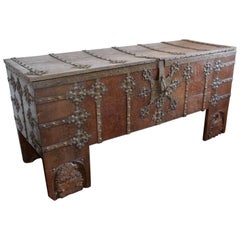
Rare Late Medieval 16th Century German Wrought Iron Oak Chest or Stollentruhe
Located in Worpswede / Bremen, DE
A very impressive Westphalian Gothic chest or ‚Stollentruhe’, Westphalia, Germany, circa 1500-1550. Wrought iron mounted oak, partially carved. The monumental rectangular standing chest with full-height stiles, extensively mounted with wrought ironwork straps terminating in quatrefoil finials which ’wrap’ around the chest edges. These are fixed with convex head nails. The ironwork with some remains of an originally red painted surface. In addition, running along the edges of the lid at the front and sides is a plain iron band, close-nailed. The feet of the two front legs are finely carved on the front face, in low relief with a rectangular arched ’panel’ depicting on the left a lion, on the right a dragon holding each a coat of arms.
Regarding the age of circa 500 years, this coffer is in exceptionally good condition, with only smaller restorations.
Comparative literature
• Baumeier, Stefan, Beschlagene Kisten; Die ältesten Truhen Westfalens, Essen, 2012.
• Falke, Otto von, Deutsche Möbel...
Category
German Medieval Antique 16th Century Furniture
Materials
Iron
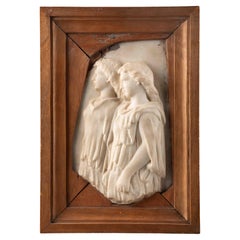
Renaissance relief - Italy, probably Rome, 16th century
Located in Bruxelles, BE
Renaissance relief depicting two female figures dressed in a chiton
Italy, probably Rome, 16th century
Marble, wooden frame (provenance label on the back)
28 x 20 x 5 cm
This beau...
Category
Italian Renaissance Antique 16th Century Furniture
Materials
Marble
$5,653 Sale Price
30% Off
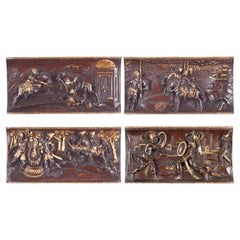
A Set of Four Tuscan Carved Wood and Parcel Gilt Equestrian Reliefs
Located in London, GB
A Set of Four Tuscan Carved Wood and Parcel Gilt Equestrian Reliefs
Walnut, gilt, velvet
Italy
Circa 1580
SIZE: two reliefs: 25cm high, 48cm wide - 9¾ ins high, 19 ins wide
two...
Category
Italian Antique 16th Century Furniture
Materials
Velvet, Walnut
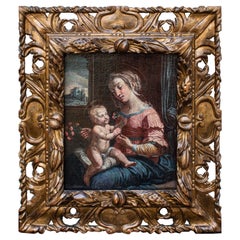
16th Century Madonna of the Carnations Painting Oil on Canvas from Raffaello
Located in Milan, IT
16th century, by Raffaello Sanzio (Urbino, 1483 - Rome, 1520)
Madonna of the Carnations
Measures: Oil on canvas 38 x 30 - with frame 59 x 52.5 cm
The Madonna dei Garofani made b...
Category
Italian Antique 16th Century Furniture
Materials
Canvas
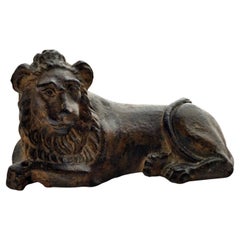
Lion of Forge, Spain, 16th Century
Located in Madrid, ES
Lion of Forge, Spain, 16th century
In forging, measurements: 10 x 17 x 5 cm
Good condition
Spanish private collection.
Category
Spanish Baroque Antique 16th Century Furniture
Materials
Iron
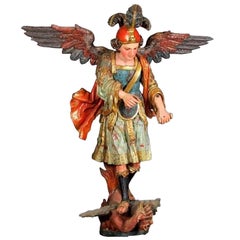
San Miguel Arcángel in Carved Wood, Polychrome, Stewed and Gold, Castilla FF SX
Located in Marbella, ES
San Miguel Arcángel in carved wood, polychrome, stewed and gold, castilla ff SX.
Category
Antique 16th Century Furniture
Materials
Wood
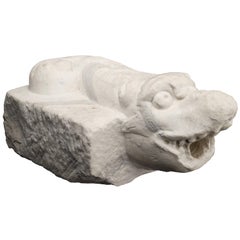
Italian Ancient Marble Sculpture Fountain, Late 16th Century
Located in Milano, IT
Sea monster
Carrara marble mouth fountain
Italy, late 16th century
It measures 13.8 x 31.5 x 18.9 in (35 x 80 x 48 cm)
State of conservation: some small evident gaps and widespread signs of wear due to outdoor exposure. The gray marks crossing it do not come from restoration, but are rather the natural veins of the marble.
This work has some morphological characteristics typically associated with the iconography of the sea monster: an elongated muzzle, sharp teeth, protruding eyes, elongated ears, and a coiled serpent's tail.
An in-depth series of studies on artistic depictions of the sea monster attempted to verify how this symbol evolved in antiquity in the European and Mediterranean contexts and how it gradually changed its image and function over time. The iconography itself is mutable and imaginative and its history is rich with cultural and artistic exchange, as well as the overlapping of ideas. This occurred so much that it is difficult to accurately pinpoint the "types" that satisfactorily represent its various developments.
However, we can try to summarize the main figures, starting from the biblical Leviathan and the marine creature that swallowed Jonah (in the Christian version, this figure was to become a whale or a "big fish", the “ketos mega”, translation of the Hebrew “dag gadol”). Other specimens ranged from the dragons mentioned in the Iliad (which were winged and had legs) to "ketos” (also from Greek mythology), the terrifying being from whose Latinized name (“cetus”) derives the word "cetacean". See J. Boardman, “Very Like a Whale” - Classical Sea Monsters, in Monsters and Demons in the Ancient and Medieval Worlds, in Papers presented in Honor of Edith Porada, Mainz am Rhein 1987, pp. 73-84).
In Italy the monster underwent yet further variations: it can be found in Etruscan art on the front of some sarcophagi representing the companion of souls, while among the Romans we find the “Pistrice” (cited by Plinio in Naturalis Historia PLIN., Nat., II 9, 8 and by Virgilio in Eneide: VERG., Aen., III, 427), which appeared in the shape of a stylized hippocampus or a very large monstrous cetacean and evolved into a hideous being with a dragon's head and long webbed fins.
During the Middle Ages, the sea monster was the object of new transformations: at this time, it is often winged, the head is stretched like a crocodile, the front legs are often very sharp fins - sometimes real paws - until the image merges with dragons, the typical figures of medieval visionary spirituality widely found throughout Europe (on this topic and much more, see: Baltrušaitis, J., Il Medioevo fantastico. Antichità ed esotismi nell’arte gotica, Gli Adelphi 1997).
In Italy during the 15th and 16th centuries, the revival of classicism - representative of the humanistic and Renaissance periods - led to a different reading of these "creatures". Indeed, the sea monster was also to find widespread use as an isolated decorative motif, especially in numerous fountains and sculptures where dolphins or sea monsters were used as a characterizing element linked to water (on this theme see: Chet Van Duzer, Sea Monsters on Medieval and Renaissance Maps, London, The British library, 2013).
From the morphological point of view, the "sea monsters" of this period are mostly depicted as hybrid figures, in which the body of a mythological or real being (a hippocampus, a sea snake, a dolphin), is joined to a head with a rather indistinct appearance. It was usually characterized by large upright ears, an elongated snout, sharp teeth and globular, protruding eyes; a complex and indefinite figure, both from the symbolic point of view and from that of its genesis.
The work we are examining is placed as a cross between the medieval sea serpent and the Renaissance dolphin, with stylistic features which recall the snake as often used in heraldry (such as the "snake" depicted in the coat of arms of the Visconti - the lords and then dukes of Milan between 1277 and 1447 - and which, for some, may be derived from the representations of the “Pistrice” that swallowed Jonah).
In the search for sources, Renaissance cartography and in particular woodcuts should not be neglected. See for example the monsters of Olaus Magnus, from the editions of the “Historia de gentibus septentrionalibus” (“History of the peoples of the north”) and the natural histories of Conrad Gesner, Ulisse...
Category
Italian Renaissance Antique 16th Century Furniture
Materials
Carrara Marble
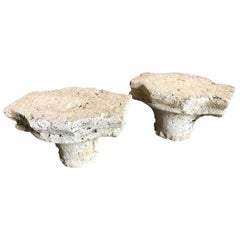
Pair of French Gothic Stone Capitals
Located in Round Top, TX
A fantastic pair of Gothic period hand carved stone capitals from the Avignon area of France. Exceptional fragments whether used architecturally or converted into end tables.
Category
French Antique 16th Century Furniture
Materials
Stone
$12,250 / set
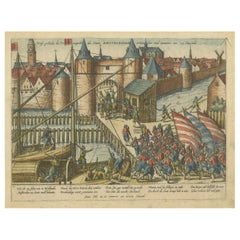
Attempt to Seize Amsterdam, 1577 — Haarlemmerpoort Assault, Hogenberg
Located in Langweer, NL
Attempt to Seize Amsterdam, 1577 — Haarlemmerpoort Assault, Hogenberg
Description:
This powerful late-16th-century historical engraving depicts the attempted seizure of Amsterdam on...
Category
German Antique 16th Century Furniture
Materials
Paper
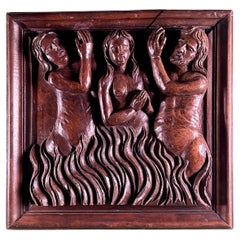
16th Century Carved Religious Panel Sculpture of Poor Souls in Purgatory Hell
Located in London, GB
Antique Religious Relief Sculpture, Poor Souls in Purgatory Sculpture, Sinners in Hell Sculpture, Antique Religious Carving, Antique Church Plaque, Antique Religious Panel, Antique P...
Category
Italian Renaissance Antique 16th Century Furniture
Materials
Wood
Renaissance Harpy - Italy, 16th century
Located in Bruxelles, BE
Renaissance Harpy
bronze
Italy, 16th century
15 x 12 x 5,5 cm
This expressive bronze figure represents a harpy, a mythological creature with the body of a bird and the head and tor...
Category
Italian Renaissance Antique 16th Century Furniture
Materials
Bronze
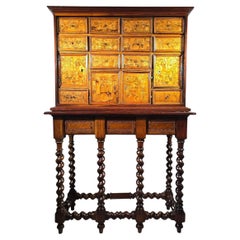
Important German cabinet from Augsburg – End of the 16th / Beginning of the 17th
Located in Madrid, ES
Magnificent and rare German cabinet from Augsburg, dating from the late 16th to early 17th century. Crafted from light fruitwoods, this exceptional piece is richly decorated with fin...
Category
German Baroque Antique 16th Century Furniture
Materials
Wood
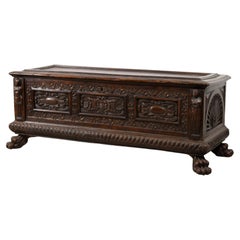
XVI Century, Italian Renaissance Wood Chest
Located in IT
XVI Century, Italian Renaissance wood chest.
This important noble chest of the Tuscan Renaissance was built towards the end of the sixteenth centur...
Category
Italian Renaissance Antique 16th Century Furniture
Materials
Nutwood
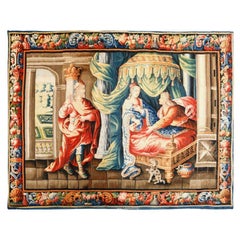
$19,596 Sale Price
25% Off
Antique Tapestry - Size: - SIze: 11
9x9
2
Located in Los Angeles, CA
Antique Tapestry Rug in Wool and Cotton 11'9x9'2
Key Details:
Pile: Wool
Foundation: Cotton
Origin: Tapestry
Design: Pictorial
Approximate Age: 16th century
Quality (KPI): 3...
Category
French Antique 16th Century Furniture
Materials
Wool, Cotton
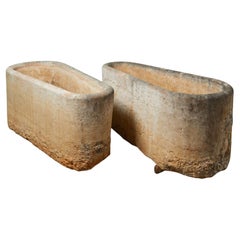
Pair of Italian Renaissance Baths Owned by Pope Julius ii
Located in Wormelow, Herefordshire
This pair of important Italian Renaissance marble baths belonged to the Warrior Pope Julius II, one of the most powerful and influential Pop...
Category
Italian Antique 16th Century Furniture
Materials
Marble
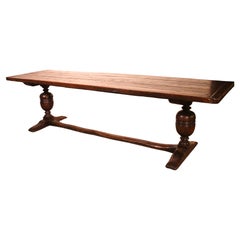
Renaissance Monastery Table - 16th Century
Located in Brussels, Brussels
Superb and rare Renaissance period oak monastery table from the Flanders
Unique museum quality table with a superb top that has an extraordinary patina. Its 5cm thick top gives it a...
Category
Belgian Renaissance Antique 16th Century Furniture
Materials
Oak
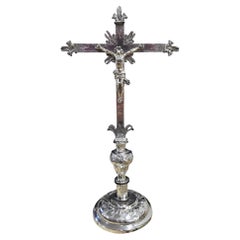
Important Spanish Solid Silver Altar Cross – 16th Century
Located in Madrid, ES
This remarkable 16th-century Spanish altar cross is a stunning example of ecclesiastical silverwork. Crafted from solid silver, the cross features the traditional depiction of Christ...
Category
Antique 16th Century Furniture
Materials
Sterling Silver
More Ways To Browse
Blue And White Lidded Temple Jars
Blue Uranium Glass
Blue White Clock
Blue Yellow Pottery
Boffi Kitchen
Bombay Chest Italy
Book Table Stand
Boudoir Set
Brands Of Vintage Glass
Brass Heron Sculpture
Bread Cabinet
Bronze Lalanne
Bronze Spoons
Burl Bedside Chests
Burled Walnut Desk
Burnished Bamboo
Butter Table
Cabinet Dowel