16th Century Furniture
to
210
756
427
1,226
42
28
19
6
3
3
1
1
1
40,766
136,927
543,032
287,893
86,220
260,224
125,224
12,658
5,507
18,639
23,036
19,332
54,325
71,657
60,993
21,697
9,542
426
260
235
170
147
745
285
210
161
125
1,226
1,226
1,226
22
5
3
2
2
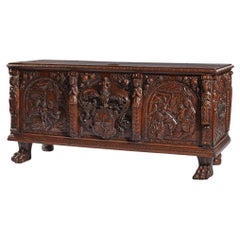
Period: 16th Century
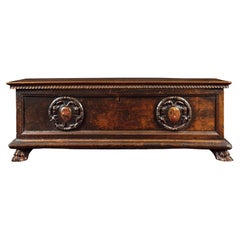
Carved Tuscan Wedding Cassone, Renaissance Period
Located in Saint-Ouen, FR
This cassone, remarkable for its sobriety, sits on two clawed lion’s feet and a moulded base.
On the façade, there is one large, moulded frame, with two soberly carved medallions inside it. Each medallion has a painted coat of arms at the centre. The two coats of arms are different, suggesting that there was an alliance between two families through marriage.
The thick lid has a fluted frieze at the front.
On the sides, a wrought iron handle reminds us of the use of this piece, which was intended for storing the property of its owner and allowing them to travel between various residences. The square shaped handles highlight the earliness of this object in the century.
The cassone is, along with the bed, a key piece of furniture of the Middle Ages and was still used in the Renaissance Period.
Category
Italian Renaissance Antique 16th Century Furniture
Materials
Walnut
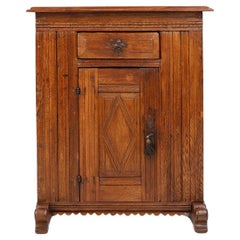
16th Century Belgian hand carved single door cabinet in full oak
Located in Meulebeke, BE
Belgium / 16th Century / cabinet / oak / Antique / Rustic
Primitive Antique cabinet in full oak. Hand crafted and carved in the 16th Century in Belgium. Crafted from blond solid oak...
Category
Belgian Rustic Antique 16th Century Furniture
Materials
Oak
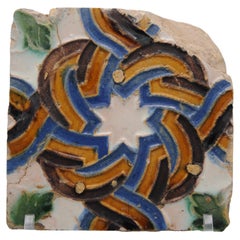
Spanish Azulejo Geometric Tile Arista y Cuenca - Sevilla 16th century
Located in DELFT, NL
Rare early 16th century Mudejar tile of the so-called ‘Aristo’ or 'cuerda secca' technique
Geometric design with a central intertwining cords. Very ornate decoration.
This type of...
Category
Spanish Renaissance Antique 16th Century Furniture
Materials
Earthenware, Maiolica
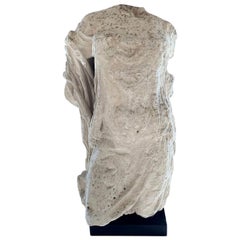
16th Century Stone Classical Roman Style Torso
Located in Vosselaar, BE
A wonderful 16th century draped female torso in classical style. Made in France under Italian Renaissance influence this female torso is finely sculpted with great detail to the stol...
Category
French Renaissance Antique 16th Century Furniture
Materials
Sandstone
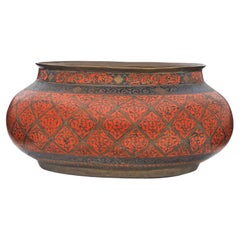
A Rare Safavid Enamelled Brass Bowl, 16TH - 17TH Century
Located in London, GB
of compressed globular form on a tapering foot with waisted flaring rim, profusely engraved with a lattice containing vegetal interlace, above and below bands of tendrils and interla...
Category
Antique 16th Century Furniture
Materials
Brass
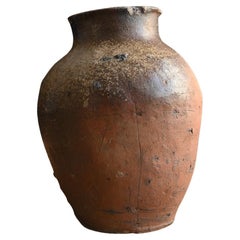
Japanese Antique Pottery Jar 15th-16th Century/ Wabi-Sabi Jar/Tokoname Vase
Located in Sammu-shi, Chiba
It is a very old jar in Japan.
This is a pottery called Tokoname ware.
Tokoname is a kiln located in Aichi prefecture, Japan.
It is said to have originated around the 12th century.
A...
Category
Japanese Other Antique 16th Century Furniture
Materials
Pottery
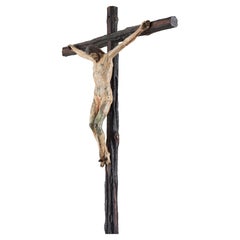
Rare and important painted bronze Crucifix after a model by Michelangelo
By Michelangelo Buonarroti
Located in Leesburg, VA
A rare and very fine bronze corpus of Christ after a model by Michelangelo, cast ca. 1597-1600 by Juan Bautista Franconio and painted in 1600 by Francisco Pacheco in Seville, Spain.
The present corpus reproduces a model attributed to Michelangelo. The best known example, lesser in quality, is one on display at the Metropolitan Museum of Art (MET).
The association of this corpus with Michelangelo was first brought to light by Manuel Gomez-Moreno (1930-33) who studied the wider circulated casts identified throughout Spain. The attribution to Michelangelo was subsequently followed by John Goldsmith-Phillips (1937) of the MET and again by Michelangelo expert, Charles de Tolnay (1960).
While Michelangelo is best known for his monumental works, there are four documented crucifixes he made. The best known example is the large-scale wooden crucifix for the Church of Santa Maria del Santo Spirito in Florence, made in 1492 as a gift for the Prior, Giovanni di Lap Bicchiellini, for allowing him to study the anatomy of corpses at the hospital there. In 1562, Michelangelo wrote two letters to his nephew, Lionardo, indicating his intention to carve a wooden crucifix for him. In 1563 a letter between Lionardo and the Italian sculptor Tiberio Calcagni, mentions this same crucifix (a sketch of a corpus on the verso of a sheet depicting Michelangelo’s designs for St. Peter’s Basillica [Palais des Beaux-Arts in Lille] may reproduce this). That Michelangelo was working on small corpora in the last years of his life is further evidenced by the small (26.5 cm) unfinished wooden crucifix located at the Casa Buonarroti, considered his last known sculptural undertaking. Michelangelo’s contemporary biographer, Giorgio Vasari additionally cites that Michelangelo, in his later years, made a small crucifix for his friend, Menighella, as a gift.
Surviving sketches also indicate Michelangelo’s study of this subject throughout his career, most notably during the end of his life but also during the 1530s-40s as he deepened his spiritual roots. The occasional cameo of crucified Christ’s throughout his sketched oeuvre have made it challenging for scholars to link such sketches to any documented commissions of importance. All the while, in consideration that such objects were made as gifts, it is unlikely they should be linked with commissions.
Nonetheless, a number of theories concerning Michelangelo’s sketches of Christ crucified have been proposed and some may regard the origin of the present sculpture. It has been suggested that the corpus could have its impetus with Michelangelo’s work on the Medici Chapel, whose exclusive design was given to the master. It is sensible smaller details, like an altar cross, could have fallen under his responsibility (see for example British Museum, Inv. 1859,0625.552). Others have noted the possibility of an unrealized large marble Crucifixion group which never came to fruition but whose marble blocks had been measured according to a sheet at the Casa Buonarroti.
A unique suggestion is that Michelangelo could have made the crucifix for Vittoria Colonna, of whom he was exceedingly fond and with whom he exchanged gifts along with mutual spiritual proclivities. In particular, Vittoria had an interest in the life of St. Bridget, whose vision of Christ closely resembles our sculpture, most notably with Christ’s proper-left leg and foot crossed over his right, an iconography that is incredibly scarce for crucifixes. The suggestion could add sense to Benedetto Varchi’s comment that Michelangelo made a sculpted “nude Christ…he gave to the most divine Marchesa of Pescara (Vittoria Colonna).”
Of that same period, two sketches can be visually linked to our sculpture. Tolnay relates it to a sketch of a Crucified Christ at the Teylers Museum (Inv. A034) of which Paul Joannides comments on its quality as suggestive of preparations for a sculptural work. Joannides also calls attention to a related drawing attributed to Raffaello da Montelupo copying what is believed to be a lost sketch by Michelangelo. Its relationship with our sculpture is apparent. Montelupo, a pupil of Michelangelo’s, returned to Rome to serve him in 1541, assisting with the continued work on the tomb of Pope Julius II, suggesting again an origin for the corpus ca. 1540.
The earliest firm date that can be given to the present corpus is 1574 where it appears as a rather crudely conceived Crucifixion panel, flanked by two mourners in low-relief and integrally cast for use as the bronze tabernacle door to a ciborium now located at the Church of San Lorenzo in Padula. Etched in wax residue on the back of the door is the date, 27 January 1574, indicating the corpus would have at least been available as a model by late 1573.
The Padula tabernacle was completed by Michelangelo’s assistant, Jacopo del Duca and likely has its origins with Michelangelo’s uncompleted tabernacle for the Basilica of St. Mary of the Angels in Rome.
The impetus for the Padula tabernacle’s Crucifixion panel begins with a series of late Crucifixion sketches by Michelangelo, depicting a scene of Christ crucified and flanked by two mourners (see British Museum Inv. 1895.0915.510; Ashmolean Museum Inv. 1846.89, KP II 343 recto; Windsor Castle RCIN 912761 recto; and Louvre Inv. 700). A faintly traced block possibly intended for sculpting the sketch of the crucified Christ on its recto was discovered by Tolnay on a version of the composition at Windsor Castle. The Windsor sketch and those related to it appear to have served as preparatory designs for what was probably intended to become the Basilica of St. Mary’s tabernacle door. Vasari documents that the project was to be designed by Michelangelo and cast by his assistant, Jacopo del Duca. Michelangelo died before the commission was complete, though on 15 March 1565, Jacopo writes to Michelangelo’s nephew stating, “I have started making the bronze tabernacle, depending on the model of his that was in Rome, already almost half complete.” Various circumstances interrupted the completion of the tabernacle, though its concept is later revitalized by Jacopo during preparations to sell a tabernacle, after Michelangelo’s designs, to Spain for Madrid’s El Escorial almost a decade later. The El Escorial tabernacle likewise encountered problems and was aborted but Jacopo successfully sold it shortly thereafter to the Carthusians of Padula.
An etched date, 30 May 1572, along the base of the Padula tabernacle indicates its framework was already cast by then. A 1573 summary of the tabernacle also describes the original format for the door and relief panels, intended to be square in dimension. However, a last minute decision to heighten them was abruptly made during Jacopo’s negotiations to sell the tabernacle to King Phillip II of Spain. Shortly thereafter the commission was aborted. Philippe Malgouyres notes that the Padula tabernacle’s final state is a mixed product of the original design intended for Spain’s El Escorial, recycling various parts that had already been cast and adding new quickly finished elements for its sale to Padula, explaining its unusually discordant quality, particularly as concerns the crudeness of the door and relief panels which were clearly made later (by January 1574).
Apart from his own admission in letters to Spain, it is apparent, however, that Jacopo relied upon his deceased master’s designs while hastily realizing the Padula panels. If Michelangelo had already earlier conceived a crucifix model, and Jacopo had access to that model, its logical he could have hastily employed it for incorporation on the door panel to the tabernacle. It is worth noting some modifications he made to the model, extending Christ’s arms further up in order to fit them into the scale of the panel and further lowering his chin to his chest in order to instill physiognomic congruence. A crude panel of the Deposition also follows after Michelangelo’s late sketches and is likewise known by examples thought to be modifications by Jacopo based upon Michelangelo’s initial sculptural conception (see Malgouyres: La Deposition du Christ de Jacopo del Duca, chef-d’oeuvre posthume de Michel-Ange).
Jacopo’s appropriation of an original model by Michelangelo for more than one relief on the Padula tabernacle adds further indication that the crucifix was not an object unique to Jacopo’s hand, as few scholars have posited, but rather belongs to Michelangelo’s original...
Category
Renaissance Antique 16th Century Furniture
Materials
Bronze
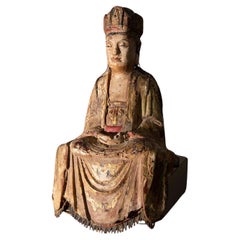
Polychrome wooden statue depicting Guanyin Bodhisattva, Ming, 16th century
Located in Milano, IT
In a realm where time stands still, there exists a 16th-century masterpiece, a sculpture of unparalleled beauty that transports you to the heart of the Ming dynasty. Here, in a place of reverence and artistry, sits the Chinese Bodhisattva Guanyin, the embodiment of compassion, enshrined in a form of breathtaking elegance.
Guanyin's divine presence is unveiled as he is seated in padmasana, the lotus position, a symbol of purity and enlightenment. His regal robes...
Category
Chinese Ming Antique 16th Century Furniture
Materials
Wood
A Mamluk Engraved Brass Basin, Egypt, Early 16TH Century
Located in London, GB
of waisted form with flaring everted rim, engraved with a series of cartouches filled with inscriptions in thuluth interspersed with roundels containing vegetal interlace on a floral...
Category
Egyptian Antique 16th Century Furniture
Materials
Brass

Swiss Chest richly carved, Riedmatten family, framed by two Holy conversations
Located in Saint-Ouen, FR
SWISS CHEST RICHLY CARVED WITH THE COAT OF ARMS OF THE RIEDMATTEN FAMILY FRAMED BY TWO HOLY CONVERSATIONS
ORIGIN : SWITZERLAND, VALAIS CANTON
PERIOD : END OF 16th CENTURY – EARLY 17...
Category
Swiss Renaissance Antique 16th Century Furniture
Materials
Wood, Walnut
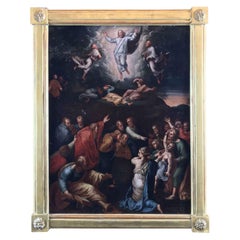
16th Century Old Masters Nicolo Cercignani the Transfiguration after Raphael
By Niccolò Circignani
Located in Milano, MI
A late 16th century oil on copper painting by Nicolò Cercignani, an Italian Old Masters artist of the late-Renaissance or Mannerist period, depicting the Raphaelesque transfiguration...
Category
Italian Renaissance Antique 16th Century Furniture
Materials
Copper
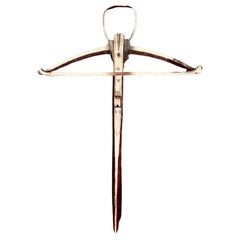
Rare Antique German Gothic Crossbow, circa 1540, All Original
Located in Doha, QA
An exceptional early German crossbow dating to around 1540, crafted from antler, wood, and iron. This finely made piece exemplifies the late Gothic to early Renaissance period of Ger...
Category
German Gothic Antique 16th Century Furniture
Materials
Iron
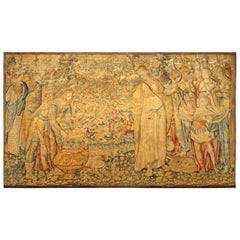
16th Century Flemish Historical Tapestry, with the Victory of Tomyris
Located in New York, NY
A Flemish historical tapestry from the second half of the 16th century, depicting Tomyris’ victory over Cyrus the Great, with Tomyris, the leader of a ...
Category
European Antique 16th Century Furniture
Materials
Wool

$59,996 Sale Price
20% Off
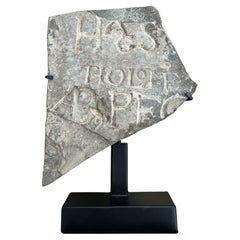
16th century stone architectural fragment
Located in Vosselaar, BE
A 16th century Spanish slate stone architectural fragment. Probably part of a commerative plaque. The Latin inscription only partly present but most likely being a religious referenc...
Category
Spanish Medieval Antique 16th Century Furniture
Materials
Slate
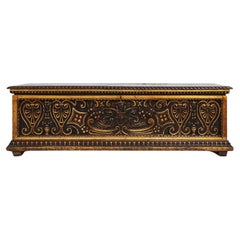
Large 16th century carved and polychroom painted oak Venetian chest, Italy
Located in Meulebeke, BE
Italy / 16th century / Venetian chest or Cassone / oak, polychroom / antique / renaissance
A large carved and gilt painted Venetian marriage chest made in oak in the 16th century i...
Category
Italian Renaissance Antique 16th Century Furniture
Materials
Wood, Oak
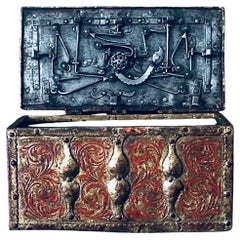
Antique 16th century Venetian Painted Gold Gilt Iron Strongbox with Original Key
Located in Doha, QA
An extraordinarily rare and visually striking 16th-century Venetian iron treasure coffer, showcasing the height of Renaissance artistry and engineering. Crafted in the early to mid-1...
Category
Italian Renaissance Antique 16th Century Furniture
Materials
Gold, Iron
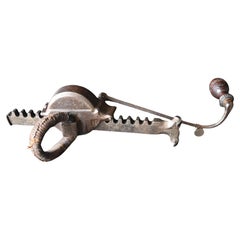
Renaissance Hunting Cranequin, Dated 1589 — With Maker’s Mark in Shield
Located in Bilzen, BE
Renaissance Hunting Cranequin, Dated 1589 — With Maker’s Mark in Shield
Origin: Southern Germany or Flanders
Date: 1589 (engraved)
Material: Forged iron, turned hardwood handle
Lengt...
Category
German Renaissance Antique 16th Century Furniture
Materials
Wrought Iron
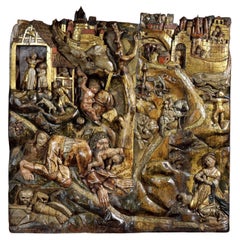
Wood Low-Relief Depicting a Werewolf and Saint George
Located in Saint-Ouen, FR
Exceptional polychrome wood low-relief depicting a werewolf and saint george after a woodcut by lucas cranach (“DER WERWOLF” 1512)
Provenance :
collection Brimo de Laroussihle
colle...
Category
German Renaissance Antique 16th Century Furniture
Materials
Wood
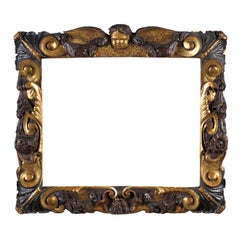
16th Century Partly Gilt Carved Wood Frame
Located in Saint-Ouen, FR
This rare Venetian frame entirely carved in high-relief shows a rich decor of scrolls, garlands, daisy flowers and thistles. At the four corners of the frame are depicted large acant...
Category
Italian Renaissance Antique 16th Century Furniture
Materials
Wood
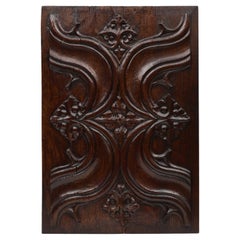
Gothic oak sculpted panel from the 16th century, Belgium
Located in Meulebeke, BE
Belgium / 16th century / wooden sculpted panel / oak / Gothic / Rustic / Antique
A panel in oak wood enriched with Gothic graphic carvings. Hand carved in Belgium in the 16th centur...
Category
Belgian Gothic Antique 16th Century Furniture
Materials
Oak
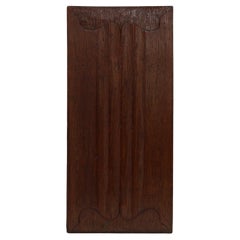
16th Century oak carved Gothic Panel, France
Located in Meulebeke, BE
16th century / Belgium / Letter Panel / Oak / Gothic
A finely carved Gothic oak panel from 16th-century France. This architectural fragment features graceful vertical fluting framed...
Category
Belgian Gothic Antique 16th Century Furniture
Materials
Oak
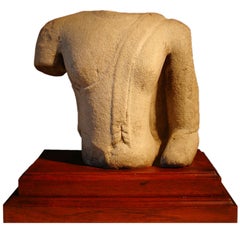
16th Century Thai Ayutthaya Sandstone Torso of the Buddha
Located in Austin, TX
A lovely carved sandstone torso of the Buddha, Ayutthaya period (1350-1767), Thailand.
Wonderfully simplistic, the only ornamentation this torso displays...
Category
Thai Antique 16th Century Furniture
Materials
Sandstone
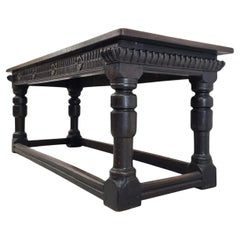
16th Century Elizabethan Carved Oak Refectory Table, Circa 1580
Located in Hoddesdon, GB
An Elizabethan oak carved refectory table dating back to 1580. This table is an extremely rare and fine example showcasing the highest quality o...
Category
British Elizabethan Antique 16th Century Furniture
Materials
Oak
$7,882 Sale Price
36% Off
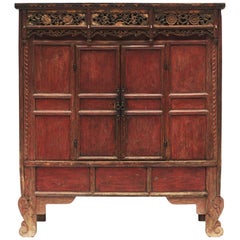
15th-16th Century Ming Dynasty Cabinet. Red Lacquer
Located in Kastrup, DK
Rare and well-preserved 16th century cupboard / cabinet.
Detailed carved top section depicting a floral leaf design and people in polychrome lacquer.
Front with red lacquer, pair of ...
Category
Chinese Ming Antique 16th Century Furniture
Materials
Elm
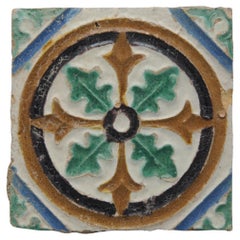
Spanish Azulejo Tile Arista y Cuenca - Sevilla 16th century
Located in DELFT, NL
Early Arista y Cuenca tile, most likely made in Sevilla. Azulejo tile decorated with a gemetric pattern with 4 central leafs within a cirlce.
Mid 16th century
In very good conditi...
Category
Spanish Renaissance Antique 16th Century Furniture
Materials
Earthenware, Maiolica
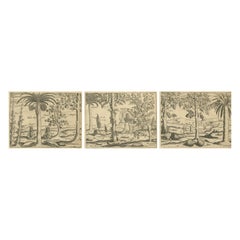
De Bry Botanical Engravings – Pineapple, Mango
Pepper Plants, c.1598
Located in Langweer, NL
Set of Three De Bry Botanical Engravings of Indian Fruits and Spices, c.1598 – Pineapple, Mango, and Pepper
An exceptional trio of original copper engravings from Theodor de Bry’s P...
Category
German Antique 16th Century Furniture
Materials
Paper
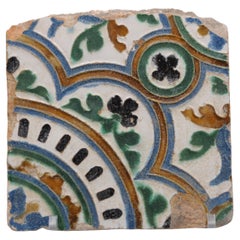
Spanish Azulejo Tile Arista y Cuenca - Toledo 16th century
Located in DELFT, NL
Early Arista y Cuenca tile made in Toledo. Azulejo Toledano. Alhambra tile decorated in renaissance mudejar style geometrical design.
Probably made between 1550 and 1575.
In very g...
Category
Spanish Renaissance Antique 16th Century Furniture
Materials
Earthenware, Maiolica
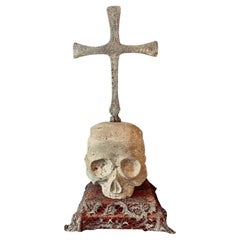
Antique 16th Century Austrian Gothic Marble Memento Mori Skull with Iron Cross
Located in Doha, QA
An exceptional and rare Gothic-Renaissance memento mori, sculpted in marble and surmounted by an original iron cross, originating from Austria, 16th century.
Carved from solid marble...
Category
Austrian Gothic Antique 16th Century Furniture
Materials
Marble
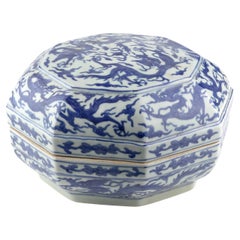
A Rare Blue And White Octagonal Box And Cover, Ming Dynasty Wanli Six-Character
Located in seoul, KR
This octagonal blue-and-white covered box is densely decorated on each facet with dragons twisting their elongated bodies as they move through clouds, filling the entire surface with...
Category
East Asian Ming Antique 16th Century Furniture
Materials
Ceramic
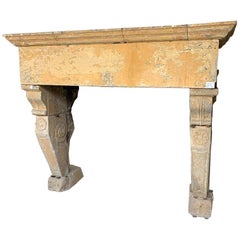
16th Century French Fireplace Mantel
Located in Vosselaar, BE
A monumental 16th century sandstone Renaissance fireplace mantel. Finely sculpted with a moulded beam and colomn supports. Decorated with flower motives, guirlandes and cirkels.
Lov...
Category
French Renaissance Antique 16th Century Furniture
Materials
Sandstone
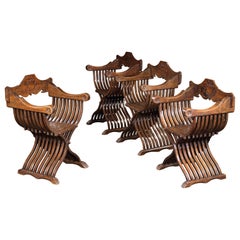
Set of Four Italian Walnut Savonarola Armchairs
Located in Saint-Ouen, FR
Set of four Italian walnut Savonarola armchairs
ORIGIN : FLORENCE, ITALY
PERIOD : LATE 15TH CENTURY - EARLY 16TH CENTURY
Measures: height : 102 cm 40.15 inches, height : 93 cm 36.61 inches
length : 68 cm 26.77 inches, length : 68 cm 26.77 inches
depth : 55 cm 21.65 inches, depth : 50 cm 19.68 inches
Walnut
Very good condition
This movable Italian seat from the late 15th century descents from the roman curule seat. It took the name of sedia Savonarola...
Category
Italian Renaissance Antique 16th Century Furniture
Materials
Walnut
$118,769 / set
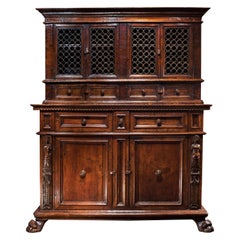
Tuscan Renaissance Wrought Iron and Walnut Cabinet
Located in Saint-Ouen, FR
The lower part
It stands on an ogee molded base and four feet with two front legs more massive and detailed than the others.
It opens with two doors and three drawers.
The vert...
Category
Italian Renaissance Antique 16th Century Furniture
Materials
Wrought Iron
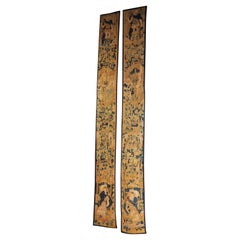
Pair of Antique Tapestry Borders from Flanders, circa 1580
Located in Dallas, TX
A beautiful pair of tapestry fragments, hand-woven in Flanders (now Belgium), circa 1580. At roughly 132 inches (11 feet) long, the fragments were, originally, vertical borders to a very large and brightly colored tapestry. The colors have maintained their vibrancy over the last 400+ years, with deep blue, brown, green, and red accents over a gold and cream background.
Although the fragments do not have identical scenes, it is readily apparent that they originated from the same source. At the top of each fragment is a bearded warrior clad in golden armor with a flowing blue cape and green greaves. A shield rests on the ground, supported by the soldier’s left hand, while his right hand lifts a spear into the air. Towards the center of the textile is a pair of musicians, one strumming a lute, while the other plucks a lyre. At the bottom of each tapestry is a single female figure, well-dressed and sitting on a bench with one arm overhead. The remaining areas have been filled with fruit bouquets, architectural elements, and other figurative representations. A more recent navy blue border surrounds the scenes and the backs have been lined with a mauve colored linen.
Our hand-woven tapestry borders...
Category
Belgian Renaissance Antique 16th Century Furniture
Materials
Textile, Wool, Silk
Antique 16th century Spanish carved cabinet in oak
Located in Meulebeke, BE
Spain / 16th century / cabinet / oak / Rustic / Antique
A stunning Spanish antique highboard or cabinet in warm oak wood with two doors from the 16th century. The cabinet has its original keys and offers ample storage space behind the doors.
This hand carved antique oak cabinet...
Category
Spanish Rustic Antique 16th Century Furniture
Materials
Oak
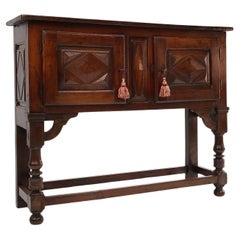
Exotic Encounters: Giant Crabs, Tortoises, Whales, and Cockfights - De Bry, 1598
Located in Langweer, NL
Title: De Bry Engravings of Exotic Encounters – Giant Crabs, Tortoises, Whales, and Cockfights, c.1598
A remarkable set of four original copper engravings from Theodor de Bry’s cele...
Category
Dutch Antique 16th Century Furniture
Materials
Paper
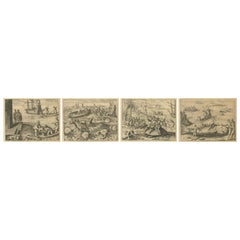
Important Renaissance Cabinet from Lyon
France
with a Decor of Perspectives
Located in Saint-Ouen, FR
As soon as 1540 France's second Renaissance is in the making, intimately linked to the rediscovery of the Antique world. The development of the printing and engraving industry allows the spread of artworks and models in many cities and countries. The Italian influence can be perceived in every artistic field. While the French king entrust the most talented Italian artists with major projects such as Il Rosso or Primaticcio in Fontainebleau, French artists also travel to Italy to form themselves to this new style. In Italy they get acquainted with the work of Leo Battista Alberti the first to theorize perspective (De Pictura, 1435-36) and architecture (De re oedificatoria, 1541). Those two publications would have a revolutionary impact on arts.
Furniture is marked by the work of the most famous Italian architects of the time as well as French architects. Indeed Philibert de l'Orme competes with Alberti and by the end of his life publishes several treaties including one devoted to a theory of architecture (1567). Unfortunately he would not live to complete the second volume. In this treaty he expresses his interest for mathematical norms applied to architecture, copied from the Antique. His journeys in Italy allowed him to accumulate the most sophisticated references. Jean Bullant, another architect of great talent also theorizes his practice. He establishes rules characterizing Greco-Roman art staying faithful to Vitruvius.
Following this new inspiration the structure of furniture evolves. From then on appear columns, capitals, cornices, friezes and architraves. The ornamentation uses this inspiration as well with egg-and-dart, palm leaf and rose adorning the most beautiful pieces.
In Lyon, crossroad where meet merchants from everywhere those new experiments are welcomed. Lyon florishing printing industry allows the spreading of models and treaties essential to the artist's work. Thus the first publication of Vitruvius' De Architectura in France would be printed in Lyon in 1532.
Artists from Lyon rediscover and familiarize themselves with the Antique knowledge very early. They adopt those new ideas and use them in their own creations. Lyon cabinet-makers re interpret Antique architecture and Italian Renaissance palaces to give their pieces a pure and harmonious architectural structure. Grooved pilasters are particularly favored. They are topped by capitals of diverse orders always respecting the sequencing with simpler ones for the lower levels and the richest ones on the higher levels. As for the ornamentation, one of the great distinctiveness of Lyon workshops remains the architectural perspective illusions, drawing inspiration from Tuscany.
True masterpiece of the Second French Renaissance this important cabinet illustrates Lyon workshops' taste for fine Italian architecture inspired by Antiquity. An architectural perspective of great quality is treated in symmetry on each panel.
This two-bodied cabinet without recess stands on four rectangular feet. The base comprises a molding, a palm leaf frieze and is bordered by a braid.
The lower body is divided by three grooved pilasters with Tuscan capitals framing two door-leaves. The two panels are encircled by a moudled frame with palm leaves. They are finely carved with a decor of fantasized architecture depicting an Italian Renaissance palace erected symmetrically on each side of a grooved pilaster. On the ground floor a door opens through a stilted arch while the stories are opened with mullioned windows, dormers and occuli. Two large pegged-boss cladded pillars support the entablature enriched by a palm leaf frieze upon which stands an arch whose coffered intrados is centred by a rose. Behind this arch a pyramid appears, standing in front of a second facade with a window topped by a broken curvilinear pediment under a cul-de-four with a shell.
The checker flooring gives depth to the low-reliefs creating vanishing points structuring the panels and guiding the eye of the observer.
A thin laurel braid highlights the belt of the cabinet where are located two drawers. Their facades are adorned by palm leaves in hoops.
The upper body is encircled with palm leaves. The same ternary division as in the lower body appears. However, the pilasters are topped by Ionic capitals with volutes and egg-and-dart. The door-leaves are framed with flowers. On the panels the artist has designed another architectural decor. On the foreground open two arches on top of grooved pilasters with rectangular capitals adorned with palm leaves. The arches are enriched with braids and the coffered intrados bears a decor of roses. The spandrels also bear a flower decor. In the background another arcature hosts a fluted grooved column topped with double basket acanthus capital, characteristic of Corinthian order. The triangular pediment is interrupted by a choux bourguignon.
A large cornice crowns the cabinet. It stands on pilasters and forms an entablature comprising a palm leaf frieze and an egg-and-dart, triglyph and palm leaf cornice.
The cabinet's sides have also been carefully considered. The lower body's panels are enriched with an arch rising above a broken pediment portico hosting a twisted column. Flowers garnish the spandrels. An architectural facade completes the decor. The upper body's panels present two arches supported by a facade opened with dormers and mullioned windows as well as cartouches (one bears the inscription 1580 dating the cabinet) suggesting the interior of an Italian Renaissance palace, confirmed by the chandeliers. The flooring leads our gaze to a second arch with a broken curvilinear pediment where stands a flower vase. This arch opens onto a perspective of another facade along a road.
Inside the cabinet, on the lower body door-leaves appear two designs. On the right door is depicted a Crucifixion. Saint Mary and Saint John flank the Christ on the cross. In the bottom part is inscribed « Dure uiator abis nihil haec spectacula curas / Pendenti cum sis unica cura Deo. / Tota suo moriente dolet natura Magistro. / Nil qui solus eras caussa dolenda doles. ». The signature [Christoff Swartz Monachiensis pinx[it] / Ioa[nnes] Sadeler sculp[it]] tells us it was made by Johan Sadeler I (1550-1600) after Christoph Schwartz (1548-1592). This engraving belongs to an ensemble depicting the Passion of Christ Johan Sadeler executed in 1589 after an altar piece painted by Christoph Schwartz for the private chapel of Renée of Loraine, wife of Duke William V of Bavaria. This altar piece made of nine copper panels has been destroyed during the 19th century. The Crucifixion panel once in the centre of the altar piece is the only one that survived and is today kept in Munich's Alte Pinakothek.
On the left door appears Saint Francis receiving the stigmata. The inscription says : « Signastidomine Servum Tuum. Franciscum. Signis Redemptionis Nostrae ».
This Renaissance cabinet with an architectural decor appearing as much in the structure faithful to Antique rules...
Category
European Renaissance Antique 16th Century Furniture
Materials
Walnut
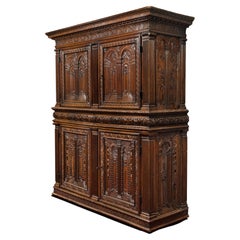
French Large Trunk- Chest - Gothic oak from the 16th century - France
Located in Beuzevillette, FR
Large solid oak chest from the 16th century Gothic period
Very pretty French, Norman work.
Decorated with Gothic motifs on 5 panels on the facade.
Note reassembly in the 18th and 19...
Category
French Gothic Antique 16th Century Furniture
Materials
Wood
$6,214 Sale Price
20% Off
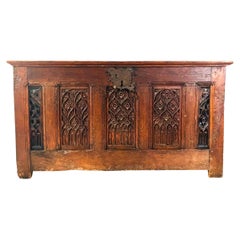
French Renaissance Armoire
Located in Saint-Ouen, FR
Original lock and key
This piece of furniture shows no recess on its upper part. It opens with four folding-doors and two drawers within the belt. The key bears the date 1524 above cross motifs.
Burgundy and Lyon regions subordinated themselves to architecture in a different manner than the other french schools. Rather than using particularly columns and pediments pieces of furniture from Lyon borrow architecture’s organization principles and rigorous designs.
On the upper body a strong feeling of balance and symmetry appears with the folding doors reliefs. Swags of flowers and fruits held with knot cloth centered by a man seating on his arms. Here profiles, masks and chou de Bourgogne mingle with the structuring scrolls. The two lateral terms wear draperies and the goddess Diana in the center wears a belt of fruits similar to Hugue Sambin’s designs (Termes de Diane et de Venus, 1554, BNF).
The two palm-leaves enriched drawers and the alternating scrolls belt balance the weight of the cornice with its alternatings consoles and tops.
The lower body is also adorned by three terms with a feminine one in the center, all three are wearing fruits on their heads. The folding doors are centered upon a motif of cut cuirs by a mask in high relief. Wearing a feathered tiara...
Category
French Renaissance Antique 16th Century Furniture
Materials
Walnut
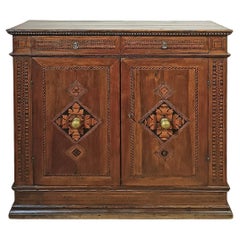
$95,015
EARLY 16th CENTURY INLAID RENAISSANCE SIDEBOARD
Located in Firenze, FI
Refined and unique sideboard in solid carved walnut, decorated with "Carthusian" inlays in walnut and other woods. The sideboard features a linear shape, characterized by a base and ...
Category
Italian Renaissance Antique 16th Century Furniture
Materials
Bronze
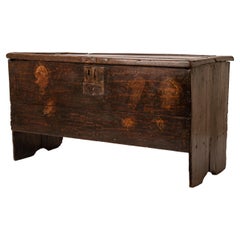
Antique Tudor Elizabethan Henry VIII Oak Sword Six Plank Coffer Chest Trunk 1540
Located in Portland, OR
Antique Tudor/Elizabethan oak six plank boarded coffer/sword chest, circa 1540.
The coffer from the period of King Henry VIII having a hinged lid enclosing a storage area lined with...
Category
English Tudor Antique 16th Century Furniture
Materials
Oak
$2,156 Sale Price
20% Off
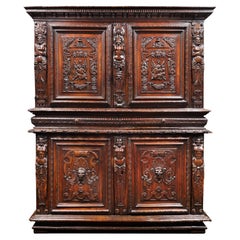
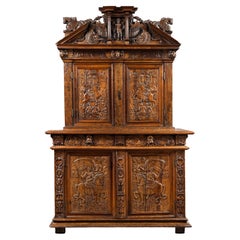
16th Century Cabinet with Knights Carving from Avignon Workshops
France
Located in Saint-Ouen, FR
Collection Jean Thuile
Around the mid-sixteenth century French furnishing evolves in its conception and ornamentation. The start of major archi...
Category
French Renaissance Antique 16th Century Furniture
Materials
Walnut
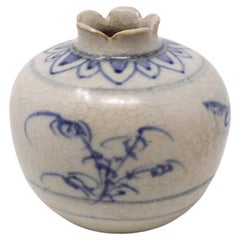
Antique Annamese Blue and White Ceramic Jarlet, Chu Dao Kilns
Located in Point Richmond, CA
Annamese Blue and White Ceramic Jarlet, Chu Dao Kilns. The pomegranate shaped jarlet with globular body, narrow flat base and sepal everted mouth rim decorated in under glaze cobalt ...
Category
Vietnamese Ming Antique 16th Century Furniture
Materials
Ceramic
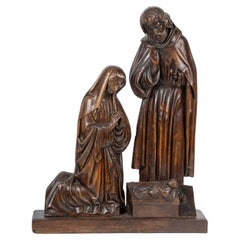
Religious Sculpture Representing the Nativity, Carved Wood from the 16th Century
Located in Saint-Ouen, FR
Religious sculpture representing the nativity, carved wood from the 16th century.
Carved wood sculpture, walnut wood and oak wood base, sculpture representing the nativity, circa 16...
Category
French Neoclassical Antique 16th Century Furniture
Materials
Oak, Walnut
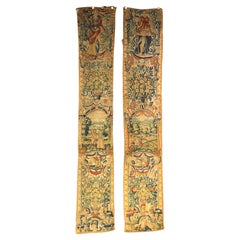
Pair of 16th Century Silk Tapestry Borders from Brussels, H-98.75 Inches
Located in Dallas, TX
A beautiful pair of tapestry fragments, hand-woven in Brussels during the 1500s. At roughly 99 inches (over 8 feet) long, the fragments were, originally, vertical borders to a large ...
Category
Belgian Renaissance Antique 16th Century Furniture
Materials
Silk
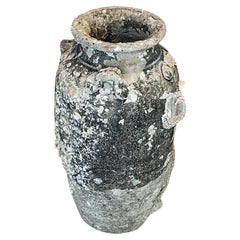
16th Century Fossil Embedded Shipwreck Vase, Sawankhalok, Thailand
Located in New York, NY
16th century Thailand Sawankhalok ceramic vase from the old city of Sawankhalok known for its pottery.
Beautiful and abundant fossil growth from being submerged under water.
Natural ...
Category
Thai Antique 16th Century Furniture
Materials
Ceramic
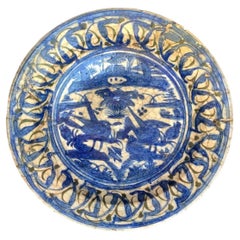
Extremely Rare Islamic Safavid Blue and White Large Dish Persian 16th Century.
Located in Vero Beach, FL
Extremely Rare Islamic Safavid Blue and White Large Dish Persian 16th Century.
This Safavid fritware dish is painted under the glaze in black and coba...
Category
Islamic Antique 16th Century Furniture
Materials
Ceramic
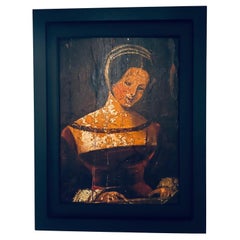
Antique Venetian Portrait of a Lady Renaissance Oil on Wood
Located in Doha, QA
An evocative Venetian Renaissance oil on wood panel depicting a graceful Portrait of a Lady. The sitter’s serene expression and refined composition recall the elegance of Titian’s Ve...
Category
Italian Renaissance Antique 16th Century Furniture
Materials
Wood, Paint
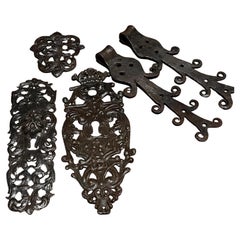
Rare 16th Century Renaissance Wrought Iron Door Hardware, Escutcheons
Hinges
Located in Doha, QA
An exceptional collection of antique wrought iron door hardware dating from the Renaissance period, circa 16th century. These highly decorative pieces exemplify the artistry and craf...
Category
Italian Renaissance Antique 16th Century Furniture
Materials
Wrought Iron
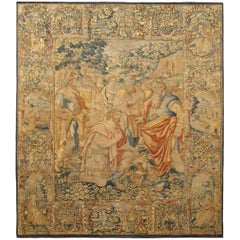
16th Century Brussels Biblical Old Testament Tapestry, with Moses
Joshua
Located in New York, NY
An antique Brussels biblical tapestry from the late 16th century, attributed to Jan (Ian) Raes, depicting Moses at right, with Joshua kneeling before ...
Category
Belgian Antique 16th Century Furniture
Materials
Wool, Silk
$69,995 Sale Price
30% Off
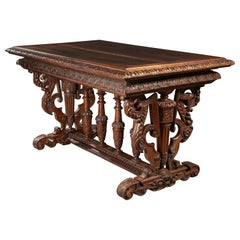
A late 16th century French Renaissance richly carved walnut center table
Located in PARIS, FR
A late 16th century Renaissance richly carved walnut center table
France, The Loire Valley area
Dimensions: h. 33.46 in., w. 59.45 in., d. 36.22 in.
Our remarquable table is a fabu...
Category
French Renaissance Antique 16th Century Furniture
Materials
Walnut
$23,753 Sale Price
20% Off
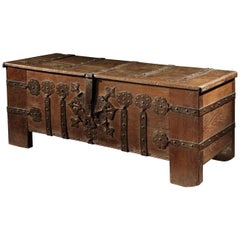
Chest or Stollentruhe, Early 16th Century, German Gothic, Oak Chest, Original
Located in BUNGAY, SUFFOLK
This standing chest is of clamp-front construction, extensively decorated with long, ironwork straps with quatrefoil finials which ‘wrap’ around it, and has an ornate, central lockplate, and front legs with full, height stiles. The ironwork straps and finials are fixed with convex, headed nails: running along the front, five long straps; the two side straps; and the five straps on the top. On the chest front, centrally placed, is a large, iron lockplate with four outer, radiating spade finals in each corner and three, superimposed spade finials (a symbol of nobility) which are pierced with the initials ‘BB’. The lockplate receives a corresponding, external hasp fitted to the lid. Below the floor of the chest, the two front stile legs retain most of their original height. The lid is supported by substantial iron strap hinges that extend right down the back of the chest. Inside the chest at the left end is a shallow, oak till.
Construction The chest is of joined, 'clamp-front' construction, reinforced by the nailed, iron mounts. In total it uses ten, oak boards which were riven and planed. The back and front are each formed from a large single plank held to the full height stiles by long, pegged tenons. The sides are also single boards joined into the stiles using long tenons held by dowels, and extend down below the chest bottom, concealing the ends of the bottom boards. The bottom consists of a single board cut into the sides and shallow rebates in the stiles. The front and back boards are dowelled into the bottom boards. The lid which overhangs the sides has a narrow cleat at each end, and consists of one wide plank which has bowed a little as a result of shrinkage.
Ironwork : The wrought ironwork straps, lockplate, hasp and lock all appear all appear to be early, and of the same original manufacture and are fixed with convex headed nails. There is mild dark staining of the oak around the iron mounts, possibly because of low tannin content in the oak.
Length 172 cm., 67 ¾ in., Height 71.5 cm., 28 ¼ in., Depth 63 cm., 24 ¾ in.,
Related to: No 900:2-1904 V&A Museum, London. Stadtmuseum Dusseldorf. Decorative Arts Museum Berlin. Museen Schleswig-Holstein & Hamburg. A related example featuring elaborately-carved feet and formerly in the Horsham Museum, West Sussex, sold at Christie's in 2010 for £97,250 and another example, again with carved feet sold at Sothebys in 2006 for £48,000.
Literature: A similar example is illustrated in H. Lüttgens, Alt- Aachener Wohnkultur; Ein Rundgang durch ein altes Aachener Haus im Wohnstil des 18. Jahrhunderts, Aachen, n.d., ill. 12, and another comparable iron-bound chests...
Category
German Gothic Antique 16th Century Furniture
Materials
Oak
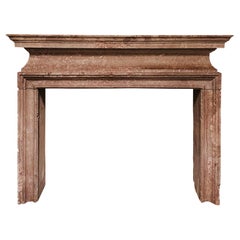
Italian Palazzo Artempo 15-16th century Stone Fireplace For High-End Decor
Located in Beervelde, BE
Artempo Italian palazzo fireplace surround.
Exquisite original wear for exceptional authentic interior design project.
16th century period and one of a kind castle element.
This fire...
Category
Italian Renaissance Antique 16th Century Furniture
Materials
Stone
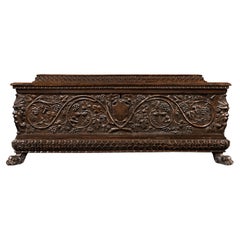
Florentine Renaissance Cassone with decor of vines and grape clusters
Located in Saint-Ouen, FR
ORIGIN : ITALY, TUSCANY
PERIOD : 16th CENTURY
DIMENSIONS :
Height : 73 cm
Length : 180 cm
Depth: 57 cm
Good condition
Walnut wood
This significant Florentine cassone in the shape of a sarcophagus features a beautiful front panel flanked at the corners by two mascarons surrounded by voluted acanthus leaves. It rests on two lion's paw feet at the front.
The decoration includes a beautiful frieze of scales at the bottom, which continues on the sides. Above this, in the center, a scrollwork cartouche once bore coats of arms. On either side, there is an abundant vegetal decor with vine branches and sumptuous grape clusters.
The domed top lid is adorned around its edge with a wide frieze featuring a scale motif, harmoniously matching the lower cornice.
This beautiful cassone is interesting for several reasons. The choice of ornamentation is not random. Grapes have numerous meanings and are often associated with fertility, especially when represented on a wedding cassone...
Category
Italian Renaissance Antique 16th Century Furniture
Materials
Wood, Walnut
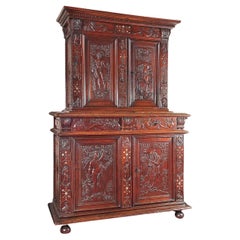
Rare Renaissance Cabinet Richly Carved
Located in Saint-Ouen, FR
This rare Renaissance cabinet is richly decorated on the doors and drawers with carvings depicting the four seasons, and on the uprights and the entablature, alternating flower bouquets inlaid with mother of pearl. This is a beautifully conceived piece of furniture, representing a crowned portico with its entablature and cornice.
The upper body
Articulated separately in a ternary rhythm, as with the lower body, the upper part opens with two carved doors. The doors are framed by both the lateral uprights and the casing. There are cartouches carved into the casing in which mythological figures are depicted with flower bouquets.
On the doors:
On the right: Spring, a female figure crowned with a wreath of leaves, holding a basket full of flowers. She is wearing necklaces and bracelets on each arm, with drapery discretely wrapped around her body and is standing on a winged putti’s head. On each side are depicted a tree and a village with a steepled church. Above her head floats the three signs of the zodiac corresponding to the season: Aries, Taurus and Gemini.
On the left: Summer, a bearded man crowned with ears of corn and bearing armfuls of corn. He is standing on a similar winged putti, flanked by a tree and an ear of corn. The following three signs of the zodiac appear: Cancer, Leo and Virgo.
On the uprights and the central casing a number of smaller figures seem to represent virtues and vices that newly wedded couples should aspire to and avoid.
On each side, at the bottom of the uprights, there is a dog representing fidelity. Above, a lion embodies power, wisdom, and justice.
In between, on the left upright, there is a figure of noncombatant Athena wearing a helmet and holding a spear, an arrow pointing down and in her left hand, a shield, symbol of protective power. On the right upright, the goddess Venus controls the arrow of Cupid.
The iconography here acts as a clear reminder of the required virtues that both parts of a young couple need to fulfill: fidelity, power, wisdom and justice. For him, the goddess Athena focuses on the power. Whereas for her, it is Venus who shows how to control Cupid’s arrow.
On the central casing at the bottom, by way of contrast, there is a peacock, a symbol of pride and at the top, a monkey representing lust and mischief. In between, a woman holding a chain and a cup full of precious stones while on the floor sits a half empty opened casket. This can be interpreted as a symbol of extravagance.
Above, the entablature, decorated with male figures resting on leaking urns, may symbolize the passing of time. They are flanked by two consoles decorated with acanthus leaves and separated by flower bouquets (inlaid with mother of pearl). Finally on top, a cornice acts as a crown for the piece of furniture.
The lower body
The moulded base stands on four round, flattened feet.
Represented on the doors:
On the left: Autumn, a stocky, naked man crowned with vine leaves, holding fruits in his right hand and with his left, picking a bunch of grapes from a climbing vine. Standing on a mound, he is surrounded by a vine and a hill, at the foot of which a man presses the grapes in a big vat after the harvest. Above the climbing vine appear the signs of Libra, Scorpio and Sagittarius.
On the right: Winter, an elderly man wearing a fur cloak...
Category
French Renaissance Antique 16th Century Furniture
Materials
Walnut
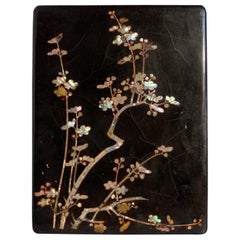
Japanese Momoyama Period Black Lacquer and Mother of Pearl Box, 16th Century
Located in Austin, TX
A fine and unusual Japanese black lacquer and mother of pearl inlaid box, Momoyama Period, 16th century, Japan.
The large box and cover featu...
Category
Japanese Edo Antique 16th Century Furniture
Materials
Lacquer, Abalone
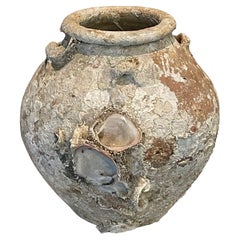
16th Century Animist Shipwreck Ceramic Vase, Vietnam
Located in New York, NY
16th century Vietnamese Animist ceramic vase.
Beautiful and abundant fossil growth from being submerged under water.
Natural original patina.
Part of a very large collection of shipw...
Category
Vietnamese Antique 16th Century Furniture
Materials
Ceramic
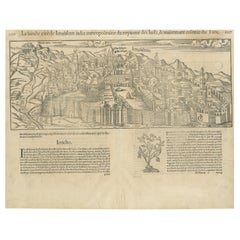
Jerusalem, Holy City View – Early Renaissance Woodcut, c.1560
Located in Langweer, NL
Jerusalem, Holy City View – Early Renaissance Woodcut, c.1560
This rare and evocative Renaissance woodcut depicts the Holy City of Jerusalem as imagined in early modern Europe, show...
Category
German Antique 16th Century Furniture
Materials
Paper
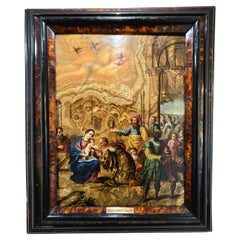
Stunning Masterpiece: "Adoration of the Magi" - A Rare Gem on Cotognino Alabaste
Located in Madrid, ES
Elevate your collection with this breathtaking oil painting, "Adoration of the Magi," skillfully rendered on a magnificent 51x40 cm Cotognino Alabaster panel. This extraordinary piec...
Category
Antique 16th Century Furniture
Materials
Onyx
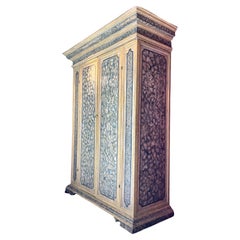
16th Century Italian Renaissance Painted Marble Lacquer Wooden Cabinet (1500s)
Located in Firenze, IT
16th Century Italian Renaissance Painted Marble Lacquer Wooden Cabinet (1500s) An extraordinary Italian Renaissance wooden cabinet from the 1500s awaits the discerning collector. Thi...
Category
Italian Renaissance Antique 16th Century Furniture
Materials
Iron
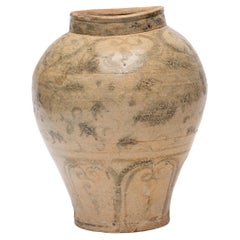
Chinese Ming Cobalt Brushed Celadon Jar, c. 1500
Located in Chicago, IL
Warped by fire and eroded by time, this ceramic storage jar from Yunnan province is a testament to the wabi-sabi beauty of provincial Chinese pottery. Dated to the 15th/16th century,...
Category
Chinese Ming Antique 16th Century Furniture
Materials
Earthenware
More Ways To Browse
Blue And White Lidded Temple Jars
Blue Uranium Glass
Blue White Clock
Blue Yellow Pottery
Boffi Kitchen
Bombay Chest Italy
Book Table Stand
Boudoir Set
Brands Of Vintage Glass
Brass Heron Sculpture
Bread Cabinet
Bronze Lalanne
Bronze Spoons
Burl Bedside Chests
Burled Walnut Desk
Burnished Bamboo
Butter Table
Cabinet Dowel