Renaissance Furniture

RENAISSANCE STYLE

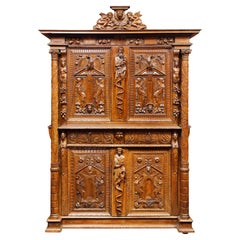
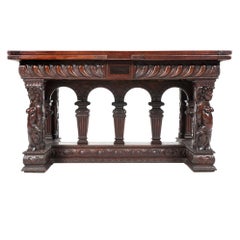
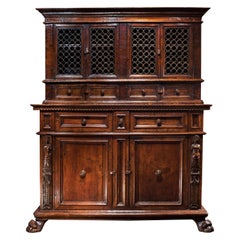
Spanning an era of cultural rebirth in Europe that harkened back to antiquity, the Renaissance was a time of change in design. From the late 1400s to the early 1600s, Rome, Venice and Florence emerged as artistic centers through the expansion of global trade and a humanist belief in the arts being central to society. Antique Renaissance furniture was ornately carved from sturdy woods like walnut, its details standing out against the tapestries and stained glass adorning the walls.

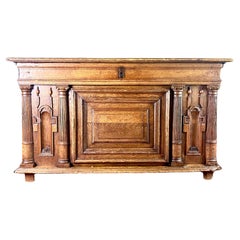
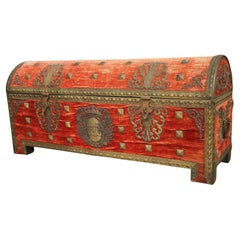
Renaissance chests, which were frequently commissioned for marriages, were often decorated with gilding or painted elements. Those that were known as cassoni were crafted in shapes based on classical sarcophagi. As opposed to the medieval era, when furniture was pared down to the necessities, a wide range of Renaissance chairs, tables and cabinets were created for the home, and the designs regularly referenced ancient Rome.

Large torchères of the Renaissance era that were used as floor lamps were inspired by classical candelabras, while marble surfaces evoked frescoes. The inlaid boxes being imported from the Middle East informed the intarsia technique, which involved varying hues of wood in mosaic-like patterns, such as those by architect Giuliano da Maiano in the Florence Cathedral.

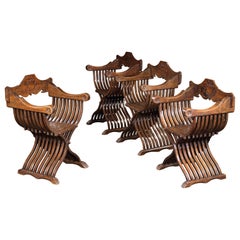
Tapestry-woven cushion covers accented the variety of Renaissance seating — from conversation to study chairs — while bookcases for secular use reflected the migration of culture and knowledge from the church into the home. The aesthetics of the Italian Renaissance later spread to France through the publishing of work by renowned designers, including Hugues Sambin and Jacques Androuet du Cerceau. Centuries later, the 19th-century Renaissance Revival would see a return to this influential style.

Find a collection of antique Renaissance case pieces, decorative objects and other furniture on 1stDibs.

to
117
560
281
859
3,726
3,041
1,583
1,523
1,387
1,034
306
246
244
232
100
66
56
35
30
12
11
9
852
644
226
220
116
118
26
9
15
12
6
15
11
8
24
39
547
208
204
85
67
826
337
126
104
60
859
859
859
23
7
1
1
1
Style: Renaissance
Period: 18th Century and Earlier
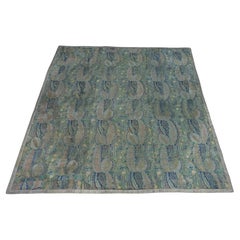
18th Century Italian Silk Silver Metallic Thread Lampas Brocade Panel
Located in Rochester, NY
An exceptional and fine hand woven 18th century Italian silk and silver metallic thread lampas brocade panel with beautiful aged original color. Red silk backing w/ attached strip of...
Category

18th Century Italian Antique Renaissance Furniture

Materials

Metallic Thread

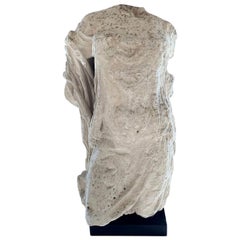
16th Century Stone Classical Roman Style Torso
Located in Vosselaar, BE
A wonderful 16th century draped female torso in classical style. Made in France under Italian Renaissance influence this female torso is finely sculpted with great detail to the stol...
Category

16th Century French Antique Renaissance Furniture

Materials

Sandstone

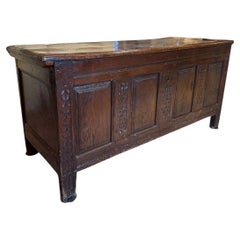
English Renaissance 17th Century Solid Oak Chest Trunk
Located in Vero Beach, FL
English Renaissance 17th Century Solid Oak Chest Trunk Spectacular period Renaissance oak chest, dating from the early 17th century. The antique piece features a front composed of p...
Category

17th Century English Antique Renaissance Furniture

Materials

Iron

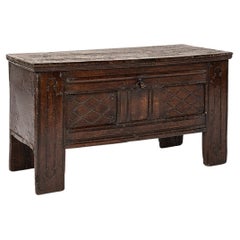
Antique 16th Century German Dark Brown oak carved Stollentruhe Trunk or Chest
Located in Casteren, NL
Rare and early German Stollentruhe, dating from around 1620. This compact 17th-century oak chest combines historical significance with visual prese...
Category

Early 17th Century German Antique Renaissance Furniture

Materials

Steel

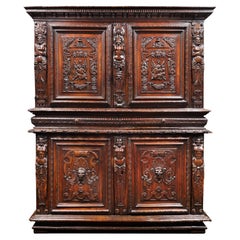
A Rare Renaissance Walnut Cabinet With Its Freestanding Carved Columns
Located in Saint-Ouen, FR
A RARE RENAISSANCE WALNUT CABINET WITH ITS FREESTANDING CARVED COLUMNS ORIGIN : FRANCE, BURGUNDY PERIOD : 16th CENTURY Height : 218 cm Length : 152 cm Depth : 67.5 cm Walnut Thi...
Category

16th Century European Antique Renaissance Furniture

Materials

Wood, Walnut

Spanish Azulejo Tile Arista y Cuenca - Toledo 16th century
Located in DELFT, NL
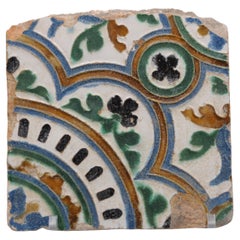
Early Arista y Cuenca tile made in Toledo. Azulejo Toledano. Alhambra tile decorated in renaissance mudejar style geometrical design. Probably made between 1550 and 1575. In very g...
Category

16th Century Spanish Antique Renaissance Furniture

Materials

Earthenware, Maiolica

Spanish Azulejo Tile Arista y Cuenca - Sevilla 16th century
Located in DELFT, NL
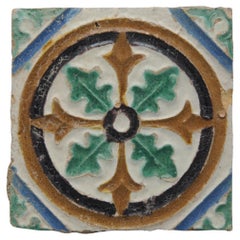
Early Arista y Cuenca tile, most likely made in Sevilla. Azulejo tile decorated with a gemetric pattern with 4 central leafs within a cirlce. Mid 16th century In very good conditi...
Category

16th Century Spanish Antique Renaissance Furniture

Materials

Earthenware, Maiolica

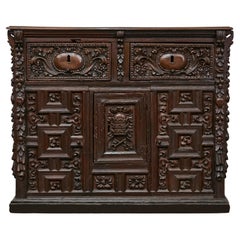
French Henri IV / Renaissance Chest Desk in carved wood 17th - France
Located in Beuzevillette, FR
Very beautiful Rrenaissance / Henry IV chest from the 17th century, transformed into a desk in the 19th century. Magnificent details are hand carved. The wood has a superb patina. Fo...
Category

17th Century French Antique Renaissance Furniture

Materials

Wood

18th Century French Renaissance Carved Oak Cupboard Buffet
Located in Astoria, NY
An exceptional 18th-century French Renaissance cabinet, sourced from the French Alps. Masterfully hand-crafted from solid oak, this two-piece ensemble showcases exquisite and elabora...
Category

18th Century French Antique Renaissance Furniture

Materials

Oak

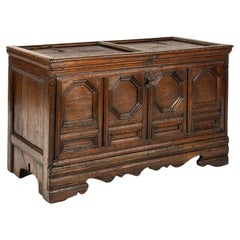
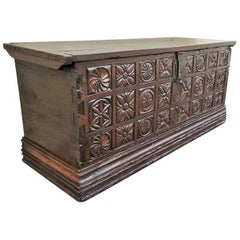
Antique 17th century German Light Warm Oak Chest or Trunk with geometric panels
Located in Casteren, NL
This German oak chest from the 17th century is a fine example of early modern craftsmanship, combining solidity with decorative refinement. The front is constructed with heavy, richl...
Category

Mid-17th Century German Antique Renaissance Furniture

Materials

Oak

Antique 16th century Venetian Painted Gold Gilt Iron Strongbox with Original Key
Located in Doha, QA
An extraordinarily rare and visually striking 16th-century Venetian iron treasure coffer, showcasing the height of Renaissance artistry and engineering. Crafted in the early to mid-1...
Category

16th Century Italian Antique Renaissance Furniture

Materials

Gold, Iron

"Madonna and Child"
Located in Hamilton, Ontario
Oil on canvas painting "Madonna and Child". Blacklight scan show there has been a touch up covering the baby Jesus's genitals done over the centuries. In the original ornate gold fra...
Category

17th Century Italian Antique Renaissance Furniture

Materials

Paint

"Madonna and Child"
"Madonna and Child"
$19,950 Sale Price
30% Off
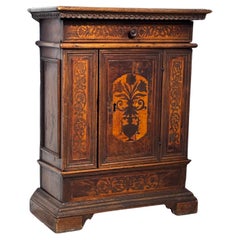
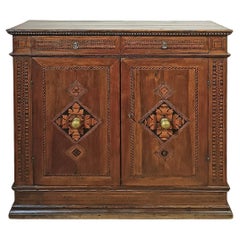
17th Century Italian Florentine Walnut Side Cabinet, Circa 1650
Located in San Francisco, CA
An extraordinary Renaissance Period walnut small side cabinet with fruitwood inlay detail. Of museum quality, in remarkable original condition (has not been reconstructed in any way)...
Category

17th Century Italian Antique Renaissance Furniture

Materials

Fruitwood, Walnut

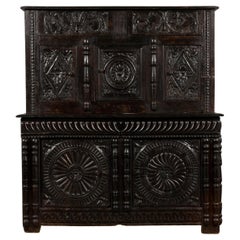
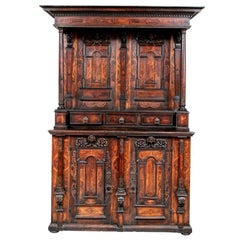
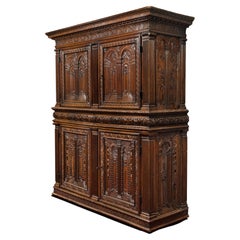
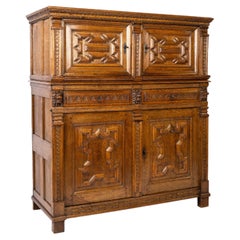
Notable circa 17th Century Carved Walnut Two-Tiered Cabinet in Renaissance Style
Located in Bridgeport, CT
A large and impressive 17th century European cabinet. Made in two parts, both with elaborate carved decoration and burled panels and details. The upper cabinet with heavy overhanging...
Category

17th Century European Antique Renaissance Furniture

Materials

Wood

17th Century Italian Renaissance Walnut Bible Box
Located in Viterbo, VT
Bible box hand-crafted in Italy in the mid 1600s using walnut. The box is still in fantastic shape and has a gorgeous patina. On three sides it is decorated with beautiful hand-carve...
Category

Mid-17th Century Italian Antique Renaissance Furniture

Materials

Walnut

French Renaissance Armoire
Located in Saint-Ouen, FR
Original lock and key This piece of furniture shows no recess on its upper part. It opens with four folding-doors and two drawers within the belt. The key bears the date 1524 above cross motifs. Burgundy and Lyon regions subordinated themselves to architecture in a different manner than the other french schools. Rather than using particularly columns and pediments pieces of furniture from Lyon borrow architecture’s organization principles and rigorous designs. On the upper body a strong feeling of balance and symmetry appears with the folding doors reliefs. Swags of flowers and fruits held with knot cloth centered by a man seating on his arms. Here profiles, masks and chou de Bourgogne mingle with the structuring scrolls. The two lateral terms wear draperies and the goddess Diana in the center wears a belt of fruits similar to Hugue Sambin’s designs (Termes de Diane et de Venus, 1554, BNF). The two palm-leaves enriched drawers and the alternating scrolls belt balance the weight of the cornice with its alternatings consoles and tops. The lower body is also adorned by three terms with a feminine one in the center, all three are wearing fruits on their heads. The folding doors are centered upon a motif of cut cuirs by a mask in high relief. Wearing a feathered tiara...
Category

16th Century French Antique Renaissance Furniture

Materials

Walnut

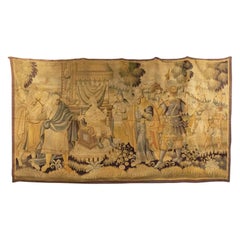
English Renaissance Style Tapestry with Noblemen
Located in Queens, NY
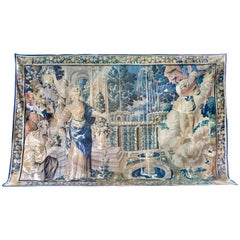
English Renaissance style horizontal tapestry of seated English Lord with standing noblemen and other figures Antique condition, fading and wear - hangs by a combination of stagger...
Category

17th Century British Antique Renaissance Furniture

Materials

Other

Swiss Chest richly carved, Riedmatten family, framed by two Holy conversations
Located in Saint-Ouen, FR
SWISS CHEST RICHLY CARVED WITH THE COAT OF ARMS OF THE RIEDMATTEN FAMILY FRAMED BY TWO HOLY CONVERSATIONS ORIGIN : SWITZERLAND, VALAIS CANTON PERIOD : END OF 16th CENTURY – EARLY 17...
Category

16th Century Swiss Antique Renaissance Furniture

Materials

Wood, Walnut

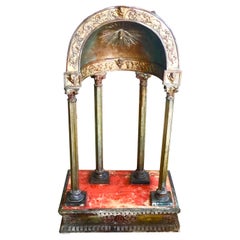
17th Century Tuscany Metal Wood Tabernacle in Antonio da Sangallo Style, Italy
By Antonio da Sangallo il Giovane
Located in Sofia, BG
Beautiful authentic Italian metal and wood portable tabernacle in style of Antonio da Sangallo the Younger. A civil and military architect, Antonio da Sangallo the Younger was tr...
Category

1690s Italian Antique Renaissance Furniture

Materials

Metal

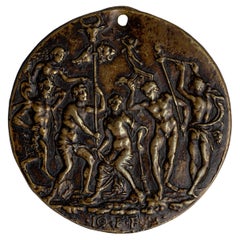
15th Century Italian Renaissance Bronze Medallion
Located in Fort Lauderdale, FL
Renaissance bronze medallion made by Master IOFF in the mid 15th century, showing the mythological scene of Ariadne on Naxos. Made in the mid-15th ...
Category

15th Century and Earlier Italian Antique Renaissance Furniture

Materials

Bronze

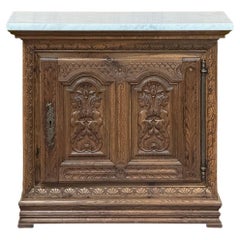
18th Century French Renaissance Cabinet with Carrara Marble
Located in Dallas, TX
18th Century French Renaissance Cabinet with Carrara Marble will make a great addition to any efficient floor plan! Crafted from solid old-growth chestnut, it features a neoclassica...
Category

Late 18th Century French Antique Renaissance Furniture

Materials

Carrara Marble, Steel

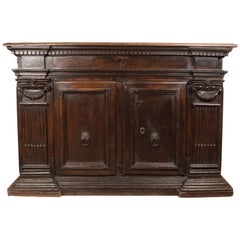
Early 17th Century Italian Walnut Credenza/ Cabinet
Located in San Francisco, CA
A wonderful and rare walnut credenza or sideboard, heavy patinated, original unrestored finish and original hardware. The hand-carved moldings and classic. Ionic swags above fluted ...
Category

Early 17th Century Italian Antique Renaissance Furniture

Materials

Walnut

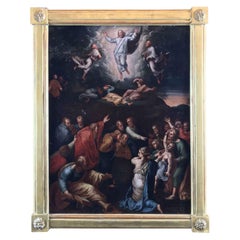
16th Century Old Masters Nicolo Cercignani the Transfiguration after Raphael
By Niccolò Circignani
Located in Milano, MI
A late 16th century oil on copper painting by Nicolò Cercignani, an Italian Old Masters artist of the late-Renaissance or Mannerist period, depicting the Raphaelesque transfiguration...
Category

16th Century Italian Antique Renaissance Furniture

Materials

Copper

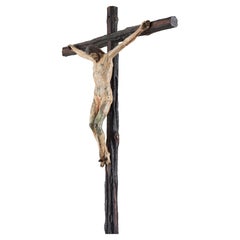
Rare and important painted bronze Crucifix after a model by Michelangelo
By Michelangelo Buonarroti
Located in Leesburg, VA
A rare and very fine bronze corpus of Christ after a model by Michelangelo, cast ca. 1597-1600 by Juan Bautista Franconio and painted in 1600 by Francisco Pacheco in Seville, Spain. The present corpus reproduces a model attributed to Michelangelo. The best known example, lesser in quality, is one on display at the Metropolitan Museum of Art (MET). The association of this corpus with Michelangelo was first brought to light by Manuel Gomez-Moreno (1930-33) who studied the wider circulated casts identified throughout Spain. The attribution to Michelangelo was subsequently followed by John Goldsmith-Phillips (1937) of the MET and again by Michelangelo expert, Charles de Tolnay (1960). While Michelangelo is best known for his monumental works, there are four documented crucifixes he made. The best known example is the large-scale wooden crucifix for the Church of Santa Maria del Santo Spirito in Florence, made in 1492 as a gift for the Prior, Giovanni di Lap Bicchiellini, for allowing him to study the anatomy of corpses at the hospital there. In 1562, Michelangelo wrote two letters to his nephew, Lionardo, indicating his intention to carve a wooden crucifix for him. In 1563 a letter between Lionardo and the Italian sculptor Tiberio Calcagni, mentions this same crucifix (a sketch of a corpus on the verso of a sheet depicting Michelangelo’s designs for St. Peter’s Basillica [Palais des Beaux-Arts in Lille] may reproduce this). That Michelangelo was working on small corpora in the last years of his life is further evidenced by the small (26.5 cm) unfinished wooden crucifix located at the Casa Buonarroti, considered his last known sculptural undertaking. Michelangelo’s contemporary biographer, Giorgio Vasari additionally cites that Michelangelo, in his later years, made a small crucifix for his friend, Menighella, as a gift. Surviving sketches also indicate Michelangelo’s study of this subject throughout his career, most notably during the end of his life but also during the 1530s-40s as he deepened his spiritual roots. The occasional cameo of crucified Christ’s throughout his sketched oeuvre have made it challenging for scholars to link such sketches to any documented commissions of importance. All the while, in consideration that such objects were made as gifts, it is unlikely they should be linked with commissions. Nonetheless, a number of theories concerning Michelangelo’s sketches of Christ crucified have been proposed and some may regard the origin of the present sculpture. It has been suggested that the corpus could have its impetus with Michelangelo’s work on the Medici Chapel, whose exclusive design was given to the master. It is sensible smaller details, like an altar cross, could have fallen under his responsibility (see for example British Museum, Inv. 1859,0625.552). Others have noted the possibility of an unrealized large marble Crucifixion group which never came to fruition but whose marble blocks had been measured according to a sheet at the Casa Buonarroti. A unique suggestion is that Michelangelo could have made the crucifix for Vittoria Colonna, of whom he was exceedingly fond and with whom he exchanged gifts along with mutual spiritual proclivities. In particular, Vittoria had an interest in the life of St. Bridget, whose vision of Christ closely resembles our sculpture, most notably with Christ’s proper-left leg and foot crossed over his right, an iconography that is incredibly scarce for crucifixes. The suggestion could add sense to Benedetto Varchi’s comment that Michelangelo made a sculpted “nude Christ…he gave to the most divine Marchesa of Pescara (Vittoria Colonna).” Of that same period, two sketches can be visually linked to our sculpture. Tolnay relates it to a sketch of a Crucified Christ at the Teylers Museum (Inv. A034) of which Paul Joannides comments on its quality as suggestive of preparations for a sculptural work. Joannides also calls attention to a related drawing attributed to Raffaello da Montelupo copying what is believed to be a lost sketch by Michelangelo. Its relationship with our sculpture is apparent. Montelupo, a pupil of Michelangelo’s, returned to Rome to serve him in 1541, assisting with the continued work on the tomb of Pope Julius II, suggesting again an origin for the corpus ca. 1540. The earliest firm date that can be given to the present corpus is 1574 where it appears as a rather crudely conceived Crucifixion panel, flanked by two mourners in low-relief and integrally cast for use as the bronze tabernacle door to a ciborium now located at the Church of San Lorenzo in Padula. Etched in wax residue on the back of the door is the date, 27 January 1574, indicating the corpus would have at least been available as a model by late 1573. The Padula tabernacle was completed by Michelangelo’s assistant, Jacopo del Duca and likely has its origins with Michelangelo’s uncompleted tabernacle for the Basilica of St. Mary of the Angels in Rome. The impetus for the Padula tabernacle’s Crucifixion panel begins with a series of late Crucifixion sketches by Michelangelo, depicting a scene of Christ crucified and flanked by two mourners (see British Museum Inv. 1895.0915.510; Ashmolean Museum Inv. 1846.89, KP II 343 recto; Windsor Castle RCIN 912761 recto; and Louvre Inv. 700). A faintly traced block possibly intended for sculpting the sketch of the crucified Christ on its recto was discovered by Tolnay on a version of the composition at Windsor Castle. The Windsor sketch and those related to it appear to have served as preparatory designs for what was probably intended to become the Basilica of St. Mary’s tabernacle door. Vasari documents that the project was to be designed by Michelangelo and cast by his assistant, Jacopo del Duca. Michelangelo died before the commission was complete, though on 15 March 1565, Jacopo writes to Michelangelo’s nephew stating, “I have started making the bronze tabernacle, depending on the model of his that was in Rome, already almost half complete.” Various circumstances interrupted the completion of the tabernacle, though its concept is later revitalized by Jacopo during preparations to sell a tabernacle, after Michelangelo’s designs, to Spain for Madrid’s El Escorial almost a decade later. The El Escorial tabernacle likewise encountered problems and was aborted but Jacopo successfully sold it shortly thereafter to the Carthusians of Padula. An etched date, 30 May 1572, along the base of the Padula tabernacle indicates its framework was already cast by then. A 1573 summary of the tabernacle also describes the original format for the door and relief panels, intended to be square in dimension. However, a last minute decision to heighten them was abruptly made during Jacopo’s negotiations to sell the tabernacle to King Phillip II of Spain. Shortly thereafter the commission was aborted. Philippe Malgouyres notes that the Padula tabernacle’s final state is a mixed product of the original design intended for Spain’s El Escorial, recycling various parts that had already been cast and adding new quickly finished elements for its sale to Padula, explaining its unusually discordant quality, particularly as concerns the crudeness of the door and relief panels which were clearly made later (by January 1574). Apart from his own admission in letters to Spain, it is apparent, however, that Jacopo relied upon his deceased master’s designs while hastily realizing the Padula panels. If Michelangelo had already earlier conceived a crucifix model, and Jacopo had access to that model, its logical he could have hastily employed it for incorporation on the door panel to the tabernacle. It is worth noting some modifications he made to the model, extending Christ’s arms further up in order to fit them into the scale of the panel and further lowering his chin to his chest in order to instill physiognomic congruence. A crude panel of the Deposition also follows after Michelangelo’s late sketches and is likewise known by examples thought to be modifications by Jacopo based upon Michelangelo’s initial sculptural conception (see Malgouyres: La Deposition du Christ de Jacopo del Duca, chef-d’oeuvre posthume de Michel-Ange). Jacopo’s appropriation of an original model by Michelangelo for more than one relief on the Padula tabernacle adds further indication that the crucifix was not an object unique to Jacopo’s hand, as few scholars have posited, but rather belongs to Michelangelo’s original...
Category

16th Century Antique Renaissance Furniture

Materials

Bronze

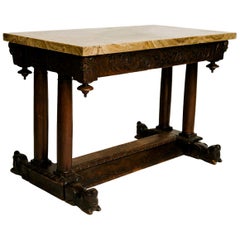
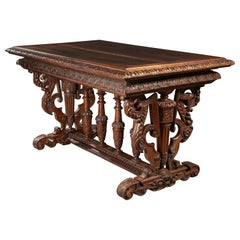
17th Century Italian Center Table
Located in Houston, TX
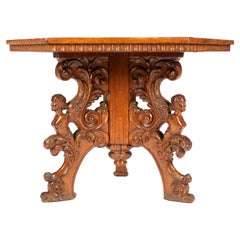
17th century carved walnut console or center table with onyx top.
Category

17th Century Italian Antique Renaissance Furniture

Materials

Onyx

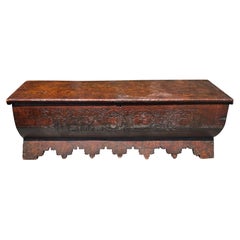
Italian Renaissance Walnut Cassone
Located in Essex, MA
With flat hinged top opening to a open compartment. The curved case carved with a crest and figures and various designs. Bracket feet with trefoil form apro...
Category

Early 1600s Italian Antique Renaissance Furniture

Materials

Walnut

18th Century French Oak Hunt Buffet with Game Bird and Fish Panels
Located in Dallas, TX
From the 1700s, this unusual French hunt buffet has expertly carved paneled doors portraying a game bird and a fish. The game bird is hanging from its feet with knotted ribbons, whil...
Category

18th Century French Antique Renaissance Furniture

Materials

Oak

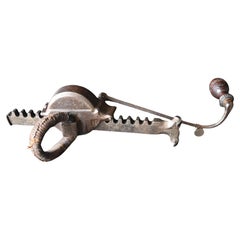
Renaissance Hunting Cranequin, Dated 1589 — With Maker’s Mark in Shield
Located in Bilzen, BE
Renaissance Hunting Cranequin, Dated 1589 — With Maker’s Mark in Shield Origin: Southern Germany or Flanders Date: 1589 (engraved) Material: Forged iron, turned hardwood handle Lengt...
Category

16th Century German Antique Renaissance Furniture

Materials

Wrought Iron

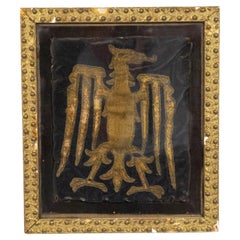
English Renaissance Framed Eagle Embroidery
Located in Queens, NY
English Renaissance embroidery of gold eagle on blue velvet in a gold frame.
Category

17th Century British Antique Renaissance Furniture

Materials

Gold

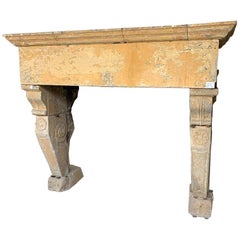
16th Century French Fireplace Mantel
Located in Vosselaar, BE
A monumental 16th century sandstone Renaissance fireplace mantel. Finely sculpted with a moulded beam and colomn supports. Decorated with flower motives, guirlandes and cirkels. Lov...
Category

16th Century French Antique Renaissance Furniture

Materials

Sandstone

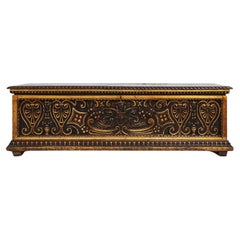
Large 16th century carved and polychroom painted oak Venetian chest, Italy
Located in Meulebeke, BE
Italy / 16th century / Venetian chest or Cassone / oak, polychroom / antique / renaissance A large carved and gilt painted Venetian marriage chest made in oak in the 16th century i...
Category

16th Century Italian Antique Renaissance Furniture

Materials

Wood, Oak

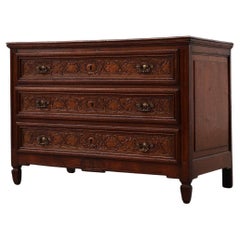
Italian Renaissance Oak Chest of Drawers, 17th Century
Located in Meulebeke, BE
Italy / 17th century / chest of drawers / oak, bronze / Renaissance A distinguished 17th-century Italian Renaissance chest of drawers...
Category

17th Century Italian Antique Renaissance Furniture

Materials

Bronze

Important Renaissance Cabinet from Lyon France with a Decor of Perspectives
Located in Saint-Ouen, FR
As soon as 1540 France's second Renaissance is in the making, intimately linked to the rediscovery of the Antique world. The development of the printing and engraving industry allows the spread of artworks and models in many cities and countries. The Italian influence can be perceived in every artistic field. While the French king entrust the most talented Italian artists with major projects such as Il Rosso or Primaticcio in Fontainebleau, French artists also travel to Italy to form themselves to this new style. In Italy they get acquainted with the work of Leo Battista Alberti the first to theorize perspective (De Pictura, 1435-36) and architecture (De re oedificatoria, 1541). Those two publications would have a revolutionary impact on arts. Furniture is marked by the work of the most famous Italian architects of the time as well as French architects. Indeed Philibert de l'Orme competes with Alberti and by the end of his life publishes several treaties including one devoted to a theory of architecture (1567). Unfortunately he would not live to complete the second volume. In this treaty he expresses his interest for mathematical norms applied to architecture, copied from the Antique. His journeys in Italy allowed him to accumulate the most sophisticated references. Jean Bullant, another architect of great talent also theorizes his practice. He establishes rules characterizing Greco-Roman art staying faithful to Vitruvius. Following this new inspiration the structure of furniture evolves. From then on appear columns, capitals, cornices, friezes and architraves. The ornamentation uses this inspiration as well with egg-and-dart, palm leaf and rose adorning the most beautiful pieces. In Lyon, crossroad where meet merchants from everywhere those new experiments are welcomed. Lyon florishing printing industry allows the spreading of models and treaties essential to the artist's work. Thus the first publication of Vitruvius' De Architectura in France would be printed in Lyon in 1532. Artists from Lyon rediscover and familiarize themselves with the Antique knowledge very early. They adopt those new ideas and use them in their own creations. Lyon cabinet-makers re interpret Antique architecture and Italian Renaissance palaces to give their pieces a pure and harmonious architectural structure. Grooved pilasters are particularly favored. They are topped by capitals of diverse orders always respecting the sequencing with simpler ones for the lower levels and the richest ones on the higher levels. As for the ornamentation, one of the great distinctiveness of Lyon workshops remains the architectural perspective illusions, drawing inspiration from Tuscany. True masterpiece of the Second French Renaissance this important cabinet illustrates Lyon workshops' taste for fine Italian architecture inspired by Antiquity. An architectural perspective of great quality is treated in symmetry on each panel. This two-bodied cabinet without recess stands on four rectangular feet. The base comprises a molding, a palm leaf frieze and is bordered by a braid. The lower body is divided by three grooved pilasters with Tuscan capitals framing two door-leaves. The two panels are encircled by a moudled frame with palm leaves. They are finely carved with a decor of fantasized architecture depicting an Italian Renaissance palace erected symmetrically on each side of a grooved pilaster. On the ground floor a door opens through a stilted arch while the stories are opened with mullioned windows, dormers and occuli. Two large pegged-boss cladded pillars support the entablature enriched by a palm leaf frieze upon which stands an arch whose coffered intrados is centred by a rose. Behind this arch a pyramid appears, standing in front of a second facade with a window topped by a broken curvilinear pediment under a cul-de-four with a shell. The checker flooring gives depth to the low-reliefs creating vanishing points structuring the panels and guiding the eye of the observer. A thin laurel braid highlights the belt of the cabinet where are located two drawers. Their facades are adorned by palm leaves in hoops. The upper body is encircled with palm leaves. The same ternary division as in the lower body appears. However, the pilasters are topped by Ionic capitals with volutes and egg-and-dart. The door-leaves are framed with flowers. On the panels the artist has designed another architectural decor. On the foreground open two arches on top of grooved pilasters with rectangular capitals adorned with palm leaves. The arches are enriched with braids and the coffered intrados bears a decor of roses. The spandrels also bear a flower decor. In the background another arcature hosts a fluted grooved column topped with double basket acanthus capital, characteristic of Corinthian order. The triangular pediment is interrupted by a choux bourguignon. A large cornice crowns the cabinet. It stands on pilasters and forms an entablature comprising a palm leaf frieze and an egg-and-dart, triglyph and palm leaf cornice. The cabinet's sides have also been carefully considered. The lower body's panels are enriched with an arch rising above a broken pediment portico hosting a twisted column. Flowers garnish the spandrels. An architectural facade completes the decor. The upper body's panels present two arches supported by a facade opened with dormers and mullioned windows as well as cartouches (one bears the inscription 1580 dating the cabinet) suggesting the interior of an Italian Renaissance palace, confirmed by the chandeliers. The flooring leads our gaze to a second arch with a broken curvilinear pediment where stands a flower vase. This arch opens onto a perspective of another facade along a road. Inside the cabinet, on the lower body door-leaves appear two designs. On the right door is depicted a Crucifixion. Saint Mary and Saint John flank the Christ on the cross. In the bottom part is inscribed « Dure uiator abis nihil haec spectacula curas / Pendenti cum sis unica cura Deo. / Tota suo moriente dolet natura Magistro. / Nil qui solus eras caussa dolenda doles. ». The signature [Christoff Swartz Monachiensis pinx[it] / Ioa[nnes] Sadeler sculp[it]] tells us it was made by Johan Sadeler I (1550-1600) after Christoph Schwartz (1548-1592). This engraving belongs to an ensemble depicting the Passion of Christ Johan Sadeler executed in 1589 after an altar piece painted by Christoph Schwartz for the private chapel of Renée of Loraine, wife of Duke William V of Bavaria. This altar piece made of nine copper panels has been destroyed during the 19th century. The Crucifixion panel once in the centre of the altar piece is the only one that survived and is today kept in Munich's Alte Pinakothek. On the left door appears Saint Francis receiving the stigmata. The inscription says : « Signastidomine Servum Tuum. Franciscum. Signis Redemptionis Nostrae ». This Renaissance cabinet with an architectural decor appearing as much in the structure faithful to Antique rules...
Category

16th Century European Antique Renaissance Furniture

Materials

Walnut

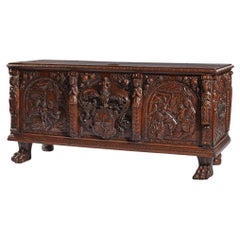
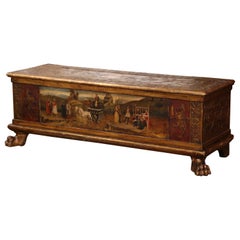
18th Century Italian Polychrome Cassone with Painted Renaissance Scenes
Located in Dallas, TX
Add elegance and history to your bedroom or living area with this richly decorated antique coffer. Crafted in Italy circa 1760, this rectangular chest rests on carved paw feet beneat...
Category

Late 18th Century Italian Antique Renaissance Furniture

Materials

Giltwood, Paint

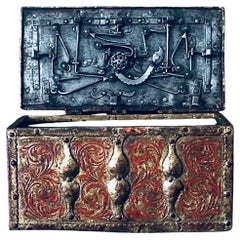
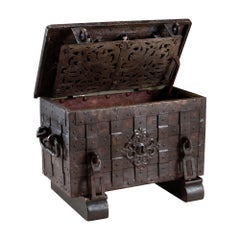
Strongbox Safe Chest Iron Painted Armada 12 bolt lock Nuremberg Renaissance
Located in BUNGAY, SUFFOLK
Rare, small, late-Renaissance, Nuremberg, iron, 'armada box', strongbox or travelling safe with its original, naïve, painted decoration on later sledge feet...
Category

Early 1600s German Antique Renaissance Furniture

Materials

Iron

Polychrome Papier-mâché Madonna and Child
Located in Queens, NY
Polychrome and gilt papier-mâché Religious Madonna and child depicting the Nuestra Señora de la Candelaria. Figures stand on a gilt rectangular base with painted description by the a...
Category

17th Century Mexican Antique Renaissance Furniture

Materials

Chrome

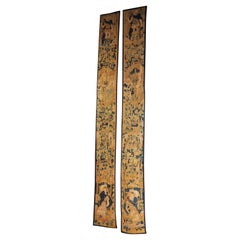
Pair of Antique Tapestry Borders from Flanders, circa 1580
Located in Dallas, TX
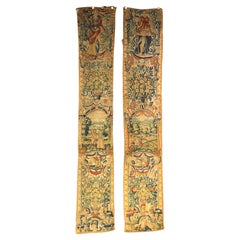
A beautiful pair of tapestry fragments, hand-woven in Flanders (now Belgium), circa 1580. At roughly 132 inches (11 feet) long, the fragments were, originally, vertical borders to a very large and brightly colored tapestry. The colors have maintained their vibrancy over the last 400+ years, with deep blue, brown, green, and red accents over a gold and cream background. Although the fragments do not have identical scenes, it is readily apparent that they originated from the same source. At the top of each fragment is a bearded warrior clad in golden armor with a flowing blue cape and green greaves. A shield rests on the ground, supported by the soldier’s left hand, while his right hand lifts a spear into the air. Towards the center of the textile is a pair of musicians, one strumming a lute, while the other plucks a lyre. At the bottom of each tapestry is a single female figure, well-dressed and sitting on a bench with one arm overhead. The remaining areas have been filled with fruit bouquets, architectural elements, and other figurative representations. A more recent navy blue border surrounds the scenes and the backs have been lined with a mauve colored linen. Our hand-woven tapestry borders...
Category

16th Century Belgian Antique Renaissance Furniture

Materials

Textile, Wool, Silk

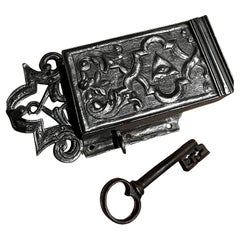
Antique Italian 17th Century Iron Box Lock with Eye of Providence
Located in Doha, QA
An exceptional and rare 17th century large iron box lock, showcasing the ornate craftsmanship of the Late Renaissance- Early Baroque period. Entirely hand-forged in steel and iron, t...
Category

Early 17th Century Italian Antique Renaissance Furniture

Materials

Wrought Iron

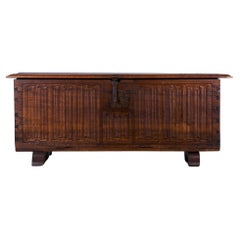
18th Century French Renaissance Style Carved Walnut Blanket Chest
Located in Astoria, NY
Magnificent 18th-century French carved chest coffer sourced from Provence, France. Beautifully hand-crafted from solid walnut, it features an intricately hand-carved linenfold compos...
Category

Late 18th Century French Antique Renaissance Furniture

Materials

Walnut

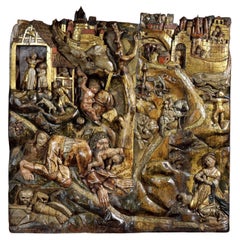
Wood Low-Relief Depicting a Werewolf and Saint George
Located in Saint-Ouen, FR
Exceptional polychrome wood low-relief depicting a werewolf and saint george after a woodcut by lucas cranach (“DER WERWOLF” 1512) Provenance : collection Brimo de Laroussihle colle...
Category

16th Century German Antique Renaissance Furniture

Materials

Wood

17th Century Spanish Baroque Savoy Hand Carved Chest Trunk
Located in Miami, FL
Nice 17th century chest in brown chesnut. Hand carved facade panel with geometrics decorations. Plinth with brace decorations, dovetail assembly with wrought iron wardware. Add a re...
Category

Late 17th Century Spanish Antique Renaissance Furniture

Materials

Iron

16th Century Partly Gilt Carved Wood Frame
Located in Saint-Ouen, FR
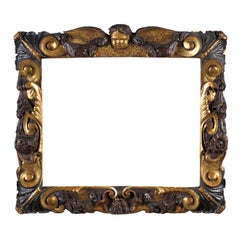
This rare Venetian frame entirely carved in high-relief shows a rich decor of scrolls, garlands, daisy flowers and thistles. At the four corners of the frame are depicted large acant...
Category

16th Century Italian Antique Renaissance Furniture

Materials

Wood

Rare and Important Renaissance "Judaica" Carved Oak Wood Cabinet
Located in Queens, NY
A Rare and Important Renaissance "Judaica" Carved Oak Wood Cabinet, circa 1680 We are pleased to present a rare and important Renaissance Judaica c...
Category

17th Century German Antique Renaissance Furniture

Materials

Mother-of-Pearl, Oak

Antique Venetian Portrait of a Lady Renaissance Oil on Wood
Located in Doha, QA
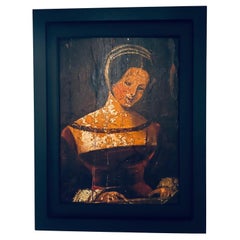
An evocative Venetian Renaissance oil on wood panel depicting a graceful Portrait of a Lady. The sitter’s serene expression and refined composition recall the elegance of Titian’s Ve...
Category

16th Century Italian Antique Renaissance Furniture

Materials

Wood, Paint

Antique 17th Century Flemish Mythological Tapestry Mercury Janus Sabine Women
Located in New York, NY
A museum quality piece, this is an exquisite example of a 17th century antique Flemish mythological tapestry depicting Mercury, Janus, and the Sabine Women...
Category

17th Century Belgian Antique Renaissance Furniture

Materials

Tapestry, Wool

A Very Rare and Important Marble Relief of the ‘Resurrection of Christ’
Located in London, GB
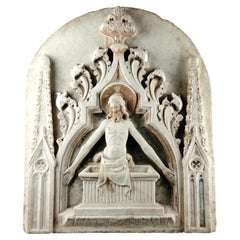
A Very Rare and Important Marble Relief of the ‘Resurrection of Christ’ Attributed to the Master of the Mascoli Altar Marble Venice, Italy Second half of the 15th Century SIZE: ...
Category

15th Century and Earlier Italian Antique Renaissance Furniture

Materials

Marble

18th Century Italian Inlaid Walnut Center Table
Located in Bradenton, FL
18th Century Italian Wooden Center table. Table features a hexagonal top, double bands of parquetry string inlay and a molded edge. Rococo design features splayed legs adorned with i...
Category

18th Century Italian Antique Renaissance Furniture

Materials

Wood

Pair of 16th Century Silk Tapestry Borders from Brussels, H-98.75 Inches
Located in Dallas, TX
A beautiful pair of tapestry fragments, hand-woven in Brussels during the 1500s. At roughly 99 inches (over 8 feet) long, the fragments were, originally, vertical borders to a large ...
Category

16th Century Belgian Antique Renaissance Furniture

Materials

Silk

18th Century Carved Walnut Renaissance Style Table
Located in Bradenton, FL
Spectacular 18th Century Carved Walnut Renaissance Style Library Table - dining table. With a rectangular top concealing draw leaves at eithe...
Category

18th Century Italian Antique Renaissance Furniture

Materials

Walnut

Tuscan Renaissance Wrought Iron and Walnut Cabinet
Located in Saint-Ouen, FR
The lower part It stands on an ogee molded base and four feet with two front legs more massive and detailed than the others. It opens with two doors and three drawers. The vert...
Category

16th Century Italian Antique Renaissance Furniture

Materials

Wrought Iron

18th Century Domed Venetian Chest with Crimson Velvet and Wrought Iron Hardware
Located in Dallas, TX
Dating to the 1700s, this beautiful Venetian chest, which is covered in crimson velvet, has brass embellishments in the style of the Renaissance. The beautiful color of the velvet an...
Category

18th Century Italian Antique Renaissance Furniture

Materials

Metal, Wrought Iron, Iron, Brass

Set of Four Italian Walnut Savonarola Armchairs
Located in Saint-Ouen, FR
Set of four Italian walnut Savonarola armchairs ORIGIN : FLORENCE, ITALY PERIOD : LATE 15TH CENTURY - EARLY 16TH CENTURY Measures: height : 102 cm 40.15 inches, height : 93 cm 36.61 inches length : 68 cm 26.77 inches, length : 68 cm 26.77 inches depth : 55 cm 21.65 inches, depth : 50 cm 19.68 inches Walnut Very good condition This movable Italian seat from the late 15th century descents from the roman curule seat. It took the name of sedia Savonarola...
Category

16th Century Italian Antique Renaissance Furniture

Materials

Walnut

Antique 17th Century Dutch of Flemisch Honey Color Oak Rennaisance Cupboard
Located in Casteren, NL
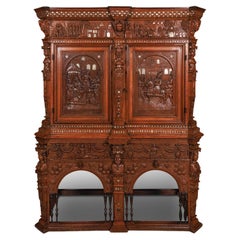
This fantastic two-piece 17th-century oak cupboard was made in Antwerp, Flanders, circa 1680. It consists of two pieces, a lower and an upper cabinet. The lower cabinet can be used w...
Category

1680s Dutch Antique Renaissance Furniture

Materials

Oak

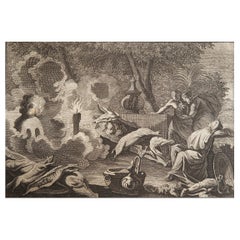
Original Antique Print after Jan Luyken, Amsterdam, Genesis XV, 1724
Located in St Annes, Lancashire
Wonderful copper-plate engraving after Jan Luyken Published by Marten Schagen, Amsterdam. 1724 Text on verso The measurement given is the paper size.
Category

1720s Dutch Antique Renaissance Furniture

Materials

Paper

Spanish Renaissance 1680s Walnut Spice Cabinet with Foliage Carved Décor
Located in Atlanta, GA
A Spanish Renaissance walnut spice cabinet from circa 1680 with abundant foliage carved décor. This captivating Spanish Renaissance walnut spice cabinet, dating to circa 1680, enchan...
Category

Late 17th Century Spanish Antique Renaissance Furniture

Materials

Walnut

EARLY 16th CENTURY INLAID RENAISSANCE SIDEBOARD
Located in Firenze, FI
Refined and unique sideboard in solid carved walnut, decorated with "Carthusian" inlays in walnut and other woods. The sideboard features a linear shape, characterized by a base and ...
Category

16th Century Italian Antique Renaissance Furniture

Materials

Bronze

A late 16th century French Renaissance richly carved walnut center table
Located in PARIS, FR
A late 16th century Renaissance richly carved walnut center table France, The Loire Valley area Dimensions: h. 33.46 in., w. 59.45 in., d. 36.22 in. Our remarquable table is a fabu...
Category

16th Century French Antique Renaissance Furniture

Materials

Walnut

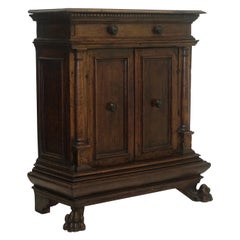
GENUINE Renaissance Walnut Cabinet Buffet, Italian, Early 17TH Century
Located in San Francisco, CA
A tall walnut cabinet buffet, having a plank top with dentil moulding above a single drawer. The recessed paneled doors with iron pulls, flanked by Doric columns sitting on multi-moi...
Category

Early 18th Century Italian Antique Renaissance Furniture

Materials

Walnut

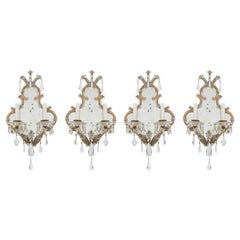
Italian Venetian Mirrored Wall Sconces With Crystals
Located in Queens, NY
4 Italian Venetian 2-arm mirrored wall sconces having a shield shaped form with crystal pendants (PRICED EACH) Good condition consistent with age and use
Category

17th Century Italian Antique Renaissance Furniture

Materials

Crystal

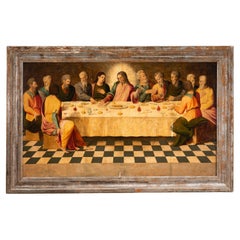
Last Supper. Oil on panel. Castilian School, 16th century.
Located in Madrid, ES
Last Supper. Oil on panel. Castilian School, 16th century. It has faults. An oil on panel painting depicting a figurative image against a neutral background, with a checkered tile...
Category

16th Century Spanish Antique Renaissance Furniture

Materials

Other

Renaissance furniture for sale on 1stDibs.

Find a broad range of unique Renaissance furniture for sale on 1stDibs. Many of these items were first offered in the 21st Century and Contemporary, but contemporary artisans have continued to produce works inspired by this style. If you’re looking to add vintage furniture created in this style to your space, the works available on 1stDibs include case pieces and storage cabinets, decorative objects, wall decorations and other home furnishings, frequently crafted with wood, walnut and other materials. If you’re shopping for used Renaissance furniture made in a specific country, there are Europe, Italy, and France pieces for sale on 1stDibs. While there are many designers and brands associated with original furniture, popular names associated with this style include Europa Antiques, Sinke Van Tongeren, Albrecht Dürer, and Castelli. It’s true that these talented designers have at times inspired knockoffs, but our experienced specialists have partnered with only top vetted sellers to offer authentic pieces that come with a buyer protection guarantee. Prices for furniture differ depending upon multiple factors, including designer, materials, construction methods, condition and provenance. On 1stDibs, the price for these items starts at $35 and tops out at $3,217,683 while the average work can sell for $6,828.