Renaissance Furniture

RENAISSANCE STYLE

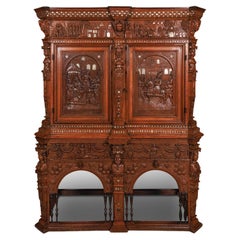
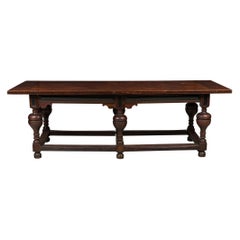
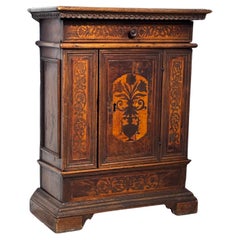
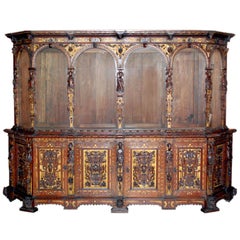
Spanning an era of cultural rebirth in Europe that harkened back to antiquity, the Renaissance was a time of change in design. From the late 1400s to the early 1600s, Rome, Venice and Florence emerged as artistic centers through the expansion of global trade and a humanist belief in the arts being central to society. Antique Renaissance furniture was ornately carved from sturdy woods like walnut, its details standing out against the tapestries and stained glass adorning the walls.

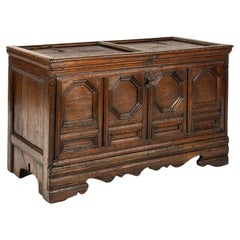
Renaissance chests, which were frequently commissioned for marriages, were often decorated with gilding or painted elements. Those that were known as cassoni were crafted in shapes based on classical sarcophagi. As opposed to the medieval era, when furniture was pared down to the necessities, a wide range of Renaissance chairs, tables and cabinets were created for the home, and the designs regularly referenced ancient Rome.

Large torchères of the Renaissance era that were used as floor lamps were inspired by classical candelabras, while marble surfaces evoked frescoes. The inlaid boxes being imported from the Middle East informed the intarsia technique, which involved varying hues of wood in mosaic-like patterns, such as those by architect Giuliano da Maiano in the Florence Cathedral.

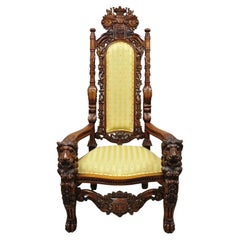
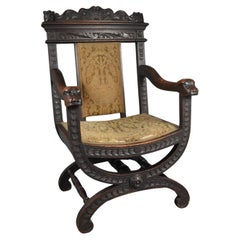
Tapestry-woven cushion covers accented the variety of Renaissance seating — from conversation to study chairs — while bookcases for secular use reflected the migration of culture and knowledge from the church into the home. The aesthetics of the Italian Renaissance later spread to France through the publishing of work by renowned designers, including Hugues Sambin and Jacques Androuet du Cerceau. Centuries later, the 19th-century Renaissance Revival would see a return to this influential style.

Find a collection of antique Renaissance case pieces, decorative objects and other furniture on 1stDibs.

to
262
1,416
1,080
2,328
210
18
198,219
115,269
44,173
33,229
16,617
12,233
10,885
10,822
9,986
8,965
7,351
6,660
6,506
6,387
6,221
6,158
4,903
3,742
840
841
647
228
222
117
118
27
9
15
12
6
16
9
8
25
38
1,305
807
407
303
257
2,014
851
496
161
146
2,556
2,471
2,522
39
23
9
7
7
Style: Renaissance
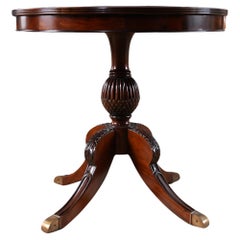
Round Mahogany Pineapple Table
Located in Annville, PA
The elegant and refined Round Mahogany Pineapple Table from Niagara Furniture boasts a fantastic base carved to resemble the shape of a pineapple as well as a beautiful mahogany skir...
Category

2010s Renaissance Furniture

Materials

Mahogany

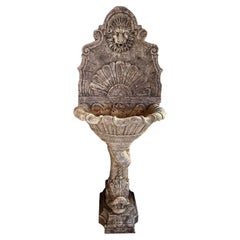
Pre 19th Century Italian Antique Wall Marble Fountain - Antique Fontana Delfino
Located in West Palm Beach, FL
A marble wall fountain with dolphin pedestal. The Campana shaped body of the basin is supported by the dauphin grotesque pedestal which is placed on a raised square foot. The fountai...
Category

Late 18th Century Italian Antique Renaissance Furniture

Materials

Marble

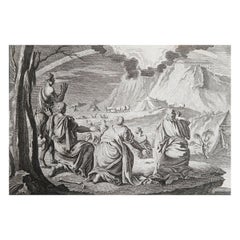
Original Antique Print After Jan Luyken, Amsterdam, Genesis IX, 1724
Located in St Annes, Lancashire
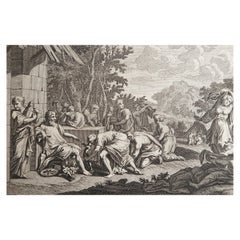
Wonderful copper-plate engraving after Jan Luyken Published by Marten Schagen, Amsterdam. 1724 Text on verso The measurement given is the paper size.
Category

1720s Dutch Antique Renaissance Furniture

Materials

Paper

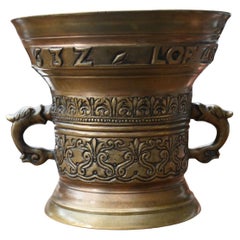
17th Century Dutch Bronze pharmacy Mortar, dated 1632
Located in Bilzen, BE
17th century Dutch bronze mortar, dated 1632 and with border text "lof God van al anno 1632". Height 12.5 cm, Diameter 14 cm
Category

1630s Dutch Antique Renaissance Furniture

Materials

Bronze

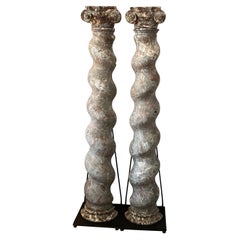
Belgian Marble Antique Pair Renaiscance Period Columns
Located in Beervelde, BE
Rich Renaiscance period half-columns in Belgian Saint-Remy Marble for eclectic interior design. These 2 original antique, 16th century period, columns are mounted on a stand and has ...
Category

16th Century Belgian Antique Renaissance Furniture

Materials

Marble

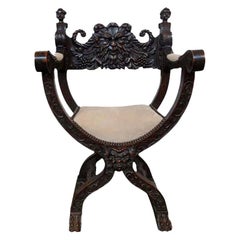
19th Century Renaissance Style Chair
Located in Houston, TX
19th century Renaissance style chair. Handsome antique Continental Renaissance style or Gothic style walnut Savonarola chair, throne chair, si...
Category

19th Century European Antique Renaissance Furniture

Materials

Suede, Fabric, Walnut

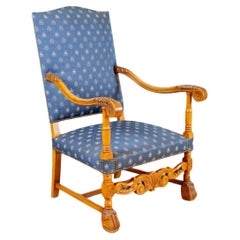
Stylized, Carved Walnut Armchair/Throne in Blue Upholstery, 1960s-1980s
Located in Opole, PL
Stylized, Carved Walnut Armchair/Throne in Blue Upholstery, 1960s-1980s This striking piece is a fusion of historic elegance and bold design. Crafted from rich walnut wood, the armc...
Category

20th Century Dutch Renaissance Furniture

Materials

Upholstery, Walnut

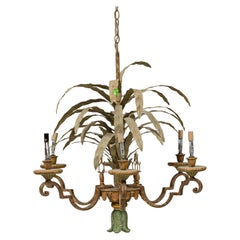
Italian Venetian Peinte 6 Armed Tole Chandelier
Located in Queens, NY
Italian Venetian style 6 armed tole chandelier, gilt and polychrome painted sheet and cast metal, the central standard modeled as a draped pedestal on foliate foot, issuing a frond o...
Category

20th Century Italian Renaissance Furniture

Materials

Chrome

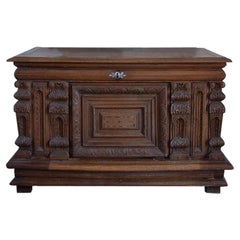
Renaissance Period French Hand Carved Chest / Trunk - 17th - France
Located in Beuzevillette, FR
Very beautiful trunk from the Renaissance period, very nicely carved with palm leaves and acanthus leaves in an architectural setting. Four Ionic co...
Category

17th Century French Antique Renaissance Furniture

Materials

Wood

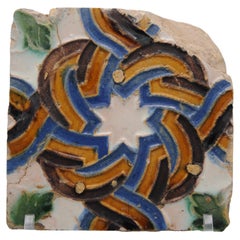
Spanish Azulejo Geometric Tile Arista y Cuenca - Sevilla 16th century
Located in DELFT, NL
Rare early 16th century Mudejar tile of the so-called ‘Aristo’ or 'cuerda secca' technique Geometric design with a central intertwining cords. Very ornate decoration. This type of...
Category

16th Century Spanish Antique Renaissance Furniture

Materials

Earthenware, Maiolica

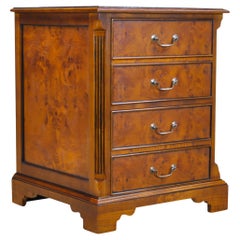
Country Estate Two Drawer File
Located in Annville, PA
A high quality piece of office furniture from Niagara Furniture our Country Estate Two Drawer File is made from the finest burls available. The top of the cabinet is covered in a ful...
Category

2010s Renaissance Furniture

Materials

Leather, Wood

17th Century Icon on Board of Saint Matrona
Located in Hastings, GB
Incredibly rare Icon on Oak board dating to the 17th century and depicting Saint Matrona (Agia Matrona), this Icon was originally from Chios in Greece and was discovered in Vatopedi...
Category

17th Century Greek Antique Renaissance Furniture

Materials

Wood

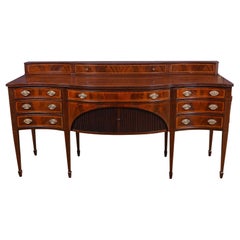
NVIN0475 Vintage Irwin Sideboard
Located in Annville, PA
From Niagara Furniture a Vintage Irwin Sideboard in excellent condition, with the top having been French polished to give the piece a fresh look. The ...
Category

1990s North American Renaissance Furniture

Materials

Mahogany

Genoese Cabinet Called Stipo From The Renaissance Period In Walnut - 16th Centur
Located in Brussels, Brussels
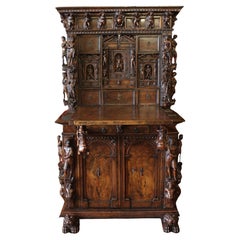
Exceptional Genoese cabinet called stipo "a bambocci" from the Italian Renaissance in walnut from the end of the 16th century with its original base Museum quality piece Provenance:...
Category

16th Century Italian Antique Renaissance Furniture

Materials

Walnut

18th/19th Century Dutch Painting in Oil on Canvas after Johannes Vermeer
By (attributed to) Johannes Verelst
Located in Vero Beach, FL
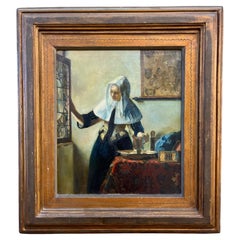
18th/19th Century Dutch Painting in Oil on Canvas after Johannes Vermeer Antique painting after the famous motif, “Young Women with a Water Pitcher” by Johannes Vermeer (1632-1675)...
Category

Late 18th Century Unknown Antique Renaissance Furniture

Materials

Canvas, Wood

17th Century French Renaissance Hand-Carved Front Section of a Built in Cabinet
Located in Casteren, NL
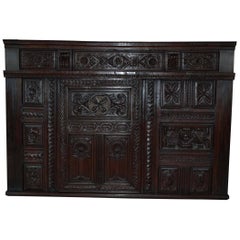
This beautiful carved Renaissance front section was a part of a built in cabinet. The carvings are typical for Bretagne area in France and it can be ...
Category

Mid-17th Century French Antique Renaissance Furniture

Materials

Oak

Original Antique Print after Jan Luyken, Amsterdam, Genesis XXXV, 1724
Located in St Annes, Lancashire
Wonderful copper-plate engraving after Jan Luyken Published by Marten Schagen, Amsterdam. 1724 Text on verso The measurement given is the paper size.
Category

1720s Dutch Antique Renaissance Furniture

Materials

Paper

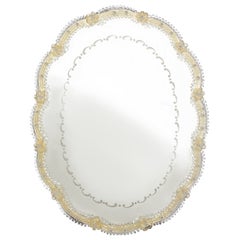
Tonda Wall Mirror
Located in Milan, IT
Venetian mirror made in the strictest Murano tradition with the center carefully hand-engraved. All assembled with crystal/gold elements handmade in the Murano furnaces. Wooden frame...
Category

2010s Italian Renaissance Furniture

Materials

Glass

Tonda Wall Mirror
$1,665 / item
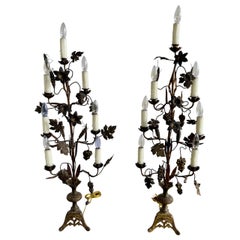
Pair of 19th C. Italian Brass Candelabras
Located in Los Angeles, CA
Pair of ornate Italian candelabra-style lights. They feature metal framework with intricate floral and grapevine motifs, including grape clusters and vine leaves. Each lamp holds m...
Category

19th Century Italian Antique Renaissance Furniture

Materials

Brass

Pair of 19th C. Italian Brass Candelabras
$675 Sale Price / set
75% Off
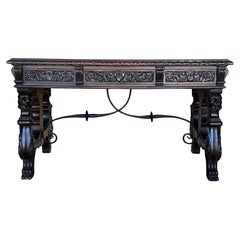
19th Century Spanish Two Faces Baroque Style Oak Library Table or Desk
Located in Miami, FL
Handsome oak library piece that can be used as a desk or Work table. Made of oak having carved gadrooned edges. A stretcher made of iron. Carved on all sides and five drawers ox bow ...
Category

Early 19th Century Spanish Antique Renaissance Furniture

Materials

Oak

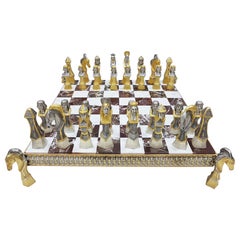
20th Century Italian Sterling Silver Chess Board, Chess Game Red Jasper, Marble
Located in VALENZA, IT
Sterling silver bi-color chessboard and chess game in "Florence" style. The chessboard is in molten silver with red jasper and white color marble The work was engraved with the anc...
Category

1970s Italian Vintage Renaissance Furniture

Materials

Marble, Sterling Silver

Antique 17th century German Light Warm Oak Chest or Trunk with geometric panels
Located in Casteren, NL
This German oak chest from the 17th century is a fine example of early modern craftsmanship, combining solidity with decorative refinement. The front is constructed with heavy, richl...
Category

Mid-17th Century German Antique Renaissance Furniture

Materials

Oak

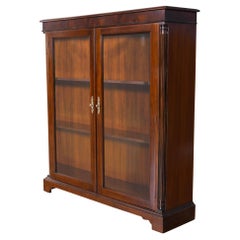
Mahogany Two Door Bookcase
Located in Annville, PA
This Mahogany Two Door Bookcase from Niagara Furniture can be used to display your most valued collectables. This bookcase is a perfect size to fit i...
Category

2010s Renaissance Furniture

Materials

Glass, Mahogany

Rare and important painted bronze Crucifix after a model by Michelangelo
By Michelangelo Buonarroti
Located in Leesburg, VA
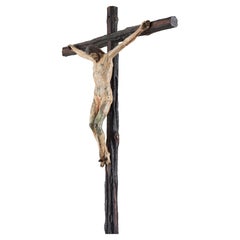
A rare and very fine bronze corpus of Christ after a model by Michelangelo, cast ca. 1597-1600 by Juan Bautista Franconio and painted in 1600 by Francisco Pacheco in Seville, Spain. The present corpus reproduces a model attributed to Michelangelo. The best known example, lesser in quality, is one on display at the Metropolitan Museum of Art (MET). The association of this corpus with Michelangelo was first brought to light by Manuel Gomez-Moreno (1930-33) who studied the wider circulated casts identified throughout Spain. The attribution to Michelangelo was subsequently followed by John Goldsmith-Phillips (1937) of the MET and again by Michelangelo expert, Charles de Tolnay (1960). While Michelangelo is best known for his monumental works, there are four documented crucifixes he made. The best known example is the large-scale wooden crucifix for the Church of Santa Maria del Santo Spirito in Florence, made in 1492 as a gift for the Prior, Giovanni di Lap Bicchiellini, for allowing him to study the anatomy of corpses at the hospital there. In 1562, Michelangelo wrote two letters to his nephew, Lionardo, indicating his intention to carve a wooden crucifix for him. In 1563 a letter between Lionardo and the Italian sculptor Tiberio Calcagni, mentions this same crucifix (a sketch of a corpus on the verso of a sheet depicting Michelangelo’s designs for St. Peter’s Basillica [Palais des Beaux-Arts in Lille] may reproduce this). That Michelangelo was working on small corpora in the last years of his life is further evidenced by the small (26.5 cm) unfinished wooden crucifix located at the Casa Buonarroti, considered his last known sculptural undertaking. Michelangelo’s contemporary biographer, Giorgio Vasari additionally cites that Michelangelo, in his later years, made a small crucifix for his friend, Menighella, as a gift. Surviving sketches also indicate Michelangelo’s study of this subject throughout his career, most notably during the end of his life but also during the 1530s-40s as he deepened his spiritual roots. The occasional cameo of crucified Christ’s throughout his sketched oeuvre have made it challenging for scholars to link such sketches to any documented commissions of importance. All the while, in consideration that such objects were made as gifts, it is unlikely they should be linked with commissions. Nonetheless, a number of theories concerning Michelangelo’s sketches of Christ crucified have been proposed and some may regard the origin of the present sculpture. It has been suggested that the corpus could have its impetus with Michelangelo’s work on the Medici Chapel, whose exclusive design was given to the master. It is sensible smaller details, like an altar cross, could have fallen under his responsibility (see for example British Museum, Inv. 1859,0625.552). Others have noted the possibility of an unrealized large marble Crucifixion group which never came to fruition but whose marble blocks had been measured according to a sheet at the Casa Buonarroti. A unique suggestion is that Michelangelo could have made the crucifix for Vittoria Colonna, of whom he was exceedingly fond and with whom he exchanged gifts along with mutual spiritual proclivities. In particular, Vittoria had an interest in the life of St. Bridget, whose vision of Christ closely resembles our sculpture, most notably with Christ’s proper-left leg and foot crossed over his right, an iconography that is incredibly scarce for crucifixes. The suggestion could add sense to Benedetto Varchi’s comment that Michelangelo made a sculpted “nude Christ…he gave to the most divine Marchesa of Pescara (Vittoria Colonna).” Of that same period, two sketches can be visually linked to our sculpture. Tolnay relates it to a sketch of a Crucified Christ at the Teylers Museum (Inv. A034) of which Paul Joannides comments on its quality as suggestive of preparations for a sculptural work. Joannides also calls attention to a related drawing attributed to Raffaello da Montelupo copying what is believed to be a lost sketch by Michelangelo. Its relationship with our sculpture is apparent. Montelupo, a pupil of Michelangelo’s, returned to Rome to serve him in 1541, assisting with the continued work on the tomb of Pope Julius II, suggesting again an origin for the corpus ca. 1540. The earliest firm date that can be given to the present corpus is 1574 where it appears as a rather crudely conceived Crucifixion panel, flanked by two mourners in low-relief and integrally cast for use as the bronze tabernacle door to a ciborium now located at the Church of San Lorenzo in Padula. Etched in wax residue on the back of the door is the date, 27 January 1574, indicating the corpus would have at least been available as a model by late 1573. The Padula tabernacle was completed by Michelangelo’s assistant, Jacopo del Duca and likely has its origins with Michelangelo’s uncompleted tabernacle for the Basilica of St. Mary of the Angels in Rome. The impetus for the Padula tabernacle’s Crucifixion panel begins with a series of late Crucifixion sketches by Michelangelo, depicting a scene of Christ crucified and flanked by two mourners (see British Museum Inv. 1895.0915.510; Ashmolean Museum Inv. 1846.89, KP II 343 recto; Windsor Castle RCIN 912761 recto; and Louvre Inv. 700). A faintly traced block possibly intended for sculpting the sketch of the crucified Christ on its recto was discovered by Tolnay on a version of the composition at Windsor Castle. The Windsor sketch and those related to it appear to have served as preparatory designs for what was probably intended to become the Basilica of St. Mary’s tabernacle door. Vasari documents that the project was to be designed by Michelangelo and cast by his assistant, Jacopo del Duca. Michelangelo died before the commission was complete, though on 15 March 1565, Jacopo writes to Michelangelo’s nephew stating, “I have started making the bronze tabernacle, depending on the model of his that was in Rome, already almost half complete.” Various circumstances interrupted the completion of the tabernacle, though its concept is later revitalized by Jacopo during preparations to sell a tabernacle, after Michelangelo’s designs, to Spain for Madrid’s El Escorial almost a decade later. The El Escorial tabernacle likewise encountered problems and was aborted but Jacopo successfully sold it shortly thereafter to the Carthusians of Padula. An etched date, 30 May 1572, along the base of the Padula tabernacle indicates its framework was already cast by then. A 1573 summary of the tabernacle also describes the original format for the door and relief panels, intended to be square in dimension. However, a last minute decision to heighten them was abruptly made during Jacopo’s negotiations to sell the tabernacle to King Phillip II of Spain. Shortly thereafter the commission was aborted. Philippe Malgouyres notes that the Padula tabernacle’s final state is a mixed product of the original design intended for Spain’s El Escorial, recycling various parts that had already been cast and adding new quickly finished elements for its sale to Padula, explaining its unusually discordant quality, particularly as concerns the crudeness of the door and relief panels which were clearly made later (by January 1574). Apart from his own admission in letters to Spain, it is apparent, however, that Jacopo relied upon his deceased master’s designs while hastily realizing the Padula panels. If Michelangelo had already earlier conceived a crucifix model, and Jacopo had access to that model, its logical he could have hastily employed it for incorporation on the door panel to the tabernacle. It is worth noting some modifications he made to the model, extending Christ’s arms further up in order to fit them into the scale of the panel and further lowering his chin to his chest in order to instill physiognomic congruence. A crude panel of the Deposition also follows after Michelangelo’s late sketches and is likewise known by examples thought to be modifications by Jacopo based upon Michelangelo’s initial sculptural conception (see Malgouyres: La Deposition du Christ de Jacopo del Duca, chef-d’oeuvre posthume de Michel-Ange). Jacopo’s appropriation of an original model by Michelangelo for more than one relief on the Padula tabernacle adds further indication that the crucifix was not an object unique to Jacopo’s hand, as few scholars have posited, but rather belongs to Michelangelo’s original...
Category

16th Century Antique Renaissance Furniture

Materials

Bronze

Antique Reproduction of 17th Century Italian Chestnut Fratino Style Table
Located in Encinitas, CA
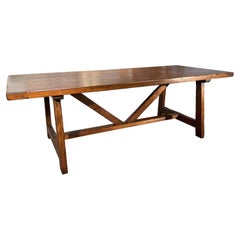
This Antique Reproduction of a Late 17th Century Italian chestnut Fratino style table features solid top planks with end frames and a base with crosspieces and wood joinery pins. With is superior details including dovetail joinery, present a fine rustic antique look for use as a primitive table for display, or communal style dining or even in a contrasting modern setting. We can reproduce this antique style in any size you require. See pricing below for standard dining table sizes - made in Italy by our craftsmen. We offer finish options on aged hardwoods which may be very distressed like this antique Italian chestnut table, or formal & smooth on premium Italian walnut. Available to order with shellac color stain options. Available Options either in Walnut or Chestnut: 79”L x 39”W 84”L x 40-42”W 96”L x 40-42”W 108”L x 40-42”W 120”L x 40-42”W Larger table sizes, narrow widths, and single slab tops available by quote. Bellini’s Old World Collection...
Category

2010s Italian Renaissance Furniture

Materials

Chestnut, Poplar, Walnut, Fir

Antique Rare Italian Renaissance Tournament Helmet 1520-1550 with Original Stand
Located in Doha, QA
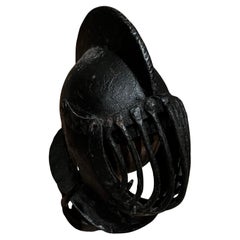
An exceptionally rare and evocative 16th- century Gothic Italian (Pisa) tournament helmet, forged entirely in wrought iron, weight 2.9 kg and presented together with its original pe...
Category

16th Century Italian Antique Renaissance Furniture

Materials

Wrought Iron

Renaissance-Inspired 4-Panel Gilded Screen with Raised Architectural Design
Located in Yonkers, NY
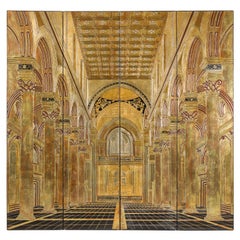
A Renaissance inspired four-panel gilded screen with Roman arches. Transform your living space into a haven of historical artistry with this four-panel folding screen, an exquisite h...
Category

Mid-20th Century Chinese Renaissance Furniture

Materials

Gesso, Wood

Gioia Wall Mirror
Located in Milan, IT
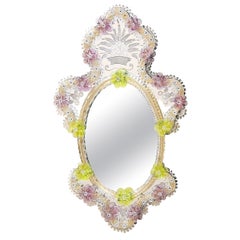
Classic shaped Venetian mirror, made in the most rigorous Murano tradition. Finely hand-engraved on all elements, it is assembled with numerous floral elements in multicolored crysta...
Category

2010s Italian Renaissance Furniture

Materials

Glass

Gioia Wall Mirror
$1,535 / item
Dutch 18th Century Renaissance Oak and Walnut Cupboard
Located in Casteren, NL
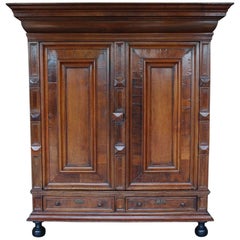
This mid-18th century cabinet is a so called 'kussenkast' or pillow cabinet. The pillow refers to the shape of the raised panels in the doors. It is a ...
Category

Mid-18th Century Dutch Antique Renaissance Furniture

Materials

Oak

Rare and Important Renaissance "Judaica" Carved Oak Wood Cabinet
Located in Queens, NY
A Rare and Important Renaissance "Judaica" Carved Oak Wood Cabinet, circa 1680 We are pleased to present a rare and important Renaissance Judaica c...
Category

17th Century German Antique Renaissance Furniture

Materials

Mother-of-Pearl, Oak

English Renaissance Style Wood Dining / Conference Table
Located in Queens, NY
English Renaissance-style (20th century) oak refectory dining/conference table with a rectangular top featuring an inlaid border around the table top edge, resting on 6 turned legs c...
Category

20th Century Unknown Renaissance Furniture

Materials

Wood, Oak

Henkel Harris Bachelors Chest of Drawers
Located in Annville, PA
From Niagara Furniture a vintage Henkel Harris Bachelors Chest of Drawers in very good condition. Simple yet sophisticated this beautiful...
Category

1980s North American Vintage Renaissance Furniture

Materials

Mahogany

Large Renaissance Style Figural Lion Carved Wood Paw Feet Throne Chair
Located in Philadelphia, PA
Large Renaissance Style Figural Lion Carved Wood Paw Feet Throne Chair. Item features a large impressive size, ornate lion heads and paw feet, nicely carved details, very nice item, ...
Category

Late 20th Century Renaissance Furniture

Materials

Wood

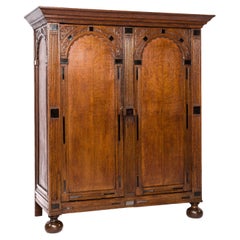
Antique 17th-century Dutch Renaissance Portal Cupboard in Solid Oak
Located in Casteren, NL
On offer here is an exceptional Dutch cupboard made of the finest European summer oak in the tradition of the Dutch Renaissance during the “Dutch golden age” This cabinet is made in the Provence of Utrecht, circa 1680. The arched doors are typical for this province and this type of cabinet is also known as “Utrechtse Poortkast”. The cabinet stands on bun feet and is with handsomely carved patterns and ebony veneer inlaid panels. The carving depicts elements that represent prosperity and Classic ornaments as is common in Dutch Renaissance furniture...
Category

Late 17th Century Dutch Antique Renaissance Furniture

Materials

Steel

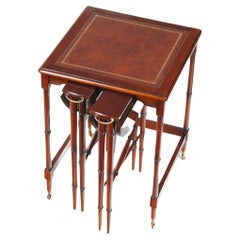
Leather Top Nesting Table
Located in Annville, PA
This English style Leather Top Nesting Table from Niagara Furniture features three tables, the larger table with a genuine leather, tooled p...
Category

2010s Renaissance Furniture

Materials

Mahogany

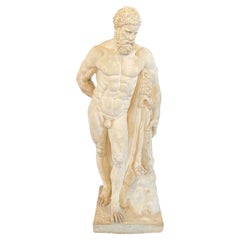
Sensual Realistic French Sculpture of Male Nude Mythological Figure Hercules
Located in Hopewell, NJ
Impressive realistic plaster statue of a muscular nude male that sits on top of a square block base. The elegant design shows intricate detail and qualit...
Category

19th Century French Antique Renaissance Furniture

Materials

Plaster

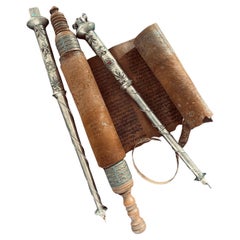
Antique Judaica Torah Esther Scroll Pre-Expulsion Iberian Peninsula Spain 1470
Located in Doha, QA
This is an absolutely incredible rare and truly unique pre-expulsion Iberian Peninsula handwritten Esther Scroll, inked onto animal leather parchment (15th century, -laboratory teste...
Category

15th Century and Earlier Spanish Antique Renaissance Furniture

Materials

Silver, Bronze

Antique French Hall Bench Settle Renaissance Carved Oak Cherub Black Forest 1880
Located in Shreveport, LA
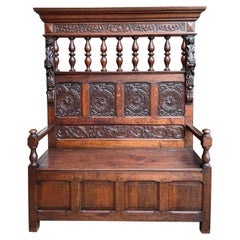
19th century French Hall Bench Settle Renaissance Carved Oak Cherub Black Forest. Direct from France, a beautiful antique French hall bench, large enoug...
Category

1870s French Antique Renaissance Furniture

Materials

Oak

Late 19th Century French Henri II Style Hand Carved Walnut Buffet Deux Corps
Located in Fayetteville, AR
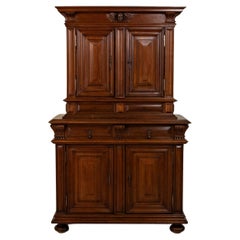
This late nineteenth century French Henri II style walnut buffet deux corps features a hand carved cherub with wings at the crown. With solid paneled...
Category

Late 19th Century French Antique Renaissance Furniture

Materials

Walnut

GIEN French Baluster Vase with Renaissance Majolica Decor
By Gien
Located in Saint-Amans-des-Cots, FR
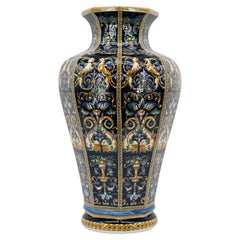
Tall Baluster Ceramic Vase by Faïencerie de Gien, France, 1970s – Hand-Painted Majolica A tall and impressive baluster-form ceramic vase by the celebrated Faïencerie de Gien, France...
Category

1970s French Vintage Renaissance Furniture

Materials

Ceramic

Ferdinando Vichi Marble Sculpture Sitting Woman On Pedestal
Located in Kastrup, DK
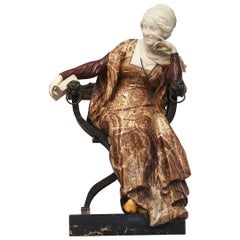
"Ferdinando Vichi", Florence 1875-1945. Romantic figure of sitting woman. Made in marble, sitting on a chair made of bronze, original pedestal of green, Italian marble. Sign. Vichi. Ca. in 1900. (In two pieces) Ferdinando Vichi (1875-1945) was a central figure in the production of Florentine sculpture...
Category

Early 20th Century Italian Renaissance Furniture

Materials

Marble, Bronze

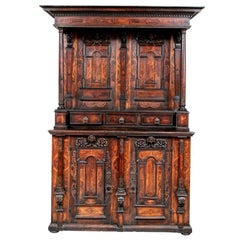
Notable circa 17th Century Carved Walnut Two-Tiered Cabinet in Renaissance Style
Located in Bridgeport, CT
A large and impressive 17th century European cabinet. Made in two parts, both with elaborate carved decoration and burled panels and details. The upper cabinet with heavy overhanging...
Category

17th Century European Antique Renaissance Furniture

Materials

Wood

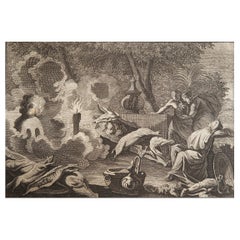
Original Antique Print after Jan Luyken, Amsterdam, Genesis XV, 1724
Located in St Annes, Lancashire
Wonderful copper-plate engraving after Jan Luyken Published by Marten Schagen, Amsterdam. 1724 Text on verso The measurement given is the paper size.
Category

1720s Dutch Antique Renaissance Furniture

Materials

Paper

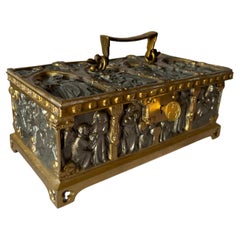
European Renaissance Style Jewelry Box Steel and Golden Steel Key Blue Velvet
Located in Miami, FL
Middle age Gothic European Renaissance style for the jewelry box in steel with golden parts. We recognize middle age figures all around and on the top of the box and the renaissance architectural...
Category

1960s French Vintage Renaissance Furniture

Materials

Steel

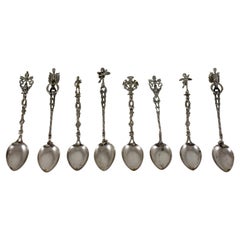
Italian 800 Silver Renaissance Style Figural Demitasse Spoons, Set of 8
Located in Philadelphia, PA
A set of eight silver demitasse figural spoons, each terminating in a symbol associated with Italy, in the Renaissance style, circa 1960s. The chased handles end with a figural re...
Category

Mid-20th Century Italian Renaissance Furniture

Materials

Sterling Silver

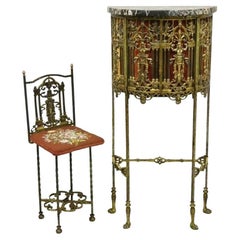
Oscar Bach Attributed Figural Bronze Marble Top Telephone Hall Stand with Chair
Located in Philadelphia, PA
Antique Oscar Bach Attributed Figural Bronze Marble Top Telephone Hall Stand with Chair. Item features an ornate figural bronze telephone cabinet stand, marble top, small chair with needlepoint seat...
Category

Late 19th Century Unknown Antique Renaissance Furniture

Materials

Marble, Bronze

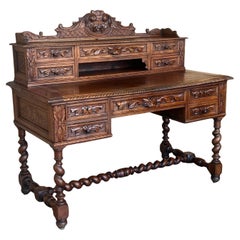
19th Century Spanish Baroque Style Oak Library Table or Desk
Located in Miami, FL
Handsome oak library piece that can be used as a desk or Work table. Made of oak having carved gadrooned edges. A stretcher made of iron. Carved on all sides and five drawers ox bow ...
Category

Early 19th Century Spanish Antique Renaissance Furniture

Materials

Oak

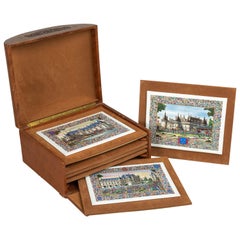
French Chateaux Porcelain Plaques, Box, Set of Six
Located in Winter Park, FL
A suite of six porcelain plaques by French artist and illustrator Jean Gradassi (1907-1989) entitled "Vie, Coutumes & Moeurs dans les Châteaux de France 1400 à 1650" (Life, Customs a...
Category

20th Century French Renaissance Furniture

Materials

Leather, Porcelain

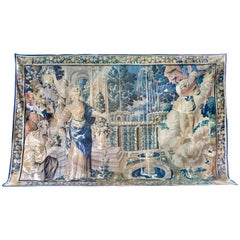
Antique 17th Century Flemish Mythological Tapestry Mercury Janus Sabine Women
Located in New York, NY
A museum quality piece, this is an exquisite example of a 17th century antique Flemish mythological tapestry depicting Mercury, Janus, and the Sabine Women...
Category

17th Century Belgian Antique Renaissance Furniture

Materials

Tapestry, Wool

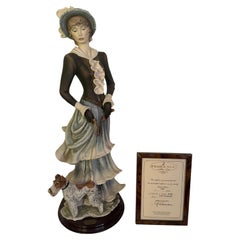
Vintage Giuseppe Armani figurines, limited edition made in Italy with certifica
Located in Birmingham, AL
A genuine original Armani Figurine of a woman with a dog , very detailed sculpture, which G. Armani is famous for , it is made in Florence Italy , l...
Category

1970s Vintage Renaissance Furniture

Materials

Alabaster

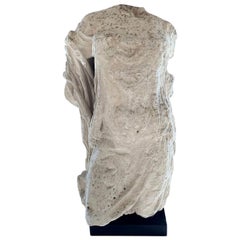
16th Century Stone Classical Roman Style Torso
Located in Vosselaar, BE
A wonderful 16th century draped female torso in classical style. Made in France under Italian Renaissance influence this female torso is finely sculpted with great detail to the stol...
Category

16th Century French Antique Renaissance Furniture

Materials

Sandstone

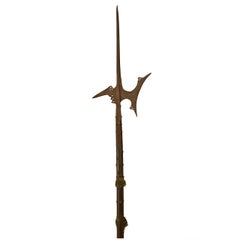
English Renaissance Style Wood and Iron Halberd
Located in Queens, NY
English Renaissance-style halberd spear with simple wooden shaft and 34-inch iron ax top blade with tassels.
Category

20th Century English Renaissance Furniture

Materials

Iron

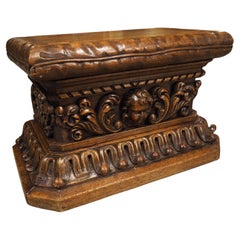
17th Century Oak Carved Socle Pedestal from Northern Italy
Located in Dallas, TX
The product of an immensely talented northern Italian woodworker, this beautiful oak socle pedestal dates to the 1600s. Intricate carvings in the style of the Renaissance embellish t...
Category

17th Century Italian Antique Renaissance Furniture

Materials

Wood, Oak

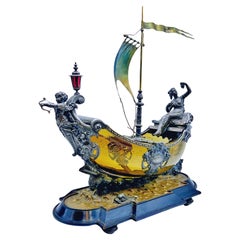
c.1880s ANTIQUE NEO-RENAISSANCE IMPRESSIVE FIGURAL NEF, AUSTRIA
Located in Skien, NO
**Magnificent Late 19th-Century Neo-Renaissance Figural Nef, ca. 1880s-1890s** This exquisitely crafted table vessel embodies the grandeur of Renaissance-inspired artistry, reinte...
Category

Late 19th Century Austrian Antique Renaissance Furniture

Materials

Metal, Silver Plate

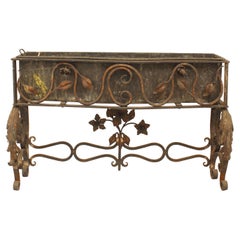
Italian Renaissance Wrought Iron Fernery
Located in Queens, NY
Italian Renaissance-style (19/20th Century) rectangular shaped wrought iron low fernery with floral and scroll design.     
Category

19th Century Antique Renaissance Furniture

Materials

Iron, Wrought Iron

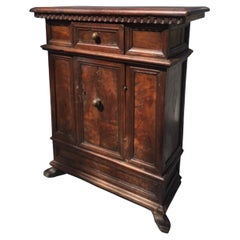
16th Century Period Renaissance Tuscan Walnut Credenzino
Located in Vero Beach, FL
16th Century Period Renaissance Tuscan Walnut Credenzino Italian 16th/17th century Renaissance walnut small Credenza with a rectangular top above a single drawer centered over a s...
Category

16th Century Italian Antique Renaissance Furniture

Materials

Walnut

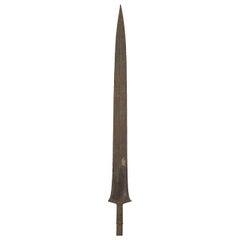
English Renaissance Style Wood and Iron Spear
Located in Queens, NY
English Renaissance-style spear with a wooden shaft and simple 29-inch iron blade.
Category

20th Century English Renaissance Furniture

Materials

Iron

17th Century Italian Florentine Walnut Side Cabinet, Circa 1650
Located in San Francisco, CA
An extraordinary Renaissance Period walnut small side cabinet with fruitwood inlay detail. Of museum quality, in remarkable original condition (has not been reconstructed in any way)...
Category

17th Century Italian Antique Renaissance Furniture

Materials

Fruitwood, Walnut

Renaissance Style Vitrine Cabinet
Located in Los Angeles, CA
This Renaissance style vitrine cabinet is a stunningly beautiful masterpiece in white oak with superb carvings and detail. Note the fourteen carved figures, lion's heads and other su...
Category

19th Century Italian Antique Renaissance Furniture

Materials

Oak

Renaissance Style Vitrine Cabinet
$22,500 Sale Price
50% Off
Antique portuguese armchair, late 18th / early 19th century
Located in Marinha Grande, PT
Spectacular portuguese armchair in carved wood. Late 18th / early 19th century. Solid wooden structure and beautiful carved with lots of details. The original fabric is torn on the s...
Category

Early 19th Century Portuguese Antique Renaissance Furniture

Materials

Wood

Renaissance furniture for sale on 1stDibs.

Find a broad range of unique Renaissance furniture for sale on 1stDibs. Many of these items were first offered in the 21st Century and Contemporary, but contemporary artisans have continued to produce works inspired by this style. If you’re looking to add vintage furniture created in this style to your space, the works available on 1stDibs include case pieces and storage cabinets, decorative objects, wall decorations and other home furnishings, frequently crafted with wood, walnut and other materials. If you’re shopping for used Renaissance furniture made in a specific country, there are Europe, Italy, and France pieces for sale on 1stDibs. While there are many designers and brands associated with original furniture, popular names associated with this style include Europa Antiques, Sinke Van Tongeren, Albrecht Dürer, and Castelli. It’s true that these talented designers have at times inspired knockoffs, but our experienced specialists have partnered with only top vetted sellers to offer authentic pieces that come with a buyer protection guarantee. Prices for furniture differ depending upon multiple factors, including designer, materials, construction methods, condition and provenance. On 1stDibs, the price for these items starts at $35 and tops out at $3,217,683 while the average work can sell for $6,828.

Still Thinking About These?

All Recently Viewed