Renaissance Furniture

RENAISSANCE STYLE

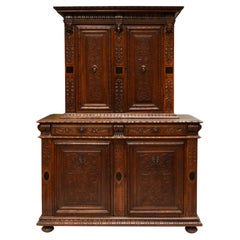
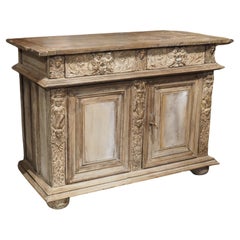
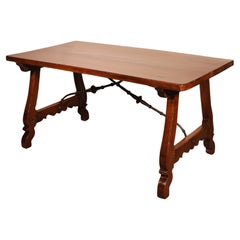
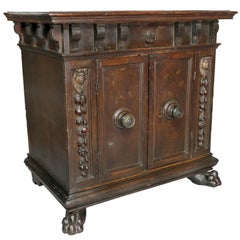
Spanning an era of cultural rebirth in Europe that harkened back to antiquity, the Renaissance was a time of change in design. From the late 1400s to the early 1600s, Rome, Venice and Florence emerged as artistic centers through the expansion of global trade and a humanist belief in the arts being central to society. Antique Renaissance furniture was ornately carved from sturdy woods like walnut, its details standing out against the tapestries and stained glass adorning the walls.

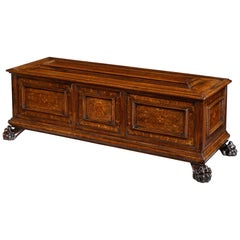
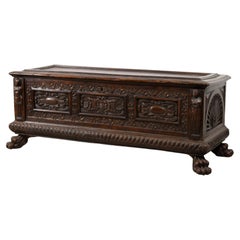
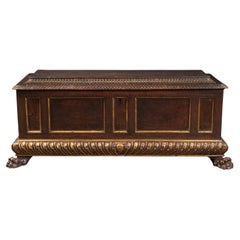
Renaissance chests, which were frequently commissioned for marriages, were often decorated with gilding or painted elements. Those that were known as cassoni were crafted in shapes based on classical sarcophagi. As opposed to the medieval era, when furniture was pared down to the necessities, a wide range of Renaissance chairs, tables and cabinets were created for the home, and the designs regularly referenced ancient Rome.

Large torchères of the Renaissance era that were used as floor lamps were inspired by classical candelabras, while marble surfaces evoked frescoes. The inlaid boxes being imported from the Middle East informed the intarsia technique, which involved varying hues of wood in mosaic-like patterns, such as those by architect Giuliano da Maiano in the Florence Cathedral.

Tapestry-woven cushion covers accented the variety of Renaissance seating — from conversation to study chairs — while bookcases for secular use reflected the migration of culture and knowledge from the church into the home. The aesthetics of the Italian Renaissance later spread to France through the publishing of work by renowned designers, including Hugues Sambin and Jacques Androuet du Cerceau. Centuries later, the 19th-century Renaissance Revival would see a return to this influential style.

Find a collection of antique Renaissance case pieces, decorative objects and other furniture on 1stDibs.

to
117
560
281
859
3,726
3,051
1,583
1,525
1,387
1,034
306
246
245
232
101
65
56
35
30
12
11
9
851
644
226
220
116
118
26
9
15
12
6
15
11
8
24
39
547
208
204
85
67
826
337
126
104
60
859
859
859
23
7
1
1
1
Style: Renaissance
Period: 18th Century and Earlier
16th Century Oil Painting of Emperor Frederic III by School of Hans Burgkmair
Located in London, GB
16th Century Oil Painting of Holy Roman Emperor Frederic III, Antique Religious Oil Painting, Antique Royal King Oil Painting, Hans Burgkmair the older. 16th Century Oil Painting on board of the Holy Roman Emperor Frederic III by circle or school of Hans Burgkmair the older (1473 - 1531). Portrait of the Holy Roman Emperor Frederic III. (1415 – 1493). Oil on wooden panel. Described top right. In later attractive European gilt frame with black & gilt inner decoration, circa 18th Century. Hans Burgkmair was a German woodcut...
Category

16th Century German Antique Renaissance Furniture

Materials

Wood, Paint

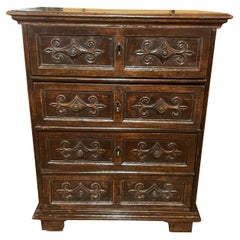
Small Italian Walnut Chest Of Drawers-17th Century
Located in Brussels, Brussels
lovely little chest of drawers in walnut from the Italian Renaissance - 17th century Very beautiful chest of drawers made up of 4 drawers. They each have their original locks which ...
Category

17th Century Italian Antique Renaissance Furniture

Materials

Walnut

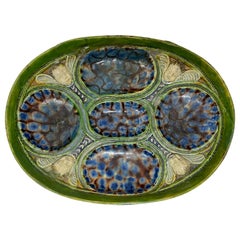
Oval Dish with Winged Putti, After Bernard Palissy, French, 17th Century
By Bernard Palissy
Located in Miami Beach, FL
French glazed earthenware bowl in the manner of Bernard Palissy. Bernard Palissy (1510-1590) was a French potter who created extravagant glazes on his rustic ceramics...
Category

Mid-17th Century French Antique Renaissance Furniture

Materials

Earthenware

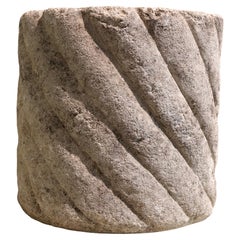
17th century twisted column
Located in Bruxelles, BE
Twisted Column Italy, 17th Century H 22 cm x diameter 21,5 cm central hole diameter : 9,2 cm This sculpted stone, dating from the 17th century, is a fragment of a twisted or helical...
Category

17th Century Italian Antique Renaissance Furniture

Materials

Stone

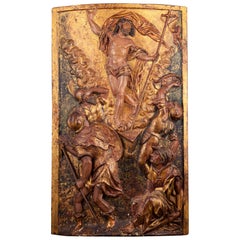
“Ressurrection”, Polychromed Wood, Spanish School, 16th Century
Located in Madrid, ES
The relief was probably a door of the Sagrario. The piece follows a customary decoration in the tabernacles of the Renaissance and the Baroque. Compare, for example, with the sevente...
Category

16th Century Spanish Antique Renaissance Furniture

Materials

Other

Cassone Marriage Chest Italian Marquetry Coat of Arms Gilded Renaissance L73.5"
Located in BUNGAY, SUFFOLK
A late-16th Century, Museum Quality, Italian Walnut & Fruitwood Marquetry Marriage Chest with a Coat of Arms & Retaining Traces of the Original Gilded Decoration - Exceptionally rar...
Category

16th Century Italian Antique Renaissance Furniture

Materials

Fruitwood, Walnut

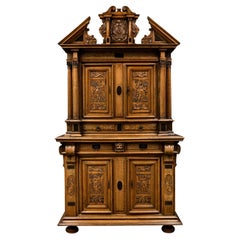
Renaissance Cabinet form Lyon France
Located in Saint-Ouen, FR
Condition : Partly dating from the Renaissance. The backs and the drawer’s insides have been re-done. Historical background The 16th century is a prosperous period for Lyon...
Category

16th Century French Antique Renaissance Furniture

Materials

Walnut

Spanish School Early 17th Century Oil Painting of Christ and the Virgin Mary
Located in CA, CA
An early 17th century painting in oil on canvas from the Spanish School depicting the Lamentation of Christ. In this moving depiction of the Lamentation Christ...
Category

Early 17th Century Spanish Antique Renaissance Furniture

Materials

Paint

17th Century French Renaissance Buffet with Light Parcel Paint Finish
Located in Dallas, TX
Unlike their Italian counterparts who favored painted and inlaid motifs, French ebenistes during the Renaissance utilized elaborate carvings to embellish their furniture. A fantastic...
Category

17th Century French Antique Renaissance Furniture

Materials

Wood, Paint

Renaissance Wellhead Hand Carved Marble Container Planter Basin Water Fountain
Located in West Hollywood, CA
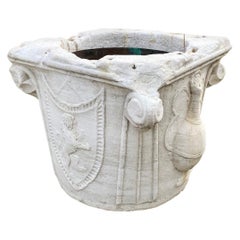
Renaissance Wellhead Hand Carved Marble Container Planter Basin Water Fountain . A rare and impressive Historic Italian 15th century Renaissance hand carved marble well head square shape with scrolls to the corners. Decorated with 3-dimensional vessels and armorial with a rampant lion with raised forelegs as if to strike and ready for battle. To be used as an interior planter stone container, focal point, water feature fountain...
Category

15th Century and Earlier Italian Antique Renaissance Furniture

Materials

Stone, Marble

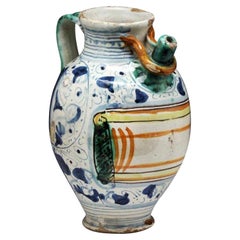
Italian 18th C. Majolica Wet Drug or Syrup Jar
Located in Bradenton, FL
A beautifully decorated 18th century Italian Majolica faience ‘wet’ or syrup albarello/drug jar. Blue and white having a front reserve, blue and white scrolls to body. Beautifully de...
Category

18th Century Italian Antique Renaissance Furniture

Materials

Pottery

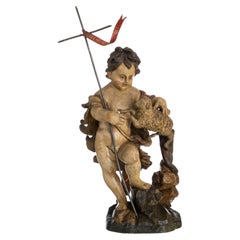
Saint John the Baptist Sculpture, 18th Century
Located in Madrid, ES
Saint John the Baptist 18th century Portuguese sculpture from the 18th century. in polychrome wood. The figure is represented standing with the lamb. Small flaws. Measure: ...
Category

18th Century Portuguese Antique Renaissance Furniture

Materials

Wood

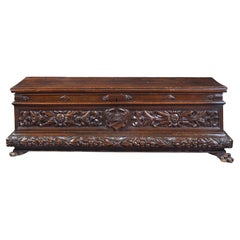
Italian Renaissance Cassone with the Coat of Arms of the Bonfanti Family
Located in Saint-Ouen, FR
This Italian walnut chest called « cassone » is shaped as an antic sarcophagus. The beautiful patina and the plain lid bring to the fore the facade richly ornated with vegetal motifs...
Category

16th Century Italian Antique Renaissance Furniture

Materials

Walnut

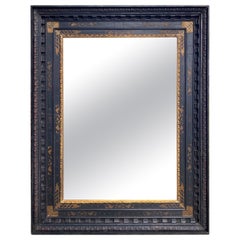
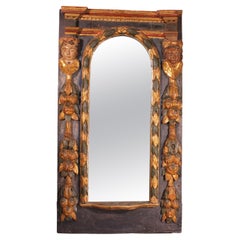
Large French 16th Century Renaissance Painted Framed Mirror
Located in Hopewell, NJ
Large super early French Renaissance painted and gilt carved framed mirror. Very large architecturally framed painted and carved wall mirror with stylized gilt carved and black paint...
Category

16th Century Dutch Antique Renaissance Furniture

Materials

Mirror, Wood

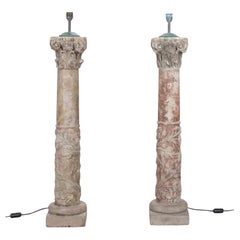
Pair of Late Renaissanace Period Column Lamps
Located in Gloucestershire, GB
Pair of large late Renaissance period Italian stone columns converted into floor lamps.
Category

18th Century Italian Antique Renaissance Furniture

Materials

Stone

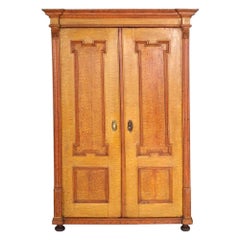
Antique Original Tirol Wien Wardrobe Cupboard Massive Wood Laquered Faux Wood
Located in Vigonza, Padua
Mid-18th century Renaissance wardrobe cupboard in massive wood laquered faux wood; with columns and hand-carved capitals. Wardrobe restored leaving the signs of aging in precious la...
Category

Mid-18th Century Austrian Antique Renaissance Furniture

Materials

Wood

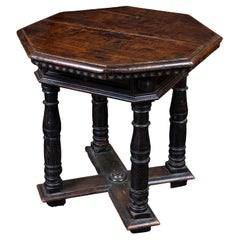
An Italian Walnut Octagonal Library Table, 17th Century
Located in ARMADALE, VIC
An Italian Walnut Octagonal Library Table, 17th Century A small Italian walnut library table with moulded octagonal top and hollow rounded dentil cornice over a panelled square frie...
Category

17th Century Italian Antique Renaissance Furniture

Materials

Walnut

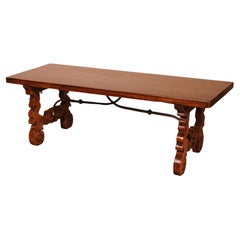
Spanish Walnut Coffee Table - 17th Century
Located in Brussels, Brussels
Lovely Spanish Renaissance walnut coffee table. Unusual coffee table with a beautiful 17th century walnut top in one piece with a superb flame and a beautiful thickness and a magnifi...
Category

17th Century Spanish Antique Renaissance Furniture

Materials

Walnut

Alexander Mair Renaissance Hand-Colored Engravings of Astronomy Star Charts
Located in Queens, NY
Sst of 20 Renaissance (17th century) engraved, hand-colored etchings for Johann Bayer's book 'Uranometria', a star atlas, in wooden frames with white mat....
Category

17th Century Antique Renaissance Furniture

Materials

Wood, Paper

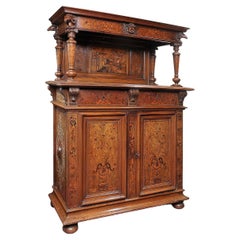
Rare Renaissance Dresser with Marquetry and Pastiglia, from Alsace France
Located in Saint-Ouen, FR
This sideboard, with rich marquetry decoration, consists of two parts. The decorated upper body allows for the display of fine silverware. Superb carve...
Category

Early 17th Century French Antique Renaissance Furniture

Materials

Walnut

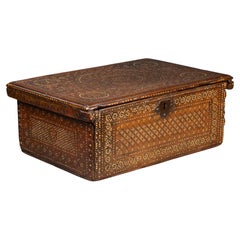
Hispano-Moresque Mudéjar Bone-Inlaid Walnut Chest
 - Spain, 16th century
Located in Bruxelles, BE
Hispano-Moresque Mudéjar Bone-Inlaid Walnut Chest
 Spain, 16th–17th century 
Walnut, bone inlay, iron fittings
 44.5 × 30.5 × 18 cm This rectangular walnut chest, richly ornamented ...
Category

16th Century Spanish Antique Renaissance Furniture

Materials

Bone, Walnut

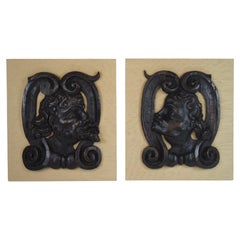
Pair of decorative Renaissance oak wooden reliefs, Europe, late 16th century
Located in Gorssel, GE
Pair of decorative Renaissance oak wooden reliefs depicting two man with curly hair and a moustache. The reliefs were probably part of a piece of furniture or architectural element. ...
Category

16th Century European Antique Renaissance Furniture

Materials

Wood

Wedding trunk / chest with coat of arms - Renaissance - 1600
Located in Beuzevillette, FR
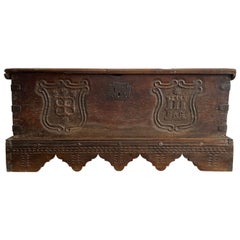
Beautiful Renaissance wedding chest in chestnut from the late 16th or early 17th century. On the front of the chest are carved the coat of arms of the spouses' families: the one on the left represents a cross patté, the one on the right three towers of a castle. The base is cut into crosspieces with small sculpted patterns, the fittings are original with a hasp lock...
Category

Early 17th Century European Antique Renaissance Furniture

Materials

Wood

Chest. Carved wood, metal. Spanish school, 16th century.
Located in Madrid, ES
Chest. Carved wood, metal. Spanish school, 16th century. Rectangular casket with a flat lid decorated on the outside with a series of figurative reliefs in a symmetrical arrangemen...
Category

16th Century Spanish Antique Renaissance Furniture

Materials

Metal, Other

Our Lady with Child Jesus Savior of the World 17th Century
Located in Madrid, ES
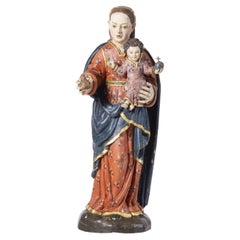
Our lady with child Jesus savior of the world 17th century Portuguese sculpture in polychrome and gilded wood. Repaints. Height: 71 cm very g...
Category

Early 17th Century Portuguese Antique Renaissance Furniture

Materials

Wood

Beautiful Italian Table " à lyre"
Located in Saint-Ouen, FR
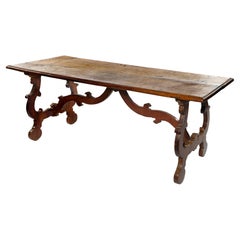
BEAUTIFUL ITALIAN TABLE « À LYRE » ORIGIN : ITALY PERIOD : 17th century Height : 76 cm Length : 197 cm Width : 77 cm Walnut wood This fine example of a highly architectural m...
Category

17th Century Italian Antique Renaissance Furniture

Materials

Wood, Walnut

Fontainbleau Renaissance Cabinet Bearing the Dodieu’s Family Coat-of-arms
Located in Saint-Ouen, FR
Fontainebleau renaissance cabinet bearing the Dodieu’s family coat-of-arms Origin : ILe De France, School of Fontainebleau Period : Second ...
Category

16th Century Antique Renaissance Furniture

Materials

Walnut, Ebony

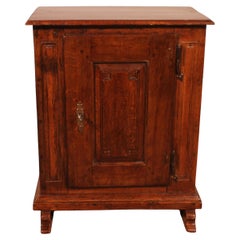
17th Century Oak Beguinage Piece
Located in Brussels, Brussels
Lovely little oak beguinage cabinet from the Renaissance period of the 17th century. Very beautiful piece of furniture which has an interesting dimension which is composed of a small...
Category

17th Century Antique Renaissance Furniture

Materials

Oak

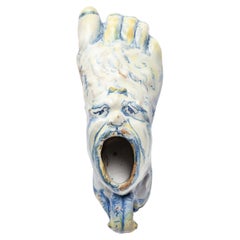
Renaissance Inkwell Calamelli workshop, Italy, Faenza, second half of the 16th
By Virgiliotto Calamelli
Located in Milano, IT
Inkwell Calamelli workshop (attr.). Faenza, second half of the 16th century Height 4.33 in; length 8.07 in; depth 2.95 in (11 cm; 20.5 cm; 7.5 cm) Weight: 0.800 lb (363 g) State of conservation: some chipping to the top of the mask around the mouth. Handle glued, without any restorations; minor chips in some raised areas. This object has the shape of a foot wearing Greek-style footwear, as can be seen in some raised areas. The foot is anatomically modeled with bare toes, while the ankle is partially covered by the footwear. On the heel, there is a small circular handle to support the object. The mouth of the container is shaped like a mask. The interior, completely enameled, suggests that the piece was intended to be used as an inkwell or to contain some other liquid. The base, however, is not enamelled. The painted decoration, scant and brief, consists of rapid cobalt blue shading between the toes of the foot, with more precise emphasis on the nails. It is accompanied by yellow citrine accents to enhance the forms. The mask is painted with the tip of the brush, to accentuate the tense nature of the eyes and to accentuate their outline. Thin strokes of yellow-orange line the interior of the mouth. Since the Renaissance, this decoration has been referred to as "compendiaria" and it characterizes the period of production extending from the mid-16th century to approximately the middle of the following century. It significantly influenced tastes at the time. It evolved from the polychrome style "istoriato" and transformed into a new style that "summarized" (compendia), or condensed, the ornamentation of the works into a few colors, placing greater prominence on the shapes. It was often inspired by metal specimens. Since the Renaissance, this decoration has been referred to as "compendiaria" and it characterizes the period of production extending from the mid-16th century to approximately the middle of the following century. It significantly influenced tastes at the time. It evolved from the polychrome style "istoriato" and transformed into a new style that "summarized" (compendia), or condensed, the ornamentation of the works into a few colors, placing greater prominence on the shapes. It was often inspired by metal specimens. This artwork finds parallels in similar objects all characterized by this refined style and produced in the city of Faenza and other Italian centers starting from the mid-16th century. The closest comparable example in majolica is a foot acquired by the British Museum in 2011 (inv. 2011, 8008.1). This was previously published by Carmen Ravanelli Guidotti in 1996 and later by Dora Thornton in 2016 during the conference on Renaissance ceramics...
Category

16th Century Italian Antique Renaissance Furniture

Materials

Maiolica

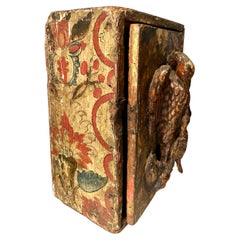
Spanish 16th C. Renaissance Wood Tabernacle, The Pelican in her Piety.
Located in Vero Beach, FL
Spanish 16th Century Renaissance Ecclesiastical Wood Carved Tabernacle, The Pelican in her Piety. Magnificent polychrome and gilded wooden Tabernacle with a masterfully hand carved ...
Category

16th Century Spanish Antique Renaissance Furniture

Materials

Pine, Giltwood, Paint

XVI Century, Italian Renaissance Wood Chest
Located in IT
XVI Century, Italian Renaissance wood chest. This important noble chest of the Tuscan Renaissance was built towards the end of the sixteenth centur...
Category

16th Century Italian Antique Renaissance Furniture

Materials

Nutwood

17th Century Spanish Walnut Chest
Located in Brussels, Brussels
superb Spanish walnut chest from the Spanish Renaissance of the 17th century The chest has its original wrought iron entrance and its original lock Very beautiful molding work on th...
Category

17th Century Spanish Antique Renaissance Furniture

Materials

Walnut

Antique 17th C. English Renaissance Carved Oak and Wrought Iron Bench Banquette
Located in Philadelphia, PA
17th Century English Renaissance Carved Oak and Wrought Iron Bench Banquette. Item features deep relief hand-carved back and legs which terminate at claw like front feet. The base is...
Category

17th Century Unknown Antique Renaissance Furniture

Materials

Wrought Iron

Large 16th Century Tuscan Wedding Chest Called "Cassone"
Located in Saint-Ouen, FR
Large wedding chest in tinted and gilded walnut, the lid animated with a frieze of pearls, the sides with compartments, the belt decorated with gadroons. It rests on four claw feets.
Category

16th Century Italian Antique Renaissance Furniture

Materials

Walnut

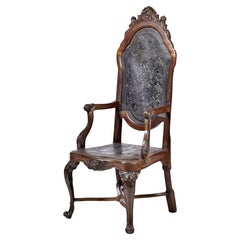
PORTUGUESE D. JOSÉ HIGH-BACKED ARMCHAIR 18th Century
Located in Madrid, ES
D. JOSÉ HIGH-BACKED ARMCHAIR 18th Century Portuguese in sucupira wood with carvings, backrest and seat in embossed leather. Period defects It was never restored. Dim.: 139 x 55 x 50 cm
Category

18th Century Portuguese Antique Renaissance Furniture

Materials

Wood

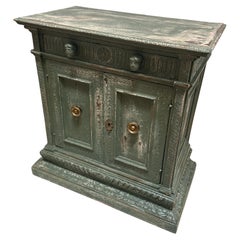
Small 17th Century Italian Renaissance Credenza
Located in Middleburg, VA
Small 17th Century Italian Renaissance Credenza. Made of Circassian Walnut with carved heads as handles to the single drawer over two paneled doors with bronze hardware and heavily c...
Category

17th Century Italian Antique Renaissance Furniture

Materials

Metal, Brass

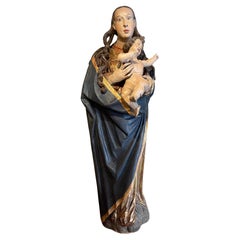
Large Virgin and Child, Tyrol, 16th century
Located in PARIS, FR
Large wooden Madonna and Child, painted and carved in hollow at the back. The theme of the Virgin and Child is the most represented in all Christian art, whereas the infancy of Jesus...
Category

16th Century German Antique Renaissance Furniture

Materials

Wood, Pine

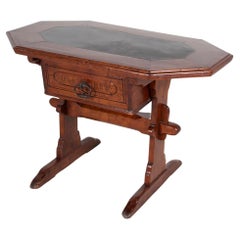
Swiss Bankers / Rent or Merchant Table, 18th C. and Later
Located in San Francisco, CA
A Swiss bankers or rent table, in Elmwood with a superb slate inset into top. Underneath the top is a rather large drawer which slides both ways. This was used to slide money from ...
Category

1750s Swiss Antique Renaissance Furniture

Materials

Slate

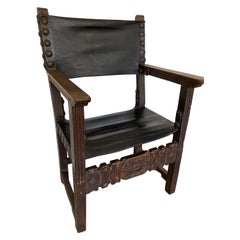
Antique Spanish Renaissance Style Throne Arm Chair
Located in Sheffield, MA
This Spanish walnut throne chair with a large wide seat made circa 1700. Made from well carved but simply done walnut the chair is centered on a leather covered seat and back with large antique nail heads...
Category

17th Century Spanish Antique Renaissance Furniture

Materials

Leather, Wood

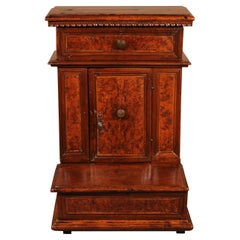
Prie-Dieu or Oratory in Walnut and Burl Walnut, circa 1600
Located in Brussels, Brussels
Elegant oratory or prieu dieu (prayer Kneeler) in walnut and burr walnut from northern Italy circa 1600 Very beautiful Italian Renaissance furniture...
Category

16th Century Italian Antique Renaissance Furniture

Materials

Walnut

Madonna Lactans , Gold Background , Quattrocento Attributed to Sano di Pietro
Located in PARIS, FR
-Madonna Lactans, Gold Background Quattrocento Our painting is on poplar wood, characteristic of Italian Quattrocento works. The gold background is stuccoed and engraved. Our Madonna Lactans is a variation on the theme of the Madonna and Child. In Christian iconography, this subject is depicted at a moment of great intimacy, as the Virgin Mary delicately takes Christ's foot. When cleaning the work, small jets of milk can be seen ... Sano di Pietro...
Category

15th Century and Earlier Italian Antique Renaissance Furniture

Materials

Wood

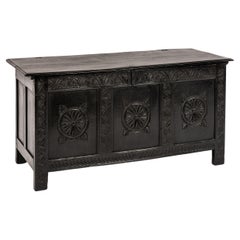
Antique early 18th century Dutch or German Solid blacked oak chest or trunk
Located in Casteren, NL
This is a blackened oak chest with paneled sides and richly carved geometric decoration across the front. The piece was crafted in Northern Europe—likely the Low Countries or the Wes...
Category

Early 18th Century Dutch Antique Renaissance Furniture

Materials

Oak

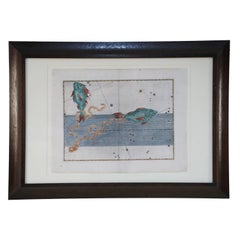
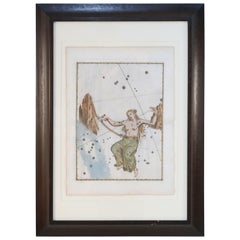
Set of 20 Renaissance Hand-Colored Engravings of Astronomy Star Charts
Located in Queens, NY
Set of 20 Renaissance (17th Century) engraved, hand-colored etchings for Johann Bayer's book 'Uranometria', a star atlas, in wooden frames with white mat....
Category

17th Century Antique Renaissance Furniture

Materials

Paper

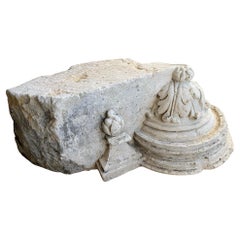
Hand Carved Stone Capital Base Side Coffee Table Garden Pedestal Antique element
Located in West Hollywood, CA
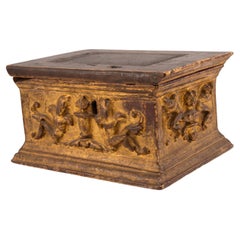
Hand Carved Stone Capital Base Side Coffee Table Garden Pedestal Antique element . LARGE and Very rare Renaissance hand carved capital of the 16th century corner carved limestone Cha...
Category

16th Century French Antique Renaissance Furniture

Materials

Stone, Limestone

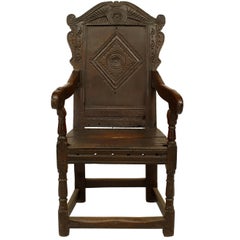
English Renaissance Wainscot Arm Chair
Located in Queens, NY
English Renaissance (17th Cent) Wainscot style oak arm chair with diamond designed carved back. (rePairs to back)
Category

17th Century British Antique Renaissance Furniture

Materials

Oak

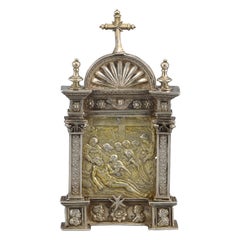
Silver Pax O Portapaz, Spain, 16th Century
Located in Madrid, ES
Portapaz. Silver in its color and gilded. Century XVI. Portapaz made of silver that has a handle (decorated with delicate plant motifs similar to those of the pilasters) and a female and a male bust at the bottom, as well as other architectural elements on the back, and, on the front, an architectural composition classicist basement (with busts flanking a flower and a cross), two pilasters (vegetal decoration and capital recalling the composite order) with entablature (flowers flanking an angel's head; moldings), and a semicircular arch finish with elements veined in relief under cross and flanked by two architectural motifs in the upper part. This composition frames and enhances a gilt silver relief where you can see the Lament or Cry over the Body of Christ, with the Virgin holding the head of Jesus, Saint John at her side, the Magdalene and other characters, a cross following the group and a landscape background with houses and plant elements. This architectural structure mentioned is similar to the one present in other 16th century portapaces, such as that of the Magdalena de Dos Hermanas parish (Hernando de Ballesteros el Mozo, around 1575); or that of the Galaroza parish (same author and date); or that of the portapaz of San Miguel de Jerez de los Caballeros (in some details); etc. As for the relief, it is possible to clearly see a strong Italian influence, and the similarity between it and important pieces such as the Portapaz known as “de Cisneros by Juan de Burgos (1493-1497; MuseoCatedralicio de Alcalá de Henares), as well as in paintings and reliefs. Also noteworthy are both the male and female busts in the lower area and the Maltese cross (or Saint John's) that appears in this area. This symbol was used since the 12th century as an insignia by the Knights Hospitallers of the Order of Saint John of Jerusalem, also known as the Order of Malta...
Category

16th Century Spanish Antique Renaissance Furniture

Materials

Silver

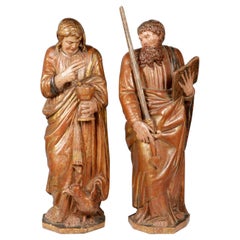
Saints Apostles John and Paul, Wood, Castillian School, 16th Century
Located in Madrid, ES
Pair of polychrome wood sculptures. "San Juan and San Pablo". Castilian school, 16th century. Both male figures have been represented standing, with their main iconographic attrib...
Category

16th Century Spanish Antique Renaissance Furniture

Materials

Other

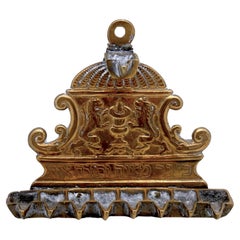
An Italian Brass Hanukkah Lamp, 18th Century
Located in New York, NY
An Italian Brass cast bench Hanukkah lamp made in the Renaissance era of the 18th century. A pair of rampant lions leaning on a goblet-shaped burning incense alter is reminiscent of...
Category

18th Century Italian Antique Renaissance Furniture

Materials

Brass

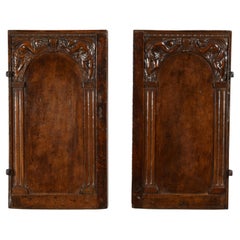
16th Century, Pair of Italian Small Carved Walnut Doors
Located in IT
Pair of small carved walnut doors, 16th century, central Italy This pair of small doors was made in the sixteenth century, in central Italy, in carved walnut. The decoration provides...
Category

16th Century Italian Antique Renaissance Furniture

Materials

Walnut

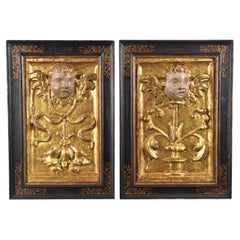
Pair of Reliefs, Grotesque or Candelieri, Wood, 16th Century
Located in Madrid, ES
Pair of reliefs; grutescos or candelieri. Carved, polychrome and golden wood. 16th century, and later Pair of reliefs made of hand carved wood, gilded ...
Category

16th Century European Antique Renaissance Furniture

Materials

Wool

16th Century Oil Painting , Four Doctors of the Church, manner of Willem Key
Located in Los Angeles, CA
Manner of Willem Key (Dutch, 1515 - 1568) Four Doctors of the Church (The Annunciation) Oil on canvas, Frame included 49.5" height x 41.5" width with frame: 60" height x 51" width
Category

16th Century Dutch Antique Renaissance Furniture

Materials

Canvas

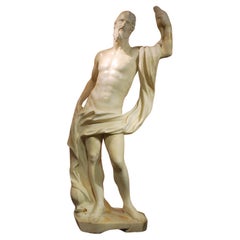
A 16th century carved marble sculpture of poseidon
Located in London, GB
This fine and imposing sculpture is an excellent example of 16th century Italian craftsmanship. The figure is stood on a raised, shaped rectangular base with a carved "dolphin" at th...
Category

16th Century Italian Antique Renaissance Furniture

Materials

Marble

Italian Antique 17th Century Hand carved wood Candelabra on a Renaissance base.
Located in Encinitas, CA
An Italian Antique 17th Century "Mecca" gilding Wood Hand carved Bear "Orso" Candelabra on Renaissance base. The base and the bear are gilded with Mecca, a silver gilt technique that...
Category

Late 17th Century Italian Antique Renaissance Furniture

Materials

Giltwood

Large 17th Century Spanish Mirror In Polychrome Wood
Located in Brussels, Brussels
Superb and rare 17th century Spanish mirror in polychrome wood This is a niche that has been transformed into a mirror Very beautiful carv...
Category

17th Century Spanish Antique Renaissance Furniture

Materials

Fruitwood

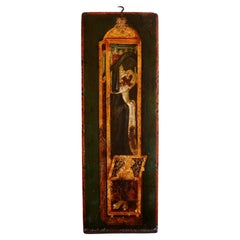
Bolognese School of the 16th Century - Mummy of Saint Catherine of Bologna
Located in Bruxelles, BE
Bolognese School of the 16th Century Mummy of Saint Catherine of Bologna
Oil on Panel 20,5 x 7 x 0,8 cm This rare painting depicts Saint Catherine of Bologna as a mummy, housed in a ...
Category

16th Century Italian Antique Renaissance Furniture

Materials

Wood, Giltwood

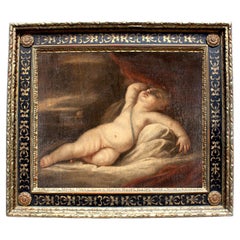
Manner Titian, Oil on Canvas Sleeping Cupid
Located in Los Angeles, CA
Manner of Titian (Tiziano Vecelli - Italian, 1485-1576) An Oil on Canvas "Sleeping Cupid" within a gilt and black decorated gesso frame. A label on reve...
Category

17th Century Italian Antique Renaissance Furniture

Materials

Gesso, Canvas, Giltwood

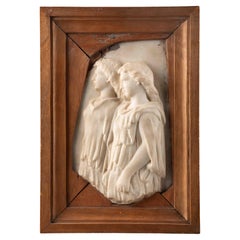
Renaissance relief - Italy, probably Rome, 16th century
Located in Bruxelles, BE
Renaissance relief depicting two female figures dressed in a chiton Italy, probably Rome, 16th century Marble, wooden frame (provenance label on the back) 28 x 20 x 5 cm This beau...
Category

16th Century Italian Antique Renaissance Furniture

Materials

Marble

Italian Ancient Marble Sculpture Fountain, Late 16th Century
Located in Milano, IT
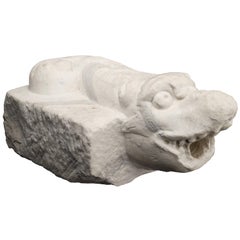
Sea monster Carrara marble mouth fountain Italy, late 16th century It measures 13.8 x 31.5 x 18.9 in (35 x 80 x 48 cm) State of conservation: some small evident gaps and widespread signs of wear due to outdoor exposure. The gray marks crossing it do not come from restoration, but are rather the natural veins of the marble. This work has some morphological characteristics typically associated with the iconography of the sea monster: an elongated muzzle, sharp teeth, protruding eyes, elongated ears, and a coiled serpent's tail. An in-depth series of studies on artistic depictions of the sea monster attempted to verify how this symbol evolved in antiquity in the European and Mediterranean contexts and how it gradually changed its image and function over time. The iconography itself is mutable and imaginative and its history is rich with cultural and artistic exchange, as well as the overlapping of ideas. This occurred so much that it is difficult to accurately pinpoint the "types" that satisfactorily represent its various developments. However, we can try to summarize the main figures, starting from the biblical Leviathan and the marine creature that swallowed Jonah (in the Christian version, this figure was to become a whale or a "big fish", the “ketos mega”, translation of the Hebrew “dag gadol”). Other specimens ranged from the dragons mentioned in the Iliad (which were winged and had legs) to "ketos” (also from Greek mythology), the terrifying being from whose Latinized name (“cetus”) derives the word "cetacean". See J. Boardman, “Very Like a Whale” - Classical Sea Monsters, in Monsters and Demons in the Ancient and Medieval Worlds, in Papers presented in Honor of Edith Porada, Mainz am Rhein 1987, pp. 73-84). In Italy the monster underwent yet further variations: it can be found in Etruscan art on the front of some sarcophagi representing the companion of souls, while among the Romans we find the “Pistrice” (cited by Plinio in Naturalis Historia PLIN., Nat., II 9, 8 and by Virgilio in Eneide: VERG., Aen., III, 427), which appeared in the shape of a stylized hippocampus or a very large monstrous cetacean and evolved into a hideous being with a dragon's head and long webbed fins. During the Middle Ages, the sea monster was the object of new transformations: at this time, it is often winged, the head is stretched like a crocodile, the front legs are often very sharp fins - sometimes real paws - until the image merges with dragons, the typical figures of medieval visionary spirituality widely found throughout Europe (on this topic and much more, see: Baltrušaitis, J., Il Medioevo fantastico. Antichità ed esotismi nell’arte gotica, Gli Adelphi 1997). In Italy during the 15th and 16th centuries, the revival of classicism - representative of the humanistic and Renaissance periods - led to a different reading of these "creatures". Indeed, the sea monster was also to find widespread use as an isolated decorative motif, especially in numerous fountains and sculptures where dolphins or sea monsters were used as a characterizing element linked to water (on this theme see: Chet Van Duzer, Sea Monsters on Medieval and Renaissance Maps, London, The British library, 2013). From the morphological point of view, the "sea monsters" of this period are mostly depicted as hybrid figures, in which the body of a mythological or real being (a hippocampus, a sea snake, a dolphin), is joined to a head with a rather indistinct appearance. It was usually characterized by large upright ears, an elongated snout, sharp teeth and globular, protruding eyes; a complex and indefinite figure, both from the symbolic point of view and from that of its genesis. The work we are examining is placed as a cross between the medieval sea serpent and the Renaissance dolphin, with stylistic features which recall the snake as often used in heraldry (such as the "snake" depicted in the coat of arms of the Visconti - the lords and then dukes of Milan between 1277 and 1447 - and which, for some, may be derived from the representations of the “Pistrice” that swallowed Jonah). In the search for sources, Renaissance cartography and in particular woodcuts should not be neglected. See for example the monsters of Olaus Magnus, from the editions of the “Historia de gentibus septentrionalibus” (“History of the peoples of the north”) and the natural histories of Conrad Gesner, Ulisse...
Category

16th Century Italian Antique Renaissance Furniture

Materials

Carrara Marble

17th Century Spanish Walnut Table
Located in Brussels, Brussels
a fine Spanish table in walnut from the 17th century from the Renaissance period Table that can be used as a desk, dining room table or large console which has the great advantage o...
Category

17th Century Spanish Antique Renaissance Furniture

Materials

Walnut

Italian Renaissance Walnut Credenza
Located in Essex, MA
With old finish. Rectangular top with molded edge over a frieze with mounted corbels and a false drawer over a pair of cabinet doors with original handles all flanked by mask and flo...
Category

Mid-17th Century Italian Antique Renaissance Furniture

Materials

Other

Renaissance furniture for sale on 1stDibs.

Find a broad range of unique Renaissance furniture for sale on 1stDibs. Many of these items were first offered in the 21st Century and Contemporary, but contemporary artisans have continued to produce works inspired by this style. If you’re looking to add vintage furniture created in this style to your space, the works available on 1stDibs include case pieces and storage cabinets, decorative objects, wall decorations and other home furnishings, frequently crafted with wood, walnut and other materials. If you’re shopping for used Renaissance furniture made in a specific country, there are Europe, Italy, and France pieces for sale on 1stDibs. While there are many designers and brands associated with original furniture, popular names associated with this style include Europa Antiques, Sinke Van Tongeren, Albrecht Dürer, and Castelli. It’s true that these talented designers have at times inspired knockoffs, but our experienced specialists have partnered with only top vetted sellers to offer authentic pieces that come with a buyer protection guarantee. Prices for furniture differ depending upon multiple factors, including designer, materials, construction methods, condition and provenance. On 1stDibs, the price for these items starts at $35 and tops out at $3,217,683 while the average work can sell for $6,828.