Cloissoné Furniture

to
357
713
274
1,015
15
4
12
11
9
7
7
5
3
2
2
1
1
1
15
566
434
19
225
81
30
32
7
14
5
3
11
8
2
1
5
994
750
224
167
145
895
848
509
335
100
1,034
1,026
1,032
15
13
6
5
3
Technique: Cloissoné
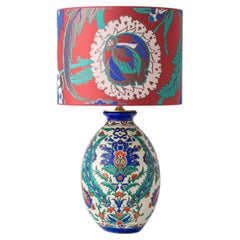
Charles Catteau Boch Frères Keramis Art Deco Lamp with New Pierre Frey Shade
Located in AMSTERDAM, NL
Meticulously handcrafted by Amitābha Studio from an antique Boch Frères Keramis cloisonné ceramic vase (circa 1920), this one-of-a-kind table lamp exemplifies the studio’s approach t...
Category

Early 20th Century Belgian Art Deco Cloissoné Furniture

Materials

Brass

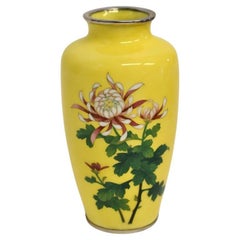
Signed Sato Japanese Cloisonné Vase Imperial Yellow with Chrysanthemum
Located in Somis, CA
A rare non-ginbari Sato cloisonné vase, from showa period, crafted on an imperial yellow Musen-jippo background. The classic form showcases vibrant...
Category

20th Century Japanese Showa Cloissoné Furniture

Materials

Metal, Enamel

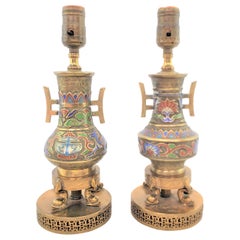
Pair of Antique Japanese Cloisonne Accent or Boudoir Table Lamps
Located in Hamilton, Ontario
This pair of unmatched antique lamps are unsigned, but presumed to have originated from Japan and date to approximately 1920 and done in an Anglo-Japanese style. These small accent o...
Category

Early 20th Century Japanese Anglo-Japanese Cloissoné Furniture

Materials

Brass

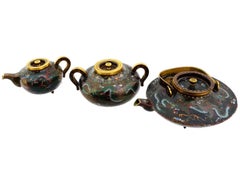
Rare Antique Meiji Japanese Cloisonne Enamel 3 Piece Tea Ceremony Dragon Set
Located in Long Island City, NY
A Japanese covered and footed enamel tea set including three pieces. The set includes a large tea pot, a small tea pot, and a sugar bowl. The wares are adorned with a polychrome enam...
Category

19th Century Japanese Antique Cloissoné Furniture

Materials

Enamel

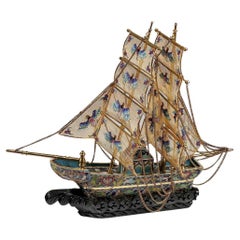
Large Chinese Cloisonné Enamel Filligree and Gilt Boat
Located in Norton, MA
A Large Chinese Cloisonne Enamel Filigree and Gilt Boat with Wood Base The sails with colorful enameled birds, resting on a conforming carved ...
Category

Mid-20th Century Chinese Chinese Export Cloissoné Furniture

Materials

Copper

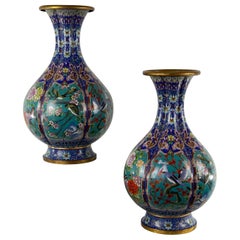
Large Pair of Early 20th-Century Chinese Cloisonné Vases, 1910s
Located in Brescia, Brescia
A striking and monumental pair of cloisonné enamel vases, likely Chinese in origin, dating to the early 20th century (circa 1910s). Standing at 51.5 cm in height with a generous 30 c...
Category

1910s Chinese Chinoiserie Vintage Cloissoné Furniture

Materials

Brass, Metal

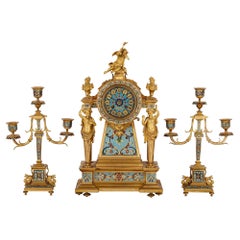
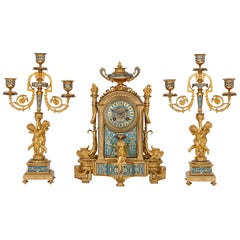
French gilt bronze and enamel three-piece clock set
Located in London, GB
French gilt bronze and enamel three-piece clock set French, late 19th Century Clock: Height 45cm, width 26cm, depth 14.5cm Candelabra: Height 31.5cm, width 21cm, depth 9cm This char...
Category

Late 19th Century French Antique Cloissoné Furniture

Materials

Ormolu, Enamel

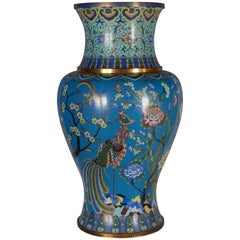
Massive Chinese Cloisonné Vase with Phoenix, Magnolia, Lotus and Chrysanthemums
Located in New York, NY
A massive Chinese blue cloisonné vase or urn depicting a colorful imperial phoenix with gilt bronze wires among birds and butterflies in an imperia...
Category

1920s Chinese Vintage Cloissoné Furniture

Materials

Enamel

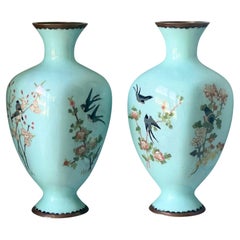
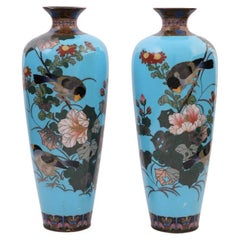
A Fine Pair of Japanese Cloisonné-Enamel Vases with Swallows and Parrots. 19th C
Located in London, GB
A Fine Pair of Japanese Cloisonné-Enamel Vases with Swallows and Parrots Meiji period Each of square shape with rounded shoulders, rising to a slightly waisted neck and flaring mout...
Category

19th Century Japanese Antique Cloissoné Furniture

Materials

Enamel

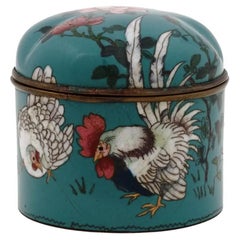
Antique Japanese Cloisonné Meiji Enamel Box with Roosters
Located in Long Island City, NY
An antique Japanese Meiji era covered enamel over brass trinket or jewelry box. Circa: late 19th century to early 20th century. The ware is enameled with a polychrome image of a roos...
Category

Early 20th Century Japanese Meiji Cloissoné Furniture

Materials

Brass, Enamel

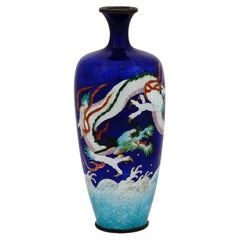
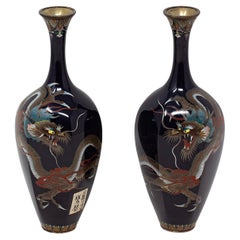
Antique Japanese Ginbari Cloisonne Enamel Dragon Vase
Located in Long Island City, NY
An antique Japanese Meiji period Ginbari enamel vase. The ground of the vase is enameled in blue and cobalt blue shades. The vase is enameled with a polychrome image of a dragon over...
Category

Early 20th Century Japanese Meiji Cloissoné Furniture

Materials

Enamel

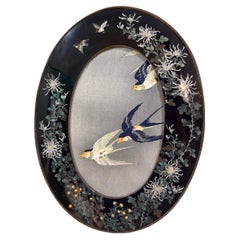
Rare Japanese Cloisonne Enamel Oval Frame with Chrysanthemums, Manner of Hayashi
Located in Long Island City, NY
Rare Japanese Cloisonné Oval Frame with Birds & Chrysanthemums, in the Manner of Hayashi An exceptionally rare Japanese cloisonné enamel picture frame of oval form, worked in the manner of Hayashi Kodenji, dating to the Meiji period. The frame is decorated on a rich black enamel ground with finely executed silver wire chrysanthemums, accompanied by smaller red and purple blossoms at the base, each flower shaded with naturalistic enamels of the highest quality. The interior holds an original Japanese watercolor of three swallows in flight, gracefully rendered in delicate tones of blue, white, and yellow. The watercolor is unsigned and can be replaced at the purchaser’s discretion with a family photograph or another image, though the original work adds to the object’s rarity and charm. Frames of this type are among the rarest forms in Japanese cloisonné production, most surviving examples being vases, dishes, or boxes. The level of detail in the wirework here—the meticulous use of silver wire for the chrysanthemums and the naturalistic rendering of foliage—demonstrates the refined artistry associated with the finest cloisonné masters of the period. This piece is in excellent condition with a small hair line in the black ground see photo. Cloisonné picture frames...
Category

Late 19th Century Japanese Meiji Antique Cloissoné Furniture

Materials

Enamel

Small Chinese Export Cloisonné Lidded Box decorated with peaches, Circa 1930
Located in Lincoln, Lincolnshire
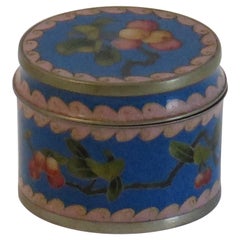
This is a very decorative Chinese Export cloisonné lidded box which we date to the 20th century, Circa 1930. The box has a cylindrical shape, with its original lid and is all beauti...
Category

Mid-20th Century Chinese Chinese Export Cloissoné Furniture

Materials

Bronze

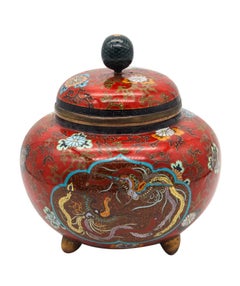
19th Century Cloisonné Enamel Dragon Vase, Meiji Period Japan
Located in London, GB
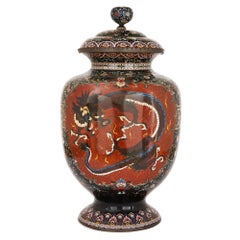
This intricately decorated antique Japanese vase was crafted in the Meiji period (1868-1912). The vase is of circular form and features a waisted base, large, ovoid body and a lid wi...
Category

Late 19th Century Japanese Meiji Antique Cloissoné Furniture

Materials

Enamel

Large Antique Meiji Japanese Cloisonne Enamel Porcelain Totai Vase
Located in Long Island City, NY
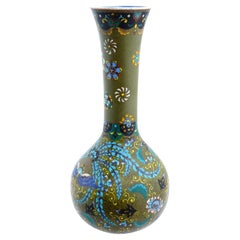
An antique Japanese Meiji period cloisonne enamel porcelain vase, characterized by its exquisite multi colored floral and foliage motifs on a green ground. The use of a vibrant color...
Category

Late 19th Century Japanese Antique Cloissoné Furniture

Materials

Porcelain

Antique Chinese Cloisonne Enameled Brush Pots With Bats
Located in Long Island City, NY
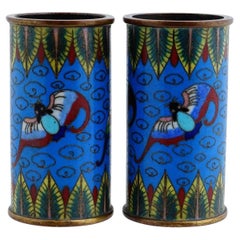
A pair of antique Chinese brush pots. The cylindrical form pots are enameled with bat images made in the cloisonne technique on turquoise gr...
Category

Late 19th Century Chinese Antique Cloissoné Furniture

Materials

Enamel

A Pair of Meiji Era Japanese Cloisonne Enamel Cherry Blossom and Geometric Patte
Located in Long Island City, NY
A pair of antique Japanese copper vases with cloisonne enamel design. Late Meiji period, before 1912. Cylindrical shape with pronounced base and ...
Category

Early 20th Century Japanese Meiji Cloissoné Furniture

Materials

Enamel, Copper

Early 20th Century Antique Chinese Cloisonne Vase
Located in Pomona, CA
This magnificent Chinese Antique Cloisonné Vase is the perfect decor piece. With beautiful floral and bird design, it is a majestically hand cr...
Category

Early 20th Century Chinese Chinese Export Cloissoné Furniture

Materials

Copper

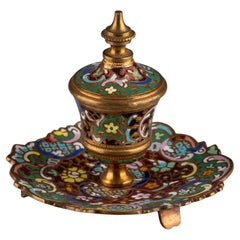
Late 19th Century Cloissoné-Enamel Inkwell, France, circa 1870-1890
Located in Greven, DE
Inkwell with Cloisonné Enamel Origin: France Material: Bronze with polychrome cloisonné enamel Date: Circa 1870–1890 Dimensions: H × W × D: 8 × 8 × 8 cm Description: This small in...
Category

Late 19th Century French Antique Cloissoné Furniture

Materials

Bronze, Enamel

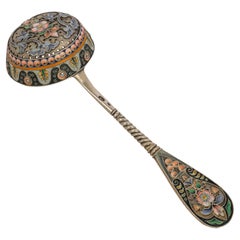
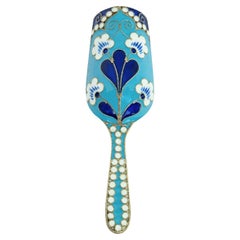
Antique Imperial Russian Sliver Gilt Cloisonné Enamel Tea Strainer Moscow, 1908
Located in Portland, OR
A good antique Russian Imperial silver-gilt cloisonné enamel tea strainer, Moscow, circa 1908. The handle having floral enamel decoration to the front & rear and a spiral stem...
Category

Early 1900s Russian Baltic Antique Cloissoné Furniture

Materials

Silver, Enamel

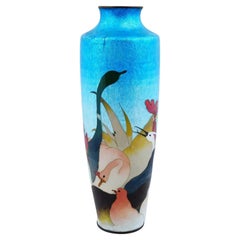
Rare Large Japanese Cloisonne Ginbari And Enamel Vase Cranes And Roosters Blue
Located in Long Island City, NY
A rare large Japanese Ginbari enamel over copper vase. The urn shaped vase is enameled with a polychrome design representing cranes, hens, roosters and other birds made in the Ginbar...
Category

Late 19th Century Japanese Antique Cloissoné Furniture

Materials

Enamel, Copper

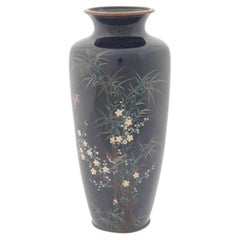
Antique Meiji Japanese Cloisonne Enamel Vase Bamboo and Birds
Located in Long Island City, NY
PLEASE NOTE THIS LISTING IS FOR JUST ONE VASE, NOT TWO.... THE VASE FOR SALE IS THE VASE PICTURED IN THE LISTING. An antique Japanese Meiji period cloisonne vase of a baluster shap...
Category

Late 19th Century Japanese Antique Cloissoné Furniture

Materials

Enamel

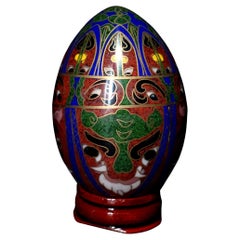
Chinese Cloisonné Enamel Egg "Flowers" with Wood Stand, Early 20 Century #6
Located in Norton, MA
Presenting a beautiful Chinese cloisonné enamel egg depicting the faces of the Chinese traditional opera theme with a wood stand, early 20 century.
Category

Early 20th Century Chinese Chinese Export Cloissoné Furniture

Materials

Copper

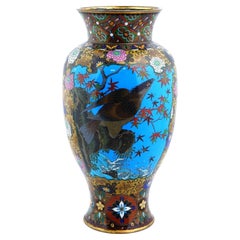
Large Meiji Japanese Cloisonne Enamel Eagle Floral Design Yellow Vase
Located in Long Island City, NY
A Japanese enamel over copper vase. The exterior of the ware is enameled with a polychrome design depicting an eagle seated on a rock over a seascape made in the Cloisonne technique....
Category

19th Century Japanese Antique Cloissoné Furniture

Materials

Enamel, Copper

Hayashi School Cloisonné Vase Pair, Meiji Period with Tomobako
Located in Newark, England
Meiji Period (1868-1912)  From our Japanese collection, we are delighted to present this exceptional pair of Japanese Cloisonné Enamel Vases by the Hayashi School, dating to the Mei...
Category

Early 1900s Japanese Meiji Antique Cloissoné Furniture

Materials

Silver, Enamel

Longwy France Art Deco Cloisonné Enamel Bowl with Daisies, 1930
Located in AMSTERDAM, NL
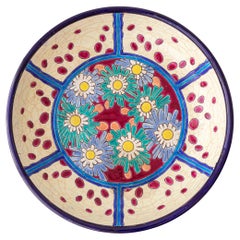
This Longwy Art Deco bowl, handcrafted in France in July 1930, displays the manufactory’s celebrated cloisonné-style enamel work at its peak. The decor...
Category

1930s French Art Deco Vintage Cloissoné Furniture

Materials

Enamel

Japanese Cloisonne Enamel Porcelain Vase W Handles
Located in Long Island City, NY
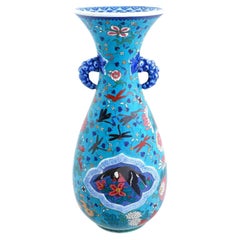
A Japanese enamel on porcelain vase. The vase has a baluster shaped body with a fluted mouth, adorned with a polychrome design representing medallions with blossoming flowers and bir...
Category

Late 19th Century Japanese Antique Cloissoné Furniture

Materials

Enamel

A Japanese Meiji Era Cloisonne Enamel Dragons and Ho Ho Bird Lobed Lidded Jar
Located in Long Island City, NY
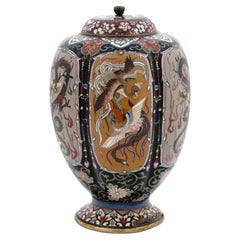
An antique Japanese copper lidded jar with cloisonne enamel design. Late Meiji period, before 1912. Elongated lobulated shape with pronounced base. The piece is richly decorated with...
Category

Late 19th Century Japanese Meiji Antique Cloissoné Furniture

Materials

Enamel, Copper

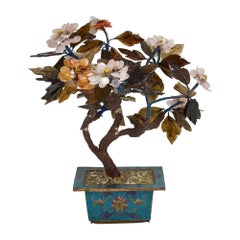
20th Century Chinese Hardstone Flowering Tree in a Cloisonné Planter
Located in London, GB
20th century Chinese hardstone flowering tree in a cloisonné planter Chinese, 20th century Height 42cm, width 33cm, depth 31cm This exquisite 20th-century Chinese hardstone tree is ...
Category

20th Century Chinese Cloissoné Furniture

Materials

Agate, Rock Crystal

Large Pair of Japanese Cloisonné Enamel Vases of Birds Flying Over Cherry Blosso
Located in Long Island City, NY
A pair of large antique Japanese Meiji Era enamel over brass vases attributed to Hayashi Kodenji, Japanese, 1831 to 1915. Circa: 1900s. Unsigned. The baluster form vase is enameled with polychrome images of gold sparrows in blossoming flowers made in the Cloisonne technique. Hayashi Kodenji was a pivotal figure in the history of Cloisonne enamel manufacturer. He was instrumental in the formation and leadership of the Shippo cho enamellers guild, and it is probable that he worked for the Nagoya-based Shippo Kaisha. He exhibited and won prizes at many international exhibitions: Nuremberg 1885 Silver, Paris 1889...
Category

Late 19th Century Japanese Meiji Antique Cloissoné Furniture

Materials

Enamel, Brass

Antique Russian Soviet Era Silver Gilt Cloisonne Enamel Tea Caddy Spoon Moscow
Located in Portland, OR
A good Russian Soviet Era silver gilt & cloisonne enamel tea caddy spoon, 916 silver purity, Moscow. The spoon in excellent condition, having a gold was...
Category

Mid-20th Century Russian Mid-Century Modern Cloissoné Furniture

Materials

Silver, Enamel

Antique French Neoclassical Style Ormolu and Cloisonne Enamel Clock Set
Located in London, GB
This exceptionally detailed clock set consists of a mantel clock and a pair of accompanying vases, which are all crafted in ormolu and extensively decorated in vibrant cloisonné enam...
Category

19th Century French Neoclassical Antique Cloissoné Furniture

Materials

Ormolu, Bronze, Enamel

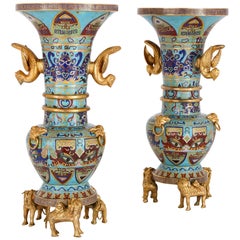
Two Chinese Gilt Bronze Mounted Cloisonné Enamel Vases
Located in London, GB
These cloisonné enamel vases are wonderful pieces of Chinese decorative art. They were crafted in the last decade of the Qing dynasty, which lasted from 1644 to 1911. The vases a...
Category

Early 20th Century Chinese Chinese Export Cloissoné Furniture

Materials

Enamel, Bronze, Ormolu

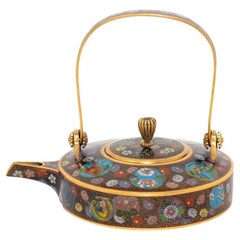
Japanese Meiji Period Cloisonne Enamel Sake Pot
Located in Newark, England
Fine Japanese Meiji period cloisonne enamel Sake pot. The Sake pot of rounded form with with clean edges profusely decorated with blossoming flowers throughout upon a black ground ba...
Category

Late 19th Century Japanese Meiji Antique Cloissoné Furniture

Materials

Metal, Enamel

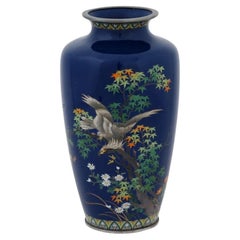
Antique Meiji Japanese Cloisonne Blue Enamel Silver Vase with Eagle Signed Inaba
Located in Long Island City, NY
A rare antique Japanese cloisonné enamel silver mounted and silver wire vase Late Meiji period circa 1895 . Elongated shape with pronounced neck. Cobalt blue ground color. The obvers...
Category

Late 19th Century Japanese Meiji Antique Cloissoné Furniture

Materials

Enamel

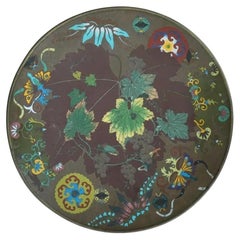
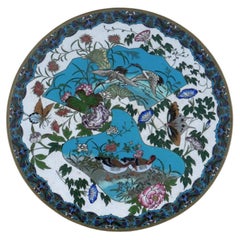
Antique Japanese Cloisonne Charger with Insects and Fall Foliage Plate Goto
Located in Long Island City, NY
A large antique Japanese Meiji period, 1868 to 1912, cloisonne enamel metal charger plate depicting a multicolored picture of vines and grapes with...
Category

Late 19th Century Japanese Meiji Antique Cloissoné Furniture

Materials

Copper, Enamel

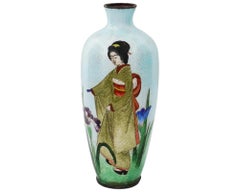
Antique Meiji Japanese Ginbari Cloisonne Enamel Geisha Vase
Located in Long Island City, NY
A large antique Japanese, late Meiji era, Ginbari enamel over copper vase. The urn shaped vase is enameled with a polychrome scene of a Geisha lady in a garden with blossoming flower...
Category

Late 19th Century Japanese Meiji Antique Cloissoné Furniture

Materials

Copper, Enamel

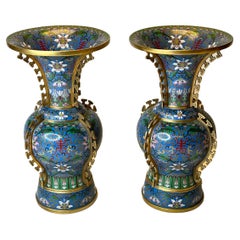
Pair Antique Chinese Blue Cloisonne Vases
Located in New York, NY
Pair Chinese cloisonne enamel vases with floral designs on blue ground and gilt mounts representing stylized dorsal fins of a dragon.
Category

1960s Chinese Qing Vintage Cloissoné Furniture

Materials

Enamel

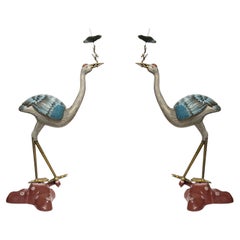
Pair Large Antique Chinese Cloisonne Crane Candle Holders
Located in New York, NY
Pair of very large antique Chinese cloisonne enameled metal candle holders fashioned as standing cranes holding prunus branch and lotus leaf in their mouths. Tops of the bodies remo...
Category

Early 20th Century Chinese Cloissoné Furniture

Materials

Metal, Enamel

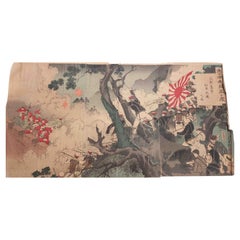
Antique 19th c Woodblock Print by Mizuno Toshikata - Sino Japan Battle_of_Son.
Located in Amsterdam, Noord Holland
A very strong woodblock print Long live the Great Japanese Empire! Our army's victorious attack on Seonghwan, Mizuno Toshikata 1866–1908 or Hurrah and Hurrah Again for the Great E...
Category

19th Century Chinese Meiji Antique Cloissoné Furniture

Materials

Bronze

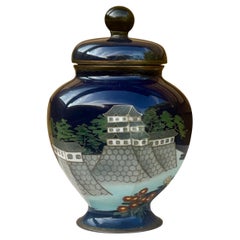
A Fine Japanese Cloisonné-Enamel Vase/Jar with Cover Attributed to Ando
Located in London, GB
A Fine Japanese Cloisonné-Enamel Vase/Jar with Cover Attributed to the Ando Company, Meiji to Taishō period, early 20th century Of baluster form with a domed cover surmounted by a k...
Category

19th Century Japanese Antique Cloissoné Furniture

Materials

Enamel

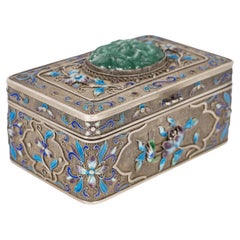
Enamelled and Cloisonné Silver Box, Jade Inlay, China, 19th Century.
Located in Saint-Ouen, FR
Enamelled and cloisonné silver box, jade inlay, China, 19th century. Enamelled and cloisonné silver box, jade inlay, China, 19th century. H: 6cm, W: 11cm, D: 7cm
Category

19th Century Chinese Chinoiserie Antique Cloissoné Furniture

Materials

Silver

Rare Antique Meiji Japanese Cloisonne White Enamel Butterfly Plate Charger GOTO
Located in Long Island City, NY
A high quality antique Japanese Meiji era, 1868 to 1912, decorative brass plate. Attributed to GOTO The exterior of the plate is adorned with polychrome flowers and butterflies on a...
Category

Late 19th Century Japanese Meiji Antique Cloissoné Furniture

Materials

Enamel, Brass

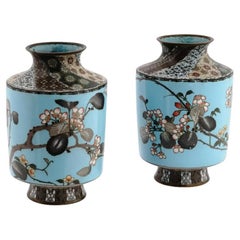
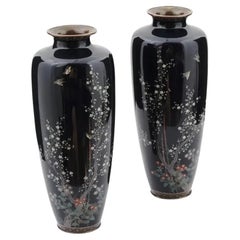
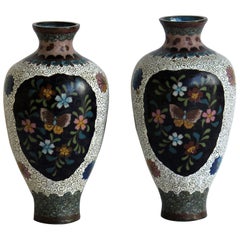
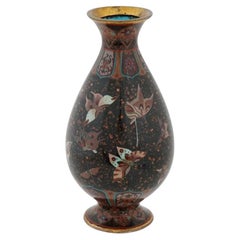
Japanese Cloisonné Vases Butterflies Flowers, 19th Century Meiji Period, Pair
Located in Lincoln, Lincolnshire
These are a very decorative pair of cloisonné vases, made in Japan and dating to the 19th Meiji Period, circa 1875. The vases have a good baluster shape with a circular form. They...
Category

19th Century Japanese Meiji Antique Cloissoné Furniture

Materials

Ceramic

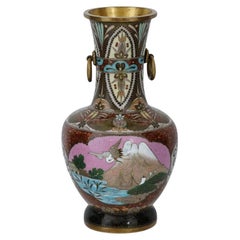
Antique Early Meiji Japanese Cloisonne Enamel Goldstone Mount Fuji Vase
Located in Long Island City, NY
An antique Japanese Meiji period goldstone vase, attributed to Honda Yasaburo, an artist active from the 1870s to 1910. The vase features two intricately detailed plaques on its body...
Category

Late 19th Century Japanese Meiji Antique Cloissoné Furniture

Materials

Enamel

Large High Quality Antique Japanese Cloisonne Enamel Meiji Vases with Birds
Located in Long Island City, NY
A pair of large antique Japanese copper vases with polychrome cloisonne enamel decor. Late Meiji period, before 1912. Elongated shape with pronounced neck. Birds and flowers motif ag...
Category

Late 19th Century Japanese Meiji Antique Cloissoné Furniture

Materials

Enamel, Copper

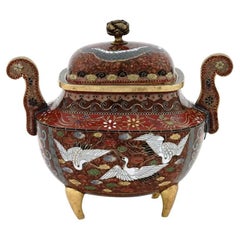
JAPAN IMPERIAL 1900 Meiji Period Tripode Koro Censer In Cloisonné Enamel With
Located in Miami, FL
Japanese tripod Koro from the Meiji Period (1868-1912). This is a rare and beautiful antique koro censer, created in the imperial Japan during the Meiji period (1868-1912), circa 1900. It was carefully crafted in solid bronze and copper with silver wires and embellished with applications of polychromatic Cloisonné enamels and aventurine. The designs depict organics and natural motifs such mythological animals and flowers. The Chrysanthemum Symbol In Imperial Japan, the chrysanthemum (Kiku) was a potent symbol of the imperial family and the emperor himself, representing longevity, royalty, and divine power. The 16-petaled chrysanthemum is the Imperial Seal and crest, found on passports, coins, and the Chrysanthemum Throne. This association dates back to the Kamakura period (1185–1333), particularly with Emperor Go-Toba's fondness for the flower, establishing its link to imperial authority and lineage. The connection between the chrysanthemum and the imperial family began when Emperor Go-Toba adopted it as a personal emblem, aligning it with the strength and refinement of the emperor's rule. During the Meiji Period, the 16-petaled chrysanthemum crest, solidifying the association with the imperial family, was established during this time. The Meiji Imperial Period This is an era of Japanese history that extended from October 23, 1868 to July 30, 1912.The Meiji era was the first half of the Empire of Japan, when the Japanese people moved from being an isolated feudal society at risk of colonization by Western powers to the new paradigm of a modern, industrialized nation state and emergent great power, influenced by Western scientific, technological, philosophical, political, legal, and aesthetic ideas. As a result of such wholesale adoption of radically different ideas, the changes to Japan were profound, and affected its social structure, internal politics, economy, military, and foreign relations. The period corresponded to the reign of Emperor Meiji. It was preceded by the Keiō era and was succeeded by the Taishō era, upon the accession of Emperor Taishō. Country: Imperial Japan. Period: Meiji, 1890-1910. Technique: Silver Wire Cloisonné over copper and bronze. Weight: 416.80 Grams, (0.417 Kg). Measurements:118 mm by 115 mm (4.65 x 4.52 Inches). Koro This term refers to a Japanese censer, incense burner, perfume burner or pastille burner is a vessel made for burning incense or perfume in some solid form. They vary greatly in size, form, and material of construction, and have been in use since ancient times throughout the world. They may consist of simple earthenware bowls or fire pots to intricately carved silver or gold vessels, small tabletop objects a few centimeters tall to as many as several meters high. Many designs use openwork to allow a flow of air. In many cultures, burning incense has spiritual and religious connotations, and this influences the design and decoration of the censer. Cloisonné This is an enameling technique in which the pattern is formed by wires soldered to the surface of the object to be decorated, which is usually made from copper, forming cells or cloisons, each of which holds a single colour of enamel paste which is then fired, and ground and polished. The champleve technique also uses an enameling technique, but the cells are formed by carving into the surface of the object, or in the casting. The cloisonne technique has been in use since the 12th century BC in the west, but the technique did not reach China until the 13th or 14th century. It became popular in China in the 18th century. Initially bronze or brass bodies were used, and in the 19th century copper, at which time the quality of the items produced began to decline. Chinese cloisonné is the best-known enamel cloisonné, though the Japanese produced large quantities from the mid-19th century, of very high technical quality. In the west the cloisonne technique was revived in the mid-19th century following imports from China, and its use continued in the Art Nouveau and Art Deco periods. Condition: Basically, is in great antique condition, near mint, with insignificant and minimal usage, in great condition. All parts are secured in the settings. This Japanese Meiji Koro...
Category

Early 1900s Japanese Meiji Antique Cloissoné Furniture

Materials

Silver, Bronze, Copper, Enamel

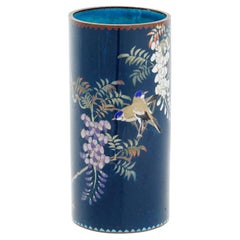
Antique Meiji Japanese Cloisonne Enamel Blue Vase Birds In Wisteria Tree Goto
Located in Long Island City, NY
A Japanese enamel over copper brush pot.attributed to Goto The cylindrical form pot is adorned with a polychrome design representing birds in blossoming wisteria flowers made in t...
Category

Late 19th Century Japanese Antique Cloissoné Furniture

Materials

Enamel, Copper

Antique Cloisonne Enamel and Gilt Bronze Clock Set
Located in London, GB
This wonderful cloisonne enamel clock set is an artful piece of design in the neoclassical style: each piece is elaborately applied with turquoi...
Category

19th Century French Antique Cloissoné Furniture

Materials

Ormolu, Bronze, Enamel

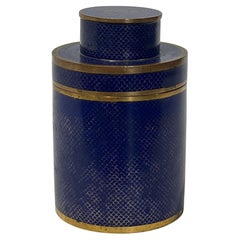
Fish Scale Midnight Blue Chinese Cloisonne Tobacco Box 1930 s
Located in Mobile, AL
Monochrome Chinese Fish Scale cloisonne is long famed for it's high quality of craftsmanship and understated elegance. A staple of interior design...
Category

1930s Chinese Chinoiserie Vintage Cloissoné Furniture

Materials

Metal, Enamel

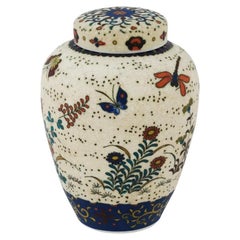
Japanese Cloisonne Totai Enamel Ceramic Jar Butterflies and Dragonflies
Located in Long Island City, NY
An antique Japanese late Meiji era covered Totai enamel on ceramic ginger jar. Circa: late 19th century The ware is enameled with polychrome images of blossoming flowers, butterflies, and dragonflies made in the Cloisonne technique. The cover of the ware is made in the same design. The neck and the base are adorned with polychrome floral, and foliage motifs made in the same technique. Signed with red ink hieroglyphs, on the bottom. Totai Shippo is the name given to Japanese cloisonne on ceramics, both on earthenwares and on porcelain. It has a similar appearance to metallic cloisonne ware...
Category

Late 19th Century Japanese Meiji Antique Cloissoné Furniture

Materials

Enamel

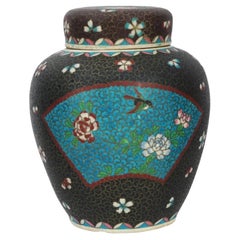
Large Antique Japanese Cloisonne Enamel on Porcelain Totai Jar Signed
Located in Long Island City, NY
A large antique Japanese late Meiji era covered Totai enamel on porcelain ginger jar. Circa: late 19th century to early 20th century. The ware is enameled with a polychrome fan shaped medallions with blossoming flowers, and butterflies, surrounded by floral and butterfly wings patterns made in the Cloisonne technique. The cover of the ware is decorated with a polychrome image of a flower surrounded by floral, foliage, and butterfly wings made in the same technique. The neck, the base, and the lid are adorned with polychrome geometrical, and floral motifs made in the same technique. Signed with red ink hieroglyphs, on the bottom. Totai Shippo is the name given to Japanese cloisonne on ceramics, both on earthenwares and on porcelain. It has a similar appearance to metallic cloisonne ware...
Category

Late 19th Century Japanese Meiji Antique Cloissoné Furniture

Materials

Enamel

Antique Meiji Japanese Cloisonne Gold Stone Enamel Covered Jar with Dragon and C
Located in Long Island City, NY
An antique Japanese, late Meiji era, covered enamel over brass pot or box. The body of the ware is enameled with polychrome images of cranes, medallions with blossoming flowers and b...
Category

Late 19th Century Japanese Meiji Antique Cloissoné Furniture

Materials

Brass, Enamel

Rare Antique Japanese Bronze Vase with Temple Mark on the Underside, 19th C.
Located in Amsterdam, Noord Holland
Antique Japanese Bronze Vase With a Temple Mark on the underside Japan Rare Additional information: Material: Bronze, Cloisonne & Metal Region of Origin: China Period: 19th century ...
Category

19th Century Chinese Antique Cloissoné Furniture

Materials

Bronze

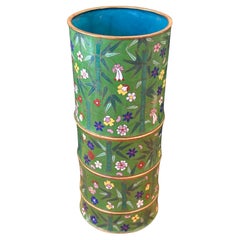
Chinese Cloisonne "Bamboo" Vase
Located in San Diego, CA
A nice Chinese export cloisonne bamboo shaped vase with floral motif, circa 1970s. The vase is in very good condition with no dings or dents and measure 5.5"D x 12"H. Unique Piece! ...
Category

Mid-20th Century Chinese Chinese Export Cloissoné Furniture

Materials

Brass, Enamel

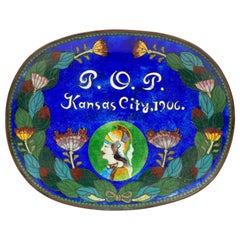
Priests of Pallas Festival Kansas City Chinese Cloisonné Card Tray, 1906
Located in Bishop s Stortford, Hertfordshire
An unusual and scarce Chinese attributed Art Nouveau cloisonné card tray made for the Priests of Pallas Festival in Kansas City in 1906. The Festival wa...
Category

Early 1900s Chinese Art Nouveau Antique Cloissoné Furniture

Materials

Metal

Large Antique Japanese Cloisonne Enamel Censer Koro W Stand Attributed To GOTO
Located in Long Island City, NY
A large Japanese covered tripod enamel censer koro or incense burner. The sphere form ware is enameled with polychrome medallions representing cranes and birds in blossoming flowers ...
Category

Late 19th Century Japanese Antique Cloissoné Furniture

Materials

Enamel

Antique Japanese Cloisonne Totai Covered Enamel Porcelain Jar
Located in Long Island City, NY
A Japanese covered Totai enamel on porcelain ginger jar. The ware is enameled with polychrome medallions representing blossoming flowers surrounded by floral, foliage and geometrical...
Category

19th Century Japanese Antique Cloissoné Furniture

Materials

Enamel

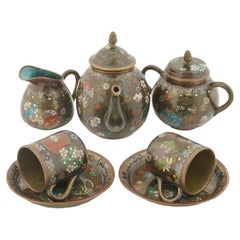
Antique Meiji Era Japanese Cloisonne Enamel Tea Set
Located in Long Island City, NY
A superb antique Japanese cloisonne enamel tea set from the Meiji Era, 1868 to 1912. The set comprises 2 cups and saucers, teapot, sugar bowl and cream...
Category

Late 19th Century Japanese Antique Cloissoné Furniture

Materials

Copper, Enamel

Antique Japanese Cloisonne Enamel Gold Stone Vase with Butterflies Attr Honda Yo
Located in Long Island City, NY
An antique Japanese copper vase with polychrome cloisonne enamel decor. Meiji period. Fish tail shape with pronounced base. Intricate butterfly motif and floral patterns. Gold stone ...
Category

Late 19th Century Japanese Meiji Antique Cloissoné Furniture

Materials

Copper, Enamel

Cloisonné Vases, Lamps, Bowls and Other Furniture and Objects for Sale on 1stDibs

Liven your home with cloisonné vases, bowls, lamps and other objects and furnishings ornamented with lustrous enamel. Technically, enamel is colored glass fused to metal. But that simple description greatly understates the case. Applied using an array of techniques to a wide range of objects, it is one of the most dynamic, and alluring, mediums in the world.

No one knows for sure when or where enameling originated. But, according to the Encyclopedia Britannica, it is widely believed that the decoration on a gold scepter found in a royal Mycenaean tomb at Kourion Kaloriziki, in Cyprus, and dating to the 11th century BC, is a true, early example of the technique.

Between the 6th and 12th centuries AD, cloisonné — in which tiny compartments (cloisons) made by soldering copper filaments to a metal surface are filled with vibrantly hued enamel — had a huge vogue in the Byzantine Empire. By the 7th century, Lombard craftsmen in northern Italy were using enamel to emulate Byzantine objects. In the 12th and 13th centuries, artisans in China imported the technique and made it so much their own that enameled objects have long been associated with Eastern aesthetics and motifs rather than Western ones.

Collectors of authentic antique Chinese furniture and decorative objects know that Ming dynasty-era cloisonné objects are particularly coveted. Although ornamentation was minimal at the time, Ming dynasty furniture often featured carved or painted details of flowers, insects, dragons, fruits and other motifs. As overseas trade expanded, techniques from the West, like cloisonné enamel painting, adorned table screens and other pieces. 

Elaborately decorated Ming-era cloisonné objects and furnishings — vessels and other items featuring lots of vibrant colors and details — are likely to fetch considerable sums at auction, as Chinese cloisonné vases created during the Ming and Qing eras represent a golden age of the country’s furniture design. (Victorian cloisonné is also popular with design enthusiasts.)

Cloisonné wasn’t adopted in Japan until the 1800s. Back then, amid an era of societal and cultural shifts, a bolstered interest in art and design elevated Japanese craft traditions during the Meiji period. European styles like Japonisme appropriated Japanese design while craftsmen in places like Wales and England employed japanning, a varnishing technique that approximated the appearance of lacquer for the surfaces of furnishings.

Today, Meiji-era cloisonné vases or incense burners in good condition are of great interest to collectors of Asian art and furniture produced by the period’s Japanese cloisonné workshops. 

Find cloisonné vases, lighting, decorative bowls and other objects for sale on 1stDibs.

Recently Viewed

View All