Cloissoné Furniture

to
212
747
271
1,045
15
4
12
11
9
8
7
5
3
2
1
1
1
1
13
597
435
19
222
82
30
31
7
14
5
3
11
8
2
1
5
1,023
777
231
164
144
925
880
543
333
98
1,064
1,055
1,062
15
13
6
5
2
Technique: Cloissoné
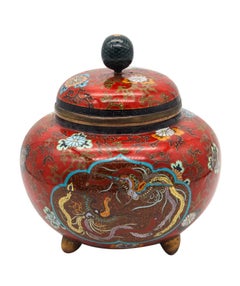
JAPAN IMPERIAL 1900 Meiji Period Tripode Koro Censer In Cloisonné Enamel With
Located in Miami, FL
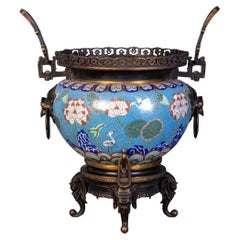
Japanese tripod Koro from the Meiji Period (1868-1912). This is a rare and beautiful antique koro censer, created in the imperial Japan during the Meiji period (1868-1912), circa 1900. It was carefully crafted in solid bronze and copper with silver wires and embellished with applications of polychromatic Cloisonné enamels and aventurine. The designs depict organics and natural motifs such mythological animals and flowers. The Chrysanthemum Symbol In Imperial Japan, the chrysanthemum (Kiku) was a potent symbol of the imperial family and the emperor himself, representing longevity, royalty, and divine power. The 16-petaled chrysanthemum is the Imperial Seal and crest, found on passports, coins, and the Chrysanthemum Throne. This association dates back to the Kamakura period (1185–1333), particularly with Emperor Go-Toba's fondness for the flower, establishing its link to imperial authority and lineage. The connection between the chrysanthemum and the imperial family began when Emperor Go-Toba adopted it as a personal emblem, aligning it with the strength and refinement of the emperor's rule. During the Meiji Period, the 16-petaled chrysanthemum crest, solidifying the association with the imperial family, was established during this time. The Meiji Imperial Period This is an era of Japanese history that extended from October 23, 1868 to July 30, 1912.The Meiji era was the first half of the Empire of Japan, when the Japanese people moved from being an isolated feudal society at risk of colonization by Western powers to the new paradigm of a modern, industrialized nation state and emergent great power, influenced by Western scientific, technological, philosophical, political, legal, and aesthetic ideas. As a result of such wholesale adoption of radically different ideas, the changes to Japan were profound, and affected its social structure, internal politics, economy, military, and foreign relations. The period corresponded to the reign of Emperor Meiji. It was preceded by the Keiō era and was succeeded by the Taishō era, upon the accession of Emperor Taishō. Country: Imperial Japan. Period: Meiji, 1890-1910. Technique: Silver Wire Cloisonné over copper and bronze. Weight: 416.80 Grams, (0.417 Kg). Measurements:118 mm by 115 mm (4.65 x 4.52 Inches). Koro This term refers to a Japanese censer, incense burner, perfume burner or pastille burner is a vessel made for burning incense or perfume in some solid form. They vary greatly in size, form, and material of construction, and have been in use since ancient times throughout the world. They may consist of simple earthenware bowls or fire pots to intricately carved silver or gold vessels, small tabletop objects a few centimeters tall to as many as several meters high. Many designs use openwork to allow a flow of air. In many cultures, burning incense has spiritual and religious connotations, and this influences the design and decoration of the censer. Cloisonné This is an enameling technique in which the pattern is formed by wires soldered to the surface of the object to be decorated, which is usually made from copper, forming cells or cloisons, each of which holds a single colour of enamel paste which is then fired, and ground and polished. The champleve technique also uses an enameling technique, but the cells are formed by carving into the surface of the object, or in the casting. The cloisonne technique has been in use since the 12th century BC in the west, but the technique did not reach China until the 13th or 14th century. It became popular in China in the 18th century. Initially bronze or brass bodies were used, and in the 19th century copper, at which time the quality of the items produced began to decline. Chinese cloisonné is the best-known enamel cloisonné, though the Japanese produced large quantities from the mid-19th century, of very high technical quality. In the west the cloisonne technique was revived in the mid-19th century following imports from China, and its use continued in the Art Nouveau and Art Deco periods. Condition: Basically, is in great antique condition, near mint, with insignificant and minimal usage, in great condition. All parts are secured in the settings. This Japanese Meiji Koro...
Category

Early 1900s Japanese Meiji Antique Cloissoné Furniture

Materials

Silver, Bronze, Copper, Enamel

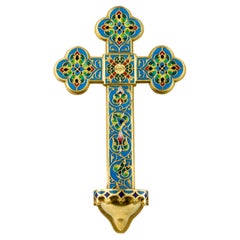
Ferdinand Barbedienne, Cloisonné Enamel Arabesque Crucifix, France 19th Century
Located in PARIS, FR
Beautiful antique crucifix cross in cloisonné arabesque and floral shaped enamel and gilt bronze by the Ferdinand Barbedienne foundry. Signed F. Barbedienne. France 19th century. Tr...
Category

19th Century French Romantic Antique Cloissoné Furniture

Materials

Bronze, Enamel

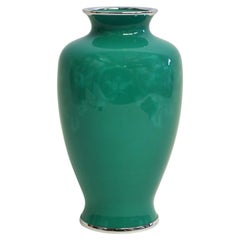
Signed Ando Jubei Green Baluster Cloisonné Vase
Located in Somis, CA
A beautiful pristine condition Ando Jubei wireless cloisonné vase in baluster form. In his signature green enamel, portraying an intricate arabesque design of a blooming clematis vin...
Category

20th Century Japanese Meiji Cloissoné Furniture

Materials

Metal, Enamel

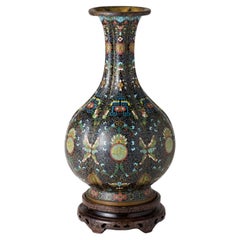
Cloisonné Vase, Qing Period, 19th Century
Located in seoul, KR
Cloisonné enamel vase of baluster form and lobed sides decorated with foliage and flowers on a black background, gilt copper neck and base. Around 1900 Period: Qing Dynasty Type: Va...
Category

19th Century Hong Kong Qing Antique Cloissoné Furniture

Materials

Enamel

Antique Imperial Russian Silver Gold Enamel Kovsh Nikolai Antipov Moscow 1896
Located in Portland, OR
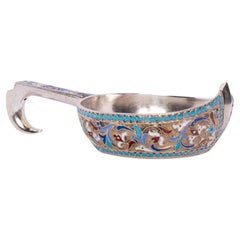
A good antique Imperial Russian silver & cloisonne enamel kovsh, silversmith Nikolai Lakovlev Antipov & assayer Anotoly Apollonovish Artsybashev, Moscow, 1896. The kovsh of tradition...
Category

1890s Russian Late Victorian Antique Cloissoné Furniture

Materials

Gold, Silver, Enamel

19th Century Cloisonné Enamel Dragon Vase, Meiji Period Japan
Located in London, GB
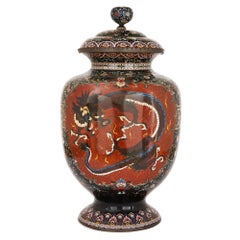
This intricately decorated antique Japanese vase was crafted in the Meiji period (1868-1912). The vase is of circular form and features a waisted base, large, ovoid body and a lid wi...
Category

Late 19th Century Japanese Meiji Antique Cloissoné Furniture

Materials

Enamel

Chinese Cloisonné Vase on Bronze with Phoenixes, 19th Century Qing period
Located in Lincoln, Lincolnshire
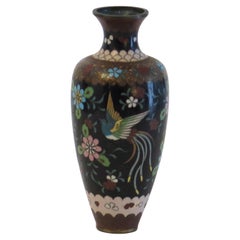
This is a very decorative Chinese cloisonné vase dating to the mid 19th Century, Qing period. The vase has a good baluster shape. It has been well made of a bronze alloy with rich ...
Category

19th Century Chinese Qing Antique Cloissoné Furniture

Materials

Ceramic

Pair of Japanese cloisonné enamel covered jars
Located in Long Island City, NY
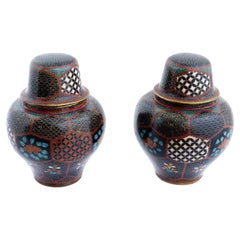
A pair of Japanese enamel over gilt copper covered jars. The exteriors of the jars are adorned with polychrome enamel medallions representing floral, foliage, geometrical and foliate...
Category

Early 20th Century Japanese Meiji Cloissoné Furniture

Materials

Enamel, Copper

Rare Antique Meiji Japanese Cloisonne Enamel Charger With Figures 12 Inches
Located in Long Island City, NY
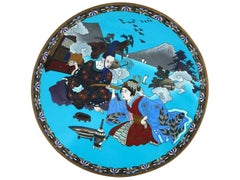
An antique Japanese copper serving plate with polychrome cloisonne enamel design. Meiji period, ca. 1880s. Round footed piece. Turquoise blue ground color. The plate depicts a samura...
Category

Late 19th Century Japanese Meiji Antique Cloissoné Furniture

Materials

Enamel, Copper

Exquisite Antique Meiji Japanese Cloisonne Tray Featuring Dragons in Clouds, Att
Located in Long Island City, NY
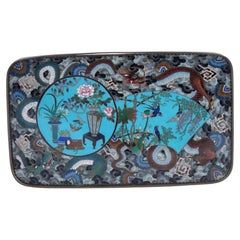
An antique Japanese, late Meiji era, enamel over copper tray. The interior of the ware is adorned with a polychrome enamel design representing figural medallions depicting plants in ...
Category

Late 19th Century Japanese Meiji Antique Cloissoné Furniture

Materials

Enamel, Copper

20th C. Chinese Bronze and cloisonné enamel wine cup for ritual ceremonies
Located in Bilzen, BE
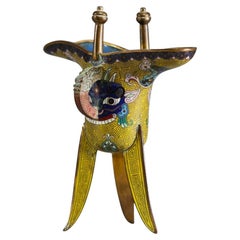
China - Bronze and cloisonné enamel wine cup for ritual ceremonies with archaic Jue decoration, body decorated with a Chilong head early 20th c Heigth 15.5 cm
Category

1920s Chinese Qing Vintage Cloissoné Furniture

Materials

Bronze, Enamel

Exceptionally rare vase portrait jardiniere, Jugendstil Art Nouveau Amphora 1909
Located in Wien, AT
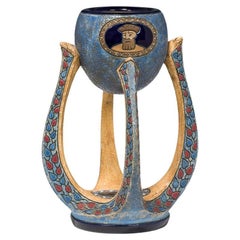
A very exciting object made by the famous Amphora factories in Bohemia in exceptionally high quality and a very rare design. The vase or jardiniere or centerpiece is designed with a...
Category

Early 1900s Czech Art Nouveau Antique Cloissoné Furniture

Materials

Enamel

Small Chinese Black Cloisonne Box, Late Qing Dynasty, circa 1900, China
Located in Austin, TX
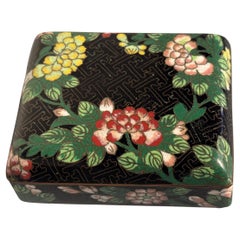
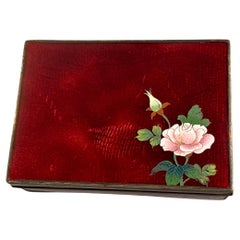
A small and lovely Chinese black ground cloisonne box with peony design, late Qing Dynasty, circa 1900, China. The small cloisonne box raised on four bun feet, and decorated with a design of blossoming peony against a black enamel ground inlaid with geometric wire work in the "wan" pattern. The large blooms of peony depicted in pleasing shades of red, pink, and yellow enamel, with leaves of dark and light green enamel. The colored enamels pop against the black cloisonne...
Category

Early 1900s Chinese Qing Antique Cloissoné Furniture

Materials

Copper, Enamel

Cabinet, LALA by Reda Amalou, 2019, Limited Edition
Located in Paris, FR
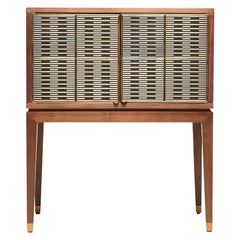
This piece stands out for its refined cloisonné enamel decoration. Cloisonné, once reserved for imperial use, is here uniquely applied to enamel tiles. Reda Amalou revisits this ance...
Category

21st Century and Contemporary Hong Kong Modern Cloissoné Furniture

Materials

Brass, Enamel

High Quality Antique Japanese Cloisonne Enamel Blossoming Iris’s Vase
Located in Long Island City, NY
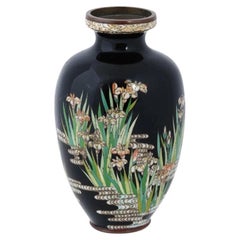
A high quality antique Japanese, late Meiji period, enamel over gilt copper vase. The vase has an urn shaped body and a fluted neck. The ware is enameled with a polychrome image of b...
Category

Late 19th Century Japanese Meiji Antique Cloissoné Furniture

Materials

Copper, Enamel

Antique Meiji Japanese Cloisonne Enamel Plate Depicting A Pheasant On A Tree
Located in Long Island City, NY
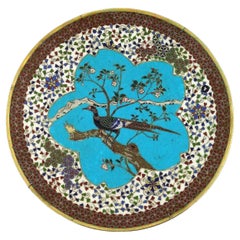
An antique Japanese Meiji era enamel plate. The plate is enameled with a polychrome image of a bird sitting on a branch with blossoming flowers on a blue turquoise ground made in the...
Category

Late 19th Century Japanese Antique Cloissoné Furniture

Materials

Enamel

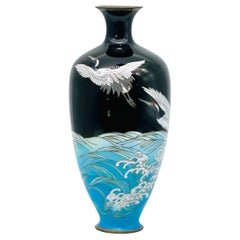
A magnificent Japanese cloisonne enamel Vase. Signed. Meiji period
Located in London, GB
A magnificent Japanese cloisonne enamel Vase. Signed. Meiji period of tapering form with everted neck, decorated in various coloured enamels with two cranes in flight above the cra...
Category

19th Century Japanese Antique Cloissoné Furniture

Materials

Enamel

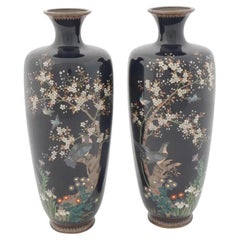
Antique Japanese Cloisonne Meiji Bird Tree Enamel Vases
Located in Long Island City, NY
Large Pair of Antique Meiji Japanese Cloisonne Enamel Vases Hawks on Cherry Blossom Tree Silver wire High Quality attributed to Hayashi or Ota A pair of antique Japanese Meiji peri...
Category

Late 19th Century Japanese Antique Cloissoné Furniture

Materials

Enamel

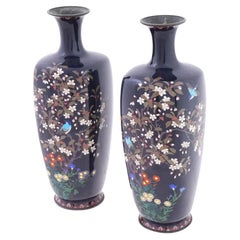
Large Pair of Japanese Cloisonné with Blue Birds signed Gonda Hirosuke
Located in Long Island City, NY
A set of two vases with magnificent flowers and birds decoration, classic form for Japanese works of the Meiji era. The baluster form vases are enameled with polychrome images of blossoming flowers and plants made in the Cloisonne technique on a glossy cobalt blue ground. The base is marked with the mark of Gonda Hirosuke...
Category

Early 20th Century Japanese Meiji Cloissoné Furniture

Materials

Enamel

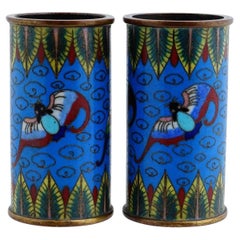
Antique Chinese Cloisonne Enameled Brush Pots With Bats
Located in Long Island City, NY
A pair of antique Chinese brush pots. The cylindrical form pots are enameled with bat images made in the cloisonne technique on turquoise gr...
Category

Late 19th Century Chinese Antique Cloissoné Furniture

Materials

Enamel

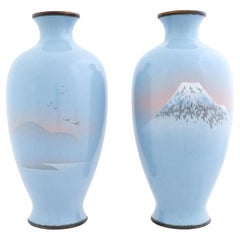
Large Pair Of Meiji Japanese Cloisonne Enamel Wireless Vases Mt Fuji Sun Set
Located in Long Island City, NY
A pair of antique Japanese Meiji Era wireless cloisonne or musen shippo vases. The vases have a light blue ground with a landscape depicting Mount Fuji on one vase and a landscape wi...
Category

Late 19th Century Japanese Meiji Antique Cloissoné Furniture

Materials

Enamel

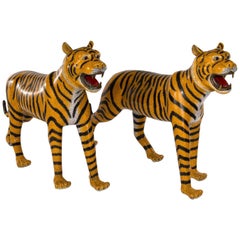
Pair of Chinese Cloisonné Tigers
Located in Houston, TX
A stunning pair of late 20th century life-size Chinese cloisonné tigers from the Baron Estate. In Chinese symbolism, these tigers represents the ma...
Category

Late 20th Century Chinese Chinese Export Cloissoné Furniture

Materials

Brass

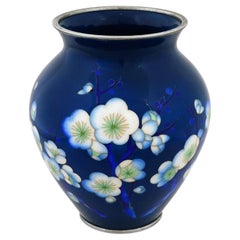
Japanese Flowers Butterfly Cloisonne Enamel Vase
Located in Long Island City, NY
A Japanese enamel over metal vase. The vase has a globular shaped body and a wide neck with a fluted mouth. The exterior of the ware is enameled with a polychrome design depicting bl...
Category

Mid-20th Century Japanese Cloissoné Furniture

Materials

Metal, Enamel

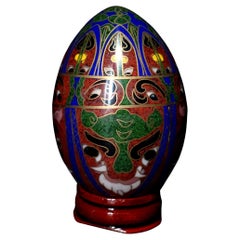
Chinese Cloisonné Enamel Egg "Flowers" with Wood Stand, Early 20 Century #6
Located in Norton, MA
Presenting a beautiful Chinese cloisonné enamel egg depicting the faces of the Chinese traditional opera theme with a wood stand, early 20 century.
Category

Early 20th Century Chinese Chinese Export Cloissoné Furniture

Materials

Copper

Japanese Red Ginbari Cloisonne Trinket Box, Meiji Period, circa 1900, Japan
Located in Austin, TX
A rich and elegant Japanese export red ginbari cloisonne trinket box, Meiji Period, circa 1900, Japan. The attractive Japanese cloisonne box features a striking textured red ginbari...
Category

Early 1900s Japanese Meiji Antique Cloissoné Furniture

Materials

Metal, Copper, Enamel, Foil

Cloisonné and Bronze Vase, Signed BARBEDIENNE, in the Style of Édouard LIÈVRE
Located in SAINT-OUEN-SUR-SEINE, FR
This skillful blend of Chinese art objects and French craftsmanship is attributed to the Escalier de Cristal after designs by Édouard Lièvre. Our cachepot displays a polychrome decor...
Category

Late 19th Century French Japonisme Antique Cloissoné Furniture

Materials

Bronze, Enamel

Pair Antique Late 19th Century Chinese Cloisonné Enamel Vases.
Located in New Orleans, LA
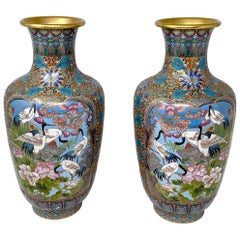
Pair Antique Late 19th Century Chinese Cloisonné Enamel Vases.
Category

Late 19th Century Chinese Antique Cloissoné Furniture

Materials

Enamel

Pair of Chinese Hardstone, Jade and Cloisonné Enamel Flower Tree Models
Located in London, GB
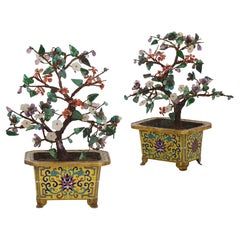
Pair of Chinese hardstone, jade and cloisonné enamel flower tree models Chinese, 20th Century Height 24cm, width 18cm, depth 10cm This pair of charming Chinese models depicts flower trees and is crafted from a large array of high quality materials. The flower trees are crafted from jade as well as other hardstones. The leaves are rendered from deep green jade, making the multi-coloured flowers beautifully stand out. The stigma on each flower is represented by several round beads. Some flowers also include additional twisted metal spring detailing. From the metal tree trunk extends a number of wire branches covered in thread. The execution of the models is outstanding as it creates a trompe l ‘oil effect tricking the observer into believing the model is real. Both models are displayed in vivid cloisonné enamel planters...
Category

20th Century Chinese Cloissoné Furniture

Materials

Stone, Jade, Metal, Enamel

Early 20th Century Antique Chinese Cloisonne Vase
Located in Pomona, CA
This magnificent Chinese Antique Cloisonné Vase is the perfect decor piece. With beautiful floral and bird design, it is a majestically hand cr...
Category

Early 20th Century Chinese Chinese Export Cloissoné Furniture

Materials

Copper

Japanese Cloisonne Enamel Porcelain Vase W Handles
Located in Long Island City, NY
A Japanese enamel on porcelain vase. The vase has a baluster shaped body with a fluted mouth, adorned with a polychrome design representing medallions with blossoming flowers and bir...
Category

Late 19th Century Japanese Antique Cloissoné Furniture

Materials

Enamel

Antique Asian Chinese Opium Box Cloisonné Enamel, Tobacco Snuff Box Floral Motif
Located in Leuven , BE
Old Chinese Opium Box in Cloisonné Enamel, decorated with Vases and Flowers. French Private Collection
Category

19th Century Chinese Antique Cloissoné Furniture

Materials

Metal

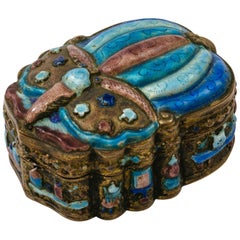
Antique Chinese Champlevé Enamel Scarab Jewelry Box
Located in New York, NY
Finely detailed champlevé scarab shape box with gilt wash interior. Traces of antique mirror on inner top. Rich colors of blue, turquoise purple finely enameled all around box.
Category

19th Century Chinese Chinoiserie Antique Cloissoné Furniture

Materials

Bronze

Pair Large Japanese Cloisonne Enamel Metal Vases
Located in New York, NY
Pair of brilliant blue Japanese Meiji period cloisonne enamel metal vases with rounded square shape. Each 24 by 8 1/2 by 10 inches.
Category

19th Century Japanese Antique Cloissoné Furniture

Materials

Metal

Antique Imperial Russian Silver Gilt Cloisonne Kovsh Nikolay Strulev Moscow 1908
Located in Portland, OR
A fine antique Imperial Russian silver-gilt & cloisonne kovsh, Nikolay Strulev, Moscow, circa 1908. The kovsh with all over floral cloisonne enamel decoration to the bowl and the top...
Category

Early 1900s Russian Art Nouveau Antique Cloissoné Furniture

Materials

Silver, Enamel

A Fine Pair of Japanese Cloisonné-Enamel Vases with Swallows and Parrots. 19th C
Located in London, GB
A Fine Pair of Japanese Cloisonné-Enamel Vases with Swallows and Parrots Meiji period Each of square shape with rounded shoulders, rising to a slightly waisted neck and flaring mout...
Category

19th Century Japanese Antique Cloissoné Furniture

Materials

Enamel

Antique Imperial Russian Silver Gilt Cloisonne Enamel Sugar tongs Moscow 1890
Located in Portland, OR
Antique pair of Imperial Russian silver-gilt cloisonne sugar tongs, Moscow, circa 1890. A very attractive pair of Russian silver and enamel sugar tongs, elegantly decorated with mult...
Category

1890s Russian Belle Époque Antique Cloissoné Furniture

Materials

Silver, Enamel

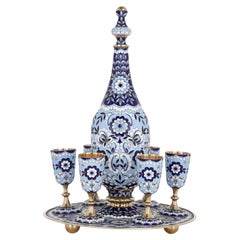
Russian vermeil and blue enamel vodka set
Located in London, GB
Russian vermeil and blue enamel vodka set Russian, 20th Century Decanter: Height 29cm, diameter 8cm Cup: Height 8.5cm, diameter 4cm This Russian drinking se...
Category

20th Century Russian Cloissoné Furniture

Materials

Silver, Enamel

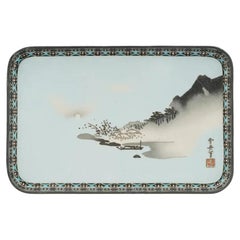
Japanese Wireless Cloisonné Serving Tray Meiji After Namikawa Sosuke
Located in Long Island City, NY
A rare 19th Century Japanese copper serving tray with cloisonne enamel design. The central part of the tray depicts a wireless cloisonne picture, a coastal landscape view with a full moon. The hieroglyphical signature of the artist is in the lower right. The rims and the backside are decorated with floral ornaments. Blue and black color palette. Collectible Oriental Decor And Applied Arts For Interior Design. Namikawa Sosuke (1847–1910) was a Japanese cloisonné artist,[1] known for innovations that developed cloisonné enamel into an artistic medium sharing many features with paintings.[2][3] He and Namikawa Yasuyuki (no relation)[notes 1] were the most famous cloisonné artists of the 1890 to 1910 period, known as the "golden age" of Japanese enamels.[1] Around 1880 he set up and ran the Tokyo branch of the Nagoya Cloisonné Company.[1] He exhibited his artworks at national and international expositions, where he took an organising role.[2] He was recognised as an Imperial Household Artist and created art works for imperial residences. He sometimes signed his works with the character sakigake (Pioneer) the art work is based off a art work done by Sesshu Toyo Sesshu Toyo (?? ??, c. 1420 – August 26, 1506), also known simply as Sesshu (??), was a Japanese Zen monk and painter who is considered a great master of Japanese ink painting. Initially inspired by Chinese landscapes, Sesshu's work holds a distinctively Japanese style that reflects Zen Buddhist aesthetics.[1] His prominent work captured images of landscapes, portraits, and birds and flowers paintings, infused with Zen Buddhist beliefs, flattened perspective, and emphatic lines.[2] Sesshu was born into the samurai Oda family (???) and trained at Shokoku-ji temple in Kyoto, Japan, as a Zen monk.[1] From his early childhood, Sesshu showed a talent for painting and eventually became widely revered throughout Japan as a wise, reputable Zen scholar, and the greatest painter priest of Zen-Shu.[3] Sesshu worked in a painting atelier whilst training under Tensho Shubun (c. 1418–1463). But upon visiting China, his work betook a distinctive Chinese influence, merging Japanese and Chinese styles to develop his individualistic style of Zen paintings.[3] Sesshu's influence on painting was so wide that many schools of art appointed him their founder.[4] Sesshu's most acclaimed works are Winter Landscape (c. 1470s), Birds and Flowers (1420–1506) and Four Landscape Scrolls...
Category

Late 19th Century Japanese Antique Cloissoné Furniture

Materials

Copper, Enamel

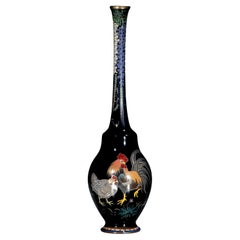
A Japanese cloisonné vase of a rooster and a hen
Located in Milano, IT
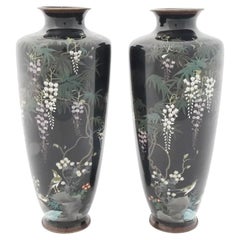
A Japanese cloisonné vase with a rooster and a hen set against a dark blue ground, decorated with polychrome enamels within a flowering meadow. The neck is adorned with a wisteria m...
Category

Late 19th Century Japanese Antique Cloissoné Furniture

Materials

Enamel

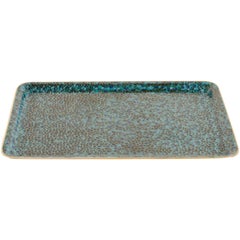
Rectangular Tray, Mediterranean Design by Robert Kuo, Handmade Cloisonne
Located in Los Angeles, CA
Rectangular tray Mediterranean design Shades of blue Glass enamel Gold plated copper Cloisonné Limited edition Each piece is individually crafted and is unique. The cloison...
Category

2010s Cloissoné Furniture

Materials

Copper, Enamel

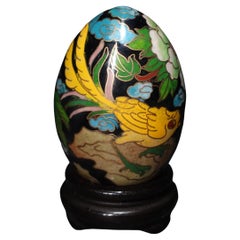
Chinese Cloisonné Enamel Egg "Flowers and Bird" with Wood Stand #7
Located in Norton, MA
Presenting a beautiful Chinese cloisonné enamel egg depicting flowers and bird with a wood stand, early 20 century.
Category

Early 20th Century Chinese Chinese Export Cloissoné Furniture

Materials

Copper

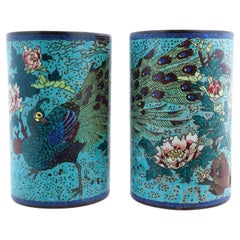
Large Pair Of Antique Meiji Japanese Cloisonne Enamel Brush Pots W Peacocks
Located in Long Island City, NY
A pair of antique Japanese brush pots, Meiji era, 1868 to 1912. The exterior of both matched pieces is enameled with polychrome enamel bloss...
Category

Late 19th Century Japanese Meiji Antique Cloissoné Furniture

Materials

Enamel

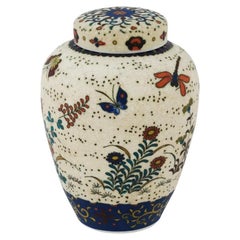
Japanese Cloisonne Totai Enamel Ceramic Jar Butterflies and Dragonflies
Located in Long Island City, NY
An antique Japanese late Meiji era covered Totai enamel on ceramic ginger jar. Circa: late 19th century The ware is enameled with polychrome images of blossoming flowers, butterflies, and dragonflies made in the Cloisonne technique. The cover of the ware is made in the same design. The neck and the base are adorned with polychrome floral, and foliage motifs made in the same technique. Signed with red ink hieroglyphs, on the bottom. Totai Shippo is the name given to Japanese cloisonne on ceramics, both on earthenwares and on porcelain. It has a similar appearance to metallic cloisonne ware...
Category

Late 19th Century Japanese Meiji Antique Cloissoné Furniture

Materials

Enamel

Ando Factory Japanese Blue Cloisonne Enamel Vase
Located in Long Island City, NY
An Ando Factory Japanese enamel vase. The vase has an urn shaped body and a wide neck with a fluted mouth. The vase is covered with enamel in a blue shade and decorated with a symmet...
Category

Late 19th Century Japanese Antique Cloissoné Furniture

Materials

Enamel

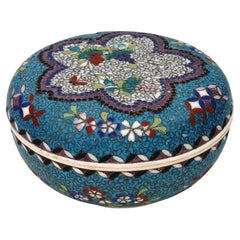
Meiji Japanese Totai Cloisonne Enamel Porcelain Box
Located in Long Island City, NY
An antique Japanese late Meiji era covered Totai enamel on porcelain trinket or jewelry box. Circa: late 19th century to early 20th century. The ware is enameled with a polychrome floral medallion with butterflies and berries, on the top of the cover, surrounded by floral, and foliage patterns made in the Cloisonne technique. A hand painted image of a flower, under the cover. Dated, 01.12.08, and probably numbered, 6, on the bottom. Totai Shippo...
Category

Early 20th Century Japanese Meiji Cloissoné Furniture

Materials

Enamel

Large Antique Meiji Japanese Cloisonne Enamel Porcelain Totai Vase
Located in Long Island City, NY
An antique Japanese Meiji period cloisonne enamel porcelain vase, characterized by its exquisite multi colored floral and foliage motifs on a green ground. The use of a vibrant color...
Category

Late 19th Century Japanese Antique Cloissoné Furniture

Materials

Porcelain

Pair of Antique Chinese Champlevé or Cloisonné Lamps
Located in Houston, TX
Pair of antique Chinese champlevé or cloisonné lamps. Lovely pair of antique Chinese bronze champlevé or cloisonné table lamps. Offered champleve or cloisonne lamps are executed in a lovely floral pattern of beautiful shades including chartreuse, turquoise, pinks and whites. These lamps are in very good antique condition and have been newly wired to U.S. specifications. Champlevé is an enameling technique in the decorative arts, where troughs or cells are carved, etched, or cast into the surface of a metal object...
Category

1920s Chinese Chinese Export Vintage Cloissoné Furniture

Materials

Bronze, Enamel

Antique Early Meiji Japanese Cloisonne Enamel Goldstone Mount Fuji Vase
Located in Long Island City, NY
An antique Japanese Meiji period goldstone vase, attributed to Honda Yasaburo, an artist active from the 1870s to 1910. The vase features two intricately detailed plaques on its body...
Category

Late 19th Century Japanese Meiji Antique Cloissoné Furniture

Materials

Enamel

Antique Meiji Japanese Cloisonne Enamel Charger Plate
Located in Long Island City, NY
An antique Japanese, late Meiji era, enamel over copper charger plate. The plate is adorned with a polychrome scene with a rooster and a chicken on a pond with blossoming flowers and...
Category

Early 20th Century Japanese Meiji Cloissoné Furniture

Materials

Copper, Enamel

Vintage Chinese Cloisonne Enamel Vase with Floral and Leaf Motifs
Located in Dallas, TX
Decorate a table or a buffet with this colorful baluster vase. Created in China circa 1980, the vase features floral and leaf motifs in the cloisonné technique (decorative work in wh...
Category

Late 20th Century Chinese Cloissoné Furniture

Materials

Multi-gemstone, Brass

Large Pair of Early 20th-Century Chinese Cloisonné Vases, 1910s
Located in Brescia, Brescia
A striking and monumental pair of cloisonné enamel vases, likely Chinese in origin, dating to the early 20th century (circa 1910s). Standing at 51.5 cm in height with a generous 30 c...
Category

1910s Chinese Chinoiserie Vintage Cloissoné Furniture

Materials

Brass, Metal

A Pair of Japanese Cloisonné Vases, 19th Century
Located in ARMADALE, VIC
A Pair of Japanese Cloisonné Vases, 19th Century With enameled flowers. Provenance: Private Australian Collection. Dimensions: Height: 20cm. Diameter: 8cm.
Category

19th Century Japanese Meiji Antique Cloissoné Furniture

Materials

Metal

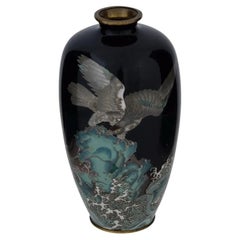
Antique Meiji Silver Wire Japanese Cloisonne Vase with Eagle and Dragon over Wav
Located in Long Island City, NY
An antique Japanese Cloisonne Meiji Golden Age Period high quality silver wire Attributed to Hattori The vase is of an ovoid form tapering to the bottom and featuring a short everted...
Category

Late 19th Century Japanese Meiji Antique Cloissoné Furniture

Materials

Enamel

Pair of Antique Meiji Japanese Cloisonne Enamel Vases Blossoming Wisteria and Bi
Located in Long Island City, NY
A pair of antique Japanese Meiji Era enamel vases. Circa: Late 19th century . The baluster form vase is enameled with polychrome images of birds and Wisteria flowering plants made in...
Category

Early 20th Century Japanese Cloissoné Furniture

Materials

Enamel

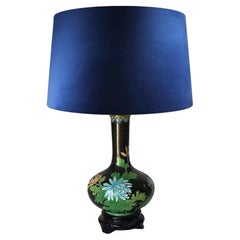
Antique Chinese Black Cloisonné Table Lamp with Floral Motif, China, circa 1890
Located in Auribeau sur Siagne, FR
Offered is a stunning, 19th century cloisonné table lamp with a floral and bird motif. Rested upon decorative wooden stand. US PLUG ADAPTATOR WILL BE FURNISHED FOR FREE TO THE US BU...
Category

Late 19th Century Chinese Chinese Export Antique Cloissoné Furniture

Materials

Brass

Antique Japanese Meiji Cloisonne Enamel Brush Pot
Located in Long Island City, NY
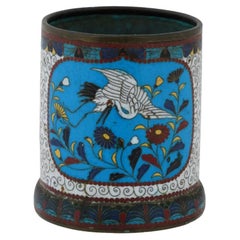
An antique Japanese Meiji Era cylindrical shaped enamel brush pot. Circa: 19th century. The cylindrical form pot is enameled with polychrome medallions with cranes in blossoming flow...
Category

19th Century Japanese Meiji Antique Cloissoné Furniture

Materials

Enamel

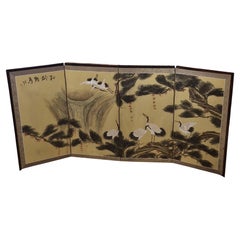
Antique Japanese Folding Chamber Screen /Paravent Early 20th century Japan Crane
Located in Amsterdam, Noord Holland
A super nice Japanese Chamber screen. Also suitable for wall mounting. Good condition and lovely colors
Category

20th Century Japanese Meiji Cloissoné Furniture

Materials

Bronze

Antique Japanese Meiji Era Ginbari Cloisonne Vase
Located in Long Island City, NY
A large antique Japanese copper vase with polychrome ginbari cloisonne enamel decor. Late Meiji period, before 1912. Baluster shape with pronounced neck. White and green body...
Category

Late 19th Century Japanese Meiji Antique Cloissoné Furniture

Materials

Enamel, Copper

Antique Meiji Japanese Ginbari Cloisonne Enamel Geisha Vase
Located in Long Island City, NY
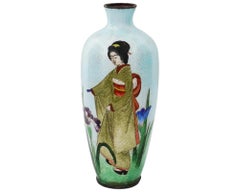
A large antique Japanese, late Meiji era, Ginbari enamel over copper vase. The urn shaped vase is enameled with a polychrome scene of a Geisha lady in a garden with blossoming flower...
Category

Late 19th Century Japanese Meiji Antique Cloissoné Furniture

Materials

Copper, Enamel

Antique Edo Japanese Cloisonne Geometric Design Box
Located in Long Island City, NY
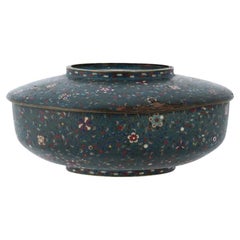
An antique Japanese flat brass enamel ceremonial food container with a cover. Characterized by cloisonne floral designs adorning the surface, this ceremonial container showcases the ...
Category

19th Century Japanese Meiji Antique Cloissoné Furniture

Materials

Brass, Enamel

Cloisonné Vases, Lamps, Bowls and Other Furniture and Objects for Sale on 1stDibs

Liven your home with cloisonné vases, bowls, lamps and other objects and furnishings ornamented with lustrous enamel. Technically, enamel is colored glass fused to metal. But that simple description greatly understates the case. Applied using an array of techniques to a wide range of objects, it is one of the most dynamic, and alluring, mediums in the world.

No one knows for sure when or where enameling originated. But, according to the Encyclopedia Britannica, it is widely believed that the decoration on a gold scepter found in a royal Mycenaean tomb at Kourion Kaloriziki, in Cyprus, and dating to the 11th century BC, is a true, early example of the technique.

Between the 6th and 12th centuries AD, cloisonné — in which tiny compartments (cloisons) made by soldering copper filaments to a metal surface are filled with vibrantly hued enamel — had a huge vogue in the Byzantine Empire. By the 7th century, Lombard craftsmen in northern Italy were using enamel to emulate Byzantine objects. In the 12th and 13th centuries, artisans in China imported the technique and made it so much their own that enameled objects have long been associated with Eastern aesthetics and motifs rather than Western ones.

Collectors of authentic antique Chinese furniture and decorative objects know that Ming dynasty-era cloisonné objects are particularly coveted. Although ornamentation was minimal at the time, Ming dynasty furniture often featured carved or painted details of flowers, insects, dragons, fruits and other motifs. As overseas trade expanded, techniques from the West, like cloisonné enamel painting, adorned table screens and other pieces. 

Elaborately decorated Ming-era cloisonné objects and furnishings — vessels and other items featuring lots of vibrant colors and details — are likely to fetch considerable sums at auction, as Chinese cloisonné vases created during the Ming and Qing eras represent a golden age of the country’s furniture design. (Victorian cloisonné is also popular with design enthusiasts.)

Cloisonné wasn’t adopted in Japan until the 1800s. Back then, amid an era of societal and cultural shifts, a bolstered interest in art and design elevated Japanese craft traditions during the Meiji period. European styles like Japonisme appropriated Japanese design while craftsmen in places like Wales and England employed japanning, a varnishing technique that approximated the appearance of lacquer for the surfaces of furnishings.

Today, Meiji-era cloisonné vases or incense burners in good condition are of great interest to collectors of Asian art and furniture produced by the period’s Japanese cloisonné workshops. 

Find cloisonné vases, lighting, decorative bowls and other objects for sale on 1stDibs.