Wood Decorative Art

to
423
1,448
1,290
2,462
346
69
Height
to
Width
to
356
214
124
92
86
83
49
43
41
31
30
22
21
19
18
12
11
8
297
672
1,493
415
285
539
335
56
18
31
59
54
110
110
139
64
27
7,948
2,877
2,402
2,360
2,256
1,853
478
445
408
346
2,877
2,633
2,759
55
31
14
14
13
Material: Wood
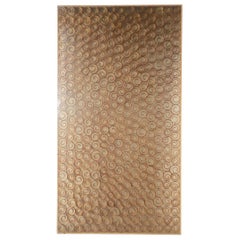
Modernist Translucent Architectural Panel with Repeating Curlicue Field Motif
Located in New York, NY
Groovy architectural panel constructed of translucent plastic with embedded wood curlicue elements repeating throughout. I believe this panel was originally a room divider, or some s...
Category

Mid-20th Century American Mid-Century Modern Wood Decorative Art

Materials

Plastic, Wood

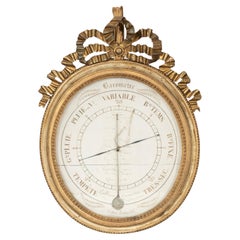
Louis XVI Giltwood Barometer
Located in Essex, MA
By Toricelli. With carved ribbon and bow above an oval dial painted in creme and grisaille with glass cover in a conforming frame.
Category

Late 18th Century French Louis XVI Antique Wood Decorative Art

Materials

Metal

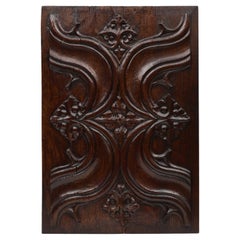
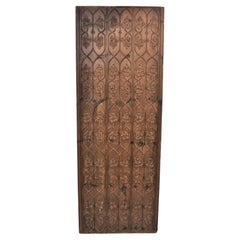
Gothic oak sculpted panel from the 16th century, Belgium
Located in Meulebeke, BE
Belgium / 16th century / wooden sculpted panel / oak / Gothic / Rustic / Antique A panel in oak wood enriched with Gothic graphic carvings. Hand carved in Belgium in the 16th centur...
Category

16th Century Belgian Gothic Antique Wood Decorative Art

Materials

Oak

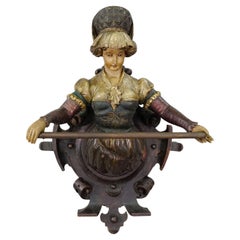
Lovely Carved Wooden Lady Towel Holder ca. 1900
Located in Berghuelen, DE
Lovely Carved Wooden Lady Towel Holder ca. 1900 A large unique towel rail, hand carved and painted around 1900. The artwork is modeled as a beautiful maid carrying a bar as a towel ...
Category

Early 1900s German Folk Art Antique Wood Decorative Art

Materials

Wood, Paint

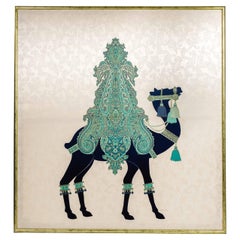
Painting of a Stylized Oriental Camel By Fabbriziani and Calandra Italy 1970s
Located in Salzburg, AT
Painting of a stylized oriental camel by Fabbriziani and Calandra from the 1970-ies Italy. On satin in a kind of silkscreen in limited edition, wooden frame gilded. The black camel i...
Category

1970s Italian Mid-Century Modern Vintage Wood Decorative Art

Materials

Silk, Wood

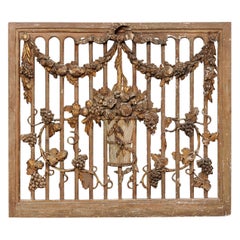
French 19th C. Panel Decorated in Grapes Floral Bouquet w/Mirror Background
Located in Atlanta, GA
A French carved wood panel, with mirrored back, from the 19th. This antique wall decoration from France features a near-square shaped wooden frame, craved with a floral and vining grape bouquet at center, a foliate swag at top with ribbon, and playful grapevines with grape clusters wrap about the vertical slats (lending the impression of looking through a gate). The backside has a clear glass mirror, which is not the original mirror and has been replaced. The wood retains its original finish, with areas of chipping and losses which only add character and charm. This 19th century French carved panel...
Category

19th Century French Antique Wood Decorative Art

Materials

Mirror, Wood

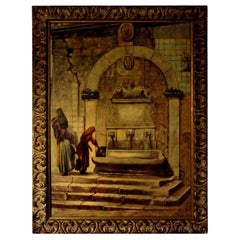
Oil on Canvas, Orientalist Scene, Signed Louis Saphier
Located in Houston, TX
Oil on canvas, orientalist scene, signed Louis Saphier. This lovely painting was executed around 1920. Louis Saphier was active and lived in both New Yor...
Category

1920s Grand Tour Vintage Wood Decorative Art

Materials

Canvas, Wood

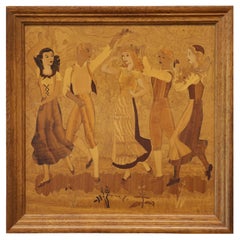
Birger Ekman Intarsia Wall Art, 1939, Sweden
Located in Værløse, DK
Exquisite Intarsia Wall Painting made by Birger Ekman in 1939. * Framed Intarsia painting picturing five dancing people. Vintage wood frame. Signed "Birger Ekman 1939" on the back....
Category

1930s Swedish Scandinavian Modern Vintage Wood Decorative Art

Materials

Wood

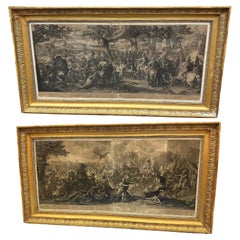
Pair of 17th Century Giltwood Framed Engraving of the Battle Scenes of Alexander
By Gérard Audran, Charles Le Brun
Located in Dallas, TX
An exquisite pair of 18th century giltwood framed engravings of battle scenes from ancient Greece of Alexander the Great at the Battle of Erie against Porus. French engraver Gérard A...
Category

17th Century French Antique Wood Decorative Art

Materials

Giltwood, Paper

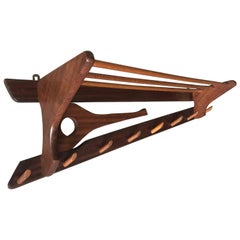
1950s Design Mid-Century Modern Solid Teakwood Coat Rack with Hat Rack
Located in Lisse, NL
Great quality and condition midcentury wall coat rack. This beautifully designed, perfectly executed and highly practical midcentury coat rack could be the ideal piece to come home...
Category

Mid-20th Century European Mid-Century Modern Wood Decorative Art

Materials

Teak

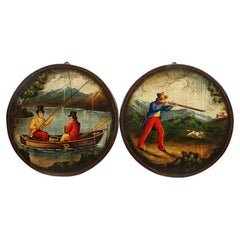
2 France handpaint Wallplates with Hunting Scene from 1900
Located in Oirlo, LI
Set of 2 Wallplates with Hunting Scene Additional information: Dimensions: 34 W x 34 H cm Country of origin: France Condition: In good condition
Category

1940s French Vintage Wood Decorative Art

Materials

Fruitwood

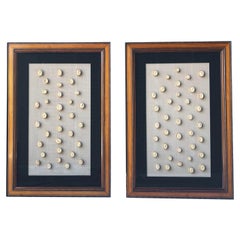
19th Century Pair of Framed Grand Tour Intaglios, Antique Wall Décor
Located in West Palm Beach, FL
An antique pair of Grand Tour intaglios in wooden frames with a total a 72 medallions. Wear consistent with age and use. circa 19th century, Italy.
Category

19th Century Italian Antique Wood Decorative Art

Materials

Plaster, Wood

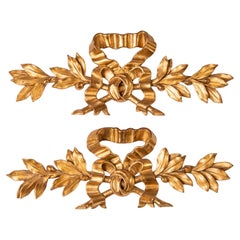
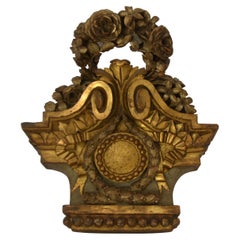
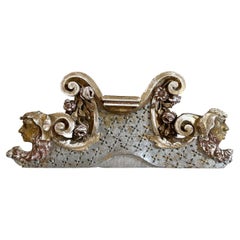
Gilt Antique Friezes from France
Located in Alessandria, Piemonte
Pair of antique golden friezes with olive branches. They are from the French Empire period and are perfect. ref. O/7147.
Category

Early 19th Century French Empire Antique Wood Decorative Art

Materials

Fruitwood

Gilt Antique Friezes from France
$1,424 Sale Price / set
20% Off
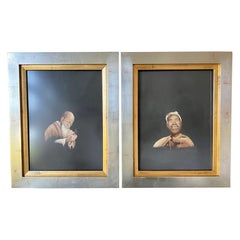
Pair of Framed Japanese Embroidery Art Portraits
Located in Atlanta, GA
Artistically framed for display in a slight shadow frame with non-reflective pixie glass, these pair of embroidery art panels from Japan are dated circa 1910-1930s, end of Meiji to early Taisho period. This period was the peak of the Japanese oversea expositions, when all things Japonisme took Europe and America by storm and left long-lasting impact on western art and design. The influence, however, was clearly not one-directional; As when Japanese artists, artisans and dealers experienced western art, it in turn inspired and impacted on the aesthetics of the Japanese art made for the western tastes. An interesting crop of art forms quickly emerged with a particular outlook that bridged the east and west, with the fundamental techniques still rooted in Japanese traditions. These rare hyper-realistic embroidered portraits were such an example. They took the essential format of the western portrait that permeated the Victoria and Edwardian Society, but substituted with exotic Japanese subjects and executed in traditional embroidery techniques which had been perfected for centuries by the natives. The two portraits on offer, one an elder man with long white beards and a pair of round spectacles lighting a pipe, and the other a grinning man with a peasant attire, were both set in black background, stimulating an appearance of Classic western oil painting or perhaps even the photograph. The fine stiches were maneuvered into an impressively hyper-realistic imagery that was far removed from the traditional Japanese embroidery...
Category

Early 20th Century Japanese Japonisme Wood Decorative Art

Materials

Silk, Wood

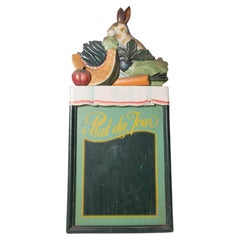
Plat Du Jour Rabbit Chalk Board
Located in Stamford, CT
A charming Plat du Jour Rabbit chalk board. The rabbit sits with a cluster of colorful fruits and vegetable atop a tablecloth covered table all above the plat du jour chalk board. Th...
Category

Late 20th Century French Wood Decorative Art

Materials

Wood

Plat Du Jour Rabbit Chalk Board
$540 Sale Price
55% Off
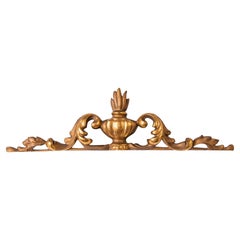
Gilt Wooden Frame Frieze
Located in Alessandria, Piemonte
Elegant antique gilt wooden frame frieze. Perfect, it can be placed anywhere: on a mirror, on an internal door, on the frame of a particular painting. ref. nr. O/2548.
Category

Early 19th Century Italian Aubusson Antique Wood Decorative Art

Materials

Fruitwood

Gilt Wooden Frame Frieze
$474 Sale Price
20% Off
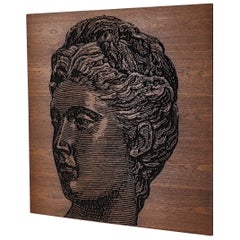
Large 4 Foot Hand Carved Feminist Art Wall Panel
Located in Las Vegas, NV
This LARGE 4 foot, hand drawn and carved, walnut panel is incredible. The piece depicts a feminine face, possibly of Greek origin. If you are looking for a conversation piece, or l...
Category

Mid-20th Century Wood Decorative Art

Materials

Walnut

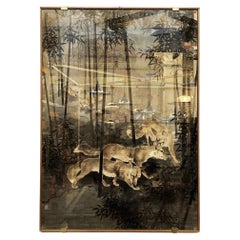
Japanese antique Silk tapestry with 5 foxes in bamboo forest, mid 1700s
Located in MIlano, IT
Japanese antique Silk tapestry with 5 foxes in bamboo forest, mid 1700s Rectangular silk tapestry. The subject of the painting are 5 white foxes,...
Category

Mid-18th Century Japanese Antique Wood Decorative Art

Materials

Silk, Wood

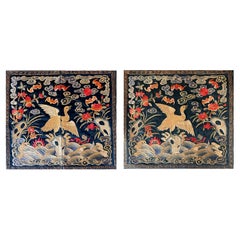
Pair Chinese Embroidered Fourth Rank Badges Qing Dynasty
Located in Atlanta, GA
A fine matching pair of embroidered silk civil rank badge panels (known in Chinese as Buzi) unframed. The panels feature borders of fret archaic key a...
Category

Mid-19th Century Chinese Qing Antique Wood Decorative Art

Materials

Silk, Giltwood

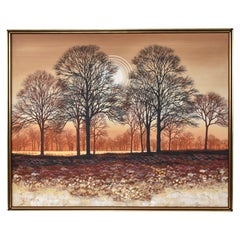
Large Mid-Century Modern Orange Brown Tree Landscape Painting Signed Williams
Located in Chattanooga, TN
Rendered with dramatic flair and architectural precision, this large-scale landscape painting by “Williams” captures the serene majesty of a tree grove at dusk. It unfolds in a richl...
Category

1980s American Organic Modern Vintage Wood Decorative Art

Materials

Metal

Spanish Hand-Carved Walnut Wood Decorative Wall Panel with Foliage Motifs
Located in Barcelona, ES
Wall Panel / Headboard in Walnut, Spain, 1940s This architectural wall panel features beautifully handcarved foliage details thorough. To be used as wall decoration or headboard. Te...
Category

20th Century Spanish Neoclassical Revival Wood Decorative Art

Materials

Walnut

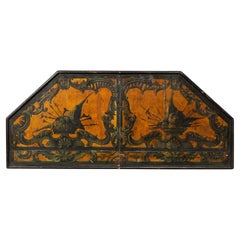
An 18th Century Italian Hand-Painted Plaque, Decorative Wall Ornament
Located in Atlanta, GA
An Italian hand-painted wall plaque from the 18th century. This wall decoration from Italy has a half-octagon shape with longer flat section being at bottom-side of plaque. It has been hand-painted in a motif of horns, arrows, angels, and volutes. Primary coloring is gold and green with a black frame. There is a lovely old patina; a nice reflection of its age. This 18th century Italian wall plaque...
Category

18th Century Italian Antique Wood Decorative Art

Materials

Wood

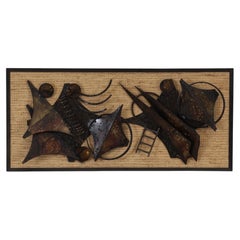
Heavily Textured Framed Brutalist Metal Wall Sculpture by Henrik Horst, 1970 s
Located in Los Angeles, CA
Brutalist mixed metal wall sculpture by Henrik Horst, 1970's. In original condition with a great patina. There is some wear to the corners of the frame, consistent with its age and u...
Category

1970s Danish Mid-Century Modern Vintage Wood Decorative Art

Materials

Metal

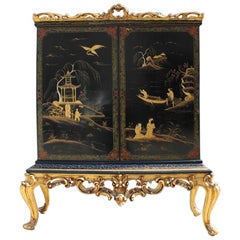
Midcentury Italian Orientalist Wood Bar Cabinet in Gold and Black Lacquer, 1950
Located in Palermo, Sicily
Midcentury Italian orientalist wood bar cabinet in gold and black lacquer, 1950.
Category

1950s Italian Mid-Century Modern Vintage Wood Decorative Art

Materials

Gold Leaf

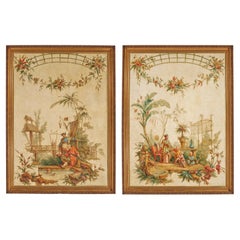
Pair French 18th-19th Century Chinoiserie Circle of Jean B. Pillement
By Jean-Baptiste Pillement
Located in Los Angeles, CA
A fine pair of French 18th-19th century whimsical rococo style chinoiserie oil on canvas, circle of Jean-Baptiste Pillement. (French, 1728-1808). One oil painting depicting an outdoor patio scene of a standing young mother, holding a fan, with her three young children playing with a horse-toy, a parrot and a cat, all surrounded by flowers, plants, trees, planters and flanked by a dragon fountain...
Category

Late 18th Century French Chinoiserie Antique Wood Decorative Art

Materials

Canvas, Giltwood

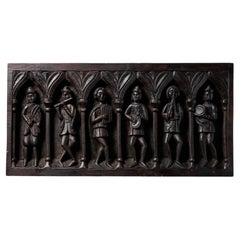
Antique Medieval Carved Pine Panel of Musical Figures
Located in Wormelow, Herefordshire
An impressive antique early medieval carved pine panel, originating from England's 19th century north country. Dating to circa 1900, this handsome decorative wall hanging is handcar...
Category

Early 20th Century English Country Wood Decorative Art

Materials

Wood, Pine

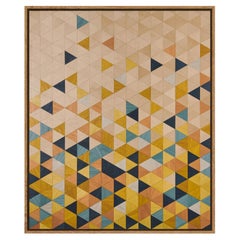
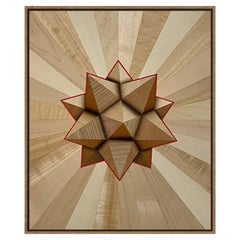
"DECONSTRUCTED" Marquetry Artwork by Emma Wood of the w o o d p o p Studio
Located in Nr Abergavenny, Monmouthshire
This recent artwork from the w o o d p o p studio is an example of the type of modern marquetry that w o o d p o p is becoming synonymous with. Since its inception 10 years ago - the studio has specialised in marquetry and inlay work; meticulous art-forms where pieces of wood veneer are inlaid to create decorative designs or pictures. Emma Wood, who founded the studio 10...
Category

2010s Welsh Wood Decorative Art

Materials

Wood

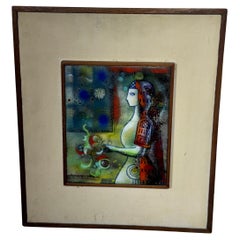
Doris Hall Enamel on Copper Art / framed plaque , Modernist woman
Located in Buffalo, NY
Wonderful Mid-Century Modern enamel by American artist Doris Hall (1907-2000). Nicely detailed and in excellent condition. Vibrant Color's .Signed Doris Hall (lower left) Original f...
Category

1950s American Mid-Century Modern Vintage Wood Decorative Art

Materials

Copper, Enamel

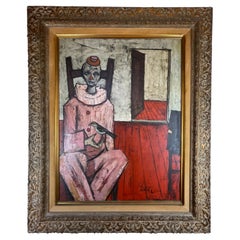
Charles Levier Painting "Clown Avec Un Oiseau"
Located in Miami, FL
A Captivating Vision: "Clown Avec Un Oiseau" by Charles Levier. This striking oil on canvas painting, titled "Clown Avec Un Oiseau" (Clown with a Bird) in French, is a captivating...
Category

Mid-20th Century American Mid-Century Modern Wood Decorative Art

Materials

Paint, Wood

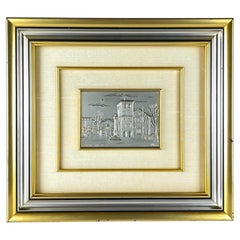
Vintage Silver relief picture collection Alliani, Italy, 1970s
Located in Miklavž Pri Taboru, SI
Vintage Silver relief picture "Trieste - San Giusto", collection Alliani made in Italy in the 1970s. Sterling Silver 925 and gold. Sculpture relief picture has certification of authe...
Category

Mid-20th Century Italian Mid-Century Modern Wood Decorative Art

Materials

Gold, Silver

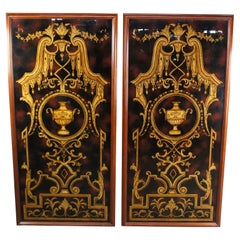
Monumental Pair Maitland Smith Hand Painted Neoclassical Eglomise Art Panels 80"
Located in Dayton, OH
A very large and impressive vintage pair of Maitland Smith hand painted art panels featuring a French Neoclassical / Renaissance eglomise style mo...
Category

Late 20th Century Renaissance Wood Decorative Art

Materials

Glass, Mahogany

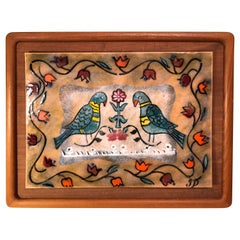
Mid-Century Modern Enamel Artwork by Judith Daner
Located in Redding, CT
Mid-Century Modern Enamel Artwork by Judith Danner. Amazing piece of work by a very talented artist. Signed JD (Judith Daner). Copper enamel plaque mount...
Category

1960s Mid-Century Modern Vintage Wood Decorative Art

Materials

Copper, Enamel

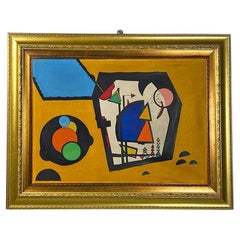
Italian Midcentury Anamnesi Acrylic Paint Work on Canvas Lucio Del Pezzo, 1960s
Located in MIlano, IT
Italian Mid-Century Modern Anamnesi acrylic paint work on canvas by Lucio Del Pezzo, 1960s. Colored acrylic paint work on canvas entitled Anamnesi with abstract subject with multicolored geometric shapes, on a mustard-colored background, and wooden frame with friezes with a golden finish. Drawing by Lucio Del Pezzo from around 1960s. Good conditions. Measures in cm 91x3x70h If you are interested in this product or need photos or additional information, we are available to respond any question as soon and quickly as possible. Remember to check our product in the listing of this our store, where we present fantastic original vintage products...
Category

1960s Italian Mid-Century Modern Vintage Wood Decorative Art

Materials

Wood, Paint

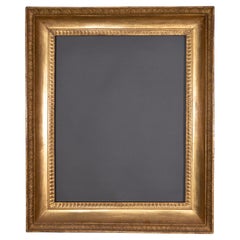
Period Century Giltwood Italian Empire Style Frame
Located in Roma, IT
Wonderful Italian Empire original giltwood frame with two rows of carving Early 19th century Internal measurements cm 58.5 x 47 Every item of our Gallery, upon request, is accompan...
Category

Early 19th Century Italian Empire Antique Wood Decorative Art

Materials

Wood

18th Century Italian Plaque
Located in Pomona, CA
18th-century gilded Italian wall plaque.
Category

1790s Italian Antique Wood Decorative Art

Materials

Wood

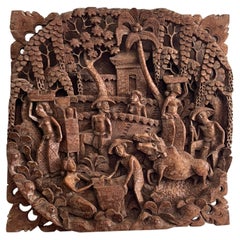
Vintage Hand-Crafted Balinese Beech Wood Panel, 1993
Located in Palermo, IT
Vintage hand-crafted Balinese beech wood panel, 1993 Purchased by my parents during their honeymoon. Single piece. Good conditions.
Category

1990s Balinese Wood Decorative Art

Materials

Wood

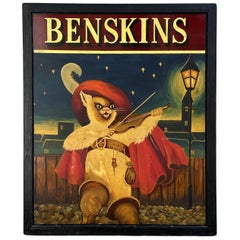
English Pub Sign, "Benskins (Puss in Boots)"
Located in Austin, TX
An authentic English pub sign (one-sided) featuring a painting of a cat playing a violin fiddle - from the beloved fairy tale Puss In Boots - in the light of a streetlamp at night, e...
Category

20th Century English Wood Decorative Art

Materials

Metal

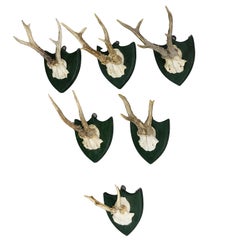
Set of Six Roe Deer Trophies on Carved Plaques Germany around 1880
Located in Berghuelen, DE
Set of Six Roe Deer Trophies on Carved Plaques Germany around 1880 A set of six antique Black Forest roe deer (Capreolus capreolus) trophies mounted on carved wooden plaques. The tr...
Category

1880s German Rustic Antique Wood Decorative Art

Materials

Antler, Wood

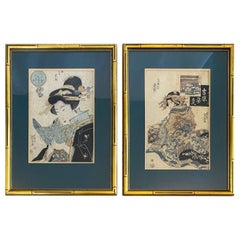
Pair of 19th Century Antique Japanese Woodblocks Prints Attrib. to Keisai Eisen
Located in Miami, FL
A fine pair of antique Japanese Woodblock Prints attributed to Keisai Eisen (1790-1848), original and presented in gilded bamboo wood frames. About the a...
Category

19th Century Japanese Antique Wood Decorative Art

Materials

Paper, Wood

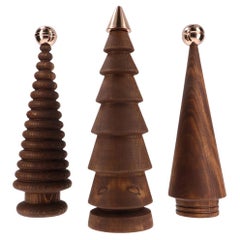
Wooden Christmas Tree Set – Cedar with Bronze Tip, Large
Located in Orlando, FL
The wooden Christmas tree set is designed to bring natural elegance to your holiday decor. Inspired by the minimal and abstract forms of Cedar, Fir, and Juniper trees, this handcraft...
Category

2010s Turkish Modern Wood Decorative Art

Materials

Wood, Oak

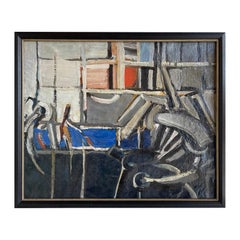
20th Century Dark-Blue Abstract Interior, French Painting by Daniel Clesse
Located in West Palm Beach, FL
A dark-blue, black abstract interior with chairs and window surround, oil on wood in canvas on a blue frame by Daniel Clesse, painted in France, signed and dated circa in 1970. Dani...
Category

Mid-20th Century French Mid-Century Modern Wood Decorative Art

Materials

Canvas, Wood, Paint

17th - 18th Century Portuguese Baroque Pine Wall Relief - Antique Décor Panel
Located in West Palm Beach, FL
An antique Portuguese wall relief or sopra porte made of Pinewood, in good condition. The Baroque wall panel was hand carved and is richly ornate wi...
Category

Late 17th Century Portuguese Baroque Antique Wood Decorative Art

Materials

Pine, Giltwood

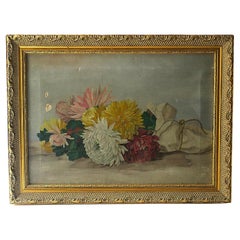
Colorful Still Life Flowers Painting Artwork
Located in New York, NY
A beautiful, colorful, soft, still life painting of a bouquet of spider mum flowers, circa late-19th century to early 20th century. Painting artwork, hand-painted in oil paint, depic...
Category

Late 19th Century Unknown Antique Wood Decorative Art

Materials

Canvas, Wood, Paint

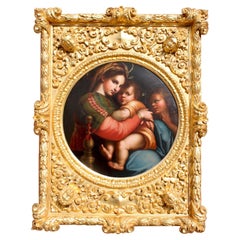
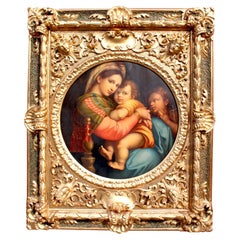
After Raffaello Sanzio 1483-1520 Raphael La Madonna della Seggiola Oil on Canvas
Located in Los Angeles, CA
A Fine Italian 19th Century Oil Painting on Canvas "La Madonna della Seggiola" after Raphael (Raffaello Sanzio da Urbino 1483-1520). The circular painted canvas depicting a seated Madonna holding an infant Jesus Christ next to a child Saint John the Baptist, all within a massive carved gilt wood and gesso frame, which is identical to the frame on Raphael's original artwork. This painting is a 19th Century copy of Raphael's Madonna della Seggiola painted in 1514 and currently exhibited and part of the permanent collection at the Palazzo Pitti, Galleria Palatina, Florence, Italy. The bodies of the Virgin, Christ, and the boy Baptist fill the whole picture. The tender, natural looking embrace of the Mother and Child, and the harmonious grouping of the figures in the round, have made this one of Raphael's most popular Madonnas. The isolated chair leg is reminiscent of papal furniture, which has led to the assumption that Leo X himself commissioned the painting. A retailer's label reads " Fred K/ Keer's Sons - Framers and Fine Art Dealers - 917 Broad St. Newark, N.J." - Another label from the gilder reads "Carlo Bartolini - Doratore e Verniciatori - Via Maggio 1924 - Firenze". Circa: 1890-1900. Subject: Religious painting Canvas diameter: 28 inches (71.1 cm) Frame height: 54 inches (137.2 cm) Frame width: 42 1/2 inches (108 cm) Frame depth: 5 1/2 inches (14 cm) Raffaello Sanzio da Urbino (Italian, March 28 or April 6, 1483 - April 6, 1520), known as Raphael, was an Italian painter and architect of the High Renaissance. His work is admired for its clarity of form, ease of composition, and visual achievement of the Neoplatonic ideal of human grandeur. Together with Michelangelo and Leonardo da Vinci, he forms the traditional trinity of great masters of that period. Raphael was enormously productive, running an unusually large workshop and, despite his death at 37, leaving a large body of work. Many of his works are found in the Vatican Palace, where the frescoed Raphael Rooms were the central, and the largest, work of his career. The best known work is The School of Athens in the Vatican Stanza della Segnatura. After his early years in Rome much of his work was executed by his workshop from his drawings, with considerable loss of quality. He was extremely influential in his lifetime, though outside Rome his work was mostly known from his collaborative printmaking. After his death, the influence of his great rival Michelangelo was more widespread until the 18th and 19th centuries, when Raphael's more serene and harmonious qualities were again regarded as the highest models. His career falls naturally into three phases and three styles, first described by Giorgio Vasari: his early years in Umbria, then a period of about four years (1504–1508) absorbing the artistic traditions of Florence, followed by his last hectic and triumphant twelve years in Rome, working for two Popes and their close associates. Raphael was born in the small but artistically significant central Italian city of Urbino in the Marche region, where his father Giovanni Santi was court painter to the Duke. The reputation of the court had been established by Federico III da Montefeltro, a highly successful condottiere who had been created Duke of Urbino by the Pope - Urbino formed part of the Papal States - and who died the year before Raphael was born. The emphasis of Federico's court was rather more literary than artistic, but Giovanni Santi was a poet of sorts as well as a painter, and had written a rhymed chronicle of the life of Federico, and both wrote the texts and produced the decor for masque-like court entertainments. His poem to Federico shows him as keen to show awareness of the most advanced North Italian painters, and Early Netherlandish artists as well. In the very small court of Urbino he was probably more integrated into the central circle of the ruling family than most court painters. Federico was succeeded by his son Guidobaldo da Montefeltro, who married Elisabetta Gonzaga, daughter of the ruler of Mantua, the most brilliant of the smaller Italian courts for both music and the visual arts. Under them, the court continued as a centre for literary culture. Growing up in the circle of this small court gave Raphael the excellent manners and social skills stressed by Vasari. Court life in Urbino at just after this period was to become set as the model of the virtues of the Italian humanist court through Baldassare Castiglione's depiction of it in his classic work The Book of the Courtier, published in 1528. Castiglione moved to Urbino in 1504, when Raphael was no longer based there but frequently visited, and they became good friends. He became close to other regular visitors to the court: Pietro Bibbiena and Pietro Bembo, both later cardinals, were already becoming well known as writers, and would be in Rome during Raphael's period there. Raphael mixed easily in the highest circles throughout his life, one of the factors that tended to give a misleading impression of effortlessness to his career. He did not receive a full humanistic education however; it is unclear how easily he read Latin. Early Life and Works His mother Màgia died in 1491 when Raphael was eight, followed on August 1, 1494 by his father, who had already remarried. Raphael was thus orphaned at eleven; his formal guardian became his only paternal uncle Bartolomeo, a priest, who subsequently engaged in litigation with his stepmother. He probably continued to live with his stepmother when not staying as an apprentice with a master. He had already shown talent, according to Vasari, who says that Raphael had been "a great help to his father". A self-portrait drawing from his teenage years shows his precocity. His father's workshop continued and, probably together with his stepmother, Raphael evidently played a part in managing it from a very early age. In Urbino, he came into contact with the works of Paolo Uccello, previously the court painter (d. 1475), and Luca Signorelli, who until 1498 was based in nearby Città di Castello. According to Vasari, his father placed him in the workshop of the Umbrian master Pietro Perugino as an apprentice "despite the tears of his mother". The evidence of an apprenticeship comes only from Vasari and another source, and has been disputed—eight was very early for an apprenticeship to begin. An alternative theory is that he received at least some training from Timoteo Viti, who acted as court painter in Urbino from 1495.Most modern historians agree that Raphael at least worked as an assistant to Perugino from around 1500; the influence of Perugino on Raphael's early work is very clear: "probably no other pupil of genius has ever absorbed so much of his master's teaching as Raphael did", according to Wölfflin. Vasari wrote that it was impossible to distinguish between their hands at this period, but many modern art historians claim to do better and detect his hand in specific areas of works by Perugino or his workshop. Apart from stylistic closeness, their techniques are very similar as well, for example having paint applied thickly, using an oil varnish medium, in shadows and darker garments, but very thinly on flesh areas. An excess of resin in the varnish often causes cracking of areas of paint in the works of both masters. The Perugino workshop was active in both Perugia and Florence, perhaps maintaining two permanent branches. Raphael is described as a "master", that is to say fully trained, in December 1500. His first documented work was the Baronci altarpiece for the church of Saint Nicholas of Tolentino in Città di Castello, a town halfway between Perugia and Urbino. Evangelista da Pian di Meleto, who had worked for his father, was also named in the commission. It was commissioned in 1500 and finished in 1501; now only some cut sections and a preparatory drawing remain. In the following years he painted works for other churches there, including the Mond Crucifixion (about 1503) and the Brera Wedding of the Virgin (1504), and for Perugia, such as the Oddi Altarpiece. He very probably also visited Florence in this period. These are large works, some in fresco, where Raphael confidently marshals his compositions in the somewhat static style of Perugino. He also painted many small and exquisite cabinet paintings in these years, probably mostly for the connoisseurs in the Urbino court, like the Three Graces and St. Michael, and he began to paint Madonnas and portraits. In 1502 he went to Siena at the invitation of another pupil of Perugino, Pinturicchio, "being a friend of Raphael and knowing him to be a draughtsman of the highest quality" to help with the cartoons, and very likely the designs, for a fresco series in the Piccolomini Library in Siena Cathedral. He was evidently already much in demand even at this early stage in his career. Influence of Florence Raphael led a "nomadic" life, working in various centres in Northern Italy, but spent a good deal of time in Florence, perhaps from about 1504. Although there is traditional reference to a "Florentine period...
Category

Early 1900s Italian Baroque Antique Wood Decorative Art

Materials

Canvas, Giltwood

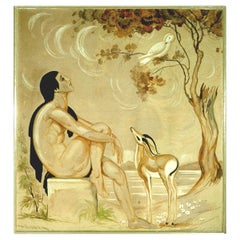
Original Emile Aubry Art Deco Painting "La Voix De Pan", Groupe Symbolique
Located in Vienna, AT
Emile Aubry, France, 1932 documentation, comparable with a similar work - catalogue "Salon des Independents" Paris from 1932 Muse´e des Beaux-Arts, Pau, Be´arn, Pyre´ne´es-Atlantique...
Category

1930s French Art Deco Vintage Wood Decorative Art

Materials

Acrylic, Plywood

"ATOMS OF THE UNIVERSE" Marquetry Art by Emma Wood - w o o d p o p Studio
Located in Nr Abergavenny, Monmouthshire
This recent artwork from the w o o d p o p studio is an example of the type of modern marquetry that w o o d p o p is becoming synonymous with. Since its inception 10 years ago -...
Category

2010s Welsh Wood Decorative Art

Materials

Wood

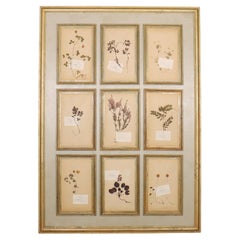
Large Herbarium Wall Panel
Located in Leamington Spa, Warwickshire
Large decorative wall panel consisting of 9 early 20th century Swedish herbariums in bespoke hand painted wooden frames. The herbariums ar...
Category

21st Century and Contemporary English Wood Decorative Art

Materials

Pine, Plywood

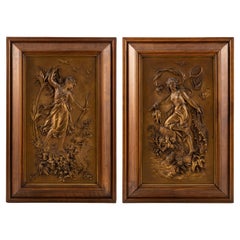
Pair Art Nouveau Bronze Relief Wall Plaques
Located in Kastrup, DK
Pair of fine Art Nouveau / Jugendstyl gilt bronze relief wall plaques, with wonderful details, mounted in walnut frames. The reliefs depict Diana, ...
Category

Early 20th Century German Art Nouveau Wood Decorative Art

Materials

Bronze

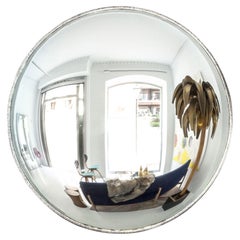
Mid Century Modern Style Large French Wall Mounted Round Convex Silver Mirror
Located in Madrid, ES
Large circular wall-mounted convex mirror featuring a beautifully patinated and textured metal frame. Its distinctive convex shape offers a dynamic, panoramic reflection that enhance...
Category

21st Century and Contemporary French Mid-Century Modern Wood Decorative Art

Materials

Metal

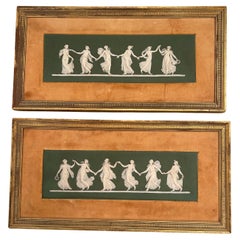
Vintage Pair of Romantic Wedgewood Figural Art
Located in Hopewell, NJ
Romantic pair of horizontal framed wedgewood figural art in gorgeous color green with cream maidens with wonderful poses. The framing while aged compliments the art having gold velv...
Category

1940s American Neoclassical Vintage Wood Decorative Art

Materials

Porcelain, Giltwood

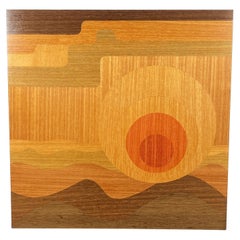
Mid-Century Wood Veneer Intarsia Wall Picture, 1960s
Located in Hamburg, DE
Mid-Century Wood Veneer Intarsia Wall Picture, 1960s, in Very Good conditions. Designed 1960 to 1969. Additional information: Materials: Wood Color: Brown Styles: Mid-Century Modern...
Category

20th Century Mid-Century Modern Wood Decorative Art

Materials

Wood

After Raffaello Sanzio 1483-1520 Raphael La Madonna della Seggiola Oil on Canvas
Located in Los Angeles, CA
A Fine Italian 19th Century Oil Painting on Canvas "La Madonna della Seggiola" after Raphael (Raffaello Sanzio da Urbino 1483-1520). The circular painted canvas depicting a seated Madonna holding an infant Jesus Christ next to a child Saint John the Baptist, all within a massive carved two-tone gilt wood, gilt-patinated and gesso frame, which is identical to the frame on Raphael's original artwork. This painting is a 19th Century copy of Raphael's Madonna della Seggiola painted in 1514 and currently exhibited and part of the permanent collection at the Palazzo Pitti, Galleria Palatina, Florence, Italy. The bodies of the Virgin, Christ, and the boy Baptist fill the whole picture. The tender, natural looking embrace of the Mother and Child, and the harmonious grouping of the figures in the round, have made this one of Raphael's most popular Madonnas. The isolated chair leg is reminiscent of papal furniture, which has led to the assumption that Leo X himself commissioned the painting. Circa: 1890-1900. Subject: Religious painting Painting diameter: 28 inches (71.1 cm) Frame height: 55 1/8 inches (140 cm) Frame width: 46 inches (116.8 cm) Frame depth: 5 1/8 inches (13 cm) Raffaello Sanzio da Urbino (Italian, March 28 or April 6, 1483 - April 6, 1520), known as Raphael, was an Italian painter and architect of the High Renaissance. His work is admired for its clarity of form, ease of composition, and visual achievement of the Neoplatonic ideal of human grandeur. Together with Michelangelo and Leonardo da Vinci, he forms the traditional trinity of great masters of that period. Raphael was enormously productive, running an unusually large workshop and, despite his death at 37, leaving a large body of work. Many of his works are found in the Vatican Palace, where the frescoed Raphael Rooms were the central, and the largest, work of his career. The best known work is The School of Athens in the Vatican Stanza della Segnatura. After his early years in Rome much of his work was executed by his workshop from his drawings, with considerable loss of quality. He was extremely influential in his lifetime, though outside Rome his work was mostly known from his collaborative printmaking. After his death, the influence of his great rival Michelangelo was more widespread until the 18th and 19th centuries, when Raphael's more serene and harmonious qualities were again regarded as the highest models. His career falls naturally into three phases and three styles, first described by Giorgio Vasari: his early years in Umbria, then a period of about four years (1504–1508) absorbing the artistic traditions of Florence, followed by his last hectic and triumphant twelve years in Rome, working for two Popes and their close associates. Raphael was born in the small but artistically significant central Italian city of Urbino in the Marche region, where his father Giovanni Santi was court painter to the Duke. The reputation of the court had been established by Federico III da Montefeltro, a highly successful condottiere who had been created Duke of Urbino by the Pope - Urbino formed part of the Papal States - and who died the year before Raphael was born. The emphasis of Federico's court was rather more literary than artistic, but Giovanni Santi was a poet of sorts as well as a painter, and had written a rhymed chronicle of the life of Federico, and both wrote the texts and produced the decor for masque-like court entertainments. His poem to Federico shows him as keen to show awareness of the most advanced North Italian painters, and Early Netherlandish artists as well. In the very small court of Urbino he was probably more integrated into the central circle of the ruling family than most court painters. Federico was succeeded by his son Guidobaldo da Montefeltro, who married Elisabetta Gonzaga, daughter of the ruler of Mantua, the most brilliant of the smaller Italian courts for both music and the visual arts. Under them, the court continued as a centre for literary culture. Growing up in the circle of this small court gave Raphael the excellent manners and social skills stressed by Vasari. Court life in Urbino at just after this period was to become set as the model of the virtues of the Italian humanist court through Baldassare Castiglione's depiction of it in his classic work The Book of the Courtier, published in 1528. Castiglione moved to Urbino in 1504, when Raphael was no longer based there but frequently visited, and they became good friends. He became close to other regular visitors to the court: Pietro Bibbiena and Pietro Bembo, both later cardinals, were already becoming well known as writers, and would be in Rome during Raphael's period there. Raphael mixed easily in the highest circles throughout his life, one of the factors that tended to give a misleading impression of effortlessness to his career. He did not receive a full humanistic education however; it is unclear how easily he read Latin. Early Life and Works His mother Màgia died in 1491 when Raphael was eight, followed on August 1, 1494 by his father, who had already remarried. Raphael was thus orphaned at eleven; his formal guardian became his only paternal uncle Bartolomeo, a priest, who subsequently engaged in litigation with his stepmother. He probably continued to live with his stepmother when not staying as an apprentice with a master. He had already shown talent, according to Vasari, who says that Raphael had been "a great help to his father". A self-portrait drawing from his teenage years shows his precocity. His father's workshop continued and, probably together with his stepmother, Raphael evidently played a part in managing it from a very early age. In Urbino, he came into contact with the works of Paolo Uccello, previously the court painter (d. 1475), and Luca Signorelli, who until 1498 was based in nearby Città di Castello. According to Vasari, his father placed him in the workshop of the Umbrian master Pietro Perugino as an apprentice "despite the tears of his mother". The evidence of an apprenticeship comes only from Vasari and another source, and has been disputed—eight was very early for an apprenticeship to begin. An alternative theory is that he received at least some training from Timoteo Viti, who acted as court painter in Urbino from 1495.Most modern historians agree that Raphael at least worked as an assistant to Perugino from around 1500; the influence of Perugino on Raphael's early work is very clear: "probably no other pupil of genius has ever absorbed so much of his master's teaching as Raphael did", according to Wölfflin. Vasari wrote that it was impossible to distinguish between their hands at this period, but many modern art historians claim to do better and detect his hand in specific areas of works by Perugino or his workshop. Apart from stylistic closeness, their techniques are very similar as well, for example having paint applied thickly, using an oil varnish medium, in shadows and darker garments, but very thinly on flesh areas. An excess of resin in the varnish often causes cracking of areas of paint in the works of both masters. The Perugino workshop was active in both Perugia and Florence, perhaps maintaining two permanent branches. Raphael is described as a "master", that is to say fully trained, in December 1500. His first documented work was the Baronci altarpiece for the church of Saint Nicholas of Tolentino in Città di Castello, a town halfway between Perugia and Urbino. Evangelista da Pian di Meleto, who had worked for his father, was also named in the commission. It was commissioned in 1500 and finished in 1501; now only some cut sections and a preparatory drawing remain. In the following years he painted works for other churches there, including the Mond Crucifixion (about 1503) and the Brera Wedding of the Virgin (1504), and for Perugia, such as the Oddi Altarpiece. He very probably also visited Florence in this period. These are large works, some in fresco, where Raphael confidently marshals his compositions in the somewhat static style of Perugino. He also painted many small and exquisite cabinet paintings in these years, probably mostly for the connoisseurs in the Urbino court, like the Three Graces and St. Michael, and he began to paint Madonnas and portraits. In 1502 he went to Siena at the invitation of another pupil of Perugino, Pinturicchio, "being a friend of Raphael and knowing him to be a draughtsman of the highest quality" to help with the cartoons, and very likely the designs, for a fresco series in the Piccolomini Library in Siena Cathedral. He was evidently already much in demand even at this early stage in his career. Influence of Florence Raphael led a "nomadic" life, working in various centres in Northern Italy, but spent a good deal of time in Florence, perhaps from about 1504. Although there is traditional reference to a "Florentine period...
Category

Early 1900s Italian Baroque Antique Wood Decorative Art

Materials

Canvas, Giltwood

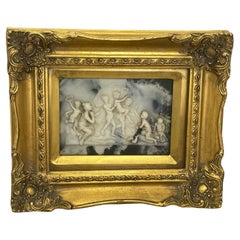
Gilt wood Framed Triumph of the Children relief plate, "Biggs Sons, London"
Located in Nuernberg, DE
A beautiful, vintage alabaster handmade plate, framed with glass and gilt wood. Measuring 11.75" wide, 1.63" deep and 10" high. Displayed in a period giltwood frame. Image size, 4 1/...
Category

1950s German Arts and Crafts Vintage Wood Decorative Art

Materials

Metal

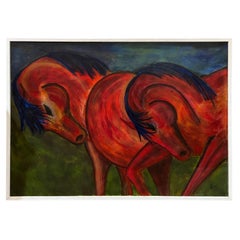
Enormous Framed Contemporary Oil on Canvas of Horses
Located in Redding, CT
Enormous contemporary oil on canvas of horses. This item has recently been reframed ,see all photos. Can be hung horizontally or vertically ...
Category

2010s Wood Decorative Art

Materials

Canvas, Paint, Wood

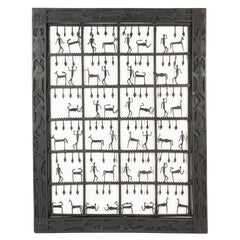
Dogon tribal hand forged rope twist iron window pane grill with figures, 1900-25
Located in Kenilworth, IL
Dogon tribal hand forged iron rope twist grill with hand forged silhouette figures within a grid of 24 squares. The work is framed in its original shallow carved & painted hardwood frame. The frame is carved with fish, birds, and reptiles, all characteristic Dogon subjects. Believed to have been fabricated for the European market...
Category

Early 20th Century African Wood Decorative Art

Materials

Iron

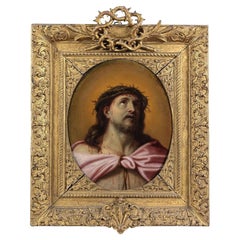
Italian 17th Century Oil on Canvas Head of Christ Crowned with Thorns, Mignard
By (circle of) Pierre Mignard
Located in Los Angeles, CA
A very fine Italian 17th century oval oil on canvas "Head of Christ Crowned with Thorns" Circle of Pierre Mignard (French, 1612-1695) within...
Category

17th Century French Baroque Antique Wood Decorative Art

Materials

Canvas, Giltwood

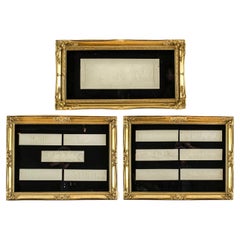
Antique Set of Three Box Framed Grand Tour Giovanni Liberotti Intaglios 19th C
Located in London, GB
An elegant set of three giltwood frames enclosing 12 unusually large plaster Grand Tour Giovanni Liberotti intaglios dating from the early 19th Century. The various large rectang...
Category

1810s Antique Wood Decorative Art

Materials

Plaster, Giltwood

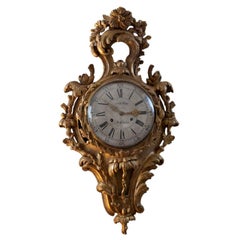
Swedish Rocaille Giltwood Wall Clock
Located in Kittery Point, ME
Surmounted by a pierced foliate cresting, flanked by glazed panels to the sides and below, the white enamel dial with Roman hours and Arabic minutes, inscribed Nils Berg...
Category

Mid-18th Century Swedish Rococo Antique Wood Decorative Art

Materials

Metal

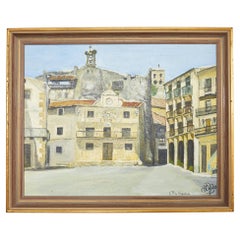
Midcentury Modern Italian Impressionist Town Square
Located in Rio Vista, CA
Untitled mid-century modern Italian impressionist oil on board painting of a village or town square landscape. The painting features beautifully detailed b...
Category

20th Century Italian Mid-Century Modern Wood Decorative Art

Materials

Wood

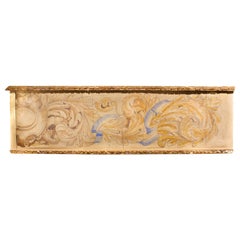
Italian Spolvero Rococo Print on Canvas with an Antique Frame Citrine Crystals
Located in Dublin, Dalkey
18th century Italian spolvero fresco pattern printed onto canvas and framed with an antique molding frame and citrine crystals. Spolvero is an artisti...
Category

18th Century Italian Rococo Antique Wood Decorative Art

Materials

Rock Crystal, Gold Leaf