Baroque Wall Decorations

BAROQUE STYLE

The decadence of the Baroque style, in which ornate furnishings were layered against paneled walls, painted ceilings, stately chandeliers and, above all, gilding, expressed the power of the church and monarchy through design that celebrated excess. And its influence was omnipresent — antique Baroque furniture was created in the first design style that truly had a global impact.

Theatrical and lavish, Baroque was prevalent across Europe from the 17th to mid-18th century and spread around the world through colonialism, including in Asia, Africa and the Americas. While Baroque originated in Italy and achieved some of its most fantastic forms in the late-period Roman Baroque, it was adapted to meet the tastes and materials in each region. French Baroque furniture informed Louis XIV style and added drama to Versailles. In Spain, the Baroque movement influenced the elaborate Churrigueresque style in which architecture was dripping with ornamental details. In South German Baroque, furniture was made with bold geometric patterns.

Compared to Renaissance furniture, which was more subdued in its proportions, Baroque furniture was extravagant in all aspects, from its shape to its materials.

Allegorical and mythical figures were often sculpted in the wood, along with motifs like scrolling floral forms and acanthus leaves that gave the impression of tangles of dense foliage. Novel techniques and materials such as marquetry, gesso and lacquer — which were used with exotic woods and were employed by cabinetmakers such as André-Charles Boulle, Gerrit Jensen and James Moore — reflected the growth of international trade. Baroque furniture characteristics include a range of decorative elements — a single furnishing could feature everything from carved gilded wood to gilt bronze, lending chairs, mirrors, console tables and other pieces a sense of motion.

Find a collection of authentic antique Baroque tables, lighting, decorative objects and other furniture on 1stDibs.

to
127
471
386
880
5
4
Height
to
Width
to
7,882
6,890
2,154
1,489
943
746
573
538
311
294
286
245
200
198
178
161
145
546
180
154
9
59
39
28
16
4
14
2
1
11
6
4
2
320
311
246
206
109
848
319
151
64
59
889
886
886
26
7
5
5
4
Style: Baroque
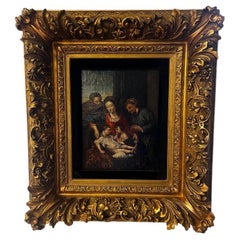
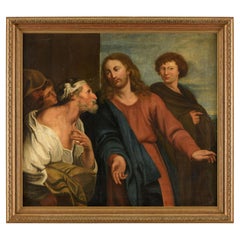
Italian School 17th century "Christ in the Temple"
Located in Madrid, ES
Italian School 17th century "Christ in the Temple" Oil/canvas/double, 106 x 118 cm. good condition
Category

Early 17th Century Italian Antique Baroque Wall Decorations

Materials

Paint

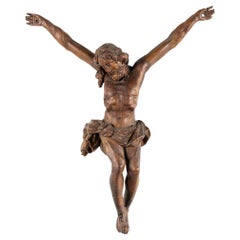
A Rustic Wooden 17th century Baroque Flemish Corpus of Christ
Located in Leesburg, VA
Anonymous Belgium; ca. 1650-1700 Wood (walnut?) Approximate size: 22.75 (h) x 18.5 (w) x 10 (d) in. The scale of this sculpture indicates its original setting was either in the cen...
Category

Late 17th Century Belgian Antique Baroque Wall Decorations

Materials

Walnut

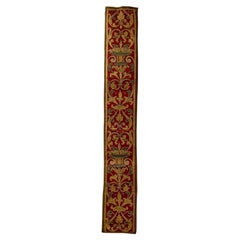
Antique 17th Century Baroque Italian Silk, Metallic Thread Embroidery Panel
Located in New York, NY
Fine 17th century Baroque period silk and metallic thread embroidery panel. Excellent vibrant colors of bold burgundy, pale cream and beautiful, elegant teal with a border of textur...
Category

17th Century Italian Antique Baroque Wall Decorations

Materials

Metallic Thread

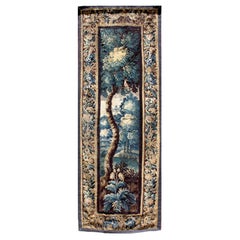
Flemish 18th-19th Century Verdure Landscape Tapestry Panel Centered with a Tree
Located in Los Angeles, CA
A fine flemish 18th-19th century Verdure landscape tapestry, the wool and silk tapestry centered by a scene of a tall tree within a forest background and a foliage border. Circa: 180...
Category

Early 19th Century Belgian Antique Baroque Wall Decorations

Materials

Wool, Silk

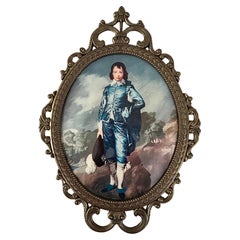
The Blue Boy by Thomas Gasinborough Print-Made in Italy
By (circle of) Thomas Gainsborough
Located in Medina, OH
This a print of the iconic The Blue Boy by Thomas Gainsborough from around 1770. It is believed to be a portrait of Jonathan Buttali, the son of wealthy ironmonger. This print come...
Category

Late 18th Century Italian Antique Baroque Wall Decorations

Materials

Brass

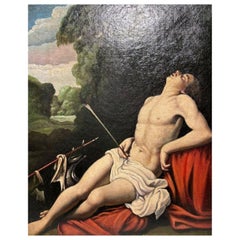
"Saint Sebastian" by Carlo Saraceni 19th Century Italian School with Video
Located in Madrid, ES
"Saint Sebastian" by Carlo Saraceni 19th Century Italian School with Video Oil painting on canvas, Italian school, 19th century, depicting Saint Sebastian in the style of Carlo Sara...
Category

Late 19th Century Italian Antique Baroque Wall Decorations

Materials

Paint

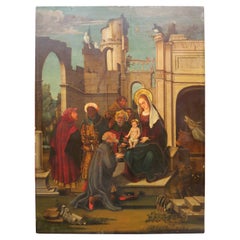
Adoration of the Magi, Catalan Baroque, S.XVI Dated 1527, Oil on Wood
Located in CABA, AR
Catalan Baroque S.XVI The Adoration of the Magi Oil on wood 92cm x 68cm Dated 1527 At the beginning of the Renaissance period, Gothic forms coexisted in Catalonia with other new solutions, in which religious fervor was mixed with the attention to detail of everyday life. Following the medieval tradition, the altarpieces are thought from a narrative vision, and flat painting...
Category

16th Century Spanish Antique Baroque Wall Decorations

Materials

Wood

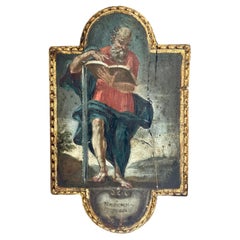
18th Century Italian School St. Jerome "Remissionem Peccatorum"
Located in Bradenton, FL
Italian Baroque religious panel painting. Style of Giovan Battista Langetti, depicting St. Jerome, the revered early Christian scholar best known for translating the Bible into Lati...
Category

18th Century Italian Antique Baroque Wall Decorations

Materials

Giltwood, Paint

Baroque Painting Depicting the Illicit Romance of Paolo and Francesca
Located in Vancouver, British Columbia
An exceptionally executed oil on canvas Baroque painting depicting "lovebirds" Paolo Malatesta and Francesca Da Rimini whispering to one another. At the feet of Paoio there is a dog symbol...
Category

Early 18th Century Italian Antique Baroque Wall Decorations

Materials

Canvas

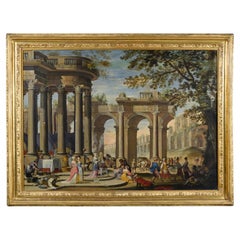
18th Century, Painting Architectural Capriccio, att. to Isaac De Moucheron
Located in IT
18th Century, Painting with Architectural Capriccio with figures, attributed to Isaac De Moucheron Measures: canvas cm H 108 x L 152; with frame cm H 132 x L 176 x 8 The painting i...
Category

18th Century Dutch Antique Baroque Wall Decorations

Materials

Canvas

Adolf Constantin Baumgartner Stoiloff Oil on Board Cossacks Warriors on Horsback
By Adolf Constantin Baumgartner-Stoiloff
Located in Los Angeles, CA
Adolf Constantin Baumgartner Stoiloff (Austrian/Russian, 1850-1924) a fine oil on board "Charging Cossack Warriors on Horseback" within an ornate giltwood frame, circa 1890 Born in 1850 in Linz (Austria) Stoiloff died in Vienna in 1924. According to a research of Russian literature, he studied in the 1880s at St. Petersburg Imperial Academy of Fine Arts. He was very well known for his Russian horse...
Category

Late 19th Century Russian Antique Baroque Wall Decorations

Materials

Gesso, Canvas, Giltwood, Paint

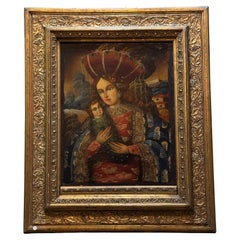
Virgin and Child, Cuzco School, oil on canvas, 18th century
Located in Madrid, ES
Virgin and Child, Cuzco School, oil on canvas, 18th century Magnificent oil on canvas from the Cuzco School (Viceroyalty of Peru), dated to the 18th century. It depicts the Virgin h...
Category

18th Century Spanish Antique Baroque Wall Decorations

Materials

Paint

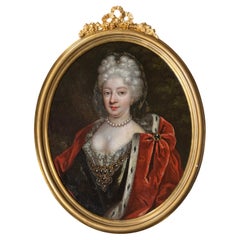
Portrait of Isabella Farnese, Queen Consort of Spain, 18th Century
Located in Madrid, ES
Portrait of Isabella Farnese, Queen Consort of Spain, 18th Century Oil on oval canvas depicting Isabella Farnese (1692–1766), queen consort of Spain by her marriage to Philip V. The...
Category

18th Century Spanish Antique Baroque Wall Decorations

Materials

Paint

English School 17th Century "Portrait of George Villiers Duke of Buckingham"
Located in Madrid, ES
English School 17th Century "Portrait of George Villiers Duke of Buckingham" Oil on canvas 66X53 cm size without frame George Villiers, 1st Duke of Buckingham (Brooksby, 28 August 1...
Category

17th Century English Antique Baroque Wall Decorations

Materials

Paint

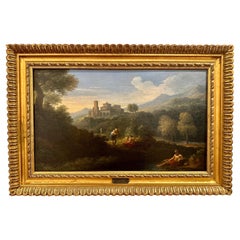
Jan Frans van Bloemen called Orizzonte (Antwerp 1662-Rome 1749), Roman Landscape
Located in CH
Jan Frans van Bloemen, called Orizzonte (Antwerp, 1662 – Rome, 1749) A Late 17th–Early 18th Century Italian Landscape with Figures of the Roman Campagna...
Category

Late 17th Century Dutch Antique Baroque Wall Decorations

Materials

Canvas

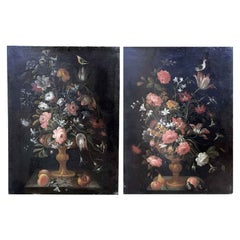
Coppia di Nature morte di FIori Frutta e Uccelli Due Dipinti Italiani 1650 circa
Located in Milano, MI
Nature morte di fiori in vaso di scuola italiana del XVII secolo, coppia di due dipinti senza cornice. Olio su tela con sfondo scuro e fiori finemente definiti. Questi dipinti, natur...
Category

17th Century Italian Antique Baroque Wall Decorations

Materials

Canvas

Early 17th Century School of Peter Paul Rubens “The Holy Family” Oil on Canvas
Located in Doha, QA
This is an absolutely incredible early 17th century oil on canvas painting representing Holy Family-Virgin Mary, St.Joseph, St. Elisabeth, John the Baptist and Baby Jesus. Sir Peter ...
Category

Early 17th Century Italian Antique Baroque Wall Decorations

Materials

Canvas

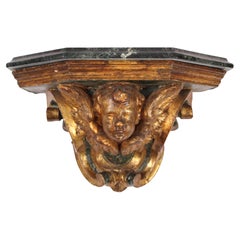
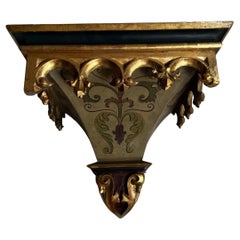
Antique Baroque Style Wall Bracket
Located in Laguna Beach, CA
Antique baroque style painted and gilt decorated wall bracket, 18th century. With a mid to late 20th century marble top, a gilt decorated cupid face with wings.
Category

18th Century European Antique Baroque Wall Decorations

Materials

Marble, Gold Leaf

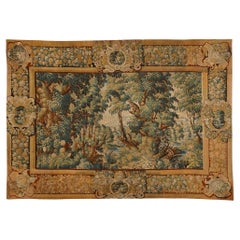
Immense 17th Century Flemish Wool Verdure Tapestry
Located in London, GB
Immense 17th Century Flemish wool verdure tapestry Flemish, 17th Century Height 323cm, width 424cm This very large and exquisite tapestry was crafted in wool in Flanders during the ...
Category

17th Century Belgian Antique Baroque Wall Decorations

Materials

Wool

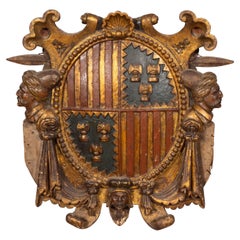
Spanish Baroque Polychrome And Giltwood Coat Of Arms
Located in Essex, MA
Oval shield with coat of arms and shell carving flanked by carved scrolls, the whole flanked by men with turbans , the base with the head of a soldier. This item is illustrated in 'Spanish Polychrome...
Category

1680s Spanish Antique Baroque Wall Decorations

Materials

Walnut, Giltwood, Paint

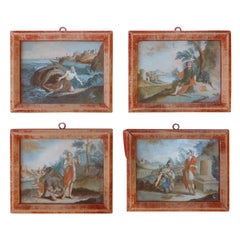
Four Neapolitan underglaze paintings with frame
Located in Milano, IT
The four 18th-century Neapolitan posthumously framed under-glass paintings depict biblical scenes from The Book of Jonah, specifically: 1. Jonah vomited by the Whale; 2. Elisha and t...
Category

18th Century Italian Antique Baroque Wall Decorations

Materials

Glass, Wood

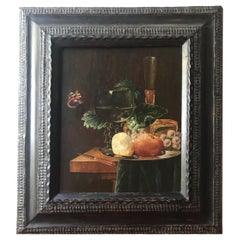
19th Century Still Life Painting After Pieter Claesz Dutch
Located in Vero Beach, FL
19th century still life painting after Pieter Claesz (1597-1660) Dutch. This outstanding 19th century oil painting on copper shows an amazing intuitiv...
Category

Late 19th Century Dutch Antique Baroque Wall Decorations

Materials

Copper

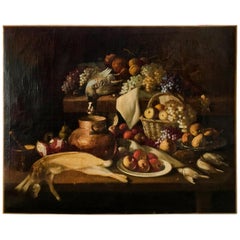
17th Century Large Dutch Painting Still Life with Fruit and Game, Oil on Canvas
Located in Vero Beach, FL
This large, old master still life painting is a perfectly balanced composition of fruit and game birds. In the foreground a rabbit is stretched out. A copper kettle and a basket are ...
Category

17th Century Dutch Antique Baroque Wall Decorations

Materials

Canvas, Paint

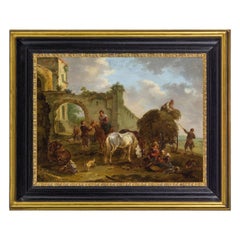
18th Century, Baroque Austran Painting by August Querfurt
Located in IT
August Querfurt (1696, Wolfenbüttel - 1761, Vienna) Farmers and villagers at the entrance of a village Oil on panel , cm 38,5 x 51. frame 66 x 53,5 x 4,5 cm The valuable painting, ...
Category

18th Century Austrian Antique Baroque Wall Decorations

Materials

Wood

Antique Early 19th Century Venetian Hand Painted and Gold Gilded Console/Bracket
Located in Doha, QA
A fabulous early 19th centruy Italian Console, wall Bracket is an incredible example of venetian crafstmanship of that time. The top has a very good and spacious size. Gold gilded an...
Category

Early 19th Century Italian Antique Baroque Wall Decorations

Materials

Gold

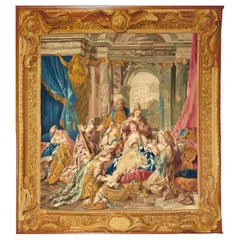
Tapestry Royal Manufacture of Aubusson, Louis XVI period 1738 at the Gobelins
Located in Madrid, ES
Tapestry from the Royal Manufacture of Aubusson, Louis XVI period , made in 1738 at the Gobelins One panel from a series of Gobelins tapestries depicting the History of Esther, illustrating Esther seated and attended by handmaidens, one washing her feet in golden basin, another fastening a bracelet, another offering a mirror, all observed by Mordecai, woven in the workshop of Michele Audran after a design by J. F. de Troy. The Toilet of Esther c.1778-85.Royal Collection Trust-Queens Audience Chamber Windsor Castle The Sketches for the Esther Cycle by Jean-François de Troy (1736) “and the maid was fair and beautiful; whom Mor’decai, ..., took for his own daughter.” (Est. 2:7) A supple and undulating genius, both a flattering portraitist and a prolix history painter, as well as a brilliant genre painter, in a gallant or worldly vein, Jean-François de Troy (Paris, 1679 – Rome, 1752), solicited, although he had passed the threshold of old age, a new royal commission up to his ambitions. To obtain it, he submitted – successfully - for the approval of the Bâtiments du roi (administration), seven modelli painted in 1736 with his usual alacrity. Inspired by one of the most novelistic texts of the Old Testament, the Book of Esther, these sketches in a rapid and virtuoso manner were transformed by the artist, between 1737 and 1740 into large cartoons intended to serve as models for the weavers of the Gobelins factory. Showing undeniable ease and skill in the composition in perfect harmony with the sensitivities of the times, the tapestry set met with great success. The Story of Esther perfectly corresponded to the plan of the Bâtiments du roi to renew the repertoire of tapestry models used for the weavers of the royal factories while it also conformed to the tastes of Louis XV’s subjects for a fantastical Orient, the set for a dramatic tale in which splendour, love and death were combined. Indeed, no tapestry set was woven in France during the 18th century as often as that of Esther. The series of modelli painted by de Troy during the year 1736 looks to the history of French painting and decoration under Louis XV as much as it does the history of the Gobelins. It probably counts among the most important rococo pictorial groups to have remained in private hands. First the Biblical source illustrated by De Troy which constitutes the base of one of the richest iconographical traditions of Western art will be considered. Then the circumstances and specific character of French civilisation during the reigns of Louis XIV and Louis XV which contributed to making the theme of Esther a relevant subject, both attractive to contemporaries and remarkably in line with the sensitivities of the time will be elucidated. An examination of the exceptional series of sketches united here, the cartoons and the tapestries that they anticipate as well as a study of their reception will close this essay. The Book of Esther: A scriptural source at the source of rich iconography. The origin of the Esther tapestry set by Jean-François de Troy – origin and creation of a masterpiece According to the evidence of one of the artist’s early biographers, the chevalier de Valory, author of a posthumous elegy of the master, read at the Académie royale de peinture et de sculpture on 6 February 1762, it was apparently due to early16 rivalry with François Lemoyne (1688-1737), his younger colleague who had precisely just been appointed First Painter to the King in 1736, that had encouraged François de Troy to seek a commission allowing him to show off his ease and his promptitude at the expense of a rival who was notoriously laborious: “M. De Troy, retaining some resentment of the kind of disadvantage which he believed to have suffered compared with his emulator looked to regain some territory by making use of the facility his rival did not possess. Lemoyne was excessively long in the creation of his works,and M. De Troy of a rare celerity: consequently, with this particular talent, the latter offered to the court to make paintings appropriate to be executed at the Gobelins Factory; and it is to this circumstance that we owe the beautiful series of the Story of Esther, which would be sufficient alone to give him a great reputation.”17 Beyond the suspicion inspired by the topos, which still constitutes, more or less, a tale of rivalries between artists in ancient literature, there is probably some truth in what Valory reports although A.-J. Dezalier d’Argenville (who indicates rather spitefully that de Troy did not hesitate to “cut prices” to impose himself, benefitting from the productivity assured by the unlikely rapidity of his brush)18 proves to be more evasive: “As he looked to busy himself, he had offered to make the paintings that serve as models for the King’s tapestries cheaply: which did not please his colleagues. He was given a choice of two tapestry series to be made and he took the Story of Esther and that of Jason”.19 Whether or not the choice was actually left to de Troy (which would appear rather casual on the royal administration’s part all the same), it seems likely that the artist, whose contemporaries extol his “fire”, as the faculty of invention was then called, must have ardently aspired to the possibility of using on a very large scale the “creative genius” with which Dezallier d’Argenville credits him. The decoration of the private apartments, the fashion for which Louis XV had promoted at Versailles and Fontainebleau, offered little opportunity to excel in this area. Other than painting for altarpieces, only tapestries could allow comparison with Lemoyne who had been granted – unfortunately for him – a major decoration: the enormous ceiling of the Hercules Room at Versailles. Favoured by the recent improvement in France’s financial situation, the revival of patronage offered de Troy a commission fitting for him, in a field in which, however, he had hardly any experience. Anxious to renew the repertoire of models available to the Gobelins factory, the Duc d’Antin, surintendant des Bâtiments du roi from 1708 to 1736 followed by his successor, Philibert Orry comte de Vignory, gave him the task of producing seven large cartoons inspired by the Book of Esther corresponding to the brilliant sketches or modelli which de Troy had produced in one go, or almost (very few preparatory drawings can in fact be linked to the Esther cycle and all seem to be at the execution stage of the cartoons).20 Subjected to the approval of the Administration des Bâtiments according to the procedure in use for projects being planned for the Gobelins, sketches made rapidly during 1736 were approved and the project launched immediately. Thereupon came the news of François Lemoyne’s death, who, ground down by work and a victim of his private torment, committed suicide on 4 June 1737. Against all expectations, de Troy did not replace his rival in the position of First Painter (which remained vacant until the appointment of Charles Coypel in January 1747), which would perhaps have made him too obviously the beneficiary of the drama. The awarding of the position of Director of the French Academy in Rome came to console him while he had already produced (or he was in the process of finishing), in Paris, three of the seven cartoons of the cycle (The Fainting of Esther finished in 1737 and the Toilet and Coronation of Esther, both finished in 1738). De Troy, we can see, did not follow the order of the narrative but began with the subjects which apparently offered the least difficulty because he had already depicted them, or because they fall into a strong pictorial tradition (such is the case especially for the Fainting of Esther). He had hardly settled at the Palazzo Mancini in August 1738, when his first task which awaited the new director of the French Academy naturally consisted of honouring the royal commission and finishing without delay the final cartoons of the Story of Esther after the sketches he must have taken with him. As prompt as ever, de Troy discharged himself of the execution of the four remaining cartoons in only two years, by beginning with the largest format which allowed him to strike the imagination and to impose himself as soon as he arrived on the Roman stage: the Triumph of Mor’decai which was finished in 1739 (like Esther’s Banquet). The following year, the Mor’decai's Disdain and The Sentencing of Haman were brought to an end in the same Neo-Venetian style, obviously tributary to Veronese with its choice of “open” monumental architecture which is characteristic of the entire cycle.21 The series, it should be noted, was almost augmented with some additional scenes in the mid 1740s. Indeed, the first tapestry set finished at the Gobelins in 1744 proved to be unsuitable for the arrangement of the Dauphine’s apartments at Versailles for which it had been intended to decorate the walls the following year (cf infra). Informed of this, de Troy, considering that the story of Esther offered “several good subjects,” immediately offered to illustrate one or new subject among those “which could appear to be the most interesting”. The directeur des Bâtiments Orry, who managed the State’s accounts, obviously judged it less costly to have one of the tapestries widened to fill in the end of the Dauphine’s bedroom,22 which has probably deprived us of very original compositions, because de Troy had already illustrated the most famous themes, those that benefitted from a strongly established iconographical tradition and from which it was not easy to deviate The Tapestry Set of the Story of Esther Placed on the tapestry looms of the Gobelins at the end of the 1730s in Michel Audran’s workshop, the cycle created by de Troy aroused true infatuation. The few hundred tapestries made between 1738 and 1797 – all in high-warp tapestry and woven in wool and silk except for four in low-warp made in Neilson’s workshop – show the impressive success of a tapestry set that was without any doubt the most frequently woven of the 18th century in France. 29 Only three cartoons had been delivered by de Troy in 1738 when the first tapestry set was begun by Audran under the expert eye of Jean-Baptiste Oudry to whom the Directeur général des bâtiments, Philibert Orry had assigned the (weekly) supervision of the weaving. During the summer of 1738, the piece of the Fainting of Esther, which Oudry judged to be admirable, was finished. During the winter of 1742, Oudry informed Orry that about two ells of the Triumph of Mor’decai had been made “with no faults”,that the Coronation of Esther was finished and that the Esther at her Toilet “a very gracious tapestry” was “a little over half” finished. Exhibited at Versailles in 1743, these two last pieces were admired by Louis XV and the Court. On 3 December 1744, the set of seven tapestries was finally delivered to the Garde Meuble. It was intended, the honour was not slight, to decorate the apartments of the Infanta Maria Teresa Rafaela of Spain whose marriage to the young Dauphin Louis-Ferdinand had been fixed for the following year (it took place on 23 February 1745). Apparently it was thought that the theme of Esther the biblical heroine and wife of a foreign sovereign was appropriate for the apartments of the Spanish Dauphine. As early as the month of March, the architect Ange-Jacques Gabriel informed de Troy that her grand cabinet was decorated with the “Esther tapestry set” specifying however that “for lack of two small or one large piece, we have not been able to decorate the end of the room”. This difficulty led immediately to the Banquet episode being woven a second time in two parts (they were delivered to the Garde-Meuble on 30 December 1746) to garnish the panels on each side of the bed of the Dauphine who would hardly enjoy them (she died on 22 July 1746 and the decoration was installed for the new Dauphine Maria Josepha of Saxony). The appearance of the set’s remarkable border, which imitated a richly sculpted wooden frame, should be mentioned. Conceived in 1738 by the ornamentalist Pierre Josse-Perrot and used in the later weavings until 1768, it tended to reinforce the resolutely painterly appearance of the tapestry set which, in this regard, pushed the art of tapestry as far as its ultimate mimetic possibilities. With the exception of Mor’decai's Disdain which had been removed earlier, the “editio princeps” of the story of Esther (from then on in nine pieces) remained at Versailles until the Revolution. Of the eight surviving tapestries, four are at the chateau of Compiègne and four belong today to the Mobilier National. No less than seven tapestry sets reputed to be complete (one of them in fact only had six tapestries) would be produced officially at the Gobelins up to 1772. Literature: 1- The Œuvres mêlées of an emulator of Racine, the Abbé Augustin NADAL thus include an Esther. Divertissement spiritual which is exactly contemporary with Jean François de Troy’s cycle since it was performed in 1735 and published in Paris three years later. 2-Le Siècle de Louis XIV, 1751, 1785 ed., p. 96-97 for French ed. 3- Lemoyne and de Troy had been obliged to share the First Prize in the competition organised in 1727 between the most prominent history painters of the Académie Royale. 4- Mémoires…, pub. L. DUSSIEUX et al., 1854, II, p.265. 5-The fact that de Troy, at the risk of falling out with his colleagues, did not hesitate to make use of prices in order to convince the new directeur des Bâtiments Philibert Orry, is confirmed by Mariette who adds tersely “it caused much shouting” (pub. 1851-1860, II, p. 103). 6- Abrégé de la vie des plus fameux peintres…, ed. 1762, IV, p. 368-369 20 Early comments on the painter are inclined to present him as a kind of “pure painter”, doing without the medium of drawing, a few intermediary studies between the Esther sketches and the large cartoons at the Louvre nevertheless show that de Troy used red chalk (see in the catalogue, the notice for the Meal of Esther and Ahasuerus under the entry drawing) to change one or other figure. 7-C. GASTINEL-COURAL (cat. exp. PARIS, 1985, p. 9-13) as well as the article by J. VITTET, exh. cat. LA ROCHE-GUYON, 2001, p. 51-55. 8-The Hermitage in St. Petersburg conserves five tapestries of these two royal gifts whose provenance still awaits elucidation (as far as we are aware). In 1766, the Grand Marshal of Russia, Count Razumovski (or Razamowski), acquired the Fainting and the Banquet extracted from the sixth weaving (J. VITTET, 2001, p. 53). 9- Lettres écrites de Suisse, d’Italie…,quoted by J. VITTET, op. cit., p. 54. 10-The tapestry set remained in the hands of a branch of the Hapsburg-Lorraine family until 1933 (ibid. P. 54). 11-Quoted by Chr. LERIBAULT, 2002, p. 97, note 269. 12-Y. CANTAREL-BESSON, 1992, p. 241. Catalogue The Esther at her Toilet Oil on canvas, 57 x 51 cm Provenance: Painted in 1736 at the same time as the six other modelli of the Story of Esther intended to be presented, for approval, to the direction des Bâtiments du Roi; perhaps identifiable among a lot of sketches by Jean-François de Troy in the post mortem inventory of the amateur, historian and critic Claude-Henri Watelet (1718-1786) drawn up on 13 January 1786 and following days (A.N. T 978, n° 30) then in the sale of the property of the deceased, Paris, 12 June 1786, n° 33; Paris, François Marcille Collection (who owned a series of six sketches from which the Triumph of Mor’decai was missing, see infra); Paris, Marcille Sale, Hôtel Drouot, 12-13 January 1857, n° 36; Asnières, Mme de Chavanne de Palmassy ( ?) collection; Paris, Galerie Cailleux; Paris, Humbert de Wendel collection (acquired from the Galerie Cailleux in 1928); by inheritance in the same family; Paris, Sotheby’s, 23 June 2011, n° 61. In order not to add unnecessarily to the technical commentary on each work, the catalogue raisonné by Chr. Leribault which contains a substantial bibliography on the series should be referred to. The other bibliographical references only concern the publications and exhibitions to have appeared and been presented more recently. Bibliography and Exhibitions: Chr. LERIBAULT, 2002, n° P. 247 (repr.); E. LIMARDO DATURI, 2004, p. 28; Exh. cat. NANTES, 2011, p. 138, n° 34, referred to in note 1; Sotheby’s catalogue, Tableaux anciens et du XIXe siècle, 23 June 2011, n° 61 (repr.). Related Works: Tapestry cartoon: The cartoon (oil on canvas, 329 x 320 cm), the third made by the artist in Paris after the sketches had been approved by the direction des Bâtiments, is in the Louvre (Inv. 8315). It previously bore the painter’s signature and the date 1738 (inscriptions which are found on the tapestries). The royal administration paid 1600 livres for it on 21 June 1738 and it was exhibited at the Salon in the year of its creation. Summary Biography 1679 (27 January): Baptism in Paris (Parish of St. Nicolas du Chardonnet) of Jean-François de Troy, son of the painter François de Troy and Jeanne Cotelle, sister of the painter Jean II Cotelle. 1696-1698: Studies (apparently rather turbulent) at the Académie royale de peinture et de sculpture. 1698-1708: First trip to Italy. Is obliged to leave Rome in January 1711 after a tempestuous affair (a duel?), de Troy extends the traditional Roman experience as a pensionnaire at the Académie de France by also visiting Tuscany where he stays for a long time, Venice (his art in face has a strongly Venetian character) and Genoa. 1708: De Troy (whose father had been elected Director of the Académie royale de peinture et de sculpture on 7 July) is agréé and immediately received at the Académie with Apollo and Diana Piercing with their Arrows the Children of Niobe (Montpellier, Musée Fabre) on 28 July. 1710: First royal commission, paid for on 10 May (a sketch representing “the Promotion of the Order of the Holy Spirit” for the tapestry series of the History of the King). 1716: Jean-François de Troy is elected Assistant Professor at the Academy. 1720: He is appointed Professor. 1723: The artist creates the double portrait of Louis XV...
Category

Early 18th Century French Antique Baroque Wall Decorations

Materials

Wool, Silk

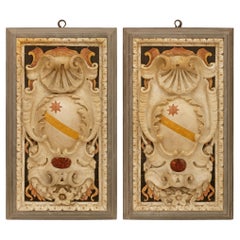
Pair of Roman Baroque Period Marble crest/plaques, 18th Century
Located in West Palm Beach, FL
An important and most impressive pair of Roman late 17th/early 18th century Baroque Period Marble crest/plaques. Each stunning rectangular shaped marble plaque is designed in the sty...
Category

18th Century Antique Baroque Wall Decorations

Materials

Marble

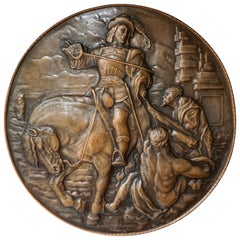
Very Large Copper Wall Plate Depiction Saint Martin on Horse in Relief
Located in Antwerp, BE
A very large hamered copper wall plate depiction Saint Martin on horse in relief. Signed A Louis. Early 20th century. Measures: Diameter 75 cm.
Category

Mid-20th Century European Baroque Wall Decorations

Materials

Copper

Italian Gilt Leaf Sconce with Stone Fruit
Located in Riverdale, NY
Attractive Italian Gilt Leaf Wall Sconce with Stone Fruit. 1960's Italy. 45" x 25" x 4". Excellent condition.
Category

1960s Italian Vintage Baroque Wall Decorations

Materials

Brass

18thc French Large Carved Wood Putto/ Angel Figural Sculpture
Located in Opa Locka, FL
On offer an 18thc Large Beautiful French Wood Sculpture of a Putto/ Angel Figure. There are losses, on fingers, feet etc. Please look closely at ...
Category

1780s French Antique Baroque Wall Decorations

Materials

Wood

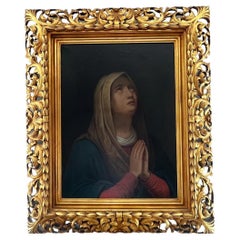
Antique 18th Century Madonna in Sorrow Oil on Canvas, Florentine School
Located in Doha, QA
This antique stunning portrait of Madonna in Sorrow came out from a Palazzo in Florence and an absolute eye catcher. The colors and details are incredible and very typical for an Ita...
Category

Late 18th Century Italian Antique Baroque Wall Decorations

Materials

Canvas

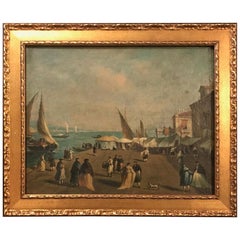
18th Century Giacomo Guardi Old Master Painting of Venetian Lagoon, Provenance
By Francesco Guardi
Located in Vero Beach, FL
18th century Giacomo Guardi old master painting of Venetian Lagoon. Provenance. Old master painting in oil on canvas by the artist Giacomo Guardi (1764...
Category

18th Century Italian Antique Baroque Wall Decorations

Materials

Canvas

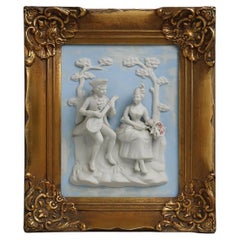
Porcelain Wall Art in Baroque style by Alt Meissen, Germany 1950s
Located in Meulebeke, BE
Germany / 1950 / Wall art / Alt Meissen / porcelain / Baroque / Rococo This exquisite mid-century porcelain wall plaque, produced in Germany in the 1950s by Alt Meissen, beautifull...
Category

1950s German Vintage Baroque Wall Decorations

Materials

Porcelain, Wood

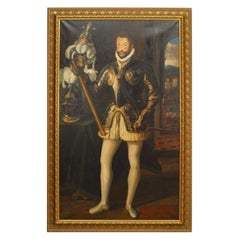
Emanuele Filiberto Portrait
Located in Queens, NY
Copy of a portrait of "Emanuele Filiberto", Italian military leader of the 1500's
Category

Late 20th Century Italian Baroque Wall Decorations

Materials

Paint

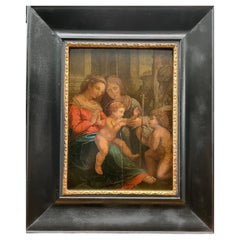
17th C. Italian Old Master Painting Madonna, Child, St. Anne, John the Baptist
Located in Vero Beach, FL
17th century Italian old master painting Madonna and Child with St. Anne and St. John the Baptist. Important Tuscan School Old Master painting in oil on a hand shaved wood panel. ...
Category

Late 17th Century Italian Antique Baroque Wall Decorations

Materials

Wood, Paint

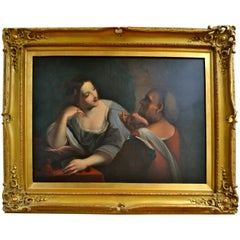
Italian Baroque Style Painting of Beauty and Old Age attributed to R. Manchetti
Located in Vancouver, British Columbia
An old master style 18th century allegorical painting representing youth and old age, and/or beauty and wisdom, depicted by a beautiful young ...
Category

Mid-18th Century Italian Antique Baroque Wall Decorations

Materials

Canvas

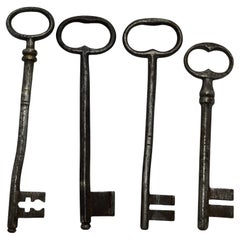
Set of four Wrought Iron Skeleton Key Antique German Folk Art, 18th Century
Located in Nuernberg, DE
A lovely collection of old antique iron skeleton keys. Found at an estate sale in Nuremberg, Germany. A nice addition to your collection or...
Category

18th Century German Antique Baroque Wall Decorations

Materials

Metal, Iron

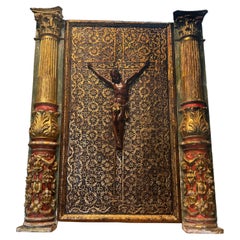
Grand Baroque Composition Made in Naples in the Mid-17th Century
Located in Budapest, HU
Grand Baroque composition made in Naples in the mid-17th century intended for the private chapel of a noble Neapolitan family. In the early nineteenth century on the finely executed ...
Category

Mid-17th Century Italian Antique Baroque Wall Decorations

Materials

Wood

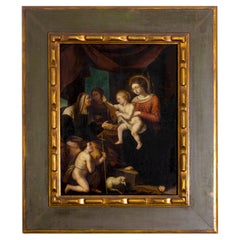
Flemish School Painting, Adoration of the Child, 18th Century, Religious Art
Located in Lisbon, PT
This 18th-century Flemish oil on wood painting depicts the moment of adoration of the Child Jesus, in the loving arms of the Virgin Mary. Kneeling at their feet is the young Saint J...
Category

18th Century Dutch Antique Baroque Wall Decorations

Materials

Wood

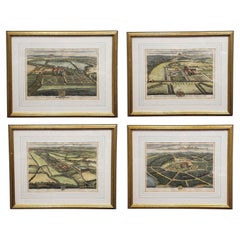
J. Kip and L. Knyff 18th Century Hand Colored Engravings, Set of 4
Located in North Palm Beach, FL
Set of four antique hand-colored engravings. "Britannia Illustrata," the publication in which these prints originally appeared, was one of the most important topographical works of t...
Category

Mid-18th Century English Antique Baroque Wall Decorations

Materials

Paper

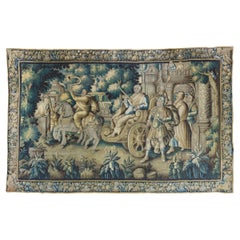
Antique Large Mid-17th Century French Aubusson Historical Tapestry
Located in New York, NY
This is a gorgeous antique late 17th Century French Aubusson historical tapestry depicting a beautiful and rich summer scene of a countryside with lush trees and vegetation, with a m...
Category

17th Century Dutch Antique Baroque Wall Decorations

Materials

Tapestry, Wool

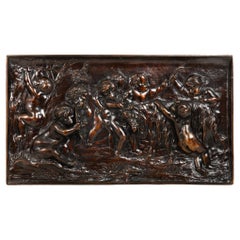
Rare 18th Century Bachanalia Plaque of Putti Tormenting Goat after Duquesnoy
Located in Shippensburg, PA
AFTER FRANÇOIS DUQUESNOY Flemish, 1594-1643 An exceedingly rare bas-relief of "Putti Tormenting a Goat" Probably Italian, circa 18th century Sand-cast bronze, chemical and lacquer ...
Category

18th Century European Antique Baroque Wall Decorations

Materials

Bronze

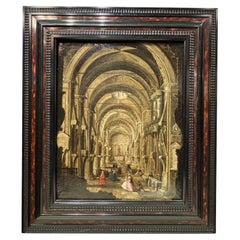
Interior of a cathedral in Flanders, attributed to Peter NEEFFS, 17th century.
Located in PARIS, FR
Oil on canvas, lined, showing the interior of a cathedral, probably Antwerp, with various scenes taking place there. Wear and overpainting to be restored, but beautiful appearance. M...
Category

17th Century Dutch Antique Baroque Wall Decorations

Materials

Canvas

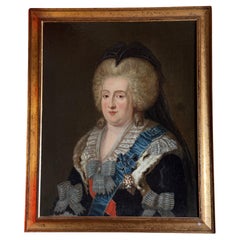
European School, 18th Century " German Princess "
Located in Madrid, ES
Portrait of a German Princess with a Sash and Insignia of a Knightly Order European School, 18th Century " German Princess " Large-format oil on canvas depicting a German princess,...
Category

18th Century Polish Antique Baroque Wall Decorations

Materials

Paint

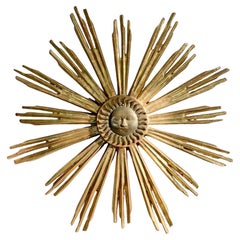
Decorative Giltwood Church Sunburst early 20th Century
Located in Hastings, GB
A circa 1920 highly decorative water gilded Italian sunburst, hand carved wooden rays with a brass sun face to the centre. Original hanging hook to the rear. Width 55cm, Depth 5cm.
Category

1920s Italian Vintage Baroque Wall Decorations

Materials

Brass

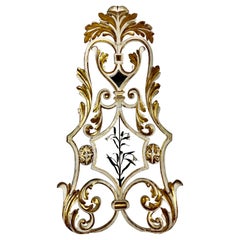
19th C. Italian Painted Parcel Gilt Architectural Piece
Located in Los Angeles, CA
19th C. carved painted & parcel gilt architectural element. The piece is painted in antique white with 22K gold leaf details throughout. There is also a metal stem of flowers in the ...
Category

19th Century Italian Antique Baroque Wall Decorations

Materials

Gold Leaf

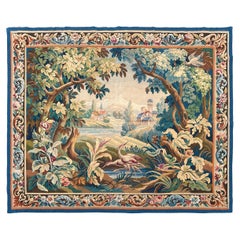
Antique French Tapestry Verdure Birds Wool Silk 1920 6x7
Located in New York, NY
Antique French Tapestry Verdure Birds Wool & Silk 1920 6x7 6' x 7'3" 221cm x 183cm "A magnificent antique French tapestry depicting birds amongst a verdure setting. Beautiful colo...
Category

1920s French Vintage Baroque Wall Decorations

Materials

Wool, Silk

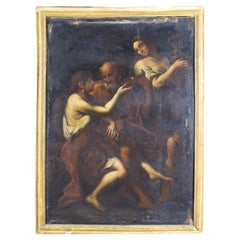
Italian 13th century oil on canvas painting "Lot and Daughters"
Located in Cesena, FC
Lot and his daughters, EMILIAN SCHOOL XVIIIth century Oil on canvas 175 x 126 cm Lot and his daughters is one of the themes most frequently encountered by seventeenth-century pain...
Category

18th Century Italian Antique Baroque Wall Decorations

Materials

Canvas, Paint

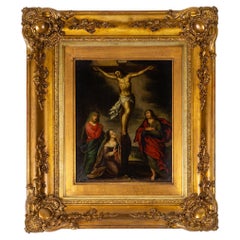
Baroque Oil On Copper Crucifixion, Old Master Religious Painting, 17th Century
Located in Lisbon, PT
This 17th Century Italian Baroque painting, executed in oil on copper, depicts the Crucifixion of Christ with remarkable depth and dramatic composition. Christ is shown on the cros...
Category

17th Century Italian Antique Baroque Wall Decorations

Materials

Copper

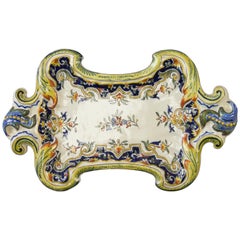
French Rouen Faience Hand Painted Decorative Wall Plate
Located in Barntrup, DE
French Rouen faience decorative wall plate, hand painted with blue, green and yellow decors. Dimensions: Length 32 cm / 12.59 in, height 22 cm / 8.66 in,...
Category

Mid-20th Century French Baroque Wall Decorations

Materials

Ceramic, Faience

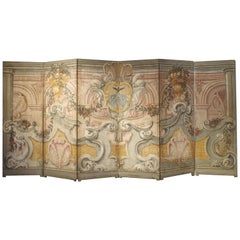
Spectacular Painted Six-Panel Armorial Baroque Screen from Italy, Circa 1700
Located in Dallas, TX
This six panel Italian screen is from the Baroque period, circa 1700. The four central panels have been affixed to a foldable frame, while the two outer panels are detached. When all...
Category

Early 18th Century Italian Antique Baroque Wall Decorations

Materials

Wood, Canvas

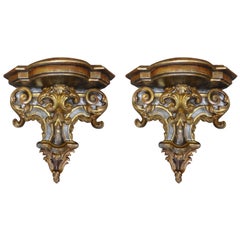
Pair of 19th Century Italian Painted and Giltwood Wall Brackets
Located in Houston, TX
Pair of 19th Century Italian Painted and Gilt wood Wall Brackets. Stunning large pair of Italian Baroque style painted and gilt wood wall brackets, wall shelves or wall consoles to d...
Category

1870s Italian Antique Baroque Wall Decorations

Materials

Giltwood

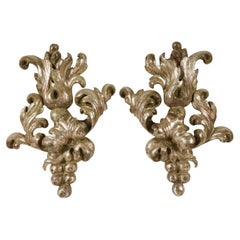
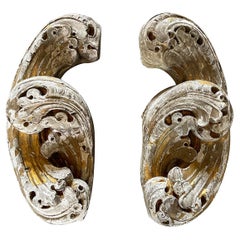
Large Robust Set of Carved Silver Gilt Acanthus Wall Appliqué s or Trophies
Located in Nashville, TN
Set or pair of robustly carved silver Giltwood wall trophies or wall appliqués .In the baroque style with dramatic acanthus scrolls and flourishes .Of wood with iron hangers on back....
Category

Early 20th Century Italian Baroque Wall Decorations

Materials

Wood

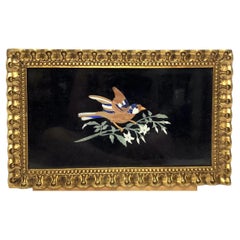
Vintage Italian Grand Tour Style Pietra Dura Mosaic Plaque, Framed 1
Located in Bradenton, FL
A Beautiful Italian grand tour style pietra dura mosaic on marble plaque with gilt framing. Picture is a bird on branch with leaves and flowers.
Category

Early 20th Century Italian Baroque Wall Decorations

Materials

Marble

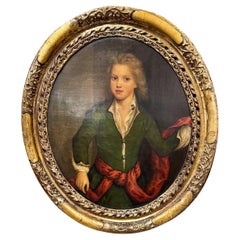
18th Century Painting of a Young Boy
Located in Pasadena, CA
This is a charming naive painting of a young John Davis, son of Gregory Davis of Norfolk, painted by Bridget Bereners (?). The exquisite quality of the framing is an indication of th...
Category

Mid-18th Century English Antique Baroque Wall Decorations

Materials

Gold Leaf

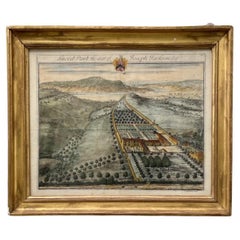
18th Century Engraving Sneed Park, the Seat of Joseph Jackson Esquire.
Located in Vero Beach, FL
18th Century Engraving Sneed Park, the Seat of Joseph Jackson Esquire. Hand colored engraving, “Sneed Park, the seat of Joseph Jackson Esquire. Illustration from the second volume o...
Category

18th Century English Antique Baroque Wall Decorations

Materials

Glass, Giltwood

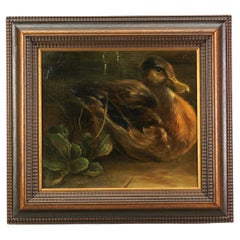
Painting with Duck and Plants, Oil on Plywood
Located in Barntrup, DE
A Baroque style oil painting from the first third of the 20th Century. This beautiful painting depicts a duck with plants, painted on a plywood panel in brown, green, and yellow ton...
Category

1930s European Vintage Baroque Wall Decorations

Materials

Wood, Paint, Plywood

Hand-Carved Silver Giltwood Decorative Sculpture
Located in Sheffield, MA
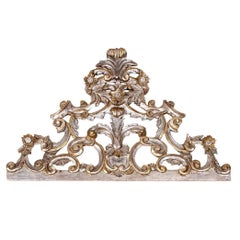
Silver and gold gilt decorative sculpture pediment with scroll work, sunflowers and leaves. Could be used over a mirror, bed as corona or door having the right width or above headboa...
Category

20th Century Italian Baroque Wall Decorations

Materials

Vermeil, Silver

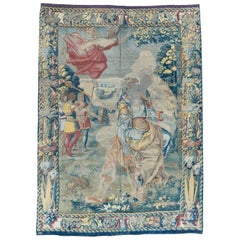
Antique 16th Century Brussels Baroque Mythological Tapestry with Angel
Located in New York, NY
Tapestries were ubiquitous in the castles and churches of the late medieval and Renaissance eras. At a practical level, they provided a form of insulation and decoration that could b...
Category

16th Century Belgian Antique Baroque Wall Decorations

Materials

Tapestry, Wool

17th - 18th Century Portuguese Pair of Antique Baroque Pine Wall Reliefs, Panels
Located in West Palm Beach, FL
An antique pair of Portuguese Baroque hand carved architectural wall reliefs, enhanced by richly ornate detailed scrolls, in good condition. Original painted patina with partial gilt...
Category

Late 17th Century Portuguese Antique Baroque Wall Decorations

Materials

Pine

Baroque wall decorations for sale on 1stDibs.

Find a broad range of unique Baroque wall decorations for sale on 1stDibs. Many of these items were first offered in the 21st Century and Contemporary, but contemporary artisans have continued to produce works inspired by this style. If you’re looking to add vintage wall decorations created in this style to your space, the works available on 1stDibs include wall decorations, more furniture and collectibles, decorative objects and other home furnishings, frequently crafted with fabric, wood and other materials. If you’re shopping for used Baroque wall decorations made in a specific country, there are Europe, Italy, and France pieces for sale on 1stDibs. While there are many designers and brands associated with original wall decorations, popular names associated with this style include Europa Antiques, Rembrandt van Rijn, Basilius Besler, and Flemish. It’s true that these talented designers have at times inspired knockoffs, but our experienced specialists have partnered with only top vetted sellers to offer authentic pieces that come with a buyer protection guarantee. Prices for wall decorations differ depending upon multiple factors, including designer, materials, construction methods, condition and provenance. On 1stDibs, the price for these items starts at $30 and tops out at $495,000 while the average work can sell for $4,328.