Continental Europe - More Prints
to
288
778
372
583
114
87
Overall Width
to
Overall Height
to
578
289
211
209
46
31
5
3
3
2
2
2
137
135
70
54
52
12
38
1,622
262
9
4
24
34
41
204
406
433
207
117
2
1,481
357
93
9
6
5
4
3
2
2
2
1
1
1
1
1
1
1
1
1
1
1
895
391
329
167
117
40
904
1,934
3,941
3,645
Item Ships From: Continental Europe
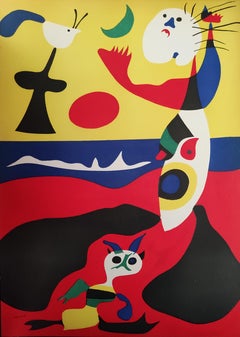
Summer
By Joan Miró
Located in OPOLE, PL
Joan Miro (1893-1983) - Summer
Lithograph from 1938.
Dimensions of work: 35 x 26 cm
Publisher: Tériade, Paris.
The work is in Excellent condition.
Fast and secure shipment.
Category
1930s Surrealist Continental Europe - More Prints
Materials
Lithograph

$1,201
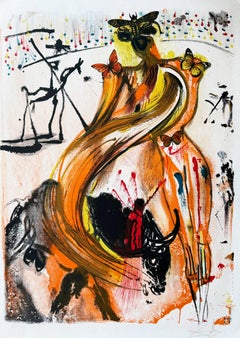
Bullfighter
By Salvador Dalí
Located in OPOLE, PL
Salvador Dali (1904-1989) - Bullfighter
Lithograph from 1972.
The edition 186/250 on Arches paper.
Dimensions of work: 75 x 54.5 cm.
Hand signed.
Reference: Michler/Löpsinger 13...
Category
1970s Surrealist Continental Europe - More Prints
Materials
Lithograph
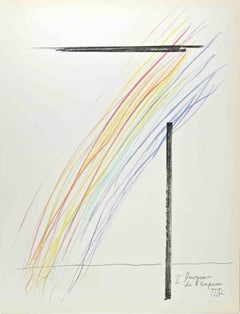
Invasion de l
Espace - Lithograph by Man Ray - 1975
By Man Ray
Located in Roma, IT
Invasion de l'espace is a color lithograph by the American artist and exponent of Dadaism and Surrealism Man Ray (Philadelphia, 1890 - Paris, 1976).
The workr was edited by the Fr...
Category
1970s Surrealist Continental Europe - More Prints
Materials
Lithograph
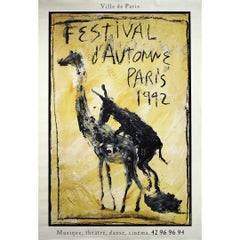
1992 original poster by Miquel Barceló - Festival d
Automne Paris
By Miquel Barceló
Located in PARIS, FR
This 1992 original poster by Spanish contemporary artist Miquel Barceló was created for the Festival d'Automne à Paris, a multidisciplinary celebration of music, theatre, dance, and ...
Category
1990s Continental Europe - More Prints
Materials
Paper
Jean Cocteau - Surrealist Torrero - Original Lithograph
By Jean Cocteau
Located in Collonge Bellerive, Geneve, CH
Original Lithograph by Jean Cocteau
Title: Taureaux
Signed in the plate
Dimensions: 40 x 30 cm
Edition: 200
Luxury print edition from the portfolio of Trinckvel
1965
From the last po...
Category
1960s Modern Continental Europe - More Prints
Materials
Lithograph
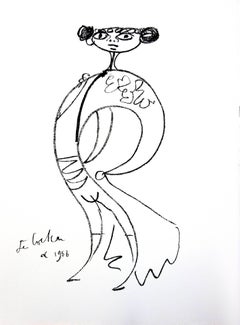
1980s Signed Mario Schifano Artwork on Paper
By Mario Schifano
Located in Roma, IT
Materic silkscreen print “Ondate di gelo” (Frost Waves) by Mario Schifano.
Signature and numbering in pencil on front side.
Dry stamp of the artist on front.
Edition F.C. (Not for...
Category
1980s Modern Continental Europe - More Prints
Materials
Paper
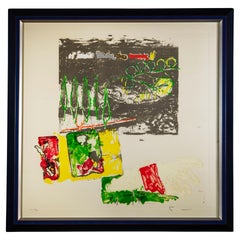
$1,538 Sale Price
20% Off
Fujita Hotel in Kyoto
By Bernard Buffet
Located in OPOLE, PL
Bernard Buffet (1928-1999) - Fujita Hotel in Kyoto
Lithograph from 1981.
Artsit's edition.
On Arches paper.
Dimensions of work: 71 x 53.5 cm.
Hand signed.
The work is in Excell...
Category
1980s Expressionist Continental Europe - More Prints
Materials
Lithograph
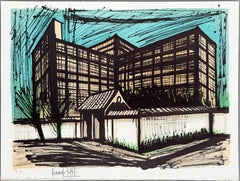
Ginza District-Tokyo
By Bernard Buffet
Located in OPOLE, PL
Bernard Buffet (1928-1999) - Ginza District-Tokyo
Lithograph from 1981.
Artsit's edition.
On Arches paper.
Dimensions of work: 71 x 53.5 cm.
Hand signed.
The work is in Excelle...
Category
1980s Expressionist Continental Europe - More Prints
Materials
Lithograph
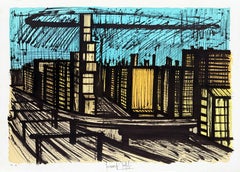
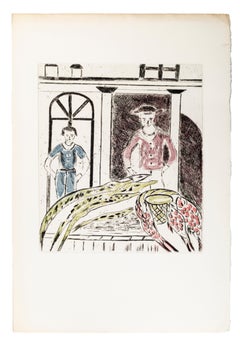
Unexpected Guests - Lithograph by A. Ruellan - 1970s
By Andrée Ruellan
Located in Roma, IT
Image dimensions: 29.9 x 24.7 cm.
Unexpected Guests is an original colored lithograph realized during the 1970s by the French artist Andrée Ruelland.
The artwork represents a coupl...
Category
1970s Contemporary Continental Europe - More Prints
Materials
Lithograph
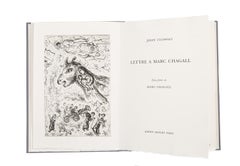
Lettre à Marc Chagall, with five etchings by the artist
By Marc Chagall
Located in OPOLE, PL
Marc Chagall (1887 Liozna near Vitebsk – 1985 Saint-Paul-de-Vence), Jerzy Ficowski: Lettre à Marc Chagall with five etchings by the artist, 1969
Technique: etching on paper
Dimensio...
Category
1960s Symbolist Continental Europe - More Prints
Materials
Etching
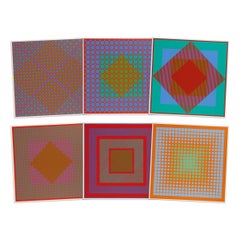
$5,889 Sale Price
30% Off
Richard Anuszkiewicz, 6 Seritypien - Portfolio of 6 Prints, Op Art from 1965
By Richard Anuszkiewicz
Located in Hamburg, DE
Richard Anuszkiewicz (American, 1930-2020)
6 Seritypien, 1965
Medium: Screenprint on Schoellers Hammer card
Dimensions: 24 2/5 × 24 2/5 in (62 × 62 cm)
Edition of 125: Each print is ...
Category
20th Century Abstract Geometric Continental Europe - More Prints
Materials
Screen
Jean Cocteau - Olé - Original Lithograph
By Jean Cocteau
Located in Collonge Bellerive, Geneve, CH
Jean Cocteau - Olé - Original Lithograph
1934
Signed and dated in the plate
Numbered in pencil
Edition : /200
Dimensions: 50 x 33 cm
Provenance : Succession Dermit, Cocteau's heir
Category
1930s Modern Continental Europe - More Prints
Materials
Lithograph

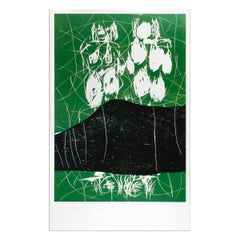
Georg Baselitz, Der Berg - Signed Print from 1993, Neo-Expressionism
By Georg Baselitz
Located in Hamburg, DE
Georg Baselitz (German, b. 1938)
Der Berg, 1991/93
Medium: Color offset print
Dimensions: 100x 63.5 cm
Edition size: Undisclosed (presumably 100-200)
Markings: Hand-signed and dated ...
Category
20th Century Abstract Continental Europe - More Prints
Materials
Offset
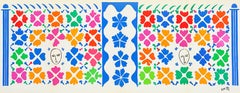
Décoration - Masques
By Henri Matisse
Located in OPOLE, PL
Henri Matisse (1869-1954) - Décoration - Masques
Lithograph from 1958.
Dimensions of work: 96.5 x 35.5 cm.
Plate signed.
Publisher: Tériade, Paris.
Each copy of this Lithograph ...
Category
1950s Surrealist Continental Europe - More Prints
Materials
Lithograph
$961 Sale Price
20% Off
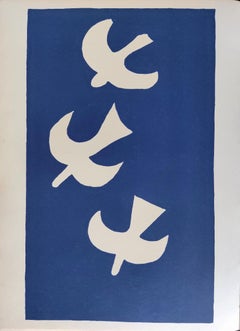
Carnets intimes de Braque II
By George Braque
Located in OPOLE, PL
Georges Braque (1882-1963) - Carnets intimes de Braque II
Lithograph from 1955.
Dimensions of work: 35 x 26 cm
Publisher: Tériade, Paris.
The work is in Excellent condition.
Fas...
Category
1950s Surrealist Continental Europe - More Prints
Materials
Lithograph
$759 Sale Price
20% Off
Red Knight on Brown Background - Original Lithograph by Marino Marini - 1961
By Marino Marini
Located in Roma, IT
Image dimensions: 70x50 cm.
Hand signed and numbered. Edition of 50 prints, numbered and hand signed.
Dedicated to Nesto Jacometti.
Ref. Abrams n.80.
Rare and in excellent conditions.
Category
1960s Continental Europe - More Prints
Materials
Lithograph

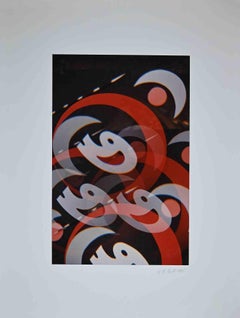
Exibition Print dated 1995 by Miller Null - Vintage Photograph - 1995
Located in Roma, IT
Exibition print dated 1995 by Miller Null is a vintage photographic print on color paper applied on cardboard.
Signature in pencil on front of cardboard, dated 1995, a late print before photographer's death...
Category
1990s Abstract Continental Europe - More Prints
Materials
Photographic Paper
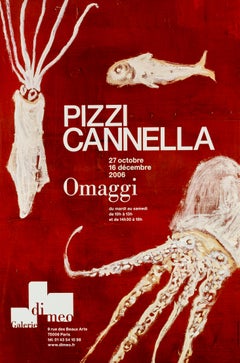
Pizzi Cannella Exhibition Poster - 2006
By Piero Pizzi Cannella
Located in Roma, IT
Pizzi Cannella Exhibition is a vintage exhibition poster realized in 2006.
Mixed colored offset poster realized in the occasion of the exhibition of Pizzi Cannella in 2006.
Good co...
Category
Early 2000s Contemporary Continental Europe - More Prints
Materials
Offset
$173 Sale Price
20% Off
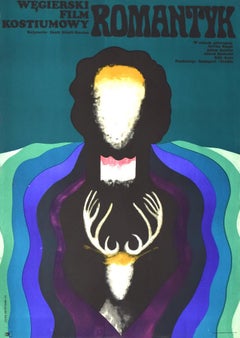
Romantyk - Vintage Poster by Onegin Dabrwski - 1973
Located in Roma, IT
Film Manifest is an original offset artwork on paper realized by Onegin Dabrwski in 1973.
Vintage colored offset print.
Good condition and aged.
Titled on the top margin: Romanti...
Category
1970s Contemporary Continental Europe - More Prints
Materials
Offset
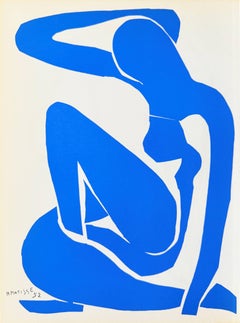
Femme Bleue
By Henri Matisse
Located in OPOLE, PL
This work will be exhibited at Art on Paper NYC, September 4–7, 2025.
–
Henri Matisse (1869-1954) - Femme Bleue
Lithograph from 1958.
Dimensions of work: 35.5 x 26.4 cm.
Publish...
Category
1950s Surrealist Continental Europe - More Prints
Materials
Lithograph
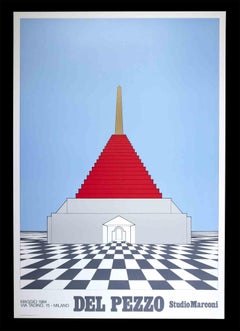
Lucio Del Pezzo Poster Exhibition - Vintage Offset Print - 1984
Located in Roma, IT
Lucio Del Pezzo - Poster Exhibition is a mixed colored offset print realized in 1984
This print was realized on the occasion of the exhibition dedicated to the artist and held in St...
Category
1980s Abstract Continental Europe - More Prints
Materials
Offset
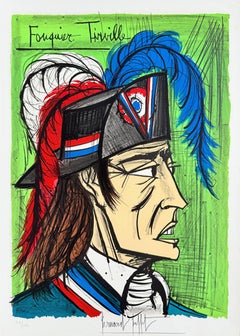
Fouquier-Tinville
By Bernard Buffet
Located in OPOLE, PL
Bernard Buffet (1928-1999) - Fouquier-Tinville
Lithograph from 1977.
The edition of 103/150.
On Arches paper with watermark.
Dimensions of work: 76 x 56 cm.
Hand signed.
The wor...
Category
1970s Expressionist Continental Europe - More Prints
Materials
Lithograph
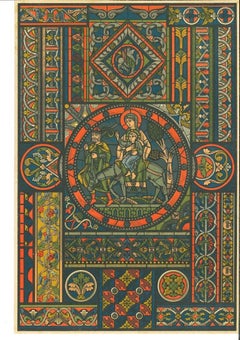
Gothic Decorative Motifs - Vintage Chromolithograph - Early 20th Century
Located in Roma, IT
Gothic Decorative Motifs is a vintage chromolithograph realized by an anonymous artist in the early 20th Century.
Good conditions.
The artw...
Category
Early 20th Century Continental Europe - More Prints
Materials
Paper, Lithograph
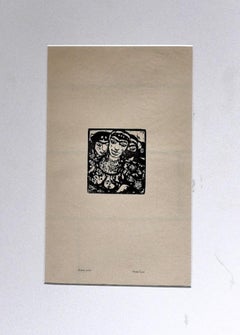
Arabian Women - Woodcut by Moses Levy - XX Century
Located in Roma, IT
Arabian Women is an original woodcut on yellowish paper realized by Moses Levy. Signed and titled in Italian" Donne Arabe".
The State of preservation is very good.
Included a Passepartout:
The artwork represents three Arabian women, through confident and strong strokes in intense black, The artwork is made by the Expressionistic style of creation, the contrast between black and white are well defined.
Moses Levy (Italian, 1885–1968) In 1900 he enrolled at the Institute of Fine Arts in Lucca and found Lorenzo Viani as a fellow student. Levy and Viani also attend courses at the Nude School of the Academy of Fine Arts held by the painter Giovanni Fattori together in Florence. During this period, Levy became passionate about graphics and came into contact with Renato Natali...
Category
20th Century Continental Europe - More Prints
Materials
Woodcut
Juste Présent
By Sonia Delaunay
Located in OPOLE, PL
Sonia Delaunay (1885-1979) - Juste Présent
Lithograph from 1961.
Dimensions of work: 38 x 28 cm
Publisher: Lacourière et Frélaut, Paris.
The work is in Excellent condition.
Fast...
Category
1960s Expressionist Continental Europe - More Prints
Materials
Lithograph

$1,153 Sale Price
20% Off
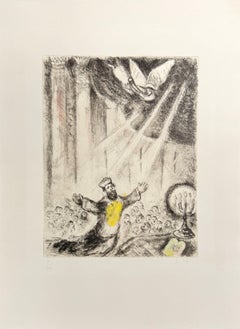
Solomon
s Prayer
By Marc Chagall
Located in OPOLE, PL
Marc Chagall (1887-1985) - Solomon's Prayer
Etching from 1958.
Edition of 100
Enhanced with watercolour by the artist.
Dimensions of work: 52 x 37 cm.
Hand signed.
Publisher: T...
Category
1950s Modern Continental Europe - More Prints
Materials
Etching
$5,288 Sale Price
20% Off
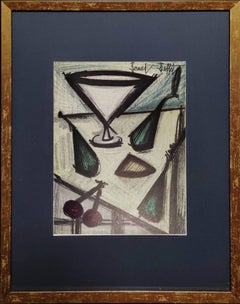
Still Life with a Glass
By Bernard Buffet
Located in OPOLE, PL
Bernard Buffet (1928-1999) - Still Life with a Glass
Lithograph from 1968.
Dimensions of work: 31 x 24 cm
Publisher: André Sauret, Monte Carlo.
Printed by: Fernand Mourlot, Paris...
Category
1960s Expressionist Continental Europe - More Prints
Materials
Lithograph
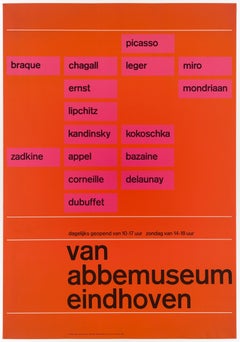
Modern Art at the Van Abbemuseum in Eindhoven – Original Vintage Dutch Poster
Located in Zurich, CH
Original Vintage Poster in bright and crisp colors by the Dutch graphic design legend Wim Crouwel, advertising rather the museum's collection of works by...
Category
Mid-20th Century Abstract Continental Europe - More Prints
Materials
Paper
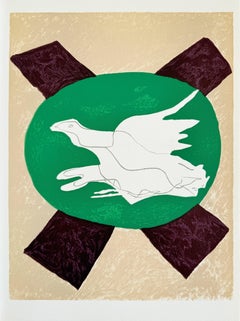
Colombe sur fond vert
By George Braque
Located in OPOLE, PL
Georges Braque (1882-1963) - Colombe sur fond vert
Lithograph from 1975.
Edition 371/575 (Photocopy of the colophone is included).
Dimensions of work: 31 x 24 cm.
Plate signed.
...
Category
1970s Modern Continental Europe - More Prints
Materials
Lithograph
$703 Sale Price
35% Off
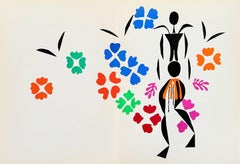
La Négresse
By Henri Matisse
Located in OPOLE, PL
Henri Matisse (1869-1954) - La Négresse
Lithograph from 1958.
Dimensions of work: 52.5 x 35.5 cm.
Publisher: Tériade, Paris.
Each copy of this Lithograph was originally published...
Category
1950s Surrealist Continental Europe - More Prints
Materials
Lithograph
$1,057 Sale Price
20% Off
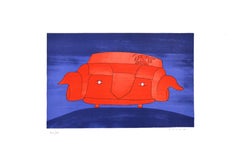
L
Evasion - Lithograph by J.-M. Folon
By Jean Michel Folon
Located in Roma, IT
Diabolic Car is an original artwork realized by Jean Michel Folon.
Lithograph on paper. Hand-signed in pencil by the artist on the lower right. Numbered on the lower left. Edition o...
Category
Late 20th Century Continental Europe - More Prints
Materials
Lithograph
Voyage au Japon
By Bernard Buffet
Located in OPOLE, PL
Bernard Buffet (1928-1999) - Voyage au Japon
Lithograph from 1981.
Artsit's edition.
On Arches paper.
Dimensions of work: 71 x 53.5 cm.
Hand signed.
The work is in Excellent co...
Category
1980s Expressionist Continental Europe - More Prints
Materials
Lithograph
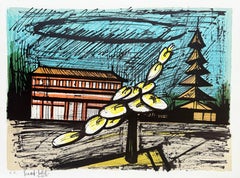
Le Sept Péchés Capitaux
By Marc Chagall
Located in OPOLE, PL
Marc Chagall (1887-1985) - Le Sept Péchés Capitaux
Etching from 1925.
Edition of 300 proofs.
Dimensions of work: 25 x 19.5 cm.
Publisher: Tériade, Paris.
Reference: Kornfeld 47....
Category
1920s Symbolist Continental Europe - More Prints
Materials
Etching
$748 Sale Price
30% Off
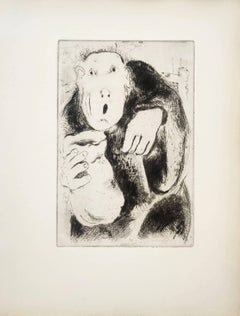
Carnets intimes de Braque IX
By George Braque
Located in OPOLE, PL
Georges Braque (1882-1963) - Carnets intimes de Braque IX
Lithograph from 1955.
Dimensions of work: 35 x 26 cm
Publisher: Tériade, Paris.
The work is in Excellent condition.
Fas...
Category
1950s Surrealist Continental Europe - More Prints
Materials
Lithograph
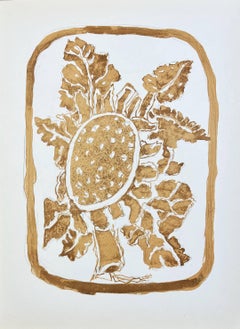
Sol LeWitt, Lines, Not Long, Not Heavy, Not Touching, Drawn at Random (Circle)
By Sol LeWitt
Located in Hamburg, DE
Sol LeWitt (American, 1928-2007)
Lines, Not Long, Not Heavy, Not Touching, Drawn at Random (Circle), 1970
Medium: Lithograph on wove paper
Dimensions: 44.5 × 32.1 cm (17.5 × 12.6 in)...
Category
20th Century Abstract Continental Europe - More Prints
Materials
Lithograph
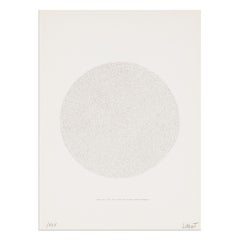
Carnets intimes de Braque X
By George Braque
Located in OPOLE, PL
Georges Braque (1882-1963) - Carnets intimes de Braque X
Lithograph from 1955.
Dimensions of work: 52 x 35 cm
Publisher: Tériade, Paris.
The work is in Excellent condition.
Fast...
Category
1950s Surrealist Continental Europe - More Prints
Materials
Lithograph
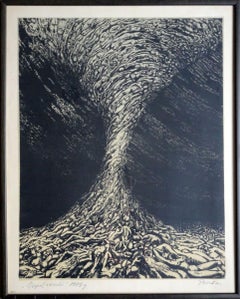
Whirlwind 1979, paper, lithography, 59x46 cm
Located in Riga, LV
Whirlwind
1979, paper, lithography, 59x46 cm
Ivars Poikans 1952. Riga
Ivars Poikāns works in painting, graphics, book illustration, cinema art.
Born on O...
Category
1980s Neo-Expressionist Continental Europe - More Prints
Materials
Paper, Lithograph
$942 Sale Price
20% Off
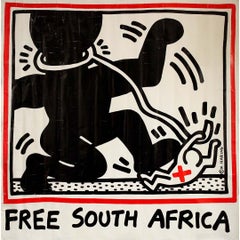
1985 original poster by Keith Haring - "Free South Africa"
By Keith Haring
Located in PARIS, FR
A powerful piece of visual activism, this 1985 original poster by renowned American artist Keith Haring, titled "Free South Africa", captures the urgency and moral clarity of the glo...
Category
1980s Continental Europe - More Prints
Materials
Paper
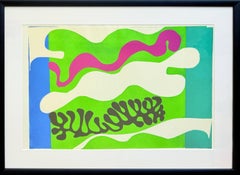
Le Lagon II (The Lagoon II)
By Henri Matisse
Located in OPOLE, PL
Henri Matisse (1869-1954) - Le Lagon II (The Lagoon II)
Lithograph from 1983.
Dimensions of sheet: 61 x 39 cm
Dimensions in frame: 73 x 53 cm
Publisher: George Brazilier, New Yor...
Category
1950s Surrealist Continental Europe - More Prints
Materials
Lithograph
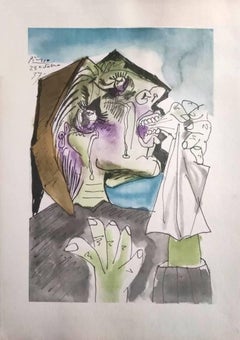
Weeping Woman
By Pablo Picasso
Located in OPOLE, PL
Pablo Picasso (1881-1973) - Weeping Woman (1937)
Lithograph from 1946.
Dimensions of work: 48 x 32.8 cm
Publisher: Pantheon.
The work is in Excellent condition.
Fast and secure ...
Category
1940s Modern Continental Europe - More Prints
Materials
Lithograph
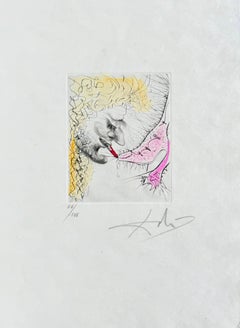
Homme baisant la chaussure
By Salvador Dalí
Located in OPOLE, PL
Salvador Dali (1904-1989) - Homme baisant la chaussure
Etching from 1969.
66/145 on Japan paper.
Dimensions of work: 38 x 28 cm.
Hand signed.
Publisher: Graphik Europa Anstalt.
...
Category
1970s Surrealist Continental Europe - More Prints
Materials
Etching
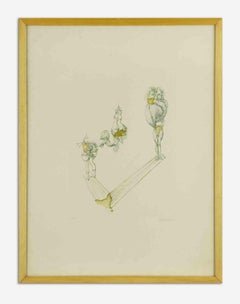
Untitled - Etching by H. Bellmer - Mid-20th Century
By Hans Bellmer
Located in Roma, IT
Untitled is a contemporary artwork realized by Hans Bellmer in the mid-20th Century.
Colored etching
Hand signed and numbered on the lower margin.
Edition of 54/150
Category
1960s Surrealist Continental Europe - More Prints
Materials
Etching
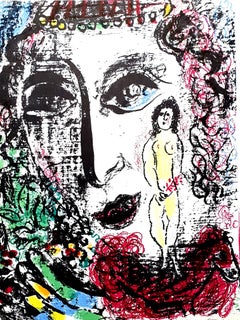
Marc Chagall - Original Lithograph
By Marc Chagall
Located in Collonge Bellerive, Geneve, CH
Marc Chagall
Original Lithograph
1963
Dimensions: 32 x 24 cm
Reference: Chagall Lithographe 1957-1962. VOLUME II.
Condition : Excellent
Marc Chagall (born in 1887)
Marc Chagall was born in Belarus in 1887 and developed an early interest in art. After studying painting, in 1907 he left Russia for Paris, where he lived in an artist colony on the city’s outskirts. Fusing his own personal, dreamlike imagery with hints of the fauvism and cubism popular in France at the time, Chagall created his most lasting work—including I and the Village (1911)—some of which would be featured in the Salon des Indépendants exhibitions. After returning to Vitebsk for a visit in 1914, the outbreak of WWI trapped Chagall in Russia. He returned to France in 1923 but was forced to flee the country and Nazi persecution during WWII. Finding asylum in the U.S., Chagall became involved in set and costume design before returning to France in 1948. In his later years, he experimented with new art forms and was commissioned to produce numerous large-scale works. Chagall died in St.-Paul-de-Vence in 1985.
The Village
Marc Chagall was born in a small Hassidic community on the outskirts of Vitebsk, Belarus, on July 7, 1887. His father was a fishmonger, and his mother ran a small sundries shop in the village. As a child, Chagall attended the Jewish elementary school, where he studied Hebrew and the Bible, before later attending the Russian public school. He began to learn the fundamentals of drawing during this time, but perhaps more importantly, he absorbed the world around him, storing away the imagery and themes that would feature largely in most of his later work.
At age 19 Chagall enrolled at a private, all-Jewish art school and began his formal education in painting, studying briefly with portrait artist Yehuda Pen. However, he left the school after several months, moving to St. Petersburg in 1907 to study at the Imperial Society for the Protection of Fine Arts. The following year, he enrolled at the Svanseva School, studying with set designer Léon Bakst, whose work had been featured in Sergei Diaghilev's Ballets Russes. This early experience would prove important to Chagall’s later career as well.
Despite this formal instruction, and the widespread popularity of realism in Russia at the time, Chagall was already establishing his own personal style, which featured a more dreamlike unreality and the people, places and imagery that were close to his heart. Some examples from this period are his Window Vitebsk (1908) and My Fianceé with Black Gloves (1909), which pictured Bella Rosenfeld, to whom he had recently become engaged.
The Beehive
Despite his romance with Bella, in 1911 an allowance from Russian parliament member and art patron Maxim Binaver enabled Chagall to move to Paris, France. After settling briefly in the Montparnasse neighborhood, Chagall moved further afield to an artist colony known as La Ruche (“The Beehive”), where he began to work side by side with abstract painters such as Amedeo Modigliani and Fernand Léger as well as the avant-garde poet Guillaume Apollinaire. At their urging, and under the influence of the wildly popular fauvism and cubism, Chagall lightened his palette and pushed his style ever further from reality. I and the Village (1911) and Homage to Apollinaire (1912) are among his early Parisian works, widely considered to be his most successful and representative period.
Though his work stood stylistically apart from his cubist contemporaries, from 1912 to 1914 Chagall exhibited several paintings at the annual Salon des Indépendants exhibition, where works by the likes of Juan Gris, Marcel Duchamp and Robert Delaunay were causing a stir in the Paris art world. Chagall’s popularity began to spread beyond La Ruche, and in May 1914 he traveled to Berlin to help organize his first solo exhibition, at Der Sturm Gallery. Chagall remained in the city until the highly acclaimed show opened that June. He then returned to Vitebsk, unaware of the fateful events to come.
War, Peace and Revolution
In August 1914 the outbreak of World War I precluded Chagall’s plans to return to Paris. The conflict did little to stem the flow of his creative output, however, instead merely giving him direct access to the childhood scenes so essential to his work, as seen in paintings such as Jew in Green (1914) and Over Vitebsk (1914). His paintings from this period also occasionally featured images of the war’s impact on the region, as with Wounded Soldier (1914) and Marching (1915). But despite the hardships of life during wartime, this would also prove to be a joyful period for Chagall. In July 1915 he married Bella, and she gave birth to a daughter, Ida, the following year. Their appearance in works such as Birthday (1915), Bella and Ida by the Window (1917) and several of his “Lovers” paintings give a glimpse of the island of domestic bliss that was Chagall’s amidst the chaos.
To avoid military service and stay with his new family, Chagall took a position as a clerk in the Ministry of War Economy in St. Petersburg. While there he began work on his autobiography and also immersed himself in the local art scene, befriending novelist Boris Pasternak, among others. He also exhibited his work in the city and soon gained considerable recognition. That notoriety would prove important in the aftermath of the 1917 Russian Revolution when he was appointed as the Commissar of Fine Arts in Vitebsk. In his new post, Chagall undertook various projects in the region, including the 1919 founding of the Academy of the Arts. Despite these endeavors, differences among his colleagues eventually disillusioned Chagall. In 1920 he relinquished his position and moved his family to Moscow, the post-revolution capital of Russia.
In Moscow, Chagall was soon commissioned to create sets and costumes for various productions at the Moscow State Yiddish Theater...
Category
1960s Surrealist Continental Europe - More Prints
Materials
Lithograph
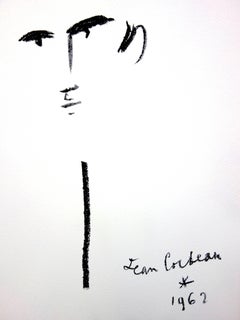
Jean Cocteau - Portrait - Original Lithograph
By Jean Cocteau
Located in Collonge Bellerive, Geneve, CH
Original Lithograph by Jean Cocteau
Title: Taureaux
Signed in the plate
Dimensions: 40 x 30 cm
Edition: 200
Luxury print edition from the portfolio of Trinckvel
1965
Jean Cocteau
W...
Category
1960s Modern Continental Europe - More Prints
Materials
Lithograph
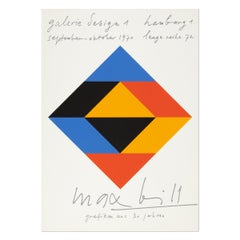
Max Bill, Original Exhibition Poster from 1970, Abstract Screenprint, Op Art
By Max Bill
Located in Hamburg, DE
Orignal poster for Max Bill's exhibition "Grafiken aus 30 Jahren" at Galerie Design 1 in Hamburg in 1970.
Category
20th Century Abstract Continental Europe - More Prints
Materials
Screen
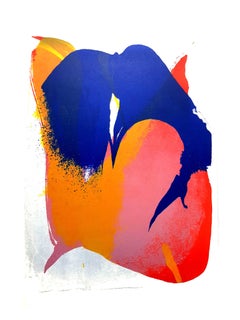
Paul Jenkins - Composition - Original Lithograph
By Paul Jenkins
Located in Collonge Bellerive, Geneve, CH
Paul Jenkins - Composition - Original Lithograph
1964
Dimensions: 30 x 20 cm
Edition of 200 (one of the 200 on Vélin de Rives)
Mourlot Press, 1964
Paul Jenkins, American (1923 - 2012)
Paul Jenkins, an artist originally associated with abstract expressionism, exhibits in his mature works a redefining of color, light and space on the canvas surface.
Born in Kansas City, Missouri in 1923, Jenkins worked as a teenager in a ceramics factory, where he was first exposed to color intensity and the creation of form. From age 14 to 18, he studied drawing and painting at the city's Art Institute.
Initially interested in drama, Jenkins received a fellowship to the Cleveland Playhouse, then continued his dramatic studies in Pittsburgh at the Drama School of the Carnegie Institute of Technology.
Deciding to become an artist, Jenkins moved to New York City in 1948 and studied at the Art Students League. During Jenkins's three years at the League, Yasuo Kuniyoshi and Morris Kantor were his influential instructors.
While Jenkins continued to live and paint in New York City, his personal explorations took a metaphysical turn, which would ultimately become dominant in his work.
P.D. Ouspensky's The Search of the Miracu/ous changed the artist's thoughts on human growth and limitations, while the Chinese I Ching, through its thematic emphasis on constant change, heightened his interest in flowing paint on canvas. Painting for Jenkins became an intuitive, almost mystical process. He commented, "I paint what God is to me."
In 1953, Jenkins traveled to Paris, where, a year later, he had his first one-man show. While working at the American Artists Center, he continued to experiment with flowing paints, pouring pigment in streams of various thicknesses, with white thin spills as linear overlays.
Jenkins's intent was to deny stasis and create a literal and metaphysical sense of dynamism, while maintaining a sense of unity. Beginning in 1958, Jenkins titled each canvas Phenomena, with additional identifying words. He believed the work to be descriptive of the discovery process inherent in each painting.
Paralleling his beliefs, the artist's paintings have undergone subtle but definite changes. Beginning in the early 1 960s, a shift of color saturation and exposure of the white areas gave Jenkins's canvases an enhanced feeling of illumination.
If Jenkins's technique is unorthodox, he is in many other ways a traditional artist. He works in an acrylic medium on traditional linen canvas or fine rag paper. Often he uses an ivory knife...
Category
1960s Modern Continental Europe - More Prints
Materials
Lithograph
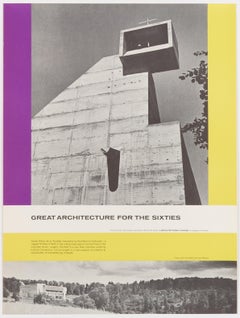
Great Architecture for the Sixties – La Tourette by Le Corbusier
By Walter Allner
Located in Zurich, CH
Original Vintage Poster depicting Le Corbusier's Convent of La Tourette, published 1962 by the Architectural Forum to promote Modern Architecture –...
Category
Mid-20th Century Modern Continental Europe - More Prints
Materials
Paper
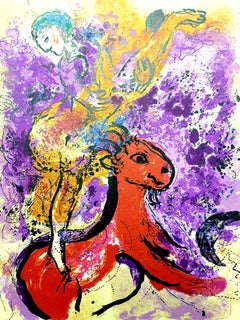
Marc Chagall - The Red Rider - Original Lithograph
By Marc Chagall
Located in Collonge Bellerive, Geneve, CH
Marc Chagall - Original Lithograph
The Red Rider
From the unsigned, unnumbered lithograph printed in the literary review XXe Siecle
1957
See Mourlot 191
Dimensions: 32 x 24 cm
Publisher: G. di San Lazzaro.
Marc Chagall (born in 1887)
Marc Chagall was born in Belarus in 1887 and developed an early interest in art. After studying painting, in 1907 he left Russia for Paris, where he lived in an artist colony on the city’s outskirts. Fusing his own personal, dreamlike imagery with hints of the fauvism and cubism popular in France at the time, Chagall created his most lasting work—including I and the Village (1911)—some of which would be featured in the Salon des Indépendants exhibitions. After returning to Vitebsk for a visit in 1914, the outbreak of WWI trapped Chagall in Russia. He returned to France in 1923 but was forced to flee the country and Nazi persecution during WWII. Finding asylum in the U.S., Chagall became involved in set and costume design before returning to France in 1948. In his later years, he experimented with new art forms and was commissioned to produce numerous large-scale works. Chagall died in St.-Paul-de-Vence in 1985.
The Village
Marc Chagall was born in a small Hassidic community on the outskirts of Vitebsk, Belarus, on July 7, 1887. His father was a fishmonger, and his mother ran a small sundries shop in the village. As a child, Chagall attended the Jewish elementary school, where he studied Hebrew and the Bible, before later attending the Russian public school. He began to learn the fundamentals of drawing during this time, but perhaps more importantly, he absorbed the world around him, storing away the imagery and themes that would feature largely in most of his later work.
At age 19 Chagall enrolled at a private, all-Jewish art school and began his formal education in painting, studying briefly with portrait artist Yehuda Pen. However, he left the school after several months, moving to St. Petersburg in 1907 to study at the Imperial Society for the Protection of Fine Arts. The following year, he enrolled at the Svanseva School, studying with set designer Léon Bakst, whose work had been featured in Sergei Diaghilev's Ballets Russes. This early experience would prove important to Chagall’s later career as well.
Despite this formal instruction, and the widespread popularity of realism in Russia at the time, Chagall was already establishing his own personal style, which featured a more dreamlike unreality and the people, places and imagery that were close to his heart. Some examples from this period are his Window Vitebsk (1908) and My Fianceé with Black Gloves (1909), which pictured Bella Rosenfeld, to whom he had recently become engaged.
The Beehive
Despite his romance with Bella, in 1911 an allowance from Russian parliament member and art patron Maxim Binaver enabled Chagall to move to Paris, France. After settling briefly in the Montparnasse neighborhood, Chagall moved further afield to an artist colony known as La Ruche (“The Beehive”), where he began to work side by side with abstract painters such as Amedeo Modigliani and Fernand Léger as well as the avant-garde poet Guillaume Apollinaire. At their urging, and under the influence of the wildly popular fauvism and cubism, Chagall lightened his palette and pushed his style ever further from reality. I and the Village (1911) and Homage to Apollinaire (1912) are among his early Parisian works, widely considered to be his most successful and representative period.
Though his work stood stylistically apart from his cubist contemporaries, from 1912 to 1914 Chagall exhibited several paintings at the annual Salon des Indépendants exhibition, where works by the likes of Juan Gris, Marcel Duchamp and Robert Delaunay were causing a stir in the Paris art world. Chagall’s popularity began to spread beyond La Ruche, and in May 1914 he traveled to Berlin to help organize his first solo exhibition, at Der Sturm Gallery. Chagall remained in the city until the highly acclaimed show opened that June. He then returned to Vitebsk, unaware of the fateful events to come.
War, Peace and Revolution
In August 1914 the outbreak of World War I precluded Chagall’s plans to return to Paris. The conflict did little to stem the flow of his creative output, however, instead merely giving him direct access to the childhood scenes so essential to his work, as seen in paintings such as Jew in Green (1914) and Over Vitebsk (1914). His paintings from this period also occasionally featured images of the war’s impact on the region, as with Wounded Soldier (1914) and Marching (1915). But despite the hardships of life during wartime, this would also prove to be a joyful period for Chagall. In July 1915 he married Bella, and she gave birth to a daughter, Ida, the following year. Their appearance in works such as Birthday (1915), Bella and Ida by the Window (1917) and several of his “Lovers” paintings give a glimpse of the island of domestic bliss that was Chagall’s amidst the chaos.
To avoid military service and stay with his new family, Chagall took a position as a clerk in the Ministry of War Economy in St. Petersburg. While there he began work on his autobiography and also immersed himself in the local art scene, befriending novelist Boris Pasternak, among others. He also exhibited his work in the city and soon gained considerable recognition. That notoriety would prove important in the aftermath of the 1917 Russian Revolution when he was appointed as the Commissar of Fine Arts in Vitebsk. In his new post, Chagall undertook various projects in the region, including the 1919 founding of the Academy of the Arts. Despite these endeavors, differences among his colleagues eventually disillusioned Chagall. In 1920 he relinquished his position and moved his family to Moscow, the post-revolution capital of Russia.
In Moscow, Chagall was soon commissioned to create sets and costumes for various productions at the Moscow State Yiddish Theater, where he would paint a series of murals titled Introduction to the Jewish Theater as well. In 1921, Chagall also found work as a teacher at a school for war orphans. By 1922, however, Chagall found that his art had fallen out of favor, and seeking new horizons he left Russia for good.
Flight
After a brief stay in Berlin, where he unsuccessfully sought to recover the work exhibited at Der Sturm before the war, Chagall moved his family to Paris in September 1923. Shortly after their arrival, he was commissioned by art dealer and publisher Ambroise Vollard to produce a series of etchings for a new edition of Nikolai Gogol's 1842 novel Dead Souls. Two years later Chagall began work on an illustrated edition of Jean de la Fontaine’s Fables, and in 1930 he created etchings for an illustrated edition of the Old Testament, for which he traveled to Palestine to conduct research.
Chagall’s work during this period brought him new success as an artist and enabled him to travel throughout Europe in the 1930s. He also published his autobiography, My Life (1931), and in 1933 received a retrospective at the Kunsthalle in Basel, Switzerland. But at the same time that Chagall’s popularity was spreading, so, too, was the threat of Fascism and Nazism. Singled out during the cultural "cleansing" undertaken by the Nazis in Germany, Chagall’s work was ordered removed from museums throughout the country. Several pieces were subsequently burned, and others were featured in a 1937 exhibition of “degenerate art” held in Munich. Chagall’s angst regarding these troubling events and the persecution of Jews in general can be seen in his 1938 painting White Crucifixion.
With the eruption of World War II, Chagall and his family moved to the Loire region before moving farther south to Marseilles following the invasion of France. They found a more certain refuge when, in 1941, Chagall’s name was added by the director of the Museum of Modern Art (MOMA) in New York City to a list of artists and intellectuals deemed most at risk from the Nazis’ anti-Jewish campaign. Chagall and his family would be among the more than 2,000 who received visas and escaped this way.
Haunted Harbors
Arriving in New York City in June 1941, Chagall discovered that he was already a well-known artist there and, despite a language barrier, soon became a part of the exiled European artist community. The following year he was commissioned by choreographer Léonide Massine to design sets and costumes for the ballet Aleko, based on Alexander Pushkin’s “The Gypsies” and set to the music of Pyotr Ilyich Tchaikovsky.
But even as he settled into the safety of his temporary home, Chagall’s thoughts were frequently consumed by the fate befalling the Jews of Europe and the destruction of Russia, as paintings such as The Yellow Crucifixion...
Category
1950s Surrealist Continental Europe - More Prints
Materials
Lithograph
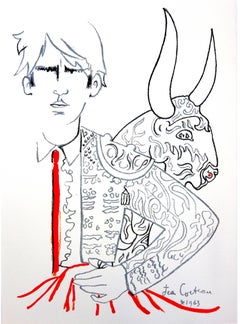
Jean Cocteau - Bulls - Original Lithograph
By Jean Cocteau
Located in Collonge Bellerive, Geneve, CH
Original Lithograph by Jean Cocteau
Title: Taureaux
Signed in the plate
Dimensions: 40 x 30 cm
Edition: 200
Luxury print edition from the portfolio of Trinckvel
1965
Jean Cocteau
W...
Category
1960s Modern Continental Europe - More Prints
Materials
Lithograph
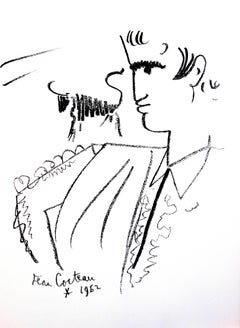
Jean Cocteau - Portrait - Original Lithograph
By Jean Cocteau
Located in Collonge Bellerive, Geneve, CH
Original Lithograph by Jean Cocteau
Title: Taureaux
Signed in the plate
Dimensions: 40 x 30 cm
Edition: 200
Luxury print edition from the portfolio of Trinckvel
1965
Jean Cocteau
W...
Category
1960s Modern Continental Europe - More Prints
Materials
Lithograph
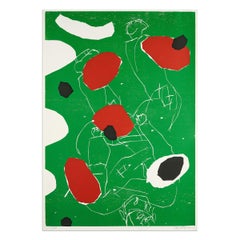
Georg Baselitz, Puck
By Georg Baselitz
Located in Hamburg, DE
Georg Baselitz (German, born 1938)
Puck, 1993
Medium: Woodcut on wove paper
Dimensions: 103 x 72 cm
Edition of 300: Hand-signed and numbered
Catalogue raisonné: WVZ 1008
Condit...
Category
Late 20th Century Neo-Expressionist Continental Europe - More Prints
Materials
Woodcut
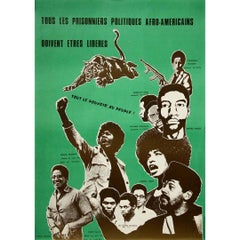
1971 original french poster - Solidarity with the Black Panther Party
Located in PARIS, FR
This powerful 1971 original poster is a rare artifact of international solidarity with the Black Panther Party, produced during a time of intense political resistance and global revo...
Category
1970s Continental Europe - More Prints
Materials
Paper
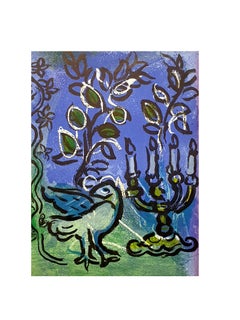
Marc Chagall - The Candlestick - Original Lithograph
By Marc Chagall
Located in Collonge Bellerive, Geneve, CH
The Candlestick, from Jean Leymarie, Vitraux pour Jérusalem (Jerusalem Windows), André Sauret, Monte Carlo, 1962 (see M. 366-72; see C. books ...
Category
1960s Surrealist Continental Europe - More Prints
Materials
Lithograph
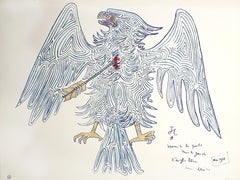
Jean Cocteau - Blue Eagle - Original Lithograph
By Jean Cocteau
Located in Collonge Bellerive, Geneve, CH
Jean Cocteau - Blue Eagle - Original Lithograph
1956
Stampsigned lower left
Signed and dated in the plate
Numbered in pencil
Edition : /XXV
Dimensions: 50 x...
Category
1950s Modern Continental Europe - More Prints
Materials
Lithograph
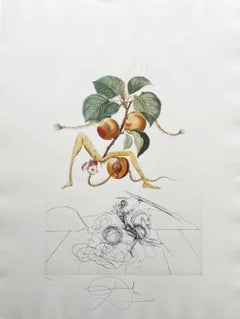
Abricot chevalier (Apricot Knight)
By Salvador Dalí
Located in OPOLE, PL
Salvador Dali (1904-1989) - Holed Fruit from Flordali suite
Lithograph with drypoint etching from 1969.
The edition 16/35 on Rives paper.
Dimensions of work: 74.5 x 54.5 cm.
Hand...
Category
1960s Modern Continental Europe - More Prints
Materials
Drypoint, Etching
Günther Förg, Untitled (Portfolio Pi) - Signed Woodcut Print, Abstract Art
By Günther Förg
Located in Hamburg, DE
Günther Förg (German, 1952-2013)
Untitled (from Portfolio Pi), 1995
Medium: Woodcut on wove paper
Dimensions: 80 x 60 cm
Edition of 98: Hand-signed and numbered
Condition: Excellent ...
Category
21st Century and Contemporary Abstract Continental Europe - More Prints
Materials
Woodcut
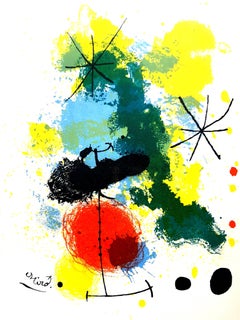
Joan Miro - Original Lithograph - Frontispiece for "Prints from Mourlot Press"
By Joan Miró
Located in Collonge Bellerive, Geneve, CH
Joan Miro - 1964
Dimensions: 30 x 20 cm
Edition of 200 (one of the 200 on Vélin de Rives) reserved for collaborators, there was also a larger edition of 2000
From "Prints from the Mo...
Category
1960s Modern Continental Europe - More Prints
Materials
Lithograph
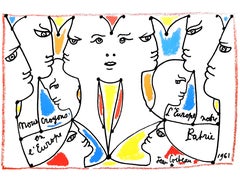
Jean Cocteau (after) - Europe Our Country - Lithograph
By Jean Cocteau
Located in Collonge Bellerive, Geneve, CH
Lithograph after a drawing by Jean Cocteau
Title: Europe Our Country
Signed in the plate
Dimensions: 33 x 46 cm
Edition: 600
Luxury print edition from the portfolio of Sciaky
1961
Category
1960s Post-Modern Continental Europe - More Prints
Materials
Lithograph
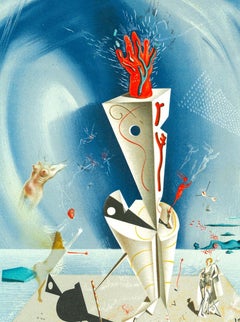
Appareil et Main - Lithograph after Salvador Dalì - 1974
By Salvador Dalí
Located in Roma, IT
Appareil et Main is an artwork realized after a painting by the Surrealist Catalan artist Salvador Dalí (Figueres, 1904-1989).
This is a color lithograph on wove paper, properly e...
Category
1970s Surrealist Continental Europe - More Prints
Materials
Lithograph
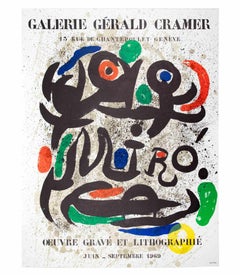
Exhibition Poster Galerie Gerald Cramer - Lithograph by Joan Mirò - 1969
By Joan Miró
Located in Roma, IT
Exhibition Poster Galerie Gerald Cramer is a contemporary artwork realized by Joan Mirò.
Mixed colored lithograph.
The poster was realized in occasion of the exhibition of the arti...
Category
1960s Surrealist Continental Europe - More Prints
Materials
Lithograph
Still Thinking About These?
All Recently ViewedMore Ways To Browse
Mordechai Rosenstein
Murakami Flowers Blooming In This World
Oranges By Donald Sultan
Picasso Bullring
Porsche 904
R And B Vintage Radio
R W Smith
Richard Sedlon
Roy Lichtenstein Sweet Dreams
Salvador Dali Signed 1975
Sandra Gamarra
Schnabel Poster
Seattle Worlds Fair Poster
Shelby And Sandy
Shepard Fairey Love Lotus
Shinduk Kang
Snoopy Tennis
Sorrento Vintage Poster