Continental Europe - More Prints

to
287
778
372
583
114
87
Overall Width
to
Overall Height
to
579
289
211
209
46
31
5
3
3
2
2
2
138
135
70
54
52
12
38
1,622
262
9
4
24
34
41
204
406
433
207
117
2
1,481
357
93
9
6
5
4
3
2
2
2
1
1
1
1
1
1
1
1
1
1
1
896
391
329
167
117
40
904
1,934
3,941
3,645
Item Ships From: Continental Europe
Jean Cocteau - Portrait - Original Lithograph
By Jean Cocteau
Located in Collonge Bellerive, Geneve, CH
Original Lithograph by Jean Cocteau Title: Taureaux Signed in the plate Dimensions: 40 x 30 cm Edition: 200 Luxury print edition from the portfolio of Trinckvel 1965 Jean Cocteau W...
Category

1960s Modern Continental Europe - More Prints

Materials

Lithograph

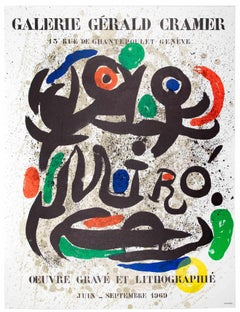
Exhibition Poster Galerie Gerald Cramer - Lithograph by Joan Mirò - 1969
By Joan Miró
Located in Roma, IT
Exhibition Poster Galerie Gerald Cramer is a contemporary artwork realized by Joan Mirò. Mixed colored lithograph. The poster was realized in occasion of the exhibition of the arti...
Category

1960s Surrealist Continental Europe - More Prints

Materials

Lithograph

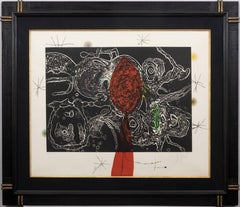
Espriu - Miró II
By Joan Miró
Located in OPOLE, PL
Joan Miro (1893-1983) - Espriu - Miró II Etching and aquatint with carborundum from 1975. The edition of 15/50 on on Guarro paper with Sala Gaspar watermark. Dimensions of work: 70.3 x 85.7 cm. Hand signed. Publisher: Sala Gaspar, Barcelona. Reference: Dupin 870; Cramer 197. The work is in Good condition. -- Joan Miró’s Espriu...
Category

1970s Surrealist Continental Europe - More Prints

Materials

Aquatint

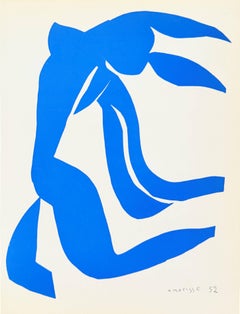
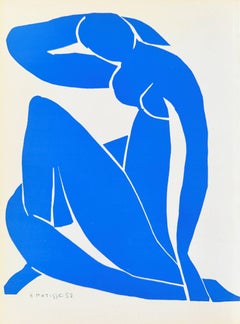
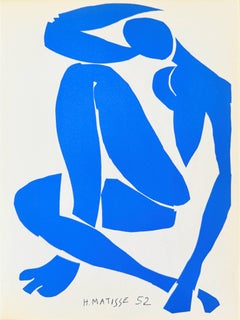
Femme Bleue
By Henri Matisse
Located in OPOLE, PL
This work will be exhibited at Art on Paper NYC, September 4–7, 2025. – Henri Matisse (1869-1954) - Femme Bleue Lithograph from 1958. Dimensions of work: 35.5 x 26.4 cm Publishe...
Category

1950s Surrealist Continental Europe - More Prints

Materials

Lithograph

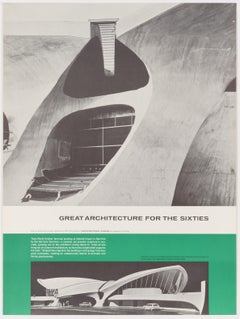
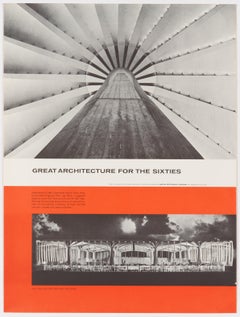
Great Architecture for the Sixties – TWAs Terminal Building by Eero Saarinen
By Walter Allner
Located in Zurich, CH
Original Vintage Poster depicting Eero Saarinen's TWA Terminal, published 1962 by the magazine Architectural Forum to promote Modern Architecture – one of...
Category

Mid-20th Century Modern Continental Europe - More Prints

Materials

Paper

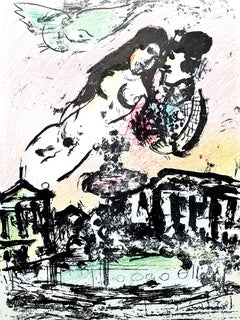
Marc Chagall - Original Lithograph
By Marc Chagall
Located in Collonge Bellerive, Geneve, CH
Marc Chagall Original Lithograph 1963 Dimensions: 32 x 24 cm Reference: Chagall Lithographe 1957-1962. VOLUME II. Condition : Excellent Marc Chagall (born in 1887) Marc Chagall was born in Belarus in 1887 and developed an early interest in art. After studying painting, in 1907 he left Russia for Paris, where he lived in an artist colony on the city’s outskirts. Fusing his own personal, dreamlike imagery with hints of the fauvism and cubism popular in France at the time, Chagall created his most lasting work—including I and the Village (1911)—some of which would be featured in the Salon des Indépendants exhibitions. After returning to Vitebsk for a visit in 1914, the outbreak of WWI trapped Chagall in Russia. He returned to France in 1923 but was forced to flee the country and Nazi persecution during WWII. Finding asylum in the U.S., Chagall became involved in set and costume design before returning to France in 1948. In his later years, he experimented with new art forms and was commissioned to produce numerous large-scale works. Chagall died in St.-Paul-de-Vence in 1985. The Village Marc Chagall was born in a small Hassidic community on the outskirts of Vitebsk, Belarus, on July 7, 1887. His father was a fishmonger, and his mother ran a small sundries shop in the village. As a child, Chagall attended the Jewish elementary school, where he studied Hebrew and the Bible, before later attending the Russian public school. He began to learn the fundamentals of drawing during this time, but perhaps more importantly, he absorbed the world around him, storing away the imagery and themes that would feature largely in most of his later work. At age 19 Chagall enrolled at a private, all-Jewish art school and began his formal education in painting, studying briefly with portrait artist Yehuda Pen. However, he left the school after several months, moving to St. Petersburg in 1907 to study at the Imperial Society for the Protection of Fine Arts. The following year, he enrolled at the Svanseva School, studying with set designer Léon Bakst, whose work had been featured in Sergei Diaghilev's Ballets Russes. This early experience would prove important to Chagall’s later career as well. Despite this formal instruction, and the widespread popularity of realism in Russia at the time, Chagall was already establishing his own personal style, which featured a more dreamlike unreality and the people, places and imagery that were close to his heart. Some examples from this period are his Window Vitebsk (1908) and My Fianceé with Black Gloves (1909), which pictured Bella Rosenfeld, to whom he had recently become engaged. The Beehive Despite his romance with Bella, in 1911 an allowance from Russian parliament member and art patron Maxim Binaver enabled Chagall to move to Paris, France. After settling briefly in the Montparnasse neighborhood, Chagall moved further afield to an artist colony known as La Ruche (“The Beehive”), where he began to work side by side with abstract painters such as Amedeo Modigliani and Fernand Léger as well as the avant-garde poet Guillaume Apollinaire. At their urging, and under the influence of the wildly popular fauvism and cubism, Chagall lightened his palette and pushed his style ever further from reality. I and the Village (1911) and Homage to Apollinaire (1912) are among his early Parisian works, widely considered to be his most successful and representative period. Though his work stood stylistically apart from his cubist contemporaries, from 1912 to 1914 Chagall exhibited several paintings at the annual Salon des Indépendants exhibition, where works by the likes of Juan Gris, Marcel Duchamp and Robert Delaunay were causing a stir in the Paris art world. Chagall’s popularity began to spread beyond La Ruche, and in May 1914 he traveled to Berlin to help organize his first solo exhibition, at Der Sturm Gallery. Chagall remained in the city until the highly acclaimed show opened that June. He then returned to Vitebsk, unaware of the fateful events to come. War, Peace and Revolution In August 1914 the outbreak of World War I precluded Chagall’s plans to return to Paris. The conflict did little to stem the flow of his creative output, however, instead merely giving him direct access to the childhood scenes so essential to his work, as seen in paintings such as Jew in Green (1914) and Over Vitebsk (1914). His paintings from this period also occasionally featured images of the war’s impact on the region, as with Wounded Soldier (1914) and Marching (1915). But despite the hardships of life during wartime, this would also prove to be a joyful period for Chagall. In July 1915 he married Bella, and she gave birth to a daughter, Ida, the following year. Their appearance in works such as Birthday (1915), Bella and Ida by the Window (1917) and several of his “Lovers” paintings give a glimpse of the island of domestic bliss that was Chagall’s amidst the chaos. To avoid military service and stay with his new family, Chagall took a position as a clerk in the Ministry of War Economy in St. Petersburg. While there he began work on his autobiography and also immersed himself in the local art scene, befriending novelist Boris Pasternak, among others. He also exhibited his work in the city and soon gained considerable recognition. That notoriety would prove important in the aftermath of the 1917 Russian Revolution when he was appointed as the Commissar of Fine Arts in Vitebsk. In his new post, Chagall undertook various projects in the region, including the 1919 founding of the Academy of the Arts. Despite these endeavors, differences among his colleagues eventually disillusioned Chagall. In 1920 he relinquished his position and moved his family to Moscow, the post-revolution capital of Russia. In Moscow, Chagall was soon commissioned to create sets and costumes for various productions at the Moscow State Yiddish Theater...
Category

1960s Surrealist Continental Europe - More Prints

Materials

Lithograph

Great Architecture for the Sixties – Pier Luigi Nervi s Exposition Hall in Turin
By Walter Allner
Located in Zurich, CH
Original Vintage Poster depicting Piero Luigi Nervi's International Labor Exposition Hall in Turin, published 1962 by the magazine Architectural Forum to p...
Category

Mid-20th Century Modern Continental Europe - More Prints

Materials

Paper

Apollon et Dionysos
By André Masson
Located in Roma, IT
Image dimensions: 21x33 cm. Edition of 50 prints by Galerie Louis Leiris, numbered and hand signed by the Artist. Excellent conditions. This artw...
Category

1950s Continental Europe - More Prints

Materials

Etching

Femme Bleue
By Henri Matisse
Located in OPOLE, PL
Henri Matisse (1869-1954) - Femme Bleue Lithograph from 1958. Dimensions of work: 35.5 x 26 cm. Publisher: Tériade, Paris. First, original edition. The work is in Excellent cond...
Category

1950s Surrealist Continental Europe - More Prints

Materials

Lithograph

Femme Bleue
By Henri Matisse
Located in OPOLE, PL
This work will be exhibited at Art on Paper NYC, September 4–7, 2025. – Henri Matisse (1869-1954) - Femme Bleue Lithograph from 1958. Dimensions of work: 35.5 x 26.4 cm Publishe...
Category

1950s Surrealist Continental Europe - More Prints

Materials

Lithograph

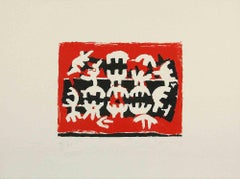
Untitled - Lithograph by Giuseppe Capogrossi - 1960s
By Giuseppe Capogrossi
Located in Roma, IT
Untitled is a print realized by Giuseppe Capogrossi (Rome, 1900 - 1972). Lithograph on paper Hand-signed lower right, numbered, edition lower left, 56/80 prints. Embossing stamp of...
Category

1960s Abstract Continental Europe - More Prints

Materials

Paper, Lithograph

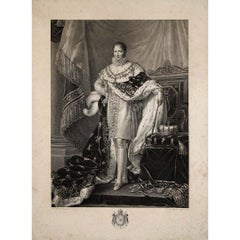
1813 engraving, after a painting by François Gérard - Joseph Napoléon Bonaparte
Located in PARIS, FR
This magnificent 1813 engraving, after a painting by François Gérard, portrays Joseph Napoléon Bonaparte, King of Spain, in full coronation regalia. Standing with composed authority,...
Category

1810s Continental Europe - More Prints

Materials

Paper, Engraving

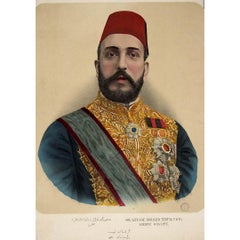
Original chromolithograph : His Highness Mohamed Tewfik Pacha Khédive d Égypte
Located in PARIS, FR
This impressive original chromolithograph portrays His Highness Mohamed Tewfik Pasha, Khedive of Egypt, a central political figure of the late 19th century. Tewfik Pasha reigned from...
Category

1880s Continental Europe - More Prints

Materials

Paper

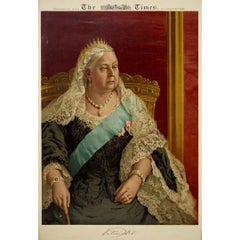
1897 original poster The Times newspaper Queen Victoria’s Diamond Jubilee
Located in PARIS, FR
This impressive 1897 original poster was issued as a special presentation with The Times newspaper to commemorate Queen Victoria’s Diamond Jubilee, marking sixty years on the British...
Category

1890s Continental Europe - More Prints

Materials

Paper, Lithograph

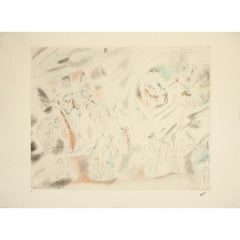
1930 aquatint by Jules Pascin titled Salomé dansant devant le roi Hérode
By Jules Pascin
Located in PARIS, FR
This refined 1930 aquatint by Jules Pascin, titled Salomé dansant devant le roi Hérode, offers a poetic and dream-like interpretation of the biblical scene of Salome before King Hero...
Category

1930s Continental Europe - More Prints

Materials

Paper, Aquatint, Lithograph

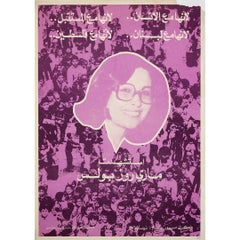
1975 original poster - Lebanese Civil War - PLO Palestinian
Located in PARIS, FR
This powerful poster from around 1975 was created in the turbulent early years of the Lebanese Civil War, a period marked by intense violence, political fragmentation, and regional t...
Category

1970s Continental Europe - More Prints

Materials

Paper, Lithograph

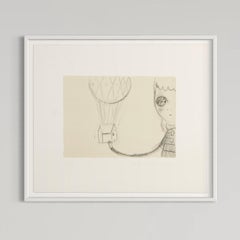
Yoshitomo Nara and Hiroshi Sugito, Untitled (Omaha) - Signed Print, Contemporary
By Yoshitomo Nara
Located in Hamburg, DE
Yoshitomo Nara (b. 1959, Japanese) and Hiroshi Sugito (b. 1970, Japanese) Untitled (Omaha), 2005 Medium: Lithograph on paper Dimensions: 53.5 x 62.5 cm Edition of 100 + 10 AP: Hand-s...
Category

21st Century and Contemporary Contemporary Continental Europe - More Prints

Materials

Lithograph

1980 original poster - The Most Explosive Love Story Ever "Gone With the wind"
Located in PARIS, FR
This striking and ironic 1980 poster transforms the legendary cinema classic “Gone with the Wind” into a sharp piece of political satire. Featuring Ronald Reagan and Margaret Thatche...
Category

1980s Continental Europe - More Prints

Materials

Paper

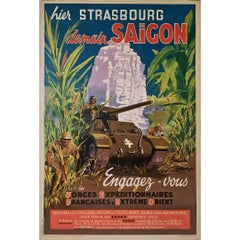
1944 recruitment poster “Hier Strasbourg, demain Saïgon” by Baudouin - WWII
Located in PARIS, FR
This striking 1940s recruitment poster “Hier Strasbourg, demain Saïgon” was created by Pierre Baudouin to encourage enlistment in the French expeditionary forces destined for Southea...
Category

1940s Continental Europe - More Prints

Materials

Paper, Lithograph

1953 original poster for the Bal de l’École du Louvre
Located in PARIS, FR
This elegant 1953 poster announces the Bal de l’École du Louvre, an annual gala evening held at the prestigious Hôtel de Rothschild in Paris. Taking place on 14 February, the event p...
Category

1950s Continental Europe - More Prints

Materials

Linen, Paper

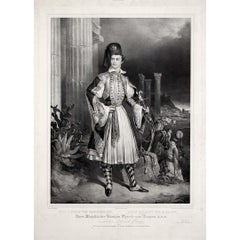
19th-century engraving depicts Otto I, the first modern King of Greece
Located in PARIS, FR
This striking 19th-century engraving depicts Otto I, the first modern King of Greece, standing proudly in traditional Greek costume against a dramatic classical backdrop. Otto, a Bav...
Category

1850s Continental Europe - More Prints

Materials

Paper, Engraving

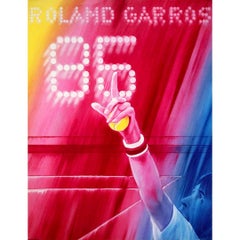
Original 1985 poster by the French artist Jacques Monory for Roland Garros
By Jacques Monory
Located in PARIS, FR
Original 1985 poster by the French artist Jacques Monory for the Roland Garros tennis tournament. Known for his cinematic style and characteristic use of blue tones, Monory was a key...
Category

1980s Continental Europe - More Prints

Materials

Paper

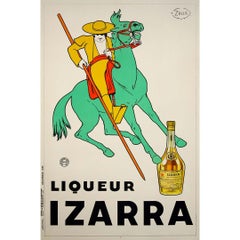
Original 1934 poster by the artist Zulla for the famous Basque liqueur Izarra
Located in PARIS, FR
Original 1934 poster by the artist Zulla for the famous Basque liqueur Izarra. The composition features a striking green horse mounted by a bold figure in yellow and red traditional ...
Category

1930s Continental Europe - More Prints

Materials

Paper, Lithograph

Rupprecht Geiger, Zurückgehen, Weitergehen, Fortgehen - Portfolio of 20 Prints
By Rupprecht Geiger
Located in Hamburg, DE
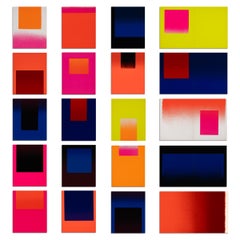
Rupprecht Geiger (German, 1908-2009) Zurückgehen, Weitergehen, Fortgehen, 1966 Medium: Portfolio of 20 screen prints on paper Dimensions: 35 x 28.5 cm and 35 x 57 cm (with middle fol...
Category

20th Century Abstract Continental Europe - More Prints

Materials

Screen

Roses et Mimosas (Roses and Mimosa)
By Marc Chagall
Located in OPOLE, PL
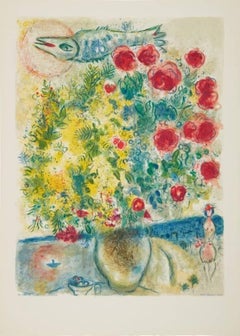
Marc Chagall (1887-1985) - Roses et Mimosas (Roses and Mimosa) Lithograph from 1967. an unsigned proof, from the numbered edition of 150, on Arches paper. Dimensions of work: 73 x...
Category

1960s Modern Continental Europe - More Prints

Materials

Lithograph

Jean Cocteau - Europe and the World - Lithograph
By Jean Cocteau
Located in Collonge Bellerive, Geneve, CH
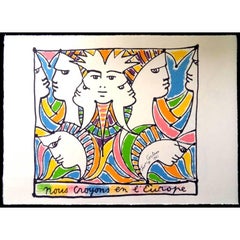
Lithograph by Jean Cocteau Title: Europe and the World Signed in the plate Dimensions: 33 x 46 cm Edition: 200 Luxury print edition from the portfolio of Sciaky 1961
Category

1960s Modern Continental Europe - More Prints

Materials

Lithograph

Ellsworth Kelly – Die Welt, Signed Fine Art Print, Minimalism
By Ellsworth Kelly
Located in Hamburg, DE
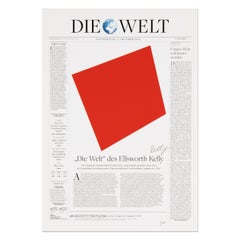
Ellsworth Kelly (American, 1923-2015) Die Welt, 2011 Medium: Offset lithograph on vellum Dimensions: 57.2 x 40 cm (22½ x 15¾ in) Edition of 100: Hand-signed and numbered Publisher: D...
Category

21st Century and Contemporary Abstract Continental Europe - More Prints

Materials

Offset

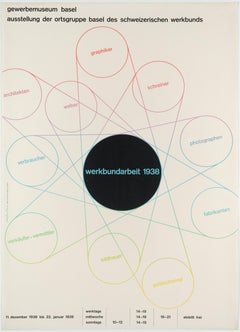
Werkbund – Original Swiss Exhibition Poster
Located in Zurich, CH
Original Swiss Exhibition poster by Hermann Eidenbenz (lithograph, printed by Art. Institut Grafica in Basel) advertising a show of the Basel section ...
Category

1930s Modern Continental Europe - More Prints

Materials

Paper

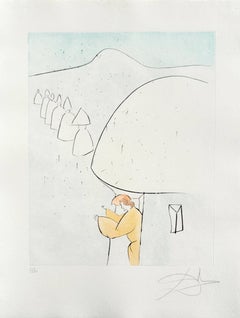
Rokujiso (The grateful statues)
By Salvador Dalí­
Located in OPOLE, PL
Salvador Dali (1904-1989) - Rokujiso (The grateful statues) Drypoint etching with stencil from 1974. The edition of XVII/LXXV on Richard de Bas paper. Dimensions of work: 66 x 52 ...
Category

1970s Surrealist Continental Europe - More Prints

Materials

Drypoint, Etching

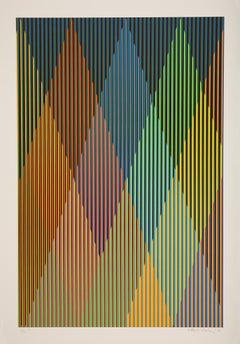
"Couleur Additive Perseus" by Carlos Cruz-Diez, 21st Century, Optical Art
By Carlos Cruz-Diez
Located in Köln, DE
"Couleur Additive Perseus" has a stunning appearance and an optical effect, which catches the beholder's attention from the very first time. Carlos Cruz-Diez from Venezuela was one o...
Category

2010s Op Art Continental Europe - More Prints

Materials

Screen

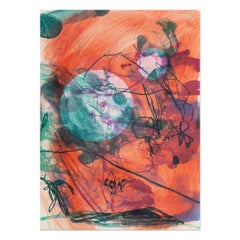
Jadé Fadojutimi, A Season’s Echo - Signed Print, British Art, Abstract Art
Located in Hamburg, DE
Jadé Fadojutimi (British, b. 1993) A Season’s Echo, 2022 Medium: Lithograph on paper Dimensions: 65.7 × 48.1 cm (25 9/10 × 18 9/10 in) Edition of 50 + 7AP: Hand-signed and numbered C...
Category

21st Century and Contemporary Abstract Continental Europe - More Prints

Materials

Lithograph

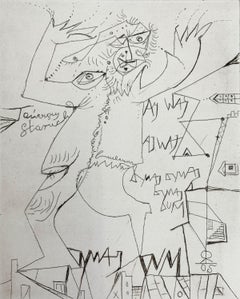
A dancing one - XXI Century, Figurative etching print, Black white
By Leszek Rózga
Located in Warsaw, PL
LESZEK RÓZGA (1924-2015) He studied painting at Maria Skarbek-Kruszewska private atelier in 1945-46. In 1948, he began studies at the art school in Łódź (later: Academy of Fine Arts)...
Category

Early 2000s Contemporary Continental Europe - More Prints

Materials

Paper, Etching

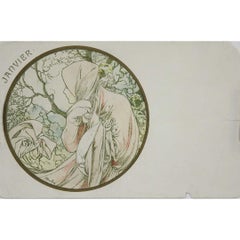
Art Nouveau postcard, created around 1900 by Alphonse Mucha - January
By Alphonse Mucha
Located in PARIS, FR
This exquisite Art Nouveau postcard, created around 1900 by Alphonse Mucha, features the month of January (Janvier) in a poetic and dreamlike composition. Mucha, renowned for his ele...
Category

Early 20th Century Continental Europe - More Prints

Materials

Paper, Lithograph

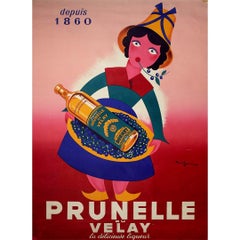
1950s advertising poster for Prunelle du Velay liqueur by Paul Igert
By Paul Igert
Located in PARIS, FR
Playful, bold, and irresistibly charming, this mid-century advertising poster for Prunelle du Velay liqueur captures the vibrant spirit of 1950s French graphic design. Illustrated by...
Category

1950s Continental Europe - More Prints

Materials

Paper, Lithograph, Linen

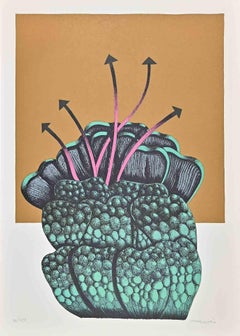
Flower Signal - Lithograph by Renzo Margonari - 1976
By Renzo Margonari
Located in Roma, IT
Flower Signal is a lithograph realized by Renzo Margonari in 1976. Hand-signed. Numbered. Edition 30/125. Good conditions.
Category

1970s Contemporary Continental Europe - More Prints

Materials

Lithograph

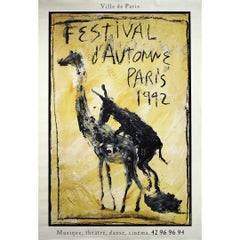
1992 original poster by Miquel Barceló - Festival d Automne Paris
By Miquel Barceló
Located in PARIS, FR
This 1992 original poster by Spanish contemporary artist Miquel Barceló was created for the Festival d'Automne à Paris, a multidisciplinary celebration of music, theatre, dance, and ...
Category

1990s Continental Europe - More Prints

Materials

Paper

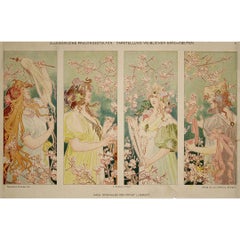
Allegorische Frauengestalten Circa 1900 Original print by Privat-Livemont
By Georges Henri Privat-Livemont
Located in PARIS, FR
“Allegorische Frauengestalten – Darstellung Weiblicher Handarbeiten” is a breathtaking circa 1900 original lithograph by renowned Belgian Art Nouveau artist Privat-Livemont. This ele...
Category

Early 1900s Continental Europe - More Prints

Materials

Paper, Lithograph

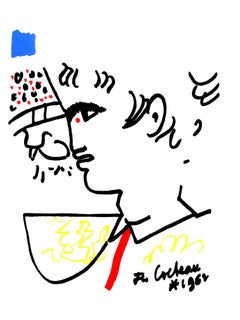
Jean Cocteau - Colorful Portrait - Original Lithograph
By Jean Cocteau
Located in Collonge Bellerive, Geneve, CH
Original Lithograph by Jean Cocteau Title: Taureaux Dimensions: 40 x 30 cm Edition: 200 Luxury print edition from the portfolio of Trinckvel 1965 Jean Cocteau Writer, artist and fi...
Category

1960s Modern Continental Europe - More Prints

Materials

Lithograph

Cubist Portrait
By George Braque
Located in OPOLE, PL
Georges Braque (1882-1963) - Cubist Portrait Lithograph from 1939. Dimensions of work: 35 x 26 cm Publisher: Tériade, Paris. The work is in Excellent condition. Fast and secure ...
Category

1930s Surrealist Continental Europe - More Prints

Materials

Lithograph

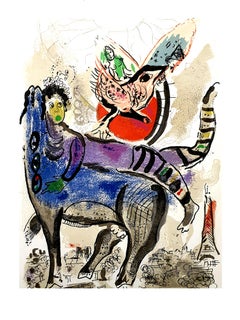
Marc Chagall - La Vache Bleue (Blue Cow) - Original Lithograph
By Marc Chagall
Located in Collonge Bellerive, Geneve, CH
Marc Chagall - Original Lithograph La Vache Bleue (The Blue Cow) From the unsigned, unnumbered lithograph printed in the literary review XXe Siecle 1967 See Mourlot 488 Dimensions: 32 x 24 cm Publisher: G. di San Lazzaro. Marc Chagall (born in 1887) Marc Chagall was born in Belarus in 1887 and developed an early interest in art. After studying painting, in 1907 he left Russia for Paris, where he lived in an artist colony on the city’s outskirts. Fusing his own personal, dreamlike imagery with hints of the fauvism and cubism popular in France at the time, Chagall created his most lasting work—including I and the Village (1911)—some of which would be featured in the Salon des Indépendants exhibitions. After returning to Vitebsk for a visit in 1914, the outbreak of WWI trapped Chagall in Russia. He returned to France in 1923 but was forced to flee the country and Nazi persecution during WWII. Finding asylum in the U.S., Chagall became involved in set and costume design before returning to France in 1948. In his later years, he experimented with new art forms and was commissioned to produce numerous large-scale works. Chagall died in St.-Paul-de-Vence in 1985. The Village Marc Chagall was born in a small Hassidic community on the outskirts of Vitebsk, Belarus, on July 7, 1887. His father was a fishmonger, and his mother ran a small sundries shop in the village. As a child, Chagall attended the Jewish elementary school, where he studied Hebrew and the Bible, before later attending the Russian public school. He began to learn the fundamentals of drawing during this time, but perhaps more importantly, he absorbed the world around him, storing away the imagery and themes that would feature largely in most of his later work. At age 19 Chagall enrolled at a private, all-Jewish art school and began his formal education in painting, studying briefly with portrait artist Yehuda Pen. However, he left the school after several months, moving to St. Petersburg in 1907 to study at the Imperial Society for the Protection of Fine Arts. The following year, he enrolled at the Svanseva School, studying with set designer Léon Bakst, whose work had been featured in Sergei Diaghilev's Ballets Russes. This early experience would prove important to Chagall’s later career as well. Despite this formal instruction, and the widespread popularity of realism in Russia at the time, Chagall was already establishing his own personal style, which featured a more dreamlike unreality and the people, places and imagery that were close to his heart. Some examples from this period are his Window Vitebsk (1908) and My Fianceé with Black Gloves (1909), which pictured Bella Rosenfeld, to whom he had recently become engaged. The Beehive Despite his romance with Bella, in 1911 an allowance from Russian parliament member and art patron Maxim Binaver enabled Chagall to move to Paris, France. After settling briefly in the Montparnasse neighborhood, Chagall moved further afield to an artist colony known as La Ruche (“The Beehive”), where he began to work side by side with abstract painters such as Amedeo Modigliani and Fernand Léger as well as the avant-garde poet Guillaume Apollinaire. At their urging, and under the influence of the wildly popular fauvism and cubism, Chagall lightened his palette and pushed his style ever further from reality. I and the Village (1911) and Homage to Apollinaire (1912) are among his early Parisian works, widely considered to be his most successful and representative period. Though his work stood stylistically apart from his cubist contemporaries, from 1912 to 1914 Chagall exhibited several paintings at the annual Salon des Indépendants exhibition, where works by the likes of Juan Gris, Marcel Duchamp and Robert Delaunay were causing a stir in the Paris art world. Chagall’s popularity began to spread beyond La Ruche, and in May 1914 he traveled to Berlin to help organize his first solo exhibition, at Der Sturm Gallery. Chagall remained in the city until the highly acclaimed show opened that June. He then returned to Vitebsk, unaware of the fateful events to come. War, Peace and Revolution In August 1914 the outbreak of World War I precluded Chagall’s plans to return to Paris. The conflict did little to stem the flow of his creative output, however, instead merely giving him direct access to the childhood scenes so essential to his work, as seen in paintings such as Jew in Green (1914) and Over Vitebsk (1914). His paintings from this period also occasionally featured images of the war’s impact on the region, as with Wounded Soldier (1914) and Marching (1915). But despite the hardships of life during wartime, this would also prove to be a joyful period for Chagall. In July 1915 he married Bella, and she gave birth to a daughter, Ida, the following year. Their appearance in works such as Birthday (1915), Bella and Ida by the Window (1917) and several of his “Lovers” paintings give a glimpse of the island of domestic bliss that was Chagall’s amidst the chaos. To avoid military service and stay with his new family, Chagall took a position as a clerk in the Ministry of War Economy in St. Petersburg. While there he began work on his autobiography and also immersed himself in the local art scene, befriending novelist Boris Pasternak, among others. He also exhibited his work in the city and soon gained considerable recognition. That notoriety would prove important in the aftermath of the 1917 Russian Revolution when he was appointed as the Commissar of Fine Arts in Vitebsk. In his new post, Chagall undertook various projects in the region, including the 1919 founding of the Academy of the Arts. Despite these endeavors, differences among his colleagues eventually disillusioned Chagall. In 1920 he relinquished his position and moved his family to Moscow, the post-revolution capital of Russia. In Moscow, Chagall was soon commissioned to create sets and costumes for various productions at the Moscow State Yiddish Theater, where he would paint a series of murals titled Introduction to the Jewish Theater as well. In 1921, Chagall also found work as a teacher at a school for war orphans. By 1922, however, Chagall found that his art had fallen out of favor, and seeking new horizons he left Russia for good. Flight After a brief stay in Berlin, where he unsuccessfully sought to recover the work exhibited at Der Sturm before the war, Chagall moved his family to Paris in September 1923. Shortly after their arrival, he was commissioned by art dealer and publisher Ambroise Vollard to produce a series of etchings for a new edition of Nikolai Gogol's 1842 novel Dead Souls. Two years later Chagall began work on an illustrated edition of Jean de la Fontaine’s Fables, and in 1930 he created etchings for an illustrated edition of the Old Testament, for which he traveled to Palestine to conduct research. Chagall’s work during this period brought him new success as an artist and enabled him to travel throughout Europe in the 1930s. He also published his autobiography, My Life (1931), and in 1933 received a retrospective at the Kunsthalle in Basel, Switzerland. But at the same time that Chagall’s popularity was spreading, so, too, was the threat of Fascism and Nazism. Singled out during the cultural "cleansing" undertaken by the Nazis in Germany, Chagall’s work was ordered removed from museums throughout the country. Several pieces were subsequently burned, and others were featured in a 1937 exhibition of “degenerate art” held in Munich. Chagall’s angst regarding these troubling events and the persecution of Jews in general can be seen in his 1938 painting White Crucifixion. With the eruption of World War II, Chagall and his family moved to the Loire region before moving farther south to Marseilles following the invasion of France. They found a more certain refuge when, in 1941, Chagall’s name was added by the director of the Museum of Modern Art (MOMA) in New York City to a list of artists and intellectuals deemed most at risk from the Nazis’ anti-Jewish campaign. Chagall and his family would be among the more than 2,000 who received visas and escaped this way. Haunted Harbors Arriving in New York City in June 1941, Chagall discovered that he was already a well-known artist there and, despite a language barrier, soon became a part of the exiled European artist community. The following year he was commissioned by choreographer Léonide Massine to design sets and costumes for the ballet Aleko, based on Alexander Pushkin’s “The Gypsies” and set to the music of Pyotr Ilyich Tchaikovsky. But even as he settled into the safety of his temporary home, Chagall’s thoughts were frequently consumed by the fate befalling the Jews of Europe and the destruction of Russia, as paintings such as The Yellow Crucifixion...
Category

1960s Surrealist Continental Europe - More Prints

Materials

Lithograph

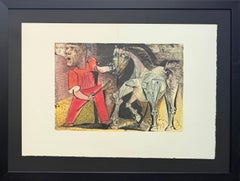
Dompteur et son Cheval
By Pablo Picasso
Located in OPOLE, PL
Pablo Picasso (1881-1973) - Dompteur et son Cheval Lithograph from 1957. The edition 211/275. With Arches watermark. Dimensions of work: 65 x 44 cm Publisher: Fernand Mourlot Éd...
Category

1950s Modern Continental Europe - More Prints

Materials

Lithograph

Photomontage N.5 The History of the communist party in posters by Rodchenko
By Alexander Rodchenko
Located in PARIS, FR
Step into the powerful visual world of early Soviet propaganda with this original photomontage poster designed by the pioneering Constructivist artist Alexandre Rodtchenko. Part of t...
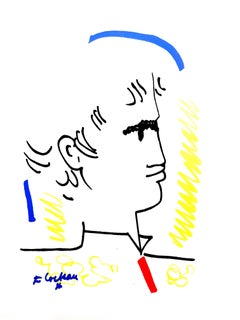
Category

1920s Continental Europe - More Prints

Materials

Paper, Lithograph, Linen

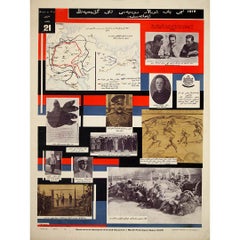
Photomontage N.21 The History of the communist party in posters by Rodchenko
By Alexander Rodchenko
Located in PARIS, FR
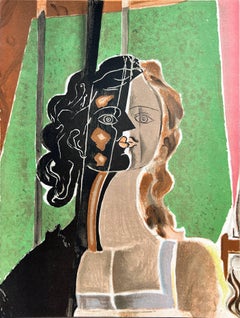
Step into the powerful visual world of early Soviet propaganda with this original photomontage poster designed by the pioneering Constructivist artist Alexandre Rodtchenko. Part of t...
Category

1920s Continental Europe - More Prints

Materials

Paper, Lithograph

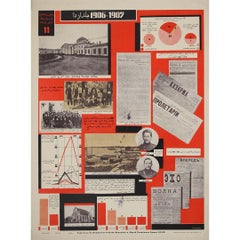
Photomontage N.11 The History of the communist party in posters by Rodchenko
By Alexander Rodchenko
Located in PARIS, FR
Step into the powerful visual world of early Soviet propaganda with this original photomontage poster designed by the pioneering Constructivist artist Alexandre Rodtchenko. Part of t...
Category

1920s Continental Europe - More Prints

Materials

Paper, Lithograph

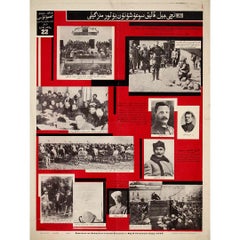
Photomontage N.22 The History of the communist party in posters by Rodchenko
By Alexander Rodchenko
Located in PARIS, FR
Step into the powerful visual world of early Soviet propaganda with this original photomontage poster designed by the pioneering Constructivist artist Alexandre Rodtchenko. Part of t...
Category

1920s Continental Europe - More Prints

Materials

Paper, Lithograph

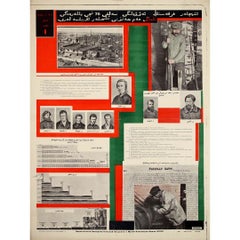
Photomontage N.1 The History of the communist party in posters 1926 by Rodchenko
By Alexander Rodchenko
Located in PARIS, FR
Step into the powerful visual world of early Soviet propaganda with this original photomontage poster designed by the pioneering Constructivist artist Alexandre Rodtchenko. Part of t...
Category

1920s Continental Europe - More Prints

Materials

Paper, Lithograph

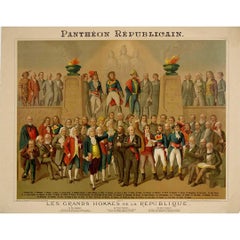
Original poster Panthéon Républicain Les grands hommes de la République
Located in PARIS, FR
This vibrant chromolithographic poster titled Panthéon Républicain – Les grands hommes de la République is a monumental homage to the intellectual, political, and military figures wh...
Category

1890s Continental Europe - More Prints

Materials

Paper, Lithograph

Lithograph by David Roberts - Grande approche du temple de Philae, Nubie 1842
By David Roberts
Located in PARIS, FR
This remarkable lithograph, titled Grande approche du temple de Philae, Nubie, transports us to one of the most iconic temple complexes of ancient Egypt, as seen through the romantic...
Category

1840s Continental Europe - More Prints

Materials

Paper, Lithograph

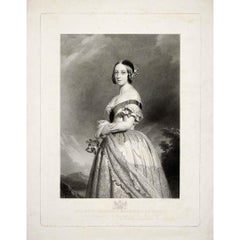
1846 engraving presents Queen Victoria by Franz Xaver Winterhalter
By Franz Xaver Winterhalter
Located in PARIS, FR
This striking 19th-century engraving presents Queen Victoria in all the grace and refinement that defined her early reign. Based on the renowned portrait by Franz Xaver Winterhalter,...
Category

1840s Continental Europe - More Prints

Materials

Paper, Engraving

Original engraving by Manuel Robbe - Promenade Au Parc Monceau
By Manuel Robbe
Located in PARIS, FR
Bathed in the gentle light of a Parisian afternoon, this charming original aquatint by Manuel Robbe captures an idyllic moment of bourgeois leisure in the Parc Monceau, one of the ca...
Category

1910s Continental Europe - More Prints

Materials

Paper, Engraving, Aquatint

Chris Ofili, Poolside: Etching on wove paper, Contemporary Art, Signed Print
By Chris Ofili
Located in Hamburg, DE
Chris Ofili (born 1968 in Manchester) Poolside, 2013 Medium: Etching on wove paper Dimensions: 45.1 x 35.6 cm (17.75 x 14 in) Edition of 55: Hand-signed and numbered Condition: Mint ...
Category

21st Century and Contemporary Contemporary Continental Europe - More Prints

Materials

Etching

1846 Original engraving by Du Moncel : view of Athens - Propylées
Located in PARIS, FR
This remarkable 1846 lithograph offers a sweeping and richly detailed view of the Propylaea and the Temple of Athena Nike—referred to here as the Temple de la Victoire (Aptère)—captu...
Category

1840s Continental Europe - More Prints

Materials

Paper, Engraving

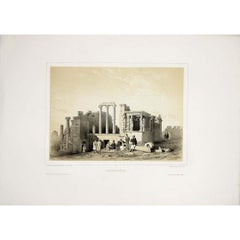
1846 Original engraving by Du Moncel : view of Athens - Erechthéum
Located in PARIS, FR
This exquisite 1846 lithograph captures the ethereal beauty of the Erechtheion, one of the most iconic temples of the Athenian Acropolis, rendered with precision and romantic sensiti...
Category

1840s Continental Europe - More Prints

Materials

Paper, Engraving

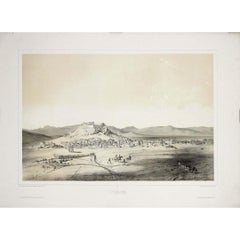
1846 Original engraving by Du Moncel : view of Athens - Acropolis
Located in PARIS, FR
This rare 1846 lithograph presents a sweeping, romanticized view of Athens, drawn from the celebrated series Athènes monumentale et pittoresque. Created by the French lithographer Th...
Category

1840s Continental Europe - More Prints

Materials

Paper, Engraving

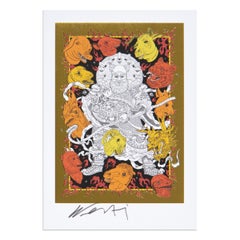
Ai Weiwei, Zodiac - Signed Print and Limited Edition Book
By Ai Weiwei
Located in Hamburg, DE
Ai Weiwei (Chinese, b. 1957) Zodiac, 2024 Medium: Digital print, gold foil stamped, on paper (incl. artist's book and slipcase) Dimensions: 6 × 8 1/2 in 15.2 × 21.6 cm Edition of 10...
Category

21st Century and Contemporary Pop Art Continental Europe - More Prints

Materials

Digital

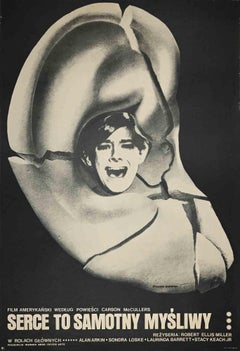
Serce to Samotny Mysliwy - Vintage Poster by Ryszard Kiwerski -Late 20th Century
Located in Roma, IT
Polish Poster of film of Serce to Samotny Mysliwy is original offset realized by Ryszard Kiwerski. Signed on the plate on the lower right. Good conditions.
Category

Late 20th Century Contemporary Continental Europe - More Prints

Materials

Offset

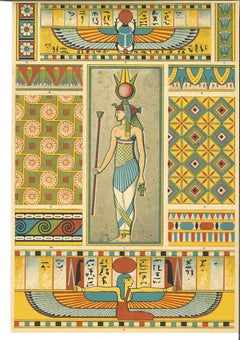
Decorative Motifs of the Egyptian Renaissance - Chromolithograph - 20th Century
Located in Roma, IT
Decorative Motifs of the Egyptian Renaissance is a vintage chromolithograph realized by an anonymous artist in the early 20th Century. Good conditions. The artwork represents Decor...
Category

Early 20th Century Continental Europe - More Prints

Materials

Paper, Lithograph

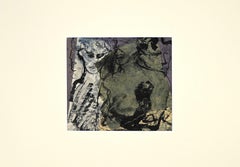
Devils - Original Ink and Watercolor - Mid-20th Century
Located in Roma, IT
Devils is an original china ink and watercolor drawing on ivory paper by Anonymous Artist of the mid-20th Century. In excellent conditions: As good as new. Image Dimensions: 18 x 20...
Category

Mid-20th Century Modern Continental Europe - More Prints

Materials

Paper, Ink, Watercolor

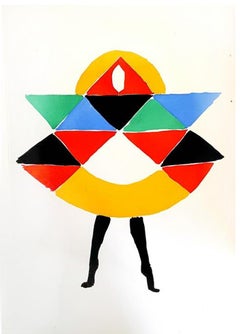
Living Painting - Colour Pochoir
By (after) Sonia Delaunay
Located in Collonge Bellerive, Geneve, CH
Full-page, colour pochoir after costume designs by Sonia Delaunay. Edition 331/500 copies on Velin Aussedat Dimensions: 28.5 x 19.5 cm. From 27 Living Paintings. [Milano, Edizioni d...
Category

1960s Abstract Geometric Continental Europe - More Prints

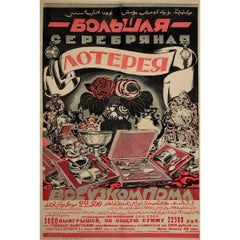
Original 1927 Russian poster advertises a state-sanctioned lottery in Samarkand
Located in PARIS, FR
This original 1927 Russian poster advertises a state-sanctioned lottery in Samarkand, then part of the Uzbek SSR under the Soviet Union. Titled "Большая серебряная лотерея" (Big Silv...
Category

1920s Continental Europe - More Prints

Materials

Paper, Lithograph

Still Thinking About These?

All Recently Viewed