Manhattan - Wall Decorations

to
381
2,022
42,335
30,091
1,545
294
183
Height
to
Width
to
299
155
48
44
30
28
27
18
6
5
5
4
4
4
3
3
3
1
182
273
1,090
477
313
366
303
64
27
100
52
55
65
81
72
83
44
931
652
509
257
233
811
626
575
382
332
2,022
1,969
1,983
38
38
33
22
21
Item Ships From: Manhattan
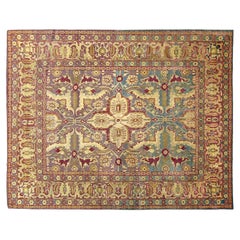
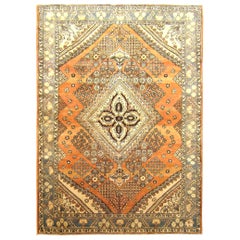
Vintage Persian Shiraz Oriental Rug, in Small Square Size, with Soft Earth Tones
Located in New York, NY
A vintage Persian Shiraz oriental rug, size 5'1 H; x 4'4 W, circa 1940. This lovely small hand-knotted wool carpet features a variety of stylized tribal design elements on the soft b...
Category

1940s Persian Vintage Manhattan - Wall Decorations

Materials

Wool

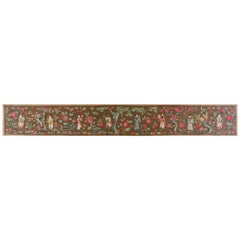
Late 19th Century Chinese Silk Metal Embroidery ( 1 9 x 12 9 -53 x 387 )
Located in New York, NY
Late 19th Century Chinese Silk & Metal Embroidery 1' 9'' x 12' 9''-53 x 387
Category

1890s Chinese Qing Antique Manhattan - Wall Decorations

Materials

Wool

Pierre Emmanuel Martin Limited Edition Print: A2 30" x 40"
Located in New York, NY
Untitled Print A2 is a refined exploration of Pierre Emmanuel Martin’s signature technique and profound artistic vision. This limited-edition fine art print, one of only 10 in its se...
Category

2010s American Modern Manhattan - Wall Decorations

Materials

Paper

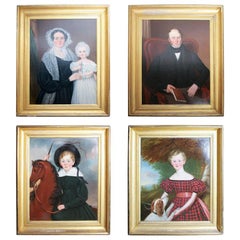
The Tollemache Family Set of Four Oil Paintings
Located in New York, NY
A beautiful example of English family portraits The family of baron Tollemache have owned Helmington hall in Ipswich, England for hundreds of years and served as knights and squir...
Category

19th Century British Antique Manhattan - Wall Decorations

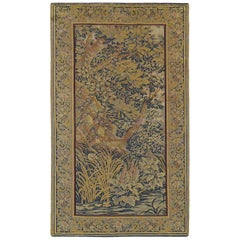
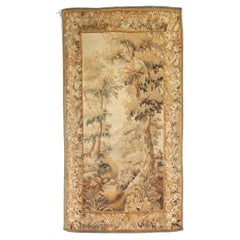
French Loomed Landscape Tapestry, circa 1920
Located in New York, NY
A loomed French landscape tapestry from the first quarter of the 20th century, circa 1920, picturing a wooded area by the waterside, with various trees, bushes, and acanthus plants...
Category

Early 20th Century French Manhattan - Wall Decorations

Materials

Wool

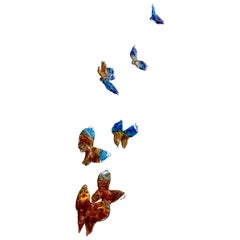
Flight of Blue Butterflies Contemporary Blown Glass Modern Wall Art Sculpture
Located in New York, NY
Art glass organic sculpture, contemporary work of art by an American artist, who studied with some of the most esteemed glass masters in Murano, entitled: release. The idea of setting free imagination and creativity is magically embodied through the medium of blown glass in the representation of soaring butterflies in vibrant colors flowing out freely on the wall. This sculpture as a whole comprises seven butterflies in the sequence...
Category

2010s American Organic Modern Manhattan - Wall Decorations

Materials

Blown Glass

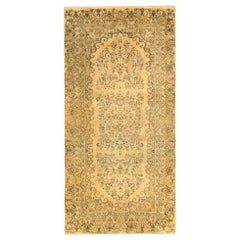
Antique Persian Kerman Oriental Rug, Runner Size, with Floral Elements
Located in New York, NY
Antique Persian Kerman oriental carpet, size 10'2" H x 4'9" W, circa 1920. This antique hand-knotted Persian rug features a strik...
Category

1920s Persian Vintage Manhattan - Wall Decorations

Materials

Wool

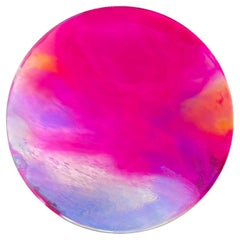
Seva Wall Decoration by Courtney Kinnare, Pink Multicolored Mirror
By Courtney Kinnare
Located in New York, NY
Seva by Courtney Kinnare 2023 Resin, Acrylic, Ink, & Pigment Powder on Mirrored Glass Dia 24" These functional art pieces build a color story through multiple layers of transluce...
Category

2010s American Manhattan - Wall Decorations

Materials

Mirror, Resin, Acrylic

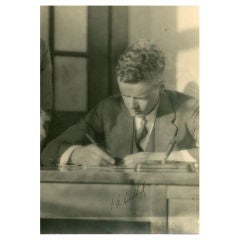
Charles Lindbergh - Vintage photograph signed
By Charles Lindbergh
Located in New York, NY
Photograph Signed

ORIGINAL VINTAGE PHOTOGRAPH SIGNED BY CHARLES LINDBERGH.

Photograph of a young Lindbergh sitting at h...
Category

1930s American Vintage Manhattan - Wall Decorations

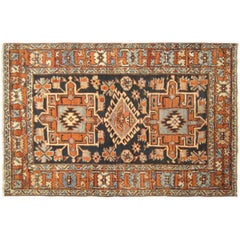
Vintage Persian Baktiari Oriental Rug, in Small Size, W/ Central Medallion
Located in New York, NY
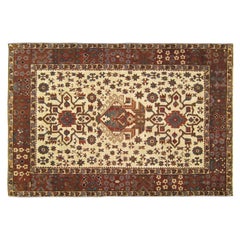
Vintage Persian Baktiari Oriental rug, Small size A vintage Baktiari oriental rug, size 8'2" x 5'5", circa 1940. This handsome hand-woven geometric rug features a central medallio...
Category

1940s Persian Vintage Manhattan - Wall Decorations

Materials

Wool

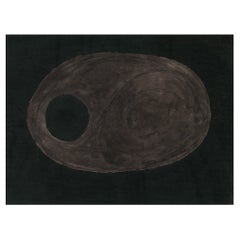
Aleksandra Kasuba, "One Divided by One", Black Marble Mosaic, Signed
By Aleksandra Kasuba
Located in New York, NY
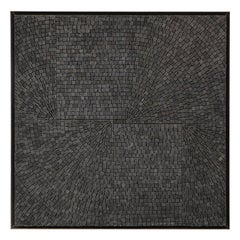
"One divided by One", by Aleksandra Kasuba, black marble mosaic, signed. A versatile environmental artist, Kasuba was born in Ginkunai, Lithuania, 1923 and died in New Mexico, March 5, 2019. She collaborated with furniture designer Vladimir Kagan in the early 1960s, embellishing his designs with tile mosaics. Still very active today with many projects and based in New Mexico, she told us via email in April 2018, that a major retrospective of her life's work was held in the fall of 2019 at the National Gallery in Vilnius, Lithuania. "One Divided by One" is from her 1966 breakout show at NYC's Grippi & Waddell Gallery (January 25 to February 12, 1966). The work is minimalist in nature and features a center of two parallel lines moving in opposite directions. Signed Aleksandra Kasuba and dated 1964 on verso. Retains original gallery label. According to her own account, this one-woman show, “Black Marble Mosaics,” at the Grippi Waddell Gallery, opened the doors to the commissions and public installations that followed. A PDF copy of Grippi & Waddell Gallery show is available upon request. Below is a short list of her public and private commissions: A 208 sq. ft. pebble mosaic...
Category

1960s American Mid-Century Modern Vintage Manhattan - Wall Decorations

Materials

Marble

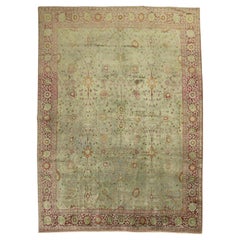
Zabihi Collection Lavar Kerman Large 19th Century Square Rug
Located in New York, NY
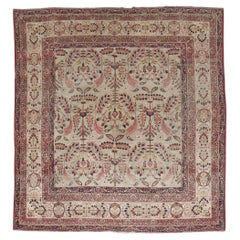
A worn square size late 19th century Lavar Kerman Rug with an all-over floral pattern on a pale green background Details rug no. j4794 size 9' 7" x 10' 10"
Category

Late 19th Century Romantic Antique Manhattan - Wall Decorations

Materials

Wool

Antique Ferahan Sarouk Oriental Rug, in Room Size, with Intricate Floral Design
Located in New York, NY
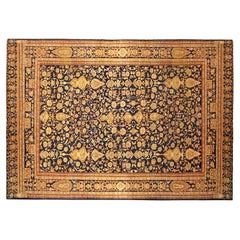
Antique Ferahan Sarouk oriental rug, circa 1900, room size. An antique Ferahan Sarouk oriental rug, size 12' 5" x 9' 0", circa 1900. This lovely hand-knotted wool rug features an in...
Category

Early 1900s Persian Antique Manhattan - Wall Decorations

Materials

Wool

Zabihi Collection Antique Persian Tabriz Rug
Located in New York, NY
an early 20th Century Persian Tabriz Small Room size rug Details rug no. j4677 size 7' 1" x 9' 10" (216 x 300 cm)
Category

20th Century Persian American Colonial Manhattan - Wall Decorations

Materials

Wool

Antique Belgian Tapestry. Size: 8 ft x 9 ft 6 in
Located in New York, NY
Marvelous Antique Belgian Tapestry, Country of Origin / Rug Type: Belgium, Circa date: 16th century. Size: 8 ft x 9 ft 6 in (2.44 m ...
Category

16th Century Belgian Renaissance Antique Manhattan - Wall Decorations

Materials

Wool

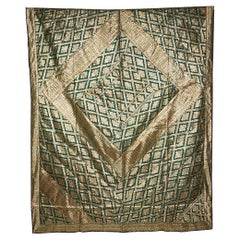
Brocade Silk Bangladeshi Kantha Throw, Late 20th Century
Located in New York, NY
Bangladeshi quilts, known as Kantha, consist of two to three pieces of cloth sewn together with decorative embroidery stitches. They are mostly made out of Saris and are mainly used ...
Category

1980s Bangladeshi Agra Vintage Manhattan - Wall Decorations

Materials

Canvas, Silk

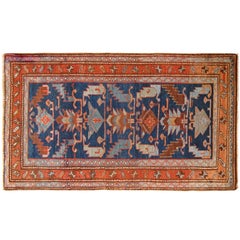
Antique Persian Hamadan Oriental Rug, Small Size, Geometric Design Earth Tones
Located in New York, NY
An antique Persian Hamadan oriental rug, size 6'2 x 4'0, circa 1920. This small, handwoven wool carpet features a large-scale geometric design in the blue central field, which is enc...
Category

1920s Persian Vintage Manhattan - Wall Decorations

Materials

Wool

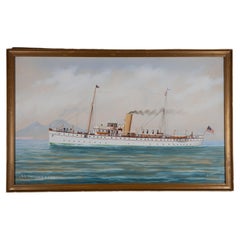
S.Y. Thalassa N.Y.Y.C. by L. Papaluca
Located in New York, NY
Hand-picked by buyers at Ann-Morris Inc.
Category

Early 20th Century Italian Manhattan - Wall Decorations

Materials

Paint

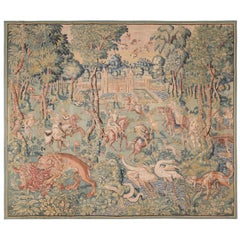
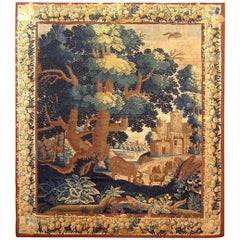
17th Century French Verdure Landscape Tapestry, w/ Animals by a Tree and Cottage
Located in New York, NY
A French verdure landscape tapestry from the 17th century, circa 1680, featuring a bull and two goats resting beneath the shade of a stately tree in the middle distance, with acanthu...
Category

17th Century French Antique Manhattan - Wall Decorations

Materials

Wool

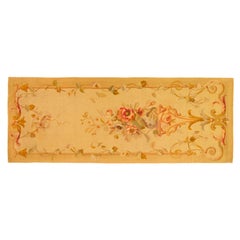
Antique French Aubusson Rug, in Runner size W/ Central Medallion and Flowers
Located in New York, NY
Antique French Aubusson Rug, Runner size, circa 1890 A one-of-a-kind antique French Aubusson Carpet, hand-knotted with soft wool pile. This lovely hand-knotted wool rug features a central medallion design on the beige primary field, with a delicate outer border. decorated with floral elements In runner size, size 8 '8" x 3' 3". A great value, and an excellent choice for hallway, a gallery space...
Category

1890s French Antique Manhattan - Wall Decorations

Materials

Wool

Zabihi Collection Antique Persian Green Tabriz Rug
Located in New York, NY
Circa 1920 persian tabriz rug in greens and ruby red Details rug no. j1615 size 9' 4" x 11' 9" (284 x 358 cm)
Category

20th Century Persian American Colonial Manhattan - Wall Decorations

Materials

Wool

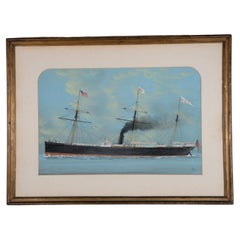
Ship Painting
Located in New York, NY
Hand-picked by buyers at Ann-Morris Inc.
Category

Early 20th Century English Manhattan - Wall Decorations

Materials

Paint

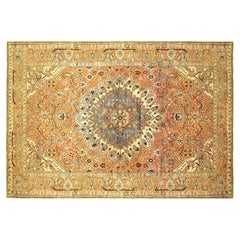
Antique Indian Agra Oriental Rug, Room Size, W/ Central Medallion
Located in New York, NY
Antique Indian Agra oriental rug, size 9'4" H x 8'0" An antique Indian Agra oriental rug, size 9'4" H x 8'0" W, in Room size, circa 1890. This fine floral wool rug features a cent...
Category

1890s Indian Antique Manhattan - Wall Decorations

Materials

Wool

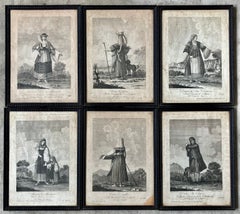
Set of Six Engravings of Italian Regional Dress
By Alessandro d Anna
Located in New York, NY
Set of six engravings of Italian regional dress. Set of six framed antique engravings from a series of Italian regional dress after Alessandro d'...
Category

Late 18th Century Italian Antique Manhattan - Wall Decorations

Materials

Paper

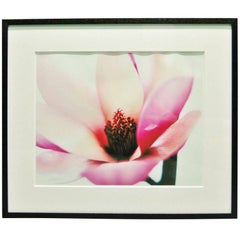
"Dogwood" Photograph by Sung An
By Sung An
Located in NYC, NY
A photograph by Sung An of the dogwood flower native to eastern North America.
Category

21st Century and Contemporary American Manhattan - Wall Decorations

18th Century French Aubusson Verdure Landscape Tapestry
Located in New York, NY
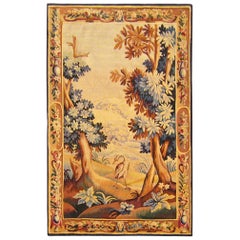
A French Aubusson verdure landscape tapestry from the 18th century, with a crane at the center of the idyllic landscape scene, sitt...
Category

18th Century French Aubusson Antique Manhattan - Wall Decorations

Materials

Wool

Antique Indian Lahore Oriental Rug, Room Size, W/ Symmetrical Design
Located in New York, NY
Antique Indian Lahore Oriental Rug, size 12'2" H x 9'0" W An antique Indian Lahore Oriental Rug, size 12'2" H x 9'0" W, in Room size, circa 1890. This fine floral wool rug features...
Category

1890s Indian Antique Manhattan - Wall Decorations

Materials

Wool

Antique Persian Heriz Karaja Oriental Rug, Small Size, w/ Multiple Medallions
Located in New York, NY
Antique Persian Heriz Karaja Oriental rug, size 5'7" x 4'9". An antique Persian Heriz Karaja oriental rug, size 5'7" x 4'9...
Category

1910s Persian Vintage Manhattan - Wall Decorations

Materials

Wool

Catherine Opie Herstory, Women s March Limited Edition Print
By Phaidon
Located in New York, NY
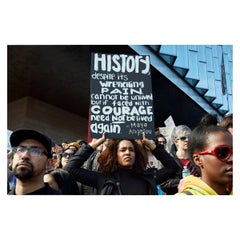
Print: Full color digital archival print on photo lustre 260 Size: 508 x 610 mm (20 x 24 in) Edition of 100 This work will come with a signed and numbered archival label adhered t...
Category

2010s American Manhattan - Wall Decorations

Materials

Paper

18th Century Antique French Beauvais Tapestry. 4 ft 4 in x 6 ft 9 in
Located in New York, NY
Breathtaking 18th Century Antique French Beauvais Tapestry, Country of Origin: France, Circa Date: 18th Century - Size: 4 ft 4 in x 6 ft 9 in (1.32 m x 2.06 m).
Category

18th Century French Baroque Antique Manhattan - Wall Decorations

Materials

Wool

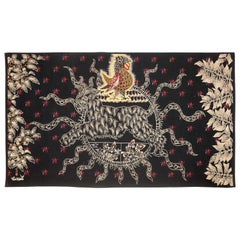
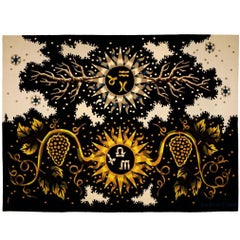
Jean Lurçat "Midnight Sun (Soleil De Minuit) " - French Wool Tapestry
By Jean Lurçat
Located in New York, NY
- Midnight Sun by Jean Lurcat (1892-1966) - Provenance: France - 113.39 x 64.96 in / 288 x 165 cm -About Jean Lurçat's tapestries: In 1917, Jean Lurçat made his first tapestries: Filles Vertes (Green Girls) and Soirée dans Grenade (Evening in Grenada). At the end of the war in 1918, he returned to Switzerland where he had a holiday in Ticino (Swiss Italy), with Rilke, Busoni, Hermann Hesse...
Category

1650s French Modern Antique Manhattan - Wall Decorations

Materials

Wool

Monica Perez "Let Them Go #3" Original Acrylic Painting on Canvas 2021
Located in New York, NY
Monica Perez "Let Them Go #3" Original Acrylic Painting on Canvas 2021. W 40" x 60" Monica Perez’s works are expressions of emotion—impulsive, spontane...
Category

21st Century and Contemporary American Expressionist Manhattan - Wall Decorations

Materials

Canvas, Acrylic

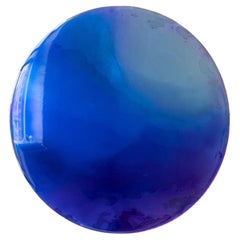
Paradigm Wall Decoration by Courtney Kinnare, Blue Ultramarine Mirror
By Courtney Kinnare
Located in New York, NY
Dancing with my Shadow by Courtney Kinnare 2024 Resin, Acrylic, Ink, & Pigment Powder on Mirrored Glass Dia 30" These functional art pieces build a color story through multiple l...
Category

2010s American Manhattan - Wall Decorations

Materials

Mirror, Resin, Acrylic

Zabihi Collection French Tapestry Wall Hanging
Located in New York, NY
A mid 19th century French tapestry fragment wall hanging. Measures: 4'9" x 8'1", mid-19th century.
Category

Mid-19th Century Asian Vienna Secession Antique Manhattan - Wall Decorations

Materials

Wool

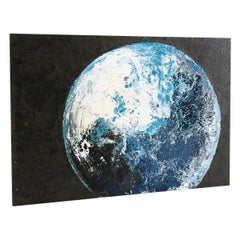
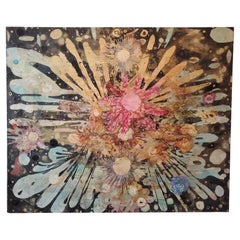
NB 37, Large-scale Painting of a Planet by Thierry Despont
By Thierry Despont
Located in New York, NY
Thierry Despont, best-known as a very successful architect, was also an accomplished artist. In his painting practice, when not analyzing the smallest, most detailed creatures of the...
Category

21st Century and Contemporary American Manhattan - Wall Decorations

Materials

Enamel

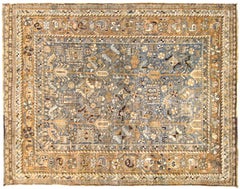
Large Antique Italian Micro Mosaic plaque of St. Peters Square, Rome mid 1800 s
By Vatican Mosaic Studio
Located in New York, NY
A Very Large and Exceptionally Fine Quality Antique Italian Micro-Mosaic Plaque Depicting "The Saint Peter Square" in Rome. The center medallion surrounded by a beautiful Laurel Wreath in multiple shades of Green Mosaic amidst a black Belgium Marble border. The interior rounded subject depicts Saint Peter Square which is found in Rome, Italy. The entire center panel is made up of a captivating array of tesserae in a variety of shapes and colors, which create this stunning mosaic construct. When inspected from up-close, small rectangular tesserae are found in an assortment of colors, which include: white, green, blue, red, black, brown, orange etc. When the subject is seen from afar, a fantastic image of the entire Saint Peter Square can be viewed as if a painting has been created. The oil on canvas of this scene, by was sold in Christie's Auction for over $2,000,000 USD. The plaque rests in a custom ebonized and gilt square frame. This can be used as a decorative object on the wall to serve as a painting, or, be converted to a table-top by mounting it on a table stand. Rome, Circa: 1850 Giovanni Paolo Panini (Piacenza 1691-1765 Rome), View of Saint Peter's Square, Rome. From Christie's Auction: Giovanni Paolo Panini arrived in Rome in 1711, painting capricci and architectural pieces in a vigorous if slightly eccentric style, and by 1719, when he was admitted to the Academy of St. Luke and the virtuosi al Pantheon, he was a rising star in the Roman art world. From around 1719-1726 he was much in demand for decorative frescoes, including quadratura, ornament and landscape and other genres, often in collaboration with figure or flower painters. During this period he worked for Cardinal Patrizi at Villa Patrizi, Cardinal Annibale Albani at Palazzo Albani (now del Drago) alle Quattro Fontane, Livio de Carolis at Palazzo de Carolis, Cardinal Alberoni at Palazzo Alberoni, Innocent XIII Conti in the Quirinal and in the library of S. Croce in Gerusalemme. In 1724 he married Caterina Gosset, the sister-in-law of Nicolas Vleughels, the director of the French Academy in Rome, to which he was admitted in 1732, and as a result he was much patronized by the French. During the 1720s he developed his figure style away from the awkwardness of his early works into one that concentrated on groups of stylishly-dressed aristocrats and skillfully modelled bystanders, sibyls and pseudo-antique figures. These he noted down in drawings (such as a sketchbook in the British Museum) that he drew upon to populate his paintings. He also began to receive commissions to design and record temporary festivals, often for French ambassadors to Rome. By the beginning of the 1730s Panini was developing a distinctive subgenre of the capriccio in which recognizable monuments are placed in imaginary topographical relationships, which were well-received in the classicizing era of Clement XII Corsini. In 1732 he was one of the panel of judges for the competition instituted by Clement for the Lateran façade, and in the following year painted an impressive View of Piazza del Quirinale for the pope. At about this time he was developing his best-known topographical subjects, interior views of St Peter's and the Pantheon, which were much in demand, to judge by the number of extant versions extending into the 1750s. By about 1734 he was beginning to attract the attention of English patrons, who ordered sets of Roman views, such as those at Marble Hill House (1738) and Castle Howard. In 1736, through Filippo Juvarra, he received important commissions from Philip V of Spain for scenes of the life of Christ in the Chinoiserie room at La Granja in Spain (1736). From as early as the 1720s he had been producing some vedute (view-paintings), initially based on prototypes by Gaspar van Wittel, and he developed the genre in subsequent decades in works that would include impressive panoramic views of the Forum or Palatine, although his staple genre was the capriccio rather than the veduta. He also expanded his repertory of church interiors, adding such churches as S. Paolo fuori le Mura and S. Agnese in Piazza Navona, as well as church interiors recording special events. His son by his first marriage, Giuseppe (1718-1805), began to support him in architectural and festival design projects. By the 1740s Panini was at the peak of his powers, and evidently had a considerable workshop helping him meet demand, especially of capricci to be used as overdoors and other decorative installations. Giovanni Paolo was successful in elevating himself socially above the usual artisanal status of genre painters, and would sometimes include a self-portrait in paintings commissioned by the great and powerful. He also appears to have been successful financially, and owned a substantial palazzo in via Monserrato. He increasingly concentrated on important commissions, such as a view of the Lottery in Piazza Montecitorio (London, National Gallery, 1743-1744), the designs for the festival decorations for the birth of the Dauphin in Palazzo Farnese (Waddesdon Manor, 1751), or the view of an imaginary picture gallery housing the collection of Cardinal Valenti Gonzaga (Wadsworth Atheneum, 1749). In the mid-1750s he received an important series of commissions from the Duc de Choiseul, French ambassador to Rome and soon to become one of the most powerful men in France, that included his best-known compositions, Ancient Rome (Roma Antica) and Modern Rome (Roma Moderna). These large paintings, of which there are three sets (in Boston and Stuttgart, the Metropolitan Museum, and the Louvre) represent imaginary picture galleries based on the Valenti Gonzaga composition but hung with what purport to be Panini's own vedute of ancient and modern sites respectively (with corresponding pieces of sculpture). These paintings sum up the eighteenth-century canon of the greatest works of architecture and sculpture, and the equivalence between modern and ancient Rome. By this time Panini was being assisted by his son by his second marriage, Francesco (1748-1800), who was a skilled draughtsman and painter who continued his father's work after his death in 1765. The Farnborough Hall paintings The Piazza S. Pietro and the Campidoglio are important vedute by Panini painted in 1750 and originally installed, with other works by Panini and Canaletto, in the seat of the Holbech family, Farnborough Hall, Warwickshire (National Trust). Farnborough Hall had been inherited in 1717 by William Holbech (circa 1699-1771), who is documented on the Grand Tour in Florence, Rome and Venice from late 1732 until his return home at the end of April 1734 with his brother Hugh. Holbech is said to have gone on the Grand Tour to recover from a broken heart and to have spent a considerable time there prior to these documented appearances. During his time in Rome he acquired two Paninis, which were seen by an anonymous antiquary around 1746, who referred to various sculptures "all brought from Rome with two pictures, one of the Rotunda, and the other of diverse buildings by Panino" (British Library, Add. MS 6230, pp. 31-32). The Rotunda (the Pantheon) is a painting now in a private collection in New York, and is signed and dated 1734. The Diverse Buildings, which was probably one of Panini's capricci, has not been identified. On his Grand Tour Holbech seems also to have acquired two Canalettos, although they are not mentioned by the antiquary, who may only have had eyes for things Roman. In about 1746-1747, Holbech remodelled the house by creating a Saloon, now the dining room, at the back of the house. This room, the entrance hall, the staircase, library and closet were stuccoed by William Perritt of York, and a bill for this work dated 14 November 1750 survives (or survived until recently; G. Beard, Decorative Plasterwork in Great Britain, London, 1975, p. 233). The two Canalettos acquired on the Grand Tour were installed in the Saloon, together with two new works commissioned from Canaletto, who was then in England and working nearby at Warwick Castle in 1748. The two Paninis acquired on the Grand Tour may have been installed in the Library, as Alastair Laing assumes (op. cit.), while three new works commissioned from Panini in Rome were placed in the Hall and Saloon: the Piazza S. Pietro for the overmantel in the Hall (fig. 1), the Campidoglio as the overmantel in the Saloon (fig. 2), and an Interior of St Peter's (now in Detroit) (fig. 3) on the adjacent wall facing the windows. Two of the Canalettos flanked the Campidoglio, while the others were on the opposite wall. The Interior of St Peter's was therefore effectively the fifth member of the Canaletto set, distinct from the two overmantels. Holbech's installation of his Canalettos and Paninis in fixed stucco frames was unusual for England in 1750, and had probably been inspired by what he had seen on his Grand Tour in Northern Italy, where fixed stucco installations of canvases were common in the 1720s and 1730s (Cornforth, II, p. 51). The Campidoglio and the Interior of St Peter's are both signed and dated 1750, a date that corresponds to the payments for the stucco. The commission for the new Paninis would have been made through an agent, possibly the Roman dealer in antiquities Belisario Amidei from whom some of the antique busts in the Hall were acquired in 1745, who was also a picture dealer; or perhaps the painter Pietro Berton, who on 7 December 1750 shipped a Panini to England. The paintings were sold to Savile Gallery in 1929 and replaced by copies by one Mohammed Ayoub. The four Canalettos were exhibited at Savile Gallery in 1930 and entered the London art trade, finding their way at various times to Augsburg, Melbourne, Ottawa and a private collection. The Paninis seem to have been resold immediately to Knoedler & Co. in New York. When the stucco was removed from the library by Holbech's great-grandson, another William Holbech, shortly after his succession in 1812, the Interior of the Pantheon and the Diverse Buildings may have been taken down. Although there is no record of either painting being at Farnborough subsequently, the Interior of the Pantheon at least must have remained there, since it appeared at Knoedler's in 1930 at about the same time as the other Paninis, and was presumably acquired at the same time from the same source. The Campidoglio was a rare subject for Panini: this is the only known extant version, apart from fictive versions in the Metropolitan Museum (1757) (figs. 4) and Louvre (1759) versions of his Roma Moderna composition (but not in the first Boston version of 1757). Probably Holbech insisted on the choice of subject in order to represent the centre of Rome's civic administration to complement the religious one of St Peter's. The Campidoglio may have been of interest to English patrons because it represented the seat of a form of government they were more comfortable with than the papacy. For example, Canaletto painted the subject, together with English subjects, for Thomas Hollis, 'the most bigoted of all Republicans' in 1755, who may have wanted to 'represent London as the heir to the legacy of Ancient Rome and Renaissance Italy' (see Michael Liversidge and Jane Farrington, eds., Canaletto and England, exhibition catalogue, Birmingham Museums and Art Gallery, London, 1993, p. 25). Canaletto also painted the subject for Sir Richard Neave, Ist Baronet (1731-1814) of Dagnam Park, Essex, at the end of his English stay or shortly afterwards (i.e. 1755-1766) (sold, Sotheby's, London, 10 July 2002, lot 8). Like Holbech, Neave mixed Venetian and Roman subjects, but his Roman subjects steer clear of St Peter's: the others were the Piazza del Quirinale and Piazza Navona. While Holbech had gone to both Venice and Rome and commissioned views of both cities, Rome sets the keynote for his decoration: antique busts line the Hall, and its religious and civic centres are the overmantels in the Hall and Saloon respectively. The Piazza S. Pietro The Piazza S. Pietro shows the piazza much as it appears today, apart from the absence of Valadier's late eighteenth-century clocks on the towers. Bernini's colonnade (1656-1667), both ends of which are visible, reaches out its arms to embrace the viewer. In the center of the piazza is the obelisk moved by Sixtus V in 1586 from the left side of the church where it had formed part of the Circus of Nero. On either side are two fountains, the one on the right by Carlo Maderno (1613) and the one on the left created to match it by Carlo Fontana in 1677. Beyond is the rectangular forecourt to the church, the piazza retta, leading to the façade by Maderno, completed in 1610, and the dome by Michelangelo, Giacomo della Porta and Domenico Fontana. To the right of the façade the roof of the Sistine Chapel is just visible, followed by the Cortile di S. Damaso, the palace of the Swiss Guards and the palace of Paul V. A Cardinal is being driven in a carriage across the piazza at the right in the direction of the Borgo Nuovo and Ponte S. Angelo with his blue-liveried retinue and subsidiary carriages. Unlike the later versions of the subject that depict the Duke de Choiseul, there seems to be no intent to portray any particular cardinal: the procession of a cardinal here is presented simply as characteristic activity within the piazza. Various groups of figures, including well-dressed women in brightly colored dresses, Swiss Guards, priests, gentlemen, idlers and a pilgrim are distributed around the piazza. In the foreground an imaginary heap of fallen masonry provides visual interest in an otherwise dead space. Panini painted the Piazza S. Pietro on a number of occasions, and his works falls into two types, one with the viewpoint shifted slightly to left of the axis, as in the Farnborough Hall version, and one with it shifted slightly to the right. The first type is based on a composition by Gaspar van Wittel, of which there are numerous versions from 1684 until 1721 (Fig. 9 van Wittel). The work by Panini that seems closest to Van Wittel and therefore probably the earliest is the version in the Circolo della Caccia, Rome, which has been dated to the second half of the 1730s, but is probably a decade or so earlier. Another, on the London art market in 2002-2009, and a version with workshop participation at Sotheby's, Milan (20 November 2007, lot 137) and currently on the art market in Rome, are closer to an important painting in Toledo (Arisi no. 308) that is signed and dated 1741 (fig. 6). Van Wittel employed a wide format (about 2:1), showed both of the end faces of the colonnade almost to their full extent, and introduced the theme of a heap of masonry to enliven the foreground. His choice of perspective implies a viewpoint located in the small piazza between the Borgo Nuovo and Borgo Vecchio, now the Piazza Pio XII at the top of the Via della Conciliazione. From this viewpoint a building at the left tended to interfere with the view of the end of the left arm, as can be seen from the Nolli map...
Category

1850s Italian Louis XVI Antique Manhattan - Wall Decorations

Materials

Glass

Pair of Mid-Century Alaskan Paintings
Located in New York, NY
Handpicked by Buyers at Ann-Morris Inc.
Category

Late 20th Century Manhattan - Wall Decorations

Materials

Canvas

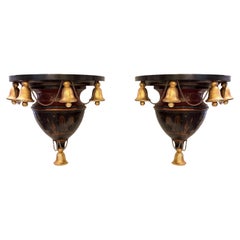
Pair Chinoiserie Painted and Giltwood Wall Brackets
Located in New York, NY
Pair Chinoiserie painted and Giltwood wall brackets.
Category

Late 20th Century Manhattan - Wall Decorations

Materials

Wood

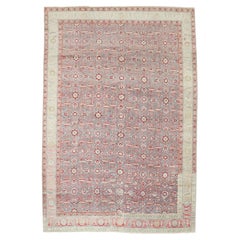
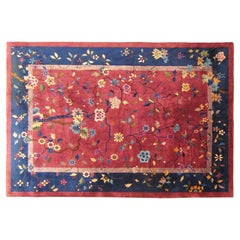
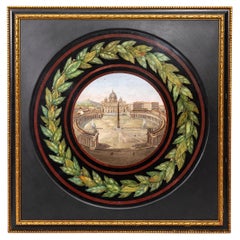
Antique Chinese Oriental Rug, in Room Size, with Flowers and Red and Blue Tones
Located in New York, NY
Antique Chinese rug, room size, circa 1920. A one-of-a-kind antique Chinese oriental carpet, hand-knotted with medium thickness wool pile. This beautiful hand-knotted rug features f...
Category

1920s Persian Vintage Manhattan - Wall Decorations

Materials

Wool

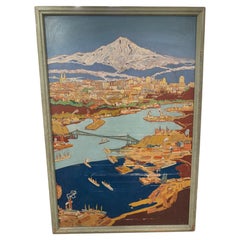
Antique Persian Heriz Karaja Oriental Rug, in Small Square Size with Jewel Tones
Located in New York, NY
An antique Persian Heriz Karaja oriental rug, circa 1920, size 4'2 x 3'7. This handsome hand-knotted wool rug features a symmetrical series of central medallions on the uncluttered n...
Category

1920s Persian Vintage Manhattan - Wall Decorations

Materials

Wool

"Rêve De Mahal L" Signed Limited Edition Art Print by Christiane Lemieux -40"x40
Located in New York, NY
Introducing the dreamy "Rêve De Mahal," a historical limited release fine art diptych that promises to transport you to a world of history and beauty....
Category

2010s American Modern Manhattan - Wall Decorations

Materials

Paper

Vintage Persian Baktiari Oriental Rug, in Small Room size, w/ Medallion
Located in New York, NY
A vintage Persian Baktiari oriental rug, size 8'0" x 5'6", circa 1940. This brilliant handwoven wool carpet features a dynamic diamond-shaped medallion at center, surrounded by a var...
Category

1940s Persian Vintage Manhattan - Wall Decorations

Materials

Wool

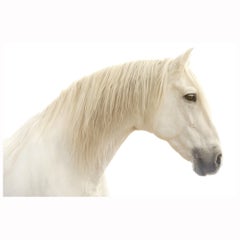
"Athansor, " Horse Color White Framed Photograph by Lisa Houlgrave
Located in New York, NY
Lisa Houlgrave's portrait features the mighty Andalusian stallion, Novelisto D, who played Colin Farrell's guardian angel, Athansor, In Warner Brother's...
Category

2010s American Modern Manhattan - Wall Decorations

Materials

Paper

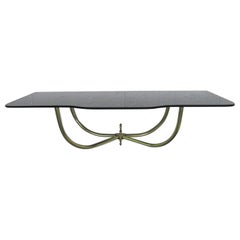
Italian Brass and Glass Hanging Shelf Osvaldo Borsani Style
Located in New York, NY
Italian brass and glass hanging shelf style of Osvaldo Borsani.
Category

1950s Italian Mid-Century Modern Vintage Manhattan - Wall Decorations

Materials

Brass

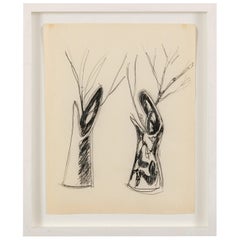
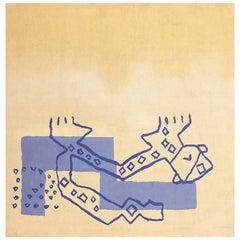
Gio Ponti Sketch "Disegni per Vasi Incrociatifor", Italy, 1950
By Gio Ponti
Located in New York, NY
A wonderfully whimsical concept drawing of two vases. Authentication papers from the Gio Ponti archives provided with drawing.
Category

1950s Italian Mid-Century Modern Vintage Manhattan - Wall Decorations

Materials

Paper

Vintage Art Deco French Tapestry. Size: 5 ft 9 in x 6 ft
Located in New York, NY
Beautiful textile art square size vintage Art Deco French tapestry, country of origin / Type: French, circa date 1930's. Size: 5 ft 9 in x 6 f...
Category

Early 20th Century French Art Deco Manhattan - Wall Decorations

Materials

Wool

Émile Gallé "Papillon" Étagère Wall Shelf
By Émile Gallé
Located in New York, NY
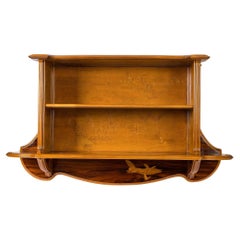
This exquisite Galle wall shelf showcases an array of flowers, vegetables, butterflies, and moths that thrived in his garden at 27 Avenue de la Garenne. Adorning the left wall are depictions of Spinning Gourds and Tiger Moths...
Category

Early 20th Century French Art Nouveau Manhattan - Wall Decorations

Materials

Fruitwood, Mahogany, Walnut

Figurative 3D Wool Tapestry by Alfhild Külper
By Alfhild Külper
Located in New York, NY
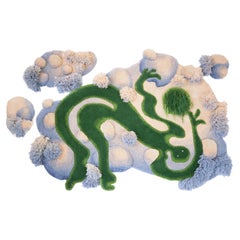
"Creation of the Magic Light" is a tapestry composed of four separate parts by Amsterdam-based Swedish artist Alfhild Külper in a pixelated combination of periwinkle, peach, blue, a...
Category

2010s Dutch Manhattan - Wall Decorations

Materials

Wool

Cubist Still Life "Violin" by Early Modernist, Agnes Weinrich, Signed Dated 1922
By Agnes Weinrich
Located in New York, NY
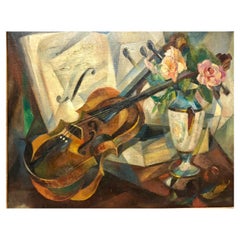
Still life painting (Violin, Flowers), Oil on canvas, by Agnes Weinrich, Signed and dated "22", Unframed: 20" x 16", Framed 27.5 x 23". Agnes Weinrich (1873-1946) was an early female, American modernist artist at a time when there was little interest in Modern Art in the USA and when few women were artists. She was a ground breaker in modern art. She was one of the first American artists to make works of art that were modernist, abstract, and influenced by the Cubist style. She was also an energetic and effective proponent of modernist art in America, joining with like-minded others to promote experimentation as an alternative to the generally conservative art of their time. Despite the quality of her work and despite the energy and skill with which she worked both to develop her own talent and to further the progressive movement in American art, Weinrich received little recognition during her lifetime and is only recently being recognized for her leadership as an important female artist bringing the modern movement to the USA. The painting shown is an important example of her mature phase of her work. Exhibitions This is a selective list of exhibitions in which she participated during her life. Its main source is Louise Noun's article on Weinrich in Woman's Art Journal, supplemented by contemporary news accounts in The New York Times, the Brooklyn Daily Eagle, the New York Evening Post, The Philadelphia Inquirer, and The Christian Science Monitor. 1915 onward: Provincetown Art Association 1917: Pennsylvania Academy of Fine Arts 1917: Pennsylvania Academy of Fine Arts, Philadelphia 1917-23: Society of Independent Artists, New York 1919: Art Institute of Chicago 1920: Boston Arts Club 1926 onward: New York Society of Women Artists 1928: Grace Horn Gallery, Boston 1929: Pennsylvania Academy of Fine Arts, Philadelphia 1932: Boston Public Library 1936: Harley Perkins Gallery, Boston (solo) 1938: Boston Society of Independent Artists 1938: Washington Public Library, Washington, D.C. 1939: Corcoran Gallery Biennial, Washington, D.C. 1939: Fogg Art Museum Twentieth Century Club, Boston 1939: Witherstine Gallery, Boston 1939: Institute of Modern Art, Boston 1945: Woljeska Gallery, Brooklyn, New York    Detailed Biography: Agnes Weinrich was born in 1873 on a prosperous farm in south east Iowa. Both her father and mother were German immigrants and German was the language spoken at home. Following her mother's death in 1879 she was raised by her father, Christian Weinrich. In 1894, at the age of 59, he retired from farming and moved his household, including his three youngest children—Christian Jr. (24), Agnes (21), and Lena (17), to nearby Burlington, Iowa, where Agnes attended the Burlington Collegiate Institute from which she graduated in 1897.[1][2][3] Christian took Agnes and Lena with him on a trip to Germany in 1899 to reestablish links with their German relatives. When he returned home later that year, he left the two women in Berlin with some of these relatives, and when, soon after his return, he died, they inherited sufficient wealth to live independently for the rest of their lives. Either before or during their trip to Germany Lena had decided to become a musician and while in Berlin studied piano at the Stern Conservatory. On her part, Agnes had determined to be an artist and began studies toward that end at the same time.[1][4] In 1904 the two returned from Berlin and settled for two years in Springfield, Illinois, where Lena taught piano in public schools and Agnes painted in a rented studio. At this time Lena changed her name to Helen. In 1905 they moved to Chicago where Agnes studied at the School of the Art Institute of Chicago under John Vanderpoel, Nellie Walker, and others. In 1909 Agnes and Helen returned to Berlin and traveled from there to Munich, where Agnes studied briefly under Julius Exter, and on to Rome, Florence, and Venice before returning to Chicago.[5] They traveled to Europe for the third, and last, time in 1913, spending a year in Paris. There, they made friends with American artists and musicians who had gathered there around the local art scene. Throughout this period, the work Agnes produced was skillful but unoriginal—drawings, etching, and paintings in the dominant academic and impressionist styles. On her return from Europe in 1914, she continued to study art, during the warm months of the year in Provincetown, Massachusetts,[1] where she was a member of the Provincetown Printers art colony in Massachusetts,[6] and during the colder ones in New York City. In Provincetown she attended classes at Charles Hawthorne's Cape Cod School of Art and in New York, the Art Students League.[ In 1930 Weinrich put together a group show for modernists at the GRD Gallery in New York. The occasion was the first time a group of Provincetown artists exhibited together in New York. For it she selected works by Knaths, Charles Demuth, Oliver Chaffee, Margarite and William Zorach, Jack Tworkov, Janice Biala, Niles Spencer, E. Ambrose Webster, and others. Although she had led a full and productive life devoted to development of her own art and to the advancement of modernism in art, she did not cease to work toward both objectives. She continued to work in oil on canvas and board, pastel and crayon on paper, and woodblock printing. Her output continued to vary in subject matter and treatment. For example, Still Life with Leaves, circa 1930 (oil on canvas, 18 x 24 inches) contains panels of contrasting colors with outlining similar to Knaths's style. Movement in C Minor, circa 1932 (oil on board, 9 x 12 inches) is entirely abstract. It too relates to Knaths's work, both in treatment (again, outlined panels of contrasting colors) and in its apparent relationship to music, something in which Knaths was also interested. Fish Shacks...
Category

Early 20th Century American Modern Manhattan - Wall Decorations

Materials

Paint, Canvas

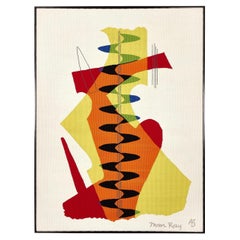
Man Ray "The meeting" - French Wool Tapestry
By Man Ray
Located in New York, NY
- Handwoven wool tapestry by Atelier 3, Paris. - Edition/6 - Project date: 1913 (from the Revolving Doors series) - Weaving date: c. 1975 - “The Meeting" is a part of tapestry series...
Category

20th Century French Modern Manhattan - Wall Decorations

Materials

Wool

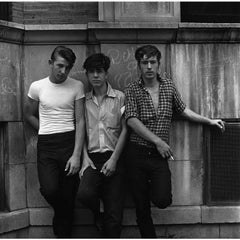
Danny Lyon Three Young Men 2009 Print
Located in New York, NY
In 1963, Danny Lyon spent time in a poor white area of Chicago called Uptown. Nicknamed ‘hillbilly heaven’, it was a very tough and deprived neighborhood. With a borrowed Rolleiflex camera, he followed the inhabitants of Clifton Street, where he befriended the families who lived there, documenting intimate moments both inside their homes and on the street. Three Young Men...
Category

21st Century and Contemporary Manhattan - Wall Decorations

Materials

Paper

Jean Picart Le Doux Mid-Century Aubusson Tapestry
By Jean Picart Le Doux
Located in New York, NY
Mid-Century Aubusson tapestry designed by Jean Picart Le Doux (1902-1982) and handwoven at Atelier Pinton in Aubusson France. Woven in the mid-1960s, entitled "Autumn-Hiver", it depi...
Category

Mid-20th Century French Mid-Century Modern Manhattan - Wall Decorations

Materials

Wool, Tapestry

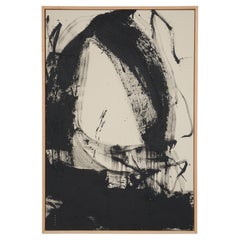
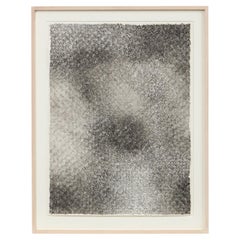
Martin Kline "Untitled" Abstract Pencil Drawing 1997 Signed and Dated
By Martin Kline
Located in New York, NY
Beautifully framed original abstract drawing, Untitled, 1997, pencil on paper, 30" x 22" sheet, by Martin Kline, signed and dated in lower left. Martin Kline’s (b. 1961) work ref...
Category

1990s American Modern Manhattan - Wall Decorations

Materials

Ash, Paper

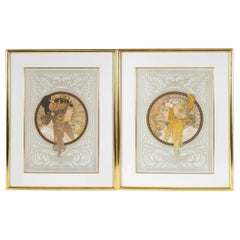
Alphonse Mucha Pair of "Byzantine Heads" Lithographs
By Alphonse Mucha
Located in New York, NY
A pair of French "Byzantine Heads" lithographs by Alphonse Mucha. The mastery evident in creating two archetypes of the female form against a decorative...
Category

1890s French Art Nouveau Antique Manhattan - Wall Decorations

Materials

Giltwood, Paper

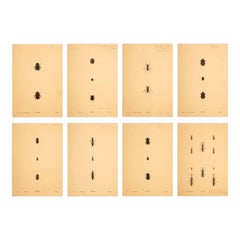
Unframed Collection Painted Scientific Illustrations of Various Insects
Located in New York, NY
Unframed Collection painted scientific illustrations of various insects from the early 20th century: Each measures approximately: 8" x 6" ...
Category

20th Century Manhattan - Wall Decorations

Materials

Paper

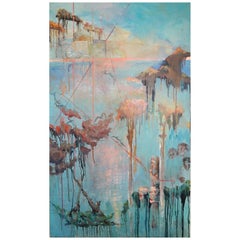
"Follow The Leader, " Large Blue Oil and Acrylic Painting by Renée Rey
Located in New York, NY
"Follow The Leader," a large framed blue oil and acrylic painting by Renée Rey, shows that the connection between nature, technology and people are paramount...
Category

2010s American Modern Manhattan - Wall Decorations

Materials

Paint

Andrianna Shamaris Framed Courrèges Bonjour Scarf from Paris France
By Andrianna Shamaris
Located in New York, NY
Courrèges silk scarf in excellent condition found in Paris, France. Features bold pop-art style colors and shapes with the Courrèges logo. Set in ...
Category

2010s French Modern Manhattan - Wall Decorations

Materials

Wood, Teak, Reclaimed Wood

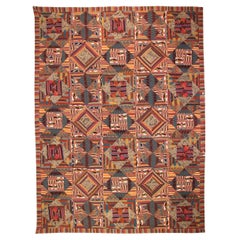
Missoni Patchwork Tapestry Handmade in 1980 By Ottavio Missoni - Rug Carpet RARE
By Ottavio Missoni, Missoni
Located in Long Island, NY
Missoni – Patchwork Tapestry Prototype This Rare Tapestry Patchwork was made by Ottavio Missoni in the early 1980’s for the launch of the Missoni...
Category

1980s Italian Modern Vintage Manhattan - Wall Decorations

Materials

Wool

1988 Radio and TV Encompassing the Earth Sculpture Hildreth Meière
Located in New York, NY
Hildreth Meière, an influential American muralist and mosaic artist, left an indelible mark on the art world through her captivating works. One of her remarkable creations is the Rad...
Category

1980s American Art Deco Vintage Manhattan - Wall Decorations

Materials

Resin

"You So Sweet" 2023 Large Black, Multicolor Abstract Painting By Lowell Boyers
Located in New York, NY
"You So Sweet" (2023) by Lowell Boyers is a luminous, high-energy composition-an explosion of color that feels both intimate and cosmic. Against an inky black ground, bursts of hot ...
Category

2010s American Modern Manhattan - Wall Decorations

Materials

Resin, Acrylic

Read More

Punk Rock and Rebellion Animate London’s Hit Yoshitomo Nara Show

The exhibition includes his portraits of wide-eyed kids with mayhem on their minds, as well as some of the artist’s personal belongings.

Whether Painted or Papered, Muraled Walls Make Bold Statements in the Home

The ancient practice of covering walls in artistic scenery is back.

In Francks Deceus’s ‘Mumbo Jumbo #5,’ the Black Experience Is . . . Complicated

Despite the obstacles, the piece’s protagonist navigates the chaos without losing his humanity.

12 Floral-Accented Rooms with a Handmade, Folkloric Feel

Who needs a flower garden? Just use your imagination — and some beautifully patterned wallpaper or fabric — to bring the outdoors in.

This Wolf Kahn Pastel Is the Epitome of Beauty at Its Most Essential

A longtime admirer of Kahn’s work, 1stDibs editorial director Anthony Barzilay Freund explores why it’s relevant now more than ever.

Why Jules Chéret Was the King of the Modern Poster

The streets of fin-de-siècle Paris were set aglow with colorful poster ads, thanks to the printing techniques invented by Jules Chéret. Now, the Milwaukee Art Museum is celebrating this undersung talent in America's first solo show dedicated his exuberant works.

Anna Condo’s Multifaceted Career Spans Film, Photography and NFTs

From her historic Manhattan townhouse, the talented creator and curator of 1stDibs' latest NFT exhibition tells us about the art in her home and how she got involved with cryptoart.

How Keith Rivers Went from NFL Linebacker to Blue-Chip Art Aficionado

The former football player is as serious about becoming a great contemporary-art patron as he once was about making tackles. Here, Rivers tells us how he got the collecting bug and how his tastes have evolved over the years.

Still Thinking About These?

All Recently Viewed