Missouri - Art

to
914
1,441
698
513
292
345
Overall Width
to
Overall Height
to
55
185
1,009
2,058
7
5
15
12
19
43
125
191
93
113
51
1,332
489
433
193
83
67
40
22
12
8
6
5
1
1
1,421
980
469
1,002
495
351
331
315
227
189
170
169
164
160
151
150
144
142
96
92
86
75
60
1,021
857
470
453
446
130
76
49
41
39
967
825
229,066
155,587
Item Ships From: Missouri
BRLN 9
Located in Saint Louis, MO
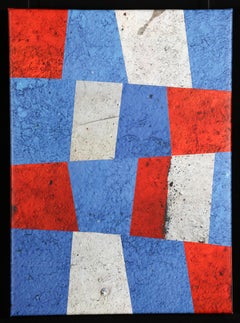
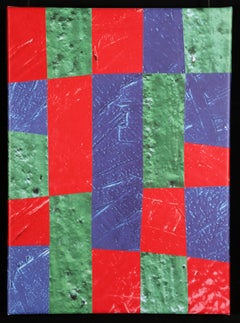
"Cameron’s “Collage Paintings,” 2021–22, which he has been assembling in parts ever since relocating to Berlin from the United States in 2015. The source materials are photographs that Cameron has been taking as he perambulates through the city, their compositional logic derived from African American quilting...
Category

2010s Missouri - Art

Materials

Canvas, Paper

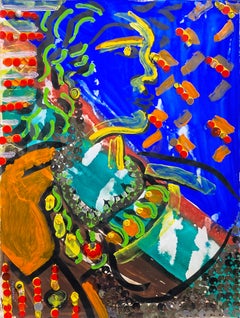
BRLN 9
BRLN 9
Price Upon Request
BRLN 8
Located in Saint Louis, MO
"Cameron’s “Collage Paintings,” 2021–22, which he has been assembling in parts ever since relocating to Berlin from the United States in 2015. The source materials are photographs that Cameron has been taking as he perambulates through the city, their compositional logic derived from African American quilting...
Category

2010s Missouri - Art

Materials

Canvas, Paper

BRLN 8
BRLN 8
Price Upon Request
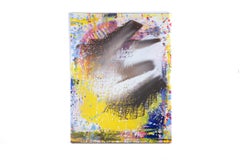
Portrait (Bird)
By Jackie Saccoccio
Located in Saint Louis, MO
In her painting "Portrait (Bird)," late artist Jackie Saccoccio creates an index of the act of painting, as gestural brushstrokes layered beneath the controlled chaos of paint dripli...
Category

2010s Missouri - Art

Materials

Linen, Oil

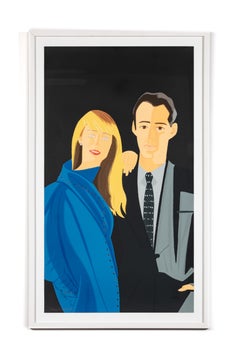
David Salle and Janet Leonard (from the portfolio Pas de Deux )
By Alex Katz
Located in Saint Louis, MO
Title: David Salle and Janet Leonard (From the portfolio 'Pas de Deux ') Artist: Alex Katz 1927 - PRESENT Year: 1993 Technique: Color screenprint Alex Katz's paintings and sculptures monumentalize common moments of everyday life. Katz was influenced by the golden age of the billboard business when hand-painted advertisements...
Category

1990s Missouri - Art

Materials

Screen

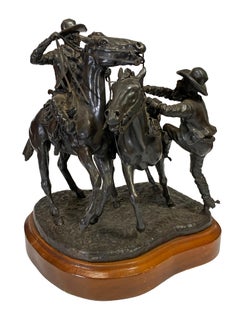
Preparing to Ride
Located in Missouri, MO
Preparing to Ride By. George B. Marks (American, 1923-1983) Signed and Dated Throughout his artistic career, George Marks’s work was always guided by the...
Category

1970s American Realist Missouri - Art

Materials

Bronze

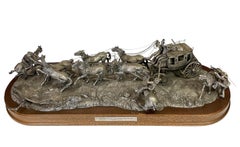
The Holdup of the Overland Stagecoach
By Gordon Phillips
Located in Missouri, MO
The Holdup of the Overland Stagecoach By. Gordon Phillips (American, 1927-2011) Initialed and Edition 493/750 Gordon Phillips was born in 1927 in Boone, North Carolina. He studied a...
Category

20th Century American Realist Missouri - Art

Materials

Metal

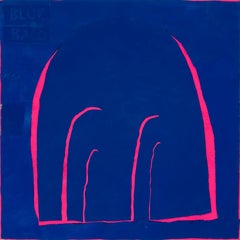
Blue Bald Voice Effects
By Trenton Doyle Hancock
Located in Saint Louis, MO
Part fictional, part autobiographical, Trenton Doyle Hancock’s work pulls from his own experiences, art historical canon, comics and superheroes, pulp fiction, and myriad pop cultur...
Category

Early 2000s Missouri - Art

Materials

Canvas, Mixed Media, Acrylic

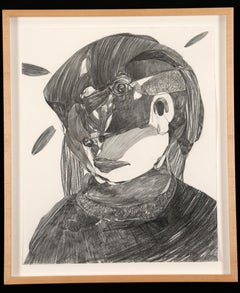
Untitled (M.S) #3
By Nicola Tyson
Located in Saint Louis, MO
British artist Nicola Tyson is known for her assertive depictions of the human body, typically odd arrangements of patched-together, distorted, or missing parts rendered in a bright ...
Category

2010s Missouri - Art

Materials

Paper, Graphite

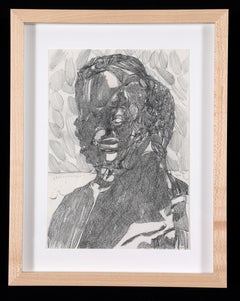
Untitled "Study for Leaves"
By Nicola Tyson
Located in Saint Louis, MO
British artist Nicola Tyson is known for her assertive depictions of the human body, typically odd arrangements of patched-together, distorted, or missing parts rendered in a bright ...
Category

2010s Missouri - Art

Materials

Paper, Graphite

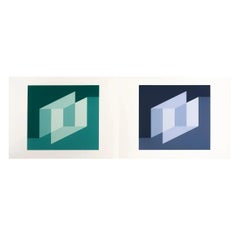
Formulation: Articulation, Portfolio II, Folder 25
By Josef Albers
Located in Saint Louis, MO
JOSEF ALBERS (1888 – 1976) "Formulation : Articulation" Portfolio II, Folder 25 Screen-printed geometric composition printed by Ives Stillman, Inc., New Haven, CT. From the set of 12...
Category

1970s Abstract Geometric Missouri - Art

Materials

Paper, Screen

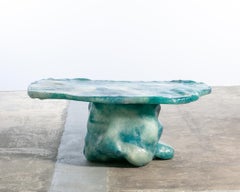
Dinner Party Time table
Located in Saint Louis, MO
AuchKatzStudio is a French design studio established in 2017 and composed of the visual artist Elsa Belbacha-Lardy and the space and product designer Thomas Thibout. Based on their i...
Category

2010s Missouri - Art

Materials

Fiberglass, Polystyrene, Varnish, Pigment, Polyurethane

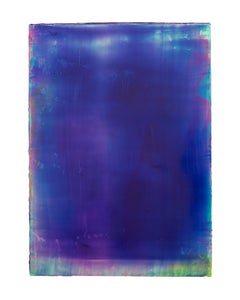
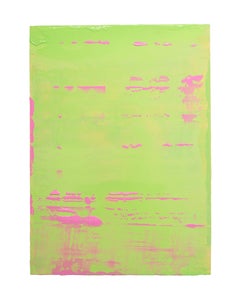
MKW-003
Located in Missouri, MO
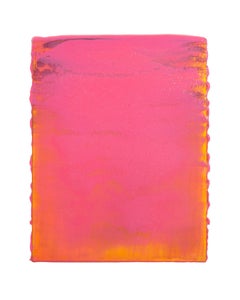
Nick Schleicher (American, b. 1988) MKW-003, 2019 Acrylic, Fluorescent Pigment, Iridescent Pigment, & Gel Gloss on Panel 36 x 26 inches Signed, Dated, ...
Category

2010s Contemporary Missouri - Art

Materials

Glaze, Acrylic, Wood Panel, Pigment

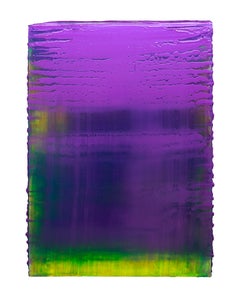
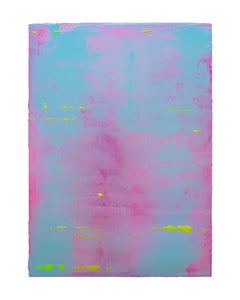
GMA-HLK
Located in Missouri, MO
Nick Schleicher (American, b. 1988) GMA-HLK 2019 Acrylic, Fluorescent Pigment, Iridescent Pigment, & Gel Gloss on Panel 36 x 26 inches Signed, Dated, a...
Category

2010s Contemporary Missouri - Art

Materials

Glaze, Acrylic, Wood Panel, Pigment

SLM-350
Located in Missouri, MO
Nick Schleicher (American, b. 1988) SLM-350, 2019 Acrylic, Fluorescent Pigment, Iridescent Pigment, & Gel Gloss on Panel 36 x 26 inches Signed, Dated, ...
Category

2010s Contemporary Missouri - Art

Materials

Glaze, Acrylic, Wood Panel, Pigment

STM-HMS
Located in Missouri, MO
Nick Schleicher (American, b. 1988) STM-HMS, 2019 Acrylic, Fluorescent Pigment, Iridescent Pigment, & Gel Gloss on Panel 36 x 26 inches Signed, Dated, ...
Category

2010s Contemporary Missouri - Art

Materials

Glaze, Acrylic, Wood Panel

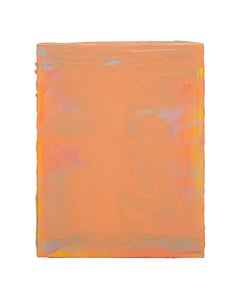
CLY-350
Located in Missouri, MO
Nick Schleicher (American, b. 1988) CLY-350, 2019 Acrylic and Matte Medium, Gel Gloss, & Glazing Medium 20 x 18 inches Signed, Dated, and Titled Verso ...
Category

2010s Contemporary Missouri - Art

Materials

Glaze, Acrylic, Wood Panel

DLM-125
Located in Missouri, MO
Nick Schleicher (American, b. 1988) DLM-125, 2019 Acrylic and Matte Medium, Gel Gloss, & Glazing Medium 20 x 18 inches Signed, Dated, and Titled Verso ...
Category

2010s Contemporary Missouri - Art

Materials

Glaze, Acrylic, Wood Panel

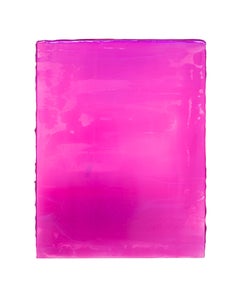
PNK-BRN
Located in Missouri, MO
Nick Schleicher (American, b. 1988) PNK-BRN, 2019 Acrylic and Matte Medium, Gel Gloss, & Glazing Medium 20 x 18 inches Signed, Dated, and Titled Verso ...
Category

2010s Contemporary Missouri - Art

Materials

Glaze, Acrylic, Wood Panel

Woven Apache Basket with Dog Motif
Located in Missouri, MO
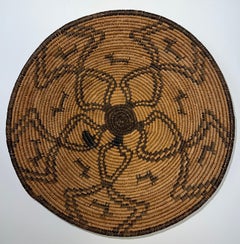
Woven Apache basket with dog motif Late 19th century - Early 20th Century Woven from Willow and Devil's claw Apache is a collective term for several culturally related groups of Native Americans living primarily in the Southwest, which includes the Jicarilla and the Western Apache. Because they were a nomadic people, though usually within a very limited territory, they did not take to making pottery (with some exceptions such as Tammie Allen of Jicarilla). They did, however, weave, and became very skilled in the art of Basketry. The Jicarilla Apache basketry...
Category

Early 20th Century Other Art Style Missouri - Art

Materials

Organic Material, Other Medium

Woven Apache Basket with Dog and Human Motif
Located in Missouri, MO
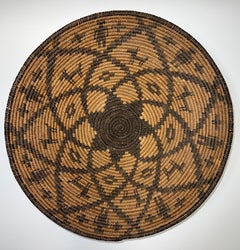
Woven Apache Basket with Dog and Human Motif Late 19th century - Early 20th century Woven from Willow and Devil's Claw Apache is a collective term for several culturally related groups of Native Americans living primarily in the Southwest, which includes the Jicarilla and the Western Apache. Because they were a nomadic people, though usually within a very limited territory, they did not take to making pottery (with some exceptions such as Tammie Allen of Jicarilla). They did, however, weave, and became very skilled in the art of Basketry. The Jicarilla Apache basketry...
Category

Early 20th Century Other Art Style Missouri - Art

Materials

Organic Material, Other Medium

I Remember Heaven (Minimal, Silver, Foil, Heaven, Contemporary, St. Louis)
Located in Kansas City, MO
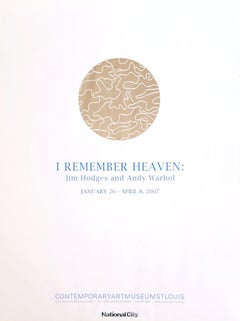
Jim Hodges and Andy Warhol I Remember Heaven Offset Lithograph with silver foil on glossy stock Year: 2007 Size: 24x18in Edition: 1,000 Unsigned and unnumbe...
Category

Early 2000s Abstract Missouri - Art

Materials

Silver, Foil

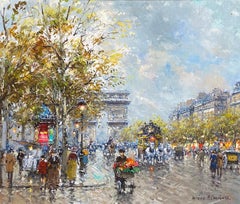
Avenue des Champs-Elysses, Paris
By Antoine Blanchard
Located in Missouri, MO
Antoine Blanchard (French 1910-1988) "Avenue des Champs-Elysses, Paris" Oil on Canvas Signed approx 18 x 22 (site) approx 26.5 x 30 (framed) Antoine Blanchard (c.1910-1988) was a prolific and successful Neo-Impressionist painter who specialized in nostalgic scenes of Fin de Siècle Paris. Inspired by the subjects as well as the success of earlier painters of Parisian life like E. Galien Laloue (1854-1941), Edouard Cortès (1882-1969), Jean Béraud (1849-1935) and Luigi Loir (1845-1916), Blanchard painted hundreds of views of the “City of Light.” In the late 1950s, his street scenes were exported to the United States and the United Kingdom, where they were sold briskly to collectors. By the1960s, Blanchard paintings were bringing several hundred dollars in galleries, so while they were not inexpensive, they were affordable to collectors who loved Parisian scenes but who could not afford the works of Cortes or one of the other French painters known for their views of Paris in Belle Époque. Eventually Blanchard’s more delicate, feathery pastel-toned scenes of rain-swept Paris became sought after in their own right and, when he died, he was considered the last of what the dealers described as the École de Paris or “School of Paris” painters. The most salient fact about the life and career of the painter Antoine Blanchard was that he was actually born Marcel Masson, the son of a furniture maker who lived in the scenic Loire Valley, south of Paris, where the French nobility had their chateaus. The date that is usually given for Blanchard’s birth is November 15, 1910. However, there has been some speculation that he was born even later, perhaps in 1918, but some of the facts of his life have always been clouded by early biographies that claimed even earlier dates for his birth, so that he would seem to be seen as a contemporary of the famous Belle Époque painters rather than a post-war interpreter of Paris. Blanchard grew up in the hardscrabble years following the First World War. Because he was artistically talented, he was sent first to the nearby city of Blois, the capital of the Loir-et-Cher Département, for artistic training and then to the École des Beaux-Arts in Rennes, on the Brittany peninsula, where he received a classical art education. By some accounts Blanchard also studied in Paris, where the historic École des Beaux-Arts is located, but the depth of his study and the style of his earliest work will require further research. Marcel Masson was married in 1939, as war clouds gathered on the French horizon. He was drafted for service in the French Army and participated in the short and futile struggle against the invading German Panzers before returning to his family and his art during the Nazi occupation. A daughter, Nicole, was born in 1944 with a second daughter, Eveline, who eventually came to the United States, following in 1946. Masson’s early art career was interrupted, first by World War II and later by the necessity of keeping his father’s workshop running in the years after his death. By the late 1940s, though, Masson returned to his art and moved to Paris in order to further his career. Exactly when Marcel Masson adopted the pseudonym Antoine Blanchard is not known, nor are we aware of his motivations for adopting a nom de plume, but the practice was not unusual for French painters. In most cases a pseudonym was adopted because the artist had contractual obligations with more than one agent or dealer. Another motivation could be to obscure the scope of a sizable artistic production. Dealers in that era also liked to keep an artist under their thumb, so a pseudonym was a way for Blanchard’s dealers to tuck him away, out of the sight of their competitors. Like many painters before him Masson may have initially painted different subjects under different names. Marcel Masson neé Blanchard would have been well aware that the famous and prolific French painter E. Galien Laloue (1854-1941) painted under no less than four names – three pseudonyms in addition to name he was christened with – and so the adoption of another name was probably not seen as a liability to him. However, he apparently never took the step to register his pseudonym, which was possible in France, to legally restrict its use. In any event, by the 1950s Marcel Masson had become “Antoine Blanchard,” a painter of Parisian views. With the aging Edouard Cortès (1882-1969) as a model, Blanchard began to specialize in romanticized scenes of la ville des lumières, or the “City of Light.” However, instead of painting contemporary Paris, the crowded metropolis of his own time, which he may have felt was lacking in romance, he chose to look at the French capital through the rear-view mirror. So Blanchard became known for his depictions of the hurly-burly life of Paris in the Belle Époque. For inspiration, he is said to have collected old sepia-toned postcards of life in La Belle Époque (“The Beautiul Era”), the long period of peace and relative prosperity between the end of the Franco-Prussian War and the horrors of the Paris Commune in 1871 and the start of the mass bloodshed of the First World War in August of 1914. In addition, however, the paintings of Loir, Baraud, Laloue and Cortès could be found and studied in the flea markets of Paris as well as the auctions at the l’Hôtel Drouot. Reminders of the Belle Epoch were thus all around Blanchard, and of course the architecture that he painted had survived the Second World War intact, because Paris was spared bombing or a siege by the allies. Soon he was painting the horse-drawn omnibuses that took turn-of-the-century Parisians on longer trips throughout the city as well as the tradesmen, children and fashionably dressed ladies that populated Baron Haussmann’s Grand Boulevards. Blanchard’s early work was clearly modeled after the paintings of Edouard Cortès, but he was always his own man and never a slavish copyist. These paintings were darker in palette than the later Blanchard paintings most American collectors have become familiar with, and his red and blue tones were often bolder than those of Cortès. He never adopted the heavy “impasto,” the build-up of paint on the highlights of Cortes’ work, leaving that artistic trademark to the master. Blanchard’s brushwork was painterly, but the buildings in the paintings were always well rendered, for he had an excellent command of composition and perspective. By the late 1950s, agents began to purchase Blanchard’s paintings and then to export them to the United States, selling them to commercial galleries in far away Houston, Los Angeles, San Francisco, Chicago and New York. By the early 1960s, his work was already well known enough to be in reproduced by print publishers and the Donald Art Company published a number of popular prints that are now often mistaken for original paintings. By the end of the 1960s, Blanchard had begun to develop his own mature style by employing a lighter, brighter, palette and a deft, almost calligraphic style of brushwork. This helped him step out of Cortès’ shadow and become a sought-after painter in his own right. Blanchard worked through agents, essentially brokers, who purchased his work and created a demand for it in the United States and Canada. By the 1970s Blanchard’s paintings were being sold by galleries across the United States, and the American market absorbed virtually all of his work. In 1969, with the passing of Edouard Cortès, he became the last of the long series of prolific French painters of Parisian life. Blanchard’s later works were usually daylight scenes, with Paris seen awash in rain or with a mantle of soft snow, and so collectors no longer confused him with Cortes, whose Parisian clock seemed to always be set at twilight. These paintings were rendered in softer, pastel tones and he used his brush with a light touch. These qualities gave Blanchard’s work of the 1970s and 1980s a lighter, more decorative appearance. In the late 1970s, the French agent Paul Larde published a lavish book that was claimed to be an authorized biography of Antoine Blanchard by his “exclusive” dealer. Today, this book is almost impossible to find, because it was apparently the subject of a lawsuit in France. Some of the information in the Larde book was contested and found to be inaccurate and so it was withdrawn from publication. One claim that Larde made was that Blanchard’s production was extremely limited. While he was not as prolific as Cortès or Laloue, he was a hard-working painter who managed to supply a long list of galleries with his work. He produced thousands of paintings during his career. When the motivation for a monograph is marketing rather than art history, accuracy and detail can be swept aside by exaggeration, hyperbole and claims of exclusivity that were meant to discourage collectors or galleries from buying Blanchard’s from other representatives. Blanchard’s legitimate paintings were sold by several agents, who dealt directly with the artist, at least one of whom was American, one Austrian and a few French dealers. The details of Antoine Blanchard’s life are not well known because he never sought the limelight. He was content to work in his studio and ship his paintings to his agents who sold them abroad. Eventually both his daughters – Nicole and Evelyn – followed in his footsteps and became painters themselves. Evelyn (1946-2008) was savvy enough to adopt the Blanchard nom de plume, and she began painting street scenes that closely resembled her father’s later work. Antoine Blanchard passed away in 1988, leaving hundreds of paintings of Belle Époque Paris– the Notre Dame Cathedral, the Opera, the Arc de Triomphe and Place Concorde – as his lasting legacy. Notes on the Authentication of Antoine Blanchard’s Paintings: The vast majority of Blanchard’s paintings were smaller works, which were sent to the United States in tubes and stretched and framed by the galleries that sold them. Virtually all of these Blanchards were painted in European centimeter sizes, which convert to 13” x 18” or 18” x 21 1/2?, but on very rare occasions he painted much larger works in American sizes – such as 24” x 36” – on commission for dealers such as Howard Morseburg in Los Angeles or the dapper Wally Findlay, who had a chain of galleries. The first way to assess the authenticity of a Blanchard...
Category

Mid-20th Century Impressionist Missouri - Art

Materials

Canvas, Oil

Alphonsine
By Robert Kushner
Located in Missouri, MO
Robert Kushner (American, b. 1949) Alphonsine, 1983 30 x 22 inches without frame 32.75 x 25 inches with frame Titled Lower Left Signed and dated Mid Lower Right A member of the Patt...
Category

1980s American Modern Missouri - Art

Materials

Paper, Mixed Media, Acrylic

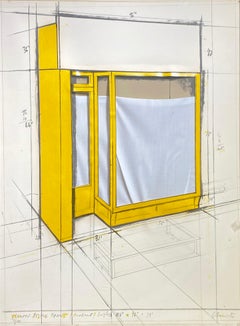
Yellow Store Front, Project, 1980
By Christo
Located in Missouri, MO
Yellow Store Front, Project, 1980 By. Christo (Bulgarian, 1935-2020) Signed Lower Right Titled Lower Left Unframed: 32 x 23.5 inches Framed: 32.5 x 24 inches An environmental instal...
Category

1980s American Modern Missouri - Art

Materials

Mixed Media

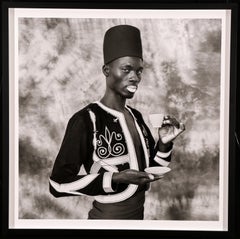
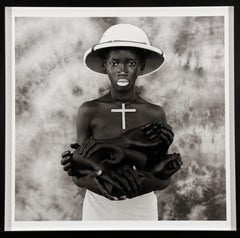
Mr. Banania
Located in Saint Louis, MO
Fabrice Monteiro Mr. Banania, 2013 Digital art print 31 1/2 x 31 1/2 inches (80 x 80 cm)
Category

2010s Contemporary Missouri - Art

Materials

Digital Pigment

Pitit Noir
Located in Saint Louis, MO
Fabrice Monteiro Pitit Noir, 2016 Digital art print 31 1/2 x 31 1/2 inches (80 x 80 cm) Edition of 5
Category

2010s Contemporary Missouri - Art

Materials

Digital Pigment

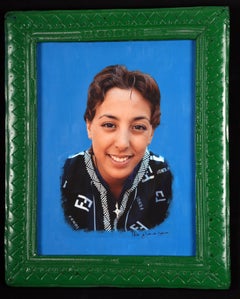
Fendi Girl
By Hassan Hajjaj
Located in Saint Louis, MO
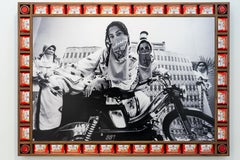
Hassan Hajjaj Fendi Girl, 1999/1420 Giclee print with acrylic painted tire frame Framed Dimensions: 20 x 16 inches (50.8 x 40.6 cm)
Category

1990s Pop Art Missouri - Art

Materials

Giclée

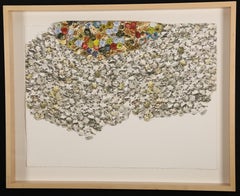
Variation I (B)
By El Anatsui
Located in Saint Louis, MO
El Anatsui Variation I (B), 2014 Pigment print with hand collage and copper wire 23 x 30.2 inches (58.4 x 76.8 cm) Edition of 16
Category

2010s Abstract Missouri - Art

Materials

Wire

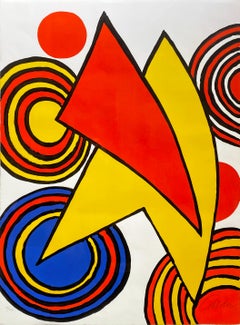
The Triangles and Spiral
By Alexander Calder
Located in Missouri, MO
The Triangles and Spiral, 1973 By. Alexander Calder (American, 1898-1976) Signed Lower Right Numbered: 66/150 Unframed: 26 x 19.25 inches Framed: 34 x 27 inches Alexander Calder was born in Philadelphia in 1898. After obtaining his mechanical engineering degree from the Stevens Institute of Technology, Calder worked at various jobs before enrolling at the Art Students League in New York City in 1923. During his student years, he did line drawing for the National Police Gazette. In 1925, Calder published his first book, Animal Sketches...
Category

1970s Abstract Missouri - Art

Materials

Color, Lithograph

Swell
Located in Saint Louis, MO
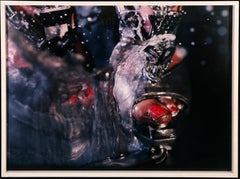
Marilyn Minter Swell, 2010 Chromogenic print Framed Dimensions: 32 x 42 inches (81.3 x 106.7 cm) Edition of 5
Category

2010s Missouri - Art

Materials

C Print

Swell
Swell
Price Upon Request
Mali Kid Legs
By Hassan Hajjaj
Located in Saint Louis, MO
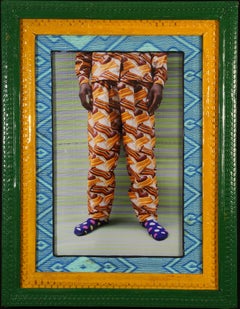
Hassan Hajjaj Mali Kid Legs, 2014 Metallic Lambda print on 3mm dibond 40 3/10 x 31 inches (102.4 x 78.7 cm) Edition 2/5
Category

2010s Street Art Missouri - Art

Materials

Lambda

Prevenient (36 Fold)
Located in Saint Louis, MO
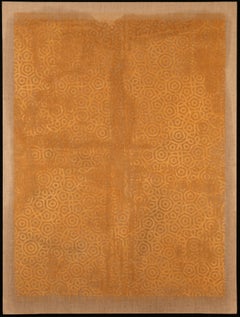
Ajay Kurian Prevenient (36 Fold), 2012 Ghee and gold dust on linen 54 x 46 inches (137.2 x 116.8 cm)
Category

2010s Abstract Geometric Missouri - Art

Materials

Raw Linen

Untitled
By Ross Bleckner
Located in Saint Louis, MO
Ross Bleckner Untitled, 1989 Mixed media on paper 28 x 22 inches (71.1 x 55.9 cm)
Category

1980s Abstract Missouri - Art

Materials

Mixed Media, Archival Paper

Untitled
Untitled
Price Upon Request
Untitled
By Alexander Ross
Located in Saint Louis, MO
Alexander Ross Untitled, 2007 Watercolor, colored pencil, gouache and graphite on paper Framed Dimensions: 28 x 25.5 inches (71.1 x 64.8 cm) Image Dimensions: 23 x 22 inches (58.4 ...
Category

Early 2000s Contemporary Missouri - Art

Materials

Watercolor, Gouache, Archival Paper, Color Pencil, Graphite

Mao Wow
Located in Saint Louis, MO
Christopher Tanner Mao Wow, 2011 Mixed media 6 1/2 x 6 1/2 x 3 inches (16.5 x 16.5 x 7.6 cm)
Category

2010s Abstract Missouri - Art

Materials

Mixed Media

Diana Vreeland
Located in Saint Louis, MO
Christopher Tanner Diana Vreeland, 2011 Mixed media 6 1/2 x 6 1/2 x 3 1/2 inches (16.5 x 16.5 x 8.9 cm)
Category

2010s Abstract Missouri - Art

Materials

Mixed Media

Love Maroc
By Hassan Hajjaj
Located in Saint Louis, MO
Hassan Hajjaj Love Maroc, 2010/1431 C-type on Fuji Crystal 39 x 52.25 inches (99 x 132.7 cm) Edition 3/7, 3
Category

2010s Contemporary Missouri - Art

Materials

C Print

Winter Pasture
By Oscar Edmund Berninghaus
Located in Missouri, MO
Oscar E. Berninghaus (American, 1874-1952) "Winter Pasture" Oil on Canvas Unframed: 20 x 24 inches Framed: 25.5 x 29.5 inches Provo: Noonan-Kocian Gallery, St. Louis, Missouri, Dec. 23, 1954 (Copy of Original Receipt Included) * Will be included in Kodner Gallery's upcoming Oscar E. Berninghaus Research Project on the artist We guarantee the authenticity of this painting and would be pleased to provide you with a formal, certified insurance appraisal. "Winter Pasture" was originally purchased from one of the Oscar E. Berninghaus' principal dealers, Noonan-Kocian in St. Louis, and the painting retains its original 1954 invoice along with a signed affidavit from the grandson of the original owner (see images). As with many artists of the period, Berninghaus sometimes created works intended for reproduction in calendars, books, or advertising. He completed commissions for Brown & Bigelow, the prominent Minneapolis-based calendar and publishing company, which often requested that works remain unsigned for reproduction purposes. This practice explains the absence of a visible signature on certain compositions. ------------------- A founder in 1898 of the Taos Society of Artists, Oscar Berninghaus excelled at drawing animals and figures in contemporary garb in Southwestern landscapes. Many of his early paintings were Impressionistic, "suffused with color and light". (Gerdts 254) He was born in St. Louis, Missouri and developed an interest in art through his family's lithography business. He attended night classes at the St. Louis School of Fine Art. In 1898, he was on an illustration assignment for "McClure's" magazine, which took him for the first of many times into New Mexico and Arizona. He had heard of the special beauty of Taos and there met Bert Geer Phillips, who was already a resident, and Phillips invited him to return. This visit began a tradition of spending the winter months in St. Louis and the summers in Taos. He remained active in both communities, and for many years designed the costumes and floats for the Veiled Prophet parade, a famous annual event in St. Louis. He also did a series of western scenes commissioned by the Anheuser-Busch Brewing Association to promote a manly, ruggedness theme in their products and to enhance their image as good Americans, an image that was being attacked by suffragettes. In this capacity and without visiting the area, Berninghaus did a painting titled "Old Faithful, Yellowstone" in 1914, which was used as a calendar illustration in the series. Berninghaus was a sketch artist for the Denver and Rio Grande Railroad to depict landscape of Colorado...
Category

Early 20th Century Abstract Impressionist Missouri - Art

Materials

Canvas, Oil

Mid-day, Zuni Village
By Frank Reed Whiteside
Located in Missouri, MO
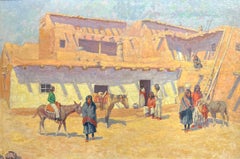
Mid-day, Zuni Village, 1897 By. Frank Reed Whiteside (American, 1866-1929) Unframed: 20" x 30" Framed: 28" x 38" Frank Reed Whiteside, born in Philadelphia on 20 August 1867, became a student of Thomas Anshutz at the Pennsylvania Academy of the Fine Arts (1888-92). He already began exhibiting there during his student years (1887-98). In 1893, he enrolled in the Académie Julian in Paris where he received instruction from Jean-Paul Laurens and Benjamin Constant. After his French academic training, Whiteside taught art in Philadelphia high schools. He took frequent trips to the Southwest between 1890 and 1928 to live with and paint the Zuni Indians. Whiteside depicted ceremonial dances, Zuni buildings, and other genre scenes, usually in blinding afternoon sunlight. He carefully observed the effects of light on vibrant color, using a finely crafted impressionist technique. He was fond of broad areas of color, subtle combinations of hues, and simplified shapes and silhouettes. Whiteside continued to exhibit at the PAFA (1905-15), at the Art Institute of Chicago (1896-1916), at the Carnegie International (1905 and 1907) and at the Corcoran Gallery (1907). He was a member of Philadelphia art societies and beginning in 1909 had a summer studio in Ogunquit, Maine, where he took part in Hamilton Easter Field's discussion groups. Frank's wife, Clara Walker Whiteside, who published Touring New England in 1926, was active in the Ogunquit Art Association. Like Stanford White, Frank Reed Whiteside was the victim of murder, on 19 September 1929, but Whiteside's case remains unsolved. One night, the sixty-three year-old painter answered the doorbell. Two witnesses...
Category

Late 19th Century Other Art Style Missouri - Art

Materials

Canvas, Oil

Monsieur lisant a la lumiere de la fenetre
Located in Missouri, MO
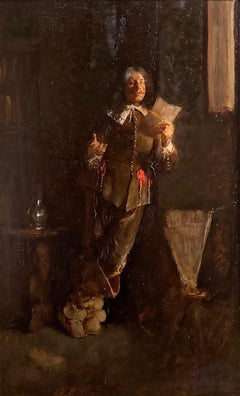
Monsieur lisant a la lumiere de la fenetre By. Louis Mettling (French, 1847-1904) Signed Lower Right Unframed: 16" x 10" Framed: 28.5" x 23" Louis Mettling...
Category

Late 19th Century French School Missouri - Art

Materials

Oil, Panel

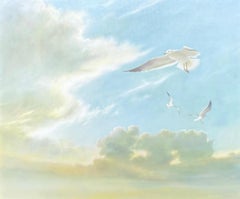
Seagulls (Birds in Flight)
Located in Missouri, MO
Seagulls (Birds in Flight), 1982 By. Jim Palmer (American, b. 1941) Signed and Dated Lower Right Unframed: 32" x 36" Framed: 37" x 42.5" Born in 1941 in Columbia, South Carolina, Jim Palmer attended the University of South Carolina in 1960 before going on to study at the Atlanta School of Art in 1964. In 1966 he and his wife moved to Hilton Head Island, the second artist to do so during the Island's early years. Since living here, he designed the cover of the Chamber of Commerce' Islander Magazine, has been a contributing artist to the Island Events Magazine, and has painted many Low Country scenes that grace homes and businesses throughout the country. Palmer was the illustrator for two books written by local authors: A Corner of South Carolina and Moonshadows. His work has been included in exhibits at the Hunter Museum in Chattanooga, TN; Mint Museum, Charlotte, NC; Southeastern Artists Exhibition, Atlanta, GA; Greenville County Art Museum, Greenville, SC; Callaway Gardens, Pine Mountain, GA; and Bay Hills Club, Orlando, FL. His paintings are part of the private collections of C&S National Banks in Columbia and Hilton Head Island; Banker's Trust Tower, Columbia, SC; Palmetto State Bank, Bluffton, SC, among others. Several paintings are also included in the collections of former Presidents Jimmy Carter and Dwight Eisenhower, former South Carolina Governor Robert McNair and singer John Denver.
Category

1980s American Modern Missouri - Art

Materials

Canvas, Oil

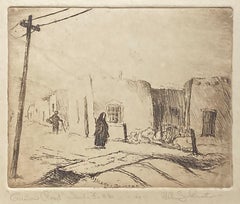
Canyon Road, Sante Fe
By Will (William Howard) Shuster
Located in Missouri, MO
Canyon Road, Santa Fe By. William Howard Shuster (American, 1893-1969) Signed Lower Right Edition of 100 Lower Center Titled Lower Left Unframed: 4" x 4.75" Framed: 15.75" x 15.25" A realist and early modernist painter, graphic artist, illustrator, and sculptor, Will Shuster became known primarily for his work in New Mexico where in 1920, he settled in Santa Fe, having been encouraged to come there by John Sloan. He had studied electrical engineering at the Drexel Institute in Philadelphia and later was a student of Sloan's in Santa Fe in both etching and painting. He was in World War I, where he suffered a gas attack. On his return, he studied with J William Server in Philadelphia but was advised to go West for his health. In Santa Fe in 1921, he became one of the founding members of Los Cinco Pintores...
Category

20th Century American Modern Missouri - Art

Materials

Etching

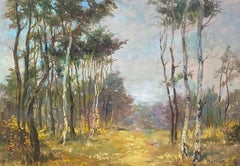
Lonesome Woods
By Mark Kaplan
Located in Missouri, MO
Landscape By Mark Kaplan (Russian, b. 1950) Signed Lower Right Unframed 7" x 9" Framed: 20.25" x 16.25" Mark Kaplan was born in 1950 in Saint Petersburg ...
Category

20th Century Impressionist Missouri - Art

Materials

Paper, Oil

Lonesome Woods
Lonesome Woods
Price Upon Request
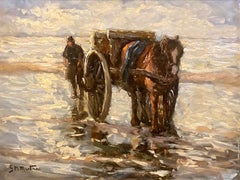
Where are the Clams?
By Gerhard Morgenstjerne Munthe
Located in Missouri, MO
Searching for Clams with the Horse Cart By. Gerhard Munthe (German, 1875-1927) Signed Lower Left Unframed: 11" x 14" Framed: 19" x 23" Born in Dusseldo...
Category

Early 20th Century Impressionist Missouri - Art

Materials

Oil, Panel

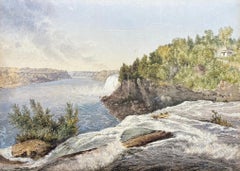
Hudson River Waterfall
By John William Hill
Located in Missouri, MO
Hudson River Valley with Waterfall By. John William Hill (English, American, 1812-1879) Signed Lower Left Unframed: 14" x 19" Framed: 23" x 28.5" John William Hill was the son of the British aquatint engraver John Hill and the father of John Henry Hill. He immigrated with his family to this country in 1819. He was apprenticed to his father in 1822 when his family moved from Philadelphia to New York City. In 1833, by the age of 21, he was elected an associate of the National Academy of Design. Early in his career he was a topographical artist employed by the New York State Geological Survey and later by Smith Brothers of New York City, for whom he made watercolor views of many American cities. About 1855, Hill read Ruskin’s Modern Painters and became interested in the American Pre-Raphaelite Movement of which he came to be considered the leading spirit in America. A versatile artist, he worked in lithography, aquatint, and watercolor. He made detailed pictures directly from nature, many in watercolor and executed in a stipple technique with tiny brushes normally employed for miniatures. He exhibited at the National Academy of Design from 1829 until his death and also at the Brooklyn Art...
Category

19th Century Land Missouri - Art

Materials

Watercolor, Gouache

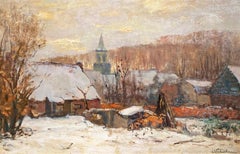
Village Under the Snow
Located in Missouri, MO
Village Under the Snow By. David Schulman (Dutch, 1881-1966) Signed Lower Right Unframed: 15.5" x 23.5" Framed: 23.5" x 31.5" David Schulman was a Dutch self-taught painter, draftsman and watercolorist. He was born in the city of Hilversum, in 1881. Schulman's father Lion was a painter himself and was known to be come an art dealer in subsequent years. Apart from this, he sold painting...
Category

20th Century Impressionist Missouri - Art

Materials

Canvas, Oil

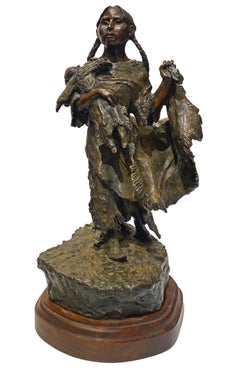
Native American Girl with Doll
By Dave Powell
Located in Missouri, MO
Native American Girl with Doll By Dave Powell (American, b. 1954) Signed on Back 17.5" x 8" Dave Powell is a native son of Montana, in a world of change and transition; few can say they have roots in a single geography that go back four generations. Dave's pedigree in art is just about as deep. He is the son of artists Ace Powell and Nancy McLaughlin Powell. That heritage leads back to the likes of Charlie Russell and Joe De Young, both famous for their abilities to "tell the story" through their art. His father, Ace Powell, was a prolific Western artist whose first childhood paint-box set was a gift from Charlie and Nancy Russell. Dave became a serious student of art in his mid-teens, and has been a professional artist most of his adult life. Over the years he has worked with Bob Scriver, Ned Jacob and Robert Lougheed. Dave will be the first to give thanks...
Category

20th Century American Realist Missouri - Art

Materials

Bronze

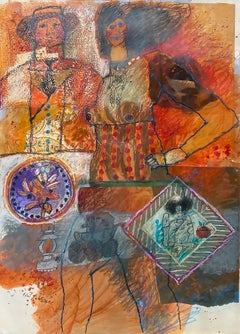
A Stroll Through the Village, Two Figures
By Théo Tobiasse
Located in Missouri, MO
A Stroll Through the Village, Two Figures By. Theo Tobiasse (Israeli, French, 1927-2012) Signed Lower Left Unframed: 40" x 27.5" Framed: 55.5" x 42.25" Théo Tobiasse came from a Lithuanian-Jewish immigrant family who moved to Paris in 1931 for economic reasons. Here Tobiasse completed an apprenticeship at the École des Arts Décoratifs, which was interrupted by the outbreak of World War II. The family lived hidden in the French metropolis for over two years without ever leaving the small apartment or even lighting it up. The time was spent reading, drawing and playing chess, and Tobiasse built up a huge pool of drawings from which he could later draw. After the end of the war, he worked as a graphic designer for the Hermès company...
Category

20th Century Expressionist Missouri - Art

Materials

Mixed Media

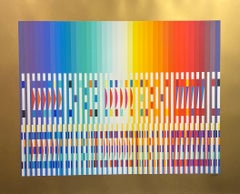
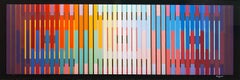
Spectrum
By Yaacov Agam
Located in Missouri, MO
Spectrum By. Yaacov Agam (Israeli, b. 1928) Signed Lower Right Edition 158/180 Lower Left Unframed: 27" x 33.5" Framed: 36.5" x 43" Yaacov Agam is one of the pioneer creators of the kinetic movement in art as well as its most outstanding contemporary representative. Agam was born in 1928 a son of a Rabbi of Rishon LeZion (Israel), who devoted his life to the study of Jewish religious matters and wrote books. Agam considers himself somehow as a visual continuation of his father's quest for spirituality. He studied at the Bezalel Academy of Art in Jerusalem, and in Switzerland at the Eidgenossische Technische Hochschule and the Zurich University. After arriving to Paris in 1951, Agam held his first one man exhibition with a great success in 1953 This exhibition consisted totally of kinetic, movable and transformable paintings, which actually was the first one-man show in art history exclusively devoted to kinetic art. A passionate experimenter, Agam deals with such problems as the 4th dimension, simultaneity and time in the visual, plastic arts, and has extended his experiments to application in the fields of literature, music and art theory. His works express a concept that breaks away with the established way of expressing reality in limited, static way. In his works, he strives to demonstrate the principle of reality as a continuous "becoming" rather than static "graven image." His paintings Double Metamorphosis 11 in the Museum of Modern Art in New York and Transparent Rhythms 11 in the Hirshhorn Museum and Sculpture Garden of the Smithsonian Institution in Washington, D.C. give the best example of his polymorphic painting. His works are placed in many public places including Communication x 9 on the Michigan Avenue in Chicago (1983), Communication: Night and Day at the AT&T building in New York (1974), Super Lines Volumes at the Pare Floral in Paris (1971), and his murals Peace and Life arc installed at the Parliament of Europe in Strasbourg (1977). Agam has expressed the new concepts in monumental works as in his Jacob's Ladder, which forms the ceiling of the National Convention House in Jerusalem. He created a "floating museum", including all the artworks for public areas and cabins, for the Carnival Cruise Line's luxury cruise ship "Celebration" (1987). His fire-water fountain in Dizengoff Square in Tel Aviv (1986) streams water, fire, and music -elements of flux and life which cannot be static - as its colored elements rotate in this multidimensional monumental work. For the Elysee Palace in Paris, with the request of President Georges Pompidou Agam created in 1972 a whole environmental of the Salon with the walls covered with polymorphic murals of changing images a kinetic ceiling, moving transparent colored doors and a kinetic carpet on which he placed a sculpture. It embraces viewers: they are no longer looking at a framed, fixed scene, but rather arc moving within an artistic space which changes constantly according to their shifting position and point of view. Similar attempt was made for the concert hall, Forum Leverkusen in Germany in 1970. Agam created many environmental sculptures, including Hundred Gates in the garden of the residence of the President of Israel in Jerusalem, 3 x 3 Interplay installed at the Julliard School of Music at the Lincoln Center and Wings of the Heart at J. F. Kennedy airport in New York. In 1984, he made a sculpture Beating Heart for the Hadassah Hospital in Jerusalem. In 1988, he created a transparent torah ark...
Category

20th Century Abstract Missouri - Art

Materials

Lithograph

Spectrum
Spectrum
Price Upon Request
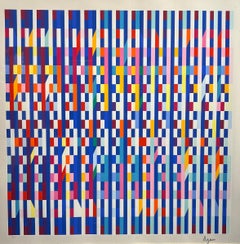
Emerging
By Yaacov Agam
Located in Missouri, MO
Emerging, 1985 By. Yaacov Agam ( Israeli, b. 1928) Color Serigraph Signed Lower Right Edition 1/12 Lower Left Unframed: 25" x 31" Framed: 34" x 43" Yaacov Agam is one of the pioneer creators of the kinetic movement in art as well as its most outstanding contemporary representative. Agam was born in 1928 a son of a Rabbi of Rishon LeZion (Israel), who devoted his life to the study of Jewish religious matters and wrote books. Agam considers himself somehow as a visual continuation of his father's quest for spirituality. He studied at the Bezalel Academy of Art in Jerusalem, and in Switzerland at the Eidgenossische Technische Hochschule and the Zurich University. After arriving to Paris in 1951, Agam held his first one man exhibition with a great success in 1953 This exhibition consisted totally of kinetic, movable and transformable paintings, which actually was the first one-man show in art history exclusively devoted to kinetic art. A passionate experimenter, Agam deals with such problems as the 4th dimension, simultaneity and time in the visual, plastic arts, and has extended his experiments to application in the fields of literature, music and art theory. His works express a concept that breaks away with the established way of expressing reality in limited, static way. In his works, he strives to demonstrate the principle of reality as a continuous "becoming" rather than static "graven image." His paintings Double Metamorphosis 11 in the Museum of Modern Art in New York and Transparent Rhythms 11 in the Hirshhorn Museum and Sculpture Garden of the Smithsonian Institution in Washington, D.C. give the best example of his polymorphic painting. His works are placed in many public places including Communication x 9 on the Michigan Avenue in Chicago (1983), Communication: Night and Day at the AT&T building in New York (1974), Super Lines Volumes at the Pare Floral in Paris (1971), and his murals Peace and Life arc installed at the Parliament of Europe in Strasbourg (1977). Agam has expressed the new concepts in monumental works as in his Jacob's Ladder, which forms the ceiling of the National Convention House in Jerusalem. He created a "floating museum", including all the artworks for public areas and cabins, for the Carnival Cruise Line's luxury cruise ship "Celebration" (1987). His fire-water fountain in Dizengoff Square in Tel Aviv (1986) streams water, fire, and music -elements of flux and life which cannot be static - as its colored elements rotate in this multidimensional monumental work. For the Elysee Palace in Paris, with the request of President Georges Pompidou Agam created in 1972 a whole environmental of the Salon with the walls covered with polymorphic murals of changing images a kinetic ceiling, moving transparent colored doors and a kinetic carpet on which he placed a sculpture. It embraces viewers: they are no longer looking at a framed, fixed scene, but rather arc moving within an artistic space which changes constantly according to their shifting position and point of view. Similar attempt was made for the concert hall, Forum Leverkusen in Germany in 1970. Agam created many environmental sculptures, including Hundred Gates in the garden of the residence of the President of Israel in Jerusalem, 3 x 3 Interplay installed at the Julliard School of Music at the Lincoln Center and Wings of the Heart at J. F. Kennedy airport in New York. In 1984, he made a sculpture Beating Heart for the Hadassah Hospital in Jerusalem. In 1988, he created a transparent torah ark...
Category

20th Century Abstract Missouri - Art

Materials

Lithograph

Emerging
Emerging
Price Upon Request
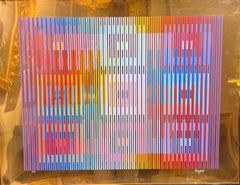
Curtain
By Yaacov Agam
Located in Missouri, MO
Curtain By. Yaacov Agam (Israeli, b. 1928) Signed Lower Right Edition 221/227 Unframed: 18" x 22.5" Framed: 30.5" x 34.5" Yaacov Agam is one of the pioneer creators of the kinetic movement in art as well as its most outstanding contemporary representative. Agam was born in 1928 a son of a Rabbi of Rishon LeZion (Israel), who devoted his life to the study of Jewish religious matters and wrote books. Agam considers himself somehow as a visual continuation of his father's quest for spirituality. He studied at the Bezalel Academy of Art in Jerusalem, and in Switzerland at the Eidgenossische Technische Hochschule and the Zurich University. After arriving to Paris in 1951, Agam held his first one man exhibition with a great success in 1953 This exhibition consisted totally of kinetic, movable and transformable paintings, which actually was the first one-man show in art history exclusively devoted to kinetic art. A passionate experimenter, Agam deals with such problems as the 4th dimension, simultaneity and time in the visual, plastic arts, and has extended his experiments to application in the fields of literature, music and art theory. His works express a concept that breaks away with the established way of expressing reality in limited, static way. In his works, he strives to demonstrate the principle of reality as a continuous "becoming" rather than static "graven image." His paintings Double Metamorphosis 11 in the Museum of Modern Art in New York and Transparent Rhythms 11 in the Hirshhorn Museum and Sculpture Garden of the Smithsonian Institution in Washington, D.C. give the best example of his polymorphic painting. His works are placed in many public places including Communication x 9 on the Michigan Avenue in Chicago (1983), Communication: Night and Day at the AT&T building in New York (1974), Super Lines Volumes at the Pare Floral in Paris (1971), and his murals Peace and Life arc installed at the Parliament of Europe in Strasbourg (1977). Agam has expressed the new concepts in monumental works as in his Jacob's Ladder, which forms the ceiling of the National Convention House in Jerusalem. He created a "floating museum", including all the artworks for public areas and cabins, for the Carnival Cruise Line's luxury cruise ship "Celebration" (1987). His fire-water fountain in Dizengoff Square in Tel Aviv (1986) streams water, fire, and music -elements of flux and life which cannot be static - as its colored elements rotate in this multidimensional monumental work. For the Elysee Palace in Paris, with the request of President Georges Pompidou Agam created in 1972 a whole environmental of the Salon with the walls covered with polymorphic murals of changing images a kinetic ceiling, moving transparent colored doors and a kinetic carpet on which he placed a sculpture. It embraces viewers: they are no longer looking at a framed, fixed scene, but rather arc moving within an artistic space which changes constantly according to their shifting position and point of view. Similar attempt was made for the concert hall, Forum Leverkusen in Germany in 1970. Agam created many environmental sculptures, including Hundred Gates in the garden of the residence of the President of Israel in Jerusalem, 3 x 3 Interplay installed at the Julliard School of Music at the Lincoln Center and Wings of the Heart at J. F. Kennedy airport in New York. In 1984, he made a sculpture Beating Heart for the Hadassah Hospital in Jerusalem. In 1988, he created a transparent torah ark...
Category

20th Century Abstract Missouri - Art

Materials

Lithograph

Curtain
Curtain
Price Upon Request
Blue Rings (Abstract Composition)
By Yaacov Agam
Located in Missouri, MO
Blue Rings (Abstract Composition), Serigraph By Yaacov Agam (Israeli, b. 1928) Signed Lower Right Edition 8/270 Lower Left Unframed: 21" x 21.5" Framed: 31" ...
Category

20th Century Abstract Missouri - Art

Materials

Lithograph

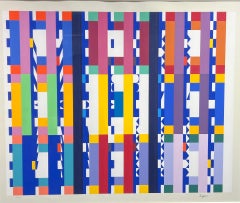
Abstract Purple, Blue, Greens
By Yaacov Agam
Located in Missouri, MO
Abstract Purple, Blue, Greens (Serigraph) By Yaacov Agam (Israeli, b. 1928) Signed Lower Right Edition 4/30 Lower Left Unframed: 14" x 33" Framed: 21" x 41" Yaacov Agam is one of the pioneer creators of the kinetic movement in art as well as its most outstanding contemporary representative. Agam was born in 1928 a son of a Rabbi of Rishon LeZion (Israel), who devoted his life to the study of Jewish religious matters and wrote books. Agam considers himself somehow as a visual continuation of his father's quest for spirituality. He studied at the Bezalel Academy of Art in Jerusalem, and in Switzerland at the Eidgenossische Technische Hochschule and the Zurich University. After arriving to Paris in 1951, Agam held his first one man exhibition with a great success in 1953 This exhibition consisted totally of kinetic, movable and transformable paintings, which actually was the first one-man show in art history exclusively devoted to kinetic art. A passionate experimenter, Agam deals with such problems as the 4th dimension, simultaneity and time in the visual, plastic arts, and has extended his experiments to application in the fields of literature, music and art theory. His works express a concept that breaks away with the established way of expressing reality in limited, static way. In his works, he strives to demonstrate the principle of reality as a continuous "becoming" rather than static "graven image." His paintings Double Metamorphosis 11 in the Museum of Modern Art in New York and Transparent Rhythms 11 in the Hirshhorn Museum and Sculpture Garden of the Smithsonian Institution in Washington, D.C. give the best example of his polymorphic painting. His works are placed in many public places including Communication x 9 on the Michigan Avenue in Chicago (1983), Communication: Night and Day at the AT&T building in New York (1974), Super Lines Volumes at the Pare Floral in Paris (1971), and his murals Peace and Life arc installed at the Parliament of Europe in Strasbourg (1977). Agam has expressed the new concepts in monumental works as in his Jacob's Ladder, which forms the ceiling of the National Convention House in Jerusalem. He created a "floating museum", including all the artworks for public areas and cabins, for the Carnival Cruise Line's luxury cruise ship "Celebration" (1987). His fire-water fountain in Dizengoff Square in Tel Aviv (1986) streams water, fire, and music -elements of flux and life which cannot be static - as its colored elements rotate in this multidimensional monumental work. For the Elysee Palace in Paris, with the request of President Georges Pompidou Agam created in 1972 a whole environmental of the Salon with the walls covered with polymorphic murals of changing images a kinetic ceiling, moving transparent colored doors and a kinetic carpet on which he placed a sculpture. It embraces viewers: they are no longer looking at a framed, fixed scene, but rather arc moving within an artistic space which changes constantly according to their shifting position and point of view. Similar attempt was made for the concert hall, Forum Leverkusen in Germany in 1970. Agam created many environmental sculptures, including Hundred Gates in the garden of the residence of the President of Israel in Jerusalem, 3 x 3 Interplay installed at the Julliard School of Music at the Lincoln Center and Wings of the Heart at J. F. Kennedy airport in New York. In 1984, he made a sculpture Beating Heart for the Hadassah Hospital in Jerusalem. In 1988, he created a transparent torah ark...
Category

20th Century Abstract Missouri - Art

Materials

Lithograph

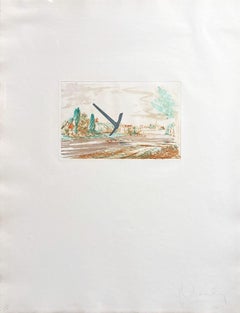
Pickaxe (Spitzhacke) Superimposed on a Drawing of the Site by E.L. Grimm
By Claes Oldenburg
Located in Missouri, MO
Pickaxe (Spitzhacke) Superimposed on a Drawing of the Site by E.L. Grimm, 1982 By Claes Oldenburg (Swedish, American, 1929-2022) Unframed: 26" x 20" Framed: 28.75" x 22.75" Signed and Dated Lower Right Whimsical sculpture of pop culture objects, many of them large and out-of-doors, is the signature work of Swedish-born Claes Oldenburg who became one of America's leading Pop Artists. He was born in Stockholm, Sweden. His father was a diplomat, and during Claes' childhood moved his family from Stockholm to a variety of locations including Chicago where the father was general consul of Sweden and where Oldenburg spent most of his childhood. He attended the Latin School of Chicago, and then Yale University where he studied literature and art history, graduating in 1950, the same year Claes became an American citizen. Returning to Chicago, he enrolled at the Art Institute of Chicago from 1952 to 1954 and also worked as a reporter at the City News Bureau. He opened his own studio, and in 1953, some of his satirical drawings were included in his first group show at the Club St. Elmo, Chicago. He also painted at the Oxbow School of Painting in Michigan. In 1956, he moved to New York where he drew and painted while working as a clerk in the art libraries of Cooper-Union Museum for the Arts of Decoration. Selling his first artworks during this time, he earned 25 dollars for five pieces. Oldenburg became friends with numerous artists including Jim Dine, Red Grooms and Allan Kaprow, who with his "Happenings" was especially influential on Oldenburg's interest in environmental art. Another growing interest was soft sculpture, and in 1957, he created a piece later titled Sausage, a free-hanging woman's stocking stuffed with newspaper. In 1959, he had his first one-man show, held at the Judson Gallery at Washington Square. He exhibited wood and newspaper sculpture and painted papier-mache objects. Some viewers of the exhibit commented how refreshing Oldenburg's pieces were in contrast to the Abstract Expressionism, a style which much dominated the art world. During this time, he was influenced by the whimsical work of French artist, Bernard Buffet, and he experimented with materials and images of the junk-filled streets of New York. In 1960, Oldenburg created his first Pop-Art Environments and Happenings in a mock store full of plaster objects. He also did Performances with a cast of colleagues including artists Lucas Samaras, Tom Wesselman, Carolee Schneemann, Oyvind Fahlstrom and Richard Artschwager, dealer Annina Nosei, critic Barbara Rose, and screenwriter Rudy Wurlitzer. His first wife (1960-1970) Pat Muschinski, who sewed many of his early soft sculptures, was a constant performer in his Happenings. This brash, often humorous, approach to art was at great odds with the prevailing sensibility that, by its nature, art dealt with "profound" expressions or ideas. In December 1961, he rented a store on Manhattan's Lower East Side to house "The Store," a month-long installation he had first presented at the Martha Jackson Gallery in New York. This installation was stocked with sculptures roughly in the form of consumer goods. Oldenburg moved to Los Angeles in 1963 "because it was the most opposite thing to New York I could think of". That same year, he conceived AUT OBO DYS, performed in the parking lot of the American Institute of Aeronautics and Astronautics in December 1963. In 1965 he turned his attention to drawings and projects for imaginary outdoor monuments. Initially these monuments took the form of small collages such as a crayon image of a fat, fuzzy teddy bear looming over the grassy fields of New York's Central Park (1965) and Lipsticks in Piccadilly Circus, London (1966). Oldenburg realized his first outdoor public monument in 1967; Placid Civic Monument took the form of a Conceptual performance/action behind the Metropolitan Museum of Art, New York, with a crew of gravediggers digging a 6-by-3-foot rectangular hole in the ground. Many of Oldenburg's large-scale sculptures of mundane objects elicited public ridicule before being embraced as whimsical, insightful, and fun additions to public outdoor art. From the early 1970s Oldenburg concentrated almost exclusively on public commissions. Between 1969 and 1977 Oldenburg had been in a relationship with Hannah Wilke, feminist artist, but in 1977 he married Coosje van Bruggen, a Dutch-American writer and art historian who became collaborator with him on his artwork. He had met her in 1970, when she curated an exhibition for him at the Stedelijk Museum in Amsterdam. Their first collaboration came when Oldenburg was commissioned to rework Trowel I, a 1971 sculpture of an oversize garden tool, for the grounds of the Kröller-Müller Museum in Otterlo, the Netherlands. Oldenburg has officially signed all the work he has done since 1981 with both his own name and van Bruggen's. In 1988, the two created the iconic Spoonbridge and Cherry sculpture for the Walker Art Center in Minneapolis, Minnesota that remains a staple of the Minneapolis Sculpture Garden as well as a classic image of the city. Typewriter Eraser...
Category

20th Century American Modern Missouri - Art

Materials

Etching, Aquatint, Photogravure

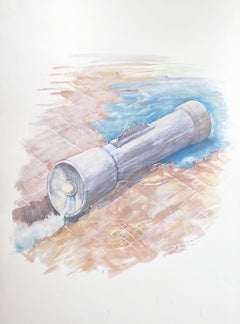
Colossal Flashlight in Place of Hoover Dam
By Claes Oldenburg
Located in Missouri, MO
Colossal Flashlight in Place of Hoover Dam, 1982 By Claes Oldenburg (Swedish, American, 1929-2022) Signed Lower Right Dated Middle Right Unframed: 23" x 22" Framed: 36.5" x 27.5" Whimsical sculpture of pop culture objects, many of them large and out-of-doors, is the signature work of Swedish-born Claes Oldenburg who became one of America's leading Pop Artists. He was born in Stockholm, Sweden. His father was a diplomat, and during Claes' childhood moved his family from Stockholm to a variety of locations including Chicago where the father was general consul of Sweden and where Oldenburg spent most of his childhood. He attended the Latin School of Chicago, and then Yale University where he studied literature and art history, graduating in 1950, the same year Claes became an American citizen. Returning to Chicago, he enrolled at the Art Institute of Chicago from 1952 to 1954 and also worked as a reporter at the City News Bureau. He opened his own studio, and in 1953, some of his satirical drawings were included in his first group show at the Club St. Elmo, Chicago. He also painted at the Oxbow School of Painting in Michigan. In 1956, he moved to New York where he drew and painted while working as a clerk in the art libraries of Cooper-Union Museum for the Arts of Decoration. Selling his first artworks during this time, he earned 25 dollars for five pieces. Oldenburg became friends with numerous artists including Jim Dine, Red Grooms and Allan Kaprow, who with his "Happenings" was especially influential on Oldenburg's interest in environmental art. Another growing interest was soft sculpture, and in 1957, he created a piece later titled Sausage, a free-hanging woman's stocking stuffed with newspaper. In 1959, he had his first one-man show, held at the Judson Gallery at Washington Square. He exhibited wood and newspaper sculpture and painted papier-mache objects. Some viewers of the exhibit commented how refreshing Oldenburg's pieces were in contrast to the Abstract Expressionism, a style which much dominated the art world. During this time, he was influenced by the whimsical work of French artist, Bernard Buffet, and he experimented with materials and images of the junk-filled streets of New York. In 1960, Oldenburg created his first Pop-Art Environments and Happenings in a mock store full of plaster objects. He also did Performances with a cast of colleagues including artists Lucas Samaras, Tom Wesselman, Carolee Schneemann, Oyvind Fahlstrom and Richard Artschwager, dealer Annina Nosei, critic Barbara Rose, and screenwriter Rudy Wurlitzer. His first wife (1960-1970) Pat Muschinski, who sewed many of his early soft sculptures, was a constant performer in his Happenings. This brash, often humorous, approach to art was at great odds with the prevailing sensibility that, by its nature, art dealt with "profound" expressions or ideas. In December 1961, he rented a store on Manhattan's Lower East Side to house "The Store," a month-long installation he had first presented at the Martha Jackson Gallery in New York. This installation was stocked with sculptures roughly in the form of consumer goods. Oldenburg moved to Los Angeles in 1963 "because it was the most opposite thing to New York I could think of". That same year, he conceived AUT OBO DYS, performed in the parking lot of the American Institute of Aeronautics and Astronautics in December 1963. In 1965 he turned his attention to drawings and projects for imaginary outdoor monuments. Initially these monuments took the form of small collages such as a crayon image of a fat, fuzzy teddy bear looming over the grassy fields of New York's Central Park (1965) and Lipsticks in Piccadilly Circus, London (1966). Oldenburg realized his first outdoor public monument in 1967; Placid Civic Monument took the form of a Conceptual performance/action behind the Metropolitan Museum of Art, New York, with a crew of gravediggers digging a 6-by-3-foot rectangular hole in the ground. Many of Oldenburg's large-scale sculptures of mundane objects elicited public ridicule before being embraced as whimsical, insightful, and fun additions to public outdoor art. From the early 1970s Oldenburg concentrated almost exclusively on public commissions. Between 1969 and 1977 Oldenburg had been in a relationship with Hannah Wilke, feminist artist, but in 1977 he married Coosje van Bruggen, a Dutch-American writer and art historian who became collaborator with him on his artwork. He had met her in 1970, when she curated an exhibition for him at the Stedelijk Museum in Amsterdam. Their first collaboration came when Oldenburg was commissioned to rework Trowel I, a 1971 sculpture of an oversize garden tool, for the grounds of the Kröller-Müller Museum in Otterlo, the Netherlands. Oldenburg has officially signed all the work he has done since 1981 with both his own name and van Bruggen's. In 1988, the two created the iconic Spoonbridge and Cherry sculpture for the Walker Art Center in Minneapolis, Minnesota that remains a staple of the Minneapolis Sculpture Garden as well as a classic image of the city. Typewriter Eraser...
Category

20th Century American Modern Missouri - Art

Materials

Paper, Lithograph

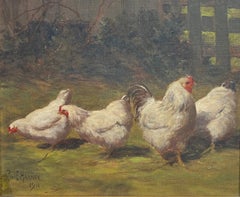
Four White Chickens
By Paul E. Harney Jr.
Located in Missouri, MO
Four White Chickens, 1911 By. Paul Harney (American, 1850-1915) Signed and Dated Lower Left Unframed: 10.25" x 12" Framed: 17" x 19" Paul Harney (1850-1915) Born in New Orleans on ...
Category

Early 20th Century American Realist Missouri - Art

Materials

Canvas, Oil

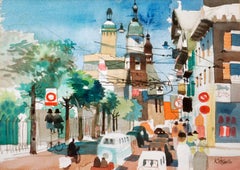
European City
By Dong Kingman
Located in Missouri, MO
European City By Dong Kingman (American, 1911-2000) Signed Lower Right Unframed: 15" x 22" Framed: 24" x 31" Born in Oakland, CA on March 31, 1911. When Kingman was five, his family moved to Hong Kong where he grew up and attended Lingnan Grammar School. The headmaster of the school, Szetu Wei, had studied painting in Paris and recognized his budding artistic talent. For several years he trained young Kingman in both oriental and occidental approaches to painting. Returning to San Francisco in 1929, Kingman became active in the local art scene and began painting scenes of the city. His first solo show at the San Francisco Art Center in 1936 brought immediate recognition. During the 1930s he spent five years working on commissions for the Federal Public Works of Art Project. During WWII he created maps and charts for the O.S.S. After the war Kingman settled in NYC and taught at Columbia University. His paintings were used as backdrops for the movie "Flower Drum Song...
Category

20th Century American Modern Missouri - Art

Materials

Watercolor

European City
European City
Price Upon Request
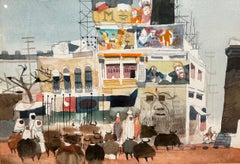
Old Dehli
By Dong Kingman
Located in Missouri, MO
Old Dehli By Dong Kingman (American, 1911-2000) Unframed: 15" x 22" Framed: 23" x 30" Born in Oakland, CA on March 31, 1911. When Kingman was five, his family moved to Hong Kong where he grew up and attended Lingnan Grammar School. The headmaster of the school, Szetu Wei, had studied painting in Paris and recognized his budding artistic talent. For several years he trained young Kingman in both oriental and occidental approaches to painting. Returning to San Francisco in 1929, Kingman became active in the local art scene and began painting scenes of the city. His first solo show at the San Francisco Art Center in 1936 brought immediate recognition. During the 1930s he spent five years working on commissions for the Federal Public Works of Art Project. During WWII he created maps and charts for the O.S.S. After the war Kingman settled in NYC and taught at Columbia University. His paintings were used as backdrops for the movie "Flower Drum Song...
Category

20th Century American Modern Missouri - Art

Materials

Watercolor

Old Dehli
Old Dehli
Price Upon Request
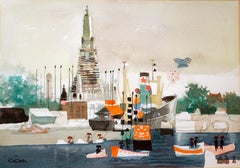
Bangkok
By Dong Kingman
Located in Missouri, MO
Bangkok By Dong Kingman (American, 1911-2000) Signed Lower Left Unframed: 15" x 22" Framed: 24" x 31" Born in Oakland, CA on March 31, 1911. When Kingman was five, his family moved to Hong Kong where he grew up and attended Lingnan Grammar School. The headmaster of the school, Szetu Wei, had studied painting in Paris and recognized his budding artistic talent. For several years he trained young Kingman in both oriental and occidental approaches to painting. Returning to San Francisco in 1929, Kingman became active in the local art scene and began painting scenes of the city. His first solo show at the San Francisco Art Center in 1936 brought immediate recognition. During the 1930s he spent five years working on commissions for the Federal Public Works of Art Project. During WWII he created maps and charts for the O.S.S. After the war Kingman settled in NYC and taught at Columbia University. His paintings were used as backdrops for the movie "Flower Drum Song...
Category

20th Century American Modern Missouri - Art

Materials

Watercolor

Bangkok
Bangkok
Price Upon Request
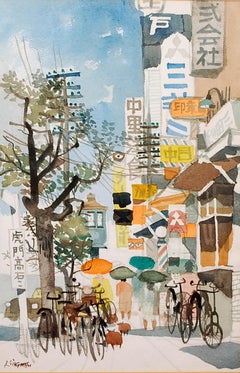
Asian City
By Dong Kingman
Located in Missouri, MO
Asian City By Dong Kingman (American, 1911-2000) Unframed: 22" x 15" Framed: 31" x 24" Signed Lower Left Born in Oakland, CA on March 31, 1911. When Kingman was five, his family moved to Hong Kong where he grew up and attended Lingnan Grammar School. The headmaster of the school, Szetu Wei, had studied painting in Paris and recognized his budding artistic talent. For several years he trained young Kingman in both oriental and occidental approaches to painting. Returning to San Francisco in 1929, Kingman became active in the local art scene and began painting scenes of the city. His first solo show at the San Francisco Art Center in 1936 brought immediate recognition. During the 1930s he spent five years working on commissions for the Federal Public Works of Art Project. During WWII he created maps and charts for the O.S.S. After the war Kingman settled in NYC and taught at Columbia University. His paintings were used as backdrops for the movie "Flower Drum Song...
Category

20th Century American Modern Missouri - Art

Materials

Watercolor

Asian City
Asian City
Price Upon Request

Still Thinking About These?

All Recently Viewed