Ohio - Prints and Multiples

to
4
392
132
83
11
36
Overall Width
to
Overall Height
to
94
82
79
52
29
14
9
9
8
5
1
21
18
15
14
13
36
108
454
56
34
21
56
38
23
52
77
86
42
18
23
357
273
23
148
74
66
41
39
38
22
17
16
15
15
12
12
12
11
9
9
9
8
8
201
169
106
69
52
64
22
51,014
36,896
Item Ships From: Ohio
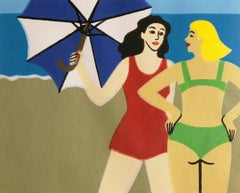
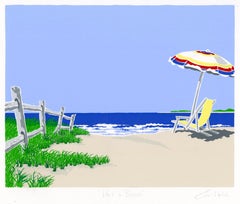
Beach Talk Scene, Late 20th Century Vibrant Print by Cleveland Artist
Located in Beachwood, OH
Gretchen Troibner (American, Born 1953) Beach Talk, 1997 Silkscreen on paper Signed and dated lower right, numbered 1/10 lower left 10 x 12.5 inches 20 x 22.5 inches, framed Gretche...
Category

1990s Ohio - Prints and Multiples

Materials

Screen

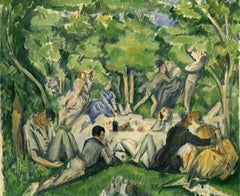
Dejeuner sur l Herbe
By After Paul Cezanne
Located in Fairlawn, OH
Dejeuner sur l'Herbe Lithograph, c. 1914 Edition: c. 100 Unsigned as issued by Vollard References And Exhibitions: Commissioned from Cezanne by Ambrose Vollard in the late 1890s Prin...
Category

1910s French School Ohio - Prints and Multiples

Materials

Lithograph

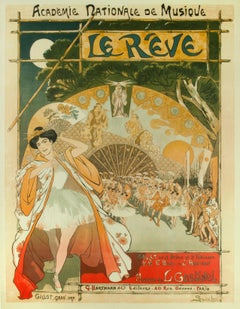
Le Rêve (The Dream)
By Théophile Alexandre Steinlen
Located in Fairlawn, OH
Le Rêve (The Dream) Color gillotage poster, 1890 Signed in the image lower right corner (see photo) This poster for a ballet at the Académie nationale de musique in Paris is typical ...
Category

1890s Impressionist Ohio - Prints and Multiples

Materials

Lithograph

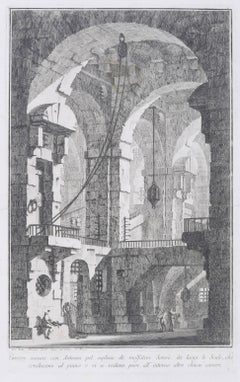
Carcere ascura
By Giovanni Battista Piranesi
Located in Fairlawn, OH
Carcere ascura Etching, 1743 Signed in the plate bottom left corner From: Prima Parte, 1743 Second edition: 1750-1778 Watermark: R 37-39 A lifetime impression printed during Piranesi’s life, before the plates are moved to Paris by his sons in the 1790’s This image foretells Piranesi's famous set, Carceri (Prisons) which is his next creative effort. Condition: Horizontal crease midway in the sheet associated with the manufacture of the paper. Visible watermark verso Small printer crease in the bottom right below the caption plate. Image size: 14 1/2 x 9 1/2 inches Reference: Robison 3 iii/VI Piranesi In Rome: Prima Parte di Architetture e Prospettive "Although Piranesi studied architecture in Venice, he never was able to find work in the field other than a few jobs involving remodeling in Rome. While Piranesi was struggling to support his architectural endeavors upon his arrival in Rome in 1740, he spent a short period of time in the studio of master painter Giovanni Battista Tiepolo (1696-1770) in addition to his apprenticeship with Giuseppe Vasi. The first production of Piranesi’s early years in Rome and a culmination of his training under Vasi, Tiepolo, and his uncle, was the Prima Parte di Architetture e Prospettive (1743). The Prima Parte was a collection of twelve etchings of imaginary temples, palaces, ruins, and a prison. During this time, Piranesi was still developing the unique style of etching he is known for today, and as such the Prima Parte differs significantly in technique compared to later works. In the Frontispiece of the Prima Parte, Piranesi’s lines are definite and exact with very little flow to them, designed in the form of traditional etching. The detail is immaculate, and yet perspective of the piece is oddly simple and familiar to the viewer. Piranesi’s technique employs miniscule markings and lines, intricately woven together to create a stippling effect. The Prima Parte, described as “rigid” by art historian Jonathan Scott, came to be seen as a stark contrast to his later sketches, which were much lighter and freer. Influenced by the style of Tiepolo, which epitomized the lightness and brightness of the Rococo period, Piranesi adopted some of the more painterly techniques of the masters he apprenticed under. Piranesi made the medium of etching appear as though it was a sketch or a painting, hence a “freer” and more fluid design in his later works. For example, the frontispiece of the Prima Parte read as an etching to Piranesi’s audience, but in his later vedute, the style of etching almost appears to be made of brushstrokes. Moreover, at the same time Piranesi was working on the Prima Parte, he aided the artist Giambattista Nolli. There is a small section of Nolli’s map...
Category

1740s Old Masters Ohio - Prints and Multiples

Materials

Etching

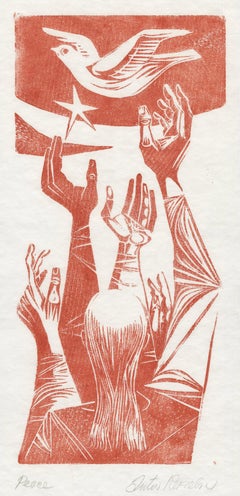
Peace
By Anton Refregier
Located in Fairlawn, OH
Peace Woodcut printed in orange red ink on japanese paper Signed and titled in pencil lower right (see photo) Titled lower left (see photo) Created along with an illustrated book project Song of Peace, 1950-1959. Condition: Excellent Image: 10 1/2 x 4 7/8" Sheet: 16 1/8 x 7"; Anton Refregier (March 20, 1905 – October 10, 1979) was a painter and muralist active in Works Progress Administration Federal Art Project commissions, and in teaching art. He was a Russian immigrant to the United States. Among his best-known works is his mural series The History of San Francisco, located in the Rincon Center in downtown San Francisco, California. It depicts the city's history across twenty seven panels that he painted from 1940 to 1948. Life and early career Refregier was born in Moscow and emigrated to the United States in 1920. After working various odd jobs in New York City, he earned a scholarship to the Rhode Island School of Design in 1921. After finishing school, Refregier moved back to New York in 1925. To earn a living, Refregier worked for interior decorators, creating replicas of François Boucher and Jean-Honoré Fragonard paintings...
Category

1950s American Modern Ohio - Prints and Multiples

Materials

Woodcut

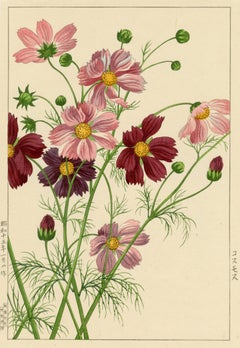
Cosmos
By Nishimura Hodo
Located in Fairlawn, OH
Cosmos Color woodcut with gauffage (embossing), January 1940 Unsigned (as usual) Publisher: Takemura Hideo (active Yokohama 1926-1940) Condition: excellent Image size: 14 3/8 x 9 5/8 inches Provenance: Robert O. Muller Estate Biography Hodo Nishimura...
Category

1940s Modern Ohio - Prints and Multiples

Materials

Woodcut

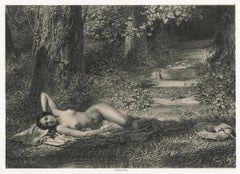
La Sortie du Bain
Located in Fairlawn, OH
Eugene Leroux (1807-1863) La Sortie Du Bain Lithograph, c. 1840 Signed in the lower left corner of the image (see photo) Inscribed "Imp Bertauts Paris" in bottom margin Inscribed "55...
Category

1840s Romantic Ohio - Prints and Multiples

Materials

Lithograph

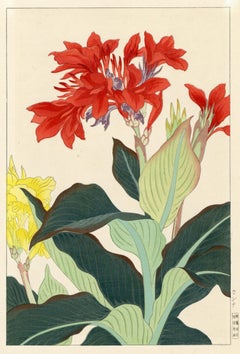
Canna Lily
By Nishimura Hodo
Located in Fairlawn, OH
Canna Lily Color woodcut, 1939 Unsigned (as usual) Publisher: Takemura Hideo (active Yokohama 1926-1939) Format: oban Condition: Excellent Image/Sheet size: 15 5/8 x 11 inches Provenance: Robert O. Muller There is little biographical data available about the Japanese printmaker Hodo Nishimura...
Category

1930s Modern Ohio - Prints and Multiples

Materials

Woodcut

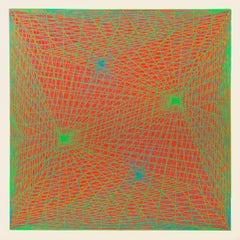
Red to Green Portal
By Richard Anuszkiewicz
Located in Fairlawn, OH
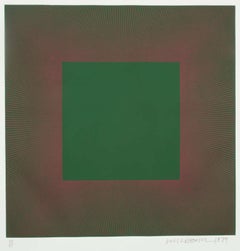
Red to Green Portal Aquatint, 1979 Signed and dated in pencil lower right (see photo) Edition: 95 (84/95), see photo Provenance: U.S. Representative James A. Leach, retired Condition...
Category

1970s Op Art Ohio - Prints and Multiples

Materials

Aquatint

New York Bouquet
By Childe Hassam
Located in Fairlawn, OH
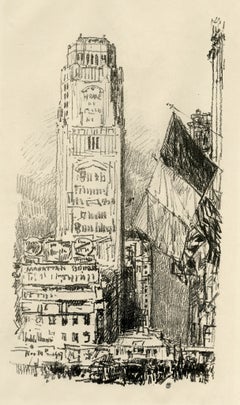
New York Bouquet Lithograph, 1917 Edition: 93 Signed with the artist's cipher in pencil lower right (see photo) This lithograph is inspired by Hassam's oil painting of the same title...
Category

1910s American Impressionist Ohio - Prints and Multiples

Materials

Lithograph

Man on His Back, Nude
By George Wesley Bellows
Located in Fairlawn, OH
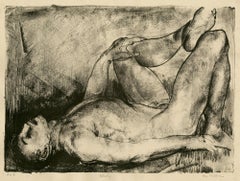
Man on His Back, Nude Lithograph, c. 1916 Signed by the artist lower right: Geo Bellows (see photo) Annotated bottom left: No. 3 by the artist (see photo) An unredorded trial proof b...
Category

1910s Ashcan School Ohio - Prints and Multiples

Materials

Lithograph

Taos Pueblo
By Anna Barry
Located in Fairlawn, OH
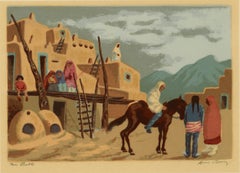
Taos Pueblo Screen print in colors, c. 1945 Signed and titled in pencil by the artist Printed in Taos Taos is the oldest continually inhabited city/village in North America. How old ...
Category

1940s American Modern Ohio - Prints and Multiples

Materials

Screen

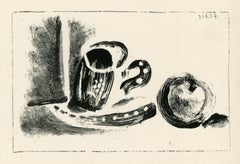
La Tasse et la Pomme (The Cup and the Apple)
By Pablo Picasso
Located in Fairlawn, OH
La Tasse et la Pomme (The Cup and the Apple) Wash drawing and gouache transferred to lithograph stone, 1947 One of four unsigned proofs Edition: a proof outside the edition of 50 pri...
Category

1940s French School Ohio - Prints and Multiples

Materials

Lithograph

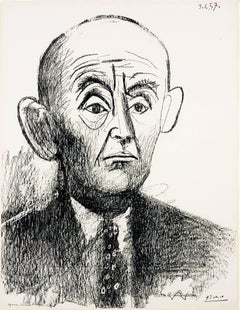
Portrait de D. H. Kahnweiler I
By Pablo Picasso
Located in Fairlawn, OH
Portrait de D. H. Kahnweiler I Lithograph, 1957 Estate Signature Stamp lower right Provenance: Picasso Estate Marina Picasso, her stamp on reverse Annotated in ...
Category

1950s French School Ohio - Prints and Multiples

Materials

Lithograph

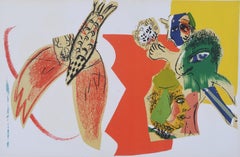
Reve de Cirque (Circus Dream)
By Marc Chagall
Located in Fairlawn, OH
Reve de Cirque (Circus Dream) Color lithograph, 1966 Unsigned (as issued) Pubished in XXe Siecle, Paris, Volume XXVI Publisher: Gualtieri di San Lazzaro (1904-1974). Printer: Mourlo...
Category

1960s French School Ohio - Prints and Multiples

Materials

Lithograph

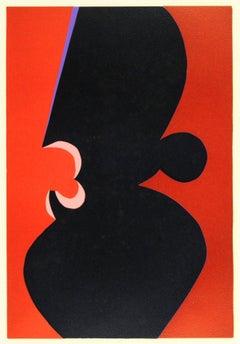
Déesse- Goddess
By André Verdet
Located in Fairlawn, OH
Déesse- Goddess Linocut in colors, 1972 Unsigned Stamped in ink on verso: "Imprimerie Arnéra" Archives/ Non Signé Watermark: Arches (see photo) An impression printed in black, purpl...
Category

1970s Abstract Ohio - Prints and Multiples

Materials

Linocut

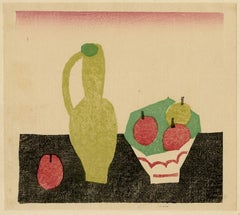
Seibutsu (Still Life) A Vase and Apples
Located in Fairlawn, OH
Seibutsu (Still Life) A Vase and Apples Color woodcut, 1925 Signed on the mount (support sheet) From: Dojin zasshi, Hanga Magazine, Volume 8, No. 8 Condition: Excellent Image/Sheet ...
Category

1920s Showa Ohio - Prints and Multiples

Materials

Woodcut

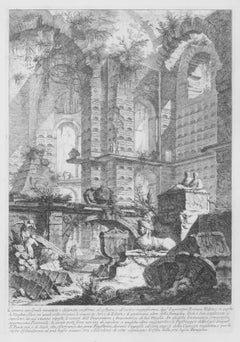
Camera sepolcrale
By Giovanni Battista Piranesi
Located in Fairlawn, OH
Camera sepolcrale Etching 1743 Signed in the bottom left corner From: Prima Parte, 1743 Second edition: 1750-1778 Watermark: R 37-39 A lifetime impression printed during Piranesi’s life, before the plates are moved to Paris by his sons in the 1790’s Condition: Excellent Image size: 14 5/8 x 9 3/4 inches Reference: Robison 20 iii/V Piranesi In Rome: Prima Parte di Architetture e Prospettive "Although Piranesi studied architecture in Venice, he never was able to find work in the field other than a few jobs involving remodeling in Rome. While Piranesi was struggling to support his architectural endeavors upon his arrival in Rome in 1740, he spent a short period of time in the studio of master painter Giovanni Battista Tiepolo (1696-1770) in addition to his apprenticeship with Giuseppe Vasi. The first production of Piranesi’s early years in Rome and a culmination of his training under Vasi, Tiepolo, and his uncle, was the Prima Parte di Architetture e Prospettive (1743). The Prima Parte was a collection of twelve etchings of imaginary temples, palaces, ruins, and a prison. During this time, Piranesi was still developing the unique style of etching he is known for today, and as such the Prima Parte differs significantly in technique compared to later works. In the Frontispiece of the Prima Parte, Piranesi’s lines are definite and exact with very little flow to them, designed in the form of traditional etching. The detail is immaculate, and yet perspective of the piece is oddly simple and familiar to the viewer. Piranesi’s technique employs miniscule markings and lines, intricately woven together to create a stippling effect. The Prima Parte, described as “rigid” by art historian Jonathan Scott, came to be seen as a stark contrast to his later sketches, which were much lighter and freer. Influenced by the style of Tiepolo, which epitomized the lightness and brightness of the Rococo period, Piranesi adopted some of the more painterly techniques of the masters he apprenticed under. Piranesi made the medium of etching appear as though it was a sketch or a painting, hence a “freer” and more fluid design in his later works. For example, the frontispiece of the Prima Parte read as an etching to Piranesi’s audience, but in his later vedute, the style of etching almost appears to be made of brushstrokes. Moreover, at the same time Piranesi was working on the Prima Parte, he aided the artist Giambattista Nolli. There is a small section of Nolli’s map...
Category

1740s Old Masters Ohio - Prints and Multiples

Materials

Etching

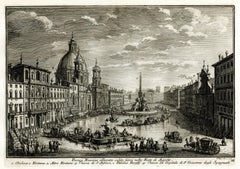
Piazza Navona allagata solito farsi nelle Feste di Agosto
By Giuseppe Vasi
Located in Fairlawn, OH
Piazza Navona allagata solito farsi nelle Feste di Agosto Etching, 1752 Signed in the plate lower right (see photo) From: Della Magnificenze di Roma Antica e Moderna ( The Magnificense of Ancient and Modern Rome) , (1747-1761) Volume II, The Main Squares and Obelisks, columns and other ornaments, 1752, Plate No. 26 Della Magnificenze di Roma Antica e Moderna_ (1747-61), a collection of 238 plates that was published in ten volumes. Vasi recorded all types of architecture and organized these images of contemporary Rome by subject, with each volume representing a different category of architecture. This comprehensive project provides one of the most complete views of eighteenth-century Rome Condition: Excellent Image/Plate size: 8 .25 x 12.63 inches Sheet size: 11 x 15 7/8 inches Vasi was Giovanni Battista Piranesi’s teacher. Piranesi (1720-1778) entered Vasi’s studio as an apprentice at age 20 c. 1740. Piranesi left Vasi’s employment after stabbing Vasi over the perception that Vasi was withholding secrets of the etching process. Giuseppe Vasi was an Italian engraver and painter born and trained in Sicily. He received a classical education in his hometown of Corleone and trained as a printmaker in nearby Palermo, perhaps under the tutelage of the etchers Antonino Bova and Francesco Cichè. He moved to Rome in 1736, already an established printmaker, and spent most of his career documenting the urban landscape of the city in engravings. Through his patron, the politically and culturally influential Cardinal Troiano Acquaviva d’Aragona, Vasi met other artists working in Rome, such as Sebastiano Conca, Ferdinando Fuga, and Luigi Vanvitelli. He was also influenced by his predecessors, including Giovanni Paolo Panini, Giovanni Battista Falda...
Category

1750s Old Masters Ohio - Prints and Multiples

Materials

Etching

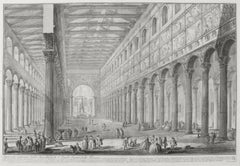
S. Paolo Fuori Le Mura (Vedute della Basilica di S. Paolo fuor della mura)
By Giovanni Battista Piranesi
Located in Fairlawn, OH
S. Paolo Fuori Le Mura (Vedute della Basilica di S. Paolo fuor della mura) Etching, 1748 From: Vedute di Roma, Plate 8 An early Roman printing, published by Bouchard e Gravier Watermark: Fleur de Lys in a double circle Signed in the plate Condition: Small margins as are common with Bouchard published impressions. Centerfold (as usual) Rich impression with good contrasts Plate/Image size: 15 7/8 x 24 1/8 inches Sheet size: 17 3/8 x 24 3/4 inches Reference: Focillon 723 Wilton-Ely 138 Hind 6 ii/VI, Bouchard e Gravier printing, before the price and numbers in later states This image is Piranesi’s second interior scene from the Vedute di Roma. The first interior is a less complex composition of the Interior of St. Peters which lacks the challenging perspective that the artist masters in this image. The Papal Basilica of St. Paul Outside the Walls...
Category

1740s Old Masters Ohio - Prints and Multiples

Materials

Etching

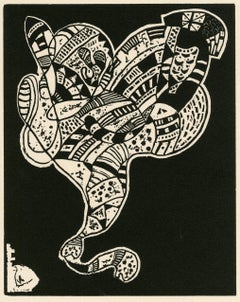
Plate 12
By Wassily Kandinsky
Located in Fairlawn, OH
Plate 12 From: 10 Origi, 1942 Signed in the block with the artist's initials lower left (printed) From: 10 Origin Not from the First edition 100, published by Allianz-Verlag, Zurich,...
Category

1970s Expressionist Ohio - Prints and Multiples

Materials

Woodcut

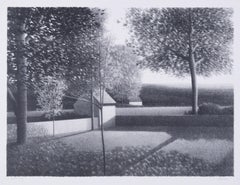
Backyard II
By Robert Kipniss
Located in Fairlawn, OH
Backyard II Lithograph, 1972 Signed lower right Signed lower right Annotated: Printer's Proof Reference: Karl Lunde 58 An impression is in the collection of the Art Institute of Chic...
Category

1970s American Realist Ohio - Prints and Multiples

Materials

Lithograph

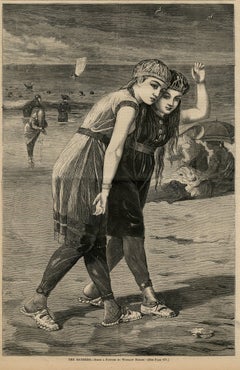
The Bathers
By Winslow Homer
Located in Fairlawn, OH
The Bathers Woodengraving, 1873 As published in Harper's Weekly, August 2, 1873 (p. 668) Provenance: Wunderlich & Co., Inc., New York, NY (Their stock no. 84.003.8 in pencil recto a...
Category

1870s American Realist Ohio - Prints and Multiples

Materials

Woodcut

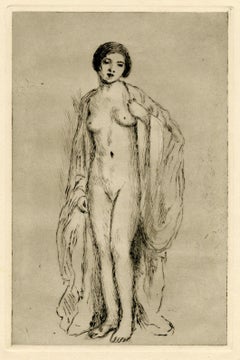
Standing Female Nude
By Frederick Carl Frieseke
Located in Fairlawn, OH
Standing Female Nude Drypoint, c. 1910 Unsigned Estate authentication on verso (see photo) Estate authentication verso by Frances Frieseke Kilmer (Mrs. Kenton Kilmer, 1914-1998) (see photo) Probably depicts the artist's wife, the artist's favorite model Extremely rare original drypoint by Frieseke Printed with selective inking to highlight the figure Condition: excellent Image/Plate size: 10 x 6 5/8 inches Frame size: 19 1/4 x 15 3/4 inches Provenance: Estate of the Artist By descent to his daughter Frances Hirschl & Adler Gallery, Stock No. APG 1106.3D-B (see photo) Biography Frederick Carl Frieseke was born on April 7, 1874, in Owosso, Michigan. After studying for a short while at the Art Institute of Chicago and the Art Students League in New York, Frieseke left for France in 1898, and almost all of his career was spent as an expatriate, with ties to the United States maintained through his New York dealer, William MacBeth, and by occasional visits to America. Following the pattern of innumerable young Americans, he enrolled at the Academie Julian where he studied with Benjamin Constant (1845-1902) and Jean-Paul Laurens (1838-1921). He appears to have had at least brief contact with and to have been influenced by James McNeill Whistler, who had recently opened his Academie Carmen in Paris. By 1900 Frieseke was spending summers in the town of Giverny, made famous by the residence of Monet and subsequently by other artists, among them many Americans. In 1906, the year after his marriage to Sarah O'Bryan, he leased a house once occupied by the American Impressionist Theodore Robinson. Although the property was adjacent to Monet's, Frieseke had only limited contact with the French master. Instead he apparently found Pierre Auguste Renoir the most influential of all the Impressionists. Frieseke's Giverny house and garden, as settings for a series of female models, provided nearly all of his subject matter for the next thirty years, although in 1930 he made a series of watercolors of Florida scenes remembered from his childhood and painted some Swiss landscapes. After World War I, the artist and his family settled in Normandy. Frieseke's career falls roughly into three stages. In the first, figures most clearly show his academic training and draughtsmanship. Gradually these evolve into the most common images of the next decade, comprised of loosely-applied blotches of bright color. The vast majority of these show their subjects in the garden, standing among the flowers, taking tea, or just basking in the sun. Others include models in colorful, light-filled interiors. In Frieseke's latest paintings, the figures very often appear indoors, their forms are given greater solidity, and the brushwork is less broken. At the height of his career, in the 1910s and early 1920s, Frieseke was perhaps the most popular of all living American artists. He received numerous awards and medals and saw his work purchased by private collectors and major museums. Decades after the initial introduction of Impressionism by Monet and his contemporaries, Frieseke assumed this style for his work, choosing to ignore the newer artistic movements of the early twentieth century. Nevertheless, his paintings were acclaimed in both the United States and in Europe. In 1904 he won a silver medal at the St. Louis Universal Exposition and a gold medal at Munich. He was elected a member of the Société National des Beaux Arts in 1908 and the National Academy of Design in 1912. Seventeen of his canvases were featured at the Venice Biennale in 1909 and he won the Grand Prize at the Panama-Pacific International Exposition in 1915. He was commissioned to execute several murals, including one for the New York store of John Wanamaker, one of his most loyal patrons. He died on August 28, 1939, at his home in Normandy, in the town of Le Mesnil sur Blangy. In the decades following his death, however, after artistic tastes had changed considerably, his work was nearly forgotten until it received renewed attention as interest in American Impressionism grew in the 1960s Courtesy National Gallery of Art, Washington Etchings by Frederick Carl Frieseke include The Balcony and Standing Female Nude. Frieseke was an American Impressionist painter who was popular in the 1910s and 1920s. Etchings by Frederick Carl Frieseke: The Balcony: An etching by Frieseke from 1904 Standing Female Nude Other paintings by Frederick Carl Frieseke: The Garden Parasol...
Category

1910s American Impressionist Ohio - Prints and Multiples

Materials

Drypoint

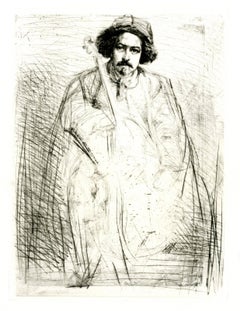
J. Becquet, Sculptor
By James Abbott McNeill Whistler
Located in Fairlawn, OH
J. Becquet, Sculptor Etching & drypoint, 1859 Unsigned as issued From: The Thames Set Printed on this Japanese tissue Rich impression Condition: Excellent Plate/Image size: 9 7/8 x 7...
Category

19th Century Impressionist Ohio - Prints and Multiples

Materials

Drypoint, Etching

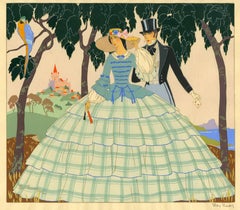
En Espagne
By Victor Max Ninon
Located in Fairlawn, OH
En Espagne Pochoir (silk screen) printed in colors Signed by the artist in pencil lower right The artist won a gold medal in Paris in 1925 for his pochoirs Condition: Excellent Image...
Category

1920s Art Deco Ohio - Prints and Multiples

Materials

Screen

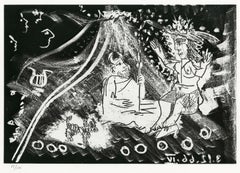
Plate IV, Le Cocu Magnifique
By Pablo Picasso
Located in Fairlawn, OH
Plate IV, Le Cocu Magnifique etching & aquatint, 1968 Unsigned on the print Signed on the portfolio justification page (see photo) From the unsigned edition of 200 impressions printe...
Category

1960s French School Ohio - Prints and Multiples

Materials

Aquatint

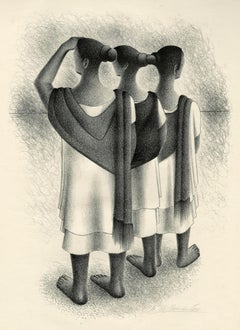
Mayan Trio
By Francisco Dosamantes
Located in Fairlawn, OH
Mayan Trio Lithograph, 1950 Signed in pencil lower right (see photo) Edition 250 for Associated American Artists Publsihed 1950 Reference: AAA Cat.: 1950‑05; 1958‑01 AAA Index 1087 Condition: Excellent Image size: 13 x 9 1/2 inches Francisco Dosamantes (b. October 4, 1911 - d. July 18.1986) was a Mexican artist and educator who is best known for is educational illustrations and graphic work against fascism. He was a founding member of the Taller de Gráfica Popular and the Salón de la Plástica Mexicana. Life Francisco Dosamantes was born in Mexico City on October 4, 1911. His father was Daniel Dosamantes who was a builder, interior decorator and painter. He was not registered into the civil registry until he was about twenty years old on March 6, 1939. His mother’s name is not listed on the certificate. As a child, he demonstrated a strong interest in drawing and color, influenced by his father and his uncle Juan. The Mexican Revolution occurred while he was a young child and he stated that he remembered events such as soldiers on horses charging as well as the execution of rural farm workers. He attended primary and high school in Mexico City but stated that his education was irregular and deficient. He then entered the Escuela Nacional de Artes Plásticas, where he studied for five years. Initially, however, he was disappointed with the inexperience of the young professors and he left for a short time to study on his own. During this time, some of the dissatisfied professors organized the 30 30 group against the academic system of the school and which whom he sympathized. The effort gained the attention of established artists such as Diego Rivera who intervened. He died on Mexico City on July 18, 1986 Career After he graduated, he worked with the cultural missions of the Secretaría de Educación Pública in Oaxaca, Michoacán, Guerrero, Colima, Coahuila and Chihuahua (state) from 1932 to 1937 then again from 1941 to 1945. He stated that this experience was vital to his conscience as he worked with rural farm workers and others he stated were worthy of dignity and respect, but victims of deceit and exploitation. When he returned to Mexico City, he gave classes in high schools from 1937 to 1941. In 1945 he founded and directed the Taller Escuela de Dibujo y Pintura “Joaquín Claussell” in Campeche, Campeche. Dosamantes was a politically and culturally active artist with most of his work and affiliations related to such. He was a member of the Liga de Escritores y Artistas Revolucionarios from 1934 to 1938. He was a founding member of the Taller de Gráfica Popular, serving as administrator in 1940 and remaining a member until his death except for one short hiatus. He created posters for conferences about fascism and Nazism such as Alemania bajo bayonetas (Germany under bayonets) in 1938. In 1940 he became the secretary general of the Sindicato de Maestros de Artes Plásticas. He was also a member of the Sociedad para el Impulso de las Artes Plásticas en 1948, a founding member of the Salón de la Plástica Mexicana in 1949 and a member of the Frente Nacional de Artes Plásticas from 1952. He painted a number of murals in rural areas of Mexico generally when he was there on cultural missions. His main mural is at the former home of José María Morelos in Carácuaro, Michoacán, but there are a number at various rural schools. These were all painted between 1941 and 1946. As a book illustrator he mostly worked for the Secretaría de Educación Pública working on books for literacy campaigns. He exhibited his works, which included engravings, oils, tempuras and lithographs in Mexico and abroad. His first individual exhibition was in 1930 at the Galeria de Arte Moderno in Mexico City. His major exhibitions include the Excelsior Gallery in Mexico City in 1932, various exhibitions in New York, Washington, Philadelphia and Los Angeles in 1937; the Nelson Gallery of Art in Kansas City, Missouri in late 1947, and the Gallery of Mexican Art in...
Category

1950s American Modern Ohio - Prints and Multiples

Materials

Lithograph

Untitled
By Henri Goetz
Located in Fairlawn, OH
Untitled Signed in pencil lower right (see photo) Edition: 25 (9/25) (see photo) Engraving, drypoint & carborundum Printed by the artist Condition: Excellent, slight residue on rever...
Category

1960s Abstract Expressionist Ohio - Prints and Multiples

Materials

Drypoint, Etching

untitled (Returning Home with Supplies)
By Gustav Hagermann
Located in Fairlawn, OH
untitled (Returning Home with Supplies) Signed in pencil by the artist lower right (see photo) Signed by his printer, Otto Felsing lower left ((see photo) Annotated in pencil: "In kupfer geschnitten von einen Lapplander" Printed by Otto Felsing, one of Germany's master printers of the era One of several engravings Hagemann made based upon actual drawings given to him by Laplanders. Gustav Hagemann was born on February 17, 1891, in Engelnstedt, Salzgitter, Germany. Hagemann attended high school in Wolfenbüttel and studied at the art school, in Kassel, Germany. After graduating as an art teacher, he became a trainee teacher in Torgau in Saxony. He fought in the First World War between 1914-1918. After the war he studied art from 1920...
Category

1930s Outsider Art Ohio - Prints and Multiples

Materials

Drypoint

Untitled (Still Life)
Located in Fairlawn, OH
Untitled (Still Life) Etching, aquatint and soft ground, 2001 Signed in pencil (see photo) Edition: 260 Published by the Print Club of Cleveland, Publication 80, 2002 Printed by Felix Harlan at Harlan and Weaver, New York William Bailey, Modernist Figurative Painter, Dies at 89 He swathed his nudes and still lifes of eggs, vases, bottles and bowls in a breathless, deceptively serene atmosphere heavy with mystery. The painter William Bailey in 2009. He was never given a career survey in a major museum, but his influence, particulary on students at Yale, was deep.Credit...Ford Bailey By William Grimes for the New York Times April 18, 2020 William Bailey, whose pristine, idealized still lifes and female nudes made him one of the leading figures in the return of figurative art in the 1980s, died on April 13 at his home in Branford, Conn. He was 89. His death was confirmed by his daughter, Alix Bailey. Beyond his painting, Mr. Bailey influenced generations of students in his many years as a teacher at the Yale School of Art. In some of his best-known work, Mr. Bailey arranged simple objects — the eggs, bowls, bottles and vases that he once called “my repertory company” — along a severe horizontal shelf, or on a plain table, swathing them in a breathless, deceptively serene atmosphere heavy with mystery. His muted ochres, grays and powdery blues conjured up a still, timeless world inhabited by Platonic forms, recognizable but uncanny, in part because he painted from imagination rather than “They are at once vividly real and objects in dream, and it is the poetry of this double life that elevates all this humble crockery to the realm of pictorial romance,” Hilton Kramer wrote in The New York Times in 1979. Mr. Bailey’s female figures, some clothed in a simple shift or robe and others partly or entirely nude, are disconcertingly impassive, implacable and unreadable, fleshly presences breathing an otherworldly air. The critic Mark Stevens, writing in Newsweek in 1982, credited Mr. Bailey with helping to “restore representational art to a position of consequence in modern painting.” But his version of representation was entirely idiosyncratic, seemingly traditional but in fact “a modernism so contrarian,” the artist Alexi Worth wrote in a catalog essay for the Betty Cuningham Gallery in 2010, “that it feels, despite its historical sophistication, almost like a brand of outsider art.” William Harrison Bailey...
Category

Early 2000s Contemporary Ohio - Prints and Multiples

Materials

Etching

Ruine di Sepolcro antico
By Giovanni Battista Piranesi
Located in Fairlawn, OH
Ruine di Sepolcro antico Etching, 1743 Signed in the plate bottomleft in the caaption plate From: Prima Parte, 1743 Second edition: 1750-1778 Watermark: R 37-39 A lifetime impression printed during Piranesi’s life, before the plates are moved to Paris by his sons in the 1790’s Coniditon: Excellent/Very good Image size: 14 5/8 x 9 3/4 inches Reference: Robison 17 iii/V Piranesi In Rome: Prima Parte di Architetture e Prospettive "Although Piranesi studied architecture in Venice, he never was able to find work in the field other than a few jobs involving remodeling in Rome. While Piranesi was struggling to support his architectural endeavors upon his arrival in Rome in 1740, he spent a short period of time in the studio of master painter Giovanni Battista Tiepolo (1696-1770) in addition to his apprenticeship with Giuseppe Vasi. The first production of Piranesi’s early years in Rome and a culmination of his training under Vasi, Tiepolo, and his uncle, was the Prima Parte di Architetture e Prospettive (1743). The Prima Parte was a collection of twelve etchings of imaginary temples, palaces, ruins, and a prison. During this time, Piranesi was still developing the unique style of etching he is known for today, and as such the Prima Parte differs significantly in technique compared to later works. In the Frontispiece of the Prima Parte, Piranesi’s lines are definite and exact with very little flow to them, designed in the form of traditional etching. The detail is immaculate, and yet perspective of the piece is oddly simple and familiar to the viewer. Piranesi’s technique employs miniscule markings and lines, intricately woven together to create a stippling effect. The Prima Parte, described as “rigid” by art historian Jonathan Scott, came to be seen as a stark contrast to his later sketches, which were much lighter and freer. Influenced by the style of Tiepolo, which epitomized the lightness and brightness of the Rococo period, Piranesi adopted some of the more painterly techniques of the masters he apprenticed under. Piranesi made the medium of etching appear as though it was a sketch or a painting, hence a “freer” and more fluid design in his later works. For example, the frontispiece of the Prima Parte read as an etching to Piranesi’s audience, but in his later vedute, the style of etching almost appears to be made of brushstrokes. Moreover, at the same time Piranesi was working on the Prima Parte, he aided the artist Giambattista Nolli. There is a small section of Nolli’s map...
Category

1740s Old Masters Ohio - Prints and Multiples

Materials

Etching

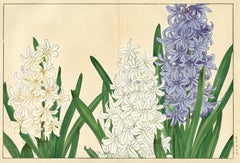
Hyacinth
Located in Fairlawn, OH
Hyacinth Color woodcut, 1917-1918 Unsigned From: Seiyo Kusabana Zufu (Illustrations of Western Plants and Flowers) 1st edition Publisher: Unsodo, Kyoto Condition: Centerfold...
Category

1910s Other Art Style Ohio - Prints and Multiples

Materials

Woodcut

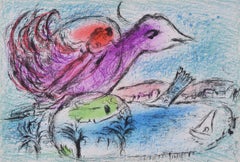
La Baie, Double Page du No 132 de Derriere le Miroir
By Marc Chagall
Located in Fairlawn, OH
La Baie, Double Page du No 132 de Derriere le Miroir Color lithograph, 1962 Unsigned as issued in DLM From: "Derriere le Miroir" (Behind the Miroir) No. 132 Printed by Mourlot, Par...
Category

1960s French School Ohio - Prints and Multiples

Materials

Lithograph

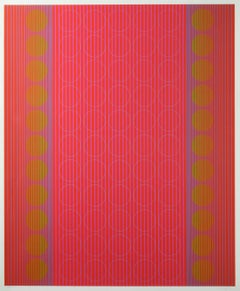
Centered Rings
By Julian Stanczak
Located in Fairlawn, OH
Centered Rings Screen print, 1971 Signed and numbered in pencil From: Twelve Progressions Commissioned by Martha Jackson Graphics Printer: Domberger, Stuttgart, Germany Their drystam...
Category

1970s Op Art Ohio - Prints and Multiples

Materials

Screen

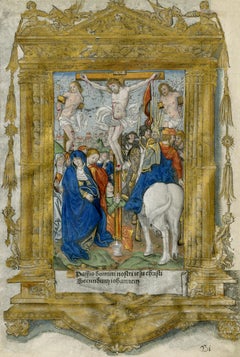
Crucifixion
Located in Fairlawn, OH
Jean Pichore workshop, 1500-1541 Crucifixion Metal cut engraving printed on vellum with vintage hand coloring c. 1500-1541 Miniature (image) size: 4 3/4 x 3 1/8" Including decorated ...
Category

16th Century Old Masters Ohio - Prints and Multiples

Materials

Engraving

Woman s Head - Woman s Head in Profile (left) (Havard)
By Elie Nadelman
Located in Fairlawn, OH
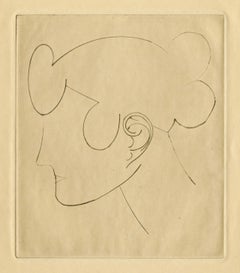
Woman's Head - Woman's Head in Profile (left) (Havard) Drypoint, 1920 Unsigned (as issued) From: The Drypoints of Elie Nadelman, 21 unpublished prints by the sculptor, proof from th...
Category

1920s American Modern Ohio - Prints and Multiples

Materials

Drypoint

The Beach at Long Branch
By Winslow Homer
Located in Fairlawn, OH
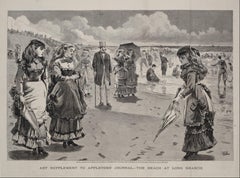
The Beach at Long Branch Woodengraving, 1869 Signed in the block lower right "WH" ( see photo ) Published in Appleton’s Journal of Literature, Science and Art, August 21, 1869 Condit...
Category

1860s American Realist Ohio - Prints and Multiples

Materials

Engraving

Claude Renoir, la Tete Baisee (Claude Renoir, Head Lowered)
By Pierre-Auguste Renoir
Located in Fairlawn, OH
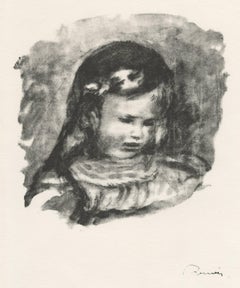
Claude Renoir, la Tete Baisee (Claude Renoir, Head Lowered) Lithograph, 1904 Edition 1,000, this one of 950 on wove paper with the stamp signature (there were also 50 impressions pri...
Category

Early 1900s Impressionist Ohio - Prints and Multiples

Materials

Lithograph

Neue Träume von Glück (New Dreams of Happiness)
By Max Klinger
Located in Fairlawn, OH
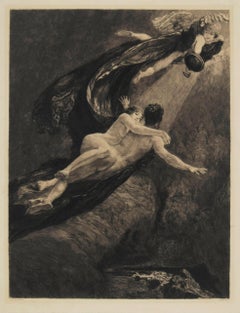
Neue Träume von Glück (New Dreams of Happiness) Etching on heavy laid paper without watermark, 1887 Unsigned, as usual From: Eine Liebe (Opus X) [A Love (Opus X)], Plate No. 7 fourth...
Category

1880s Expressionist Ohio - Prints and Multiples

Materials

Etching

La Toilette
By Louis Legrand
Located in Fairlawn, OH
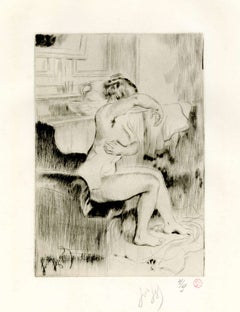
La Toilette Drypoint, 1908 Signed and numbered in pencil by the artist (see photos) Edition: 65 this state (35/65) Published by Gustave Pellet (1859-1919),...
Category

Early 1900s Art Nouveau Ohio - Prints and Multiples

Materials

Drypoint

Lithographie originale our XXe siecle
By Hans Hartung
Located in Fairlawn, OH
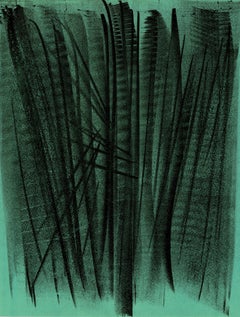
Lithographie originale our XXe siecle Color lithograph, 1964 Unsigned (as issued) From: XXe siecle, Permanence du Sacre, No. 24 Publisher: G. di San Lazzaro, Paris Printed by Mourlot...
Category

1960s Abstract Ohio - Prints and Multiples

Materials

Lithograph

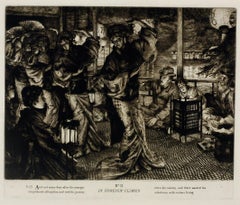
L enfant prodigue: en pays etranger (The Prodigal Son: In Foreign Climes)
By James Jacques Joseph Tissot
Located in Fairlawn, OH
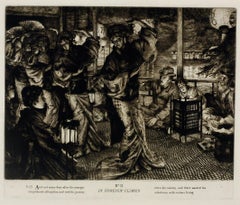
L'enfant prodigue: en pays etranger (The Prodigal Son: In Foreign Climes) Etching, 1881 Unsigned (as usual for this state) From: L'enfant prodigue, (The Prodigal Son, five plates) Ed...
Category

1880s Impressionist Ohio - Prints and Multiples

Materials

Etching

Still Life No. 5
By William H. Bailey
Located in Fairlawn, OH
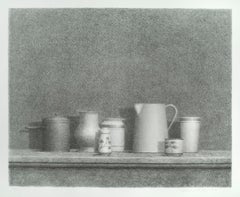
Still Life No. 5 Lithograph, 1978 Signed, dated and numbered in pencil (see photos) Edition: 50 (24/50) Published by Solo Press, New York, 1978 Printer: Judith Solodkin, first femal ...
Category

1970s American Realist Ohio - Prints and Multiples

Materials

Lithograph

Constellation
By Roy Ahlgren
Located in Fairlawn, OH
Constellation Silkscreen in colors, 1969 Signed, dated, titled and numbered in pencil Edition: 100 (56/100) Condition: Excellent Image Size: 17 x 17 inches Sheet size: 20 x 20 inch...
Category

1960s Abstract Geometric Ohio - Prints and Multiples

Materials

Screen

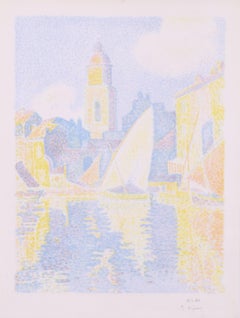
Saint-Tropez-Le Port
By Paul Signac
Located in Fairlawn, OH
Saint-Tropez-Le Port Color lithograph, 1897-1898 Signed in pencil lower right (see photo) Numbered in pencil lower right: No. 68 (see photo) From: Album des Peintres-Gravures, 1898 ...
Category

1890s Post-Impressionist Ohio - Prints and Multiples

Materials

Lithograph

L enfant prodigue: en pays etranger (The Prodigal Son: In Foreign Climes)
By James Jacques Joseph Tissot
Located in Fairlawn, OH
L'enfant prodigue: en pays etranger (The Prodigal Son: In Foreign Climes) Etching, 1881 Unsigned (as usual for this state) From: L'enfant prodigue, (The Prodigal Son, five plates) Ed...
Category

1880s Impressionist Ohio - Prints and Multiples

Materials

Etching

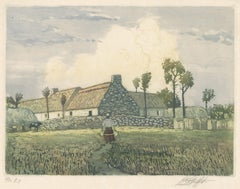
Brittany Landscape with Figure
By Louis Oscar Griffith
Located in Fairlawn, OH
Brittany Landscape with Figure Etching & color aquatint, c. 1920 Signed lower right (see photo) Numbered lower left: "No. 21" (see photo) An early color etching by the artist, based ...
Category

1920s American Impressionist Ohio - Prints and Multiples

Materials

Aquatint

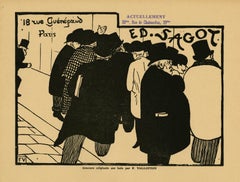
Les Amateurs d Estampes
By Félix Vallotton
Located in Fairlawn, OH
Les Amateurs d'Estampes Woodcut, 1892 Initialed in the plate lower left Titled below image: "Gravure originale sur bois par F. Vallotton" Reference: Valloton and Goerg 107c, with the...
Category

1890s Post-Impressionist Ohio - Prints and Multiples

Materials

Woodcut

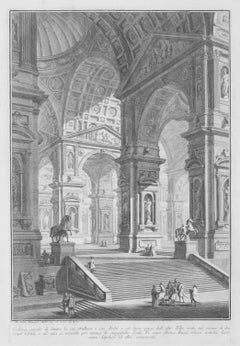
Galleria grande di Statue
By Giovanni Battista Piranesi
Located in Fairlawn, OH
Galleria grande di Statue Etching, 1743 Signed lower left corner of the plate From: Prima Parte, 1743 Second edition: 1750-1778 Watermark: R 37-39 A lifetime impression printed during Piranesi’s life, before the plates are moved to Paris by his sons in the 1790’s Condition: Excellent Image size: 14 5/8 x 9 3/4 inches Reference: Robison 2 iii/V Piranesi In Rome: Prima Parte di Architetture e Prospettive "Although Piranesi studied architecture in Venice, he never was able to find work in the field other than a few jobs involving remodeling in Rome. While Piranesi was struggling to support his architectural endeavors upon his arrival in Rome in 1740, he spent a short period of time in the studio of master painter Giovanni Battista Tiepolo (1696-1770) in addition to his apprenticeship with Giuseppe Vasi. The first production of Piranesi’s early years in Rome and a culmination of his training under Vasi, Tiepolo, and his uncle, was the Prima Parte di Architetture e Prospettive (1743). The Prima Parte was a collection of twelve etchings of imaginary temples, palaces, ruins, and a prison. During this time, Piranesi was still developing the unique style of etching he is known for today, and as such the Prima Parte differs significantly in technique compared to later works. In the Frontispiece of the Prima Parte, Piranesi’s lines are definite and exact with very little flow to them, designed in the form of traditional etching. The detail is immaculate, and yet perspective of the piece is oddly simple and familiar to the viewer. Piranesi’s technique employs miniscule markings and lines, intricately woven together to create a stippling effect. The Prima Parte, described as “rigid” by art historian Jonathan Scott, came to be seen as a stark contrast to his later sketches, which were much lighter and freer. Influenced by the style of Tiepolo, which epitomized the lightness and brightness of the Rococo period, Piranesi adopted some of the more painterly techniques of the masters he apprenticed under. Piranesi made the medium of etching appear as though it was a sketch or a painting, hence a “freer” and more fluid design in his later works. For example, the frontispiece of the Prima Parte read as an etching to Piranesi’s audience, but in his later vedute, the style of etching almost appears to be made of brushstrokes. Moreover, at the same time Piranesi was working on the Prima Parte, he aided the artist Giambattista Nolli. There is a small section of Nolli’s map...
Category

1740s Old Masters Ohio - Prints and Multiples

Materials

Etching

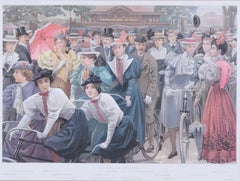
Au Bois De Boulogne (illustrating the congregation of French nobility outside
Located in Fairlawn, OH
Au Bois De Boulogne (illustrating the congregation of French nobility outside the Chalets du Cycle Chromolithograph, 1897 Signed in the plate lower right corner From the Special Supp...
Category

1890s Art Nouveau Ohio - Prints and Multiples

Materials

Lithograph

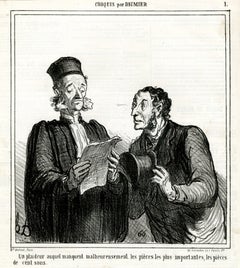
Un plaideur auquel manquent malheureusement
By Honoré Daumier
Located in Fairlawn, OH
Un plaideur auquel manquent malheureusement les pieces les plus importantes, les pieces de cent sous. (A litigant who unfortunately doesn't have the most important details to success..dollars and cents) Series: Croquis par Daumier, No. 1 As published in Le Charivari, Paris, October 20, 1865. Croquis (Sketches by Daumier) is a series of 4 prints...
Category

1860s Romantic Ohio - Prints and Multiples

Materials

Lithograph

Echo in Grey
By Adja Yunkers
Located in Fairlawn, OH
Echo in Grey Mixed media intaglio with embossing, c. 1980's Signed and numbered in pencil (see photo) Edition: 25 (24/25) Condition: Soft handling issues in top and bottom margin. Do...
Category

1980s Abstract Ohio - Prints and Multiples

Materials

Mixed Media

Life s a Beach
By Eric Holch
Located in Fairlawn, OH
Life's a Beach Screen print, 1980's Signed lower right (see photo) Mr. Holch’s formal art training began at Trinity-Pawling School where he won their first annual art award. He conti...
Category

1980s Contemporary Ohio - Prints and Multiples

Materials

Screen

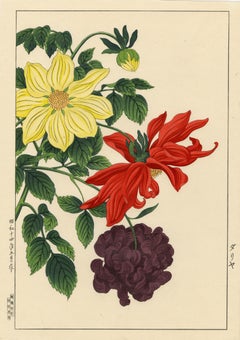
Dahlias
By Nishimura Hodo
Located in Fairlawn, OH
Dahlias Color woodcut, 1939 Unsigned (as usual) Format: oban Publisher: Takemura Hideo Stamp verso: "Made in Japan" Provenance: Robert O. Muller Biography Hodo Nishimura...
Category

1930s Modern Ohio - Prints and Multiples

Materials

Woodcut

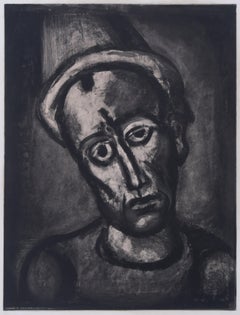
Qui ne se grime pas? (Who does not wear a mask?)
By Georges Rouault
Located in Fairlawn, OH
Qui ne se grime pas? (Who does not wear a mask?) Aquatint, roulette, drypoint, acid bite, and scorper, 1923 Signed in the plate loweer left (see photo) Dated in pencil Series: Miser...
Category

1920s French School Ohio - Prints and Multiples

Materials

Aquatint

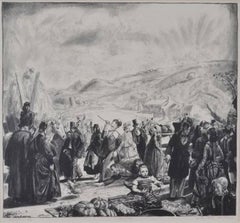
The Irish Fair
By George Wesley Bellows
Located in Fairlawn, OH
Irish Fair Lithograph, 1923 Signed and numbered in pencil by the artist (see photo) Titled "Irish Fair" by the artist in pencil Edition: 84 Housed in an archival frame with acid free matting (see photo) Provenance: Estate of the artist, Bellows Family Trust H.V. Allison & Company (label) Private Collection, Columbus References And Exhibitions: Reference: Mason 153 Note: An illustration commissioned by The Century Company for Don Byrne's novel The Wind Bloweth Image: 18 7/8 x 21 3/8" Frame: 29 1/2 x 30 1/2" “Eleven on a hot July morning, and the little town...
Category

1920s Ashcan School Ohio - Prints and Multiples

Materials

Lithograph

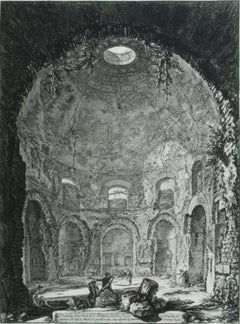
The So-Called Tempio della Tosse, Near Tivoli. Interior Upright
By Giovanni Battista Piranesi
Located in Fairlawn, OH
The So-Called Tempio della Tosse, Near Tivoli. Interior Upright (Veduta interna del Tempio della Tosse) "Temple of the Cough" Etching, 1764 Signed in the plate From: Vedute di Roma...
Category

1760s Old Masters Ohio - Prints and Multiples

Materials

Etching

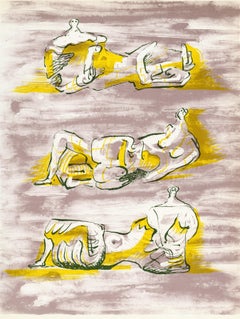
Figure Allonges
By Henry Moore
Located in Fairlawn, OH
Figures Allonges Color Lithograph, 1971 Unsigned (as usual) Published: XXe Siecle, Volume 33, 1971 Published by G. di San Lazzaro for A. Maeght, Paris Printed by Mourlot, Paris Editi...
Category

1970s Modern Ohio - Prints and Multiples

Materials

Lithograph

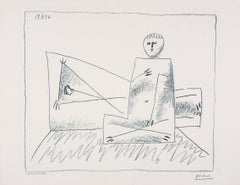
Homme couche et femme accroupie
By Pablo Picasso
Located in Fairlawn, OH
Homme couche et femme accroupie Lithograph on Arches paper, 1956 Signature stamp lower right )see photo) Annotated in pencil lower left: "epreuve d'artiste" (see p[hoto) Edition: 50...
Category

1950s Cubist Ohio - Prints and Multiples

Materials

Lithograph

Still Thinking About These?

All Recently Viewed