South Carolina - Prints and Multiples

to
43
323
25
1
3
Overall Width
to
Overall Height
to
151
24
18
16
13
12
7
6
1
16
13
12
12
9
10
15
324
3
4
14
76
86
75
11
11
14
5
2
6
190
154
2
172
88
83
64
47
45
25
23
22
16
16
15
14
11
10
9
9
9
8
8
105
86
74
50
28
1
51,012
36,894
Item Ships From: South Carolina
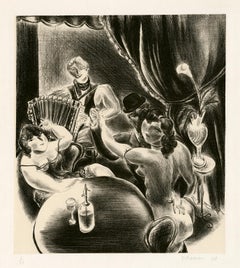
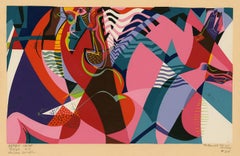
Dancing — les années folles Paris Masterwork, 1928
By Yasuo Kuniyoshi
Located in Myrtle Beach, SC
Yasuo Kuniyoshi, 'Dancing', lithograph, 1928, edition 30, Davis L-29. Signed, dated, and numbered '8/30' in pencil. A superb, richly-inked impression, printed on cream chine appliqué on heavy off-white wove backing; the full sheet with wide margins (1 3/8 to 4 7/8 inches), in excellent condition. Printed by Desjobert, Paris. Scarce. Matted to museum standards, unframed. Impressions of this work are in the collections of the Museum of Modern Art, Whitney Museum of Modern Art, and Yasuo Kuniyoshi Museum (Japan). ABOUT THIS WORK The French economy boomed from 1921 until the Great Depression reached Paris in 1931. This period called 'Les années folles' or the 'Crazy Years', saw Paris reestablished as a capital of art, music, literature, and cinema. Paris in the 1920s and 1930s was the home and meeting place of some of the world's most prominent painters, sculptors, composers, dancers, poets, and writers. For those in the arts, it was, as Ernest Hemingway described it, "A moveable feast". Paris was home to an exceptional number of galleries, art dealers, and a network of wealthy patrons who offered commissions and held salons. Pablo Picasso, perhaps the most famous artist in Paris, shared renown with a remarkable group of others, including the Romanian sculptor Constantin Brâncuși, the Belgian René Magritte, the Italian Amedeo Modigliani, the Russian émigré Marc Chagall, the Catalan and Spanish artists Salvador Dalí, Joan Miró, Juan Gris, and the German surrealist...
Category

1920s American Modern South Carolina - Prints and Multiples

Materials

Lithograph

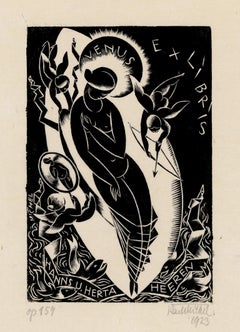
Venus — German Expressionism
By Karl Michel
Located in Myrtle Beach, SC
Karl Michel, 'Venus, Ex Libris - Hanns U. Herta Heeren', woodcut, 1923, edition not stated but small. Signed, dated, and numbered 'op.154' in pencil. Signed in the block, lower left. A fine impression, on cream Japan paper, with full margins (15/16 to 2 11/16 inches), in good condition. Printed by the artist. Matted to museum standards (unframed). . Translation: Venus Ex Libris for Hanns and Herta Heeren. Image size 5 15/16 x 4 inches (156 x 102 mm); sheet size 9 5/8 x 6 inches (245 x 152 mm). ABOUT THE ARTIST Karl Michel (1889-1984) was a noted graphic designer and expressionist printmaker during Germany's pre-Nazi Weimar Republic (1919-1933). Michel’s work was the subject of a feature article in the influential German graphic design magazine Das Plakat (The Poster) in 1920. An anti-war advocate, Michel created a suite of 12 wood engravings depicting his impressions of the humanitarian toll of WWII entitled ‘Humanitas’ (Humanity). The German publishing house Greifenverlag published the series in a reduced folio of unsigned prints. Michel’s graphic work is held in the permanent collections of the Auckland War Memorial Museum (New Zealand), Frederikshavn Kunstmuseum & Exlibrissamling (Denmark), Museum of Applied Arts (Budapest), The Robert Gore Rifkind Center for German Expressionist Studies at the Los Angeles County Museum of Art, and the German Expressionism...
Category

1920s Expressionist South Carolina - Prints and Multiples

Materials

Woodcut

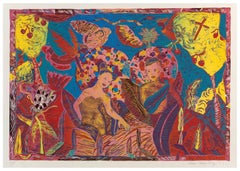
The Garden — Celebrated Contemporary African American Artist
By Margo Humphrey
Located in Myrtle Beach, SC
Margo Humphrey, 'The Garden (Adam and Eve)', reductive color woodcut, 1989. Signed, dated, and annotated 'A/P' in pencil. Signed and dated in the image, lower right. A fine, richly-inked, artist's proof impression, with fresh, vivid colors, on BFK Rives, heavy, off-white wove paper; the full sheet with margins (1 to 1 3/8 inches), in excellent condition. Archivally sleeved, unmatted. Scarce. Image size 27 1/4 x 39 1/8 inches (692 x 994 mm); sheet size 29 1/2 x 42 inches (749 x 1,067 mm). ABOUT THIS WORK "Humphrey continued to reinterpret stories from the Bible with African American figures. In 1989 she published the woodcut print 'The Garden' at Magnolia Editions in Oakland, CA. For this rare foray into relief printmaking, she employed the reductive method, which uses only one block that is successively carved for each color segment, reducing the block with each cutting. Technically challenging, this lush and elaborate print is a testament to Humphrey’s skills as a printmaker. A youthful Adam and Eve are depicted in a luxuriant tropical landscape. Here, Humphrey chooses not to include the traditional symbols of humanity’s downfall but instead portrays them as being protected by angels in an atmosphere of idyllic bounty. ...Although Humphrey challenges traditional representation of Christian themes, her images are not iconoclastic but present a broader, more inclusive engagement with religious spirituality." — Adrienne L. Childs, 'Margo Humphrey, The David C. Driskell Series of African American Art: Volume VII,' Pomegranate Communications, Inc., 2009, page 71. ABOUT THE ARTIST American printmaker, illustrator, and art teacher Margo Humphrey was born in Oakland, California, in 1942. She earned a BFA in Painting and Printmaking from the California College of Arts and Crafts and a Master of Fine Arts degree in Printmaking from Stanford University. Humphrey began teaching in 1973 at the University of California Santa Cruz and has since taught at the University of Texas at San Antonio, the San Francisco Art Institute, and the School of the Art Institute of Chicago. She has also taught at the University of the South Pacific in Suva, Fiji; Yaba Technological Institute of Fine Art, Ekoi Island, Nigeria; the University of Benin in Benin City, Nigeria; the Margaret Trowell School of Fine Art in Kampala, Uganda, and the Fine Art School of the National Gallery of Art, Harare, Zimbabwe. In 1989, she was appointed Department Head of Printmaking at the University of Maryland in College Park. Humphrey has worked in lithography, monoprint, and woodcut with significant printmaking ateliers, including the Rutgers Center for Innovative Print and Paper, the Bob Blackburn Printmaking Workshop, and the Tamarind Institute in New Mexico. She was one of the earliest African-American woman artists to distinguish herself as a lithographer in a highly technical, male-dominated profession and was the first to have her prints published by Tamarind in 1974. Humphrey’s imagery combines historical perspective, autobiography, and fantasy to illuminate her experience as an African American woman. Bold, saturated color, animated figures, and syncopated rhythmic arrangements are hallmarks of Humphrey's oeuvre. Though Humphrey labels her distinctive style "sophisticated naive," the narrative complexity and technical skill of her works attest to her artistic virtuosity. Joyful, expressive, and at times humorous, her works offer engaging commentary on the presumptions of American culture and myth while embracing her personal vision of authenticity and spirituality. She developed her 1987 work The Last Bar-B-Que, a vividly colored transformation of the Last Supper, following a three-year period during which she examined portrayals of the iconic subject by artists from Pietro Lorenzetti to Emil Nolde. Her narrative work The Garden, a monumentally scaled reductive woodcut, is a further example of an archetypal subject—Adam and Eve in the Garden of Eden—debunked and rendered with fresh, life-affirming vibrancy. Since her first solo exhibition in 1965, Humphrey’s works have been exhibited internationally. They are held in major institutions, including the Museum of Modern Art, The Smithsonian American Art Museum, the Philadelphia Museum of Art, the Hampton University Museum, the Victoria and Albert Museum (London), the Museum of Modern Art, Rio de Janeiro, and the National Gallery of Modern Art, Lagos. In 1996, she was invited to be part of the World Printmaking Survey at the Museum of Modern Art, New York. In 2011, Hampton University Museum mounted a 45-year retrospective of Humphrey’s work Her Story: Margo Humphrey Lithographs and Works on Paper, jointly curated by Robert E. Steele, executive director of the David Driskell...
Category

1980s Expressionist South Carolina - Prints and Multiples

Materials

Woodcut

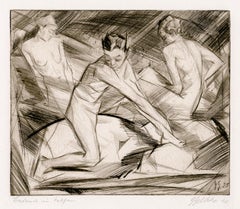
Women Bathing — German Expressionism, Nudes, 1920
Located in Myrtle Beach, SC
Georg Gelbke, Untitled (Women Bathing), etching, 1920. Signed and dated in pencil. Initialed and dated in the plate, lower right. A fine, richly-inked im...
Category

1920s Expressionist South Carolina - Prints and Multiples

Materials

Etching

Sylvan Maze — Mid-century American Surrealism
By Robert Vale Faro
Located in Myrtle Beach, SC
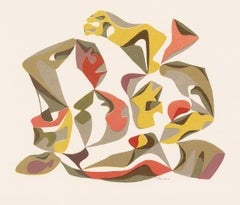
Robert Vale Faro, 'Sylvan Maze', color lithograph, 1946, edition 20. Signed, dated, titled and numbered '112' and '11/20' in pencil. A fine, richly-inked impression with fresh colors, on heavy, off-white wove paper; full margins (1 to 1 1/2 inch), in excellent condition. Image size 13 11/16 x 9 11/16 inches; sheet size 16 1/8 x 12 5/16 inches. Scarce. Matted to museum standards, unframed. ABOUT THE ARTIST Robert Vale Faro (1902-1988) was a modernist architect and artist associated with the Chicago Bauhaus. He received his degree in architecture and design from the Armour Institute in Chicago and worked at L'Ecole des Beaux-Arts, Paris, from 1924-27, where he was influenced by Harry Kurt Bieg and Le Corbusier. Upon his return to Chicago, Faro worked with the important modernist Chicago architects George and William Keck under Louis Sullivan. Faro founded the avant-garde printmaking group Vanguard in 1945. The group counted Atelier 17 artists Stanley William Hayter, Sue Fuller...
Category

1940s American Modern South Carolina - Prints and Multiples

Materials

Lithograph

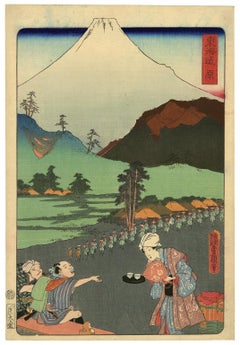
Tokaido — Mt. Fuji Rising – Mid-Nineteenth Century Woodblock Print
By Utagawa Kunisada (Toyokuni III)
Located in Myrtle Beach, SC
Utagawa Kunisada (Tokoyuni III), 'Tokaido', color woodblock, 1863. Signed in the cartouche, lower right. A fine impression, with rich, fresh colors and pronounced woodgrain, the full...
Category

1860s Edo South Carolina - Prints and Multiples

Materials

Woodcut

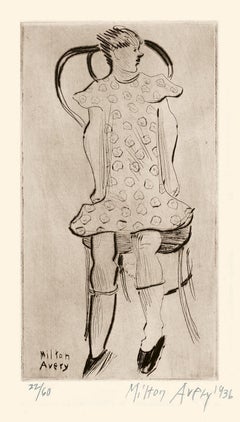
Little Girl — American Modernism
By Milton Avery
Located in Myrtle Beach, SC
Milton Avery, 'Little Girl', drypoint, 1936, edition 60, Lunn 11. Signed, dated, and numbered '22/60' in pencil. A superb impression, in warm black ink with delicate overall plate tone, on off-white wove paper, with wide margins (2 5/8 to 4 1/8 inches); hinge stains on the top sheet edge, verso, otherwise in excellent condition. Matted to museum standards, unframed. Image size 8 3/4 x 4 3/4 inches (222 x 121 mm); sheet size 14 7/8 x 13 1/8 inches (378 x 333 mm). Collections: Cantor Arts Center, National Gallery of Art. ABOUT THE ARTIST "I never have any rules to follow; I follow myself." "I paint not by sight but by faith. Faith gives you sight." —Milton Avery 'His is the poetry of sheer loveliness.' —Mark Rothko in his 1965 eulogy to Avery. Milton Avery (1885-1965) is recognized as one of America's foremost modernist artists, renowned for his uniquely expressive style, evocative use of color, and captivating compositions. Growing up in a working-class family in Altmar, New York, Avery's early life was marked by the struggles and realities of rural New York. Despite lacking formal artistic training, he displayed an innate talent for drawing from an early age. In 1905, his family relocated to Hartford, Connecticut, where he worked various odd jobs while developing his artistic skills through self-study and experimentation. In 1915, he enrolled at the Connecticut League of Art Students, where he received formal instruction and began to refine his distinctive style. In 1918, Avery transferred to the School of the Art Society of Hartford and worked in the evenings so that he could paint during the day. He became a member of the Connecticut Academy of Fine Arts in 1924. That summer in Gloucester, Massachusetts, he met the artist Sally Michael...
Category

1930s American Modern South Carolina - Prints and Multiples

Materials

Drypoint

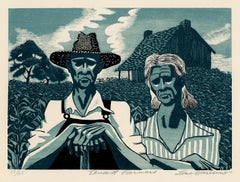
Tenant Farmers — Depression Era, WPA
By Lou Barlow
Located in Myrtle Beach, SC
Lou Barlow (Louis Breslow), 'Tenant Farmers', color wood engraving, 1936, edition 25. Signed, titled, and numbered '15/25' in pencil. A superb, richly-inked impression, with fresh c...
Category

1930s American Modern South Carolina - Prints and Multiples

Materials

Woodcut

Whaling – Vintage Monumental Zoology Lithograph
Located in Myrtle Beach, SC
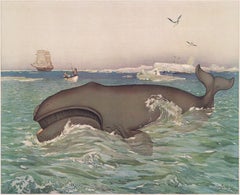
Joseph Fleischmann, 'Whaling' (Hartingers Wandtafeln: Zoologie T. XXXII), monumental vintage color lithograph, 1900. Signed in the matrix, lower right. A superb, beautifully nuanced impression, on cream wove paper, the full sheet with margins (1 1/2 to 2 3/16 inches), in very good condition. Sheet size 28 x 38 1/2 inches (711 x 978 mm). The full sheet, unmounted and unmatted—shipped carefully rolled and protected. Rendering by A. Berger after Joseph Fleischmann. Published by Carl Gerold’s Son, Vienna, 1900. This Artic whaling scene depicts a Greenland whale in the foreground pursued by whalers. A whaling ship is seen in the background and at right, another whale among icebergs with seagulls overhead. The print by Albert Berger...
Category

Early 1900s Naturalistic South Carolina - Prints and Multiples

Materials

Lithograph

Judgment of Souls — Surrealist Fantasy
Located in Myrtle Beach, SC
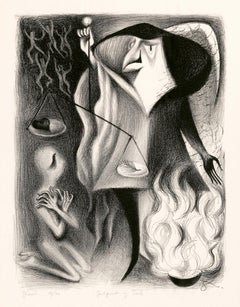
Zena Kavin, 'Judgment of Souls', lithograph, c. 1935, edition 20. Signed, titled, and numbered '17/20' in pencil. A fine, richly-inked impression, on cream wove paper, with full marg...
Category

1930s American Modern South Carolina - Prints and Multiples

Materials

Lithograph

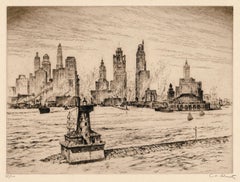
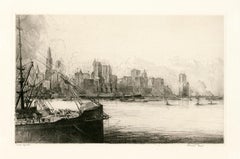
Manhattan Bridge — 1920s New York City
By George Stimmel
Located in Myrtle Beach, SC
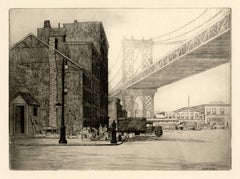
'Manhattan Bridge', etching, c. 1920, proofs only. Signed in ink in the image, lower right. A fine, rich impression, in warm black ink, on cream wove ...
Category

1920s American Realist South Carolina - Prints and Multiples

Materials

Etching

Navajo Reservation Landscape — Southwest Regionalism
By Ira Moskowitz
Located in Myrtle Beach, SC
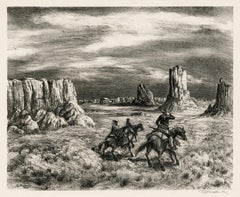
Ira Moskowitz, 'Navajo Reservation Landscape', lithograph, 1945, edition c. 30. Signed and titled in pencil. Signed and dated in the stone, lower left. A fine, richly-inked impression, on cream wove paper, the full sheet with margins (1 3/8 to 2 inches), in excellent condition. Matted to museum standards, unframed. Image size 12 3/4 x 15 3/4 inches (324 x 400 mm); sheet size: 15 1/2 x 19 inches (394 x 482 mm). ABOUT THE ARTIST Ira Moskowitz was born in Galicia, Poland, in 1912, emigrating with his family to New York in 1927. He enrolled at the Art Student's League and studied there from 1928-31. In 1935, Moskowitz traveled to Paris and then lived until 1937 in what is now Israel. He returned to the United States in 1938 to marry artist Anna Barry in New York. The couple soon visited Taos and Santa Fe in New Mexico, returning for extended periods until 1944, when they moved there permanently, staying until 1949. During this especially productive New Mexico period, Moskowitz received a Guggenheim fellowship. His work was inspired by the New Mexico landscape and the state’s three cultures (American Southwest, Native American, and Mexican). He focused on Pueblo and Navajo life, producing an extensive oeuvre of authentic American Indian imagery. He and Anna also visited and sketched across the border in Old Mexico. While in the Southwest, Moskowitz flourished as a printmaker while continuing to produce oils and watercolors. Over 100 of Moskowitz’s works depicting Native American ceremonies were used to illustrate the book American Indian Ceremonial Dances by John Collier, Crown Publishers, New York, 1972. After leaving the Southwest, printmaking remained an essential medium for the artist while his focus changed to subject matter celebrating Judaic religious life and customs. These works were well received early on, and Moskowitz was content to stay with them the rest of his life. From 1963 until 1966, Moskowitz lived in Paris, returning to New York City in 1967, where he made his permanent home until he died in 2001. Shortly before his death, Zaplin-Lampert Gallery of Santa Fe staged an exhibition of the artist's works, December 2000 - January 2001. Other one-person shows included the 8th Street Playhouse, New York, 1934; Houston Museum, 1941; and the San Antonio Museum, 1941. The artist’s work was included in exhibitions at the Art Students League, Art Institute of Chicago, Philadelphia Print Club, College Art Association (promotes excellence in scholarship and teaching), and the International Exhibition of Graphic Arts (shown at MOMA, 1955). Moskowitz’s lithographs of American Indian...
Category

1940s South Carolina - Prints and Multiples

Materials

Lithograph

Sister Kate — Mid-century, Jazz-inspired Modernism
By James Houston McConnell
Located in Myrtle Beach, SC
James Houston McConnell, 'Sister Kate', color serigraph, 1947, edition 24. Signed, dated, titled, and numbered '24' in pencil. Annotated '10.00 - 19 colors - 24 copies - #24' in pencil. A fine impression, with vibrant, fresh colors, on heavy tan wove paper, with full margins (11/16 to 1 1/2 inches). Tack holes in the four margin corners, well away from the image, otherwise in excellent condition. Matted to museum standards, unframed. Scarce. Another of McConnell's mid-century modernist, jazz-inspired serigraphs, 'Combo', is featured in the British Museum's 2008 publication (and traveling exhibition) 'The American Scene: Prints from Hopper to Pollock'. ABOUT THE IMAGE "I Wish I Could Shimmy Like My Sister Kate", often simply "Sister Kate", is an up-tempo jazz dance song, written by Armand J. Piron and published in 1922. The lyrics of the song are narrated in the first person by Kate's sister, who sings about Kate's impressive dancing skill and her wish to be able to emulate it. She laments that she's not quite "up to date", but believes that dancing like "Sister Kate" will rectify this, and she will be able to impress "all the boys in the neighborhood" like her sister. Over the years this song has been performed and recorded by many artists, including Frances Faye and Rusty Warren, a 1959 version by Shel Silverstein...
Category

1940s American Modern South Carolina - Prints and Multiples

Materials

Screen

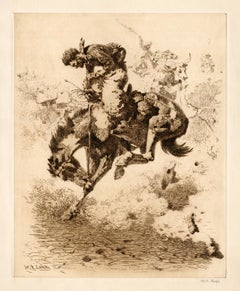
Foul Rope (Left) — Early American Southwest Rodeo
By William Robinson Leigh
Located in Myrtle Beach, SC
William Robinson Leigh, 'Foul Rope (Left)', etching, c. 1920, edition unknown but small. Signed in pencil and signed in the plate, lower left. A superb, richly-inked impression, in dark brown ink, on buff wove Umbria paper, the full sheet with margins (1 1/2 to 2 3/4 inches); slight toning at the sheet edges, otherwise in excellent condition. Very scarce. Archivally matted to museum standards, unframed. Image size 14 7/8 x 11 15/16 inches (378 x 303 mm); sheet size 20 3/8 x 15 3/8 inches (518 x 391 mm). ABOUT THE ARTIST Born near Falling Waters, West Virginia, on a plantation a year after the Civil War and raised in Baltimore, William Robinson Leigh (1866 - 1955) became one of the foremost painters of the American West. His career spanning some seventy-five years, Leigh created some of the most iconic depictions of the Western landscape, with admirers referring to him as ‘The Sagebrush Rembrandt.’ The son of impoverished Southern aristocrats, Leigh received his first art training at age 14 from Hugh Newell at the Maryland Institute, where he was regarded as the best student in his class. From 1883 to 1895, he studied in Europe, mainly at the Royal Academy in Munich with Ludwig Loefftz. From 1891 to 1896, he painted six cycloramas or murals in the round, a giant German panorama. In 1896, Leigh began working as a magazine illustrator for Scribner's and Collier's Weekly Magazine in New York City. He also painted portraits, landscapes, and genre scenes. Leigh's trips to the Southwest began in 1906 when he agreed to paint the Grand Canyon with William Simpson, Santa Fe Railway advertising manager, in exchange for free transportation West. In 1907, he completed his Grand Canyon painting, which led to more commissions and an extensive painting trip through Arizona and New Mexico. These travels inspired him to paint western subjects for the next 50 years, and his primary interests were the Hopi and Navajo Indians. In 1910, he traveled to Wyoming, where he painted in Yellowstone Park and created sketches, many of which he later converted into large canvases such as ‘Lower Falls of the Yellowstone’ (1915) and ‘Grand Canyon of the Yellowstone’ (1911). In 1926, he traveled to Africa at the invitation of Carl Akeley for the American Museum of Natural History, and from this experience, wrote and illustrated 'Frontiers of Enchantment: An Artist's Adventures in Africa'. In 1933, he wrote and illustrated 'The Western Pony'. His adventures were chronicled in several popular magazines, including Life, the Saturday Evening Post, and Colliers. For many years, Grand Central Art Galleries at the Biltmore Hotel handled his work exclusively in New York. In 1953, Leigh was elected an associate member of the National Academy of Design and became a full Academician in 1955. In March 1999, the Historical Center of Cody, Wyoming, held an exhibition of his field sketches and finished works depicting his experiences near Cody early in the century. Between 1910 and 1921, when he often painted in the Carter Mountain vicinity, these years were considered pivotal to his artistic development and devotion to the Western landscape. Leigh's work is held in many museum collections of American Western art...
Category

1920s Realist South Carolina - Prints and Multiples

Materials

Etching

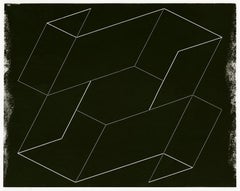
Interlinear K50 — Mid-Century Geometric Abstraction
By Josef Albers
Located in Myrtle Beach, SC
Josef Albers, 'Interlinear K50', zinc plate lithograph offset to stone printing, 1962, edition 20, Danilowitz 151. Signed, titled, dated, and numbered '14/20' in pencil. A superb, ri...
Category

1960s Abstract Geometric South Carolina - Prints and Multiples

Materials

Lithograph

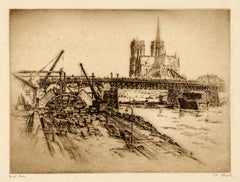
L Abside de Notre Dame — Vintage 1920s Paris, Realism
By Anton Schutz
Located in Myrtle Beach, SC
Anton Schutz, 'L' Abside de Notre Dame' (The Apse of Notre Dame), etching, 1st state, c. 1927. Signed, titled, and annotated 'First State', in pencil. A supe...
Category

1920s Realist South Carolina - Prints and Multiples

Materials

Etching

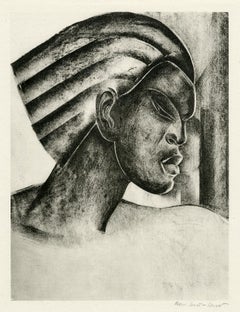
Profile of an African Woman — 1920s Modernism
By Boris Lovet-Lorski
Located in Myrtle Beach, SC
Boris Lovet-Lorski, Untitled (Profile of an African Woman), lithograph, edition 250, 1929. Signed and numbered 15 in pencil. Number 15 of Volume 2, a series of 10 lithographs publish...
Category

1920s American Modern South Carolina - Prints and Multiples

Materials

Lithograph

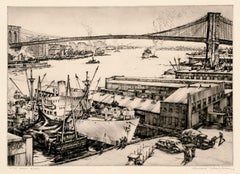
The East River , Brooklyn Bridge — Mid-Century Realism, New York City
By Lawrence Wilbur
Located in Myrtle Beach, SC
Lawrence Nelson Wilbur (1897-1988), 'The East River', drypoint, edition 65, 1946. Signed, titled, and annotated 'A. Jones Proof 1946' in pencil. Signed and dated in the plate, lower ...
Category

1940s American Modern South Carolina - Prints and Multiples

Materials

Drypoint

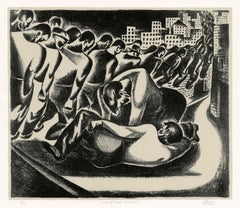
Unemployed Marchers — American Modernism, WPA
By Leon Bibel
Located in Myrtle Beach, SC
Leon Bibel, 'Unemployed Marchers', 2-color lithograph, c. 1938, edition 25. Signed, titled, and numbered '2/25' in pencil. A fine, richly-inked impression on off-white, wove paper, w...
Category

1930s American Modern South Carolina - Prints and Multiples

Materials

Lithograph

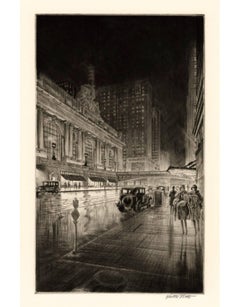
Grand Central, Night — 1920s New York City Realism
By Walter Tittle
Located in Myrtle Beach, SC
Walter Tittle, 'Grand Central Night', drypoint, edition not stated, c. 1920s. Signed in pencil. Titled, and annotated '36.00' and with the inventory numb...
Category

1920s American Impressionist South Carolina - Prints and Multiples

Materials

Drypoint

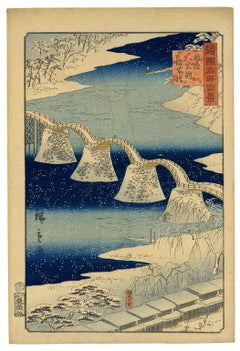
Kintai Bridge at Iwakuni in Suo Province (Suo iwakuni kintai-bashi), 1859
By Hiroshige II
Located in Myrtle Beach, SC
Utagawa Hiroshige II (1829-1869), 'Kintai Bridge at Iwakuni in Suo Province' (Suo iwakuni kintai-bashi), from the series 'One Hundred Views of Famous Pla...
Category

1850s Edo South Carolina - Prints and Multiples

Materials

Woodcut

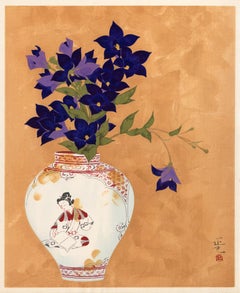
Flowers and Ko-Imari — Taisho/Showa Shin Hanga Woodblock Print
Located in Myrtle Beach, SC
Masami Iwata, 'Flowers and Ko-Imari', color woodblock print, c. 1960, edition 250. Signed, and with the artist’s seal, lower right. A superb, painterly impression, with fresh colors,...
Category

1960s Modern South Carolina - Prints and Multiples

Materials

Woodcut

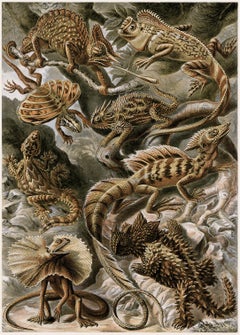
Art Forms in Nature (Plate 79 - Basiliscus) — 1899 Celebration of Nature
Located in Myrtle Beach, SC
Ernst Haeckel, 'Art Forms in Nature' (Plate 79 - Basiliscus), offset lithograph, 1899. Signed and titled in typeset, upper left. Titled 'Tafel 79 — Basi...
Category

1890s Realist South Carolina - Prints and Multiples

Materials

Lithograph

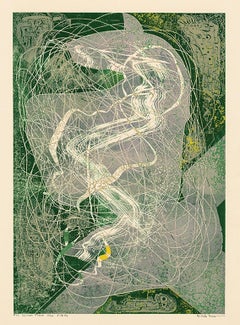
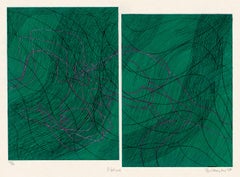
Diptych — Modernist Abstraction, Atelier 17
By Stanley William Hayter
Located in Myrtle Beach, SC
Stanley William Hayter, 'Diptych', color engraving and scorper, 1967, edition 50, Black & Moorhead 314. Signed, titled, dated, and numbered '10/50' in pencil. A superb, richly-inked impression, with fresh, vibrant colors on antique-white wove BFK Rives paper; the full sheet with margins (2 1/2 to 3 1/4 inches). Minor skinning and tape residue on the top and bottom sheet edges, verso, otherwise in excellent condition. Matted to museum standards, unframed. Image size 13 7/8 x 19 1/2 inches (146 x 108 mm); sheet size 19 7/8 x 25 3/8 inches (394 x 292 mm). Hayter created this work using engraving and scorper on 2 plates, printed side by side. He used alkali blue, printed intaglio, and a phthalo green with a hard roller on the surface. The proofing was in three states, the first with engraving (a single proof); the second adding further engraving and scorper (a single proof); the third added further engraving and editioned: color trial proofs, 5 artist's proofs, edition of 50. The edition was completed in three printings: 8 in 1967; then Hector Saunier printed numbers 9 through 18 in 1968, and numbers 19 through 50 in 1969. This impression is from the Saunier 1968 printing. Note: the online image cannot accurately convey the vibrancy of the printed alkali blue/phthalo green. An impression of this work is held in the collection of the National Gallery of Art. ABOUT THE ARTIST Stanley William Hayter (1901-1988) was a British painter and printmaker associated in the 1930s with Surrealism and from 1940 onward with Abstract Expressionism. Regarded as one of the most significant printmakers of the 20th century, Hayter founded the legendary Atelier 17 studio in Paris, now known as Atelier Contrepoint. Among the artists he is credited with influencing are Pablo Picasso, Alberto Giacometti, Joan Miró, Alexander Calder, and Marc Chagall. The hallmark of the workshop was its egalitarian structure, breaking sharply with the traditional French engraving studios by insisting on a cooperative approach to labor and technical discoveries. In 1929 Hayter was introduced to Surrealism by Yves Tanguy and André Masson, who, with other Surrealists, worked with Hayter at Atelier 17. The often violent imagery of Hayter’s Surrealist period was stimulated in part by his passionate response to the Spanish Civil War and the rise of Fascism. He organized portfolios of graphic works to raise funds for the Spanish cause, including Solidarité (Paris, 1938), a portfolio of seven prints, one of them by Picasso. Hayter frequently exhibited with the Surrealists during the 1930s but left the movement when Paul Eluard was expelled. Eluard’s poem Facile Proie (1939) was written in response to a set of Hayter’s engravings. Other writers with whom Hayter collaborated in this way included Samuel Beckett and Georges Hugnet. Hayter joined the exile of the Parisian avant-garde in 1939, moving with his second wife, the American sculptor Helen...
Category

1960s Modern South Carolina - Prints and Multiples

Materials

Engraving

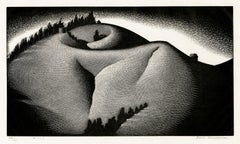
Hill — American Modernism, California
By Paul Landacre
Located in Myrtle Beach, SC
Paul Landacre, 'Hill', wood engraving, 1936, edition 60 (only 54 printed); only 2 impressions printed in a second edition of 150. Signed, titled, and numbered '49/60' in pencil. Wien...
Category

1930s American Modern South Carolina - Prints and Multiples

Materials

Woodcut

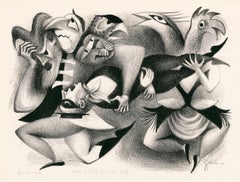
To Market, to Market — Surrealist Fantasy
Located in Myrtle Beach, SC
Zena Kavin, 'To Market, to Market', lithograph, c. 1935, edition 20. Signed, titled, and numbered '6/20' in pencil. A fine, richly-inked impression, on cream wove paper, with full ma...
Category

1930s American Modern South Carolina - Prints and Multiples

Materials

Lithograph

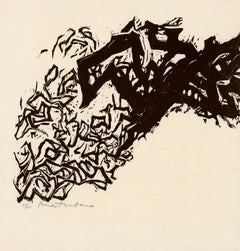
Winter Serenity —from Solitude for Henry David Thoreau s Walden
Located in Myrtle Beach, SC
Naoko Matsubara, 'Winter Serenity' for the portfolio 'Solitude', woodcut, 1971, edition 100. Signed and numbered '58/100' in pencil. A fine, richly-inked impression, on cream laid J...
Category

1970s Modern South Carolina - Prints and Multiples

Materials

Woodcut

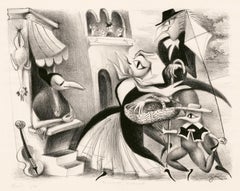
Victim of Misfortune and Folly — Surrealist Fantasy
Located in Myrtle Beach, SC
Zena Kavin, 'Victim of Misfortune and Folly, lithograph, c. 1935, edition 20. Signed, titled, and numbered '17/20' in pencil. A fine, richly-inked impression, on cream wove paper, wi...
Category

1930s American Modern South Carolina - Prints and Multiples

Materials

Lithograph

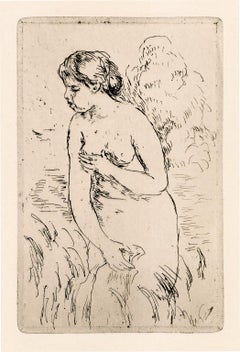
Baigneuse Debout, à Mi-Jambes — French Impressionism
By Pierre-Auguste Renoir
Located in Myrtle Beach, SC
Pierre Auguste Renoir, 'Baigneuse Debout, à Mi-Jambes (Woman Bathing, Standing Up to Her Knees in Water)', 1910, etching, edition not stated, Delteil 23. Unsigned as published. A fin...
Category

1910s Impressionist South Carolina - Prints and Multiples

Materials

Etching

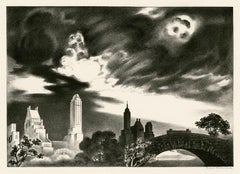
Angry Skies (Andante Cantabile) — Central Park, New York City
By Louis Lozowick
Located in Myrtle Beach, SC
Louis Lozowick, 'Angry Skies (Andante Cantabile)', lithograph, 1935; edition 10, AAA 250; Flint 123. Signed in pencil. Signed in the stone, lower left. A fine, richly-inked impressio...
Category

1930s American Modern South Carolina - Prints and Multiples

Materials

Lithograph

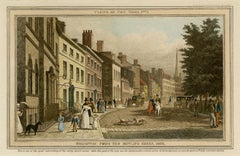
Broadway from the Bowling Green, 1828 — early New York City, hand-coloring
Located in Myrtle Beach, SC
J. R. Hutchinson, 'Broadway from the Bowling Green, 1828', hand-colored etching, 1828. Signed and dated in the plate, beneath the image, lower right. Ann...
Category

1820s Realist South Carolina - Prints and Multiples

Materials

Etching

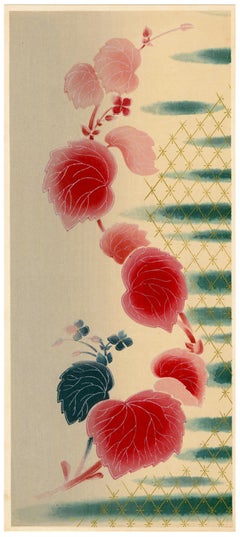
Japanese Kimono Fabric Design — Vintage Color Woodblock Print
Located in Myrtle Beach, SC
Anonymous, Japanese Kimono Fabric Design, color woodcut, c. 1930. A superb impression, with fresh colors, fine graduations, and metallic gold motifs, on ...
Category

Early 1900s Showa South Carolina - Prints and Multiples

Materials

Woodcut

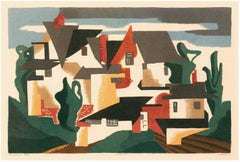
The French Farm — Mid-Century Modernism
By Edward August Landon
Located in Myrtle Beach, SC
Edward Landon, 'The French Farm', color serigraph, 1942, Ryan 86. Signed, titled, and annotated 'Edition 50' in pencil. A superb impression, with fresh colors, on cream, wove paper; ...
Category

Mid-20th Century American Modern South Carolina - Prints and Multiples

Materials

Screen

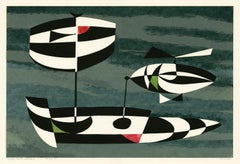
Flyable Objects Identified — Mid-Century Modernism
By Edward August Landon
Located in Myrtle Beach, SC
Edward Landon, 'Flyable Objects Identified', color serigraph, 1969, edition 30, Ryan 83. Signed, titled, and annotated 'Edition 30' in pencil. A fine impression, with fresh colors, o...
Category

Mid-20th Century American Modern South Carolina - Prints and Multiples

Materials

Screen

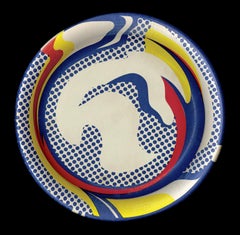
Lichtenstein Paper Plate — Pop Art Icon
By Roy Lichtenstein
Located in Myrtle Beach, SC
Roy Lichtenstein, 'Paper Plate', serigraph, 1969, edition unknown, Corlett III.45. Printed in dark blue ink verso, 'Roy Lichtenstein © On 1st Inc. 1969'. A fine impression, on white paperboard pressure formed into a 3-dimensional plate; age toning verso, otherwise in very good condition. Published by Bert Stern, New York. Image size 10 1/4 inch diameter, 1-inch depth. Archivally sleeved, unmounted, unframed. Carefully protected for shipping. Literature: John Russell. 'Art: Time for Old-Master Prints', New York Times (July 27, 1979), p. C16. Jan Howard. 'Reflections on 'The Prints of Roy Lichtenstein', Print Collector's Newsletter 26 (July–August 1995), p. 82. Mark M. Johnson. 'The Great American Pop Art Store: Multiples of the '60s', Art & Activities 123 (June–Summer 1998), ill. p. 37 (color). Mary Lee Corlett. 'The Prints of Roy Lichtenstein: A Catalogue Raisonné', New York, 2002, p. 286, no. III.45. Susan Dackerman, ed., 'Corita Kent and the Language of Pop', exhibition catalog, Harvard Art...
Category

1960s Pop Art South Carolina - Prints and Multiples

Materials

Screen

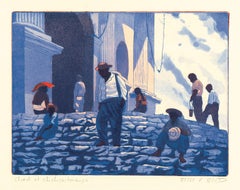
Church at Chichicastenango
By Jesse F. Reed
Located in Myrtle Beach, SC
Jesse F. Reed, 'Church at Chichicastenango', color etching and aquatint, 1963. Signed and titled in pencil. Signed and dated in the plate, lower right. A fine, richly-inked impression, with fresh colors, on cream wove paper; the full sheet with margins (1 3/8 to 2 1/2 inches), in excellent condition. Chichicastenango, also known as Santo Tomás Chichicastenango, is a town in the El Quiché department of Guatemala, located in a mountainous region about 140 km northwest of Guatemala City. Chichicastenango is a K'iche' Maya cultural center, with the great majority of the municipality's population indigenous Mayan K'iche. The church depicted is the 400-year-old church Iglesia de Santo Tomás. Built atop a Pre-Columbian temple platform, the steps which remain venerated today, originally led to a temple of the pre-Hispanic Maya civilization. K'iche' Maya priests still use the church for their rituals, burning incense and candles. Each of the 18 stairs that lead up to the church stands for one month of the Maya calendar year. ABOUT THE ARTIST Jesse Floyd Reed (1920-2011) studied art in New York City at the Grand Central School of Art and the Art Students’ League. He held degrees in History and English and completed special advance studies in Asian, African, and Latin American art, history and culture. At the time of his retirement, he was a Professor of the Arts Emeritus at Davis & Elkins College, a position he held for over forty-nine years. A nationally recognized artist since 1947, Professor Reed’s art has been shown in hundreds of museums, libraries, colleges, and universities, including the Boston Museum, National Museum, The Library of Congress, Brooklyn Museum, and Seattle Museum. In his native West Virginia, he is represented in the permanent collections of the Huntington Museum and the Charleston Museum at Sunrise. The recipient of many national and regional awards, Reed was a member of the Salmagundi Club in NY, the Boston Printmakers, the Print Club of Albany, and was a founding member of the West Virginia Water...
Category

1960s American Modern South Carolina - Prints and Multiples

Materials

Etching, Aquatint

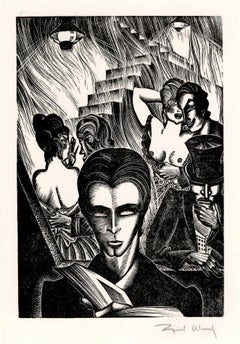
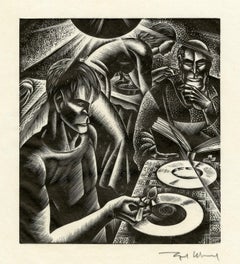
Madman s Drum (Brothel) — Story Without Words Graphic Modernism
By Lynd Ward
Located in Myrtle Beach, SC
Lynd Ward, 'Madman's Drum, Plate 41', wood engraving, 1930, edition small. Signed in pencil. A fine, richly-inked impression, on off-white tissue-thin Japan paper; the full sheet with margins (1 5/8 to 2 1/2 inches); a small paper blemish in the upper right margin, away from the image, otherwise in excellent condition. A scarce, artist-printed, hand-signed proof impression before the published edition. Matted to museum standards, unframed. Image size 5 1/2 x 3 3/4 inches (140 x 95 mm); sheet size 9 5/8 x 7 1/8 inches (244 x 181 mm). From Lynd Ward’s book of illustrations without words, 'Madman’s Drum', Jonathan Cape and Harrison Smith, New York, 1930. Reproduced in 'Storyteller Without Words, the Wood Engravings of Lynd Ward', Harry N. Abrams, New York, 1974. ABOUT THE ARTIST Lynd Ward is acknowledged as one of America’s foremost wood engravers and book illustrators of the first half of the twentieth century. His innovative use of narrative printmaking as a stand-alone storytelling vehicle was uniquely successful in reaching a broad audience. The powerful psychological intensity of his work, celebrated for its dynamic design, technical precision, and compelling dramatic content, finds resonance in the literature of Poe, Melville, and Hawthorne. Like these classic American writers, Ward was concerned with the themes of man’s inner struggles and the role of the subconscious in determining his destiny. An artist of social conscience during the Great Depression and World War II, he infused his graphic images with his unique brand of social realism, deftly portraying the problems that challenged the ideals of American society. The son of a Methodist preacher, Lynd Ward, moved from Chicago to Massachusetts at an early age. He graduated from the Teachers College of Columbia University, New York, in 1926, where he studied illustration and graphic arts. He married May Yonge McNeer in 1936 and left for Europe for their honeymoon in Eastern Europe. After four months, they settled in Leipzig, where Ward studied at the National Academy of Graphic Arts and Bookmaking. Inspired by Belgian expressionist artist Frans Masereel's graphic novel ‘The Sun,’ and another graphic novel by the German artist Otto Nückel, ‘Destiny,’ he determined to create his own "wordless" novel. Upon his return to America, Ward completed his first book, ‘God's Man: A Novel in Woodcuts,’ published in 1929. ‘Gods’ Man’ was a great success for its author and publisher and was reprinted four times in 1930, including a British edition. This book and several which followed it, ‘Madman’s Drum,’ 1930, ‘Wild Pilgrimage...
Category

1930s American Modern South Carolina - Prints and Multiples

Materials

Woodcut

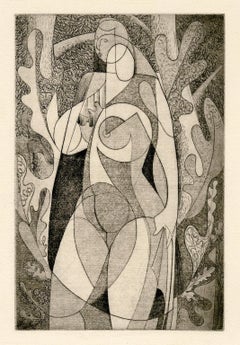
Modernist Nude — Atelier 17
Located in Myrtle Beach, SC
Russell T. Limbach, 'Untitled (Modernist Nude)', etching and aquatint, no known edition, c. 1930. Signed in pencil. A fine impression, on cream wove paper, with full margins (1 7/8 to 2 3/4 inches), in excellent condition. Image size 8 15/16 x 5 15/16 inches; sheet size 13 3/8 x 10 1/4 inches. Extremely rare. Matted to museum standards, unframed. Probably created when Limbach was in Paris (1928-1934), where he was exposed to modernist printmaking explorations at Stanley William Hayter’s 'Atelier 17'. ABOUT THE ARTIST Born in Massillon, Ohio, Russell Limbach...
Category

1930s American Modern South Carolina - Prints and Multiples

Materials

Etching

Chicago Harbor — Urban Realism
By Anton Schutz
Located in Myrtle Beach, SC
Anton Schutz, 'Chicago Harbor', etching, edition 100, c. 1927. Signed and numbered '87/100' in pencil. Annotated '580 Chicago Harbor', in another hand, in the bottom left margin. A f...
Category

1920s American Realist South Carolina - Prints and Multiples

Materials

Etching

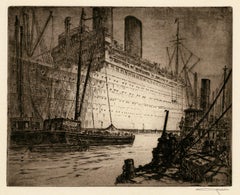
Cargo Carriers — New York Harbor
By Otto Kuhler
Located in Myrtle Beach, SC
Otto Kuhler, 'Cargo Carriers', etching and drypoint, c. 1932, edition 10, Kennedy 44. Signed in pencil. A superb, atmospheric impression with rich burr and selectively wiped overall plate tone, in dark brown ink, on Arches cream laid paper; wide margins (2 to 2 3/4 inches), in very good condition. Printed by the artist. Original Kennedy Galleries mat and label. Very scarce. "On my trips up and down N.Y. harbor on the Weehawken Ferry, the late evening sun playing on the side of the big liners has always intrigued me... The liner shown I believe to be the Vaterland of the North German Lloyd...
Category

1930s American Modern South Carolina - Prints and Multiples

Materials

Etching, Drypoint

Commuters — Early 20th-Century Modernism
By George Josimovich
Located in Myrtle Beach, SC
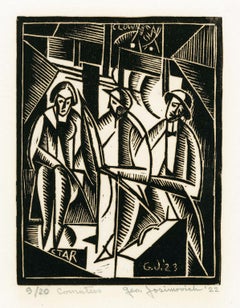
George Josimovich, 'Commuters', linocut, 1922-23, edition 20. Signed, dated '22, titled, and annotated '9/20' in pencil. Initialed in the block 'G.J....
Category

1920s American Modern South Carolina - Prints and Multiples

Materials

Linocut

Inside the Flowers (Java Sparrow and Peach Blossoms) — Mid-Century Japanese
Located in Myrtle Beach, SC
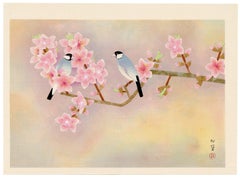
Shoko Uemura, 'Inside the Flowers (Java Sparrow and Peach Blossoms)', color woodcut, c. 1950s, edition 300. Signed in ink with the artist’s red seal beneath. A superb impression, with fresh, delicate colors, on cream wove Japan paper; the full sheet with margins (9/16 to 1 3/8 inches), in excellent condition. Archivally sleeved, unmatted. Image size 12 3/4 x 18 1/2 inches (324 x 470 mm); sheet size 14 3/4 x 20 3/16 inches (375 x 513 mm). Published by The Momose Print Company of Tokyo. ABOUT THE ARTIST Uemura Shoko (1902-2001) was the son of the famous shin-hanga artist Uemura Shoen...
Category

1950s Showa South Carolina - Prints and Multiples

Materials

Woodcut

Tree, Manhattan — Classic American Realism
By Martin Lewis
Located in Myrtle Beach, SC
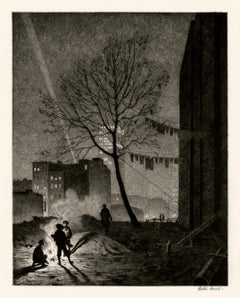
Martin Lewis, 'Tree, Manhattan', drypoint, 1930, edition 91 (including 10 trial proofs), McCarron 87. Signed in pencil. A superb, atmospheric impression, in warm black ink, on cream...
Category

1930s American Realist South Carolina - Prints and Multiples

Materials

Drypoint

Feu sous L eau (Fire Under Water) —Mid-century Modernism, Atelier 17
By Stanley William Hayter
Located in Myrtle Beach, SC
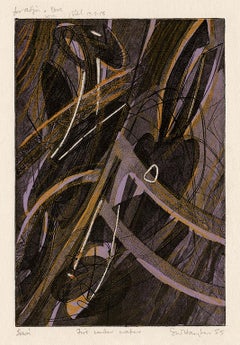
Stanley William Hayter, 'Feu sous L'eau (Fire Under Water)', color engraving, soft-ground etching and scorper with yellow silkscreen, 1955, edition 50 plus 10 artist proofs, Black & Moorhead 221. Signed, titled 'Fire Under Water', dated and annotated 'Essai' in pencil. Dedicated in the artist’s hand 'for Adja & Dove WH Bill 17–5–55' in the top margin. A superb, richly inked impression with fresh colors, on heavy, cream wove paper; wide margins (2 1/2 to 3 7/8 inches), in excellent condition. One of 10 artist’s proofs. Image size 10 3/16 x 7 inches; sheet size 18 1/8 x 12 1/4 inches. Matted to museum standards, unframed. ABOUT THIS WORK In 1950 Hayter returned to Paris and reopened Atelier 17. Works such as 'Fire Under Water' reveal newfound influences, such as that of the Ardèche area of southern France, where he acquired a house in 1951 and frequently visited. Hayter took great interest in the flowing Escoutay River, an experience that parallels the artist and co-director of Atelier 17 Krishna Reddy’s interest in depicting water. While some forms in this print evoke the natural world, the palette of contrasting tones of purple, yellow, black, and white reflects Hayter’s belief in using color intuitively to express emotions and evoke feelings. The sharp white relief lines from the paper and the textural effects realized through soft-ground etching operate in tandem with the sweeping curves and bold colors to give the composition a sense of vitality and dynamism. —edited from the Metropolitan Museum of Art Published by 'La Jeune Gravure Contemporaine', Paris. Impressions of this work are in the following collections: British Museum, Metropolitan Museum of Art, National Gallery of Art. ABOUT THE ARTIST Stanley William Hayter (1901-1988) was a British painter and printmaker associated in the 1930s with Surrealism and from 1940 onward with Abstract Expressionism. Regarded as one of the most significant printmakers of the 20th century, Hayter founded the legendary Atelier 17 studio in Paris, now known as Atelier Contrepoint. Among the artists he is credited with influencing are Pablo Picasso, Alberto Giacometti, Joan Miró, Alexander Calder, and Marc Chagall. The hallmark of the workshop was its egalitarian structure, breaking sharply with the traditional French engraving studios by insisting on a cooperative approach to labor and technical discoveries. In 1929 Hayter was introduced to Surrealism by Yves Tanguy and André Masson, who, with other Surrealists, worked with Hayter at Atelier 17. The often violent imagery of Hayter’s Surrealist period was stimulated in part by his passionate response to the Spanish Civil War and the rise of Fascism. He organized portfolios of graphic works to raise funds for the Spanish cause, including Solidarité (Paris, 1938), a portfolio of seven prints, one of them by Picasso. Hayter frequently exhibited with the Surrealists during the 1930s but left the movement when Paul Eluard was expelled. Eluard’s poem Facile Proie (1939) was written in response to a set of Hayter’s engravings. Other writers with whom Hayter collaborated included Samuel Beckett and Georges Hugnet. Hayter joined the exile of the Parisian avant-garde in 1939, moving with his second wife, the American sculptor Helen Phillips...
Category

1950s Abstract Expressionist South Carolina - Prints and Multiples

Materials

Engraving, Etching

On the Beach (Coney Island, New York) — 1930s Graphic Modernism, WPA
By Lou Barlow
Located in Myrtle Beach, SC
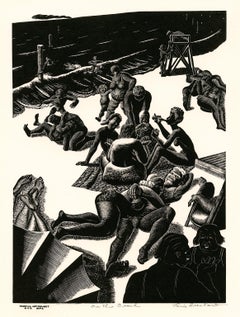
Lou Barlow (Louis Breslow), 'On the Beach' (Coney Island) wood engraving, c. 1937, edition c. 25. Signed and titled in pencil. Stamped 'FEDERAL ART PROJECT NYC WPA' in the bottom left margin. A fine, richly-inked impression, with all the fine lines printing clearly, on cream wove paper, with full margins (1 1/2 to 3 inches), in excellent condition. Matted to museum standards, unframed. Scarce. Image size 11 x 8 1/8 inches; sheet size 16 x 11 3/8 inches. Created during the Great Depression for the Works Progress Administration (WPA), Federal Art Project, New York City. Impressions of this work are in the permanent collections of the Amon Carter Museum of Art, Illinois State Museum, and the New York Public Library. ABOUT THE IMAGE Due to Coney Island's proximity to Manhattan, Brooklyn, and other New York boroughs, it began attracting vacationers in the 1830s and 1840s. Most of the vacationers were wealthy and went by carriage roads and steamship services that reduced travel time from a formerly half-day journey to two hours. By the late 1870s, the development of Coney Island's amusement park attractions and hotels drew people from all social classes. When the Brooklyn Rapid Transit Company electrified the steam railroads and connected Brooklyn to Manhattan via the Brooklyn Bridge at the beginning of the 20th century, Coney Island turned rapidly from a resort to an accessible location for day-trippers seeking to escape the summer heat in New York City's tenements. In 1915, the Sea Beach Line was upgraded to a subway line, and the opening of the Stillwell Avenue station in 1919 ushered in Coney Island's busiest era. On the peak summer days, over a million people would travel to Coney Island. In 1937, New York City purchased a 400-foot-wide strip of land along the shoreline to allow the boardwalk to be moved 300 feet inland. At this point, Coney Island was so crowded on summer weekends that parks commissioner Robert Moses...
Category

1930s American Modern South Carolina - Prints and Multiples

Materials

Woodcut

Untitled (Nude in Landscape)
By Boris Lovet-Lorski
Located in Myrtle Beach, SC
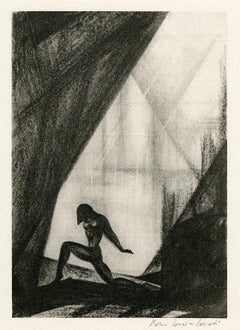
Boris Lovet-Lorski, 'Untitled (Nude in Landscape)', lithograph, edition 250, 1929. Signed and numbered 5 in pencil. Number 5 of Volume 1, a series of 10 lithographs published by the ...
Category

1920s Art Deco South Carolina - Prints and Multiples

Materials

Lithograph

Peking - Paifang Gate — Mid-Century Watanabe Color Woodcut
By Cyrus Le Roy Baldridge
Located in Myrtle Beach, SC
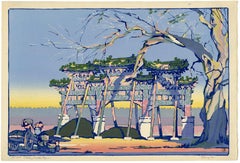
Cyrus Le Roy Baldridge, 'Peking '25', woodblock print, published 1926. Signed, titled, dated, and annotated 'No 124' in pencil. A fine impression, with fresh, undiminished colors; the full sheet, in excellent condition. Watanabe 6 mm seal, lower right, indicating an impression printed between 1945 and 1957. Archivally sleeved, unmatted. Image size 9 5/8 x 14 5/16 inches; sheet size 10 7/16 x 15 3/8 inches. ABOUT THE IMAGE A 'paifang', also known as a 'pailou', is a traditional style of Chinese architectural arch or gateway structure. It has been theorized that the paifang gate architecture was influenced by Buddhist torana temple gates. Paifang are designed with traditional Chinese architectural motifs including multi-tiered roofs, prominent supporting posts, and gracefully arched openings. This is an unusual ukiyo-e or 'floating world' woodcut published by Watanabe Shozaburo, Tokyo, in that the subject is of an early 20th-century scene in Peking, China. ABOUT THE ARTIST Cyrus Leroy Baldridge...
Category

1920s Showa South Carolina - Prints and Multiples

Materials

Woodcut

Still Life — Mid-century Modern
By Charles Quest
Located in Myrtle Beach, SC
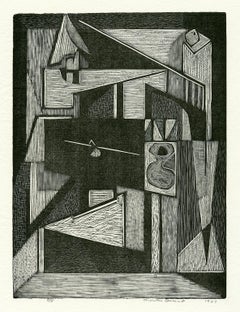
Charles Quest, 'Still Life', 1947, wood engraving, edition 8. Signed, dated, and numbered '3/8' in pencil. Titled and annotated 'wood engraving' in the bottom left margin. A fine impression, on off-white wove paper, with full margins (1 to 2 inches), in excellent condition. Scarce. Matted to museum standards, unframed. ABOUT THE ARTIST Charles Quest, painter, printmaker, and fine art instructor, worked in various mediums, including mosaic, stained glass, mural painting, and sculpture. Quest grew up in St. Louis, his talent evident as a teenager when he began copying the works of masters such as Michelangelo on his bedroom walls. He studied at the Washington University School of Fine Arts, where he later taught from 1944 to 1971. He traveled to Europe after his graduation in 1929 and studied at La Grande Chaumière and Academie Colarossi, Paris, continuing to draw inspiration from the works of the Old Masters. After returning to St. Louis, Quest received several commissions to paint murals in public buildings, schools, and churches, including one from Joseph Cardinal Ritter, to paint a replica of Velasquez's Crucifixion over the main altar of the Old Cathedral in St. Louis. Quest soon became interested in the woodcut medium, which he learned through his study of J. J. Lankes' A Woodcut Manual (1932) and Paul Landacre's articles in American Artist magazine ‘since no artists in St. Louis were working in wood’ at that time. Quest also revealed that for him, wood cutting and engraving were ‘more enjoyable than any other means of expression.’ In the late 1940s, his graphic works began attracting critical attention—several of his woodcuts won prizes and were acquired by major American and European museums. His wood engraving entitled ‘Lovers’ was included in the American Federation of Art's traveling print exhibition in 1947. Two years later, Quest's two prize-winning prints, ‘Still Life with Grindstone’ and ‘Break Forth into Singing’, were exhibited in major American museums in a traveling show organized by the Philadelphia Print Club. His work was included in the Chicago Art Institute's exhibition, ‘Woodcut Through Six Centuries’, and the print ‘Still Life with Vise’ was purchased by the Museum of Modern Art in New York. In 1951 he was invited by artist-Curator Jacob Kainen to exhibit thirty wood engravings and color woodcuts in a one-person show at the Smithsonian's National Museum (now known as the American History Museum). Kainen's press release praised the ‘technical refinement’ of Quest's work: ‘He obtains a great variety of textural effects through the use of the graver, and these dense or transparent grays are set off against whites or blacks to achieve sparkling results. His work has the handsome qualities characteristic of the craftsman and designer.’ At the time of the Smithsonian exhibition, Quest's work was represented by three New York galleries in addition to one in his home town. He had won 38 prizes, and his prints were in the collections of the Library of Congress, the Chicago Art Institute, the Metropolitan Museum, and the Philadelphia Museum of Art. In cooperation with the Art in Embassies program, his color woodcuts were displayed at the American Embassy in Paris in 1951. Recognition at home came in 1955 with his first solo exhibition in St. Louis. Press coverage of the show heralded the ‘growth of graphic arts toward rivaling painting and sculpture as a major independent medium’. An exhibition of his prints at the Bethesda Art Gallery in 1983 attracted Curator Emeritus Joseph A. Haller, S.J., who began purchasing his work for Georgetown University's collection. In 1990 Georgetown University Library's Special Collections Division was the recipient of a large body of Quest's work, including prints, drawings, paintings, sculpture, stained glass, and his archive of correspondence and professional memorabilia. These extensive holdings, including some 260 of his fine prints, provide a rich opportunity for further study and appreciation of this versatile and not-to-be-forgotten mid-Western American artist...
Category

1940s American Modern South Carolina - Prints and Multiples

Materials

Woodcut

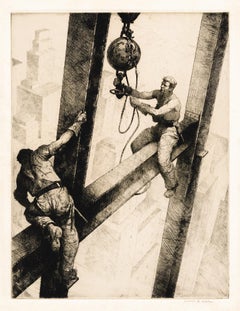
The Connectors — Vintage American Realism, New York City
By James Allen
Located in Myrtle Beach, SC
James Allen, 'The Connectors', 1934, etching, edition not stated, Ryan 66. Signed in pencil. A superb, richly-inked impression, on handmade, cream laid paper, with margins (1/2 to 1...
Category

1930s American Realist South Carolina - Prints and Multiples

Materials

Etching

Salient in February — Mid 20th-Century Surrealism
By Edward August Landon
Located in Myrtle Beach, SC
Edward Landon 'Salient in February', color serigraph, 1945, edition 40, Ryan 166. Signed in pencil. Titled, dated, and annotated 'ED. 40' in pencil. A fine impression, with fresh col...
Category

Mid-20th Century Surrealist South Carolina - Prints and Multiples

Materials

Screen

New York (from Ports of America)
By Louis Orr
Located in Myrtle Beach, SC
Louis Orr, 'New York' (from the portfolio 'Ports of America', published by Yale University Press, 1928), etching, 1925, edition not stated. Signed and titled in pencil. Signed in the...
Category

1920s Realist South Carolina - Prints and Multiples

Materials

Etching

Wild Pilgrimage (Contemplation) — Story Without Words Graphic Modernism
By Lynd Ward
Located in Myrtle Beach, SC
Lynd Ward, 'Wild Pilgrimage', No. 26, wood engraving, 1932, edition not stated but very small. Signed in pencil. A fine, black impression, with full margins (1 1/16 to 3 3/16 inches), on tissue-thin cream Japan paper, in very good condition. A scarce, artist-printed, hand-signed proof impression before the published edition. Matted to museum standards, unframed. Created by Lynd Ward for his narrative book of illustrations without words, 'Wild Pilgrimage', published by Harrison Smith...
Category

1930s American Modern South Carolina - Prints and Multiples

Materials

Woodcut

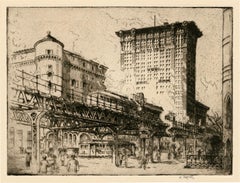
The Elevated, East 42nd Street, New York — 1910 American Realism
By William Monk
Located in Myrtle Beach, SC
William Monk, 'The Elevated, East 42nd Street, New York', etching, 1910. Signed in pencil and titled in the bottom right sheet corner. Signed in the plate, lower right. A superb, ric...
Category

1910s American Realist South Carolina - Prints and Multiples

Materials

Etching

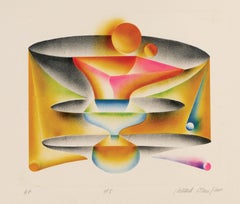
#5 — Modernist Abstraction — African American Artist
Located in Myrtle Beach, SC
Hilliard Dean, '#5', color lithograph, 1970, edition not stated but small. Signed, titled, and annotated 'AP' in pencil. Dated 'June 11, 70' in pencil in...
Category

1970s Contemporary South Carolina - Prints and Multiples

Materials

Lithograph

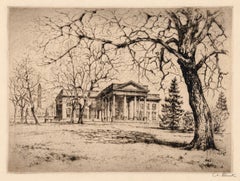
The White House — Vintage Washington D.C.
By Anton Schutz
Located in Myrtle Beach, SC
Anton Schutz, 'White House', etching, edition not stated, c. 1928. Signed in pencil. A fine, richly-inked impression, with skillfully-controlled plate tone, on cream wove Japan paper; the full sheet with margins (1 to 2 1/8 inches), in excellent condition. Matted to museum standards, unframed. Image size 8 7/8 x 11 7/8 inches; sheet size 11 1/4 x 15 3/8 inches. ABOUT THE ARTIST Etcher, painter, and architect Anton Schutz was born in Germany in 1894. He studied at the University of Munich, earning a double degree in mechanical engineering...
Category

1920s American Realist South Carolina - Prints and Multiples

Materials

Etching

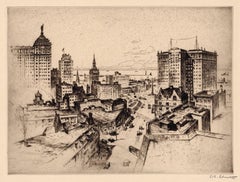
Spirit of Buffalo — Urban Realism
By Anton Schutz
Located in Myrtle Beach, SC
Anton Schutz, 'Spirit of Buffalo', etching, edition not stated, c. 1927. Signed in pencil. Annotated 'Spirit of Buffalo 522', in another hand, in the bottom right margin. A fine, richly-inked impression, with skillfully-controlled plate tone, on cream wove Japan paper; the full sheet with margins (1 5/8 to 2 inches), in excellent condition. Matted to museum standards, unframed. Image size 8 7/8 x 11 7/8 inches; sheet size 12 1/4 x 15 7/8 inches. ABOUT THE ARTIST Etcher, painter, and architect, Anton Schutz was born in Germany in 1894. He studied at the University of Munich, earning a double degree in mechanical engineering...
Category

1920s American Realist South Carolina - Prints and Multiples

Materials

Etching

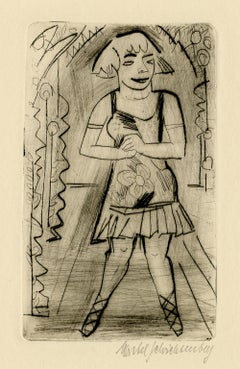
Varietesoubrette, Schwalbennest also Dancer — 1920s German Expressionism
Located in Myrtle Beach, SC
Martel Schwichtenberg (1896-1945), 'Varietésoubrette, Schwalbennest (Variety Soubrette, Swallow’s Nest), drypoint, 1922. Signed in pencil. A fine, richly-inked impression; the full sheet of cream wove paper, with wide margins (3 3/4 to 5 1/4 inches), in excellent condition. Image size 7 3/16 x 4 5/16 inches; sheet size 16 3/8 x 12 1/8 inches. Archivally matted to museum standards, unframed. Published in Die Schaffenden...
Category

1920s Bauhaus South Carolina - Prints and Multiples

Materials

Drypoint

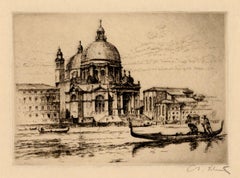
Venice, Maria della Salute — Serenissima Impressionism
By Anton Schutz
Located in Myrtle Beach, SC
Anton Schutz, 'Venice, Maria della Salute', etching, c. 1930. Signed and titled in pencil. A superb, richly-inked impression, with skillfully wiped plate tone, on cream wove paper, ...
Category

1930s Realist South Carolina - Prints and Multiples

Materials

Etching

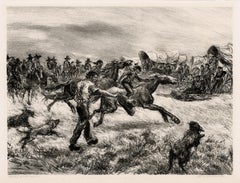
Navajo Horse Race — Southwest Regionalism, American Indian
By Ira Moskowitz
Located in Myrtle Beach, SC
Ira Moskowitz, 'Navajo Horse Race', lithograph, 1946, edition 30, Czestochowski 204. Signed and titled in pencil. Signed and dated in the stone, lower le...
Category

1940s American Modern South Carolina - Prints and Multiples

Materials

Lithograph

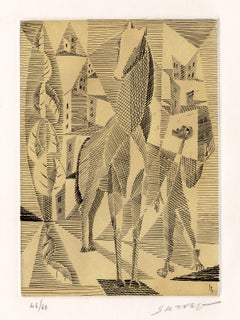
Le Cheval (The Horse) — Mid-Century Cubism
By Léopold Survage
Located in Myrtle Beach, SC
Léopold Survage, 'Le Cheval' (The Horse), color etching, edition 60, 1953. Signed and numbered '46/60' in pencil. Initialed in the plate, lower right. A superb, richly-inked impressi...
Category

1950s Surrealist South Carolina - Prints and Multiples

Materials

Etching

Still Thinking About These?

All Recently Viewed