The Hamptons
to
4,763
989,556
711,405
5,395
3,592
1,448
1,295
1,240
1,219
1,159
702
536
494
416
371
273
186
92
74
58
34
29
18
17
16
14
13
10
8
5
4
4
4
3
2
2
2
1
1
1
179
179
169
101
58
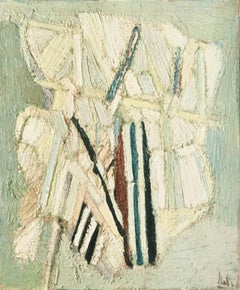
Nicolas de Stael, Celadon Composition, from Painters of Today, 1960 (after)
By Nicolas de Staël
Located in Southampton, NY
This exquisite heliogravure after Nicolas de Stael (1914–1955), titled Composition Celadon (Celadon Composition), from the folio Nicolas de Stael, Peintres d'aujourd'hui (Nicolas de ...
Category
1960s Modern The Hamptons
Materials
Lithograph

$716 Sale Price
20% Off
Wassily Kandinsky, Untitled, from Derriere le Miroir, 1953 (after)
By Wassily Kandinsky
Located in Southampton, NY
This exquisite lithograph after Wassily Kandinsky (1866–1944), titled Sans Titre (Untitled), originates from the 1953 folio Derriere le Miroir, Nos. 60–61, published by Maeght Editeur, Paris, under the direction of Aime Maeght, and printed by Mourlot Freres, Paris. This plate pays homage to the artist’s groundbreaking geometric abstraction and his profound influence on postwar modernism. Through precise form and rhythmic structure, Sans Titre captures the musicality and spiritual dynamism that defined Kandinsky’s mature visual language, balancing intuitive movement with mathematical harmony.
Executed on velin paper, this lithograph measures 15 x 11 inches (38.1 x 27.9 cm), as issued. Signed in the plate and unnumbered, as issued. The edition reflects the exceptional quality and craftsmanship of the Maeght and Mourlot collaborations, honoring Kandinsky’s legacy in fine art printing.
Artwork Details:
Artist: After Wassily Kandinsky (1866–1944)
Title: Sans Titre (Untitled), from Derriere le Miroir, Nos. 60–61, 1953
Medium: Lithograph on velin paper
Dimensions: 15 x 11 inches (38.1 x 27.9 cm), as issued
Inscription: Signed in the plate and unnumbered, as issued
Date: 1953
Publisher: Maeght Editeur, Paris
Printer: Mourlot Freres, Paris
Condition: Well preserved, consistent with age and medium
Provenance: From the 1953 folio Derriere le Miroir, Nos. 60–61, published by Maeght Editeur, Paris
About the Publication:
Derriere le Miroir (translated as "Behind the Mirror") was an iconic French art periodical published from 1946 to 1982 by Maeght Editeur, one of the most influential art publishers of the 20th century. Founded by Aime Maeght in Paris, the publication was conceived as a visual and literary collaboration between leading modern artists, poets, and critics. Each issue functioned as both an exhibition catalogue and a work of art in itself—featuring original lithographs printed directly from the artists' stones or plates, alongside essays, poems, and critical commentary. Over the course of 36 years, Derriere le Miroir produced more than 250 issues and showcased an extraordinary roster of artists including Henri Matisse, Marc Chagall, Joan Miro, Georges Braque, Alexander Calder, Fernand Leger, Pierre Bonnard, Alberto Giacometti, Eduardo Chillida, Ellsworth Kelly, Francis Bacon, Paul Rebeyrolle, Claude Garache, Antoni Tapies, Bram van Velde, Pierre Alechinsky, Pol Bury, Shusaku Arakawa, and Gerard Titus-Carmel. Printed in the ateliers of Mourlot, Arte, and Imprimerie Moderne du Lion, the periodical set new standards for quality in color lithography, combining fine art printing with elegant typography and poetic text. Beyond its visual brilliance, Derriere le Miroir also became a cultural chronicle of postwar European modernism. Each issue coincided with exhibitions held at Galerie Maeght, providing a collectible and widely accessible record of groundbreaking shows. Its integration of image, text, and philosophy created a dialogue between art and literature that elevated the modern art book to new aesthetic heights. Today, Derriere le Miroir remains one of the most sought-after and historically significant art publications, prized by collectors and scholars alike for its craftsmanship, influence, and its role in defining the visual language of 20th-century modernism. The Maeght Foundation in Saint-Paul-de-Vence continues to honor this legacy through exhibitions and archival preservation of the series, affirming Derriere le Miroir's enduring place in the history of modern art and fine art publishing.
About the Artist:
Wassily Kandinsky (1866–1944) was a Russian-born painter, theorist, and pioneer of abstract art whose revolutionary vision transformed 20th-century modernism. Regarded as one of the first artists to create purely nonobjective paintings, Kandinsky sought to express inner emotion and spirituality through color, rhythm, and form, believing that art could evoke the same universal harmony as music. His groundbreaking theories on abstraction and the “spiritual in art” shaped the foundation of modern aesthetics and influenced generations of artists worldwide. Closely associated with the Bauhaus movement, he developed a dynamic visual language that combined geometry and lyricism, bridging intuition and intellect. Kandinsky’s legacy resonates alongside the innovations of Pablo Picasso, Henri Matisse, Alexander Calder, Georges Braque, Marc Chagall, Alberto Giacometti, Salvador Dali, Joan Miro, Marcel Duchamp, and Man Ray—artists who, like him, redefined the possibilities of modern art. His works are represented in the world’s leading museums, including MoMA, the Guggenheim, the Centre Pompidou, and the Tate, and remain among the most coveted by collectors globally. The highest price ever paid for a Wassily Kandinsky artwork is approximately $45.6 million USD, achieved in 2017 at Christie’s London for Bild mit weissen Linien (Painting with White Lines) (1913).
Wassily Kandinsky Sans Titre, Kandinsky Derriere le Miroir, Kandinsky Maeght Editeur Paris, Kandinsky Mourlot Freres, Kandinsky 1953 edition, Kandinsky lithograph...
Category
1950s Modern The Hamptons
Materials
Lithograph

$956 Sale Price
20% Off
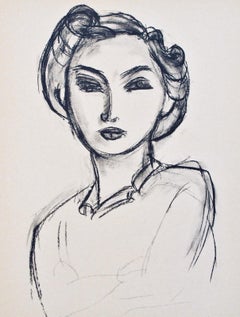
Henri Matisse, Mrs. Dorothy Parley, Portraits by Henri Matisse, 1954 (after)
By Henri Matisse
Located in Southampton, NY
This exquisite heliogravure after Henri Matisse (1869–1954), titled Madame Dorothy Parley (Mrs. Dorothy Parley), from the album Portraits par Henri Matisse (Portraits by Henri Matiss...
Category
1950s Fauvist The Hamptons
Materials
Lithograph
$716 Sale Price
20% Off
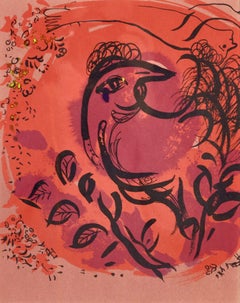
Marc Chagall, Bouquet with Bird, from The Lithographs of Chagall, 1960
By Marc Chagall
Located in Southampton, NY
This exquisite lithograph by Marc Chagall (1887–1985), titled Bouquet à l’Oiseau (Bouquet with Bird), from the album The Lithographs of Chagall, Volume I, originates from the 1960 ed...
Category
1960s Expressionist The Hamptons
Materials
Lithograph
$956 Sale Price
20% Off
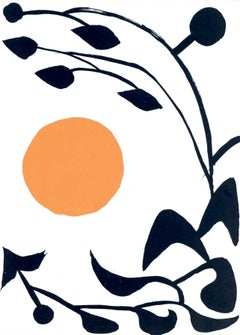
Alexander Calder, Orange Sun, from Derriere le miroir, 1954
By Alexander Calder
Located in Southampton, NY
This exquisite lithograph by Alexander Calder (1898–1976), titled Soleil orange (Orange Sun), from the folio Derriere le miroir, No. 69–70, originates from the 1954 edition published by Maeght Editeur, Paris, and printed by Mourlot Freres, Paris, 1954. This work captures Calder’s mastery of motion, balance, and vibrant color through the spontaneous energy of his abstract forms, embodying the rhythmic harmony and visual poetry that defined his art.
Executed as a lithograph on velin paper, this work measures 15 x 11 inches. Unsigned and unnumbered as issued. The edition exemplifies the superb craftsmanship of Mourlot Freres, Paris.
Artwork Details:
Artist: Alexander Calder (1898–1976)
Title: Soleil orange (Orange Sun), from the folio Derriere le miroir, No. 69–70
Medium: Lithograph on velin paper
Dimensions: 15 x 11 inches (38.1 x 27.9 cm)
Inscription: Unsigned and unnumbered as issued
Date: 1954
Publisher: Maeght Editeur, Paris
Printer: Mourlot Freres, Paris
Condition: Well preserved, consistent with age and medium
Provenance: From the folio Derriere le miroir, No. 69–70, published by Maeght Editeur, Paris; printed by Mourlot Freres, Paris, 1954
About the Publication:
Derriere le miroir (Behind the Mirror) was one of the most important art publications of the 20th century, created and published by Maeght Editeur in Paris from 1946 to 1982. Founded by the visionary art dealer and publisher Aime Maeght, the series served as both an exhibition catalogue and a work of art in its own right, uniting original lithographs by leading modern and contemporary artists with critical essays, poetry, and design of the highest quality. Printed by master lithographers such as Mourlot Freres and Arte, Derriere le miroir became synonymous with the artistic vanguard of postwar Europe. Each issue was devoted to a single artist or theme and published to accompany exhibitions at the Galerie Maeght in Paris, featuring works by Pablo Picasso, Henri Matisse, Georges Braque, Joan Miro, Marc Chagall, Alexander Calder, Fernand Leger, and Alberto Giacometti, among others. The publication reflected Maeght’s belief that art should be both accessible and elevated—an ideal realized through its luxurious production values, meticulous printing, and collaboration with the greatest creative minds of its time.
About the Artist:
Alexander Calder (1898–1976) was an American sculptor, painter, and printmaker whose pioneering innovations in kinetic art revolutionized 20th-century sculpture and transformed modern visual language. Born in Lawnton, Pennsylvania, into a family of artists, Calder initially trained as a mechanical engineer at the Stevens Institute of Technology before turning to art at the Art Students League in New York—a combination of technical precision and creative imagination that defined his career. Moving to Paris in 1926, he immersed himself in the avant-garde and formed friendships with Pablo Picasso, Alberto Giacometti, Joan Miro, Wassily Kandinsky, Salvador Dali, Marcel Duchamp, and Man Ray, whose ideas profoundly shaped his artistic philosophy. From Picasso, he absorbed structural invention; from Miro, lyrical abstraction; from Kandinsky, spiritual geometry; and from Duchamp and Man Ray, the courage to merge intellect and play. In Paris, Calder created his famous Cirque Calder, a miniature mechanical circus that introduced motion and performance as central components of sculpture, and by the early 1930s, he invented the mobile—a term coined by Duchamp—to describe his delicately balanced, moving sculptures that responded to air currents. Later, Jean Arp would name his stationary counterparts stabiles. These two inventions—sculptures that could either float and spin gracefully or stand monumentally still—transformed art into a dynamic dialogue between movement, balance, and space. Calder’s signature forms, painted in vivid reds, blacks, blues, and yellows, embodied both joy and precision, creating an art that was at once abstract, organic, and deeply human. Like Kandinsky and Miro, he viewed art as a form of rhythm and emotion; like Duchamp, he embraced innovation and humor; and like Giacometti and Dali, he was fascinated by perception, structure, and the unseen forces of motion. His monumental public sculptures—such as La Grande Vitesse (1969) in Grand Rapids and Flamingo (1973) in Chicago—redefined public art as a symbol of civic optimism and modern progress. A key bridge between European modernism and American abstraction, Calder’s influence extended to artists including Jean Tinguely, George Rickey, Donald Judd, Ellsworth Kelly, Richard Serra, and Olafur Eliasson, whose works in kinetic and spatial art continue to echo his vision. His gouaches, prints, and jewelry carried the same balance and movement as his sculptures, revealing a unified language of rhythm across media. Represented in every major modern museum—including MoMA, the Guggenheim, the Tate, and the Centre Pompidou—Calder remains celebrated for merging engineering, color, and poetry into an art of pure equilibrium. Standing alongside Pablo Picasso, Alexander Calder, Alberto Giacometti, Salvador Dali, Joan Miro, Wassily Kandinsky, Marcel Duchamp, and Man Ray, he remains one of the cornerstones of modern art—a visionary whose works breathe with motion, grace, and joy. His highest auction record was achieved by Poisson Volant (Flying Fish) (1957), which sold for $25.9 million at Christie’s, New York, on May 15, 2014, reaffirming Alexander Calder’s enduring legacy as one of the most inventive, dynamic, and collectible artists in the history of modern art.
Alexander Calder Soleil...
Category
1950s Modern The Hamptons
Materials
Lithograph
$796 Sale Price
20% Off
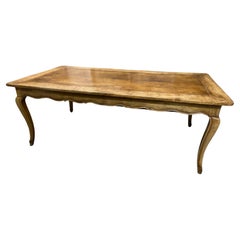
18th Century French Provincial Louis XV Cherrywood
Oak Dining Table
Located in Southampton, NY
18th Century French Provincial Cherrywood & Oak Dining Table
A lovely worn patina French farm table. Center boards in oak, frame in cherrywood. 18th Century. Undulating apron, cabrio...
Category
18th Century French French Provincial Antique The Hamptons
Materials
Cherry, Oak
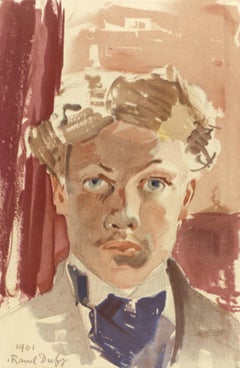
Raoul Dufy, Self-Portrait, from Letter to My Painter Raoul Dufy, 1965 (after)
By Raoul Dufy
Located in Southampton, NY
This exquisite lithograph after Raoul Dufy (1877–1953), titled Autoportrait (Self-Portrait), from the folio Lettre a mon peintre Raoul Dufy (Letter to My Painter Raoul Dufy), origina...
Category
1960s Fauvist The Hamptons
Materials
Lithograph
$716 Sale Price
20% Off
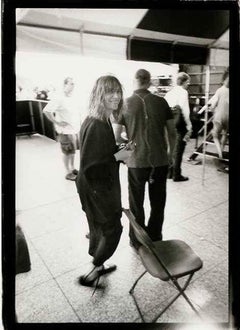
Patti Smith
By Keith Green
Located in East Hampton, NY
Patti Smith, musician, poet. The bohemian New York poet and punk-rock artist
11X14
B&W, Silver Gelatin - Fiber Based Print
Signed and numbered by artist - Keith Green
Captured in New...
Category
Early 2000s Modern The Hamptons
Materials
Silver Gelatin
Calder, Composition, Braniff International Airways Flying Colors (after)
By Alexander Calder
Located in Southampton, NY
Lithograph on vélin paper. Inscription: Signed in the plate and unnumbered, as issued. Good condition. Notes: From the [Braniff International Airways] Flying Colors Collection, 1976....
Category
1970s Modern The Hamptons
Materials
Lithograph

$1,596 Sale Price
20% Off
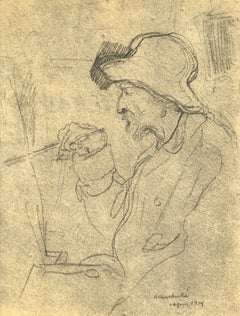
Albert Andre, Portrait of Auguste Renoir, 1951 (after)
By Albert Andre
Located in Southampton, NY
This exquisite lithograph after Albert Andre (1869–1954), titled Portrait de Auguste Renoir (Portrait of Auguste Renoir), from the album Les Lithographies de Renoir (The Lithographs ...
Category
1950s Impressionist The Hamptons
Materials
Lithograph
$716 Sale Price
20% Off
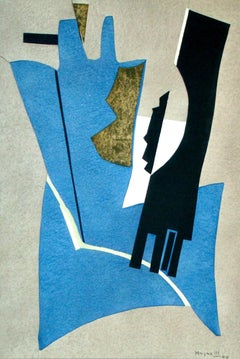
Alberto Magnelli, Pasted Paper, from XXe Siecle, 1956
By Alberto Magnelli
Located in Southampton, NY
This exquisite lithograph and pochoir by Alberto Magnelli (1888–1971), titled Papel colle (Pasted Paper), from the album XXe Siecle, Nouvelle serie, No. 6 (double), Janvier 1956, ori...
Category
1950s Cubist The Hamptons
Materials
Lithograph
$796 Sale Price
20% Off
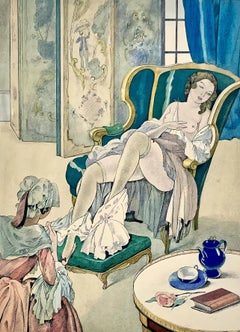
Brunelleschi, Composition, La Leçon d
amour dans un parc (after)
By Umberto Brunelleschi
Located in Southampton, NY
Lithograph and stencil on vélin d’Arches paper. Unsigned and unnumbered, as issued. Good condition. Notes: From the volume, La Leçon d'amour dans un parc, 1933. Published by Éditions...
Category
1930s Modern The Hamptons
Materials
Lithograph, Stencil
$1,436 Sale Price
20% Off
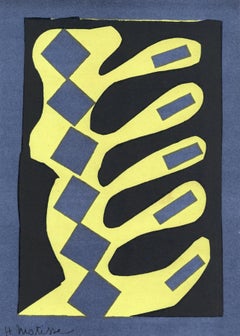
Henri Matisse, Decoupage, from XXe Siecle 1954 (after)
By Henri Matisse
Located in Southampton, NY
This exquisite lithograph after Henri Matisse (1869–1954), titled Decoupage (Decoupage), from the album XXe Siecle, Nouvelle serie N°4 (double) Janvier 1954, originates from the 1954 edition published by Societe Internationale dArt XXe Siecle, Paris, under the direction of Gualtieri di San Lazzaro, editeur, Paris, and printed by Mourlot Freres, Paris, 1954. Decoupage reflects Matisses late career mastery of distilled form, harmonious contour, and poetic abstraction.
Executed as a lithograph on velin paper, this work measures 12.5 x 9.75 inches. Signed in the plate and unnumbered as issued. The edition exemplifies the superb craftsmanship of Mourlot Freres, Paris
Artwork Details:
Artist: After Henri Matisse (1869–1954)
Title: Decoupage (Decoupage)
Medium: Lithograph on velin paper
Dimensions: 12.5 x 9.75 inches (31.75 x 24.77 cm)
Inscription: Signed in the plate and unnumbered as issued
Date: 1954
Publisher: Societe Internationale dArt XXe Siecle, Paris, under the direction of Gualtieri di San Lazzaro, editeur, Paris
Printer: Mourlot Freres, Paris
Condition: Well preserved, consistent with age and medium
Provenance: From the album XXe Siecle, Nouvelle serie N°4 (double) Janvier 1954, published by Societe Internationale dArt XXe Siecle, Paris; printed by Mourlot Freres, Paris, 1954
About the Publication:
Gualtieri di San Lazzaros XXe Siecle (Twentieth Century) was one of the most influential art journals of the modern era, founded in Paris in 1938 as a platform for the greatest painters, sculptors, and writers of the 20th century. San Lazzaro, a visionary editor, critic, and champion of modernism, believed that art and literature should coexist as expressions of a shared human imagination. Under his direction, XXe Siecle became a cultural bridge between Europe and the wider world, publishing special issues devoted to leading figures such as Picasso, Matisse, Chagall, Braque, Calder, Miro, Kandinsky, and Leger. Each edition combined essays by renowned critics and poets with original lithographs, linocuts, and pochoirs printed by the foremost ateliers of Paris, Milan, and New York, including Mourlot, Curwen, Atelier Lacouriere, and Amilcare Pizzi, creating a uniquely rich dialogue between text and image. The 1954 issue, Nouvelle serie N°4 (double), stands among the journals landmark mid century editions. Today, XXe Siecle remains an essential record of 20th century modernism, celebrated for its seamless integration of fine art, literature, and design.
About the Artist:
Henri Matisse (1869–1954) was a French painter, sculptor, draughtsman, and printmaker whose revolutionary vision redefined modern art through his daring use of color, line, and form. Celebrated as one of the greatest artists of the 20th century, Matisse led the Fauvist movement and devoted his life to the pursuit of balance, beauty, and emotional expression in visual art. His early works burst with vibrant hues and liberated brushwork, while his later cut out compositions achieved a poetic simplicity that transformed the relationship between color and space. Deeply influenced by the work of Paul Cezanne, Vincent van Gogh, and Georges Seurat, as well as by the rhythmic patterns of Islamic art, Byzantine mosaics, and Japanese prints, Matisse forged a new visual language that celebrated joy, movement, and serenity. He was part of an extraordinary generation of artists who shaped the evolution of modernism, maintaining lifelong dialogue and friendly rivalry with contemporaries such as Pablo Picasso, Georges Braque, Marc Chagall, Andre Derain, Albert Marquet, and Raoul Dufy peers who, like him, sought to expand the expressive potential of color and composition. Matisses influence extended across generations, inspiring modern and contemporary masters including Alexander Calder, Alberto Giacometti, Salvador Dali, Joan Miro, Wassily Kandinsky, Marcel Duchamp, and Man Ray, each of whom drew upon his fearless experimentation and refined visual harmony. His paintings, sculptures, and works on paper are held in the most prestigious museums in the world, including the Museum of Modern Art, the Centre Pompidou, the Tate, and the Hermitage Museum, where his art continues to symbolize the essence of creativity and human emotion. The highest price ever paid for a Henri Matisse artwork is approximately 80.8 million USD, achieved in 2018 at Christies New York for Odalisque couchee aux magnolias (1923).
Henri Matisse Decoupage...
Category
1950s Fauvist The Hamptons
Materials
Lithograph
$956 Sale Price
20% Off
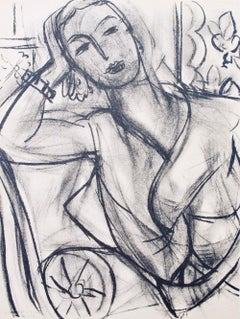
Henri Matisse, Mrs. Mary Hutchinson, Portraits by Henri Matisse, 1954 (after)
By Henri Matisse
Located in Southampton, NY
This exquisite heliogravure after Henri Matisse (1869–1954), titled Madame Mary Hutchinson (Mrs. Mary Hutchinson), from the album Portraits par Henri Matisse (Portraits by Henri Mati...
Category
1950s Fauvist The Hamptons
Materials
Lithograph
$716 Sale Price
20% Off
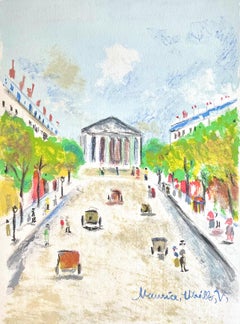
Maurice Utrillo, Rue Royale, La Madeleine, from Paris Capital, 1955
By Maurice Utrillo
Located in Southampton, NY
This exquisite lithograph by Maurice Utrillo (1883–1955), titled Rue Royale, La Madeleine (Rue Royale, La Madeleine), from the album Paris Capitale (Paris Capital), originates from t...
Category
1950s Modern The Hamptons
Materials
Lithograph, Stencil
$1,436 Sale Price
20% Off
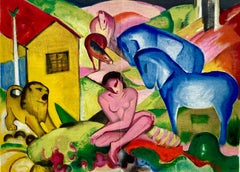
Marc, Der Traum, Derrière le miroir (after)
By Franz Marc
Located in Southampton, NY
Lithograph on vélin paper. Inscription: Unsigned and unnumbered, as issued. Good condition, with centerfold, as issued. Notes: From Derrière le miroir, N° 133-134, 1962. Published by...
Category
1960s Modern The Hamptons
Materials
Lithograph
$716 Sale Price
20% Off
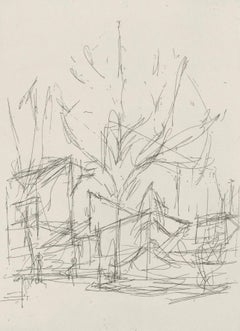
Composition, Feuilles éparses, Alberto Giacometti
By Alberto Giacometti
Located in Southampton, NY
Etching on vélin cuve de Rives paper. Inscription: Unsigned and unnumbered, as issued. Good condition. Notes: From the folio, Feuilles éparses, 1965. Published and printed by Louis B...
Category
1960s Surrealist The Hamptons
Materials
Etching
$9,996 Sale Price
20% Off
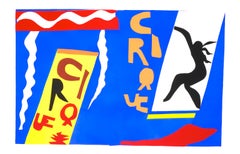
Henri Matisse, The Circus, from Jazz, Special Edition for MoMA, 1983 (after)
By Henri Matisse
Located in Southampton, NY
This exquisite heliogravure after Henri Matisse (1869–1954), titled Le Cirque (The Circus), from Henri Matisse, Jazz, originates from the 1983 second edition published by George Braz...
Category
1980s Fauvist The Hamptons
Materials
Lithograph
$796 Sale Price
20% Off
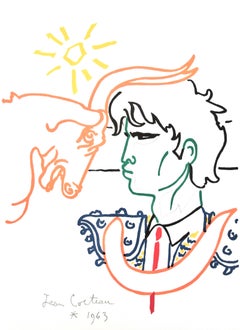
Jean Cocteau, Head to Head, from Bulls, 1965 (after)
By Jean Cocteau
Located in Southampton, NY
This exquisite lithograph after Jean Cocteau (1889–1963), titled Tete a tete (Head to Head), from the folio Taureaux, Lithographies de Jean Cocteau (Bulls, Lithographs by Jean Coctea...
Category
1960s Modern The Hamptons
Materials
Lithograph
$796 Sale Price
20% Off
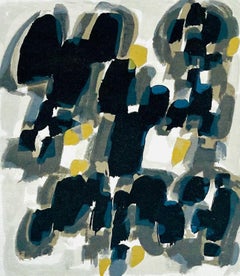
Ubac, Composition, Derrière le miroir (after)
By Raoul Ubac
Located in Southampton, NY
Lithograph on vélin paper. Inscription: Unsigned and unnumbered, as issued. Good condition. Notes: From Derrière le miroir, N° 130, 1961. Published by Aimé Maeght, Éditeur, Paris; pr...
Category
1960s Modern The Hamptons
Materials
Lithograph
$716 Sale Price
20% Off
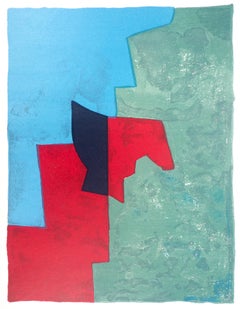
Serge Poliakoff, Red Green and Blue Composition, from XXe Siecle, 1961
By Serge Poliakoff
Located in Southampton, NY
This exquisite lithograph by Serge Poliakoff (1900–1969), titled Composition rouge verte et bleue (Red Green and Blue Composition), from the album XXe Siecle, Nouvelle serie, XXIIIe ...
Category
1960s Modern The Hamptons
Materials
Lithograph
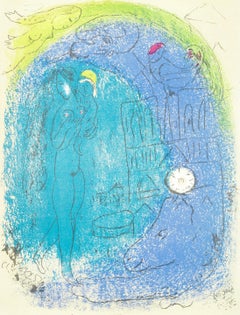
Marc Chagall, Mother and Child before Notre-Dame, Verve, Revue Artistique, 1953
By Marc Chagall
Located in Southampton, NY
This exquisite lithograph by Marc Chagall (1887–1985), titled Mere et enfant devant a Notre-Dame (Mother and Child before Notre-Dame), from Verve, Revue Artistique et Litteraire, Vol...
Category
1950s Expressionist The Hamptons
Materials
Lithograph
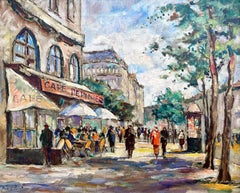
“Cafe Pepinier, Paris
Located in Southampton, NY
Original oil on canvas painting of the Cafe Pepinier in Paris by Andre Picot. Condition is very good. Signed lower left by the artist. Titled “Cafe Pepini...
Category
1950s Post-Impressionist The Hamptons
Materials
Canvas, Oil
$1,600 Sale Price
42% Off
MARILYN CRYING - CALIFORNIA Blind Red Ltd Ed 3/4 - Diamond Dust on Linen/Framed
By Russell Young
Located in New York, NY
Shot of Marilyn Monroe. Red acrylic paint. Hand pulled enamel screen print and diamond dust on linen. Stretched on black frame. Signed by artist on the back.
About the Famed ...
Category
2010s Pop Art The Hamptons
Materials
Enamel

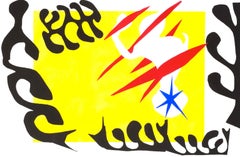
Henri Matisse, The Nightmare of the White Elephant, from Jazz, 1983 (after)
By Henri Matisse
Located in Southampton, NY
This exquisite heliogravure after Henri Matisse (1869–1954), titled Le Cauchemar de l'éléphant blanc (The Nightmare of the White Elephant), from Henri Matisse, Jazz, originates from ...
Category
1980s Fauvist The Hamptons
Materials
Lithograph
$796 Sale Price
20% Off
Family Circle - SOLD - Commission Available
Located in New York, NY
Acrylic on canvas set in white wooden frame. Abstract and figurative depending on how close or far you are from the piece. The circle is the focus. Small amount of paint create ...
Category
2010s Contemporary The Hamptons
Materials
Canvas, Acrylic

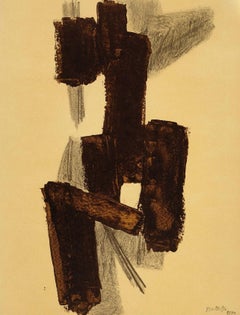
Pierre Soulages, Plate No. 7, from Painters of Today, 1962 (after)
By Pierre Soulages
Located in Southampton, NY
This exquisite heliogravure after Pierre Soulages (1919–2022), titled Planche No. 7 (Plate No. 7), from the folio Pierre Soulages, Peintres d'aujourd'hui (Pierre Soulages, Painters o...
Category
1960s Modern The Hamptons
Materials
Lithograph
$1,996 Sale Price
20% Off
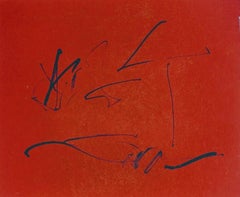
Red Wind (Belknap 354-380; Engberg/Banach 415-441), Three Poems
By Robert Motherwell
Located in Southampton, NY
Lithograph on Japon à la main, attached with chine appliqué to vélin d’Arches paper. Paper Size: 21.5 x 17.875 inches. Inscription: Unsigned and unnumbered, as issued. Notes: From th...
Category
1980s Abstract Expressionist The Hamptons
Materials
Lithograph
$7,996 Sale Price
20% Off
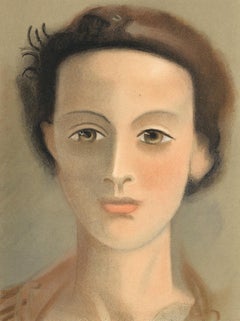
Andre Derain, Head of a Young Girl, from Verve, Revue Artistique, 1939
By André Derain
Located in Southampton, NY
This exquisite lithograph by Andre Derain (1880–1954), titled Tete de Jeune Fille (Head of a Young Girl), from Verve, Revue Artistique et Litteraire, Vol. II, No. 5–6, originates fro...
Category
1930s Fauvist The Hamptons
Materials
Lithograph
$716 Sale Price
20% Off
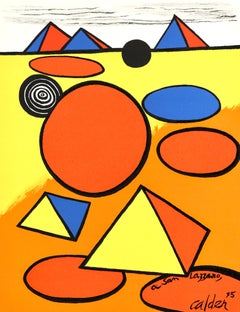
Alexander Calder, To San Lazzaro, from San Lazzaro et ses Amis, 1975
By Alexander Calder
Located in Southampton, NY
This exquisite lithograph by Alexander Calder (1898–1976), titled A San Lazzaro (To San Lazzaro), from the album San Lazzaro et ses Amis, Hommage au fondateur de la revue XXe siecle ...
Category
1970s Surrealist The Hamptons
Materials
Lithograph
$1,756 Sale Price
20% Off
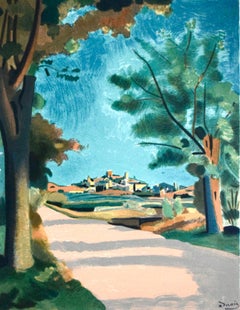
Andre Derain, Village Road, from The Painters My Friends, 1965 (after)
By André Derain
Located in Southampton, NY
This exquisite lithograph after Andre Derain (1880–1954), titled Route de Village (Village Road), from the folio Les Peintres mes amis (The Painters My Friends), originates from the ...
Category
1960s Modern The Hamptons
Materials
Lithograph
$1,436 Sale Price
20% Off
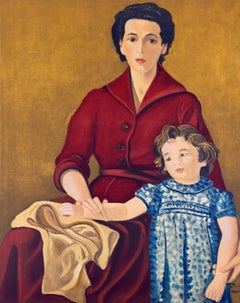
Andre Derain, Denise and Claire Levy, 1970 (after)
By André Derain
Located in Southampton, NY
This exquisite lithograph after Andre Derain (1880–1954), titled Denise et Claire Levy (Denise and Claire Levy), from the folio Andre Derain entre 1935 et 1949, V (Andre Derain betwe...
Category
1970s Fauvist The Hamptons
Materials
Lithograph
$716 Sale Price
20% Off
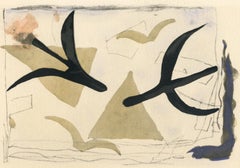
Georges Braque, Study of Birds, from Le Solitaire, XXe siecle, 1959 (after)
By Georges Braque
Located in Southampton, NY
This exquisite lithograph and pochoir after Georges Braque (1882–1963), titled Etude oiseaux (Study of Birds), from the album Georges Braque, Le Solitaire (The Solitary), originates ...
Category
1950s Cubist The Hamptons
Materials
Lithograph
$716 Sale Price
20% Off
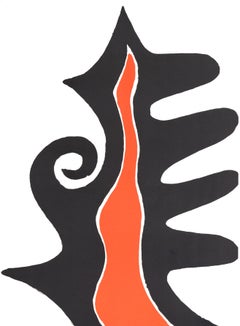
Alexander Calder, Black and Red Form, from Derriere le Miroir, 1973
By Alexander Calder
Located in Southampton, NY
This exquisite lithograph by Alexander Calder (1898–1976), titled Formulaire noir et rouge (Black and Red Form), originates from the historic 1973 folio Derriere le Miroir, No. 201. ...
Category
1970s Modern The Hamptons
Materials
Lithograph
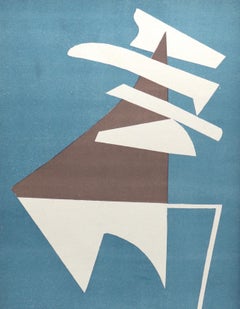
Alberto Magnelli, Untitled, from XXe Siecle, 1952
By Alberto Magnelli
Located in Southampton, NY
This exquisite lithograph by Alberto Magnelli (1888–1971), titled Sans titre (Untitled), from the album XXe Siecle, Nouvelle serie No. 3 (double), Juin 1952, originates from the 1952...
Category
1950s Modern The Hamptons
Materials
Lithograph
$796 Sale Price
20% Off
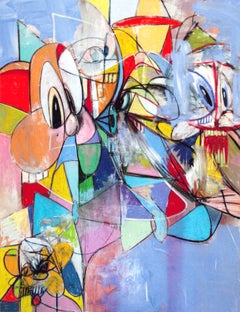
George Condo, Anthropology, from Drawing Paintings, 2011 (after)
By George Condo
Located in Southampton, NY
This exquisite four color process archival pigment print after George Condo (born 1957), titled Anthropology, from the folio George Condo, Drawing Paintings, originates from the 2011...
Category
2010s Contemporary The Hamptons
Materials
Archival Pigment
$3,996 Sale Price
20% Off
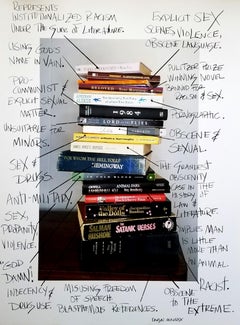
BANNED Books
By Karyn Mannix
Located in East Hampton, NY
BANNED
Finished Dimensions: 43.5''x33.5''x1.5"
Grease Pencil on 40"x30" Photograph mounted on acid-free foamboard
Unique
Very hard to photograph due to paper shine & grease pencil s...
Category
2010s Contemporary The Hamptons
Materials
Mixed Media
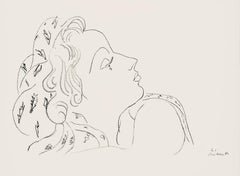
Henri Matisse, Series Z, Var. 1, Drawings, Themes and Variations, 1943 (after)
By Henri Matisse
Located in Southampton, NY
This exquisite lithograph after Henri Matisse (1869–1954), titled Serie Z, var. 1 (Series Z, Variation 1), from the album Henri Matisse, Dessins, Themes et Variations (Drawings, Them...
Category
1940s Modern The Hamptons
Materials
Lithograph
$796 Sale Price
20% Off
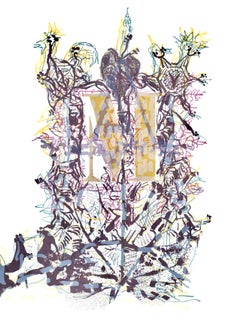
Jean-Paul Riopelle, Untitled, from Derriere le Miroir, 1982
By Jean-Paul Riopelle
Located in Southampton, NY
This exquisite lithograph by Jean-Paul Riopelle (1923–2002), titled Sans titre (Untitled), originates from the historic 1982 folio Derriere le Mir...
Category
1980s Modern The Hamptons
Materials
Lithograph
$716 Sale Price
20% Off
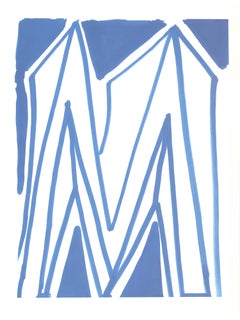
David Hockney, Letter M, from Hockney
s Alphabet, 1991
By David Hockney
Located in Southampton, NY
This exquisite lithograph by David Hockney (born 1937), titled Letter M, from the folio Hockney's Alphabet, Drawings by David Hockney, originates from the 1991 edition published by A...
Category
1990s Contemporary The Hamptons
Materials
Lithograph
$1,196 Sale Price
20% Off
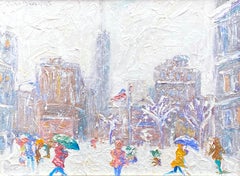
“Wintry Day, Madison Square”
By John Crimmins
Located in Southampton, NY
Recently completed painting of Madison Square in New York City on a snowy winters day. Signed top left and signed and titled verso. Condition is excelle...
Category
2010s Post-Impressionist The Hamptons
Materials
Acrylic, Board
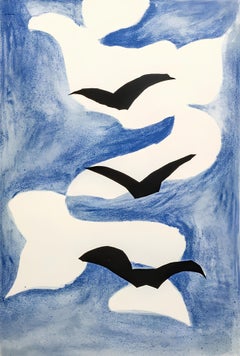
Composition (Vallier 137), Résurrection de l
oiseau, Georges Braque
By Georges Braque
Located in Southampton, NY
Lithograph on vélin vélin de Rives paper. Inscription: unsigned and unnumbered, as issued. Good condition. Notes: from the folio, Résurrection de l'oiseau, Georges Braque, 1958. Publ...
Category
1950s Modern The Hamptons
Materials
Lithograph
$4,396 Sale Price
20% Off
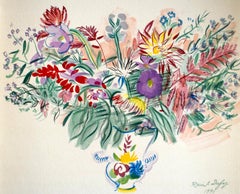
Raoul Dufy, The Bouquet, from The Painters My Friends, 1965 (after)
By Raoul Dufy
Located in Southampton, NY
This exquisite lithograph after Raoul Dufy (1877–1953), titled Le Bouquet (The Bouquet), from the folio Les Peintres mes amis (The Painters My Friends), originates from the 1965 edit...
Category
1960s Modern The Hamptons
Materials
Lithograph
$1,916 Sale Price
20% Off
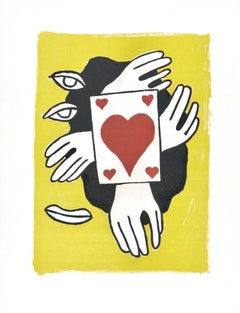
Fernand Leger, Plate 92, from Circus, 1950
By Fernand Léger
Located in Southampton, NY
This exquisite lithograph by Fernand Leger (1881–1955), titled Planche 92 (Plate 92), from the album Cirque, Lithographies Originales (Circus, Original Lithographs), originates from ...
Category
1950s Modern The Hamptons
Materials
Lithograph
$1,996 Sale Price
37% Off
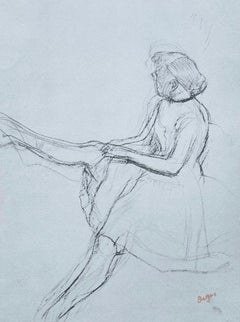
Edgar Degas, Seated Dancer, Removing Her Slipper, 1945 (after)
By Edgar Degas
Located in Southampton, NY
This exquisite lithograph after Edgar Degas (1834–1917), titled Seated dancer, removing her slipper, originates from the 1945 folio Degas, Ten Ballet Sketches. Published by The Studio Publications, Inc., New York, rendered and printed by Albert Carman, City Island, 1945, this work reflects Degas’s sensitive mastery of line, movement, and intimate observation, capturing the grace, poise, and psychological immediacy that define his iconic ballet imagery. In Seated dancer, removing her slipper, Degas reveals gesture and inner emotion through economical contour and lyrical nuance.
Executed as a lithograph and pochoir on velin paper, this work measures 17 x 13 inches (43.18 x 33.02 cm). Signed in the plate and unnumbered as issued. Rendered and printed by Albert Carman, City Island, one of the notable American ateliers specializing in fine art lithography during the mid-20th century.
Artwork Details:
Artist: After Edgar Degas (1834–1917)
Title: Seated dancer, removing her slipper, from Degas, Ten Ballet Sketches, 1945
Medium: Lithograph and pochoir on velin paper
Dimensions: 17 x 13 inches (43.18 x 33.02 cm)
Inscription: Signed in the plate and unnumbered as issued
Date: 1945
Publisher: The Studio Publications, Inc., New York
Printer: Albert Carman, City Island, 1945
Condition: Well preserved, consistent with age and medium
Provenance: From the 1945 folio Degas, Ten Ballet Sketches, published by The Studio Publications, Inc., New York
Notes:
Excerpted from the album, Born in Paris in 1834, Edgar Degas lived, and surely loved the life of that city during most of his years. These continued somewhat sadly beyond those of most of his friends— into the debacle of the first World War, during which he died in 1917. Judging by the frequency with which he used them as models, he must have had an especial admiration for the ballet girls who followed a profession that at the time brought none of the glory and prosperity which attend it today. New aspects of the human body, revealed in movement, fascinated him. But his occupation with the simply anatomical side of his subjects never resulted in a cold interpretation. On the contrary there is a warmth and sympathy that pervades all of his work. The drawings here represent the painter in one important phase of his multi-sensitive view of life; and permit an insight which a more ambitious work might not do-into the operation of the creative process, the artist's transformation of reality as it passes through the mesh of his sensibilities. The Edition of this Portfolio is limited to MMMD examples. Rendered by Albert Carman.
About the Publication:
Degas, Ten Ballet Sketches, published in 1945 by The Studio Publications, Inc., New York, stands as one of the most elegant and scholarly mid-century American fine art folios devoted to the ballet imagery of Edgar Degas. Conceived as a high-quality interpretive portfolio, the album presents a series of lithograph-and-pochoir renderings based on Degas’s original drawings, executed with exceptional attention to tonal subtlety, contour fidelity, and the emotional interiority that defines the artist’s draftsmanship. Rendered and printed by Albert Carman on City Island, the publication embodies an American postwar effort to restore and celebrate European masterworks through meticulous handcraft and artisanal color application, honoring Degas’s distinctive line and the atmospheric delicacy of his studio-based studies. Produced in a substantial edition of MMMD examples, the portfolio offered audiences rare access to Degas’s private working drawings—images rarely seen outside institutional collections—while exemplifying the technical refinement and interpretive care characteristic of Carman’s workshop. Today, Degas, Ten Ballet Sketches remains a sought-after historical publication, valued for its craft, fidelity to Degas’s aesthetic, and its role in preserving and disseminating the artist’s intimate ballet imagery in a beautifully executed mid-century fine art format.
About the Artist:
Edgar Degas (1834–1917) was a French painter, draughtsman, printmaker, and sculptor whose groundbreaking fusion of classical draftsmanship, modern experimentation, and psychological depth helped define the trajectory of Western art, positioning him as one of the most influential figures of the nineteenth and early twentieth centuries; renowned for his depictions of ballet dancers, racehorses, theater scenes, cafe life, domestic interiors, milliners, laundresses, and women at their toilette, Degas reimagined observational realism through radical compositional innovation—employing extreme cropping, asymmetrical framing, oblique viewpoints, and dramatic lighting that anticipated photographic and cinematic language long before these technologies shaped visual culture, and although associated with Impressionism, he rejected plein-air spontaneity in favor of studio-based discipline rooted in the linear precision of Jean-Auguste-Dominique Ingres, the expressive chromaticism of Eugene Delacroix, and the modernity of Edouard Manet while also drawing inspiration from Japanese ukiyo-e prints, classical sculpture, and early photography; his independent artistic philosophy resonated with and helped shape the innovations of Pablo Picasso, Alexander Calder, Alberto Giacometti, Salvador Dali, Joan Miro, Wassily Kandinsky, Marcel Duchamp, and Man Ray, whose explorations of movement, form, dream logic, abstraction, and conceptualism all find antecedents in Degas’s investigations into seriality, temporality, and the fragmented figure, and his pioneering use of pastel, monotype, and wax sculpture fundamentally transformed each medium, influencing artists from Henri Matisse, Francis Bacon, Lucian Freud, and Giacomo Manzu to Paula Rego, contemporary realists, experimental photographers, and choreographers; his works are held in nearly every major museum collection worldwide—including the Musee dOrsay, the Louvre, the Metropolitan Museum of Art, the National Gallery of Art, the Art Institute of Chicago, the Courtauld Institute, and the National Gallery, London—affirming his central place in the history of art, and the highest auction record for Degas was achieved at Sothebys London on February 3, 2015, when Danseuses en Bleu sold for 37,033,000 GBP, cementing his status as one of the most sought-after and enduringly significant artists of the Western canon.
Edgar Degas lithograph...
Category
1940s Impressionist The Hamptons
Materials
Lithograph
$796 Sale Price
20% Off
Henri Matisse, Of Color, from Verve, Revue Artistique, 1945
By Henri Matisse
Located in Southampton, NY
This exquisite lithograph by Henri Matisse (1869–1954), titled De la couleur (Of Color), from Verve, Revue Artistique et Litteraire, Vol. IV, No. 13, originates from the 1945 issue p...
Category
1940s Fauvist The Hamptons
Materials
Lithograph

$956 Sale Price
20% Off
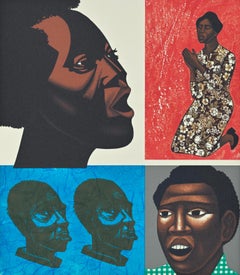
Singing Their Songs, For My People, Elizabeth Catlett
By Elizabeth Catlett
Located in Southampton, NY
Lithograph on vélin d’Arches 300gm paper. Paper Size: 21.8125 x 18.3125 inches. Inscription: Unsigned and unnumbered, as issued. Notes: From the album, For My People, 1992. Published...
Category
1990s Expressionist The Hamptons
Materials
Lithograph
$10,396 Sale Price
20% Off
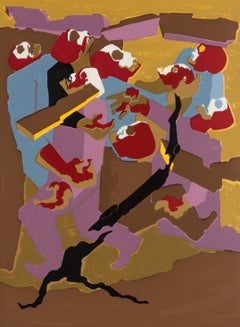
Jacob Lawrence, Street Scene, from Hiroshima, 1983
By Jacob Lawrence
Located in Southampton, NY
This exquisite silkscreen by Jacob Lawrence (1917–2000), titled Street Scene, from the album Hiroshima, originates from the 1983 edition published by The Limited Editions Club, New Y...
Category
1980s Expressionist The Hamptons
Materials
Screen
$2,796 Sale Price
20% Off
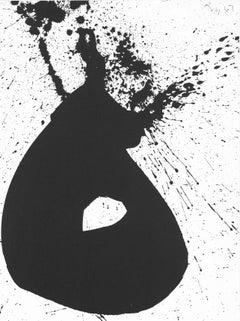
Motherwell, Sans titre, In Memory of My Feelings (after)
By Robert Motherwell
Located in Southampton, NY
Lithograph on vélin Mohawk Superfine Smooth paper. Paper Size: 11.937 x 8.96 inches. Inscription: Signed in the plate and unnumbered, as issued. Notes: From the folio, In Memory of M...
Category
1960s Abstract Expressionist The Hamptons
Materials
Lithograph
$1,596 Sale Price
20% Off
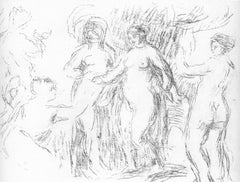
Pierre-Auguste Renoir, The Bathers, 1951 (after)
By Pierre-Auguste Renoir
Located in Southampton, NY
This exquisite lithograph after Pierre-Auguste Renoir (1841–1919), titled Les Baigneuses (The Bathers), from the album Les Lithographies de Renoir (The Lithographs of Renoir), origin...
Category
1950s Impressionist The Hamptons
Materials
Lithograph
$716 Sale Price
20% Off
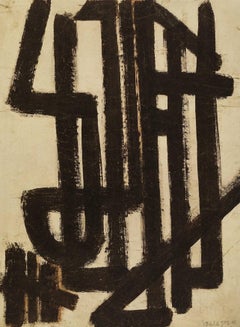
Pierre Soulages, Plate No. 3, from Painters of Today, 1962 (after)
By Pierre Soulages
Located in Southampton, NY
This exquisite heliogravure after Pierre Soulages (1919–2022), titled Planche No. 3 (Plate No. 3), from the folio Pierre Soulages, Peintres d'aujourd'hui (Pierre Soulages, Painters o...
Category
1960s Modern The Hamptons
Materials
Lithograph
$1,996 Sale Price
20% Off
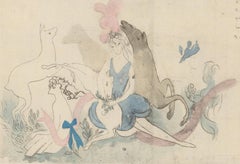
Marie Laurencin, Untitled, from Les Biches, 1924
By Marie Laurencin
Located in Southampton, NY
This exquisite lithograph and pochoir by Marie Laurencin (1883–1956), titled Sans titre (Untitled), from the album Les Biches (The Does), originates from the 1924 edition published b...
Category
1920s Modern The Hamptons
Materials
Lithograph, Stencil
$2,796 Sale Price
20% Off
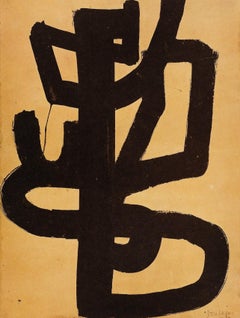
Pierre Soulages, Plate No. 1, from Painters of Today, 1962 (after)
By Pierre Soulages
Located in Southampton, NY
This exquisite heliogravure after Pierre Soulages (1919–2022), titled Planche No. 1 (Plate No. 1), from the folio Pierre Soulages, Peintres d'aujourd'hui (Pierre Soulages, Painters o...
Category
1960s Modern The Hamptons
Materials
Lithograph
$1,996 Sale Price
20% Off
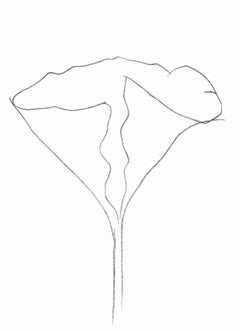
Ellsworth Kelly, Lotus, from Derriere le Miroir, 1982
By Ellsworth Kelly
Located in Southampton, NY
This exquisite lithograph by Ellsworth Kelly (1923–2015), titled Lotus, originates from the historic 1982 folio Derriere le Miroir, No. 250, Hommage a Aime et Marguerite Maeght (Trib...
Category
1980s Hard-Edge The Hamptons
Materials
Lithograph
$716 Sale Price
20% Off
1950
s Dark Brown Stitched Leather Valet Stand by Jacques Adnet
By Jacques Adnet
Located in North Miami, FL
Handsome Jacques Adnet valet covered in rich dark brown leather with contrast stitching and signature brass details. A truly timeless piece in wonderful original vintage condition.
Category
1950s French Mid-Century Modern Vintage The Hamptons
Materials
Metal, Brass

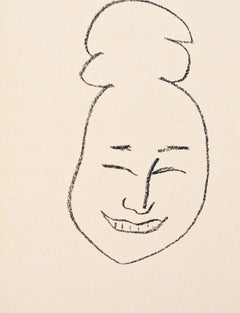
Henri Matisse, Eskimo, from Portraits by Henri Matisse, 1954 (after)
By Henri Matisse
Located in Southampton, NY
This exquisite heliogravure after Henri Matisse (1869–1954), titled Esquiman (Eskimo), from the album Portraits par Henri Matisse (Portraits by Henri Matisse), originates from the 19...
Category
1950s Fauvist The Hamptons
Materials
Lithograph
$716 Sale Price
20% Off
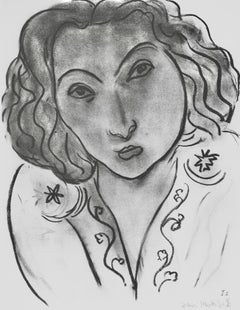
Henri Matisse, Series I, Var. 1, Drawings, Themes and Variations, 1943 (after)
By Henri Matisse
Located in Southampton, NY
This exquisite lithograph after Henri Matisse (1869–1954), titled Serie I, var. 1 (Series I, Variation 1), from the album Henri Matisse, Dessins, Themes et Variations (Drawings, Them...
Category
1940s Modern The Hamptons
Materials
Lithograph
$796 Sale Price
20% Off
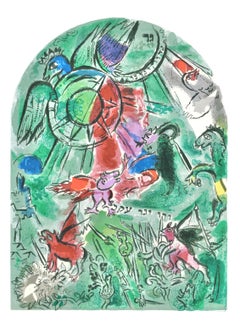
Marc Chagall, Tribe of Gad, from The Jerusalem Windows, 1962 (after)
By Marc Chagall
Located in Southampton, NY
This exquisite lithograph after Marc Chagall (1887–1985), titled Tribe of Gad, from the album Marc Chagall, The Jerusalem Windows, originates from the 1962 edition published by Andre Sauret, Editeur, Paris, and printed by Mourlot Freres, Paris, June 7, 1962. This magnificent composition reflects Chagall’s profound engagement with the spiritual and symbolic language of the Hebrew Bible, celebrating the Tribe of Gad as an embodiment of courage, strength, and divine protection. Tribe of Gad radiates with Chagall’s signature dreamlike palette—deep blues, glowing yellows, and translucent reds—creating an atmosphere of sacred harmony and lyrical movement. The work exemplifies the artist’s ability to merge ancient narratives with modern visual poetry, transforming his spiritual reflections into radiant visions of light and color that transcend time and tradition.
Executed as a lithograph on velin paper, this work measures 15 x 11 inches (38.1 x 27.94 cm). Unsigned and unnumbered as issued. The edition exemplifies the exceptional craftsmanship of the Mourlot Freres atelier, renowned for its collaboration with the most important modern artists of the 20th century.
Artwork Details:
Artist: After Marc Chagall (1887–1985)
Title: Tribe of Gad, from Marc Chagall, The Jerusalem Windows
Medium: Lithograph on velin paper
Dimensions: 15 x 11 inches (38.1 x 27.94 cm)
Inscription: Unsigned and unnumbered as issued
Date: 1962
Publisher: Andre Sauret, Editeur, Paris
Printer: Mourlot Freres, Paris
Condition: Well preserved, consistent with age and medium
Provenance: From the album Marc Chagall, The Jerusalem Windows, published by Andre Sauret, Editeur, Paris, June 7, 1962
Notes:
Excerpted from the album, This album, which was compiled by Andre Sauret, was completed on June 7, 1962. The texts by Jean Leymarie were composed by hand in "Romain du roi" and were printed by The Imprimerie Nationale de France. The thirty-six preparatory color designs, some of which are in twenty colors, were transferred to the stones by Charles Sorlier under the direction of Marc Chagall. These designs and the two original lithographs by Marc Chagall were printed by Mourlot Freres. The other reproductions and the binding are by Draeger Freres.
About the Publication:
Marc Chagall, The Jerusalem Windows (Les Vitraux de Jerusalem), published in 1962 by Andre Sauret, Editeur, Paris, stands as one of the artist’s most celebrated illustrated albums and a cornerstone of modern printmaking. The publication documents Chagall’s monumental stained-glass windows created for the synagogue of the Hadassah-Hebrew University Medical Center in Jerusalem—an artistic and spiritual masterpiece dedicated to the twelve tribes of Israel. Conceived in collaboration with master printer Charles Sorlier and the renowned Mourlot Freres atelier, the album compiles the artist’s original color studies through vibrant lithography, achieving a remarkable luminosity that mirrors the glowing transparency of stained glass. The accompanying text by art historian Jean Leymarie offers profound insights into Chagall’s vision, faith, and symbolism. Completed on June 7, 1962, this edition embodies the union of fine art, craftsmanship, and devotion, capturing the transcendent beauty of Chagall’s windows and their universal message of peace and faith.
About the Artist:
Marc Chagall (1887–1985) was a Belarus-born French painter, printmaker, and designer whose visionary imagination, radiant color, and deeply poetic symbolism made him one of the most beloved and influential artists of the 20th century. Rooted in the imagery of his Jewish heritage and the memories of his childhood in Vitebsk, Chagall’s art wove together themes of faith, love, folklore, and fantasy with a dreamlike modern sensibility. His unique style—merging elements of Cubism, Fauvism, Expressionism, and Surrealism—defied categorization, transforming ordinary scenes into lyrical meditations on memory and emotion. Influenced by Russian icon painting, medieval religious art, and the modern innovations of artists such as Pablo Picasso, Henri Matisse, and Georges Braque, Chagall developed a profoundly personal visual language filled with floating figures, vibrant animals, musicians, and lovers that symbolized the transcendent power of imagination and love. During his early years in Paris, he became an integral part of the Ecole de Paris circle, forming friendships with Amedeo Modigliani, Fernand Leger, and Sonia Delaunay, and his creative spirit resonated with that of his peers and successors—Alexander Calder, Alberto Giacometti, Salvador Dali, Joan Miro, Wassily Kandinsky, Marcel Duchamp, and Man Ray—artists who, like Chagall, sought to push the boundaries of perception, emotion, and form. Over a prolific career that spanned painting, printmaking, stained glass, ceramics, and stage design, Chagall brought an unparalleled poetic sensibility to modern art, infusing even the most abstract subjects with human warmth and spiritual depth. His works are held in the most prestigious museums around the world, including the Museum of Modern Art, the Centre Pompidou, the Tate, and the Guggenheim, where they continue to inspire generations of artists and collectors. The highest price ever paid for a Marc Chagall artwork is approximately $28.5 million USD, achieved in 2017 at Sotheby’s New York for Les Amoureux (1928).
Marc Chagall Tribe of Gad, Chagall Jerusalem Windows...
Category
1960s Expressionist The Hamptons
Materials
Lithograph
$716 Sale Price
20% Off
Marcel Gromaire, Homage to Dufy, from Letter to My Painter Raoul Dufy, 1965
By Marcel Gromaire
Located in Southampton, NY
This exquisite lithograph by Marcel Gromaire (1892–1971), titled Hommage a Dufy (Homage to Dufy), from the folio Lettre a mon peintre Raoul Dufy (Letter to My Painter Raoul Dufy), or...
Category
1960s Cubist The Hamptons
Materials
Lithograph
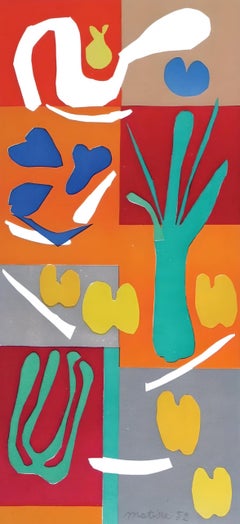
Henri Matisse, Plants, from Verve, Revue Artistique, 1958 (after)
By Henri Matisse
Located in Southampton, NY
This exquisite lithograph after Henri Matisse (1869–1954), titled Vegetaux (Plants), from Verve, Revue Artistique et Litteraire, Vol. IX, No. 35–36, originates from the 1958 issue pu...
Category
1950s Modern The Hamptons
Materials
Lithograph
$796 Sale Price
33% Off