Wisconsin - Art
to
93
760
583
470
346
411
Overall Width
to
Overall Height
to
60
193
1,279
1,038
28
19
36
66
50
86
166
163
183
383
16
813
309
134
63
49
48
41
39
36
33
11
3
1
1,109
962
116
850
463
313
305
264
170
152
146
137
133
113
97
95
87
70
70
70
64
60
56
855
406
352
330
308
233
224
88
71
59
679
597
228,986
155,612
Item Ships From: Wisconsin
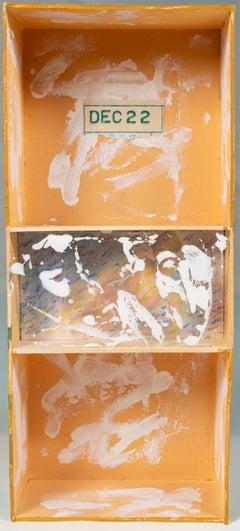
And Ten Out of Ten
original assemblage by Joel Jaecks
By Joel Jaecks
Located in Milwaukee, WI
'And Ten Out of Ten' is a rare early example of the small-scale assemblages that American artist Joel Jaeks began producing in the 1980s. As with all of his assemblages, the artwork ...
Category
1980s Contemporary Wisconsin - Art
Materials
Mixed Media
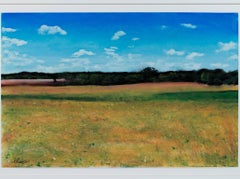
Contemporary landscape pastel rural pastoral scene grass trees field signed
By Michael DeFrancesco
Located in Milwaukee, WI
Summer Fields Near Dijon" is an original pastel drawing by Michael DeFrancesco. The artist signed the piece in the lower right. This piece depicts an expansive field under a bright blue sky.
17" x 25 1/2" art
27 1/2" x 36" frame
"As I progress in my painting, I hope to say more with less ... to leave the obvious vague ... and to paint only that which is essential ... this is my goal as an artist."
Michael Defrancesco received his Fine Arts degree from the American Academy of Art in Chicago. While at the Academy, he was fortunate to have studied under some wonderful instructors such as Bill Parks, Vern Stake, Eugene Hall, Fred Berger, and the renowned watercolorist Irving Shapiro...
Category
1990s Wisconsin - Art
Materials
Pastel
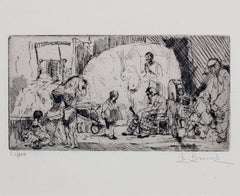
"Le Petit Cirque Prinder, " Original Etching signd by Auguste Brouet
By Auguste Brouet
Located in Milwaukee, WI
"Le Petit Cirque Prinder" is an original etching by Auguste Brouet. This piece depicts a variety of circus performers surrounded by small children. The artist signed the piece in the...
Category
1910s Academic Wisconsin - Art
Materials
Pencil, Etching
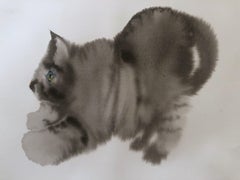
"Scaredy Cat, " Watercolor on Paper Portrait of Cat by Julia Taylor
By Julia Taylor
Located in Milwaukee, WI
"Scaredy Cat" is an original watercolor by Julia Taylor. The subject is a fluffy cat who's back is arched in terror. All of the cat's hair is painted on en...
Category
2010s Contemporary Wisconsin - Art
Materials
Watercolor
"Colmar CA-3, " Framed Pastel Landscape signed by Jan Richardson-Boughman
By Janet Richardson-Baughman
Located in Milwaukee, WI
"Colmar CA-3" is a pastel drawing on paper by Jan Richardson-Baughman. It is signed in pencil in the lower right corner and titled in the lower left, both of which are visible in the matting. The work is framed and matted with acid-free mat board. The image depicts rolling hills in shades that range from chartreuse to a dark forest green, dotted with trees and accented by a cloudy blue sky.
Art size: 22 1/2" x 36"
Frame size: 36 1/4" x 49 3/4"
A move to an eighty-acre farm in Western Michigan from Detroit suited Janet Richardson Baughman to a tee. She and her three siblings loved country life, and relished the many humorous adjustments to their new surroundings. The one-room schoolhouse she attended, for example, contrasted sharply to her earlier city school. Sports programs had been fairly sophisticated in the city. Rural sports consisted of her teacher piling everyone in her car, including the trunk, and then driving the children to another one-room schoolhouse for games. When Janet reached the sixth grade, a chapter in American history closed because all of the one-room schoolhouses were annexed by the nearest cities, but that unusual educational experience is something Janet fondly remembers.
Growing up in a family that was very artistic, it is not surprising that Janet loved drawing. She and her brothers and sisters would make Christmas decorations for the Christmas tree and had ongoing art projects all year long. Her architect father was an artist in his free time. As the children have become adults, they are all involved in artistic endeavors from carving to sculpture.
Janet's high school years were spent riding and showing her horses. "That was my life," she says. Living on the farm allowed her freedom to indulge her love of animals including the dogs that were so special to her. Active in 4H, Janet became an accomplished seamstress and an excellent cook. She took no art classes in high school although she sometimes helped her father with drafting.
Starting college with the intention of majoring in speech and drama, Janet took an art class only because it was required. She found the art classes so appealing that she took one after another. Eventually, having taken every art class offered, the university had to design independent studies for her.
With her beloved horses back on the farm, Janet discovered a new passion, and that was ceramics. First working as a waitress during college to earn income, Janet later became a Student Assistant and lived at the Ceramics Studio. As an assistant, she would make clay and glazes, fire the kiln, and assist the instructor however she could. At first, she had planned to become a high school teacher, but she was encouraged to earn her graduate degree and pursue her artistic endeavors, in addition to teaching. Janet graduated in 1975 with a BFA in Ceramics and Weaving from Central Michigan University in Mt. Pleasant, MI.
Following her mentor's advice, she went to Indiana State University in Indiana for her graduate work where she studied under Dick Hay...
Category
Early 2000s Contemporary Wisconsin - Art
Materials
Paper, Pastel

Doomsday
original abstract painting signed by Ariel McClearin
By Ariel McClearin
Located in Milwaukee, WI
Part of the artist’s ‘The Chaos of My Mind’ series, Ariel McClearin’s painting ‘Doomsday' is an original signed acrylic work on canvas board. Combining...
Category
2010s Abstract Wisconsin - Art
Materials
Canvas, Acrylic
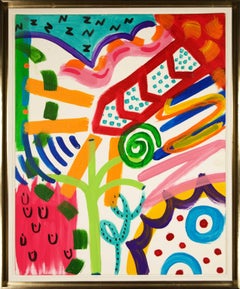
Flower
original signed stone Shona sculpture by Obert Mukumbi
By Obert Mukumbi
Located in Milwaukee, WI
'Flower' is an original opal serpentine sculpture by the Zimbabwean artist Obert Mukumbi. In the sculpture, Obert emphasizes the abstract qualities of the natural forms of the calla lily: At the center, a tall and wide stamen reaches upward as curving leaves and petals break away and curve outward. The massive bulk of the usually delicate flower, as though it has been enlarged, reminds of the paintings of American modernist Georgia O'Keefe, who often used close views and thoughtful cropping to find abstract forms in nature. Here, however, the approach to the subject is purely immersed in the Shona tradition where the stone material is celebrated through contrast between rough and smooth texture and appreciation for deep colors.
opal stone (serpentine)
signed "O. Mukumbi" along base
22 x 12 x 12 inches
Overall excellent condition with no signs of wear or damage.
Obert Mukumbi was born on February 11, 1974 in the village of Dengu in Bindura, some 86 kilometers north east of Harare, Zimbabwe, where he likewise completed his O-levels in school. During his education, he was interested in wood craft. By age twelve, however, he began working in stone under the guidance and encouragement of his brother Kennedy...
Category
Early 2000s Contemporary Wisconsin - Art
Materials
Stone

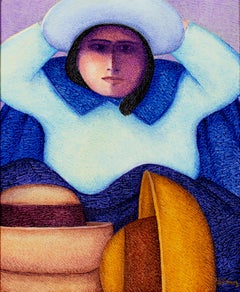
Contemporary figurative textured oil painting woman with hats colorful signed
By Ernesto Gutierrez (b.1941)
Located in Milwaukee, WI
"Rosita Vendiendo Sombreros, Huancayo" is an original oil painting on jute by Ernesto Gutierrez. It depicts a woman in white and blue selling hats. The artist signed the piece lower ...
Category
Early 2000s Contemporary Wisconsin - Art
Materials
Jute, Oil
"Arroyo, " Woodcut and Monotype Landscape signed by Carol Summers
By Carol Summers
Located in Milwaukee, WI
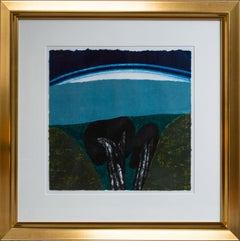
"Arroyo" is a woodcut and monotype signed by Carol Summers. The print is a break from the usual bright coloring of Summers' images, though is rendered in his typical style and fields of unmodeled color. A pair of trees stand front and center before an arroyo, a Spanish term for an intermittently dry creek, running out to the ocean. A white sunrise glows in the distance beyond the sea. The playfulness of the image is enhanced by Summers' signature printmaking technique, which allows the ink from the woodblock to seep through the paper, blurring the edges of each form.
14.25 x 14 inches, artwork
Numbered from the edition of 120
This print was commissioned by the Madison Print Club, Madison, WI
Carol Summers (1925-2016) worked as an artist throughout the second half of the 20th century and into the first years of the next, outliving most of his mid-century modernist peers. Initially trained as a painter, Summers was drawn to color woodcuts around 1950 and it became his specialty thereafter. Over the years he has developed a process and style that is both innovative and readily recognizable. His art is known for its large scale, saturated fields of bold color, semi-abstract treatment of landscapes from around the world, and a luminescent quality achieved through a printmaking process he invented.
In a career that has extended over half a century, Summers has hand-pulled approximately 245 woodcuts in editions that have typically run from 25 to 100 in number. His talent was both inherited and learned. Born in 1925 in Kingston, a small town in upstate New York, Summers was raised in nearby Woodstock with his older sister, Mary. His parents were both artists who had met in art school in St. Louis. During the Great Depression, when Carol was growing up, his father supported the family as a medical illustrator until he could return to painting. His mother was a watercolorist and also quite knowledgeable about the different kinds of papers used for various kinds of painting. Many years later, Summers would paint or print on thinly textured paper originally collected by his mother.
From 1948 to 1951, Carol Summers trained in the classical fine and studio arts at Bard College and at the Art Students League of New York. He studied painting with Steven Hirsh and printmaking with Louis Schanker. He admired the shapes and colors favored by early modernists Paul Klee (Sw: 1879-1940) and Matt Phillips (Am: b.1927- ). After graduating, Summers quit working as a part-time carpenter and cabinetmaker (which had supported his schooling and living expenses) to focus fulltime on art. That same year, an early abstract, Bridge No. 1 was selected for a Purchase Prize in a competition sponsored by the Brooklyn Museum.
In 1952, his work (Cathedral, Construction, and Icarus) was shown for the first time at the Museum of Modern Art in New York City in an exhibition of American woodcuts. In 1954, Summers received a grant from the Italian government to study for a year in Italy. Woodcuts completed soon after his arrival there were almost all editions of only 8 to 25 prints, small in size, architectural in content, and black and white in color. The most well-known are Siennese Landscape and Little Landscape, which depicted the area near where he resided. Summers extended this trip three more years, a decision that would have a significant impact on choices of subject matter and color in the coming decade.
After returning from Europe, Summers’ images continued to feature historical landmarks and events from Italy as well as from France, Spain, and Greece. However, as evidenced in Aetna’s Dream, Worldwind, and Arch of Triumph...
Category
1980s Contemporary Wisconsin - Art
Materials
Monotype, Woodcut
Lithographie Originale I, from Miro Lithographs IV, Maeght Publisher, Joan Miró
By Joan Miró
Located in Milwaukee, WI
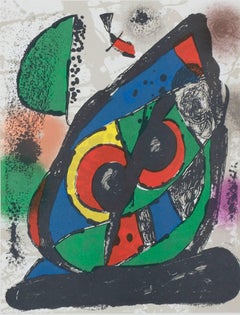
"Lithographie Originale I" is an original color lithograph by Joan Miro, published in "Miro Lithographs IV, Maeght Publisher" in 1981. It depicts Miro's signature biomorphic abstract...
Category
1980s Abstract Wisconsin - Art
Materials
Lithograph
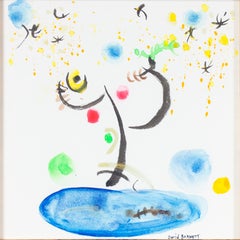
"Homage to Miro: Jwa Practicing Yoga Disguised as a Bird, " by David Barnett
By David Barnett
Located in Milwaukee, WI
"Homage to Miro: Jwa Practicing Yoga Disguised as a Bird" is an original watercolor and ink painting by David Barnett, signed in the lower right. This piece features abstract black lines painted in Chinese ink, embellished with vibrant watercolor in blue...
Category
2010s Abstract Wisconsin - Art
Materials
Ink, Watercolor
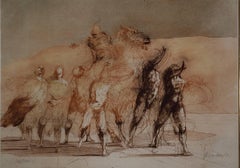
"Calligraphie Heroique, " Original Color Lithograph signed by Claude Weisbuch
By Claude Weisbuch
Located in Milwaukee, WI
"Calligraphie Heroique" is an original color lithograph by Claude Weisbuch. The artist signed the piece in the lower right and wrote the edition number (116/275) in the lower left. T...
Category
1970s Modern Wisconsin - Art
Materials
Lithograph
Me and My Family
original stone Shona sculpture by Picket Mazhindu Bumhira
By Picket Mazhindu Bumhira
Located in Milwaukee, WI
'Me and My Family' is an original opal serpentine sculpture signed by the Zimbabwean artist Picket Mazhindu Bumhira. Family groupings like this are a beloved theme seen in the works ...
Category
Early 2000s Contemporary Wisconsin - Art
Materials
Stone

"Backyard Abstractions, " Landscape Watercolor on paper signed by Craig Lueck
By Craig Lueck
Located in Milwaukee, WI
"Backyard Abstractions" is an original watercolor on Holbein watercolor paper by Craig Lueck. These petite watercolors that make up Lueck's portfolio serve as windows into the artist...
Category
Early 2000s Abstract Wisconsin - Art
Materials
Watercolor
Purple Phase, abstract acrylic painting on canvas, purple and blue
By Lisa Fellerson
Located in New York, NY
Lisa Fellerson’s paintings provoke an interplay and tension between line, shape, and color. With no preconceived idea in mind, she begins by dripping, scraping and gouging acrylic pa...
Category
2010s Abstract Wisconsin - Art
Materials
Canvas, Acrylic
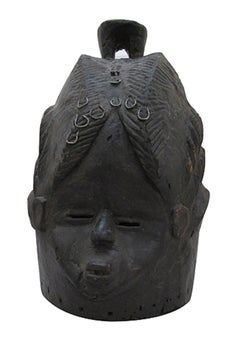
"Secret Society Mask-Sierra Leone W. Africa, " Wood created circa 1930
Located in Milwaukee, WI
"Secret Society Mask-Sierra Leone W. Africa," is a wood sculpture of a woman's head. The hair has been sculpted with intricate detail, and metal hair adornments...
Category
1930s Tribal Wisconsin - Art
Materials
Wood
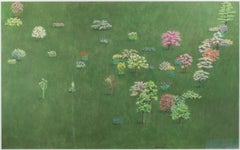
"48 Flowers, " Colored Pencil on Paper Landscape with Trees
By Tom Shelton
Located in Milwaukee, WI
"48 Flowers" is an original colored pencil drawing on paper by Tom Shelton. The artist signed the piece lower right. The artist says:
“The state flower of each of the 48 contiguous states is shown, and located where its state is geographically, where a US map...
Category
1980s Contemporary Wisconsin - Art
Materials
Color Pencil
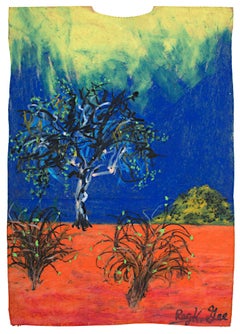
"Oncoming Dawn, " Oil Pastel Landscape on Grocery Bag signed by Reginald K. Gee
By Reginald K. Gee
Located in Milwaukee, WI
"Oncoming Dawn" is an original oil pastel drawing on a grocery bag by Reginald K. Gee. The artist signed the piece lower right. It features a mostly barren landscape with three trees...
Category
1990s Contemporary Wisconsin - Art
Materials
Oil Pastel, Found Objects
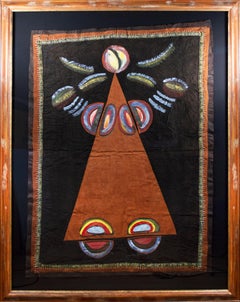
Back Into the Future
original painting on barkcloth by Sanaa Gateja
By Sanaa Gateja
Located in Milwaukee, WI
"Back Into the Future" is a fine example of the mid-career work of Ugandan artist Sanaa Gateja. It comes from a period in his work in the early 2000s w...
Category
Early 2000s Contemporary Wisconsin - Art
Materials
Acrylic
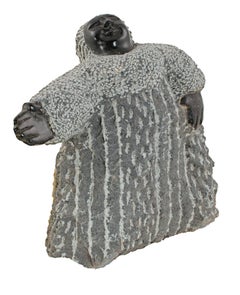
"Giving a Sign (C-33)" Black Serpentine Stone Sculpture by Colleen Madamombe
By Colleen Madamombe
Located in Milwaukee, WI
"Giving a Sign (C-33)" is an original black serpentine stone sculpture by Colleen Madamombe. The artist signed the piece at the base. This artwork features a woman in a large, textured dress gesturing to her side.
11" x 11" x 6" art
Colleen Madamombe was born in 1964 in Harare, Zimbabwe. Considered to be among the finest new talents from Zimbabwe, she has won the award of Best Female Artist of Zimbabwe for the past three consecutive years, and is quickly becoming an established figure of the Second Generation of Zimbabwean stone...
Category
Early 2000s Contemporary Wisconsin - Art
Materials
Stone
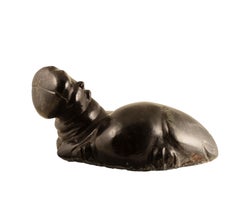
Hippopotamus
Located in Milwaukee, WI
Shona sculpture from Zimbabwe
Category
1980s Wisconsin - Art
Materials
Stone

$2,320
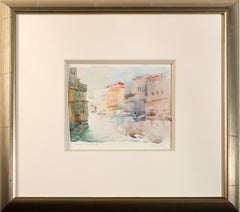
Venice Invented
By Craig Lueck
Located in Milwaukee, WI
Framed 13.25 x 14.13 in
Signed to margin
Category
Early 2000s Wisconsin - Art
Materials
Watercolor
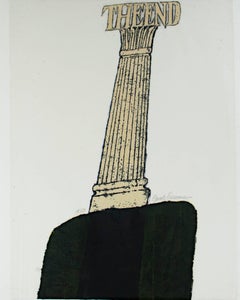
"The End, " Original Woodcut
Silkscreen signed by Carol Summers
By Carol Summers
Located in Milwaukee, WI
"The End" is an original color woodcut by Carol Summers. The artist signed the piece in the center right. This woodcut depicts a marble fluted column with the title in large letters ...
Category
1960s Wisconsin - Art
Materials
Screen, Woodcut
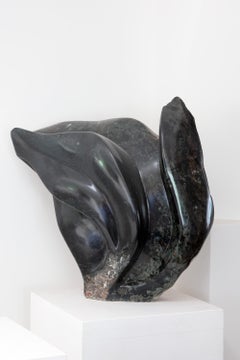
Flower
original Shona stone sculpture signed by Josphat Makenzi
Located in Milwaukee, WI
'Flower' is an original fruit serpentine sculpture signed by the Zimbabwean artist Josphat Makenzi. Makenzi was trained in the contemporary Shona stone...
Category
Early 2000s Wisconsin - Art
Materials
Stone
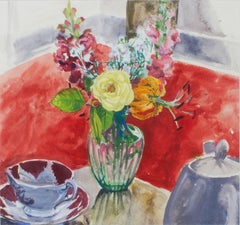
Contemporary female artist watercolor flowers still life colorful signed
By Alicia Czechowski
Located in Milwaukee, WI
"Vase of Flowers & Tea Cup" is an original watercolor painting by Alicia Czechowski. This painting depicts a table set for tea in front of a red background, possibly recalling master...
Category
1960s Wisconsin - Art
Materials
Watercolor
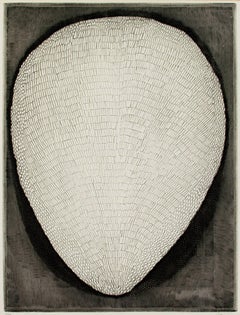
"Shell, " Original Etching signed by Arthur Luiz Piza
By Arthur Luiz Piza
Located in Milwaukee, WI
"Shell" is an original etching by Arthur Luiz Piza. It depicts an abstract, textured shell in the shape of an egg. The artist signed the piece lower right and wrote the edition numbe...
Category
1960s Abstract Wisconsin - Art
Materials
Etching
"Underwater Series: Coral Reef, " Original Watercolor signed by David Barnett
By David Barnett
Located in Milwaukee, WI
"Underwater Series: Coral Reef" is an original mixed media piece by David Barnett that incorporates watercolor and acrylic on rag museum foam board, signed in the lower right. This ...
Category
2010s Abstract Wisconsin - Art
Materials
Acrylic, Watercolor, Foam Board, Rag Paper

"Shibumi IV-5, " an Abstract Mixed Media signed by John Baughman
By John Baughman
Located in Milwaukee, WI
"Shibumi IV-5" is American abstract artist John Baughman's 2003 mixed media artwork. It is signed, titled, and dater lower right.
36" x 22 5/8" art
46" x 32 1/2" framed
Baughman is a mixed media artist who is influenced by the work of Mark Rothko and Conrad Marcarelli...
Category
Early 2000s Abstract Wisconsin - Art
Materials
Mixed Media
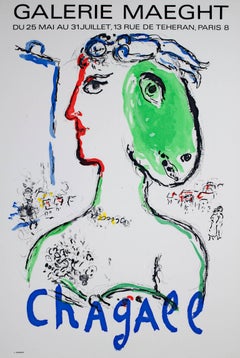
L
Artist Phoenix Poster
By Marc Chagall
Located in Milwaukee, WI
Marc Chagall "L'Artist Phoenix Poster" for Galerie Maeght from 1972. It is from the edition of 5000.
30 1/2" x 20" art
40 1/2" x 32 1/4" frame
Marc Ch...
Category
1970s Expressionist Wisconsin - Art
Materials
Lithograph
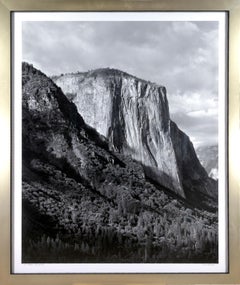
"El Capitan, Yosemite National Park CA, " Photograph signed by Tom Ferderbar
By Thomas Ferderbar
Located in Milwaukee, WI
"El Capitan (Yosemite National Park, CA)" is an original black and white archival pigment print. Using the original photograph taken in 1958. This is signed by the artist Thomas Ferderbar in the lower right and titled on the lower left using silver sharpie. It is a vast expanse landscape photograph.
Artwork Size: 50" x 40"
Frame Size: 54" x 44"
I wanted to become a photographer at the age of 12, when my sister Grace gave me a Kodak Box...
Category
1950s Contemporary Wisconsin - Art
Materials
Archival Ink, Archival Pigment
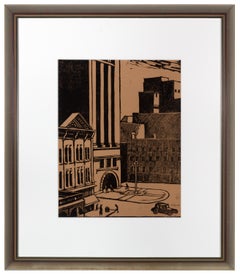
City Hall Square, Milwaukee
By George Raab
Located in Milwaukee, WI
Framed 16.25 x 18.75 in
11.38 x 8.75 inches (sheet), 11.25 x 8.75 inches (block)
Linoleum block print on laid paper.
Signed in plate
Category
1930s Wisconsin - Art
Materials
Linocut
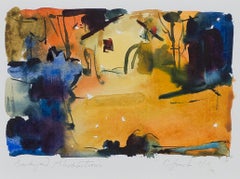
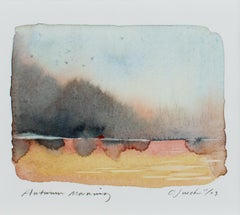
Contemporary watercolor abstract landscape nature trees sunrise sky signed
By Craig Lueck
Located in Milwaukee, WI
"Autumn Morning" is an original watercolor on Holbein watercolor paper by Craig Lueck. These petite watercolors that make up Lueck's portfolio serve as windows into the artist's worl...
Category
Early 2000s Contemporary Wisconsin - Art
Materials
Watercolor
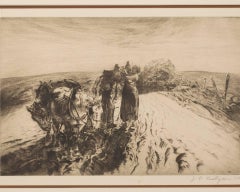
"When Day is Done, " an Original Etching signed by John Edward Costigan
By John Edward Costigan
Located in Milwaukee, WI
"When Day is Done" is an original etching and aquatint signed lower right in pencil by the artist John Edward Costigan. It depicts a man and a woman with their young child at the end...
Category
1930s Post-Impressionist Wisconsin - Art
Materials
Etching, Aquatint
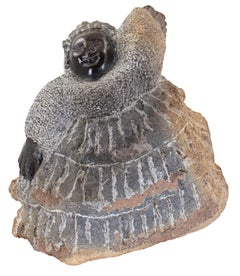
African Female Figure Stone Sculpture Contemporary Shona Expressionism Signed
By Colleen Madamombe
Located in Milwaukee, WI
"Morning Excercise (C-3)" is an original black serpentine stone sculpture by Colleen Madamombe. The artist signed the piece along the base of the skirt. This artwork features a woman...
Category
Early 2000s Contemporary Wisconsin - Art
Materials
Stone
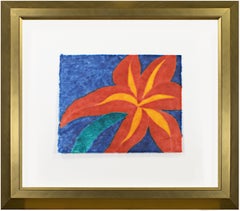
Narcissus Braziliana
original woodcut
monotype signed by Carol Summers
By Carol Summers
Located in Milwaukee, WI
The present artwork is a vibrant and colorful example of the woodcut prints of Carol Summers. The image is dominated by the form of a red tropical flower, closely cropped around the petals like in the photographs of Imogen Cunningham and the paintings of Georgia O'Keeffe. The playfulness of the image is enhanced by Summers' signature printmaking technique, which allows the ink from the woodblock to seep through the paper, blurring the edges of each form.
9.63 x 11.63 inches, artwork
21 x 23 inches, frame
Edition 16/50 in pencil, lower right
Titled in pencil, lower right
Signed in pencil, lower center
Framed to conservation standards using archival materials including 100 percent rag matting, Museum Glass to inhibit fading, and housed in a modern profile gold gilded wood moulding.
Carol Summers (1925-2016) has worked as an artist throughout the second half of the 20th century and into the first years of the next, outliving most of his mid-century modernist peers. Initially trained as a painter, Summers was drawn to color woodcuts around 1950 and it became his specialty thereafter. Over the years he has developed a process and style that is both innovative and readily recognizable. His art is known for it’s large scale, saturated fields of bold color, semi-abstract treatment of landscapes from around the world and a luminescent quality achieved through a printmaking process he invented.
In a career that has extended over half a century, Summers has hand-pulled approximately 245 woodcuts in editions that have typically run from 25 to 100 in number. His talent was both inherited and learned. Born in 1925 in Kingston, a small town in upstate New York, Summers was raised in nearby Woodstock with his older sister, Mary. His parents were both artists who had met in art school in St. Louis. During the Great Depression, when Carol was growing up, his father supported the family as a medical illustrator until he could return to painting. His mother was a watercolorist and also quite knowledgeable about the different kinds of papers used for various kinds of painting. Many years later, Summers would paint or print on thinly textured paper originally collected by his mother.
From 1948 to 1951, Carol Summers trained in the classical fine and studio arts at Bard College and at the Art Students League of New York. He studied painting with Steven Hirsh and printmaking with Louis Schanker. He admired the shapes and colors favored by early modernists Paul Klee (Sw: 1879-1940) and Matt Phillips (Am: b.1927- ). After graduating, Summers quit working as a part-time carpenter and cabinetmaker (which had supported his schooling and living expenses) to focus fulltime on art. That same year, an early abstract, Bridge No. 1 was selected for a Purchase Prize in a competition sponsored by the Brooklyn Museum.
In 1952, his work (Cathedral, Construction and Icarus) was shown the first time at the Museum of Modern Art in New York City in an exhibition of American woodcuts. In 1954, Summers received a grant from the Italian government to study for a year in Italy. Woodcuts completed soon after his arrival there were almost all editions of only 8 to 25 prints, small in size, architectural in content and black and white in color. The most well-known are Siennese Landscape and Little Landscape, which depicted the area near where he resided. Summers extended this trip three more years, a decision which would have significant impact on choices of subject matter and color in the coming decade.
After returning from Europe, Summers’ images continued to feature historical landmarks and events from Italy as well as from France, Spain and Greece. However, as evidenced in Aetna’s Dream, Worldwind and Arch of Triumph, a new look prevailed. These woodcuts were larger in size and in color. Some incorporated metal leaf in the creation of a collage and Summers even experimented with silkscreening. Editions were now between 20 and 50 prints in number. Most importantly, Summers employed his rubbing technique for the first time in the creation of Fantastic Garden in late 1957.
Dark Vision of Xerxes, a benchmark for Summers, was the first woodcut where Summers experimented using mineral spirits as part of his printmaking process. A Fulbright Grant as well as Fellowships from the Louis Comfort Tiffany Foundation and the Guggenheim Foundation followed soon thereafter, as did faculty positions at colleges and universities primarily in New York and Pennsylvania. During this period he married a dancer named Elaine Smithers with whom he had one son, Kyle. Around this same time, along with fellow artist Leonard Baskin, Summers pioneered what is now referred to as the “monumental” woodcut. This term was coined in the early 1960s to denote woodcuts that were dramatically bigger than those previously created in earlier years, ones that were limited in size mostly by the size of small hand-presses. While Baskin chose figurative subject matter, serious in nature and rendered with thick, striated lines, Summers rendered much less somber images preferring to emphasize shape and color; his subject matter approached abstraction but was always firmly rooted in the landscape.
In addition to working in this new, larger scale, Summers simultaneously refined a printmaking process which would eventually be called the “Carol Summers Method” or the “ Carol Summers Technique”. Summers produces his woodcuts by hand, usually from one or more blocks of quarter-inch pine, using oil-based printing inks and porous mulberry papers. His woodcuts reveal a sensitivity to wood especially its absorptive qualities and the subtleties of the grain. In several of his woodcuts throughout his career he has used the undulating, grainy patterns of a large wood plank to portray a flowing river or tumbling waterfall. The best examples of this are Dream, done in 1965 and the later Flash Flood Escalante, in 2003. In the majority of his woodcuts, Summers makes the blocks slightly larger than the paper so the image and color will bleed off the edge.
Before printing, he centers a dry sheet of paper over the top of the cut wood block or blocks, securing it with giant clips. Then he rolls the ink directly on the front of the sheet of paper and pressing down onto the dry wood block or reassembled group of blocks. Summers is technically very proficient; the inks are thoroughly saturated onto the surface of the paper but they do not run into each other. The precision of the color inking in Constantine’s Dream in 1969 and Rainbow Glacier in 1970 has been referred to in various studio handbooks. Summers refers to his own printing technique as “rubbing”. In traditional woodcut printing, including the Japanese method, the ink is applied directly onto the block. However, by following his own method, Summers has avoided the mirror-reversed image of a conventional print and it has given him the control over the precise amount of ink that he wants on the paper. After the ink is applied to the front of the paper, Summers sprays it with mineral spirits, which act as a thinning agent. The absorptive fibers of the paper draw the thinned ink away from the surface softening the shapes and diffusing and muting the colors. This produces a unique glow that is a hallmark of the Summers printmaking technique. Unlike the works of other color field artists or modernists of the time, this new technique made Summers’ extreme simplification and flat color areas anything but hard-edged or coldly impersonal.
By the 1960s, Summers had developed a personal way of coloring and printing and was not afraid of hard work, doing the cutting, inking and pulling himself. In 1964, at the age of 38, Summers’ work was exhibited for a second time at the Museum of Modern Art. This time his work was featured in a one-man show and then as one of MoMA’s two-year traveling exhibitions which toured throughout the United States. In subsequent years, Summers’ works would be exhibited and acquired for the permanent collections of multiple museums throughout the United States, Europe and Asia. Summers’ familiarity with landscapes throughout the world is firsthand. As a navigator-bombardier in the Marines in World War II, he toured the South Pacific and Asia.
Following college, travel in Europe and subsequent teaching positions, in 1972, after 47 years on the East Coast, Carol Summers moved permanently to Bonny Doon in the Santa Cruz Mountains in Northern California. There met his second wife, Joan Ward Toth, a textile artist who died in 1998; and it was here his second son, Ethan was born. During the years that followed this relocation, Summers’ choice of subject matter became more diverse although it retained the positive, mostly life-affirming quality that had existed from the beginning. Images now included moons, comets, both sunny and starry skies, hearts and flowers, all of which, in one way or another, remained tied to the landscape.
In the 1980s, from his home and studio in the Santa Cruz mountains, Summers continued to work as an artist supplementing his income by conducting classes and workshops at universities in California and Oregon as well as throughout the Mid and Southwest. He also traveled extensively during this period hiking and camping, often for weeks at a time, throughout the western United States and Canada. Throughout the decade it was not unusual for Summers to backpack alone or with a fellow artist into mountains or back country for six weeks or more at a time. Not surprisingly, the artwork created during this period rarely departed from images of the land, sea and sky. Summers rendered these landscapes in a more representational style than before, however he always kept them somewhat abstract by mixing geometric shapes with organic shapes, irregular in outline. Some of his most critically acknowledged work was created during this period including First Rain, 1985 and The Rolling Sea, 1989. Summers received an honorary doctorate from his alma mater, Bard College in 1979 and was selected by the United States Information Agency to spend a year conducting painting and printmaking workshops at universities throughout India. Since that original sabbatical, he has returned every year, spending four to eight weeks traveling throughout that country.
In the 1990s, interspersed with these journeys to India have been additional treks to the back roads and high country areas of Mexico, Central America, Nepal, China and Japan. Travel to these exotic and faraway places had a profound influence on Summers’ art. Subject matter became more worldly and non-western as with From Humla to Dolpo, 1991 or A Former Life of Budha, 1996, for example. Architectural images, such as The Pillars of Hercules, 1990 or The Raja’s Aviary, 1992 became more common. Still life images made a reappearance with Jungle Bouquet in 1997. This was also a period when Summers began using odd-sized paper to further the impact of an image.
The 1996 Night, a view of the earth and horizon as it might be seen by an astronaut, is over six feet long and only slightly more than a foot-and-a-half high. From 1999, Revuelta A Vida (Spanish for “Return to Life”) is pie-shaped and covers nearly 18 cubic feet. It was also at this juncture that Summers began to experiment with a somewhat different palette although he retained his love of saturated colors. The 2003 Far Side of Time is a superb example of the new direction taken by this colorist.
At the turn of the millennium in 1999, “Carol Summers Woodcuts...
Category
Early 2000s Contemporary Wisconsin - Art
Materials
Monotype, Woodcut
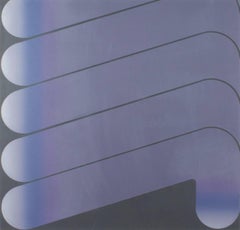
"Untitled 1970 C.P. #235" original lithograph abstract pop art signed mellow
By Garo Zareh Antreasian
Located in Milwaukee, WI
"Untitled 1970 C.P. #235" is an original color lithograph with blended ink signed by the artist Garo Zareh Antreasian. It is editioned 10/60 in the center lower left margin with grap...
Category
1970s Abstract Geometric Wisconsin - Art
Materials
Ink, Lithograph
"Gothic Window, " Acrylic on Masonite signed by David Barnett
By David Barnett
Located in Milwaukee, WI
"Gothic Window" is an original acrylic painting on masonite board by David Barnett. The artist signed the piece on the back. This painting depicts a geometric and abstracted renderin...
Category
1960s Expressionist Wisconsin - Art
Materials
Masonite, Acrylic
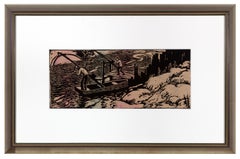
Fishing
By George Raab
Located in Milwaukee, WI
7.25 x 12.25 inches (sheet), 5 x 11.88 inches (block)
Framed 12.63 x 19.50 in
Linoleum block print on laid paper
Unsigned
Category
1930s Wisconsin - Art
Materials
Linocut
$1,740
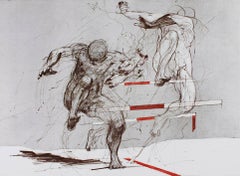
"Hurdles, " Original color figurative dynamic sketch print
By Claude Weisbuch
Located in Milwaukee, WI
"Hurdles" is an extremely rare original color lithograph by Claude Weisbuch. This print is the trial proof (blind stamp Hors Commerce) and has no edition number. It depicts two expertly-drawn men jumping over hurdles.
19 1/4" x 25 1/2" art
29 3/4" x 36" frame
Claude Weisbuch was born on February 8th, 1927 in Thionville, France. His art includes drawing, painting and lithographs. Inventive and unique with his style he uses color range that is warm and rich in tone, certainly equal to that of Rembrandt. The fluidity of line and creation of motion is even more vigorous that in the work of Daumier or Toulouse Lautrec. His creativeness in composition is awesome and seems to have infinite possibilities of variation and vision. Weisbuch died in 2014.
Exhibitions
Herve Odermatt Gallery Paris, France
Escole de Paris Paris, France
David Barnett Gallery...
Category
1970s Wisconsin - Art
Materials
Lithograph
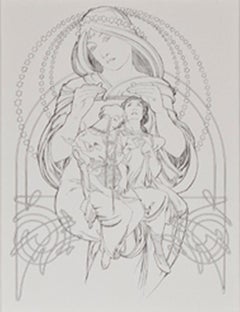
19th century lithograph art nouveau ornate female figures outline illustration
By Alphonse Mucha
Located in Milwaukee, WI
"From: Ilsee, Princess of Tripoli "Jaufre and Eymardine" is an original lithograph by Alphonse Mucha. From "Ilsee, Princesse de Tripoli," a rare illustrated book.
Image: 8.12" x 6"...
Category
1890s Art Nouveau Wisconsin - Art
Materials
Lithograph
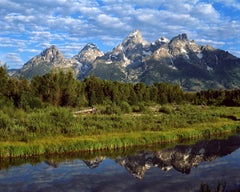
Tetons 6B
Located in Milwaukee, WI
Alternative sizes and media available:
16 x 16
16 x 20
16 x 24
20 x 20
20 x 30
28 x 28
28 x 35
30 x 45
40 x 40
40 x 50
40 x 60
Matte photo paper or canvas available on...
Category
2010s Wisconsin - Art
Materials
Photographic Paper
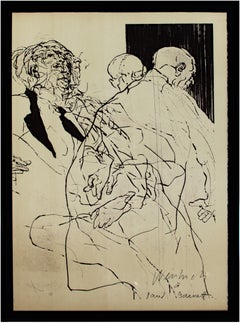
Il bouge sans arrêt
original signed lithograph poster after drypoint, 1960s
By Claude Weisbuch
Located in Milwaukee, WI
This poster is a lithographic enlargement of the dry point print 'Il bouge sans arrêt' by the French artist Claude Weisbuch. The image is an early example of his explorations into th...
Category
1960s Contemporary Wisconsin - Art
Materials
Lithograph
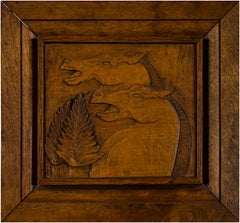
"Carved Horse Head, " Bas-relief Mahogany Wall Sculpture by Marshall Shields
Located in Milwaukee, WI
"Carved Horse Head" is a bas relief sculpture hand-carved from mahogany by Marshall "Buster" Shields. In features two horses in profile, one behind the other, rearing back with their...
Category
1940s Modern Wisconsin - Art
Materials
Mahogany
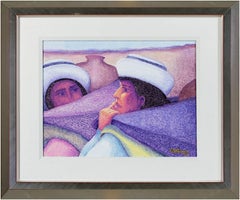
Contemporary figurative textured oil painting women in hats colorful signed
By Ernesto Gutierrez (b.1941)
Located in Milwaukee, WI
"Dos Mujeres (Two Ladies)" is by Peruvian artist Ernesto Gutierrez. Oil on jute, signed lower right.
14" x 18" art
23 5/8" x 27 5/8" frame
Ernesto Gutierrez was born in Lima, Peru...
Category
Early 2000s Contemporary Wisconsin - Art
Materials
Jute, Oil
"Paricutin (Volcano in Michoacan, Mexico)" Woodcut
Monotype signed by Summers
By Carol Summers
Located in Milwaukee, WI
"Paricutin (Volcano in Michoacan, Mexico)" is a woodcut and monotype signed by Carol Summers. In the image, an abstracted volcano erupts in a joyous burst of purples and oranges. The playfulness of the image is enhanced by Summers' signature printmaking technique, which allows the ink from the woodblock to seep through the paper, blurring the edges of each form.
Art: 8 x 11 in
Frame: 17 x 19 in
Carol Summers (1925-2016) has worked as an artist throughout the second half of the 20th century and into the first years of the next, outliving most of his mid-century modernist peers. Initially trained as a painter, Summers was drawn to color woodcuts around 1950 and it became his specialty thereafter. Over the years he has developed a process and style that is both innovative and readily recognizable. His art is known for it’s large scale, saturated fields of bold color, semi-abstract treatment of landscapes from around the world and a luminescent quality achieved through a printmaking process he invented.
In a career that has extended over half a century, Summers has hand-pulled approximately 245 woodcuts in editions that have typically run from 25 to 100 in number. His talent was both inherited and learned. Born in 1925 in Kingston, a small town in upstate New York, Summers was raised in nearby Woodstock with his older sister, Mary. His parents were both artists who had met in art school in St. Louis. During the Great Depression, when Carol was growing up, his father supported the family as a medical illustrator until he could return to painting. His mother was a watercolorist and also quite knowledgeable about the different kinds of papers used for various kinds of painting. Many years later, Summers would paint or print on thinly textured paper originally collected by his mother.
From 1948 to 1951, Carol Summers trained in the classical fine and studio arts at Bard College and at the Art Students League of New York. He studied painting with Steven Hirsh and printmaking with Louis Schanker. He admired the shapes and colors favored by early modernists Paul Klee (Sw: 1879-1940) and Matt Phillips (Am: b.1927- ). After graduating, Summers quit working as a part-time carpenter and cabinetmaker (which had supported his schooling and living expenses) to focus fulltime on art. That same year, an early abstract, Bridge No. 1 was selected for a Purchase Prize in a competition sponsored by the Brooklyn Museum.
In 1952, his work (Cathedral, Construction and Icarus) was shown the first time at the Museum of Modern Art in New York City in an exhibition of American woodcuts. In 1954, Summers received a grant from the Italian government to study for a year in Italy. Woodcuts completed soon after his arrival there were almost all editions of only 8 to 25 prints, small in size, architectural in content and black and white in color. The most well-known are Siennese Landscape and Little Landscape, which depicted the area near where he resided. Summers extended this trip three more years, a decision which would have significant impact on choices of subject matter and color in the coming decade.
After returning from Europe, Summers’ images continued to feature historical landmarks and events from Italy as well as from France, Spain and Greece. However, as evidenced in Aetna’s Dream, Worldwind and Arch of Triumph, a new look prevailed. These woodcuts were larger in size and in color. Some incorporated metal leaf in the creation of a collage and Summers even experimented with silkscreening. Editions were now between 20 and 50 prints in number. Most importantly, Summers employed his rubbing technique for the first time in the creation of Fantastic Garden in late 1957.
Dark Vision of Xerxes, a benchmark for Summers, was the first woodcut where Summers experimented using mineral spirits as part of his printmaking process. A Fulbright Grant as well as Fellowships from the Louis Comfort Tiffany Foundation and the Guggenheim Foundation followed soon thereafter, as did faculty positions at colleges and universities primarily in New York and Pennsylvania. During this period he married a dancer named Elaine Smithers with whom he had one son, Kyle. Around this same time, along with fellow artist Leonard Baskin, Summers pioneered what is now referred to as the “monumental” woodcut. This term was coined in the early 1960s to denote woodcuts that were dramatically bigger than those previously created in earlier years, ones that were limited in size mostly by the size of small hand-presses. While Baskin chose figurative subject matter, serious in nature and rendered with thick, striated lines, Summers rendered much less somber images preferring to emphasize shape and color; his subject matter approached abstraction but was always firmly rooted in the landscape.
In addition to working in this new, larger scale, Summers simultaneously refined a printmaking process which would eventually be called the “Carol Summers Method” or the “ Carol Summers Technique”. Summers produces his woodcuts by hand, usually from one or more blocks of quarter-inch pine, using oil-based printing inks and porous mulberry papers. His woodcuts reveal a sensitivity to wood especially its absorptive qualities and the subtleties of the grain. In several of his woodcuts throughout his career he has used the undulating, grainy patterns of a large wood plank to portray a flowing river or tumbling waterfall. The best examples of this are Dream, done in 1965 and the later Flash Flood Escalante, in 2003. In the majority of his woodcuts, Summers makes the blocks slightly larger than the paper so the image and color will bleed off the edge.
Before printing, he centers a dry sheet of paper over the top of the cut wood block or blocks, securing it with giant clips. Then he rolls the ink directly on the front of the sheet of paper and pressing down onto the dry wood block or reassembled group of blocks. Summers is technically very proficient; the inks are thoroughly saturated onto the surface of the paper but they do not run into each other. The precision of the color inking in Constantine’s Dream in 1969 and Rainbow Glacier in 1970 has been referred to in various studio handbooks. Summers refers to his own printing technique as “rubbing”. In traditional woodcut printing, including the Japanese method, the ink is applied directly onto the block. However, by following his own method, Summers has avoided the mirror-reversed image of a conventional print and it has given him the control over the precise amount of ink that he wants on the paper. After the ink is applied to the front of the paper, Summers sprays it with mineral spirits, which act as a thinning agent. The absorptive fibers of the paper draw the thinned ink away from the surface softening the shapes and diffusing and muting the colors. This produces a unique glow that is a hallmark of the Summers printmaking technique. Unlike the works of other color field artists or modernists of the time, this new technique made Summers’ extreme simplification and flat color areas anything but hard-edged or coldly impersonal.
By the 1960s, Summers had developed a personal way of coloring and printing and was not afraid of hard work, doing the cutting, inking and pulling himself. In 1964, at the age of 38, Summers’ work was exhibited for a second time at the Museum of Modern Art. This time his work was featured in a one-man show and then as one of MoMA’s two-year traveling exhibitions which toured throughout the United States. In subsequent years, Summers’ works would be exhibited and acquired for the permanent collections of multiple museums throughout the United States, Europe and Asia. Summers’ familiarity with landscapes throughout the world is firsthand. As a navigator-bombardier in the Marines in World War II, he toured the South Pacific and Asia.
Following college, travel in Europe and subsequent teaching positions, in 1972, after 47 years on the East Coast, Carol Summers moved permanently to Bonny Doon in the Santa Cruz Mountains in Northern California. There met his second wife, Joan Ward Toth, a textile artist who died in 1998; and it was here his second son, Ethan was born. During the years that followed this relocation, Summers’ choice of subject matter became more diverse although it retained the positive, mostly life-affirming quality that had existed from the beginning. Images now included moons, comets, both sunny and starry skies, hearts and flowers, all of which, in one way or another, remained tied to the landscape.
In the 1980s, from his home and studio in the Santa Cruz mountains, Summers continued to work as an artist supplementing his income by conducting classes and workshops at universities in California and Oregon as well as throughout the Mid and Southwest. He also traveled extensively during this period hiking and camping, often for weeks at a time, throughout the western United States and Canada. Throughout the decade it was not unusual for Summers to backpack alone or with a fellow artist into mountains or back country for six weeks or more at a time. Not surprisingly, the artwork created during this period rarely departed from images of the land, sea and sky. Summers rendered these landscapes in a more representational style than before, however he always kept them somewhat abstract by mixing geometric shapes with organic shapes, irregular in outline. Some of his most critically acknowledged work was created during this period including First Rain, 1985 and The Rolling Sea, 1989. Summers received an honorary doctorate from his alma mater, Bard College in 1979 and was selected by the United States Information Agency to spend a year conducting painting and printmaking workshops at universities throughout India. Since that original sabbatical, he has returned every year, spending four to eight weeks traveling throughout that country.
In the 1990s, interspersed with these journeys to India have been additional treks to the back roads and high country areas of Mexico, Central America, Nepal, China and Japan. Travel to these exotic and faraway places had a profound influence on Summers’ art. Subject matter became more worldly and non-western as with From Humla to Dolpo, 1991 or A Former Life of Budha, 1996, for example. Architectural images, such as The Pillars of Hercules, 1990 or The Raja’s Aviary, 1992 became more common. Still life images made a reappearance with Jungle Bouquet in 1997. This was also a period when Summers began using odd-sized paper to further the impact of an image.
The 1996 Night, a view of the earth and horizon as it might be seen by an astronaut, is over six feet long and only slightly more than a foot-and-a-half high. From 1999, Revuelta A Vida (Spanish for “Return to Life”) is pie-shaped and covers nearly 18 cubic feet. It was also at this juncture that Summers began to experiment with a somewhat different palette although he retained his love of saturated colors. The 2003 Far Side of Time is a superb example of the new direction taken by this colorist.
At the turn of the millennium in 1999, “Carol Summers Woodcuts...
Category
Early 2000s Contemporary Wisconsin - Art
Materials
Monotype, Woodcut
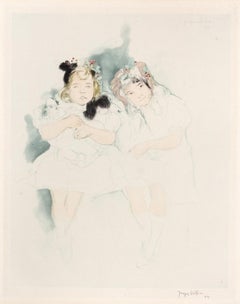
"Mes Petites Amies, Les Deux Sœurs" signed by Jacques Villon
By Jacques Villon
Located in Milwaukee, WI
This is a drypoint and aquatint artwork by Jacques Villon. The artist signed in pencil on the lower right. As well as signed in plate at the top right of the image. This is a wonderful artwork of different intaglio processes being brought together in a beautiful almost seamless harmony. The thin pencil like markings and hair detailing are made using the Drypoint printmaking method. Whilst the color details around the girls are made using the Aquatint etching method. Jacques Villon shows his skills as a printmaker with the way these pieces line up perfectly and with how clean the rest of the plate is around the girls. An unnumbered impression, apart from the numbered edition of 50.
Catalogue Raisonne E101, pg. 66-67 (Ginestet & Pouillon. It depicts two young girls.
15" x 11 1/2" art
25 1/8" x 20" frame
French painter, printmaker and illustrator. The oldest of three brothers who became major 20th-century artists, including Raymond Duchamp-Villon and Marcel Duchamp, he learnt engraving at the age of 16 from his maternal grandfather, Emile-Frédéric Nicolle (1830-94), a ship-broker who was also a much appreciated amateur artist. In January 1894, having completed his studies at the Lycée Corneille in Rouen, he was sent to study at the Faculty of Law of the University of Paris, but within a year he was devoting most of his time to art, already contributing lithographs to Parisian illustrated newspapers such as Assiette au beurre. At this time he chose his pseudonym: Jack (subsequently Jacques) in homage to Alphonse Daudet’s novel Jack (1876) and Villon in appreciation of the 15th-century French poet François Villon...
Category
Early 1900s Modern Wisconsin - Art
Materials
Drypoint, Aquatint, Etching, Intaglio
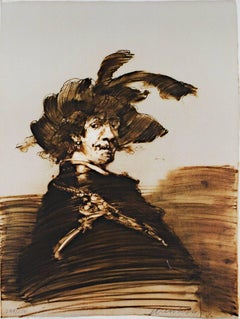
19th century color lithograph portrait Rembrandt expressive sepia contrast
By Claude Weisbuch
Located in Milwaukee, WI
"Rembrandt en Habit de Capitaine" is an original lithograph by Claude Weisbuch. The artist signed the piece lower right and wrote the edition number (249/250) in the lower left. This...
Category
1980s Modern Wisconsin - Art
Materials
Lithograph
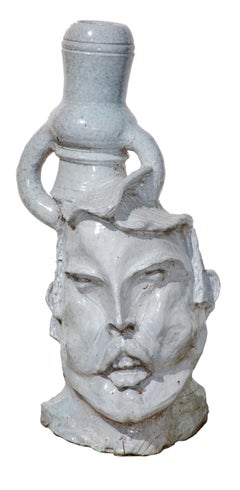
Rush Limbaugh (hair parted in center, mouth open)
By Steven Kemenyffy
Located in Milwaukee, WI
31" in height roughly 12-15" wide
Ceramic
Steven Kemenyffy (born 1943) is an American ceramic artist living and working in Pennsylvania. He is most recognized for his contributions to the development of the American ceramic raku tradition. He has served as a Professor of Ceramic Art at Edinboro University of Pennsylvania (formerly Edinboro State College) since 1969. He Has retired from teaching, but continues to produce artwork at his home studio in McKean, Pennsylvania. Kemenyffy is often characterized in regard to his contributions to American experimental ceramics of the late 1960s and early 1970s. More specifically, Kemenyffy’s contributions to American raku techniques are often cited. Kemenyffy has stated that his interest in raku came out of practical considerations: “We [Steven and Susan] were doing a variety of workshops in a variety of different media. Raku was always an official way of making pieces in a short period of time…In raku it seems to compress all the firings into one.” Kemenyffy, himself, describes his early work as “Biomorphic forms alluding to old ceramic traditions such as tiles, vases, and containers.” These works were often in excess of six feet tall and many times included mixed media elements. In 1974, Kemenyffy wrote about the work he was producing; “For several years now, my work has dealt with certain formal considerations. Chief among these is using clay in such a way as to crystallize the moment and permanentize the impermanent. These have been among the primary concerns of all potters since the earliest times.” Today, Kemenyffy continues his pursuit of biomorphic imagery and themes. He writes, “Personally I am most challenged by the business of transforming porous organics into porcelain.” For much of Kemenyffy’s career, he has worked in tandem with his wife, Susan Hale Kemenyffy. In 1987 Susan stated about their collaborative works: “Steven is the [sculptor], I am the drawer. These works would not exist if it weren’t for the sculpture; if it weren’t for the clay. The clay entity comes first and my drawings come second.” James Paul Thompson further clarifies this relationship (as observed in 1987): “Steven Kemenyffy uses patterns as a point of departure for his work, while Susan Kemenyffy...
Category
1990s Wisconsin - Art
Materials
Ceramic
Moulton Barn Silhouette and Tetons
Located in Milwaukee, WI
Alternative sizes and media available:
16 x 16
16 x 20
16 x 24
20 x 20
20 x 30
28 x 28
28 x 35
30 x 45
40 x 40
40 x 50
40 x 60
Matte photo paper or canvas available on...
Category
2010s Wisconsin - Art
Materials
Photographic Paper

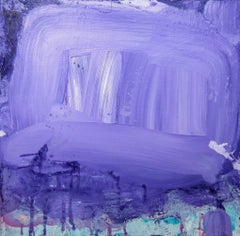
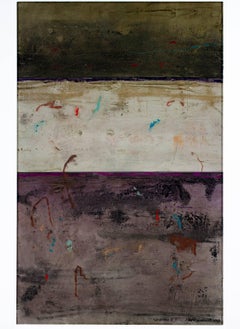
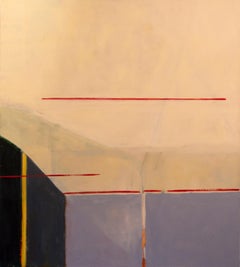
"The Noise Died Away, " Abstract Oil on Canvas by Deirdre Schanen
By Deirdre Schanen
Located in Milwaukee, WI
"The Noise Died Away" is an oil on canvas by Deirdre Schanen. This abstract piece contains fields of colors in subdued hues with horizontal red lines. A purple wall runs into a dark ...
Category
2010s Contemporary Wisconsin - Art
Materials
Canvas, Oil
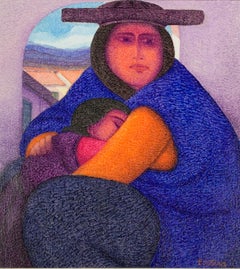
Contemporary figurative textured oil painting mother and child colorful signed
By Ernesto Gutierrez (b.1941)
Located in Milwaukee, WI
"Madre Joven (Young Mother)" is an original oil painting on jute by Ernesto Gutierrez. The artist signed the piece lower right. It depicts a woman cradling her child.
22" x 20" art...
Category
Early 2000s Contemporary Wisconsin - Art
Materials
Jute, Oil
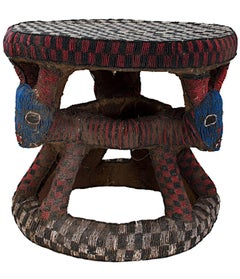
"Bamou Stool Used by Cattle Owner -- Cameroon, " Wood, Cloth,
Beads from Africa
Located in Milwaukee, WI
This stool, made by an unknown artist of the Bamoum tribe in Cameroon, was made from wood, cloth, & beads and was used by a cattle owner.
16 1/2" x 17 3/4" diameter
Category
1960s Wisconsin - Art
Materials
Wood
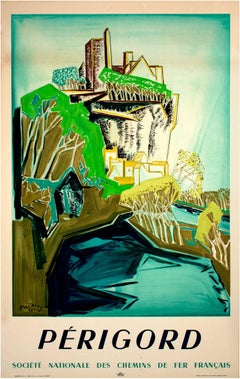
Early 20th century color lithograph poster mountain building trees sky text
By Edouard-Georges Mac-Avoy 1
Located in Milwaukee, WI
"Perigord" is an original lithograph of a landscape created for the Societe Nationale des Chemis de fer Francais, the French National Railways. Artist Eduoard Georges Mac'Avoy worked...
Category
1940s Wisconsin - Art
Materials
Lithograph
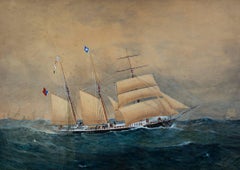
"The Vagabond, " a Watercolor on Paper signed by W. Forester
By W. Forester
Located in Milwaukee, WI
"The Vagabond" is an original watercolor painting on paper signed in the lower left corner in red with 5/89 by the artist W. Forester. It depicts a large ship on a turbulent sea.
2...
Category
19th Century Wisconsin - Art
Materials
Watercolor
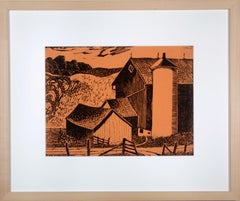
Silo, Sheboygan County
By George Raab
Located in Milwaukee, WI
Linoleum block print with ink additions on orange laid paper
Framed 18.88 x 15.88 in
Signed in plate
Category
1930s Wisconsin - Art
Materials
Ink, Linocut
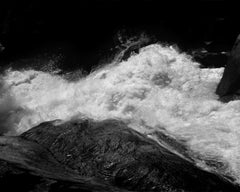
Rapids, Yosemite
Located in Milwaukee, WI
Alternative sizes and media available:
16 x 16
16 x 20
16 x 24
20 x 20
20 x 30
28 x 28
28 x 35
30 x 45
40 x 40
40 x 50
40 x 60
Matte photo paper or canvas available on...
Category
1950s Wisconsin - Art
Materials
Photographic Paper
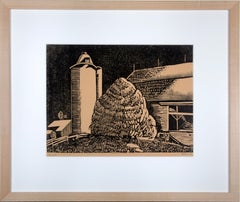
Silo
By George Raab
Located in Milwaukee, WI
9.25 x 12 inches (sheet), 8.75 x 12 inches (block)
Linoleum block print on laid paper
Framed 16 x 18.88 in
Signed to lower margin
Category
1930s Wisconsin - Art
Materials
Linocut
$1,740
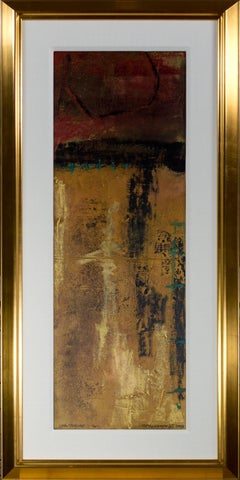
"Cartouche 1-16" original mixed media painting signed by John Baughman
By John Baughman
Located in Milwaukee, WI
The present work is an excellent example of the abstract paintings of John Baughman. Born in 1947 in Grand Rapids, Michigan, Baughman continues to experiment with Abstract Expressionism. The present work certainly draws influence from such artists as Mark Rothko and Adolph Gottlieb in the use of fields of color and disparate glyphs.
36" x 12 1/2" artwork
45 1/2" x 21 1/2" frame
Framed to museum standards in a 24 karat gold-leaf moulding and a linen liner
ABOUT JOHN BAUGHMAN:
His mother always thought he was just a little bit of a rebel - and not just because he mixed his paints and painted out of the lines on his paint-by-number pictures. To this day, John Baughman marches to his own drummer, which is apparent when viewing his multi-media artwork. That is also part of his charm.
Growing up in rural Western Michigan, John was the oldest of five children. There were no artists in his family, but he was interested in drawing at a very young age; he differed from most young artists in that he wanted to be experimental rather than ordinary. A kind, neighbor lady, Paula Larson, who was a Director of Art, encouraged John to keep his interest in art by always leaving artistic materials on her kitchen table. They were open to him whenever he pleased.
John's father was an executive for GM and hoped his son would grow up to be an engineer. John loved to draw cars, and entered the contest that the company held every year to design autos for the future. Airplanes were something else he enjoyed drawing.
During his high school years, John had several other buddies who enjoyed drawing as much as he did. In addition to that interest, he says they fished every stream in driving distance of home and loved sports. He played three sports in high school and still has a deep love for baseball.
After high school, John left for college which he says was a big mistake. He quit and joined the Navy where he was sent to Vietnam. There is no doubt in his mind that this experience influenced his painting.
John went back to college after the Navy and attended seven different colleges changing his major many times. He still wasn't where he wanted to be. Defining his strengths, John knew he could write, draw and sell ideas making advertising seem almost ideal and quite appealing.
John's foray into the business world went very well, and he eventually owned his own company. During this time, he met a woman who was also an artist, and worked with her for several years. The two of them later married.
John and his wife, Janet Richardson Baughman, bought acreage and moved there. Turning one of the buildings into a studio, the couple become "hot" in the art world and continued their artistic endeavors as well as running a business.
Of his art, John says, "Art is the core of my life." When viewing his abstract paintings, it is clear that he is not locked into one thing. Oils play a very important role in his art, but John is continually experimenting using new mediums. To say he is multi-media is almost an understatement. He is still an "out of the lines painter," and feels that it is very important for an artist to be willing to take a risk. An innate sense of arrangements and space plus his use of the color palette, which is all over the place, cause John's work to constantly change. A subject that he has painted, he may readdress, and it will look completely different.
Inspiration for his art is all around him. Sometimes he finds it running between his legs when he is standing in a stream or perhaps looking at the beauty that surrounds him where he lives. As time has passed, his artistry has evolved into a more sophisticated look with his paintings now having more layers and texture. John hopes that people viewing his art will find order and peace.
John and Janet raise sport horses on their farm, and train them to be dressage (disciplined form of exhibition) horses. They feel the same passion for these animals as they do for their artwork. John still loves sports, and fishes as often as he can. Both he and his wife are golfers. Assuming the title of "sports uncle," John spends several evenings watching his three nephews play baseball. And still hugely important in their lives are their three grown children, who live in various parts of the country.
Janet remains John's largest influence in his artwork. He feels there are so many great artists that it is difficult for him to choose a favorite, but he does love Mark Rothko's work and emulates small elements. He also greatly admires Conrad Marcarelli...
Category
Early 2000s Contemporary Wisconsin - Art
Materials
Mixed Media
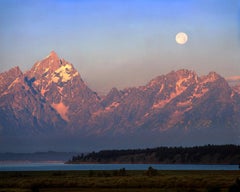
Tetons and Moon
Located in Milwaukee, WI
Alternative sizes and media available:
16 x 16
16 x 20
16 x 24
20 x 20
20 x 30
28 x 28
28 x 35
30 x 45
40 x 40
40 x 50
40 x 60
Matte photo paper or canvas available on...
Category
2010s Wisconsin - Art
Materials
Photographic Paper
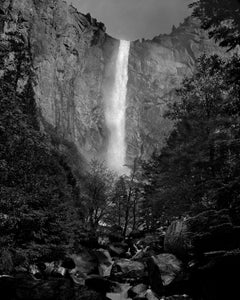
Yosemite Falls closeup, Yosemite
Located in Milwaukee, WI
Alternative sizes and media available:
16 x 16
16 x 20
16 x 24
20 x 20
20 x 30
28 x 28
28 x 35
30 x 45
40 x 40
40 x 50
40 x 60
Matte photo paper or canvas available on...
Category
1950s Wisconsin - Art
Materials
Photographic Paper
Still Thinking About These?
All Recently ViewedMore Ways To Browse
Alden Bryan
Amanda Acker
Antique Chinese Watercolor Landscape
Anton Genberg
Anton Sipos
Art Contemporary Fuschia
Bauer Canvas Oil
Beach Cottage Paintings
Ben Avram
Block Print Woman
Bords De La Seine
Bright Day And Painting
Christo And Jeanne Claude Wrapped Trees
Churches In Russia
Claire Wiltshire
Clement Cycles
Conquistador Art
Constantinople Painting