Wisconsin - Art
to
93
760
584
470
346
411
Overall Width
to
Overall Height
to
61
193
1,279
1,038
28
19
36
66
50
86
166
163
183
383
16
813
309
134
63
49
49
41
39
36
33
11
3
1
1,109
963
116
850
463
313
305
264
170
152
146
137
133
113
97
95
87
70
70
70
64
60
56
855
406
352
330
308
233
224
88
71
59
680
598
229,205
155,575
Item Ships From: Wisconsin
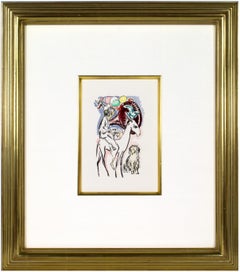
"The Parade -La Garconne Series, " a Color Pochoir
By Kees van Dongen
Located in Milwaukee, WI
This color pochoir was done in 1925 on Arches paper No. 738/750 depicting a parade with animals and balloons.
Archivally framed with 23k gold; 23k gold fillet, silk mat, and museum...
Category
1920s Art Deco Wisconsin - Art
Materials
Other Medium
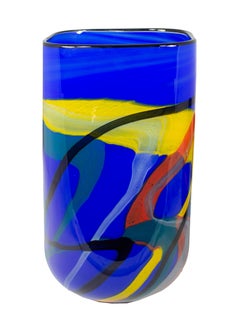
Blue Sea Square Vase
original blue hand-blown glass vase signed by Ioan Nemtoi
By Ioan Nemtoi
Located in Milwaukee, WI
This hand-blown square vase by Ioan Nemtoi could easily be the centerpiece of any collection of glass art. Nemtoi's incorporation of gestural composition techniques derived from Abstract Expressionism into his glass work yields a dazzling array of colors when this vase is illuminated from the inside.
Hand-blown glass
13.25 x 7.4375 x 7.25 inches
Signed 'Nemtoi' along the base
Ioan Nemtoi was born in 1964 on a farm in Trusesti near Dorohoi, in North-Eastern Romania, as the eldest son of a large family. When Nemtoi was in the fifth grade, one of his teachers noticed his artistic talent and sent him to art school. Later he went on to the art branch...
Category
1990s Contemporary Wisconsin - Art
Materials
Glass, Blown Glass
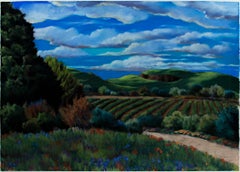
Contemporary colorful Pastel expressionist Landscape clouds trees sky signed
By Victoria Ryan
Located in Milwaukee, WI
"Storm Watch 2" is an original pastel drawing on paper by Victoria Ryan. The artist signed the piece. This piece features an idyllic farm landscape with ro...
Category
1990s Contemporary Wisconsin - Art
Materials
Pastel
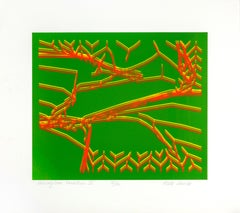
Herringbone Variation VI
Located in Milwaukee, WI
The work of Ruth Leavitt (1944, Saint Paul, Minnesota) employs computation to manipulate and alter abstract forms by virtually stretching, rotating and deforming them across three ax...
Category
1970s Abstract Geometric Wisconsin - Art
Materials
Lithograph
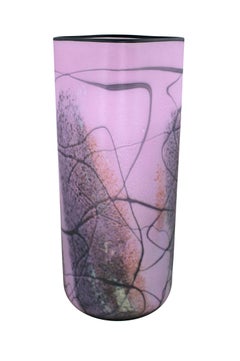
"Purple Matte Vase, " Hand Blown Glass signed by Ioan Nemtoi
By Ioan Nemtoi
Located in Milwaukee, WI
This vase is a delicate purple and was created by Ioan Nemtoi. The artist signed the vase. The vase has a black rim, gray lines throughout, and gray and orange speckles for decorativ...
Category
Early 2000s Wisconsin - Art
Materials
Blown Glass
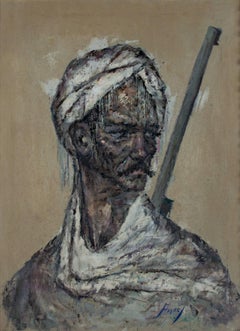
Military Figure Portrait Oil Painting Iran Impressionist Expressive Bold Signed
By Cyrus Afsary
Located in Milwaukee, WI
"Portrait of a Soldier from Tehran" is an original oil painting by Cyrus Afsary. The artist signed the painting in the lower right. This piece depicts an Iranian man with a white head scarf, a Keffiyeh.
Artwork Size: 27 1/2" x 19 3/4"
Frame Size: 34 1/4" x 26 1/4"
Artist Bio:
Cyrus Afsary studied art under the strict discipline of the Russian Realist style of painting, graduating with two degrees. He has won numerous awards, including the Best of Show at the C M Russell show of Original Western Art and the Exceptional Merit Award from the National Arts Club at the 1986 Pastel society of America show. He has also received gold and silver medals from the National Academy of Western Art and was the first recipient of the coveted Lougheed Memorial Award. Cyrus won the Painting Award for “ mystical Transformation” at the Buffalo Bill Art Show in 2006 and also shared in the choice award. In 2007 he was awarded the Best of Show at the Eiteljorg Museum and in 2009 at the Charles Russell Museum he received the staff choice award, for “Entrance to Shrine” and in 2010 the Williams Award for Collectors’ reserve at the Gilcrease Museum. Oklahoma.
Cyrus is an artist /member of the Cowboy Hall of Fame. He participates annually in the Prix de West invitational, and the Masters of the American West Exhibition at the Autry Museum in CA. The Eitejorg Museum in Indianapolis, IN and also the Buffalo Bill show in Cody Wyoming. Cyrus was featured in the 2002 Gilcrease Museum Rendezvous in Tulsa, Oklahoma. He is also a member of the Northwest Rendezvous Group.
Cyrus and his work appear in numerous publications, including American Artist, Art of The West, South West Art...
Category
1960s Wisconsin - Art
Materials
Canvas, Oil
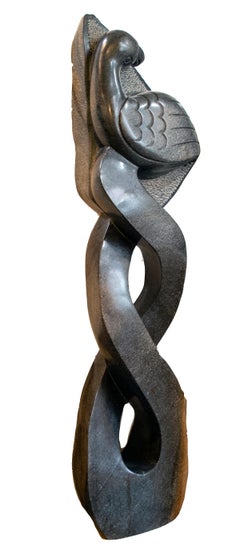
Flamingo
original Shona springstone sculpture signed by Brian Nehumba
By Brian Nehumba
Located in Milwaukee, WI
'Flamingo' is an original springstone sculpture signed by the Zimbabwean artist Brian Nehumba. Brian was trained in the Shona stone carving tradi...
Category
Early 2000s Contemporary Wisconsin - Art
Materials
Stone
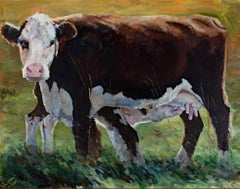
Contemporary oil painting cows outdoors realist animal grass field animals
Located in Milwaukee, WI
"Nursing Cow" is an original oil painting on canvas by Heather Foster. The artist initialed the painting in the lower right corner. The painting depicts a brown and white mother cow ...
Category
Early 2000s Wisconsin - Art
Materials
Canvas, Oil
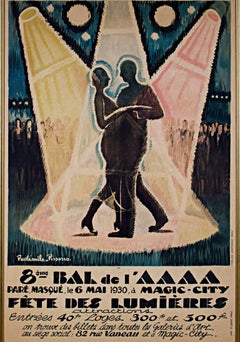
"Bal de l
AAAA Festival of Light, " Original Lithograph Poster by Paul Pissarro
By Paul Emile Pissarro
Located in Milwaukee, WI
"Bal de l'AAAA Festival of Light" is an original lithograph poster by Paul Emile Pissarro. It depicts a silhouetted couple dancing in white, pink, and yellow ...
Category
1930s Wisconsin - Art
Materials
Lithograph
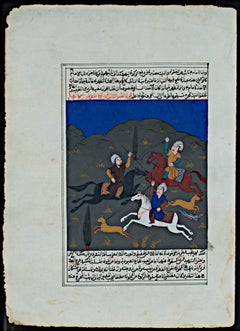
Persian Illuminated Miniature with Three Hunters on Horseback in a Landscape
Located in Milwaukee, WI
The present illuminated folio page contains a fine miniature depicting three figures hunting while on horseback, an image meant to accompany a historic epic. During the medieval period, hunting was an important pastime of male nobility throughout the Islamic world. The Quran itself explicitly endorses hunting and the use of animals to aid in capturing prey: "Lawful to you are foodstuffs that are good to eat and any game that, at your wish, is captured by beasts of prey which train as you do dogs, according to the method that Allah has taught you, after you have spoken the name of Allah over it." (Q 6:4) Muslim princes and nobles enjoyed the chase of the prey via horseback, using bow and arrow, crossbows, and blowpipes to capture their prey Horseback riding itself trained young men in the necessary skills for armed combat and warfare, developing their speed and strength.
12 x 8.25 inches, artwork
19.75 x 15.88 inches, frame
accompanied on the back with an image of the verso
framed to conservation standards with a 100% rag silk-lined mat in a gold gilded frame
A Persian miniature is a small Persian painting on paper, whether a book illustration or a separate work of art intended to be kept in an album of such works called a muraqqa. The techniques are broadly comparable to the Western and Byzantine traditions of miniatures in illuminated manuscripts. Although there is an equally well-established Persian tradition of wall-painting, the survival rate and state of preservation of miniatures is better, and miniatures are much the best-known form of Persian painting in the West, and many of the most important examples are in Western, or Turkish, museums. Miniature painting became a significant genre in Persian art in the 13th century, receiving Chinese influence after the Mongol conquests, and the highest point in the tradition was reached in the 15th and 16th centuries. The tradition continued, under some Western influence, after this, and has many modern exponents. The Persian miniature was the dominant influence on other Islamic miniature traditions, principally the Ottoman miniature...
Category
19th Century Other Art Style Wisconsin - Art
Materials
Ink, Tempera, Laid Paper
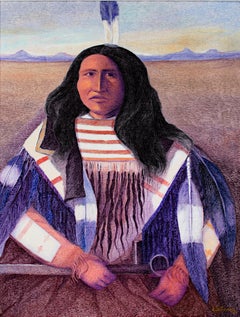
Contemporary figurative textured oil painting indigenous feather colorful signed
By Ernesto Gutierrez (b.1941)
Located in Milwaukee, WI
"Kicking Bear, Dakota" is an original oil painting on canvas by Ernesto Gutierrez. The artist signed the piece in the lower right. It depicts the Lakota band chief Kicking Bear.
Pa...
Category
Early 2000s Contemporary Wisconsin - Art
Materials
Canvas, Oil
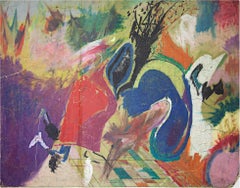
"The Nature of Things, " Abstract Oil Pastel Drawing initialed by Reginald K. Gee
By Reginald K. Gee
Located in Milwaukee, WI
"The Nature of Things" is an original oil pastel drawing on paper by Reginald K. Gee. The artist initialed the piece on the back. This work features a variety of abstract techniques-...
Category
1980s Abstract Wisconsin - Art
Materials
Oil Pastel
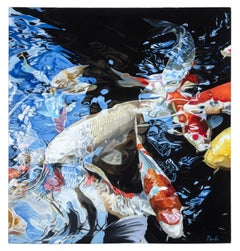
Contemporary oil painting photorealism koi fish water reflection signed
By Leslie Parke
Located in Milwaukee, WI
"Koi Fish II" is an original oil painting on linen by Leslie Parke. The artist signed the piece in the lower right. This hyper-realist painting depicts a school of multi-colored koi ...
Category
Early 2000s Photorealist Wisconsin - Art
Materials
Linen, Oil
Violet in Violet, purple and lilac abstract expressionist painting
By Lisa Fellerson
Located in New York, NY
Lisa Fellerson’s paintings provoke an interplay and tension between line, shape, and color. With no preconceived idea in mind, she begins by dripping, scrapping, and gouging acrylic ...
Category
2010s Abstract Expressionist Wisconsin - Art
Materials
Canvas, Acrylic

$2,760 Sale Price
20% Off
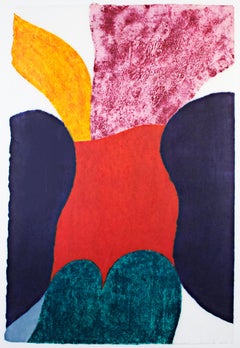
"India, " Abstract Woodcut and Monotype signed by Carol Summers
By Carol Summers
Located in Milwaukee, WI
"India" is a woodcut and monotype signed by Carol Summers. Here, Summer's abstract language for landscape imagery is taken to its most extreme: The image offers a view of a highly stylized waterfall, with red water falling down behind green foliage below. A hint of light blue at the lower left suggests a continuation of the water's flow. Above, purples and yellows mist upward from the power of the water. The playfulness of the image is enhanced by Summers' signature printmaking technique, which allows the ink from the woodblock to seep through the paper, blurring the edges of each form. Summers' signature can be found in pencil at the bottom of the rightmost blue form, with the title and edition at the bottom of the leftmost blue form. A copy of this print can be found in the collection of the Fine Arts Museums of San Francisco.
37.25 x 24.88 inches, artwork
48.5 x 35.5 inches, frame
Numbered 44 from the edition of 75
Carol Summers (1925-2016) has worked as an artist throughout the second half of the 20th century and into the first years of the next, outliving most of his mid-century modernist peers. Initially trained as a painter, Summers was drawn to color woodcuts around 1950 and it became his specialty thereafter. Over the years he has developed a process and style that is both innovative and readily recognizable. His art is known for it’s large scale, saturated fields of bold color, semi-abstract treatment of landscapes from around the world and a luminescent quality achieved through a printmaking process he invented.
In a career that has extended over half a century, Summers has hand-pulled approximately 245 woodcuts in editions that have typically run from 25 to 100 in number. His talent was both inherited and learned. Born in 1925 in Kingston, a small town in upstate New York, Summers was raised in nearby Woodstock with his older sister, Mary. His parents were both artists who had met in art school in St. Louis. During the Great Depression, when Carol was growing up, his father supported the family as a medical illustrator until he could return to painting. His mother was a watercolorist and also quite knowledgeable about the different kinds of papers used for various kinds of painting. Many years later, Summers would paint or print on thinly textured paper originally collected by his mother.
From 1948 to 1951, Carol Summers trained in the classical fine and studio arts at Bard College and at the Art Students League of New York. He studied painting with Steven Hirsh and printmaking with Louis Schanker. He admired the shapes and colors favored by early modernists Paul Klee (Sw: 1879-1940) and Matt Phillips (Am: b.1927- ). After graduating, Summers quit working as a part-time carpenter and cabinetmaker (which had supported his schooling and living expenses) to focus fulltime on art. That same year, an early abstract, Bridge No. 1 was selected for a Purchase Prize in a competition sponsored by the Brooklyn Museum.
In 1952, his work (Cathedral, Construction and Icarus) was shown the first time at the Museum of Modern Art in New York City in an exhibition of American woodcuts. In 1954, Summers received a grant from the Italian government to study for a year in Italy. Woodcuts completed soon after his arrival there were almost all editions of only 8 to 25 prints, small in size, architectural in content and black and white in color. The most well-known are Siennese Landscape and Little Landscape, which depicted the area near where he resided. Summers extended this trip three more years, a decision which would have significant impact on choices of subject matter and color in the coming decade.
After returning from Europe, Summers’ images continued to feature historical landmarks and events from Italy as well as from France, Spain and Greece. However, as evidenced in Aetna’s Dream, Worldwind and Arch of Triumph, a new look prevailed. These woodcuts were larger in size and in color. Some incorporated metal leaf in the creation of a collage and Summers even experimented with silkscreening. Editions were now between 20 and 50 prints in number. Most importantly, Summers employed his rubbing technique for the first time in the creation of Fantastic Garden in late 1957.
Dark Vision of Xerxes, a benchmark for Summers, was the first woodcut where Summers experimented using mineral spirits as part of his printmaking process. A Fulbright Grant as well as Fellowships from the Louis Comfort Tiffany Foundation and the Guggenheim Foundation followed soon thereafter, as did faculty positions at colleges and universities primarily in New York and Pennsylvania. During this period he married a dancer named Elaine Smithers with whom he had one son, Kyle. Around this same time, along with fellow artist Leonard Baskin, Summers pioneered what is now referred to as the “monumental” woodcut. This term was coined in the early 1960s to denote woodcuts that were dramatically bigger than those previously created in earlier years, ones that were limited in size mostly by the size of small hand-presses. While Baskin chose figurative subject matter, serious in nature and rendered with thick, striated lines, Summers rendered much less somber images preferring to emphasize shape and color; his subject matter approached abstraction but was always firmly rooted in the landscape.
In addition to working in this new, larger scale, Summers simultaneously refined a printmaking process which would eventually be called the “Carol Summers Method” or the “ Carol Summers Technique”. Summers produces his woodcuts by hand, usually from one or more blocks of quarter-inch pine, using oil-based printing inks and porous mulberry papers. His woodcuts reveal a sensitivity to wood especially its absorptive qualities and the subtleties of the grain. In several of his woodcuts throughout his career he has used the undulating, grainy patterns of a large wood plank to portray a flowing river or tumbling waterfall. The best examples of this are Dream, done in 1965 and the later Flash Flood Escalante, in 2003. In the majority of his woodcuts, Summers makes the blocks slightly larger than the paper so the image and color will bleed off the edge.
Before printing, he centers a dry sheet of paper over the top of the cut wood block or blocks, securing it with giant clips. Then he rolls the ink directly on the front of the sheet of paper and pressing down onto the dry wood block or reassembled group of blocks. Summers is technically very proficient; the inks are thoroughly saturated onto the surface of the paper but they do not run into each other. The precision of the color inking in Constantine’s Dream in 1969 and Rainbow Glacier in 1970 has been referred to in various studio handbooks. Summers refers to his own printing technique as “rubbing”. In traditional woodcut printing, including the Japanese method, the ink is applied directly onto the block. However, by following his own method, Summers has avoided the mirror-reversed image of a conventional print and it has given him the control over the precise amount of ink that he wants on the paper. After the ink is applied to the front of the paper, Summers sprays it with mineral spirits, which act as a thinning agent. The absorptive fibers of the paper draw the thinned ink away from the surface softening the shapes and diffusing and muting the colors. This produces a unique glow that is a hallmark of the Summers printmaking technique. Unlike the works of other color field artists or modernists of the time, this new technique made Summers’ extreme simplification and flat color areas anything but hard-edged or coldly impersonal.
By the 1960s, Summers had developed a personal way of coloring and printing and was not afraid of hard work, doing the cutting, inking and pulling himself. In 1964, at the age of 38, Summers’ work was exhibited for a second time at the Museum of Modern Art. This time his work was featured in a one-man show and then as one of MoMA’s two-year traveling exhibitions which toured throughout the United States. In subsequent years, Summers’ works would be exhibited and acquired for the permanent collections of multiple museums throughout the United States, Europe and Asia. Summers’ familiarity with landscapes throughout the world is firsthand. As a navigator-bombardier in the Marines in World War II, he toured the South Pacific and Asia.
Following college, travel in Europe and subsequent teaching positions, in 1972, after 47 years on the East Coast, Carol Summers moved permanently to Bonny Doon in the Santa Cruz Mountains in Northern California. There met his second wife, Joan Ward Toth, a textile artist who died in 1998; and it was here his second son, Ethan was born. During the years that followed this relocation, Summers’ choice of subject matter became more diverse although it retained the positive, mostly life-affirming quality that had existed from the beginning. Images now included moons, comets, both sunny and starry skies, hearts and flowers, all of which, in one way or another, remained tied to the landscape.
In the 1980s, from his home and studio in the Santa Cruz mountains, Summers continued to work as an artist supplementing his income by conducting classes and workshops at universities in California and Oregon as well as throughout the Mid and Southwest. He also traveled extensively during this period hiking and camping, often for weeks at a time, throughout the western United States and Canada. Throughout the decade it was not unusual for Summers to backpack alone or with a fellow artist into mountains or back country for six weeks or more at a time. Not surprisingly, the artwork created during this period rarely departed from images of the land, sea and sky. Summers rendered these landscapes in a more representational style than before, however he always kept them somewhat abstract by mixing geometric shapes with organic shapes, irregular in outline. Some of his most critically acknowledged work was created during this period including First Rain, 1985 and The Rolling Sea, 1989. Summers received an honorary doctorate from his alma mater, Bard College in 1979 and was selected by the United States Information Agency to spend a year conducting painting and printmaking workshops at universities throughout India. Since that original sabbatical, he has returned every year, spending four to eight weeks traveling throughout that country.
In the 1990s, interspersed with these journeys to India have been additional treks to the back roads and high country areas of Mexico, Central America, Nepal, China and Japan. Travel to these exotic and faraway places had a profound influence on Summers’ art. Subject matter became more worldly and nonwestern as with From Humla to Dolpo, 1991 or A Former Life of Budha, 1996, for example. Architectural images, such as The Pillars of Hercules, 1990 or The Raja’s Aviary, 1992 became more common. Still life images made a reappearance with Jungle Bouquet in 1997. This was also a period when Summers began using odd-sized paper to further the impact of an image.
The 1996 Night, a view of the earth and horizon as it might be seen by an astronaut, is over six feet long and only slightly more than a foot-and-a-half high. From 1999, Revuelta A Vida (Spanish for “Return to Life”) is pie-shaped and covers nearly 18 cubic feet. It was also at this juncture that Summers began to experiment with a somewhat different palette although he retained his love of saturated colors. The 2003 Far Side of Time is a superb example of the new direction taken by this colorist.
At the turn of the millennium in 1999, “Carol Summers Woodcuts...
Category
1990s Contemporary Wisconsin - Art
Materials
Monotype, Woodcut
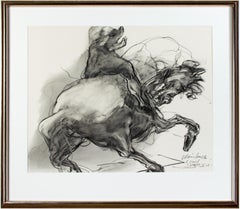
Horseman
charcoal on paper, signed and dated
By Claude Weisbuch
Located in Milwaukee, WI
Art: 20"x 26"
Frame: 28-1/2"x 32-1/2"
Charcoal on paper.
Signed, dated and inscribed to David Barnett.
Claude Weisbuch was born in Thionville, France in 1927 and was a pupil at L' É...
Category
1970s Wisconsin - Art
Materials
Charcoal
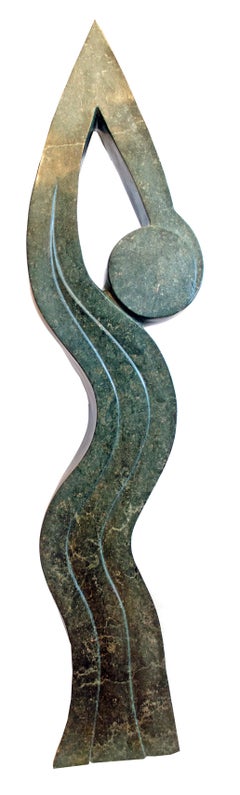
Stretching
original opal serpentine Shona sculpture signed by Canaan Ngandu
By Canaan Ngandu
Located in Milwaukee, WI
'Stretching' is an original opal serpentine sculpture signed by the Zimbabwean artist Canaan Musiyiwa Ngandu. The sculpture presents an abstract figure in Ngandu's quintessential sty...
Category
Early 2000s Contemporary Wisconsin - Art
Materials
Stone
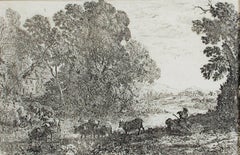
17th century etching black and white landscape scene forest trees cattle
By Claude Lorrain
Located in Milwaukee, WI
"Le Bouvier (The Cowherd)" is an original etching by Claude Lorrain. It depicts a shepherd with a herd of cows. This etching is also in the collections of the Met and the Louvre. It ...
Category
1630s Old Masters Wisconsin - Art
Materials
Etching
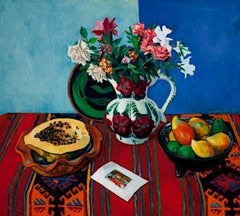
late 20th century still life oil painting with flowers and fruit signed
By Warren Brandt
Located in Milwaukee, WI
"Papaya & Mexican Pitcher" is an original signed oil painting by Warren Brandt. Brandt, an American painter originally influenced by Abstract Expressionism, became a "child of Matiss...
Category
1980s Contemporary Wisconsin - Art
Materials
Canvas, Oil
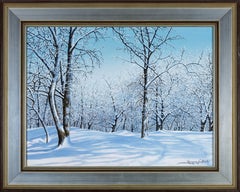
Winter Oaks
By Gregory Steele
Located in Milwaukee, WI
Framed 24 x 30 in
Category
Early 2000s Wisconsin - Art
Materials
Oil, Board
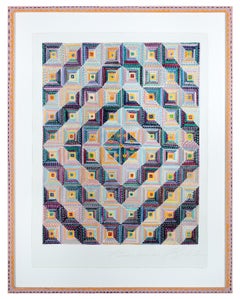
Optical Art Female Artist 1980s Abstract Geometric Watercolor Pastel Signed
Located in Milwaukee, WI
"Log Cabin Humble Beginnings" is a watercolor painting created by Barbara Kohl-Spiro. From 1984 this comes from a series of paintings based on quilt designs. This example depicts the...
Category
1980s Contemporary Wisconsin - Art
Materials
Watercolor
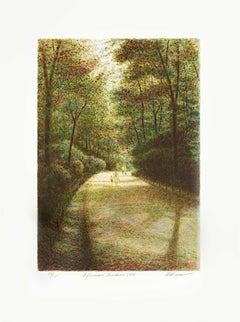
Afternoon Shadows
By Harold Altman
Located in Milwaukee, WI
Harold Altman was born in New York City in 1924. He attended the Art Students League, the Black Mountain College, the Academie de la Grande Chaumiere in Paris, and was a graduate of ...
Category
Late 20th Century Wisconsin - Art
Materials
Lithograph
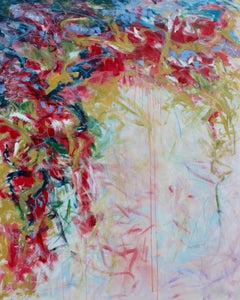
The Fragility of Passion, Painting, Acrylic on Canvas
By Karen Goetzinger
Located in Yardley, PA
Through my large gestural paintings I aim to capture those overlooked modest moments of beauty, revealed unexpectedly perhaps in the imperfect and the fleeting, but that nevertheless...
Category
2010s Abstract Expressionist Wisconsin - Art
Materials
Acrylic
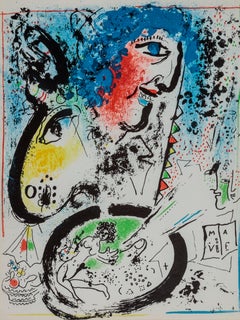
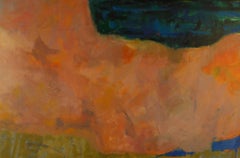
Chagall Lithographe Tome I - Frontispice, Auto-portrait
By Marc Chagall
Located in Milwaukee, WI
Framed 25.75 x 22.75 in
No. 282 in the Catalogue Raisonne of Chagall's lithographs
This lithograph came from "The Lithographs of Chagall: Volume I" by Fernand Mourlot and Marc Cha...
Category
1960s Wisconsin - Art
Materials
Lithograph
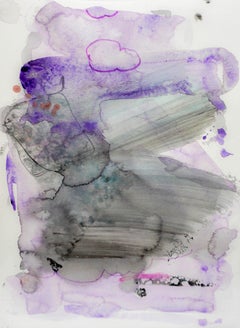
Sponge Effects, purple abstract watercolor painting on archival paper
By Lisa Fellerson
Located in New York, NY
Lisa Fellerson’s paintings provoke an interplay and tension between line, shape, and color. With no preconceived idea in mind, she begins by dripping, scrapping, and gouging acrylic ...
Category
2010s Abstract Expressionist Wisconsin - Art
Materials
Watercolor, Archival Paper
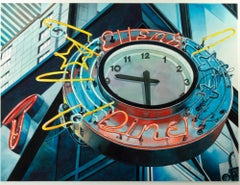
"Ellen
s Diner, NYC, " Photorealist Watercolor Painting signed by Bruce McCombs
By Bruce McCombs
Located in Milwaukee, WI
"Ellen's Diner, NYC" is an original photorealist watercolor painting by Bruce McCombs. The artist signed the piece lower right. This piece features a city diner's neon sign and clock...
Category
Early 2000s Photorealist Wisconsin - Art
Materials
Watercolor
19th century black and white etching aquatint outdoors figurative animal print
By Camille Pissarro
Located in Milwaukee, WI
"Vachere au Bord de L'Eau" is an original etching and aquatint by Camille Pissarro, the 8th state. It can be found in the catalogue raisonne Delteil #93. It features a woman sitting ...
Category
1890s Realist Wisconsin - Art
Materials
Etching, Aquatint

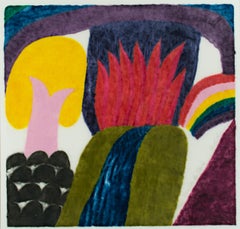
"Pura Vida" original color woodcut print signed by Carol Summers
By Carol Summers
Located in Milwaukee, WI
"Pura Vida" is an original color woodcut signed by Carol Summers. A multi-colored piece shows a waterfall with red flames behind it in the middle of the piece. On the left stands a tree with yellow leaves on a hill. To the right is a rainbow. This is an excellent example of Summer's printmaking, not just because of the technique and imagery, but because it numbered 1 of the edition of 125. In addition, it contains a personal inscription to the Milwaukee gallerist David Barnett, who has championed the work of Summers and produced catalogs of his work. Indeed, this print appears as no. 189 in the David Barnett Gallery's 1988 catalogue raisonné of Summer's woodcuts.
Feel free to inquire if you would like to purchase a copy of the catalogue raisonné along with your Carol Summers print.
Art: 24.25 x 24.75 in
Frame: 36 x 35 in
signed lower right
titled and inscribed to David [Barnett] lower right
edition (1/125) lower right
Carol Summers (1925-2016) has worked as an artist throughout the second half of the 20th century and into the first years of the next, outliving most of his mid-century modernist peers. Initially trained as a painter, Summers was drawn to color woodcuts around 1950 and it became his specialty thereafter. Over the years he has developed a process and style that is both innovative and readily recognizable. His art is known for it’s large scale, saturated fields of bold color, semi-abstract treatment of landscapes from around the world and a luminescent quality achieved through a printmaking process he invented.
In a career that has extended over half a century, Summers has hand-pulled approximately 245 woodcuts in editions that have typically run from 25 to 100 in number. His talent was both inherited and learned. Born in 1925 in Kingston, a small town in upstate New York, Summers was raised in nearby Woodstock with his older sister, Mary. His parents were both artists who had met in art school in St. Louis. During the Great Depression, when Carol was growing up, his father supported the family as a medical illustrator until he could return to painting. His mother was a watercolorist and also quite knowledgeable about the different kinds of papers used for various kinds of painting. Many years later, Summers would paint or print on thinly textured paper originally collected by his mother.
From 1948 to 1951, Carol Summers trained in the classical fine and studio arts at Bard College and at the Art Students League of New York. He studied painting with Steven Hirsh and printmaking with Louis Schanker. He admired the shapes and colors favored by early modernists Paul Klee (Sw: 1879-1940) and Matt Phillips (Am: b.1927- ). After graduating, Summers quit working as a part-time carpenter and cabinetmaker (which had supported his schooling and living expenses) to focus fulltime on art. That same year, an early abstract, Bridge No. 1 was selected for a Purchase Prize in a competition sponsored by the Brooklyn Museum.
In 1952, his work (Cathedral, Construction and Icarus) was shown the first time at the Museum of Modern Art in New York City in an exhibition of American woodcuts. In 1954, Summers received a grant from the Italian government to study for a year in Italy. Woodcuts completed soon after his arrival there were almost all editions of only 8 to 25 prints, small in size, architectural in content and black and white in color. The most well-known are Siennese Landscape and Little Landscape, which depicted the area near where he resided. Summers extended this trip three more years, a decision which would have significant impact on choices of subject matter and color in the coming decade.
After returning from Europe, Summers’ images continued to feature historical landmarks and events from Italy as well as from France, Spain and Greece. However, as evidenced in Aetna’s Dream, Worldwind and Arch of Triumph, a new look prevailed. These woodcuts were larger in size and in color. Some incorporated metal leaf in the creation of a collage and Summers even experimented with silkscreening. Editions were now between 20 and 50 prints in number. Most importantly, Summers employed his rubbing technique for the first time in the creation of Fantastic Garden in late 1957.
Dark Vision of Xerxes, a benchmark for Summers, was the first woodcut where Summers experimented using mineral spirits as part of his printmaking process. A Fulbright Grant as well as Fellowships from the Louis Comfort Tiffany Foundation and the Guggenheim Foundation followed soon thereafter, as did faculty positions at colleges and universities primarily in New York and Pennsylvania. During this period he married a dancer named Elaine Smithers with whom he had one son, Kyle. Around this same time, along with fellow artist Leonard Baskin, Summers pioneered what is now referred to as the “monumental” woodcut. This term was coined in the early 1960s to denote woodcuts that were dramatically bigger than those previously created in earlier years, ones that were limited in size mostly by the size of small hand-presses. While Baskin chose figurative subject matter, serious in nature and rendered with thick, striated lines, Summers rendered much less somber images preferring to emphasize shape and color; his subject matter approached abstraction but was always firmly rooted in the landscape.
In addition to working in this new, larger scale, Summers simultaneously refined a printmaking process which would eventually be called the “Carol Summers Method” or the “ Carol Summers Technique”. Summers produces his woodcuts by hand, usually from one or more blocks of quarter-inch pine, using oil-based printing inks and porous mulberry papers. His woodcuts reveal a sensitivity to wood especially its absorptive qualities and the subtleties of the grain. In several of his woodcuts throughout his career he has used the undulating, grainy patterns of a large wood plank to portray a flowing river or tumbling waterfall. The best examples of this are Dream, done in 1965 and the later Flash Flood Escalante, in 2003. In the majority of his woodcuts, Summers makes the blocks slightly larger than the paper so the image and color will bleed off the edge.
Before printing, he centers a dry sheet of paper over the top of the cut wood block or blocks, securing it with giant clips. Then he rolls the ink directly on the front of the sheet of paper and pressing down onto the dry wood block or reassembled group of blocks. Summers is technically very proficient; the inks are thoroughly saturated onto the surface of the paper but they do not run into each other. The precision of the color inking in Constantine’s Dream in 1969 and Rainbow Glacier in 1970 has been referred to in various studio handbooks. Summers refers to his own printing technique as “rubbing”. In traditional woodcut printing, including the Japanese method, the ink is applied directly onto the block. However, by following his own method, Summers has avoided the mirror-reversed image of a conventional print and it has given him the control over the precise amount of ink that he wants on the paper. After the ink is applied to the front of the paper, Summers sprays it with mineral spirits, which act as a thinning agent. The absorptive fibers of the paper draw the thinned ink away from the surface softening the shapes and diffusing and muting the colors. This produces a unique glow that is a hallmark of the Summers printmaking technique. Unlike the works of other color field artists or modernists of the time, this new technique made Summers’ extreme simplification and flat color areas anything but hard-edged or coldly impersonal.
By the 1960s, Summers had developed a personal way of coloring and printing and was not afraid of hard work, doing the cutting, inking and pulling himself. In 1964, at the age of 38, Summers’ work was exhibited for a second time at the Museum of Modern Art. This time his work was featured in a one-man show and then as one of MOMA’s two-year traveling exhibitions which toured throughout the United States. In subsequent years, Summers’ works would be exhibited and acquired for the permanent collections of multiple museums throughout the United States, Europe and Asia. Summers’ familiarity with landscapes throughout the world is firsthand. As a navigator-bombardier in the Marines in World War II, he toured the South Pacific and Asia.
Following college, travel in Europe and subsequent teaching positions, in 1972, after 47 years on the East Coast, Carol Summers moved permanently to Bonny Doon in the Santa Cruz Mountains in Northern California. There met his second wife, Joan Ward Toth, a textile artist who died in 1998; and it was here his second son, Ethan was born. During the years that followed this relocation, Summers’ choice of subject matter became more diverse although it retained the positive, mostly life-affirming quality that had existed from the beginning. Images now included moons, comets, both sunny and starry skies, hearts and flowers, all of which, in one way or another, remained tied to the landscape.
In the 1980s, from his home and studio in the Santa Cruz mountains, Summers continued to work as an artist supplementing his income by conducting classes and workshops at universities in California and Oregon as well as throughout the Mid and Southwest. He also traveled extensively during this period hiking and camping, often for weeks at a time, throughout the western United States and Canada. Throughout the decade it was not unusual for Summers to backpack alone or with a fellow artist into mountains or back country for six weeks or more at a time. Not surprisingly, the artwork created during this period rarely departed from images of the land, sea and sky. Summers rendered these landscapes in a more representational style than before, however he always kept them somewhat abstract by mixing geometric shapes with organic shapes, irregular in outline. Some of his most critically acknowledged work was created during this period including First Rain, 1985 and The Rolling Sea, 1989. Summers received an honorary doctorate from his alma mater, Bard College in 1979 and was selected by the United States Information Agency to spend a year conducting painting and printmaking workshops at universities throughout India. Since that original sabbatical, he has returned every year, spending four to eight weeks traveling throughout that country.
In the 1990s, interspersed with these journeys to India have been additional treks to the back roads and high country areas of Mexico, Central America, Nepal, China and Japan. Travel to these exotic and faraway places had a profound influence on Summers’ art. Subject matter became more worldly and nonwestern as with From Humla to Dolpo, 1991 or A Former Life of Budha, 1996, for example. Architectural images, such as The Pillars of Hercules, 1990 or The Raja’s Aviary, 1992 became more common. Still life images made a reappearance with Jungle Bouquet in 1997. This was also a period when Summers began using odd-sized paper to further the impact of an image.
The 1996 Night, a view of the earth and horizon as it might be seen by an astronaut, is over six feet long and only slightly more than a foot-and-a-half high. From 1999, Revuelta A Vida (Spanish for “Return to Life”) is pie-shaped and covers nearly 18 cubic feet. It was also at this juncture that Summers began to experiment with a somewhat different palette although he retained his love of saturated colors. The 2003 Far Side of Time is a superb example of the new direction taken by this colorist.
At the turn of the millennium in 1999, “Carol Summers Woodcuts...
Category
1980s Contemporary Wisconsin - Art
Materials
Woodcut
Original Lithograph Native American Figure Portrait Male Tribe Bold Stoic Signed
By Leonard Baskin
Located in Milwaukee, WI
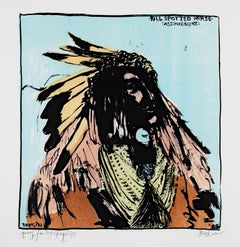
"Kill Spotted Horse" is an original lithograph created by Leonard Baskin. It was published by Fox Graphics. This is a proof purchased directly from the artist. Baskin signed the work in the lower right margin and labelled the work as a proof in the lower left margin, written with graphite. It depicts Kill Spotted Horse, an Assinniboine Native American, in a feather headdress against a light blue background.
Artwork Size: 15" x 13 1/2"
Frame Size: 27 1/2" x 26 3/8"
Artist Bio:
Leonard Baskin (1922-2000) was an american artist born in New Jersey and taught art classes in Massachusetts. He has received many public commissions (including a bas relief for the FDR Memorial), honors, and his work is owned by many major museums around the world. Additionally, Baskin was a teacher at Smith College in Northampton, Massachusetts. As a champion for human rights, Baskin created many pieces celebrating those who were seldom recognized.
Baskin’s interest in nineteenth century Native Americans was roused into acute attendance from ignorant indifference, when the National Park Service asked him to provide illustrations for the handbook that described the then called “Custer National Park”, now called “Little Big...
Category
1990s Contemporary Wisconsin - Art
Materials
Lithograph, Ink
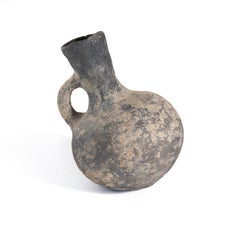
Jerusalem, Perfume Vessel, Iron Age
Located in Milwaukee, WI
4x3
Ceramic
Ancient clay perfume jug from the Iron Age discovered in Jerusalem.
Category
15th Century and Earlier Wisconsin - Art
Materials
Ceramic
Listening Friend
springstone Shona sculpture signed by Chemedu Jemali
By Chemedu Jemali
Located in Milwaukee, WI
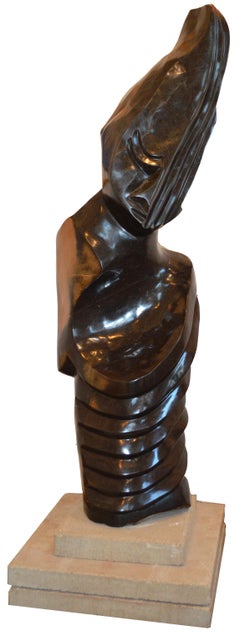
'Listening Friend' is an original springstone sculpture signed by the Zimbabwean artist Chemedu Jemali. The sculpture presents the head and torso of a figure, highly abstracted in Jemali's signature style: The figure's head leans to one side, eyes closed, as if carefully listening to the viewer. Like rippling sound waves, ridges cover half the figures face and body, each undulating and glistening with a polished surface. As the viewer walks around the sculpture, they can see that Jemali has left parts of the figure as natural stone, allowing the rough-hewn texture to create an exquisite contrast of surface with the mesmerizing polish.
46 x 13 x 10.5 inches
Signed "Chemedu Jemali" along base, proper right
Chemedu Jemali was born on March 3, 1971 in Harare, where he did his primary education. He and his family then moved to the Shamva township where he completed high school. His family is originally from Malawi and their totem is of the Miranzi (mouse).
Chemedu's work focuses on stylized and abstracted figuration, ranging from spirit birds to stylized busts. Chemedu took an interest in carving in the early 1990s, inspired by the success of his older brother, Chituwa, and became an established carver. Initially, he worked as an apprentice to Chituwa who introduced him to carving the local hard stone such as verdite, springstone, cobalt and lemon opal. He has three brothers and one sister; his brother, Salim, is also a full time sculptor.
He has become a well known artist not only in the Shona Art...
Category
Early 2000s Contemporary Wisconsin - Art
Materials
Stone
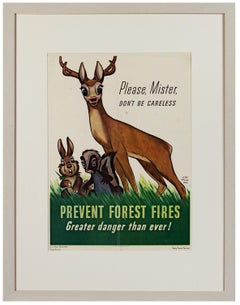
"Please, Mister, Don
t Be Careless" Vintage Poster featuring Disney Characters
Located in Milwaukee, WI
Printed in 1943, by the U.S. Government Printing Office for the U.S. Department of Agriculture Forest Service. The poster features the beloved Disney characters, Bambi (deer), Thumper (rabbit), and Flower (skunk) in wide-eyed shock leaning towards fear. With the slogan "Please, Mister, don't be careless" the poster is designed to tug at the heartstrings of the viewer and make them consider what actions they could take in their own lives to prevent forest fires.
Poster: 20" x 14 1/4"
Frame: 30" x 22 1/2"
Framed to conservation standards with a 100% cotton fiber matboard border and UV clear glass that filters 99% of UV Rays. UV Rays can be especially damaging and cause fading to the inks used in poster making. All of these features are housed in a contemporary natural wood frame.
Smokey Bear...
Category
1940s Other Art Style Wisconsin - Art
Materials
Lithograph
Woman with Falcon and Giraffe
By Karl Priebe
Located in Milwaukee, WI
Framed 28.50 x 39 in
Category
1960s Wisconsin - Art
Materials
Casein

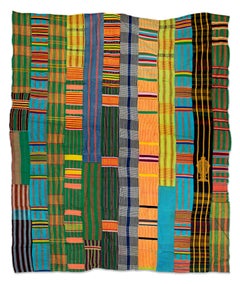
"Tribal Cloth, Ewe Ghana, " Multicolored Cotton Textile created circa 1965
Located in Milwaukee, WI
The Ewe people from Ghana are master weavers. People of means commission cloths called adanudo ("skilled/wise cloths"). Ewe adanudo textiles often display a tweed effect by twisting ...
Category
1960s Folk Art Wisconsin - Art
Materials
Cotton
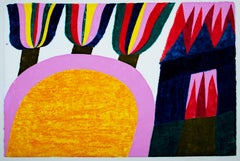
"Ravanna
s Palace Burning, " Woodcut Landscape signed by Carol Summers
By Carol Summers
Located in Milwaukee, WI
"Ravanna's Palace Burning" is a woodcut signed by Carol Summers. The image combines landscape and architecture, which is typical of the works Summers produced during the 1980s and '90s. In the image, a dark building stands burning, bright red flames licking from the windows and rooftop. It stands beside an orange field framed in pink, probably representing a plaza. Beyond the plaza are multicolored trees, their branches reaching upward like the flames on the building. The playfulness of the image is enhanced by Summers' signature printmaking technique, which allows the ink from the woodblock to seep through the paper, blurring the edges of each form.
Art: 24.5 x 37.25 in
Frame: 30 x 42.75 in
Numbered 53 of the edition of 125
Carol Summers (1925-2016) has worked as an artist throughout the second half of the 20th century and into the first years of the next, outliving most of his mid-century modernist peers. Initially trained as a painter, Summers was drawn to color woodcuts around 1950 and it became his specialty thereafter. Over the years he has developed a process and style that is both innovative and readily recognizable. His art is known for it’s large scale, saturated fields of bold color, semi-abstract treatment of landscapes from around the world and a luminescent quality achieved through a printmaking process he invented.
In a career that has extended over half a century, Summers has hand-pulled approximately 245 woodcuts in editions that have typically run from 25 to 100 in number. His talent was both inherited and learned. Born in 1925 in Kingston, a small town in upstate New York, Summers was raised in nearby Woodstock with his older sister, Mary. His parents were both artists who had met in art school in St. Louis. During the Great Depression, when Carol was growing up, his father supported the family as a medical illustrator until he could return to painting. His mother was a watercolorist and also quite knowledgeable about the different kinds of papers used for various kinds of painting. Many years later, Summers would paint or print on thinly textured paper originally collected by his mother.
From 1948 to 1951, Carol Summers trained in the classical fine and studio arts at Bard College and at the Art Students League of New York. He studied painting with Steven Hirsh and printmaking with Louis Schanker. He admired the shapes and colors favored by early modernists Paul Klee (Sw: 1879-1940) and Matt Phillips (Am: b.1927- ). After graduating, Summers quit working as a part-time carpenter and cabinetmaker (which had supported his schooling and living expenses) to focus fulltime on art. That same year, an early abstract, Bridge No. 1 was selected for a Purchase Prize in a competition sponsored by the Brooklyn Museum.
In 1952, his work (Cathedral, Construction and Icarus) was shown the first time at the Museum of Modern Art in New York City in an exhibition of American woodcuts. In 1954, Summers received a grant from the Italian government to study for a year in Italy. Woodcuts completed soon after his arrival there were almost all editions of only 8 to 25 prints, small in size, architectural in content and black and white in color. The most well-known are Siennese Landscape and Little Landscape, which depicted the area near where he resided. Summers extended this trip three more years, a decision which would have significant impact on choices of subject matter and color in the coming decade.
After returning from Europe, Summers’ images continued to feature historical landmarks and events from Italy as well as from France, Spain and Greece. However, as evidenced in Aetna’s Dream, Worldwind and Arch of Triumph, a new look prevailed. These woodcuts were larger in size and in color. Some incorporated metal leaf in the creation of a collage and Summers even experimented with silkscreening. Editions were now between 20 and 50 prints in number. Most importantly, Summers employed his rubbing technique for the first time in the creation of Fantastic Garden in late 1957.
Dark Vision of Xerxes, a benchmark for Summers, was the first woodcut where Summers experimented using mineral spirits as part of his printmaking process. A Fulbright Grant as well as Fellowships from the Louis Comfort Tiffany Foundation and the Guggenheim Foundation followed soon thereafter, as did faculty positions at colleges and universities primarily in New York and Pennsylvania. During this period he married a dancer named Elaine Smithers with whom he had one son, Kyle. Around this same time, along with fellow artist Leonard Baskin, Summers pioneered what is now referred to as the “monumental” woodcut. This term was coined in the early 1960s to denote woodcuts that were dramatically bigger than those previously created in earlier years, ones that were limited in size mostly by the size of small hand-presses. While Baskin chose figurative subject matter, serious in nature and rendered with thick, striated lines, Summers rendered much less somber images preferring to emphasize shape and color; his subject matter approached abstraction but was always firmly rooted in the landscape.
In addition to working in this new, larger scale, Summers simultaneously refined a printmaking process which would eventually be called the “Carol Summers Method” or the “ Carol Summers Technique”. Summers produces his woodcuts by hand, usually from one or more blocks of quarter-inch pine, using oil-based printing inks and porous mulberry papers. His woodcuts reveal a sensitivity to wood especially its absorptive qualities and the subtleties of the grain. In several of his woodcuts throughout his career he has used the undulating, grainy patterns of a large wood plank to portray a flowing river or tumbling waterfall. The best examples of this are Dream, done in 1965 and the later Flash Flood Escalante, in 2003. In the majority of his woodcuts, Summers makes the blocks slightly larger than the paper so the image and color will bleed off the edge.
Before printing, he centers a dry sheet of paper over the top of the cut wood block or blocks, securing it with giant clips. Then he rolls the ink directly on the front of the sheet of paper and pressing down onto the dry wood block or reassembled group of blocks. Summers is technically very proficient; the inks are thoroughly saturated onto the surface of the paper but they do not run into each other. The precision of the color inking in Constantine’s Dream in 1969 and Rainbow Glacier in 1970 has been referred to in various studio handbooks. Summers refers to his own printing technique as “rubbing”. In traditional woodcut printing, including the Japanese method, the ink is applied directly onto the block. However, by following his own method, Summers has avoided the mirror-reversed image of a conventional print and it has given him the control over the precise amount of ink that he wants on the paper. After the ink is applied to the front of the paper, Summers sprays it with mineral spirits, which act as a thinning agent. The absorptive fibers of the paper draw the thinned ink away from the surface softening the shapes and diffusing and muting the colors. This produces a unique glow that is a hallmark of the Summers printmaking technique. Unlike the works of other color field artists or modernists of the time, this new technique made Summers’ extreme simplification and flat color areas anything but hard-edged or coldly impersonal.
By the 1960s, Summers had developed a personal way of coloring and printing and was not afraid of hard work, doing the cutting, inking and pulling himself. In 1964, at the age of 38, Summers’ work was exhibited for a second time at the Museum of Modern Art. This time his work was featured in a one-man show and then as one of MOMA’s two-year traveling exhibitions which toured throughout the United States. In subsequent years, Summers’ works would be exhibited and acquired for the permanent collections of multiple museums throughout the United States, Europe and Asia. Summers’ familiarity with landscapes throughout the world is firsthand. As a navigator-bombardier in the Marines in World War II, he toured the South Pacific and Asia.
Following college, travel in Europe and subsequent teaching positions, in 1972, after 47 years on the East Coast, Carol Summers moved permanently to Bonny Doon in the Santa Cruz Mountains in Northern California. There met his second wife, Joan Ward Toth, a textile artist who died in 1998; and it was here his second son, Ethan was born. During the years that followed this relocation, Summers’ choice of subject matter became more diverse although it retained the positive, mostly life-affirming quality that had existed from the beginning. Images now included moons, comets, both sunny and starry skies, hearts and flowers, all of which, in one way or another, remained tied to the landscape.
In the 1980s, from his home and studio in the Santa Cruz mountains, Summers continued to work as an artist supplementing his income by conducting classes and workshops at universities in California and Oregon as well as throughout the Mid and Southwest. He also traveled extensively during this period hiking and camping, often for weeks at a time, throughout the western United States and Canada. Throughout the decade it was not unusual for Summers to backpack alone or with a fellow artist into mountains or back country for six weeks or more at a time. Not surprisingly, the artwork created during this period rarely departed from images of the land, sea and sky. Summers rendered these landscapes in a more representational style than before, however he always kept them somewhat abstract by mixing geometric shapes with organic shapes, irregular in outline. Some of his most critically acknowledged work was created during this period including First Rain, 1985 and The Rolling Sea, 1989. Summers received an honorary doctorate from his alma mater, Bard College in 1979 and was selected by the United States Information Agency to spend a year conducting painting and printmaking workshops at universities throughout India. Since that original sabbatical, he has returned every year, spending four to eight weeks traveling throughout that country.
In the 1990s, interspersed with these journeys to India have been additional treks to the back roads and high country areas of Mexico, Central America, Nepal, China and Japan. Travel to these exotic and faraway places had a profound influence on Summers’ art. Subject matter became more worldly and nonwestern as with From Humla to Dolpo, 1991 or A Former Life of Budha, 1996, for example. Architectural images, such as The Pillars of Hercules, 1990 or The Raja’s Aviary, 1992 became more common. Still life images made a reappearance with Jungle Bouquet in 1997. This was also a period when Summers began using odd-sized paper to further the impact of an image.
The 1996 Night, a view of the earth and horizon as it might be seen by an astronaut, is over six feet long and only slightly more than a foot-and-a-half high. From 1999, Revuelta A Vida (Spanish for “Return to Life”) is pie-shaped and covers nearly 18 cubic feet. It was also at this juncture that Summers began to experiment with a somewhat different palette although he retained his love of saturated colors. The 2003 Far Side of Time is a superb example of the new direction taken by this colorist.
At the turn of the millennium in 1999, “Carol Summers Woodcuts...
Category
1980s Contemporary Wisconsin - Art
Materials
Woodcut
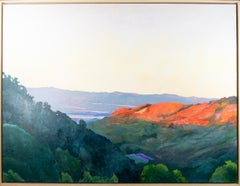
Contemporary landscape oil painting colorful mountains forest sky signed
By Kevin Knopp
Located in Milwaukee, WI
'King's Bluff, La Crosse' is an original landscape in oil signed by the Midwestern artist Kevin Knopp. In the vista, mountains jutt out from either side of the canvas in deep greens ...
Category
2010s Contemporary Wisconsin - Art
Materials
Linen, Oil
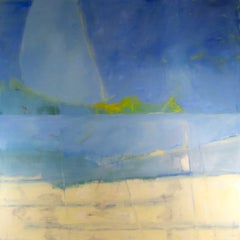
I Loved You Once
original abstract oil painting by Deirdre Schanen
By Deirdre Schanen
Located in Milwaukee, WI
'I Loved You Once' is an oil painting by the American artist Deirdre Schanen. Schanen's works weave between non-objective abstraction and representative landscape painting. This exam...
Category
2010s Contemporary Wisconsin - Art
Materials
Canvas, Oil
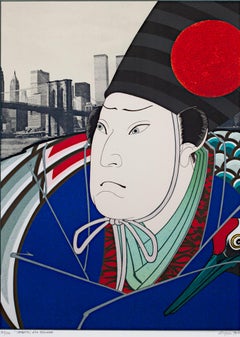
"Sambaso after Hirosada" original lithograph signed pop art bold Japanese figure
By Michael Knigin
Located in Milwaukee, WI
"Sambaso After Hirosada" is an original color lithograph by Michael Knigin from his Osaka series. This lithograph features a portrait of a traditional Japanese man in front of the Ne...
Category
1970s Pop Art Wisconsin - Art
Materials
Lithograph, Ink
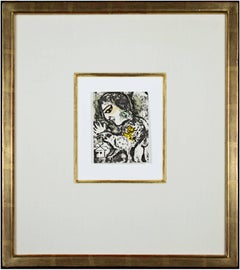
"Carte de Voeux #731, " Lithograph by Marc Chagall in Chagall Catalog Raisonne
By Marc Chagall
Located in Milwaukee, WI
"Carte de Voeux #731" is an original lithograph greeting card by Marc Chagall. It is in the Chagall Catalogue Raisonne and is from a rare edition of only 200. It depicts a face and a bird in Chagall's signature whimsical modernist style.
5 1/2" x 4 1/4" art
21" x 18 1/4" frame
Marc Chagall was born in Liozno, near Vitebsk, now in Belarus, the eldest of nine children in a close-knit Jewish family led by his father Khatskl (Zakhar) Shagal, a herring merchant, and his mother, Feige-Ite. This period of his life, described as happy though impoverished, appears in references throughout Chagall's work. The family home on Pokrovskaya Street is now the Marc Chagall Museum...
Category
1970s Modern Wisconsin - Art
Materials
Lucite, Lithograph
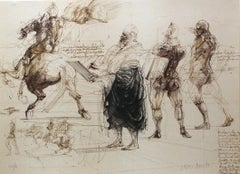
Original Lithograph Horse Anatomy Leonardo Davinci Nude Male Figure Sepia Signed
By Claude Weisbuch
Located in Milwaukee, WI
"Homage a Leonardo d'Vinci (Leonardo drawing, 3 Figures, Horse from De La Bataille Vol. I)" is an original color lithograph signed by Claude Weisbuch. A group of figures stand to the...
Category
1970s Modern Wisconsin - Art
Materials
Paper, Lithograph
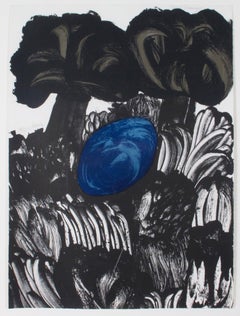
"Jungle, " Color Lithograph Landscape signed by Carol Summers
By Carol Summers
Located in Milwaukee, WI
"Jungle" is an important, rare color lithograph signed by Carol Summers from the early years of his production. The image offers a landscape of a dark jungle, printed mostly in black ink. In the center, a blue pool of water is shaded by two trees. Summers' technique in this print renders a painterly quality to the image: the grasses and leaves of the scene are all created with playful, energetic swiping motions much like watercolor paint. This technique and the use of fields of color predict the style Summers would adopt in the coming decades, making this an important early work.
30 x 22 inches, artwork
Numbered 14 of the edition of 27
Carol Summers (1925-2016) has worked as an artist throughout the second half of the 20th century and into the first years of the next, outliving most of his mid-century modernist peers. Initially trained as a painter, Summers was drawn to color woodcuts around 1950 and it became his specialty thereafter. Over the years he has developed a process and style that is both innovative and readily recognizable. His art is known for it’s large scale, saturated fields of bold color, semi-abstract treatment of landscapes from around the world and a luminescent quality achieved through a printmaking process he invented.
In a career that has extended over half a century, Summers has hand-pulled approximately 245 woodcuts in editions that have typically run from 25 to 100 in number. His talent was both inherited and learned. Born in 1925 in Kingston, a small town in upstate New York, Summers was raised in nearby Woodstock with his older sister, Mary. His parents were both artists who had met in art school in St. Louis. During the Great Depression, when Carol was growing up, his father supported the family as a medical illustrator until he could return to painting. His mother was a watercolorist and also quite knowledgeable about the different kinds of papers used for various kinds of painting. Many years later, Summers would paint or print on thinly textured paper originally collected by his mother.
From 1948 to 1951, Carol Summers trained in the classical fine and studio arts at Bard College and at the Art Students League of New York. He studied painting with Steven Hirsh and printmaking with Louis Schanker. He admired the shapes and colors favored by early modernists Paul Klee (Sw: 1879-1940) and Matt Phillips (Am: b.1927- ). After graduating, Summers quit working as a part-time carpenter and cabinetmaker (which had supported his schooling and living expenses) to focus fulltime on art. That same year, an early abstract, Bridge No. 1 was selected for a Purchase Prize in a competition sponsored by the Brooklyn Museum.
In 1952, his work (Cathedral, Construction and Icarus) was shown the first time at the Museum of Modern Art in New York City in an exhibition of American woodcuts. In 1954, Summers received a grant from the Italian government to study for a year in Italy. Woodcuts completed soon after his arrival there were almost all editions of only 8 to 25 prints, small in size, architectural in content and black and white in color. The most well-known are Siennese Landscape and Little Landscape, which depicted the area near where he resided. Summers extended this trip three more years, a decision which would have significant impact on choices of subject matter and color in the coming decade.
After returning from Europe, Summers’ images continued to feature historical landmarks and events from Italy as well as from France, Spain and Greece. However, as evidenced in Aetna’s Dream, Worldwind and Arch of Triumph, a new look prevailed. These woodcuts were larger in size and in color. Some incorporated metal leaf in the creation of a collage and Summers even experimented with silkscreening. Editions were now between 20 and 50 prints in number. Most importantly, Summers employed his rubbing technique for the first time in the creation of Fantastic Garden in late 1957.
Dark Vision of Xerxes, a benchmark for Summers, was the first woodcut where Summers experimented using mineral spirits as part of his printmaking process. A Fulbright Grant as well as Fellowships from the Louis Comfort Tiffany Foundation and the Guggenheim Foundation followed soon thereafter, as did faculty positions at colleges and universities primarily in New York and Pennsylvania. During this period he married a dancer named Elaine Smithers with whom he had one son, Kyle. Around this same time, along with fellow artist Leonard Baskin, Summers pioneered what is now referred to as the “monumental” woodcut. This term was coined in the early 1960s to denote woodcuts that were dramatically bigger than those previously created in earlier years, ones that were limited in size mostly by the size of small hand-presses. While Baskin chose figurative subject matter, serious in nature and rendered with thick, striated lines, Summers rendered much less somber images preferring to emphasize shape and color; his subject matter approached abstraction but was always firmly rooted in the landscape.
In addition to working in this new, larger scale, Summers simultaneously refined a printmaking process which would eventually be called the “Carol Summers Method” or the “ Carol Summers Technique”. Summers produces his woodcuts by hand, usually from one or more blocks of quarter-inch pine, using oil-based printing inks and porous mulberry papers. His woodcuts reveal a sensitivity to wood especially its absorptive qualities and the subtleties of the grain. In several of his woodcuts throughout his career he has used the undulating, grainy patterns of a large wood plank to portray a flowing river or tumbling waterfall. The best examples of this are Dream, done in 1965 and the later Flash Flood Escalante, in 2003. In the majority of his woodcuts, Summers makes the blocks slightly larger than the paper so the image and color will bleed off the edge.
Before printing, he centers a dry sheet of paper over the top of the cut wood block or blocks, securing it with giant clips. Then he rolls the ink directly on the front of the sheet of paper and pressing down onto the dry wood block or reassembled group of blocks. Summers is technically very proficient; the inks are thoroughly saturated onto the surface of the paper but they do not run into each other. The precision of the color inking in Constantine’s Dream in 1969 and Rainbow Glacier in 1970 has been referred to in various studio handbooks. Summers refers to his own printing technique as “rubbing”. In traditional woodcut printing, including the Japanese method, the ink is applied directly onto the block. However, by following his own method, Summers has avoided the mirror-reversed image of a conventional print and it has given him the control over the precise amount of ink that he wants on the paper. After the ink is applied to the front of the paper, Summers sprays it with mineral spirits, which act as a thinning agent. The absorptive fibers of the paper draw the thinned ink away from the surface softening the shapes and diffusing and muting the colors. This produces a unique glow that is a hallmark of the Summers printmaking technique. Unlike the works of other color field artists or modernists of the time, this new technique made Summers’ extreme simplification and flat color areas anything but hard-edged or coldly impersonal.
By the 1960s, Summers had developed a personal way of coloring and printing and was not afraid of hard work, doing the cutting, inking and pulling himself. In 1964, at the age of 38, Summers’ work was exhibited for a second time at the Museum of Modern Art. This time his work was featured in a one-man show and then as one of MOMA’s two-year traveling exhibitions which toured throughout the United States. In subsequent years, Summers’ works would be exhibited and acquired for the permanent collections of multiple museums throughout the United States, Europe and Asia. Summers’ familiarity with landscapes throughout the world is firsthand. As a navigator-bombardier in the Marines in World War II, he toured the South Pacific and Asia.
Following college, travel in Europe and subsequent teaching positions, in 1972, after 47 years on the East Coast, Carol Summers moved permanently to Bonny Doon in the Santa Cruz Mountains in Northern California. There met his second wife, Joan Ward Toth, a textile artist who died in 1998; and it was here his second son, Ethan was born. During the years that followed this relocation, Summers’ choice of subject matter became more diverse although it retained the positive, mostly life-affirming quality that had existed from the beginning. Images now included moons, comets, both sunny and starry skies, hearts and flowers, all of which, in one way or another, remained tied to the landscape.
In the 1980s, from his home and studio in the Santa Cruz mountains, Summers continued to work as an artist supplementing his income by conducting classes and workshops at universities in California and Oregon as well as throughout the Mid and Southwest. He also traveled extensively during this period hiking and camping, often for weeks at a time, throughout the western United States and Canada. Throughout the decade it was not unusual for Summers to backpack alone or with a fellow artist into mountains or back country for six weeks or more at a time. Not surprisingly, the artwork created during this period rarely departed from images of the land, sea and sky. Summers rendered these landscapes in a more representational style than before, however he always kept them somewhat abstract by mixing geometric shapes with organic shapes, irregular in outline. Some of his most critically acknowledged work was created during this period including First Rain, 1985 and The Rolling Sea, 1989. Summers received an honorary doctorate from his alma mater, Bard College in 1979 and was selected by the United States Information Agency to spend a year conducting painting and printmaking workshops at universities throughout India. Since that original sabbatical, he has returned every year, spending four to eight weeks traveling throughout that country.
In the 1990s, interspersed with these journeys to India have been additional treks to the back roads and high country areas of Mexico, Central America, Nepal, China and Japan. Travel to these exotic and faraway places had a profound influence on Summers’ art. Subject matter became more worldly and nonwestern as with From Humla to Dolpo, 1991 or A Former Life of Budha, 1996, for example. Architectural images, such as The Pillars of Hercules, 1990 or The Raja’s Aviary, 1992 became more common. Still life images made a reappearance with Jungle Bouquet in 1997. This was also a period when Summers began using odd-sized paper to further the impact of an image.
The 1996 Night, a view of the earth and horizon as it might be seen by an astronaut, is over six feet long and only slightly more than a foot-and-a-half high. From 1999, Revuelta A Vida (Spanish for “Return to Life”) is pie-shaped and covers nearly 18 cubic feet. It was also at this juncture that Summers began to experiment with a somewhat different palette although he retained his love of saturated colors. The 2003 Far Side of Time is a superb example of the new direction taken by this colorist.
At the turn of the millennium in 1999, “Carol Summers Woodcuts...
Category
1960s Contemporary Wisconsin - Art
Materials
Lithograph
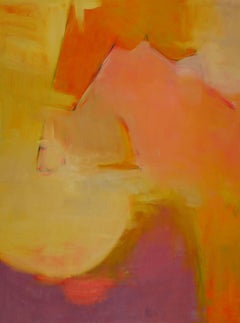
"Except for Then, " an Abstract Oil Painting on Canvas by Dierdre Schanen
By Deirdre Schanen
Located in Milwaukee, WI
"Except for Then" is a contemporary abstract painting of warm golds, pinks, peach and orange. Oil on canvas, signed on verso. 2010
48" x 36" canvas
Deirdre Schanen artist statemen...
Category
2010s Abstract Wisconsin - Art
Materials
Canvas, Oil
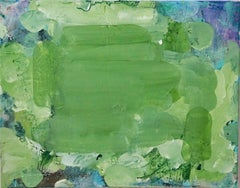
Smile, bright green abstract expressionist painting, lush and verdant
By Lisa Fellerson
Located in New York, NY
Lisa Fellerson’s paintings provoke an interplay and tension between line, shape, and color. With no preconceived idea in mind, she begins by dripping, scrapping, and gouging acrylic ...
Category
2010s Abstract Expressionist Wisconsin - Art
Materials
Canvas, Acrylic

$2,560 Sale Price
20% Off
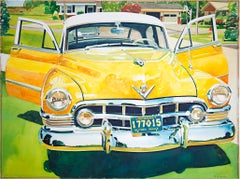
Contemporary watercolor photorealist car closeup painting reflection signed
By Bruce McCombs
Located in Milwaukee, WI
"Yellow Cadillac" is an original watercolor painting by Bruce McCombs. The artist signed the piece lower right. It reatures a shiny yellow car with its doors open sitting on a suburb...
Category
1990s Photorealist Wisconsin - Art
Materials
Watercolor
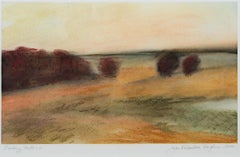
"Looking North 2, " Orange Landscape Pastel signed by Janet Richardson-Baughman
By Janet Richardson-Baughman
Located in Milwaukee, WI
"Looking North 2" by Janet Richardson-Baughman is a pastel drawing on paper, signed in the lower right corner. The work is framed and matted with acid-free mat board. This landscape ...
Category
Early 2000s Contemporary Wisconsin - Art
Materials
Paper, Pastel
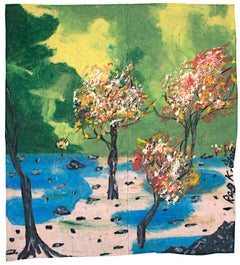
"Smile Park, " Oil Pastel on Grocery Bag signed by Reginald K. Gee
By Reginald K. Gee
Located in Milwaukee, WI
"Smile Park" is an original oil pastel drawing on a grocery bag by Reginald K. Gee. The artist signed the piece lower right and dated it on the back. It features fall foliage on the ...
Category
1990s Contemporary Wisconsin - Art
Materials
Oil Pastel, Found Objects
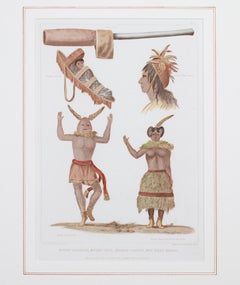
19th century color engraving indigenous figures feathers text full body face
By Seth Eastman
Located in Milwaukee, WI
"Moqui Dancers, Moqui Pipe, Navajo Cradle & Headdress" is a hand-colored engraving by Seth Eastman. It depicts encyclopedic depictions of Native American...
Category
1840s Wisconsin - Art
Materials
Engraving
"It
s All I Ask Of You, " Abstract Acrylic Painting on Canvas by Dierdre Schanen
By Deirdre Schanen
Located in Milwaukee, WI
"It's All I Ask of You" is a contemporary abstract painting of oranges, blues and greens. Acrylic on canvas, 2016. The artist signed the painting on the verso.
36" x 54" canvas
De...
Category
2010s Abstract Expressionist Wisconsin - Art
Materials
Canvas, Acrylic
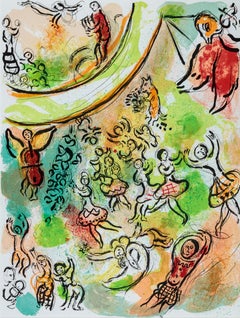
Le Plafond de l
Opera de Paris, Frontispice
By Marc Chagall
Located in Milwaukee, WI
Framed 23 x 20 in
Category
1960s Wisconsin - Art
Materials
Lithograph
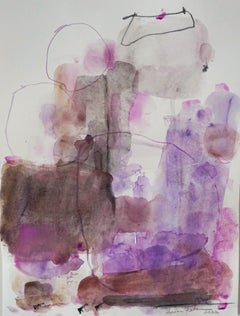
Chroma Bouquet, abstract painting, purple
By Lisa Fellerson
Located in New York, NY
Watercolor on archival cold press paper.
Lisa Fellerson’s paintings provoke an interplay and tension between line, shape, and color. With no preconceived idea in mind, she begins by...
Category
2010s Contemporary Wisconsin - Art
Materials
Paper, Watercolor, Archival Paper
$800 Sale Price
20% Off
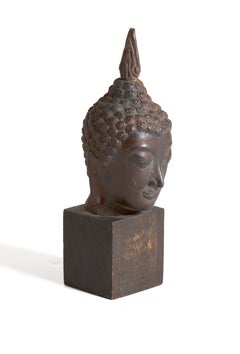
Burma, Thai Bronze Head of Buddha (original)
Located in Milwaukee, WI
Thai Bronze Head of Buddha (Original) 17th c.
Category
17th Century Wisconsin - Art
Materials
Bronze
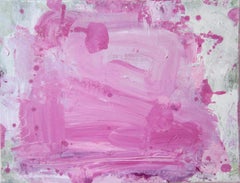
Effervescent, abstract expressionist painting on canvas, pink and grey
By Lisa Fellerson
Located in New York, NY
Lisa Fellerson’s paintings provoke an interplay and tension between line, shape, and color. With no preconceived idea in mind, she begins by dripping, scraping and gouging acrylic pa...
Category
2010s Abstract Wisconsin - Art
Materials
Canvas, Acrylic
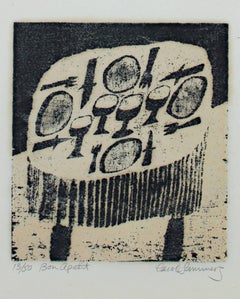
"Bon Apetit, " Original Black and White Woodcut by Carol Summers
By Carol Summers
Located in Milwaukee, WI
"Bon Apetit" is an original black and white woodcut by Carol Summers. It depicts a table set for four people. The artist signed the piece in t...
Category
1960s Wisconsin - Art
Materials
Woodcut
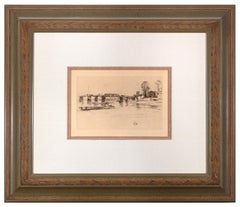
19th century engraving landscape bridge industrial river scene ink signed
By James Abbott McNeill Whistler
Located in Milwaukee, WI
"Fulham A.K.A. Chelsea" is an original etching by James Abbott MacNeill Whistler. The artist signed the piece in the plate with his butterfly monogram in the lower right. IT was publ...
Category
1870s Impressionist Wisconsin - Art
Materials
Etching
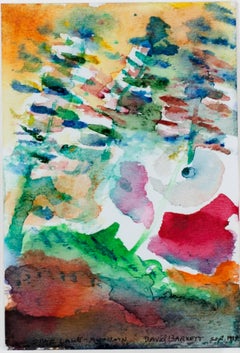
"Star Lake Autumn, " Multicolored Watercolor Landscape signed by David Barnett
By David Barnett
Located in Milwaukee, WI
"Star Lake Autumn" is an original watercolor painting by David Barnett. It depicts the view of a lake through some trees. The artist signed the painting in the lower right.
6" x 4"...
Category
1990s Expressionist Wisconsin - Art
Materials
Watercolor
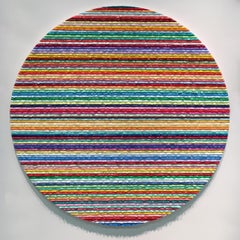
contemporary abstract colorful acrylic painting impasto textured stripes signed
By Daniel Klewer
Located in Milwaukee, WI
Large round multicolored abstract painting. Rainbow of colors. Acrylic paint is done in a multidimensional way. Made by local Wisconsin artist Daniel ...
Category
2010s Abstract Wisconsin - Art
Materials
Acrylic
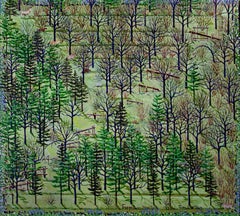
"Trapped in New York, " Acrylic on Canvas Field of Trees signed by Tom Shelton
By Tom Shelton
Located in Milwaukee, WI
"Trapped in New York" is an original acrylic painting by Tom Shelton. The artist signed, titled, and dated the piece in the lower right. This piece features a forest with animals and...
Category
1990s Contemporary Wisconsin - Art
Materials
Canvas, Acrylic
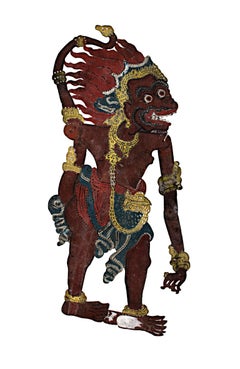
"Indonesian Shadow Puppet Wayang Purwa, " Leather created in Indonesia
Located in Milwaukee, WI
This flat shadow puppet was created by an unknown Indonesian artist using water buffalo hide. This shadow puppet, 17 1/2" high with movable arms, was use...
Category
19th Century Folk Art Wisconsin - Art
Materials
Animal Skin, Leather
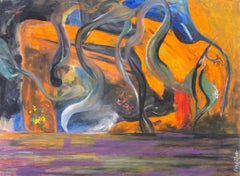
"Not Intended For Office Viewing Series Section F" Oil Pastel by Reginald K. Gee
By Reginald K. Gee
Located in Milwaukee, WI
"Not Intended For Office Viewing Series, Section F" is an original oil pastel drawing on illustration board by Reginald K. Gee. The artist signed the piece lower right. This piece fe...
Category
1990s Contemporary Wisconsin - Art
Materials
Oil Pastel, Illustration Board
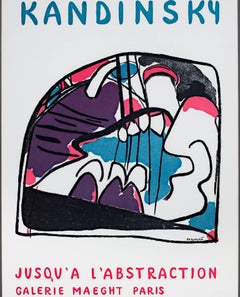
Jusqu
a L
Abstraction
color lithograph poster Wassily Kandinsky
By Wassily Kandinsky
Located in Milwaukee, WI
"Jusqu'a L'Abstraction" is a lithograph poster by Wassily Kandinsky. This poster depicts abstract forms in purple, pink, blue, and black and was created for the Maeght gallery in Par...
Category
1940s Modern Wisconsin - Art
Materials
Lithograph
Still Thinking About These?
All Recently ViewedMore Ways To Browse
Alden Bryan
Amanda Acker
Antique Chinese Watercolor Landscape
Anton Genberg
Anton Sipos
Art Contemporary Fuschia
Bauer Canvas Oil
Beach Cottage Paintings
Ben Avram
Block Print Woman
Bords De La Seine
Bright Day And Painting
Christo And Jeanne Claude Wrapped Trees
Churches In Russia
Claire Wiltshire
Clement Cycles
Conquistador Art
Constantinople Painting