Wisconsin - Art
to
93
760
584
470
346
411
Overall Width
to
Overall Height
to
61
193
1,279
1,038
28
19
36
66
50
86
166
163
183
383
16
813
309
134
63
49
49
41
39
36
33
11
3
1
1,109
963
116
850
463
313
305
264
170
152
146
137
133
113
97
95
87
70
70
70
64
60
56
855
406
352
330
308
233
224
88
71
59
680
598
229,205
155,575
Item Ships From: Wisconsin
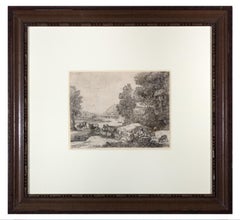
17th century etching black and white landscape scene forest sheep figures sky
By Claude Lorrain
Located in Milwaukee, WI
"Shepherd and Shepherdess Conversing in a Landscape (Berger et Bergere Conversant)" is an etching by Claude Gellee (Le Lorrain). This etching is in the collections of the Metropolita...
Category
Mid-17th Century Old Masters Wisconsin - Art
Materials
Etching
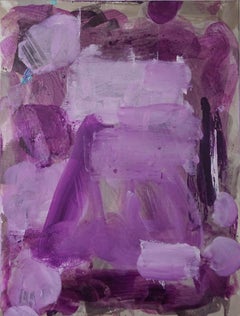
Violet Flow, abstract painting, violet and purple
By Lisa Fellerson
Located in New York, NY
Lisa Fellerson’s paintings provoke an interplay and tension between line, shape, and color. With no preconceived idea in mind, she begins by dripping, scrapping, and gouging acrylic ...
Category
2010s Contemporary Wisconsin - Art
Materials
Canvas, Acrylic
$2,800 Sale Price
20% Off
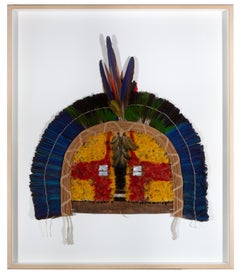
"Cara Grande (Taparapay tribe) Amazon Circumcision Mask, " Mixed Media c. 1950
Located in Milwaukee, WI
"Cara Grande (Taparapay tribe) Amazon Circumcision Mask" is a Brazilian mask made out of feathers, fiber, mother of pearl, and wood. It was made to be ...
Category
Mid-20th Century Wisconsin - Art
Materials
Wood, Mixed Media
"Untitled - LJ #53, " Lithograph signed by Lester Johnson
By Lester Johnson
Located in Milwaukee, WI
"Untitled - LJ#53" is an original color lithograph by Lester Johnson. The artist signed the piece in the lower center and also wrote the edition number,...
Category
1970s Expressionist Wisconsin - Art
Materials
Lithograph
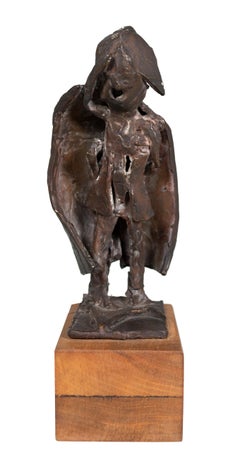
General (Napoleon)
original bronze sculpture by Doris Jarowsky 1960s abstract
Located in Milwaukee, WI
This small-scale bronze of the General Napoleon by American artist Doris Jarowsky is an excellent example of the sculpture of the 1960s. The sculpture i...
Category
1960s Abstract Expressionist Wisconsin - Art
Materials
Bronze
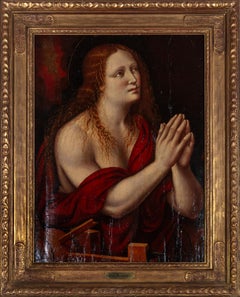
19th century classical religious oil painting portrait female subject red dark
By Giovanni Pietro Rizzoli
Located in Milwaukee, WI
"Caterina d'Alexandria (Saint Catherine of Alexandria)" is a copy oil painting on wood panel, after Italian artist Giampietrino (Giovanni Pietro Riz...
Category
19th Century Old Masters Wisconsin - Art
Materials
Oil, Wood Panel
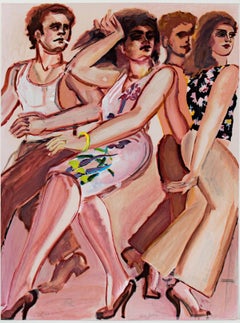
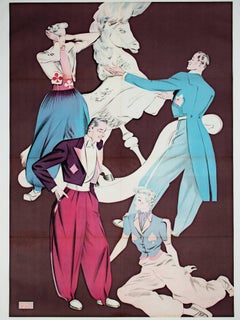
"Fashionable Boulevard Montmartre, " Original Lithograph Poster by Pierre Brenot
By Pierre Laurent Brenot
Located in Milwaukee, WI
"Fashionable Boulevard Montmartre" is an original lithograph poster by Pierre Laurent Brenot. This piece depicts four figures in fashionable costumes in a variety of dynamic poses. T...
Category
1940s Art Nouveau Wisconsin - Art
Materials
Lithograph
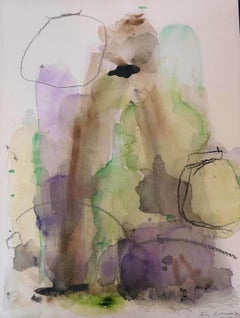
Tropical Melt, abstract painting, green and purple
By Lisa Fellerson
Located in New York, NY
Lisa Fellerson’s paintings provoke an interplay and tension between line, shape, and color. With no preconceived idea in mind, she begins by dripping, scrapping, and gouging acrylic ...
Category
2010s Contemporary Wisconsin - Art
Materials
Canvas, Acrylic
$800 Sale Price
20% Off
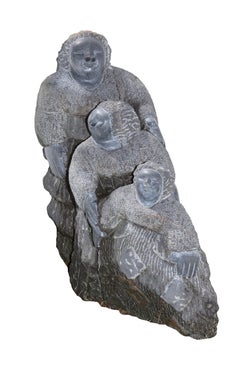
Mother and Two Daughters
signed black serpentine
By Colleen Madamombe
Located in Milwaukee, WI
26" x 15" x 30"
Black serpentine, signed.
Colleen Madamombe (1964–2009) was born in Harare, Zimbabwe. Considered to be among the finest new talents from Zimbabwe, she won the award of Best Female Artist of Zimbabwe three years in a row, and became an established figure of the Second Generation of Zimbabwean stone...
Category
1990s Wisconsin - Art
Materials
Stone
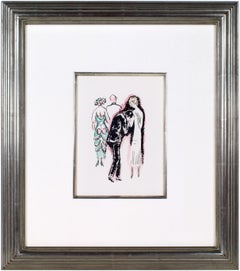
"The Night Out - La Garconne Series, " a Color Pochoir
By Kees van Dongen
Located in Milwaukee, WI
This color pochoir was done in 1925 on Arches paper No. 739/750 and depicts two couples on a night out all dressed up.
Archivally framed with 12k white gold; white gold fillet, silk...
Category
1920s Art Deco Wisconsin - Art
Materials
Other Medium
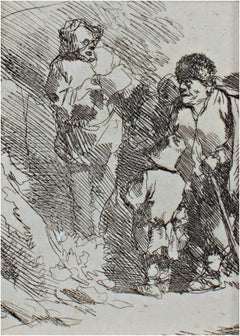
17th century etching black and white figures scene
By Cornelis Bega
Located in Milwaukee, WI
"The Singer" is an original etching by Cornelis-Pietersz Bega. It depicts a performer and onlookers. Publisher: Pearce #50.
4" x 3" art
16 1/2" x 13 1/2" frame
Cornelis Pietersz Be...
Category
Mid-17th Century Old Masters Wisconsin - Art
Materials
Etching
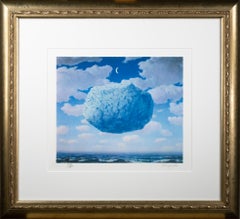
"La Fleche de Zenon (Zeno
s Arrow), " Lithograph after Painting by Rene Magritte
By René Magritte
Located in Milwaukee, WI
"La Fleche de Zenon (Zeno's Arrow)" is a color lithograph after the original 1964 painting by Rene Magritte. A gigantic rock levitates over the sea. Waves crash bellow and a crescent moon hangs above.
Art: 9.75 x 11.75 in
Frame: 20.38 x 22.38 in
René-François-Ghislain Magritte was born November 21, 1898, in Lessines, Belgium and died on August 15, 1967 in Brussels. He is one of the most important surrealist artists. Through his art, Magritte creates humor and mystery with juxtapositions and shocking irregularities. Some of his hallmark motifs include the bourgeois “little man,” bowler hats, apples, hidden faces, and contradictory texts.
René Magritte’s father was a tailor and his mother was a miller. Tragedy struck Magritte’s life when his mother committed suicide when he was only fourteen. Magritte and his two brothers were thereafter raised by their grandmother.
Magritte studied at the Brussels Academy of Fine Arts from 1916 to 1918. After graduating he worked as a wallpaper designer and in advertisement. It was during this period that he married Georgette Berger, whom he had known since they were teenagers.
In 1926, René Magritte signed...
Category
2010s Surrealist Wisconsin - Art
Materials
Lithograph
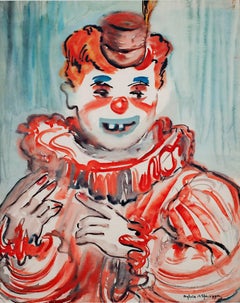
"Clown Close Up, " Watercolor Portrait signed by Sylvia Spicuzza
By Sylvia Spicuzza
Located in Milwaukee, WI
"Clown Close Up" is an original watercolor by Sylvia Spicuzza. The artist signed the piece in ink lower right. It depicts a clown in red in front of a blue background.
23" x 18" ar...
Category
Mid-20th Century Wisconsin - Art
Materials
Watercolor
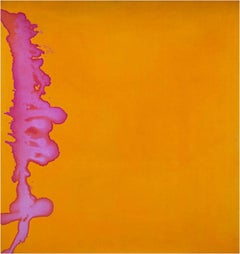
Abstract Color Field Female Artist Bright Signed Post-Painterly Abstraction 1960
By Faith Taylor
Located in Milwaukee, WI
"Orange Composition" is a painting with stain acrylic dye by Faith Taylor-Lund. The painting is orange with a fluid pink stain on the left.
Artwork Size: 72" x 66"
Artist's Statem...
Category
1960s Abstract Wisconsin - Art
Materials
Acrylic, Canvas
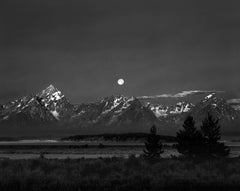
Tetons 9
Located in Milwaukee, WI
Alternative sizes and media available:
16 x 16
16 x 20
16 x 24
20 x 20
20 x 30
28 x 28
28 x 35
30 x 45
40 x 40
40 x 50
40 x 60
Matte photo paper or canvas available on...
Category
2010s Wisconsin - Art
Materials
Photographic Paper

Teton Moonset (Black and White)
Located in Milwaukee, WI
Alternative sizes and media available:
16 x 16
16 x 20
16 x 24
20 x 20
20 x 30
28 x 28
28 x 35
30 x 45
40 x 40
40 x 50
40 x 60
Matte photo paper or canvas available on...
Category
2010s Wisconsin - Art
Materials
Photographic Paper
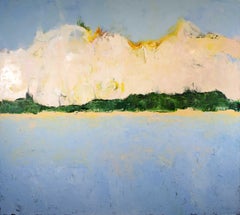
It Is Sad Only To Us
original abstract oil painting by Deirdre Schanen
By Deirdre Schanen
Located in Milwaukee, WI
'It Is Sad Only To Us' is an oil painting by the American artist Deirdre Schanen. Schanen's works weave between non-objective abstraction and representative landscape painting. This ...
Category
2010s Contemporary Wisconsin - Art
Materials
Canvas, Oil
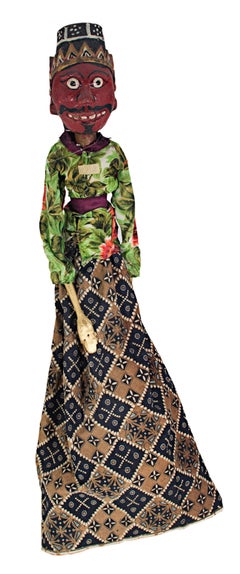
"Indonesian Golek Puppet (Male), " Handmade Carved, Painted Wood
Fabric c. 1900
Located in Milwaukee, WI
This Golek puppet was made by an unknown Indonesian artist using wood and cloth. It is approximately 27" tall.
Traditional Wayang Golek plays can be comp...
Category
Early 20th Century Folk Art Wisconsin - Art
Materials
Textile, Wood
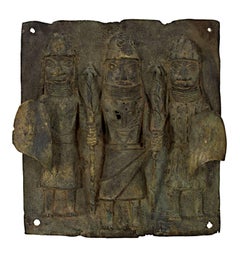
"King with Two Tribesmen Nigeria- Benin Tribe, " a Bronze Relief Sculpture
Located in Milwaukee, WI
"King with Two Tribesmen" is a bronze relief sculpture from the Nigeria-Benin area tribe. It depicts three figures: two tribesmen on the left a...
Category
Early 20th Century Other Art Style Wisconsin - Art
Materials
Bronze
Persian Illuminated Miniature with Four Figures Playing Polo in a Landscape
Located in Milwaukee, WI
The present illuminated folio page contains a fine miniature depicting four figures playing polo. Polo, also called 'chagun,' was the sport of kings and princes of central Asia and Iran, and the sport probably originated there in the 6th century BCE. Polo matches appear in a large number of early Persian texts, including in the writings of the 10th century epic writer Abu l-Qasim al-Firdawsi: He describes numerous polo matches in his famous 'Shahnameh' (The Persian Book of Kings). This particular illumination also is closely related to an example held at the Smithsonian Museum of Asian Art: a folio from 'Guy u Chawgan' (The ball and the polo-mallet) which shows a polo game with the dervish and the shah.
12 x 8.25 inches, artwork
19.75 x 15.88 inches, frame
accompanied on the back with an image of the verso
framed to conservation standards with a 100% rag silk-lined mat in a gold gilded frame
A Persian miniature is a small Persian painting on paper, whether a book illustration or a separate work of art intended to be kept in an album of such works called a muraqqa. The techniques are broadly comparable to the Western and Byzantine traditions of miniatures in illuminated manuscripts. Although there is an equally well-established Persian tradition of wall-painting, the survival rate and state of preservation of miniatures is better, and miniatures are much the best-known form of Persian painting in the West, and many of the most important examples are in Western, or Turkish, museums. Miniature painting became a significant genre in Persian art in the 13th century, receiving Chinese influence after the Mongol conquests, and the highest point in the tradition was reached in the 15th and 16th centuries. The tradition continued, under some Western influence, after this, and has many modern exponents. The Persian miniature was the dominant influence on other Islamic miniature traditions, principally the Ottoman miniature...
Category
19th Century Other Art Style Wisconsin - Art
Materials
Ink, Tempera, Laid Paper

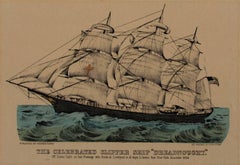
19th century color lithograph seascape boat ship waves maritime landscape
By Currier
Ives
Located in Milwaukee, WI
"The Celebrated Clipper Ship Dreadnought" is an original hand-colored lithograph by Currier & Ives. It depicts a sailing ship.
13 1/4" x 17 1/2" art
19" x 23 1/2" frame
Nathaniel Currier was a tall introspective man with a melancholy nature. He could captivate people with his piercing stare or charm them with his sparkling blue eyes. Nathaniel was born in Roxbury, Massachusetts on March 27th, 1813, the second of four children. His parents, Nathaniel and Hannah Currier, were distant cousins who lived a humble yet spartan life. When Nathaniel was eight years old, tragedy struck. Nathaniel’s father unexpectedly passed away leaving Nathaniel and his eleven-year-old brother Lorenzo to provide for the family. In addition to their mother, Nathaniel and Lorenzo had to care for six-year-old sister Elizabeth and two-year-old brother Charles. Nathaniel worked a series of odd jobs to support the family, and at fifteen, he started what would become a life-long career when he apprenticed in the Boston lithography shop of William and John Pendleton.
A Bavarian gentleman named Alois Senefelder invented lithography just 30 years prior to young Nat Currier’s apprenticeship. While under the employ of the brothers Pendleton, Nat was taught the art of lithography by the firm’s chief printer, a French national named Dubois, who brought the lithography trade to America.
Lithography involves grinding a piece of limestone flat and smooth then drawing in mirror image on the stone with a special grease pencil. After the image is completed, the stone is etched with a solution of aqua fortis leaving the greased areas in slight relief. Water is then used to wet the stone and greased-ink is rolled onto the raised areas. Since grease and water do not mix, the greased-ink is repelled by the moisture on the stone and clings to the original grease pencil lines. The stone is then placed in a press and used as a printing block to impart black on white images to paper.
In 1833, now twenty-years old and an accomplished lithographer, Nat Currier left Boston and moved to Philadelphia to do contract work for M.E.D. Brown, a noted engraver and printer. With the promise of good money, Currier hired on to help Brown prepare lithographic stones of scientific images for the American Journal of Sciences and Arts. When Nat completed the contract work in 1834, he traveled to New York City to work once again for his mentor John Pendleton, who was now operating his own shop located at 137 Broadway. Soon after the reunion, Pendleton expressed an interest in returning to Boston and offered to sell his print shop to Currier. Young Nat did not have the financial resources to buy the shop, but being the resourceful type he found another local printer by the name of Stodart. Together they bought Pendleton’s business.
The firm ‘Currier & Stodart’ specialized in "job" printing. They produced many different types of printed items, most notably music manuscripts for local publishers. By 1835, Stodart was frustrated that the business was not making enough money and he ended the partnership, taking his investment with him. With little more than some lithographic stones, and a talent for his trade, twenty-two year old Nat Currier set up shop in a temporary office at 1 Wall Street in New York City. He named his new enterprise ‘N. Currier, Lithographer’
Nathaniel continued as a job printer and duplicated everything from music sheets to architectural plans. He experimented with portraits, disaster scenes and memorial prints, and any thing that he could sell to the public from tables in front of his shop. During 1835 he produced a disaster print Ruins of the Planter's Hotel, New Orleans, which fell at two O’clock on the Morning of the 15th of May 1835, burying 50 persons, 40 of whom Escaped with their Lives. The public had a thirst for newsworthy events, and newspapers of the day did not include pictures. By producing this print, Nat gave the public a new way to “see” the news. The print sold reasonably well, an important fact that was not lost on Currier.
Nat met and married Eliza Farnsworth in 1840. He also produced a print that same year titled Awful Conflagration of the Steamboat Lexington in Long Island Sound on Monday Evening, January 18, 1840, by which melancholy occurrence over One Hundred Persons Perished. This print sold out very quickly, and Currier was approached by an enterprising publication who contracted him to print a single sheet addition of their paper, the New York Sun. This single page paper is presumed to be the first illustrated newspaper ever published.
The success of the Lexington print launched his career nationally and put him in a position to finally lift his family up. In 1841, Nat and Eliza had their first child, a son they named Edward West Currier. That same year Nat hired his twenty-one year old brother Charles and taught him the lithography trade, he also hired his artistically inclined brother Lorenzo to travel out west and make sketches of the new frontier as material for future prints. Charles worked for the firm on and off over the years, and invented a new type of lithographic crayon which he patented and named the Crayola. Lorenzo continued selling sketches to Nat for the next few years.
In 1843, Nat and Eliza had a daughter, Eliza West Currier, but tragedy struck in early 1847 when their young daughter died from a prolonged illness. Nat and Eliza were grief stricken, and Eliza, driven by despair, gave up on life and passed away just four months after her daughter’s death.
The subject of Nat Currier’s artwork changed following the death of his wife and daughter, and he produced many memorial prints and sentimental prints during the late 1840s. The memorial prints generally depicted grief stricken families posed by gravestones (the stones were left blank so the purchasers could fill in the names of the dearly departed). The sentimental prints usually depicted idealized portraits of women and children, titled with popular Christian names of the day.
Late in 1847, Nat Currier married Lura Ormsbee, a friend of the family. Lura was a self-sufficient woman, and she immediately set out to help Nat raise six-year-old Edward and get their house in order. In 1849, Lura delivered a son, Walter Black Currier, but fate dealt them a blow when young Walter died one year later. While Nat and Lura were grieving the loss of their new son, word came from San Francisco that Nat’s brother Lorenzo had also passed away from a brief illness. Nat sank deeper into his natural quiet melancholy. Friends stopped by to console the couple, and Lura began to set an extra place at their table for these unexpected guests. She continued this tradition throughout their lives.
In 1852, Charles introduced a friend, James Merritt Ives, to Nat and suggested he hire him as a bookkeeper. Jim Ives was a native New Yorker born in 1824 and raised on the grounds of Bellevue Hospital where his father was employed as superintendent. Jim was a self-trained artist and professional bookkeeper. He was also a plump and jovial man, presenting the exact opposite image of his new boss.
Jim Ives met Charles Currier through Caroline Clark, the object of Jim’s affection. Caroline’s sister Elizabeth was married to Charles, and Caroline was a close friend of the Currier family. Jim eventually proposed marriage to Caroline and solicited an introduction to Nat Currier, through Charles, in hopes of securing a more stable income to support his future wife.
Ives quickly set out to improve and modernize his new employer’s bookkeeping methods. He reorganized the firm’s sizable inventory, and used his artistic skills to streamline the firm’s production methods. By 1857, Nathaniel had become so dependent on Jims’ skills and initiative that he offered him a full partnership in the firm and appointed him general manager. The two men chose the name ‘Currier & Ives’ for the new partnership, and became close friends.
Currier & Ives produced their prints in a building at 33 Spruce Street where they occupied the third, fourth and fifth floors. The third floor was devoted to the hand operated printing presses that were built by Nat's cousin, Cyrus Currier, at his shop Cyrus Currier & Sons in Newark, NJ. The fourth floor found the artists, lithographers and the stone grinders at work. The fifth floor housed the coloring department, and was one of the earliest production lines in the country. The colorists were generally immigrant girls, mostly German, who came to America with some formal artistic training. Each colorist was responsible for adding a single color to a print. As a colorist finished applying their color, the print was passed down the line to the next colorist to add their color. The colorists worked from a master print displayed above their table, which showed where the proper colors were to be placed. At the end of the table was a touch up artist who checked the prints for quality, touching-in areas that may have been missed as it passed down the line. During the Civil War, demand for prints became so great that coloring stencils were developed to speed up production.
Although most Currier & Ives prints were colored in house, some were sent out to contract artists. The rate Currier & Ives paid these artists for coloring work was one dollar per one hundred small folios (a penny a print) and one dollar per one dozen large folios. Currier & Ives also offered uncolored prints to dealers, with instructions (included on the price list) on how to 'prepare the prints for coloring.' In addition, schools could order uncolored prints from the firm’s catalogue to use in their painting classes.
Nathaniel Currier and James Merritt Ives attracted a wide circle of friends during their years in business. Some of their more famous acquaintances included Horace Greeley, Phineas T. Barnum, and the outspoken abolitionists Rev. Henry Ward, and John Greenleaf Whittier (the latter being a cousin of Mr. Currier).
Nat Currier and Jim Ives described their business as "Publishers of Cheap and Popular Pictures" and produced many categories of prints. These included Disaster Scenes, Sentimental Images, Sports, Humor, Hunting Scenes, Politics, Religion, City and Rural Scenes, Trains, Ships, Fire Fighters, Famous Race Horses, Historical Portraits, and just about any other topic that satisfied the general public's taste. In all, the firm produced in excess of 7500 different titles, totaling over one million prints produced from 1835 to 1907.
Nat Currier retired in 1880, and signed over his share of the firm to his son Edward. Nat died eight years later at his summer home 'Lion’s Gate' in Amesbury, Massachusetts. Jim Ives remained active in the firm until his death in 1895, when his share of the firm passed to his eldest son, Chauncey.
In 1902, faced will failing health from the ravages of Tuberculosis, Edward Currier sold his share of the firm to Chauncey Ives...
Category
1870s Other Art Style Wisconsin - Art
Materials
Lithograph
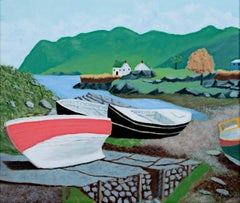
"Low Tide, " Oil on Canvas Landscape signed by Raymond Suchomel
By Raymond Suchomel
Located in Milwaukee, WI
"Low Tide" is an original oil painting on canvas by Raymond Suchomel. The artist signed the painting in the lower right. This painting depicts three boats washed up...
Category
1990s Wisconsin - Art
Materials
Canvas, Oil
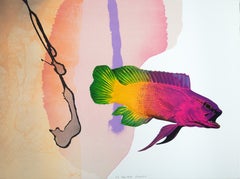
"Final Spring" lithograph bright abstract vibrant fish signed by Michael Knigin
By Michael Knigin
Located in Milwaukee, WI
"Final Spring" is an original color lithograph by Michael Knigin. The artist signed and titled in the lower center of image. This piece is an artist's proof and features a brightly c...
Category
1980s Pop Art Wisconsin - Art
Materials
Lithograph, Ink
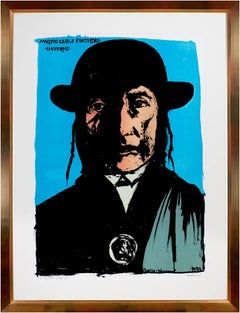
Original Lithograph Native American Figure Portrait Male Tribe Bold Stoic Signed
By Leonard Baskin
Located in Milwaukee, WI
"Magpie Eagle Feathers" is an original lithograph proof for Fox Graphics signed by the artist Leonard Baskin. It depicts a Cheyenne man named Magpie Eagle Feathers in a black hat against a blue background.
Artwork Size: 38 1/2" x 26 3/4"
Frame Size: 49 3/4" x 37 1/2"
Artist Bio:
Leonard Baskin (1922-2000) was an American artist born in New Jersey and taught art classes in Massachusetts. He received many public commissions (including a bas relief for the FDR Memorial), honors, and his work is owned by many major museums around the world. Additionally, Baskin was a teacher at Smith College in Northampton, Massachusetts. As a champion for human rights, Baskin created many pieces celebrating those who were seldom recognized.
Baskin’s interest in nineteenth century Native Americans was roused into acute attendance from ignorant indifference, when the National Park Service asked him to provide illustrations for the handbook that described the then called “Custer National Park”, now called “Little Big...
Category
1990s Contemporary Wisconsin - Art
Materials
Lithograph, Ink
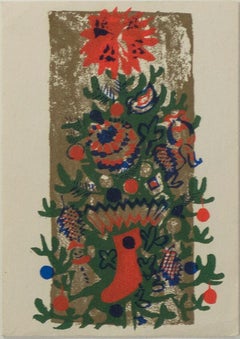
O
Tannenbaum
original color silkscreen signed on verso, Christmas tree, winter
By Ruth Grotenrath
Located in Milwaukee, WI
'O'Tannenbaum' (Artist's #30129) is an original color silkscreen print by Ruth Grotenrath, signed by the artist on verso. Influenced by the works of Expressionists like Henri Matisse and the woodblock prints of early modern Japanese artists like Katsushika Hokusai, Ruth Grotenrath's 'O'Tannenbaum' combines the expressive use of color of the former with the precision of the latter to create a Christmas card that is as vibrant as it is subtle. Depicting a pine tree decked with ornaments and stockings, Grotenrath has rendered the tree-topping star as a ball of flames to analogize the warmth and spirit of the holiday season.
Original color silkscreen
6.625 x 4 inches, silkscreen
14.375 x 11.375 inches, frame
Signed in screen on verso inside-letter
Framed to conservation standards using archival materials including 100 percent rag matting and mounting materials, Museum Glass to inhibit UV damage and reduce glare, and housed in a gold finish wood frame.
"The paintings of Ruth...
Category
1940s Expressionist Wisconsin - Art
Materials
Screen
colorful contemporary abstract oil painting expressionist busy signed
By Alayna Rose
Located in Milwaukee, WI
"Pace II" is an original oil painting on canvas by Alayna Rose. The artist signed the painting on the side. This painting features a variety of abstract marks in green, yellow, purpl...
Category
2010s Abstract Wisconsin - Art
Materials
Canvas, Oil
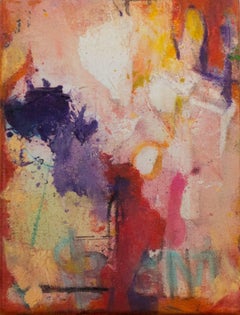
"Lady Lee, " and "My Neighbors, " Oil on Wood signed by R. Richter, two-sided
By Robert Richter
Located in Milwaukee, WI
"Lady Lee" and "My Neighbors" are two original oil paintings executed on either side of a wood panel by Wisconsin artist Robert Richter. This fun and playful ...
Category
2010s Outsider Art Wisconsin - Art
Materials
Wood, Oil
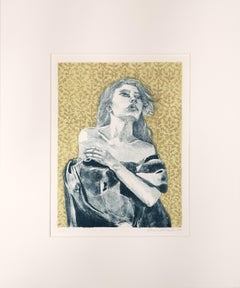
Untitled
By Ananda Kesler
Located in Milwaukee, WI
Edition 1/13
Signed to lower right
Ananda Kesler was born in Haifa, Israel. In 2002 she received her BA in Fine Art from the University of Iowa. She has continued her art education...
Category
21st Century and Contemporary Contemporary Wisconsin - Art
Materials
Lithograph
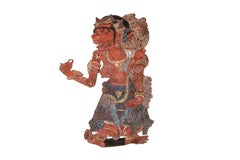
"Shadow Puppet Wayang Purwa, " Leather created in Indonesia in the 19th Century
Located in Milwaukee, WI
This flat shadow puppet was created by an unknown Indonesian artist using water buffalo hide. This shadow puppet, 17" high with movable arms, was used in Indonesian Wayang puppet shows.
Wayang (Krama Javanese: Ringgit ꦫꦶꦁꦒꦶꦠ꧀, "Shadow"), also known as Wajang, is a form of puppet theatre art found in Indonesia and other parts of Southeast Asia, wherein a dramatic story is told through shadows thrown by puppets and sometimes combined with human characters. The art form celebrates the Indonesian culture and artistic talent; its origins are traced to the spread of Hinduism in the medieval era and the arrival of leather-based puppet arts called Tholu bommalata from southern India.
Wayang refers to the entire dramatic show. Sometimes the leather puppet...
Category
19th Century Folk Art Wisconsin - Art
Materials
Animal Skin, Leather
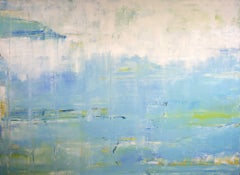
So Runs The Story
abstract oil painting by Deirdre Schanen
By Deirdre Schanen
Located in Milwaukee, WI
'So Runs The Story' is an oil painting by the American artist Deirdre Schanen. Schanen's works weave between non-objective abstraction and representative landscape painting. This exa...
Category
2010s Contemporary Wisconsin - Art
Materials
Canvas, Oil
Early 20th century colorful seaside landscape pastel figures bench trees signed
By Francesco Spicuzza
Located in Milwaukee, WI
"Couple on Bench at the Beach" is an original pastel drawing on paperboard by Francesco Spicuzza. The artist signed the piece in the lower left. This drawing depicts two figures sitting on a bench in front of a body of water. The artist used mostly pastel colors for this piece.
6 7/8" x 9 7/8" art
18 1/2" x 21 3/8" frame
Francesco J. Spicuzza, born in Sicily on July 23, 1883, came to America at the age of 8. He supported himself as a fruit peddler until a newspaperman gave him $4 a week to go to school. He attended classes at the Milwaukee Art Students League, where he studied under Alexander Mueller. There he learned to paint in the then-fashionable "Munich School" technique, with detailed realism in heavy browns and grayed-out hues. Spicuzza completed eight grades in four years, and then in 1911, three businessmen advanced him enough money to allow him to study in New York under artist and teacher John Carlson. It was during this time that Spicuzza changed his style of painting, developing an impressionistic use of color, form and atmospheric renditions. After a period of grinding poverty, one of Spicuzza's pictures won a major New York competition. It was the first of 60 wins, both in the U.S. and Paris. He became a fashionable painter, and many of the leading collections have his work. Spicuzza's typical works were beach scenes, still life, landscapes and portraits done in pastels, oils, ink, charcoal and watercolors. Much of his work traced the history of Milwaukee in the early 1900s. He was probably best known for his scenes of women and children splashing in the waves...
Category
1910s Impressionist Wisconsin - Art
Materials
Paper, Pastel, Board

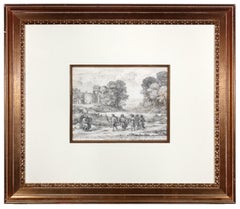
17th century etching black and white landscape scene forest trees figures sky
By Claude Lorrain
Located in Milwaukee, WI
"Le Temps, Apollon, et les Saisons (Time, Apollo, and the Seasons)" is an etching by Claude Gellée (Le Lorrain). This etching is the Fifth state (A). This state is also in collections in Paris (BN, L, PP) and Washington; Mannocci cat. no. 43. The inscription reads: "Apollo in atto di obedire al tempo. La Primavera a cominciare il ballo. Lestate no manca del suo calore. L'aurunno colsuo licore / Seguita. Linvernno tiene la sua staggione, Claudio Gillee inven.Fec.Roma 1662 con licenza de super."
A powerful example of Claude's staging of landscape in the classical manner is the etching "Time,
Apollo, and the Seasons," done in 1662 after Poussin's painting of 1624-1636, "Dance to the Music of Time...
Category
Mid-17th Century Old Masters Wisconsin - Art
Materials
Etching
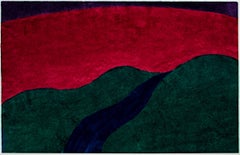
"Farewell, " Sunset Landscape Woodcut by Carol Summers
By Carol Summers
Located in Milwaukee, WI
"Farewell" is an original color woodcut by Carol Summers. The artist signed the piece. This woodcut depicts a river flowing through green hills beneath a blood-red sky. The edition number is 20/50.
24 1/4" x 37" art
32" x 45" frame
Carol Summers has worked as an artist throughout the second half of the 20th century and into the first years of the next, outliving most of his mid-century modernist peers. Initially trained as a painter, Summers was drawn to color woodcuts around 1950 and it became his specialty thereafter.
Over the years he has developed a process and style that is both innovative and readily recognizable. His art is known for it’s large scale, saturated fields of bold color, semi-abstract treatment of landscapes from around the world and a luminescent quality achieved through a printmaking process he invented.
In a career that has extended over half a century, Summers has hand-pulled approximately 245 woodcuts in editions that have typically run from 25 to 100 in number. His talent was both inherited and learned.
Born in 1925 in Kingston, a small town in upstate New York, Summers was raised in nearby Woodstock with his older sister, Mary. His parents were both artists who had met in art school in St. Louis. During the Great Depression, when Carol was growing up, his father supported the family as a medical illustrator until he could return to painting. His mother was a watercolorist and also quite knowledgeable about the different kinds of papers used for various kinds of painting. Many years later, Summers would paint or print on thinly textured paper originally collected by his mother.
From 1948 to 1951, Carol Summers trained in the classical fine and studio arts at Bard College and at the Art Students League of New York. He studied painting with Steven Hirsh and printmaking with Louis Schanker. He admired the shapes and colors favored by early modernists Paul Klee (Sw: 1879-1940) and Matt Phillips (Am: b.1927- ). After graduating, Summers quit working as a part-time carpenter and cabinetmaker (which had supported his schooling and living expenses) to focus fulltime on art. That same year, an early abstract, Bridge No. 1 was selected for a Purchase Prize in a competition sponsored by the Brooklyn Museum. In 1952, his work (Cathedral, Construction and Icarus) was shown the first time at the Museum of Modern Art in New York City in an exhibition of American woodcuts.
In 1954, Summers received a grant from the Italian government to study for a year in Italy. Woodcuts completed soon after his arrival there were almost all editions of only 8 to 25 prints, small in size, architectural in content and black and white in color. The most well-known are Siennese Landscape and Little Landscape, which depicted the area near where he resided. Summers extended this trip three more years, a decision which would have significant impact on choices of subject matter and color in the coming decade. After returning from Europe, Summers’ images continued to feature historical landmarks and events from Italy as well as from France, Spain and Greece. However, as evidenced in Aetna’s Dream, Worldwind and Arch of...
Category
1990s Wisconsin - Art
Materials
Woodcut
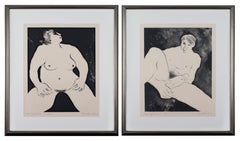
Nude Male and Nude Female,
original lithograph pair signed by R.C. Gorman
By R.C. Gorman
Located in Milwaukee, WI
R. C. Gorman is better known for his images of colorful and elegant Navajo figures. This pair of prints, however, offers a view into his personal life. The pair of nude figures in th...
Category
1970s Contemporary Wisconsin - Art
Materials
Lithograph
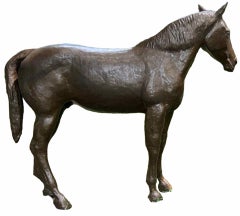
Quarter Horse
By Ernst Gramatzki
Located in Milwaukee, WI
A life-sized fiberglass sculpture of a horse, unsigned. This specific breed of horse the sculpture is based on is called Quarter Horse. Many visitors to ...
Category
1990s Realist Wisconsin - Art
Materials
Fiberglass
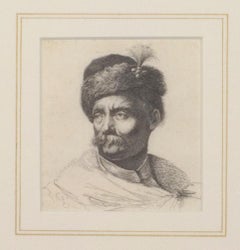
17th century etching baroque portrait male subject hat realistic print
By Giovanni Benedetto Castiglione
Located in Milwaukee, WI
This is an excellent example of the kind of portraiture produced by Castiglione during the early part of the 17th century. In the image, we see the visage of a man with a mustache, wearing a fur-lined hat topped with a feathery decoration. The image is reminiscent of the work of Rembrandt van Rijn, himself known for his portraits in the form of etchings.
4 x 3.5 inches, image
15.25 x 13.25 inches, frame
Inscribed "GC" in the plate, lower left
This impression is from the edition ca. 1825 from the original plate of ca. 1635.
Unlike many Italian artists, Giovanni Benedetto Castiglione was profoundly influenced by foreigners. He first studied with local artists in his native Genoa, absorbing not only Tuscan Mannerism and Caravaggism but also the style of Peter Paul Rubens, who had worked in Genoa. From 1621 Castiglione also worked in Anthony van Dyck's Genoa studio. Early on, he was attracted to Flemish animal...
Category
17th Century Baroque Wisconsin - Art
Materials
Etching
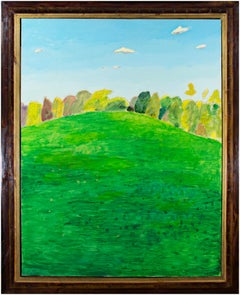
"Green Meadow, " Sunny Landscape Oil on Wood signed on back by Robert Richter
By Robert Richter
Located in Milwaukee, WI
"Green Meadow" is an original oil painting on wood by Robert Richter. The artist signed the piece on the back. This artwork features an expansive green landscape with yellow, brown, ...
Category
Early 2000s Outsider Art Wisconsin - Art
Materials
Wood, Oil
"Lake Michigan Shore, " Oil on Board, Signed
By Francesco Spicuzza
Located in Milwaukee, WI
"Lake Michigan Shore" is an original oil painting on board by Francesco Spicuzza. The artist shows the impact of Impressionism in his landscapes from around 1930. "Lake Michigan Shor...
Category
1930s Wisconsin - Art
Materials
Oil, Board
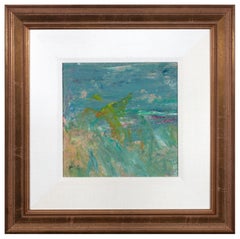
Untitled
By Ananda Kesler
Located in Milwaukee, WI
Edition 2/13
Signed to lower right
Ananda Kesler was born in Haifa, Israel. In 2002 she received her BA in Fine Art from the University of Iowa. She has continued her art education ...
Category
21st Century and Contemporary Contemporary Wisconsin - Art
Materials
Lithograph
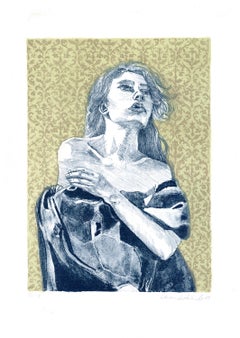
"Sierra Madre, " Original Color Woodblock Nude signed by Carol Summers
By Carol Summers
Located in Milwaukee, WI
"Sierra Madre" is a color woodblock signed by Carol Summers. As suggested by the title, the print teeters the line between Summers' fanciful landscapes an...
Category
1970s Abstract Expressionist Wisconsin - Art
Materials
Woodcut
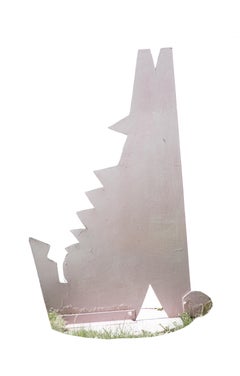
Pink Coyote
pink steel patina outdoor sculpture
Located in Milwaukee, WI
Pink steel patina
48 inches high and approx. 30 inches wide.
Indoor or outdoor sculpture.
Category
1990s Wisconsin - Art
Materials
Steel
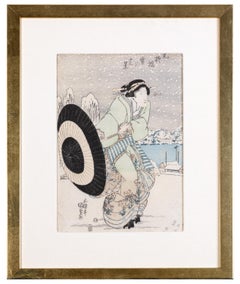
"Yanagibashi in Snow, " Color Woodcut Portrait with Umbrella
By Utagawa Kunisada (Toyokuni III)
Located in Milwaukee, WI
"Yanagibashi in Snow" is an original color woodcut by Utagawa Kunisada. This woodblock print depicts a woman walking in the snow near the Motoyanagi canal, which was located in Tokyo...
Category
1920s Wisconsin - Art
Materials
Woodcut
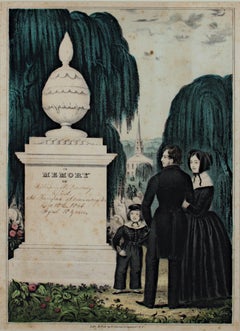
19th century color lithograph figures cemetery willow tree memorial headstone
By Nathaniel Currier
Located in Milwaukee, WI
The present hand-colored lithograph was produced as part of the funeral and mourning culture in the United States during the 19th century. Images like this were popular as ways of remembering loved ones, an alternative to portraiture of the deceased. This lithograph shows a man, woman and child in morning clothes next to an urn-topped stone monument. Behind are additional putto-topped headstones beneath weeping willows, with a steepled church beyond. The monument contains a space where a family could inscribe the name and death dates of a deceased loved one. In this case, it has been inscribed to a young Civil War soldier:
William W. Peabody
Died at Fairfax Seminary, VA
December 18th, 1864
Aged 18 years
The young Mr. Peabody probably died in service for the Union during the American Civil War. Farifax Seminary was a Union hospital and military headquarters in Alexandria, Virginia. The hospital served nearly two thousand soldiers during the war time. Five hundred were also buried on the Seminary's grounds.
13.75 x 9.5 inches, artwork
23 x 19 inches, frame
Published before 1864
Inscribed bottom center "Lith. & Pub. by N. Currier. 2 Spruce St. N.Y."
Framed to conservation standards using 100 percent rag matting and TruVue Conservation Clear glass, housed in a gold gilded moulding.
Nathaniel Currier was a tall introspective man with a melancholy nature. He could captivate people with his piercing stare or charm them with his sparkling blue eyes. Nathaniel was born in Roxbury, Massachusetts on March 27th, 1813, the second of four children. His parents, Nathaniel and Hannah Currier, were distant cousins who lived a humble yet spartan life. When Nathaniel was eight years old, tragedy struck. Nathaniel’s father unexpectedly passed away leaving Nathaniel and his eleven-year-old brother Lorenzo to provide for the family. In addition to their mother, Nathaniel and Lorenzo had to care for six-year-old sister Elizabeth and two-year-old brother Charles. Nathaniel worked a series of odd jobs to support the family, and at fifteen, he started what would become a life-long career when he apprenticed in the Boston lithography shop of William and John Pendleton.
A Bavarian gentleman named Alois Senefelder invented lithography just 30 years prior to young Nat Currier’s apprenticeship. While under the employ of the brothers Pendleton, Nat was taught the art of lithography by the firm’s chief printer, a French national named Dubois, who brought the lithography trade to America.
Lithography involves grinding a piece of limestone flat and smooth then drawing in mirror image on the stone with a special grease pencil. After the image is completed, the stone is etched with a solution of aqua fortis leaving the greased areas in slight relief. Water is then used to wet the stone and greased-ink is rolled onto the raised areas. Since grease and water do not mix, the greased-ink is repelled by the moisture on the stone and clings to the original grease pencil lines. The stone is then placed in a press and used as a printing block to impart black on white images to paper.
In 1833, now twenty-years old and an accomplished lithographer, Nat Currier left Boston and moved to Philadelphia to do contract work for M.E.D. Brown, a noted engraver and printer. With the promise of good money, Currier hired on to help Brown prepare lithographic stones of scientific images for the American Journal of Sciences and Arts. When Nat completed the contract work in 1834, he traveled to New York City to work once again for his mentor John Pendleton, who was now operating his own shop located at 137 Broadway. Soon after the reunion, Pendleton expressed an interest in returning to Boston and offered to sell his print shop to Currier. Young Nat did not have the financial resources to buy the shop, but being the resourceful type he found another local printer by the name of Stodart. Together they bought Pendleton’s business.
The firm ‘Currier & Stodart’ specialized in "job" printing. They produced many different types of printed items, most notably music manuscripts for local publishers. By 1835, Stodart was frustrated that the business was not making enough money and he ended the partnership, taking his investment with him. With little more than some lithographic stones, and a talent for his trade, twenty-two year old Nat Currier set up shop in a temporary office at 1 Wall Street in New York City. He named his new enterprise ‘N. Currier, Lithographer’
Nathaniel continued as a job printer and duplicated everything from music sheets to architectural plans. He experimented with portraits, disaster scenes and memorial prints, and any thing that he could sell to the public from tables in front of his shop. During 1835 he produced a disaster print Ruins of the Planter's Hotel, New Orleans, which fell at two O’clock on the Morning of the 15th of May 1835, burying 50 persons, 40 of whom Escaped with their Lives. The public had a thirst for newsworthy events, and newspapers of the day did not include pictures. By producing this print, Nat gave the public a new way to “see” the news. The print sold reasonably well, an important fact that was not lost on Currier.
Nat met and married Eliza Farnsworth in 1840. He also produced a print that same year titled Awful Conflagration of the Steamboat Lexington in Long Island Sound on Monday Evening, January 18, 1840, by which melancholy occurrence over One Hundred Persons Perished. This print sold out very quickly, and Currier was approached by an enterprising publication who contracted him to print a single sheet addition of their paper, the New York Sun. This single page paper is presumed to be the first illustrated newspaper ever published.
The success of the Lexington print launched his career nationally and put him in a position to finally lift his family up. In 1841, Nat and Eliza had their first child, a son they named Edward West Currier. That same year Nat hired his twenty-one year old brother Charles and taught him the lithography trade, he also hired his artistically inclined brother Lorenzo to travel out west and make sketches of the new frontier as material for future prints. Charles worked for the firm on and off over the years, and invented a new type of lithographic crayon which he patented and named the Crayola. Lorenzo continued selling sketches to Nat for the next few years.
In 1843, Nat and Eliza had a daughter, Eliza West Currier, but tragedy struck in early 1847 when their young daughter died from a prolonged illness. Nat and Eliza were grief stricken, and Eliza, driven by despair, gave up on life and passed away just four months after her daughter’s death.
The subject of Nat Currier’s artwork changed following the death of his wife and daughter, and he produced many memorial prints and sentimental prints during the late 1840s. The memorial prints generally depicted grief stricken families posed by gravestones (the stones were left blank so the purchasers could fill in the names of the dearly departed). The sentimental prints usually depicted idealized portraits of women and children, titled with popular Christian names of the day.
Late in 1847, Nat Currier married Lura Ormsbee, a friend of the family. Lura was a self-sufficient woman, and she immediately set out to help Nat raise six-year-old Edward and get their house in order. In 1849, Lura delivered a son, Walter Black Currier, but fate dealt them a blow when young Walter died one year later. While Nat and Lura were grieving the loss of their new son, word came from San Francisco that Nat’s brother Lorenzo had also passed away from a brief illness. Nat sank deeper into his natural quiet melancholy. Friends stopped by to console the couple, and Lura began to set an extra place at their table for these unexpected guests. She continued this tradition throughout their lives.
In 1852, Charles introduced a friend, James Merritt Ives, to Nat and suggested he hire him as a bookkeeper. Jim Ives was a native New Yorker born in 1824 and raised on the grounds of Bellevue Hospital where his father was employed as superintendent. Jim was a self-trained artist and professional bookkeeper. He was also a plump and jovial man, presenting the exact opposite image of his new boss.
Jim Ives met Charles Currier through Caroline Clark, the object of Jim’s affection. Caroline’s sister Elizabeth was married to Charles, and Caroline was a close friend of the Currier family. Jim eventually proposed marriage to Caroline and solicited an introduction to Nat Currier, through Charles, in hopes of securing a more stable income to support his future wife.
Ives quickly set out to improve and modernize his new employer’s bookkeeping methods. He reorganized the firm’s sizable inventory, and used his artistic skills to streamline the firm’s production methods. By 1857, Nathaniel had become so dependent on Jims’ skills and initiative that he offered him a full partnership in the firm and appointed him general manager. The two men chose the name ‘Currier & Ives’ for the new partnership, and became close friends.
Currier & Ives produced their prints in a building at 33 Spruce Street where they occupied the third, fourth and fifth floors. The third floor was devoted to the hand operated printing presses that were built by Nat's cousin, Cyrus Currier, at his shop Cyrus Currier & Sons in Newark, NJ. The fourth floor found the artists, lithographers and the stone grinders at work. The fifth floor housed the coloring department, and was one of the earliest production lines in the country. The colorists were generally immigrant girls, mostly German, who came to America with some formal artistic training. Each colorist was responsible for adding a single color to a print. As a colorist finished applying their color, the print was passed down the line to the next colorist to add their color. The colorists worked from a master print displayed above their table, which showed where the proper colors were to be placed. At the end of the table was a touch up artist who checked the prints for quality, touching-in areas that may have been missed as it passed down the line. During the Civil War, demand for prints became so great that coloring stencils were developed to speed up production.
Although most Currier & Ives prints were colored in house, some were sent out to contract artists. The rate Currier & Ives paid these artists for coloring work was one dollar per one hundred small folios (a penny a print) and one dollar per one dozen large folios. Currier & Ives also offered uncolored prints to dealers, with instructions (included on the price list) on how to 'prepare the prints for coloring.' In addition, schools could order uncolored prints from the firm’s catalogue to use in their painting classes.
Nathaniel Currier and James Merritt Ives attracted a wide circle of friends during their years in business. Some of their more famous acquaintances included Horace Greeley, Phineas T. Barnum, and the outspoken abolitionists Rev. Henry Ward, and John Greenleaf Whittier (the latter being a cousin of Mr. Currier).
Nat Currier and Jim Ives described their business as "Publishers of Cheap and Popular Pictures" and produced many categories of prints. These included Disaster Scenes, Sentimental Images, Sports, Humor, Hunting Scenes, Politics, Religion, City and Rural Scenes, Trains, Ships, Fire Fighters, Famous Race Horses, Historical Portraits, and just about any other topic that satisfied the general public's taste. In all, the firm produced in excess of 7500 different titles, totaling over one million prints produced from 1835 to 1907.
Nat Currier retired in 1880, and signed over his share of the firm to his son Edward. Nat died eight years later at his summer home 'Lion’s Gate' in Amesbury, Massachusetts. Jim Ives remained active in the firm until his death in 1895, when his share of the firm passed to his eldest son, Chauncey.
In 1902, faced will failing health from the ravages of Tuberculosis, Edward Currier sold his share of the firm to Chauncey Ives...
Category
Mid-19th Century Romantic Wisconsin - Art
Materials
Watercolor, Lithograph
colorful contemporary abstract oil painting expressionist busy signed
By Alayna Rose
Located in Milwaukee, WI
"Pace I" is an original oil painting on canvas by Alayna Rose. The artist signed the painting on the side. This painting features a variety of abstract marks in green, yellow, purple...
Category
2010s Abstract Wisconsin - Art
Materials
Canvas, Oil
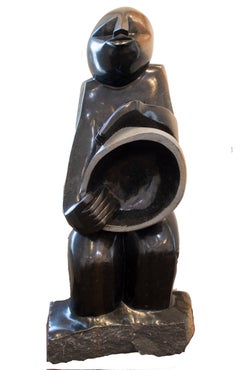
Famine
original Shona stone sculpture signed by Rangarirai Makunde
By Rangarirai Makunde
Located in Milwaukee, WI
'Famine' is an original springstone sculpture signed by the Zimbabwean artist Rangarirai Makunde. The sculpture presents a solitary figure who stands facing directly forward. He hold...
Category
Early 2000s Contemporary Wisconsin - Art
Materials
Stone
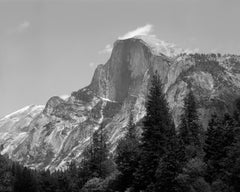
Halfdome, Yosemite
Located in Milwaukee, WI
Alternative sizes and media available:
16 x 16
16 x 20
16 x 24
20 x 20
20 x 30
28 x 28
28 x 35
30 x 45
40 x 40
40 x 50
40 x 60
Matte photo paper or canvas available on...
Category
1950s Wisconsin - Art
Materials
Photographic Paper
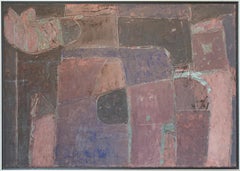
"Pajaro Caballo (Bird House), " Acrylic on Canvas by Miguel-Castro Leñero
By Miguel Castro Leñero
Located in Milwaukee, WI
"Pajaro Caballo (Bird House)" is an original acrylic painting on canvas by Miguel-Castro Lenero. Abstract representations of animals are rendered in thick acrylic paint in dark paste...
Category
1980s Neo-Expressionist Wisconsin - Art
Materials
Acrylic
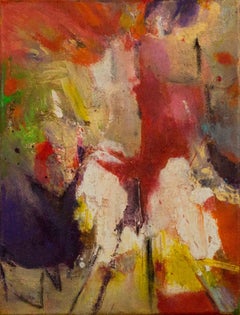
colorful contemporary abstract acrylic painting expressionist busy signed
By Alayna Rose
Located in Milwaukee, WI
'Undefined' is an original acrylic painting on canvas by Alayna Rose, signed by the artist in the lower left. Working within the tradition of Abstract Expressionism, much of Rose's w...
Category
2010s Abstract Wisconsin - Art
Materials
Canvas, Acrylic

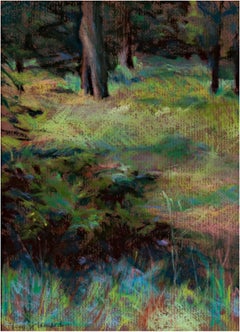
Contemporary pastel colorful landscape trees grass forest scene signed
By Peggy Leonard
Located in Milwaukee, WI
"Bandelier #1" is an original pastel drawing signed by the artist Peggy Leonard in the lower left. It depicts a colorful array of light and shadow in a grassy wooded area.
12 1/2" x 9" art
25 1/2" x 21 1/2" frame
Peggy Leonard received her BFA in painting and drawing and an associate’s degree in nursing from Miami University in Oxford, Ohio. She is both a registered nurse, and accomplished artist, residing in Milwaukee, WI.
From the artist:
“These paintings are my prayers,” muses Leonard, reflecting on her driving need to express herself through her art. “We are made of the stuff that requires us to respond with our hearts and hands. Often, it requires terrible sacrifice and suffering, something not everyone can understand. But it is done with reverence of life, not irreverence.”
Leonard’s pastels and oil paintings capture her reverence of life and reflect her own life’s journey, including earlier forays into the wilderness. Her venture into art began in early childhood, as childless neighbors nurtured her natural ability to draw; concurrently, Leonard’s parents instilled a respect for academic excellence and the higher order of nurturing others.
As a young nurse, Leonard “heard and saw poignant messages to travel while one was young and free…while one had one’s health.” Consequently, she took to the open road and public lands, camping across America for months at a time. During these years, her “celebration of the natural splendor of this country” helped shape her sense of artistic expression. She was moved by such sights as the sunset on St. Mary’s Lake...
Category
1990s Wisconsin - Art
Materials
Pastel
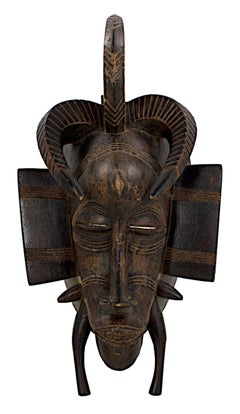
"Senufo Dance Mask - Ivory Coast, " Wood Carved Mask created circa 1940
Located in Milwaukee, WI
This ceremonial mask was created by an unknown Senufo artist from the Ivory Coast. It depicts an abstracted human face with horns and other protrusions. The wood is dark.
13" x 7" ...
Category
1940s Other Art Style Wisconsin - Art
Materials
Wood
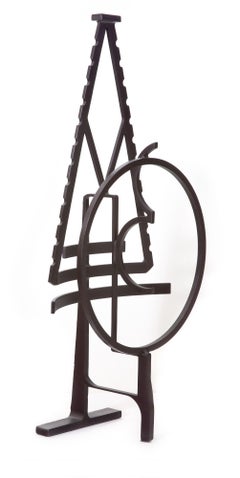
"Melody in G" Original Painted Steel Sculpture by: Ralph Wickstrom
By Ralph Wickstrom
Located in Milwaukee, WI
"Melody in G" is a painted steel sculpture by Ralph Wickstrom created in 2000. Wickstrom's portfolio is very diverse in form and shape, and yet this piece seems to stand out from the...
Category
Early 2000s Abstract Wisconsin - Art
Materials
Steel
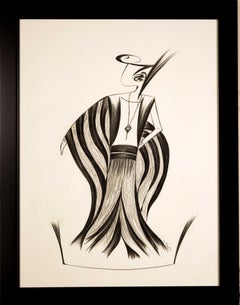
Ava (1940s Art Deco Fashion Rendition)
art deco drawing by Jorge Ruiz-Martinez
Located in Milwaukee, WI
'Ava (1940s Art Deco Fashion Rendition)' is an original drawing by the American artist Jorge Ruiz-Martinez. The artist works in an art deco style, imagining graceful figures in histo...
Category
2010s Art Deco Wisconsin - Art
Materials
Paper, Charcoal
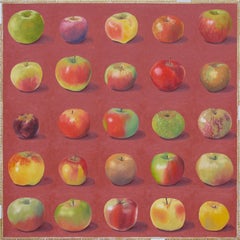
"Apples A to Z, " Oil
Ink on Canvas by Tom Shelton
By Tom Shelton
Located in Milwaukee, WI
"Apples A to Z" is an original oil and ink painting on canvas. It features higly detailed and realistic renderings of various apples on a red background.
Artwo...
Category
21st Century and Contemporary Contemporary Wisconsin - Art
Materials
Canvas, Ink, Oil
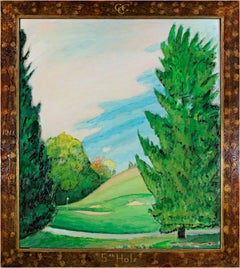
"Fifth Hole - Chenequa Country Club, " Oil on Wood signed by Robert Richter
By Robert Richter
Located in Milwaukee, WI
"Fifth Hole - Chenequa Country Club" is an original oil painting on wood by Robert Richter. The artist signed the painting on the back and created the hand-carved frame. This piece depicts a view of a golf course in Wisconsin.
42" x 36" art
49 1/4" x 43 1/4" frame
"I was born in Milwaukee over half-a-century ago in the year of the horse...
Category
2010s Outsider Art Wisconsin - Art
Materials
Wood, Oil
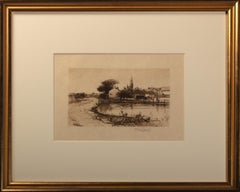
"Sketch Near Pittsfield, " realist landscape ink sketch rural scene signed
By Stephen Parrish
Located in Milwaukee, WI
"Sketch Near Pittsfield" is an original etching signed by the artist Stephen Parrish. It depicts a small group of buildings next to a lake. A path runs next to them, and the entire s...
Category
1880s Wisconsin - Art
Materials
Etching
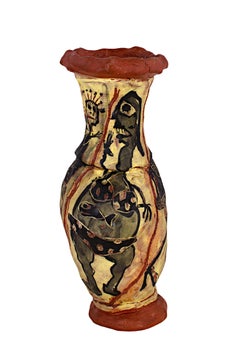
"Untitled Vase, " Neo-Expressionist Ceramic Vase signed by Michael Gross
By Michael Gross
Located in Milwaukee, WI
"Untitled Vase" is an original ceramic vase by Michael Gross. It features abstracted and grotesque figures on a yellow ground.
11 1/2" x 4 1/2" art
The ceramic sculptures of Wisconsin artist Michael Gross are personal narratives that reveal an unusual mix of earthly magic and primal vitality. The artist works in a variety of forms, including figurines, large vessels and furniture. With over a dozen museum exhibitions under his belt, the artist is a regular exhibitor at SOFA in New York...
Category
1980s Neo-Expressionist Wisconsin - Art
Materials
Ceramic
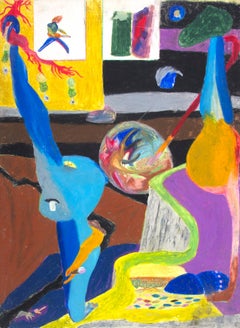
"Creatures, " Oil Pastel on Illustration Board signed by Reginald K. Gee
By Reginald K. Gee
Located in Milwaukee, WI
"Creatures" is an original oil pastel drawing on illustration board by Reginald K. Gee. The artist signed the piece on the back. It features abstracted "creatures" in bright colors. ...
Category
1980s Contemporary Wisconsin - Art
Materials
Oil Pastel, Illustration Board
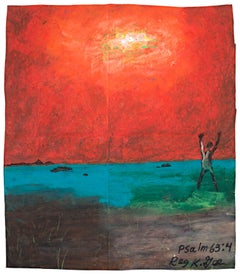
"Psalm 63:4...While I Live, " Oil Pastel signed by Reginald K. Gee
By Reginald K. Gee
Located in Milwaukee, WI
"Psalm 63:4...While I Live" is a religious original oil pastel drawing on a grocery bag by Reginald K. Gee. The artist signed and titled the piece lower right. This piece illustrates...
Category
Early 2000s Contemporary Wisconsin - Art
Materials
Oil Pastel, Found Objects
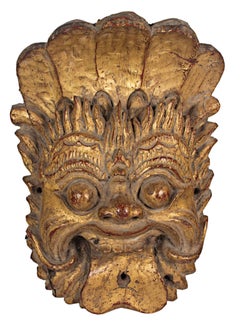
"Indonesian Mask, " Wood with Gold Leaf of Smiling Man
Located in Milwaukee, WI
This mask was made by an unknown Indonesian sculpture. It is carved out of wood and covered in gold leaf. It features an abstracted face and is 7" tall by 5 1/2" wide.
Category
19th Century Folk Art Wisconsin - Art
Materials
Gold Leaf
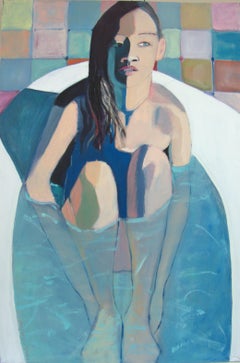
Bath
By Carolyn Schlam
Located in Milwaukee, WI
A signed oil painting representing the portrait of a woman in the bath. Contemporary painting.
Height 40" x 28" Length
Category
2010s Contemporary Wisconsin - Art
Materials
Canvas, Oil

$6,750
Still Thinking About These?
All Recently ViewedMore Ways To Browse
Alden Bryan
Amanda Acker
Antique Chinese Watercolor Landscape
Anton Genberg
Anton Sipos
Art Contemporary Fuschia
Bauer Canvas Oil
Beach Cottage Paintings
Ben Avram
Block Print Woman
Bords De La Seine
Bright Day And Painting
Christo And Jeanne Claude Wrapped Trees
Churches In Russia
Claire Wiltshire
Clement Cycles
Conquistador Art
Constantinople Painting