Wisconsin - Prints and Multiples

to
8
170
250
117
132
78
Overall Width
to
Overall Height
to
96
68
66
47
47
30
21
19
7
5
3
2
1
37
30
28
23
20
54
136
492
65
17
11
24
45
27
24
72
134
75
36
15
415
313
19
377
218
118
110
95
75
66
60
55
54
48
40
36
32
32
29
28
24
24
23
405
130
56
53
43
278
197
51,025
36,870
Item Ships From: Wisconsin
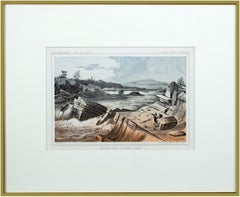
Kettle Falls, Columbia River original color lithograph by John Mix Stanley
By John Mix Stanley
Located in Milwaukee, WI
In the mid-nineteenth century, the United States government set out to survey and document its newly acquired lands and territories west of the Mississippi. The goals of these surveys were manifold: to produce topographical maps, to document flora and fauna, and to document natural resources to build the emerging US economy. These surveys, and the images from them, also functioned to build the new sense of American identity with the landscape, condensing vistas into the 'picturesque' tradition of European image making. Thus, the entire span of US territory could be seen as a single, cohesive whole. This lithograph comes from one of six surveys commissioned by the Army's Topographic Bureau in 1853, which sought to find the best route to construct a transcontinental railroad. The result was a thirteen-volume report including maps, lithographs, and technical data entitled 'Explorations and Surveys to ascertain the most practicable and economical route for a Railroad from the Mississippi river to the Pacific Ocean.' When it came to depicting the Columbia River, as seen in the present print, Stanley chose to depict the river's characteristic rock formations and choppy waters. The figures in the image give the viewer a sense of the vase scale of the imposing landscape. Other explorers that reached the site years before the Pacific Railroad Survey, such as Lewis and Clark, observed this scene with wonder and awe – and it is clear Stanley felt the same way. 5.75 x 8.75 inches, image 6.5 x 9.25 inches, stone 13.25 x 16.25 inches, frame Artist 'Stanley Del.' lower left Entitled 'Kettle Falls, Columbia River' lower center margin Publisher 'Sarony, Major & Knapp. Lith.s 449 Broadway N.Y.' lower right Inscribed 'U.S.P.R.R. EXP. & SURVEYS — 47th & 49th PARALLELS' upper left Inscribed 'GENERAL REPORT — PLATE XLVII' upper right Framed to conservation standards using 100 percent rag matting and Museum Glass to inhibit fading; housed in a brass-surface aluminium moulding. Print in overall good condition; wrinkles in upper margin and upper right corner; frame in excellent condition. John Mix Stanley...
Category

1850s Romantic Wisconsin - Prints and Multiples

Materials

Lithograph

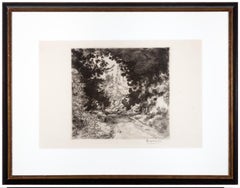
"Road Landscape, " Original Etching and Aquatinit
By Félix Bracquemond
Located in Milwaukee, WI
"Road Landscape" is an original etching and aquatint by Felix Bracquemond. This piece depicts a shadowy path through the foliage. The artist signed the piece in the lower right and i...
Category

1870s Impressionist Wisconsin - Prints and Multiples

Materials

Etching, Aquatint

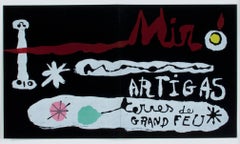
"Miro Artigas - Sculpture in Ceramic Terres de Grand Feu" Original Lithograph
By Joan Miró
Located in Milwaukee, WI
"Terres de Grand Feu" is an original color lithograph/screenprint by Joan Miro. It was designed to promote an exhibition of ceramic sculptures by m...
Category

1950s Modern Wisconsin - Prints and Multiples

Materials

Lithograph, Screen

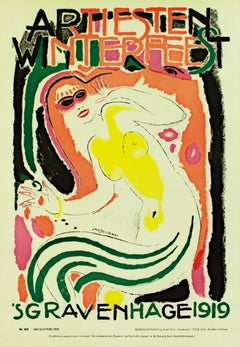
"Artiesten Winterfest, " an Original Color Lithograph
By Jan Sluijters
Located in Milwaukee, WI
"Artiesten Winterfest" is an original color lithograph poster designed by Jan Sluijters. It depicts a brightly colored woman with long orange hair and su...
Category

Early 20th Century Expressionist Wisconsin - Prints and Multiples

Materials

Lithograph

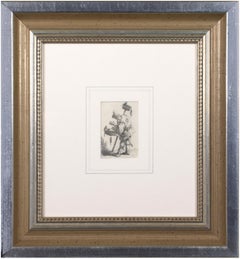
17th century etching black and white figurative character print expressive
By Jan Gillisz van Vliet
Located in Milwaukee, WI
Jan Gillisz van Vliet (1605–1668) was a Dutch Golden Age artist and student of Rembrandt. He worked with Rembrandt between 1628 and 1637, inspired by his master's work. Like Rembrandt, van Vliet made a series of beggar figures, though often with a greater degree of satire and expressiveness. For example, this image of a rat catcher...
Category

1630s Old Masters Wisconsin - Prints and Multiples

Materials

Etching

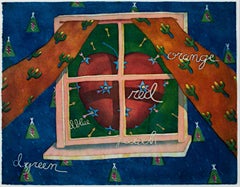
"St. Sebastian in NY, " Original Aquatint signed by Dan Mitchell Allison
By Dan Mitchell Allison
Located in Milwaukee, WI
"St. Sebastian in N.Y." is an original color aquating by dan Mitchell Allison. The artist signed the piece in the lower right. This piece depicts a heart/apple behind a window being assaulted by small arrows. Cactus-patterned curtains fly away from the windows and five words float in front of the entire image. This piece resembles Rene Magritte's early experiments with text-based surrealism. This piece is edition 38/40. 15 3/8" x 19 5/8" art 22 1/8" x 26 1/4" frame Born in Houston, Texas in 1953, the printmaker and painter continues to live and work there, still remaining an integral part of the lively Houston art scene while garnering attention throughout the United States, as well as overseas. Allison's prints are included in major museum and private collections throughout the world, including the U.S., Europe and Asia. He has gained renown for his innovative painting with the surface subtleties of printmaking and has established an international reputation for printmaking that places him in league with some of the most important late 20th century artists to have worked in the print medium. Achieving worldwide critical acclaim for his printmaking, Allison was the recipient of the prestigious 1987 Grand Prix award for the 17th Biennial of Graphic Art sponsored by the Ljubljana Museum of Modern Art in the former Republic of Yugoslavia. The artist's award winning, three panel collagraphic triptych, "Between Heaven and Earth," was selected from more than 1800 entries submitted from 57 countries. Past recipients of Ljubljana print award honors include Joan Miro, Karl Appel, Jasper Johns, Robert Rauschenberg, Frank Stella, James Rosenquist, David Hockney, Victor Vasarely, Antonio Berni...
Category

1980s Surrealist Wisconsin - Prints and Multiples

Materials

Aquatint

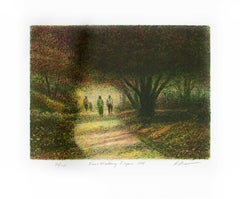
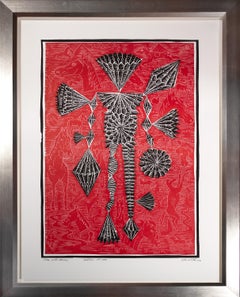
Four Walking Figures
By Harold Altman
Located in Milwaukee, WI
Harold Altman was born in New York City in 1924. He attended the Art Students League, the Black Mountain College, the Academie de la Grande Chaumiere in Paris, and was a graduate of ...
Category

Late 20th Century Wisconsin - Prints and Multiples

Materials

Lithograph

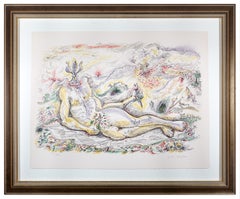
"Le Prince Iris, " Surrealist Lithograph From "Je Reve" Portfolio
By André Masson
Located in Milwaukee, WI
"Le Prince Iris" is an original color lithograph by Andre Masson. The artist signed the piece lower right in pencil and wrote the edition number, H.C. XXV/X...
Category

1970s Surrealist Wisconsin - Prints and Multiples

Materials

Lithograph

Original Lithograph Signed Pop Art Floral Abstract Galaxy Space Celestial Bright
By Michael Knigin
Located in Milwaukee, WI
"Romeo's Paradise" is an original color lithograph by Michael Knigin. The artist signed the piece in the lower right then titled/editioned 130/300 in the lower left with graphite. It...
Category

1980s Pop Art Wisconsin - Prints and Multiples

Materials

Lithograph, Ink

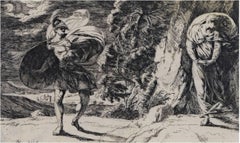
"Perseus and Andromeda" figurative black and white mythology scene figurative
By Alexander Runciman
Located in Milwaukee, WI
"Perseus and Andromeda" is an etching by Scottish artist Alexander Runciman, signed in plate to the lower left. It depicts Perseus on the left sw...
Category

1770s Old Masters Wisconsin - Prints and Multiples

Materials

Etching

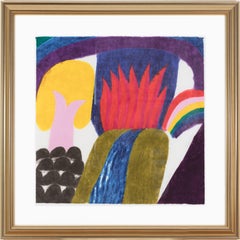
Pura Vida, 1985, (A/P)
By Carol Summers
Located in Milwaukee, WI
Woodcut in colors on Japanese paper. Signed and titled by artist. 24.25" x 24.25" art 34.88" x 34.63" frame Carol Summers (1925-2016) has worked as an artist throughout the second ...
Category

1980s Wisconsin - Prints and Multiples

Materials

Woodcut

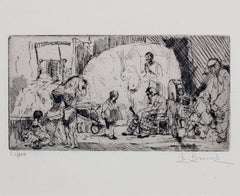
"Le Petit Cirque Prinder, " Original Etching signd by Auguste Brouet
By Auguste Brouet
Located in Milwaukee, WI
"Le Petit Cirque Prinder" is an original etching by Auguste Brouet. This piece depicts a variety of circus performers surrounded by small children. The artist signed the piece in the...
Category

1910s Academic Wisconsin - Prints and Multiples

Materials

Pencil, Etching

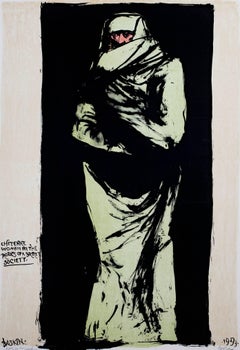
Original Lithograph Native American Female Figure Mystery Secret Society Signed
By Leonard Baskin
Located in Milwaukee, WI
"Cheyenne Woman in the Robes of a Secret Society" is an original lithograph by Leonard Baskin. It depicts a Native American woman in pale green robes. The title is written on the lef...
Category

1990s Wisconsin - Prints and Multiples

Materials

Lithograph, Ink

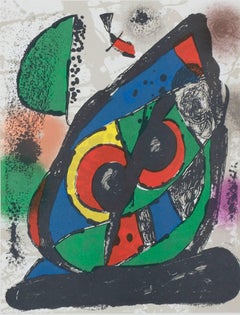
Lithographie Originale I, from Miro Lithographs IV, Maeght Publisher, Joan Miró
By Joan Miró
Located in Milwaukee, WI
"Lithographie Originale I" is an original color lithograph by Joan Miro, published in "Miro Lithographs IV, Maeght Publisher" in 1981. It depicts Miro's signature biomorphic abstract...
Category

1980s Abstract Wisconsin - Prints and Multiples

Materials

Lithograph

"Calligraphie Heroique, " Original Color Lithograph signed by Claude Weisbuch
By Claude Weisbuch
Located in Milwaukee, WI
"Calligraphie Heroique" is an original color lithograph by Claude Weisbuch. The artist signed the piece in the lower right and wrote the edition number (116/275) in the lower left. T...
Category

1970s Modern Wisconsin - Prints and Multiples

Materials

Lithograph

"Arroyo, " Woodcut and Monotype Landscape signed by Carol Summers
By Carol Summers
Located in Milwaukee, WI
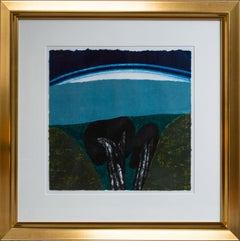
"Arroyo" is a woodcut and monotype signed by Carol Summers. The print is a break from the usual bright coloring of Summers' images, though is rendered in his typical style and fields of unmodeled color. A pair of trees stand front and center before an arroyo, a Spanish term for an intermittently dry creek, running out to the ocean. A white sunrise glows in the distance beyond the sea. The playfulness of the image is enhanced by Summers' signature printmaking technique, which allows the ink from the woodblock to seep through the paper, blurring the edges of each form. 14.25 x 14 inches, artwork Numbered from the edition of 120 This print was commissioned by the Madison Print Club, Madison, WI Carol Summers (1925-2016) worked as an artist throughout the second half of the 20th century and into the first years of the next, outliving most of his mid-century modernist peers. Initially trained as a painter, Summers was drawn to color woodcuts around 1950 and it became his specialty thereafter. Over the years he has developed a process and style that is both innovative and readily recognizable. His art is known for its large scale, saturated fields of bold color, semi-abstract treatment of landscapes from around the world, and a luminescent quality achieved through a printmaking process he invented. In a career that has extended over half a century, Summers has hand-pulled approximately 245 woodcuts in editions that have typically run from 25 to 100 in number. His talent was both inherited and learned. Born in 1925 in Kingston, a small town in upstate New York, Summers was raised in nearby Woodstock with his older sister, Mary. His parents were both artists who had met in art school in St. Louis. During the Great Depression, when Carol was growing up, his father supported the family as a medical illustrator until he could return to painting. His mother was a watercolorist and also quite knowledgeable about the different kinds of papers used for various kinds of painting. Many years later, Summers would paint or print on thinly textured paper originally collected by his mother. From 1948 to 1951, Carol Summers trained in the classical fine and studio arts at Bard College and at the Art Students League of New York. He studied painting with Steven Hirsh and printmaking with Louis Schanker. He admired the shapes and colors favored by early modernists Paul Klee (Sw: 1879-1940) and Matt Phillips (Am: b.1927- ). After graduating, Summers quit working as a part-time carpenter and cabinetmaker (which had supported his schooling and living expenses) to focus fulltime on art. That same year, an early abstract, Bridge No. 1 was selected for a Purchase Prize in a competition sponsored by the Brooklyn Museum. In 1952, his work (Cathedral, Construction, and Icarus) was shown for the first time at the Museum of Modern Art in New York City in an exhibition of American woodcuts. In 1954, Summers received a grant from the Italian government to study for a year in Italy. Woodcuts completed soon after his arrival there were almost all editions of only 8 to 25 prints, small in size, architectural in content, and black and white in color. The most well-known are Siennese Landscape and Little Landscape, which depicted the area near where he resided. Summers extended this trip three more years, a decision that would have a significant impact on choices of subject matter and color in the coming decade. After returning from Europe, Summers’ images continued to feature historical landmarks and events from Italy as well as from France, Spain, and Greece. However, as evidenced in Aetna’s Dream, Worldwind, and Arch of Triumph...
Category

1980s Contemporary Wisconsin - Prints and Multiples

Materials

Monotype, Woodcut

"The End, " Original Woodcut Silkscreen signed by Carol Summers
By Carol Summers
Located in Milwaukee, WI
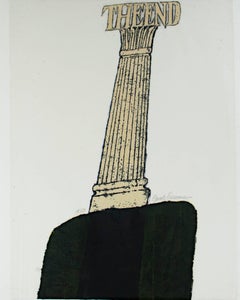
"The End" is an original color woodcut by Carol Summers. The artist signed the piece in the center right. This woodcut depicts a marble fluted column with the title in large letters ...
Category

1960s Wisconsin - Prints and Multiples

Materials

Screen, Woodcut

"Weeping Tree, " an Etching Aquatint signed by Molly McKee
By Molly McKee
Located in Milwaukee, WI
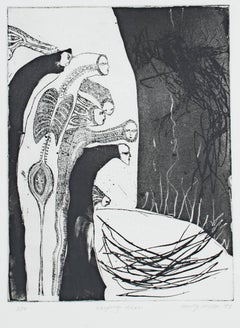
"Weeping Tree" is an original etching and aquatint signed by the artist Molly McKee. It is edition 2/10 and depicts multiple abstracted figures on the left gazing to the right. 12" x 8.75" art 24.875" x 17.5" frame This surreal etching...
Category

1990s Contemporary Wisconsin - Prints and Multiples

Materials

Etching, Aquatint

"Shell, " Original Etching signed by Arthur Luiz Piza
By Arthur Luiz Piza
Located in Milwaukee, WI
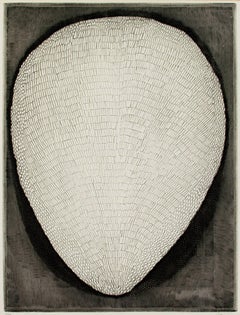
"Shell" is an original etching by Arthur Luiz Piza. It depicts an abstract, textured shell in the shape of an egg. The artist signed the piece lower right and wrote the edition numbe...
Category

1960s Abstract Wisconsin - Prints and Multiples

Materials

Etching

L Artist Phoenix Poster
By Marc Chagall
Located in Milwaukee, WI
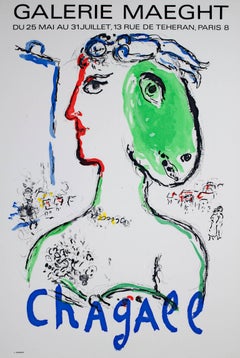
Marc Chagall "L'Artist Phoenix Poster" for Galerie Maeght from 1972. It is from the edition of 5000. 30 1/2" x 20" art 40 1/2" x 32 1/4" frame Marc Ch...
Category

1970s Expressionist Wisconsin - Prints and Multiples

Materials

Lithograph

"When Day is Done, " an Original Etching signed by John Edward Costigan
By John Edward Costigan
Located in Milwaukee, WI
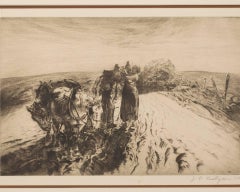
"When Day is Done" is an original etching and aquatint signed lower right in pencil by the artist John Edward Costigan. It depicts a man and a woman with their young child at the end...
Category

1930s Post-Impressionist Wisconsin - Prints and Multiples

Materials

Etching, Aquatint

Narcissus Braziliana original woodcut monotype signed by Carol Summers
By Carol Summers
Located in Milwaukee, WI
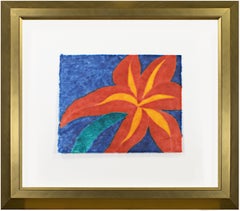
The present artwork is a vibrant and colorful example of the woodcut prints of Carol Summers. The image is dominated by the form of a red tropical flower, closely cropped around the petals like in the photographs of Imogen Cunningham and the paintings of Georgia O'Keeffe. The playfulness of the image is enhanced by Summers' signature printmaking technique, which allows the ink from the woodblock to seep through the paper, blurring the edges of each form. 9.63 x 11.63 inches, artwork 21 x 23 inches, frame Edition 16/50 in pencil, lower right Titled in pencil, lower right Signed in pencil, lower center Framed to conservation standards using archival materials including 100 percent rag matting, Museum Glass to inhibit fading, and housed in a modern profile gold gilded wood moulding. Carol Summers (1925-2016) has worked as an artist throughout the second half of the 20th century and into the first years of the next, outliving most of his mid-century modernist peers. Initially trained as a painter, Summers was drawn to color woodcuts around 1950 and it became his specialty thereafter. Over the years he has developed a process and style that is both innovative and readily recognizable. His art is known for it’s large scale, saturated fields of bold color, semi-abstract treatment of landscapes from around the world and a luminescent quality achieved through a printmaking process he invented. In a career that has extended over half a century, Summers has hand-pulled approximately 245 woodcuts in editions that have typically run from 25 to 100 in number. His talent was both inherited and learned. Born in 1925 in Kingston, a small town in upstate New York, Summers was raised in nearby Woodstock with his older sister, Mary. His parents were both artists who had met in art school in St. Louis. During the Great Depression, when Carol was growing up, his father supported the family as a medical illustrator until he could return to painting. His mother was a watercolorist and also quite knowledgeable about the different kinds of papers used for various kinds of painting. Many years later, Summers would paint or print on thinly textured paper originally collected by his mother. From 1948 to 1951, Carol Summers trained in the classical fine and studio arts at Bard College and at the Art Students League of New York. He studied painting with Steven Hirsh and printmaking with Louis Schanker. He admired the shapes and colors favored by early modernists Paul Klee (Sw: 1879-1940) and Matt Phillips (Am: b.1927- ). After graduating, Summers quit working as a part-time carpenter and cabinetmaker (which had supported his schooling and living expenses) to focus fulltime on art. That same year, an early abstract, Bridge No. 1 was selected for a Purchase Prize in a competition sponsored by the Brooklyn Museum. In 1952, his work (Cathedral, Construction and Icarus) was shown the first time at the Museum of Modern Art in New York City in an exhibition of American woodcuts. In 1954, Summers received a grant from the Italian government to study for a year in Italy. Woodcuts completed soon after his arrival there were almost all editions of only 8 to 25 prints, small in size, architectural in content and black and white in color. The most well-known are Siennese Landscape and Little Landscape, which depicted the area near where he resided. Summers extended this trip three more years, a decision which would have significant impact on choices of subject matter and color in the coming decade. After returning from Europe, Summers’ images continued to feature historical landmarks and events from Italy as well as from France, Spain and Greece. However, as evidenced in Aetna’s Dream, Worldwind and Arch of Triumph, a new look prevailed. These woodcuts were larger in size and in color. Some incorporated metal leaf in the creation of a collage and Summers even experimented with silkscreening. Editions were now between 20 and 50 prints in number. Most importantly, Summers employed his rubbing technique for the first time in the creation of Fantastic Garden in late 1957. Dark Vision of Xerxes, a benchmark for Summers, was the first woodcut where Summers experimented using mineral spirits as part of his printmaking process. A Fulbright Grant as well as Fellowships from the Louis Comfort Tiffany Foundation and the Guggenheim Foundation followed soon thereafter, as did faculty positions at colleges and universities primarily in New York and Pennsylvania. During this period he married a dancer named Elaine Smithers with whom he had one son, Kyle. Around this same time, along with fellow artist Leonard Baskin, Summers pioneered what is now referred to as the “monumental” woodcut. This term was coined in the early 1960s to denote woodcuts that were dramatically bigger than those previously created in earlier years, ones that were limited in size mostly by the size of small hand-presses. While Baskin chose figurative subject matter, serious in nature and rendered with thick, striated lines, Summers rendered much less somber images preferring to emphasize shape and color; his subject matter approached abstraction but was always firmly rooted in the landscape. In addition to working in this new, larger scale, Summers simultaneously refined a printmaking process which would eventually be called the “Carol Summers Method” or the “ Carol Summers Technique”. Summers produces his woodcuts by hand, usually from one or more blocks of quarter-inch pine, using oil-based printing inks and porous mulberry papers. His woodcuts reveal a sensitivity to wood especially its absorptive qualities and the subtleties of the grain. In several of his woodcuts throughout his career he has used the undulating, grainy patterns of a large wood plank to portray a flowing river or tumbling waterfall. The best examples of this are Dream, done in 1965 and the later Flash Flood Escalante, in 2003. In the majority of his woodcuts, Summers makes the blocks slightly larger than the paper so the image and color will bleed off the edge. Before printing, he centers a dry sheet of paper over the top of the cut wood block or blocks, securing it with giant clips. Then he rolls the ink directly on the front of the sheet of paper and pressing down onto the dry wood block or reassembled group of blocks. Summers is technically very proficient; the inks are thoroughly saturated onto the surface of the paper but they do not run into each other. The precision of the color inking in Constantine’s Dream in 1969 and Rainbow Glacier in 1970 has been referred to in various studio handbooks. Summers refers to his own printing technique as “rubbing”. In traditional woodcut printing, including the Japanese method, the ink is applied directly onto the block. However, by following his own method, Summers has avoided the mirror-reversed image of a conventional print and it has given him the control over the precise amount of ink that he wants on the paper. After the ink is applied to the front of the paper, Summers sprays it with mineral spirits, which act as a thinning agent. The absorptive fibers of the paper draw the thinned ink away from the surface softening the shapes and diffusing and muting the colors. This produces a unique glow that is a hallmark of the Summers printmaking technique. Unlike the works of other color field artists or modernists of the time, this new technique made Summers’ extreme simplification and flat color areas anything but hard-edged or coldly impersonal. By the 1960s, Summers had developed a personal way of coloring and printing and was not afraid of hard work, doing the cutting, inking and pulling himself. In 1964, at the age of 38, Summers’ work was exhibited for a second time at the Museum of Modern Art. This time his work was featured in a one-man show and then as one of MoMA’s two-year traveling exhibitions which toured throughout the United States. In subsequent years, Summers’ works would be exhibited and acquired for the permanent collections of multiple museums throughout the United States, Europe and Asia. Summers’ familiarity with landscapes throughout the world is firsthand. As a navigator-bombardier in the Marines in World War II, he toured the South Pacific and Asia. Following college, travel in Europe and subsequent teaching positions, in 1972, after 47 years on the East Coast, Carol Summers moved permanently to Bonny Doon in the Santa Cruz Mountains in Northern California. There met his second wife, Joan Ward Toth, a textile artist who died in 1998; and it was here his second son, Ethan was born. During the years that followed this relocation, Summers’ choice of subject matter became more diverse although it retained the positive, mostly life-affirming quality that had existed from the beginning. Images now included moons, comets, both sunny and starry skies, hearts and flowers, all of which, in one way or another, remained tied to the landscape. In the 1980s, from his home and studio in the Santa Cruz mountains, Summers continued to work as an artist supplementing his income by conducting classes and workshops at universities in California and Oregon as well as throughout the Mid and Southwest. He also traveled extensively during this period hiking and camping, often for weeks at a time, throughout the western United States and Canada. Throughout the decade it was not unusual for Summers to backpack alone or with a fellow artist into mountains or back country for six weeks or more at a time. Not surprisingly, the artwork created during this period rarely departed from images of the land, sea and sky. Summers rendered these landscapes in a more representational style than before, however he always kept them somewhat abstract by mixing geometric shapes with organic shapes, irregular in outline. Some of his most critically acknowledged work was created during this period including First Rain, 1985 and The Rolling Sea, 1989. Summers received an honorary doctorate from his alma mater, Bard College in 1979 and was selected by the United States Information Agency to spend a year conducting painting and printmaking workshops at universities throughout India. Since that original sabbatical, he has returned every year, spending four to eight weeks traveling throughout that country. In the 1990s, interspersed with these journeys to India have been additional treks to the back roads and high country areas of Mexico, Central America, Nepal, China and Japan. Travel to these exotic and faraway places had a profound influence on Summers’ art. Subject matter became more worldly and non-western as with From Humla to Dolpo, 1991 or A Former Life of Budha, 1996, for example. Architectural images, such as The Pillars of Hercules, 1990 or The Raja’s Aviary, 1992 became more common. Still life images made a reappearance with Jungle Bouquet in 1997. This was also a period when Summers began using odd-sized paper to further the impact of an image. The 1996 Night, a view of the earth and horizon as it might be seen by an astronaut, is over six feet long and only slightly more than a foot-and-a-half high. From 1999, Revuelta A Vida (Spanish for “Return to Life”) is pie-shaped and covers nearly 18 cubic feet. It was also at this juncture that Summers began to experiment with a somewhat different palette although he retained his love of saturated colors. The 2003 Far Side of Time is a superb example of the new direction taken by this colorist. At the turn of the millennium in 1999, “Carol Summers Woodcuts...
Category

Early 2000s Contemporary Wisconsin - Prints and Multiples

Materials

Monotype, Woodcut

19th century lithograph art nouveau ornate female figures outline illustration
By Alphonse Mucha
Located in Milwaukee, WI
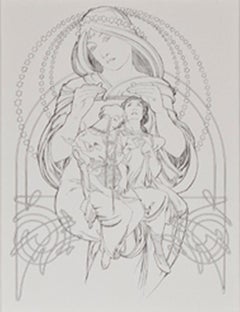
"From: Ilsee, Princess of Tripoli "Jaufre and Eymardine" is an original lithograph by Alphonse Mucha. From "Ilsee, Princesse de Tripoli," a rare illustrated book. Image: 8.12" x 6"...
Category

1890s Art Nouveau Wisconsin - Prints and Multiples

Materials

Lithograph

Il bouge sans arrêt original signed lithograph poster after drypoint, 1960s
By Claude Weisbuch
Located in Milwaukee, WI
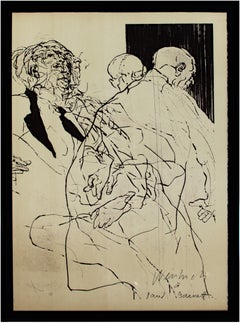
This poster is a lithographic enlargement of the dry point print 'Il bouge sans arrêt' by the French artist Claude Weisbuch. The image is an early example of his explorations into th...
Category

1960s Contemporary Wisconsin - Prints and Multiples

Materials

Lithograph

"Mes Petites Amies, Les Deux Sœurs" signed by Jacques Villon
By Jacques Villon
Located in Milwaukee, WI
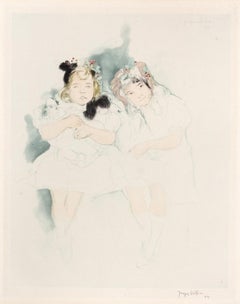
This is a drypoint and aquatint artwork by Jacques Villon. The artist signed in pencil on the lower right. As well as signed in plate at the top right of the image. This is a wonderful artwork of different intaglio processes being brought together in a beautiful almost seamless harmony. The thin pencil like markings and hair detailing are made using the Drypoint printmaking method. Whilst the color details around the girls are made using the Aquatint etching method. Jacques Villon shows his skills as a printmaker with the way these pieces line up perfectly and with how clean the rest of the plate is around the girls. An unnumbered impression, apart from the numbered edition of 50. Catalogue Raisonne E101, pg. 66-67 (Ginestet & Pouillon. It depicts two young girls. 15" x 11 1/2" art 25 1/8" x 20" frame French painter, printmaker and illustrator. The oldest of three brothers who became major 20th-century artists, including Raymond Duchamp-Villon and Marcel Duchamp, he learnt engraving at the age of 16 from his maternal grandfather, Emile-Frédéric Nicolle (1830-94), a ship-broker who was also a much appreciated amateur artist. In January 1894, having completed his studies at the Lycée Corneille in Rouen, he was sent to study at the Faculty of Law of the University of Paris, but within a year he was devoting most of his time to art, already contributing lithographs to Parisian illustrated newspapers such as Assiette au beurre. At this time he chose his pseudonym: Jack (subsequently Jacques) in homage to Alphonse Daudet’s novel Jack (1876) and Villon in appreciation of the 15th-century French poet François Villon...
Category

Early 1900s Modern Wisconsin - Prints and Multiples

Materials

Drypoint, Aquatint, Etching, Intaglio

"Paricutin (Volcano in Michoacan, Mexico)" Woodcut Monotype signed by Summers
By Carol Summers
Located in Milwaukee, WI
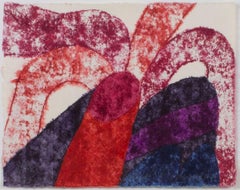
"Paricutin (Volcano in Michoacan, Mexico)" is a woodcut and monotype signed by Carol Summers. In the image, an abstracted volcano erupts in a joyous burst of purples and oranges. The playfulness of the image is enhanced by Summers' signature printmaking technique, which allows the ink from the woodblock to seep through the paper, blurring the edges of each form. Art: 8 x 11 in Frame: 17 x 19 in Carol Summers (1925-2016) has worked as an artist throughout the second half of the 20th century and into the first years of the next, outliving most of his mid-century modernist peers. Initially trained as a painter, Summers was drawn to color woodcuts around 1950 and it became his specialty thereafter. Over the years he has developed a process and style that is both innovative and readily recognizable. His art is known for it’s large scale, saturated fields of bold color, semi-abstract treatment of landscapes from around the world and a luminescent quality achieved through a printmaking process he invented. In a career that has extended over half a century, Summers has hand-pulled approximately 245 woodcuts in editions that have typically run from 25 to 100 in number. His talent was both inherited and learned. Born in 1925 in Kingston, a small town in upstate New York, Summers was raised in nearby Woodstock with his older sister, Mary. His parents were both artists who had met in art school in St. Louis. During the Great Depression, when Carol was growing up, his father supported the family as a medical illustrator until he could return to painting. His mother was a watercolorist and also quite knowledgeable about the different kinds of papers used for various kinds of painting. Many years later, Summers would paint or print on thinly textured paper originally collected by his mother. From 1948 to 1951, Carol Summers trained in the classical fine and studio arts at Bard College and at the Art Students League of New York. He studied painting with Steven Hirsh and printmaking with Louis Schanker. He admired the shapes and colors favored by early modernists Paul Klee (Sw: 1879-1940) and Matt Phillips (Am: b.1927- ). After graduating, Summers quit working as a part-time carpenter and cabinetmaker (which had supported his schooling and living expenses) to focus fulltime on art. That same year, an early abstract, Bridge No. 1 was selected for a Purchase Prize in a competition sponsored by the Brooklyn Museum. In 1952, his work (Cathedral, Construction and Icarus) was shown the first time at the Museum of Modern Art in New York City in an exhibition of American woodcuts. In 1954, Summers received a grant from the Italian government to study for a year in Italy. Woodcuts completed soon after his arrival there were almost all editions of only 8 to 25 prints, small in size, architectural in content and black and white in color. The most well-known are Siennese Landscape and Little Landscape, which depicted the area near where he resided. Summers extended this trip three more years, a decision which would have significant impact on choices of subject matter and color in the coming decade. After returning from Europe, Summers’ images continued to feature historical landmarks and events from Italy as well as from France, Spain and Greece. However, as evidenced in Aetna’s Dream, Worldwind and Arch of Triumph, a new look prevailed. These woodcuts were larger in size and in color. Some incorporated metal leaf in the creation of a collage and Summers even experimented with silkscreening. Editions were now between 20 and 50 prints in number. Most importantly, Summers employed his rubbing technique for the first time in the creation of Fantastic Garden in late 1957. Dark Vision of Xerxes, a benchmark for Summers, was the first woodcut where Summers experimented using mineral spirits as part of his printmaking process. A Fulbright Grant as well as Fellowships from the Louis Comfort Tiffany Foundation and the Guggenheim Foundation followed soon thereafter, as did faculty positions at colleges and universities primarily in New York and Pennsylvania. During this period he married a dancer named Elaine Smithers with whom he had one son, Kyle. Around this same time, along with fellow artist Leonard Baskin, Summers pioneered what is now referred to as the “monumental” woodcut. This term was coined in the early 1960s to denote woodcuts that were dramatically bigger than those previously created in earlier years, ones that were limited in size mostly by the size of small hand-presses. While Baskin chose figurative subject matter, serious in nature and rendered with thick, striated lines, Summers rendered much less somber images preferring to emphasize shape and color; his subject matter approached abstraction but was always firmly rooted in the landscape. In addition to working in this new, larger scale, Summers simultaneously refined a printmaking process which would eventually be called the “Carol Summers Method” or the “ Carol Summers Technique”. Summers produces his woodcuts by hand, usually from one or more blocks of quarter-inch pine, using oil-based printing inks and porous mulberry papers. His woodcuts reveal a sensitivity to wood especially its absorptive qualities and the subtleties of the grain. In several of his woodcuts throughout his career he has used the undulating, grainy patterns of a large wood plank to portray a flowing river or tumbling waterfall. The best examples of this are Dream, done in 1965 and the later Flash Flood Escalante, in 2003. In the majority of his woodcuts, Summers makes the blocks slightly larger than the paper so the image and color will bleed off the edge. Before printing, he centers a dry sheet of paper over the top of the cut wood block or blocks, securing it with giant clips. Then he rolls the ink directly on the front of the sheet of paper and pressing down onto the dry wood block or reassembled group of blocks. Summers is technically very proficient; the inks are thoroughly saturated onto the surface of the paper but they do not run into each other. The precision of the color inking in Constantine’s Dream in 1969 and Rainbow Glacier in 1970 has been referred to in various studio handbooks. Summers refers to his own printing technique as “rubbing”. In traditional woodcut printing, including the Japanese method, the ink is applied directly onto the block. However, by following his own method, Summers has avoided the mirror-reversed image of a conventional print and it has given him the control over the precise amount of ink that he wants on the paper. After the ink is applied to the front of the paper, Summers sprays it with mineral spirits, which act as a thinning agent. The absorptive fibers of the paper draw the thinned ink away from the surface softening the shapes and diffusing and muting the colors. This produces a unique glow that is a hallmark of the Summers printmaking technique. Unlike the works of other color field artists or modernists of the time, this new technique made Summers’ extreme simplification and flat color areas anything but hard-edged or coldly impersonal. By the 1960s, Summers had developed a personal way of coloring and printing and was not afraid of hard work, doing the cutting, inking and pulling himself. In 1964, at the age of 38, Summers’ work was exhibited for a second time at the Museum of Modern Art. This time his work was featured in a one-man show and then as one of MoMA’s two-year traveling exhibitions which toured throughout the United States. In subsequent years, Summers’ works would be exhibited and acquired for the permanent collections of multiple museums throughout the United States, Europe and Asia. Summers’ familiarity with landscapes throughout the world is firsthand. As a navigator-bombardier in the Marines in World War II, he toured the South Pacific and Asia. Following college, travel in Europe and subsequent teaching positions, in 1972, after 47 years on the East Coast, Carol Summers moved permanently to Bonny Doon in the Santa Cruz Mountains in Northern California. There met his second wife, Joan Ward Toth, a textile artist who died in 1998; and it was here his second son, Ethan was born. During the years that followed this relocation, Summers’ choice of subject matter became more diverse although it retained the positive, mostly life-affirming quality that had existed from the beginning. Images now included moons, comets, both sunny and starry skies, hearts and flowers, all of which, in one way or another, remained tied to the landscape. In the 1980s, from his home and studio in the Santa Cruz mountains, Summers continued to work as an artist supplementing his income by conducting classes and workshops at universities in California and Oregon as well as throughout the Mid and Southwest. He also traveled extensively during this period hiking and camping, often for weeks at a time, throughout the western United States and Canada. Throughout the decade it was not unusual for Summers to backpack alone or with a fellow artist into mountains or back country for six weeks or more at a time. Not surprisingly, the artwork created during this period rarely departed from images of the land, sea and sky. Summers rendered these landscapes in a more representational style than before, however he always kept them somewhat abstract by mixing geometric shapes with organic shapes, irregular in outline. Some of his most critically acknowledged work was created during this period including First Rain, 1985 and The Rolling Sea, 1989. Summers received an honorary doctorate from his alma mater, Bard College in 1979 and was selected by the United States Information Agency to spend a year conducting painting and printmaking workshops at universities throughout India. Since that original sabbatical, he has returned every year, spending four to eight weeks traveling throughout that country. In the 1990s, interspersed with these journeys to India have been additional treks to the back roads and high country areas of Mexico, Central America, Nepal, China and Japan. Travel to these exotic and faraway places had a profound influence on Summers’ art. Subject matter became more worldly and non-western as with From Humla to Dolpo, 1991 or A Former Life of Budha, 1996, for example. Architectural images, such as The Pillars of Hercules, 1990 or The Raja’s Aviary, 1992 became more common. Still life images made a reappearance with Jungle Bouquet in 1997. This was also a period when Summers began using odd-sized paper to further the impact of an image. The 1996 Night, a view of the earth and horizon as it might be seen by an astronaut, is over six feet long and only slightly more than a foot-and-a-half high. From 1999, Revuelta A Vida (Spanish for “Return to Life”) is pie-shaped and covers nearly 18 cubic feet. It was also at this juncture that Summers began to experiment with a somewhat different palette although he retained his love of saturated colors. The 2003 Far Side of Time is a superb example of the new direction taken by this colorist. At the turn of the millennium in 1999, “Carol Summers Woodcuts...
Category

Early 2000s Contemporary Wisconsin - Prints and Multiples

Materials

Monotype, Woodcut

19th century color lithograph portrait Rembrandt expressive sepia contrast
By Claude Weisbuch
Located in Milwaukee, WI
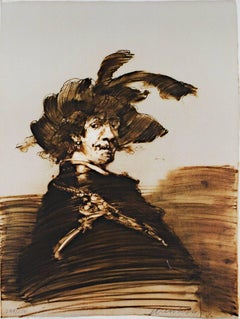
"Rembrandt en Habit de Capitaine" is an original lithograph by Claude Weisbuch. The artist signed the piece lower right and wrote the edition number (249/250) in the lower left. This...
Category

1980s Modern Wisconsin - Prints and Multiples

Materials

Lithograph

"Untitled 1970 C.P. #235" original lithograph abstract pop art signed mellow
By Garo Zareh Antreasian
Located in Milwaukee, WI
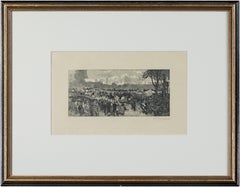
"Untitled 1970 C.P. #235" is an original color lithograph with blended ink signed by the artist Garo Zareh Antreasian. It is editioned 10/60 in the center lower left margin with grap...
Category

1970s Abstract Geometric Wisconsin - Prints and Multiples

Materials

Ink, Lithograph

Early 20th century color lithograph poster mountain building trees sky text
By Edouard-Georges Mac-Avoy 1
Located in Milwaukee, WI
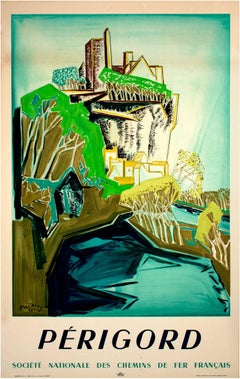
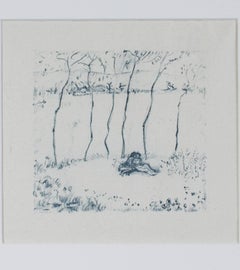
"Perigord" is an original lithograph of a landscape created for the Societe Nationale des Chemis de fer Francais, the French National Railways. Artist Eduoard Georges Mac'Avoy worked...
Category

1940s Wisconsin - Prints and Multiples

Materials

Lithograph

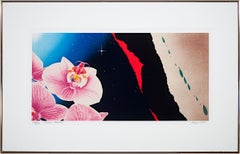
"More Points on a Bachelor s Tie, " Etching Aquatint signed
By James Rosenquist
Located in Milwaukee, WI
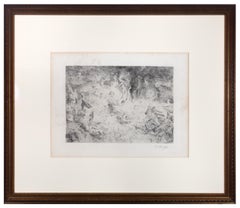
This is an abstract etching and aquatint by American artist James Rosenquist with colorful red, blue, green, and yellow shapes. It is signed and dated in pencil. Edition 57/78 17 3/...
Category

1970s Abstract Wisconsin - Prints and Multiples

Materials

Etching, Aquatint

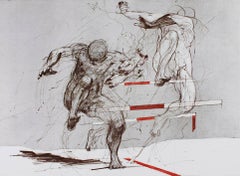
"Hurdles, " Original color figurative dynamic sketch print
By Claude Weisbuch
Located in Milwaukee, WI
"Hurdles" is an extremely rare original color lithograph by Claude Weisbuch. This print is the trial proof (blind stamp Hors Commerce) and has no edition number. It depicts two expertly-drawn men jumping over hurdles. 19 1/4" x 25 1/2" art 29 3/4" x 36" frame Claude Weisbuch was born on February 8th, 1927 in Thionville, France. His art includes drawing, painting and lithographs. Inventive and unique with his style he uses color range that is warm and rich in tone, certainly equal to that of Rembrandt. The fluidity of line and creation of motion is even more vigorous that in the work of Daumier or Toulouse Lautrec. His creativeness in composition is awesome and seems to have infinite possibilities of variation and vision. Weisbuch died in 2014. Exhibitions Herve Odermatt Gallery Paris, France Escole de Paris Paris, France David Barnett Gallery...
Category

1970s Wisconsin - Prints and Multiples

Materials

Lithograph

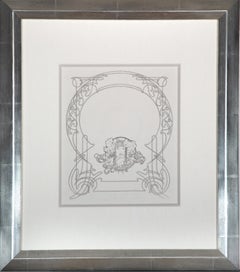
19th century lithograph art nouveau ornate bookplate recto and verso face
By Alphonse Mucha
Located in Milwaukee, WI
"From: Ilsee, Princess of Tripoli Recto: "Title Page" Verso: "Art Nouveau Motif" is an original by Alphonse Mucha. Exquisite double-sided lithographs from "Ilsee, Princesse de Tripo...
Category

1890s Art Nouveau Wisconsin - Prints and Multiples

Materials

Lithograph

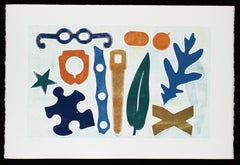
Fine art print, mono print, monotype, unique print, hand printed, “Jazz 189”
By Richard Taylor
Located in Milwaukee, WI
" Jazz 189" This unique mono print is from my Jazz series, where each individual image is composed from shapes of found objects. My process of printing is one of improvising, much li...
Category

2010s Abstract Wisconsin - Prints and Multiples

Materials

Paper

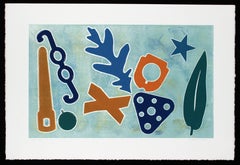
Fine art print, mono print, monotype, unique print, hand printed, “Jazz 188”
By Richard Taylor
Located in Milwaukee, WI
" Jazz 188" This unique mono print is from my Jazz series, where each individual image is composed from shapes of found objects. My process of printing is one of improvising, much li...
Category

2010s Abstract Wisconsin - Prints and Multiples

Materials

Paper

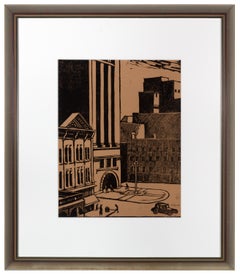
City Hall Square, Milwaukee
By George Raab
Located in Milwaukee, WI
Framed 16.25 x 18.75 in 11.38 x 8.75 inches (sheet), 11.25 x 8.75 inches (block) Linoleum block print on laid paper. Signed in plate
Category

1930s Wisconsin - Prints and Multiples

Materials

Linocut

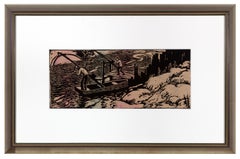
Fishing
By George Raab
Located in Milwaukee, WI
7.25 x 12.25 inches (sheet), 5 x 11.88 inches (block) Framed 12.63 x 19.50 in Linoleum block print on laid paper Unsigned
Category

1930s Wisconsin - Prints and Multiples

Materials

Linocut

Hyde Park original woodcut engraving signed by Auguste Louis Lepère
By Auguste Louis Lepère
Located in Milwaukee, WI
The present artwork is an excellent example of the woodcut engravings of Auguste-Louis Lepère (1849 - 1918). He was the son of the sculptor Francois Lepère, a...
Category

1860s Realist Wisconsin - Prints and Multiples

Materials

Engraving, Woodcut

"Daphnis et Chloe - The Lovers, " an Original Lithograph by Pierre Bonnard
By Pierre Bonnard
Located in Milwaukee, WI
"Daphnis et Chloe - The Lovers" is an original lithograph by Pierre Bonnard. This lithograph is a rare proof for the illustrated edition of Daphnis et Chloe. There were two proofs, o...
Category

Early 1900s Wisconsin - Prints and Multiples

Materials

Lithograph

"The Temptation of Saint Anthony " Etching, Signed
By Fernand Cormon
Located in Milwaukee, WI
"The Temptation of Saint Anthony" is an original etching by Fernand Cormon. This piece has the artist's stamp. The piece is signed in pencil by the artis...
Category

1890s Academic Wisconsin - Prints and Multiples

Materials

Etching, Paper, Ink, Laid Paper

"Man With Horses, " a Relief Print signed by John Buck
By John Buck
Located in Milwaukee, WI
"Man With Horses" is a signed relief print in red and black on rag paper. It is signed lower right and from an edition of 120. 28 1/4" x 18 3/8" image...
Category

21st Century and Contemporary Contemporary Wisconsin - Prints and Multiples

Materials

Woodcut

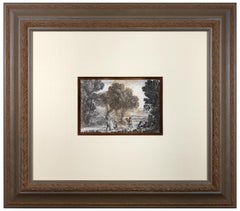
17th century etching black and white landscape forest trees figures scene
By Claude Lorrain
Located in Milwaukee, WI
"La Danse Sous Les Arbes (The Country Dance)" is an etching by Claude Gellee (Le Lorrain). This etching is in the collections of the Metropolitan Museum and the Louvre. Publisher: Ma...
Category

Mid-17th Century Old Masters Wisconsin - Prints and Multiples

Materials

Etching

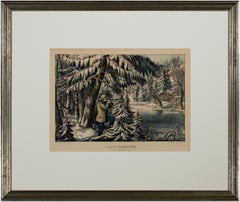
19th century color lithograph nature figure winter scene trees snow river
By Currier Ives
Located in Milwaukee, WI
"Deer Shooting in the Northern Woods" is an original hand-colored lithograph by Currier & Ives. It depicts a landscape with a hunter aiming his gun at a deer on a winter day. 10" x 14" art 19 1/2" x 23 1/4" frame Nathaniel Currier was a tall introspective man with a melancholy nature. He could captivate people with his piercing stare or charm them with his sparkling blue eyes. Nathaniel was born in Roxbury, Massachusetts on March 27th, 1813, the second of four children. His parents, Nathaniel and Hannah Currier, were distant cousins who lived a humble yet spartan life. When Nathaniel was eight years old, tragedy struck. Nathaniel’s father unexpectedly passed away leaving Nathaniel and his eleven-year-old brother Lorenzo to provide for the family. In addition to their mother, Nathaniel and Lorenzo had to care for six-year-old sister Elizabeth and two-year-old brother Charles. Nathaniel worked a series of odd jobs to support the family, and at fifteen, he started what would become a life-long career when he apprenticed in the Boston lithography shop of William and John Pendleton. A Bavarian gentleman named Alois Senefelder invented lithography just 30 years prior to young Nat Currier’s apprenticeship. While under the employ of the brothers Pendleton, Nat was taught the art of lithography by the firm’s chief printer, a French national named Dubois, who brought the lithography trade to America. Lithography involves grinding a piece of limestone flat and smooth then drawing in mirror image on the stone with a special grease pencil. After the image is completed, the stone is etched with a solution of aqua fortis leaving the greased areas in slight relief. Water is then used to wet the stone and greased-ink is rolled onto the raised areas. Since grease and water do not mix, the greased-ink is repelled by the moisture on the stone and clings to the original grease pencil lines. The stone is then placed in a press and used as a printing block to impart black on white images to paper. In 1833, now twenty-years old and an accomplished lithographer, Nat Currier left Boston and moved to Philadelphia to do contract work for M.E.D. Brown, a noted engraver and printer. With the promise of good money, Currier hired on to help Brown prepare lithographic stones of scientific images for the American Journal of Sciences and Arts. When Nat completed the contract work in 1834, he traveled to New York City to work once again for his mentor John Pendleton, who was now operating his own shop located at 137 Broadway. Soon after the reunion, Pendleton expressed an interest in returning to Boston and offered to sell his print shop to Currier. Young Nat did not have the financial resources to buy the shop, but being the resourceful type he found another local printer by the name of Stodart. Together they bought Pendleton’s business. The firm ‘Currier & Stodart’ specialized in "job" printing. They produced many different types of printed items, most notably music manuscripts for local publishers. By 1835, Stodart was frustrated that the business was not making enough money and he ended the partnership, taking his investment with him. With little more than some lithographic stones, and a talent for his trade, twenty-two year old Nat Currier set up shop in a temporary office at 1 Wall Street in New York City. He named his new enterprise ‘N. Currier, Lithographer’ Nathaniel continued as a job printer and duplicated everything from music sheets to architectural plans. He experimented with portraits, disaster scenes and memorial prints, and any thing that he could sell to the public from tables in front of his shop. During 1835 he produced a disaster print Ruins of the Planter's Hotel, New Orleans, which fell at two O’clock on the Morning of the 15th of May 1835, burying 50 persons, 40 of whom Escaped with their Lives. The public had a thirst for newsworthy events, and newspapers of the day did not include pictures. By producing this print, Nat gave the public a new way to “see” the news. The print sold reasonably well, an important fact that was not lost on Currier. Nat met and married Eliza Farnsworth in 1840. He also produced a print that same year titled Awful Conflagration of the Steamboat Lexington in Long Island Sound on Monday Evening, January 18, 1840, by which melancholy occurrence over One Hundred Persons Perished. This print sold out very quickly, and Currier was approached by an enterprising publication who contracted him to print a single sheet addition of their paper, the New York Sun. This single page paper is presumed to be the first illustrated newspaper ever published. The success of the Lexington print launched his career nationally and put him in a position to finally lift his family up. In 1841, Nat and Eliza had their first child, a son they named Edward West Currier. That same year Nat hired his twenty-one year old brother Charles and taught him the lithography trade, he also hired his artistically inclined brother Lorenzo to travel out west and make sketches of the new frontier as material for future prints. Charles worked for the firm on and off over the years, and invented a new type of lithographic crayon which he patented and named the Crayola. Lorenzo continued selling sketches to Nat for the next few years. In 1843, Nat and Eliza had a daughter, Eliza West Currier, but tragedy struck in early 1847 when their young daughter died from a prolonged illness. Nat and Eliza were grief stricken, and Eliza, driven by despair, gave up on life and passed away just four months after her daughter’s death. The subject of Nat Currier’s artwork changed following the death of his wife and daughter, and he produced many memorial prints and sentimental prints during the late 1840s. The memorial prints generally depicted grief stricken families posed by gravestones (the stones were left blank so the purchasers could fill in the names of the dearly departed). The sentimental prints usually depicted idealized portraits of women and children, titled with popular Christian names of the day. Late in 1847, Nat Currier married Lura Ormsbee, a friend of the family. Lura was a self-sufficient woman, and she immediately set out to help Nat raise six-year-old Edward and get their house in order. In 1849, Lura delivered a son, Walter Black Currier, but fate dealt them a blow when young Walter died one year later. While Nat and Lura were grieving the loss of their new son, word came from San Francisco that Nat’s brother Lorenzo had also passed away from a brief illness. Nat sank deeper into his natural quiet melancholy. Friends stopped by to console the couple, and Lura began to set an extra place at their table for these unexpected guests. She continued this tradition throughout their lives. In 1852, Charles introduced a friend, James Merritt Ives, to Nat and suggested he hire him as a bookkeeper. Jim Ives was a native New Yorker born in 1824 and raised on the grounds of Bellevue Hospital where his father was employed as superintendent. Jim was a self-trained artist and professional bookkeeper. He was also a plump and jovial man, presenting the exact opposite image of his new boss. Jim Ives met Charles Currier through Caroline Clark, the object of Jim’s affection. Caroline’s sister Elizabeth was married to Charles, and Caroline was a close friend of the Currier family. Jim eventually proposed marriage to Caroline and solicited an introduction to Nat Currier, through Charles, in hopes of securing a more stable income to support his future wife. Ives quickly set out to improve and modernize his new employer’s bookkeeping methods. He reorganized the firm’s sizable inventory, and used his artistic skills to streamline the firm’s production methods. By 1857, Nathaniel had become so dependent on Jims’ skills and initiative that he offered him a full partnership in the firm and appointed him general manager. The two men chose the name ‘Currier & Ives’ for the new partnership, and became close friends. Currier & Ives produced their prints in a building at 33 Spruce Street where they occupied the third, fourth and fifth floors. The third floor was devoted to the hand operated printing presses that were built by Nat's cousin, Cyrus Currier, at his shop Cyrus Currier & Sons in Newark, NJ. The fourth floor found the artists, lithographers and the stone grinders at work. The fifth floor housed the coloring department, and was one of the earliest production lines in the country. The colorists were generally immigrant girls, mostly German, who came to America with some formal artistic training. Each colorist was responsible for adding a single color to a print. As a colorist finished applying their color, the print was passed down the line to the next colorist to add their color. The colorists worked from a master print displayed above their table, which showed where the proper colors were to be placed. At the end of the table was a touch up artist who checked the prints for quality, touching-in areas that may have been missed as it passed down the line. During the Civil War, demand for prints became so great that coloring stencils were developed to speed up production. Although most Currier & Ives prints were colored in house, some were sent out to contract artists. The rate Currier & Ives paid these artists for coloring work was one dollar per one hundred small folios (a penny a print) and one dollar per one dozen large folios. Currier & Ives also offered uncolored prints to dealers, with instructions (included on the price list) on how to 'prepare the prints for coloring.' In addition, schools could order uncolored prints from the firm’s catalogue to use in their painting classes. Nathaniel Currier and James Merritt Ives attracted a wide circle of friends during their years in business. Some of their more famous acquaintances included Horace Greeley, Phineas T. Barnum, and the outspoken abolitionists Rev. Henry Ward, and John Greenleaf Whittier (the latter being a cousin of Mr. Currier). Nat Currier and Jim Ives described their business as "Publishers of Cheap and Popular Pictures" and produced many categories of prints. These included Disaster Scenes, Sentimental Images, Sports, Humor, Hunting Scenes, Politics, Religion, City and Rural Scenes, Trains, Ships, Fire Fighters, Famous Race Horses, Historical Portraits, and just about any other topic that satisfied the general public's taste. In all, the firm produced in excess of 7500 different titles, totaling over one million prints produced from 1835 to 1907. Nat Currier retired in 1880, and signed over his share of the firm to his son Edward. Nat died eight years later at his summer home 'Lion’s Gate' in Amesbury, Massachusetts. Jim Ives remained active in the firm until his death in 1895, when his share of the firm passed to his eldest son, Chauncey. In 1902, faced will failing health from the ravages of Tuberculosis, Edward Currier sold his share of the firm to Chauncey Ives. In 1907, faced with competitive pressures from advancements in offset printing and photo engraving, Chauncey closed the venerable lithography business and sold the printing equipment and lithographic stones to his shop foreman, Daniel W. Logan. Nathaniel Currier and James Merritt Ives are laid to rest along with their families at the Greenwood Cemetery...
Category

1860s Other Art Style Wisconsin - Prints and Multiples

Materials

Lithograph

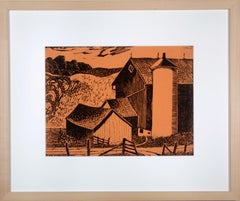
Silo, Sheboygan County
By George Raab
Located in Milwaukee, WI
Linoleum block print with ink additions on orange laid paper Framed 18.88 x 15.88 in Signed in plate
Category

1930s Wisconsin - Prints and Multiples

Materials

Ink, Linocut

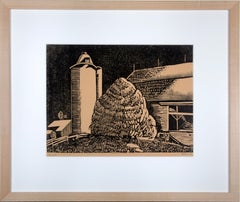
Silo
By George Raab
Located in Milwaukee, WI
9.25 x 12 inches (sheet), 8.75 x 12 inches (block) Linoleum block print on laid paper Framed 16 x 18.88 in Signed to lower margin
Category

1930s Wisconsin - Prints and Multiples

Materials

Linocut

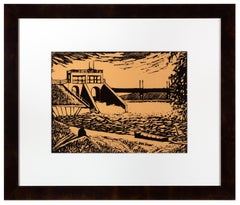
Dam: Decatur, Ill.
By George Raab
Located in Milwaukee, WI
Linoleum block print with ink additions on mustard laid paper 9 x 11.88 inches (sheet), 8.88 x 11.75 (block) Framed 16.82 x 19.75 Signed in plate
Category

1930s Wisconsin - Prints and Multiples

Materials

Ink, Linocut

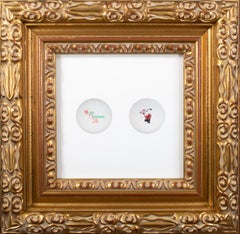
Pair of Christmas Golf Balls gicleé print on watercolor paper
Located in Milwaukee, WI
In this playful gicleé print, the viewer is presented with two golf balls adorned with Christmas-related imagery. The golf ball on the right features Santa ...
Category

2010s Contemporary Wisconsin - Prints and Multiples

Materials

Giclée

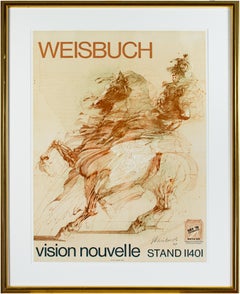
Le Condottiere original signed lithograph poster, knight on horseback 1970s
By Claude Weisbuch
Located in Milwaukee, WI
This poster, produced for the 1978 International Meeting of Fine Art Dealers in Washington, features prominently one of Claude Weisbuch's dynamic images: Le Condottiere. It is an original color lithograph advertising his new works, and is one of only twenty-five that bears the artist's signature in the lower right. In line with Weisbuch's interest in the Renaissance and Baroque in Europe, this image looks back to the early modern period. Condottieri were Italian captains...
Category

1970s Contemporary Wisconsin - Prints and Multiples

Materials

Lithograph

violin player with orchestra early 20th century color lithograph poster
By Charles Kiffer
Located in Milwaukee, WI
Original color lithograph poster by Charles Kiffer depicting a violinist. Signed in plate. 60 1/2" x 44" art 66 1/8" x 50" framed Charles Kiffer, produced numerous lithographs dur...
Category

1930s Wisconsin - Prints and Multiples

Materials

Lithograph

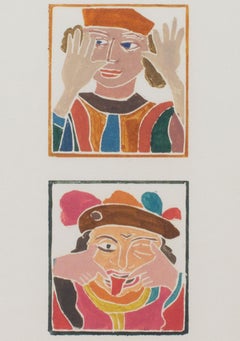
"The Court Jesters, " Two Woodcuts by Andre Derain
By André Derain
Located in Milwaukee, WI
"The Court Jesters" includes two original color woodcuts by Andre Derain. This is from an edition of 200. It features two vignettes of brightly-clad j...
Category

1940s Fauvist Wisconsin - Prints and Multiples

Materials

Woodcut

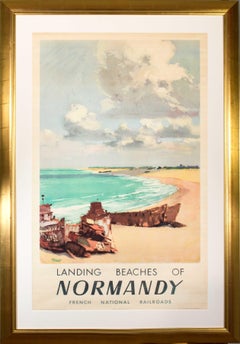
Landing Beaches of Normandy, French National Railroads
Located in Milwaukee, WI
Albert Victor Eugene Brenet was born June 25, 1903 in Harfleur, France, near Le Havre. He died at the age of 102 on July 4, 2005 in Paris. He painted primarily in gouache. Brenet is ...
Category

1940s Wisconsin - Prints and Multiples

Materials

Lithograph

From: Ilsée, Princess of Tripoli Recto: "Eldenias " Verso: "Hilderich "
By Alphonse Mucha
Located in Milwaukee, WI
"From: Ilsée, Princess of Tripoli Recto: "Eldenias" Verso: "Hilderich" is an original color lithograph by Alphonse Mucha. Exquisite double-sided color lithographs from "Ilsee, Princ...
Category

1890s Art Nouveau Wisconsin - Prints and Multiples

Materials

Lithograph

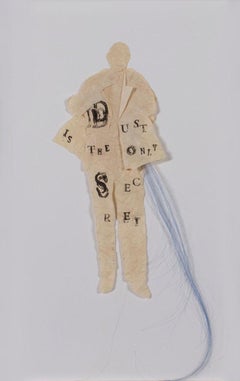
"Listen (Dust is the Only Secret), " Mixed Media signed by Lesley Dill
By Lesley Dill
Located in Milwaukee, WI
"Listen (Dust is the Only Secret)" is an original lithograph with nylon string by Lesley Dill. The artist signed the piece lower left. It depicts the silhouette of a man constructed ...
Category

Early 2000s Contemporary Wisconsin - Prints and Multiples

Materials

Nylon, Mixed Media, Lithograph

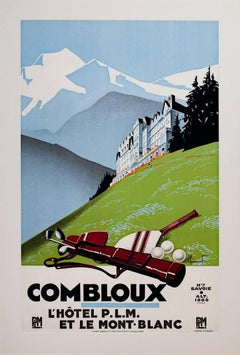
"Combloux (Golfing), " Original Lithograph Poster signed by Pierre Commarmond
By Pierre Commarmond
Located in Milwaukee, WI
"Combloux (Golfing)" is an original lithograph poster by Pierre Commarmond. Combloux is a resort in France where people can surround themselves with nature, leisure, and sport. The artist signed the lithograph stone...
Category

1920s Other Art Style Wisconsin - Prints and Multiples

Materials

Lithograph

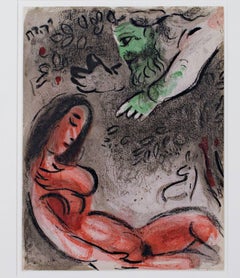
"Eve Incurs God s Displeasure (M. 236), " Original Lithograph by Marc Chagall
By Marc Chagall
Located in Milwaukee, WI
"Eve Incurs God's Displeasure" is an original double sided lithograph by Marc Chagall. On recto the print features the biblical story of Eve being scolded by God for her sin in the G...
Category

1960s Expressionist Wisconsin - Prints and Multiples

Materials

Lithograph

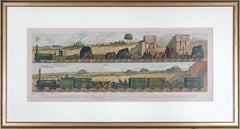
"Traveling on the Liverpool Manchester Railroad, 1831, " Raphael Tuck Son
Located in Milwaukee, WI
"Traveling on the Liverpool & Manchester Railroad, 1831" is a color lithograph by Raphael Tuck & Sons. It depicts two trains carrying various cargo. 8" x 24 1/2" art 17 1/2" x 33 3...
Category

1890s Other Art Style Wisconsin - Prints and Multiples

Materials

Lithograph

"La Visite des Amateurs, " Original Color figurative sketch print signed
By Claude Weisbuch
Located in Milwaukee, WI
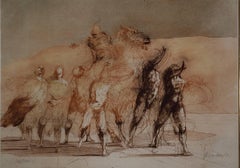
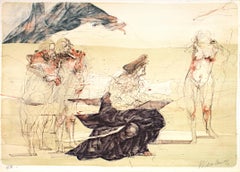
"La Visite des Amateurs" is an original color lithograph by Claude Weisbuch. It is signed in the lower right and editioned "EA" in the lower left. This piece depicts four figures: one artist in black robes, two onlookers, and one female nude model. They appear to be in an endless flat landscape. 22" x 29 7/8" art Claude Weisbuch was born on February 8th, 1927 in Thionville, France. His art includes drawing, painting and lithographs. Inventive and unique with his style he uses color range that is warm and rich in tone, certainly equal to that of Rembrandt. The fluidity of line and creation of motion is even more vigorous that in the work of Daumier or Toulouse Lautrec. His creativeness in composition is awesome and seems to have infinite possibilities of variation and vision. Weisbuch died in 2014. Exhibitions Herve Odermatt Gallery Paris, France Escole de Paris Paris, France David Barnett...
Category

1970s Wisconsin - Prints and Multiples

Materials

Lithograph

I Forgot original etching (A/P)
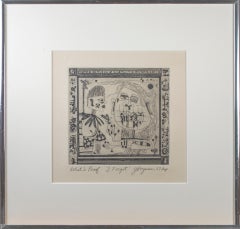
By Joseph Rozman
Located in Milwaukee, WI
Sheet: 9 7/8 x 11 3/8 inches Plate: 5.75 x 5.88 inches Frame: 14 x 14 inches Etching (A/P) Rozman received his BFA (with honors in 1967) and MFA (1969) from UW-Milwaukee, and would...
Category

1960s Wisconsin - Prints and Multiples

Materials

Etching

20th century color lithograph French scene female figures cafe street signed
By Francois Batet
Located in Milwaukee, WI
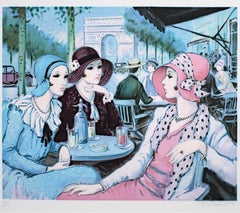
"Terrasse aux Champs Elysees" is an original color lithograph by Francois Batet. The artist signed the piece in the lower right and wrote the edition number (126/200) in the lower le...
Category

1980s Wisconsin - Prints and Multiples

Materials

Lithograph

19th century color lithograph seascape boat ship waves maritime landscape
By Currier Ives
Located in Milwaukee, WI
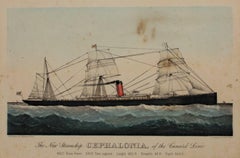
"The New Steamship Cephalonia, of the Cunard Line" is an original hand-colored lithograph by Currier & Ives. It depicts a large sailing steamship. There is a significant stain in the artwork in the upper center. 12" x 16 3/4" art 21" x 26" frame Nathaniel Currier was a tall introspective man with a melancholy nature. He could captivate people with his piercing stare or charm them with his sparkling blue eyes. Nathaniel was born in Roxbury, Massachusetts on March 27th, 1813, the second of four children. His parents, Nathaniel and Hannah Currier, were distant cousins who lived a humble yet spartan life. When Nathaniel was eight years old, tragedy struck. Nathaniel’s father unexpectedly passed away leaving Nathaniel and his eleven-year-old brother Lorenzo to provide for the family. In addition to their mother, Nathaniel and Lorenzo had to care for six-year-old sister Elizabeth and two-year-old brother Charles. Nathaniel worked a series of odd jobs to support the family, and at fifteen, he started what would become a life-long career when he apprenticed in the Boston lithography shop of William and John Pendleton. A Bavarian gentleman named Alois Senefelder invented lithography just 30 years prior to young Nat Currier’s apprenticeship. While under the employ of the brothers Pendleton, Nat was taught the art of lithography by the firm’s chief printer, a French national named Dubois, who brought the lithography trade to America. Lithography involves grinding a piece of limestone flat and smooth then drawing in mirror image on the stone with a special grease pencil. After the image is completed, the stone is etched with a solution of aqua fortis leaving the greased areas in slight relief. Water is then used to wet the stone and greased-ink is rolled onto the raised areas. Since grease and water do not mix, the greased-ink is repelled by the moisture on the stone and clings to the original grease pencil lines. The stone is then placed in a press and used as a printing block to impart black on white images to paper. In 1833, now twenty-years old and an accomplished lithographer, Nat Currier left Boston and moved to Philadelphia to do contract work for M.E.D. Brown, a noted engraver and printer. With the promise of good money, Currier hired on to help Brown prepare lithographic stones of scientific images for the American Journal of Sciences and Arts. When Nat completed the contract work in 1834, he traveled to New York City to work once again for his mentor John Pendleton, who was now operating his own shop located at 137 Broadway. Soon after the reunion, Pendleton expressed an interest in returning to Boston and offered to sell his print shop to Currier. Young Nat did not have the financial resources to buy the shop, but being the resourceful type he found another local printer by the name of Stodart. Together they bought Pendleton’s business. The firm ‘Currier & Stodart’ specialized in "job" printing. They produced many different types of printed items, most notably music manuscripts for local publishers. By 1835, Stodart was frustrated that the business was not making enough money and he ended the partnership, taking his investment with him. With little more than some lithographic stones, and a talent for his trade, twenty-two year old Nat Currier set up shop in a temporary office at 1 Wall Street in New York City. He named his new enterprise ‘N. Currier, Lithographer’ Nathaniel continued as a job printer and duplicated everything from music sheets to architectural plans. He experimented with portraits, disaster scenes and memorial prints, and any thing that he could sell to the public from tables in front of his shop. During 1835 he produced a disaster print Ruins of the Planter's Hotel, New Orleans, which fell at two O’clock on the Morning of the 15th of May 1835, burying 50 persons, 40 of whom Escaped with their Lives. The public had a thirst for newsworthy events, and newspapers of the day did not include pictures. By producing this print, Nat gave the public a new way to “see” the news. The print sold reasonably well, an important fact that was not lost on Currier. Nat met and married Eliza Farnsworth in 1840. He also produced a print that same year titled Awful Conflagration of the Steamboat Lexington in Long Island Sound on Monday Evening, January 18, 1840, by which melancholy occurrence over One Hundred Persons Perished. This print sold out very quickly, and Currier was approached by an enterprising publication who contracted him to print a single sheet addition of their paper, the New York Sun. This single page paper is presumed to be the first illustrated newspaper ever published. The success of the Lexington print launched his career nationally and put him in a position to finally lift his family up. In 1841, Nat and Eliza had their first child, a son they named Edward West Currier. That same year Nat hired his twenty-one year old brother Charles and taught him the lithography trade, he also hired his artistically inclined brother Lorenzo to travel out west and make sketches of the new frontier as material for future prints. Charles worked for the firm on and off over the years, and invented a new type of lithographic crayon which he patented and named the Crayola. Lorenzo continued selling sketches to Nat for the next few years. In 1843, Nat and Eliza had a daughter, Eliza West Currier, but tragedy struck in early 1847 when their young daughter died from a prolonged illness. Nat and Eliza were grief stricken, and Eliza, driven by despair, gave up on life and passed away just four months after her daughter’s death. The subject of Nat Currier’s artwork changed following the death of his wife and daughter, and he produced many memorial prints and sentimental prints during the late 1840s. The memorial prints generally depicted grief stricken families posed by gravestones (the stones were left blank so the purchasers could fill in the names of the dearly departed). The sentimental prints usually depicted idealized portraits of women and children, titled with popular Christian names of the day. Late in 1847, Nat Currier married Lura Ormsbee, a friend of the family. Lura was a self-sufficient woman, and she immediately set out to help Nat raise six-year-old Edward and get their house in order. In 1849, Lura delivered a son, Walter Black Currier, but fate dealt them a blow when young Walter died one year later. While Nat and Lura were grieving the loss of their new son, word came from San Francisco that Nat’s brother Lorenzo had also passed away from a brief illness. Nat sank deeper into his natural quiet melancholy. Friends stopped by to console the couple, and Lura began to set an extra place at their table for these unexpected guests. She continued this tradition throughout their lives. In 1852, Charles introduced a friend, James Merritt Ives, to Nat and suggested he hire him as a bookkeeper. Jim Ives was a native New Yorker born in 1824 and raised on the grounds of Bellevue Hospital where his father was employed as superintendent. Jim was a self-trained artist and professional bookkeeper. He was also a plump and jovial man, presenting the exact opposite image of his new boss. Jim Ives met Charles Currier through Caroline Clark, the object of Jim’s affection. Caroline’s sister Elizabeth was married to Charles, and Caroline was a close friend of the Currier family. Jim eventually proposed marriage to Caroline and solicited an introduction to Nat Currier, through Charles, in hopes of securing a more stable income to support his future wife. Ives quickly set out to improve and modernize his new employer’s bookkeeping methods. He reorganized the firm’s sizable inventory, and used his artistic skills to streamline the firm’s production methods. By 1857, Nathaniel had become so dependent on Jims’ skills and initiative that he offered him a full partnership in the firm and appointed him general manager. The two men chose the name ‘Currier & Ives’ for the new partnership, and became close friends. Currier & Ives produced their prints in a building at 33 Spruce Street where they occupied the third, fourth and fifth floors. The third floor was devoted to the hand operated printing presses that were built by Nat's cousin, Cyrus Currier, at his shop Cyrus Currier & Sons in Newark, NJ. The fourth floor found the artists, lithographers and the stone grinders at work. The fifth floor housed the coloring department, and was one of the earliest production lines in the country. The colorists were generally immigrant girls, mostly German, who came to America with some formal artistic training. Each colorist was responsible for adding a single color to a print. As a colorist finished applying their color, the print was passed down the line to the next colorist to add their color. The colorists worked from a master print displayed above their table, which showed where the proper colors were to be placed. At the end of the table was a touch up artist who checked the prints for quality, touching-in areas that may have been missed as it passed down the line. During the Civil War, demand for prints became so great that coloring stencils were developed to speed up production. Although most Currier & Ives prints were colored in house, some were sent out to contract artists. The rate Currier & Ives paid these artists for coloring work was one dollar per one hundred small folios (a penny a print) and one dollar per one dozen large folios. Currier & Ives also offered uncolored prints to dealers, with instructions (included on the price list) on how to 'prepare the prints for coloring.' In addition, schools could order uncolored prints from the firm’s catalogue to use in their painting classes. Nathaniel Currier and James Merritt Ives attracted a wide circle of friends during their years in business. Some of their more famous acquaintances included Horace Greeley, Phineas T. Barnum, and the outspoken abolitionists Rev. Henry Ward, and John Greenleaf Whittier (the latter being a cousin of Mr. Currier). Nat Currier and Jim Ives described their business as "Publishers of Cheap and Popular Pictures" and produced many categories of prints. These included Disaster Scenes, Sentimental Images, Sports, Humor, Hunting Scenes, Politics, Religion, City and Rural Scenes, Trains, Ships, Fire Fighters, Famous Race Horses, Historical Portraits, and just about any other topic that satisfied the general public's taste. In all, the firm produced in excess of 7500 different titles, totaling over one million prints produced from 1835 to 1907. Nat Currier retired in 1880, and signed over his share of the firm to his son Edward. Nat died eight years later at his summer home 'Lion’s Gate' in Amesbury, Massachusetts. Jim Ives remained active in the firm until his death in 1895, when his share of the firm passed to his eldest son, Chauncey. In 1902, faced will failing health from the ravages of Tuberculosis, Edward Currier sold his share of the firm to Chauncey Ives...
Category

1870s Other Art Style Wisconsin - Prints and Multiples

Materials

Lithograph

"Que Alivio, " Silkscreen on Board signed by Ignacio Iturria
By Ignacio Iturria
Located in Milwaukee, WI
"Que Alivio" is an original silkscreen by Ignacio Iturria. The artist signed the piece in the lower right and wrote the edition number (25/59) in the lower left. This piece depicts a...
Category

1990s Wisconsin - Prints and Multiples

Materials

Board, Screen

Still Thinking About These?

All Recently Viewed