Recognized Dealers Abstract Drawings and Watercolors
to
16
219
104
126
55
68
Overall Width
to
Overall Height
to
1
180
381
1
1
8
18
12
25
19
16
12
11
316
96
35
21
19
3
2
1
316
231
25
1
1
1
1
343
242
212
147
74
25
19
16
16
16
239
14
317
120
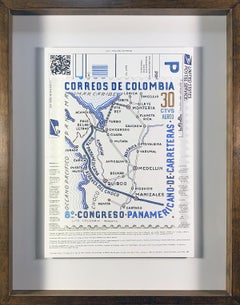
Congreso Panamericano de Carreteras Stamp. From The #15 Series. Abstract Drawing
By Rodrigo Spinel
Located in Miami Beach, FL
Rodrigo Spinel finds in drawing a way to explore the relevance of detail in the construction of images, objects and spaces. The repetition of tiny elements, such as the line in a dra...
Category
2010s Abstract Abstract Drawings and Watercolors
Materials
Paper, India Ink
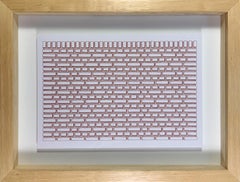
Belga. From The No. 1 Series. Abstract Drawing on paper.
By Rodrigo Spinel
Located in Miami Beach, FL
Rodrigo Spinel finds in drawing a way to explore the relevance of detail in the construction of images, objects and spaces. The repetition of tiny elements, such as the line in a dra...
Category
2010s Abstract Abstract Drawings and Watercolors
Materials
Paper, India Ink
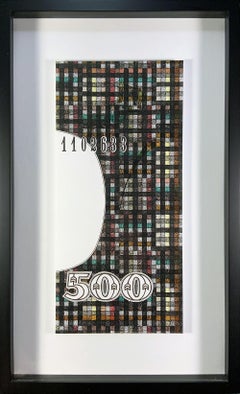
Anverso Derecha 500 Valor Real. From The No 10 Series. Abstract Drawing on paper
By Rodrigo Spinel
Located in Miami Beach, FL
Rodrigo Spinel finds in drawing a way to explore the relevance of detail in the construction of images, objects and spaces. The repetition of tiny elements, such as the line in a dra...
Category
2010s Abstract Abstract Drawings and Watercolors
Materials
Paper, India Ink
Cubos Huecos. From The No. 5 Series. Abstract Drawing on paper.
By Rodrigo Spinel
Located in Miami Beach, FL
Rodrigo Spinel finds in drawing a way to explore the relevance of detail in the construction of images, objects and spaces. The repetition of tiny elements, such as the line in a dra...
Category
2010s Abstract Abstract Drawings and Watercolors
Materials
Paper, India Ink
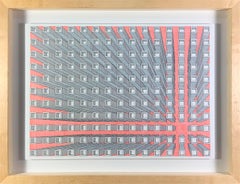
Cubos Transparencia 2. From The Series Terms And Conditions 2.0 Drawing on paper
By Rodrigo Spinel
Located in Miami Beach, FL
As a reflection on the value we give to objects, this series exposes examples of objects that we use daily and for different reasons ended up gaining very high prices. By redrawing t...
Category
2010s Abstract Abstract Drawings and Watercolors
Materials
Paper, India Ink
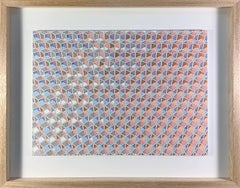
Plano Bloques. From The No. 1 Series. Abstract Drawing on paper.
By Rodrigo Spinel
Located in Miami Beach, FL
Rodrigo Spinel finds in drawing a way to explore the relevance of detail in the construction of images, objects and spaces. The repetition of tiny elements, such as the line in a dra...
Category
2010s Abstract Abstract Drawings and Watercolors
Materials
Paper, India Ink
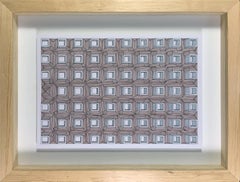
Plano Pirámides 2. From The No. 1 Series. Abstract Drawing on paper.
By Rodrigo Spinel
Located in Miami Beach, FL
Rodrigo Spinel finds in drawing a way to explore the relevance of detail in the construction of images, objects and spaces. The repetition of tiny eleme...
Category
2010s Abstract Abstract Drawings and Watercolors
Materials
Paper, India Ink
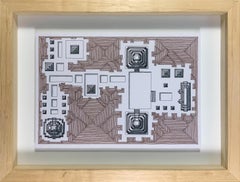
Isodomo Grilla. From The No. 1 Series. Abstract Drawing on paper.
By Rodrigo Spinel
Located in Miami Beach, FL
Rodrigo Spinel finds in drawing a way to explore the relevance of detail in the construction of images, objects and spaces. The repetition of tiny elements, such as the line in a dra...
Category
2010s Abstract Abstract Drawings and Watercolors
Materials
Paper, India Ink
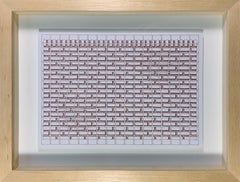
Gotico. From The No. 1 Series. Abstract Drawing on paper.
By Rodrigo Spinel
Located in Miami Beach, FL
Rodrigo Spinel finds in drawing a way to explore the relevance of detail in the construction of images, objects and spaces. The repetition of tiny elements, such as the line in a dra...
Category
2010s Abstract Abstract Drawings and Watercolors
Materials
Paper, India Ink
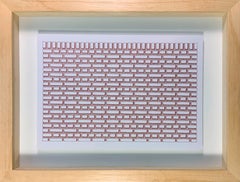
Espiga. From The No. 1 Series. Abstract Drawing on paper.
By Rodrigo Spinel
Located in Miami Beach, FL
As a reflection on the value we give to objects, this series exposes examples of objects that we use daily and for different reasons ended up gaining very high prices. By redrawing t...
Category
2010s Abstract Abstract Drawings and Watercolors
Materials
Paper, India Ink
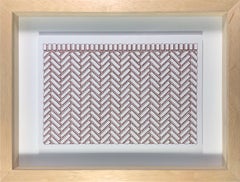
Picos Tercio. From The No. 3 Series. Abstract Drawing on paper.
By Rodrigo Spinel
Located in Miami Beach, FL
Rodrigo Spinel finds in drawing a way to explore the relevance of detail in the construction of images, objects and spaces. The repetition of tiny elements, such as the line in a dra...
Category
2010s Abstract Abstract Drawings and Watercolors
Materials
Paper, India Ink
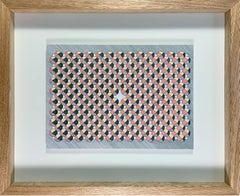
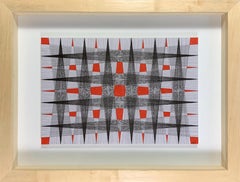
Regular. From The No. 1 Series. Abstract Drawing on paper.
By Rodrigo Spinel
Located in Miami Beach, FL
Rodrigo Spinel finds in drawing a way to explore the relevance of detail in the construction of images, objects and spaces. The repetition of tiny elements, such as the line in a dra...
Category
2010s Abstract Abstract Drawings and Watercolors
Materials
Paper, India Ink
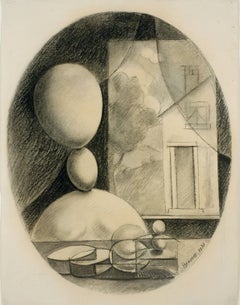
Mlle. Jeanne at the Window, No. II
By Benjamin G. Benno
Located in Fairlawn, OH
Mlle. Jeanne at the Window, No. II
Charcoal on paper, 1933
Signed and dated lower right (see photo)
Illustrated: Gustafson, Zimmerli Museum, 1988, "Benjamin Benno: A Retrospective Ex...
Category
1930s Surrealist Abstract Drawings and Watercolors
Materials
Charcoal
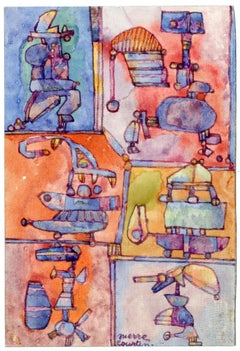
Untitled (six vignettes)
By Pierre Courtin
Located in Fairlawn, OH
Signed lower center edge
Annotated verso: “5 Juin 1966
_____ et de soleil, de et d’oseille”
Image: 6 3/4 x 4 5/8"
Frame: 14 1/2 x 12 3/4"
Finishe...
Category
1960s Abstract Abstract Drawings and Watercolors
Materials
Watercolor, Gouache
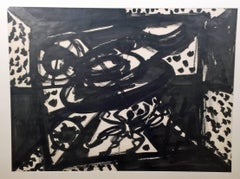
UNTITLED COMPOSITION
By De Hirsch Margules
Located in Portland, ME
Margules, De Hirsh. UNTITLED COMPOSITION, Ink on paper, 1962. Inscribed and signed in pencil within the image. 28 x 37 inches, 711 x 940 mm. In very good condition.
Margules (1899-1...
Category
1960s Abstract Abstract Drawings and Watercolors
Materials
Ink
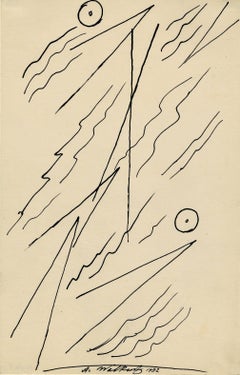
Abstraction
By Abraham Walkowitz
Located in Fairlawn, OH
Untitled Abstraction
Pen and ink on paper, 1932
Signed and dated in ink lower center
Condition: Excellent
Sheet/Image size: 10 3/8 x 6 1/4 inches
Frame size: 16 1/2 x 12 1/2"
Provena...
Category
1930s Abstract Geometric Abstract Drawings and Watercolors
Materials
Ink, Pen
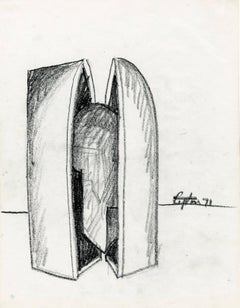
Preliminary drawing for the sculpture Catacombs
By Seymour Lipton
Located in Fairlawn, OH
Preliminary drawing for the sculpture Catacombs
Black crayon on paper, 1971
Signed and dated lower right (see photos)
Provenance:
Estate of the artist
Michael and Alan Lipton (sons)
...
Category
1970s Abstract Geometric Abstract Drawings and Watercolors
Materials
Oil Crayon
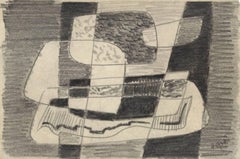
Untitled. Form in Space.
By Werner Drewes
Located in New York, NY
Pencil drawing on paper from 1944. Signed and dated with cypher. Paper size 4 x 6" (10 x 15.1 cm).
Werner Drewes (1899-1985), painter, printmaker, educator and lecturer, was...
Category
1940s Abstract Expressionist Abstract Drawings and Watercolors
Materials
Pencil
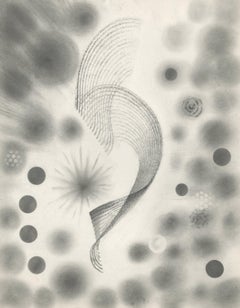
Untitled Abstraction
By Medard P. Klein
Located in Fairlawn, OH
Untitled Abstraction
Graphite on paper, c. 1950
Unsigned
Signed with the estate stamp verso (see photo)
Provenance: Estate of the artist
Inherited by his neighb...
Category
1950s Abstract Abstract Drawings and Watercolors
Materials
Graphite
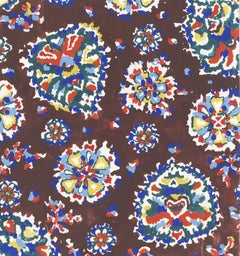
Untitled Fabric Design
By Arthur Litt
Located in Fairlawn, OH
Untitled Fabric Design
Gouache on paper, 1920-1935
Signed with the Atelier Stamp verso (see photo)
Numbered with the Atelier Litt Archive number verso
(see photo) No. 37365
...
Category
1930s Abstract Abstract Drawings and Watercolors
Materials
Gouache
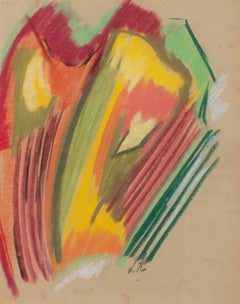
Untitled
By Leon Kelly
Located in Fairlawn, OH
Untitled
Pastel on paper, 1922
Signed with the artist's initials in pencil
Provenance: Estate of the artist
Francis M. Nauman (label)
Private collection, NY
A very early abstract/cubist work by Kelly. Created while the artist was studying with Arthur Carles in Philadelphia.
Leon Kelly (October 21, 1901 – June 28, 1982) was an American artist born in Philadelphia, PA. He is most well known for his contributions to American Surrealism, but his work also encompassed styles such as Cubism, Social Realism, and Abstraction. Reclusive by nature, a character trait that became more exaggerated in the 1940s and later, Kelly's work reflects his determination not to be limited by the trends of his time. His large output of paintings is complemented by a prolific number of drawings that span his career of 50 years. Some of the collections where his work is represented are: The Metropolitan Museum in New York, The Whitney Museum of American Art, the Museum of Modern Art, the Philadelphia Museum of Art, and Boston Public Library.
Biography
Kelly was born in 1901 at home at 1533 Newkirk Street, Philadelphia, PA. He was the only child of Elizabeth (née Stevenson) and Pantaleon L. Kelly. The family resided in Philadelphia where Pantaleon and two of his cousins owned Kelly Brothers, a successful tailoring business. The prosperity of the firm enabled his father to purchase a 144-acre farm in Bucks County PA in 1902, which he named "Rural Retreat" It was here that Pantaleon took Leon to spend every weekend away from the pressures of business and from the disappointments in his failing marriage. Idyllic and peaceful memories of the farm stayed with Leon and embued his work with a love of nature that emerged later in the Lunar Series, in Return and Departure, and in the insect imagery of his Surrealist work. "If anything," he once said,"I am a Pantheist and see a spirit in everything, the grass, the rocks, everything."
At thirteen, Leon left school and began private painting lessons with Albert Jean Adolphe, a teacher at the School of Industrial Art (now the University of the Arts) in Philadelphia. He learned technique by copying the works of the old masters and visiting the Philadelphia Zoo, where he would draw animals. Drawings done in 1916 and 1917 of elephants, snakes and antelope, as well as copies of old master paintings by Holbein and Michelangelo, heralded an impressive emerging talent. In 1917, he studied sculpture with Alexander Portnoff but his studies came to an abrupt halt with the start of World War I. Being too young to enlist, he joined the Quartermaster Corp at the Army Depot in Philadelphia, where he served for more than a year loading ships with supplies and, along with other artists, working on drawings for camouflage.
By 1920, the family's fortunes drastically changed. His father's business had failed due to the introduction of ready made clothing and his marriage, unhappy from the beginning, dissolved. Broken by circumstance Pantaleon left Philadelphia to begin a wandering existence looking for work leaving Leon to support his mother and grandmother. He found a job in 1920 at the Freihofer Baking Company where he worked nights for the next four years. Under these circumstances Leon continued to develop his skills in drawing and painting and learned of the revolutionary developments in art that were taking place in Paris.
During the day he was granted permission to study anatomy at the Philadelphia School of Osteopathy where he dissected a cadaver and perfected his knowledge of the human figure. He also met and studied etching with Earl Horter, a well known illustrator, who had amassed a significant collection of modern art which included work by Brancusi, Matisse, and Cubist works by Picasso and Braque. Among the artists around Horter was Arthur Carles, a charismatic and controversial painter who taught at the Pennsylvania Academy of Fine Arts. Leon enrolled in the Academy in 1922, becoming what Carles described as, "his best student".
In the next three years Leon work ranged from academic studies of plaster casts, to pointillism, to landscapes of Fairmount Park in Philadelphia, as well as a series of pastels showing influences from Matisse to Picasso. Clearly influenced by Earl Horter's collection and Arthur Carles he mastered analytical cubism in works such as The Three Pears, 1923 and 1925 experimented with Purism in Moon Behind the Italian House. In 1925 Kelly was awarded a Cresson Scholarship and on June 14 he left for Europe.
Paris
The first trip to Europe lasted for approximately three and a half months and introduced Kelly to a culture and place where he felt he belonged. Though he returned to the Academy in the Fall, he left for Europe again a few months later to begin a four-year stay in Paris. He moved into an apartment at 19 rue Daguerre in Paris and began an existence intellectually rich but in creature comforts, very poor. "I kept a cinderblock over the drain in the kitchen sink to keep the rats out of the apartment" he once explained. He frequented the cafes making acquaintances with Henry Miller, James Joyce and the critic Félix Fénéon as well as others. His days were split between copying old master paintings in the Louvre and pursuing modernist ideas that were swirling through the work of all the artists around him. The Lake, 1926 and Interior of the Studio, 1927, now in the Newark Museum.
Patrons during this time were the police official Leon Zamaran, a collector of Courbets, Lautrecs and others, who began collecting Kelly's work. Another was Alfred Barnes of the Barnes Collection in Philadelphia.
In 1929 Kelly married a young French woman, Henriette D'Erfurth. She appears frequently in paintings and drawings done between 1928 and the early 1930s.
Philadelphia
The stock market crash of 1929 made it impossible to continue living in Paris and Kelly and Henriette returned to Philadelphia in 1930. He rented a studio on Thompson Street and began working and participating in shows in the city's galleries. Work from 1930 to 1940 showed continuing influences and experimentation with the themes and techniques acquired in Paris as well as a brief foray into Social Realism. The Little Gallery of Contemporary Art purchased the Absinthe Drinker...
Category
1920s Abstract Abstract Drawings and Watercolors
Materials
Pastel

$4,000
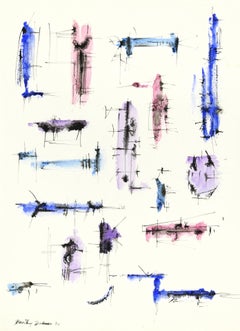
The Pinks and the Blues
By Dorothy Dehner
Located in Fairlawn, OH
The Pinks and the Blues
Watercolor, pen and ink on paper, 1954
Signed and dated in ink lower left, titled in pencil verso.
Provenance: Gift of the Artist
Privat...
Category
1950s Abstract Abstract Drawings and Watercolors
Materials
Watercolor
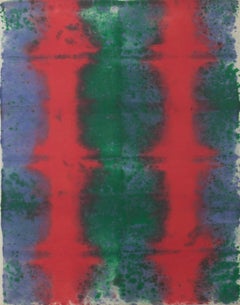
Untitled
By Laddie John Dill
Located in Fairlawn, OH
Untitled
Watercolor on paper, c. 1971
Unsigned
From the collection of Ileana Sonnabend (1914-2007)
Laddie John Dill, a Los Angeles artist, had his first solo exhibition in New York C...
Category
1970s Abstract Abstract Drawings and Watercolors
Materials
Watercolor
Untitled (Purple and Yellow)
By Gene Davis
Located in Fairlawn, OH
Untitled (Purple and Yellow)
Pastel on paper, 1981
Signed and dated lower right
Provenance:
Collection of Jan Cowles
Jan Cowles was married to Gardner Cowles owner of Cowles Media Company (1935–1998) which owned newspapers, magazines and information publishing company based in Minneapolis, Minnesota in the United States. The company operated Cowles Business Media, Cowles Creative Publishing, and Cowles Enthusiast Media units.
Owners of the Minneapolis Star-Tribune from 1935 to 1998, other newspapers owned at one time by Cowles Media and its affiliates included the Des Moines Register, the Buffalo Courier...
Category
1980s Abstract Abstract Drawings and Watercolors
Materials
Pastel

Preliminary drawing for the sculpture Diadem
By Seymour Lipton
Located in Fairlawn, OH
Preliminary drawing for the sculpture Diadem
Black Crayon on paper, 1957
Signed and dated lower left
The preliminary drawing for the 1957 sculpture of the same name in the collection of the Baltimore Museum of Art...
Category
1950s Abstract Abstract Drawings and Watercolors
Materials
Crayon
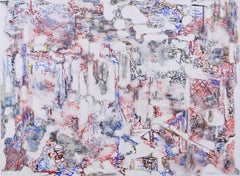
Untitled
By Matthew Kolodziej
Located in Fairlawn, OH
Untitled
Watercolor, cut out and construction on paper, 2013
Signed and dated in pencil lower right
Condition: Excellent
Image size: 22 x 30 inches
Frame size: 30 x 37 inches
Archiv...
Category
2010s Contemporary Abstract Drawings and Watercolors
Materials
Watercolor
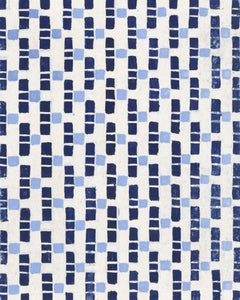
Untitled Fabric Design
By Arthur Litt
Located in Fairlawn, OH
Untitled Fabric Design
Gouache on paper, 1920-1935
Signed with the Atelier Stamp verso (see photo)
Numbered with the Atelier Litt Archive number verso
(see photo) No. 24680
Co...
Category
1930s Abstract Abstract Drawings and Watercolors
Materials
Gouache
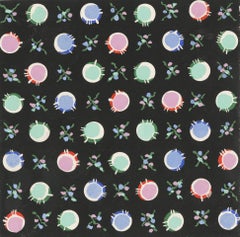
Untitled Fabric Design
By Arthur Litt
Located in Fairlawn, OH
Untitled Fabric Design
Gouache on paper, 1920-1935
Signed with the Atelier Stamp verso (see photo)
Numbered with the Atelier Litt Archive number verso
(see photo)No. 26190
Con...
Category
1930s Abstract Abstract Drawings and Watercolors
Materials
Gouache
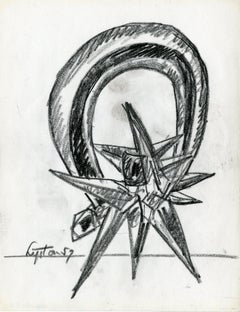
Preliminary drawing for a sculpture
By Seymour Lipton
Located in Fairlawn, OH
Preliminary drawing for a sculpture
Black crayon on paper, 1959
Signed and dated middle right (see photo)
A rare 1950's AbEx drawing.
Provenance:
Estate of the artist
Michael and Ala...
Category
1950s Abstract Abstract Drawings and Watercolors
Materials
Crayon
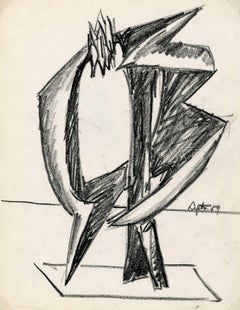
Bauhaus Inspired Black
White Drawing "Radial Form 01" by Artist Paarshav Shah
Located in Chicago, IL
Bauhaus inspire, black and white, Abstract Geometric, Architectural, deconstructionist drawing by Chicago artist and architect Paarshav Shah. Signed Paarshav Shah, on reverse. Artwo...
Category
21st Century and Contemporary Bauhaus Abstract Drawings and Watercolors
Materials
Ink, Paper
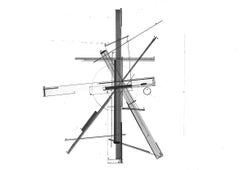
Untitled (Abstraction)
By Charles Harris ( Beni Kosh )
Located in Fairlawn, OH
aka Beni Kosh
Untitled (Abstraction)
Watercolor on paper, 1970's
Unsigned
Ben Kosh Estate Stamp verso, No. 754
Condition: Very good
Sheet size: 10 5/8 x 14 9/16 inches
Provenance: Estate the Artist
Bingham & Vance, Shaker Heights...
Category
1970s Abstract Abstract Drawings and Watercolors
Materials
Watercolor
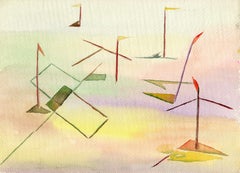
PLUM NELLIE - BEAR HUG
By Robert Reed
Located in Portland, ME
Reed, Robert (American, 1938-2014). PLUM NELLIE, BEAR HUG. Mixed media on paper, 1979. Titled, signed, dated, and further inscribed in the margin below the image. 22 1/2 x 34 1/2 inc...
Category
1970s Abstract Drawings and Watercolors
Materials
Watercolor
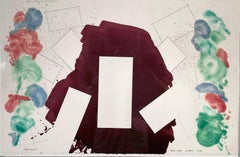
Minimalist abstract turquoise ink and dye painting on paper
By Sohan Qadri
Located in NEW YORK, NY
Sohan Qadri
Circumabulation II, 2002
Ink
dye on paper
39 x 27 inches
SQ620[stg]
Artist, poet and Tantric guru Sohan Qadri (1932-2011) is one of the only internationally acclai...
Category
Early 2000s Abstract Abstract Drawings and Watercolors
Materials
Paper, Dye, Ink
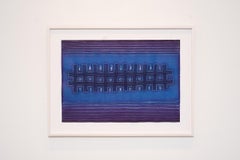
Study for Old Canal, Red and Blue (Rockaway, Morris Canal)
By Oscar Florianus Bluemner
Located in New York, NY
Oscar Bluemner was a German and an American, a trained architect who read voraciously in art theory, color theory, and philosophy, a writer of art criticism both in German and English, and, above all, a practicing artist. Bluemner was an intense man, who sought to express and share, through drawing and painting, universal emotional experience. Undergirded by theory, Bluemner chose color and line for his vehicles; but color especially became the focus of his passion. He was neither abstract artist nor realist, but employed the “expressional use of real phenomena” to pursue his ends. (Oscar Bluemner, from unpublished typescript on “Modern Art” for Camera Work, in Bluemner papers, Archives of American Art, Smithsonian Institution, as cited and quoted in Jeffrey R. Hayes, Oscar Bluemner [1991], p. 60. The Bluemner papers in the Archives [hereafter abbreviated as AAA] are the primary source for Bluemner scholars. Jeffrey Hayes read them thoroughly and translated key passages for his doctoral dissertation, Oscar Bluemner: Life, Art, and Theory [University of Maryland, 1982; UMI reprint, 1982], which remains the most comprehensive source on Bluemner. In 1991, Hayes published a monographic study of Bluemner digested from his dissertation and, in 2005, contributed a brief essay to the gallery show at Barbara Mathes, op. cit.. The most recent, accessible, and comprehensive view of Bluemner is the richly illustrated, Barbara Haskell, Oscar Bluemner: A Passion for Color, exhib. cat. [New York: Whitney Museum of American Art, 2005.])
Bluemner was born in the industrial city of Prenzlau, Prussia, the son and grandson of builders and artisans. He followed the family predilection and studied architecture, receiving a traditional and thorough German training. He was a prize-winning student and appeared to be on his way to a successful career when he decided, in 1892, to emigrate to America, drawn perhaps by the prospect of immediate architectural opportunities at the Chicago World’s Fair, but, more importantly, seeking a freedom of expression and an expansiveness that he believed he would find in the New World.
The course of Bluemner’s American career proved uneven. He did indeed work as an architect in Chicago, but left there distressed at the formulaic quality of what he was paid to do. Plagued by periods of unemployment, he lived variously in Chicago, New York, and Boston. At one especially low point, he pawned his coat and drafting tools and lived in a Bowery flophouse, selling calendars on the streets of New York and begging for stale bread. In Boston, he almost decided to return home to Germany, but was deterred partly because he could not afford the fare for passage. He changed plans and direction again, heading for Chicago, where he married Lina Schumm, a second-generation German-American from Wisconsin. Their first child, Paul Robert, was born in 1897. In 1899, Bluemner became an American citizen. They moved to New York City where, until 1912, Bluemner worked as an architect and draftsman to support his family, which also included a daughter, Ella Vera, born in 1903.
All the while, Oscar Bluemner was attracted to the freer possibilities of art. He spent weekends roaming Manhattan’s rural margins, visiting the Bronx, Brooklyn, Queens, and New Jersey, sketching landscapes in hundreds of small conté crayon drawings. Unlike so many city-based artists, Bluemner did not venture out in search of pristine countryside or unspoiled nature. As he wrote in 1932, in an unsuccessful application for a Guggenheim Fellowship, “I prefer the intimate landscape of our common surroundings, where town and country mingle. For we are in the habit to carry into them our feelings of pain and pleasure, our moods” (as quoted by Joyce E. Brodsky in “Oscar Bluemner in Black and White,” p. 4, in Bulletin 1977, I, no. 5, The William Benton Museum of Art, Storrs, Connecticut). By 1911, Bluemner had found a powerful muse in a series of old industrial towns, mostly in New Jersey, strung along the route of the Morris Canal.
While he educated himself at museums and art galleries, Bluemner entered numerous architectural competitions. In 1903, in partnership with Michael Garven, he designed a new courthouse for Bronx County. Garven, who had ties to Tammany Hall, attempted to exclude Bluemner from financial or artistic credit, but Bluemner promptly sued, and, finally, in 1911, after numerous appeals, won a $7,000 judgment.
Barbara Haskell’s recent catalogue reveals more details of Bluemner’s architectural career than have previously been known. Bluemner the architect was also married with a wife and two children. He took what work he could get and had little pride in what he produced, a galling situation for a passionate idealist, and the undoubted explanation for why he later destroyed the bulk of his records for these years. Beginning in 1907, Bluemner maintained a diary, his “Own Principles of Painting,” where he refined his ideas and incorporated insights from his extensive reading in philosophy and criticism both in English and German to create a theoretical basis for his art. Sometime between 1908 and 1910, Bluemner’s life as an artist was transformed by his encounter with the German-educated Alfred Stieglitz, proprietor of the Little Galleries of the Photo-Secession at 291 Fifth Avenue. The two men were kindred Teutonic souls. Bluemner met Stieglitz at about the time that Stieglitz was shifting his serious attention away from photography and toward contemporary art in a modernist idiom. Stieglitz encouraged and presided over Bluemner’s transition from architect to painter. During the same period elements of Bluemner’s study of art began to coalesce into a personal vision. A Van Gogh show in 1908 convinced Bluemner that color could be liberated from the constraints of naturalism. In 1911, Bluemner visited a Cézanne watercolor show at Stieglitz’s gallery and saw, in Cézanne’s formal experiments, a path for uniting Van Gogh’s expressionist use of color with a reality-based but non-objective language of form.
A definitive change of course in Bluemner’s professional life came in 1912. Ironically, it was the proceeds from his successful suit to gain credit for his architectural work that enabled Bluemner to commit to painting as a profession. Dividing the judgment money to provide for the adequate support of his wife and two children, he took what remained and financed a trip to Europe. Bluemner traveled across the Continent and England, seeing as much art as possible along the way, and always working at a feverish pace. He took some of his already-completed work with him on his European trip, and arranged his first-ever solo exhibitions in Berlin, Leipzig, and Elberfeld, Germany. After Bluemner returned from his study trip, he was a painter, and would henceforth return to drafting only as a last-ditch expedient to support his family when his art failed to generate sufficient income.
Bluemner became part of the circle of Stieglitz artists at “291,” a group which included Marsden Hartley, John Marin, and Arthur Dove. He returned to New York in time to show five paintings at the 1913 Armory Show and began, as well, to publish critical and theoretical essays in Stieglitz’s journal, Camera Work. In its pages he cogently defended the Armory Show against the onslaught of conservative attacks. In 1915, under Stieglitz’s auspices, Bluemner had his first American one-man show at “291.” Bluemner’s work offers an interesting contrast with that of another Stieglitz architect-turned-artist, John Marin, who also had New Jersey connections.
The years after 1914 were increasingly uncomfortable. Bluemner remained, all of his life, proud of his German cultural legacy, contributing regularly to German language journals and newspapers in this country. The anti-German sentiment, indeed mania, before and during World War I, made life difficult for the artist and his family. It is impossible to escape the political agenda in Charles Caffin’s critique of Bluemner’s 1915 show. Caffin found in Bluemner’s precise and earnest explorations of form, “drilled, regimented, coerced . . . formations . . . utterly alien to the American idea of democracy” (New York American, reprinted in Camera Work, no. 48 [Oct. 1916], as quoted in Hayes, 1991, p. 71).
In 1916, seeking a change of scene, more freedom to paint, and lower expenses, Bluemner moved his family to New Jersey, familiar terrain from his earlier sketching and painting. During the ten years they lived in New Jersey, the Bluemner family moved around the state, usually, but not always, one step ahead of the rent collector. In 1917, Stieglitz closed “291” and did not reestablish a Manhattan gallery until 1925. In the interim, Bluemner developed relationships with other dealers and with patrons. Throughout his career he drew support and encouragement from art cognoscenti who recognized his talent and the high quality of his work. Unfortunately, that did not pay the bills. Chronic shortfalls were aggravated by Bluemner’s inability to sustain supportive relationships. He was a difficult man, eternally bitter at the gap between the ideal and the real. Hard on himself and hard on those around him, he ultimately always found a reason to bite the hand that fed him.
Bluemner never achieved financial stability. He left New Jersey in 1926, after the death of his beloved wife, and settled in South Braintree, Massachusetts, outside of Boston, where he continued to paint until his own death in 1938. As late as 1934 and again in 1936, he worked for New Deal art programs designed to support struggling artists. Bluemner held popular taste and mass culture in contempt, and there was certainly no room in his quasi-religious approach to art for accommodation to any perceived commercial advantage. His German background was also problematic, not only for its political disadvantages, but because, in a world where art is understood in terms of national styles, Bluemner was sui generis, and, to this day, lacks a comfortable context.
In 1933, Bluemner adopted Florianus (definitively revising his birth names, Friedrich Julius Oskar) as his middle name and incorporated it into his signature, to present “a Latin version of his own surname that he believed reinforced his career-long effort to translate ordinary perceptions into the more timeless and universal languages of art” (Hayes 1982, p. 189 n. 1). In 1939, critic Paul Rosenfeld, a friend and member of the Stieglitz circle, responding to the difficulty in categorizing Bluemner, perceptively located him among “the ranks of the pre-Nazi German moderns” (Hayes 1991, p. 41). Bluemner was powerfully influenced in his career by the intellectual heritage of two towering figures of nineteenth-century German culture, Johann Wolfgang von Goethe and Georg Wilhelm Friedrich Hegel. A keen student of color theory, Bluemner gave pride of place to the formulations of Goethe, who equated specific colors with emotional properties. In a November 19, 1915, interview in the German-language newspaper, New Yorker Staats-Zeitung (Abendblatt), he stated:
I comprehend the visible world . . . abstract the primary-artistic . . . and after these elements of realty are extracted and analyzed, I reconstruct a new free creation that still resembles the original, but also . . . becomes an objectification of the abstract idea of beauty.
The first—and most conspicuous mark of this creation is . . . colors which accord with the character of things, the locality . . . [and which] like the colors of Cranach, van der Weyden, or Durer, are of absolute purity, breadth, and luminosity. . . . I proceed from the psychological use of color by the Old Masters . . . [in which] we immediately recognize colors as carriers of “sorrow and joy” in Goethe’s sense, or as signs of human relationship. . . . Upon this color symbolism rests the beauty as well as the expressiveness, of earlier sacred paintings. Above all, I recognize myself as a contributor to the new German theory of light and color, which expands Goethe’s law of color through modern scientific means (as quoted in Hayes 1991, p. 71).
Hayes has traced the global extent of Bluemner’s intellectual indebtedness to Hegel (1991, pp. 36–37). More specifically, Bluemner made visual, in his art, the Hegelian world view, in the thesis and antithesis of the straight line and the curve, the red and the green, the vertical and the horizontal, the agitation and the calm. Bluemner respected all of these elements equally, painting and drawing the tension and dynamic of the dialectic and seeking ultimate reconciliation in a final visual synthesis. Bluemner was a keen student of art, past and present, looking, dissecting, and digesting all that he saw. He found precedents for his non-naturalist use of brilliant-hued color not only in the work Van Gogh and Cezanne, but also in Gauguin, the Nabis, and the Symbolists, as well as among his contemporaries, the young Germans of Der Blaue Reiter.
Bluemner was accustomed to working to the absolute standard of precision required of the architectural draftsman, who adjusts a design many times until its reality incorporates both practical imperatives and aesthetic intentions. Hayes describes Bluemner’s working method, explaining how the artist produced multiple images playing on the same theme—in sketch form, in charcoal, and in watercolor, leading to the oil works that express the ultimate completion of his process (Hayes, 1982, pp. 156–61, including relevant footnotes). Because of Bluemner’s working method, driven not only by visual considerations but also by theoretical constructs, his watercolor and charcoal studies have a unique integrity. They are not, as is sometimes the case with other artists, rough preparatory sketches. They stand on their own, unfinished only in the sense of not finally achieving Bluemner’s carefully considered purpose.
The present charcoal drawing is one of a series of images that take as their starting point the Morris Canal as it passed through Rockaway, New Jersey. The Morris Canal industrial towns that Bluemner chose as the points of departure for his early artistic explorations in oil included Paterson with its silk mills (which recalled the mills in the artist’s childhood home in Elberfeld), the port city of Hoboken, Newark, and, more curiously, a series of iron ore mining and refining towns, in the north central part of the state that pre-dated the Canal, harkening back to the era of the Revolutionary War. The Rockaway theme was among the original group of oil paintings that Bluemner painted in six productive months from July through December 1911 and took with him to Europe in 1912. In his painting journal, Bluemner called this work Morris Canal at Rockaway N.J. (AAA, reel 339, frames 150 and 667, Hayes, 1982, pp. 116–17), and exhibited it at the Galerie Fritz Gurlitt in Berlin in 1912 as Rockaway N. J. Alter Kanal. After his return, Bluemner scraped down and reworked these canvases. The Rockaway picture survives today, revised between 1914 and 1922, as Old Canal, Red and Blue (Rockaway River) in the collection of the Hirshhorn Museum and Sculpture Garden, Smithsonian Institution, Washington D. C. (color illus. in Haskell, fig. 48, p. 65).
For Bluemner, the charcoal expression of his artistic vision was a critical step in composition. It represented his own adaptation of Arthur Wesley’s Dow’s (1857–1922) description of a Japanese...
Category
20th Century American Modern Abstract Drawings and Watercolors
Materials
Paper, Charcoal
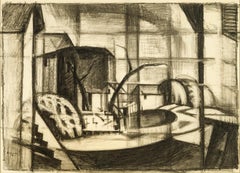
Surrealist landscape with organic shapes
By Charles Harris ( Beni Kosh )
Located in Fairlawn, OH
Surrealist landscape with organic shapes
Watercolor on paper, 1960-1970
Signed CE Harris lower right corner (see photo)
Stamped with the artist’s estate stamp verso (see photo)
Reference: Beni Kosh Collection Estate Stamp #705
Provenance: Estate of the artist
A wonderful example by one of the few African American Surrealist painters.
“An African-American born Charles E. Harris, the name under which he painted until the early 1960s when he took the name of Kosh. His paintings span the period 1949-71, and reflect abstract and surreal figurative subjects which include Cleveland street scenes, jazz clubs, and depictions of Christ.”
Courtesy of Rachel Davis Fine Art
“Beni E. Kosh was born as Charles Elmer Harris, in Cleveland Ohio. He changed his name in the 1960’s, which translates to “Son of Ethiopia”. He rarely exhibited or sold his work and was affiliated with the African-American artists’ “Sho-nuff Art Group” and the Karamu House and studied under Cleveland artist Paul Travis. His style is very diverse and he experimented with Cubism, portraiture and abstractions in series. His paintings span from 1949 – 1971, and reflect abstract and surreal figurative subjects, which include Cleveland street scenes, jazz clubs, and depictions of Christ. He received little recognition during his lifetime and was only “rediscovered” literally days after his death when hundreds of his paintings were rescued by an art dealer.”
(Courtesy Pennsylvania Art...
Category
20th Century Surrealist Abstract Drawings and Watercolors
Materials
Watercolor
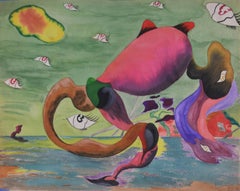
Untitled
By Leon Kelly
Located in Fairlawn, OH
Untitled
Pastel on paper, 1922
Initialed lower right (see photo)
Exhibited: Francis Nauman, Leon Kelly: Draftsman Extraordinaire, New York, April 4 - May 23, 2014.
Condition: excellent
Image size: 11 8 7/8 inches
Frame size: 18 1/4 x 16 1/4 inches
Provenance: Estate of the artist
The Orange Chicken...
Category
1920s Abstract Abstract Drawings and Watercolors
Materials
Pastel
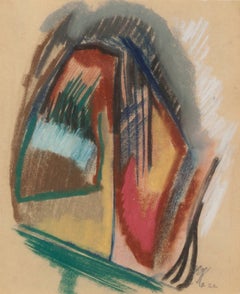
$4,000
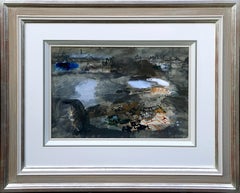
A Pembrokeshire Landscape
By John Piper CH
Located in Belgravia, London, London
Mixed media
Paper size: 14 x 21 inches
Framed size: 28.25 x 35 inches
Signed lower right
Category
20th Century Abstract Abstract Drawings and Watercolors
Materials
Paper, Mixed Media, Watercolor
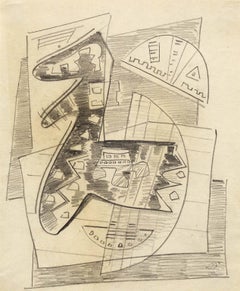
Dancing Motion.
By Werner Drewes
Located in New York, NY
Drawing, 1938. Signed and dated with the artist cypher. Paper size 7 9/16 x 6 1/4" (19.3 x 15.8 cm).
Werner Drewes (1899-1985), painter, printmaker, educator and lecturer, wa...
Category
1930s Abstract Expressionist Abstract Drawings and Watercolors
Materials
Pencil
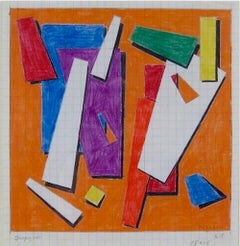
Preliminary drawing for the painting entitled Trapezoids
Located in Fairlawn, OH
Ink, graphite and colored pencil on graph paper
The final composition measured 28 x 28 inches
Annotated #615 in the lower right corner of the sheet
Provenance: Francine Seders Galler...
Category
1950s Abstract Abstract Drawings and Watercolors
Materials
Color Pencil
Cobwebs and Rocks
By Benjamin G. Benno
Located in Fairlawn, OH
Cobwebs and Rocks
Watercolor, 1940
Signed, dated, and copyrighted lower right
Exhibited: Zimmerli Art Museum, Benjamin Benno: Retrospective Exhibition, 1988
Illustrated: Gustafson, Zimmerli Museum: Benjamin Benno: Retrospective Exhibition, 1988
Color Plate 14 copy copy of the catalog accompanies the watercolor
Condition: excellent
Image size: 14 3/4 x 21 inches
Provenance: Estate of the Artist
Ruth O...
Category
1940s Surrealist Abstract Drawings and Watercolors
Materials
Watercolor
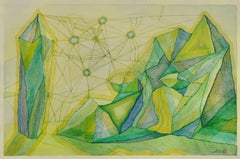
UNTITLED ABSTRACTION
By Rolph Scarlett
Located in Portland, ME
Scarlett, Rolph (American, born Canada, 1889-1984). UNTITLED ABSTRACTION. Colored pencils on paper, not dated. Signed, lower right. 5 5/8 x 8 1/4 inches (image), 6 x 8 3/4 inches, (s...
Category
Mid-20th Century Abstract Drawings and Watercolors
Materials
Color Pencil
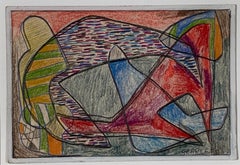
UNTITLED
By Jean Tinguely
Located in New York, NY
felt tip pen on paper.
Category
Mid-20th Century Modern Abstract Drawings and Watercolors
Materials
Paper, Crayon
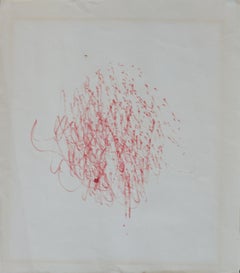
Untitled
By Jack Davidson
Located in Houston, TX
Jack Davidson
Untitled, 2008
Gouache on paper
22.5 x 15 in (57.2 x 38.1 cm)
JPHB 5682
Category
21st Century and Contemporary Abstract Geometric Abstract Drawings and W...
Materials
Paper, Gouache
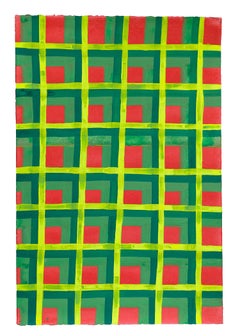
TWO BIRDS
By Morris Graves
Located in Portland, ME
Graves, Morris (American 1910-2001). TWO BIRDS. Brown Ink on tan
paper, not dated. Although signed in pencil, lower right, the signature proved fugitive dur...
Category
Mid-20th Century Animal Drawings and Watercolors
Materials
Pencil
$3,500
Oscillation
By Roy Ahlgren
Located in Fairlawn, OH
11 color screen print
Signed, dated, titled and numberedin pencil
Edition: 150 (9/150)
Provenance:
Estate of the Artist
By Decent
Category
1980s Op Art Abstract Prints
Materials
Screen
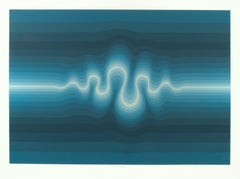
Untitled
By Laddie John Dill
Located in Fairlawn, OH
Untitled
Watercolor on paper, c. 1971
Unsigned
Provenance: From the collection of Ileana Sonnabend (1914-2007)
Laddie John Dill, a Los Angeles artist, had his first solo exhibition i...
Category
1970s Abstract Abstract Drawings and Watercolors
Materials
Watercolor
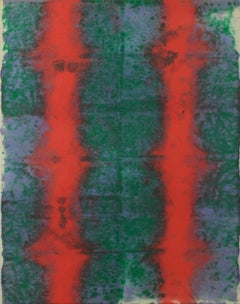
Sea Forms
By Ray H. French
Located in Fairlawn, OH
Signed and dated center right edge; Annotated "48" lower left
Provenance:
Estate of the artist
One of a suite of 120 drawings that the artist did in 1 month.
Most were sold thro...
Category
1960s Abstract Abstract Drawings and Watercolors
Materials
Ink, Pen
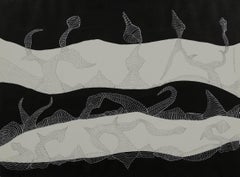
Untitled
By Peter Marks
Located in Fairlawn, OH
Unsigned
Provenance:
Estate of the artist
Peter Marks (1935 -2010)
Peter Marks was born in New York City on January 18, 1935. A lifetime New Yorker, Marks graduated from the Hig...
Category
21st Century and Contemporary Abstract Abstract Drawings and Watercolors
Materials
Crayon
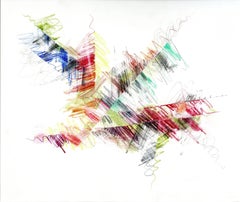
$450 Sale Price
50% Off
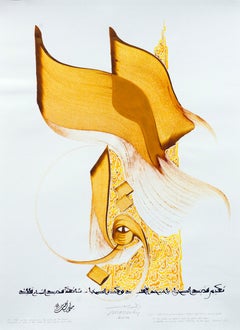
Vibrant yellow contemporary Islamic calligraphy on paper
By Hassan Massoudy
Located in NEW YORK, NY
Hassan Massoudy
Untitled ("You fled to the desert on the wings of the heart. The desert is lost in the realm of your heart" - Rumi 13th c.), 2014
Ink and pigment on paper
29½ x 21¾ i...
Category
2010s Abstract Expressionist Abstract Drawings and Watercolors
Materials
Ink, Pigment
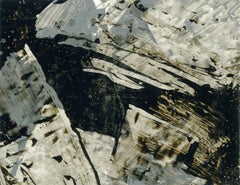
Untitled Abstraction
By Peter Marks
Located in Fairlawn, OH
Unsigned as per usual
Enamel paint and ink on tracing paper
Provenance:
Estate of the Artist
Peter Marks (1935 -2010)
Peter Marks was born in New York City on January 18, 1935....
Category
Early 2000s Abstract Abstract Drawings and Watercolors
Materials
India Ink
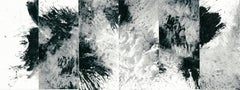
$450 Sale Price
50% Off
Untitled (Six Chinese Style Wash Drawings)
By Peter Marks
Located in Fairlawn, OH
Unsigned
Provenance:
Estate of the artist
Sheet: 14 x 17";
Image: 4 7/16 x 12"
Peter Marks (1935 -2010)
Peter Marks was born in New York City on January 18, 1935. A lifetime ...
Category
Early 2000s Abstract Abstract Drawings and Watercolors
Materials
Ink
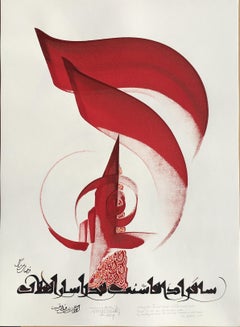
Vibrant red contemporary Islamic calligraphy on paper
By Hassan Massoudy
Located in NEW YORK, NY
Hassan Massoudy
Untitled ("Travel if you aim for certain value. By traveling the skies the crescent becomes a full moon" - Ibn Qalaqis 12th c.), 2009
Ink and pigment on paper
29½ x 2...
Category
2010s Abstract Expressionist Abstract Drawings and Watercolors
Materials
Ink, Pigment
Vibrant blue contemporary Islamic calligraphy on paper
By Hassan Massoudy
Located in NEW YORK, NY
Hassan Massoudy
Untitled ("O friend do not go to the flower garden, the flower garden is within you" - Kabir 16th c.), 2013
Ink and pigment on paper
29½ x 21¾ inches
74.9 x 55.1 cm
H...
Category
2010s Abstract Expressionist Abstract Drawings and Watercolors
Materials
Ink, Pigment
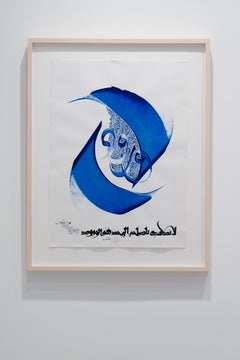
Untitled (Blue Orange)
By Anna Kunz
Located in San Francisco, CA
Anna Kunz was born in Chicago, Illinois, where she continues to live and work. After receiving her BFA from the Art Institute of Chicago, Kunz went on to complete her MFA at Northwes...
Category
2010s Figurative Drawings and Watercolors
Materials
Paper, Pastel, Ink, Gouache
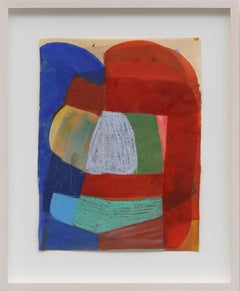
Untitled
By Carlos Alfonzo
Located in New York, NY
Untitled (1994) by artist Carlos Alfonzo, featured in "The Queer Show, Part I" at Hal Bromm Gallery. The work is on a paper scroll and is signed by the artist in the bottom left corn...
Category
1990s Abstract Drawings and Watercolors
Materials
Ink
$25,000
Composition
By Karl Peter Röhl
Located in Zug, CH
Abstract composition on paper by Karl Peter Röhl.
Category
20th Century Modern Abstract Drawings and Watercolors
Materials
India Ink, Aquatint
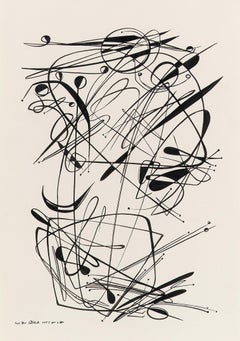
The Dead Tiger
By Dorothy Dehner
Located in Fairlawn, OH
The Dead Tiger
Ink and watercolor on paper, 1955
Signed and dated in ink (see photo)
Condition: Aging to the entire sheet (it's 78 years old)
Image/Sheet size: 18 1/4 x 23 inches
On...
Category
1950s Abstract Abstract Drawings and Watercolors
Materials
Watercolor
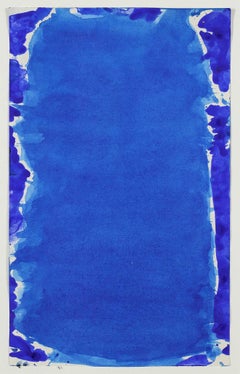
Untitled SF50-001
By Sam Francis
Located in London, GB
Sam Francis (1923-1994) was an American abstract painter, born in San Mateo, California. He turned to painting in the aftermath of World War II whilst recovering from severe injuries...
Category
Mid-20th Century Abstract Expressionist Abstract Drawings and Watercolors
Materials
Egg Tempera
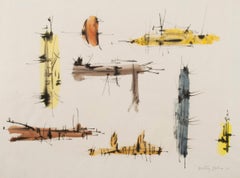
Composition
By Karl Peter Röhl
Located in Zug, CH
Abstract composition on paper by Karl Peter Röhl.
Category
20th Century Modern Abstract Drawings and Watercolors
Materials
India Ink, Watercolor
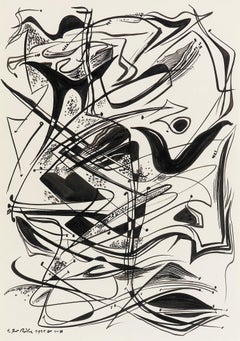
Dinton Folly (Now Part of Dinton Castle)
By John Piper CH
Located in Belgravia, London, London
Mixed Media on paper
Paper size: 14.75 x 21.5 inches
Framed size: 26 x 32 inches
Category
21st Century and Contemporary Impressionist Abstract Drawings and Waterc...
Materials
Paper, Mixed Media, Watercolor