Art by Medium: Lithograph
to
7,023
15,752
6,156
9,216
3,559
1,768
Overall Width
to
Overall Height
to
68
5,757
28,233
2,419
357
386
1,031
1,159
1,410
3,592
4,813
6,411
3,465
1,375
45
10,467
4,346
3,496
2,522
1,546
820
799
601
491
128
92
92
58
55
24,455
11,355
561
15,605
8,389
5,484
5,255
4,670
3,693
3,409
2,432
2,219
2,141
1,943
1,349
1,304
1,284
1,151
992
972
853
849
744
36,479
185,108
97,553
79,573
78,312
832
776
331
297
268
3,661
11,910
19,140
13,630
Medium: Lithograph
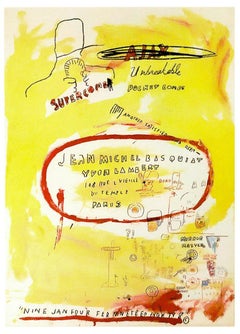
Jean Michel Basquiat Supercomb (Exhibition Poster)
Located in Englishtown, NJ
This wonderful litho was designed by Jean Michel Basquiat for his exhibition at Yvon Lambert, Paris in 1988.
Super vibrant colors with many interesting details of images and words co...
Category
21st Century and Contemporary Contemporary Art by Medium: Lithograph
Materials
Lithograph

$1,350 Sale Price
46% Off
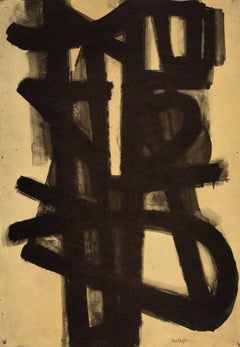
Pierre Soulages, Plate No. 2, from Painters of Today, 1962 (after)
Located in Southampton, NY
This exquisite heliogravure after Pierre Soulages (1919–2022), titled Planche No. 2 (Plate No. 2), from the folio Pierre Soulages, Peintres d'aujourd'hui (Pierre Soulages, Painters o...
Category
1960s Modern Art by Medium: Lithograph
Materials
Lithograph
$1,996 Sale Price
20% Off
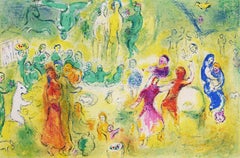
Wedding Feast in the Nymphs
Grotto, from: Daphnis and Chloe - Wedding 1960
By Marc Chagall
Located in London, GB
This is an original lithograph in colours by Marc Chagall.
It is one of the 42 original lithographs that were included in Chagall's seminal work 'Daphnis and Chloe'.
This work was pr...
Category
1960s Art by Medium: Lithograph
Materials
Lithograph
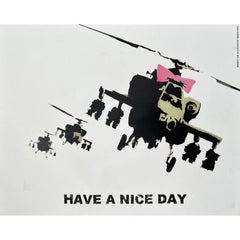
Have A Nice Day (Happy Choppers) - Sleazenation Poster by Banksy
By Banksy
Located in Dubai, Dubai
A2 Poster originally published via London based culture mag Sleazenation in March 2003. This is a very rare unfolded version.
2003
Medium: Offset Lithograph
Edition: Unknown
Size...
Category
Early 2000s Street Art Art by Medium: Lithograph
Materials
Lithograph
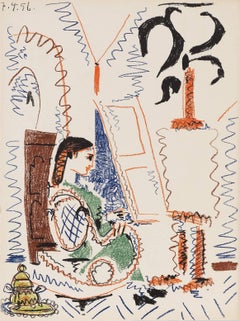
L
atelier de Cannes
Located in OPOLE, PL
Pablo Picasso (1881-1973) - L'atelier de Cannes (The Cannes Studio)
From the book 'Dans l'atelier de Picasso'
Unsigned and unnumbered as issued.
Lithograph from 1956.
The edition...
Category
20th Century Modern Art by Medium: Lithograph
Materials
Lithograph
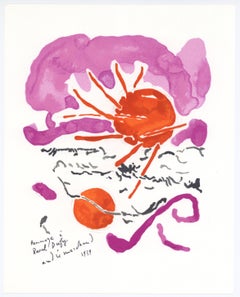
(after) André Marchand - lithograph
Located in Henderson, NV
Medium: lithograph (after the watercolor). André Marchand was one of the artists who contributed compositions to Marcelle Oury's "Lettre à mon peintre" in homage to Raoul Dufy. This ...
Category
1960s Art by Medium: Lithograph
Materials
Lithograph
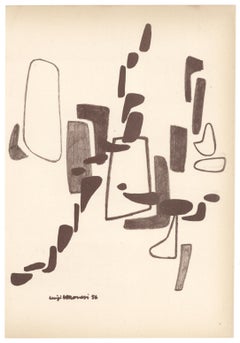
original lithograph
Located in Henderson, NV
Medium: original lithograph. Printed in 1956 for the second volume (1956-57) of the very rare Documenti d'Arte d'Oggi, published in Milan by Groupe Espace. Size: 12 1/2 x 8 1/2 inche...
Category
1950s Art by Medium: Lithograph
Materials
Lithograph
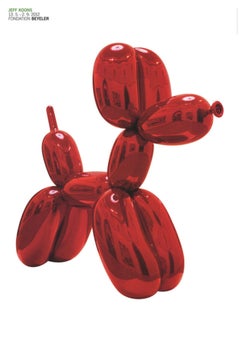
Balloon Dog (Red) By Jeff Koons
By Jeff Koons
Located in Dubai, Dubai
Balloon Dog (Red)
By Jeff Koons
2012
Medium: Offset Lithograph
Paper Size: 50.25 x 35.25 inches ( 128 x 90 cm )
Image Size: 50.25 x 35.25 inches ( 128 x 90 cm )
Edition Size: 1000
Category
2010s Contemporary Art by Medium: Lithograph
Materials
Lithograph, Offset
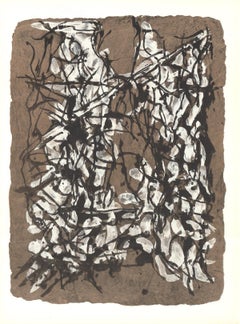
Jean-Paul Riopelle
Composition 160-XIV
1966- Lithograph
Located in Brooklyn, NY
Paper Size: 15 x 11 inches ( 38.1 x 27.94 cm )
Image Size: 15 x 11 inches ( 38.1 x 27.94 cm )
Framed: No
Condition: A-: Near Mint, very light signs of handling
Additional Details: C...
Category
1960s Art by Medium: Lithograph
Materials
Lithograph
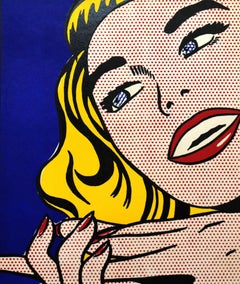
$60 Sale Price
20% Off
Roy Lichtenstein Girl from 1¢ Life
Located in Washington, DC
Artist: Roy Lichtenstein
Title: Girl
Portfolio: 1¢ Life
Medium: Lithograph on white wove paper
Date: 1964
Edition: 2000
Frame Size: 20 3/4" x 18 5/8"
Sheet Size: 16 1/4" x 11 1/2"
Im...
Category
1960s Pop Art Art by Medium: Lithograph
Materials
Lithograph
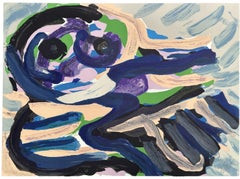
Karel Appel Sitting in a Landscape Pencil Signed Limited Edition Lithograph
By Karel Appel
Located in Rochester Hills, MI
Karel Appel
Sitting in a Landscape
Animals and monsters series
Year 1979
Print - Lithograph 22.0'' x 30'' inches
Edition: signed in pencil and marked 160/160
Karel Appel is one of t...
Category
1970s Abstract Expressionist Art by Medium: Lithograph
Materials
Lithograph
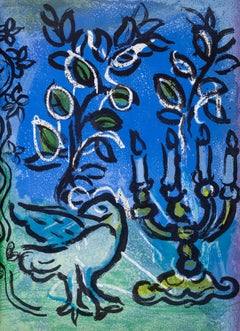
Marc Chagall, The Candelabrum, from The Jerusalem Windows, 1962
By Marc Chagall
Located in Southampton, NY
This exquisite lithograph by Marc Chagall (1887–1985), titled Le Chandelier (The Candelabrum), from the album Marc Chagall, The Jerusalem Windows, originates from the 1962 edition pu...
Category
1960s Expressionist Art by Medium: Lithograph
Materials
Lithograph
$956 Sale Price
20% Off
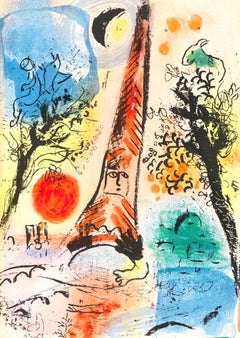
Marc Chagall, Vision of Paris, from The Lithographs of Chagall, 1960
By Marc Chagall
Located in Southampton, NY
This exquisite lithograph by Marc Chagall (1887–1985), titled Vision de Paris (Vision of Paris), from the album The Lithographs of Chagall, Volume I, originates from the 1960 edition...
Category
1960s Expressionist Art by Medium: Lithograph
Materials
Lithograph
$956 Sale Price
20% Off
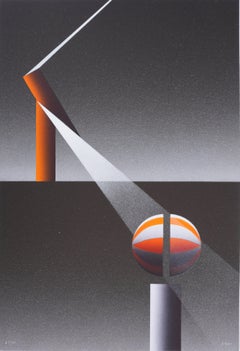
Diffraction (Transformation) - Original lithograph, Handsigned and numbered /100
Located in Paris, IDF
Julio LE PARC (1928-)
Diffraction (Transformation), 1988
Original lithograph, airbrush and stencil
Signed in ink
Numbered / 100 copies
On black wove paper, 56 x 38 cm (c. 22 x 15 in...
Category
1980s American Modern Art by Medium: Lithograph
Materials
Lithograph, Stencil
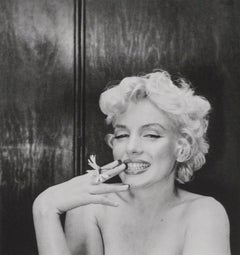
Cecil Beaton, Marilyn Monroe, from Electa Editrice Portfolios, 1981 (after)
By Cecil Beaton
Located in Southampton, NY
This exquisite heliogravure after Sir Cecil Beaton (1904–1980), titled Marilyn Monroe, from the folio Cecil Beaton, Electa Editrice Portfolios, 1981, originates from the 1981 edition...
Category
1980s Modern Art by Medium: Lithograph
Materials
Lithograph
$716 Sale Price
20% Off
On the Road (10 sandwiches with bread and salami), SIGNED by Ed Ruscha (Ed. 100)
By Ed Ruscha
Located in New York, NY
Ed Ruscha
On the Road (10 sandwiches with bread and salami) (Hand signed and dated by Ed Ruscha), 2010
Letterpress on paper with die-cut photograph tipped in by hand to a blind debos...
Category
2010s Pop Art Art by Medium: Lithograph
Materials
Mixed Media, Etching, Lithograph, Offset

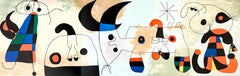
Joan Miro, The Three Blues, from Derriere le miroir, 1951
By Joan Miró
Located in Southampton, NY
This exquisite lithograph by Joan Miro (1893–1983), titled Les Trois Bleus (The Three Blues), from the folio Derriere le miroir, Sur Quatre Murs (Behind the Mirror, On Four Walls), N...
Category
1950s Surrealist Art by Medium: Lithograph
Materials
Lithograph
$1,996 Sale Price
20% Off
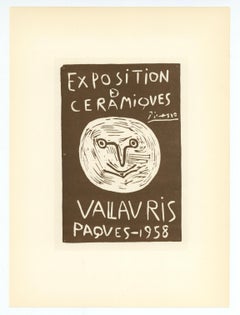
"Ceramiques Paques" lithograph poster
Located in Henderson, NV
Medium: lithograph (after the original lithograph poster). During the late 1940's and throughout the 1950's, Picasso created a series of posters at the atelier of Mourlot Freres. The...
Category
1950s Art by Medium: Lithograph
Materials
Lithograph
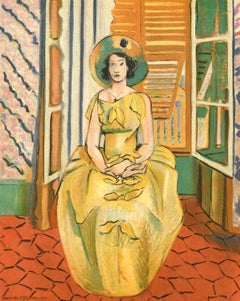
Henri Matisse, Miss L.L., from Portraits by Henri Matisse, 1954 (after)
Located in Southampton, NY
This exquisite lithograph after Henri Matisse (1869–1954), titled Mademoiselle L.L. (Miss L.L.), from the album Portraits par Henri Matisse (Portraits by Henri Matisse), originates f...
Category
1950s Fauvist Art by Medium: Lithograph
Materials
Lithograph
$716 Sale Price
20% Off
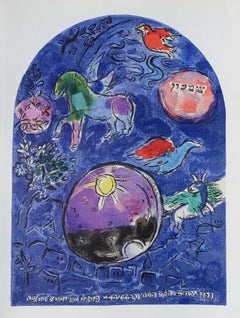
Bible : Simeon, Angels and Red Birds - Lithograph (Mourlot 1962)
By Marc Chagall
Located in Paris, IDF
Marc CHAGALL (1887-1985)
Bible : Simeon, Angels and Red Birds, 1962
Lithograph (Mourlot workshop)
Unsigned
On Vellum 32.5 x 24 cm
INFORMATION: Lithograph produced by Chagall in 196...
Category
1960s Modern Art by Medium: Lithograph
Materials
Lithograph
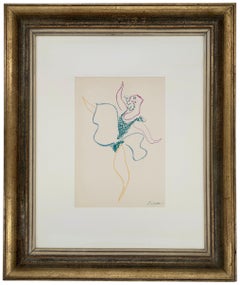
Pablo Picasso - Le Ballet (The Ballet Dancer) - lithograph, Framed
Located in London, GB
Pablo Picasso
The Ballet Dancer, 1954
Lithograph on paper
32 x 24 cm - sheet
55.5 x 49.5 cm - Framed
unknown edition size
Printed signature
Reference: Bloch #767 and Mourlot #259
Fr...
Category
1950s Modern Art by Medium: Lithograph
Materials
Lithograph
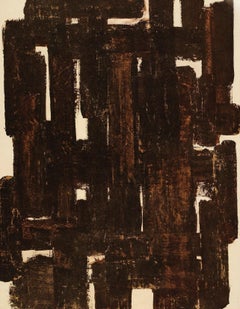
Pierre Soulages, Plate No. 5, from Painters of Today, 1962 (after)
Located in Southampton, NY
This exquisite heliogravure after Pierre Soulages (1919–2022), titled Planche No. 5 (Plate No. 5), from the folio Pierre Soulages, Peintres d'aujourd'hui (Pierre Soulages, Painters o...
Category
1960s Modern Art by Medium: Lithograph
Materials
Lithograph
$1,996 Sale Price
20% Off
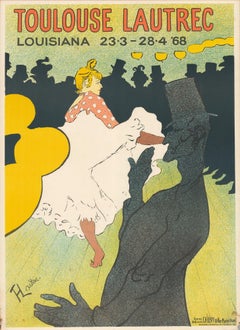
Moulin Rouge Lithograph Poster by Toulouse-Lautrec, 1968, Unframed
Located in Brooklyn, NY
Original exhibition poster featuring the work of Henri de Toulouse-Lautrec, created for the Louisiana Museum in Humlebæk, Denmark. Printed in Paris by Mourlot, the poster captures on...
Category
1960s Art by Medium: Lithograph
Materials
Lithograph
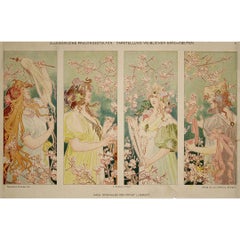
Allegorische Frauengestalten Circa 1900 Original print by Privat-Livemont
Located in PARIS, FR
“Allegorische Frauengestalten – Darstellung Weiblicher Handarbeiten” is a breathtaking circa 1900 original lithograph by renowned Belgian Art Nouveau artist Privat-Livemont. This ele...
Category
Early 1900s Art by Medium: Lithograph
Materials
Paper, Lithograph
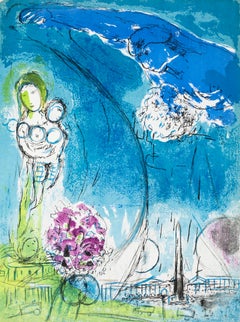
Marc Chagall, Place de la Concorde, from Verve, Revue Artistique, 1953
By Marc Chagall
Located in Southampton, NY
This exquisite lithograph by Marc Chagall (1887–1985), titled Place de la Concorde (Place de la Concorde), from Verve, Revue Artistique et Litteraire, Vol. VII, No. 27–28, originates...
Category
1950s Expressionist Art by Medium: Lithograph
Materials
Lithograph
$1,436 Sale Price
20% Off
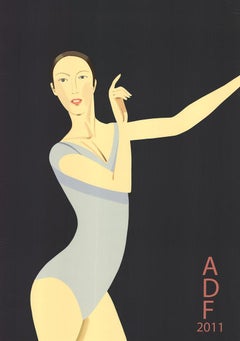
After Alex Katz - Sarah-American Dance Festival - 2011 Serigraph
By Alex Katz
Located in Brooklyn, NY
Sku: CB1512
Artist: Alex Katz
Title: Sarah-American Dance Festival
Year: 2011
Signed: No
Medium: Serigraph
Paper Size: 48 x 34 inches ( 121.92 x 86.36 cm )
Image Size: 48 x 34 inches...
Category
2010s Pop Art Art by Medium: Lithograph
Materials
Lithograph
$720 Sale Price
20% Off
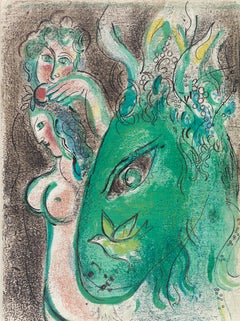
Marc Chagall, Paradise II, from Drawings for the Bible, 1956
By Marc Chagall
Located in Southampton, NY
This exquisite lithograph by Marc Chagall (1887–1985), titled Paradis II (Paradise II), from Marc Chagall, Dessins Pour La Bible (Drawings for the Bible), Verve: Revue Artistique et Litteraire, Vol. VIII, No. 33–34, originates from the September 1956 issue published by Editions de la revue Verve, Paris, under the direction of Teriade, Editeur, Paris, and printed by Mourlot Freres, Paris, 1956. This luminous composition portrays the splendor of Paradise, filled with light, harmony, and divine presence. Through his poetic use of line and ethereal symbolism, Chagall evokes the spiritual unity between humanity and the divine, capturing the purity and joy of creation. Paradis II reflects the artist’s enduring belief in love and beauty as transcendent forces, transforming a biblical vision into a universal celebration of faith and imagination. The work forms part of Chagall’s celebrated series of lithographs and drawings created for Dessins Pour La Bible, a monumental project uniting art, scripture, and mysticism in one of the artist’s most important achievements.
Executed as a lithograph on velin du Marais paper, this work measures 14 x 10.5 inches (35.56 x 26.67 cm). Unsigned and unnumbered as issued. The edition exemplifies the superb craftsmanship of the Mourlot Freres atelier, renowned for its collaborations with the greatest modern masters of the 20th century.
Artwork Details:
Artist: Marc Chagall (1887–1985)
Title: Paradis II (Paradise II), from Marc Chagall, Dessins Pour La Bible (Drawings for the Bible), Verve: Revue Artistique et Litteraire, Vol. VIII, No. 33–34, September 1956
Medium: Lithograph on velin du Marais paper
Dimensions: 14 x 10.5 inches (35.56 x 26.67 cm)
Inscription: Unsigned and unnumbered as issued
Date: 1956
Publisher: Editions de la revue Verve, Paris, under the direction of Teriade, Editeur, Paris
Printer: Mourlot Freres, Paris
Catalogue raisonne references: Cain, Julien, and Fernand Mourlot. Chagall Lithographe. Andre Sauret, Editeur, 1960, illustrations 117–46. Cramer, Patrick, and Meret Meyer. Marc Chagall: Catalogue Raisonne Des Livres Illustrés. P. Cramer ed., 1995, illustration 25.
Condition: Well preserved, consistent with age and medium
Provenance: From Marc Chagall, Dessins Pour La Bible (Drawings for the Bible), Verve: Revue Artistique et Litteraire, Vol. VIII, No. 33–34, published by Editions de la revue Verve, Paris, 1956
Notes:
Excerpted from the album (translated from French), This double issue of Verve is dedicated to the full reproduction in heliogravure of the one hundred-five plates etched by Marc Chagall, between 1930 and 1955, for the illustration of the Bible. The artist composed especially for the present work, sixteen lithographs in color and twelve in black, as well as the cover and the title page. This volume was completed and printed on September 10, 1956, by the Master Printers Draeger Freres for heliogravure, and by Mourlot Freres for lithography.
About the Publication:
Marc Chagall, Dessins Pour La Bible (Drawings for the Bible), published as Verve Vol. VIII, No. 33–34 in September 1956, represents one of the crowning achievements of Chagall’s lifelong dialogue with the sacred. Conceived and directed by the visionary publisher Teriade and printed by the master lithographers Mourlot Freres, the issue features thirty-four color lithographs and numerous black-and-white drawings inspired by biblical figures and stories. Chagall’s works for this edition unite text and image in a luminous meditation on divine creation, moral struggle, and spiritual renewal, imbued with his signature dreamlike symbolism and radiant color. Produced in postwar Paris, this landmark publication reaffirmed the enduring union of art and faith, establishing Dessins Pour La Bible as one of the most important illustrated works of the 20th century.
About the Artist:
Marc Chagall (1887–1985) was a Belarus-born French painter, printmaker, and designer whose visionary imagination, radiant color, and deeply poetic symbolism made him one of the most beloved and influential artists of the 20th century. Rooted in the imagery of his Jewish heritage and the memories of his childhood in Vitebsk, Chagall’s art wove together themes of faith, love, folklore, and fantasy with a dreamlike modern sensibility. His unique style—merging elements of Cubism, Fauvism, Expressionism, and Surrealism—defied categorization, transforming ordinary scenes into lyrical meditations on memory and emotion. Influenced by Russian icon painting, medieval religious art, and the modern innovations of artists such as Pablo Picasso, Henri Matisse, and Georges Braque, Chagall developed a profoundly personal visual language filled with floating figures, vibrant animals, musicians, and lovers that symbolized the transcendent power of imagination and love. During his early years in Paris, he became an integral part of the Ecole de Paris circle, forming friendships with Amedeo Modigliani, Fernand Leger, and Sonia Delaunay, and his creative spirit resonated with that of his peers and successors—Alexander Calder, Alberto Giacometti, Salvador Dali, Joan Miro, Wassily Kandinsky, Marcel Duchamp, and Man Ray—artists who, like Chagall, sought to push the boundaries of perception, emotion, and form. Over a prolific career that spanned painting, printmaking, stained glass, ceramics, and stage design, Chagall brought an unparalleled poetic sensibility to modern art, infusing even the most abstract subjects with human warmth and spiritual depth. His works are held in the most prestigious museums around the world, including the Museum of Modern Art, the Centre Pompidou, the Tate, and the Guggenheim, where they continue to inspire generations of artists and collectors. The highest price ever paid for a Marc Chagall artwork is approximately $28.5 million USD, achieved in 2017 at Sotheby’s New York for Les Amoureux (1928).
Marc Chagall Paradis...
Category
1950s Expressionist Art by Medium: Lithograph
Materials
Lithograph
$1,276 Sale Price
20% Off
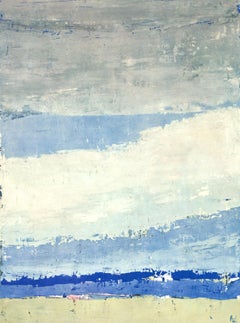
Nicolas de Stael, Sky at Honfleur, from Painters of Today, 1960 (after)
By Nicolas de Staël
Located in Southampton, NY
This exquisite heliogravure after Nicolas de Stael (1914–1955), titled Ciel a Honfleur (Sky at Honfleur), from the folio Nicolas de Stael, Peintres d'aujourd'hui (Nicolas de Stael, P...
Category
1960s Modern Art by Medium: Lithograph
Materials
Lithograph
$716 Sale Price
20% Off
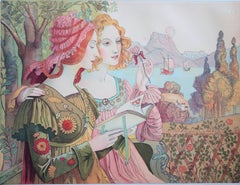
Golden Age (Légende dorée) - Original lithograph, 1897
By Armand Point
Located in Paris, IDF
Armand Point
Golden Age (Légende dorée), 1897
Original lithograph (Champenois workshop)
Printed signature in the plate
On vellum, 40 x 31 cm (c. 16 x 12 in)
INFORMATION: Lithograph...
Category
1890s Art Nouveau Art by Medium: Lithograph
Materials
Lithograph
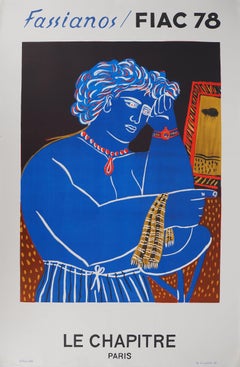
Greece : Thinker with a Watch (FIAC 1978) - Original lithograph, 1978
Located in Paris, IDF
Alekos FASSIANOS
Thinker with a Watch (FIAC 1978), 1978
Original lithograph
Printed signature in the plate
On heavy paper 92 x 60 cm (c. 37 x 24 ...
Category
1970s Modern Art by Medium: Lithograph
Materials
Lithograph
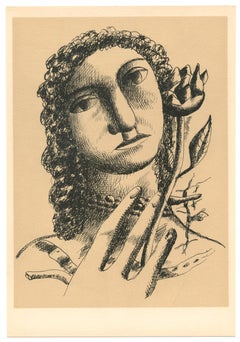
"Jeune fille a la fleur" lithograph
Located in Henderson, NV
Medium: lithograph (after the drawing). Printed in 1952 by Mourlot Freres on Arches paper and published in Paris by Louis Carre in an edition of 1000 for the rare "La Figure dans L'O...
Category
1950s Art by Medium: Lithograph
Materials
Lithograph
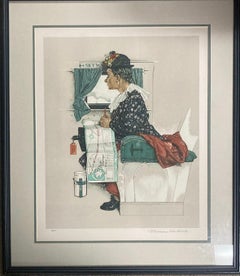
"First Airplane Ride"
Located in Warren, NJ
Norman Rockwell "First Airplane Ride" lithograph signed artist proof. In good condition measures 33x27
Category
20th Century Art by Medium: Lithograph
Materials
Lithograph
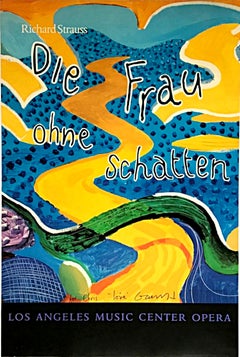
The Golden Road, Los Angeles Music Center Opera print (Hand Signed
inscribed)
Located in New York, NY
David Hockney
Richard Strauss: Los Angeles Music Center Opera (Hand Signed and Inscribed), 1993
Offset Lithograph (hand signed and inscribed by David Hockney)
30 × 20 inches
Signed a...
Category
1990s Pop Art Art by Medium: Lithograph
Materials
Lithograph, Offset
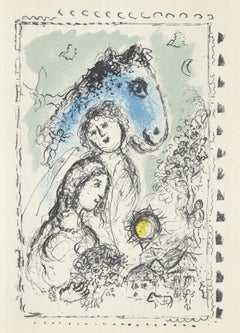
Marc Chagall, Blue Horse with Couple, from Derriere le Miroir, 1982
By Marc Chagall
Located in Southampton, NY
This exquisite lithograph by Marc Chagall (1887–1985), titled Cheval bleu au couple (Blue Horse with Couple), originates from the historic 1982 folio Derriere le Miroir, No. 250, Hommage a Aime et Marguerite Maeght (Tribute to Aime and Marguerite Maeght). Published by Maeght Editeur, Paris, under the direction of Aime Maeght, and printed by Imprimerie Moderne du Lion, Paris, this vibrant composition reflects Chagall’s lyrical fusion of color, dream, and devotion. In Cheval bleu au couple, ethereal figures and a radiant blue horse float within a luminous space of poetic imagination, evoking love, memory, and transcendence. The image captures the artist’s timeless ability to unite fantasy and emotion within the expressive language of modernism.
Executed on velin paper, this lithograph measures 15 x 11 inches (38.1 x 27.9 cm). As issued, it is unsigned and unnumbered, consistent with the authorized publication format. The edition exemplifies Chagall’s mastery of color lithography and his lifelong exploration of faith, folklore, and the human spirit.
Artwork Details:
Artist: Marc Chagall (1887–1985)
Title: Cheval bleu au couple (Blue Horse with Couple), from Derriere le Miroir, No. 250, Hommage a Aime et Marguerite Maeght (Tribute to Aime and Marguerite Maeght), 1982
Medium: Lithograph on velin paper
Dimensions: 15 x 11 inches (38.1 x 27.9 cm)
Inscription: Unsigned and unnumbered, as issued
Date: 1982
Publisher: Maeght Editeur, Paris
Printer: Imprimerie Moderne du Lion, Paris
Catalogue raisonne references: Chagall, Marc, et al. Chagall Lithographe VI, 1980–1985. Andre Sauret, Editeur, 1986, illustration 993. Cramer, Patrick, and Meret Meyer. Marc Chagall: Catalogue Raisonne Des Livres Illustres. P. Cramer ed., 1995, illustration 113.
Condition: Well preserved, consistent with age and medium
Provenance: From the 1982 folio Derriere le Miroir, No. 250, published by Maeght Editeur, Paris
Notes:
Excerpted from the folio (translated from French), This special issue of Derriere le Miroir was designed and defined by Aime Maeght in the fall of 1980. He envisioned its publication as a celebration with which artists and writers published since 1946 were to be associated. He also chose Francois Chapon, president of the Reverdy Committee, to write the presentation. This Derriere le Miroir number 250 took the form, after its disappearance on September 5, 1981, of a tribute to Aime Maeght and his wife Marguerite Maeght who died four years earlier. 24 artists agreed to create an original graphic work for this issue which includes the general table of all issues as well as excerpts from texts by 32 writers. Finished printing on June 2, 1982 on the presses of the l'Imprimerie moderne du Lion in Paris. CL examples were printed on velin d'Arches, numbered from I to CL, and some non-commercial examples constituting the original edition.
About the Publication:
Derriere le Miroir (translated as "Behind the Mirror") was an iconic French art periodical published from 1946 to 1982 by Maeght Editeur, one of the most influential art publishers of the 20th century. Founded by Aime Maeght in Paris, the publication was conceived as a visual and literary collaboration between leading modern artists, poets, and critics. Each issue functioned as both an exhibition catalogue and a work of art in itself—featuring original lithographs printed directly from the artists' stones or plates, alongside essays, poems, and critical commentary. Over the course of 36 years, Derriere le Miroir produced more than 250 issues and showcased an extraordinary roster of artists including Henri Matisse, Marc Chagall, Joan Miro, Georges Braque, Alexander Calder, Fernand Leger, Pierre Bonnard, Alberto Giacometti, Eduardo Chillida, Ellsworth Kelly, Francis Bacon, Paul Rebeyrolle, Claude Garache, Antoni Tapies, Bram van Velde, Pierre Alechinsky, Pol Bury, Shusaku Arakawa, and Gerard Titus-Carmel. Printed in the ateliers of Mourlot, Arte, and Imprimerie Moderne du Lion, the periodical set new standards for quality in color lithography, combining fine art printing with elegant typography and poetic text. Beyond its visual brilliance, Derriere le Miroir also became a cultural chronicle of postwar European modernism. Each issue coincided with exhibitions held at Galerie Maeght, providing a collectible and widely accessible record of groundbreaking shows. Its integration of image, text, and philosophy created a dialogue between art and literature that elevated the modern art book to new aesthetic heights. Today, Derriere le Miroir remains one of the most sought-after and historically significant art publications, prized by collectors and scholars alike for its craftsmanship, influence, and its role in defining the visual language of 20th-century modernism. The Maeght Foundation in Saint-Paul-de-Vence continues to honor this legacy through exhibitions and archival preservation of the series, affirming Derriere le Miroir's enduring place in the history of modern art and fine art publishing.
About the Artist:
Marc Chagall (1887–1985) was a Belarus-born French painter, printmaker, and designer whose visionary use of color and poetic symbolism made him one of the most beloved and influential artists of the 20th century. Rooted in the rich imagery of his Jewish heritage and childhood in Vitebsk, Chagall’s dreamlike compositions fused memory, folklore, faith, and romance with the expressive innovations of modern art. His work evolved alongside and in dialogue with the great modern masters—Pablo Picasso, Henri Matisse, Alexander Calder, Salvador Dali, Joan Miro, Georges Braque, Wassily Kandinsky, Marcel Duchamp, and Man Ray—artists who, like Chagall, redefined artistic language for a new century. Spanning painting, printmaking, stained glass, ceramics, stage design, and illustration, Chagall’s career reflected both his deep spirituality and his boundless imagination. His works are held in major museum collections worldwide, including the Museum of Modern Art, the Guggenheim, the Tate, and the Centre Pompidou. The highest price ever paid for a Marc Chagall artwork is approximately $28.5 million USD, achieved in 2017 at Sotheby’s New York for Les Amoureux (1928).
Marc Chagall Cheval bleu au couple, Marc Chagall lithograph, Chagall Derriere le Miroir, Chagall Maeght...
Category
1980s Expressionist Art by Medium: Lithograph
Materials
Lithograph
$956 Sale Price
20% Off
original lithograph
Located in Henderson, NV
Medium: original lithograph. Printed in 1970 for the art revue Derrière le Miroir (issue number 183) and published in Paris by Maeght. Sheet size: 14 3/4 x 11 inches (377 x 277 mm). ...
Category
1970s Art by Medium: Lithograph
Materials
Lithograph
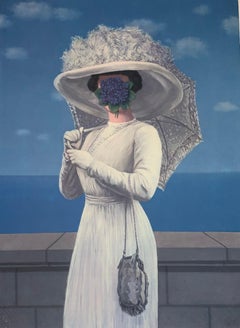
La Grande Guerre - 20th Century, Surrealist, Lithograph, Figurative Print
Located in Sint-Truiden, BE
Color lithograph after the 1954 oil on canvas by René Magritte, plate-signed by Magritte and numbered from the edition of 300.
The lithograph features the dry stamps of the Magritte...
Category
20th Century Surrealist Art by Medium: Lithograph
Materials
Lithograph
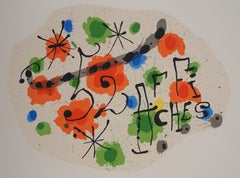
Red Composition, Preface to 52 Affiches - Original Lithograph (Cramer #84)
By Joan Miró
Located in Paris, IDF
Joan MIRO
Red Composition, Preface to 52 Affiches, 1963
Original lithograph in colors (Atelier Mourlot, Paris)
Signed in pencil by Fernand Mourlot
Dated in pencil
Numbered on / 125 ...
Category
1960s Surrealist Art by Medium: Lithograph
Materials
Lithograph
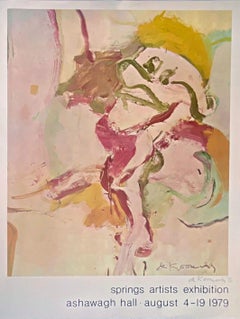
Willem de Kooning rare 1970s Abstract Expressionist print Signed/N small edition
Located in New York, NY
Willem de Kooning
Annual Spring Invitational Art Exhibition (limited edition, hand signed
numbered by Willem de Kooning), 1979
Offset lithograph (hand signed and numbered)
Sign...
Category
1970s Abstract Expressionist Art by Medium: Lithograph
Materials
Lithograph, Offset
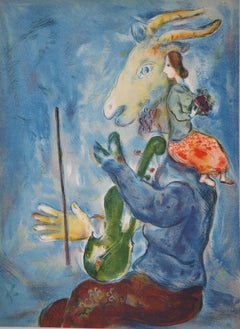
Spring : Goat playing Violin and Woman with Bouquet - Lithograph (Mourlot 1938)
By Marc Chagall
Located in Paris, IDF
Marc CHAGALL (1887-1985)
Spring : Goat playing Violin and Woman with Bouquet 1938
Lithograph (Mourlot workshop)
Engraved by Sorlier under Marc Chagall supervision
Other lithograph...
Category
1930s Modern Art by Medium: Lithograph
Materials
Lithograph
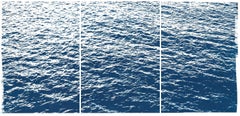
Bright Seascape in Capri, Nautical Cyanotype Triptych, Mediterranean Blue Waves
By Kind of Cyan
Located in Barcelona, ES
This series of cyanotype triptychs showcases the beauty of nature scenes, including stunning beaches and oceans, as well as the intricate textures of water, forests, and skies. These...
Category
2010s Post-Impressionist Art by Medium: Lithograph
Materials
Lithograph, Paper
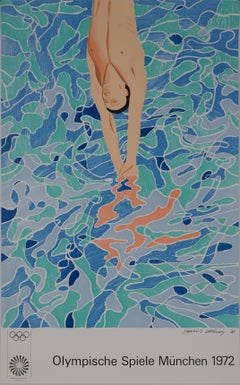
Pool Diver - Lithograph (Olympic Games Munich 1972)
Located in Paris, IDF
David HOCKNEY
Pool Diver, 1972
Original lithograph
Signature printed in the plate
On paper 101 x 64 cm (c. 40 x 26 inch)
Made for the Olympic Games in Munich, 1972
REFERENCES : Bri...
Category
1970s American Modern Art by Medium: Lithograph
Materials
Lithograph
Pastel Landscape: Impressionist Trees, Hand Drawn Lithograph, Monet Style
Located in Union City, NJ
Pastel Landscape: Impressionist Trees is an original hand drawn (not digitally or photo reproduced) limited edition lithograph by the American artis...
Category
1980s Impressionist Art by Medium: Lithograph
Materials
Lithograph
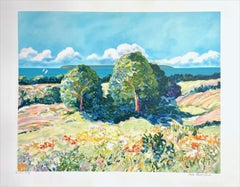
Venetian Series, Dale Chihuly
By Dale Chihuly
Located in Fairfield, CT
Artist: Dale Chihuly (1941)
Title: Venetian Series
Year: 2018
Medium: Lithograph, silkscreen and acrylic on Waterford paper
Edition: 79/125
Size: 37 x 25 inches
Inscription: Signed a...
Category
2010s Abstract Art by Medium: Lithograph
Materials
Acrylic, Intaglio, Screen, Lithograph
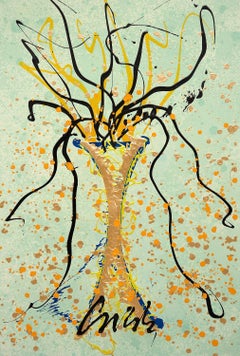
$7,160 Sale Price
20% Off
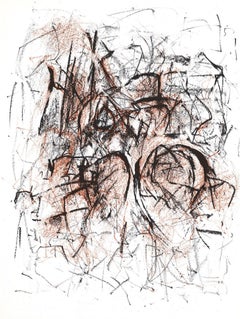
Joan Mitchell, Sans titre, In Memory of My Feelings (after)
Located in Southampton, NY
Lithograph on vélin Mohawk Superfine Smooth paper. Paper Size: 11.937 x 8.96 inches. Inscription: Unsigned and unnumbered, as issued. Notes: From the folio, In Memory of My Feelings,...
Category
1960s Abstract Expressionist Art by Medium: Lithograph
Materials
Lithograph
$1,596 Sale Price
20% Off
The Good Life 1978 Signed Limited Edition Art Lithograph
Located in Rochester Hills, MI
Artist Mati (Abdul) Klarwein
Title: The Good Life
Year: 1978
Print - Lithograph
Paper Size 23" x 23½" inches
Edition: signed in pencil and marked 3/300
Hand embellished by the artis...
Category
1970s Surrealist Art by Medium: Lithograph
Materials
Lithograph
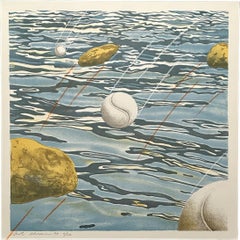
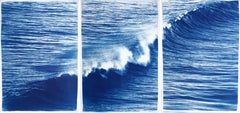
Los Angeles Crashing Waves, Handmade Cyanotype on Paper, Nautical Seascape, Blue
By Kind of Cyan
Located in Barcelona, ES
This series of cyanotype triptychs showcases the beauty of nature scenes, including stunning beaches and oceans, as well as the intricate textures of water, forests, and skies. These...
Category
2010s American Realist Art by Medium: Lithograph
Materials
Rag Paper, Lithograph
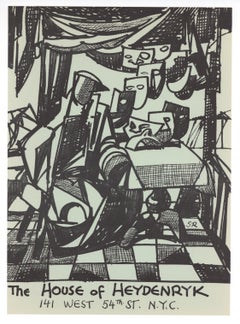
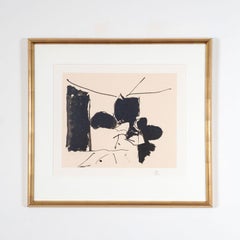
original lithograph
Located in Henderson, NV
Medium: original lithograph. This lithograph is from the rare 1957 "Improvisations" portfolio, published by the Artists Equity Association of New York on the occasion of the 1957 Spr...
Category
1950s Art by Medium: Lithograph
Materials
Lithograph
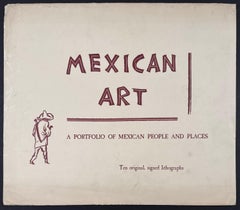
Mexican Art: A Portfolio of Mexican People and Places
Located in Palm Springs, CA
Ten lithographs in excellent condition, with portfolio cover. The ten artists included in the 1946 portfolio "Mexican Art: A Portfolio of Mexican People and Places" include: Ángel Bracho / Francisco Mora / Fernando Castro Pacheco / Raúl Anguiano / Alberto Beltrán...
Category
1940s Art by Medium: Lithograph
Materials
Lithograph
$3,500 Sale Price
22% Off
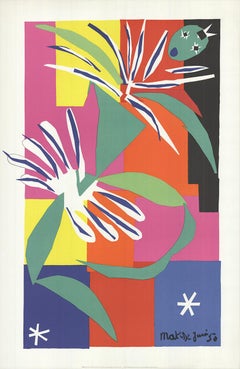
Creole Dancer Lithograph by Matisse, Modern Style, 1984, Unframed
Located in Brooklyn, NY
This is a lithographic reproduction of la Danseuse Creole that Matisse originally painted in 1950. The same image was also used in a promotion of La Cote D'Azur published by the Fren...
Category
1980s Modern Art by Medium: Lithograph
Materials
Lithograph
$560 Sale Price
20% Off
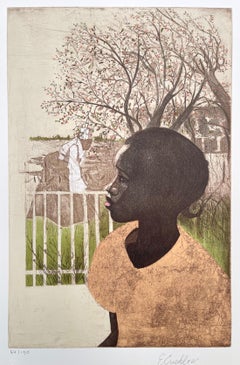
NEW DREAMS Original Lithograph, Black History, African American Women
Located in Union City, NJ
NEW DREAMS is an original limited edition lithograph by the Harlem Renaissance, social realist African-American artist ERNEST CRICHLOW (1914-2005). NEW DREAMS was printed from hand d...
Category
Early 2000s Contemporary Art by Medium: Lithograph
Materials
Lithograph
$2,000 Sale Price
20% Off
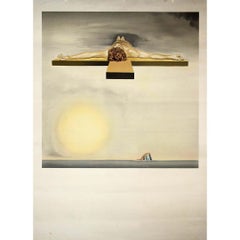
Original 1982 lithograph, Crucifixion (Christ of Gala) - Salvador Dali
Located in PARIS, FR
This original 1982 lithograph, Crucifixion (Christ of Gala), stands as one of Salvador Dalí’s most hauntingly spiritual reinterpretations of the crucifixion theme. Inspired by his 19...
Category
1980s Art by Medium: Lithograph
Materials
Paper, Lithograph
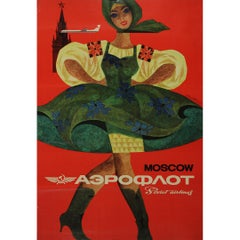
Circa 1970 original advertising poster for Aeroflot - Soviet airline
Located in PARIS, FR
This vibrant mid-century travel poster advertising Aeroflot, the official Soviet airline, offers a cheerful invitation to visit Moscow, the beating heart of the USSR. Created around 1970, the composition reflects the optimism and modernism of Soviet graphic design during the Cold War era, when air travel was increasingly used as a symbol of national pride and progress.
At the center of the poster is a stylized female figure in traditional Russian dress...
Category
1970s Art by Medium: Lithograph
Materials
Paper, Lithograph
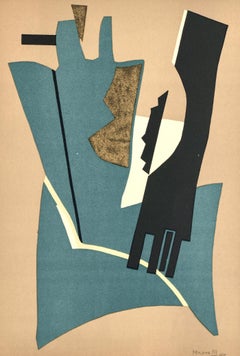
Alberto Magnelli, Homage to San Lazzaro, San Lazzaro et ses Amis, 1975 (after)
Located in Southampton, NY
This exquisite lithograph after Alberto Magnelli (1888–1971), titled Hommage a San Lazzaro (Homage to San Lazzaro), from the album San Lazzaro et ses Amis, Hommage au fondateur de la...
Category
1970s Modern Art by Medium: Lithograph
Materials
Lithograph
$956 Sale Price
20% Off
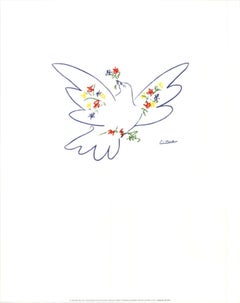
Dove With Flowers By Pablo Picasso
Located in Dubai, Dubai
Dove With Flowers
By Pablo Picasso
1998
Medium: Offset Lithograph
Paper Size: 19.5 x 15.75 inches ( 50 x 40 cm )
Image Size: 7 x 9 inches ( 18 x 23 cm )
Edition Size: Unknown
Category
1990s Contemporary Art by Medium: Lithograph
Materials
Lithograph, Offset
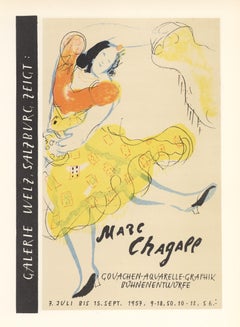
"Gouachen Aquarelle" lithograph poster
Located in Henderson, NV
Medium: lithograph (after the original lithograph poster). During the late 1940's and throughout the 1950's, Marc Chagall created a series of posters at the atelier of Mourlot Freres...
Category
1950s Art by Medium: Lithograph
Materials
Lithograph
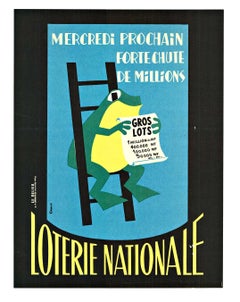
Original Loterie Nationale (Frog) vintage French poster
Located in Spokane, WA
Original Loterie Nationale vintage French poster. Mercredi prochain forte chute de millions. Loterie Nationale. (Next Wednesday, a big drop ...
Category
1960s Art Deco Art by Medium: Lithograph
Materials
Lithograph
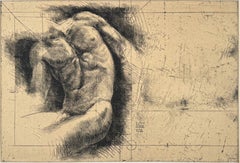
Heart Cry, male nude lithograph by Trevor Southey
Located in Palm Springs, CA
Medium: Etching
Year: 1985
Edition of 60
Image Size: 16 x 24 inches
A powerful, intimate etching/drypoint of a nude male by Trevor Southey titled "Heartcry." Rendered with lively, e...
Category
1980s Contemporary Art by Medium: Lithograph
Materials
Lithograph
The Paris Review
Located in Toronto, Ontario
Robert Motherwell (1915-1991), alongside Jackson Pollock, Mark Rothko, and Willem de Kooning, made up the quartet of American abstract painters that radically defined Modern paintin...
Category
1990s Abstract Expressionist Art by Medium: Lithograph
Materials
Lithograph
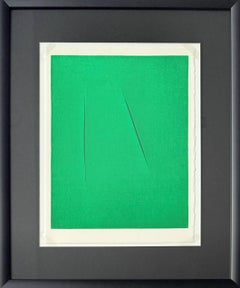
Concetto Spaziale
Located in OPOLE, PL
Lucio Fontana (1899-1968) - Concetto Spaziale
Lithograph from 1975.
Edition 371/575 (Photocopy of the colophone is included).
Dimensions of work: 31 x 24 cm.
Each copy of this li...
Category
1970s Modern Art by Medium: Lithograph
Materials
Lithograph
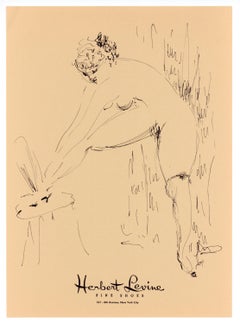
original lithograph
Located in Henderson, NV
Medium: original lithograph. This lithograph is from the rare 1957 "Improvisations" portfolio, published by the Artists Equity Association of New York on the occasion of the 1957 Spr...
Category
1950s Art by Medium: Lithograph
Materials
Lithograph
Lithograph art for sale on 1stDibs.
Find a wide variety of authentic Lithograph art available on 1stDibs. While artists have worked in this medium across a range of time periods, art made with this material during the 21st Century is especially popular. If you’re looking to add art created with this material to introduce a provocative pop of color and texture to an otherwise neutral space in your home, the works available on 1stDibs include elements of blue, orange, yellow, red and other colors. There are many well-known artists whose body of work includes ceramic sculptures. Popular artists on 1stDibs associated with pieces like this include Joan Miró, Marc Chagall, Peter Max, and Alexander Calder. Frequently made by artists working in the Modern, Contemporary, all of these pieces for sale are unique and many will draw the attention of guests in your home. Not every interior allows for large Lithograph art, so small editions measuring 0.01 inches across are also available