Art by Medium: Lithograph
to
7,074
15,723
6,120
9,178
3,554
1,767
Overall Width
to
Overall Height
to
68
5,756
28,127
2,417
356
387
1,031
1,159
1,407
3,589
4,761
6,412
3,461
1,380
45
10,466
4,350
3,411
2,524
1,544
821
796
601
488
128
92
92
58
55
24,405
11,298
560
15,597
8,387
5,475
5,255
4,664
3,699
3,410
2,432
2,219
2,138
1,941
1,347
1,302
1,284
1,152
990
969
851
850
742
36,370
185,066
97,557
79,534
78,280
833
777
330
296
268
3,660
11,935
19,014
13,644
Medium: Lithograph
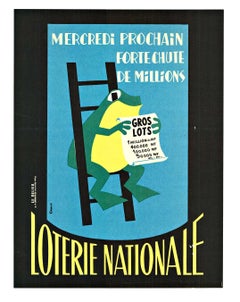
Original Loterie Nationale (Frog) vintage French poster
Located in Spokane, WA
Original Loterie Nationale vintage French poster. Mercredi prochain forte chute de millions. Loterie Nationale. (Next Wednesday, a big drop ...
Category
1960s Art Deco Art by Medium: Lithograph
Materials
Lithograph
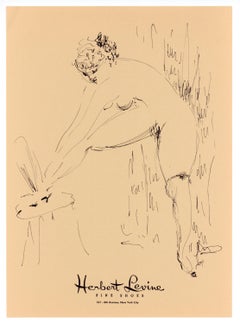
original lithograph
Located in Henderson, NV
Medium: original lithograph. This lithograph is from the rare 1957 "Improvisations" portfolio, published by the Artists Equity Association of New York on the occasion of the 1957 Spr...
Category
1950s Art by Medium: Lithograph
Materials
Lithograph
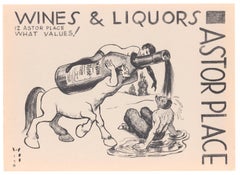
original lithograph
Located in Henderson, NV
Medium: original lithograph. This lithograph is from the rare 1953 "Improvisations" portfolio, published by the Artists Equity Association of New York on the occasion of the 1953 Spr...
Category
1950s Art by Medium: Lithograph
Materials
Lithograph
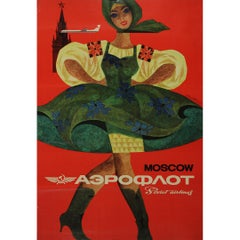
Circa 1970 original advertising poster for Aeroflot - Soviet airline
Located in PARIS, FR
This vibrant mid-century travel poster advertising Aeroflot, the official Soviet airline, offers a cheerful invitation to visit Moscow, the beating heart of the USSR. Created around 1970, the composition reflects the optimism and modernism of Soviet graphic design during the Cold War era, when air travel was increasingly used as a symbol of national pride and progress.
At the center of the poster is a stylized female figure in traditional Russian dress...
Category
1970s Art by Medium: Lithograph
Materials
Paper, Lithograph
Duo of Blue Egyptian Palms, Botanical Diptych Cyanotype on Paper, Vintage Modern
By Kind of Cyan
Located in Barcelona, ES
Exclusive limited edition cyanotype diptych.
Details:
+ Title: Duo of Egyptian Palms
+ Year: 2024
+ Edition Size: 20
+ Medium: Cyanotype on Watercolor Paper...
Category
2010s Naturalistic Art by Medium: Lithograph
Materials
Lithograph, Handmade Paper

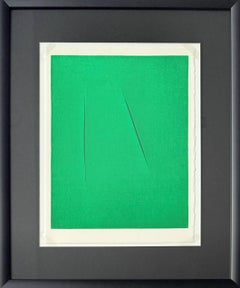
Concetto Spaziale
Located in OPOLE, PL
Lucio Fontana (1899-1968) - Concetto Spaziale
Lithograph from 1975.
Edition 371/575 (Photocopy of the colophone is included).
Dimensions of work: 31 x 24 cm.
Each copy of this li...
Category
1970s Modern Art by Medium: Lithograph
Materials
Lithograph
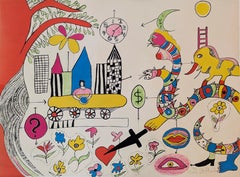
A young girl
s dream
Located in Paris, FR
Lithograph, 1972
Handsigned by the artist in pencil and numbered 187/300
Publisher : Galerie Putman
Printer : Clot, Bramsen & Georges (Paris)
Catalog : Chenivesse n°9
Arches Paper
W...
Category
1970s Abstract Art by Medium: Lithograph
Materials
Lithograph
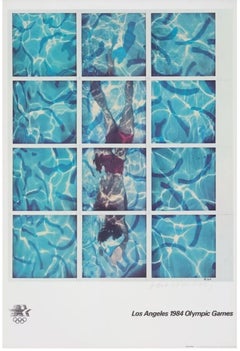
Deluxe Hand Signed Lt Ed Olympic Diver in Swimming Pool coveted lithograph w/COA
Located in New York, NY
"Water in swimming pools changes its look more than any other form. If the water surface is almost still and there is a strong sun, then dancing lines with the color of the spectrum appear everywhere." -
- David Hockney
David Hockney
Offset Lithograph poster (Deluxe Hand Signed Limited Edition) on Parsons Diploma Parchment Paper, accompanied by COA from the Publisher and Olympic Committee
36 × 24 inches
Pencil signed and unnumbered from the Edition of 750 (there was a separate, larger unsigned edition)
Unframed
Also accompanied by gallery issued Certificate of Guarantee
One of the most coveted, historic and popular David Hockney limited editions created - beloved by American and international collectors alike:
The official edition of this work is 750, but the publisher famously destroyed unsold editions after the Olympic Games and only about 200-250 are said to remain. This hand signed limited edition iconic Hockney work was printed as one of the fifteen Official Fine Art Olympic Posters for the 1984 Olympic Games in Los Angeles. (the XXIII'rd Olympiad). It depicts an aerial view of a swimmer under rippling water broken up into 12 squares. A statement released by the 1984 Olympic committee explains the set as follows - "The posters commissioned for the 1984 Olympics contain an enlightened selection of the best American artists with special emphasis on those who work in Southern California...As the Games develop, transpire and pass into memory, these fifteen posters contain the images, forms and symbols that will represent the 1984 Olympics in the museums, galleries, homes and the minds of people all over the world.” This work is NOT to be confused with the ubiquitous plate signed poster of the same image, which was printed on different paper in an open edition.) In 1982, the Olympic Committee commissioned 15 artists to create posters for the 1984 Games in Los Angeles. Hockney designed this offset lithograph depicting Olympic swimming. It was printed on Parsons Diploma Parchment paper in 1982, in an edition of 750, hand signed in pencil by the artist. Even though this print was published in an edition of 750, after the first marketing blitz, the publisher destroyed the remaining portfolios of signed prints - literally discarding hundreds of them in the dumpster. The Olympic Committee commissioned these portfolios to celebrate and promote the 1984 Olympics, and nobody expected the individual prints to have such enduring value. As the executives running the short-term promotional campaign were neither prophets nor curators, they saw no reason to hold on to these huge prints...
Category
1980s Pop Art Art by Medium: Lithograph
Materials
Lithograph, Offset
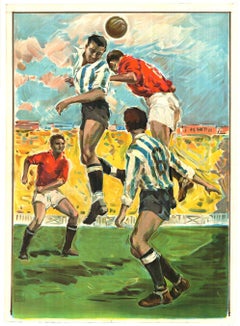
Original
Soccer
vintage lithograph posters a.k.a. "Heads Up", Spain
Located in Spokane, WA
Original Soccer vintage sports poster. Linen backed in very good condition, ready to frame. Printed by Ortega Company in Valencia.
This type of untitled vintage poster was commonly printed and the date of an upcoming game and team would be added at the bottom of the poster. Soccer games were played quite often, allowing the local team to advertise their events without reprinting a new poster for each game or event. This poster was printed as a full lithograph, so it was expensive to produce. There is no specific designation of which two teams are being shown here in this antique poster
The poster has a nickname of ‘heads-up,” as two of the players are in the air as they position themselves to control the soccer ball.
Valencia two main clubs, FC València and Levante UD, attract hordes of fans to their matches. Both clubs play in the First Division of La Liga...
Category
1960s Kinetic Art by Medium: Lithograph
Materials
Lithograph

$680 Sale Price
20% Off
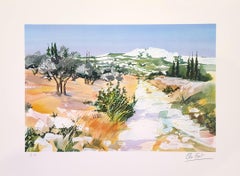
The Lonesome Road (La course seule) Provence, landscapes, countryside art
By Ella Fort
Located in Kansas City, MO
Ella Fort
The Lonesome Road (La course seule)
Color lithograph
Signed, numbered or inscribed
Edition: 390 + 10 E.A.
size: 7.8 × 11.7 on 11.7 × 15.6 inche...
Category
1980s Impressionist Art by Medium: Lithograph
Materials
Lithograph
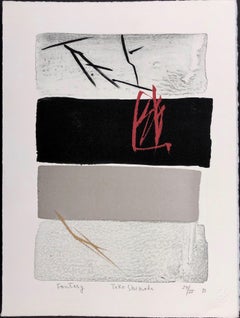
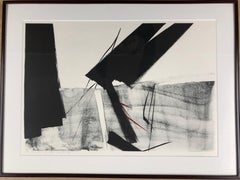
Fantasy, Japanese, limited edition lithograph, black, white, red, signed, titled
By Toko Shinoda
Located in Santa Fe, NM
Fantasy, Japanese, limited edition lithograph, black, white, red, signed, titled
Shinoda's works have been collected by public galleries and museums, including the Museum of Modern Art, Solomon R. Guggenheim Museum, Brooklyn Museum and Metropolitan Museum (all in New York City), the National Museum of Modern Art in Tokyo, the British Museum in London, the Art Institute of Chicago, Arthur M. Sackler Gallery of the Smithsonian in Washington, D.C., the Singapore Art Museum, the National Museum of Singapore, the Kröller-Müller Museum in Otterlo, Netherlands, the Albright–Knox Art Gallery in Buffalo, New York, the Cincinnati Art Museum, and the Yale University Art Gallery in New Haven, Connecticut.
New York Times Obituary, March 3, 2021 by Margalit Fox, Alex Traub contributed reporting.
Toko Shinoda, one of the foremost Japanese artists of the 20th century, whose work married the ancient serenity of calligraphy with the modernist urgency of Abstract Expressionism, died on Monday at a hospital in Tokyo. She was 107.
Her death was announced by her gallerist in the United States.
A painter and printmaker, Ms. Shinoda attained international renown at midcentury and remained sought after by major museums and galleries worldwide for more than five decades.
Her work has been exhibited at, among other places, the Metropolitan Museum of Art and the Museum of Modern Art in New York; the Art Institute of Chicago; the British Museum; and the National Museum of Modern Art in Tokyo. Private collectors include the Japanese imperial family.
Writing about a 1998 exhibition of Ms. Shinoda’s work at a London gallery, the British newspaper The Independent called it “elegant, minimal and very, very composed,” adding, “Her roots as a calligrapher are clear, as are her connections with American art of the 1950s, but she is quite obviously a major artist in her own right.”
As a painter, Ms. Shinoda worked primarily in sumi ink, a solid form of ink, made from soot pressed into sticks, that has been used in Asia for centuries.
Rubbed on a wet stone to release their pigment, the sticks yield a subtle ink that, because it is quickly imbibed by paper, is strikingly ephemeral. The sumi artist must make each brush stroke with all due deliberation, as the nature of the medium precludes the possibility of reworking even a single line.
“The color of the ink which is produced by this method is a very delicate one,” Ms. Shinoda told The Business Times of Singapore in 2014. “It is thus necessary to finish one’s work very quickly. So the composition must be determined in my mind before I pick up the brush. Then, as they say, the painting just falls off the brush.”
Ms. Shinoda painted almost entirely in gradations of black, with occasional sepias and filmy blues. The ink sticks she used had been made for the great sumi artists of the past, some as long as 500 years ago.
Her line — fluid, elegant, impeccably placed — owed much to calligraphy. She had been rigorously trained in that discipline from the time she was a child, but she had begun to push against its confines when she was still very young.
Deeply influenced by American Abstract Expressionists like Jackson Pollock, Mark Rothko and Robert Motherwell, whose work she encountered when she lived in New York in the late 1950s, Ms. Shinoda shunned representation.
“If I have a definite idea, why paint it?,” she asked in an interview with United Press International in 1980. “It’s already understood and accepted. A stand of bamboo is more beautiful than a painting could be. Mount Fuji is more striking than any possible imitation.”
Spare and quietly powerful, making abundant use of white space, Ms. Shinoda’s paintings are done on traditional Chinese and Japanese papers, or on backgrounds of gold, silver or platinum leaf.
Often asymmetrical, they can overlay a stark geometric shape with the barest calligraphic strokes. The combined effect appears to catch and hold something evanescent — “as elusive as the memory of a pleasant scent or the movement of wind,” as she said in a 1996 interview.
Ms. Shinoda’s work also included lithographs; three-dimensional pieces of wood and other materials; and murals in public spaces, including a series made for the Zojoji Temple in Tokyo.
The fifth of seven children of a prosperous family, Ms. Shinoda was born on March 28, 1913, in Dalian, in Manchuria, where her father, Raijiro, managed a tobacco plant. Her mother, Joko, was a homemaker. The family returned to Japan when she was a baby, settling in Gifu, midway between Kyoto and Tokyo.
One of her father’s uncles, a sculptor and calligrapher, had been an official seal carver to the Meiji emperor. He conveyed his love of art and poetry to Toko’s father, who in turn passed it to Toko.
“My upbringing was a very traditional one, with relatives living with my parents,” she said in the U.P.I. interview. “In a scholarly atmosphere, I grew up knowing I wanted to make these things, to be an artist.”
She began studying calligraphy at 6, learning, hour by hour, impeccable mastery over line. But by the time she was a teenager, she had begun to seek an artistic outlet that she felt calligraphy, with its centuries-old conventions, could not afford.
“I got tired of it and decided to try my own style,” Ms. Shinoda told Time magazine in 1983. “My father always scolded me for being naughty and departing from the traditional way, but I had to do it.”
Moving to Tokyo as a young adult, Ms. Shinoda became celebrated throughout Japan as one of the country’s finest living calligraphers, at the time a signal honor for a woman. She had her first solo show in 1940, at a Tokyo gallery.
During World War II, when she forsook the city for the countryside near Mount Fuji, she earned her living as a calligrapher, but by the mid-1940s she had started experimenting with abstraction. In 1954 she began to achieve renown outside Japan with her inclusion in an exhibition of Japanese calligraphy at MoMA.
In 1956, she traveled to New York. At the time, unmarried Japanese women could obtain only three-month visas for travel abroad, but through zealous renewals, Ms. Shinoda managed to remain for two years.
She met many of the titans of Abstract Expressionism there, and she became captivated by their work.
“When I was in New York in the ’50s, I was often included in activities with those artists, people like Mark Rothko, Jackson Pollock, Motherwell and so forth,” she said in a 1998 interview with The Business Times. “They were very generous people, and I was often invited to visit their studios, where we would share ideas and opinions on our work. It was a great experience being together with people who shared common feelings.”
During this period, Ms. Shinoda’s work was sold in the United States by Betty Parsons, the New York dealer who represented Pollock, Rothko and many of their contemporaries.
Returning to Japan, Ms. Shinoda began to fuse calligraphy and the Expressionist aesthetic in earnest. The result was, in the words of The Plain Dealer of Cleveland in 1997, “an art of elegant simplicity and high drama.”
Among Ms. Shinoda’s many honors, she was depicted, in 2016, on a Japanese postage stamp. She is the only Japanese artist to be so honored during her lifetime.
No immediate family members survive.
When she was quite young and determined to pursue a life making art, Ms. Shinoda made the decision to forgo the path that seemed foreordained for women of her generation.
“I never married and have no children,” she told The Japan Times in 2017. “And I suppose that it sounds strange to think that my paintings are in place of them — of course they are not the same thing at all. But I do say, when paintings that I have made years ago are brought back into my consciousness, it seems like an old friend, or even a part of me, has come back to see me.”
Works of a Woman's Hand
Toko Shinoda bases new abstractions on ancient calligraphy
Down a winding side street in the Aoyama district, western Tokyo. into a chunky white apartment building, then up in an elevator small enough to make a handful of Western passengers friends or enemies for life. At the end of a hall on the fourth floor, to the right, stands a plain brown door. To be admitted is to go through the looking glass. Sayonara today. Hello (Konichiwa) yesterday and tomorrow.
Toko Shinoda, 70, lives and works here. She can be, when she chooses, on e of Japans foremost calligraphers, master of an intricate manner of writing that traces its lines back some 3,000 years to ancient China. She is also an avant-garde artist of international renown, whose abstract paintings and lithographs rest in museums around the world. These diverse talents do not seem to belong in the same epoch. Yet they have somehow converged in this diminutive woman who appears in her tiny foyer, offering slippers and ritual bows of greeting.
She looks like someone too proper to chip a teacup, never mind revolutionize an old and hallowed art form She wears a blue and white kimono of her own design. Its patterns, she explains, are from Edo, meaning the period of the Tokugawa shoguns, before her city was renamed Tokyo in 1868. Her black hair is pulled back from her face, which is virtually free of lines and wrinkles. except for the gold-rimmed spectacles perched low on her nose (this visionary is apparently nearsighted). Shinoda could have stepped directly from a 19th century Meji print.
Her surroundings convey a similar sense of old aesthetics, a retreat in the midst of a modern, frenetic city. The noise of the heavy traffic on a nearby elevated highway sounds at this height like distant surf. delicate bamboo shades filter the daylight. The color arrangement is restful: low ceilings of exposed wood, off-white walls, pastel rugs of blue, green and gray.
It all feels so quintessentially Japanese that Shinoda’s opening remarks come as a surprise. She points out (through a translator) that she was not born in Japan at all but in Darien, Manchuria. Her father had been posted there to manage a tobacco company under the aegis of the occupying Japanese forces, which seized the region from Russia in 1905. She says,”People born in foreign places are very free in their thinking, not restricted” But since her family went back to Japan in 1915, when she was two, she could hardly remember much about a liberated childhood? She answers,”I think that if my mother had remained in Japan, she would have been an ordinary Japanese housewife. Going to Manchuria, she was able to assert her own personality, and that left its mark on me.”
Evidently so. She wears her obi low on the hips, masculine style. The Porcelain aloofness she displays in photographs shatters in person. Her speech is forceful, her expression animated and her laugh both throaty and infectious. The hand she brings to her mouth to cover her amusement (a traditional female gesture of modesty) does not stand a chance.
Her father also made a strong impression on the fifth of his seven children:”He came from a very old family, and he was quite strict in some ways and quite liberal in others.” He owned one of the first three bicycles ever imported to Japan and tinkered with it constantly He also decided that his little daughter would undergo rigorous training in a procrustean antiquity.
“I was forced to study from age six on to learn calligraphy,” Shinoda says, The young girl dutifully memorized and copied the accepted models. In one sense, her father had pushed her in a promising direction, one of the few professional fields in Japan open to females. Included among the ancient terms that had evolved around calligraphy was onnade, or woman's writing.
Heresy lay ahead. By the time she was 15, she had already been through nine years of intensive discipline, “I got tired of it and decided to try my own style. My father always scolded me for being naughty and departing from the traditional way, but I had to do it.”
She produces a brush and a piece of paper to demonstrate the nature of her rebellion. “This is kawa, the accepted calligraphic character for river,” she says, deftly sketching three short vertical strokes. “But I wanted to use more than three lines to show the force of the river.” Her brush flows across the white page, leaving a recognizable river behind, also flowing.” The simple kawa in the traditional language was not enough for me. I wanted to find a new symbol to express the word river.”
Her conviction grew that ink could convey the ineffable, the feeling, "as she says, of wind blowing softly.” Another demonstration. She goes to the sliding wooden door of an anteroom and disappears in back of it; the only trace of her is a triangular swatch of the right sleeve of her kimono, which she has arranged for that purpose. A realization dawns. The task of this artist is to paint that three sided pattern so that the invisible woman attached to it will be manifest to all viewers.
Gen, painted especially for TIME, shows Shinoda’s theory in practice. She calls the work “my conception of Japan in visual terms.” A dark swath at the left, punctuated by red, stands for history. In the center sits a Chinese character gen, which means in the present or actuality. A blank pattern at the right suggests an unknown future.
Once out of school, Shinoda struck off on a path significantly at odds with her culture. She recognized marriage for what it could mean to her career (“a restriction”) and decided against it. There was a living to be earned by doing traditional calligraphy:she used her free time to paint her variations. In 1940 a Tokyo gallery exhibited her work. (Fourteen years would pass before she got a second show.)War came, and bad times for nearly everyone, including the aspiring artist , who retreated to a rural area near Mount Fuji and traded her kimonos for eggs.
In 1954 Shinoda’s work was included in a group exhibit at New York City’s Museum of Modern Art. Two years later, she overcame bureaucratic obstacles to visit the U.S.. Unmarried Japanese women are allowed visas for only three months, patiently applying for two-month extensions, one at a time, Shinoda managed to travel the country for two years. She pulls out a scrapbook from this period. Leafing through it, she suddenly raises a hand and touches her cheek:”How young I looked!” An inspection is called for. The woman in the grainy, yellowing newspaper photograph could easily be the on e sitting in this room. Told this, she nods and smiles. No translation necessary.
Her sojourn in the U.S. proved to be crucial in the recognition and development of Shinoda’s art. Celebrities such as actor Charles Laughton and John Lewis of the Modern Jazz Quartet bought her paintings and spread the good word. She also saw the works of the abstract expressionists, then the rage of the New York City art world, and realized that these Western artists, coming out of an utterly different tradition, were struggling toward the same goal that had obsessed her. Once she was back home, her work slowly made her famous.
Although Shinoda has used many materials (fabric, stainless steel, ceramics, cement), brush and ink remain her principal means of expression. She had said, “As long as I am devoted to the creation of new forms, I can draw even with muddy water.” Fortunately, she does not have to. She points with evident pride to her ink stone, a velvety black slab of rock, with an indented basin, that is roughly a foot across and two feet long. It is more than 300 years old. Every working morning, Shinoda pours about a third of a pint of water into it, then selects an ink stick from her extensive collection, some dating back to China’s Ming dynasty. Pressing stick against stone, she begins rubbing. Slowly, the dried ink dissolves in the water and becomes ready for the brush. So two batches of sumi (India ink) are exactly alike; something old, something new. She uses color sparingly. Her clear preference is black and all its gradations. “In some paintings, sumi expresses blue better than blue.”
It is time to go downstairs to the living quarters. A niece, divorced and her daughter,10,stay here with Shinoda; the artist who felt forced to renounce family and domesticity at the outset of her career seems welcome to it now. Sake is offered, poured into small cedar boxes and happily accepted. Hold carefully. Drink from a corner. Ambrosial. And just right for the surroundings and the hostess. A conservative renegade; a liberal traditionalist; a woman steeped in the male-dominated conventions that she consistently opposed. Her trail blazing accomplishments are analogous to Picasso’s.
When she says goodbye, she bows. --by Paul Gray...
Category
1990s Contemporary Art by Medium: Lithograph
Materials
Lithograph
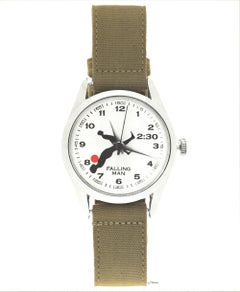
Trova-Falling Man Watch Vintage limited edition print
By Ernest Trova
Located in Brooklyn, NY
This first edition poster titled “Falling Man Watch” is a striking piece from Ernest Trova’s renowned Falling Man series, featuring the iconic Falling Man figure cleverly depicted as...
Category
1980s Pop Art Art by Medium: Lithograph
Materials
Lithograph
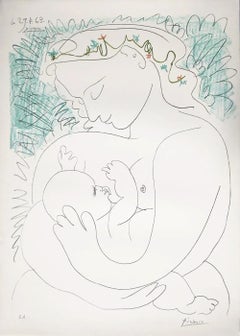
Pablo Picasso ( 1881 – 1973 ) La Grande Maternité – hand-signed lithograph 1963
Located in Pembroke Pines, FL
After Pablo Picasso (Spanish, 1881-1973)
La Grande Maternité
1963
pencil signed and annotated 'E.A.' (aside from the edition of 200), with margins
Editions Combat de la Paix, Paris
P...
Category
1950s Contemporary Art by Medium: Lithograph
Materials
Lithograph
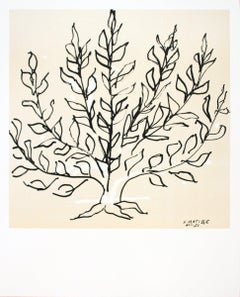
Le Buisson" 2015
Located in Brooklyn, NY
"Le Buisson" by Henri Matisse is a high-quality lithograph printed on heavy printmaking board, authorized by the Succession Matisse. The print features wide margins on all sides and ...
Category
2010s Modern Art by Medium: Lithograph
Materials
Lithograph
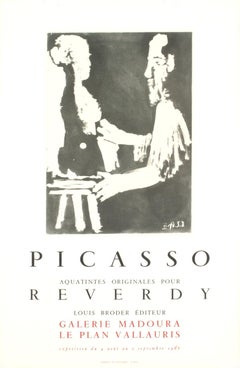
$200 Sale Price
20% Off
Picasso Reverdy Lithograph, Cubist Style, 20th Century, Unframed
Located in Brooklyn, NY
The lithograph was published by Louis Broder in Paris and printed by Fequet & Baudier, also in Paris.
Reference: Czwiklitzer #255
The image measures 28 1/4 x 18 1/2 inches and feat...
Category
20th Century Cubist Art by Medium: Lithograph
Materials
Lithograph
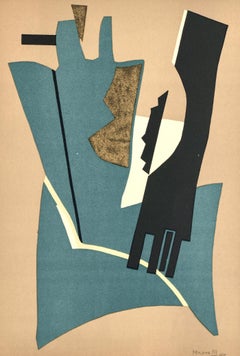
$400 Sale Price
20% Off
Alberto Magnelli, Homage to San Lazzaro, San Lazzaro et ses Amis, 1975 (after)
Located in Southampton, NY
This exquisite lithograph after Alberto Magnelli (1888–1971), titled Hommage a San Lazzaro (Homage to San Lazzaro), from the album San Lazzaro et ses Amis, Hommage au fondateur de la...
Category
1970s Modern Art by Medium: Lithograph
Materials
Lithograph
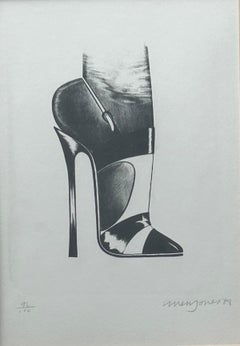
$956 Sale Price
20% Off
Shoe
By Allen Jones
Located in Bournemouth, Dorset
Allen Jones (b.1937)
Shoe
1968
Etching 96/100
21.6 x 16.0 cm
Frame: 50.5 x 40.5 cm
Signed
Allen Jones studied at Hornsey College of Art from 1955 to 1959 and the Royal College of Ar...
Category
1960s Art by Medium: Lithograph
Materials
Lithograph
$573 Sale Price
20% Off
Original
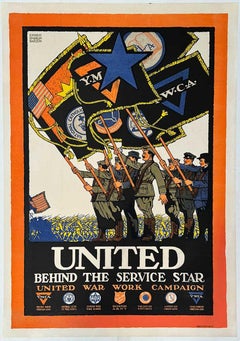
United Behind the Service Star
antique World War One vintage poster
Located in Spokane, WA
Original poster: United Behind The Service Star ; Great vibrant colors. Linen backed. All the various support organizations that backed up the soldiers and war relief during World War One. A-, B+ condition. Paper tear from the bottom about 10" professionally laid down. No paper loss.
A large blue star appears over the flags, and below the image reads "United Behind the Service Star". The poster features American soldiers carrying the flags of seven major service organizations: the YMCA, the National Catholic War Council, the Jewish Welfare Board, the Salvation Army, War Camp Community Service, the American Library Association, and the YWCA. These organizations were instrumental in providing various forms of support, such as food, medical care, and morale-boosting services, both to soldiers and civilians.
If you have ever looked to have a 'supreme' version of this great war poster...
Category
1910s American Modern Art by Medium: Lithograph
Materials
Lithograph
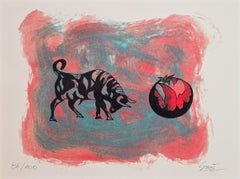
Bull - Still Life (Surreal, Colorful, Vibrant, Modern) (26% OFF LIST PRICE)
Located in Kansas City, MO
Franz Graw
Bull
Color Offset Lithograph
Year: 2023
Size: 11.81 x 15.74 inches (30 x 40 cm)
Edition: 100
Signed and numbered in pencil
COA provided
Franz Graw (b. 1964) is a Düsseld...
Category
2010s Surrealist Art by Medium: Lithograph
Materials
Lithograph, Offset
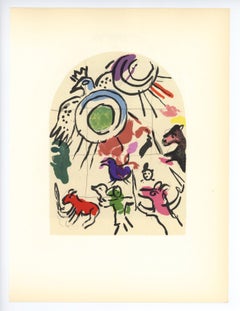
"Tribe of Gad" lithograph
Located in Henderson, NV
Medium: lithograph (after the watercolor). Printed in 1962 at the Mourlot atelier for "Jerusalem Windows". This piece was executed by Chagall in preparation for his famous stained-gl...
Category
1960s Art by Medium: Lithograph
Materials
Lithograph
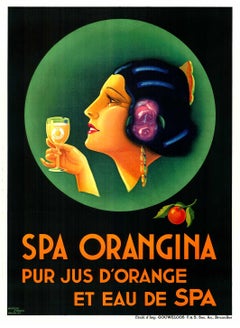
Original Spa Orangina et Eau de Spa vintage poster, linen-backed
Located in Spokane, WA
Original “Spa Orangina” Lithograph, Linen Backed (c. 1930s), Very Fine Condition
Add a lively touch of vintage French artistry to your collection with this original “Spa Orangina” l...
Category
1930s Art Deco Art by Medium: Lithograph
Materials
Lithograph
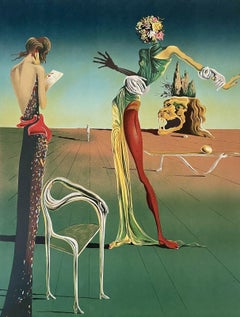
Dali, Femme à tete de Roses (after)
Located in Fairfield, CT
Artist: Salvador Dali (1904-1989)
Title: Femme à tete de Roses
Year: 2004
Medium: Lithograph on wove paper
Size: 30.25 x 22 inches
Condition: Excellent
Inscription: Unsigned and unnu...
Category
Early 2000s Surrealist Art by Medium: Lithograph
Materials
Lithograph
$2,360 Sale Price
20% Off
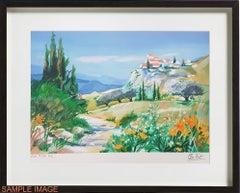
Spring in Brittany (FRAMED + 10% OFF U.S. SHIPPING) (Provence, Landscapes)
By Ella Fort
Located in Kansas City, MO
Ella Fort
Spring in Brittany (Champ Fleuri)
Color Lithograph
Signed, numbered or inscribed
Edition: 390 + 250
Size: 7.8 × 11.7 on 11.7 × 15.6 inches
Framed: 16.25x20 inches
COA provided
*Framing Options Available - Please Inquire
**edition number might vary from shown in listing image
Tags: Provence landscapes, French countryside art...
Category
1980s Contemporary Art by Medium: Lithograph
Materials
Lithograph
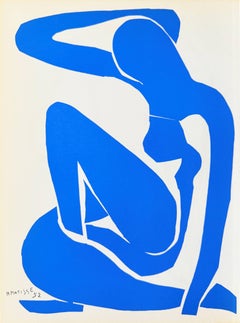
Femme Bleue
Located in OPOLE, PL
This work will be exhibited at Art on Paper NYC, September 4–7, 2025.
–
Henri Matisse (1869-1954) - Femme Bleue
Lithograph from 1958.
Dimensions of work: 35.5 x 26.4 cm.
Publish...
Category
1950s Surrealist Art by Medium: Lithograph
Materials
Lithograph
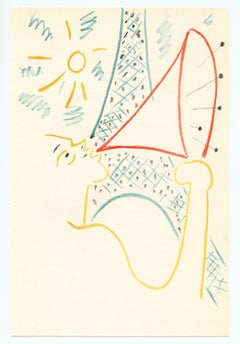
original lithograph
By Jean Cocteau
Located in Henderson, NV
Medium: original lithograph. Printed in Paris in 1957 at the Mourlot Freres atelier. Size: 8 3/4 x 6 inches (225 x 150 mm). Jean Cocteau executed this original lithograph to depict a...
Category
1950s Art by Medium: Lithograph
Materials
Lithograph
Andrew Wyeth, Brinton’s Mill, from The Four Seasons (after)
By Andrew Wyeth
Located in Southampton, NY
This exquisite lithograph after Andrew Wyeth (1917–2009), titled Brinton’s Mill, originates from the distinguished 1962 folio The Four Seasons: Paintings and Drawings by Andrew Wyeth. Published and printed by Art in America Company, Inc., New York, the edition exemplifies Wyeth’s intimate connection to the Brandywine Valley landscape. Brinton’s Mill, a historic gristmill near Chadds Ford, Pennsylvania—later purchased and restored by Wyeth and his wife Betsy—appears here bathed in the gentle light of seasonal transition, a motif of both personal and regional significance rendered with quiet reverence and precision.
Executed on velin paper, this lithograph measures 17 x 13 inches (43.2 x 33 cm). As issued, it is unsigned and unnumbered, representing the folio’s authentic format. The Four Seasons series was conceived by the editors of Art in America in collaboration with Andrew and Betsy Wyeth, who selected drawings from the artist’s studio to illustrate the cycle of renewal and passage. Each image in the series embodies Wyeth’s profound sensitivity to mood, atmosphere, and the subtle interplay between man and nature.
Artwork Details:
Artist: After Andrew Wyeth (1917–2009)
Title: Brinton’s Mill, from The Four Seasons, Paintings and Drawings by Andrew Wyeth, 1962
Medium: Lithograph on velin paper
Dimensions: 17 x 13 inches (43.2 x 33 cm)
Inscription: Unsigned and unnumbered, as issued
Date: 1962
Publisher: Art in America Company, Inc., New York
Printer: Art in America Company, Inc., New York
Condition: Well preserved, consistent with age and medium
Provenance: From the 1962 folio The Four Seasons, Paintings and Drawings by Andrew Wyeth, published and printed by Art in America Company, Inc., New York
Notes:
Excerpted from the 1962 folio:
"In 1962 the editors of Art in America proposed to Wyeth a portfolio of images of his recent dry-brush drawings. The artist and his wife suggested the theme, 'The Four Seasons,' because of the essential role played in his work by the cycle of the seasons. The drawings were selected by Andrew and Betsy Wyeth from works in the house and studio at Chadds Ford, supplemented by some owned by friends. With a few exceptions they had never been exhibited or reproduced. The plates were made directly from the originals. In these drawings Wyeth's loving concentration on the object is fully revealed. But as always in his work, this concern with the tangible is balanced by sensibility to mood, to the emotion arising from the actual. They are pervaded with a sense of the season—the exact time of year, the hour of the day, the quality of the light. To the truth and subtlety with which he captures these intangible factors, these drawings owe their poignant poetry."
About the Artist:
Andrew Wyeth (1917–2009) was an American visual artist and one of the best-known painters of the mid-20th century. Although he considered himself an abstractionist, Wyeth’s work is characterized by a meticulous realism imbued with psychological depth and atmosphere. He often painted the landscapes and people surrounding his homes in Chadds Ford, Pennsylvania, and Cushing, Maine, creating an intimate record of American rural life. The son of the celebrated illustrator N. C. Wyeth, Andrew trained under his father before developing his own deeply personal visual language inspired by Winslow Homer, Henry David Thoreau, and King Vidor. His wife, Betsy Wyeth, was both his muse and career manager, while his son Jamie Wyeth continued the family’s artistic legacy.
Among Wyeth’s best-known works is Christina’s World (1948), housed in the Museum of Modern Art, New York—a quintessential image of 20th-century American art. His other notable series include The Helga Pictures and his window studies, each reflecting a profound meditation on solitude, memory, and perception. Wyeth was the first painter to receive both the Presidential Medal of Freedom and the Congressional Gold Medal, and was elected to the French Académie des Beaux-Arts in 1980.
In 2022, Andrew Wyeth's painting Day Dream sold for USD 23.29 million at Christie’s New York, setting a world record for the artist.
Andrew Wyeth lithograph...
Category
1960s American Realist Art by Medium: Lithograph
Materials
Lithograph
$716 Sale Price
20% Off
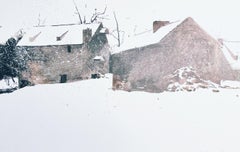
The South of France
, MMA Paris, Pompidou, Ecole des Beaux-Arts, Benezit
Located in Santa Cruz, CA
Signed lower right, 'Garcia Fons' for Pierre Garcia-Fons (French, 1928-2016), and inscribed lower left, 'Epr. d' Artist' (Epreuve d'Artist / Artist's Proof); also indistinctly inscri...
Category
1970s Art by Medium: Lithograph
Materials
Laid Paper, Lithograph
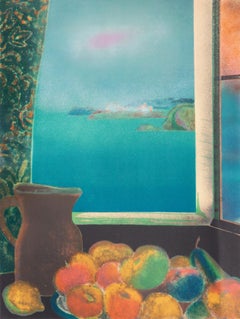
Red Nude and Bird 1981 Signed Limited Edition Lithograph
Located in Rochester Hills, MI
Guillaume Corneille
Red Nude and Bird 1981
Nu Rouge Á L'Oiseau
Print, Signed Lithograph on wove paper
25.5 x 20 " inches
Signed in pencil and dated and marked AP 25/25 ( Artist Proo...
Category
1980s Abstract Art by Medium: Lithograph
Materials
Lithograph
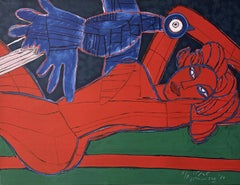
Gestural Abstraction (Modern, Mid-Century, Hypnotic, 40% OFF
$5 U.S. SHIPPING)
Located in Kansas City, MO
Hannes Grosse
Title: Gestural Abstraction
Medium: Color silkscreen
Size: 23 × 16 inches
Year: 1969
Signed and dates by the artist
COA provided
Condition: Overall good vintage condit...
Category
1960s Abstract Art by Medium: Lithograph
Materials
Lithograph
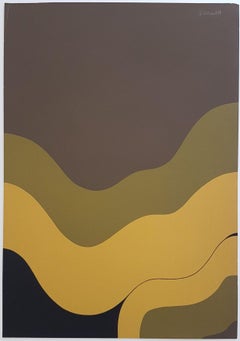
original lithograph
Located in Henderson, NV
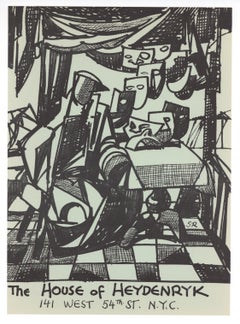
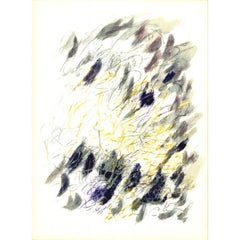
Medium: original lithograph. This lithograph is from the rare 1957 "Improvisations" portfolio, published by the Artists Equity Association of New York on the occasion of the 1957 Spr...
Category
1950s Art by Medium: Lithograph
Materials
Lithograph
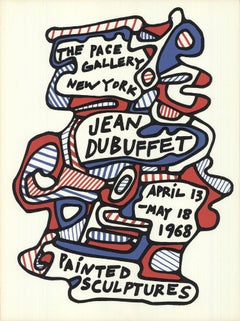
Jean Dubuffet Painted Sculptures at Pace Gallery-Lithograph-Vintage
Located in Brooklyn, NY
This is an original poster designed by Jean Dubuffet for his 1968 exhibition Painted Sculptures at Pace Gallery, held from April 13th to May 18th. Created by the artist specifically ...
Category
1960s Modern Art by Medium: Lithograph
Materials
Lithograph
$232 Sale Price
42% Off
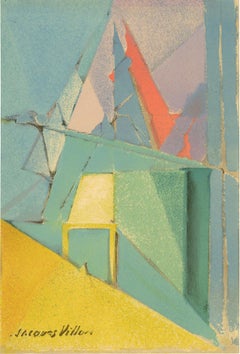
Intimité
Located in Middletown, NY
Paris: Mourlot Press, 1964.
Lithograph in colors on Velin d’Arches paper, 6 3/4 x 10 inches (170 x 253 mm), full margins. Published by Fernand Mourlot and Jean Adhemar, 1964. In ver...
Category
Mid-20th Century Modern Art by Medium: Lithograph
Materials
Lithograph, Handmade Paper
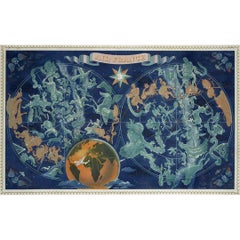
Lucien Boucher’s iconic 1956 “Signes du Zodiaque” original poster for Air France
Located in PARIS, FR
Lucien Boucher’s iconic 1956 “Signes du Zodiaque” poster for Air France is a celestial masterpiece of mid-century travel design—where astrology, mythology, and aviation intersect in ...
Category
1950s Art by Medium: Lithograph
Materials
Linen, Paper, Lithograph
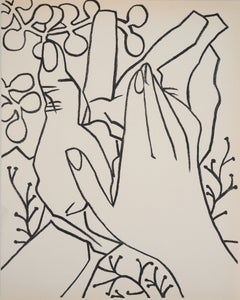
Caress, 1951 - Original lithograph
Located in Paris, IDF
Françoise GILOT (1921)
Caress, 1951
Original lithograph
On Marais vellum 28 x 22.5 cm (c. 11 x 9 inches)
REFERENCES : Catalog raisonne "Stone Echoes, Original Prints by Francoise G...
Category
Late 20th Century Modern Art by Medium: Lithograph
Materials
Lithograph
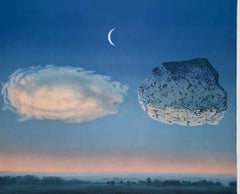
La Bataille De L
Argonne - 20th Century, Surrealist, Lithograp, Figurative Print
Located in Sint-Truiden, BE
Color lithograph after the 1935 oil on canvas by René Magritte, printed signature of Magritte and numbered from the edition of 300.
The lithograph features the dry stamps of the Mag...
Category
20th Century Surrealist Art by Medium: Lithograph
Materials
Lithograph
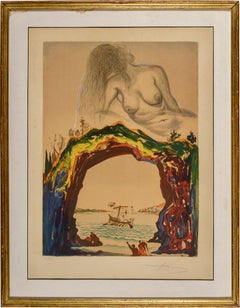
1970s Surrealist Salvador Dalì Signed Original Work on Paper
Located in Roma, IT
Salvador Dalí "La Sirène".
La Sirène is an original lithograph signed by Salvador Dalí, created in the 1970s and part of the illustrative cycle inspired by Les Chants de Maldoror by ...
Category
1970s Surrealist Art by Medium: Lithograph
Materials
Lithograph
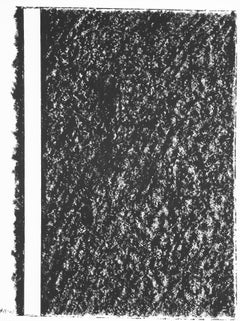
Newman, Sans titre, In Memory of My Feelings (after)
By Barnett Newman
Located in Southampton, NY
Lithograph on vélin Mohawk Superfine Smooth paper. Paper Size: 11.937 x 8.96 inches. Inscription: Signed in the plate and unnumbered, as issued. Notes: From the folio, In Memory of M...
Category
1960s Abstract Expressionist Art by Medium: Lithograph
Materials
Lithograph
$1,596 Sale Price
20% Off
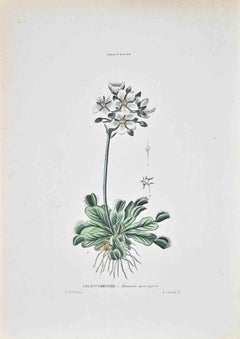
The Sundews - Lithograph by Vincenzo Tenore - 1870s
Located in Roma, IT
Lithograph hand watercolored.
Plate from "Atlante di Botanica popolare ossia Illustrazione di Piante Notevoli di ogni famiglia" (Atlas of popular botany or illustration of notable p...
Category
19th Century Modern Art by Medium: Lithograph
Materials
Lithograph
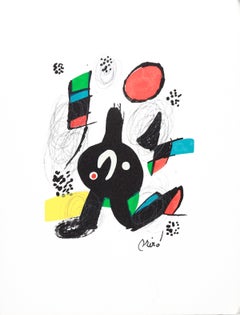
Joan Miro, The Acid Melody, from La Melodie acide, 1980
By Joan Miró
Located in Southampton, NY
This exquisite lithograph by Joan Miro (1893–1983), titled La Melodie acide (The Acid Melody), from the folio 14 original lithographs by Joan Miro "La Melodie acide" (The Acid Melody...
Category
1980s Modern Art by Medium: Lithograph
Materials
Lithograph
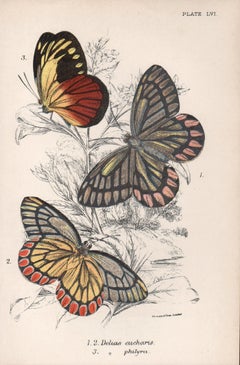
$1,756 Sale Price
20% Off
Butterflies, late 19th century antique natural history colour lithograph
Located in Melbourne, Victoria
'1. 2. Delias eucharis 3. Delias philyra'
Late 19th century colour lithograph of butterflies.
Category
Late 19th Century Victorian Art by Medium: Lithograph
Materials
Lithograph
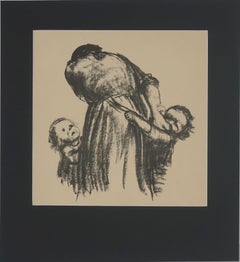
"Bread" lithograph by Käthe Kollwitz
Located in Soquel, CA
Bold lithograph titled "Bread" by Kathe Kollwitz (German, 1867-1945). This piece is one of the Lithographic reproductions of the original lithographs, plate 2 from a series of 10, pr...
Category
1940s Expressionist Art by Medium: Lithograph
Materials
Paper, Ink, Lithograph
Jean Rene Bazaine Lithograph, 1960, Unframed, First Edition
By Jean Bazaine
Located in Brooklyn, NY
Paper Size: 15 x 11 inches ( 38.1 x 27.94 cm )
Image Size: 15 x 11 inches ( 38.1 x 27.94 cm )
Framed: No
Condition: A-: Near Mint, very light signs of handling
Additional Detai...
Category
1960s Art by Medium: Lithograph
Materials
Lithograph
$100 Sale Price
20% Off
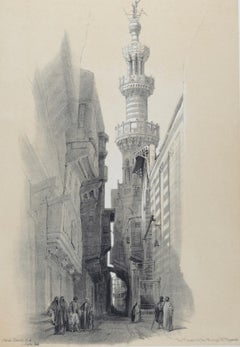
Minaret El Rhamree in Cairo, Egypt: Original 19th C. Lithograph by D. Roberts
Located in Alamo, CA
This is an original 19th century duotone lithograph entitled "Minaret of the Mosque El Rhamree" by David Roberts, from his Egypt and Nubia volumes of the large folio edition, publish...
Category
1840s Realist Art by Medium: Lithograph
Materials
Lithograph
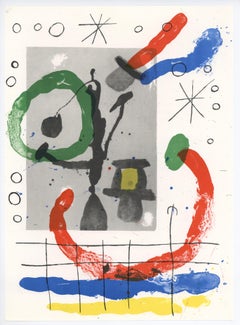
original lithograph
By Joan Miró
Located in Henderson, NV
Medium: original lithograph. Printed in 1965 for the art revue Derriere le Miroir (issue number 151-152) and published in Paris by Maeght. Size: 15 x 11 inches (378 x 277 mm). There ...
Category
1960s Abstract Art by Medium: Lithograph
Materials
Lithograph
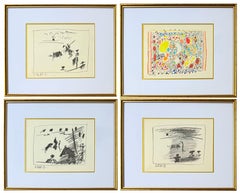
Four Original Lithographs, A Los Toros Series, Modern, 1961, Framed Set
Located in OPOLE, PL
Pablo Picasso (1881-1973) - Four original lithographs - A Los Toros series
Lithograph from 1961.
Dimensions of each work: 31 x 25 cm.
Reference: Bloch 1014-1017; Cramer 113.
Print...
Category
1960s Modern Art by Medium: Lithograph
Materials
Lithograph
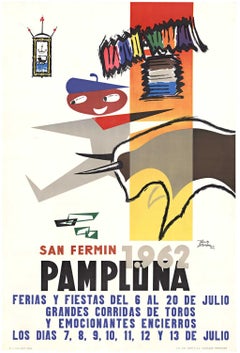
Original Pamplona Running of the Bulls vintage poster San Fermin, Spain
Located in Spokane, WA
Original San Fermin Pamplona running of the bulls, vintage poster.
Archival linen backed in very fine condition ready to frame. Artist: Alonso Astarloa....
Category
1960s Abstract Geometric Art by Medium: Lithograph
Materials
Lithograph
$1,000 Sale Price
20% Off
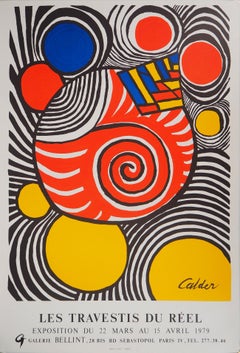
Color Balloons and Waves (Les Travestis du Reel) - Lithograph poster - 1979
Located in Paris, IDF
Alexander CALDER
Les Travestis du Reel, 1979
Original vintage lithograph poster
Printed in Atelier Arts-Litho
Printed signature in the plate
82 x 57 cm (c. 32.2 x 22.4 in)
Excelle...
Category
1970s Abstract Geometric Art by Medium: Lithograph
Materials
Lithograph
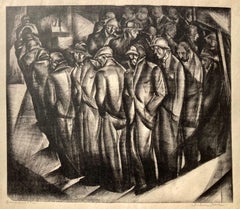
BREAD LINE - Large Strong 30
s Modernist Labor Print
By Iver Rose
Located in Santa Monica, CA
IVER ROSE (1899-1972)
BREAD LINE ca. 1935
Lithograph, signed, titled and no. 22/85 in pencil. Image 15” x 17 3/8. Large margins, sheet 18 x 22”. Generally good condition. Some slig...
Category
1930s American Modern Art by Medium: Lithograph
Materials
Lithograph
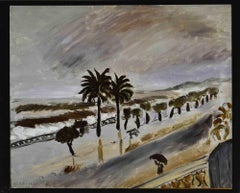
Tempête à Nice - PhotoLithograph after Henri Matisse - 1920
Located in Roma, IT
Tempête à Nice is a photolithograph realized in 1993 after Henri Matisse.
Signed on the plate
On Milano handmade paper.
Very good conditions.
Category
1920s Modern Art by Medium: Lithograph
Materials
Lithograph
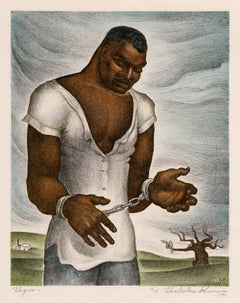
Negro
— California WPA Social Realism – Slavery
Located in Myrtle Beach, SC
Nicholas Panesis, 'Negro', 1934, color lithograph, edition 18. Signed, dated, titled, and numbered 8/28 in pencil. Initialed in the stone, lower right. A fine impression, with fresh colors, on buff wove paper, with margins (1 1/8 to 2 3/8 inches). Minor glue staining at the extreme sheet edges verso, where previously taped (not visible recto), otherwise in excellent condition. Very scarce.
Matted to museum standards, unframed.
Image size 10 5/8 x 8 1/2 inches; (270 x 216 mm); sheet size 14 13/16 x 10 15/16 inches (376 x 278 mm).
Created for the California Works Progress Administration, Federal Art Project (WPA).
Impressions of this work are held in the public collections of La Salle University Art Museum (Philadelphia), U.S. General Services Administration, and Weisman Art Museum (University of Minnesota).
ABOUT THE ARTIST
Born in Massachusetts, Nicholas Panesis (1913-1967) studied art at Syracuse University, NY, and went on to teach ceramics at Alfred University, NY.
Panesis moved to San Francisco in the early 1930s shortly before settling in Los Angeles, where he worked for different animation studios...
Category
1930s American Realist Art by Medium: Lithograph
Materials
Lithograph
René Magritte - LA VALSE HESITATION. Limited Surrealism French Contemporary
Located in Madrid, Madrid
René Magritte - LA VALSE HESITATION, 1950 (THE HESITATION WALTZ)
Date of creation: 2010
Medium: Lithograph on BFK Rives Paper
Edition number: 131/275
Size: 60 x 45 cm
Condition: New,...
Category
Mid-20th Century Surrealist Art by Medium: Lithograph
Materials
Paper, Lithograph

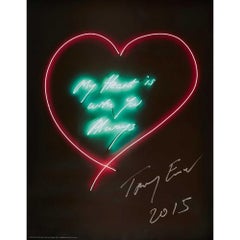
Tracey Emin - My Heart Is with You Always
By Tracey Emin
Located in London, GB
Tracey Emin
My Heart is with you Always, 2015
Offset lithograph on silk-finished paper
Signed by the artist, on recto
70 x 50 cm
Edition of 500
Category
2010s Contemporary Art by Medium: Lithograph
Materials
Lithograph, Offset
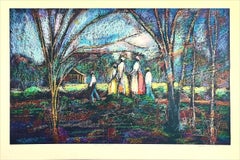
GOING TO CHURCH Signed Lithograph, Southern Landscape, African American Heritage
Located in Union City, NJ
GOING TO CHURCH is an original hand drawn lithograph (not a photo reproduction or digital print) printed on archival printmaking paper 100% acid free, using hand lithography techniqu...
Category
1990s Contemporary Art by Medium: Lithograph
Materials
Lithograph
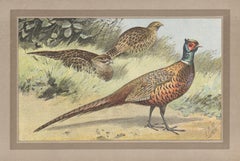
Pheasant, French antique natural history bird art illustration print
Located in Melbourne, Victoria
French chromolithograph, published in 1931. Printed title lower right of sheet. Plate number top right. From a French series of illustrations of birds.
195mm by 265mm (sheet)
Category
1930s Art Deco Art by Medium: Lithograph
Materials
Lithograph
Through The Ages by Toko Shinoda, black and white signed lithograph calligraphy
By Toko Shinoda
Located in Santa Fe, NM
Through The Ages by Toko Shinoda, black and white signed lithograph calligraphy 11/35
obituary published by CNN March 2021
Celebra...
Category
1990s Contemporary Art by Medium: Lithograph
Materials
Lithograph
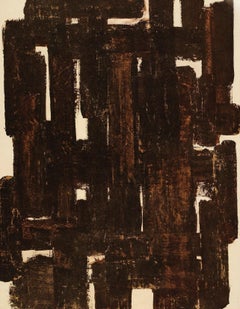
Pierre Soulages, Plate No. 5, from Painters of Today, 1962 (after)
Located in Southampton, NY
This exquisite heliogravure after Pierre Soulages (1919–2022), titled Planche No. 5 (Plate No. 5), from the folio Pierre Soulages, Peintres d'aujourd'hui (Pierre Soulages, Painters o...
Category
1960s Modern Art by Medium: Lithograph
Materials
Lithograph
$1,996 Sale Price
20% Off
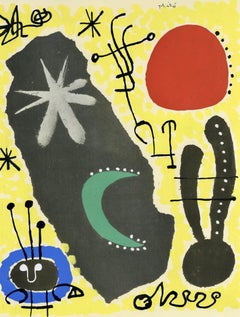
Joan Miro, The Woman and the Bird, from XXe Siecle, 1956
By Joan Miró
Located in Southampton, NY
This exquisite lithograph and pochoir by Joan Miro (1893–1983), titled La Femme et l’Oiseau (The Woman and the Bird), from the album XXe Siecle, Nouvelle serie No. 6, originates from...
Category
1950s Surrealist Art by Medium: Lithograph
Materials
Lithograph
$1,036 Sale Price
20% Off
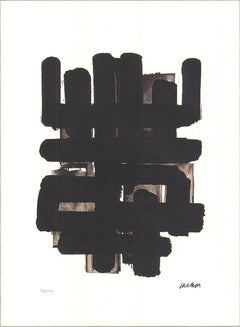
Soulages
Ohne Titel - Untitled- Sans Titre (1955)
2015- Lithograph
Located in Brooklyn, NY
This limited edition print, created in 1955, is produced on thick, high-quality paper and is hand-numbered 32 out of 150 in pencil. It features a facsimile signature of the artist. T...
Category
2010s Modern Art by Medium: Lithograph
Materials
Lithograph
$1,200 Sale Price
20% Off
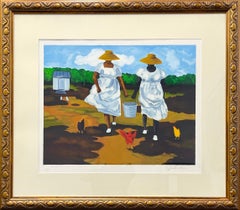
SHARING THE CHORES Signed Lithograph Black Women, Farm Chickens, Gullah Culture
Located in Union City, NJ
SHARING THE CHORES is a hand drawn, limited edition lithograph by the African American artist JONATHAN GREEN printed using hand lithography techniques on archival Arches paper, 100% ...
Category
1990s Contemporary Art by Medium: Lithograph
Materials
Lithograph
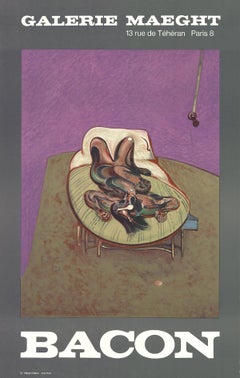
Francis Bacon
Personnage Couche
1966 vintage lithograph
Located in Brooklyn, NY
"Personnage couché" is a second edition lithograph poster by renowned artist Francis Bacon, originally published by Galerie Maeght in Paris in 1966. This striking artwork represents ...
Category
1960s Modern Art by Medium: Lithograph
Materials
Lithograph
Lithograph art for sale on 1stDibs.
Find a wide variety of authentic Lithograph art available on 1stDibs. While artists have worked in this medium across a range of time periods, art made with this material during the 21st Century is especially popular. If you’re looking to add art created with this material to introduce a provocative pop of color and texture to an otherwise neutral space in your home, the works available on 1stDibs include elements of blue, orange, yellow, red and other colors. There are many well-known artists whose body of work includes ceramic sculptures. Popular artists on 1stDibs associated with pieces like this include Joan Miró, Marc Chagall, Peter Max, and Alexander Calder. Frequently made by artists working in the Modern, Contemporary, all of these pieces for sale are unique and many will draw the attention of guests in your home. Not every interior allows for large Lithograph art, so small editions measuring 0.01 inches across are also available