Woodcut Landscape Prints
to
290
583
129
58
31
29
Overall Width
to
Overall Height
to
288
192
105
27
20
16
5
4
4
2
2
169
28
13
12
12
7
97
615
114
8
13
238
48
31
24
62
21
19
14
3
529
281
19
449
262
190
156
116
99
75
65
62
61
57
48
47
38
35
35
31
25
23
22
4,893
6,569
3,732
2,729
1,444
82
181
564
168
Medium: Woodcut
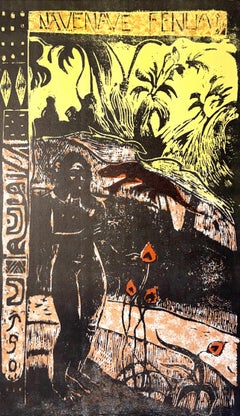
Gauguin, Delightful Land (Nave nave fenua), Gauguin (after)
By Paul Gauguin
Located in Southampton, NY
Woodcut on vélin Utopian paper. Unsigned and unnumbered, as issued. Good Condition. Notes: From the folio, Gauguin, A portfolio of 12 color woodblocks, Paul Gauguin, French, 1848-1903 from the collection of the Museum Of Fine Arts, Boston, 1946. Rendered by Albert Carman (1899-1949); published the Museum Of Fine Arts, Boston and The Studio Publications, Inc., New York and London; printed by Holme Press Inc., New York, in an edition of MMMD. Excerpted from the folio, Paul Gauguin and Emil Bernard at Pont-Aven, Brittany, in 1888, each made a bas-relief, wooden panel to decorate a piece of furniture for a friend. In order to keep a record of their designs, a few inked impressions were made on paper. The illustration at left is a reproduction of a print which is possibly one of the above mentioned. It is further possible that this experiment later gave Gauguin the idea of making woodcuts. Just as his work in painting expressed a revolt against the overemphasis on factual representation of the nineteenth century in favor of decorative pattern and color, so also his woodcuts leaned strongly to the same side of the balance. Ten of the cuts reproduced (all excepting Soyez Amoureuses and Changement de Residence), which constitute the whole of his best known series, were made at Pont-Aven beginning in the fall of 1894, after Gauguin's return from his first trip to Tahiti and after he broke his ankle. They were at first roughly cut with a common carpenter's gouge, and the flat surfaces sandpapered and engraved with a sharp in-strument, perhaps an engraver's burin. A few trial proofs were printed in black ink only. Then the hollows were deepened with a woodcutter's gouge and highlights were added. An edition of thirty to fifty impressions of each subject, with the addition of color blocks (one, two or three), was made by Louis Roy...
Category
1940s Post-Impressionist Woodcut Landscape Prints
Materials
Woodcut

$716 Sale Price
20% Off
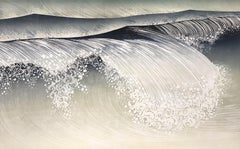
Shorebreak, Japanese style woodcut print, contemporary handmade seascape print,
Located in Deddington, GB
Shore Break by Rod Nelson [2021]
limited_edition and hand signed by the artist
Woodcut Print on on Somerset Satin 300gsm acid free paper
Edition number of ...
Category
21st Century and Contemporary Contemporary Woodcut Landscape Prints
Materials
Paper, Woodcut
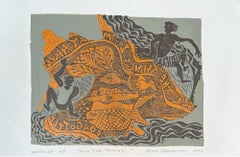
All The Things - Surfing Art - Figurative - Woodcut Print By Marc Zimmerman
Located in Carmel, CA
All The Things - Surfing Art - Figurative - Woodcut Print By Marc Zimmerman
Limited Edition 01/04
This masterwork is exhibited in the Zimmerman Gallery, Carmel CA.
Immerse yoursel...
Category
2010s Contemporary Woodcut Landscape Prints
Materials
Woodcut
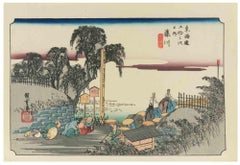
Fujikawa - Woodcut by Utagawa Kunisada - 1832
Located in Roma, IT
Fujikawa is a woodcut print realized by Utagawa Hiroshige in 1833.
It is part of the suite "The Fifty-three Stations of Tokaido".
Very good condition.
Category
1830s Modern Woodcut Landscape Prints
Materials
Woodcut
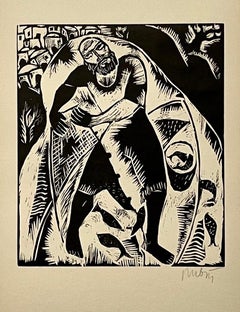
Rare 1923 Cubist Reuven Rubin Woodcut Woodblock Fisherman Print Israeli Judaica
By Reuven Rubin
Located in Surfside, FL
This is from the original first edition 1923 printing. there was a much later edition done after these originals.
These are individually hand signed in pencil by artist as issued.
This listing is for the one print. the other documentation is included here for provenance and is not included in this listing.
The various images inspired by the Jewish Mysticism and rabbis and mystics of jerusalem and Kabbalah is holy, dramatic and optimistic Rubin succeeded to evoke the spirit of life in Israel in those early days.
They are done in a modern art style influenced by German Expressionism, particularly, Ernst Barlach, Ernst Ludwig Kirchner, and Franz Marc, as introduced to Israel by Jakob Steinhardt, Hermann Struck and Joseph Budko.
Reuven Rubin 1893 -1974 was a Romanian-born Israeli painter and Israel's first ambassador to Romania.
Rubin Zelicovich (later Reuven Rubin) was born in Galati to a poor Romanian Jewish Hasidic family. He was the eighth of 13 children. In 1912, he left for Ottoman-ruled Palestine to study art at Bezalel Academy of Art and Design in Jerusalem. Finding himself at odds with the artistic views of the Academy's teachers, he left for Paris, France, in 1913 to pursue his studies at the École Nationale Supérieure des Beaux-Arts. He was of the well known Jewish artists in Paris along with Marc Chagall and Chaim Soutine,
At the outbreak of World War I, he was returned to Romania, where he spent the war years.
In 1921, he traveled to the United States with his friend and fellow artist, Arthur Kolnik. In New York City, the two met artist Alfred Stieglitz, who was instrumental in organizing their first American show at the Anderson Gallery. Following the exhibition, in 1922, they both returned to Europe. In 1923, Rubin emigrated to Mandate Palestine.
Rubin met his wife, Esther, in 1928, aboard a passenger ship to Palestine on his return from a show in New York. She was a Bronx girl who had won a trip to Palestine in a Young Judaea competition. He died in 1974.
Part of the early generation of artists in Israel, Joseph Zaritsky, Arieh Lubin, Reuven Rubin, Sionah Tagger, Pinchas Litvinovsky, Mordecai Ardon, Yitzhak Katz, and Baruch Agadati; These painters depicted the country’s landscapes in the 1920s rebelled against the Bezalel school of Boris Schatz. They sought current styles in Europe that would help portray their own country’s landscape, in keeping with the spirit of the time. Rubin’s Cezannesque landscapes from the 1920s were defined by both a modern and a naive style, portraying the landscape and inhabitants of Israel in a sensitive fashion. His landscape paintings in particular paid special detail to a spiritual, translucent light. His early work bore the influences of Futurism, Vorticism, Cubism and Surrealism.
In Palestine, he became one of the founders of the new Eretz-Yisrael style. Recurring themes in his work were the bible, the prophet, the biblical landscape, folklore and folk art, people, including Yemenite, Hasidic Jews and Arabs. Many of his paintings are sun-bathed depictions of Jerusalem and the Galilee. Rubin might have been influenced by the work of Henri Rousseau whose naice style combined with Eastern nuances, as well as with the neo-Byzantine art to which Rubin had been exposed in his native Romania. In accordance with his integrative style, he signed his works with his first name in Hebrew and his surname in Roman letters.
In 1924, he was the first artist to hold a solo exhibition at the Tower of David, in Jerusalem (later exhibited in Tel Aviv at Gymnasia Herzliya). That year he was elected chairman of the Association of Painters and Sculptors of Palestine. From the 1930s onwards, Rubin designed backdrops for Habima Theater, the Ohel Theater and other theaters.
His biography, published in 1969, is titled My Life - My Art. He died in Tel Aviv in October 1974, after having bequeathed his home on 14 Bialik Street and a core collection of his paintings to the city of Tel Aviv. The Rubin Museum opened in 1983. The director and curator of the museum is his daughter-in-law, Carmela Rubin. Rubin's paintings are now increasingly sought after. At a Sotheby's auction in New York in 2007, his work accounted for six of the ten top lots. Along with Yaacov Agam and Menashe Kadishman he is among Israel's best known artists internationally. Education
1912 Bezalel Academy of Arts and Design, Jerusalem
1913-14 École des Beaux Arts, Paris and Académie Colarossi, Paris
Select Group Exhibitions
Eged - Palestine Painters Group Eged - Palestine Painters Group, Allenby Street, Tel Aviv 1929
Artists: Chana Orloff, Abraham Melnikoff, Rubin, Reuven Nahum Gutman, Sionah Tagger,Arieh Allweil,
Jewish Artists Association, Levant Fair, Tel Aviv, 1929
Artists: Ludwig Blum,Eliyahu Sigad, Shmuel Ovadyahu, Itzhak Frenel Frenkel,Ozer Shabat, Menahem Shemi,
First Exhibition of ''Hever Omanim'' First Exhibition of ''Hever Omanim''
Steimatzky Gallery, Jerusalem
1936
Artists:
Gutman, Nachum Holzman, Shimshon Mokady, Moshe Sima, Miron Rubin, Reuven Steinhardt, Jakob Ben Zvi, Zeev Ziffer, Moshe Allweil, Arieh
Group Exhibition Group Exhibition
Katz Art Gallery, Tel Aviv
1939
Artists:
Avni, Aharon Holzman, Shimshon Gliksberg, Haim Gutman, Nachum Ovadyahu, Shmuel Shorr, Zvi Schwartz, Chaya Streichman, Yehezkel Tagger, Sionah Rubin, Reuven
A Collection of Works by Artists of the Land of Israel A Collection of Works by Artists of the Land of Israel
The Bezalel National Museum, Jerusalem
1940
Artists:
Shemi, Menahem Rubin, Reuven Avni, Aharon Mokady, Moshe Jonas, Ludwig Steinhardt, Jakob Ticho, Anna Krakauer, Leopold Gutman, Nachum Budko, Joseph Ardon, Mordecai Sima, Miron Castel, Moshe Pann, Abel Struck, Hermann Gur Arie, Meir Ben Zvi, Zeev Litvinovsky, Pinchas
Artists in Israel for the Defense, Tel Aviv Museum of Art, Helena Rubinstein Pavilion, Tel Aviv 1967
Artists: Avraham Binder, Motke Blum, (Mordechai) Samuel Bak, Yosl Bergner, Nahum Gilboa, Jean David, Marcel Janco, Lea Nikel, Jacob Pins, Esther Peretz...
Category
1920s Abstract Woodcut Landscape Prints
Materials
Woodcut
Gauguin, Spirit of the Dead (Manaò tupapaú), Gauguin (after)
By Paul Gauguin
Located in Southampton, NY
Woodcut on vélin Utopian paper. Unsigned and unnumbered, as issued. Good Condition. Notes: From the folio, Gauguin, A portfolio of 12 color woodblocks, Paul Gauguin, French, 1848-1903 from the collection of the Museum Of Fine Arts, Boston, 1946. Rendered by Albert Carman (1899-1949); published the Museum Of Fine Arts, Boston and The Studio Publications, Inc., New York and London; printed by Holme Press Inc., New York, in an edition of MMMD. Excerpted from the folio, Paul Gauguin and Emil Bernard at Pont-Aven, Brittany, in 1888, each made a bas-relief, wooden panel to decorate a piece of furniture for a friend. In order to keep a record of their designs, a few inked impressions were made on paper. The illustration at left is a reproduction of a print which is possibly one of the above mentioned. It is further possible that this experiment later gave Gauguin the idea of making woodcuts. Just as his work in painting expressed a revolt against the overemphasis on factual representation of the nineteenth century in favor of decorative pattern and color, so also his woodcuts leaned strongly to the same side of the balance. Ten of the cuts reproduced (all excepting Soyez Amoureuses and Changement de Residence), which constitute the whole of his best known series, were made at Pont-Aven beginning in the fall of 1894, after Gauguin's return from his first trip to Tahiti and after he broke his ankle. They were at first roughly cut with a common carpenter's gouge, and the flat surfaces sandpapered and engraved with a sharp in-strument, perhaps an engraver's burin. A few trial proofs were printed in black ink only. Then the hollows were deepened with a woodcutter's gouge and highlights were added. An edition of thirty to fifty impressions of each subject, with the addition of color blocks (one, two or three), was made by Louis Roy...
Category
1940s Post-Impressionist Woodcut Landscape Prints
Materials
Woodcut
$716 Sale Price
20% Off
Gauguin, The God (Te atua), Gauguin (after)
By Paul Gauguin
Located in Southampton, NY
Woodcut on vélin Utopian paper. Unsigned and unnumbered, as issued. Good Condition. Notes: From the folio, Gauguin, A portfolio of 12 color woodblocks, Paul Gauguin, French, 1848-19...
Category
1940s Post-Impressionist Woodcut Landscape Prints
Materials
Woodcut
$716 Sale Price
20% Off
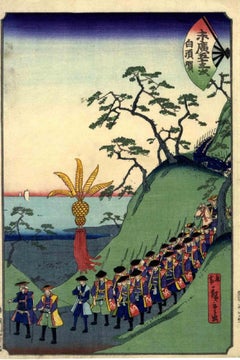
Meishoe - Woodcut by Utagawa Hiroshige II - 1860s
Located in Roma, IT
Meishoe is an artwork realized in the 1865 by Utagawa Hiroshige II (Ni-daime Utagawa Hiroshige, 1826 – 17 September 1869).
Woodcut Print Oban Format.
From the series "Suehiro gojus...
Category
1860s Modern Woodcut Landscape Prints
Materials
Woodcut
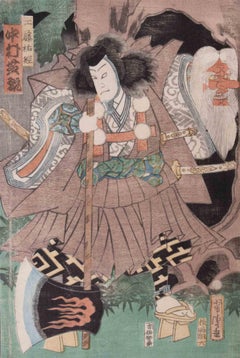
Kabuki Actor - Woodcut by Utagawa Kunisada - 1848/49
Located in Roma, IT
Kabuki Actor is a woodcut print realized by Utagawa Kunisada in 1848/49.
Lifetime impression in very good condition, except for some very minor sign of time.
Category
1840s Modern Woodcut Landscape Prints
Materials
Woodcut
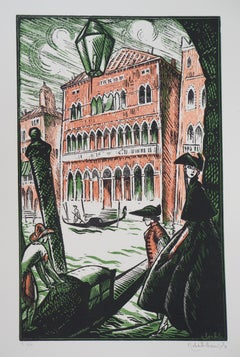
Gondolas on the Grand Canal in Venice - Original wooodcut, Handsigned
Located in Paris, IDF
Robert BONFILS
Gondolas on the Grand Canal in Venice
Original woodcut
Handsigned in pencil
Numbered /154
On vellum 32.5 x 25.5 cm (c. 13 x 10 in)
Bears the blind stamp of the edito...
Category
1920s Modern Woodcut Landscape Prints
Materials
Woodcut
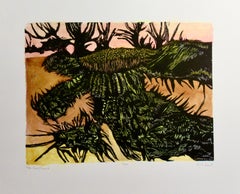
The Sun Flower
By Ruth Leaf
Located in San Francisco, CA
This artwork titled "The Sun Flower" c.1990, is an original colors woodcut on Wove paper by noted American artist Ruth Leaf, 1923-2015. It is hand signed, titled and numbered 9/20 in...
Category
Late 20th Century Abstract Expressionist Woodcut Landscape Prints
Materials
Woodcut
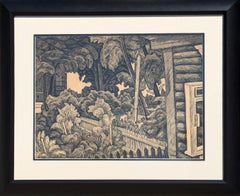
Modern Black and White Abstract Tropical Village Landscape Woodcut Print
Located in Houston, TX
Modern black and white abstract woodcut print. The piece features lush trees and foliage growing in a yard behind a house. There are three central figures standing next to a pole and...
Category
20th Century Abstract Woodcut Landscape Prints
Materials
Woodcut
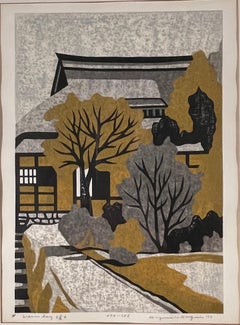
WARM DAY
Located in Portland, ME
Nagai, Kiyoshi (Japanese, 1911-1984). WARM DAY. Color woodblock, 1971. Edition of 252. Signed, datted, and numbered 156 - 252, all in pencil. 15 1/2 x 11 1/2 inches, framed to 20 1/2...
Category
1970s Woodcut Landscape Prints
Materials
Woodcut
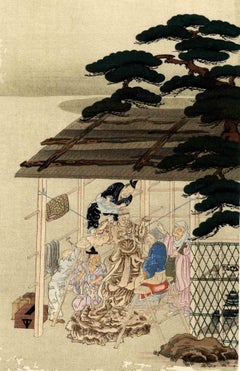
Sculptor at Work - Woodcut after Takakane Fujiwara - 1950s
Located in Roma, IT
Sculptor at work is an artwork realized in the Early 20th Century after Takakane Fujiwara.
Sheet dimensions: 30 x 19.5 cm.
Reprint.
Good conditions.
Category
1950s Modern Woodcut Landscape Prints
Materials
Paper, Woodcut
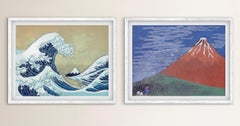
Hokusai
s Dog - The Great Wave and Hokusai
s Dog - Red Fuji
Located in Deddington, GB
Hokusai's Dog - The Great Wave
Woodcut
Image Size H 50 x 66cm
Edition of 100
Hokusai's Dog - Red Fuji-
Woodcut
Image Size H 50 x 66cm
Edition of 100
Sheet sizes may vary
Sold unfr...
Category
21st Century and Contemporary Contemporary Woodcut Landscape Prints
Materials
Woodcut
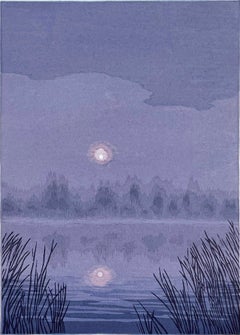
Moon At Dawn
Located in Palm Springs, CA
Signed and numbered from the edition of 88. This tranquil scene of the moon at night by the waters' edge shows Schwaberow's technicque at its best. The grain of each piece of wood plays into the image perfectly.
Micah Schwaberow was born in Eugene, Oregon and currently resides In Santa Rosa, California. The rolling hillsides, cloudscapes and coastline of Sonoma County are a major motif in his woodcuts. Seascape with light reflecting on the water just after sunset.
Micah learned the art of Japanese woodblock art...
Category
2010s Contemporary Woodcut Landscape Prints
Materials
Woodcut
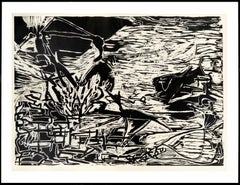
Large Scale Abstract Figurative Landscape Woodcut, Signed Limited Edition 1/10
Located in Soquel, CA
Large scale limited edition woodcut print of an an abstracted scene with landscape elements and rough figural forms including a dog, house and tree that emerge from chaotic linear ab...
Category
Late 20th Century Post-War Woodcut Landscape Prints
Materials
Paper, Woodcut, Ink
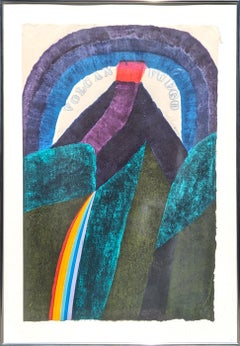
“Volcano Fuego” Modern Colorful Abstract Landscape Woodcut Print Ed. 74/75
Located in Houston, TX
Colorful abstract landscape woodcut print by modern artist Carol Summers. The work features a color blocked depiction of a volcano with a rainbow. Signed, titled, and editioned withi...
Category
1970s Contemporary Woodcut Landscape Prints
Materials
Woodcut
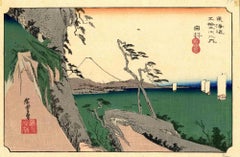
Station Yui - Woodcut by Utagawa Hiroshige - 1900s
Located in Roma, IT
The station Yui on the coast and Mount Fuji is an original modern artwork realized after Utagawa Hiroshige, in the early 20th Century.
Woodcuc Print format Oban Yokoe.
Frame is inc...
Category
Early 20th Century Modern Woodcut Landscape Prints
Materials
Woodcut
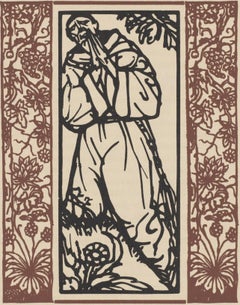
Composition (Morane, N° 100), Les Petites Fleurs de St. Françoise, Émile Bernard
Located in Southampton, NY
Wood engraving on vergé d'Arches paper. Inscription: unsigned and unnumbered, as issued. Good condition. Notes: From the volume, Les Petites Fleurs de St. François, 1928. Published b...
Category
1920s Post-Impressionist Woodcut Landscape Prints
Materials
Woodcut
Composition (Morane, N° 100), Les Petites Fleurs de St. Françoise, Émile Bernard
Located in Southampton, NY
Wood engraving on vergé d'Arches paper. Inscription: unsigned and unnumbered, as issued. Good condition. Notes: From the volume, Les Petites Fleurs de St. François, 1928. Published b...
Category
1920s Post-Impressionist Woodcut Landscape Prints
Materials
Woodcut
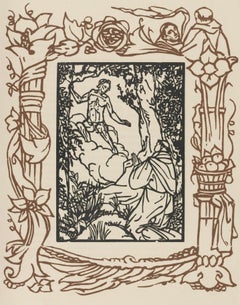
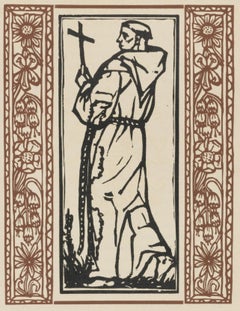
Composition (Morane, N° 100), Les Petites Fleurs de St. Françoise, Émile Bernard
Located in Southampton, NY
Wood engraving on vergé d'Arches paper. Inscription: unsigned and unnumbered, as issued. Good condition. Notes: From the volume, Les Petites Fleurs de St. François, 1928. Published b...
Category
1920s Post-Impressionist Woodcut Landscape Prints
Materials
Woodcut
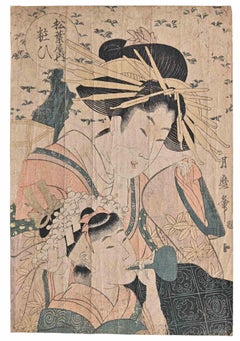
Matsubaya - Woodblock Print by Utagawa Kuniyoshi - Mid-19th Cent.
Located in Roma, IT
Yosooi of the Matsubaya is an Original Woodcut Print, Oban Format, realized by Kitagawa Tsukimaro.
Good condition but many folds in the paper.
No signature.
Kitagawa Tsukimaro ( 1...
Category
Mid-19th Century Modern Woodcut Landscape Prints
Materials
Woodcut
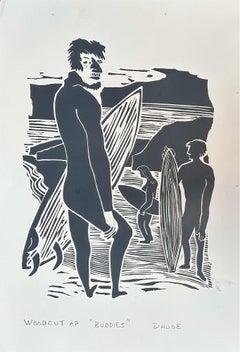
Buddies - Surfing Art - Figurative - Woodcut Print By Marc Zimmerman
Located in Carmel, CA
Buddies - Surfing Art - Figurative - Woodcut Print By Marc Zimmerman
Limited Edition 01/04
This masterwork is exhibited in the Zimmerman Gallery, Carmel CA.
Immerse yourself in th...
Category
2010s Contemporary Woodcut Landscape Prints
Materials
Woodcut
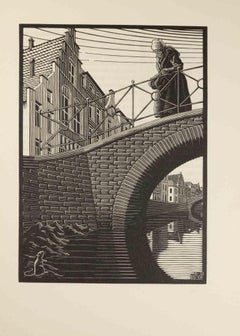
The Bridge - Woodcut by Maurits Cornelis Escher - 1932
Located in Roma, IT
Woodcut print from the Series "Der vreeselijke avonturen vas Scholastica" (The Terrible Adventures of Scholastica).
Edition of 300, published by A. J. van Dishoeck.
Unsigned, ass i...
Category
1930s Modern Woodcut Landscape Prints
Materials
Woodcut
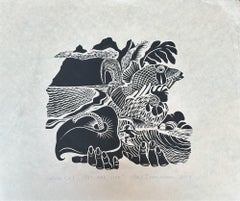
Island Life - Surfing Art By Marc Zimmerman
Located in Carmel, CA
Island Life - Surfing Art - Figurative - Woodcut Print By Marc Zimmerman
Limited Edition 01/04
This masterwork is exhibited in the Zimmerman Gallery, Carmel CA.
Immerse yourself i...
Category
2010s Contemporary Woodcut Landscape Prints
Materials
Woodcut
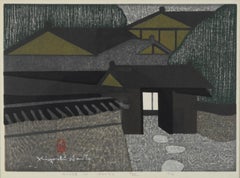
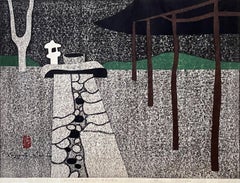
House in Kyoto
Located in Fairlawn, OH
House in Kyoto
Color woodcut, 1963
Signed in white brush bottom left of image, along with the artist's red stamp (see photo)
Titled, dated and numbered in pencil bottom margin (see p...
Category
1960s Contemporary Woodcut Landscape Prints
Materials
Woodcut
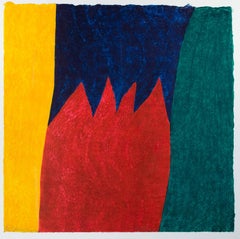
"Red, Yellow, Blue
Green, " Color Woodcut
Monotype signed by Carol Summers
Located in Milwaukee, WI
"Red, Yellow, Blue & Green" is an original color woodcut by Carol Summers. The artist signed the piece in the lower left. This woodcut depicts four color fields. The edition number i...
Category
2010s Woodcut Landscape Prints
Materials
Monotype, Woodcut
Sunset After Storm
Located in Milwaukee, WI
Original Woodcut in colors on Japanese paper.
Carol Summers has worked as an artist throughout the second half of the 20th century and into the first years of the next, outliving m...
Category
1980s Woodcut Landscape Prints
Materials
Woodcut
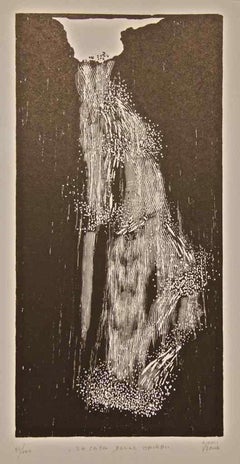
The House of Naiads - Woodcut Print by G. Verna - 1946
Located in Roma, IT
Image dimension 36.5 x 18 cm.
Hand Signed. Edition of 100 pieces.
Category
1940s Contemporary Woodcut Landscape Prints
Materials
Woodcut
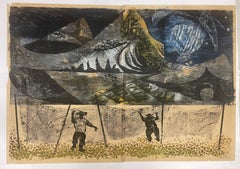
NIGHT WORK
Located in Portland, ME
Frasconi,Antonio. NIGHT WORK. Color woodcut, 1952. Edition size not stated. Signed, titled, dated, and inscribed P/P (printer's proof) in pencil. 29 x 42 inches (sheet). The print is...
Category
1950s Woodcut Landscape Prints
Materials
Woodcut
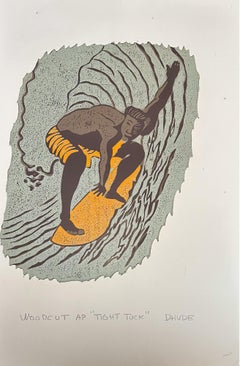
Tight Tuck - Surfing Art - Figurative - Woodcut Print By Marc Zimmerman
Located in Carmel, CA
Tight Tuck - Surfing Art - Figurative - Woodcut Print By Marc Zimmerman
Limited Edition 01/04
This masterwork is exhibited in the Zimmerman Gallery, Carmel CA.
Immerse yourself in...
Category
2010s Contemporary Woodcut Landscape Prints
Materials
Woodcut
"Little Wolf
s Last Camp, " Colored Woodblock A/P signed by Carol Summers
Located in Milwaukee, WI
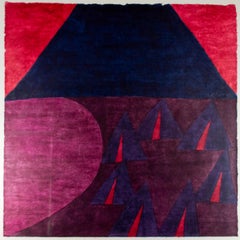
"Little Wolf's Last Camp" is a colored woodblock A/P signed by Carol Summers. In the image, a mountain looms over a circle of teat the edge of a lake, a scene likely inspired by the life events of the Northern Cheyenne Chief Little Wolf (c. 1820-1904) and his leadership during the Northern Cheyenne Exodus. The drama of the image is enhanced by Summers' signature printmaking technique, which allows the ink from the woodblock to seep through the paper, blurring the edges of each form.
Frame: 37 x 37 in
This is an artist's proof from the edition of 100
Carol Summers (1925-2016) has worked as an artist throughout the second half of the 20th century and into the first years of the next, outliving most of his mid-century modernist peers. Initially trained as a painter, Summers was drawn to color woodcuts around 1950 and it became his specialty thereafter. Over the years he has developed a process and style that is both innovative and readily recognizable. His art is known for it’s large scale, saturated fields of bold color, semi-abstract treatment of landscapes from around the world and a luminescent quality achieved through a printmaking process he invented.
In a career that has extended over half a century, Summers has hand-pulled approximately 245 woodcuts in editions that have typically run from 25 to 100 in number. His talent was both inherited and learned. Born in 1925 in Kingston, a small town in upstate New York, Summers was raised in nearby Woodstock with his older sister, Mary. His parents were both artists who had met in art school in St. Louis. During the Great Depression, when Carol was growing up, his father supported the family as a medical illustrator until he could return to painting. His mother was a watercolorist and also quite knowledgeable about the different kinds of papers used for various kinds of painting. Many years later, Summers would paint or print on thinly textured paper originally collected by his mother.
From 1948 to 1951, Carol Summers trained in the classical fine and studio arts at Bard College and at the Art Students League of New York. He studied painting with Steven Hirsh and printmaking with Louis Schanker. He admired the shapes and colors favored by early modernists Paul Klee (Sw: 1879-1940) and Matt Phillips (Am: b.1927- ). After graduating, Summers quit working as a part-time carpenter and cabinetmaker (which had supported his schooling and living expenses) to focus fulltime on art. That same year, an early abstract, Bridge No. 1 was selected for a Purchase Prize in a competition sponsored by the Brooklyn Museum.
In 1952, his work (Cathedral, Construction and Icarus) was shown the first time at the Museum of Modern Art in New York City in an exhibition of American woodcuts. In 1954, Summers received a grant from the Italian government to study for a year in Italy. Woodcuts completed soon after his arrival there were almost all editions of only 8 to 25 prints, small in size, architectural in content and black and white in color. The most well-known are Siennese Landscape and Little Landscape, which depicted the area near where he resided. Summers extended this trip three more years, a decision which would have significant impact on choices of subject matter and color in the coming decade.
After returning from Europe, Summers’ images continued to feature historical landmarks and events from Italy as well as from France, Spain and Greece. However, as evidenced in Aetna’s Dream, Worldwind and Arch of Triumph, a new look prevailed. These woodcuts were larger in size and in color. Some incorporated metal leaf in the creation of a collage and Summers even experimented with silkscreening. Editions were now between 20 and 50 prints in number. Most importantly, Summers employed his rubbing technique for the first time in the creation of Fantastic Garden in late 1957.
Dark Vision of Xerxes, a benchmark for Summers, was the first woodcut where Summers experimented using mineral spirits as part of his printmaking process. A Fulbright Grant as well as Fellowships from the Louis Comfort Tiffany Foundation and the Guggenheim Foundation followed soon thereafter, as did faculty positions at colleges and universities primarily in New York and Pennsylvania. During this period he married a dancer named Elaine Smithers with whom he had one son, Kyle. Around this same time, along with fellow artist Leonard Baskin, Summers pioneered what is now referred to as the “monumental” woodcut. This term was coined in the early 1960s to denote woodcuts that were dramatically bigger than those previously created in earlier years, ones that were limited in size mostly by the size of small hand-presses. While Baskin chose figurative subject matter, serious in nature and rendered with thick, striated lines, Summers rendered much less somber images preferring to emphasize shape and color; his subject matter approached abstraction but was always firmly rooted in the landscape.
In addition to working in this new, larger scale, Summers simultaneously refined a printmaking process which would eventually be called the “Carol Summers Method” or the “ Carol Summers Technique”. Summers produces his woodcuts by hand, usually from one or more blocks of quarter-inch pine, using oil-based printing inks and porous mulberry papers. His woodcuts reveal a sensitivity to wood especially its absorptive qualities and the subtleties of the grain. In several of his woodcuts throughout his career he has used the undulating, grainy patterns of a large wood plank to portray a flowing river or tumbling waterfall. The best examples of this are Dream, done in 1965 and the later Flash Flood Escalante, in 2003. In the majority of his woodcuts, Summers makes the blocks slightly larger than the paper so the image and color will bleed off the edge.
Before printing, he centers a dry sheet of paper over the top of the cut wood block or blocks, securing it with giant clips. Then he rolls the ink directly on the front of the sheet of paper and pressing down onto the dry wood block or reassembled group of blocks. Summers is technically very proficient; the inks are thoroughly saturated onto the surface of the paper but they do not run into each other. The precision of the color inking in Constantine’s Dream in 1969 and Rainbow Glacier in 1970 has been referred to in various studio handbooks. Summers refers to his own printing technique as “rubbing”. In traditional woodcut printing, including the Japanese method, the ink is applied directly onto the block. However, by following his own method, Summers has avoided the mirror-reversed image of a conventional print and it has given him the control over the precise amount of ink that he wants on the paper. After the ink is applied to the front of the paper, Summers sprays it with mineral spirits, which act as a thinning agent. The absorptive fibers of the paper draw the thinned ink away from the surface softening the shapes and diffusing and muting the colors. This produces a unique glow that is a hallmark of the Summers printmaking technique. Unlike the works of other color field artists or modernists of the time, this new technique made Summers’ extreme simplification and flat color areas anything but hard-edged or coldly impersonal.
By the 1960s, Summers had developed a personal way of coloring and printing and was not afraid of hard work, doing the cutting, inking and pulling himself. In 1964, at the age of 38, Summers’ work was exhibited for a second time at the Museum of Modern Art. This time his work was featured in a one-man show and then as one of MOMA’s two-year traveling exhibitions which toured throughout the United States. In subsequent years, Summers’ works would be exhibited and acquired for the permanent collections of multiple museums throughout the United States, Europe and Asia. Summers’ familiarity with landscapes throughout the world is firsthand. As a navigator-bombardier in the Marines in World War II, he toured the South Pacific and Asia.
Following college, travel in Europe and subsequent teaching positions, in 1972, after 47 years on the East Coast, Carol Summers moved permanently to Bonny Doon in the Santa Cruz Mountains in Northern California. There met his second wife, Joan Ward Toth, a textile artist who died in 1998; and it was here his second son, Ethan was born. During the years that followed this relocation, Summers’ choice of subject matter became more diverse although it retained the positive, mostly life-affirming quality that had existed from the beginning. Images now included moons, comets, both sunny and starry skies, hearts and flowers, all of which, in one way or another, remained tied to the landscape.
In the 1980s, from his home and studio in the Santa Cruz mountains, Summers continued to work as an artist supplementing his income by conducting classes and workshops at universities in California and Oregon as well as throughout the Mid and Southwest. He also traveled extensively during this period hiking and camping, often for weeks at a time, throughout the western United States and Canada. Throughout the decade it was not unusual for Summers to backpack alone or with a fellow artist into mountains or back country for six weeks or more at a time. Not surprisingly, the artwork created during this period rarely departed from images of the land, sea and sky. Summers rendered these landscapes in a more representational style than before, however he always kept them somewhat abstract by mixing geometric shapes with organic shapes, irregular in outline. Some of his most critically acknowledged work was created during this period including First Rain, 1985 and The Rolling Sea, 1989. Summers received an honorary doctorate from his alma mater, Bard College in 1979 and was selected by the United States Information Agency to spend a year conducting painting and printmaking workshops at universities throughout India. Since that original sabbatical, he has returned every year, spending four to eight weeks traveling throughout that country.
In the 1990s, interspersed with these journeys to India have been additional treks to the back roads and high country areas of Mexico, Central America, Nepal, China and Japan. Travel to these exotic and faraway places had a profound influence on Summers’ art. Subject matter became more worldly and nonwestern as with From Humla to Dolpo, 1991 or A Former Life of Budha, 1996, for example. Architectural images, such as The Pillars of Hercules, 1990 or The Raja’s Aviary, 1992 became more common. Still life images made a reappearance with Jungle Bouquet in 1997. This was also a period when Summers began using odd-sized paper to further the impact of an image.
The 1996 Night, a view of the earth and horizon as it might be seen by an astronaut, is over six feet long and only slightly more than a foot-and-a-half high. From 1999, Revuelta A Vida (Spanish for “Return to Life”) is pie-shaped and covers nearly 18 cubic feet. It was also at this juncture that Summers began to experiment with a somewhat different palette although he retained his love of saturated colors. The 2003 Far Side of Time is a superb example of the new direction taken by this colorist.
At the turn of the millennium in 1999, “Carol Summers Woodcuts...
Category
1970s Contemporary Woodcut Landscape Prints
Materials
Woodcut
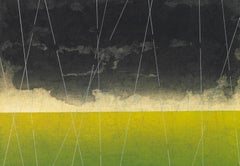
Keiji Shinohara, Accelerondo, Ukiyo-e woodcut print landscape, 2005
Located in New York, NY
Keiji Shinohara was born and raised in Osaka, Japan. After 10 years as an apprentice to the renowned Keiichiro Uesugi in Kyoto, he became a Master Printmaker and moved to the United ...
Category
21st Century and Contemporary Abstract Woodcut Landscape Prints
Materials
Paper, Woodcut
$2,000 Sale Price
20% Off
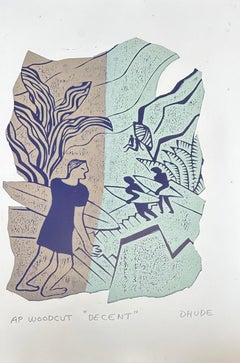
Decent - Surfing Art - Figurative - Woodcut Print By Marc Zimmerman
Located in Carmel, CA
Decent - Surfing Art - Figurative - Woodcut Print By Marc Zimmerman
Limited Edition 01/04
This masterwork is exhibited in the Zimmerman Gallery, Carmel CA.
Immerse yourself in the...
Category
2010s Contemporary Woodcut Landscape Prints
Materials
Woodcut
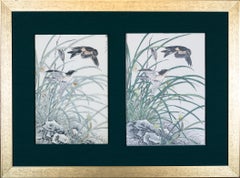
Original Japanese Watercolor and Woodblock Print of Orchid and Swallows
Located in Burbank, CA
Orchid and small swallows (Hokuri, kotsubame). Original preparatory watercolor next to the finished original Japanese woodblock print. This is a highly finished preparatory watercolo...
Category
1890s Art Deco Woodcut Landscape Prints
Materials
Watercolor, Woodcut
$1,900 Sale Price
32% Off
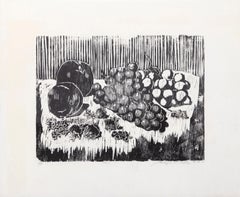
Fruits, Modern Woodcut on thin tissue paper by Biagio Civale
Located in Long Island City, NY
Biagio Civale, Italian/American (1936 - ) - Fruits, Year: 1991, Medium: Woodcut on thin tissue paper, Signed, numbered, and dated in pencil, Edition: A/P, Image Size: 11.5 x 15.5...
Category
1990s Modern Woodcut Landscape Prints
Materials
Woodcut
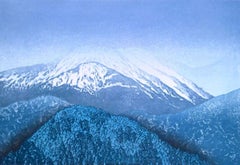
Blue, Ukiyo-e landscape woodcut print, 2014
Located in New York, NY
Keiji Shinohara was born and raised in Osaka, Japan. After 10 years as an apprentice to the renowned Keiichiro Uesugi in Kyoto, he became a Master Printmaker and moved to the United ...
Category
2010s Contemporary Woodcut Landscape Prints
Materials
Woodcut
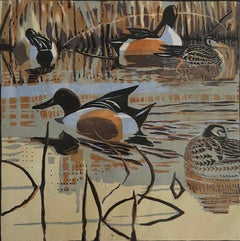
Robert Greenhalf, Shoverlers, Limited Edition Print, Bird Print, Wildlife Art
Located in Deddington, GB
Robert Greenhalf
Shoverlers
Limited Edition Print
Woodcut on Paper
Edition of 100
Paper Size: H 38.5cm x W 41 cm
Image Size: H 27.5cm x W 27.5cm
Sold ...
Category
21st Century and Contemporary Contemporary Woodcut Landscape Prints
Materials
Paper, Woodcut
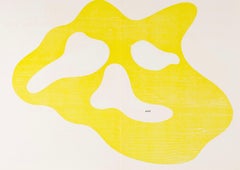
Hans Jean Arp, Yellow, from Derriere le miroir, 1950
Located in Southampton, NY
This exquisite woodcut by Hans Jean Arp (1886–1966), titled Jaune (Yellow), from the folio Derriere le miroir, No. 33, originates from the 1950 edition published by Maeght Editeur, P...
Category
1950s Modern Woodcut Landscape Prints
Materials
Woodcut
$716 Sale Price
20% Off
Alhambra XII
Located in New York, NY
Antonio Frasconi created the color woodcut entitled “Alhambra XII” in 1963. This piece is signed titled, and dated in pencil. The edition is 12, and paper size is 18 x 24 inches. “...
Category
1960s American Modern Woodcut Landscape Prints
Materials
Woodcut
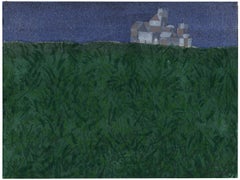
Art Deco City Scene with Motor Car print by Gerald Mac Spink
Located in London, GB
To see our other Modern British Art, scroll down to "More from this Seller" and below it click on "See all from this Seller" - or send us a message if you cannot find the artist you ...
Category
Early 20th Century Art Deco Woodcut Landscape Prints
Materials
Woodcut
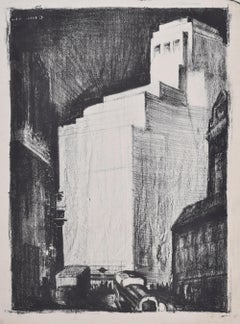
Falls Ten - Contemporary Waterfall Landscape Silver Pale Grey Blue Woodcut, 2022
By Eve Stockton
Located in Kent, CT
A contemporary woodcut print of a waterfall in a forest in silver ink. The monotype brings to mind the tradition of Japanese printing while being distinctly contemporary.
Edition 1...
Category
2010s Contemporary Woodcut Landscape Prints
Materials
Ink, Archival Paper, Woodcut
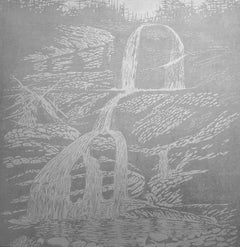
Keiji Shinohara, Symphony (TP), Ukiyo-e woodcut print landscape, 2002
Located in New York, NY
In his "Symphony (TP)," 2002, Keiji Shinohara flattens a sunset landscape to its most essential visual elements in the tradition of Japanese woodcut, while updating the medium with t...
Category
Early 2000s Contemporary Woodcut Landscape Prints
Materials
Archival Paper, Woodcut

Wipe Out - Surfing Art -
Located in Carmel, CA
Wipe Out - Surfing Art - Figurative - Woodcut Print By Marc Zimmerman
Limited Edition 01/04 more colorways available
This masterwork is exhibited in the Zimmerman Gallery, Carmel C...
Category
2010s Contemporary Woodcut Landscape Prints
Materials
Woodcut
$480 Sale Price
20% Off
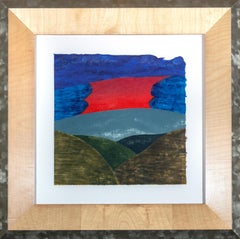
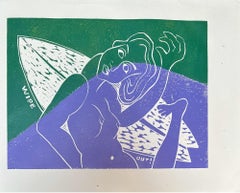
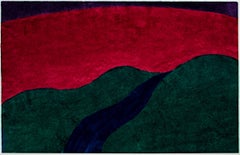
"Farewell, " Sunset Landscape Woodcut by Carol Summers
Located in Milwaukee, WI
"Farewell" is an original color woodcut by Carol Summers. The artist signed the piece. This woodcut depicts a river flowing through green hills beneath a blood-red sky. The edition number is 20/50.
24 1/4" x 37" art
32" x 45" frame
Carol Summers has worked as an artist throughout the second half of the 20th century and into the first years of the next, outliving most of his mid-century modernist peers. Initially trained as a painter, Summers was drawn to color woodcuts around 1950 and it became his specialty thereafter.
Over the years he has developed a process and style that is both innovative and readily recognizable. His art is known for it’s large scale, saturated fields of bold color, semi-abstract treatment of landscapes from around the world and a luminescent quality achieved through a printmaking process he invented.
In a career that has extended over half a century, Summers has hand-pulled approximately 245 woodcuts in editions that have typically run from 25 to 100 in number. His talent was both inherited and learned.
Born in 1925 in Kingston, a small town in upstate New York, Summers was raised in nearby Woodstock with his older sister, Mary. His parents were both artists who had met in art school in St. Louis. During the Great Depression, when Carol was growing up, his father supported the family as a medical illustrator until he could return to painting. His mother was a watercolorist and also quite knowledgeable about the different kinds of papers used for various kinds of painting. Many years later, Summers would paint or print on thinly textured paper originally collected by his mother.
From 1948 to 1951, Carol Summers trained in the classical fine and studio arts at Bard College and at the Art Students League of New York. He studied painting with Steven Hirsh and printmaking with Louis Schanker. He admired the shapes and colors favored by early modernists Paul Klee (Sw: 1879-1940) and Matt Phillips (Am: b.1927- ). After graduating, Summers quit working as a part-time carpenter and cabinetmaker (which had supported his schooling and living expenses) to focus fulltime on art. That same year, an early abstract, Bridge No. 1 was selected for a Purchase Prize in a competition sponsored by the Brooklyn Museum. In 1952, his work (Cathedral, Construction and Icarus) was shown the first time at the Museum of Modern Art in New York City in an exhibition of American woodcuts.
In 1954, Summers received a grant from the Italian government to study for a year in Italy. Woodcuts completed soon after his arrival there were almost all editions of only 8 to 25 prints, small in size, architectural in content and black and white in color. The most well-known are Siennese Landscape and Little Landscape, which depicted the area near where he resided. Summers extended this trip three more years, a decision which would have significant impact on choices of subject matter and color in the coming decade. After returning from Europe, Summers’ images continued to feature historical landmarks and events from Italy as well as from France, Spain and Greece. However, as evidenced in Aetna’s Dream, Worldwind and Arch of...
Category
1990s Woodcut Landscape Prints
Materials
Woodcut
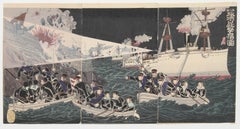
The Second Army Bombarding, Ukiyo-E Wooblock by Watanabe Nobukazu
By Watanabe Nobukazu
Located in Long Island City, NY
Artist: Watanabe Nobukazu, Japanese (1872 - 1944)
Title: The Second Army Bombarding and Occupying Port Arthur
Year: 1894
Medium: Woodblock Triptych...
Category
1890s Other Art Style Woodcut Landscape Prints
Materials
Woodcut
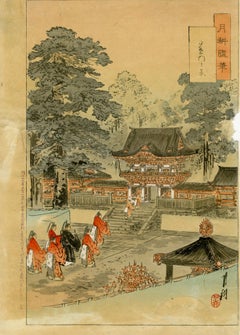
Toshogu Shrine
Located in Middletown, NY
In image of the Tokugawa family paying homage to Tosho-gu Shrine in Nikko.
Tokyo: Matsuki Heikichi, 1896
Woodcut in ink with embossing and hand-coloring in watercolor on handmade m...
Category
Late 19th Century Edo Woodcut Landscape Prints
Materials
Watercolor, Handmade Paper, Woodcut
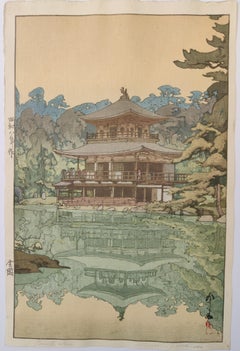
Yoshida Hiroshi -- The Golden Pavilion 金阁
By Yoshida Hiroshi
Located in BRUCE, ACT
Title "The Golden Pavilion" 金阁
Date 1933; (posthumous edition, likely 1950's/60's).
Publisher Yoshida Family Studio
Image Size 9 5/8 x 14 3/4
Impression Very Fine. Sk...
Category
Early 20th Century Woodcut Landscape Prints
Materials
Woodcut
$704 Sale Price
20% Off
Katsura Kyoto (L)
Located in San Francisco, CA
Artist: Kiyoshi Saito – Japanese – (1907-1997)
Title: Katsura, Kyoto (L)
Year: 1964
Medium: Woodblock
Image size: 18 x 24 inches.
Sheet size: 21.5x 28.5 inches.
Signature: Signed, ...
Category
1960s Modern Woodcut Landscape Prints
Materials
Paper, Woodcut
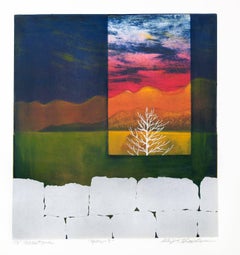
Opus 9, Abstract Sunset Landscape Woodcut Monoprint, 22 x 21 IN Framed
Located in New York, NY
In his Ukiyo-e monotype, Opus 9, 2011, (12 x 11 in // framed size: 22 x 21 in.) Keiji Shinohara uses the tradition of landscape as a playground for his dialogue between eastern and w...
Category
Early 2000s Contemporary Woodcut Landscape Prints
Materials
Monoprint, Woodcut, Archival Paper
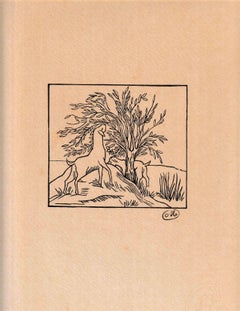
Two Goats, from "Daphnis
Chloe"
Located in Middletown, NY
Woodcut on hand made laid paper with the publisher's watermark designed by the artist, full margins. From the special suite of 53 woodcut illustrations which were laid in loose to t...
Category
Mid-20th Century French School Woodcut Landscape Prints
Materials
Handmade Paper, Laid Paper, Woodcut
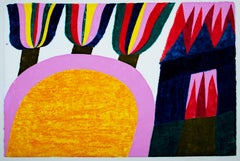
"Ravanna
s Palace Burning, " Woodcut Landscape signed by Carol Summers
Located in Milwaukee, WI
"Ravanna's Palace Burning" is a woodcut signed by Carol Summers. The image combines landscape and architecture, which is typical of the works Summers produced during the 1980s and '90s. In the image, a dark building stands burning, bright red flames licking from the windows and rooftop. It stands beside an orange field framed in pink, probably representing a plaza. Beyond the plaza are multicolored trees, their branches reaching upward like the flames on the building. The playfulness of the image is enhanced by Summers' signature printmaking technique, which allows the ink from the woodblock to seep through the paper, blurring the edges of each form.
Art: 24.5 x 37.25 in
Frame: 30 x 42.75 in
Numbered 53 of the edition of 125
Carol Summers (1925-2016) has worked as an artist throughout the second half of the 20th century and into the first years of the next, outliving most of his mid-century modernist peers. Initially trained as a painter, Summers was drawn to color woodcuts around 1950 and it became his specialty thereafter. Over the years he has developed a process and style that is both innovative and readily recognizable. His art is known for it’s large scale, saturated fields of bold color, semi-abstract treatment of landscapes from around the world and a luminescent quality achieved through a printmaking process he invented.
In a career that has extended over half a century, Summers has hand-pulled approximately 245 woodcuts in editions that have typically run from 25 to 100 in number. His talent was both inherited and learned. Born in 1925 in Kingston, a small town in upstate New York, Summers was raised in nearby Woodstock with his older sister, Mary. His parents were both artists who had met in art school in St. Louis. During the Great Depression, when Carol was growing up, his father supported the family as a medical illustrator until he could return to painting. His mother was a watercolorist and also quite knowledgeable about the different kinds of papers used for various kinds of painting. Many years later, Summers would paint or print on thinly textured paper originally collected by his mother.
From 1948 to 1951, Carol Summers trained in the classical fine and studio arts at Bard College and at the Art Students League of New York. He studied painting with Steven Hirsh and printmaking with Louis Schanker. He admired the shapes and colors favored by early modernists Paul Klee (Sw: 1879-1940) and Matt Phillips (Am: b.1927- ). After graduating, Summers quit working as a part-time carpenter and cabinetmaker (which had supported his schooling and living expenses) to focus fulltime on art. That same year, an early abstract, Bridge No. 1 was selected for a Purchase Prize in a competition sponsored by the Brooklyn Museum.
In 1952, his work (Cathedral, Construction and Icarus) was shown the first time at the Museum of Modern Art in New York City in an exhibition of American woodcuts. In 1954, Summers received a grant from the Italian government to study for a year in Italy. Woodcuts completed soon after his arrival there were almost all editions of only 8 to 25 prints, small in size, architectural in content and black and white in color. The most well-known are Siennese Landscape and Little Landscape, which depicted the area near where he resided. Summers extended this trip three more years, a decision which would have significant impact on choices of subject matter and color in the coming decade.
After returning from Europe, Summers’ images continued to feature historical landmarks and events from Italy as well as from France, Spain and Greece. However, as evidenced in Aetna’s Dream, Worldwind and Arch of Triumph, a new look prevailed. These woodcuts were larger in size and in color. Some incorporated metal leaf in the creation of a collage and Summers even experimented with silkscreening. Editions were now between 20 and 50 prints in number. Most importantly, Summers employed his rubbing technique for the first time in the creation of Fantastic Garden in late 1957.
Dark Vision of Xerxes, a benchmark for Summers, was the first woodcut where Summers experimented using mineral spirits as part of his printmaking process. A Fulbright Grant as well as Fellowships from the Louis Comfort Tiffany Foundation and the Guggenheim Foundation followed soon thereafter, as did faculty positions at colleges and universities primarily in New York and Pennsylvania. During this period he married a dancer named Elaine Smithers with whom he had one son, Kyle. Around this same time, along with fellow artist Leonard Baskin, Summers pioneered what is now referred to as the “monumental” woodcut. This term was coined in the early 1960s to denote woodcuts that were dramatically bigger than those previously created in earlier years, ones that were limited in size mostly by the size of small hand-presses. While Baskin chose figurative subject matter, serious in nature and rendered with thick, striated lines, Summers rendered much less somber images preferring to emphasize shape and color; his subject matter approached abstraction but was always firmly rooted in the landscape.
In addition to working in this new, larger scale, Summers simultaneously refined a printmaking process which would eventually be called the “Carol Summers Method” or the “ Carol Summers Technique”. Summers produces his woodcuts by hand, usually from one or more blocks of quarter-inch pine, using oil-based printing inks and porous mulberry papers. His woodcuts reveal a sensitivity to wood especially its absorptive qualities and the subtleties of the grain. In several of his woodcuts throughout his career he has used the undulating, grainy patterns of a large wood plank to portray a flowing river or tumbling waterfall. The best examples of this are Dream, done in 1965 and the later Flash Flood Escalante, in 2003. In the majority of his woodcuts, Summers makes the blocks slightly larger than the paper so the image and color will bleed off the edge.
Before printing, he centers a dry sheet of paper over the top of the cut wood block or blocks, securing it with giant clips. Then he rolls the ink directly on the front of the sheet of paper and pressing down onto the dry wood block or reassembled group of blocks. Summers is technically very proficient; the inks are thoroughly saturated onto the surface of the paper but they do not run into each other. The precision of the color inking in Constantine’s Dream in 1969 and Rainbow Glacier in 1970 has been referred to in various studio handbooks. Summers refers to his own printing technique as “rubbing”. In traditional woodcut printing, including the Japanese method, the ink is applied directly onto the block. However, by following his own method, Summers has avoided the mirror-reversed image of a conventional print and it has given him the control over the precise amount of ink that he wants on the paper. After the ink is applied to the front of the paper, Summers sprays it with mineral spirits, which act as a thinning agent. The absorptive fibers of the paper draw the thinned ink away from the surface softening the shapes and diffusing and muting the colors. This produces a unique glow that is a hallmark of the Summers printmaking technique. Unlike the works of other color field artists or modernists of the time, this new technique made Summers’ extreme simplification and flat color areas anything but hard-edged or coldly impersonal.
By the 1960s, Summers had developed a personal way of coloring and printing and was not afraid of hard work, doing the cutting, inking and pulling himself. In 1964, at the age of 38, Summers’ work was exhibited for a second time at the Museum of Modern Art. This time his work was featured in a one-man show and then as one of MOMA’s two-year traveling exhibitions which toured throughout the United States. In subsequent years, Summers’ works would be exhibited and acquired for the permanent collections of multiple museums throughout the United States, Europe and Asia. Summers’ familiarity with landscapes throughout the world is firsthand. As a navigator-bombardier in the Marines in World War II, he toured the South Pacific and Asia.
Following college, travel in Europe and subsequent teaching positions, in 1972, after 47 years on the East Coast, Carol Summers moved permanently to Bonny Doon in the Santa Cruz Mountains in Northern California. There met his second wife, Joan Ward Toth, a textile artist who died in 1998; and it was here his second son, Ethan was born. During the years that followed this relocation, Summers’ choice of subject matter became more diverse although it retained the positive, mostly life-affirming quality that had existed from the beginning. Images now included moons, comets, both sunny and starry skies, hearts and flowers, all of which, in one way or another, remained tied to the landscape.
In the 1980s, from his home and studio in the Santa Cruz mountains, Summers continued to work as an artist supplementing his income by conducting classes and workshops at universities in California and Oregon as well as throughout the Mid and Southwest. He also traveled extensively during this period hiking and camping, often for weeks at a time, throughout the western United States and Canada. Throughout the decade it was not unusual for Summers to backpack alone or with a fellow artist into mountains or back country for six weeks or more at a time. Not surprisingly, the artwork created during this period rarely departed from images of the land, sea and sky. Summers rendered these landscapes in a more representational style than before, however he always kept them somewhat abstract by mixing geometric shapes with organic shapes, irregular in outline. Some of his most critically acknowledged work was created during this period including First Rain, 1985 and The Rolling Sea, 1989. Summers received an honorary doctorate from his alma mater, Bard College in 1979 and was selected by the United States Information Agency to spend a year conducting painting and printmaking workshops at universities throughout India. Since that original sabbatical, he has returned every year, spending four to eight weeks traveling throughout that country.
In the 1990s, interspersed with these journeys to India have been additional treks to the back roads and high country areas of Mexico, Central America, Nepal, China and Japan. Travel to these exotic and faraway places had a profound influence on Summers’ art. Subject matter became more worldly and nonwestern as with From Humla to Dolpo, 1991 or A Former Life of Budha, 1996, for example. Architectural images, such as The Pillars of Hercules, 1990 or The Raja’s Aviary, 1992 became more common. Still life images made a reappearance with Jungle Bouquet in 1997. This was also a period when Summers began using odd-sized paper to further the impact of an image.
The 1996 Night, a view of the earth and horizon as it might be seen by an astronaut, is over six feet long and only slightly more than a foot-and-a-half high. From 1999, Revuelta A Vida (Spanish for “Return to Life”) is pie-shaped and covers nearly 18 cubic feet. It was also at this juncture that Summers began to experiment with a somewhat different palette although he retained his love of saturated colors. The 2003 Far Side of Time is a superb example of the new direction taken by this colorist.
At the turn of the millennium in 1999, “Carol Summers Woodcuts...
Category
1980s Contemporary Woodcut Landscape Prints
Materials
Woodcut
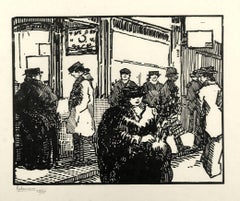
Coin de Rue Dans Soho
Located in New York, NY
Jean-Emile Laboureur (1877-1947), Coin de Rue Dans Soho, woodcut, 1909, signed in pencil lower left and numbered (15/15) [also initials in the plate]. Reference: Sylvain Laboureur 64...
Category
Early 1900s Modern Woodcut Landscape Prints
Materials
Woodcut
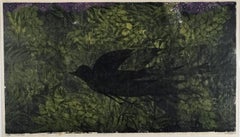
NIGHT FLIGHT
Located in Portland, ME
Frasconi, Antonio. NIGHT FLIGHT. Color Woodcut, 1958. Edition of 20. Signed and dated, numbered 10/20, and inscribed "imp," all in pencil. 19 x 34 inches,...
Category
1950s Woodcut Landscape Prints
Materials
Alkyd, Woodcut
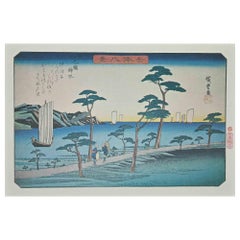
The Sea-Eight Scenic Spots in Kanazawa
Located in Roma, IT
The Sea-Eight Scenic Spots in Kanazawa is a modern artwork realized in the Mid-20th Century.
Mixed colored lithograph after a woodcut realized by the great Japanese artist Utagawa H...
Category
Mid-20th Century Modern Woodcut Landscape Prints
Materials
Woodcut
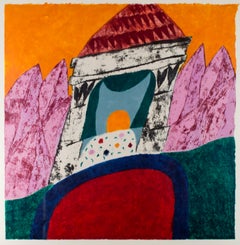
"Diocletian
s Retreat, " Woodcut and Monotype signed by Carol Summers
Located in Milwaukee, WI
"Diocletian's Retreat" is a woodcut and monotype signed by Carol Summers. The image combines landscape and architecture, in this case a classical struc...
Category
1990s Contemporary Woodcut Landscape Prints
Materials
Monotype, Woodcut
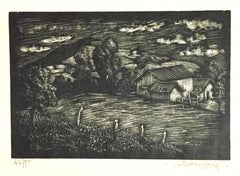
Hendrik Glintenkamp, (Farmyard)
Located in New York, NY
More a wood engraving rather than a woodcut, Glintenkamp's Farmyard scene was given all the care and detail of the artist's more complex images. It is signed and numbered in pencil. ...
Category
1920s American Modern Woodcut Landscape Prints
Materials
Woodcut
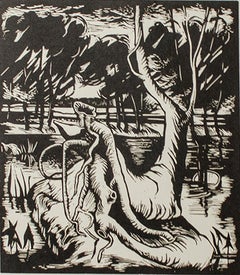
"Flood Waters, " Landscape Wood Engraving by Harold Wescott
By Harold Wescott
Located in Milwaukee, WI
"Flood Waters" is an original wood engraving by Harold Wescott, It features a tree in the center, with its roots wrapping languidly over a form. High waters rise up from the back. Un...
Category
1930s American Modern Woodcut Landscape Prints
Materials
Woodcut
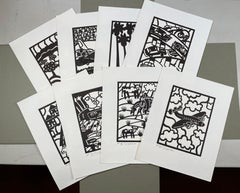
Snapshots of the San Fernando Valley, portfolio of 8 prints by Frank Romero
By Frank Romero
Located in Palm Springs, CA
Medium: Complete portfolio of 8 Woodcut prints
Image Sizes: 10.25 × 7.75 inches
Sheet Sizes: 16.5 × 13 inches
Edition size: 10
Condition: Excellent except for light contact staining...
Category
Early 2000s Contemporary Woodcut Landscape Prints
Materials
Woodcut
Woodcut landscape prints for sale on 1stDibs.
Find a wide variety of authentic Woodcut landscape prints available on 1stDibs. While artists have worked in this medium across a range of time periods, art made with this material during the 21st Century is especially popular. If you’re looking to add landscape prints created with this material to introduce a provocative pop of color and texture to an otherwise neutral space in your home, the works available on 1stDibs include elements of blue, orange, yellow, green and other colors. There are many well-known artists whose body of work includes ceramic sculptures. Popular artists on 1stDibs associated with pieces like this include Marc Zimmerman, Eve Stockton, Carol Summers, and Utagawa Hiroshige. Frequently made by artists working in the Modern, Contemporary, all of these pieces for sale are unique and many will draw the attention of guests in your home. Not every interior allows for large Woodcut landscape prints, so small editions measuring 0.01 inches across are also available