1970s Landscape Prints
to
745
481
354
573
203
39
Overall Width
to
Overall Height
to
392
306
293
136
96
50
34
28
16
12
7
2
129
46
40
38
33
1,008
2,151
9,970
4,014
116
115
710
512
594
1,138
1,459
1,650
1,319
629
659
827
778
45
602
427
242
208
150
149
143
123
110
84
84
83
73
60
59
55
44
40
37
37
870
396
269
87
76
83
621
1,156
458
Period: 1970s
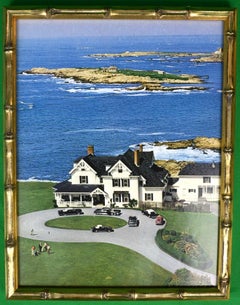
Slim Aarons
The Ledges
Newport Beachfront House c1974 Framed Color Plate
By Slim Aarons
Located in Bristol, CT
Art Sz: 13"H x 9 7/8"W
Frame Sz: 14 1/4"H x 11"W
In custom gilt bamboo frame
Original color page from Slim Aarons' iconic book "A Wonderful Time" published 1974
The Ledges, the estate of Mr. and Mrs...
Category
1970s Landscape Prints
Materials
Color
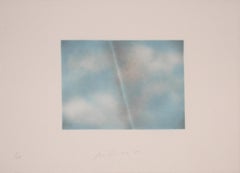
Grey Folded Clouds - II Blue and white
By Joe Goode
Located in London, GB
Joe Goode
Grey Folded Clouds - II Blue and white (blue paper sky)
1971
Lithograph, Edition of 50
41 x 61 cms (16 x 24 ins)
Category
Abstract 1970s Landscape Prints
Materials
Lithograph
$1,200 Sale Price
20% Off
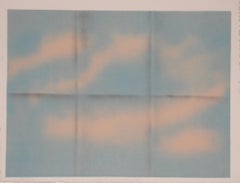
Grey Folded Clouds - I Blue and Pink
By Joe Goode
Located in London, GB
Joe Goode
Grey Folded Clouds - I Blue and Pink (blue sky tiles)
1971
Lithograph, Edition of 50
33 x 46 cms (13 x 18 ins)
JGE007
Category
Abstract 1970s Landscape Prints
Materials
Lithograph
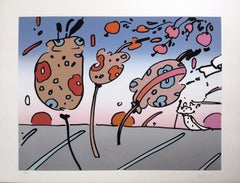
SUMMER SEASON II
By Peter Max
Located in Aventura, FL
Hand signed and numbered by the artist. Published by AMX Art Ltd., NY and printed by IZMO Productions, NY.. Artwork is in excellent condition. Edition of 175. All reasonable offer...
Category
Pop Art 1970s Landscape Prints
Materials
Paper, Screen
$3,150 Sale Price
30% Off
Don
t Depend on the Heavens
Located in New York, NY
Don't Depend on the Heavens
Art Work by Xlyang County Amateur Fine Art Production Group.
Published by Shanghai People's Publishing House.
1975
Category
Modern 1970s Landscape Prints
Materials
Lithograph
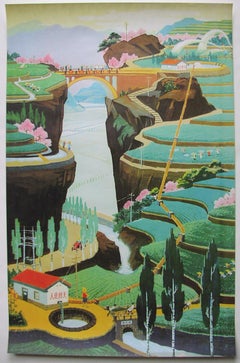
"Torre Blanca", Rufino Tamayo, Figurative Abstraction, Etching, 30x22 in.
Located in Dallas, TX
"Torre Blanca" by Rufino Tamayo is a Figurative Abstraction etching limited edition measuring 30x22 in. The piece is framed beautifully with a white matt and light silver frame. Rufi...
Category
Abstract Expressionist 1970s Landscape Prints
Materials
Etching
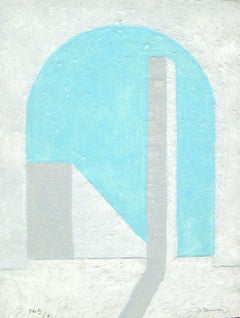
Untitled (Hills of Jerusalem)
By Nachum Gutman
Located in Miami, FL
Nachum Gutman was one of Israeli's leading impressionistic artists, who painted classic scenes of the landscape and images of the country. His works are in many museums and his work...
Category
Impressionist 1970s Landscape Prints
Materials
Lithograph

$1,200 Sale Price
20% Off
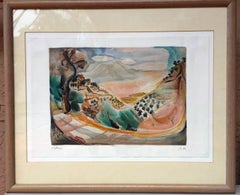
Loch Ness 2
Located in London, GB
Etching on paper
Category
1970s Landscape Prints
Materials
Etching
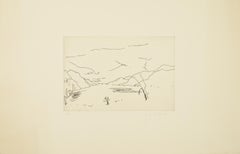
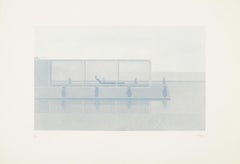
Pool Blue
Located in London, GB
William Tillyer
Pool Blue
1972
Line Etching, Edition of 60
Paper size: 70.5 x 104.5 cms (27 3/4 x 41 1/2 ins)
Plate size: 47 x 76.2 cms (18 1/2 x 30 in...
Category
1970s Landscape Prints
Materials
Etching
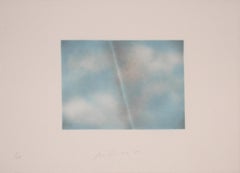
Grey Folded Clouds - II Blue and white
By Joe Goode
Located in London, GB
Joe Goode
Grey Folded Clouds - II Blue and white (blue paper sky)
1971
Lithograph, Edition of 50
41 x 61 cms (16 x 24 ins)
Category
Abstract 1970s Landscape Prints
Materials
Lithograph
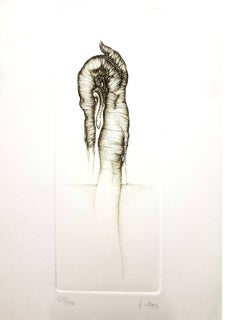
Fred Deux - Grey Surrealism V - Signed Original Etching
By Fred Deux
Located in Collonge Bellerive, Geneve, CH
Fred Deux - Grey V - Signed Original Etching
Signed and Numbered
Edition of 100
Dimensions: 24 x 14 cm
Fred Deux
Fred Deux, illustrator, oral poet, writer, and, under the pseudonym Jean Douassot, author of a cult book, La Gana, was a singular artist who cannot be categorised in terms of art fashions and trends. This autodidact, born in the basement of a large house in Boulogne-Billancourt to a working-class family, constantly had to overcome, as he would say. “He had to overcome”: overcome the basement walls to access the life which called him and burnt inside him. Overcome the barriers between the arts, moving from drawing to the written word, and from the page to the tape recorder, in the face of which he recounted stories to himself in a sort of endless reverie, constantly exploring the unknown in him. Overcoming and being overcome: gradually immersing himself in drawing, so that it was life itself which overcame him and surrendered to him.
Timeline
1924
Born in Boulogne-Billancourt, Paris. The Deux family lived in the basement of a building close to the Seine that was often flooded. These living conditions formed the biographical core around in which the artist would develop his work as a future writer and artist.
1942
Deux worked in a factory as an electrician and night guard.
1943
Deux becomes part of the FTP group to resist against the factory. And then joined the Maquis du Doubs.
1945
At the liberation, Deux joined the Moroccan Goumier, and took part of the campaigns of Vosges, Alsace and Germany.
1947
Returned to France. Installation in Marseille. Worked in an important library that belonged to the family of his wife.
1948
Discovered Breton, Bataille, Cendrars, Peret, Sade... and founded the sub-group of Surrealists in Marseille and formed a link with the literary magazine of Marseille, Cahiers du Sud
Encounters the works of Paul Klee.
He begins creating his first stains with paint for bicycle and impressions (fabric and ink). At the same time, he begins to take notes for what would become "Les Rats", first version of "La Gana".
1951
Meets Cecile Reims...
Category
Surrealist 1970s Landscape Prints
Materials
Etching
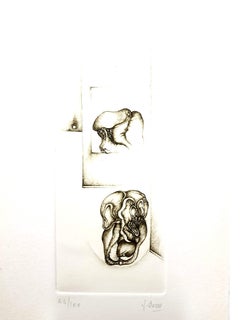
Fred Deux - Grey Surrealism II - Signed Original Etching
By Fred Deux
Located in Collonge Bellerive, Geneve, CH
Fred Deux - Grey I - Signed Original Etching
Signed and Numbered
Edition of 100
Dimensions: 24 x 14 cm
Fred Deux
Fred Deux, illustrator, oral poet, writer, and, under the pseudonym Jean Douassot, author of a cult book, La Gana, was a singular artist who cannot be categorised in terms of art fashions and trends. This autodidact, born in the basement of a large house in Boulogne-Billancourt to a working-class family, constantly had to overcome, as he would say. “He had to overcome”: overcome the basement walls to access the life which called him and burnt inside him. Overcome the barriers between the arts, moving from drawing to the written word, and from the page to the tape recorder, in the face of which he recounted stories to himself in a sort of endless reverie, constantly exploring the unknown in him. Overcoming and being overcome: gradually immersing himself in drawing, so that it was life itself which overcame him and surrendered to him.
Timeline
1924
Born in Boulogne-Billancourt, Paris. The Deux family lived in the basement of a building close to the Seine that was often flooded. These living conditions formed the biographical core around in which the artist would develop his work as a future writer and artist.
1942
Deux worked in a factory as an electrician and night guard.
1943
Deux becomes part of the FTP group to resist against the factory. And then joined the Maquis du Doubs.
1945
At the liberation, Deux joined the Moroccan Goumier, and took part of the campaigns of Vosges, Alsace and Germany.
1947
Returned to France. Installation in Marseille. Worked in an important library that belonged to the family of his wife.
1948
Discovered Breton, Bataille, Cendrars, Peret, Sade... and founded the sub-group of Surrealists in Marseille and formed a link with the literary magazine of Marseille, Cahiers du Sud
Encounters the works of Paul Klee.
He begins creating his first stains with paint for bicycle and impressions (fabric and ink). At the same time, he begins to take notes for what would become "Les Rats", first version of "La Gana".
1951
Meets Cecile Reims...
Category
Surrealist 1970s Landscape Prints
Materials
Etching
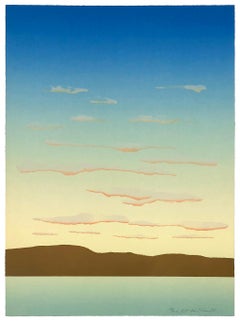
Sunrise
Located in Aventura, FL
Lithograph on Rives BFK paper. Hand signed and dated on front by Robert Andrew Parker. Hand numbered 147/200. Artwork size 30 x 22.25 inches.
From America: The Third Century por...
Category
Contemporary 1970s Landscape Prints
Materials
Paper, Lithograph
$712 Sale Price
25% Off
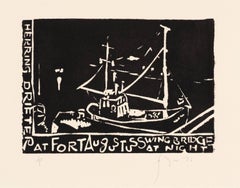
Herring Drifter at Fort Augustus
Located in London, GB
Linocut on paper
Category
1970s Landscape Prints
Materials
Linocut
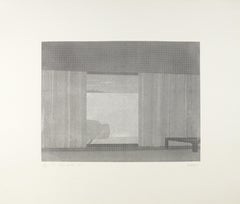
Dry Lake - set of 4
Located in London, GB
William Tillyer
Dry Lake I-IV
1971
Etching
Edition of 50
55.9 x 66.7 cms (22 x 26 1/4 ins) (paper size)
32.4 x 43.4 cms (12 3/4 x 17 1/8 ins) (plate si...
Category
1970s Landscape Prints
Materials
Etching
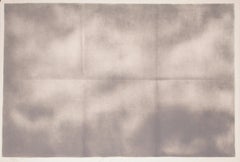
Grey Folded Clouds - IV Grey
By Joe Goode
Located in London, GB
Joe Goode
Grey Folded Clouds - IV Grey
1971
Lithograph, Edition of 50
50.8 x 75 cms (20 x 29 1/2 ins)
Category
Abstract 1970s Landscape Prints
Materials
Lithograph
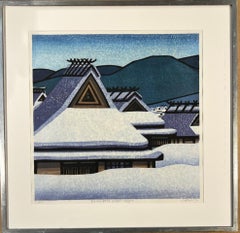
Koshihata Snow, woodblock print by Clifton Karhu, white, Japan, framed, signed
Located in Santa Fe, NM
Koshihata Snow, woodblock print by Clifton Karhu, white, Japan, framed, signed 1975
hand signed and numbered
Category
Contemporary 1970s Landscape Prints
Materials
Paper
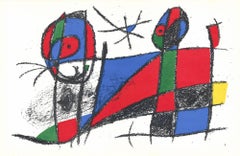
Litografia Originale VI
By Joan Miró
Located in Kansas City, MO
Joan Miró
Litografia Originale VI
Medium: Color Lithograph
Year: 1975
Publisher: Graphis Arte, Livorno; Toninelli Arte Moderna, Milano
Catalogue raisonné: Cramer 198
Size: 13.3 × 20....
Category
Minimalist 1970s Landscape Prints
Materials
Lithograph
Price Upon Request
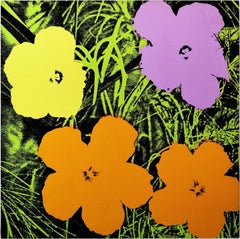
Flowers, FS II.67
By Andy Warhol
Located in Miami, FL
Technical Information:
Andy Warhol
Flowers, FS II.67
1970
Screenprint
36 x 36 in.
Edition of 250
Signed and stamped number on verso
Category
Pop Art 1970s Landscape Prints
Materials
Screen
Price Upon Request
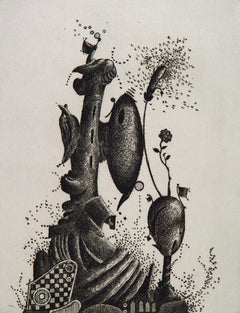
Whistle
By Valton Tyler
Located in Dallas, TX
In The New York Times Arts in America column, Edward M. Gomez writes of Valton Tyler, "visionary seems the right word for describing his vivid, unusual and technically refined painti...
Category
Surrealist 1970s Landscape Prints
Materials
Rag Paper, Etching
Price Upon Request
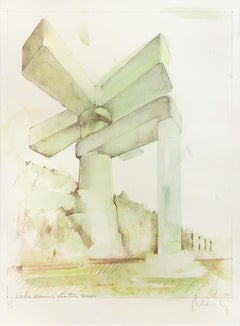
Proposal for a Cathedral in the Form of a Sink Faucet for Lake Union, Seattle WA
Located in New York, NY
Offset lithograph in four colors on BFK paper (Edition of 300)
Signed, titled, dated, and numbered in pencil, recto
This artwork is offered by ClampArt, located in New York City.
Category
Other Art Style 1970s Landscape Prints
Materials
Lithograph
Cuervo
Located in Laguna Beach, CA
Among the pioneering California-based Light and Space artists, Peter Alexander has spent the course of his career focusing intensely on light and its manifold effects in his sculptur...
Category
Minimalist 1970s Landscape Prints
Materials
Lithograph
Price Upon Request
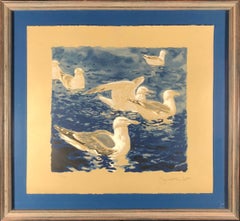
Herring Gulls
By Jamie Wyeth
Located in Missouri, MO
Jamie Wyeth
"Herring Gulls" 1978
Color Lithograph
Signed Lower Right
Numbered Lower Left 149/300
Born in 1946, James Browning Wyeth came of age when the meaning of patriotism was clouded by the traumas of the Vietnam War and the scandals of Watergate. Working in an era of turmoil and questioning of governmental authority, he did art that encompassed both marching off to war and marching in protest.
One of James's early masterworks, Draft Age (1965) depicts a childhood friend as a defiant Vietnam-era teenager resplendent in dark sunglasses and black leather jacket in a suitably insouciant pose.
Two years later Wyeth painstakingly composed a haunting, posthumous Portrait of President John F. Kennedy (1967) that seems to catch the martyred Chief Executive in a moment of agonized indecision. As Wyeth Center curator Lauren Raye Smith points out, Wyeth "did not deify the slain president, [but] on the contrary made him seem almost too human."
Based on hours of study and sketching of JFK's brothers Robert and Edward -
documented by insightful studies in the exhibition - the final, pensive portrait seemed too realistic to family members and friends. "His brother Robert," writes Smith in the exhibition catalogue, "reportedly felt uneasy about this depiction, and said it reminded him of the President during the Bay of Pigs invasion."
In spite of these misgivings, James's JFK likeness has been reproduced frequently and is one of the highlights of this show. The poignancy, appeal and perceptiveness of this portrait, painted when the youngest Wyeth was 21 years old, makes one wish he would do more portraits of important public figures.
James himself feels he is at his best painting people he knows well, as exemplified by his vibrant Portrait of Jean Kennedy Smith (1972), which captures the vitality of the slain President's handsome sister.
He did paint a portrait of Jimmy Carter for the January 1977 man-of-the-year cover of Time magazine, showing the casually dressed President-elect as a straightforward character posed under a flag-draped water tower next to the family peanut plant in Plains, Ga. James recalls that Carter had one Secret Service agent guarding him as he posed outdoors, a far cry from the protection our Chief Executives require today.
As a participating artist in the "Eyewitness to Space" program organized by the National Aeronautics and Space Administration in collaboration with the National Gallery of Art in the late 1960s, Wyeth deftly recorded in a series of watercolors his eyewitness observations of dramatic spacecraft launchings and more mundane scenes associated with the space program.
Commissioned by Harper's Magazine to cover the 1974 congressional hearings and trials of Watergate figures, James Wyeth executed a series of perceptive and now evocative sketches that recall those dark chapters in our history. Memorable images include a scowling John Ehrlichman, a hollow-eyed Bob Haldeman, an owlish Charles Colson, a focused Congressman Peter Rodino, a grim visaged Father/ Congressman Robert Drinan, and vignettes of the press and various courtroom activities. An 11-by-14-inch pencil sketch of the unflappable Judge John Sirica is especially well done. These "images are powerful as historical records," observes Smith, "and as lyrically journalistic impressions of events that changed the nation forever."
Wyeth's sketch of early-morning crowds lined up outside the Supreme Court
building hoping to hear the Watergate case, with the ubiquitous TV cameramen looking on, is reminiscent of recent scenes as the high court grappled with the Bush-Gore contest.
The Wyeth family penchant for whimsy and enigmatic images is evident in Islanders (1990), showing two of James's friends, wearing goofy hats, sitting on the porch of a small Monhegan Island (Me.) cottage draped with a large American flag. Mixing the serious symbolism of Old Glory with the irreverent appearance of the two men, James has created a puzzling but interesting composition.
Painting White House...
Category
American Modern 1970s Landscape Prints
Materials
Lithograph, Paper
Price Upon Request
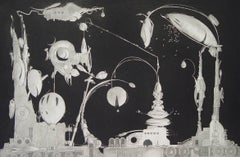
Front Elevation of Section 17
By Valton Tyler
Located in Dallas, TX
In The New York Times Arts in America column, Edward M. Gomez writes of Valton Tyler, "visionary seems the right word for describing his vivid, unusual and technically refined paintings, prints and drawings, whose style defies convenient labels. Abstract, surreal, cartoonish, sci-fi fantastic, metaphysical, apocalyptic-Baroque - all of these fit but also fall short of fully describing his art." (The Living Arts, June 13, 2000, p. B2)
Valton Tyler was born in 1944 in Texas, where "the industrial world of oil refineries made a long-lasting impression on Valton as a very young child living in Texas City." (Reynolds, p. 25) After leaving Texas City, Valton made his way to Dallas, where he briefly enrolled at the Dallas Art Institute, but found it to be too social and commercial for his taste. After Valton's work was introduced to Donald Vogel (founder of Valley House Gallery), "Vogel arranged for Tyler to use the printmaking facilities in the art department of the Southern Methodist University in Dallas, where the young artist essentially taught himself several demanding printmaking techniques. 'It was remarkable,' Vogel says. 'Not only did he learn complicated etching methods, but he was able to express himself powerfully in whatever medium he explored.' Vogel became the publisher of Tyler's prints. Among them, the artist made editions of some 50 different images whose sometimes stringy abstract forms and more solid, architecturally arresting elements became the precursors of his later, mature style." (Gomez, Raw Vision #35, p. 36)
"Front Elevation of Section 17" is plate number 34, and is reproduced in "The First Fifty Prints: Valton Tyler" with text by Rebecca Reynolds, published for Valley House Gallery by Southern Methodist University Press, Dallas, Texas, 1972.
In "The First Fifty Prints," Reynolds writes, “this plate can be seen as a culmination of the artist’s earlier uses of aquatint and as a new direction the artist will take in his compositions. In early plates such as ‘Joy,’ Plate No. 12, and ‘Do Not Touch,’ Plate No. 20, the artist has presented his designs to our unaccustomed eyes, either formally, by placing them on sculpture pedestals, or more abstractly, using smaller soft ground silhouettes. In later examples such as ‘One Little Stage,’ Plate No. 24, or ‘Heritage,’ Plate No. 25, we were brought closer to a direct interaction with the forms as they began to fill the plates with increasing sculptural and monumental qualities. It was still possible to maintain a more passive point of view because of the stage format of the compositions. In ‘Avenue 11,’ Plate No. 26, as we have seen, the artist unveils the true authority of his designs by placing them in our environment to compete with our reality of a familiar cityscape and to make us question our ideas of aesthetics and logic. In ‘Front Elevation’ we enter into and are confronted with these structures in their own massive landscape...
Category
Surrealist 1970s Landscape Prints
Materials
Rag Paper, Etching, Aquatint
Price Upon Request
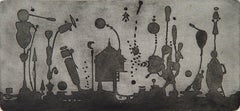
Neighborhood
By Valton Tyler
Located in Dallas, TX
In The New York Times Arts in America column, Edward M. Gomez writes of Valton Tyler, "visionary seems the right word for describing his vivid, unusual and technically refined painti...
Category
Outsider Art 1970s Landscape Prints
Materials
Paper, Etching, Aquatint
Price Upon Request
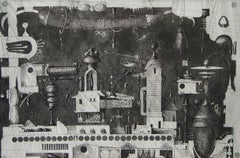
Night Shift
By Valton Tyler
Located in Dallas, TX
In The New York Times Arts in America column, Edward M. Gomez wrote of Valton Tyler, "visionary seems the right word for describing his vivid, unusual and technically refined paintin...
Category
Surrealist 1970s Landscape Prints
Materials
Rag Paper, Etching, Aquatint
Price Upon Request
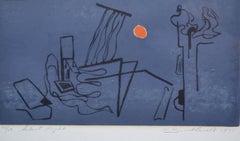
Silent Night
Located in West Hollywood, CA
A series of exceptional paintings and rare prints have just arrived from a private west coast private collection.
American artist Hans Burkhardt, "Silent Night...
Category
1970s Landscape Prints
Materials
Lithograph
Price Upon Request
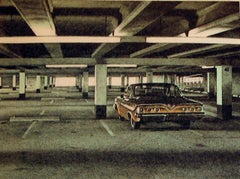
61 Impala, from Four Chevies
Located in San Francisco, CA
Robert Bechtle was born in 1932 in San Francisco and raised in Alameda. He studied graphic design and painting at the California College of Arts and Crafts in Oakland, earning his BF...
Category
Contemporary 1970s Landscape Prints
Materials
Lithograph
Price Upon Request
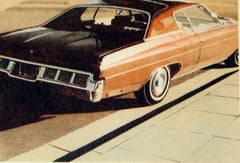
71 Caprice, from Four Chevies
Located in San Francisco, CA
Edition of 60
Lithograph in colors
Plate: 8 1/2 x 11 inches
Sheet: 13 x 17 inches
Robert Bechtle was born in 1932 in San Francisco and raised in Alameda. He studied graphic des...
Category
1970s Landscape Prints
Materials
Lithograph
Price Upon Request
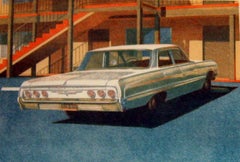
64 Impala, from Four Chevies
Located in San Francisco, CA
Robert Bechtle was born in 1932 in San Francisco and raised in Alameda. He studied graphic design and painting at the California College of Arts and Crafts in Oakland, earning his ...
Category
Contemporary 1970s Landscape Prints
Materials
Lithograph
Price Upon Request