Expressionist Landscape Prints

EXPRESSIONIST STYLE

While “expressionist” is used to describe any art that avoids naturalism and instead employs a bold use of flattened forms and intense brushwork, Expressionist art formally describes early-20th-century work from Europe that drew on Symbolism and confronted issues such as urbanization and capitalism. Expressionist artists experimented in paintings and prints with skewed perspectives, abstraction and unconventional, bright colors to portray how isolating and anxious the world felt rather than how it appeared. 

Between 1905 and 1920, Austrian and German artists, in particular, were inspired by Postimpressionists such as Paul Gauguin and Vincent van Gogh in their efforts to strive for a new authenticity in their work. In its geometric patterns and decorative details, Expressionist art was also marked by eclectic sources like German and Russian folk art as well as tribal art from Africa and Oceania, which the movement’s practitioners witnessed at museums and world’s fairs.

Groups of artists came together to share and promote the themes now associated with Expressionism, such as Die Brücke (The Bridge) in Dresden, which included Erich Heckel, Ernst Ludwig Kirchner and Karl Schmidt-Rottluff and investigated alienation and the dissolution of society in vivid color. In Munich, Der Blaue Reiter (The Blue Rider), a group led by Wassily Kandinsky and Franz Marc, instilled Expressionism with a search for spiritual truths. In his iconic painting The Scream, prolific Norwegian painter Edvard Munch conveyed emotional turmoil through his depiction of environmental elements, such as the threatening sky.

Expressionism shifted around the outbreak of World War I, with artists using more elements of the grotesque in reaction to the escalation of unrest and violence. Printmaking was especially popular, as it allowed artists to widely disseminate works that grappled with social and political issues amid this time of upheaval. Although the art movement ended with the rise of Nazi Germany, where Expressionist creators were labeled “degenerate,” the radical ideas of these artists would influence Neo-Expressionism that emerged in the late 1970s with painters like Jean-Michel Basquiat and Francesco Clemente.

​​Find a collection of authentic Expressionist paintings, sculptures, prints and more art on 1stDibs.

to
290
243
95
17
12
1
Overall Width
to
Overall Height
to
4,673
3,198
812
808
745
655
649
442
89
83
78
28
15
110
18
8
8
8
1
327
42
19
6
5
6
2
75
93
28
56
19
250
112
6
212
137
110
88
67
59
57
36
16
16
14
13
11
11
9
8
8
8
7
6
255
45
35
27
6
15
3
346
24
Style: Expressionist
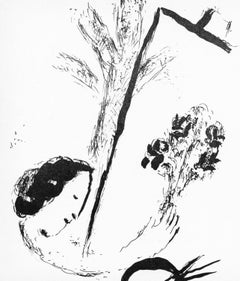
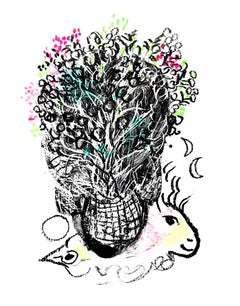
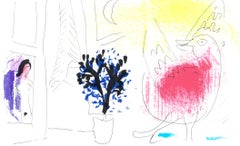
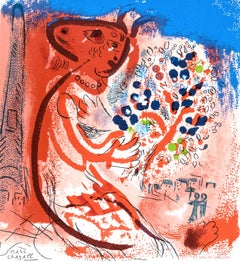
Marc Chagall, The Bouquet in Hand, from Chagall, 1957
Located in Southampton, NY
This exquisite lithograph by Marc Chagall (1887–1985), titled Le Bouquet a la Main (The Bouquet in Hand), from the album Chagall, originates from the 1957 edition published by Maeght...
Category

1950s Expressionist Landscape Prints

Materials

Lithograph

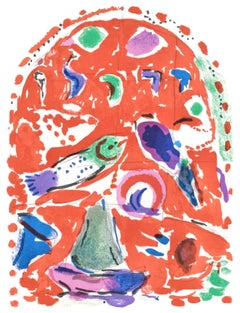
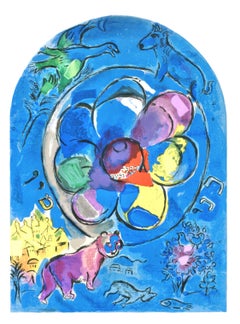
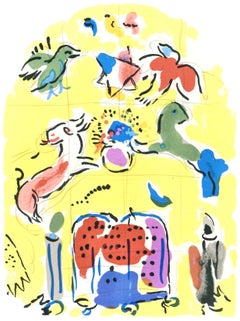
Marc Chagall, Tribe of Gad, from The Jerusalem Windows, 1962 (after)
Located in Southampton, NY
This exquisite lithograph after Marc Chagall (1887–1985), titled Tribe of Gad, from the album Marc Chagall, The Jerusalem Windows, originates from the 1962 edition published by Andre...
Category

1960s Expressionist Landscape Prints

Materials

Lithograph

Marc Chagall, Homage to Georges Braque, from Derriere le Miroir, 1964
Located in Southampton, NY
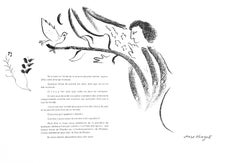
This exquisite lithograph by Marc Chagall (1887–1985), titled Hommage a Georges Braque (Homage to Georges Braque), originates from the 1964 folio Derriere le Miroir, Nos. 144–145–146, L’Hommage a Georges Braque (Tribute to Georges Braque). Published by Maeght Editeur, Paris, under the direction of Aime Maeght, and printed by Mourlot Freres, Paris, this luminous composition stands as Chagall’s poetic tribute to his friend and contemporary Georges Braque, “Neither the sun nor the brilliance of the moon can calm today this strange sadness. Something close has gone, though his life was distant. And there is nothing with which this life can be compared. And from this departure there arise feelings inexpressible, like his colors which spoke but not to everyone. I have seen his plastic world so far from the worries of the day and his personality beyond this world. That is what he called “reality.” How true he was, and how troubling that is! Perhaps if we enter into the grandeur of certain French paintings — La Poix d’Avignon, a still life by Chardin, or The Embarkation for Cythera by Watteau — then the dream of Braque will seem clearer to us. And our path will become clearer too.” In Hommage a Georges Braque, Chagall fuses symbolic imagery to evoke themes of flight, harmony, and spiritual transcendence, celebrating Braque’s lifelong devotion to art and transformation. The composition reflects Chagall’s unique synthesis of emotion and imagination, merging the visionary with the intimate. Executed on velin paper, this lithograph measures 15 x 22 inches (38.1 x 55.9 cm), with centerfold, as issued. Signed in the plate and unnumbered, as issued. The edition exemplifies Chagall’s lyrical command of color and form within the refined graphic artistry of Derriere le Miroir. Artwork Details: Artist: Marc Chagall (1887–1985) Title: Hommage a Georges Braque (Homage to Georges Braque), from Derriere le Miroir, Nos. 144–145–146, L’Hommage a Georges Braque (Tribute to Georges Braque), 1964 Medium: Lithograph on velin paper Dimensions: 15 x 22 inches (38.1 x 55.9 cm), with centerfold, as issued Inscription: Signed in the plate and unnumbered, as issued Date: 1964 Publisher: Maeght Editeur, Paris Printer: Mourlot Freres, Paris Condition: Well preserved, consistent with age and medium Provenance: From the 1964 folio Derriere le Miroir, Nos. 144–145–146, published by Maeght Editeur, Paris Notes: Excerpted from the folio (translated from French): Taken from this special issue of “Behind the Mirror,” CCCL examples on velin de Rives were numbered, constituting the original edition of L’Hommage a Georges Braque. These deluxe examples also included an etching based on Trois oiseaux sur fond violet. The lithographs for this issue were printed in the ateliers of Maeght Editeur, Levallois. The text was printed by Fequet et Baudier, typographers. Finished printing May 13, 1964. About the Publication: Derriere le Miroir (translated as "Behind the Mirror") was an iconic French art periodical published from 1946 to 1982 by Maeght Editeur, one of the most influential art publishers of the 20th century. Founded by Aime Maeght in Paris, the publication was conceived as a visual and literary collaboration between leading modern artists, poets, and critics. Each issue functioned as both an exhibition catalogue and a work of art in itself—featuring original lithographs printed directly from the artists' stones or plates, alongside essays, poems, and critical commentary. Over the course of 36 years, Derriere le Miroir produced more than 250 issues and showcased an extraordinary roster of artists including Henri Matisse, Marc Chagall, Joan Miro, Georges Braque, Alexander Calder, Fernand Leger, Pierre Bonnard, Alberto Giacometti, Eduardo Chillida, Ellsworth Kelly, Francis Bacon, Paul Rebeyrolle, Claude Garache, Antoni Tapies, Bram van Velde, Pierre Alechinsky, Pol Bury, Shusaku Arakawa, and Gerard Titus-Carmel. Printed in the ateliers of Mourlot, Arte, and Imprimerie Moderne du Lion, the periodical set new standards for quality in color lithography, combining fine art printing with elegant typography and poetic text. Beyond its visual brilliance, Derriere le Miroir also became a cultural chronicle of postwar European modernism. Each issue coincided with exhibitions held at Galerie Maeght, providing a collectible and widely accessible record of groundbreaking shows. Its integration of image, text, and philosophy created a dialogue between art and literature that elevated the modern art book to new aesthetic heights. Today, Derriere le Miroir remains one of the most sought-after and historically significant art publications, prized by collectors and scholars alike for its craftsmanship, influence, and its role in defining the visual language of 20th-century modernism. The Maeght Foundation in Saint-Paul-de-Vence continues to honor this legacy through exhibitions and archival preservation of the series, affirming Derriere le Miroir's enduring place in the history of modern art and fine art publishing. About the Artist: Marc Chagall (1887–1985) was a Belarus-born French painter, printmaker, and designer whose visionary use of color and poetic symbolism made him one of the most beloved and influential artists of the 20th century. Rooted in the rich imagery of his Jewish heritage and childhood in Vitebsk, Chagall’s dreamlike compositions fused memory, folklore, faith, and romance with the expressive innovations of modern art. His work evolved alongside and in dialogue with the great modern masters—Pablo Picasso, Henri Matisse, Alexander Calder, Salvador Dali, Joan Miro, Georges Braque, Wassily Kandinsky, Marcel Duchamp, and Man Ray—artists who, like Chagall, redefined artistic language for a new century. Spanning painting, printmaking, stained glass, ceramics, stage design, and illustration, Chagall’s career reflected both his deep spirituality and his boundless imagination. His works are held in major museum collections worldwide, including the Museum of Modern Art, the Guggenheim, the Tate, and the Centre Pompidou. The highest price ever paid for a Marc Chagall artwork is approximately $28.5 million USD, achieved in 2017 at Sotheby’s New York for Les Amoureux (1928). Marc Chagall Hommage a Georges Braque, Chagall Derriere le Miroir, Chagall Maeght Editeur Paris, Chagall Mourlot Freres, Chagall 1964...
Category

1960s Expressionist Landscape Prints

Materials

Lithograph

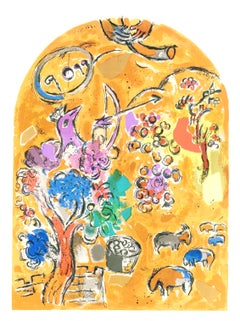
Marc Chagall, Tribe of Joseph, from The Jerusalem Windows, 1962 (after)
Located in Southampton, NY
This exquisite lithograph after Marc Chagall (1887–1985), titled Tribe of Joseph, from the album Marc Chagall, The Jerusalem Windows, origina...
Category

1960s Expressionist Landscape Prints

Materials

Lithograph

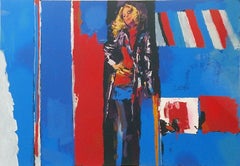
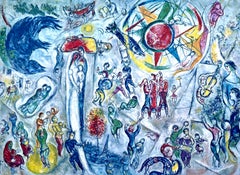
NANETTE
Located in Aventura, FL
Serigraph on paper. Hand signed and numbered by the artist. Artwork appears to be in excellent condition. Artwork has not been examined outside the matting. Image size: 27 x 39 in. M...
Category

1970s Expressionist Landscape Prints

Materials

Paper, Screen

NANETTE
NANETTE
$840 Sale Price
30% Off
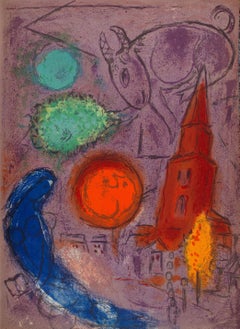
Marc Chagall, Saint-Germain of the Fields, from Derriere le miroir, 1954
Located in Southampton, NY
This exquisite lithograph by Marc Chagall (1887–1985), titled Saint-Germain des Pres (Saint-Germain of the Fields), from the folio Derriere le miroir, No. 67–68, originates from the 1954 edition published by Maeght Editeur, Paris, and printed by Mourlot Freres, Paris, 1954. Saint-Germain des Pres reflects Chagall’s poetic vision of Paris, capturing the neighborhood’s spiritual and cultural essence through his unique blend of memory, color, and imagination. The work embodies Chagall’s ability to transform the familiar into the transcendent, merging architectural harmony with human emotion and dreamlike symbolism. Executed as a lithograph on velin paper, this work measures 15 x 11 inches. Unsigned and unnumbered as issued. The edition exemplifies the superb craftsmanship of Mourlot Freres, Paris. Artwork Details: Artist: Marc Chagall (1887–1985) Title: Saint-Germain des Pres (Saint-Germain of the Fields), from the folio Derriere le miroir, No. 67–68 Medium: Lithograph on velin paper Dimensions: 15 x 11 inches (38.1 x 27.94 cm) Inscription: Unsigned and unnumbered as issued Date: 1954 Publisher: Maeght Editeur, Paris Printer: Mourlot Freres, Paris Catalogue raisonne reference: Cramer, Patrick, and Meret Meyer. Marc Chagall: Catalogue Raisonne des Livres Illustres. Patrick Cramer Editeur, 1995, illustration 24; Mourlot, Fernand, and Marc Chagall. Chagall Lithographe I: 1922–1957. Andre Sauret, 1960, illustration 100. Condition: Well preserved, consistent with age and medium Provenance: From the folio Derriere le miroir, No. 67–68, published by Maeght Editeur, Paris; printed by Mourlot Freres, Paris, 1954 Notes: On the occasion of the ‘Paris’ exhibition, Marc Chagall created for this triple issue of Derriere Le Miroir XII pages of Lithography. About the Publication: Derriere le miroir (Behind the Mirror) was one of the most important art publications of the 20th century, created and published by Maeght Editeur in Paris from 1946 to 1982. Founded by the visionary art dealer and publisher Aime Maeght, the series served as both an exhibition catalogue and a work of art in its own right, uniting original lithographs by leading modern and contemporary artists with critical essays, poetry, and design of the highest quality. Printed by master lithographers such as Mourlot Freres and Arte, Derriere le miroir became synonymous with the artistic vanguard of postwar Europe. Each issue was devoted to a single artist or theme and published to accompany exhibitions at the Galerie Maeght in Paris, featuring works by Pablo Picasso, Henri Matisse, Georges Braque, Joan Miro, Marc Chagall, Alexander Calder, Fernand Leger, and Alberto Giacometti, among others. The publication reflected Maeght’s belief that art should be both accessible and elevated—an ideal realized through its luxurious production values, meticulous printing, and collaboration with the greatest creative minds of its time. About the Artist: Marc Chagall (1887–1985) was a Belarus-born French painter, printmaker, and designer whose visionary imagination, radiant color, and deeply poetic symbolism made him one of the most beloved and influential artists of the 20th century. Rooted in the imagery of his Jewish heritage and the memories of his childhood in Vitebsk, Chagall’s art wove together themes of faith, love, folklore, and fantasy with a dreamlike modern sensibility. His unique style—merging elements of Cubism, Fauvism, Expressionism, and Surrealism—defied categorization, transforming ordinary scenes into lyrical meditations on memory and emotion. Influenced by Russian icon painting, medieval religious art, and the modern innovations of artists such as Pablo Picasso, Henri Matisse, and Georges Braque, Chagall developed a profoundly personal visual language filled with floating figures, vibrant animals, musicians, and lovers that symbolized the transcendent power of imagination and love. During his early years in Paris, he became an integral part of the Ecole de Paris circle, forming friendships with Amedeo Modigliani, Fernand Leger, and Sonia Delaunay, and his creative spirit resonated with that of his peers and successors—Alexander Calder, Alberto Giacometti, Salvador Dali, Joan Miro, Wassily Kandinsky, Marcel Duchamp, and Man Ray—artists who, like Chagall, sought to push the boundaries of perception, emotion, and form. Over a prolific career that spanned painting, printmaking, stained glass, ceramics, and stage design, Chagall brought an unparalleled poetic sensibility to modern art, infusing even the most abstract subjects with human warmth and spiritual depth. His works are held in the most prestigious museums around the world, including the Museum of Modern Art, the Centre Pompidou, the Tate, and the Guggenheim, where they continue to inspire generations of artists and collectors. The highest price ever paid for a Marc Chagall artwork is approximately 28.5 million USD, achieved in 2017 at Sotheby’s New York for Les Amoureux (1928). Marc Chagall Saint-Germain des Pres 1954, Chagall Saint-Germain of the Fields, Chagall Derriere le miroir No. 67–68, Chagall Mourlot lithograph, Chagall Maeght...
Category

1950s Expressionist Landscape Prints

Materials

Lithograph

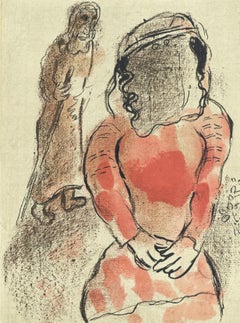
Marc Chagall, Tamar, Daughter-in-Law of Judah, from Drawings for the Bible, 1956
Located in Southampton, NY
This exquisite lithograph by Marc Chagall (1887–1985), titled Tamar Belle-Fille de Judas (Tamar, Daughter-in-Law of Judah), from Marc Chagall, Dessins Pour La Bible (Drawings for the Bible), Verve: Revue Artistique et Litteraire, Vol. VIII, No. 33–34, originates from the September 1956 issue published by Editions de la revue Verve, Paris, under the direction of Teriade, Editeur, Paris, and printed by Mourlot Freres, Paris, 1956. This emotionally charged and symbolically rich composition depicts the story of Tamar, daughter-in-law of Judah, who secures her justice through faith and courage. Chagall’s lyrical interpretation infuses the biblical episode with empathy and transcendence, portraying Tamar not merely as a figure of defiance, but as an embodiment of dignity, destiny, and divine justice. The fluidity of his line and ethereal use of light convey the spiritual depth that defines Chagall’s biblical imagery, uniting the moral and the mystical. The piece forms part of Chagall’s celebrated series of lithographs and drawings created for Dessins Pour La Bible, a monumental project uniting art, scripture, and mysticism in one of the artist’s most important achievements. Executed as a lithograph on velin du Marais paper, this work measures 14 x 10.5 inches (35.56 x 26.67 cm). Unsigned and unnumbered as issued. The edition exemplifies the superb craftsmanship of the Mourlot Freres atelier, renowned for its collaborations with the greatest modern masters of the 20th century. Artwork Details: Artist: Marc Chagall (1887–1985) Title: Tamar Belle-Fille de Judas (Tamar, Daughter-in-Law of Judah), from Marc Chagall, Dessins Pour La Bible (Drawings for the Bible), Verve: Revue Artistique et Litteraire, Vol. VIII, No. 33–34, September 1956 Medium: Lithograph on velin du Marais paper Dimensions: 14 x 10.5 inches (35.56 x 26.67 cm) Inscription: Unsigned and unnumbered as issued Date: 1956 Publisher: Editions de la revue Verve, Paris, under the direction of Teriade, Editeur, Paris Printer: Mourlot Freres, Paris Catalogue raisonne references: Cain, Julien, and Fernand Mourlot. Chagall Lithographe. Andre Sauret, Editeur, 1960, illustrations 117–46. Cramer, Patrick, and Meret Meyer. Marc Chagall: Catalogue Raisonne Des Livres Illustrés. P. Cramer ed., 1995, illustration 25. Condition: Well preserved, consistent with age and medium Provenance: From Marc Chagall, Dessins Pour La Bible (Drawings for the Bible), Verve: Revue Artistique et Litteraire, Vol. VIII, No. 33–34, published by Editions de la revue Verve, Paris, 1956 Notes: Excerpted from the album (translated from French), This double issue of Verve is dedicated to the full reproduction in heliogravure of the one hundred-five plates etched by Marc Chagall, between 1930 and 1955, for the illustration of the Bible. The artist composed especially for the present work, sixteen lithographs in color and twelve in black, as well as the cover and the title page. This volume was completed and printed on September 10, 1956, by the Master Printers Draeger Freres for heliogravure, and by Mourlot Freres for lithography. About the Publication: Marc Chagall, Dessins Pour La Bible (Drawings for the Bible), published as Verve Vol. VIII, No. 33–34 in September 1956, represents one of the crowning achievements of Chagall’s lifelong dialogue with the sacred. Conceived and directed by the visionary publisher Teriade and printed by the master lithographers Mourlot Freres, the issue features thirty-four color lithographs and numerous black-and-white drawings inspired by biblical figures and stories. Chagall’s works for this edition unite text and image in a luminous meditation on divine creation, moral struggle, and spiritual renewal, imbued with his signature dreamlike symbolism and radiant color. Produced in postwar Paris, this landmark publication reaffirmed the enduring union of art and faith, establishing Dessins Pour La Bible as one of the most important illustrated works of the 20th century. About the Artist: Marc Chagall (1887–1985) was a Belarus-born French painter, printmaker, and designer whose visionary imagination, radiant color, and deeply poetic symbolism made him one of the most beloved and influential artists of the 20th century. Rooted in the imagery of his Jewish heritage and the memories of his childhood in Vitebsk, Chagall’s art wove together themes of faith, love, folklore, and fantasy with a dreamlike modern sensibility. His unique style—merging elements of Cubism, Fauvism, Expressionism, and Surrealism—defied categorization, transforming ordinary scenes into lyrical meditations on memory and emotion. Influenced by Russian icon painting, medieval religious art, and the modern innovations of artists such as Pablo Picasso, Henri Matisse, and Georges Braque, Chagall developed a profoundly personal visual language filled with floating figures, vibrant animals, musicians, and lovers that symbolized the transcendent power of imagination and love. During his early years in Paris, he became an integral part of the Ecole de Paris circle, forming friendships with Amedeo Modigliani, Fernand Leger, and Sonia Delaunay, and his creative spirit resonated with that of his peers and successors—Alexander Calder, Alberto Giacometti, Salvador Dali, Joan Miro, Wassily Kandinsky, Marcel Duchamp, and Man Ray—artists who, like Chagall, sought to push the boundaries of perception, emotion, and form. Over a prolific career that spanned painting, printmaking, stained glass, ceramics, and stage design, Chagall brought an unparalleled poetic sensibility to modern art, infusing even the most abstract subjects with human warmth and spiritual depth. His works are held in the most prestigious museums around the world, including the Museum of Modern Art, the Centre Pompidou, the Tate, and the Guggenheim, where they continue to inspire generations of artists and collectors. The highest price ever paid for a Marc Chagall artwork is approximately $28.5 million USD, achieved in 2017 at Sotheby’s New York for Les Amoureux (1928). Marc Chagall Tamar...
Category

1950s Expressionist Landscape Prints

Materials

Lithograph

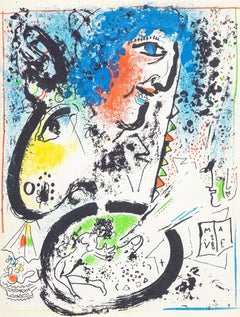
Marc Chagall, Self-Portrait, from The Lithographs of Chagall, 1960
Located in Southampton, NY
This exquisite lithograph by Marc Chagall (1887–1985), titled Autoportrait (Self-Portrait), from the album The Lithographs of Chagall, Volume I, originates from the 1960 edition publ...
Category

1960s Expressionist Landscape Prints

Materials

Lithograph

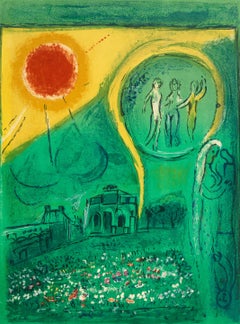
Marc Chagall, The Carousel of the Louvre, from Derriere le miroir, 1954
Located in Southampton, NY
This exquisite lithograph by Marc Chagall (1887–1985), titled Le Carrousel du Louvre (The Carousel of the Louvre), from the folio Derriere le miroir, No. 67–68, originates from the 1...
Category

1950s Expressionist Landscape Prints

Materials

Lithograph

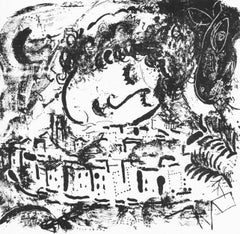
Marc Chagall, The Village, from Chagall, 1957
Located in Southampton, NY
This exquisite lithograph by Marc Chagall (1887–1985), titled Le Village (The Village), from the album Chagall, originates from the 1957 edition published by Maeght Editeur, Paris, a...
Category

1950s Expressionist Landscape Prints

Materials

Lithograph

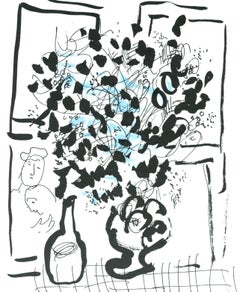
Marc Chagall, The Black and Blue Bouquet, from Chagall, 1957
Located in Southampton, NY
This exquisite lithograph by Marc Chagall (1887–1985), titled Le Bouquet Noir et Bleu (The Black and Blue Bouquet), from the album Chagall, originates from the 1957 edition published...
Category

1950s Expressionist Landscape Prints

Materials

Lithograph

Marc Chagall, The Circus, from Derriere le miroir, 1965 (after)
Located in Southampton, NY
This exquisite lithograph after Marc Chagall (1887–1985), titled Le Cirque (The Circus), from the folio Derriere le miroir, No. 155, originates from the 1965 edition published by Mae...
Category

1960s Expressionist Landscape Prints

Materials

Lithograph

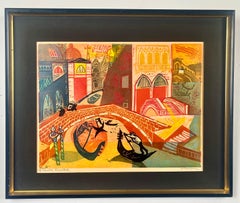
Irving Amen" Venice Recalled " Hand-Signed Numbered Color Woodcut Print
Located in Plainview, NY
Irving Amen (American, 1918–2011) Venice Recalled Hand-Signed Numbered Color Woodcut print Edition: 26/75 Radiant and architecturally expressive, Venice Recalled showcases Ir...
Category

20th Century Expressionist Landscape Prints

Materials

Woodcut

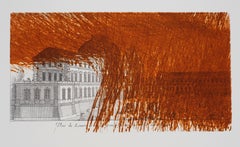
Paris : Tribute to Louvre Museum with Orange Scratch - Original etching
Located in Paris, IDF
Arnulf Rainer (1929) Paris : Tribute to Louvre Museum with Orange Scratch Original etching On vellum 40 x 50 cm (c. 16 x 20 in) Authenticated with the blind stamp of the editor Cha...
Category

21st Century and Contemporary Expressionist Landscape Prints

Materials

Etching

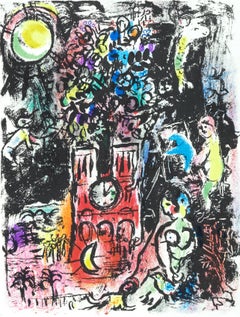
Marc Chagall, The Tree of Jesse, from Derriere le Miroir, 1960
Located in Southampton, NY
This exquisite lithograph by Marc Chagall (1887–1985), titled L’Arbre de Jesse (The Tree of Jesse), originates from the 1960 folio Derriere le Miroir, No. 119, Poetes, peintres, sculpteurs (Poets, Painters, Sculptors), published by Maeght Editeur, Paris, under the direction of Aime Maeght, and printed by Mourlot Freres, Paris. This lyrical composition exemplifies Chagall’s visionary fusion of faith, memory, and color, uniting biblical symbolism with the artist’s poetic sensibility. In L’Arbre de Jesse, Chagall reimagines a sacred theme as a vibrant allegory of spiritual lineage, evoking the mystical harmony between heaven and earth that defines his most celebrated works. Executed on velin paper, this lithograph measures 15 x 11 inches (38.1 x 27.9 cm), as issued. Unsigned and unnumbered, as issued. The edition reflects the exceptional quality and craftsmanship of the Maeght and Mourlot collaborations, which brought Chagall’s radiant imagery to print with unparalleled fidelity. Artwork Details: Artist: Marc Chagall (1887–1985) Title: L’Arbre de Jesse (The Tree of Jesse), from Derriere le Miroir, No. 119, Poetes, peintres, sculpteurs (Poets, Painters, Sculptors), 1960 Medium: Lithograph on velin paper Dimensions: 15 x 11 inches (38.1 x 27.9 cm), as issued Inscription: Unsigned and unnumbered, as issued Date: 1960 Publisher: Maeght Editeur, Paris Printer: Mourlot Freres, Paris Catalogue raisonne references: Mourlot, Fernand, and Marc Chagall. “Chagall Lithographe, Volume II, 1957–1962.” Chagall Lithographe, Sauret, 1963, illustration 297. Cramer, Patrick, and Meret Meyer. Marc Chagall: Catalogue Raisonné Des Livres Illustrés. P. Cramer ed., 1995, illustration 40 Condition: Well preserved, consistent with age and medium Provenance: From the 1960 folio Derriere le Miroir, No. 119, Poetes, peintres, sculpteurs (Poets, Painters, Sculptors), published by Maeght Editeur, Paris About the Publication: Derriere le Miroir (translated as "Behind the Mirror") was an iconic French art periodical published from 1946 to 1982 by Maeght Editeur, one of the most influential art publishers of the 20th century. Founded by Aime Maeght in Paris, the publication was conceived as a visual and literary collaboration between leading modern artists, poets, and critics. Each issue functioned as both an exhibition catalogue and a work of art in itself—featuring original lithographs printed directly from the artists' stones or plates, alongside essays, poems, and critical commentary. Over the course of 36 years, Derriere le Miroir produced more than 250 issues and showcased an extraordinary roster of artists including Henri Matisse, Marc Chagall, Joan Miro, Georges Braque, Alexander Calder, Fernand Leger, Pierre Bonnard, Alberto Giacometti, Eduardo Chillida, Ellsworth Kelly, Francis Bacon, Paul Rebeyrolle, Claude Garache, Antoni Tapies, Bram van Velde, Pierre Alechinsky, Pol Bury, Shusaku Arakawa, and Gerard Titus-Carmel. Printed in the ateliers of Mourlot, Arte, and Imprimerie Moderne du Lion, the periodical set new standards for quality in color lithography, combining fine art printing with elegant typography and poetic text. Beyond its visual brilliance, Derriere le Miroir also became a cultural chronicle of postwar European modernism. Each issue coincided with exhibitions held at Galerie Maeght, providing a collectible and widely accessible record of groundbreaking shows. Its integration of image, text, and philosophy created a dialogue between art and literature that elevated the modern art book to new aesthetic heights. Today, Derriere le Miroir remains one of the most sought-after and historically significant art publications, prized by collectors and scholars alike for its craftsmanship, influence, and its role in defining the visual language of 20th-century modernism. The Maeght Foundation in Saint-Paul-de-Vence continues to honor this legacy through exhibitions and archival preservation of the series, affirming Derriere le Miroir's enduring place in the history of modern art and fine art publishing. About the Artist: Marc Chagall (1887–1985) was a Belarus-born French painter, printmaker, and designer whose visionary use of color and poetic symbolism made him one of the most beloved and influential artists of the 20th century. Rooted in the rich imagery of his Jewish heritage and childhood in Vitebsk, Chagall’s dreamlike compositions fused memory, folklore, faith, and romance with the expressive innovations of modern art. His work evolved alongside and in dialogue with the great modern masters—Pablo Picasso, Henri Matisse, Alexander Calder, Salvador Dali, Joan Miro, Georges Braque, Wassily Kandinsky, Marcel Duchamp, and Man Ray—artists who, like Chagall, redefined artistic language for a new century. Spanning painting, printmaking, stained glass, ceramics, stage design, and illustration, Chagall’s career reflected both his deep spirituality and his boundless imagination. His works are held in major museum collections worldwide, including the Museum of Modern Art, the Guggenheim, the Tate, and the Centre Pompidou. The highest price ever paid for a Marc Chagall artwork is approximately $28.5 million USD, achieved in 2017 at Sotheby’s New York for Les Amoureux (1928). Marc Chagall L’Arbre de Jesse, Chagall Derriere le Miroir, Chagall Maeght...
Category

1960s Expressionist Landscape Prints

Materials

Lithograph

Marc Chagall, Bouquet for Fernand, from Memories and Portraits of Artists, 1972
Located in Southampton, NY
This exquisite lithograph by Marc Chagall (1887–1985), titled Bouquet pour Fernand (Bouquet for Fernand), from the album Souvenirs et Portraits d'Artistes (Memories and Portraits of ...
Category

1970s Expressionist Landscape Prints

Materials

Lithograph

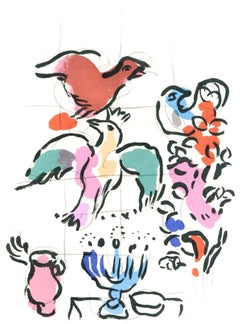
Marc Chagall, The Red Rooster, from Chagall, 1957
Located in Southampton, NY
This exquisite lithograph by Marc Chagall (1887–1985), titled Le Coq Rouge (The Red Rooster), from the album Chagall, originates from the 1957 edition published by Maeght Editeur, Paris, and printed by Mourlot Freres, Paris, 1957. This striking composition captures Chagall’s enduring fascination with rural symbolism, love, and memory, distilled through his vibrant palette and dreamlike imagination. In Le Coq Rouge, the radiant crimson rooster stands as a central figure of vitality, awakening, and spiritual renewal—a recurring motif throughout Chagall’s oeuvre that evokes both the folklore of his native Vitebsk and the universal themes of creation and rebirth. Set against a lyrical background of floating forms and luminous color harmonies, the composition blends the earthly and the celestial, uniting pastoral nostalgia with mystical poetry in a single, timeless image. Executed as a lithograph on velin paper, this work measures 9.06 x 15.75 inches (23.01 x 40 cm), with centerfold as issued. Unsigned and unnumbered as issued. The edition exemplifies the superior craftsmanship of the Mourlot Freres atelier, celebrated for its collaborations with the foremost modern artists of the 20th century. Artwork Details: Artist: Marc Chagall (1887–1985) Title: Le Coq Rouge (The Red Rooster), from Chagall, 1957 Medium: Lithograph on velin paper Dimensions: 9.06 x 15.75 inches (23.01 x 40 cm), with centerfold as issued Inscription: Unsigned and unnumbered as issued Date: 1957 Publisher: Maeght Editeur, Paris Printer: Mourlot Freres, Paris Catalogue raisonne references: Chagall, Marc, and Julien Cain. Chagall Lithographe. Andre Sauret, Editeur, 1960, illustration 203. Cramer, Patrick, and Meret Meyer. Marc Chagall: Catalogue Raisonne Des Livres Illustres. P. Cramer ed., 1995, illustration 34. Condition: Well preserved, consistent with age and medium Provenance: From the album Chagall, published by Maeght Editeur, Paris, 1957 Notes: Excerpted from the album (translated from French), This album was printed by Drager Freres in Montrouge on behalf of Maeght Editeur, 13, Rue de Teheran, Paris VIII. The original color lithographs were drawn by Mourlot Freres. The photographs of the works printed are of Y. Hervochon, M. Routhier, Draeger. Copyright 1957. About the Publication: The 1957 album Chagall, published by Maeght Editeur, Paris, and printed by Mourlot Freres, stands among the most celebrated achievements of postwar art publishing. Each lithograph in the volume exemplifies Chagall’s lyrical imagination and mastery of color, reflecting his poetic dialogue between the visible and the invisible. Through the refined technical collaboration between the artist and the master printers at Mourlot, Chagall’s painterly vision was brought to life on paper with exquisite precision and luminosity. Directed by Aime Maeght, this edition elevated the art of the illustrated album to new creative heights, uniting craftsmanship and artistic expression in a publication that remains a touchstone of modernist printmaking. About the Artist: Marc Chagall (1887–1985) was a Belarus-born French painter, printmaker, and designer whose visionary imagination, radiant color, and deeply poetic symbolism made him one of the most beloved and influential artists of the 20th century. Rooted in the imagery of his Jewish heritage and the memories of his childhood in Vitebsk, Chagall’s art wove together themes of faith, love, folklore, and fantasy with a dreamlike modern sensibility. His unique style—merging elements of Cubism, Fauvism, Expressionism, and Surrealism—defied categorization, transforming ordinary scenes into lyrical meditations on memory and emotion. Influenced by Russian icon painting, medieval religious art, and the modern innovations of artists such as Pablo Picasso, Henri Matisse, and Georges Braque, Chagall developed a profoundly personal visual language filled with floating figures, vibrant animals, musicians, and lovers that symbolized the transcendent power of imagination and love. During his early years in Paris, he became an integral part of the Ecole de Paris circle, forming friendships with Amedeo Modigliani, Fernand Leger, and Sonia Delaunay, and his creative spirit resonated with that of his peers and successors—Alexander Calder, Alberto Giacometti, Salvador Dali, Joan Miro, Wassily Kandinsky, Marcel Duchamp, and Man Ray—artists who, like Chagall, sought to push the boundaries of perception, emotion, and form. Over a prolific career that spanned painting, printmaking, stained glass, ceramics, and stage design, Chagall brought an unparalleled poetic sensibility to modern art, infusing even the most abstract subjects with human warmth and spiritual depth. His works are held in the most prestigious museums around the world, including the Museum of Modern Art, the Centre Pompidou, the Tate, and the Guggenheim, where they continue to inspire generations of artists and collectors. The highest price ever paid for a Marc Chagall artwork is approximately $28.5 million USD, achieved in 2017 at Sotheby’s New York for Les Amoureux (1928). Marc Chagall Le Coq...
Category

1950s Expressionist Landscape Prints

Materials

Lithograph

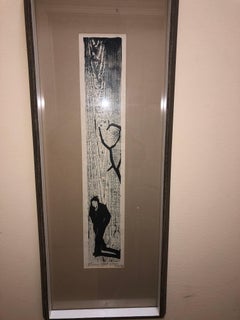
Jacob Pins "Lonely Walker" 1960 Woodcut
Located in San Francisco, CA
Jacob Pins: 1917-2005. Was a German born Israeli woodcut artist and art collector. He has had auction results over $3000 for a print. This powerful scarce example...
Category

1960s Expressionist Landscape Prints

Materials

Woodcut

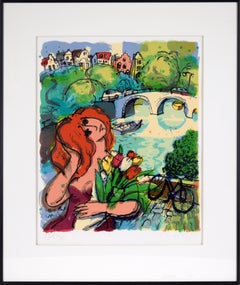
"By the Canal" Limited Edition Lithograph on Archival Paper
Located in Soquel, CA
"By the Canal" Limited Edition Lithograph on Archival Paper Vibrant lithograph of a red-headed woman near a canal by Michael Leu (Taiwanese, b. 1950). The woman is holding a bouquet of tulips. Nearby, a bicycle is parked alongside the canal. There is a bridge over the canal, connecting to a small town in the distance. This piece is whimsical, bold, and expressive. Numbered "31/198" in the lower left corner. Signed and dated "Michal Leu 95" in the lower right corner. Presented in a black aluminum frame with a white mat. Frame size: 32.75"H x 27.25"W Image size: 24"H x 19"W Born in Taipei, Taiwan, Michael Leu (b. 1950) studied fine art and design in his home town in the late 1960s and learned printmaking techniques at Otis Parsons...
Category

1990s Expressionist Landscape Prints

Materials

Ink, Archival Paper, Lithograph

Marc Chagall, Tribe of Zebulun, from The Jerusalem Windows, 1962 (after)
Located in Southampton, NY
This exquisite lithograph after Marc Chagall (1887–1985), titled Tribe of Zebulun, from the album Marc Chagall, The Jerusalem Windows, originates from the 1962 edition published by A...
Category

1960s Expressionist Landscape Prints

Materials

Lithograph

Marc Chagall, The Peace Restored, from Homer, The Odyssey, 1989 (after)
Located in Southampton, NY
This exquisite lithograph after Marc Chagall (1887–1985), titled Der wiedergefundene Frieden (The Peace Restored), from Homer, Die Odyssee (The Odyssey), originates from the 1989 Ger...
Category

1980s Expressionist Landscape Prints

Materials

Lithograph

Marc Chagall, In the Underworld, from Homer, The Odyssey, 1989 (after)
Located in Southampton, NY
This exquisite lithograph after Marc Chagall (1887–1985), titled In der Holle (In the Underworld), from Homer, Die Odyssee (The Odyssey), originates from the 1989 German-language fol...
Category

1980s Expressionist Landscape Prints

Materials

Lithograph

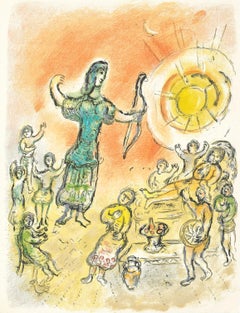
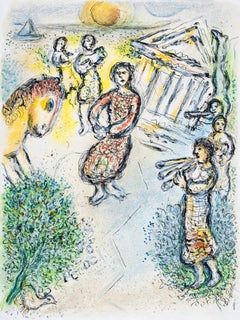
Marc Chagall, The Celebration, from Homer, The Odyssey, 1989 (after)
Located in Southampton, NY
This exquisite lithograph after Marc Chagall (1887–1985), titled Das Fest (The Celebration), from Homer, Die Odyssee (The Odyssey), originates from the 1989 German-language folio pub...
Category

1980s Expressionist Landscape Prints

Materials

Lithograph

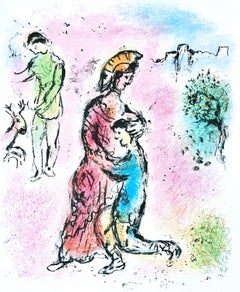
Marc Chagall, Odysseus and Penelope, from Homer, The Odyssey, 1989 (after)
Located in Southampton, NY
This exquisite lithograph after Marc Chagall (1887–1985), titled Odysseus und Penelope (Odysseus and Penelope), from Homer, Die Odyssee (The Odyssey), originates from the 1989 German...
Category

1980s Expressionist Landscape Prints

Materials

Lithograph

Marc Chagall, The Slaughter of the Suitors, Homer, The Odyssey, 1989 (after)
Located in Southampton, NY
This exquisite lithograph after Marc Chagall (1887–1985), titled Das Blutbad der Freier (The Slaughter of the Suitors), from Homer, Die Odyssee (The Odyssey), originates from the 198...
Category

1980s Expressionist Landscape Prints

Materials

Lithograph

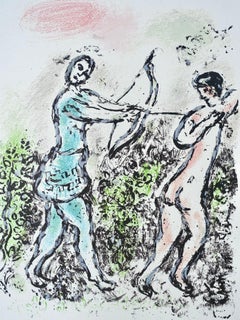
Marc Chagall, The Bow of Odysseus, from Homer, The Odyssey, 1989 (after)
Located in Southampton, NY
This exquisite lithograph after Marc Chagall (1887–1985), titled Der Bogen des Odysseus (The Bow of Odysseus), from Homer, Die Odyssee (The Odyssey), originates from the 1989 German-...
Category

1980s Expressionist Landscape Prints

Materials

Lithograph

Marc Chagall, Penelope and the Bow of Odysseus, Homer, The Odyssey, 1989 (after)
Located in Southampton, NY
This exquisite lithograph after Marc Chagall (1887–1985), titled Penelope und der Bogen des Odysseus (Penelope and the Bow of Odysseus), from Homer, Die Odyssee (The Odyssey), origin...
Category

1980s Expressionist Landscape Prints

Materials

Lithograph

Marc Chagall, Theoclymenus, from Homer, The Odyssey, 1989 (after)
Located in Southampton, NY
This exquisite lithograph after Marc Chagall (1887–1985), titled Theoclymenus, from Homer, Die Odyssee (The Odyssey), originates from the 1989 German-language folio published by Daco...
Category

1980s Expressionist Landscape Prints

Materials

Lithograph

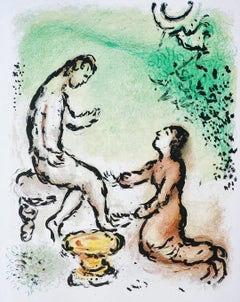
Marc Chagall, Odysseus and Eurycleia, from Homer, The Odyssey, 1989 (after)
Located in Southampton, NY
This exquisite lithograph after Marc Chagall (1887–1985), titled Odysseus und Eurycleia (Odysseus and Eurycleia), from Homer, Die Odyssee (The Odyssey), originates from the 1989 Germ...
Category

1980s Expressionist Landscape Prints

Materials

Lithograph

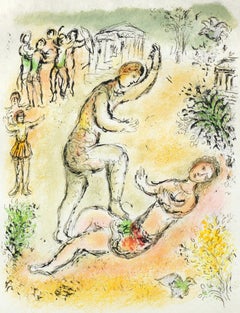
Marc Chagall, The Battle of Odysseus and Iros, Homer, The Odyssey, 1989 (after)
Located in Southampton, NY
This exquisite lithograph after Marc Chagall (1887–1985), titled Der Kampf des Odysseus und des Iros (The Battle of Odysseus and Iros), from Homer, Die Odyssee (The Odyssey), origina...
Category

1980s Expressionist Landscape Prints

Materials

Lithograph

Marc Chagall, The Preparation of the Feast, Homer, The Odyssey, 1989 (after)
Located in Southampton, NY
This exquisite lithograph after Marc Chagall (1887–1985), titled Die Zubereitung des Festmahls (The Preparation of the Feast), from Homer, Die Odyssee (The Odyssey), originates from ...
Category

1980s Expressionist Landscape Prints

Materials

Lithograph

Marc Chagall, Odysseus Reveals Himself, The Odyssey, 1989 (after)
Located in Southampton, NY
This exquisite lithograph after Marc Chagall (1887–1985), titled Odysseus macht sich bekannt (Odysseus Reveals Himself), from Homer, Die Odyssee (The Odyssey), originates from the 19...
Category

1980s Expressionist Landscape Prints

Materials

Lithograph

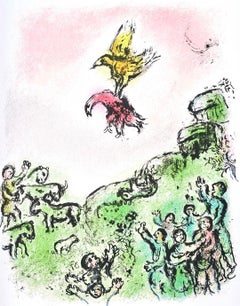
Marc Chagall, The Omen, The Hawk and the Dove, Homer, The Odyssey, 1989 (after)
Located in Southampton, NY
This exquisite lithograph after Marc Chagall (1887–1985), titled Das Vorzeichen, Der Habicht und Taube (The Omen, The Hawk and the Dove), from Homer, Die Odyssee (The Odyssey), origi...
Category

1980s Expressionist Landscape Prints

Materials

Lithograph

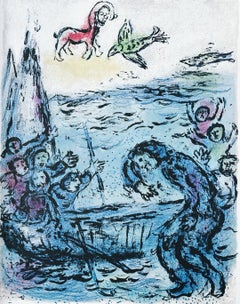
Marc Chagall, Odysseus and His Companions, from Homer, The Odyssey, 1989 (after)
Located in Southampton, NY
This exquisite lithograph after Marc Chagall (1887–1985), titled Odysseus und seine Gefährten (Odysseus and His Companions), from Homer, Die Odyssee (The Odyssey), originates from th...
Category

1980s Expressionist Landscape Prints

Materials

Lithograph

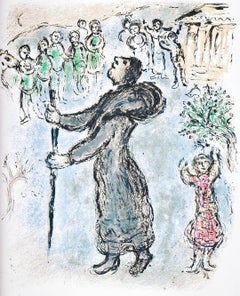
Marc Chagall, Odysseus Disguised as a Beggar, Homer, The Odyssey, 1989 (after)
Located in Southampton, NY
This exquisite lithograph after Marc Chagall (1887–1985), titled Odysseus als Bettler verkleidet (Odysseus Disguised as a Beggar), from Homer, Die Odyssee (The Odyssey), originates f...
Category

1980s Expressionist Landscape Prints

Materials

Lithograph

Marc Chagall, Odysseus at the Court of Alcinous, The Odyssey, 1989 (after)
Located in Southampton, NY
This exquisite lithograph after Marc Chagall (1887–1985), titled Odysseus bei Alkinoos (Odysseus at the Court of Alcinous), from Homer, Die Odyssee (The Odyssey), originates from the...
Category

1980s Expressionist Landscape Prints

Materials

Lithograph

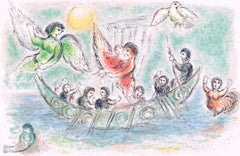
Marc Chagall, The Sirens, from Homer, The Odyssey, 1989 (after)
Located in Southampton, NY
This exquisite lithograph after Marc Chagall (1887–1985), titled Die Sirenen (The Sirens), from Homer, Die Odyssee (The Odyssey), originates from the 1989 German-language folio publi...
Category

1980s Expressionist Landscape Prints

Materials

Lithograph

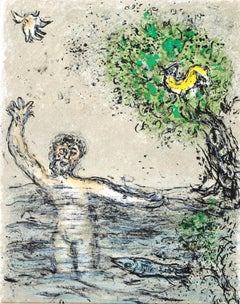
Marc Chagall, The Waves Engulf Odysseus, from Homer, The Odyssey, 1989 (after)
Located in Southampton, NY
This exquisite lithograph after Marc Chagall (1887–1985), titled Die Fluten Verschlingen Odysseus (The Waves Engulf Odysseus), from Homer, Die Odyssee (The Odyssey), originates from ...
Category

1980s Expressionist Landscape Prints

Materials

Lithograph

Marc Chagall, Tityus, from Homer, The Odyssey, 1989 (after)
Located in Southampton, NY
This exquisite lithograph after Marc Chagall (1887–1985), titled Tityos (Tityus), from Homer, Die Odyssee (The Odyssey), originates from the 1989 German-language folio published by D...
Category

1980s Expressionist Landscape Prints

Materials

Lithograph

Marc Chagall, Circe, from Homer, The Odyssey, 1989 (after)
Located in Southampton, NY
This exquisite lithograph after Marc Chagall (1887–1985), titled Kirke (Circe), from Homer, Die Odyssee (The Odyssey), originates from the 1989 German-language folio published by Dac...
Category

1980s Expressionist Landscape Prints

Materials

Lithograph

Marc Chagall, The Island of Aeolus, from Homer, The Odyssey, 1989 (after)
Located in Southampton, NY
This exquisite lithograph after Marc Chagall (1887–1985), titled Die Insel des Aiolos (The Island of Aeolus), from Homer, Die Odyssee (The Odyssey), originates from the 1989 German-l...
Category

1980s Expressionist Landscape Prints

Materials

Lithograph

Marc Chagall, Polyphemus, from Homer, The Odyssey, 1989 (after)
Located in Southampton, NY
This exquisite lithograph after Marc Chagall (1887–1985), titled Polyphemos (Polyphemus), from Homer, Die Odyssee (The Odyssey), originates from the 1989 German-language folio publis...
Category

1980s Expressionist Landscape Prints

Materials

Lithograph

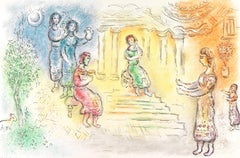
Marc Chagall, Palace of Alcinous, from Homer, The Odyssey, 1989 (after)
Located in Southampton, NY
This exquisite lithograph after Marc Chagall (1887–1985), titled Palast von Alkinoos (Palace of Alcinous), from Homer, Die Odyssee (The Odyssey), originates from the 1989 German-lang...
Category

1980s Expressionist Landscape Prints

Materials

Lithograph

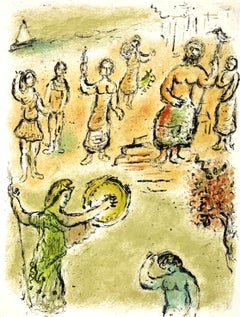
Marc Chagall, Assembly of the Gods, from Homer, The Odyssey, 1989 (after)
Located in Southampton, NY
This exquisite lithograph after Marc Chagall (1887–1985), titled Versammlung der Götter (Assembly of the Gods), from Homer, Die Odyssee (The Odyssey), originates from the 1989 German...
Category

1980s Expressionist Landscape Prints

Materials

Lithograph

Marc Chagall, Frontispiece, from Homer, The Odyssey, 1989 (after)
Located in Southampton, NY
This exquisite lithograph after Marc Chagall (1887–1985), titled Frontispiz (Frontispiece), from Homer, Die Odyssee (The Odyssey), originates from the 1989 German-language folio publ...
Category

1980s Expressionist Landscape Prints

Materials

Lithograph

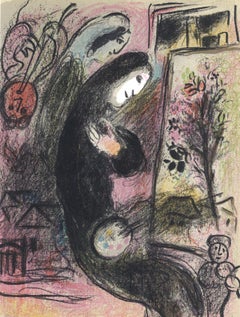
Marc Chagall, The Inspired Woman, from The Lithographs of Chagall, 1963
Located in Southampton, NY
This exquisite lithograph by Marc Chagall (1887–1985), titled L’Inspiree (The Inspired Woman), from the album The Lithographs of Chagall, Volume II, originates from the 1963 edition ...
Category

1960s Expressionist Landscape Prints

Materials

Lithograph

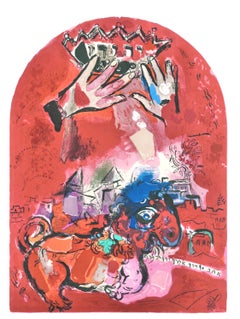
Marc Chagall, Tribe of Judah, from The Jerusalem Windows, 1962 (after)
Located in Southampton, NY
This exquisite lithograph after Marc Chagall (1887–1985), titled Tribe of Judah, from the album Marc Chagall, The Jerusalem Windows, originates from the 1962 edition published by Andre Sauret, Editeur, Paris, and printed by Mourlot Freres, Paris, June 7, 1962. This radiant composition embodies Chagall’s deep engagement with spiritual symbolism and his unparalleled command of color, representing the Tribe of Judah—one of the twelve tribes of Israel—as a luminous expression of strength, faith, and divine grace. Tribe of Judah reflects the artist’s poetic vision, uniting the biblical and the universal through a synthesis of vibrant color and dreamlike form. The composition evokes the transcendent beauty and spiritual energy that define Chagall’s monumental stained-glass windows for the Hadassah-Hebrew University Medical Center in Jerusalem, where light and faith merge into a single radiant harmony. Executed as a lithograph on velin paper, this work measures 15 x 11 inches (38.1 x 27.94 cm). Unsigned and unnumbered as issued. The edition exemplifies the exceptional craftsmanship of the Mourlot Freres atelier, renowned for its collaboration with the most important modern artists of the 20th century. Artwork Details: Artist: After Marc Chagall (1887–1985) Title: Tribe of Judah, from Marc Chagall, The Jerusalem Windows Medium: Lithograph on velin paper Dimensions: 15 x 11 inches (38.1 x 27.94 cm) Inscription: Unsigned and unnumbered as issued Date: 1962 Publisher: Andre Sauret, Editeur, Paris Printer: Mourlot Freres, Paris Condition: Well preserved, consistent with age and medium Provenance: From the album Marc Chagall, The Jerusalem Windows, published by Andre Sauret, Editeur, Paris, June 7, 1962 Notes: Excerpted from the album, This album, which was compiled by Andre Sauret, was completed on June 7, 1962. The texts by Jean Leymarie were composed by hand in "Romain du roi" and were printed by The Imprimerie Nationale de France. The thirty-six preparatory color designs, some of which are in twenty colors, were transferred to the stones by Charles Sorlier under the direction of Marc Chagall. These designs and the two original lithographs by Marc Chagall were printed by Mourlot Freres. The other reproductions and the binding are by Draeger Freres. About the Publication: Marc Chagall, The Jerusalem Windows (Les Vitraux de Jerusalem), published in 1962 by Andre Sauret, Editeur, Paris, stands as one of the artist’s most celebrated illustrated albums and a cornerstone of modern printmaking. The publication documents Chagall’s monumental stained-glass windows created for the synagogue of the Hadassah-Hebrew University Medical Center in Jerusalem—an artistic and spiritual masterpiece dedicated to the twelve tribes of Israel. Conceived in collaboration with master printer Charles Sorlier and the renowned Mourlot Freres atelier, the album compiles the artist’s original color studies through vibrant lithography, achieving a remarkable luminosity that mirrors the glowing transparency of stained glass. The accompanying text by art historian Jean Leymarie offers profound insights into Chagall’s vision, faith, and symbolism. Completed on June 7, 1962, this edition embodies the union of fine art, craftsmanship, and devotion, capturing the transcendent beauty of Chagall’s windows and their universal message of peace and faith. About the Artist: Marc Chagall (1887–1985) was a Belarus-born French painter, printmaker, and designer whose visionary imagination, radiant color, and deeply poetic symbolism made him one of the most beloved and influential artists of the 20th century. Rooted in the imagery of his Jewish heritage and the memories of his childhood in Vitebsk, Chagall’s art wove together themes of faith, love, folklore, and fantasy with a dreamlike modern sensibility. His unique style—merging elements of Cubism, Fauvism, Expressionism, and Surrealism—defied categorization, transforming ordinary scenes into lyrical meditations on memory and emotion. Influenced by Russian icon painting, medieval religious art, and the modern innovations of artists such as Pablo Picasso, Henri Matisse, and Georges Braque, Chagall developed a profoundly personal visual language filled with floating figures, vibrant animals, musicians, and lovers that symbolized the transcendent power of imagination and love. During his early years in Paris, he became an integral part of the Ecole de Paris circle, forming friendships with Amedeo Modigliani, Fernand Leger, and Sonia Delaunay, and his creative spirit resonated with that of his peers and successors—Alexander Calder, Alberto Giacometti, Salvador Dali, Joan Miro, Wassily Kandinsky, Marcel Duchamp, and Man Ray—artists who, like Chagall, sought to push the boundaries of perception, emotion, and form. Over a prolific career that spanned painting, printmaking, stained glass, ceramics, and stage design, Chagall brought an unparalleled poetic sensibility to modern art, infusing even the most abstract subjects with human warmth and spiritual depth. His works are held in the most prestigious museums around the world, including the Museum of Modern Art, the Centre Pompidou, the Tate, and the Guggenheim, where they continue to inspire generations of artists and collectors. The highest price ever paid for a Marc Chagall artwork is approximately $28.5 million USD, achieved in 2017 at Sotheby’s New York for Les Amoureux (1928). Marc Chagall Tribe of Judah, Chagall Jerusalem Windows...
Category

1960s Expressionist Landscape Prints

Materials

Lithograph

Harmony, Music, Deep Rivers in My Soul
Located in Southampton, NY
Etching in colors on Somerset vélin paper. Paper Size: 20 x 23 inches. Inscription: Unsigned and unnumbered, as issued. Notes: From the folio, Music, Deep Rivers in My Soul, 2003. Published by The Limited Editions Club, New York; printed by Wingate Studio, Hinsdale, under the direction of Peter Pettengili, Hinsdale, 2003. Excerpted from the folio, This edition of Music, Deep Rivers in my Soul consists of CD examples printed on Somerset paper. Dan Carr and Julia Ferrari designed the typography. Cast the Spectrum and Romulus type in metal, handset the type and printed the text at Golgonooza Letter Foundry and Press in Ashuelot, New Hampshire. The color etchings were printed by hand on Somerset paper by Peter Pettengili at Wingate Studio in Hinsdale, New Hampshire. DEAN MITCHELL...
Category

Early 2000s Expressionist Landscape Prints

Materials

Etching

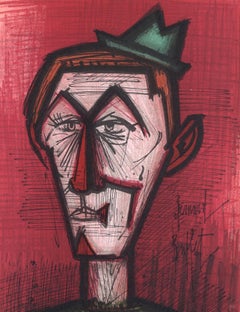
Buffet, Le clown au fond rouge, Lithographs 1952-1966 (after)
Located in Fairfield, CT
Medium: Lithograph on vélin Acropole Papeteries de Renage paper. Year: 1967 Paper Size: 12.25 x 9.5 inches Inscription: Signed in the plate and unnumbered, as issued Notes: From the ...
Category

1960s Expressionist Landscape Prints

Materials

Lithograph

Marc Chagall, Tribe of Asher, from The Jerusalem Windows, 1962 (after)
Located in Southampton, NY
This exquisite lithograph after Marc Chagall (1887–1985), titled Tribe of Asher, from the album Marc Chagall, The Jerusalem Windows, originates from the 1962 edition published by And...
Category

1960s Expressionist Landscape Prints

Materials

Lithograph

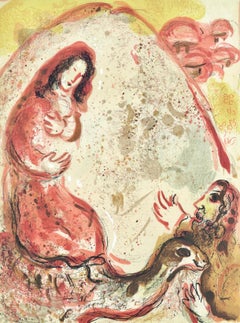
Marc Chagall, Rachel Steals Her Father’s Idols, Drawings for the Bible, 1956
Located in Southampton, NY
This exquisite lithograph by Marc Chagall (1887–1985), titled Rachel derobe les Idoles de son Pere (Rachel Steals Her Father’s Idols), from Marc Chagall, Dessins Pour La Bible (Drawings for the Bible), Verve: Revue Artistique et Litteraire, Vol. VIII, No. 33–34, originates from the September 1956 issue published by Editions de la revue Verve, Paris, under the direction of Teriade, Editeur, Paris, and printed by Mourlot Freres, Paris, 1956. This poignant and symbolic composition illustrates the biblical episode in which Rachel secretly takes her father Laban’s household idols, an act that represents both defiance and devotion. Chagall’s interpretation imbues the scene with mystery and spiritual complexity, transforming it into a meditation on faith, transformation, and the tension between tradition and revelation. With his characteristic use of fluid lines and emotional resonance, Chagall elevates this intimate moment into a timeless vision of courage and divine purpose. The piece forms part of Chagall’s celebrated series of lithographs and drawings created for Dessins Pour La Bible, a monumental project uniting art, scripture, and mysticism in one of the artist’s most important achievements. Executed as a lithograph on velin du Marais paper, this work measures 14 x 10.5 inches (35.56 x 26.67 cm). Unsigned and unnumbered as issued. The edition exemplifies the superb craftsmanship of the Mourlot Freres atelier, renowned for its collaborations with the greatest modern masters of the 20th century. Artwork Details: Artist: Marc Chagall (1887–1985) Title: Rachel derobe les Idoles de son Pere (Rachel Steals Her Father’s Idols), from Marc Chagall, Dessins Pour La Bible (Drawings for the Bible), Verve: Revue Artistique et Litteraire, Vol. VIII, No. 33–34, September 1956 Medium: Lithograph on velin du Marais paper Dimensions: 14 x 10.5 inches (35.56 x 26.67 cm) Inscription: Unsigned and unnumbered as issued Date: 1956 Publisher: Editions de la revue Verve, Paris, under the direction of Teriade, Editeur, Paris Printer: Mourlot Freres, Paris Catalogue raisonne references: Cain, Julien, and Fernand Mourlot. Chagall Lithographe. Andre Sauret, Editeur, 1960, illustrations 117–46. Cramer, Patrick, and Meret Meyer. Marc Chagall: Catalogue Raisonne Des Livres Illustrés. P. Cramer ed., 1995, illustration 25. Condition: Well preserved, consistent with age and medium Provenance: From Marc Chagall, Dessins Pour La Bible (Drawings for the Bible), Verve: Revue Artistique et Litteraire, Vol. VIII, No. 33–34, published by Editions de la revue Verve, Paris, 1956 Notes: Excerpted from the album (translated from French), This double issue of Verve is dedicated to the full reproduction in heliogravure of the one hundred-five plates etched by Marc Chagall, between 1930 and 1955, for the illustration of the Bible. The artist composed especially for the present work, sixteen lithographs in color and twelve in black, as well as the cover and the title page. This volume was completed and printed on September 10, 1956, by the Master Printers Draeger Freres for heliogravure, and by Mourlot Freres for lithography. About the Publication: Marc Chagall, Dessins Pour La Bible (Drawings for the Bible), published as Verve Vol. VIII, No. 33–34 in September 1956, represents one of the crowning achievements of Chagall’s lifelong dialogue with the sacred. Conceived and directed by the visionary publisher Teriade and printed by the master lithographers Mourlot Freres, the issue features thirty-four color lithographs and numerous black-and-white drawings inspired by biblical figures and stories. Chagall’s works for this edition unite text and image in a luminous meditation on divine creation, moral struggle, and spiritual renewal, imbued with his signature dreamlike symbolism and radiant color. Produced in postwar Paris, this landmark publication reaffirmed the enduring union of art and faith, establishing Dessins Pour La Bible as one of the most important illustrated works of the 20th century. About the Artist: Marc Chagall (1887–1985) was a Belarus-born French painter, printmaker, and designer whose visionary imagination, radiant color, and deeply poetic symbolism made him one of the most beloved and influential artists of the 20th century. Rooted in the imagery of his Jewish heritage and the memories of his childhood in Vitebsk, Chagall’s art wove together themes of faith, love, folklore, and fantasy with a dreamlike modern sensibility. His unique style—merging elements of Cubism, Fauvism, Expressionism, and Surrealism—defied categorization, transforming ordinary scenes into lyrical meditations on memory and emotion. Influenced by Russian icon painting, medieval religious art, and the modern innovations of artists such as Pablo Picasso, Henri Matisse, and Georges Braque, Chagall developed a profoundly personal visual language filled with floating figures, vibrant animals, musicians, and lovers that symbolized the transcendent power of imagination and love. During his early years in Paris, he became an integral part of the Ecole de Paris circle, forming friendships with Amedeo Modigliani, Fernand Leger, and Sonia Delaunay, and his creative spirit resonated with that of his peers and successors—Alexander Calder, Alberto Giacometti, Salvador Dali, Joan Miro, Wassily Kandinsky, Marcel Duchamp, and Man Ray—artists who, like Chagall, sought to push the boundaries of perception, emotion, and form. Over a prolific career that spanned painting, printmaking, stained glass, ceramics, and stage design, Chagall brought an unparalleled poetic sensibility to modern art, infusing even the most abstract subjects with human warmth and spiritual depth. His works are held in the most prestigious museums around the world, including the Museum of Modern Art, the Centre Pompidou, the Tate, and the Guggenheim, where they continue to inspire generations of artists and collectors. The highest price ever paid for a Marc Chagall artwork is approximately $28.5 million USD, achieved in 2017 at Sotheby’s New York for Les Amoureux (1928). Marc Chagall Rachel...
Category

1950s Expressionist Landscape Prints

Materials

Lithograph

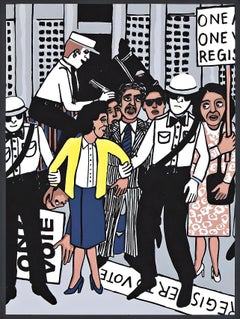
Faith Ringgold, The Right to Vote, from Letter from Birmingham City Jail, 2007
Located in Southampton, NY
This exquisite silkscreen by Faith Ringgold (1930–2024), titled The Right to Vote, from the folio Letter from Birmingham City Jail, originates from the 2007 edition published by The ...
Category

Early 2000s Expressionist Landscape Prints

Materials

Screen

Marc Chagall, Tribe of Benjamin, from The Jerusalem Windows, 1962 (after)
Located in Southampton, NY
This exquisite lithograph after Marc Chagall (1887–1985), titled Tribe of Benjamin, from the album Marc Chagall, The Jerusalem Windows, originates from the 1962 edition published by Andre Sauret, Editeur, Paris, and printed by Mourlot Freres, Paris, June 7, 1962. This vibrant composition embodies Chagall’s unique synthesis of faith, color, and imagination, celebrating the spiritual symbolism of the twelve tribes of Israel as represented in his monumental stained-glass windows for the synagogue of the Hadassah-Hebrew University Medical Center in Jerusalem. Tribe of Benjamin captures the artist’s poetic vision through luminous hues and dreamlike imagery, translating the ancient heritage of Israel into a universal language of beauty, hope, and divine harmony. With its radiant color and lyrical balance, this lithograph stands as one of the finest examples of Chagall’s mastery of the printed medium and his enduring ability to unite spiritual and artistic expression. Executed as a lithograph on velin paper, this work measures 15 x 11 inches (38.1 x 27.94 cm). Unsigned and unnumbered as issued. The edition exemplifies the exceptional craftsmanship of the Mourlot Freres atelier, renowned for its collaboration with the most important modern artists of the 20th century. Artwork Details: Artist: After Marc Chagall (1887–1985) Title: Tribe of Benjamin, from Marc Chagall, The Jerusalem Windows Medium: Lithograph on velin paper Dimensions: 15 x 11 inches (38.1 x 27.94 cm) Inscription: Unsigned and unnumbered as issued Date: 1962 Publisher: Andre Sauret, Editeur, Paris Printer: Mourlot Freres, Paris Condition: Well preserved, consistent with age and medium Provenance: From the album Marc Chagall, The Jerusalem Windows, published by Andre Sauret, Editeur, Paris, June 7, 1962 Notes: Excerpted from the album, This album, which was compiled by Andre Sauret, was completed on June 7, 1962. The texts by Jean Leymarie were composed by hand in "Romain du roi" and were printed by The Imprimerie Nationale de France. The thirty-six preparatory color designs, some of which are in twenty colors, were transferred to the stones by Charles Sorlier under the direction of Marc Chagall. These designs and the two original lithographs by Marc Chagall were printed by Mourlot Freres. The other reproductions and the binding are by Draeger Freres. About the Publication: Marc Chagall, The Jerusalem Windows (Les Vitraux de Jerusalem), published in 1962 by Andre Sauret, Editeur, Paris, stands as one of the artist’s most celebrated illustrated albums and a cornerstone of modern printmaking. The publication documents Chagall’s monumental stained-glass windows created for the synagogue of the Hadassah-Hebrew University Medical Center in Jerusalem—an artistic and spiritual masterpiece dedicated to the twelve tribes of Israel. Conceived in collaboration with master printer Charles Sorlier and the renowned Mourlot Freres atelier, the album compiles the artist’s original color studies through vibrant lithography, achieving a remarkable luminosity that mirrors the glowing transparency of stained glass. The accompanying text by art historian Jean Leymarie offers profound insights into Chagall’s vision, faith, and symbolism. Completed on June 7, 1962, this edition embodies the union of fine art, craftsmanship, and devotion, capturing the transcendent beauty of Chagall’s windows and their universal message of peace and faith. About the Artist: Marc Chagall (1887–1985) was a Belarus-born French painter, printmaker, and designer whose visionary imagination, radiant color, and deeply poetic symbolism made him one of the most beloved and influential artists of the 20th century. Rooted in the imagery of his Jewish heritage and the memories of his childhood in Vitebsk, Chagall’s art wove together themes of faith, love, folklore, and fantasy with a dreamlike modern sensibility. His unique style—merging elements of Cubism, Fauvism, Expressionism, and Surrealism—defied categorization, transforming ordinary scenes into lyrical meditations on memory and emotion. Influenced by Russian icon painting, medieval religious art, and the modern innovations of artists such as Pablo Picasso, Henri Matisse, and Georges Braque, Chagall developed a profoundly personal visual language filled with floating figures, vibrant animals, musicians, and lovers that symbolized the transcendent power of imagination and love. During his early years in Paris, he became an integral part of the Ecole de Paris circle, forming friendships with Amedeo Modigliani, Fernand Leger, and Sonia Delaunay, and his creative spirit resonated with that of his peers and successors—Alexander Calder, Alberto Giacometti, Salvador Dali, Joan Miro, Wassily Kandinsky, Marcel Duchamp, and Man Ray—artists who, like Chagall, sought to push the boundaries of perception, emotion, and form. Over a prolific career that spanned painting, printmaking, stained glass, ceramics, and stage design, Chagall brought an unparalleled poetic sensibility to modern art, infusing even the most abstract subjects with human warmth and spiritual depth. His works are held in the most prestigious museums around the world, including the Museum of Modern Art, the Centre Pompidou, the Tate, and the Guggenheim, where they continue to inspire generations of artists and collectors. The highest price ever paid for a Marc Chagall artwork is approximately $28.5 million USD, achieved in 2017 at Sotheby’s New York for Les Amoureux (1928). Marc Chagall Tribe of Benjamin, Chagall Jerusalem Windows...
Category

1960s Expressionist Landscape Prints

Materials

Lithograph

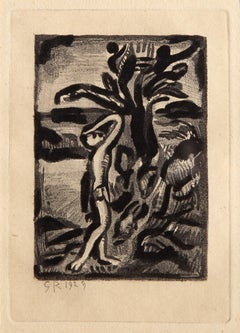
From Les Reincarnations du Pere Ubu, Surrealist Etching by Georges Rouault
Located in Long Island City, NY
Artist: Georges Rouault, French (1871 - 1958) Title: Frontispiece from the portfolio Les Reincarnations du Pere Ubu Year: 1929 Medium: Etching and aquatint on cream wove paper, signe...
Category

1920s Expressionist Landscape Prints

Materials

Etching

Marc Chagall, The Eiffel Tower, Letter to My Painter Raoul Dufy, 1965 (after)
Located in Southampton, NY
This exquisite lithograph after Marc Chagall (1887–1985), titled La Tour Eiffel (The Eiffel Tower), from the folio Lettre a mon peintre Raoul Dufy (Letter to My Painter Raoul Dufy), ...
Category

1960s Expressionist Landscape Prints

Materials

Lithograph

Hot in the Shade, Music, Deep Rivers in My Soul
Located in Southampton, NY
Etching in colors on Somerset vélin paper. Paper Size: 20 x 23 inches. Inscription: Unsigned and unnumbered, as issued. Notes: From the folio, Music, Deep Rivers in My Soul, 2003. Published by The Limited Editions Club, New York; printed by Wingate Studio, Hinsdale, under the direction of Peter Pettengili, Hinsdale, 2003. Excerpted from the folio, This edition of Music, Deep Rivers in my Soul consists of CD examples printed on Somerset paper. Dan Carr and Julia Ferrari designed the typography. Cast the Spectrum and Romulus type in metal, handset the type and printed the text at Golgonooza Letter Foundry and Press in Ashuelot, New Hampshire. The color etchings were printed by hand on Somerset paper by Peter Pettengili at Wingate Studio in Hinsdale, New Hampshire. DEAN MITCHELL...
Category

Early 2000s Expressionist Landscape Prints

Materials

Etching

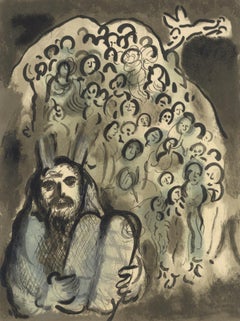
Marc Chagall, Moses and His People, from The Biblical Message, 1972
Located in Southampton, NY
This exquisite lithograph by Marc Chagall (1887–1985), titled Moise et son peuple (Moses and His People), from the album Le Message Biblique, Marc Chagall (The Biblical Message, Marc...
Category

1970s Expressionist Landscape Prints

Materials

Lithograph

Marc Chagall, Brown Still Life, from Chagall, 1957
Located in Southampton, NY
This exquisite lithograph by Marc Chagall (1887–1985), titled Nature Morte Brune (Brown Still Life), from the album Chagall, originates from the 1957 edition published by Maeght Edit...
Category

1950s Expressionist Landscape Prints

Materials

Lithograph

Marc Chagall, Pelleas and Melisande, 1963 (after)
Located in Southampton, NY
This exquisite lithograph after Marc Chagall (1887–1985), titled Pelleas et Melisande (Pelleas and Melisande), from the album Le plafond de l’Opera de Paris par Marc Chagall (The Cei...
Category

1960s Expressionist Landscape Prints

Materials

Lithograph

Marc Chagall, Tribe of Levi, from The Jerusalem Windows, 1962 (after)
Located in Southampton, NY
This exquisite lithograph after Marc Chagall (1887–1985), titled Tribe of Levi, from the album Marc Chagall, The Jerusalem Windows, originates from the 1962 edition published by Andr...
Category

1960s Expressionist Landscape Prints

Materials

Lithograph

Expressionist landscape prints for sale on 1stDibs.

Find a wide variety of authentic Expressionist landscape prints available for sale on 1stDibs. Works in this style were very popular during the 21st Century and Contemporary, but contemporary artists have continued to produce works inspired by this movement. If you’re looking to add landscape prints created in this style to introduce contrast in an otherwise neutral space in your home, the works available on 1stDibs include elements of blue, orange, pink, purple and other colors. Many Pop art paintings were created by popular artists on 1stDibs, including Marc Chagall, Gustav Klimt K.K. Hof-und Staatsdruckerei, Graciela Rodo Boulanger, and (after) Gustav Klimt. Frequently made by artists working with Lithograph, and Paper and other materials, all of these pieces for sale are unique and have attracted attention over the years. Not every interior allows for large Expressionist landscape prints, so small editions measuring 3.25 inches across are also available. Prices for landscape prints made by famous or emerging artists can differ depending on medium, time period and other attributes. On 1stDibs, the price for these items starts at $100 and tops out at $79,600, while the average work sells for $980.

Recently Viewed

View All