Expressionist Landscape Prints

EXPRESSIONIST STYLE

While “expressionist” is used to describe any art that avoids naturalism and instead employs a bold use of flattened forms and intense brushwork, Expressionist art formally describes early-20th-century work from Europe that drew on Symbolism and confronted issues such as urbanization and capitalism. Expressionist artists experimented in paintings and prints with skewed perspectives, abstraction and unconventional, bright colors to portray how isolating and anxious the world felt rather than how it appeared. 

Between 1905 and 1920, Austrian and German artists, in particular, were inspired by Postimpressionists such as Paul Gauguin and Vincent van Gogh in their efforts to strive for a new authenticity in their work. In its geometric patterns and decorative details, Expressionist art was also marked by eclectic sources like German and Russian folk art as well as tribal art from Africa and Oceania, which the movement’s practitioners witnessed at museums and world’s fairs.

Groups of artists came together to share and promote the themes now associated with Expressionism, such as Die Brücke (The Bridge) in Dresden, which included Erich Heckel, Ernst Ludwig Kirchner and Karl Schmidt-Rottluff and investigated alienation and the dissolution of society in vivid color. In Munich, Der Blaue Reiter (The Blue Rider), a group led by Wassily Kandinsky and Franz Marc, instilled Expressionism with a search for spiritual truths. In his iconic painting The Scream, prolific Norwegian painter Edvard Munch conveyed emotional turmoil through his depiction of environmental elements, such as the threatening sky.

Expressionism shifted around the outbreak of World War I, with artists using more elements of the grotesque in reaction to the escalation of unrest and violence. Printmaking was especially popular, as it allowed artists to widely disseminate works that grappled with social and political issues amid this time of upheaval. Although the art movement ended with the rise of Nazi Germany, where Expressionist creators were labeled “degenerate,” the radical ideas of these artists would influence Neo-Expressionism that emerged in the late 1970s with painters like Jean-Michel Basquiat and Francesco Clemente.

​​Find a collection of authentic Expressionist paintings, sculptures, prints and more art on 1stDibs.

to
290
243
95
17
12
1
Overall Width
to
Overall Height
to
4,673
3,198
812
808
745
655
649
442
89
83
78
28
15
110
18
8
8
8
1
327
42
19
6
5
6
2
75
93
28
56
19
250
112
6
212
137
110
88
67
59
57
36
16
16
14
13
11
11
9
8
8
8
7
6
255
45
35
27
6
15
3
346
24
Style: Expressionist
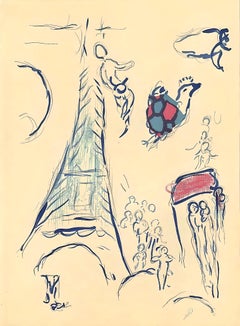
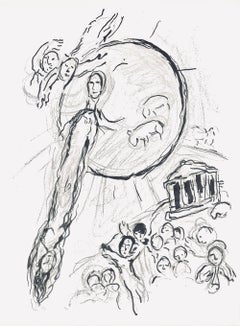
Marc Chagall, The Angel of Mozart, The Ceiling of the Paris Opera, 1965 (after)
Located in Southampton, NY
This exquisite lithograph after Marc Chagall (1887–1985), titled L’ange de Mozart (The Angel of Mozart), from the album Le plafond de l’Opera de Paris par Marc Chagall (The Ceiling o...
Category

1960s Expressionist Landscape Prints

Materials

Lithograph

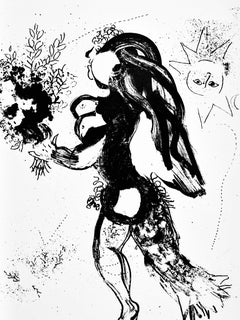
Marc Chagall, The Offering, from The Lithographs of Chagall, 1960
Located in Southampton, NY
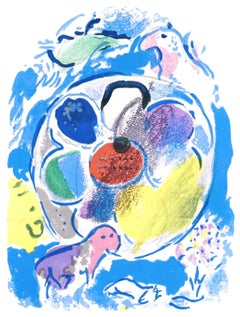
This exquisite lithograph by Marc Chagall (1887–1985), titled L’Offrande (The Offering), from the album The Lithographs of Chagall, Volume I, originates from the 1960 edition publish...
Category

1960s Expressionist Landscape Prints

Materials

Lithograph

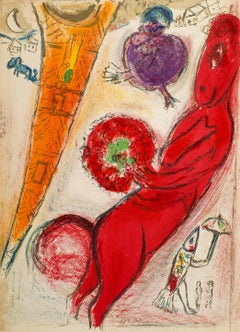
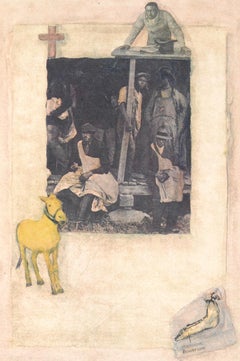
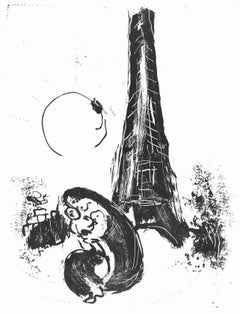
Marc Chagall, The Eiffel Tower and the Donkey, from Derriere le miroir, 1954
Located in Southampton, NY
This exquisite lithograph by Marc Chagall (1887–1985), titled La Tour Eiffel a l'Ane (The Eiffel Tower and the Donkey), from the folio Derriere le miroir, No. 67–68, originates from ...
Category

1950s Expressionist Landscape Prints

Materials

Lithograph

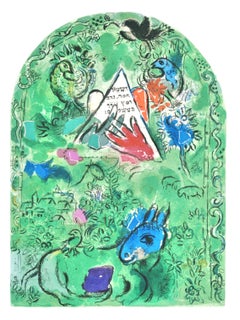
Marc Chagall, Tribe of Issachar, from The Jerusalem Windows, 1962 (after)
Located in Southampton, NY
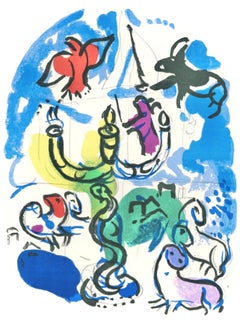
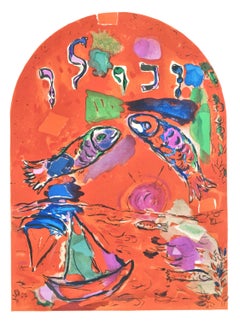
This exquisite lithograph after Marc Chagall (1887–1985), titled Tribe of Issachar, from the album Marc Chagall, The Jerusalem Windows, originates from the 1962 edition published by Andre Sauret, Editeur, Paris, and printed by Mourlot Freres, Paris, June 7, 1962. This radiant composition celebrates the Tribe of Issachar, symbolizing wisdom, study, and spiritual insight. Tribe of Issachar reflects Chagall’s deep reverence for divine knowledge and the harmony between the earthly and celestial realms. Through an ethereal interplay of blues, greens, and golden light, the artist evokes the serene beauty of enlightenment and the eternal rhythm of faith. The imagery, both symbolic and lyrical, transforms biblical tradition into an expression of spiritual unity and human aspiration, hallmarks of Chagall’s poetic vision. Executed as a lithograph on velin paper, this work measures 15 x 11 inches (38.1 x 27.94 cm). Unsigned and unnumbered as issued. The edition exemplifies the exceptional craftsmanship of the Mourlot Freres atelier, renowned for its collaboration with the most important modern artists of the 20th century. Artwork Details: Artist: After Marc Chagall (1887–1985) Title: Tribe of Issachar, from Marc Chagall, The Jerusalem Windows Medium: Lithograph on velin paper Dimensions: 15 x 11 inches (38.1 x 27.94 cm) Inscription: Unsigned and unnumbered as issued Date: 1962 Publisher: Andre Sauret, Editeur, Paris Printer: Mourlot Freres, Paris Condition: Well preserved, consistent with age and medium Provenance: From the album Marc Chagall, The Jerusalem Windows, published by Andre Sauret, Editeur, Paris, June 7, 1962 Notes: Excerpted from the album, This album, which was compiled by Andre Sauret, was completed on June 7, 1962. The texts by Jean Leymarie were composed by hand in "Romain du roi" and were printed by The Imprimerie Nationale de France. The thirty-six preparatory color designs, some of which are in twenty colors, were transferred to the stones by Charles Sorlier under the direction of Marc Chagall. These designs and the two original lithographs by Marc Chagall were printed by Mourlot Freres. The other reproductions and the binding are by Draeger Freres. About the Publication: Marc Chagall, The Jerusalem Windows (Les Vitraux de Jerusalem), published in 1962 by Andre Sauret, Editeur, Paris, stands as one of the artist’s most celebrated illustrated albums and a cornerstone of modern printmaking. The publication documents Chagall’s monumental stained-glass windows created for the synagogue of the Hadassah-Hebrew University Medical Center in Jerusalem—an artistic and spiritual masterpiece dedicated to the twelve tribes of Israel. Conceived in collaboration with master printer Charles Sorlier and the renowned Mourlot Freres atelier, the album compiles the artist’s original color studies through vibrant lithography, achieving a remarkable luminosity that mirrors the glowing transparency of stained glass. The accompanying text by art historian Jean Leymarie offers profound insights into Chagall’s vision, faith, and symbolism. Completed on June 7, 1962, this edition embodies the union of fine art, craftsmanship, and devotion, capturing the transcendent beauty of Chagall’s windows and their universal message of peace and faith. About the Artist: Marc Chagall (1887–1985) was a Belarus-born French painter, printmaker, and designer whose visionary imagination, radiant color, and deeply poetic symbolism made him one of the most beloved and influential artists of the 20th century. Rooted in the imagery of his Jewish heritage and the memories of his childhood in Vitebsk, Chagall’s art wove together themes of faith, love, folklore, and fantasy with a dreamlike modern sensibility. His unique style—merging elements of Cubism, Fauvism, Expressionism, and Surrealism—defied categorization, transforming ordinary scenes into lyrical meditations on memory and emotion. Influenced by Russian icon painting, medieval religious art, and the modern innovations of artists such as Pablo Picasso, Henri Matisse, and Georges Braque, Chagall developed a profoundly personal visual language filled with floating figures, vibrant animals, musicians, and lovers that symbolized the transcendent power of imagination and love. During his early years in Paris, he became an integral part of the Ecole de Paris circle, forming friendships with Amedeo Modigliani, Fernand Leger, and Sonia Delaunay, and his creative spirit resonated with that of his peers and successors—Alexander Calder, Alberto Giacometti, Salvador Dali, Joan Miro, Wassily Kandinsky, Marcel Duchamp, and Man Ray—artists who, like Chagall, sought to push the boundaries of perception, emotion, and form. Over a prolific career that spanned painting, printmaking, stained glass, ceramics, and stage design, Chagall brought an unparalleled poetic sensibility to modern art, infusing even the most abstract subjects with human warmth and spiritual depth. His works are held in the most prestigious museums around the world, including the Museum of Modern Art, the Centre Pompidou, the Tate, and the Guggenheim, where they continue to inspire generations of artists and collectors. The highest price ever paid for a Marc Chagall artwork is approximately $28.5 million USD, achieved in 2017 at Sotheby’s New York for Les Amoureux (1928). Marc Chagall Tribe of Issachar, Chagall Jerusalem Windows...
Category

1960s Expressionist Landscape Prints

Materials

Lithograph

Playmates, For My People, Elizabeth Catlett
Located in Southampton, NY
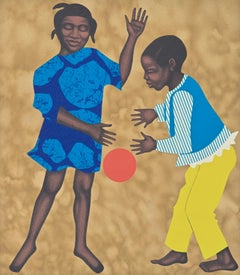
Lithograph on vélin d’Arches 300gm paper. Paper Size: 21.8125 x 18.3125 inches. Inscription: Unsigned and unnumbered, as issued. Notes: From the album, For My People, 1992. Published...
Category

1990s Expressionist Landscape Prints

Materials

Lithograph

Paris : Louvre Museum with Blue Scratch - Original etching
Located in Paris, IDF
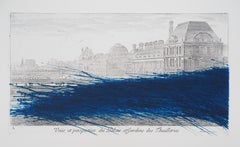
Arnulf Rainer (1929) Paris : Louvre Museum with Blue Scratch Original etching On vellum 40 x 50 cm (c. 16 x 20 in) Authenticated with the blind stamp of the editor Chalcographie of ...
Category

21st Century and Contemporary Expressionist Landscape Prints

Materials

Etching

Marc Chagall, The Green River, from Chagall, 1976
Located in Southampton, NY
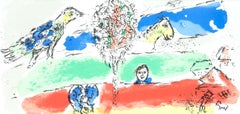
This exquisite lithograph by Marc Chagall (1887–1985), titled Le fleuve vert (The Green River), from the album Chagall, originates from the 1976 edition published by Maeght Editeur, ...
Category

1970s Expressionist Landscape Prints

Materials

Lithograph

Marc Chagall, Tribe of Dan, from The Jerusalem Windows, 1962 (after)
Located in Southampton, NY
This exquisite lithograph after Marc Chagall (1887–1985), titled Tribe of Dan, from the album Marc Chagall, The Jerusalem Windows, originates from the 1962 edition published by Andre...
Category

1960s Expressionist Landscape Prints

Materials

Lithograph

"Weather Eye" - 1989 Lithograph on Paper
Located in Soquel, CA
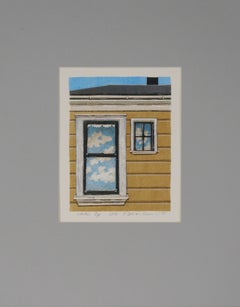
"Weather Eye" - 1989 Lithograph on Paper 1989 Lithograph on paper titled "Weather Eye" by Deborah Rumer (American, 20th Century). A windowsill is the focal point, as the viewer look...
Category

1980s Expressionist Landscape Prints

Materials

Paper, Ink, Lithograph

Marc Chagall, Tribe of Benjamin, from The Jerusalem Windows, 1962 (after)
Located in Southampton, NY
This exquisite lithograph after Marc Chagall (1887–1985), titled Tribe of Benjamin, from the album Marc Chagall, The Jerusalem Windows, originates from the 1962 edition published by ...
Category

1960s Expressionist Landscape Prints

Materials

Lithograph

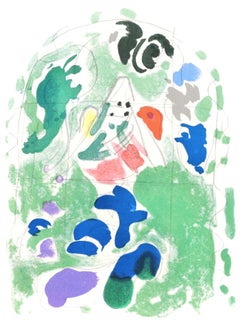
Marc Chagall, Tribe of Zebulun, from The Jerusalem Windows, 1962 (after)
Located in Southampton, NY
This exquisite lithograph after Marc Chagall (1887–1985), titled Tribe of Zebulun, from the album Marc Chagall, The Jerusalem Windows, originates from the 1962 edition published by A...
Category

1960s Expressionist Landscape Prints

Materials

Lithograph

Marc Chagall, David Saved by Michal, from Drawings for the Bible, 1956
Located in Southampton, NY
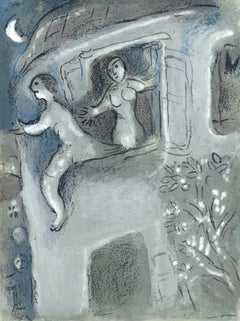
This exquisite lithograph by Marc Chagall (1887–1985), titled David sauve par Michal (David Saved by Michal), from Marc Chagall, Dessins Pour La Bible (Drawings for the Bible), Verve...
Category

1950s Expressionist Landscape Prints

Materials

Lithograph

Marc Chagall, Tribe of Naphtali, from The Jerusalem Windows, 1962 (after)
Located in Southampton, NY
This exquisite lithograph after Marc Chagall (1887–1985), titled Tribe of Naphtali, from the album Marc Chagall, The Jerusalem Windows, originates from the 1962 edition published by ...
Category

1960s Expressionist Landscape Prints

Materials

Lithograph

Marc Chagall, Tribe of Naphtali, from The Jerusalem Windows, 1962 (after)
Located in Southampton, NY
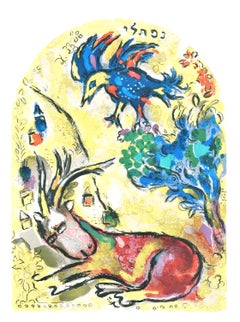
This exquisite lithograph after Marc Chagall (1887–1985), titled Tribe of Naphtali, from the album Marc Chagall, The Jerusalem Windows, originates from the 1962 edition published by Andre Sauret, Editeur, Paris, and printed by Mourlot Freres, Paris, June 7, 1962. This luminous composition celebrates the Tribe of Naphtali, symbolizing eloquence, swiftness, and divine grace. Tribe of Naphtali captures Chagall’s poetic vision through a harmonious orchestration of radiant blues, greens, and golds, evoking motion, vitality, and spiritual liberation. The image reflects the artist’s ability to translate ancient symbolism into a timeless modern language—one that bridges faith and imagination, merging biblical narrative with lyrical abstraction. In this work, Chagall transforms sacred tradition into an exaltation of life, beauty, and spiritual freedom. Executed as a lithograph on velin paper, this work measures 15 x 11 inches (38.1 x 27.94 cm). Unsigned and unnumbered as issued. The edition exemplifies the exceptional craftsmanship of the Mourlot Freres atelier, renowned for its collaboration with the most important modern artists of the 20th century. Artwork Details: Artist: After Marc Chagall (1887–1985) Title: Tribe of Naphtali, from Marc Chagall, The Jerusalem Windows Medium: Lithograph on velin paper Dimensions: 15 x 11 inches (38.1 x 27.94 cm) Inscription: Unsigned and unnumbered as issued Date: 1962 Publisher: Andre Sauret, Editeur, Paris Printer: Mourlot Freres, Paris Condition: Well preserved, consistent with age and medium Provenance: From the album Marc Chagall, The Jerusalem Windows, published by Andre Sauret, Editeur, Paris, June 7, 1962 Notes: Excerpted from the album, This album, which was compiled by Andre Sauret, was completed on June 7, 1962. The texts by Jean Leymarie were composed by hand in "Romain du roi" and were printed by The Imprimerie Nationale de France. The thirty-six preparatory color designs, some of which are in twenty colors, were transferred to the stones by Charles Sorlier under the direction of Marc Chagall. These designs and the two original lithographs by Marc Chagall were printed by Mourlot Freres. The other reproductions and the binding are by Draeger Freres. About the Publication: Marc Chagall, The Jerusalem Windows (Les Vitraux de Jerusalem), published in 1962 by Andre Sauret, Editeur, Paris, stands as one of the artist’s most celebrated illustrated albums and a cornerstone of modern printmaking. The publication documents Chagall’s monumental stained-glass windows created for the synagogue of the Hadassah-Hebrew University Medical Center in Jerusalem—an artistic and spiritual masterpiece dedicated to the twelve tribes of Israel. Conceived in collaboration with master printer Charles Sorlier and the renowned Mourlot Freres atelier, the album compiles the artist’s original color studies through vibrant lithography, achieving a remarkable luminosity that mirrors the glowing transparency of stained glass. The accompanying text by art historian Jean Leymarie offers profound insights into Chagall’s vision, faith, and symbolism. Completed on June 7, 1962, this edition embodies the union of fine art, craftsmanship, and devotion, capturing the transcendent beauty of Chagall’s windows and their universal message of peace and faith. About the Artist: Marc Chagall (1887–1985) was a Belarus-born French painter, printmaker, and designer whose visionary imagination, radiant color, and deeply poetic symbolism made him one of the most beloved and influential artists of the 20th century. Rooted in the imagery of his Jewish heritage and the memories of his childhood in Vitebsk, Chagall’s art wove together themes of faith, love, folklore, and fantasy with a dreamlike modern sensibility. His unique style—merging elements of Cubism, Fauvism, Expressionism, and Surrealism—defied categorization, transforming ordinary scenes into lyrical meditations on memory and emotion. Influenced by Russian icon painting, medieval religious art, and the modern innovations of artists such as Pablo Picasso, Henri Matisse, and Georges Braque, Chagall developed a profoundly personal visual language filled with floating figures, vibrant animals, musicians, and lovers that symbolized the transcendent power of imagination and love. During his early years in Paris, he became an integral part of the Ecole de Paris circle, forming friendships with Amedeo Modigliani, Fernand Leger, and Sonia Delaunay, and his creative spirit resonated with that of his peers and successors—Alexander Calder, Alberto Giacometti, Salvador Dali, Joan Miro, Wassily Kandinsky, Marcel Duchamp, and Man Ray—artists who, like Chagall, sought to push the boundaries of perception, emotion, and form. Over a prolific career that spanned painting, printmaking, stained glass, ceramics, and stage design, Chagall brought an unparalleled poetic sensibility to modern art, infusing even the most abstract subjects with human warmth and spiritual depth. His works are held in the most prestigious museums around the world, including the Museum of Modern Art, the Centre Pompidou, the Tate, and the Guggenheim, where they continue to inspire generations of artists and collectors. The highest price ever paid for a Marc Chagall artwork is approximately $28.5 million USD, achieved in 2017 at Sotheby’s New York for Les Amoureux (1928). Marc Chagall Tribe of Naphtali, Chagall Jerusalem Windows...
Category

1960s Expressionist Landscape Prints

Materials

Lithograph

Marc Chagall, Daphnis and Chloe, The Ceiling of the Paris Opera, 1965 (after)
Located in Southampton, NY
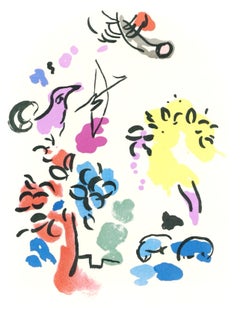
This exquisite lithograph after Marc Chagall (1887–1985), titled Daphnis et Chloe (Daphnis and Chloe), from the album Le plafond de l’Opera de Paris par Marc Chagall (The Ceiling of the Paris Opera by Marc Chagall), originates from the 1965 edition published by Andre Sauret, Editeur, Monte Carlo, rendered by Charles Sorlier, Paris, and printed by Mourlot Freres, Paris, October 6, 1965. This radiant and lyrical composition celebrates Maurice Ravel’s ballet Daphnis et Chloe, one of the musical masterpieces represented in Chagall’s monumental ceiling design for the Palais Garnier. Daphnis et Chloe captures the pastoral romance of Ravel’s ballet through a symphony of color and form, as lovers, nymphs, and mythic symbols float amidst a celestial landscape. Chagall translates the musical sensuality and poetic grace of Ravel’s score into a visual harmony that radiates joy, movement, and tenderness. The composition exemplifies Chagall’s genius for merging sound and image, myth and modernity, into a timeless meditation on love and creation. Executed as a lithograph on velin paper, this work measures 13 x 9.5 inches (33.02 x 24.13 cm). Unsigned and unnumbered as issued. The edition exemplifies the technical mastery of the Mourlot Freres atelier and the enduring collaboration between Marc Chagall and Charles Sorlier. Artwork Details: Artist: After Marc Chagall (1887–1985) Title: Daphnis et Chloe (Daphnis and Chloe), from Le plafond de l’Opera de Paris par Marc Chagall (The Ceiling of the Paris Opera by Marc Chagall) Medium: Lithograph on velin paper Dimensions: 13 x 9.5 inches (33.02 x 24.13 cm) Inscription: Unsigned and unnumbered as issued Date: 1965 Publisher: Andre Sauret, Editeur, Monte Carlo Rendered by: Charles Sorlier, Paris Printer: Mourlot Freres, Paris Catalogue raisonne references: Cain, Julien, and Fernand Mourlot. Chagall Lithographe III, 1962–1968. Andre Sauret, Editeur, 1969, illustration 434. Cramer, Patrick, and Meret Meyer. Marc Chagall: Catalogue Raisonne Des Livres Illustres. P. Cramer ed., 1995, illustration 61. Condition: Well preserved, consistent with age and medium Provenance: From the album Le plafond de l’Opera de Paris par Marc Chagall (The Ceiling of the Paris Opera by Marc Chagall), published by Andre Sauret, Editeur, Monte Carlo, October 6, 1965, in an edition of V̅ Notes: Excerpted from the album, This work could not have been made without the valuable collaboration of Madame Marc Chagall to whom we extend our warmest thanks. This work, made by Andre Sauret, was completed to print on October 6, 1965 on the presses of l’imprimerie du Lion in Paris. Jacques Lassaigne’s texts were composed by hand in Romain du Roi in the workshops of l’imprimerie nationale. The VI color lithographies and all the black and white drawings were set on stone by Charles Sorlier, based on Marc Chagall’s original models. The original lithography and color lithographs were drawn on the presses of Mourlot Freres. The binding is by Maurice Busenhart in Lausanne. About the Publication: Le plafond de l’Opera de Paris par Marc Chagall (The Ceiling of the Paris Opera by Marc Chagall), published in October 1965 by Andre Sauret, Editeur, Monte Carlo, commemorates one of the most ambitious and celebrated artistic commissions of the 20th century. Created under the direction of Charles Sorlier, the album documents Chagall’s magnificent ceiling design for the Palais Garnier in Paris, unveiled in 1964. The publication includes color lithographs based on the artist’s preparatory studies and painted maquettes, executed with exceptional fidelity by Mourlot Freres. Chagall’s ceiling—divided into segments representing musical masters such as Mozart, Wagner, Berlioz, Ravel, and Debussy—blends myth, music, and emotion into a vibrant celestial composition. The album captures this visionary synthesis through luminous lithography, allowing viewers to experience the grandeur and intimacy of the artist’s monumental work. Produced with the collaboration of Madame Marc Chagall, Charles Sorlier, and Fernand Mourlot, and printed with the precision and artistry for which Andre Sauret’s editions were renowned, this publication stands as both a tribute to Chagall’s genius and a celebration of French art’s enduring dialogue between tradition, innovation, and the divine. About the Artist: Marc Chagall (1887–1985) was a Belarus-born French painter, printmaker, and designer whose visionary imagination, radiant color, and deeply poetic symbolism made him one of the most beloved and influential artists of the 20th century. Rooted in the imagery of his Jewish heritage and the memories of his childhood in Vitebsk, Chagall’s art wove together themes of faith, love, folklore, and fantasy with a dreamlike modern sensibility. His unique style—merging elements of Cubism, Fauvism, Expressionism, and Surrealism—defied categorization, transforming ordinary scenes into lyrical meditations on memory and emotion. Influenced by Russian icon painting, medieval religious art, and the modern innovations of artists such as Pablo Picasso, Henri Matisse, and Georges Braque, Chagall developed a profoundly personal visual language filled with floating figures, vibrant animals, musicians, and lovers that symbolized the transcendent power of imagination and love. During his early years in Paris, he became an integral part of the Ecole de Paris circle, forming friendships with Amedeo Modigliani, Fernand Leger, and Sonia Delaunay, and his creative spirit resonated with that of his peers and successors—Alexander Calder, Alberto Giacometti, Salvador Dali, Joan Miro, Wassily Kandinsky, Marcel Duchamp, and Man Ray—artists who, like Chagall, sought to push the boundaries of perception, emotion, and form. Over a prolific career that spanned painting, printmaking, stained glass, ceramics, and stage design, Chagall brought an unparalleled poetic sensibility to modern art, infusing even the most abstract subjects with human warmth and spiritual depth. His works are held in the most prestigious museums around the world, including the Museum of Modern Art, the Centre Pompidou, the Tate, and the Guggenheim, where they continue to inspire generations of artists and collectors. The highest price ever paid for a Marc Chagall artwork is approximately $28.5 million USD, achieved in 2017 at Sotheby’s New York for Les Amoureux (1928). Marc Chagall Daphnis...
Category

1960s Expressionist Landscape Prints

Materials

Lithograph

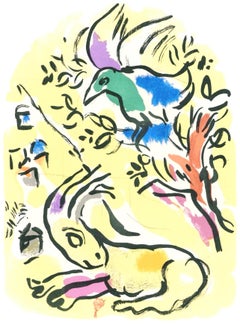
Marc Chagall, Tribe of Issachar, from The Jerusalem Windows, 1962 (after)
Located in Southampton, NY
This exquisite lithograph after Marc Chagall (1887–1985), titled Tribe of Issachar, from the album Marc Chagall, The Jerusalem Windows, originates from the 1962 edition published by ...
Category

1960s Expressionist Landscape Prints

Materials

Lithograph

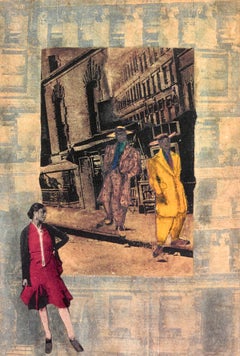
Introduction for a Blues Queen (Gelburd/Rosenberg 70-77), Jazz Series
Located in Fairfield, CT
Artist: Romare Bearden (1911-1988) Title: Introduction for a Blues Queen (Gelburd/Rosenberg 70-77) Year: 1979 Medium: Lithograph on vélin d’Arches paper Edition: 47/175, plus proofs ...
Category

1970s Expressionist Landscape Prints

Materials

Lithograph

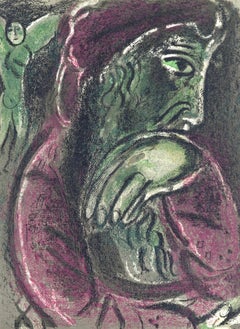
Marc Chagall, Isaiah, from Drawings for the Bible, 1956
Located in Southampton, NY
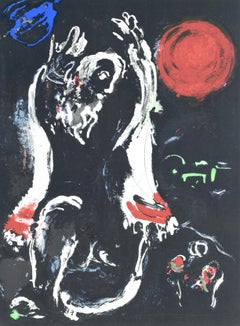
This exquisite lithograph by Marc Chagall (1887–1985), titled Isaie (Isaiah), from Marc Chagall, Dessins Pour La Bible (Drawings for the Bible), Verve: Revue Artistique et Litteraire...
Category

1950s Expressionist Landscape Prints

Materials

Lithograph

Marc Chagall, Tribe of Joseph, from The Jerusalem Windows, 1962 (after)
Located in Southampton, NY
This exquisite lithograph after Marc Chagall (1887–1985), titled Tribe of Joseph, from the album Marc Chagall, The Jerusalem Windows, originates from the 1962 edition published by An...
Category

1960s Expressionist Landscape Prints

Materials

Lithograph

Marc Chagall, Before St-Jeannet, The Ceramics and Sculptures of Chagall, 1972
Located in Southampton, NY
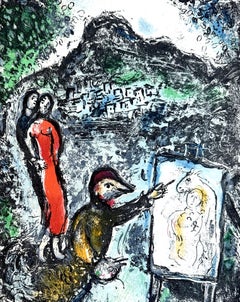
This exquisite lithograph by Marc Chagall (1887–1985), titled Devant St-Jeannet (Before St-Jeannet), from the album Les Ceramiques et Sculptures de Chagall (The Ceramics and Sculptur...
Category

1970s Expressionist Landscape Prints

Materials

Lithograph

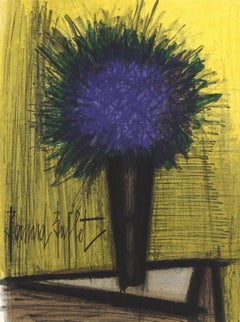
Buffet, Le bouquet violet, Lithographs 1952-1966 (after)
Located in Fairfield, CT
Medium: Lithograph on vélin Acropole Papeteries de Renage paper. Year: 1967 Paper Size: 12.25 x 9.5 inches Inscription: Signed in the plate and unnumbered, as issued Notes: From the ...
Category

1960s Expressionist Landscape Prints

Materials

Lithograph

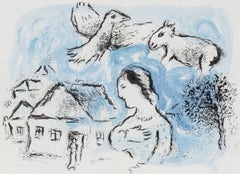
Marc Chagall, The Farm and the Blue Sky, from Derriere le miroir, 1977
Located in Southampton, NY
This exquisite lithograph by Marc Chagall (1887–1985), titled La Ferme et le Ciel Bleu (The Farm and the Blue Sky), from the folio Derriere le miroir, No. 225, originates from the 19...
Category

1970s Expressionist Landscape Prints

Materials

Lithograph

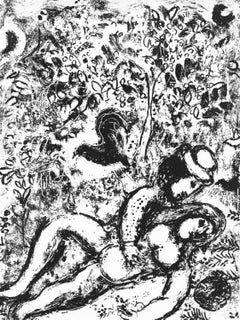
Marc Chagall, The Couple at the Tree, from The Lithographs of Chagall, 1963
Located in Southampton, NY
This exquisite lithograph by Marc Chagall (1887–1985), titled Le Couple a l'Arbre (The Couple at the Tree), from the album The Lithographs of Chagall, Volume II, originates from the ...
Category

1960s Expressionist Landscape Prints

Materials

Lithograph

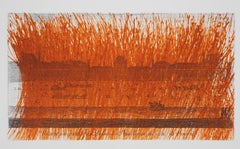
Paris : Louvre Museum with Orange Scratch (Fire) - Original etching
Located in Paris, IDF
Arnulf Rainer (1929) Paris : Louvre Museum with Orange Scratch (Fire) Original etching On vellum 40 x 50 cm (c. 16 x 20 in) Authenticated with the blind stamp of the editor Chalcogr...
Category

21st Century and Contemporary Expressionist Landscape Prints

Materials

Etching

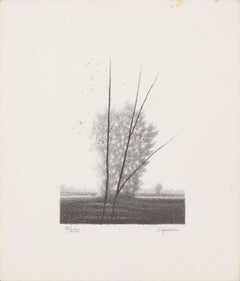
Three Trees
Located in Columbia, MO
Robert Kipniss, painter and printmaker, was born in New York City in 1931. Born to two artists, Kipniss quickly fostered his love for art. His formal artistic education began at New ...
Category

20th Century Expressionist Landscape Prints

Materials

Lithograph

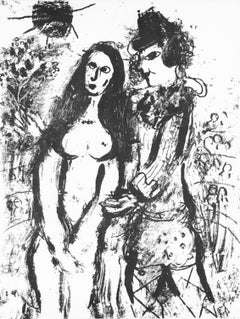
Marc Chagall, The Loving Clown, from The Lithographs of Chagall, 1963
Located in Southampton, NY
This exquisite lithograph by Marc Chagall (1887–1985), titled Le Clown Amoureux (The Loving Clown), from the album The Lithographs of Chagall, Volume II, originates from the 1963 edi...
Category

1960s Expressionist Landscape Prints

Materials

Lithograph

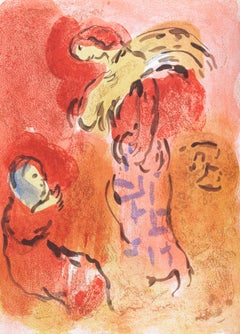
Marc Chagall, Ruth the Gleaner, from Drawings for the Bible, 1956
Located in Southampton, NY
This exquisite lithograph by Marc Chagall (1887–1985), titled Ruth glaneuse (Ruth the Gleaner), from Marc Chagall, Dessins Pour La Bible (Drawings for the Bible), Verve: Revue Artistique et Litteraire, Vol. VIII, No. 33–34, originates from the September 1956 issue published by Editions de la revue Verve, Paris, under the direction of Teriade, Editeur, Paris, and printed by Mourlot Freres, Paris, 1956. This lyrical composition depicts Ruth gleaning in the fields of Boaz, a story of devotion, faith, and humble perseverance that reflects Chagall’s profound empathy for biblical humanity. Through flowing lines and radiant harmonies, he transforms the pastoral act into a vision of grace and spiritual renewal, suffused with divine light and poetic serenity. The work captures Chagall’s enduring ability to elevate everyday acts into timeless expressions of love, dignity, and divine purpose. The piece forms part of Chagall’s celebrated series of lithographs and drawings created for Dessins Pour La Bible, a monumental project uniting art, scripture, and mysticism in one of the artist’s most important achievements. Executed as a lithograph on velin du Marais paper, this work measures 14 x 10.5 inches (35.56 x 26.67 cm). Unsigned and unnumbered as issued. The edition exemplifies the superb craftsmanship of the Mourlot Freres atelier, renowned for its collaborations with the greatest modern masters of the 20th century. Artwork Details: Artist: Marc Chagall (1887–1985) Title: Ruth glaneuse (Ruth the Gleaner), from Marc Chagall, Dessins Pour La Bible (Drawings for the Bible), Verve: Revue Artistique et Litteraire, Vol. VIII, No. 33–34, September 1956 Medium: Lithograph on velin du Marais paper Dimensions: 14 x 10.5 inches (35.56 x 26.67 cm) Inscription: Unsigned and unnumbered as issued Date: 1956 Publisher: Editions de la revue Verve, Paris, under the direction of Teriade, Editeur, Paris Printer: Mourlot Freres, Paris Catalogue raisonne references: Cain, Julien, and Fernand Mourlot. Chagall Lithographe. Andre Sauret, Editeur, 1960, illustrations 117–46. Cramer, Patrick, and Meret Meyer. Marc Chagall: Catalogue Raisonne Des Livres Illustrés. P. Cramer ed., 1995, illustration 25. Condition: Well preserved, consistent with age and medium Provenance: From Marc Chagall, Dessins Pour La Bible (Drawings for the Bible), Verve: Revue Artistique et Litteraire, Vol. VIII, No. 33–34, published by Editions de la revue Verve, Paris, 1956 Notes: Excerpted from the album (translated from French), This double issue of Verve is dedicated to the full reproduction in heliogravure of the one hundred-five plates etched by Marc Chagall, between 1930 and 1955, for the illustration of the Bible. The artist composed especially for the present work, sixteen lithographs in color and twelve in black, as well as the cover and the title page. This volume was completed and printed on September 10, 1956, by the Master Printers Draeger Freres for heliogravure, and by Mourlot Freres for lithography. About the Publication: Marc Chagall, Dessins Pour La Bible (Drawings for the Bible), published as Verve Vol. VIII, No. 33–34 in September 1956, represents one of the crowning achievements of Chagall’s lifelong dialogue with the sacred. Conceived and directed by the visionary publisher Teriade and printed by the master lithographers Mourlot Freres, the issue features thirty-four color lithographs and numerous black-and-white drawings inspired by biblical figures and stories. Chagall’s works for this edition unite text and image in a luminous meditation on divine creation, moral struggle, and spiritual renewal, imbued with his signature dreamlike symbolism and radiant color. Produced in postwar Paris, this landmark publication reaffirmed the enduring union of art and faith, establishing Dessins Pour La Bible as one of the most important illustrated works of the 20th century. About the Artist: Marc Chagall (1887–1985) was a Belarus-born French painter, printmaker, and designer whose visionary imagination, radiant color, and deeply poetic symbolism made him one of the most beloved and influential artists of the 20th century. Rooted in the imagery of his Jewish heritage and the memories of his childhood in Vitebsk, Chagall’s art wove together themes of faith, love, folklore, and fantasy with a dreamlike modern sensibility. His unique style—merging elements of Cubism, Fauvism, Expressionism, and Surrealism—defied categorization, transforming ordinary scenes into lyrical meditations on memory and emotion. Influenced by Russian icon painting, medieval religious art, and the modern innovations of artists such as Pablo Picasso, Henri Matisse, and Georges Braque, Chagall developed a profoundly personal visual language filled with floating figures, vibrant animals, musicians, and lovers that symbolized the transcendent power of imagination and love. During his early years in Paris, he became an integral part of the Ecole de Paris circle, forming friendships with Amedeo Modigliani, Fernand Leger, and Sonia Delaunay, and his creative spirit resonated with that of his peers and successors—Alexander Calder, Alberto Giacometti, Salvador Dali, Joan Miro, Wassily Kandinsky, Marcel Duchamp, and Man Ray—artists who, like Chagall, sought to push the boundaries of perception, emotion, and form. Over a prolific career that spanned painting, printmaking, stained glass, ceramics, and stage design, Chagall brought an unparalleled poetic sensibility to modern art, infusing even the most abstract subjects with human warmth and spiritual depth. His works are held in the most prestigious museums around the world, including the Museum of Modern Art, the Centre Pompidou, the Tate, and the Guggenheim, where they continue to inspire generations of artists and collectors. The highest price ever paid for a Marc Chagall artwork is approximately $28.5 million USD, achieved in 2017 at Sotheby’s New York for Les Amoureux (1928). Marc Chagall Ruth...
Category

1950s Expressionist Landscape Prints

Materials

Lithograph

Marc Chagall, Swan Lake, from The Ceiling of the Paris Opera, 1965 (after)
Located in Southampton, NY
This exquisite lithograph after Marc Chagall (1887–1985), titled Le Lac des Cygnes (Swan Lake), from the album Le plafond de l’Opera de Paris par Marc Chagall (The Ceiling of the Par...
Category

1960s Expressionist Landscape Prints

Materials

Lithograph

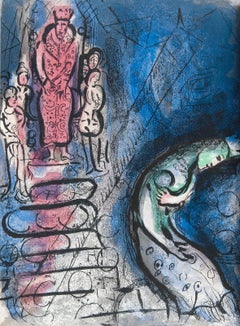
Marc Chagall, Ahasuerus Banishes Vashti, from Drawings for the Bible, 1956
Located in Southampton, NY
This exquisite lithograph by Marc Chagall (1887–1985), titled Asuerus chasse Vasthi (Ahasuerus Banishes Vashti), from Marc Chagall, Dessins Pour La Bible (Drawings for the Bible), Ve...
Category

1950s Expressionist Landscape Prints

Materials

Lithograph

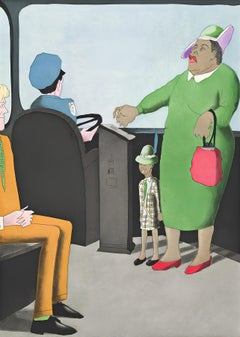
Composition, Everything That Rises Must Converge
Located in Southampton, NY
Etching on vélin de Rives BFK paper. Paper Size: 22 x 17 inches. Inscription: Unsigned and unnumbered, as issued. Notes: From the folio, Everything That Rises Must Converge, 2005. Published by The Limited Editions Club, New York; printed by Wingate Studio, Hinsdale, under the direction of Peter Pettengill, Hinsdale, 2005. Excerpted from the folio, This edition of CCC examples of Everything That Rises Must Converge was printed on BFK Rives. Dan Carr and Julia Ferrari designed the typography, cast the Kis-Janson type in metal, set the type by hand and printed the text at Golgonooza Letter Foundry & Press, Ashuelot, New Hampshire. The six color etchings were printed by hand on BFK Rives by Peter Pettengill at Wingate Studio in Hinsdale, New Hampshire. BENNY ANDREWS (1930-2006) was an African-American artist, activist and educator. He is known for his expressive, figurative paintings that often incorporated collaged fabric and other material. Andrews helped found the Black Emergency Cultural Coalition, which agitated for greater representation of African-American artists and curators in New York’s major art museums in the late 1960s and 70s. He also led the group in founding an arts education program in prisons and detention centers. Andrews taught art at Queens College for three decades, and from 1982 to 1984, served as the Director of the Visual Arts Program for the National Endowment for the Arts. He received many awards, including the John Hay Whitney...
Category

Early 2000s Expressionist Landscape Prints

Materials

Etching

The Bone of Contention, Bookmarks in the Pages of Life
Located in Southampton, NY
Silkscreen in colors and sepia-tones on Langdell fait à la main paper. Paper Size: 15 x 11 inches. Inscription: Unsigned and unnumbered, as issued. Notes: From the folio, Bookmarks i...
Category

Early 2000s Expressionist Landscape Prints

Materials

Screen

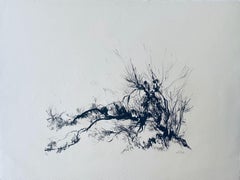
German Israeli Expressionist Abstract Bush in Judea Lithograph
Located in Surfside, FL
Anna Ticho (אנה טיכו ) (1894-1980) was a Jewish artist who became famous for her drawings of the Jerusalem hills. Anna Ticho was born in Brno, Moravia, then part of the Austro-Hungarian Empire (today the Czech Republic) in 1894. At the age of 15, she began to study drawing in Vienna in an art school under the directorship of Ernst Nowak...
Category

20th Century Expressionist Landscape Prints

Materials

Lithograph

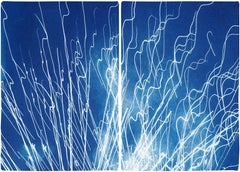
Fireworks Lights in The Sky Blue Diptych, Handmade Cyanotype, Watercolor Paper
Located in Barcelona, ES
This is an exclusive handprinted limited edition cyanotype. "Fireworks Lights" is a minimal cyanotype diptych that shows path of the fireworks over the sky. Details: + Title: Firew...
Category

2010s Expressionist Landscape Prints

Materials

Emulsion, Dye Transfer, Lithograph, Monotype
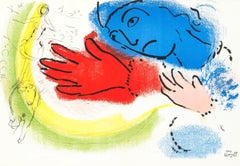
Marc Chagall, The Horsewoman, from Derriere le miroir, 1956
Located in Southampton, NY
This exquisite lithograph by Marc Chagall (1887–1985), titled L'Ecuyere (The Horsewoman), from the folio Derriere le miroir, 10 Ans d'Edition 1946-1956, No. 92-93, originates from th...
Category

1950s Expressionist Landscape Prints

Materials

Lithograph

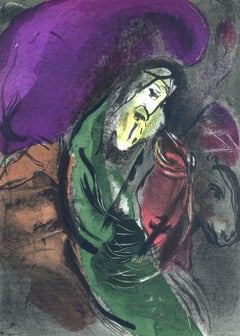
Marc Chagall, Jeremiah, from Drawings for the Bible, 1956 Bible
Located in Southampton, NY
This exquisite lithograph by Marc Chagall (1887–1985), titled Jeremie (Jeremiah), from Marc Chagall, Dessins Pour La Bible (Drawings for the Bible), Verve: Revue Artistique et Litter...
Category

1950s Expressionist Landscape Prints

Materials

Lithograph

Privation, Music, Deep Rivers in My Soul
Located in Southampton, NY
Etching in colors on Somerset vélin paper. Paper Size: 20 x 23 inches. Inscription: Unsigned and unnumbered, as issued. Notes: From the folio, Music, Deep Rivers in My Soul, 2003. Published by The Limited Editions Club, New York; printed by Wingate Studio, Hinsdale, under the direction of Peter Pettengili, Hinsdale, 2003. Excerpted from the folio, This edition of Music, Deep Rivers in my Soul consists of CD examples printed on Somerset paper. Dan Carr and Julia Ferrari designed the typography. Cast the Spectrum and Romulus type in metal, handset the type and printed the text at Golgonooza Letter Foundry and Press in Ashuelot, New Hampshire. The color etchings were printed by hand on Somerset paper by Peter Pettengili at Wingate Studio in Hinsdale, New Hampshire. DEAN MITCHELL...
Category

Early 2000s Expressionist Landscape Prints

Materials

Etching

Marc Chagall, Untitled, from The Lithographs of Chagall, 1974
Located in Southampton, NY
This exquisite lithograph by Marc Chagall (1887–1985), titled Sans titre (Untitled), from the album The Lithographs of Chagall, Volume IV, originates from the 1974 edition published ...
Category

1970s Expressionist Landscape Prints

Materials

Lithograph

Composition, Everything That Rises Must Converge
Located in Southampton, NY
Etching on vélin de Rives BFK paper. Paper Size: 22 x 17 inches. Inscription: Unsigned and unnumbered, as issued. Notes: From the folio, Everything That Rises Must Converge, 2005. Published by The Limited Editions Club, New York; printed by Wingate Studio, Hinsdale, under the direction of Peter Pettengill, Hinsdale, 2005. Excerpted from the folio, This edition of CCC examples of Everything That Rises Must Converge was printed on BFK Rives. Dan Carr and Julia Ferrari designed the typography, cast the Kis-Janson type in metal, set the type by hand and printed the text at Golgonooza Letter Foundry & Press, Ashuelot, New Hampshire. The six color etchings were printed by hand on BFK Rives by Peter Pettengill at Wingate Studio in Hinsdale, New Hampshire. BENNY ANDREWS (1930-2006) was an African-American artist, activist and educator. He is known for his expressive, figurative paintings that often incorporated collaged fabric and other material. Andrews helped found the Black Emergency Cultural Coalition, which agitated for greater representation of African-American artists and curators in New York’s major art museums in the late 1960s and 70s. He also led the group in founding an arts education program in prisons and detention centers. Andrews taught art at Queens College for three decades, and from 1982 to 1984, served as the Director of the Visual Arts Program for the National Endowment for the Arts. He received many awards, including the John Hay Whitney...
Category

Early 2000s Expressionist Landscape Prints

Materials

Etching

Bathed in Light, Music, Deep Rivers in My Soul
Located in Southampton, NY
Etching in colors on Somerset vélin paper. Paper Size: 20 x 23 inches. Inscription: Unsigned and unnumbered, as issued. Notes: From the folio, Music, Deep Rivers in My Soul, 2003. Published by The Limited Editions Club, New York; printed by Wingate Studio, Hinsdale, under the direction of Peter Pettengili, Hinsdale, 2003. Excerpted from the folio, This edition of Music, Deep Rivers in my Soul consists of CD examples printed on Somerset paper. Dan Carr and Julia Ferrari designed the typography. Cast the Spectrum and Romulus type in metal, handset the type and printed the text at Golgonooza Letter Foundry and Press in Ashuelot, New Hampshire. The color etchings were printed by hand on Somerset paper by Peter Pettengili at Wingate Studio in Hinsdale, New Hampshire. DEAN MITCHELL...
Category

Early 2000s Expressionist Landscape Prints

Materials

Etching

Now You Cookin with Gas, Bookmarks in the Pages of Life
Located in Southampton, NY
Silkscreen in colors and sepia-tones on Langdell fait à la main paper. Paper Size: 15 x 11 inches. Inscription: Unsigned and unnumbered, as issued. Notes: From the folio, Bookmarks i...
Category

Early 2000s Expressionist Landscape Prints

Materials

Screen

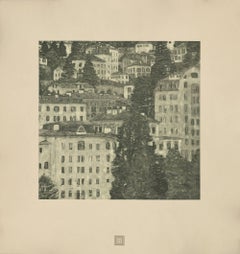
Max Eisler Eine Nachlese folio "Gastein" collotype
Located in Palm Beach, FL
After Gustav Klimt, Max Eisler Plate #21, Gastein; grey-green monochrome collotype after the 1917 painting in oil on canvas. Original destroyed by fire May 1945. GUSTAV KLIMT EINE NACHLESE (GUSTAV KLIMT AN AFTERMATH), a portfolio of 30 collotypes prints, 15 are multi-color and 15 are monochrome, on chine colle paper laid down on heavy cream-wove paper with deckled edges; Max Eisler, Editor-Publisher; Osterreichischer Staatsdruckerei (Austrian State Printing Office), Printer; in a limited edition of 500 numbered examples of which: 200 were printed in German, 150 were printed in French and 150 were printed in English; Vienna, 1931. 2018 marks the 100th anniversary of Gustav Klimt’s death. It is a fitting time to reflect upon the enduring legacy and deep impact of his art. Recognizing this need for posterity with uncanny foresight, the publication of Gustav Klimt: An Aftermath (Eine Nachlese) provides a rare collection of work after Klimt which has proven to be an indispensable tool for Klimt scholarship as well as a source for pure visual delight. Approximately 25 percent of the original works featured in the Aftermath portfolio have since been lost. Of those 30, six were destroyed by fire on 8 May 1945. On that fateful final day of WWII, the retreating Feldherrnhalle, a tank division of the German Army, set fire to the Schloss Immendorf which was a 16th century castle in Lower Austria used between 1942-1945 to store objects of art. All three of Klimt’s Faculty Paintings: Philosophy, Medicine and Jurisprudence (1900-1907), originally created for the University of Vienna, were on premises at that time. Also among the inventory of Klimt paintings in storage there was art which had been confiscated by the Nazis. One of the most significant confiscated collections was the Lederer collection which featured many works by Gustav Klimt such as Girlfriends II and Garden Path with Chickens. In many instances, Aftermath is our only link to these lost treasures. Max Eisler (1881-1937), the publisher of the 1931 Aftermath portfolio, was an art historian at Vienna University specializing in modern and contemporary arts and crafts whose 1920 book on Klimt was the first Klimt monograph. He saw An Aftermath as filling-in important gaps left by the earlier print portfolios which had only featured Klimt up to 1913 and which had glossed over major art projects such as the Tree of Life frieze for the Palais Stoclet. And whereas only 10 of the 50 prints from the earlier portfolios published by H.O. Miethke were made in intricate multi-color images, Eisler augmented the earlier format by featuring half of the 30 images in stunning multi-colored collotypes. Understanding the fragile nature of the collotype printing process also reinforces this project’s distinctive and exceptional characteristics. Fragile collotype plates can not be reused. As such, this necessitates the completion of a run on the first go and also dictates a limited production number. Printed by hand, the collotypes required deft handling by the printer, Osterreichische Staatsdruckerei. A complicated and lengthy process involving gelatin colloids mixed with dichromates, the creation of 16 color separation thin glass filters to achieve the light-sensitive internegative images which could faithfully capture all of the painting’s tonal gradations and colors, exposure to actinic light, and delicate chine collie papers which allowed for greater color saturation, the printer’s collaborative role in capturing and transmitting Klimt’s nuanced paint strokes is nothing short of remarkable. The Österreichische Staatsdruckerei (Austrian State Printing Office), was the successor to the KK Hof -und Staatsdruckerei which was founded by Emperor Franz I in 1804 and whose collotype printing innovations of Klimt’s art...
Category

1930s Expressionist Landscape Prints

Materials

Paper

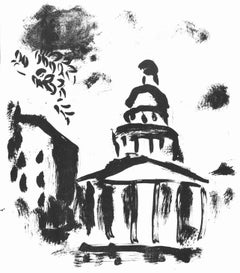
Marc Chagall, The Pantheon, from Derriere le miroir, 1954
Located in Southampton, NY
This exquisite lithograph by Marc Chagall (1887–1985), titled Le Pantheon (The Pantheon), from the folio Derriere le miroir, No. 67–68, originates from the 1954 edition published by ...
Category

1950s Expressionist Landscape Prints

Materials

Lithograph

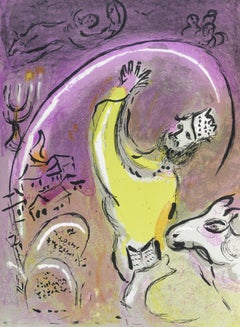
Marc Chagall, Solomon, from Drawings for the Bible, 1956
Located in Southampton, NY
This exquisite lithograph by Marc Chagall (1887–1985), titled Solomon, from Marc Chagall, Dessins Pour La Bible (Drawings for the Bible), Verve: Revue Artistique et Litteraire, Vol. ...
Category

1950s Expressionist Landscape Prints

Materials

Lithograph

Chagall, Sans titre, Le Dur Désir de Durer (after)
Located in Southampton, NY
Lithograph on vélin bouffant d'Alfa paper. Inscription: unsigned and unnumbered, as issued. Good condition. Notes: From the volume, Le Dur Désir de Durer, illustré par Marc Chagall, ...
Category

1950s Expressionist Landscape Prints

Materials

Lithograph

Marc Chagall, Carmen, from The Ceiling of the Paris Opera, 1965 (after)
Located in Southampton, NY
This exquisite lithograph after Marc Chagall (1887–1985), titled Carmen, from the album Le plafond de l’Opera de Paris par Marc Chagall (The Ceilin...
Category

1960s Expressionist Landscape Prints

Materials

Lithograph

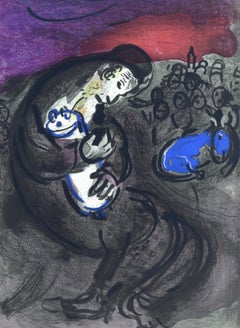
Marc Chagall, The Tears of Jeremiah, from Drawings for the Bible, 1956
Located in Southampton, NY
This exquisite lithograph by Marc Chagall (1887–1985), titled Pleurs de Jeremie (The Tears of Jeremiah), from Marc Chagall, Dessins Pour La Bible (Drawings for the Bible), Verve: Rev...
Category

1950s Expressionist Landscape Prints

Materials

Lithograph

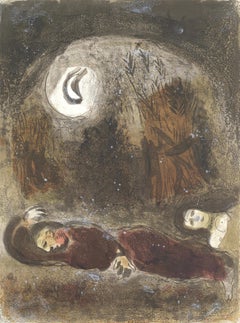
Marc Chagall, Ruth at the Feet of Boaz, from Drawings for the Bible, 1956
Located in Southampton, NY
This exquisite lithograph by Marc Chagall (1887–1985), titled Ruth aux pieds de Booz (Ruth at the Feet of Boaz), from Marc Chagall, Dessins Pour La Bible (Drawings for the Bible), Verve: Revue Artistique et Litteraire, Vol. VIII, No. 33–34, originates from the September 1956 issue published by Editions de la revue Verve, Paris, under the direction of Teriade, Editeur, Paris, and printed by Mourlot Freres, Paris, 1956. This intimate and poetic composition portrays the biblical moment when Ruth, in an act of humility and devotion, lays at the feet of Boaz. Chagall’s masterful interplay of tenderness, faith, and symbolic light transforms this nocturnal scene into a vision of spiritual union and divine grace. The figures, rendered with his distinctive lyricism and fluid lines, embody the artist’s enduring fascination with love, compassion, and redemption. The piece forms part of Chagall’s celebrated series of lithographs and drawings created for Dessins Pour La Bible, a monumental project uniting art, scripture, and mysticism in one of the artist’s most important achievements. Executed as a lithograph on velin du Marais paper, this work measures 14 x 10.5 inches (35.56 x 26.67 cm). Unsigned and unnumbered as issued. The edition exemplifies the superb craftsmanship of the Mourlot Freres atelier, renowned for its collaborations with the greatest modern masters of the 20th century. Artwork Details: Artist: Marc Chagall (1887–1985) Title: Ruth aux pieds de Booz (Ruth at the Feet of Boaz), from Marc Chagall, Dessins Pour La Bible (Drawings for the Bible), Verve: Revue Artistique et Litteraire, Vol. VIII, No. 33–34, September 1956 Medium: Lithograph on velin du Marais paper Dimensions: 14 x 10.5 inches (35.56 x 26.67 cm) Inscription: Unsigned and unnumbered as issued Date: 1956 Publisher: Editions de la revue Verve, Paris, under the direction of Teriade, Editeur, Paris Printer: Mourlot Freres, Paris Catalogue raisonne references: Cain, Julien, and Fernand Mourlot. Chagall Lithographe. Andre Sauret, Editeur, 1960, illustrations 117–46. Cramer, Patrick, and Meret Meyer. Marc Chagall: Catalogue Raisonne Des Livres Illustrés. P. Cramer ed., 1995, illustration 25. Condition: Well preserved, consistent with age and medium Provenance: From Marc Chagall, Dessins Pour La Bible (Drawings for the Bible), Verve: Revue Artistique et Litteraire, Vol. VIII, No. 33–34, published by Editions de la revue Verve, Paris, 1956 Notes: Excerpted from the album (translated from French), This double issue of Verve is dedicated to the full reproduction in heliogravure of the one hundred-five plates etched by Marc Chagall, between 1930 and 1955, for the illustration of the Bible. The artist composed especially for the present work, sixteen lithographs in color and twelve in black, as well as the cover and the title page. This volume was completed and printed on September 10, 1956, by the Master Printers Draeger Freres for heliogravure, and by Mourlot Freres for lithography. About the Publication: Marc Chagall, Dessins Pour La Bible (Drawings for the Bible), published as Verve Vol. VIII, No. 33–34 in September 1956, represents one of the crowning achievements of Chagall’s lifelong dialogue with the sacred. Conceived and directed by the visionary publisher Teriade and printed by the master lithographers Mourlot Freres, the issue features thirty-four color lithographs and numerous black-and-white drawings inspired by biblical figures and stories. Chagall’s works for this edition unite text and image in a luminous meditation on divine creation, moral struggle, and spiritual renewal, imbued with his signature dreamlike symbolism and radiant color. Produced in postwar Paris, this landmark publication reaffirmed the enduring union of art and faith, establishing Dessins Pour La Bible as one of the most important illustrated works of the 20th century. About the Artist: Marc Chagall (1887–1985) was a Belarus-born French painter, printmaker, and designer whose visionary imagination, radiant color, and deeply poetic symbolism made him one of the most beloved and influential artists of the 20th century. Rooted in the imagery of his Jewish heritage and the memories of his childhood in Vitebsk, Chagall’s art wove together themes of faith, love, folklore, and fantasy with a dreamlike modern sensibility. His unique style—merging elements of Cubism, Fauvism, Expressionism, and Surrealism—defied categorization, transforming ordinary scenes into lyrical meditations on memory and emotion. Influenced by Russian icon painting, medieval religious art, and the modern innovations of artists such as Pablo Picasso, Henri Matisse, and Georges Braque, Chagall developed a profoundly personal visual language filled with floating figures, vibrant animals, musicians, and lovers that symbolized the transcendent power of imagination and love. During his early years in Paris, he became an integral part of the Ecole de Paris circle, forming friendships with Amedeo Modigliani, Fernand Leger, and Sonia Delaunay, and his creative spirit resonated with that of his peers and successors—Alexander Calder, Alberto Giacometti, Salvador Dali, Joan Miro, Wassily Kandinsky, Marcel Duchamp, and Man Ray—artists who, like Chagall, sought to push the boundaries of perception, emotion, and form. Over a prolific career that spanned painting, printmaking, stained glass, ceramics, and stage design, Chagall brought an unparalleled poetic sensibility to modern art, infusing even the most abstract subjects with human warmth and spiritual depth. His works are held in the most prestigious museums around the world, including the Museum of Modern Art, the Centre Pompidou, the Tate, and the Guggenheim, where they continue to inspire generations of artists and collectors. The highest price ever paid for a Marc Chagall artwork is approximately $28.5 million USD, achieved in 2017 at Sotheby’s New York for Les Amoureux (1928). Marc Chagall Ruth...
Category

1960s Expressionist Landscape Prints

Materials

Lithograph

Marc Chagall, Mother and Child at the Eiffel Tower, Derriere le miroir, 1954
Located in Southampton, NY
This exquisite lithograph by Marc Chagall (1887–1985), titled Mere et Enfant a la Tour Eiffel (Mother and Child at the Eiffel Tower), from the folio Derriere le miroir, No. 67–68, originates from the 1954 edition published by Maeght Editeur, Paris, and printed by Mourlot Freres, Paris, 1954. Mere et Enfant a la Tour Eiffel embodies Chagall’s lyrical vision of Paris as a dreamscape infused with love, family, and wonder. Through his composition with floating forms, he transforms the city’s iconic architecture into a poetic symbol of affection and imagination. Executed as a lithograph on velin paper, this work measures 15 x 11 inches. Unsigned and unnumbered as issued. The edition exemplifies the superb craftsmanship of Mourlot Freres, Paris. Artwork Details: Artist: Marc Chagall (1887–1985) Title: Mere et Enfant a la Tour Eiffel (Mother and Child at the Eiffel Tower), from the folio Derriere le miroir, No. 67–68 Medium: Lithograph on velin paper Dimensions: 15 x 11 inches (38.1 x 27.94 cm) Inscription: Unsigned and unnumbered as issued Date: 1954 Publisher: Maeght Editeur, Paris Printer: Mourlot Freres, Paris Catalogue raisonne reference: Cramer, Patrick, and Meret Meyer. Marc Chagall: Catalogue Raisonne des Livres Illustres. Patrick Cramer Editeur, 1995, illustration 24; Mourlot, Fernand, and Marc Chagall. Chagall Lithographe I: 1922–1957. Andre Sauret, 1960, illustration 94. Condition: Well preserved, consistent with age and medium Provenance: From the folio Derriere le miroir, No. 67–68, published by Maeght Editeur, Paris; printed by Mourlot Freres, Paris, 1954 Notes: On the occasion of the ‘Paris’ exhibition, Marc Chagall created for this triple issue of Derriere Le Miroir XII pages of Lithography. About the Publication: Derriere le miroir (Behind the Mirror) was one of the most important art publications of the 20th century, created and published by Maeght Editeur in Paris from 1946 to 1982. Founded by the visionary art dealer and publisher Aime Maeght, the series served as both an exhibition catalogue and a work of art in its own right, uniting original lithographs by leading modern and contemporary artists with critical essays, poetry, and design of the highest quality. Printed by master lithographers such as Mourlot Freres and Arte, Derriere le miroir became synonymous with the artistic vanguard of postwar Europe. Each issue was devoted to a single artist or theme and published to accompany exhibitions at the Galerie Maeght in Paris, featuring works by Pablo Picasso, Henri Matisse, Georges Braque, Joan Miro, Marc Chagall, Alexander Calder, Fernand Leger, and Alberto Giacometti, among others. The publication reflected Maeght’s belief that art should be both accessible and elevated—an ideal realized through its luxurious production values, meticulous printing, and collaboration with the greatest creative minds of its time. About the Artist: Marc Chagall (1887–1985) was a Belarus-born French painter, printmaker, and designer whose visionary imagination, radiant color, and deeply poetic symbolism made him one of the most beloved and influential artists of the 20th century. Rooted in the imagery of his Jewish heritage and the memories of his childhood in Vitebsk, Chagall’s art wove together themes of faith, love, folklore, and fantasy with a dreamlike modern sensibility. His unique style—merging elements of Cubism, Fauvism, Expressionism, and Surrealism—defied categorization, transforming ordinary scenes into lyrical meditations on memory and emotion. Influenced by Russian icon painting, medieval religious art, and the modern innovations of artists such as Pablo Picasso, Henri Matisse, and Georges Braque, Chagall developed a profoundly personal visual language filled with floating figures, vibrant animals, musicians, and lovers that symbolized the transcendent power of imagination and love. During his early years in Paris, he became an integral part of the Ecole de Paris circle, forming friendships with Amedeo Modigliani, Fernand Leger, and Sonia Delaunay, and his creative spirit resonated with that of his peers and successors—Alexander Calder, Alberto Giacometti, Salvador Dali, Joan Miro, Wassily Kandinsky, Marcel Duchamp, and Man Ray—artists who, like Chagall, sought to push the boundaries of perception, emotion, and form. Over a prolific career that spanned painting, printmaking, stained glass, ceramics, and stage design, Chagall brought an unparalleled poetic sensibility to modern art, infusing even the most abstract subjects with human warmth and spiritual depth. His works are held in the most prestigious museums around the world, including the Museum of Modern Art, the Centre Pompidou, the Tate, and the Guggenheim, where they continue to inspire generations of artists and collectors. The highest price ever paid for a Marc Chagall artwork is approximately 28.5 million USD, achieved in 2017 at Sotheby’s New York for Les Amoureux (1928). Marc Chagall Mere et Enfant a la Tour Eiffel 1954, Chagall Mother and Child at the Eiffel Tower, Chagall Derriere le miroir No. 67–68, Chagall Mourlot lithograph, Chagall Maeght...
Category

1950s Expressionist Landscape Prints

Materials

Lithograph

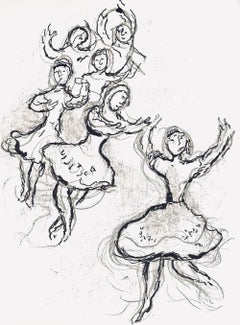
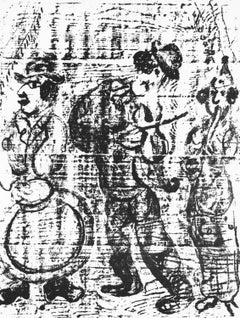
Marc Chagall, The Wandering Musicians, from The Lithographs of Chagall, 1963
Located in Southampton, NY
This exquisite lithograph by Marc Chagall (1887–1985), titled Le Musiciens Vagabonds (The Wandering Musicians), from the album The Lithographs of Chagall, Volume II, originates from ...
Category

1960s Expressionist Landscape Prints

Materials

Lithograph

E pluribus unum, Music, Deep Rivers in My Soul
Located in Southampton, NY
Etching in colors on Somerset vélin paper. Paper Size: 20 x 23 inches. Inscription: Unsigned and unnumbered, as issued. Notes: From the folio, Music, Deep Rivers in My Soul, 2003. Published by The Limited Editions Club, New York; printed by Wingate Studio, Hinsdale, under the direction of Peter Pettengili, Hinsdale, 2003. Excerpted from the folio, This edition of Music, Deep Rivers in my Soul consists of CD examples printed on Somerset paper. Dan Carr and Julia Ferrari designed the typography. Cast the Spectrum and Romulus type in metal, handset the type and printed the text at Golgonooza Letter Foundry and Press in Ashuelot, New Hampshire. The color etchings were printed by hand on Somerset paper by Peter Pettengili at Wingate Studio in Hinsdale, New Hampshire. DEAN MITCHELL...
Category

Early 2000s Expressionist Landscape Prints

Materials

Etching

Blue Angel, Music, Deep Rivers in My Soul
Located in Southampton, NY
Etching in colors on Somerset vélin paper. Paper Size: 20 x 23 inches. Inscription: Unsigned and unnumbered, as issued. Notes: From the folio, Music, Deep Rivers in My Soul, 2003. Published by The Limited Editions Club, New York; printed by Wingate Studio, Hinsdale, under the direction of Peter Pettengili, Hinsdale, 2003. Excerpted from the folio, This edition of Music, Deep Rivers in my Soul consists of CD examples printed on Somerset paper. Dan Carr and Julia Ferrari designed the typography. Cast the Spectrum and Romulus type in metal, handset the type and printed the text at Golgonooza Letter Foundry and Press in Ashuelot, New Hampshire. The color etchings were printed by hand on Somerset paper by Peter Pettengili at Wingate Studio in Hinsdale, New Hampshire. DEAN MITCHELL...
Category

Early 2000s Expressionist Landscape Prints

Materials

Etching

Marc Chagall, David Saved by Michal, from Drawings for the Bible, 1956
Located in Southampton, NY
This exquisite lithograph by Marc Chagall (1887–1985), titled David sauve par Michal (David Saved by Michal), from Marc Chagall, Dessins Pour La Bible (Drawings for the Bible), Verve...
Category

1950s Expressionist Landscape Prints

Materials

Lithograph

Composition, Everything That Rises Must Converge
Located in Southampton, NY
Etching on vélin de Rives BFK paper. Paper Size: 22 x 17 inches. Inscription: Unsigned and unnumbered, as issued. Notes: From the folio, Everything That Rises Must Converge, 2005. Published by The Limited Editions Club, New York; printed by Wingate Studio, Hinsdale, under the direction of Peter Pettengill, Hinsdale, 2005. Excerpted from the folio, This edition of CCC examples of Everything That Rises Must Converge was printed on BFK Rives. Dan Carr and Julia Ferrari designed the typography, cast the Kis-Janson type in metal, set the type by hand and printed the text at Golgonooza Letter Foundry & Press, Ashuelot, New Hampshire. The six color etchings were printed by hand on BFK Rives by Peter Pettengill at Wingate Studio in Hinsdale, New Hampshire. BENNY ANDREWS (1930-2006) was an African-American artist, activist and educator. He is known for his expressive, figurative paintings that often incorporated collaged fabric and other material. Andrews helped found the Black Emergency Cultural Coalition, which agitated for greater representation of African-American artists and curators in New York’s major art museums in the late 1960s and 70s. He also led the group in founding an arts education program in prisons and detention centers. Andrews taught art at Queens College for three decades, and from 1982 to 1984, served as the Director of the Visual Arts Program for the National Endowment for the Arts. He received many awards, including the John Hay Whitney...
Category

Early 2000s Expressionist Landscape Prints

Materials

Etching

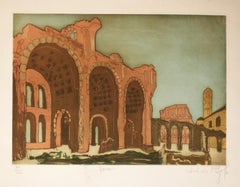
Rome, Italy original signed limited edition aquatint etching by J.J. Regal
Located in Paonia, CO
Rome, Italy original signed limited edition etching by French artist J.J. Regal This is a very bold design and an original depiction of a major European city. The print is in good...
Category

20th Century Expressionist Landscape Prints

Materials

Etching

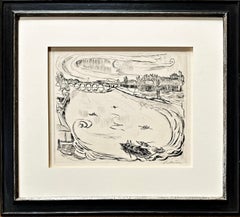
Expressionist Landscape "Mainlandschaft" Etching, 1918, Hand Signed
Located in Eltville am Rhein, DE
Max Beckmann Leipzig 1884 - 1950 New York Main Landscape, 1918 Drypoint on handmade paper Signed in pencil lower right Image size: 25.2 x 30 cm Paper size: 36.5 x 38 cm Frame: 48....
Category

1910s Expressionist Landscape Prints

Materials

Etching

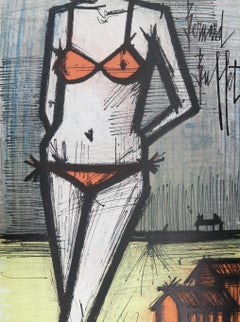
Buffet, A la plage, Lithographs 1952-1966 (after)
Located in Fairfield, CT
Medium: Lithograph on vélin Acropole Papeteries de Renage paper. Year: 1967 Paper Size: 12.25 x 9.5 inches Inscription: Signed in the plate and unnumbered, as issued Notes: From the ...
Category

1960s Expressionist Landscape Prints

Materials

Lithograph

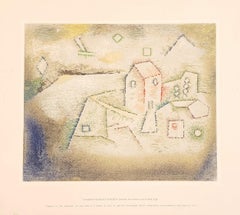
Country House In The North (Landhaus im Norden)
Located in Kansas City, MO
Paul Klee (after) Country House In The North (Landhaus im Norden) Year: 1925 Serigraph Size: 14x16.9 on 19x21.5 inches Edition: 440 Signed in the stone, numbered by hand Publisher: K...
Category

1920s Expressionist Landscape Prints

Materials

Screen

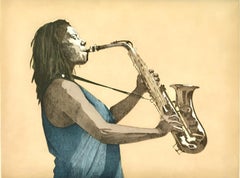
The Weary Blues, Sunrise Is Coming After While
Located in Southampton, NY
Silkscreen on vélin d’Arches paper. Paper Size: 14 x 11 inches. Inscription: Unsigned and unnumbered, as issued. Notes: From the folio, Bookmarks in the Pages of Life, 1998. Published by The Limited Editions Club, New York; printed by Drexel Press, Inc. Long Island City, 1998. Excerpted from the folio, CCC examples, designed, hand-set in Monotype Perpetua, printed, and hand-bound by Michael and Winifred Bixler, Skaneateles, New York. Paper made in France at Arches. Silkscreens printed by the Drexel Press, Inc. Long Island City, New York. PHOEBE BEASLEY...
Category

1990s Expressionist Landscape Prints

Materials

Screen

Magnolia Flower, Bookmarks in the Pages of Life
Located in Southampton, NY
Silkscreen in colors and sepia-tones on Langdell fait à la main paper. Paper Size: 15 x 11 inches. Inscription: Unsigned and unnumbered, as issued. Notes: From the folio, Bookmarks i...
Category

Early 2000s Expressionist Landscape Prints

Materials

Screen

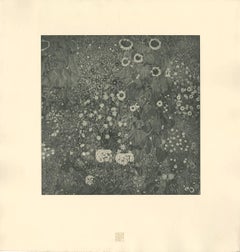
H.O. Miethke Das Werk folio "Farm Garden With Sunflowers" collotype print
Located in Palm Beach, FL
DAS WERK GUSTAV KLIMTS, a portfolio of 50 prints, ten of which are multicolor collotypes on chine colle paper laid down on hand-made heavy cream wove paper with deckled edges; under ...
Category

Early 1900s Expressionist Landscape Prints

Materials

Paper

Expressionist landscape prints for sale on 1stDibs.

Find a wide variety of authentic Expressionist landscape prints available for sale on 1stDibs. Works in this style were very popular during the 21st Century and Contemporary, but contemporary artists have continued to produce works inspired by this movement. If you’re looking to add landscape prints created in this style to introduce contrast in an otherwise neutral space in your home, the works available on 1stDibs include elements of blue, orange, pink, purple and other colors. Many Pop art paintings were created by popular artists on 1stDibs, including Marc Chagall, Gustav Klimt K.K. Hof-und Staatsdruckerei, Graciela Rodo Boulanger, and (after) Gustav Klimt. Frequently made by artists working with Lithograph, and Paper and other materials, all of these pieces for sale are unique and have attracted attention over the years. Not every interior allows for large Expressionist landscape prints, so small editions measuring 3.25 inches across are also available. Prices for landscape prints made by famous or emerging artists can differ depending on medium, time period and other attributes. On 1stDibs, the price for these items starts at $100 and tops out at $79,600, while the average work sells for $980.

Recently Viewed

View All