Woodcut Prints and Multiples

to
1,328
3,273
497
320
177
255
Overall Width
to
Overall Height
to
2,147
566
246
211
201
109
52
44
41
25
5
3
1
1
170
137
57
51
45
51
745
3,162
570
28
100
429
272
153
204
372
143
159
117
28
3,152
1,255
96
2,324
1,198
886
842
614
467
459
401
392
364
347
266
241
213
211
182
173
147
132
107
4,866
35,280
19,636
17,692
10,518
380
2,246
1,839
1,636
Medium: Woodcut
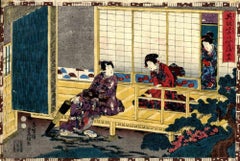
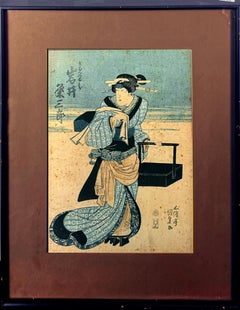
Wakana (Gengjie) - Original Woodcut Print by Utagawa Kunisada - 1850s
Located in Roma, IT
Wakana (Gengjie) is an original modern artwork realized by Utagawa Kunisada in 1850s. Woodcut print Oban yokoe format From the series "Sono sugata yukari no utsushie" (Faithful im...
Category

19th Century Modern Woodcut Prints and Multiples

Materials

Woodcut

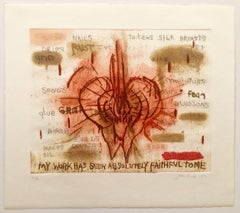
My Work
Located in New York, NY
Joan Snyder has been called an autobiographical, even confessional artist, who draws from her experiences and surroundings to create her paintings. While her subjects vary widely, Sn...
Category

1990s Expressionist Woodcut Prints and Multiples

Materials

Etching, Woodcut

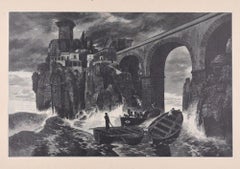
Pirates attack the Castle on the Sea - Original Woodcut by J.J. Weber - 1898
Located in Roma, IT
Image dimensions: 23 x 35 cm. Original Title: Von Piraten überfallene Burg am Meer Pirates attack the Castle on the sea is a black and white xylograph on Japon applied on ivory-colored paper, after Arnold Böcklin...
Category

1890s Symbolist Woodcut Prints and Multiples

Materials

Woodcut

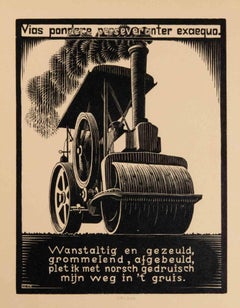
Steamroller - Woodcut by Maurits Cornelis Escher - 1931
Located in Roma, IT
Woodcut print realized by Escher for the series "Emblemata", and published in 1931. On Hollande van Gelder paper. Edition of 300. Unsigned, as issued. Excellent condition, matted....
Category

1930s Modern Woodcut Prints and Multiples

Materials

Woodcut

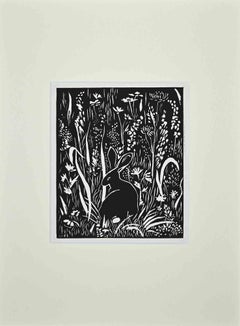
The Rabbit - Original Woodcut by Giselle Hallf - Early 20th Century
Located in Roma, IT
The Rabbit is an original woodcut print by Giselle Hallf in the first half of the 20th Century. Good conditions. The artwork is depicted through strong strokes in a well-balanced c...
Category

Early 20th Century Modern Woodcut Prints and Multiples

Materials

Woodcut

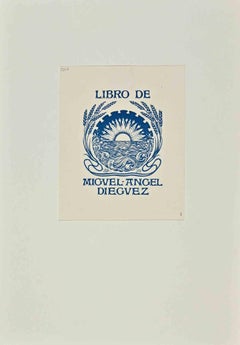
Libro de Miguel Angel Dieguez - Woodcut by Joaquín Diéguez y Díaz - 1903
Located in Roma, IT
Libro de Miguel Angel Dieguez is a Modern Artwork realized in 1903, by the Spanish Artist Joaquín Diéguez y Díaz. Coloured woodcut on paper. Hand signed on the back The work is g...
Category

Early 1900s Symbolist Woodcut Prints and Multiples

Materials

Woodcut

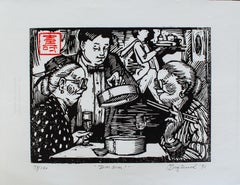
Dim Sum Woodcut by Printmaker Tim Engelland
Located in New York, NY
Tim Engelland (American, 1950-2012) Dim Sum!, 1991 Woodcut 8 1/2 x 11 in. Signed dated lower right: T. Engelland, '91 Titled lower middle: Dim Sum! Numbered lower left: 73/150 A lifelong artist, Engelland specialized in oil portraits and landscapes, and also worked extensively in woodcuts and linocuts. He was born on Jan. 5, 1950, in Ames, Iowa, the son of Charles Wilbur “Will” Engelland and Patricia Fairman Engelland.. Tim grew up in Terre Haute, IN, attending Fairbanks Elementary School and Indiana State University’s Laboratory School. He knew he wanted to be an artist from an early age, and was mentored by Lab School’s John Laska, graduating in 1968. He received a BFA from Temple University’s Tyler School of Art; was a Norfolk Fellow at Yale University; and received his MFA from Cornell University, teaching there for two years after graduation. He spent the majority of his career, from 1976-2004, at Deerfield Academy, a prestigious preparatory school in Deerfield, Mass. There he taught art and photography, coached basketball and lacrosse, and served as faculty resident. When the school began accepting female students, Tim designed The Deerfield Girl, a bronze statue to accompany The Deerfield Boy statue standing in the school’s Memorial Building. Along with John O’Brien and Peter Fallon, Tim founded the Deerfield Press, publisher of limited-edition illustrated poems and stories; James Dickey, John McPhee, and Seamus Heaney are among the authors whom the Press published. For several decades, Tim served on the faculty at the Advanced Placement Summer Institute in St. Johnsbury, Vt., and as a consultant to the College Board. He spent sabbaticals in New York City and Boston, and he has exhibited in galleries in those cities and many other venues. His work can be found in the National Library of Ireland, Boston’s Museum of Fine Arts, and in private collections worldwide. In 2004, Tim returned to Indiana. He was married to Susan Karen Carpenter...
Category

1980s Modern Woodcut Prints and Multiples

Materials

Woodcut

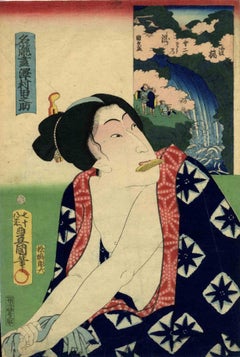
Famous Waterfalls - Woodcut by Utagawa Kunisada - 1850s
Located in Roma, IT
Famous Waterfalls is an original artwork realized in the 1850s by Utagawa Kunisada (1786-1865). From the series "Meitaki ga". Bust portrait of the actor Sawamura Tanosuke in Onnaga...
Category

1840s Modern Woodcut Prints and Multiples

Materials

Woodcut

Blue Trees
Located in Bournemouth, Dorset
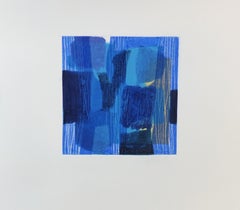
Martyn Brewster (b.1952) 'Blue Trees ' Carborundum & relief print 2025 Image 20.0 x20.0 cm Edition 60 Unframed Martyn Brewster’s abstract paintings are strongly linked to the Englis...
Category

2010s Abstract Woodcut Prints and Multiples

Materials

Woodcut

Libra - Original Woodcut by P. C. Antinori - 1970s
Located in Roma, IT
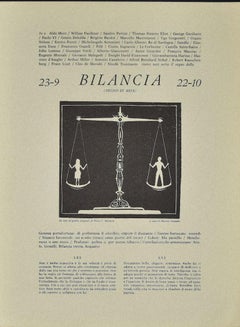
Zodiac Signs - Libra is original Black and white woodcut, realized by Italian artist Piero C. Antinori. Excellent condition. Written on the lower left; Original xilography of Piero...
Category

1970s Woodcut Prints and Multiples

Materials

Woodcut

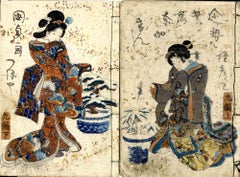
The Samurai Genta Kajiwara - Japanese Woodblock Diptych in Ink on Paper
Located in Soquel, CA
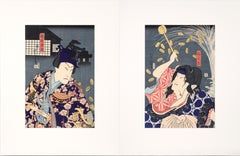
The Samurai Genta Kajiwara - Japanese Woodblock Diptych in Ink on Paper Boldly colored woodblock by Utagawa Yoshitora (Japanese, active c.1840-1880)...
Category

1860s Edo Woodcut Prints and Multiples

Materials

Paper, Ink, Woodcut

Portrait of an Irishman, Woodcut Print on Rice Paper, circa 1952
Located in Long Island City, NY
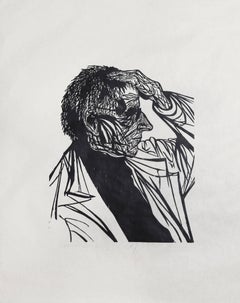
This woodcut print was created by American artist Leonard Baskin. Baskin is well known for his somewhat grotesque, intricate, surreal drawings and natural subject matter. This print ...
Category

1950s Surrealist Woodcut Prints and Multiples

Materials

Rice Paper, Woodcut

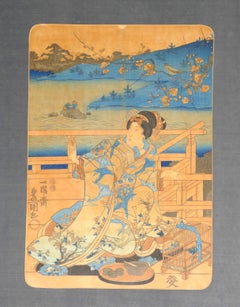
Woman - Woodcut by Utagawa Kunisada - 1830 ca.
Located in Roma, IT
Japanese Woman is a beautiful print realized around 1830 by Utagawa Kunisada. Original colored woodblock print. This wonderful modern artwork represents a portrait of a Japan woman...
Category

1830s Modern Woodcut Prints and Multiples

Materials

Woodcut

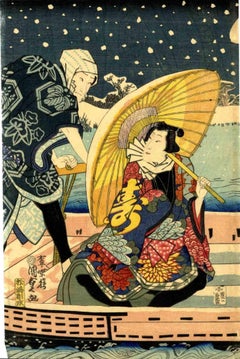
Kabuki - Woodcut by Utagawa Kunisada II - 1862
Located in Roma, IT
Kabuki is an original artwork realized in 1862 by Utagawa Kunisada II (1823-1880). Boatman with elegant passenger in snowy landscape. Sign: Kochoro Kuni...
Category

1860s Modern Woodcut Prints and Multiples

Materials

Woodcut

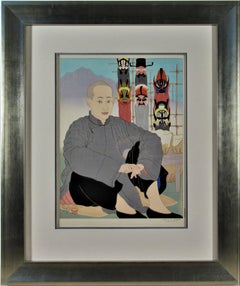
Vendeur de Masques Chinois
Located in San Francisco, CA
This artwork titled "Le Vendeur de Masques Chinois" {The Chinese Masks Seller) 1940 is an original color woodcut by French artist Paul Jacoulet, 1896-1960. It is hand signed in penci...
Category

Mid-20th Century Realist Woodcut Prints and Multiples

Materials

Woodcut

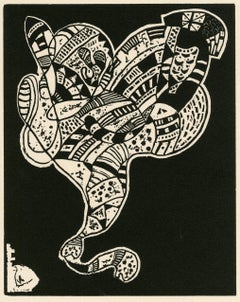
Plate 12
Located in Fairlawn, OH
Plate 12 From: 10 Origi, 1942 Signed in the block with the artist's initials lower left (printed) From: 10 Origin Not from the First edition 100, published by Allianz-Verlag, Zurich,...
Category

1970s Expressionist Woodcut Prints and Multiples

Materials

Woodcut

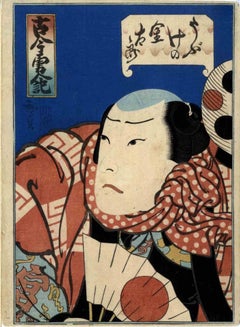
Kabuki Actor - Woodblock Print attr. to Utagawa Kunisada - Mid-19th Century
Located in Roma, IT
Kabuki Actor is an original Woodcut print realized in mid 19 century and attributed to Utagawa Kunisada. Beautiful colored woodblock print, included a cardboard passpartout. Includ...
Category

Mid-19th Century Modern Woodcut Prints and Multiples

Materials

Woodcut

Arashi Rinosuke II - Woodcut Print by Utagawa Hirosada - 1848
Located in Roma, IT
Arashi Rinosuke II is an original modern artwork realized by Utagawa Hirosada (Japanese, active 1825–75) in 1848. Woodcut Print Chuban format, 1848 From the series "Kokon yujin ki"...
Category

19th Century Modern Woodcut Prints and Multiples

Materials

Woodcut

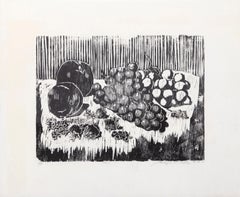
Fruits, Modern Woodcut on thin tissue paper by Biagio Civale
Located in Long Island City, NY
Biagio Civale, Italian/American (1936 - ) - Fruits, Year: 1991, Medium: Woodcut on thin tissue paper, Signed, numbered, and dated in pencil, Edition: A/P, Image Size: 11.5 x 15.5...
Category

1990s Modern Woodcut Prints and Multiples

Materials

Woodcut

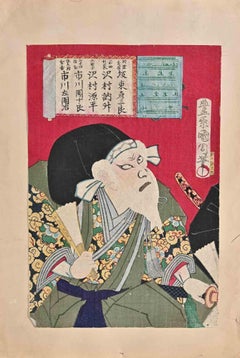
Old Samurai - Woodcut Print after Utagawa Kunisada - Late 19th Century
Located in Roma, IT
Old Samurai is a Woodcut print realized in late 19 century after Utagawa Kunisada. Good condition and Beautiful colored woodblock print, included a cardboard passpartout (46x32 cm...
Category

Late 19th Century Modern Woodcut Prints and Multiples

Materials

Woodcut

La Chevre Du Thibet, Impressionist Woodblock by Raoul Dufy
Located in Long Island City, NY
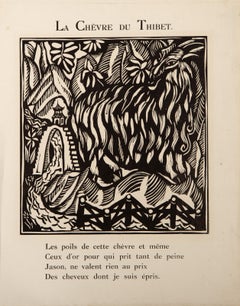
Raoul Dufy, French (1877 - 1953) - La Chevre Du Thibet, Year: circa 1911, Medium: Woodblock, Image Size: 8 x 7.5 inches, Size: 13 x 10 in. (33.02 x 25.4 cm), Description: From the ...
Category

1910s Impressionist Woodcut Prints and Multiples

Materials

Woodcut

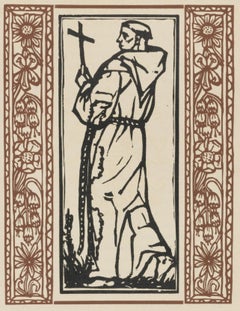
Composition (Morane, N° 100), Les Petites Fleurs de St. Françoise, Émile Bernard
Located in Southampton, NY
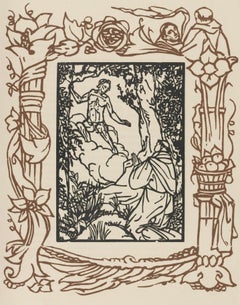
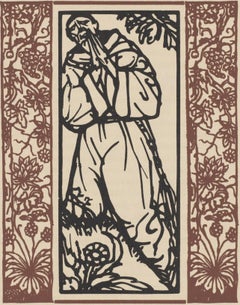
Wood engraving on vergé d'Arches paper. Inscription: unsigned and unnumbered, as issued. Good condition. Notes: From the volume, Les Petites Fleurs de St. François, 1928. Published b...
Category

1920s Post-Impressionist Woodcut Prints and Multiples

Materials

Woodcut

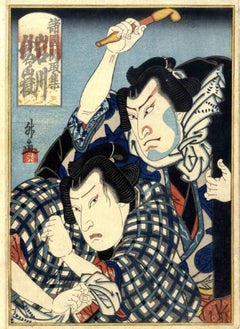
Rônin in the Night, Armed with a Club - Woodcut by Utagawa Kunisada-19th Century
Located in Roma, IT
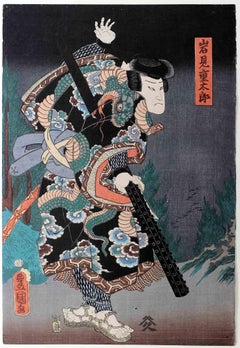
This magnificent woodcut print signed Toyokuni III represents a Ronin in the night, armed with a club, and was realized by Utagawa Kunisada (1786-1865) in the mid 19th Century. The ...
Category

19th Century Old Masters Woodcut Prints and Multiples

Materials

Woodcut

Kumasaka Chōhan to Ushiwakamaru - One of a Diptych Original Woodcut Print
Located in Soquel, CA
Kumasaka Chōhan to Ushiwakamaru is a Japanese Ukiyo-e print created between 1848 and 1854 by artist Utagawa Kunisada (Japanese, 1786-1864). The print is a Diptych, and is part of the...
Category

1850s Realist Woodcut Prints and Multiples

Materials

Printer s Ink, Rice Paper, Woodcut

Sidney Chafetz, The Stroller (Wallace Stevens)
Located in New York, NY
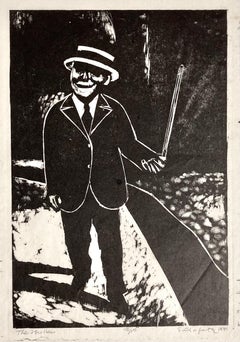
Sidney Chafetz was known for his clever compositions and his many portraits, all made in the most 'difficult to control' medium of woodcut.. This charmi...
Category

1970s American Modern Woodcut Prints and Multiples

Materials

Woodcut

Yakushae - Woodcut Print by Utagawa Kunisada - 1840s
Located in Roma, IT
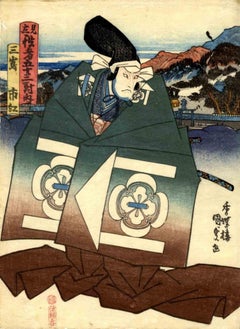
Yakushae is an original modern artwork realized by Utagawa Kunisada in 1840s Woodcut print Chuban format. From the series "Mitate Yakusha gojusan tsui no uchi" (Actors in front of ...
Category

19th Century Modern Woodcut Prints and Multiples

Materials

Woodcut

Composition (Morane, N° 100), Les Petites Fleurs de St. Françoise, Émile Bernard
Located in Southampton, NY
Wood engraving on vergé d'Arches paper. Inscription: unsigned and unnumbered, as issued. Good condition. Notes: From the volume, Les Petites Fleurs de St. François, 1928. Published b...
Category

1920s Post-Impressionist Woodcut Prints and Multiples

Materials

Woodcut

Charles Pont, Splicing
Located in New York, NY
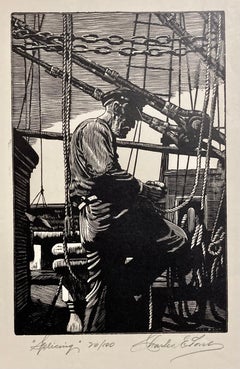
An old sailor is shown at work on a what must be a huge sailing vessel. He's splicing, or joining ropes together -- probably still a useful skill in the mi...
Category

1930s Ashcan School Woodcut Prints and Multiples

Materials

Woodcut

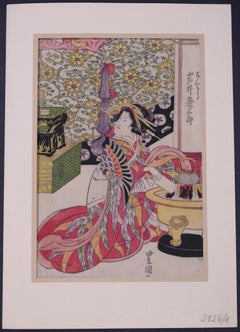
The Japanese Tea Ritual - Woodcut print - 1850s
Located in Roma, IT
The Japanese tea ritual is a breathtaking ukiyo-e, a original woodblock print on paper, realized at the half of trhe 19th century by the great master, Utagawa Toyokuni II...
Category

1850s Modern Woodcut Prints and Multiples

Materials

Paper, Woodcut

Henry R. Diamond, Whaler
By Henry R. Diamond
Located in New York, NY
Really a wood engraving rather than a woodcut, Henry R. Diamond's Whaler is majestic. It is signed and titled in pencil.
Category

Early 20th Century American Modern Woodcut Prints and Multiples

Materials

Woodcut

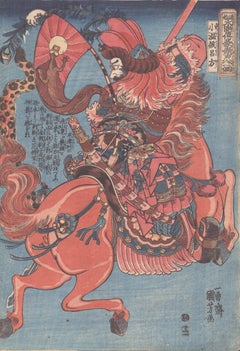
Utagawa Kuniyoshi -- Sho onko Ryoho 小溫侯呂方 (Lu Fang)
Located in BRUCE, ACT
Title: Sho'onko Ryoho 小溫侯呂方 (Lu Fang) form Series: Tsuzoku Suikoden goketsu hyakuhachinin no hitori 通俗水滸傳濠傑百八人一個 (One of the 108 Heroes of the Popular Water Margin) Utagawa...
Category

1820s Woodcut Prints and Multiples

Materials

Woodcut

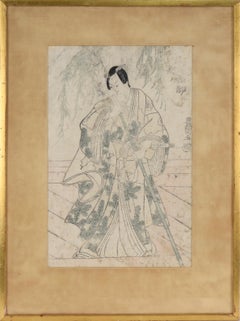
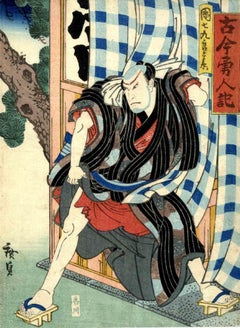
Kabuki Actor with Pine-Patterned Robe - Japanese Woodblock Print
Located in Soquel, CA
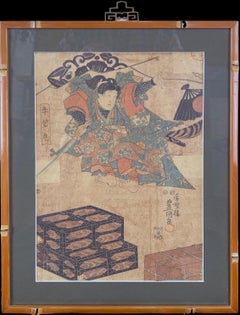
Kabuki Actor with Pine-Patterned Robe - Japanese Woodblock Print Finely detailed woodblock by Utagawa Toyokuni (Japanese, 1769-1825). A kabuki actor is standing on a wooden deck, wearing a robe with a pine-needle pattern. He is holding a sword and a staff. In the background, tree branches hang down from out of frame. Presented in a gold colored frame with a silk mat. Frame size: 20"H x 14.25"W Image size: 14"H x 8.5"W Utagawa Toyokuni (Japanese, 1769-1825) was born in Edo, the son of Kurahashi Gorobei, a carver of dolls and puppets...
Category

Early 19th Century Impressionist Woodcut Prints and Multiples

Materials

Ink, Rice Paper, Woodcut

Bernard, Composition, Éloge de Émile Bernard (after)
Located in Southampton, NY
Woodcut on vélin d’Arches paper. Inscription: unsigned and unnumbered, as issued. Good condition. Notes: From the volume, Éloge de Émile Bernard, 1962. Published by Editions d'Art Ma...
Category

1960s Post-Impressionist Woodcut Prints and Multiples

Materials

Woodcut

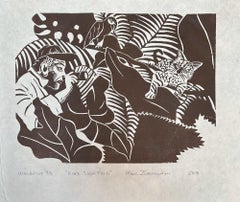
Rare Sighting- Surfing Art
Located in Carmel, CA
Rare Sighiting - Surfing Art - Figurative - Woodcut Print By Marc Zimmerman Limited Edition 01/04 This masterwork is exhibited in the Zimmerman Gallery, Carmel CA. Immerse yoursel...
Category

2010s Contemporary Woodcut Prints and Multiples

Materials

Woodcut

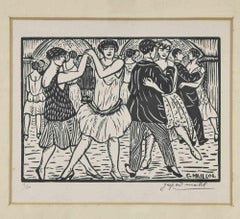
Dance Hall - Woodcut by Gaspard Maillol - Early 20th Century
Located in Roma, IT
Dance hall is a woodcut print realized by Gaspard Maillol (1880-1946). Hand signed by the artist on the lower margin. Edition 19/160. Gaspard Maillol , born on July 10 , 1880 in Ba...
Category

Early 20th Century Modern Woodcut Prints and Multiples

Materials

Woodcut

Kabuki Scene - Woodblock Print by Utagawa Kunisada - Mid-19th Century
Located in Roma, IT
Kabuki Scene is an original Woodcut print realized in mid 19 century by Utagawa Kunisada. Good condition and Beautiful colored woodblock print. This wonderful modern artwork repr...
Category

Mid-19th Century Modern Woodcut Prints and Multiples

Materials

Woodcut

Harvest #2
Located in New York, NY
Color woodcut. Signed by the artist in pencil, lower right. Titled "Harvest 2" in pencil, lower center. Numbered "2nd 5/12 Special Edition" in pencil, lower left. Framed dimensi...
Category

1960s Modern Woodcut Prints and Multiples

Materials

Woodcut, Color

The Garden of Love (after Peter Paul Rubens [1577-1640]
Located in Fairlawn, OH
The Garden of Love (after Peter Paul Rubens [1577-1640]) Woodcut diptych, c. 1633-1636 Each of the two sheets is signed in the plate lower right A posthumous impression with tiny wor...
Category

17th Century Old Masters Woodcut Prints and Multiples

Materials

Woodcut

The Actor Nakamura Shikan II - Woodcut Print by Utagawa Hirosada - 1850
Located in Roma, IT
The Actor Nakamura Shikan II is an original modern artwork realized by Utagawa Hirosada (Japanese, active 1825–75) in 1850. Original woodcut print chuban format, 1850. Signed Hirosada. Publisher: Kagawa. From the series "Kokon yujin ki" (Transcription on past and present heroes). The actor Nakamura Shikan II as Danshichi Kurobei in the play Natsumatsuri Naniwa kagami. Excellent impression, fresh in colour, with blindstamping (floral design), visible wood grain (grey kimono...
Category

19th Century Modern Woodcut Prints and Multiples

Materials

Woodcut

A Rural Genji - Woodcut by Utagawa Kunisada - 1829-1842
Located in Roma, IT
A rural Genji is an original artwork realized in 1829-1842 by Utagawa Kunisada (1786-1865). Illustrated book in two volumes. Book title "Nise Murasaki Inaka Jenji", 9th instalment....
Category

19th Century Modern Woodcut Prints and Multiples

Materials

Woodcut

Composition (Morane, N° 100), Les Petites Fleurs de St. Françoise, Émile Bernard
Located in Southampton, NY
Wood engraving on vergé d'Arches paper. Inscription: unsigned and unnumbered, as issued. Good condition. Notes: From the volume, Les Petites Fleurs de St. François, 1928. Published b...
Category

1920s Post-Impressionist Woodcut Prints and Multiples

Materials

Woodcut

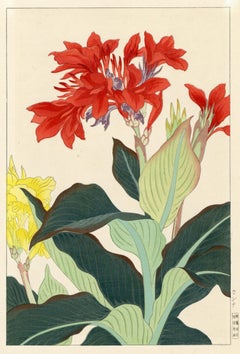
Canna Lily
Located in Fairlawn, OH
Canna Lily Color woodcut, 1939 Unsigned (as usual) Publisher: Takemura Hideo (active Yokohama 1926-1939) Format: oban Condition: Excellent Image/Sheet size: 15 5/8 x 11 inches Provenance: Robert O. Muller There is little biographical data available about the Japanese printmaker Hodo Nishimura...
Category

1930s Modern Woodcut Prints and Multiples

Materials

Woodcut

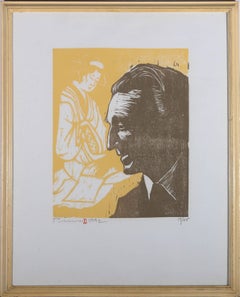
Jacob Pins (1917-2005) - 1992 Woodcut, Jack Checking Eishi
Located in Corsham, GB
This fascinating print depicts the Art Historian Jack Hillier, a specialist in Japanese prints, books and paintings. As well as being an avid collector, he also worked as a cataloger for Sotheby's for 25 years and his book 'Japanese Masters of the Color Print' was published by Phaidon Press in 1954. This delightful woodblock print shows the bold silhouette of Jack Hiller...
Category

1990s Woodcut Prints and Multiples

Materials

Woodcut

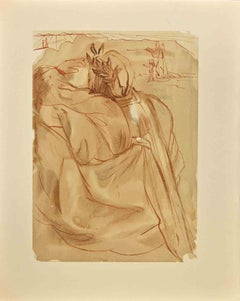
Dante s Repetance - Plate n. 30 Purgatory - WoodcutPrint - 1963
Located in Roma, IT
Dante's Repetance from the Series "The Divine Comedy" - Plate n. 30 Purgatory is a woodcut print realized in 1963 for a series illustrating the Medieval poem of the "Divine Comedy" ...
Category

1960s Surrealist Woodcut Prints and Multiples

Materials

Woodcut

Portrait of the Actor Nakamura Shikan - Woodcut Print by Masunao - 1847
Located in Roma, IT
Half-length portrait of the actor Nakamura Shikan is an original modern artwork realized by Masunao in 1847. Original Woodcut Print Chuban Format, 1847. From the series "Shukoku se...
Category

19th Century Modern Woodcut Prints and Multiples

Materials

Woodcut

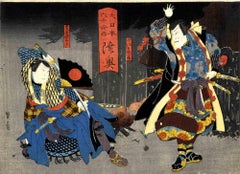
Kabukie - The Province of Rokuok - Woodcut by Utagawa Kunikazu - 1862
By Utagawa Kunikazu
Located in Roma, IT
Kabukie - The Province of Rokuoku is an original artwork realized in 1862 by Utagawa Kunikazu (1830 - 1919) Chuban. From the series "Dai Nippon rokuju of Rikuoku" (60 provinces of Glorious Japan), The Province of Rokuoku. Meeting of the two rivals in the forest at night, Tanigoro with sumo apron and fan with the national colours. Signed: Kunikazu. Good impression, backed, glued at corners, oxidation, centrefold, a little bit rubbed. Utagawa Kunikazu (1830 - 1919) was a printmaker from Osaka. He had a famous teacher, the ukiyo-e artist Kunisada Utagawa...
Category

1860s Modern Woodcut Prints and Multiples

Materials

Woodcut

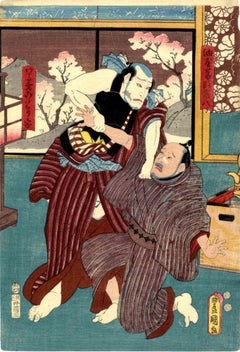
Yakushae - Woodcut Print by Utagawa Kunisada - 1863
Located in Roma, IT
Yakushae is an original modern artwork realized by Utagawa Kunisada in 1863. Woodcut print oban from a tryptich. Signed Toyokuni ga. Publisher: Izutsuya. Scene from the play "Yowa Nasake Ukina no Yokogushi". Yasugoro, the thief with the bat tattoo on his cheek, enters the oil merchant's house at night...
Category

19th Century Modern Woodcut Prints and Multiples

Materials

Woodcut

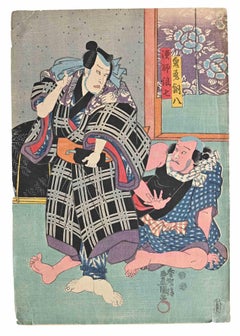
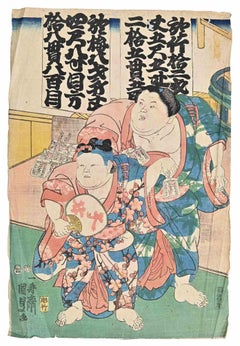
Sumo Fighters - Woodblock Print by Utagawa Kunisada - Mid-19th Century
Located in Roma, IT
Sumo Fighters is an original Woodcut print realized in mid 19th century by Utagawa Kunisada. Good condition and Beautiful colored woodblock print. This wonderful modern artwork re...
Category

Mid-19th Century Modern Woodcut Prints and Multiples

Materials

Woodcut

Allegro, Ukiyo-e landscape and sunset woodblock print, 2018
Located in New York, NY
Keiji Shinohara was born and raised in Osaka, Japan. After 10 years as an apprentice to the renowned Keiichiro Uesugi in Kyoto, he became a Master Printmaker and moved to the United ...
Category

2010s Impressionist Woodcut Prints and Multiples

Materials

Woodcut

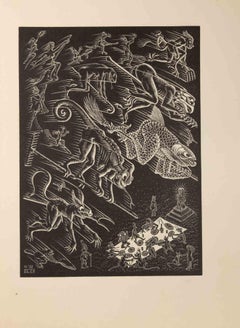
Flying Demons - Woodcut by Maurits Cornelis Escher - 1932
Located in Roma, IT
Woodcut print from the Series "Der vreeselijke avonturen vas Scholastica" (The Terrible Adventures of Scholastica). Edition of 300, published by A. J. van Dishoeck. Unsigned, ass i...
Category

1930s Modern Woodcut Prints and Multiples

Materials

Woodcut

Panorama d un Paysage - Woodcut by Utagawa Kunisada - Mid-19th Century
Located in Roma, IT
This beautiful woodcut print in the tradutional "oban" format is the work of the great Japanese master Utagawa Hiroshige (1797-1858). It represents the landscape from a high point o...
Category

Mid-19th Century Modern Woodcut Prints and Multiples

Materials

Woodcut

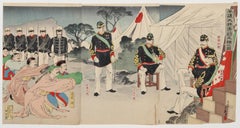
Chinese Generals in Pyongyang Surrender, Ukiyo-E Woodblock by Migita Toshihide
By Migita Toshihide
Located in Long Island City, NY
Artist: Migita Toshihide, Japanese (1862 - 1925) Title: Chinese Generals in Pyongyang Surrender to Japanese Year: 1892 Medium: Woodblock Triptych S...
Category

1890s Other Art Style Woodcut Prints and Multiples

Materials

Woodcut

"Ravanna s Palace Burning, " Woodcut Landscape signed by Carol Summers
Located in Milwaukee, WI
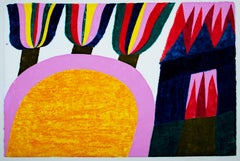
"Ravanna's Palace Burning" is a woodcut signed by Carol Summers. The image combines landscape and architecture, which is typical of the works Summers produced during the 1980s and '90s. In the image, a dark building stands burning, bright red flames licking from the windows and rooftop. It stands beside an orange field framed in pink, probably representing a plaza. Beyond the plaza are multicolored trees, their branches reaching upward like the flames on the building. The playfulness of the image is enhanced by Summers' signature printmaking technique, which allows the ink from the woodblock to seep through the paper, blurring the edges of each form. Art: 24.5 x 37.25 in Frame: 30 x 42.75 in Numbered 53 of the edition of 125 Carol Summers (1925-2016) has worked as an artist throughout the second half of the 20th century and into the first years of the next, outliving most of his mid-century modernist peers. Initially trained as a painter, Summers was drawn to color woodcuts around 1950 and it became his specialty thereafter. Over the years he has developed a process and style that is both innovative and readily recognizable. His art is known for it’s large scale, saturated fields of bold color, semi-abstract treatment of landscapes from around the world and a luminescent quality achieved through a printmaking process he invented. In a career that has extended over half a century, Summers has hand-pulled approximately 245 woodcuts in editions that have typically run from 25 to 100 in number. His talent was both inherited and learned. Born in 1925 in Kingston, a small town in upstate New York, Summers was raised in nearby Woodstock with his older sister, Mary. His parents were both artists who had met in art school in St. Louis. During the Great Depression, when Carol was growing up, his father supported the family as a medical illustrator until he could return to painting. His mother was a watercolorist and also quite knowledgeable about the different kinds of papers used for various kinds of painting. Many years later, Summers would paint or print on thinly textured paper originally collected by his mother. From 1948 to 1951, Carol Summers trained in the classical fine and studio arts at Bard College and at the Art Students League of New York. He studied painting with Steven Hirsh and printmaking with Louis Schanker. He admired the shapes and colors favored by early modernists Paul Klee (Sw: 1879-1940) and Matt Phillips (Am: b.1927- ). After graduating, Summers quit working as a part-time carpenter and cabinetmaker (which had supported his schooling and living expenses) to focus fulltime on art. That same year, an early abstract, Bridge No. 1 was selected for a Purchase Prize in a competition sponsored by the Brooklyn Museum. In 1952, his work (Cathedral, Construction and Icarus) was shown the first time at the Museum of Modern Art in New York City in an exhibition of American woodcuts. In 1954, Summers received a grant from the Italian government to study for a year in Italy. Woodcuts completed soon after his arrival there were almost all editions of only 8 to 25 prints, small in size, architectural in content and black and white in color. The most well-known are Siennese Landscape and Little Landscape, which depicted the area near where he resided. Summers extended this trip three more years, a decision which would have significant impact on choices of subject matter and color in the coming decade. After returning from Europe, Summers’ images continued to feature historical landmarks and events from Italy as well as from France, Spain and Greece. However, as evidenced in Aetna’s Dream, Worldwind and Arch of Triumph, a new look prevailed. These woodcuts were larger in size and in color. Some incorporated metal leaf in the creation of a collage and Summers even experimented with silkscreening. Editions were now between 20 and 50 prints in number. Most importantly, Summers employed his rubbing technique for the first time in the creation of Fantastic Garden in late 1957. Dark Vision of Xerxes, a benchmark for Summers, was the first woodcut where Summers experimented using mineral spirits as part of his printmaking process. A Fulbright Grant as well as Fellowships from the Louis Comfort Tiffany Foundation and the Guggenheim Foundation followed soon thereafter, as did faculty positions at colleges and universities primarily in New York and Pennsylvania. During this period he married a dancer named Elaine Smithers with whom he had one son, Kyle. Around this same time, along with fellow artist Leonard Baskin, Summers pioneered what is now referred to as the “monumental” woodcut. This term was coined in the early 1960s to denote woodcuts that were dramatically bigger than those previously created in earlier years, ones that were limited in size mostly by the size of small hand-presses. While Baskin chose figurative subject matter, serious in nature and rendered with thick, striated lines, Summers rendered much less somber images preferring to emphasize shape and color; his subject matter approached abstraction but was always firmly rooted in the landscape. In addition to working in this new, larger scale, Summers simultaneously refined a printmaking process which would eventually be called the “Carol Summers Method” or the “ Carol Summers Technique”. Summers produces his woodcuts by hand, usually from one or more blocks of quarter-inch pine, using oil-based printing inks and porous mulberry papers. His woodcuts reveal a sensitivity to wood especially its absorptive qualities and the subtleties of the grain. In several of his woodcuts throughout his career he has used the undulating, grainy patterns of a large wood plank to portray a flowing river or tumbling waterfall. The best examples of this are Dream, done in 1965 and the later Flash Flood Escalante, in 2003. In the majority of his woodcuts, Summers makes the blocks slightly larger than the paper so the image and color will bleed off the edge. Before printing, he centers a dry sheet of paper over the top of the cut wood block or blocks, securing it with giant clips. Then he rolls the ink directly on the front of the sheet of paper and pressing down onto the dry wood block or reassembled group of blocks. Summers is technically very proficient; the inks are thoroughly saturated onto the surface of the paper but they do not run into each other. The precision of the color inking in Constantine’s Dream in 1969 and Rainbow Glacier in 1970 has been referred to in various studio handbooks. Summers refers to his own printing technique as “rubbing”. In traditional woodcut printing, including the Japanese method, the ink is applied directly onto the block. However, by following his own method, Summers has avoided the mirror-reversed image of a conventional print and it has given him the control over the precise amount of ink that he wants on the paper. After the ink is applied to the front of the paper, Summers sprays it with mineral spirits, which act as a thinning agent. The absorptive fibers of the paper draw the thinned ink away from the surface softening the shapes and diffusing and muting the colors. This produces a unique glow that is a hallmark of the Summers printmaking technique. Unlike the works of other color field artists or modernists of the time, this new technique made Summers’ extreme simplification and flat color areas anything but hard-edged or coldly impersonal. By the 1960s, Summers had developed a personal way of coloring and printing and was not afraid of hard work, doing the cutting, inking and pulling himself. In 1964, at the age of 38, Summers’ work was exhibited for a second time at the Museum of Modern Art. This time his work was featured in a one-man show and then as one of MOMA’s two-year traveling exhibitions which toured throughout the United States. In subsequent years, Summers’ works would be exhibited and acquired for the permanent collections of multiple museums throughout the United States, Europe and Asia. Summers’ familiarity with landscapes throughout the world is firsthand. As a navigator-bombardier in the Marines in World War II, he toured the South Pacific and Asia. Following college, travel in Europe and subsequent teaching positions, in 1972, after 47 years on the East Coast, Carol Summers moved permanently to Bonny Doon in the Santa Cruz Mountains in Northern California. There met his second wife, Joan Ward Toth, a textile artist who died in 1998; and it was here his second son, Ethan was born. During the years that followed this relocation, Summers’ choice of subject matter became more diverse although it retained the positive, mostly life-affirming quality that had existed from the beginning. Images now included moons, comets, both sunny and starry skies, hearts and flowers, all of which, in one way or another, remained tied to the landscape. In the 1980s, from his home and studio in the Santa Cruz mountains, Summers continued to work as an artist supplementing his income by conducting classes and workshops at universities in California and Oregon as well as throughout the Mid and Southwest. He also traveled extensively during this period hiking and camping, often for weeks at a time, throughout the western United States and Canada. Throughout the decade it was not unusual for Summers to backpack alone or with a fellow artist into mountains or back country for six weeks or more at a time. Not surprisingly, the artwork created during this period rarely departed from images of the land, sea and sky. Summers rendered these landscapes in a more representational style than before, however he always kept them somewhat abstract by mixing geometric shapes with organic shapes, irregular in outline. Some of his most critically acknowledged work was created during this period including First Rain, 1985 and The Rolling Sea, 1989. Summers received an honorary doctorate from his alma mater, Bard College in 1979 and was selected by the United States Information Agency to spend a year conducting painting and printmaking workshops at universities throughout India. Since that original sabbatical, he has returned every year, spending four to eight weeks traveling throughout that country. In the 1990s, interspersed with these journeys to India have been additional treks to the back roads and high country areas of Mexico, Central America, Nepal, China and Japan. Travel to these exotic and faraway places had a profound influence on Summers’ art. Subject matter became more worldly and nonwestern as with From Humla to Dolpo, 1991 or A Former Life of Budha, 1996, for example. Architectural images, such as The Pillars of Hercules, 1990 or The Raja’s Aviary, 1992 became more common. Still life images made a reappearance with Jungle Bouquet in 1997. This was also a period when Summers began using odd-sized paper to further the impact of an image. The 1996 Night, a view of the earth and horizon as it might be seen by an astronaut, is over six feet long and only slightly more than a foot-and-a-half high. From 1999, Revuelta A Vida (Spanish for “Return to Life”) is pie-shaped and covers nearly 18 cubic feet. It was also at this juncture that Summers began to experiment with a somewhat different palette although he retained his love of saturated colors. The 2003 Far Side of Time is a superb example of the new direction taken by this colorist. At the turn of the millennium in 1999, “Carol Summers Woodcuts...
Category

1980s Contemporary Woodcut Prints and Multiples

Materials

Woodcut

Ichimura Uzaemon XIII - actor as Okaji of Gion, 1862 "The Six Poetry Immortals"
Located in Soquel, CA
Ichimura Uzaemon XIII - actor as Okaji of Gion, 1862 "The Six Poetry Immortals" A Japanese Ukiyo-e woodcut print created circa 1862 by artist Utagawa Kunisada (Japanese, 1786-1864). ...
Category

1850s Realist Woodcut Prints and Multiples

Materials

Printer s Ink, Rice Paper, Woodcut

Beyond talk/Über das Reden hinaus
Located in New Orleans, LA
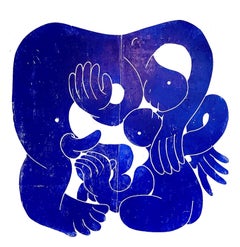
edition 2/5 BARBARA KUEBEL is a Daphne, AL-based artist who uses oil and pencil for her works on paper and on canvas. She was born and raised in Austria and earned two art degrees f...
Category

21st Century and Contemporary Contemporary Woodcut Prints and Multiples

Materials

Paper, Woodcut

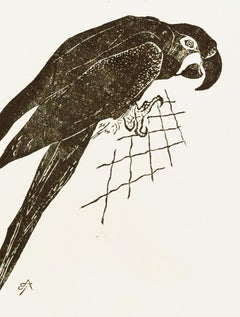
The Parrot - Original Woodcut by Unknown French Artist
Located in Roma, IT
The Parrot is an original xilograph on paper realized by an anonymous artist in the XX century. Including a white cardboard passepartout: 69 x 49 cm. Monogram of the artist (AP) on ...
Category

Early 20th Century Modern Woodcut Prints and Multiples

Materials

Woodcut

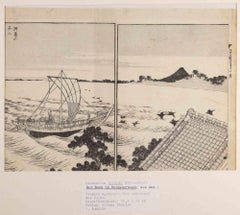
Landscape from Fugaku Hyakkei- Woodcut Print by Katsushika Hokusai-1878
Located in Roma, IT
Landscape from "Fugaku hyakkei" is an original modern artwork realized by Katsushika Hokusai (31 October 1760 – 10 May 1849). Original Woodcut print from the series "Fugaku Hyakkei" (100 views of Mount Fuji). From the second posthumous edition 1878. Passepartout is included. Publisher Eiraku Toshiro. Sheet dimensions: 24 x 26 cm. Good conditions. Signs of age and wear. Hokusai created the monumental Thirty-Six Views of Mount Fuji both as a response to a domestic travel boom in Japan and as part of a personal obsession with Mount Fuji. Katsushika Hokusai (31 October 1760 – 10 May 1849) known simply as Hokusai, was a Japanese artist, ukiyo-e painter and printmaker of the Edo period. Hokusai is best known for the woodblock print series Thirty-Six Views of Mount Fuji which includes the internationally iconic print The Great Wave off Kanagawa...
Category

19th Century Modern Woodcut Prints and Multiples

Materials

Woodcut

Lord on the Sand Castle - XX century Black White Woodcut Print
Located in Warsaw, PL
Illustration for Jules de la Medelen's "Lord on the Sand Castle" ("Le Marquis Des Saffras") FRANCISZEK BUNSCH (born in 1926) Franciszek Bunsch was born in Bielsko in 1926. He studie...
Category

1950s Contemporary Woodcut Prints and Multiples

Materials

Woodcut, Paper

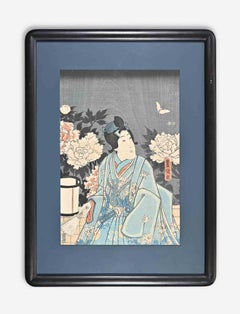
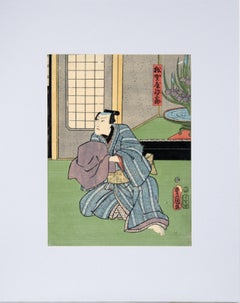
"Sun Saburo Matsugaya" - Mid 19th Century Figurative Japanese Woodblock Print
Located in Soquel, CA
"Sun Saburo Matsugaya" - Mid 19th Century Figurative Japanese Woodblock Print Beautiful mid 19th century figural Japanese woodblock print of a seated man with lilies in the background by Utagawa Toyokuni III (Kunisada) (Japanese, 1786-1864/5). Artist's chop is in the lower right corner of the piece. The actor is Magosaburo Matsugaya from the play "Katakiuchi Rumors" Presented in a new grey-blue mat with foamcore backing. Mat size: 21"H x 16"W Paper size: 14"H x 9.75"W During his lifetime Kunisada Utagawa...
Category

1850s Edo Woodcut Prints and Multiples

Materials

Paper, Ink, Woodcut

"Nightrise" Public Works Art Color Woodcut
By Ruth Chaney
Located in Soquel, CA
Bold woodblock serigraph by Ruth Chaney (American, 1908-1973). Numbered (#17), titled, signed, and dated along the bottom edge. The Smithsonian American Art Museum has an edition of...
Category

1930s American Impressionist Woodcut Prints and Multiples

Materials

Paper, Ink, Woodcut

Find Original Woodcut Prints for Your Home

Original woodcut prints and other types of fine art prints can help enhance any room in your home while supporting your effort to tie an interior design together.

Woodcut is a type of relief print that is made by carving a block of wood with a knife or gouge. The surface is then inked with a roller and pressed onto paper. Unlike with intaglio techniques, the section of the surface that has not been incised is what appears in the print. 

Woodcut printmaking is one of the oldest printing techniques, first used in 9th-century China, mastered by Albrecht Dürer during the Northern Renaissance and famously associated with the ukiyo-e artists of 17th- and 18th-century Japan. (For concision, power and delight, it’s hard to beat a Japanese woodblock print, the product of an artistic tradition that is aging very well indeed.)  

Elsewhere, German Expressionists like Emil Nolde and Ernst Ludwig Kirchner embraced the medium for its bold, graphic power in the 1920s, and artists continue to use it today.

OK, so what is the difference between a woodcut print and an intaglio print?

“[Intaglio] is the opposite of relief printing — woodcut, linoleum cut, letterpress, and rubber or metal stamping,” says Rhea Fontaine of Paulson Fontaine Press. “With relief printing, the raised areas of the printing surface are inked and printed, while the areas that have been cut away do not pick up the ink. Often these prints are made by hand.”

Find original woodcut prints by Katsushika Hokusai, Suzuki Harunobu, M.C. Escher, Mino Maccari and many other artists on 1stDibs.

Recently Viewed

View All