Woodcut Prints and Multiples

to
478
3,288
506
320
180
256
Overall Width
to
Overall Height
to
2,154
567
245
211
204
108
57
44
41
27
7
3
1
1
170
137
57
51
47
54
735
3,184
583
28
99
427
289
155
206
376
144
158
117
30
3,169
1,265
97
2,332
1,202
894
846
620
467
456
402
389
366
349
266
241
213
211
186
174
145
133
104
4,895
35,678
19,951
17,714
10,694
379
2,254
1,864
1,648
Medium: Woodcut
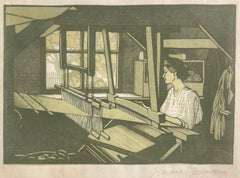
THE RUG WEAVER
Located in Santa Monica, CA
GUSTAVE BAUMANN (1881 – 1971) THE RUG WEAVER, 1910 (Chamberlain 26) Color woodcut signed in pencil. Unnumbed from an edition 100 as published in the Hills o’ Brown...
Category

1910s American Modern Woodcut Prints and Multiples

Materials

Woodcut

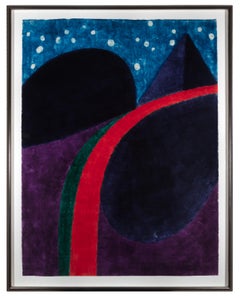
"The Bighorn at Night, " a Woodcut, Signed
Located in Milwaukee, WI
"The Bighorn at Night" is an original woodcut signed and titled by the artist, Carol Summers. It is edition 48/50. Catalogue raisonné listing: cat. 105...
Category

1970s Contemporary Woodcut Prints and Multiples

Materials

Woodcut

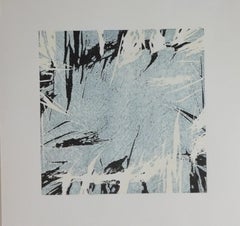
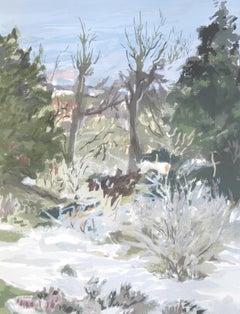
Snowfall
Located in Bournemouth, Dorset
Martyn Brewster (b.1952) Snowfall 2019 Woodcut edition (40 ) Image 20.0 x 20.0 cm paper 29.0 x 29.0 cm Unframed Martyn Brewster’s abstract paintings are strongly linked to the Engl...
Category

2010s Abstract Woodcut Prints and Multiples

Materials

Woodcut

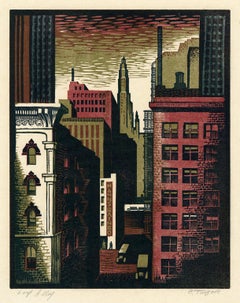
Loop Alley — Modernist Chicago Cityscape, WPA
Located in Myrtle Beach, SC
Charles Turzak, 'Loop Alley (Chicago)', color woodcut, edition c. 25, c. 1935. Signed and titled in pencil. A fine, richly-inked impression, with fresh colors, on cream wove Japan pa...
Category

1930s American Modern Woodcut Prints and Multiples

Materials

Woodcut

VALLEY RAMPARTS -
Located in Santa Monica, CA
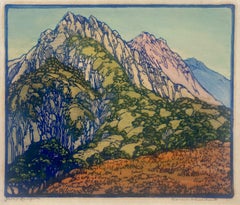
FRANCES H. GEARHART (1869-1958) VALLEY RAMPARTS 1933 Color block print, signed and titled in pencil. 10 1/8 x 12 inches. Very large and good impression In generally good condition. ...
Category

1930s Impressionist Woodcut Prints and Multiples

Materials

Woodcut

Art Deco : The Mirror - Original wooodcut, Handsigned and Numbered
Located in Paris, IDF
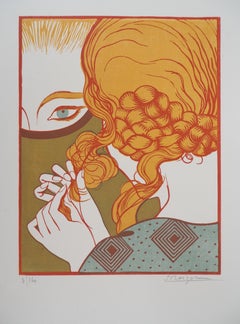
Emile BOIZOT Art Deco : The Mirror, 1927 Original woodcut Handsigned in pencil Numbered /160 On vellum 32.5 x 25.5 cm (c. 13 x 10 in) Bears the blind stamp of the editor 'Imagier de...
Category

1920s Art Deco Woodcut Prints and Multiples

Materials

Woodcut

Japanese Woodblock Print , By Unknown, Color Woodblock Print on Paper
Located in Oklahoma City, OK
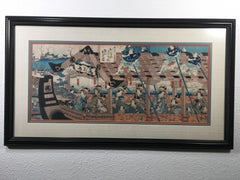
This 21.25" x 37.5" framed Japanese woodblock print, depicts a busy scene that includes many figures within, and upon a large boat. The boat takes up the majority of the horizontal c...
Category

19th Century Edo Woodcut Prints and Multiples

Materials

Paper, Woodcut

In the Fifth Season
Located in New York, NY
Gregory Amenoff is a painter who lives in New York City and Ulster County, New York. He is the recipient of numerous awards from organizations including the American Academy of Arts ...
Category

Late 20th Century Contemporary Woodcut Prints and Multiples

Materials

Woodcut

Diver — 1930s American Modernism
Located in Myrtle Beach, SC
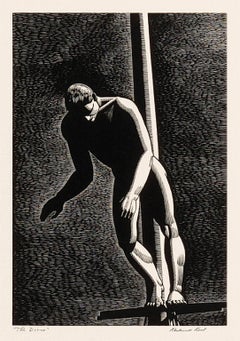
Rockwell Kent, 'Diver', wood engraving, 1931, edition 150, Burne Jones 88. Signed, and titled 'The Diver' in pencil.. A brilliant, black impression, on cream, wove Japan paper; the f...
Category

1930s American Modern Woodcut Prints and Multiples

Materials

Woodcut

Kabuki actor Nakamura Shikan II by Utagawa Kunisada Edo Japanese Woodblock Print
Located in Soquel, CA
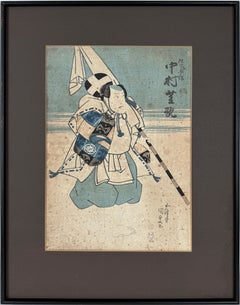
Kabuki actor Nakamura Shikan II by Utagawa Kunisada Japanese Woodblock Print Wonderful portrait of Nakamura Shikan II, a prominent kabuki actor, in the role of Kisen Hoshi Toyokuni ...
Category

1820s Realist Woodcut Prints and Multiples

Materials

Printer s Ink, Rice Paper, Woodcut

SEA TREASURES
Located in Santa Monica, CA
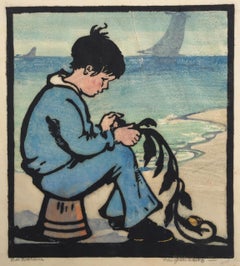
FRANCES H. GEARHART and Sisters (THE GEARHARTS) SEA TREASURES...
Category

1920s American Impressionist Woodcut Prints and Multiples

Materials

Woodcut

"Cormorant and Egret" Japanese Woodblock Print of Birds in Water Nature Poem
Located in Austin, TX
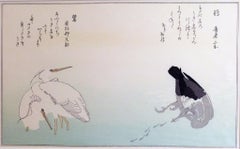
Artist: Kitagawa Utamaro the First (Japanese, 1753 - 1806) Publisher: Tsutaya Jūzaburō (Japanese, 1750 - 1797) Page Size: 10 x 15 in. Frame Size: 16 x 22 in. An Edo Period color woo...
Category

1790s Woodcut Prints and Multiples

Materials

Paper, Woodcut

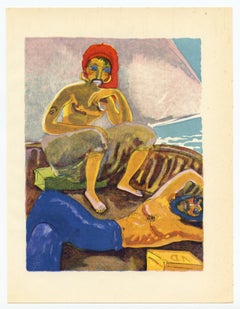
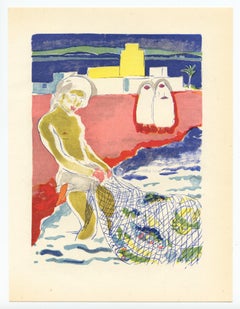
wood engraving for Mille Nuits
Located in Henderson, NV
Medium: wood engraving (after the watercolor). Printed in Paris in 1955 at the atelier Coulouma for "Mille nuits et une nuit" (1001 Nights) which was the last major portfolio by Kees...
Category

1950s Woodcut Prints and Multiples

Materials

Engraving, Woodcut

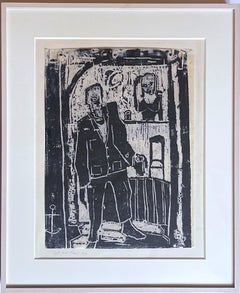
Billy and Traci in a Pub, unique woodcut, pencil signed and inscribed, Framed
Located in New York, NY
Tracey Emin, Billy and Traci in a Pub, 1984 Woodcut in dark blue on Japon paper, signed and inscribed 'lots love Traci xx' in pencil on the backboard, printed by the artist Test prin...
Category

1980s Contemporary Woodcut Prints and Multiples

Materials

Woodcut

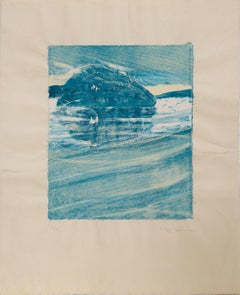
Wakeby Island, Conceptual Art Woodcut Print by Michael Mazur
Located in Long Island City, NY
Artist: Michael Mazur, American (1935 - 2009) Title: Wakeby Island Year: circa 1990 Medium: Color woodcut with chine collé, signed and numbered in pencil Edition: 15 Image Size: 15 x...
Category

Late 20th Century Contemporary Woodcut Prints and Multiples

Materials

Woodcut

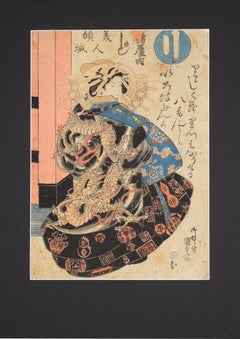
The Courtesan Kashiwagi and the Kamuro Wakano - Japanese Woodblock Print
Located in Soquel, CA
The Courtesan Kashiwagi and the Kamuro Wakano - Japanese Woodblock Print Original Toyokuni III/Kunisada (Japanese, 1786 - 1864) Japanese Woodblock Print "The Courtesan Kashiwagi and...
Category

1820s Realist Woodcut Prints and Multiples

Materials

Printer s Ink, Rice Paper, Woodcut

"Aus dem Composanto" original woodcut
Located in Henderson, NV
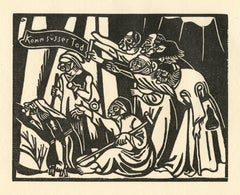
Medium: original woodcut. The inscription on the banner translates to "Come Sweet Death". Printed in Germany in 1922 for the rare Ganymed portfolio of "Das vierte Jahrbuch der Marees...
Category

1920s Expressionist Woodcut Prints and Multiples

Materials

Woodcut

"Nurnberg" Woodcut Print of the Old City by A. Thomas style of Lyonel Feininger
Located in Soquel, CA
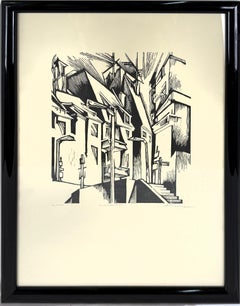
The image shows an abstract, black and white block print in the style of Lyonel Feininger of what appears to be a streetscape in Nuremberg, Germany. The style is reminiscent of early...
Category

1960s Bauhaus Woodcut Prints and Multiples

Materials

Woodcut

Winter on Cruise
Located in New York, NY
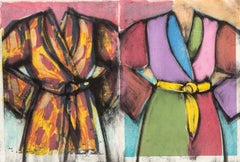
A very good impression of this color woodcut and lithograph diptych. Signed and dated in pencil by Dine. From a limited edition of 12.
Category

Early 2000s Modern Woodcut Prints and Multiples

Materials

Color, Lithograph, Woodcut

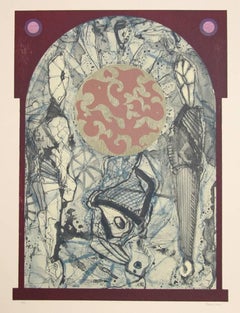
Untitled
Located in Kansas City, MO
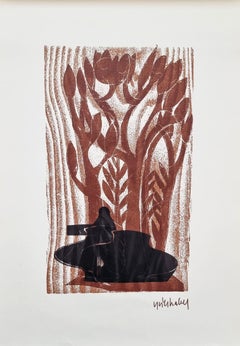
HAP Grieshaber Untitled Wood block print in two colors Year: 1977 Size: 21 x 14 in Edition: 1,500 Signed in the plate Publisher: HMK Fine Arts, New Yor...
Category

1970s Modern Woodcut Prints and Multiples

Materials

Woodcut

Untitled
Untitled
$198 Sale Price
75% Off
Kamezaki Bishu (First Edition)
Located in Burbank, CA
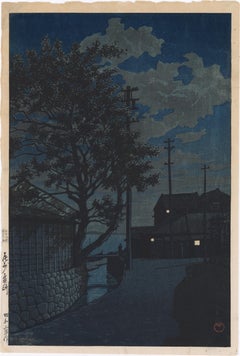
Three soft yellow lights shine from windows, beacons from the homes at the end of our path, middle right. At left a canal flows into the sea, and textured clouds float in an early ev...
Category

Early 20th Century Showa Woodcut Prints and Multiples

Materials

Handmade Paper, Woodcut

"J.P. s Trip", Abstract Patterns, Geometric Abstraction, Woodcut Monoprint
Located in Philadelphia, PA
This piece titled "J.P.'s Trip" is an original piece by Alexis Nutini and is made from a woodcut and and found object stencil monoprint mounted on panel ...
Category

21st Century and Contemporary Contemporary Woodcut Prints and Multiples

Materials

Found Objects, Panel, Monoprint, Woodcut, Paper
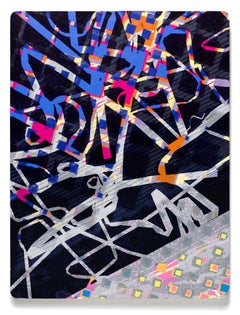
Untitled 1, Abstract Print by Robert Kuszek
Located in Long Island City, NY
Artist: Robert Kuszek Title: Untitled 1 Year: circa 1990 Medium: Lithograph and Woodcut, Signed and numbered in Pencil Edition: 35 Paper Size: 30 x 22 inches (76.2 x 55.88 cm)
Category

1990s Abstract Woodcut Prints and Multiples

Materials

Lithograph, Woodcut

Gargantua - Rare Book Illustrated by Gustave Dorè - 1854
Located in Roma, IT
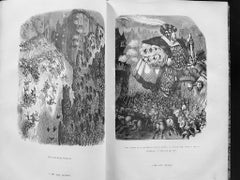
Gargantua is an original modern rare book by François Rabelais illustrated for the first time by Gustave Doré (Strasbourg, 1832 – 23 January 1883) in 1854...
Category

1850s Modern Woodcut Prints and Multiples

Materials

Woodcut

Swans Woodblock by Hans Neumann, 1913
Located in New York, NY
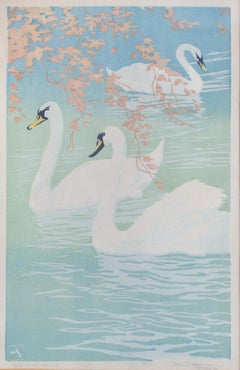
Hans Neumann (German, 1873 - 1957) Schwäne (Swans), 1913 Woodblock Sight: 17 x 11 in. Framed: 25 3/4 x 19 in. Signed & inscribed bottom, artist monogram lower left This outstanding ...
Category

1910s Academic Woodcut Prints and Multiples

Materials

Woodcut

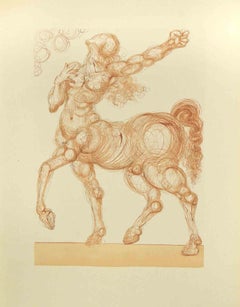
The Centaur - Woodcut - 1963
Located in Roma, IT
The Centaur - Hell, Plate-26 is a woodcut print realized in 1963 for a series illustrating the Medieval poem of the "Divine Comedy" by Dante Alighieri. Not signed, as issued. Goo...
Category

1960s Surrealist Woodcut Prints and Multiples

Materials

Woodcut

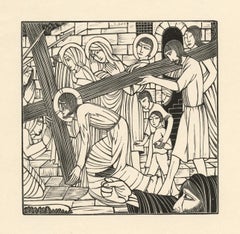
The Carrying of the Cross
Located in Henderson, NV
Medium: wood engraving. Printed in 1929 and published by Douglas Cleverdon. Image size: 4 1/4 x 4 3/8 inches (110 x 112 mm). Not signed.
Category

1920s Woodcut Prints and Multiples

Materials

Woodcut

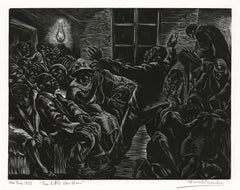
Run Little Chillun also Revival — African American Subject
Located in Myrtle Beach, SC
Isac Friedlander, 'Run Little Chillun' also 'Revival', wood engraving, 1933, edition 50. Signed, titled and annotated 'New York 1933' in pencil. A sup...
Category

1930s American Modern Woodcut Prints and Multiples

Materials

Woodcut

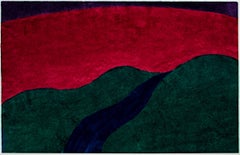
"Farewell, " Sunset Landscape Woodcut by Carol Summers
Located in Milwaukee, WI
"Farewell" is an original color woodcut by Carol Summers. The artist signed the piece. This woodcut depicts a river flowing through green hills beneath a blood-red sky. The edition number is 20/50. 24 1/4" x 37" art 32" x 45" frame Carol Summers has worked as an artist throughout the second half of the 20th century and into the first years of the next, outliving most of his mid-century modernist peers. Initially trained as a painter, Summers was drawn to color woodcuts around 1950 and it became his specialty thereafter. Over the years he has developed a process and style that is both innovative and readily recognizable. His art is known for it’s large scale, saturated fields of bold color, semi-abstract treatment of landscapes from around the world and a luminescent quality achieved through a printmaking process he invented. In a career that has extended over half a century, Summers has hand-pulled approximately 245 woodcuts in editions that have typically run from 25 to 100 in number. His talent was both inherited and learned. Born in 1925 in Kingston, a small town in upstate New York, Summers was raised in nearby Woodstock with his older sister, Mary. His parents were both artists who had met in art school in St. Louis. During the Great Depression, when Carol was growing up, his father supported the family as a medical illustrator until he could return to painting. His mother was a watercolorist and also quite knowledgeable about the different kinds of papers used for various kinds of painting. Many years later, Summers would paint or print on thinly textured paper originally collected by his mother. From 1948 to 1951, Carol Summers trained in the classical fine and studio arts at Bard College and at the Art Students League of New York. He studied painting with Steven Hirsh and printmaking with Louis Schanker. He admired the shapes and colors favored by early modernists Paul Klee (Sw: 1879-1940) and Matt Phillips (Am: b.1927- ). After graduating, Summers quit working as a part-time carpenter and cabinetmaker (which had supported his schooling and living expenses) to focus fulltime on art. That same year, an early abstract, Bridge No. 1 was selected for a Purchase Prize in a competition sponsored by the Brooklyn Museum. In 1952, his work (Cathedral, Construction and Icarus) was shown the first time at the Museum of Modern Art in New York City in an exhibition of American woodcuts. In 1954, Summers received a grant from the Italian government to study for a year in Italy. Woodcuts completed soon after his arrival there were almost all editions of only 8 to 25 prints, small in size, architectural in content and black and white in color. The most well-known are Siennese Landscape and Little Landscape, which depicted the area near where he resided. Summers extended this trip three more years, a decision which would have significant impact on choices of subject matter and color in the coming decade. After returning from Europe, Summers’ images continued to feature historical landmarks and events from Italy as well as from France, Spain and Greece. However, as evidenced in Aetna’s Dream, Worldwind and Arch of...
Category

1990s Woodcut Prints and Multiples

Materials

Woodcut

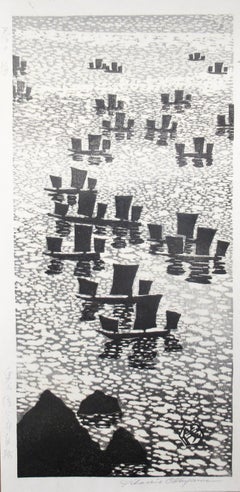
Fishing Boats in Cap Muroto
Located in San Francisco, CA
This artwork Titled "Fishing Boats in Cap Muroto" c.1950, is an original woodcut on paper by Japanese artist Gihachiro Okuyama, 1907-1981. It is hand signed and inscribed in Japanese...
Category

Mid-20th Century Modern Woodcut Prints and Multiples

Materials

Woodcut

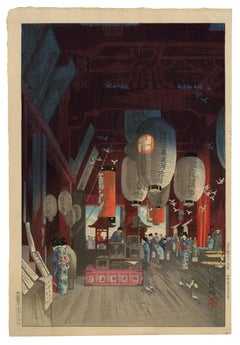
Interior of the Kannon Temple at Asakusa — Tokyo Landmark, Early Edition
Located in Myrtle Beach, SC
NARAZAKI EISHO (1864-1936), 'Asakusa Kannon-do no naido' (Interior of the Kannon Temple at Asakusa), color woodblock print, 1932. Signed Eisho lower right, with the artist’s red seal beneath. A fine impression with fresh colors; the full sheet with slight overall age toning, a drying tack...
Category

1930s Woodcut Prints and Multiples

Materials

Woodcut

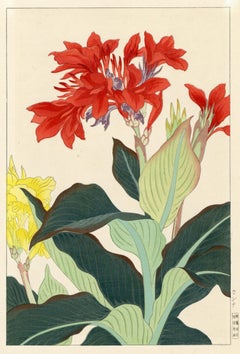
Canna Lily
Located in Fairlawn, OH
Canna Lily Color woodcut, 1939 Unsigned (as usual) Publisher: Takemura Hideo (active Yokohama 1926-1939) Format: oban Condition: Excellent Image/Sheet size: 15 5/8 x 11 inches Provenance: Robert O. Muller There is little biographical data available about the Japanese printmaker Hodo Nishimura...
Category

1930s Modern Woodcut Prints and Multiples

Materials

Woodcut

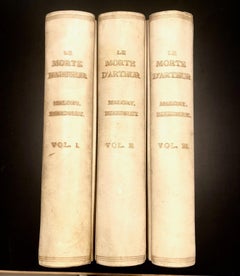
MORTE D ARTHUR
Located in Portland, ME
Malory, Thomas. MORTE D'ARTHUR. J. M. Dent, London, 1893. First Edition thus. Edition of 300 printed on Dutch handmade paper, this copy Numbered "72." (There was a "regular" editi...
Category

1890s Woodcut Prints and Multiples

Materials

Woodcut

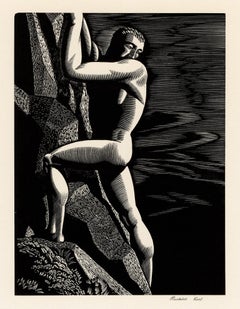
Mountain Climber — American Modernism
Located in Myrtle Beach, SC
Rockwell Kent, 'Mountain Climber', wood engraving, 1933, edition 250, Burne Jones 93. Signed in pencil. A brilliant, black impression, on cream, wove Japan paper; the full sheet with margins (2 9/16 to 3 5/8 inches); slight skinning at the top sheet edge verso, where previously hinged; otherwise, in excellent condition. Archivally matted to museum standards, unframed. Image size 7 7/8 x 5 7/8 inches (200 x 149 mm); sheet size 14 x 11 1/8 inches (356 x 283 mm). Printed by Pynson Printers, New York. Distributed by The Print Club of Cleveland, Publication No. 11, 1933. Literature: 'Rockwellkentiana,' Harcourt, Brace and Company, New York, 1933. '101 of The World’s Greatest Books', edited by Spencer Armstrong, 1950. Impressions of this work are held in the following museum collections: Akron Art Institute, Burne Jones Collection, IL; Cincinnati Art Museum; Cleveland Museum of Art; Columbus Gallery of Fine Arts; Crystal Bridges Museum of American Art; Davis Museum at Wellesley College; Fine Art Museums of San Francisco; H. M. de Young Museum; Hermitage Museum; Kent Collection, NY; Library of Congress; Memorial Art Gallery, University of Rochester; Metropolitan Museum of Art; New York Public Library; Philadelphia Museum of Art; Princeton University Library; Smithsonian American Art Museum, Spector Collection, NY; SUNY, Plattsburg. ABOUT THE ARTIST Rockwell Kent (1882-1971), though best known as a painter, graphic artist, and illustrator, pursued many careers throughout his life, including architect, carpenter, explorer, writer, dairy farmer, and political activist. Born in Tarrytown, New York, Kent was interested in art from a young age. These ambitions were encouraged by his aunt Jo Holgate, an accomplished ceramicist. Jo came to live with the family after Kent’s father passed away in 1887 and took him to Europe as a teenager, undoubtedly kindling his interest in exploring the world. Kent attended the Horace Mann School in New York City, where he excelled at mechanical drawing. His family’s financial circumstances prevented him from pursuing a career in the fine arts; however, after graduating from Horace Mann in 1900, Kent decided to study architecture at Columbia University. Before matriculating at Columbia, Kent spent the first of three consecutive summers studying painting at William Merritt Chase’s art school in Shinnecock Hills, Long Island. There he found a community of mentors and fellow students who encouraged him to pursue his interest in art. At the end of Kent’s third summer at Shinnecock, Chase offered him a full scholarship to the New York School of Art, where he was a teacher. Kent began taking night classes at the art school in addition to his architecture studies but soon left Columbia to study painting full-time. In addition to Chase, Kent took classes with Robert Henri and Kenneth Hayes Miller, where his classmates included the artists George Bellows and Edward Hopper. Kent spent the summer of 1903 assisting the eccentric painter Abbott Handerson Thayer at his studio in Dublin, New Hampshire—a position he secured through the recommendation of his Aunt Jo. Thayer’s naturalist lifestyle and almost mystical appreciation for natural phenomena greatly influenced Kent; he returned to Dublin for many years to visit Thayer and his family. Thayer gave the young artist time to pursue his work, and that summer Kent painted several views of the New Hampshire landscape, including Mount Monadnock. In 1905 Kent moved from New York to Monhegan Island in Maine, home to a summer art colony, where he continued to find inspiration in nature. Kent soon found success exhibiting and selling his paintings in New York, and in 1907, he was given his first solo show at Claussen Galleries. The following year he married his first wife, Kathleen Whiting (Thayer’s niece), with whom he had five children. The couple divorced in 1924, and Kent married Frances Lee the following year. They divorced after 15 years of marriage, and the artist married Sally Johnstone. For the next several decades, Kent lived a peripatetic lifestyle, settling in several locations in Connecticut, Maine, and New York. During this time he took several extended voyages to remote, often ice-filled, corners of the globe, including Newfoundland, Alaska, Tierra del Fuego, and Greenland, to which he made three separate trips. For Kent, exploration and artistic production were twinned endeavors, and his travels to these rugged, elemental locations inspired his visual art and his writings. He developed a stark, realist landscape style in his paintings and drawings that revealed both nature’s harshness and its sublimity. Kent’s human figures, which appear sparingly in his work, often allude to the mythic themes of isolation, individualism, heroism, and the quest for self-connection. Important exhibitions of works from these travels include the Knoedler Gallery’s shows in 1919 and 1920, featuring Kent’s Alaska drawings...
Category

1930s American Modern Woodcut Prints and Multiples

Materials

Woodcut

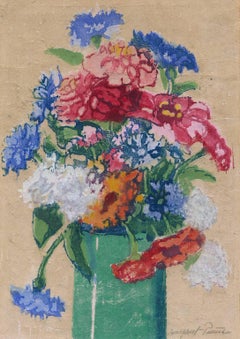
Zinnias and Bachelor Buttons.
Located in New York, NY
Margaret Patterson created this color woodcut print circa 1920. It is signed in pencil at the paper edge, lower right. Printed in areas to the paper edge -sheet size 10 1/16 x 7 1/...
Category

Early 20th Century American Modern Woodcut Prints and Multiples

Materials

Woodcut

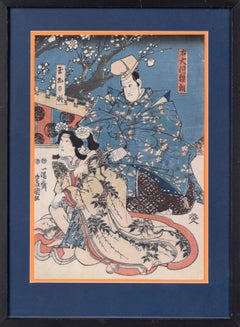
Two Actors - Japanese Woodblock by Chikanobu Yoshu
Located in Soquel, CA
Two Actors - Japanese Woodblock by Toyohara Chikanobu (豊原周延, 1838–1912), better known to his contemporaries as Yōshū Chikanobu (楊洲周延). Colorful and expressive court scene. Two actors...
Category

1890s Edo Woodcut Prints and Multiples

Materials

Ink, Rice Paper, Woodcut

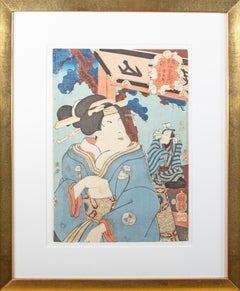
19th century color woodcut Japanese ukiyo-e print female geisha figure signed
Located in Milwaukee, WI
This print is from a highly regarded series by the Edo woodblock artist Utagawa Kuniyoshi: in the period, there were at times prohibitions in depicting a...
Category

1850s Edo Woodcut Prints and Multiples

Materials

Paper, Pigment, Woodcut

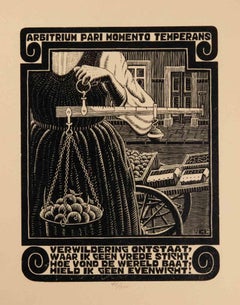
Balance - Woodcut by Maurits Cornelis Escher - 1931
Located in Roma, IT
Woodcut print realized by Escher for the series "Emblemata", and published in 1931. On Hollande van Gelder paper. Edition of 300. Unsigned, as issued. Excellent condition, matted....
Category

1930s Modern Woodcut Prints and Multiples

Materials

Woodcut

wood engraving for Mille Nuits
Located in Henderson, NV
Medium: wood engraving (after the watercolor). Printed in Paris in 1955 at the atelier Coulouma for "Mille nuits et une nuit" (1001 Nights) which was the last major portfolio by Kees...
Category

1950s Woodcut Prints and Multiples

Materials

Engraving, Woodcut

Composition, Description of a Masque, Jane Freilicher
Located in Southampton, NY
Woodcut on vélin Tosa Hanga à la main paper. Paper Size: 16 x 12 inches. Inscription: Unsigned and unnumbered, as issued. Notes: From the album, Description of a Masque, 1998. Publis...
Category

1990s Academic Woodcut Prints and Multiples

Materials

Woodcut

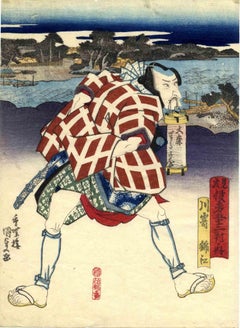
Kabukie - Woodcut by Utagawa Kunisada - 1840
Located in Roma, IT
Kabukie is an original artwork realized in 1840 by Utagawa Kunisada (1786-1865). From the series "Mitate Yakusha gojusan tsui no uchi" (juxtaposition of actors and the 53 Tokaido s...
Category

1840s Modern Woodcut Prints and Multiples

Materials

Woodcut

Japanese Artisans - Silk Dying -Japanese Woodblock Print
By Tosa Mitsuyoshi
Located in Soquel, CA
Japanese Artisans - Japanese Woodblock Print J Japanese woodblock depicting six women, all wearing vibrant kimonos, working on crafts by Tosa Mitsuoki (Japanese, 1617-1691). Japanese,c. 1600. Handcraft depiction (dye works).Section from a painted screen with presentations of handcraft.Kita-in, Saitama. Stamped lower left. Presented in a white mat and giltwood frame. Frame: 19"H x 14"W Mat: 18.25"H x 13.25"W Image: 14.5"H x 9.5"W Tosa Mitsuoki was a Japanese painter, reinvigorating the Yamato style of classical Japanese painting. Yamato-e originated from interest in reproducing early Tang dynasty paintings, and was later reinvented and further refined to fit Japanese cultural perceptions in the late Heian period. Yamato, sometimes referred to as wa or kazu had become synonymous with the Tosa-ha by the Muromachi period as a way for Japanese artist to distinguish their works from those of mainland Chinese paintings, kara-e. Yamato-e incorporated various visual and literary techniques for establishing narrative. Works were not always accompanied with text and may rely on heavily on period specific visual motifs, icons, and symbols to relay a story or theme. Tosa style by the time of Mitsuoki focused heavily on depicting themes of plants and nature, famous places, meisho, the four seasons, shik, bird-and-flower, kacho. Many of these popular symbols and icons from mimicking Chinese practices, treating the original Chinese masterwork as a sort of prototype to improve upon. Popular formats for Mitsuoki's pictures were wall scrolls kakemono, or handscrolls that would be read from right to left with the accompanied story, sliding doors fusuma and folding screen panels byobu that featured up to six panels. Mitsuoki's style incorporated the depth and calligraphy techniques of ink wash brushwork similar to Song dynasty and Yuan dynasty Chinese court paintings...
Category

1920s Edo Woodcut Prints and Multiples

Materials

Paper, Ink, Woodcut

HUNTER HAULING A SEAL - IMPORTANT INUIT PRINT -
Located in Santa Monica, CA
PARR (1893-1969) KINNGAIT (CAPE DORSET) HUNTER HAULING A SEAL, 1966 #2, Stonecut, signed, titled numbered 28/50 Dorset 1966. Image 14 x 22 ¼. Full sheet ...
Category

1960s Other Art Style Woodcut Prints and Multiples

Materials

Stone

Flowers and Ko-Imari — Taisho/Showa Shin Hanga Woodblock Print
Located in Myrtle Beach, SC
Masami Iwata, 'Flowers and Ko-Imari', color woodblock print, c. 1960, edition 250. Signed, and with the artist’s seal, lower right. A superb, painterly impression, with fresh colors,...
Category

1960s Modern Woodcut Prints and Multiples

Materials

Woodcut

Utagawa Kunisada (1786-1865) - Mid 19th Century Japanese Woodblock, Niwa Suzumi
Located in Corsham, GB
The central print from a triptych by the prolific ukiyo-e artist Utagawa Kunisada titled *Niwa Suzumi* (Cooling Off in the Garden). Signed within the print to the lower right. On Jap...
Category

Mid-19th Century Woodcut Prints and Multiples

Materials

Woodcut

Father Stefan Fridolin, "Schatzbehalter" (Treasury of the True Riches
Located in Fairlawn, OH
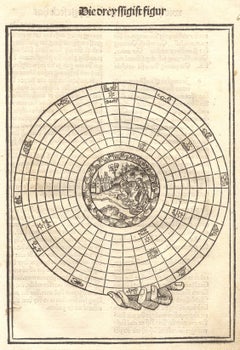
Father Stefan Fridolin, "Schatzbehalter" (Treasury of the True Riches of Salvation): The 30th Figure - Astrological Diagram with Scene of the Nativity Woodcut, 1491 Unsigned, as issued Published by Anton Koberger Diagram has Zodiac signs on outer ring, planets in the lower registers, and Nativity in the center. Condition: Very good for a 15h century woodcut, with the usual slight age stains Sheet size: 11 1/2 x 8 1/4 inches Wogelmut was the teacher of Albrecht Durer and employed young Durer in many project of the last decade of the 15th century. Michel Wolgemut Biography Wolgemut trained with his father Valentin Wolgemut (who died in 1469 or 1470) and is thought to have been an assistant to Hans Pleydenwurff in Nuremberg. He worked with Gabriel Malesskircher in Munich early in 1471, leaving the city after unsuccessfully suing Malesskircher's daughter for breach of contract, claiming she had broken off their engagement. He then returned to his late father's workshop in Nuremberg, which his mother had maintained since Valentin's death. In 1472 he married Pleydenwurff's widow and took over his workshop;[3] her son Wilhelm Pleydenwurff worked as an assistant, and from 1491 a partner, to Wolgemut. Some consider Wilhelm a finer artist than Wolgemut, however he died in January 1494, when he was probably still in his thirties. Wilhelm's oeuvre remains unclear, though works in various media have been attributed to him. Woodcuts Michael Wolgemut, Danse Macabre, 1493 Two large and copiously illustrated books have woodcuts supplied by Wolgemut and his stepson Wilhelm Pleydenwurff; both were printed and published by Germany's largest publisher, the Nuremberger Anton Koberger, who was also Dürer's godfather. The first is the Schatzbehalter der wahren Reichthumer des Heils (1491); the other is the Historia mundi, by Schedel (1493), usually known as the Nuremberg Chronicle...
Category

15th Century and Earlier Old Masters Woodcut Prints and Multiples

Materials

Woodcut

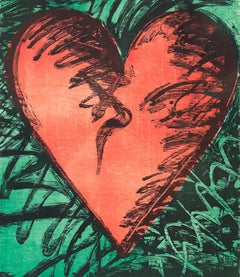
Rancho Woodcut Heart, 1982
Located in Palo Alto, CA
One of Jim Dine’s most iconic motifs, the romantic Rancho Woodcut Heart work illustrates the story of hope and love through a symbolic image of a large red heart. With the contrast o...
Category

1980s Modern Woodcut Prints and Multiples

Materials

Woodcut

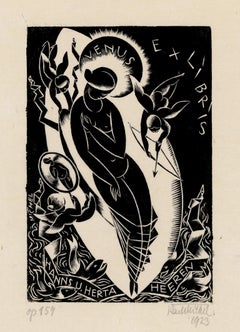
Venus — German Expressionism
Located in Myrtle Beach, SC
Karl Michel, 'Venus, Ex Libris - Hanns U. Herta Heeren', woodcut, 1923, edition not stated but small. Signed, dated, and numbered 'op.154' in pencil. Signed in the block, lower left. A fine impression, on cream Japan paper, with full margins (15/16 to 2 11/16 inches), in good condition. Printed by the artist. Matted to museum standards (unframed). . Translation: Venus Ex Libris for Hanns and Herta Heeren. Image size 5 15/16 x 4 inches (156 x 102 mm); sheet size 9 5/8 x 6 inches (245 x 152 mm). ABOUT THE ARTIST Karl Michel (1889-1984) was a noted graphic designer and expressionist printmaker during Germany's pre-Nazi Weimar Republic (1919-1933). Michel’s work was the subject of a feature article in the influential German graphic design magazine Das Plakat (The Poster) in 1920. An anti-war advocate, Michel created a suite of 12 wood engravings depicting his impressions of the humanitarian toll of WWII entitled ‘Humanitas’ (Humanity). The German publishing house Greifenverlag published the series in a reduced folio of unsigned prints. Michel’s graphic work is held in the permanent collections of the Auckland War Memorial Museum (New Zealand), Frederikshavn Kunstmuseum & Exlibrissamling (Denmark), Museum of Applied Arts (Budapest), The Robert Gore Rifkind Center for German Expressionist Studies at the Los Angeles County Museum of Art, and the German Expressionism...
Category

1920s Expressionist Woodcut Prints and Multiples

Materials

Woodcut

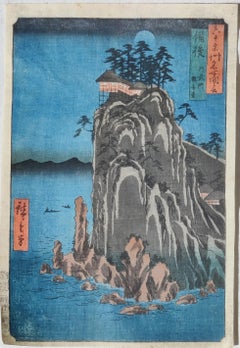
Utagawa Hiroshige -- Kannondo, Abuto, Bingo Province
Located in BRUCE, ACT
Utagawa Hiroshige (Japanese, Tokyo (Edo) 1797–1858 Tokyo (Edo)) Kannondo, Abuto, Bingo Province, from the series Views of Famous Places in the Sixty-Odd Provinces Period: Edo period ...
Category

1850s Woodcut Prints and Multiples

Materials

Woodcut

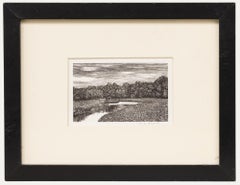
Reynolds Stone (1909-1979) - Fine 20th Century Wood Engraving, The River Ebble
Located in Corsham, GB
An exceptionally fine wood engraving by the British artist Reynolds Stone (1909-1979) depicting the River Ebble. Signed with initials. Numbered 45/100. Smartly presented in a black f...
Category

20th Century Woodcut Prints and Multiples

Materials

Woodcut

Winslow Homer 19th Century Woodcut Engraving "Making Hay"
Located in Alamo, CA
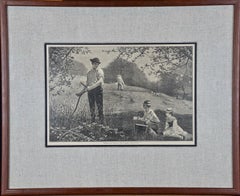
This Winslow Homer woodcut engraving entitled "Making Hay", was published in Harper's Weekly in the July 6, 1872 edition. It depicts a two men hand cutting high grass on a hill. The man in the foreground is looking at a young boy and a girl (presumably his children), who are sitting on the ground with a picnic basket. This beautiful Homer woodcut engraving is presented in a brown wood frame and a light beige fabric mat with a black inner mat. The print is in excellent condition. There are two other Homer woodcut engravings in identical frames and mats that are listed on 1stdibs. See LU117326148332 and LU117326148272. These would make a wonderful display grouping. A discount is available for the purchase of two or all three of these prints. This Winslow Homer engraving...
Category

1870s American Impressionist Woodcut Prints and Multiples

Materials

Engraving, Woodcut

Underwater — Mid-century Modern
Located in Myrtle Beach, SC
Charles Quest, 'Underwater', 1948, chiaroscuro wood engraving, edition 12. Signed, titled, dated and numbered '3/12' in pencil. A fine, richly-inked impression, in dark brown and warm black, on off-white wove paper, with full margins (5/8 to 1 1/2 inch), in excellent condition. Scarce. ABOUT THE ARTIST Charles Quest, painter, printmaker, and fine art instructor, worked in various mediums, including mosaic, stained glass, mural painting, and sculpture. Quest grew up in St. Louis, his talent evident as a teenager when he began copying the works of masters such as Michelangelo on his bedroom walls. He studied at the Washington University School of Fine Arts, where he later taught from 1944 to 1971. He traveled to Europe after his graduation in 1929 and studied at La Grande Chaumière and Academie Colarossi, Paris, continuing to draw inspiration from the works of the Old Masters. After returning to St. Louis, Quest received several commissions to paint murals in public buildings, schools, and churches, including one from Joseph Cardinal Ritter, to paint a replica of Velasquez's Crucifixion over the main altar of the Old Cathedral in St. Louis. Quest soon became interested in the woodcut medium, which he learned through his study of J. J. Lankes' A Woodcut Manual (1932) and Paul Landacre's articles in American Artist magazine ‘since no artists in St. Louis were working in wood’ at that time. Quest also revealed that for him, wood cutting and engraving were ‘more enjoyable than any other means of expression.’ In the late 1940s, his graphic works began attracting critical attention—several of his woodcuts won prizes and were acquired by major American and European museums. His wood engraving entitled ‘Lovers’ was included in the American Federation of Art's traveling print exhibition in 1947. Two years later, Quest's two prize-winning prints, ‘Still Life with Grindstone’ and ‘Break Forth into Singing’, were exhibited in major American museums in a traveling show organized by the Philadelphia Print Club. His work was included in the Chicago Art Institute's exhibition, ‘Woodcut Through Six Centuries’, and the print ‘Still Life with Vise’ was purchased by the Museum of Modern Art in New York. In 1951 he was invited by artist-Curator Jacob Kainen to exhibit thirty wood engravings and color woodcuts in a one-person show at the Smithsonian's National Museum (now known as the American History Museum). Kainen's press release praised the ‘technical refinement’ of Quest's work: ‘He obtains a great variety of textural effects through the use of the graver, and these dense or transparent grays are set off against whites or blacks to achieve sparkling results. His work has the handsome qualities characteristic of the craftsman and designer.’ At the time of the Smithsonian exhibition, Quest's work was represented by three New York galleries in addition to one in his home town. He had won 38 prizes, and his prints were in the collections of the Library of Congress, the Chicago Art Institute, the Metropolitan Museum, and the Philadelphia Museum of Art. In cooperation with the Art in Embassies program, his color woodcuts were displayed at the American Embassy in Paris in 1951. Recognition at home came in 1955 with his first solo exhibition in St. Louis. Press coverage of the show heralded the ‘growth of graphic arts toward rivaling painting and sculpture as a major independent medium’. An exhibition of his prints at the Bethesda Art Gallery in 1983 attracted Curator Emeritus Joseph A. Haller, S.J., who began purchasing his work for Georgetown University's collection. In 1990 Georgetown University Library's Special Collections Division was the recipient of a large body of Quest's work, including prints, drawings, paintings, sculpture, stained glass, and his archive of correspondence and professional memorabilia. These extensive holdings, including some 260 of his fine prints, provide a rich opportunity for further study and appreciation of this versatile and not-to-be-forgotten mid-Western American artist...
Category

1940s American Modern Woodcut Prints and Multiples

Materials

Woodcut

Untiled Faces
Located in Santa Monica, CA
SHIKO MUNAKATA (1903 – 1975) UNTITLED FACES ca 1960. -- Color woodcut on thin Japan paper. Signed in pencil. with Chops, printed image 15 x 12 ¾”, Sheet 19 7/8 x 15 7/8” $1,...
Category

1960s Modern Woodcut Prints and Multiples

Materials

Woodcut, Color

Mu-Tamagawa
Located in Middletown, NY
Woodcut in ink with embossing and hand-coloring in watercolor on laid Japon paper, 16 x 10 inches (406 x 253 mm), ōban tate-e, full margins. Scattered handling wear and toning, other...
Category

Late 19th Century Edo Woodcut Prints and Multiples

Materials

Watercolor, Handmade Paper, Woodcut

Utagawa Hiroshige II -- The Beach at Takanawa
Located in BRUCE, ACT
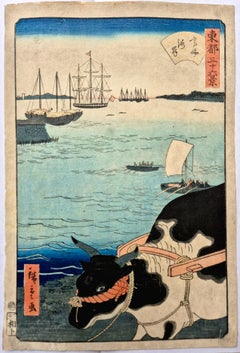
Utagawa Hiroshige II The Beach at Takanawa from Toto sanjurokkei 東都三十六景 (Thirty-six Views of the Eastern Capital), 1862 Woodblock Oban Signed Hiroshige ga and published by Sagamiya ...
Category

18th Century Woodcut Prints and Multiples

Materials

Woodcut

Japanese Kimono Fabric Design — Vintage Color Woodblock Print
Located in Myrtle Beach, SC
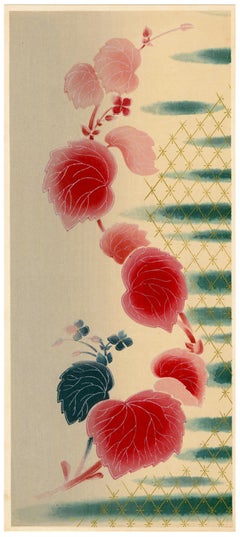
Anonymous, Japanese Kimono Fabric Design, color woodcut, c. 1930. A superb impression, with fresh colors, fine graduations, and metallic gold motifs, on ...
Category

Early 1900s Showa Woodcut Prints and Multiples

Materials

Woodcut

DAITOKUJI KYOTO
Located in Santa Monica, CA
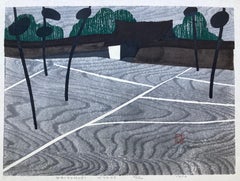
KIYOSHI SAITO (Japanese 1907 - 1997) DAITIKUJI KYOTO, 1957 Color woodcut, signed, titled, dated and no. 42/100 in pencil. Edition 100. Image 15 x 20 5/8 inches. Full margins with de...
Category

1950s Modern Woodcut Prints and Multiples

Materials

Woodcut

Sueño de un Boy Scout by Ray Smith surreal nude print in green and yellow
Located in New York, NY
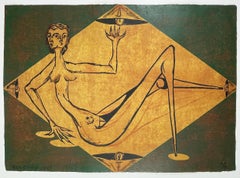
Ray Smith elucidates the "Dream of a Boy Scout" in this surreal green, red, and yellow wood cut print. A woman with two faces sits nude within a diamond-shaped gold field of color, reaching up with her hand and out with her leg to touch the corners of the diamond, which each nestle a light fixture. Sueño de un Boy Scout, 1988-9 Woodcut in black, red and green, on oiled Japon, signed and dated in black ink, numbered 1/30 (there were also 3 artist's proofs) 25 x 39 in. Per the Broad: "Ray Smith’s paintings incorporate surrealistic and animistic tendencies informed by his Latin heritage as well as deep study of the history of modern art. Smith was born near the Texas/Mexico border...
Category

1980s Pop Art Woodcut Prints and Multiples

Materials

Woodcut

The Lonely House at Asajigahara.
Located in Middletown, NY
A scene from a series of ghost stories and spooky rural legends. Tokyo: Matsuki Heikichi, 1896. Woodcut in ink with embossing and hand-coloring in watercolor on handmade mulberry pa...
Category

Late 19th Century Edo Woodcut Prints and Multiples

Materials

Watercolor, Handmade Paper, Woodcut

Beehive - Woodcut by Maurits Cornelis Escher - 1931
Located in Roma, IT
Woodcut print realized by Escher for the series "Emblemata", and published in 1931. On Hollande van Gelder paper. Edition of 300. Unsigned, as issued. Excellent condition, matted....
Category

1930s Modern Woodcut Prints and Multiples

Materials

Woodcut

Find Original Woodcut Prints for Your Home

Original woodcut prints and other types of fine art prints can help enhance any room in your home while supporting your effort to tie an interior design together.

Woodcut is a type of relief print that is made by carving a block of wood with a knife or gouge. The surface is then inked with a roller and pressed onto paper. Unlike with intaglio techniques, the section of the surface that has not been incised is what appears in the print. 

Woodcut printmaking is one of the oldest printing techniques, first used in 9th-century China, mastered by Albrecht Dürer during the Northern Renaissance and famously associated with the ukiyo-e artists of 17th- and 18th-century Japan. (For concision, power and delight, it’s hard to beat a Japanese woodblock print, the product of an artistic tradition that is aging very well indeed.)  

Elsewhere, German Expressionists like Emil Nolde and Ernst Ludwig Kirchner embraced the medium for its bold, graphic power in the 1920s, and artists continue to use it today.

OK, so what is the difference between a woodcut print and an intaglio print?

“[Intaglio] is the opposite of relief printing — woodcut, linoleum cut, letterpress, and rubber or metal stamping,” says Rhea Fontaine of Paulson Fontaine Press. “With relief printing, the raised areas of the printing surface are inked and printed, while the areas that have been cut away do not pick up the ink. Often these prints are made by hand.”

Find original woodcut prints by Katsushika Hokusai, Suzuki Harunobu, M.C. Escher, Mino Maccari and many other artists on 1stDibs.